Epsom and Ewell Times

16th April 2026

ISSN, LDRS and IMPRESS logos

Guide to the upcoming East Surrey Council elections

Old man with walking stick leaving polling station

When voters head to the polls on Thursday, May 7, the local election in Surrey will look very different from previous years. This local election will mark the first step in the biggest shake-up of local government in Surrey for decades.

Instead of voting for councillors to the current county council structure, residents will be electing members to two completely new councils: East Surrey Council and West Surrey Council. A whopping total of 162 seats are for the taking.

What is actually changing?

The elections are happening as part of a major reorganisation of councils across Surrey.

Currently, local services are split between Surrey County Council and 11 borough and district councils. The county council looks after highways, education services, adult social care etc, while the borough councils take care of issues like planning applications, bin collections and managing parks. But that system is set to disappear.

The government has decided to replace it with two ‘unitary authorities’: single councils responsible for everything from planning and roads to social care and education. The aim is to make councils simpler, more efficient and quicker to make decisions, according to the government.

Why are the boundaries changing?

As part of the overhaul, the boundary lines have also been redrawn. The county will be divided into 81 new wards, with two councillors representing each ward.

That means:

•East Surrey Council will have 72 councillors across 36 wards

•West Surrey Council will have 90 councillors across 45 wards

Currently Surrey County Council is made up of 81 seats, including: 38 Conservative, 19 Liberal Democrat, 16 Residents’ Association/Independent, 2 Labour, 2 Green, 2 Reform UK,1 non-aligned independent and 1 vacancy.

Why were elections cancelled last year?

The vote also comes after the planned Surrey County Council elections were cancelled in 2025. The decision sparked criticism from some politicians, who argued residents had effectively lost their chance to vote while the government decided how the new council structure would work. Ministers said the delay was necessary to avoid electing councillors to a system that was about to be abolished.

What issues could shape the election?

Campaigning is only just getting under way, but some local issues are frequently raised by residents.

Among the biggest are:

  • potholes and road repairs
  • support for children with special educational needs (SEND)
  • large housing developments and planning decisions
  • council debt
  • cost-of-living

Several parties are expected to field candidates, including the Conservative Party, Liberal Democrats, Labour Party and the Green Party, as well as independent councillors and residents’ associations. The Reform UK party is also expected to stand candidates as it looks to expand its presence in local government.

Will the new councils take power straight away?

Not immediately. Even after the elections, the new councils will initially operate as shadow authorities’ for almost a year. That means councillors will spend the next 10 months preparing for the handover, rather than immediately running services.

The current councils will continue delivering services until 1 April 2027. This is when the new East Surrey and West Surrey councils will officially take over and replace the 12 existing councils.

How and when people can vote

Polling stations will be open from 7am to 10pm on Thursday, May 7. Residents can vote in person, by post or by proxy vote (someone voting on their behalf). Ballot papers will be counted the following day, with results expected throughout Friday, May 8.

For Surrey voters, the elections will decide who runs the brand-new councils that will eventually take charge of all local services, making this one of the most significant local ballots the county has seen in years.

Emily Dalton LDRS

Related reports:

Party Leader visits Epsom to launch East Surrey election campaign

Epsom and Ewell to Go East in Surrey shake-up

Surrey declares experiment in community engagement a success

Surrey could have had elections last year after all

Surrey elections: Democracy delayed, democracy denied?


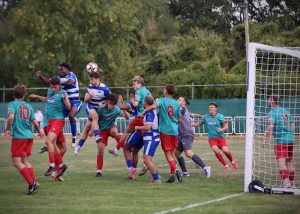
Horsham hold a win against Sutton & Epsom RFC

Rugby action

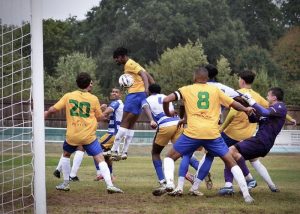
Horsham 26 Sutton and Epsom 20. 7th March. 

In November Horsham travelled to Rugby Lane and were victorious. The Black & Whites scored a late Kyren Ghumra try to add to a Sam Lennie hat-trick and were indebted to a Freddy Bunting conversion to earn two bonus points in a 36-29 defeat.

On Saturday the Sussex club maintained their promotion push but were taken to the limit by a spirited Sutton and Epsom side. After a game of intense commitment from all parties, Horsham secured a 26-20 win that included a vital four-try bonus point.

Tom Lennard kicked off for Sutton and Epsom on a chilly afternoon at the splendid Coolhurst Ground as Ben Tame celebrated his 50th league appearance for the Black & Whites.

Horsham looked to spread the ball wide from the outset. However, Declan Nwachukwu spilled the ball under pressure from Jordan Huie to provide Sutton and Epsom with the first scrum in a most advantageous position near the 22.

Firstly Finlay Scott went close, then Josh Glanville was denied by a superb tackle from Archie Fox and, under intense pressure, Horsham number eight George Howard was issued a yellow card. From the ensuing penalty hooker Sam Lennie forced his way over for the opening try. Freddy Bunting split the uprights for a 7-0 lead for Sutton and Epsom.

Five minutes later Horsham were level. The hosts went on the attack and only determined defence prevented an instant reply. Sutton and Epsom survived a line-out in the corner when the Sussex pack were penalised for crossing.

The next Horsham attack proved more constructive. Taking advantage of defensive miscommunication near halfway, Tom Johnson made the decisive break and passed to supporting scrum-half Aaron Linfield, who scored. Caleb Raubenheimer added the extras to make it 7-7 after a thrilling opening ten minutes.

Despite the best intentions of both teams, it took another twenty minutes before the next score. Sutton and Epsom tackled relentlessly against opponents determined to move the ball wide, while Horsham thwarted the visitors’ best efforts with excellent jackling.

Sterling Sutton and Epsom defence had already seen the hosts held up over the line. Eventually, similar to Sutton and Epsom’s opening score, Horsham crossed from close range following a penalty when their pack would not be denied. Raubenheimer converted to give the hosts a 14-7 lead.

There was an anxious moment for Sutton and Epsom when Horsham threatened to extend their lead but a promising attack ended in the 22 with poor execution. Sutton and Epsom countered when Gareth O’Brien burst into the 22 and passed to Joe Lovatt, who was wrapped up by the cover defence.

Sutton and Epsom were brought back for a penalty as the tackle on O’Brien was judged too high. Freddy Bunting calmly took the three points to reduce the deficit to 14-10.

However, the intensity of the contest claimed its first Sutton and Epsom casualty as Finlay Scott was forced off with a hamstring injury. Sutton and Epsom reshuffled their lineup, with Josh Rea moving into the backs as Josh Glanville returned after earlier being replaced by Ben Tame.

The half ended with no further scoring but Sutton and Epsom’s revamped XV were pressing hard to regain the lead. It had been a highly entertaining opening period played at a frenetic pace, with both defences showing a strong appetite for the physical contest.

In such a demanding encounter, fatigue on the fast surface looked likely to become a factor in the second half. Sutton and Epsom suffered another setback at the interval when hooker Dan Jones was forced off after aggravating a shoulder injury. Tom Boaden came on to start the second half.

Sutton and Epsom fight back

Sutton and Epsom began the second half with real purpose. Sam Lennie went agonisingly close to a second try but the referee, unsighted, awarded Horsham a drop-out after ruling the hooker had been held up over the line.

Undeterred, Sutton and Epsom stormed back through a weaving run from Jordan Huie. Their pressure resulted in a penalty directly in front of the posts, and captain Freddy Bunting reduced the deficit to a single point at 13-14.

Perhaps stung by their shrinking lead, Horsham increased the pressure but squandered an excellent opportunity with an uncharacteristically poor pass.

A solid Sutton and Epsom scrum then provided the platform for a familiar Rob Hegarty surge from number eight to relieve pressure. However, Horsham earned a turnover penalty through another excellent jackal.

Declining the shot at goal, Horsham kicked to the corner and were rewarded when Caleb Raubenheimer scored their third try. The fly-half showed both composure and strength to cross despite defenders hanging off him. The conversion from the touchline missed but Horsham led 19-13 with half an hour remaining.

Sutton and Epsom responded with determination. Another Sam Lennie run earned a scrum deep in Horsham territory and a penalty forced the hosts back to their line.

Horsham produced their best defensive set of the afternoon. The Sutton and Epsom forwards were initially repelled and when the backs joined the attack they too were stopped, with Sutton and Epsom again held up over the line.

The Sussex side countered immediately but Sutton and Epsom’s pack won a relieving penalty after wheeling a scrum five metres from their own line.

The relentless nature of the contest was beginning to show as medical teams were increasingly required and several players on both sides carried knocks.

Late drama

The heroic defensive efforts were finally broken in the closing five minutes. Sutton and Epsom had repelled another Horsham attack before the hosts mistakenly kicked a penalty dead rather than securing a five-metre line-out.

From the restart the dangerous Declan Nwachukwu gathered the ball with space and ran it back superbly. The winger reached the 22 before passing to Tom Sanders, who ran in under the posts. Raubenheimer converted to give Horsham a 26-13 lead and secure their bonus point.

If anyone thought that try had finished Sutton and Epsom, they were quickly proven wrong.

With time added on and several Horsham players struggling with injuries, Sutton and Epsom launched a final assault. From a five-metre line-out they earned a penalty and this time powered over, with Rob Hegarty emerging as the scorer.

Freddy Bunting produced a superb touchline conversion to secure a bonus point for Sutton and Epsom, closing the gap to 26-20.

Sutton and Epsom were not finished and launched one last attack, with Adam Bibby running dangerously through the Horsham defence. The Black & Whites earned a line-out inside the Horsham 22 with the final play of the game.

Seconds later the Sussex side forced a knock-on and the referee’s whistle ended a compelling contest.

Promotion race tightens

Round 19 confirmed Regional 2 South East as effectively a two-horse race between Sidcup and Brighton, although Horsham are now just one win away from the play-offs and a chance to return to Level 5 at the first attempt.

The hosts combined attacking flair with thunderous tackling and crucial turnovers. It was a credit to Sutton and Epsom that the final whistle was greeted by the home side with both joy and relief.

The physical nature of the match took a heavy toll on both squads, who will welcome a rest weekend before the league resumes on 21 March.

Sutton and Epsom will host Canterbury Pilgrims while Horsham travel to Balmoral Avenue to face Beckenham.

Sutton and Epsom

O’Brien, Scott, Bibby, Bunting (capt), Huie, Lennard, Lovatt, Lennie, Jones, Howes, McTaggart, Glanville, Pulvirenti, Rea and Hegarty.
Replacements: Boaden, Tame, Gerhard.

Horsham

Fox, Grogan, Sanders (capt), Johnson, Nwachukwu, Raubenheimer, Linfield, Osgood, Tredgett, Kilfeather, Denhart, Endacott, Smith, McLoughlin and Howard.
Replacements: Powell, Thompson and Knowles.

John Croysdill

Photo credit Robin Kennedy

Next fixture: Saturday 21st March: Sutton & Epsom v Canterbury II


Remarkable Ukrainian who lived his final decades in Epsom

Bialoguski on Ukraine flag background

MICHAEL BIALOGUSKI (1917-84) Ukrainian born Doctor, musician, conductor and spy who spent the last 20 years of his life in Epsom

Mykolo Bialoguski was born in Kiev (then in Russia, now in Ukraine) on 19 March 1917. His parents, Gregorii and Paulina, were Polish professionals, being a veterinary surgeon and dentist respectively. Gregorii was a non-practising Jew and Paulina a Christian.

Apparently, the family fled Kiev in about 1920, having nearly been shot by Bolsheviks, and from 1927 to 1935 Mykolo attended a secondary school in Wilno, Poland – which is now Vilnius, Lithuania, a graphic illustration of the ever-shifting political sands of Eastern Europe. He studied the viola and began to study medicine.

The Nazis invaded Poland on 1 September 1939, thus triggering World War 2. The political goings-on in relation to Poland at that time were hideously complicated and we shan’t dwell on them here, but we do need to know where Mykolo was at the time and why he probably decided to leave. The following map will assist matters – Wilno is in the top right-hand portion and occupied by the Soviets.

In present-day terms Wilno/Vilnius is quite close to the Belarusian border, just over 200 km as the crow flies, and during WW2 Belarus (then the Byelorussian Soviet Socialist Republic) was initially under the control of the Soviets: however, in 1941 the Germans invaded and if, like Mykolo, you were both anti-communist and had a Jewish parent, then Wilno was not a place to be under either regime. (If you want to know more about Wilno during WW2 there is ample material on Wikipedia in the articles on Vilna Ghetto and Ponary Massacre.)

Mykolo had married an Irena Vandos in Poland at some point, but they were divorced in 1941. He had already been jailed briefly for protesting against some actions of the occupying Red Army and so, spinning a yarn about going to Cura?ao, he travelled across Russia to Japan, the latter not yet having joined in WW2, although it did so in December 1941. Fortunately, Mykolo had arrived in Sydney, Australia by then and became Michael.

So, we are now in Sydney and in 1942 Michael enlisted in the Australian Army Medical Corps as an orderly; he was then discharged with Government approval and assistance to study medicine at the University of Sydney, which he did successfully. In 1943 he married divorcee Agnes Patricia Humphry (known as Patricia – they were ultimately divorced in 1954). After a year in general practice at Thirroul, a seaside suburb south of Sydney, he set up on Macquarie Street, in central Sydney itself.

Spying

One would think perhaps that building up a practice as a doctor in a thriving city district would be more than enough for any young man, but there were other facets to Michael. He was certainly anti-communism but that in itself doesn’t turn you into a spy, especially if you’re safely ensconced in Australia. It looks more as if he wanted to ‘play spies’ because he was fascinated with it all. He offered his services to the Commonwealth Investigation Service (CIS) in 1945 and was engaged as an agent: the CIS was apparently as secure as a chocolate padlock in terms of leaks and had been infiltrated by Soviet spies, which led to the creation of the Australian Security Intelligence Organisation (ASIO). In 1949 Michael was engaged as an ASIO agent.

As is usually the case with that era of peculiar ‘peace’, spies, agents and double agents were everywhere and it was hard for them to know which side anyone was on, let alone any amateur researcher trying to make some sense of it 70 years or so later. Still, it must be done, as it was the man’s main claim to ‘fame’.

The Petrov Affair

Petrov had started out as Afanasy Shorokhov, born in 1907 to peasant parents in a Central Siberian village. In 1923 he joined an organisation for young communists and then the Soviet Navy, by which time his name had become Vladimir Proletarsky and later Vladimir Petrov. Having worked his way up, slowly, from cipher clerk in the Navy to the MGB (a predecessor of the KGB which dealt with myriad security and intelligence issues) he became third secretary at the Soviet Embassy in Canberra – or, to put it another way, a senior KGB officer and spy control in Australia. It was quite surprising that Petrov had survived Stalin’s vicious purges and executions of officials over the years, but he had mainly worked under a very nasty piece of work named Lavrentiy Beria and nobody had managed to get rid of this vile man to date. Beria will become significant in a moment, but, returning to Australia, Petrov met Bialoguski and, against a background of mutual friendship, copious alcohol and prostitutes, Petrov thought he had recruited Bialoguski as a Soviet spy, whereas the latter continued to work for ASIO and was spying on Petrov.

Matters came to a head in 1953 when Stalin died and a power struggle ensued. Beria was confident of working his way to the very top, but certain people, Nikita Khrushchev in particular, had other ideas, and Beria was executed. Bialoguski and his colleague, Ron Richards, used this as part of the argument that Petrov should defect, saying that when he was recalled to the Soviet Union under the new regime, he would be in mortal danger. Another part of the persuasion was a large sum of money.

Petrov did defect in 1954, but had neglected to forewarn his wife, Evdokia (also a spy), who, when recalled by the Soviets, was torn between her sister back home and her husband.

Evdokia decided to cooperate with the Australian authorities. Next came a ghastly episode: she was kidnapped by Soviet agents and dragged kicking and screaming to an aircraft.

A high-ranking Australian official witnessed this and fired off an urgent telegram requesting Prime Ministerial intervention, as it was certain that Evdokia would come to a horrible end if she was taken to Moscow. When the plane landed for refuelling at Darwin, Australian police boarded, extricated her from the kidnappers and asked whether she wanted to go to Moscow or stay in Australia. You can guess what her answer was.

There was subsequently a Royal Commission investigating Soviet espionage in Australia, but there is no need to go into that here, save to say that it generated enormous press coverage and political wrangling. The Petrovs remained in Australia as Australian citizens.

As mentioned earlier, Michael and Patricia were divorced in 1954 and it wasn’t an amicable parting. He wrote a book about the Petrov Affair, which was serialised in various newspapers and Patricia went to the papers with her own story. She said that he had a strange, almost weird, personality and that he was a clever, self-absorbed, manipulative and ambitious man who could also be charming and entertaining. This seemed to accord with others’ views of him.

Michael was apparently a minor press celebrity for the rest of the 1950s but didn’t seem to make significant headway with either his career or finances. In 1957 he applied for a reduction in Patricia’s alimony, claiming that he hadn’t made much money from the book and that his medical practice had suffered as a result of all the publicity. He got the reduction in alimony and in 1961 he won a libel case over Patricia’s published allegations and was awarded £1,000 in damages.

Meanwhile, in 1957 he had married Nonnie Frieda Peifer, then a secretary; she had had a brief career as a film actress in minor roles under the name of Nonnie Piper in the late 1940s/early 1950s. He was still determined to pursue a musical career of some kind, preferably as a conductor, and had actually played the violin in the Sydney Symphony Orchestra, but he wasn’t getting anywhere on that front.

In about 1964 the family moved to England, where Michael continued to work in medicine but pursued his musical ambitions too. They lived at 24 Shawley Way, Epsom, which by a boundary quirk came under Tattenhams Ward, Banstead for election purposes and is now designated as ‘Reigate and Banstead’.

Finally, Michael was able to study conducting and conducted the Royal Philharmonic Orchestra. In 1969 he conducted at the Royal Albert Hall, then he formed the Commonwealth Philharmonic Orchestra and also wielded the baton in Westminster Abbey. Perhaps at last he had found his true vocation.

Michael died of cancer on 29 July 1984 at Kingswood, Surrey. Nonnie remained in England and lived until 14 February 2020, aged 89. She was survived by three of her children and several grandchildren.

Linda Jackson 2023

This article is reproduced with the kind permission of Epsom and Ewell History Explorer (www.eehe.org.uk). The original article forms part of EEHE’s extensive and richly illustrated archive of local history. Epsom and Ewell Times readers are warmly encouraged to explore the many other fascinating histories available on the site.

Image source Australian Photographic Agency Collection, State Library of New South Wales CC BY-SA 3.0

Other histories from Epsom and Ewell History Explorer on Epsom and Ewell Times:

A surprise glimpse into 1883: Christ Church Epsom Common’s Parish Magazine


Dorking gnome fails in bid to win property rights

Cartoon Dorking gnome with trespassers will be prosecuted sign

A Surrey couple have won a legal battle over a tiny strip of lawn outside their home after a neighbour tried to reclaim it by placing a garden gnome on the grass.

Expert gardener Elizabeth Dobson and her partner Andrew Pleming had spent years tending the eight-by-three foot patch outside their home on Pointers Hill in Westcott, near Dorking. They mowed it, raked it, planted herbs and wildflowers and even allowed their children to run across it as part of the garden, a tribunal heard. But the peaceful routine was disrupted when new neighbours Alison Unsted and Darren Unsted moved into the house next door in 2022 and decided the land actually belonged to them.

Nine months later the couple removed plants the gardeners had grown on the small patch and installed a garden gnome in their place, sparking a full-blown legal dispute over the tiny triangle of grass between the two properties. The disagreement eventually reached the Upper Tribunal in London and centred on the legal principle of adverse possession, sometimes referred to as “squatters’ rights”, which allows someone to claim land if they have used it as their own for a sufficient period of time.

Ms Dobson and Mr Pleming argued that they, and the previous owners before them, had treated the disputed patch as part of their garden for many years. They told the tribunal they had mowed and maintained the grass just like the rest of their lawn, scarified the soil, replaced topsoil and introduced herbs and wildflowers. Their children had played on it freely and the couple used the strip as a route to push a mower and wheelbarrow between different levels of their garden. At one point they even embedded a sign displaying their house number in the soil.

Several former tenants of the neighbouring property supported their claim, telling the tribunal they had always assumed the patch belonged to number 29 and had never maintained it themselves. The case was first heard by the First-tier Tribunal, which ruled the couple had only clearly taken possession of the land from around 2018 when they turned it into a flower bed, leaving them short of the ten years required.

However, the gardeners appealed the decision. This week Judge Elizabeth Cooke overturned the earlier ruling at the Upper Tribunal, which sits at the Royal Courts of Justice, concluding that the couple had demonstrated clear possession of the land for many years. “The full picture is that, since the appellants bought the property, they have mowed, raked and scarified the lawn, replaced topsoil and turf, let their children play on the grass, used it to take the mower and barrow to the lower terrace, put a sign on it, and introduced herbs into the grass,” the judge said.

Looking at the nature of the small open-plan lawn, she said there was little more an owner could realistically do to demonstrate control of the land. “People do not generally mow their neighbour’s grass without their agreement,” she added. “Nor do they let their children play on it. Nor do they replace topsoil on it or plant herbs in it. Taken together it seems to me perfectly obvious that the appellants were in possession of the disputed land.”

The judge concluded that the couple and their predecessors had been in possession of the strip since at least 2002, long before the Unsteds arrived and attempted to reclaim it with the garden gnome. She ordered that the couple’s application to register the land should now proceed as if the neighbour’s objection had never been made, bringing the dispute over a patch of grass barely larger than a door to an end.

Emily Dalton LDRS

.

.

.

.

.

.


Could you put Surrey Council’s empty buildings or land to good use?

Grafton Stables from a neighbouring dwelling 2025

Surrey residents could soon have the chance to take over unused council buildings and land under a new policy designed to put more local assets into community hands.

Surrey County Council is drawing up a Community Asset Transfer (CAT) policy, which would set out how community groups can lease council-owned buildings or land if they can prove it will benefit local people. The draft policy was backed by councillors this week and will be sent to the county’s cabinet for approval in April 2026. Officers told councillors: “The community asset transfer policy has been intentionally designed to enable community participation in its simplicity.”

Essentially, the policy would allow local organisations – such as charities, sports clubs or community groups – to take on council properties that are underused or no longer needed for services. Instead of selling them off or leaving them empty, the council could lease the assets to community groups, sometimes at below market value, if the social benefit outweighs the financial return. Council officers said the policy would give communities the opportunity to “reimagine, repurpose and reinvigorate” local spaces, meaning disused buildings could become youth centres, community hubs, sports facilities or spaces for local projects.

Under the proposed system, groups interested in taking over a building would first submit an expression of interest and, if the idea appears viable, they would then be asked to produce a business case showing they can run and maintain the asset long-term. Applications would be assessed against several criteria including the level of community benefit, the financial stability of the organisation and how the plans fit with the council’s wider priorities. If approved, transfers would generally happen through leases rather than outright sales, with community groups responsible for maintaining the building.

Council officers stressed the policy is intended to make the process clearer and fairer because, although transfers can already take place, there is currently no single framework guiding decisions. During the meeting councillors broadly welcomed the proposal but raised concerns about volunteer-run organisations taking on complex legal responsibilities and the potential financial risks of maintaining buildings or signing long leases.

Cllr Edward Hawkins said: “I still feel that we are exposing residents to a liability which some will understand, but some will not.” Another councillor suggested community groups should seek legal advice before committing to such arrangements. Officers responded that the council already provides hands-on support during the application process, including meetings and guidance, and would continue to help groups develop proposals. They added that every application would be carefully assessed to ensure organisations are capable of managing the asset before any transfer is agreed.

The CAT policy follows the approval of a motion by Cllr Eber Kington (RA Ewell Court, Auriol & Cuddington) to council on March 18, 2025.

Emily Dalton LDRS

Related reports:

Grafton Stables to Remain Green Space

Shock as Surrey Council Puts Protected Woodland Up for Auction

Image: Grafton “Stables”

.

.

.

.

.

.


Epsom author shares personal epilepsy journey amid town’s historic link to the condition

The author in Epsom Common

An Epsom author has published a deeply personal account of living with epilepsy, adding a modern voice to a local story that stretches back more than a century.

Madeline Bolton-Smith, who lives in Epsom and works as a probate assistant at a family-run accountancy firm in nearby Fetcham, has written Diary of an Epileptic, a book describing her experience of diagnosis, treatment and life with the neurological condition.

Epilepsy affects around one in every hundred people in the UK, yet many newly diagnosed patients still feel isolated when confronting the condition for the first time. Bolton-Smith says her motivation for writing the book was to provide reassurance and solidarity to others navigating similar uncertainty.

“When I was diagnosed with epilepsy, I often felt very alone,” she explains. “Writing the book was my way of saying to others in that position that their feelings are valid and that they are not facing it on their own.”

Her account follows the realities of living with epilepsy from the moment of diagnosis through investigative medical procedures, struggles to secure treatment funding and undergoing Laser Interstitial Thermal Therapy (LITT) surgery. When the surgery did not bring the hoped-for outcome, she had to confront the challenge of adapting to life with epilepsy once again.

The book reflects openly on the emotional impact of the condition – fear, frustration and isolation – but also the resilience required to continue forward. Bolton-Smith hopes the honesty of her story will help readers and families dealing with epilepsy feel less alone.

Epsom’s historical link to epilepsy

Bolton-Smith’s story also resonates with a significant but little-known chapter of local history.

In the early twentieth century Epsom was home to the Ewell Epileptic Colony, later known as St Ebba’s Hospital. Established during a period when epilepsy was poorly understood and widely feared, the colony reflected the prevailing belief that people with the condition should live apart from mainstream society.

Opened in 1903, the colony formed part of the wider Horton Estate of hospitals built by the London County Council to treat mental illness and neurological disorders. Hundreds of patients with epilepsy lived and worked there in what was intended to be a self-contained rural community.

Residents grew food, maintained workshops and followed strict daily routines designed to create stability for those prone to seizures. While some patients experienced relative independence compared with traditional asylum conditions, the colony nevertheless represented an era when epilepsy carried heavy stigma and separation from ordinary life was seen as necessary.

The institution eventually became St Ebba’s Hospital and continued operating for decades before closing in the late twentieth century as attitudes and treatments changed.


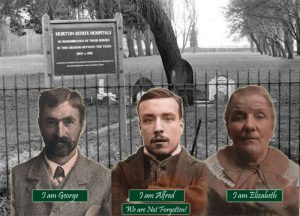
The lives of many former residents of the Horton hospitals, including St Ebba’s, are remembered today through the work of the Friends of Horton Cemetery. The charity seeks to restore this historic Epsom cemetery, the largest asylum cemetery in Europe, to community ownership and researches the lives of those buried there.

More than 9,000 patients from the surrounding hospitals were laid to rest in the cemetery, many with little recognition during their lifetimes. The charity’s website, hortoncemetery.org, shares their stories.

The contrast between that earlier era and the present day illustrates how far attitudes toward epilepsy have progressed. Modern medicine emphasises treatment, independence and inclusion rather than segregation.


Changing understanding of epilepsy

Medical knowledge of epilepsy has advanced dramatically over the past century. Once widely misunderstood and surrounded by superstition, epilepsy is now recognised as a neurological condition caused by abnormal electrical activity in the brain.

Treatments today range from anti-seizure medications to specialised surgical procedures such as the LITT therapy Bolton-Smith underwent. Support networks, advocacy groups and greater public awareness have also helped reduce stigma.

Yet challenges remain, particularly for those newly diagnosed. Bolton-Smith believes that sharing lived experiences can play a vital role in helping others understand the realities of the condition.

Through Diary of an Epileptic, she hopes to contribute to that wider conversation while offering practical reassurance to readers facing similar circumstances.

Diary of an Epileptic: The Hidden Reality is available online.

Sam Jones – Reporter

Photo: The author on Epsom Common


Last round of developers’ funds in Epsom and Ewell to be spent

CIL promo poster against Town Hall

Epsom & Ewell Borough Council is inviting local community groups and organisations to apply for funds, raised by the Community Infrastructure Levy (CIL), to deliver projects that benefit residents and support new development across the borough.

Bid applications will open on Monday 9 March 2026 and close on Sunday 17 May 2026.

This will be the final time that Epsom & Ewell Borough Council will run this funding process. From April 2027, the council will be dissolved and replaced by the new East Surrey Council, which will be responsible for delivering local infrastructure projects across the geographic areas of Elmbridge, Epsom & Ewell, Mole Valley, Reigate & Banstead and Tandridge.

When new development takes place, it can place extra pressure on local services and facilities. The Community Infrastructure Levy enables councils to raise funds from development to be spent on the provision, improvement, replacement, operation or maintenance of local infrastructure—the levy is intended to give councils more choice and flexibility in how they fund the infrastructure required to support local growth.

Last year, Epsom & Ewell Borough Council allocated over ?230,000 from the 2024/2025 Neighbourhood CIL Fund for community infrastructure projects, including:

  • a permanent secure storage shed for The Library of Things enabling residents to borrow useful household items
  • energy-efficient lighting installed in a pedestrian tunnel for the Cattle Arch/Under-Rail Tunnel project
  • a Road Safety Outside School Scheme implemented at Linden Bridge School improving pedestrian accessibility, a safety crossing for children on Grafton Road and traffic flow aids.

Councillor Neil Dallen (RA Town) , Chair of the Strategy and Resources Committee said: “This Neighbourhood Community Infrastructure Levy funding is a real opportunity to make a meaningful and lasting difference in our community. As this will be the last chance to apply through Epsom & Ewell Borough Council, we strongly encourage local community groups and organisations to put forward ideas that could benefit their neighbourhoods.

“We’re proud that the Neighbourhood CIL funding has already helped deliver a wide range of successful local projects – from the recently installed 3G football pitch at Glynn School, to secure specialist bike storage for Wheels for Epsom, the regeneration of disused grounds at the Horton Arts Centre, and the water fountains installed at various locations across the borough. These achievements show just how powerful this funding can be when community ambition and local investment come together.

“As the council launches its final tranche of Neighbourhood Community Infrastructure Levy funding, we want to ensure that money raised from new development continues to support projects that strengthen our community and improve the quality of life for residents across the borough for years to come.”

Application process

The bidding process is designed to be a clear as possible and the application form — available to download from the council’s website, with hard copies at Epsom Town Hall, Bourne Hall and Epsom Playhouse — aims to help make the process simpler. Neighbourhood CIL Funding | Epsom and Ewell Borough Council

Bids will be shortlisted using the criteria set out in section C of the CIL Spending Protocol (adopted March 2025). More information on the process and prioritisation criteria can be found in section 5 of the CIL Spending Protocol.

To receive funding, all CIL spending applications must be for infrastructure. All bids that pass stage 1 of the assessment process will be examined by the CIL Member Working Group, who will make recommendations to the Strategy and Resources Committee for approval.

It is important for each application to be completed in full. The CIL Spending Protocol (adopted March 2025) needs to be read alongside the application form.

Any questions about the application form or process can be emailed to: CIL@Epsom-Ewell.gov.uk.

About the Community Infrastructure Levy (CIL)

  • The Community Infrastructure Levy (CIL) allows councils to raise funds from new developments for infrastructure projects which help to mitigate the impacts of new development. Of the total collected:

    • 80% goes towards strategic borough-wide infrastructure – examples include highway schemes, permanent school expansions, hospitals, and other health and social care facilities
    • 15% is allocated for local projects (neighbourhood CIL) a portion of the CIL is to be spent on local projects in accordance with the CIL regulations and aligns with the Corporate Plan – examples include sport pitches, courts upgrades, public realm improvements and community gardens
    • 5% for the day-to-day costs of administering CIL. 

  • The Epsom & Ewell Borough Council CIL Spending Protocol was approved by the Licencing and Planning Policy Committee on 11 March 2025.
  • The CIL Spending Protocol sets out the Epsom and Ewell Borough specific protocol governing the process and criteria for selecting infrastructure projects for funding through CIL.  When completing a CIL bid form please read the CIL Spending Protocol alongside, as this sets out the guidance and criteria required for your Neighbourhood CIL bid application.
  • More information about the Neighbourhood CIL Fund can be found here: https://www.epsom-ewell.gov.uk/Neighbourhood-CIL

Epsom and Ewell Borough Council


Epsom and Ewell February crime and safety round-up

Man under arrest in street with 2 policemen

Epsom and Ewell Times does not normally report individual crime incidents. However, as part of a trial we are publishing a monthly round-up of crime and community safety developments affecting the borough, drawing on information released by Surrey Police and local authorities.

Police operation in West Ewell results in three arrests

A police operation targeting antisocial behaviour and suspected drug activity in West Ewell led to three arrests during February.

Officers from the Epsom & Ewell Safer Neighbourhood Team, supported by the East Surrey Neighbourhood Enforcement Team and Special Constabulary, carried out patrols around the Watersedge estate. During the evening operation officers conducted 11 stop-searches and two vehicle stops, while gathering intelligence relating to drug use, drug dealing and antisocial behaviour in the area.

Police said the activity formed part of ongoing efforts to disrupt criminal activity in neighbourhood “hotspot” locations.

(Source: Surrey Police neighbourhood updates)

Missing Epsom man located safe and well

Surrey Police issued an appeal during February to help locate Lee, a 63-year-old man reported missing from Epsom.

Police later confirmed that he had been found safe, allowing the appeal to be cancelled.

(Source: Surrey Police)

Prolific thief targeting local businesses identified

Surrey Police also reported action against a prolific offender who targeted businesses across Epsom and neighbouring areas, including Sutton, Wallington, Cheam and Burgh Heath.

Police said the offender entered several premises and stole items including mobile phones during incidents affecting local traders.

(Source: Surrey Police neighbourhood update)

Safer Epsom & Ewell programme continues

The Safer Epsom & Ewell programme — a joint initiative between Surrey Police, Epsom & Ewell Borough Council and partner agencies — continued to develop during February.

The scheme focuses on areas including Epsom town centre, Watersedge and Longmead, using the Home Office “Clear, Hold, Build” approach to tackle organised crime, drug supply, acquisitive crime and antisocial behaviour. (democracy.epsom-ewell.gov.uk)

The programme combines targeted police enforcement with longer-term work involving the council and community partners to address underlying causes of crime.

(Source: Epsom & Ewell Borough Council / Surrey Police)

Crime trends in the borough

Police data for the area indicates that the most commonly reported offences locally include violence and sexual offences, shoplifting, criminal damage and vehicle crime. (surrey.police.uk)

Retail crime and antisocial vehicle use remain key policing priorities, with neighbourhood teams carrying out targeted patrols and working with businesses and community groups to address concerns.

(Source: Surrey Police neighbourhood statistics)

Community engagement and policing events

Neighbourhood officers continued their “Meet the Beat” programme during February, providing opportunities for residents to speak directly with police about local issues.

Sessions were held at locations including Epsom Library at the Ebbisham Centre, where residents were invited to raise concerns about crime, antisocial behaviour and community safety.

(Source: Surrey Police)


How to contact Surrey Police

  • Emergency (crime in progress or immediate danger): call 999
  • Non-emergency police matters: call 101
  • Online reporting and advice: https://www.surrey.police.uk/contact/
  • Crimestoppers (anonymous information): 0800 555 111

Residents are encouraged to report suspicious activity or information that may assist police investigations.

Sam Jones – Reporter

Related reports:

January crime and safety round-up


Epsom and Ewell to ditch Parish Councils plan

Councillors pouring money into allotments cartoon

Epsom & Ewell Borough Council has all but confirmed it will not proceed with plans to create community councils in the borough after consultation responses indicated a lack of public support.

The announcement follows an expensive Residents’ Association led nine-month Community Governance Review (CGR) exploring whether the borough should introduce parish-style local councils – sometimes referred to as community councils – ahead of the planned reorganisation of local government in Surrey.

In a media statement issued on 4th March, the council said responses to the second phase of consultation showed residents did not support the proposals.

Consultation result halts proposal

Councillor John Beckett (RA Auriol) chair of the council’s Standards and Constitution Committee, said the engagement process had asked residents both whether they wanted parish councils and, later, for views on a model dividing the borough into two areas.

The proposal would have created two bodies: Epsom Community Council and Ewell Community Council.

Beckett said: “Responses to the phase two consultation indicate that, at this time, residents do not support the proposals that were consulted upon. The recommendation that will be discussed at full Council is that the Community Governance Review is now concluded and will not be progressed further.”

Councillors are expected to formally confirm the decision at a full council meeting scheduled for 12th March.

Threat of legal challenge

The decision comes after a formal pre-action legal letter warned the council it could face judicial review if it proceeded to create the councils.

Local resident and former senior local government chief executive Nathan Elvery wrote to EEBC chief executive Jackie King on 4th March raising concerns about the consultation process.

In the letter, sent under the judicial review pre-action protocol, Elvery argued the review process was procedurally flawed and warned that if the council made a reorganisation order creating the councils he would seek to have it quashed by the courts.

His challenge raised a number of potential grounds including:

• alleged flaws in the design of the first consultation survey
• reliance on a response rate of around 352 replies from roughly 57,000 electors
• concerns that residents may not have been given full financial information about possible council tax precepts
• failure to present alternative governance models
• and consultation timing spanning the Christmas period.

He also submitted a series of Freedom of Information requests seeking internal documents, financial modelling and details of the consultation design.

Elvery requested the Council defer any decision until the issues were addressed and warned that proceeding regardless could lead to legal proceedings.

Experienced public sector leader

Elvery is a long-standing public sector leader with more than three decades of experience in local government transformation and finance.

He has served in senior roles including chief executive, chief operating officer and executive director across a range of councils and national public sector bodies, and now runs a consultancy advising councils and senior leaders.

Long-running debate

The CGR began in 2025 following Surrey’s Local Government Reorganisation (LGR) plans, which will abolish the borough council and replace it with a new East Surrey unitary authority expected to take over services in 2027.

Supporters of community councils argued they could preserve a layer of local representation after the borough council disappears.

Critics, however, warned they would create a new tax-raising tier of government funded through an additional council tax precept.

Early council estimates suggested a precept of around £43–£46 per Band D household, though opponents argued the real cost could rise significantly depending on staffing and responsibilities.

Readers sceptical in Epsom and Ewell Times survey

An Epsom & Ewell Times reader survey on local government reorganisation gathered 112 opinions. The survey showed a big majority against the idea of new parish-style councils. The survey offered an opportunity for residents to express an opinion about alternative neighbourhood area committees. An option the Council had not provided in its consultation.

The survey results suggested readers were more concerned with maintaining effective local representation and protecting services during the transition to the new unitary authority.

Readers also expressed caution about adding an additional tier of governance funded by council tax.

And readers by a clear majority are against maintaining even a ceremonial mayoralty for the Borough.

The full survey results can be read here:

https://epsomandewelltimes.com/epsom-and-ewell-times-lgr-reader-survey-results

Elections in Epsom and Ewell to the new East Surrey Council are due to take place in May.

Sam Jones – Reporter

Related reports:

Epsom and Ewell Times LGR reader survey results

Epsom and Ewell Parish councils decision looms amid questions over cost, timing and scrutiny

Letters from local Councillors on Epsom and Ewell parishes

Is Epsom and Ewell getting “proportional representation” under Council shake-up?

Long serving Epsom Councillor blasts LGR and NACs

Parish power, democratic ideals — and the Residents’ Association dilemma

Public of Epsom and Ewell to be asked if they want two new Councils

.

.

.

.

.

.


Fresh Local Plan row as councillor questions Green Belt revisions and governance at Epsom and Ewell

Town Hall and Local Plan

Concerns are growing over Epsom and Ewell Borough Council’s Local Plan after campaigners and a borough councillor raised questions about revised evidence submitted to the Government Planning Inspector — including whether key changes were made without councillor oversight.

The controversy centres on documents submitted during the independent examination of the borough’s Local Plan, which will determine where housing development can take place for years to come.

A Green Belt campaign group, a planning expert and Conservative councillor Kieran Persand have all raised concerns about revisions to the evidence base — particularly a Green Belt Topic Paper which could influence whether some land currently protected as Green Belt is opened for development.

Campaigners question governance of revisions

The issue first surfaced in a widely circulated email from the Epsom Greenbelt Group to borough councillors warning of “urgent and serious concerns regarding the recently submitted revised Local Plan documents and the process by which they appear to have been approved and issued.”

Campaigners argue that councillors previously authorised officers only to make minor corrections to documents submitted to the Planning Inspector — not material revisions to the evidence.

They say that if significant changes were submitted without member oversight it would raise serious governance concerns and undermine democratic accountability.

The group has called on councillors to clarify what authority officers relied upon when submitting revised documents and whether the Council’s Monitoring Officer has reviewed the matter.

Expert analysis identifies potential Green Belt changes

Planning expert Tim Murphy has reviewed the Council’s January 2026 Green Belt Topic Paper and identified 33 Green Belt sites assessed for their contribution to preventing urban sprawl and protecting countryside.

Mr Murphy said several sites which scored relatively highly under the Council’s own Green Belt rating system were nevertheless recommended for boundary changes that could allow development.

The sites highlighted include:

  • Land north of College Road at Downs Farm
  • Land near Ewell East Station
  • Land west of Burgh Heath Road near South Hatch Stables
  • Land extending the Noble Park estate within the Hospital Cluster

Mr Murphy said the justification offered was the existence of “exceptional circumstances”, but added that he did not find the arguments convincing.

He noted that these sites have ratings comparable to Horton Farm and the Hook Road Arena — two locations which generated significant public opposition during Local Plan hearings last year.

Other Green Belt sites treated differently

Mr Murphy also pointed out that other Green Belt locations with similar ratings are not recommended for boundary changes, including:

  • Hollywood Lodge
  • Drift Bridge Farm
  • Land off Banstead Road
  • Land east of Burgh Heath Road
  • Several smaller sites near Downs Road

The difference in treatment raises questions about consistency in the assessment process.

Meanwhile, a separate planning application for 110 homes at Langley Vale — on land not recommended for Green Belt boundary change — was recently rejected by councillors by six votes to two.

Councillor calls for urgent review

The debate intensified this week when Horton ward Conservative councillor Kieran Persand wrote to the chair of the Council’s Local Plan Policy Committee (LPPC) urging urgent action.

In his email to councillors, Persand said he had become aware that revised evidence had been sent to the Planning Inspector which “materially differs from evidence previously submitted,” including a document known as COUD_021.

He said the document appeared to have been submitted without review or approval by the LPPC, the committee responsible for overseeing the Local Plan.

Persand wrote that he had already identified “important errors and other concerns” in the document which he believed should have been addressed before submission.

He also said he had been unable to find any significant change in circumstances — such as changes in national policy — that would justify altering the conclusions of the borough’s earlier Green Belt assessment.

Further Green Belt additions possible

Persand warned that the situation may be evolving further.

According to correspondence with the Planning Inspector cited in his email, council officers indicated that additional evidence and amendments could be submitted by 6 March, potentially including recommendations for further Green Belt sites to be added to the Local Plan.

Persand noted that there were no Local Plan Policy Committee or full council meetings scheduled before that date.

“This suggests that the officers’ amendments to submission documents, and proposals for changes to the Local Plan they plan to submit on 6 March, will also not be subject to any review or approval by the LPPC or Full Council,” he wrote.

He warned that proceeding without councillor oversight could expose the council to accusations of failing in its duties and even potential judicial review.

Call for documents to return to councillors

Persand has asked the committee chair to arrange for all evidence documents submitted to the Inspector to be brought before the Local Plan Policy Committee before any further submission.

He acknowledged that doing so could delay the council’s proposed timetable but argued this would be preferable to risking more serious problems later in the process.

Questions to the council remain unanswered

The Epsom and Ewell Times contacted the council’s communications department on 28 February seeking clarification on the situation.

The newspaper asked whether a revised paper recommending the removal of some sites from Green Belt protection had been submitted to the Planning Inspector.

At the time of publication, no response had been received.

What happens next

The Planning Inspector will ultimately decide whether the borough’s Local Plan is “sound” and can proceed.

However, the council itself remains responsible for setting the borough’s strategic direction.

If significant changes to the evidence base are confirmed, councillors may face renewed debate over housing numbers, Green Belt protection and how the Local Plan examination is being managed.

The outcome could shape where thousands of new homes are built in the borough — and whether parts of its Green Belt remain protected — for decades to come.

Sam Jones – Reporter

Related reports:

Epsom & Ewell’s Council responds to Local Plan concerns

Stage 2 Examination of Epsom & Ewell’s Local Plan opens Tuesday

Epsom & Ewell’s Local Plan under the Green microscope

Epsom and Ewell Local Plan Submitted for Examination

and many more. Search “local plan”.


Ewell’s Looe Set for Flush of New Industrial Investment

The Looe, Reigate Road, Ewell. (Credit: Google Street View)

An ageing industrial site in Ewell is set for a major overhaul after councillors backed plans to knock it down and rebuild it with bigger, more modern units.

The scheme at The Looe, off Reigate Road in Nonsuch, will see 17 tired single-storey units demolished and replaced with a new part one, part two-storey building containing nine industrial and business units. Councillors green-lit the plans at an Epsom and Ewell Borough Council planning committee on February 26.

Cllr Phil Neale (RA Cuddington) said: “I think it is going to be a vast improvement. I have had a look at the current site and it’s not one of our most attractive industrial units at the moment.”

There will be fewer units overall (nine instead of 17) but they will be larger, creating more workspace. The total floorspace will jump from 732sqm to just over 1,200sqm.

The new building will mainly cater for industrial and storage businesses. Plans include:

  • One commercial unit (such as a shop or service business)
  • Four general industrial units
  • Four storage and distribution units
  • 16 car parking spaces
  • 18 cycle spaces
  • Solar panels on the roof
  • A small security and plant hut

There will also be a new pedestrian refuge crossing on Reigate Road and a segregated footpath along the access road to improve safety for people walking to and from the site.

Planning officers said the land counted as previously developed ‘grey belt’ land, meaning the redevelopment is not considered inappropriate under national planning rules. The developers have also promised a new planting and habitat improvements to the site, over and above the council’s requirement.

Less office space, more industry

The plans will reduce the amount of office space on the site. But council officers said there is enough office capacity elsewhere in the borough, particularly in Epsom town centre and East Street, to absorb the loss. At the same time, the borough has a shortage of industrial and storage space so the new scheme could help meet demand.

Traffic worries raised

Three neighbours objected, raising concerns about large lorries struggling to access the narrow entrance road, vehicles blocking Reigate Road while waiting to enter, sewage capacity and asbestos removal. Concerns about shared boundary walls were deemed a civil matter, and asbestos removal would be handled under separate legislation.

Highways officers said the development would generate slightly more traffic than the current site, but not enough to cause a “severe” impact on the local road network. The new footpath and crossing were described as public benefits.

Emily Dalton LDRS

The Looe, Reigate Road, Ewell. (Credit: Google Street View)


Surrey Space Institute could lead UK missions to the stars

Prof Amara (Surrey Uni) against imagined background of a rocket into space from UK)

UK-led and UK-enabled space missions within this decade should be the hard-coded goal of the country’s space industry at every level, says the Director of the newly launched Surrey Space Institute at the University of Surrey. 

Professor Adam Amara, who is also on secondment to the UK Space Agency as Chief Scientist, is calling on the sector and government partners to “stop outsourcing ambition and have belief and pride in our capabilities to operate missions on a regular basis”. 

Professor Amara said: 

“There is a real opportunity for ‘middle powers’, as Mark Carney put it, to partner together and compete with the established global superpowers. But this does not mean the UK space industry or the UK public should water down its ambition for what we could accomplish. It is in our gift to establish regular UK-led and operated missions. 

“Megaconstellations, megaprimes, megastates – these are the gravitational forces we feel in the world today. But the extraordinary capabilities held by the UK and our allies can be mobilised, as an antidote to the inertia of giants. The Surrey Space Institute will be a focal point for convening the technologies, the researchers and the companies that will prevent middle-power ambitions being limited by fragmentation. This must become a sectoral, a national and a collaborative commitment to contribute to the promise of space.”  

The Surrey Space Institute was set up precisely to help deliver that commitment. A key focus will be to help the UK grow the skills and capabilities in today’s workforce and for future generations. The Institute will also work with its partners to conceive and operate space missions – combining hardware, software, policy and operations to tackle problems on this planet as well as in deep space. Its research will focus on three areas: managing water and climate on Earth, strengthening space systems such as satellite communications and cybersecurity, and developing the engineering, physiological, legal and economic governance solutions needed to deliver deep space exploration, operation and even settlement. 

The UK space sector has a proud heritage – and Surrey has been at the heart of it, helping to drive the small satellite revolution that proved space could be accessible, not just the preserve of superpowers. The Surrey Space Institute will take that further – forging industry partnerships, opening up space sector facilities to small businesses, and equipping the next generation with mission-ready skills through hands-on research opportunities and specialist Continuing Professional Development programmes.

Surrey University

Image: Prof Amara (Surrey Uni) against imagined background of a rocket into space from UK

Related reports:

Surrey Uni on space mission to darken the skies

Surrey’s Satellite bio-diversity project promoted at COP30 Brazil

Surrey University boldy go to the next galaxy

Surrey scientists invite children to reach for the stars 

.

.

.