Surrey County Council Prison Social Care Team awarded CQC ‘good’ rating
9 July 2026
Surrey County Council’s Prison Social Care Team has been rated ‘good’ by the Care Quality Commission for the dignified support it provides to people in custody with care needs.
The specialist team provides adult social care across five prisons and an approved premises in Surrey, supporting people with dementia, mental health needs, learning disabilities, autism, and sensory and physical disabilities. The team supports prisoners who struggle with daily living tasks, helping them engage with prison services and prepare for a smoother transition on release.
Following an inspection in May, the CQC rated the team ‘good’ across all areas and identified ‘outstanding’ practice in delivering evidence-based care and treatment.
Inspectors praised staff for treating prisoners with kindness and compassion, respecting their dignity and taking a non-judgmental approach.
“People told us their care needs were met, and they liked the staff who supported them,” the report said. “They said the staff were kind and caring and treated them with respect and dignity. People and their relatives were satisfied with the service. People felt their needs were met and they received personalised care and were able to make choices in the way they were supported.”
The report highlighted positive feedback from people the team supports and their relatives, including praise for a staff member who had “stuck by me through all my growing pains” and was “what you call a good social care worker.” Another comment said: “They are very kind and understand mental health which is good.”
Inspectors also recognised the team’s visible and supportive leadership, their collaborative approach with partner services and the effective systems in place to monitor quality, mitigate risk, ensure safe recruitment and maintain good infection control.
The team’s evidence-based approach to delivering care and treatment was found to be outstanding, with the report noting: “The provider always planned and delivered people’s care and treatment with them, including what was important and mattered to them. They did this in line with legislation.”
The Prison Social Care Team, part of the council’s wider mental health social care service, brings together social workers, occupational therapists and support workers. The team is unusual among councils in that every part of the prison social care service – from assessment and care planning through to the direct delivery of care – is delivered in-house.
The team supports people across Surrey’s five prisons – High Down, Downview, Bronzefield, Send and Coldingley – as well as St Catherine’s Approved Premises in Guildford, which supports people as they move from prison back into the community.
Sinead Mooney, Surrey County Council’s Deputy Leader and Cabinet Member for Adult Social Care, said: “This is a fantastic achievement and really shows the dedication and professionalism of our Prison Social Care Team. They’re a small team working in challenging settings and it’s great to see their compassionate, person‑centred care recognised for the impact it has. Alongside the ‘good’ rating for our wider adult social care service in 2024, this is another example of how the council is making sure services are effective for vulnerable residents.
“As we look ahead, we’re proud to be passing on a strong legacy for adult social care to the new councils. We have a talented and compassionate workforce, and our staff have the expertise to deliver a safe transition and ensure the new councils start well.”
Big spending must be approved by new Councils from now
9 July 2026
Major financial decisions across Surrey must now be taken by the newly formed councils – despite the fact they will not take over for almost a year.
Elections held in May voted in two new authorities, East and West Surrey. In April 2027 they will take over the running of public services in the county, and all existing councils will be dissolved.
As part of the process the Government has written to the outgoing bodies to say key monetary decisions now need to be approved by the incoming authorities.
This means land sales or contracts over £100,000 must be kicked up the ladder – as well as capital contracts of more than £1m. It also covers staff contracts.
The order covers Surrey County Council and all the boroughs and districts except for Woking and Spelthorne as they are under the control of Government appointed commissioners due to the state of their finances and need to rapidly improve bottom lines to reduce the huge debt West Surrey will be lumbered with.
The Secretary of State for the Ministry of Housing, Communities, and Local Government, said East and West Surrey should have a say on agreements to be entered to ensure they were in the best interests of the new councils or the residents of the areas they serve.
It would also ensure that any agreements do not undermine or diminish the anticipated benefits or savings as a result of unitarisation or have an effect on the financial position of the new councils.
In practice the old councils have already been operating under this model with the understanding that it would be formalised.
East and West Surrey Councils are expected to publish reports in the next few days that include recommendations into how services across two bodies will be run from next year.
These will come to their respective shadow executives on July 20 and 21 for approval.
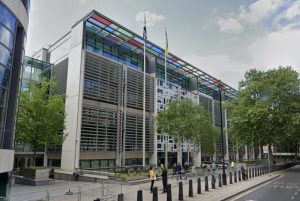
Ministry of Housing, Communities, and Local Government (image Google)
Surrey’s Cathedral to get CCTV protection
9 July 2026
Guildford Cathedral has been granted permission to install security cameras around its listed premises through a fund to protect places of worship from violent attacks.
The cathedral will place 16 new security cameras both inside and outside its main building, which was made possible by the Home Office’s Places of Worship Protective Security Scheme.
Guildford Borough Council has now granted planning permission, giving the green light for these cameras to be installed across the Grade II* listed cathedral.
Planning documents submitted to the council read: “Due to the level of threat of terrorism in the UK remaining substantial, it is perceived that increasing the number of security cameras will help deter attacks on the premises of Guildford Cathedral.
“This work has been advised by the UK government and they are funding the work.”
It comes after new legislation requiring premises to ramp up their security measures to safeguard against potential terror attacks was passed into law last year.
The Terrorism (Protection of Premises) Bill is also known as Martyn’s Law – named after Martyn Hett, who was killed in the 2017 Manchester Arena bombing.
A cathedral spokesperson told the Local Democracy Reporting Service (LDRS) they “welcome this investment” into these security systems, which comes as part of its response to this changing legislation.
They said: “We are grateful to the Home Office for awarding Guildford Cathedral funding through the Places of Worship Protective Security Scheme, which will enable us to install additional CCTV across the cathedral site.
“The improvements will support our ongoing commitment to providing a safe, secure and welcoming environment for everyone who visits the cathedral.”
The colours of the new cameras were chosen to be as discreet as possible, according to planning documents, and will broadly match the render of the walls.
“Whilst measures have been taken to specify discreet cameras and place them in discreet locations, to anyone looking carefully at the cathedral’s fabric some will still be visible,” the documents say.
“However, their visual impact is of little significance when considered against the possibility of damage of which the cameras will help prevent.”
Council planning officers wrote in their approval that the cameras “would not have any adverse impact on the listed building”.
They added: “The proposed development, due to its scale and nature, coupled with the site’s location away from any other sensitive properties, would have no unacceptable impact on neighbouring amenity, in terms of loss of light, loss of privacy or overbearing impact.”
The UK terrorism threat level was raised from “substantial” to “severe” in April – meaning a terrorist attack is deemed highly likely within the next six months.
This designation came following the stabbing of two Jewish men in Golders Green, North London.
There’s more Flat action at Epsom Racecourse this Thursday with six races to get stuck into across the evening; five handicaps and a fillies’ maiden.
Read on for a preview of and tips for the Epsom card, brought to you by BOYLE Sports, who have all the horse racing odds.
First up is a mile and a half handicap for three-year-olds (18.05). Celestarak was a winner last time, while Darkest Red was only narrowly beaten. Zurna could be interesting, making his handicap debut for Julia and Shelley Birkett. Given that Darkest Red can go on any ground and looks favourably weighted here, he could be the one.
Race two is a seven-furlong two-year-old fillies’ maiden (18.40). Tiora Time and Chaise Longue are the only newcomers, but David Simcock’s Minnal brings the best form, having not been beaten too far at Doncaster on debut. Chaise Longue could be good on debut, though, forr her in-form trainer.
Race three is a seven-furlong handicap (19.15). This looks a competitive affair, with plenty of good recent form on show. Dandy Khan looks to be down to a competitive mark now for Kim Boyle, while Jersey Maverick is a course and distance winner who also should be able to win off today’s mark.
Next is a six-furlong handicap (19.50). King Of Chaos and Rage Of Thunder both won their latest starts, and both look hard pressed to reproduce that form today. Aberma Gold is a reasonably reliable sort who looks ready to go again, but Balon d’Or could be the one to beat here from a nice draw in two.
The penultimate race is an extended mile handicap (20.22). Play Me is a course and distance winner and won here last time, while Ritaal could be down to a winnable mark and has first-time blinkers to help here. Swiped is another in first-time headgear and might be worth thinking about.
We conclude with a 10-furlong three-year-olds’ handicap (20.52). The majority of the field are making their handicap debuts here, while the more experienced Sail On Sailor seeks a hat-trick. Sweep In Time is intriguing stepping up in trip for the first time here, a distance that ought to suit well. Living In Hope might be the one to cope with the undulations best, though.
Epsom selections – Thursday:
18.05 – Darkest Red
18.40 – Chaise Longue
19.15 – Dandy Khan
19.50 – Balon d’Or
20.22 – Swiped
20.52 – Living In Hope
Horses racing Image: Credit Paul. CC BY 2.0
The Chinese State is watching us on Surrey Council’s cctv?
9 July 2026
Surrey County Council is deploying CCTV cameras from a Chinese manufacturer which has been banned from government departments over national security concerns.
Cameras made by Hikvision, a company partly owned by the Chinese state, are in use in council libraries in several towns and villages across Surrey.
These include sites in Guildford, Ash, Chertsey, Cobham, Farnham, Merstham and New Haw, according to a Freedom of Information response to the Local Democracy Reporting Service (LDRS).
Chinese law dictates that any companies operating within China must hand over data to the government in Beijing on demand, which prompted the UK to stop the installation of Chinese-made surveillance cameras in “sensitive sites” across Westminster in 2022.
However, this directive does not apply to local government and other public sector bodies at present.
A Surrey County Council spokesperson told the LDRS that its library cameras operate as closed systems, meaning they are not connected to any corporate networks or the internet.
They said: “As a result, the primary risks normally associated with these devices – such as remote access or cyber vulnerabilities – do not apply in this case. The main residual risk would be physical access. However, all units are located within staff-only areas and are appropriately secured. Therefore, the risk level is considered low and appropriately managed within the current setup.”
Hikvision has also faced criticism over its alleged links to the mass repression of Uyghur Muslims in China’s Xinjiang region, where the company’s surveillance technology has been reportedly deployed. Hikvision denies any direct role in human rights abuses.
In 2022, a report by the Office of the UN High Commissioner for Human Rights stated that “serious human rights violations” had been committed against the Uyghur people of Xinjiang.
As many as one million Uyghurs are believed to have been detained in camps and across the region since 2017. The Chinese government denies human rights abuses, and claims the camps are for educational and training purposes.
But analysts have pointed to reports of forced labour and torture inflicted upon the Uyghurs, and have urged authorities in the UK to review their policies towards Hikvision.
Senior Policy Director at the China Strategic Risks Institute Sam Goodman told the LDRS: “After several years of public reporting regarding allegations of Hikvision’s links to human rights violations in Xinjiang and the government banning Hikvision from Whitehall citing national security concerns, there really isn’t an excuse for councils like Surrey County Council continuing to use these cameras.”
A Hikvision spokesperson told the LDRS their products meet “strict security requirements” and “comply fully” with UK laws and regulations.
They added: “Our position on human rights is a matter of public record. We have never knowingly or intentionally committed human rights abuses, and we never will. Hikvision has joined the UN Global Compact, committing to its Ten Principles on human rights, labour, environment and anti-corruption.”
Guildford’s MP has reiterated calls for a third railway station to be built in the town, saying public transport infrastructure “must be delivered” alongside new house building.
Zöe Franklin has urged the government to revive plans for a Guildford West train station, which would be located in the Park Barn area.
Plans for the new station have been floated as far back as the 1990s, but have yet to materialise despite advocates arguing it would boost connectivity to Royal Surrey County Hospital and the University of Surrey.
Ms Franklin told the Local Democracy Reporting Service (LDRS): “The western part of Guildford is growing rapidly.
“New housing developments will bring thousands of new residents to an area that’s already under-served by public transport.
“We must join up housing, transport and economic growth alongside infrastructure, not try to retro-fit it, when congestion and other problems have become ingrained and it becomes, I would argue, a much bigger project.”
If fully realised, Guildford West station would operate on the North Downs Line – which runs from Reading through Guildford and links up to Gatwick Airport.
In 2019, it was reported that the station could be on course to open by 2025, but the project is still yet to materialise.
Surrey County Council reportedly set aside hundreds of thousands of pounds for the project over the years.
Surrey Live reported in January that the authority’s ambitions for the project remain unchanged, although further national funding would be needed for it to proceed.
Ms Franklin, who had been a Guildford Borough councillor before her election as an MP, added: “By providing a realistic alternative to car travel for thousands of existing and future residents, a new station could help reduce traffic-related emissions, supporting both local environmental objectives and national net-zero goals.”
She further said that Guilford’s high housing costs mean many of the town’s workers cannot afford to live locally, and that improving rail links would broaden the labour market for businesses.
“I’ve been supporting this project since I was first elected as a councillor to Guildford Borough Council nearly 20 years ago,” she said.
“Now representing Guildford as MP, it’s given me more opportunities and a louder voice to work on this in earnest.”
Zöe Franklin At London Road Station (Credit: Zöe Franklin)
Local runners reunite for triumphant return of the Perch 2000
9 July 2026
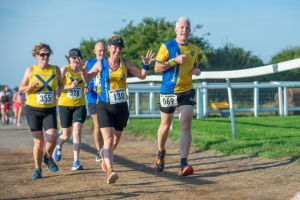
There was a lively atmosphere on Friday evening as the local running community gathered for the return of the Perch 2000 run.
Hosted by the Oddballs Running Club, the event returned after a hiatus, bringing together runners, supporters and volunteers for an evening of local sport on Epsom Downs.
The revival of the Perch 2000 was led by the club’s committee, with Peter Black and Mark playing key roles. Working with the Epsom & Walton Downs Conservators, the team secured the venue and dealt with the practical arrangements needed to bring the historic event back.
The organisers’ plans were then tested by soaring summer temperatures, which led to a safety-based postponement. The run was rescheduled by a week at short notice, with cooler conditions on Friday evening providing a safer setting for participants to take on the course.
Club member, local photographer and councillor Steven McCormick worked with Peter, Mark and the committee in support of the event’s return.
“It’s just fantastic to see everyone out here again,” Mr McCormick said. “The Oddballs committee put in a monumental amount of work to make this happen and to pull off the last-minute date change. Community events like this are the heartbeat of our local area.”
Mr McCormick was also on the sidelines photographing the runners. A gallery of race-day photographs is available to view and download on his website:
Surrey vehicle theft charge rate among lower-performing forces, figures show
9 July 2026
Surrey Police recorded 1,551 thefts or unauthorised takings of motor vehicles in 2025, with charges or summonses recorded in 34 cases, according to Home Office figures analysed by the Liberal Democrats.
That represents a charge or summons rate of 2.19 per cent. In 1,150 cases — 74.15 per cent of the total — the recorded outcome was that the investigation had been completed with no suspect identified.
The figures put Surrey in the lower half of police forces in England and Wales for the proportion of vehicle-theft cases resulting in a charge or summons, but not at the very bottom.
Excluding the British Transport Police, Surrey’s 2.19 per cent rate was the 12th lowest among 43 territorial police forces. The overall England and Wales rate in the data was 2.45 per cent.
Surrey was also among the worse-performing forces for cases ending without a suspect being identified. Its 74.15 per cent figure was the eighth highest of the 43 territorial forces, although it was slightly below the England and Wales overall figure of 75.90 per cent.
In terms of the number of vehicle thefts, Surrey sat around the middle of the national table: its 1,551 recorded offences made it the 20th highest force area out of 43. The highest totals were recorded by the Metropolitan Police, with 31,534 offences, followed by West Midlands Police with 12,979.
Among Surrey’s neighbouring and nearby force areas, Sussex had a lower charge rate of 1.47 per cent, Hampshire 1.80 per cent and Hertfordshire 1.91 per cent. Thames Valley recorded 2.45 per cent and Kent 2.46 per cent. Surrey’s proportion of cases with no suspect identified was higher than in Thames Valley, where the figure was 64.22 per cent, and Kent, at 70.48 per cent, but lower than Sussex’s 80.02 per cent and Hertfordshire’s 77.42 per cent.
Helen Maguire, Liberal Democrat MP for Epsom and Ewell, said the statistics showed that too few vehicle thieves were being brought to justice.
She said: “Across Surrey, people rely on their cars to get to work, take their kids to school, and get themselves to the doctors and other essential services. It is completely unacceptable that 1,551 individuals and families in our county have had their vehicles stolen, with so few of those responsible ever brought to justice.
“How can we expect to deter would-be thieves from stealing people’s cars when so few criminals are actually being charged by Surrey Police? The Government is asleep at the wheel and people in Surrey are paying the price.
“We urgently need to restore proper community policing to tackle car theft. For too long forces have been left overstretched and underfunded, without the resources they need to respond.”
The Liberal Democrats are calling for more neighbourhood policing and for a specialist National Crime Agency team to bring together automatic number plate recognition data, insurance records, border intelligence and information from police forces to target organised vehicle-crime networks.
The figures relate to the offence category “theft or unauthorised taking of a motor vehicle”. A charge or summons is one recorded outcome; cases may also have other outcomes not shown in the comparison.
Epsom Council leader’s delayed response to additional local government layer initiative
9 July 2026
Dalton says Surrey devolution letter was non-binding and rooted in Council’s 2025 vote
Epsom & Ewell Borough Council leader Councillor Hannah Dalton has said her decision to sign a letter supporting exploration of a new Surrey-wide “Foundation Strategic Authority” was based on the Council’s previous backing for local government reorganisation and the prospect of a future mayoral strategic authority.
The explanation follows questions raised by Epsom & Ewell Times over why Cllr Dalton signed the Expression of Interest without the matter first being referred back to the full Council.
Earlier attempts to obtain an answer were met with references to election-period restrictions, prompting criticism that the Council was avoiding a straightforward question about the authority under which its leader had acted.
In a response supplied to EET, and attributed to Cllr Dalton, the Council said the background lay in the Government’s English Devolution White Paper, published on 16 December 2024.
It said that, at a full Council meeting on 6 May 2025, Epsom & Ewell Borough Council agreed to support a proposal for local government reorganisation in Surrey. The proposal envisaged a future Mayoral Strategic Authority for Surrey, led by an elected mayor and intended to unlock the Government’s wider devolution offer.
Cllr Dalton said the Council and other Surrey authorities were now working on the reorganisation process and had recently been invited by the Government to explore a possible Foundation Strategic Authority.
The Council describes this as an intermediate stage towards fuller devolution. It says the letter signed by Cllr Dalton was a “non-binding Expression of Interest”, intended only to keep open the possibility that the proposed new East Surrey and West Surrey unitary councils could later explore creating such an authority.
The response states: “It did not commit the Council, confer obligations upon it, or determine any future course of action.”
It adds that any formal decision would follow a statutory consultation.
The answer clarifies the Council’s position that Cllr Dalton did not require a new Council resolution before signing the letter, because the authority relied upon was the Council’s broad 2025 endorsement of a reorganisation proposal which contemplated a Surrey mayoral strategic authority.
However, it is likely to leave open the political question of whether that earlier approval was sufficiently specific to authorise support for this particular Government initiative, especially where the letter was signed in the name of the Borough Council rather than simply as a contribution to exploratory discussions between Surrey leaders.
A Foundation Strategic Authority is a proposed form of combined authority with devolved powers but without an elected mayor. It may be used as a stepping stone towards a fuller mayoral combined or strategic authority. The Council says discussions with the Ministry of Housing, Communities and Local Government continue, including the next steps and the scope and timing of any statutory consultation.
The Council has directed readers to its online democracy pages for the reports and minutes relating to the 6 May 2025 meeting.
Nescot students restore Pat Eddery memorial bench at Epsom Downs
9 July 2026
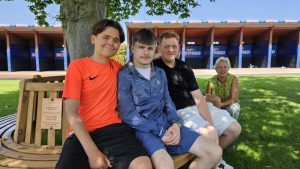
Students from Nescot have helped restore a memorial bench dedicated to legendary jockey Pat Eddery at Epsom Downs Racecourse.
The work gave young people on Nescot’s alternative provision programme, for those aged 14 to 16, practical experience in woodworking and restoration while contributing to one of Epsom’s best-known sporting venues.
Eddery, regarded as one of the most successful jockeys in British racing history, rode more than 4,600 winners during a career spanning over three decades. He was British champion jockey 11 times and won The Derby on several occasions.
His achievements at Epsom Downs, and his long association with the Derby Festival, make the restoration of the memorial bench especially significant.
Following the project, the students were invited to Epsom Downs Racecourse to see the bench reinstated in the Parade Ring. They were also given a behind-the-scenes tour of the historic Queen Elizabeth II Stand by Julie Kapsalis MBE, Principal and CEO of Nescot and a member of the Epsom Downs Racecourse Committee.
The group visited areas not usually open to the public and followed the route taken by King Charles III and Queen Camilla during their recent Derby Festival visit, ending at the Royal Box balcony overlooking the racecourse.
Julie Kapsalis said: “Working alongside The Jockey Club on projects like this is a fantastic example of how education and industry can come together to benefit both students and the wider community.
“Our students have shown tremendous dedication in restoring this important memorial, gaining valuable practical skills while helping to preserve a piece of Epsom’s unique heritage.”
Jim Allen, General Manager at Epsom Downs Racecourse, said the restored bench was “a fitting tribute to one of racing’s greatest jockeys”.
He added: “The students have done an outstanding job. The bench looks absolutely fantastic and is a fitting tribute to one of racing’s greatest jockeys.
“We are proud to see it back in the Parade Ring, where racegoers, owners, trainers and jockeys can continue to enjoy it for many years to come.”
The bench restoration is part of a developing partnership between Nescot and The Jockey Club. Nescot students also sang on the Community Zone stage at this year’s Betfred Derby Festival and have begun work on a large-scale mural for the racecourse underpass, intended to mark the 250th running of the Derby in 2029.
The project combines practical learning with the preservation of a small but meaningful part of Epsom’s racing heritage.
Photo: Nescot students with NESCOT CEO Julie Kapsalis
Surrey astrophysicists explore ultra-black satellite coating to protect night sky
9 July 2026
A satellite coating made from one of the world’s darkest materials could help tackle a growing threat to astronomy, according to new research led by astrophysicists at the University of Surrey.
With as many as 60,000 satellites projected to orbit Earth by 2030, scientists are seeking ways to reduce their brightness in the night sky.
In a new study published in the Monthly Notices of the Royal Astronomical Society, researchers demonstrate how Vantablack® 310 – an ultra-black coating developed by University of Surrey spinout Surrey NanoSystems, which co-authored the paper – could help reduce light pollution from satellites in low Earth orbit.
The growing number of satellites already in orbit has raised concerns among scientists and stargazers. Reflected sunlight from spacecraft can create bright streaks and flares that interfere with telescope observations and large-scale surveys of the night sky.
This can make it more difficult to detect faint objects, including asteroids, distant galaxies and other important astronomical phenomena.
To tackle the problem, the research team measured how Vantablack® 310 reflects light under a range of illumination and viewing conditions. They then used those laboratory measurements to simulate how a coated satellite surface would appear from the ground.
The simulations showed that the coating could make satellite surfaces significantly fainter, bringing their brightness close to the limit recommended by the International Astronomical Union for protecting astronomical observations.
The findings suggest that ultra-black coatings could provide a practical way to reduce the impact of future satellites on astronomy and the night sky.
Astha Chaturvedi, lead author of the study and a postgraduate researcher at the University of Surrey, said: “The night sky is one of humanity’s oldest windows into the universe, but it is becoming increasingly difficult to see things.
“Our results show that relatively simple material choices could make a meaningful difference to how satellites affect astronomical observations without requiring major changes to mission design.”
Vantablack® 310 reflects only around two per cent of incoming light. The small amount of light it does reflect is distributed more diffusely, reducing the bright flashes commonly produced by reflective satellite surfaces.
Dr Noelia Noël, co-author of the study and Senior Lecturer in Astrophysics at the University of Surrey, said: “Space is becoming increasingly crowded, creating challenges not only for astronomers but for everyone who values an unspoilt night sky.
“What is encouraging about this research is that it moves us beyond simply identifying the problem and towards developing practical, evidence-based solutions.
“As an astrophysicist at Surrey, I am particularly proud that a potential solution to this astronomical challenge has emerged from pioneering materials research at our own University. Vantablack® technology grew from work involving my colleague Professor Ravi Silva and was developed and commercialised by Surrey NanoSystems, demonstrating what can be achieved when astrophysics, engineering and industry work together.”
James Whitfield, Applications Scientist at Surrey NanoSystems and co-author of the study, said: “Satellite constellations offer enormous benefits, but their growing brightness presents a challenge for ground-based astronomy.
“Vantablack® 310 combines ultra-black performance across a wide range of viewing angles with the durability needed for low Earth orbit. We are proud to work with the University of Surrey to help protect the night sky while supporting innovation in satellite technology.”
The team is now preparing for an in-orbit demonstration aboard the Jovian-1 CubeSat mission, a student-led satellite programme involving the universities of Surrey, Portsmouth and Southampton.
The demonstration will test both the coating’s performance in the space environment and whether the resulting change in brightness can be measured from the ground.
The wider Light Pollution and Sustainable Space initiative, led by Dr Noël, was named Best Sustainable Project at the University of Surrey’s 2026 Sustainability Awards, recognising its systematic approach to reducing satellite brightness through material design.
The work has also reached the international stage, with lead author Astha Chaturvedi invited to present the research at the United Nations Workshop on Dark and Quiet Skies in Vienna. Dr Noël has also highlighted the wider challenge of satellite light pollution and the need to protect the night sky through her TEDx talk.
Two identical bronze casts – one has been coated with Vantablack® 310 (Credit: Surrey NanoSystems)
Two years on: Helen Maguire’s record as Epsom and Ewell MP
9 July 2026
Helen Maguire marks two years as Epsom and Ewell’s MP today, having won the constituency for the Liberal Democrats at the General Election on 4 July 2024.
Her victory, by 3,686 votes, ended the 23-year Commons tenure of Conservative Chris Grayling and made her the first Liberal Democrat and first woman to represent the seat.
Two years later, her record combines a continuing Westminster front-bench role, a highly visible constituency operation, claims of progress on local health and transport issues, and an unusually public breakdown in relationships with leading local Liberal Democrats.
From Defence lead to specialist health brief
Maguire’s first major Commons appointment came quickly after her election. In September 2024 she became the Liberal Democrats’ spokesperson for Defence, placing her at the head of the party’s Commons work on defence policy, service welfare, veterans and the Armed Forces.
She took part in detailed scrutiny of the Armed Forces Commissioner Bill and has remained active on military accommodation, veterans’ compensation and support for bereaved service families.
In October 2025, she moved to the Liberal Democrat front-bench role of spokesperson for Primary Care and Cancer. She remains a front-bench spokesperson, but the change altered her place within the party’s portfolio structure.
Her Defence post was an umbrella departmental brief. Her current role is a specialist health position within the wider Liberal Democrat Health and Social Care operation, headed by Helen Morgan MP.
Maguire’s focus has since included GP access, pharmacy provision, cancer treatment, NHS dentistry, women’s health, hospital services and patient access to care.
Hospitals, health and primary care
Healthcare has become one of Maguire’s most prominent local themes.
She has repeatedly raised the condition and future of St Helier Hospital, including in her maiden speech and an abseiling adventure at St Helier Hospital. Her office says that, following a sustained campaign involving meetings with hospital stakeholders and parliamentary pressure, St Helier has secured £57 million for its A&E department.
The office also highlights £12 million in funding for Epsom Hospital. It says Maguire has secured commitments to improve endometriosis services after constituents raised concerns about their treatment, including increased clinical capacity, enhanced surgical provision, improved follow-up and stronger administrative oversight.
Her office further says she has supported the national pharmacy funding package in connection with Horton Pharmacy, visited local dentists while pressing for better NHS dental provision, and promoted neighbourhood health centres intended to bring services closer to residents.
At Westminster, she has used her new health role to raise issues including cancer medicines, primary care, breast cancer, patient access to treatment and the impact of NHS policy on people facing complex health conditions.
Rail services, access and local infrastructure
Rail services have been another major local campaign.
Maguire has pressed South Western Railway over reduced train frequencies since the pandemic and argued that passengers in Epsom and Ewell should have greater influence over future timetables. Her office says SWR is expected to launch a formal public consultation on a new timetable, describing this as a step towards restoring services closer to pre-Covid levels.
Accessibility at Ewell West station has also featured. Her office says that, following discussions with SWR, two additional Blue Badge spaces were created alongside a painted pedestrian route, zebra crossing and dropped kerbs providing a step-free route to the station entrance.
She has also raised accessibility issues in Parliament, including concern that some disabled and visually impaired passengers can be disadvantaged by ticket-machine systems and reduced staffed facilities.
Other local campaigns listed by her office include pavement parking, Thames Water sewage discharges, electric-vehicle charging infrastructure and persistent dust and noise complaints connected with the Chalk Pit.
Casework, community activity and local presence
As with any MP, much of Maguire’s work is carried out through individual constituency cases rather than Commons speeches.
Her office says more than 17,000 constituents have received casework, campaign or policy responses over the past two years. That figure covers different forms of contact and assistance, rather than necessarily 17,000 separate individual cases.
Examples cited by her office include help with Personal Independence Payment claims, SEND cases, passport and visa delays, taxi licensing, Blue Badges, housing-association repairs and other departmental or local-authority problems.
The office says she has held regular surgeries and meetings across Epsom, Ewell, Ashtead and Leatherhead, alongside visits to schools, clubs, businesses, health providers and community organisations.
Among the examples highlighted are meetings over the Bridge Youth and Community Centre, the cost-of-living crisis and violence against women and girls; police walkabouts in Epsom and Leatherhead; engagement with the local Hong Kong community over BN(O) visa changes; visits to local dentists and independent businesses; support for sports clubs and park improvements; and activity around Chamber Mead wetlands and the release of water voles.
Armed Forces, veterans and international work
Maguire’s military background remains visible in her parliamentary and constituency activity.
Her office says she has helped press for improved housing standards for service personnel and their families, campaigned for free rail travel to remembrance events for bereaved military families, and maintained links with the local Armed Forces community through Remembrance and Territorial Army events.
She also retains an international profile. Her parliamentary interests include Ukraine, Russia (which has sanctioned her), conflict prevention, humanitarian demining and the impact of explosive weapons on civilians. She has held roles in cross-party groups addressing explosive weapons and conflict-related humanitarian concerns.
Registered interests and comparisons with predecessors
Maguire’s Commons register of interests contains 18 current entries. These include campaign and constituency-event support, hospitality, overseas visits, former rental-property interests, shareholdings held jointly with her husband and an unpaid directorship.
Her register does not show current paid outside employment or a second job. That is a different profile from her two predecessors.
Chris Grayling, now Lord Grayling, has a House of Lords register focused principally on paid advisory roles and rental income. Before him, Sir Archibald Hamilton developed a reputation in the 1990s for holding a large number of outside interests. Contemporary reporting placed him among the Conservative MPs with the highest number of paid external roles.
The comparisons are imperfect because disclosure rules have changed substantially over the decades. But Maguire’s register is materially different from the paid consultancy and directorship profile associated with Hamilton. Her entries are mainly donations, hospitality, travel, shareholdings and historic property interests rather than paid outside work.
All such entries are published under parliamentary disclosure rules and do not in themselves imply wrongdoing.
Local Liberal Democrat rupture
The most difficult political aspect of Maguire’s first two years has been the breakdown in relationships within the Epsom and Ewell Liberal Democrat organisation.
Cllr Julie Morris, the long-serving College Ward councillor and now Deputy Mayor, resigned from the Liberal Democrats Group she led and became an Independent. She was later followed by Cllr James Lawrence, her successor as leader of the Liberal Democrat group on Epsom and Ewell Borough Council, who also left the party to sit as an Independent.
Their departures reduced the Liberal Democrat group on the Borough Council and strengthened the Independent group.
Lawrence was explicit in linking his resignation partly to Maguire. He said he believed the MP had become too focused on “leafleting and electioneering” rather than meaningful national policy change. He also referred to concerns about the effect of her approach on volunteers who gave time to the Liberal Democrat Party.
Morris likewise referred to difficulties within the local Liberal Democrat organisation and the MP’s political operation as part of the background to her own decision.
A later episode during the East Surrey Unitary Council election campaign added to the political controversy.
At the count on 8 May 2026, Epsom and Ewell Times reported that Helen Maguire’s communications officer directed newly elected Liberal Democrat candidates not to speak to the media and said journalists should instead seek interviews with Maguire.
Maguire publicly disputed EET’s account at a Westminster reception. However, in subsequent correspondence her communications officer, Esther Holland, accepted that a restriction on media engagement had been in place, while denying that Maguire herself had imposed a “gag”.
The explanation given was that, though on a Parliament sanctioned salary, Holland was also acting as East Surrey Liberal Democrat communications officer and that the temporary restriction was for electoral purposes. Maguire’s office said she knew of the arrangement but had not personally directed it.
The episode did not establish that Maguire herself ordered the media restriction though she was an integral part of its workings and presumably agreed with it. But it became politically significant because it reinforced criticism from former Liberal Democrat councillors that messaging and decision-making were being tightly controlled from the MP’s wider political operation.
Maguire has rejected that overall characterisation. She has defended regular canvassing, community visibility and campaigning as essential ways to identify residents’ problems and take them into Parliament.
A busy and politically mixed first two years
Maguire’s first two years have been active and politically consequential.
She has maintained a high local profile through surgeries, campaigning, site visits, community meetings and casework. Her office identifies progress or claimed successes on hospital funding, rail accessibility, pharmacy provision, sports facilities, local infrastructure and individual constituent cases.
At Westminster, she has remained on the Liberal Democrat front bench throughout, although her role has changed from leading the party’s whole Defence brief to holding a specialist primary care and cancer portfolio.
Her critics within the former local Liberal Democrat leadership argue that her approach has placed too much emphasis on political control, campaigning and messaging. Her supporters will see an energetic MP using visibility and local contact to pursue practical outcomes.
The next stage of her parliamentary term will test whether the activity of the first two years turns into durable local gains: more reliable rail services, improved hospital provision, better primary-care access, effective action on environmental and infrastructure concerns, and stronger support for residents dealing with SEND, housing and public-service delays.
Friend of George Washington who came to Epsom after opposing armed revolt against the Monarchy
9 July 2026
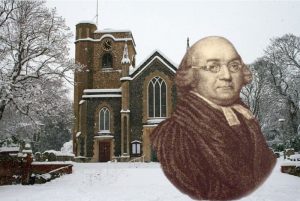
Revd. Jonathan Boucher was the Vicar of Epsom for 20 of the last 25 years of the mediaeval church, 1785–1805.
Born in Blencago, Cumbria, into a family ruined by the Jacobite rebellion, he did however get to WIgton Grammar School and eventually taught at St Bees.
He emigrated to Virginia in 1772 at the age of 16 to teach there. He served first as a tutor to the children of plantation owner Edward Dixon, and ran a school that had as a pupil Jackie Custis, stepson of George Washington.
He returned to England to be ordained and then returned and settled in Maryland through the patronage of the Governor Sir Robert Eden. He settled in Caroline county as rector of St Mary’s Parish where he served until 1772.
He resided in Port Royal but wrote in his diary: “There was not a literary man, for aught I could find.”
He had become a personal friend of George Washington and sympathetic to the interests of the colonists. He opposed the Stamp Act and the Vestry Act. He could not support armed resistance to the king.
He was always a sturdy Royalist and once thrashed a rebel Yankee blacksmith who had insulted his king and country and this made him so unpopular that he had to return to England.
Indeed he had to hold the leader of his congregation at gunpoint to ensure his safe departure. He had been informed that if he dared pray for King George he would be fired at in his pulpit.
Nothing daunted the next Sunday the resolute man ascended the pulpit stairs armed with two horse pistols, one of which he laid on either side on his pulpit cushion; with this preamble he preached what has become known as his “Farewell Sermon”.
In an unflinching sermon, on Nehemiah 6,10-11, he ended with this stinging passage.
“Unless I forbear praying for the king I have been notified that I am to pray no longer. No intimation could be more distressing to me; but I do not require a moment’s hesitation distressing as the dilemma is. Entertaining my respect for my ordination vow, I am firm in my Resolution, whilst I pray in public at all, to conform to the unmutilated Liturgy of my Church and reverencing the injunctions of the Apostle ‘I will pray for the king and all who are in authority under him as long as I live’. Yea while I have my being, I will, with Zadok, the priest and Nathan, the prophet, proclaim GOD SAVE THE KING”
The Americans had no heart to fire at so bold and honest a man and Jonathan Boucher descended his pulpit stairs unharmed.
On September 10, 1775 Revd. Boucher and his wife amidst tears and cries of their slaves, went aboard the ship “Nell Goynne” and sailed for England, where he received a government pension.
No longer living a life of ease and affluence he was at first supported by William Stevens and Friends.
Wm Stevens was it was ten years later, through the good offices of Revd. J. Parkhurst, another member of Stevens’ circle, he was appointed Vicar of Epsom in 1785.
While serving here in Epsom he gained a reputation as a writer and scholar and acquired a reputation as one of the finest preachers of his day.
He made substantial contributions to William Hutchinson’s “History of the County of Cumberland” (1794) his home county and where he was educated and had his first teaching post in St Bees.
St Bees School is on the Cumbrian coast below Whitehaven. Interestingly, in the American Revolutionary War, Whitehaven was raided by John Paul Jones the well known United States naval commander.
According to some this attack, in 1778, was the very last invasion of England.
He went on to write “A view of the Causes and Consequences of the American Revolution in thirteen discourses preached in North America between the years 1763 and 1775 which he dedicated to George Washington published in 1797, as well as “a Glossary of Provincial and Archaic Words, which was later used by the compilers of Webster’s Dictionary, and “Reminiscences of and American Loyalist” published in the 1870’s.
A magisterial biography and appreciation of his role in the revolution by Anne Young Zimmer “Jonathan Boucher: Moderate Loyalist and Public Man” (1966). In a Wayne State University Dissertation can be found on the internet
In 1786 Boucher wrote to make a proposal of marriage to Miss Mary Elizabeth Foreman a lady of about his own age (48) who had devoted herself to looking after two sick and elderly maiden aunts recently deceased.
She accepted the offer and, in anticipation of their union, Jonathan rented from Northey a large house on Woodcote Green [Woodcote House] for £100 p.a., purchased a coach and four horses, hired seven servants etc to set up an establishment in a “dear but genteel neighbourhood”.
Sadly, she, his second wife, survived only until 17 September1788.
Following her demise, Boucher had spent months away in Cumberland adding to his real estate at Blencogo but seems to have returned in December 1788 to a ‘melancholy and uncomfortable home…at the Vicarage – extremely inconvenient and quite too small especially for the books (he had ten thousand of them according to White and Hart, many collected for an improved edition of Dr. Johnson’s English Dictionary), whilst impossible to be enlarged and improved at any reasonable expense’.
He decided to purchase ‘a good house with about 5 acres of land on Clay-Hill’ although distant from the church and with an unsatisfactory water supply: alterations to provide rooms for a library were not completed until July 1789.
Consequently, when Edwards conducted a survey for his COMPANION FROM LONDON TO BRIGHTHELMSTON the vicarage house was occupied by ‘Miss Boucher’, the Vicar’s daughter.
Jonathan Boucher continued vicar of Epsom until his death in 1804.
Epsom’s Rosebery School has a foundation for students’ ambitions
9 July 2026
Rosebery School in Epsom has launched a new charitable foundation aimed at helping pupils pursue their ambitions regardless of their financial or personal circumstances.
The Rosebery Foundation has been established as part of the wider GLF Schools Foundation, supported by donations from former pupils including the family of Dianne Long, who joined Rosebery School in 1953.
Rosebery, which is part of the GLF Schools multi-academy trust, said the Foundation will help remove financial barriers which can prevent pupils from taking part in opportunities outside the classroom.
Its work will focus on five main areas: enrichment and opportunity; wellbeing and belonging; leadership and empowerment; networks and futures; and Rosebery Rewilding, which promotes wellbeing and personal development through nature and outdoor learning.
The Foundation will also seek to draw on the school’s wider community of former pupils, parents and partners to create mentoring opportunities, professional connections and new experiences for pupils.
One of its first major projects will be a summer visit to the European Space Centre in Belgium, intended to encourage girls interested in science, technology and maths.
The visit has been funded by Dianne Long and the Di Long family through a bursary established within the Foundation.
Holly Lowe, Assistant Headteacher at Rosebery School, is leading work on the Foundation. She said: “At Rosebery, our students are highly aspirational and achieve exceptionally well. Within school, we expect them to use their voice, take intellectual risks and see themselves as leaders. It is simply part of how we work day to day.
“The reality, however, is that all girls will encounter barriers beyond school. The wider world does not always reflect or reinforce those expectations in the same way. For disadvantaged students, these challenges can be felt more keenly, particularly where there is less access to enrichment, professional networks and the kinds of experiences that open doors and build confidence.”
The Foundation has already hosted an alumnae day as part of the school’s Student Futures Festival for Year 12 pupils.
Fifteen former Rosebery pupils returned to the school, representing a range of generations and careers. They took part in panel discussions, workshops, talks and an afternoon mentoring session.
The school said such events can help build confidence, widen horizons and raise aspirations, particularly for pupils from disadvantaged backgrounds.
Ms Lowe added: “Through the Rosebery Foundation, our focus is on making sure students are not only achieving highly, which they already are here, but are fully prepared for what comes next. Ultimately, it is about ensuring that all our students leave Rosebery ready not just to succeed, but to step into the world with the confidence and the connections to shape it.”
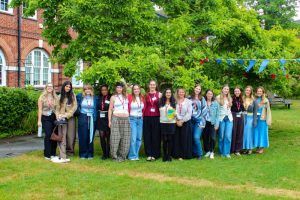
Photo of Rosebery’s first Foundation event, an alumnae day.
Epsom and Ewell Town Twinning Association presents Cyril Frazer Awards for 2026
9 July 2026
The Epsom and Ewell Town-Twinning Association has presented its annual Cyril Frazer Awards, sharing a total of £500 between three local recipients.
The awards went to Nescot’s Performing Arts Department, the Epsom and Ewell Refugee Network, and musical theatre student Julian Jackson.
Nescot received support towards its French-style cabaret production project. The Refugee Network was awarded funding towards the cost of a professional musician for the Ukrainian ladies’ Renaissance Choir.
Julian, who studies at Laines Theatre Arts, received an award to assist with his continuing musical theatre studies.
Association chairman Nigel Collin said: “We were really impressed by the quality of these entries and the committee decided that none of them deserved to miss out.
“So I am delighted that we are able to support all three and wish them well with their respective endeavours.”
The Cyril Frazer Award was established by the Twinning Association in memory of Cyril Frazer, who died in 2016.
Mr Frazer was Mayor of Epsom and Ewell when the borough was first twinned with Chantilly in 1995 and was a founding member of the association.
Alongside his commitment to twinning, he had a strong interest in singing and was a keen member of the Epsom Male Voice Choir.
Those interests are reflected in the award criteria. The annual £500 fund is available to individuals and groups within the borough, with applications assessed against criteria including whether applicants live or study locally; meet a particular need, including one connected with mental or physical health; benefit young people; have cultural or educational value; relate to music or performing arts; further links with Chantilly; or support an important twinning or community event.
The prizes were presented at the Twinning Association’s annual general meeting at Epsom Town Hall on June 23 by the Mayor of Epsom and Ewell and the association’s honorary president, Cllr Lucie McIntyre.
I read with interest your article of 2 June about the recent Local Plan consultation.
Mr Brown’s contention that the consultation was unconstitutional was undoubtedly correct. This is because the Local Plan documents being consulted on were required first to be ‘considered and approved’ by the Licensing and Planning Policy Committee (LPPC) under the council’s constitution.
Digging a little further into this failure of the elected councillors to review Local Plan documents indicates that this is a pervasive and deeply concerning issue.
The Local Plan is the single most important output, by the council, for the future of the borough. Given the local government reorganisation, it should also be the council’s swan song; an opportunity to provide clear and positive strategic direction for the next 14 years.
How has the council gone about achieving this? There are a plethora of articles in this paper highlighting repeated failures of the Residents Association-led council to direct, review or challenge the Local Plan process over several years. This would be concerning enough on its own, but is exacerbated by not just a reluctance, but an outright refusal by Residents Association (RA) councillors to undertake the role they were elected to perform.
Reviews of Local Plan documents should have been happening frequently and as a matter of course. As they weren’t, opposition councillors took the unusual step of working together to try to hold the council to account.
Motions have repeatedly been brought both to full council and to the LPPC attempting to require councillors to review Local Plan documents, but on every occasion they have been voted down by RA councillors.
There appears, to interested observers, to have been a systematic and ongoing attempt to confound any and all attempts to scrutinise the Local Plan. This has happened for several years, with the three most recent examples being:
The request by Cllr Lawrence in the 10 March 2026 LPPC meeting to review the new Local Plan documents before they were submitted to the Inspector. The Monitoring Officer advised against allowing this request. The Chair, Cllr O’Donovan confirmed he hadn’t even seen the documents being submitted but refused the request to allow the committee to review them. Cllr Reynolds encouraged the Chair to put the decision to a vote but was turned down.
The mid-March 2026 request by Cllrs Persand, Freeman and Geleit to hold a Special meeting of the LPPC to agree to review the Local Plan documents before they were submitted to the Inspector. The Monitoring Officer delayed holding the meeting for 2 months until 19 May 2026, after the documents were submitted. The RA councillors voted not to review the documents.
Given the urgency of the matter and the failure of the LPPC to perform its role, on 11 June 2026, a request was made by Cllrs Persand, Freeman, Geleit, Ames, Howells, Lawrence, McCormick and Goldman for an Extraordinary Council Meeting. The motion was to require the LPPC to review the Local Plan consultation documents, and if appropriate approve them, in accordance with the constitution. The meeting should clearly have been scheduled by the Monitoring Officer to occur prior to the 2 July public hearings on the consultation documents. The Monitoring Officer has instead delayed the meeting until 21 July and tagged it onto the pre-existing council meeting, after the consultation hearing has been completed.
The councillors mentioned above, from all opposition parties, should be applauded for their tenacity and their willingness repeatedly to stand up for the residents they represent.
Residents are asking why the Monitoring Officer appears to repeatedly obfuscate, delay and obstruct, and why RA councillors are not taking the lead, or at least supporting, attempts by opposition councillors to execute the roles they were elected to perform.
Given all the above, it perhaps should come as no surprise that the RA was all but wiped out in the recent East Surrey Council elections. Despite this, or perhaps because of it, the RA should take the opportunity to do what they should have been doing all along, actively engaging with, and reviewing the Local Plan documents. They should be ensuring the documents are factually correct (which in many instances they have not been), that they align with the council’s strategy and that they represent the views of the borough’s residents.
This is the RA’s last chance either to redeem its reputation and leave the door open to a future return to council membership, or to leave residents bitterly resenting the final failures of the group so many of us voted for over the years, as they hammer nails into the coffin of the RA group’s legacy.
Whose Local Plan is it anyway?
The Local Plan is written by the council and is the responsibility of the council throughout its drafting and execution.
Since the examination started last summer, council officers and councillors have repeatedly distanced themselves from the changes officers have specifically proposed to the inspector. These council proposals include building on extensive additional areas of green belt land such as Downs Farm, Priest Hill, Burgh Heath Road and Cuddington Glade.
Having actively put these sites forward, officers and councillors have denied responsibility, repeatedly arguing that it is ‘the inspector’s Local Plan’ and that they have no say in what happens.
It is worth highlighting that the government guidance says quite the opposite. When reviewing the council’s Local Plan, the government is at pains to clarify that:
‘The Inspector will always bear in mind that the planbelongs to the LPA, and subject to the duty to ensure the plan’s soundness, will not seek to impose his or her own views on its vision or its content.’
(The ‘LPA’ is the Local Planning Authority, in this case Epsom and Ewell Borough Council).
It couldn’t be much clearer, councillors, the plan is your responsibility before, during and after the examination. If you choose not to review proposals to put in deeply unpopular sites for development, you remain responsible for the proposals and accountable to residents for them.
Will the RA councillors perform the role they were elected to perform and that the constitution requires, or will they continue to shirk that responsibility? Time will tell, but that time is running out.
A new clinic specialising in adult ADHD has opened in Epsom & Ewell: Kiam Clinic
9 July 2026
For many adults, years of quietly struggling with focus, organisation, time management or restlessness can finally start to make sense once ADHD is recognised. Yet with NHS waiting lists for assessment now stretching to several years in many parts of the country, a growing number of people are choosing to seek answers privately.
When carried out properly, at a reputable, Care Quality Commission (CQC) registered clinic and by an experienced specialist, a private ADHD assessment can be a genuinely life-changing step. It opens the door to the right understanding, support and treatment.
A new clinic, Kiam Clinic, has opened in the heart of Epsom to bring expert, locally accessible adult ADHD care to the Epsom and Ewell community.
The clinic offers comprehensive adult ADHD assessments and, where clinically appropriate, ongoing treatment and medication management, all delivered in line with national clinical guidelines. Its aim is to provide a clear, thorough and compassionate route to diagnosis, helping people finally understand themselves and access the support they need to thrive at work, at home and in everyday life.
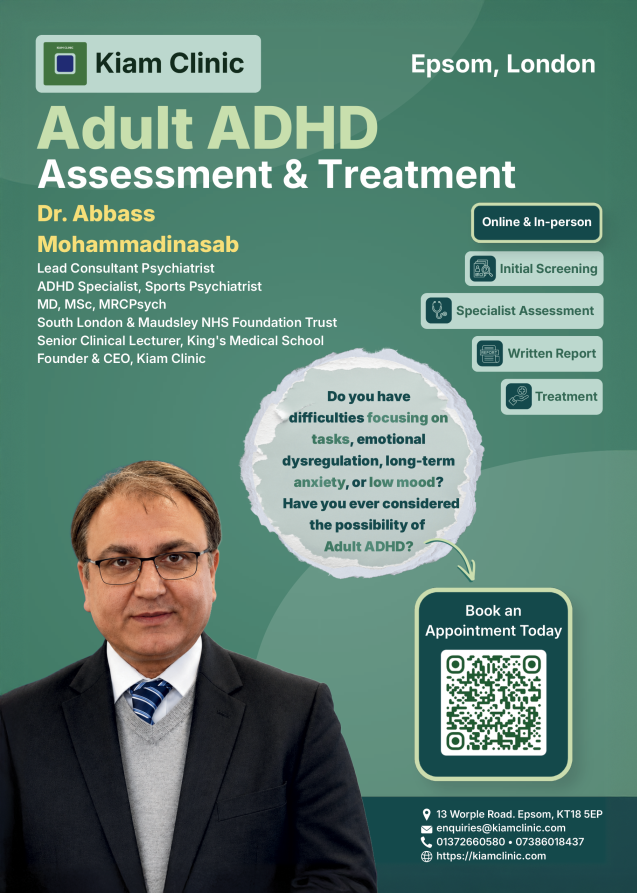
Care at Kiam Clinic is led by Dr Abbass Mohammadinasab (MRCPsych), Consultant Psychiatrist and the clinic’s Founder. Alongside his work at the clinic, Dr Abbass is a Senior Clinical Lecturer at King’s College Medical School and brings extensive NHS and academic experience to every assessment he carries out.
Kiam Clinic is registered with and regulated by the Care Quality Commission (CQC), giving patients the reassurance of a service that is safe, professional and held to recognised national standards.
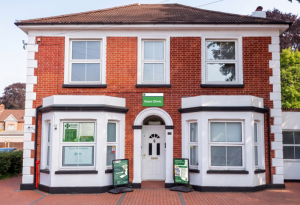
The clinic occupies a spacious, purpose-equipped premises with more than 15 consulting rooms. As well as running its own ADHD service, Kiam Clinic is helping to create a hub for healthcare in the local area: a number of its rooms are available to rent to fellow practitioners, from therapists and counsellors to other medical and wellbeing specialists, looking for high-quality, professional clinical space in Epsom.
The team says its goal is a simple one: to make expert psychiatric care more accessible to the local community, in a welcoming and professional setting, while helping to reduce the long waits that so many people currently face.
Whether you have wondered for years whether ADHD might explain your experiences, or you are a practitioner looking for a professional home for your own practice, Kiam Clinic extends a warm welcome to the Epsom and Ewell community.
To find out more about adult ADHD assessment and treatment, or about renting clinical space, visit the clinic’s website.