Epsom and Ewell Times
19th November 2026

ISSN, LDRS and IMPRESS logos

New Surrey Unitary Council CEO salaries to continue to outstrip national leaders

Sue Halliwell (image SCC)

The CEO of the newly created West Surrey Council is set to pocket a £236,485 annual salary.

Susan Halliwell, currently oversees Bracknell Forest Council and is expected to take over the top job after beating out nine other applicants.

Her recommendation follows a lengthy national recruitment campaign that was supplemented with an active search by recruiters GatenbySanderson who contacted 147 serving chief executives and those with experience of leading in a unitary or upper tier environments.

A long-list of six candidates were then invited to attend technical interviews led by an experienced unitary council chief executive who had  been through Local Government Reorganisation themselves.

Five candidates were then invited to take part in a comprehensive assessment process on September 3 at Millmead House in Guildford. 


Office Annual salary
UK Prime Minister £174,039
First Minister of Scotland £190,284
First Minister of Wales £174,600
Chief Executive, Surrey County Council approximately £237,000

This was to assess their strategic leadership capability, political awareness, stakeholder engagement skills and readiness to lead West Surrey Council through its establishment and beyond Vesting Day, documents read.

In the end Susan’s experience, leadership approach, and values that aligned with the ambitions of West Surrey, led her to be considered a strong fit.

Susan’s chief executive and senior leadership experience has seen her carry the responsibility for a workforce of more than 2,300 staff and a budget of over £400m.

She is said to have a strong track record of organisational transformation, financial stewardship, service reform and delivery of political priorities.

Interim head of paid service Andy Brown has been overseeing the role out of the new council while a permanent appointment is made.. He will remain in post while transition arrangements are finalised.

Councillor Paul Follows, Leader of the West Surrey Shadow Council, said: “I am delighted that Susan Halliwell has been identified as our preferred candidate for chief executive of West Surrey Council.

“Susan is an outstanding and highly respected local government leader with a proven track record of delivering large-scale transformation and improvement. She has successfully led organisations through significant change while maintaining a relentless focus on improving outcomes for residents and creating positive working environments for staff.

“Subject to full council agreement, I am looking forward to working closely with her to create a council that delivers excellent services, supports thriving communities and provides strong local leadership across West Surrey.

“I would also like to thank Andy Brown for his dedication and leadership as Interim Head of Paid Service for the West Surrey Shadow Council. Andy has played a crucial role in helping us prepare for vesting day and establish strong foundations for the new authority. We are grateful for his continued support until Susan takes up her post.”

Prior to joining Bracknell Forest Council, Susan served as executive director of place at West Berkshire Council and held senior leadership roles at Oxfordshire County Council.

The West Surrey Conservative group has also welcomed the recommendation and wished her success in the new role.

Cllr Jane Austin said: “Conservatives have been closely involved throughout the recruitment process, and know the strength of the field from which this appointment has been made.

“The scale of the task of bringing together six existing councils, several of which face significant challenges, should not be underestimated. 

“We look forward to working with our new chief executive to build a financially sustainable council which delivers excellent services and represents all our communities.”

Chris Caulfield Local Democracy Reporter

.

Sue Halliwell (image SCC)

.

.

.

.

.

.

.


Kingswood “blot on the landscape” development approved

Legal and General House, where the DC movie Wonder Woman was filmed, will be turned into housing (image RBBC)

A Grade II* listed site on the edge of the Surrey Hills where a major Hollywood blockbuster was filmed is to be turned into a £200m housing and leisure complex.

Planning permission has been approved to turn the former Legal and General building and surrounding lands into 299 homes, two swimming pools, and office space – with speculation it could be operated by David Lloyd.

The project, led by City and Country Residential, will be constructed in phases, and includes the refurbishment and conversion of the Legal & General House – where the DC hit Wonder Woman starring Gal Gadot and Pedro Pascal spent eight weeks filming.

The site will be split into 122 later living  units and supporting facilities, and up to 177 private homes. Its vast 1,500 capacity car park will be reduced to 709 spaces.

Legal and General House, in St Monicas Road, Kingswood, sits within 19 hectares in the green belt nestled about a kilometre from the boundary of Surrey Hills with the designs following a previously approved 2019 application.

Key changes included more market housing and the leisure facility that will feature playing courts and a sports pavilion available for public use. 

The Wednesday September 9 planning committee at Reigate and Banstead Borough Council heard the development was needed to fund the repairs of the grade 2* listed building and ensure its future occupancy. 

To the disappointment of the committee, the developers said it was unable to provide on-site affordable housing as it would have made the project unaffordable.

Councillor Sam Walsh (Conservative: Banstead Village) said: “I wouldn’t have listed it, if anything, I’d have demolished it. It’s an absolutely awful building.

“Its a dreadful blot on the landscape but actually the application we have in front of us, notwithstanding the points of the viability, bringing more into use and the standalone leisure facility. I think is important for the community.”

He added that the plans “turned  around a pretty revolting design of the excesses of the 80s and 90s to quiet a sophisticated residential development.”

Cllr Michael Blacker (Conservative: Reigate) said: “I think we’ve got to welcome the development and the housing and I’m very pleased to see they were going to put a sports centre in, whether its David Lloyd or not. 

“I think that will be a very good feature and I hope it will be well used.”

Chris Caulfield Local Democracy Reporter

.

Image: Legal and General House, where the DC movie Wonder Woman was filmed, will be turned into housing (image RBBC)

.

.

.

.

.

.

.

.

.

.


Ali G statue petition rejected

Ali G Indahouse (Universal Pictures)

A proposed attraction celebrating Ali G in Staines has been rejected by councillors after a petition backing the move gained enough signatures to be put forward for debate.

The petition, which was signed by more than 300 residents, called for a temporary landmark to tie in with the Sacha Baron Cohen character’s new film.

Staines famously changed its name to Staines-upon-Thames in 2012, which was widely believed to be linked to negative attention brought by the fictional resident’s 2002 hit film.

But speaking before a Spelthorne Borough Council committee, petition organiser Alex Balkan said: “I’m not asking you tonight to approve an Ali G statue. I’m asking you to explore an opportunity for Staines.”

He added: “Beneath the humour is a serious question about our town centre. Can an association Staines already has, be turned into more visitors, more footfall and more spending?”

Mr Balkan believes an Ali G attraction would bring an economic boost to the town, and cited Manchester’s Bee in the City installation from 2018 as a possible model for inspiration.

However, several councillors on the corporate policy and resources committee were dismayed at the proposal, pointing to the character’s divisive legacy in Staines.

Councillor Howard Williams (Independent Spelthorne Group: Staines) said: “Every resident I have spoken to has given me very clear guidance that they do not support anything that promotes Ali G in this borough.”

He added: “Ali G has consistently belittled every location he’s ever visited. My view on this is it’s a strong – no, no, no.”

The petition also calls on the council to approach actor Sacha Baron Cohen to ask for his support on the potential project – and makes clear that it does not want the statue to be funded by residents’ council tax.

While others praised Mr Balkan for taking time to organise a petition and inspiring the debate, many councillors felt the negative impression of Staines left by the original film made it hard to support an attraction.

However, some members of the committee were a little more positive about the proposals, and took Mr Balkan’s point that Ali G had helped put Staines on the map.

Councillor Darren Clarke (Conservative: Laleham and Shepperton Green) told the committee: “There’s something about a confident person being able to laugh at themselves. 

“And this is a really important thing. If you are confident, you can laugh at yourself.”

He added: “We have a real lack of confidence within Spelthorne, and this young man [Mr Balkan] is looking at ways of how we can build confidence. How can we make the high street a better place to be?”

But ultimately, committee members overwhelmingly voted against pursuing a temporary Ali G attraction as suggested by the petition.

Following the decision, Mr Balkan told the Local Democracy Reporting Service (LDRS): “What’s clear is that no matter how strong the economic case, no matter how many local businesses supported it, none of that mattered to the majority of councillors – Ali G hurt their feelings. 

“Spelthorne Council could not, after over 20 years, take the joke and allow the high street to benefit.”

He added: “I hope we can push something that helps the high street next time which does have the council’s support, and is less controversial. 

“But life is a choice of what is right and what is easy – sometimes doing the right thing will upset people.”

A Spelthorne Borough Council spokesperson said: “The petition was formally received and debated by the committee in line with the established process. 

“After considering the proposal, the committee decided not to support it at this time, recognising the need to focus on other priorities – particularly protecting and delivering essential local services and preparing for the ongoing local government reorganisation.”

James Moules Local Democracy Reporter

Related report:

Staines Ali G fans hope for Massiv support for statue


Secret Legal Advice that leaves Surrey high and dry?

The legal advice that forced the nationwide cancellation of local government reorganisation, with the single exception of Surrey because it was too far down the track, will be kept private, the secretary of state said.

It has led to fears the county has been ‘thrown under the bus’ with Surrey County Council and its 11 boroughs and districts set to dissolve and be merged into two mega authorities under shadowy legal circumstances.

Last year the county was selected to be fast-tracked to undergo generational reorganising. Councils that had stood for more than half a century would be closed down and their services merged – with residents told it would save money.

It was then to be rolled out across the country but this week came the shock announcement the entire process, save for Surrey where elections had already taken place , would be put on ice.

Those who called to see the legal advice that caused the seismic u-turn were told it wasn’t government policy to divulge such information.

West Surrey leader Councillor Paul Follows, writing to Angela Rayner, Secretary of State for Housing, Communities, and Local Government, said: “The change in approach to local government reorganisation (LGR) set out in your ministerial statement…has raised several questions about the process undertake in Surrey.

“Your statement referred to legal advice that has informed the position of the present administration of national government, to the effect that the LGR process to date was not sufficiently robust or legally sound.”

He said understood Surrey’s position, that legislation to create the East and West Surrey Councils had been passed and elections held, but called for the new legal position to be shared so Surrey could best understand its new landscape.

He added: “If that decision making process has been deemed legally faulty or otherwise unsound I would like to ask for the opportunity for my officer to asses the potential impact on West Surrey, and in particular the crucial matters of finance and inherited debt.

“Would it be possible to have a copy of the legal advice on which the government has based its decision to pause the next tranches of LGR.

“I ask this solely to help correct or  compensate for any deficiencies now identified by your department and to ensure the residents of West Surrey are not adversely impacted.”

Speaking in the House of Commons, Guildford MP Zoe Franklin echoed the call for the legal advice’s publication so communities could understand what went wrong with the original process.

She added: “In my own area of Surrey, councils were forced down a reorganisation route that now appears to be effectively abandoned by the Government and questionable on a legal basis. 

“Will the Secretary of State commit to meeting Surrey MPs and the new authority leaders to discuss how our county can avoid the risks and uncertainty that the Government say have prompted this decision elsewhere?”

MP Monica Harding, said: “My constituents in Esher and Walton, in Surrey, are left wondering whether they have been thrown under the bus by a Government who failed to be secure in the legal advice and the costs from the very beginning. 

“This is incompetent. 

“Will the Government release the legal advice? What are the legal implications for Surrey? 

“What extra support will she give Surrey regarding the cost implications?”

Surrey Heath MP Al Pinkerton said: “One of the potential unintended consequences of today’s announcement is to leave Surrey in the slightly discomfiting position of being in an experimental cohort with a sample size of one, the one county being reorganised under this legislation.

He added: “Do the legal concerns that the Secretary of State has expressed today also relate to Surrey?

“If Surrey is affected by those legal concerns, what faith should my residents have that this experiment is not going to come fully off the rails before April 1, 2027?”

The Secretary of State said she understood the strength of feeling but told the commons: “I considered the legal advice provided as part of the judicial review process, and the decision to withdraw the decision reflected updated legal clarity.

“It is a long-standing principle that the Government do not publish or comment on legal advice.

“I have been clear that I want to be able to review these decisions to ensure, as the new Secretary of State, that they are the right ones. 

“We will consider the programme in the round in the light of the Government’s priorities, as set out in “Rewiring the State”, and Ministers will meet with Members of this House and will set out decisions at our earliest opportunity.”

Asked after the debate whether it would publish the advice, the department reiterated the ministerial statements raised in the commons.

Chris Caulfield Local Democracy Reporter

.

Related report:

The shake up of Epsom and Ewell’s local government: was it all a waste of time as Rayner puts pause on LGR elsewhere?


A year in the life of Epsom’s Citizens Advice Bureau

Town Hall
Citizens Advice helps nearly 3,900 borough residents

Citizens Advice Epsom & Ewell (CAEE) has published its Annual Report for 2025/26 following its annual general meeting.

During the year, the charity helped 3,861 people across the Borough of Epsom and Ewell, addressing 11,312 issues.

A team of more than 50 volunteers, supported by 16 paid members of staff, provides the skills and knowledge needed to solve problems, offer reassurance, create stability and help clients towards independent lives.

Lisa Davis, chief executive of Citizens Advice Epsom & Ewell, said: “Behind each of these numbers is a real person: someone struggling with energy debts whilst managing serious health conditions, someone rebuilding their life after domestic abuse, or someone working through decades of accumulated hardship.

“It is a privilege to stand alongside people at their most vulnerable and help them find a way forward.”

Linda’s story

Linda approached CAEE with a large energy debt after being unable to communicate with her energy company to resolve the problem.

She had experienced several health conditions over recent years, including cancer, diabetes, a stroke and mobility difficulties. These had affected her mental health and ability to work, leaving her feeling overwhelmed.

A CAEE energy adviser clarified the situation with the energy company and advised Linda on managing her Unreal finances and minimising her energy use. Linda now feels better able to cope in the future.

Fazia’s story

Fazia moved to the UK with her husband on a spousal visa with no recourse to public funds.

After experiencing domestic abuse, her husband was removed from the home by the police and she separated from him.

Fazia instructed a firm of solicitors to apply on her behalf for an independent visa and access to public funds under the Migrant Victims of Domestic Abuse concession. After receiving no response from the solicitors despite contacting them repeatedly, she approached CAEE.

The charity applied on her behalf and her application was resolved within a week.

An adviser also helped Fazia claim benefits, as she had been without funds for many months, and provided foodbank and Household Support Fund vouchers until she received her first Universal Credit payment.

Fazia is now working towards independently supporting herself and her child.

Clive’s story

Clive’s story is one of many missed opportunities to prevent someone falling into serious debt.

After losing his wife a few years ago, Clive struggled with bereavement and lost his well-paid job. While trying to provide for his children, he began accumulating credit card debt.

His life became harder still when he was the victim of a hit-and-run road accident and lost his son to Covid-19.

By the time he approached CAEE, he was living in his daughter’s flat with several significant health conditions, poor mental health and debts totalling more than £40,000 across nine financial institutions.

More than 12 months later, CAEE is still working with Clive to alleviate his circumstances. With considerable perseverance by both parties, most of his debt has been written off and Clive is on track to live an independent life, financially in control and debt-free.

Lisa Davis added: “CAEE gives people the knowledge and confidence they need to find their way forward – whoever they are and whatever the problem.”

Citizens Advice Epsom and Ewell


Epsom & Ewell residents invited to share ‘Messages of Hope’ for World Suicide Prevention Day

Epsom Picture House

Epsom & Ewell Borough Council is inviting residents to share messages of encouragement and support as part of the Messages of Hope campaign, marking World Suicide Prevention Day on 10 September.

Part of the council’s Health and Wellbeing Strategy, the initiative aims to help people feel connected, reduce the stigma around mental health, raise awareness of local support services and resources, and provide messages of hope to people who may be facing mental health challenges or affected by the loss of someone to suicide.

Messages of Hope display boards will be located at several locations across the borough. Residents are invited to write a message of hope for others and read or take a message that resonates with them. Information about local mental health support services and resources will be available at each location.

From 10 to 17 September, residents can write a message of hope and pin it to one of the boards located at:

  • Ashley Centre, Epsom
  • Bourne Hall Library, Ewell
  • Epsom Library
  • Epsom Picturehouse
  • St John’s Church, Stoneleigh

Chief Executive of Epsom & Ewell Borough Council, Jackie King, Chair of the Community & Wellbeing Committee, Councillor Clive Woodbridge, and the Mayor of Epsom & Ewell, Councillor Lucie McIntyre, will add their own messages to the board at the Ashley Centre on 10 September.

Epsom Picturehouse will host a free Letters of Hope workshop in its café area on 10 September from 2pm to 4pm, led by local facilitator Kate McBarron. Participants will be guided through letter-writing techniques and prompts to help them create messages of hope, with time afterwards to continue writing. To book a place, email epsom.marketing@picturehouses.co.uk or call 07841 724938.

Councillor Clive Woodbridge, Chair of the Community and Wellbeing Committee said: “Mental health challenges can affect anyone, and they can have a profound impact on individuals, families and friends.

“World Suicide Prevention Day is an opportunity to raise awareness, encourage conversations and remind people that small acts of kindness can make a real difference. Through Messages of Hope, we want to show that Epsom & Ewell is a community that cares, where people look out for one another and where nobody has to face difficult times alone.”

“I would encourage anyone who is experiencing mental health difficulties, or who is concerned about someone they know, to reach out for help. One life lost is too much.”

Information about local mental health support and resources can be found here: Mental Health Support and Resources | Epsom and Ewell Borough Council  

About the EEBC Messages of Hope campaign

The Message of Hope campaign aims to create moments of human connection, reduce stigma around emotional wellbeing, and provide accessible messages of hope to anyone who may be struggling. This campaign does not replace professional support; it complements existing suicide prevention efforts by creating opportunities for compassion, conversation, and hope across the borough.

About Epsom’s Picturehouse free letter-writing technique workshop, supported by EEBC

Epsom’s Picturehouse cinema in Epsom Square will be opening its café space for a free Letters of Hope workshop on September 10th, led by local facilitator Kate McBarron. Kate will lead an hour of guided letter-writing techniques, prompts and inspiration from 2pm, followed by time for participants to continue writing and use the resources provided.

About the EEBC Health and Wellbeing Strategy 2025-2028

The strategy supports all residents, with particular attention given to children and young people, older adults, individuals whose health is affected by broader social and economic factors and those whose personal circumstances may disproportionately increase their vulnerability to poor health and wellbeing. The strategy also includes specific references to those who are disproportionately impacted by isolation, disability, digital exclusion and people with long-term health conditions. (Public Pack) Agenda Document for Community and Wellbeing Committee, 08/07/2025 19:30

Epsom and Ewell Borough Council


Reigate to be “initial” HQ for new East Surrey Council

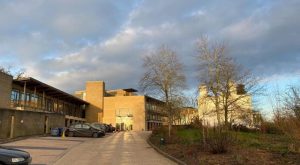
New Surrey County Council HQ, Woodhatch Place on Cockshot Hill, Reigate. Credit Surrey County Council

Woodhatch Place in Reigate has been recommended as the preferred location for East Surrey Council’s main office building from 1 April 2027.

If approved by the East Surrey Shadow Executive on 14 September, this essential, short-term decision will help ensure the new council can operate effectively and maintain continuity of services for residents from the day it is established, as well as providing a flexible workspace for staff

The recommendation is intended to give East Surrey Council a suitable base from day one, while allowing time to develop longer-term plans for its offices and buildings across the area.

Continued access to local council services

Residents will continue to be able to visit existing local council offices across East Surrey to enquire about council services and seek support. Online and telephone services will also continue to be available, ensuring residents can access information and support in the way that works for them.

The proposal of Woodhatch as East Surrey’s initial headquarters, will not affect how residents access council services in their local communities.

Councillor Steve Wotton, Leader, East Surrey Shadow Council said: “This recommendation is about making sure East Surrey Council has the right facilities in place to operate effectively from day one and continue delivering services for residents without disruption. Woodhatch Place offers a practical and cost-effective base for the new council’s administrative functions, while giving us time to consider longer-term arrangements for council buildings across East Surrey. Importantly, residents will continue to be able to access services locally through existing council offices, as well as online and by telephone.”

How was the recommendation made?

A range of council-owned buildings across East Surrey were assessed against several criteria, including accessibility, transport links, office and council chamber capacity, value for money, IT infrastructure and parking provision.

The assessment identified Woodhatch Place as the location best able to meet the operational requirements of the new authority from 1 April 2027.

The recommendation does not determine future staffing structures or individual employee work locations. Any workforce changes will be considered separately after 1 April 2027 and would include staff engagement and consultation where required.

A report detailing proposals for civic functions will be considered at a later date and will include information about proposed meeting locations and times.

Surrey County Council


Epsom and Ewell Times adds:

East Surrey’s new council HQ: where is it and how do Epsom residents reach it?

Surrey County Council has confirmed that Woodhatch Place in Reigate will become the headquarters of the new East Surrey Council when the authority takes over local services on 1 April 2027.

The announcement did not, however, include the building’s full postal address. It is:

Woodhatch Place
11 Cockshot Hill
Reigate
Surrey
RH2 8EF

Woodhatch Place is not a new council building. Originally constructed as the headquarters of Canon UK, it was purchased by Surrey County Council in 2020 and became the County Council’s principal administrative base in 2021. East Surrey Council will therefore inherit an established public-sector headquarters rather than commission a new one.

Epsom and Ewell will form part of the new East Surrey unitary authority. The location of its headquarters will consequently matter to residents, councillors, council employees and anyone required to attend a meeting or appointment in person.

Getting there from Epsom

The most straightforward public-transport journey from Epsom High Street is by bus.

Metrobus route 460 runs from Epsom Clock Tower through Tattenham Corner, Tadworth, Walton-on-the-Hill and Lower Kingswood to Reigate. During the main part of a weekday, buses generally leave Epsom hourly.

For example, the current published weekday timetable includes a 460 leaving Epsom Clock Tower at 9.18am and reaching Reigate, Bancroft Road at 10.07am – a scheduled journey of 49 minutes. Other daytime departures are shown at 10.18am, 11.18am, 12.18pm and then hourly through much of the afternoon. Metrobus route 460 timetable

Woodhatch Place is south of Reigate town centre, rather than beside Reigate railway station or the principal town-centre bus stops. A passenger therefore has two main choices after reaching Reigate:

  • Walk from the town centre to Woodhatch Place. The distance is approximately one to one-and-a-quarter miles and is likely to take around 20 to 25 minutes, depending upon the precise stopping point and the walker’s pace.
  • Change in Reigate to a local 430 or 435 bus serving South Park and Woodhatch. One example using the current timetable would be the 9.18am bus from Epsom, arriving at Bancroft Road at 10.07am, followed by a 435 at approximately 10.21am towards South Park and Woodhatch. It reaches the Hornbeam Road area at about 10.31am, followed by a short walk to Woodhatch Place. Metrobus routes 430 and 435

Allowing for the connection and final walk, a public-transport journey from Epsom High Street to the new headquarters is likely to take about one hour and 15 minutes to one hour and 30 minutes. Traffic through Tadworth, Reigate and surrounding roads can lengthen the journey.

A rail journey is possible but much less direct. Epsom and Reigate are not joined by a simple direct train service, so travelling by rail ordinarily involves changes and, depending upon the route chosen, a further bus or walk from Reigate station. For most passengers starting in Epsom town centre, the 460 is therefore likely to be the more practical option.

Residents should check a journey planner or the operator’s live timetable before travelling, particularly once East Surrey Council begins operating, as routes and departure times may change before April 2027.

Although digital and telephone contact will undoubtedly account for most dealings with the new authority, the Reigate headquarters raises a practical question for Epsom and Ewell residents: whether a journey of potentially 90 minutes each way constitutes sufficiently convenient access to the administrative centre of their new council.


The shake up of Epsom and Ewell’s local government: was it all a waste of time as Rayner puts pause on LGR elsewhere?

Angela Rayner Official Cabinet Portrait, July 2024

Surrey’s political leaders insist the replacement of the county’s 12 councils by two large unitary authorities remains on schedule. But a government review of local government reorganisation elsewhere in England has reopened questions about whether Surrey was right to proceed so quickly with its own costly transformation.

A major retreat by the Government over the restructuring of English local government has inevitably reopened the argument over whether Surrey was right to rush ahead with its own reorganisation.

Housing, Communities and Local Government Secretary Angela Rayner has announced a national review following what her department described as “updated and privileged legal advice”.

Decisions affecting Essex, Hampshire, Norfolk and Suffolk have been withdrawn. Plans for a further 14 areas have been paused, along with reorganisation proposals for Cambridgeshire and Peterborough and West Sussex which had not yet been settled.

Existing councils in those areas will now hold elections in May 2027 on their current boundaries.

The change is highly significant. Only months ago ministers were presenting the abolition of county and district councils across England as an essential part of creating simpler and more economical local government.

Ms Rayner said she wanted to be satisfied that the correct process was in place, that it complied with the law and that the proposals remained consistent with the priorities of a new Prime Minister and administration.

The precise legal advice has not been disclosed because the Government says it is privileged. It follows a succession of threatened or commenced judicial reviews challenging ministers’ selection of boundaries for the new councils.

In Essex, the county council began legal proceedings after former Communities Secretary Steve Reed selected a five-unitary arrangement rather than an option for fewer and larger authorities which was reportedly preferred by departmental officials. Challenges were also launched or contemplated in Hampshire, Norfolk, Suffolk, Portsmouth and Kent.

The Government’s wider retreat has been described by the Local Government Information Unit as threatening to turn the programme into a “colossal white elephant”, consuming thousands of hours of council officers’ and councillors’ time.

Surrey says it remains on course

Surrey’s councils responded quickly to the national announcement by reaffirming their commitment to creating East Surrey Council and West Surrey Council on 1 April 2027.

In a joint release issued through Surrey County Council, they said the Ministry of Housing, Communities and Local Government had confirmed that Surrey would not be affected by the review.

The councils said significant work had already been undertaken to develop the proposals, consult partners and communities and prepare for the transfer of services. They maintained that the new structure would simplify local government, strengthen accountability and improve services.

Councillor Steve Wotton, Leader of the shadow East Surrey Council, which includes Epsom and Ewell, said: “Government has been clear that Surrey’s local government reorganisation programme remains on track.

“Councils across Surrey have worked at pace to develop robust proposals that will deliver long-term benefits for residents, businesses and communities. We remain confident that reorganisation will create stronger, more sustainable local government and help us deliver better outcomes for local people.”

Councillor Paul Follows, Leader of West Surrey Council, said significant progress had already been made and that partners were continuing to work constructively together.

“We remain committed to delivering reorganisation successfully and ensuring that residents, colleagues and partners are supported throughout the transition,” he said.

Residents have been assured that existing councils will continue delivering services normally until the transfer takes place.

The Surrey statement addresses the immediate practical question: the national review will not delay Surrey’s changeover. It does not, however, resolve the wider question raised by the Government’s change of course: whether the original national programme, including the accelerated Surrey process, was soundly conceived.

Why Surrey is different

Surrey has progressed considerably further than the areas placed under review.

The Government decided in October 2025 that Surrey County Council and the county’s 11 district and borough councils should be replaced by two authorities.

East Surrey will encompass Epsom and Ewell, Elmbridge, Mole Valley, Reigate and Banstead and Tandridge. West Surrey will cover Guildford, Runnymede, Spelthorne, Surrey Heath, Waverley and Woking.

The Surrey (Structural Changes) Order 2026 was approved by Parliament, made on 9 March and brought into force on 10 March. Elections for both new councils took place in May.

East and West Surrey now exist as shadow authorities. They are preparing budgets, staffing structures, constitutions and service arrangements before assuming full responsibility on 1 April 2027.

On that date Surrey County Council, Epsom and Ewell Borough Council and the other ten borough and district councils will be abolished.

Surrey therefore cannot simply be added to the list of paused areas through an administrative announcement. Reversing course would require ministers and Parliament to undo an order already in force, deal with two elected shadow authorities and decide whether the councils marked for abolition should instead be preserved.

The existence of that legal and democratic machinery probably explains why ministers have chosen to let Surrey continue. It does not necessarily amount to a fresh examination or endorsement of the merits of the two-unitary model.

Nor does it establish that the legal difficulties identified elsewhere could never have affected the earlier Surrey process. Ministers have not published the new advice or explained in detail why it applies to later decisions but not to Surrey.

The cost before the savings

Surrey’s own published figures show that reorganisation is not a cost-free exercise.

The May 2026 implementation plan estimates that setting up the two new councils before April 2027 will cost £35.3 million.

Surrey County Council is expected to provide £28.24 million. The remaining 20 per cent is being divided among the borough and district councils according to their council tax bases.

Epsom and Ewell Borough Council’s allocated contribution is £454,094.

That £35.3 million covers work before the new councils take over. The implementation plan expressly states that costs incurred after April 2027 will have to be funded by East and West Surrey themselves. The eventual total may therefore be higher.

There are also costs which are harder to place on a balance sheet: senior officers and specialist staff diverted from ordinary council work, consultants and legal advisers, harmonising computer systems and employment terms, splitting Surrey County Council’s budget and assets, rewriting contracts and policies and deciding what happens to hundreds of council-owned properties.

Council tax levels and services which currently differ between boroughs must also eventually be reconciled.

Supporters argue that these are one-off investments which will produce larger recurring savings. The Surrey business case forecast that savings could begin in the first year and increase substantially from year three. Later financial papers quoted a projected saving of about £23 million a year by year five, after allowing for continuing implementation costs.

If those savings are achieved and sustained, a £35.3 million initial expenditure would not by itself prove waste. It could be recovered within a comparatively short period once the full annual savings materialise.

The more difficult question is whether the promised savings will survive the practical complexities of combining 12 councils.

Two councils, but very different financial inheritances

The two new authorities will begin with markedly different financial problems.

Every existing Surrey council is forecasting a medium-term budget gap. West Surrey must also absorb the consequences of Woking Borough Council’s financial collapse and Spelthorne Borough Council’s debt and investment difficulties.

The Government has announced exceptional assistance for Woking, but reorganising boundaries does not make underlying borrowing disappear. Debt, assets, liabilities and interest costs still have to be allocated or supported.

East Surrey avoids Woking’s particular difficulties but will inherit its share of Surrey County Council’s pressures in adult social care, children’s services, special educational needs and school transport. These are among the most expensive and rapidly growing areas of council expenditure.

Unitary status may make it easier to coordinate housing, social care, roads, waste, planning and public health. It does not remove the demographic and financial pressures driving those services.

The Government’s original case for the Surrey changes promised fewer senior managers and councillors, reduced duplication, clearer accountability and more joined-up services.

It suggested, for example, that families needing help with education, social care and housing would no longer have to navigate separate county and borough organisations.

Those are plausible benefits, but they remain promises rather than demonstrated results.

What Epsom and Ewell loses

For Epsom and Ewell, the question is not only financial.

The borough, with its own civic identity and relatively small geographical area, will become one part of an authority stretching from Elmbridge in the west to Tandridge in the east. Decisions presently taken at Epsom Town Hall will ultimately be made by a much larger council serving around half of Surrey.

The number of councils may be reduced, but the distance between residents and the principal decision-making body will increase. Planning, licensing, parks, refuse collection, homelessness and other distinctly local services will be transferred to East Surrey.

That sits uneasily with the claim in the councils’ latest statement that reorganisation will strengthen local accountability.

Area committees, community boards or similar arrangements may be established to maintain a connection with individual towns and communities. Epsom and Ewell’s proposed Charter Trustees could preserve the mayoralty and some civic traditions, but would not replace the borough council’s service-delivery or decision-making powers.

If funded through an additional local precept, the Charter Trustees would also create a modest new layer of cost beneath the new unitary authority.

The tension is clear: reorganisation seeks savings through scale while simultaneously having to devise new structures to restore some of the local connection which that scale removes.

Was it all a waste?

The Government’s pause does not, by itself, prove that Surrey’s reorganisation has been a waste of time and money.

Surrey’s two councils have been established in law, their councillors have been elected and implementation is well under way. Stopping now could waste more of the work and expenditure already committed while creating legal and administrative confusion.

Surrey leaders are also entitled to point to the amount of preparation already undertaken and the need to give certainty to residents, council employees, contractors and voluntary organisations.

Nevertheless, the national reversal seriously weakens the confidence with which the programme was sold.

The policy was announced in the December 2024 English Devolution White Paper and was not contained in Labour’s 2024 general election manifesto, as recorded in the House of Commons Library’s July 2026 briefing.

Surrey was placed on an accelerated timetable, submitting proposals in May 2025 while most other areas were given until the autumn.

Residents were asked to accept postponed elections, hurried consultation and a fundamental alteration of local democracy on the basis that the national direction was settled and the financial case compelling.

Less than two years later, ministers are checking whether much of that programme was lawful, procedurally robust or even consistent with the new administration’s priorities.

Surrey appears to have crossed the bridge just before the Government closed it for a structural inspection.

Whether that makes Surrey fortunate or merely the first county irrevocably committed to a questionable experiment will not be answered by ministerial assurances or council press releases.

It will depend on measurable results after April 2027: the final transition bill, actual rather than forecast savings, council tax levels, the quality of services and whether residents still feel that local decisions are being made locally.

For now, the fairest conclusion is that Surrey’s reorganisation is too advanced to be treated as abandoned expenditure, but nowhere near advanced enough to be declared money well spent.

Lionel Blackman

.

Image: Angela Rayner Official Cabinet Portrait, July 2024

Related reports


Tourist tax to boost Surrey finances?

Tourists queuing outside Epsom Railway Station to pay their tax. Cartoon.

Surrey’s two new unitary councils are considering a “tourism tax” to help buoy their finances amid major changes to local government in the area.

This tax on overnight stays, which regional mayors will be allowed to charge under government plans, could come to Surrey as part of a major overhaul of the county’s councils.

East and West Surrey councils are set to take over power from Surrey County Council and the 11 district councils next April, after which they plan to pool resources on certain services.

It would be achieved through a framework called a foundation strategic authority (FSA), and the two new councils are currently consulting with the government on setting one up. The FSA could then act as a stepping stone towards Surrey having its own overarching elected mayor.

East Surrey shadow authority’s cabinet, which is tasked with setting up the new council, will next week discuss its joint response with West Surrey to the government’s consultation on an FSA for Surrey.

But in their proposed response, the two councils asked for more information about “new fiscal levers” they might be given by the government to help bolster their finances.

This included the possible introduction of an “overnight visitor levy”, more commonly known as a tourism tax, that would allow regional mayors to impose a small levy on paid visitor accommodation in their areas.

The document reads: “As further details are developed, we would welcome clarity on the proposed charging framework, implementation timetable, any exemptions or thresholds, the categories of accommodation that would be in scope, and the extent of local flexibility in how the levy may be applied. 

“We would also welcome further information on how funding raised through the levy may be spent.”

Tourism taxes, which often involve a small fee levied on visitor accommodation, are commonplace in many other countries. A 2025 report by the Centre for Cities think tank described England as an “international outlier” in not imposing such a tax.

Ahead of the 2025 budget, the government announced plans to bring in the overnight visitor levy, which is designed to allow regional mayors to invest more in local infrastructure.

Local leaders would be able to decide whether or not to implement the tax, which would apply to overnight stays in paid accommodation such as hotels, bed and breakfasts and guesthouses.

A cabinet statement from July 2026 says the government will give “all strategic authorities the ability to introduce an Overnight Visitor Levy, with local leaders able to set out plans for how revenues will be invested by March 2028.”

In 2019, a study by the Institute for Fiscal Studies estimated that a £1 tourist tax could raise £420 million per year across England.

A government spokesperson said: “The levy will help ensure local people and economies keep more of the rewards and invest in what matters most to their communities, including reinvesting back into tourism.

“Similar levies in other countries typically add only a small amount per night and evidence suggests that they can have a limited impact on visitor numbers and jobs. 

“Local leaders will need to consult with their areas before introducing a levy, and we’re listening to businesses to make sure money raised is invested effectively.”

Surrey is now just months away from “vesting day” – the moment from which West and East Surrey councils will formally take over management of all local government services in the county.

The shadow authorities’ consultation response also highlights the more broadly fraught financial situation facing local government in England.

“We request early engagement with government on a funding package that appropriately reflects the scale of the functions being transferred, together with certainty on Surrey’s future pathway towards mayoral devolution,” it reads. 

“A firm commitment on both funding and Surrey’s future pathway towards mayoral devolution would provide confidence that Surrey can establish the strong foundations required to realise the full benefits of devolution.”

James Moules Local Democracy Reporter


Conservative Mayoral hopeful seeks ULEZ review

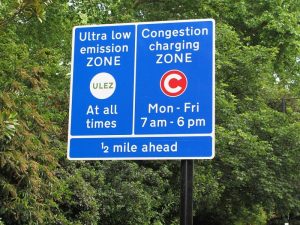
Sign for London ultra low emission zone (geograph 6183970) David Hawgood / Sign for London ultra low emission zone / CC BY-SA 2.0

Surrey’s Conservative shadow authority opposition leaders have thrown their weight behind a London mayoral candidate’s pledge to review the Ultra Low Emission Zone (ULEZ).

Braintree MP Sir James Cleverly resigned from the Tory shadow cabinet at the end of August to stand for Mayor of London in 2028 – aiming to be the first Conservative to hold the office since Boris Johnson.

He told The Telegraph that he would conduct a full review of the London ULEZ if elected, vowing to end what he called Labour’s “war on motorists”.

The ULEZ requires drivers of high polluting vehicles to pay a daily fee of £12.50 to travel within its boundaries. It initially only covered London’s inner boroughs, but was expanded to include the outer London suburbs in summer 2023.

But this expansion was met with fierce opposition in Surrey and the other Home Counties, where many commuters regularly drive into London and are forced to pay ULEZ charges.

Following Sir James’ announcement, the Conservative opposition leaders on Surrey’s two shadow councils told the Local Democracy Reporting Service (LDRS) they fully support a review of the scheme.

West Surrey’s opposition leader Councillor Jane Austin (Conservative: Waverley Eastern Villages) said: “ULEZ does not stop at the London boundary in terms of its impact.

“Surrey residents travel into London every day for work, to run businesses, visit family and access services.” 

Advocates of the ULEZ argue the scheme is a vital programme to improve air quality in the capital, and have pointed to studies showing vast drops in pollution following its implementation.

However, critics argue it places punitive charges on owners of older cars, many of whom may not be able to afford greener alternatives. A scrappage scheme to replace older vehicles ran until September 2024, but this was only available to London residents.

Councillor Austin added: “At a time when households and businesses are already under considerable financial pressure, I think it is entirely reasonable to review the impact of the expanded scheme – including whether the claimed environmental benefits justify the financial burden being placed on residents and businesses outside London.”

Surrey County Council opposed the 2023 expansion of ULEZ, and refused to allow Transport for London to install signage and cameras in the county related to the scheme.

East Surrey opposition leader Councillor David Lewis (Conservative: Cobham & Oxshott South) told the LDRS: “Surrey County Council opposed the ULEZ expansion from the outset because of the lack of support and the impact it would have on Surrey residents. 

“We therefore welcome James Cleverly’s commitment to look again at the scheme and properly examine its economic and environmental consequences.”

Councillor Lewis also called on the West and East Surrey administrations, which will take responsibility for Surrey’s highways next April, not to implement “blanket anti-motorist policies” in the county. 

He said: “Whether it is blanket 20mph limits, Low Traffic Neighbourhoods or other restrictions, changes need to be evidence-led and take proper account of the needs of residents and local businesses.” 

East and West Surrey Shadow Authorities were contacted for comment. The Mayor of London’s office also did not respond to requests for comment.

James Moules Local Democracy Reporter

.

Image: Sign for London ultra low emission zone (geograph 6183970) David Hawgood / Sign for London ultra low emission zone / CC BY-SA 2.0

Related reports


Progress at Banstead’s High Down prison – but drugs and poor conditions remain

HMP High Down from Google maps

A prison near Epsom and Ewell has made encouraging progress in safety and the time prisoners spend out of their cells – but illicit drugs, poor living conditions and delays in rehabilitation remain serious concerns.

HM Chief Inspector of Prisons visited HMP High Down, at Banstead, during an unannounced inspection from 1st to 11th June. The Category C training and resettlement prison held 1,085 men, close to its operational capacity of 1,113.

The inspection report, published on 7th September, described the findings as “generally positive” and praised an experienced governor and strong leadership team.

Safety was upgraded from “not sufficiently good” at the previous full inspection in 2023 to “reasonably good”. Purposeful activity improved from “poor” to “not sufficiently good”.

Respect remained “reasonably good”, while preparation for release was again judged “not sufficiently good”.

Drugs remain biggest threat

The prison had developed a more robust response to illicit drugs, including improved gate security, more extensive testing and a comprehensive programme for prisoners seeking to overcome addiction.

Positive results from random drug tests fell from 31 per cent before the previous inspection to 19 per cent. Although an improvement – and better than at many other prisons – inspectors said the figure remained too high.

Criminal gangs were regularly using drones to deliver drugs and other prohibited items. Window cages had reduced the risk, but some were damaged and weaknesses in windows, grilles and netting continued to provide access.

Inspectors concluded that the illicit economy remained the greatest threat to High Down’s stability, contributing to debt, bullying, fear and violence.

Reported violence had nevertheless fallen by 14 per cent and was broadly in line with other Category C prisons. Self-harm was 22 per cent lower than at the last inspection and there had been no self-inflicted death at the prison since then.

Despite these improvements, 56 per cent of prisoners questioned said they had felt unsafe at High Down, while 31 per cent said they felt unsafe at the time of the survey – both higher proportions than at comparable prisons.

Stark difference in time outside cells

Prisoners in full-time work or on the enhanced regime could spend as much as 10.5 hours a day outside their cells.

For unemployed prisoners, who represented about 10 per cent of the population, the average was only around three-and-a-half hours.

Roll checks found almost a quarter of prisoners locked in their cells during the working day. Inconsistent operation of the regime meant that some were locked up as early as 4.30pm and, in a small number of cases, were not released until 11am the following morning.

There were some popular employment-focused programmes, including railway courses and XO Bikes, which trains prisoners to refurbish bicycles. Construction courses taught bricklaying, plastering, painting and decorating, while other prisoners could qualify as baristas and learn to repair coffee machines.

Most prisoners completing courses achieved their qualifications and inspectors found that teaching standards had improved.

However, attendance at education, training and work remained too low. Some prisoners were not unlocked for scheduled classes, while staff did not always challenge those who refused to attend. Ofsted judged every aspect of the prison’s education and skills provision as “requires improvement”.

Dirty cells and damaged showers

Conditions varied considerably across the prison.

Communal areas were generally clean and some specialist units were well cared for, with gardens, plants and other improvements. Inspectors also welcomed a reduction in the number of prisoners sharing cells.

Elsewhere, cells were dirty and toilets and sinks were described as particularly unhygienic. Few cells had curtains, forcing prisoners to use sheets or towels to block the light, and some reported shortages of basic supplies such as toilet paper.

Many showers were grimy, damaged or lacked screens providing sufficient privacy. At the time of the inspection, 183 cells intended for one person were being shared by two.

The prison library was also too small for the population, with inadequate materials, limited seating and some broken furniture.

Rehabilitation delays

High Down became a Category C training and resettlement prison in 2022, with an emphasis on preparing men for release. Inspectors found that it was still not achieving its full potential in that role.

The offender management unit was understaffed and officers carried high caseloads. Contact was often concentrated on prisoners approaching an important sentence milestone, leaving many others without meaningful help.

This delayed risk assessments, transfers to open prisons and access to offending behaviour courses. There was a particular bottleneck for the Building Choices programme, with insufficient places and what inspectors described as at times chaotic allocation arrangements.

Of the approximately 800 prisoners released during the preceding year whose outcomes were known, around 30 per cent went into sustainable accommodation. About eight per cent were released homeless – still too many, inspectors said, although a lower proportion than at most London prisons.

Only 41 former prisoners were known to be in employment six weeks after release, rising to 58 after six months.

There were positives in resettlement support, including well-coordinated housing advice, help with benefits and debt, and efficient arrangements on the day of release. Family support delivered by the charity Pact and parenting programmes run with Sutton Council were singled out as examples of good practice.

Health-record concerns

Inspectors also identified shortcomings in health services. Records did not always contain complete details of appointment requests, triage decisions or “do not attempt resuscitation” instructions.

For at least three years, nurses had routinely poured and labelled individual doses of methadone before transporting them to prison wings, a practice which inspectors said was not consistent with professional nursing standards.

The Care Quality Commission requested action plans from the prison’s health providers over record-keeping, complaints handling, clinical governance and the monitoring of risks.

Concluding the report, Chief Inspector Charlie Taylor said further improvement depended partly on the Prison Service providing resources for building refurbishment and security upgrades.

He added that High Down also required renewed attention to offender management staffing and prisoners’ attendance at education.

Seven of the report’s 15 principal concerns were classified as priorities requiring immediate attention.

Lionel Blackman

.

Related reports:

Surrey County Council Prison Social Care Team awarded CQC ‘good’ rating – 9th July 2026

Surrey jail addresses prison population crisis – 15th June 2025

Surrey prison failed IPP prisoner – 23rd December 2024

Damning report on local prison – 16th November 2023

You could re-train to reform offenders – 13th April 2023

Image: HMP High Down from Google maps


Government to pay a chunk of Woking’s record debt

Woking Council

Crushing debt set to be inherited by hundreds of thousands of West Surrey residents will have a big chunk taken out of it after the Government officially began the process paying down £500,000,000 of Woking Borough Council’s financial failings.

The new council will take over in April 2027 following the dissolution of Surrey County Council and its 11 boroughs and districts.

West Surrey was forecast to start life with a £4billion black hole as a legacy of failed investment strategies, the largest being Woking Borough Council £2billion shortfall.

This will now be significantly reduced after the government started paying Woking Borough Council’s historic debt, built on the back of a failed investment strategy that bankrupted the borough in 2023.

The first repayment was completed on September 1 with the settlement of an £8 million loan – with a further £492 million of loans expected to be repaid by the end of March 2027.

In effect the Government is paying itself as the money owed was from its own Public Works Loans Board but its decision to begin the financial relief has been described by Woking Borough Council as a significant milestone its recovery.

Cllr Ann-Marie Barker, leader of Woking Borough Council, said: “The start of this financial support marks a significant step towards addressing the council’s historic debt burden and reducing the costs associated with it.

“While this marks important progress, we recognise that Woking’s debt is an ongoing concern for residents across Surrey, and that there is still much work to do.

“Our priority remains clear.

“With the continued support of government, commissioners and our future partners in West Surrey, we remain focused on delivering our Improvement and Recovery Plan to enter the new unitary council in the strongest financial position possible.”

The money was first pledged to the council last year when the government said it would provide £500m in financial support 2026/27 to help reduce Woking’s debt burden and borrowing costs  – where the interest alone was pushing towards the £100m a year mark.

The council has been under commissioner control since collapsing, with all decisions having to be signed off by government appointed staff.

It says this money is a reflection of the ongoing commitment to reduce debt, which has seen it selling off a host of high-profile buildings in the town centre to help claw back what it can. These include the Victoria Square and its energy companies.

Chris Caulfield Local Democracy Reporter

.

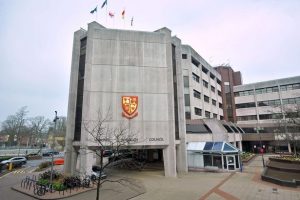
Woking Borough Council (Image Chris Caulfiield)

Related reports:

Woking bankruptcy sell off

Residents sigh of relief if Government bail out bankrupt Woking

Strip Woking’s debt-man of his OBE MP says

Government bailout to ease Woking’s debt burden

Surrey’s BIG debt question in local government reorganisation

Who will be saddled with Spelthorne’s and Woking’s £3 billion debts?

Could Woking’s debt be shared by you after reorganisation?

What Epsom could do with Woking’s £75 million bail out?

Ex-Council Officers under investigation for Woking’s £2 billion debt

Will Epsom and Ewell be bailing out Woking?

No wonder Woking went bankrupt: scandal of private school loans


Cyber security threats to Surrey’s local councils

Split screen idealised image - hacker and stressed government officials at their terminals

Cyber security threats to local government remain a “significant strategic risk”, according to a report, with the creation of two new unitary councils posing “further complexity” to IT security.

Guildford Borough Council’s audit and risk committee will next week review an update to its corporate risk register, which outlines and grades operational challenges.

These risks range from financial stability to climate change – as well as the ongoing local government reorganisation that will see two new unitary councils created next spring.

But the report also highlighted the dangers of cyber security threats to councils across the country, which the document says are “increasingly vulnerable” to such attacks. 

These threats can take many different forms, including ransomware attacks, data breaches or Distributed Denial of Service (DDosS) incidents.

The report reads: “Cyber security remains a significant strategic risk given the increasing volume and sophistication of cyber threats facing local authorities, together with the potential operational, financial and reputational consequences of a successful attack.” 

It adds that the ongoing local government reorganisation, which will see Surrey County Council and the 11 district councils scrapped next year to make way for the new East and West Surrey Councils, makes the situation more complex.

“The ongoing transition associated with Local Government Reorganisation adds further complexity to the Council’s technology and information environment and reinforces the need for continued vigilance,” the report says.

The council will continue to invest in preventative measures to mitigate the likelihood and potential impact of cyber attacks, the document adds.

“The risk remains above appetite due to the external threat landscape and the potentially significant impact of a successful cyber attack,” it says. “Given the nature of the risk, the majority of threat activity remains outside the council’s direct control.”

A Guildford Borough Council spokesperson told the Local Democracy Reporting Service (LDRS): “We take our IT security and governance responsibilities very seriously. 

“As part of this commitment, we provide councillors with a high-level summary of the cyber security measures we have in place. We do not publicly share specific details about security controls.

“We’re currently working with IT professionals from across county, district, and borough councils to ensure our IT systems remain secure when we come together on 1 April 2027.”

James Moules Local Democracy Reporter

.

Idealised image


Crime and Safety Round-Up: June to August 2026

Male and female police officers in Silhouette

The summer months brought a mixture of serious incidents, court outcomes, crime-prevention work and neighbourhood policing activity across Epsom and Ewell.

The Epsom and Ewell Times does not normally report every individual crime. This periodic round-up draws together incidents of wider public interest, police appeals and developments affecting community safety.

Eleven arrests during the Derby

Surrey Police mounted its largest annual pre-planned policing operation for the Epsom Derby Festival on 5 and 6 June.

Officers, staff and volunteers from Surrey and Sussex Police worked with the Jockey Club, supported by drones, intelligence teams, public-order specialists and local policing officers. The presence of King Charles III and Queen Camilla added to the security requirements.

Police reported that 11 arrests were made in and around the racecourse during the two days. Additional patrols were also deployed in Epsom town centre to respond to crime and anti-social behaviour.

Chief Superintendent Graham Barnett thanked residents for their patience during an operation which inevitably caused some disruption.

Morning assault near Rosebery Park

Police appealed for witnesses following an assault on the footpath between Avenue Road and Rosebery Park between 7.30am and 7.50am on Wednesday 10 June.

An altercation reportedly took place between two people, during which a man was kicked and punched in the face. Officers particularly wished to speak to the driver of a bronze-coloured BMW who may have witnessed the incident.

Anyone with information or relevant video footage was asked to contact police quoting reference PR/45260070249. The witness appeal remains available on the Surrey Police website.

Ewell murder trial ends in acquittals

On 30 June Surrey Police announced the outcome of the trial arising from the fatal stabbing of 23-year-old Alfonso “Alfie” Sibley in Kingston Road, Ewell, on 9 December 2025.

Three teenage boys had faced charges following Alfie’s death. After a four-week trial at Kingston Crown Court, a 15-year-old boy was found not guilty of murder, manslaughter and conspiracy to commit robbery. A second 15-year-old and a 17-year-old were also found not guilty of conspiracy to commit robbery.

None of the defendants could be named because of their ages. The Major Crime Team said Alfie’s family had thanked the members of the public who tried to help him and the witnesses who assisted the investigation. Surrey Police published the full court update.

Town-centre licensing restrictions rejected

Community safety featured prominently in a June debate over whether Epsom town centre should be designated as a Special Stress Area, sometimes called a cumulative impact area.

Such a designation can make it more difficult to secure new or extended alcohol licences where there is evidence that the concentration of licensed premises is contributing to crime, disorder or public nuisance.

Epsom and Ewell borough councillors decided not to begin the process of introducing the policy at this stage. The issue is to remain under review, with councillors divided over whether the available evidence justified additional restrictions.

Attempted motorcycle robbery on Ewell Bypass

At approximately 11.30pm on Sunday 19 July, a motorcyclist was approached by two people in a vehicle on the Ewell Bypass near its junction with London Road.

The two reportedly tried to take the motorcycle and attempted to assault the rider by punching and pushing them.

A man in his thirties was arrested on suspicion of robbery and subsequently released on conditional bail while enquiries continued. Police sought witnesses and dashcam footage recorded between 11.15pm and 11.45pm, under reference PR/45260087038. Surrey Police issued a public appeal on 23 July.

Vehicle theft charge figures

Figures published during July showed that Surrey Police recorded 1,551 thefts or unauthorised takings of motor vehicles during 2025. Charges or summonses were recorded in 34 cases.

Local officers continued to warn that motorcycles and mopeds can be stolen within seconds. Owners were encouraged to use several layers of security, including a disc lock, a separate chain attached to an immovable object and, where possible, a cover and tracking device.

Police also used their local social-media channels in July to provide advice to tradespeople about thefts from vans. Owners were encouraged to remove valuable tools overnight, use secure internal storage, mark equipment and keep photographs and serial numbers.

Fatal collision on Christ Church Road

The most serious local road incident of the summer occurred shortly before 11.40pm on Wednesday 5 August.

A black Smart car collided with a stationary street-cleaning vehicle on Christ Church Road, Epsom. A woman in her twenties who was travelling as a passenger in the Smart car died at the scene.

The driver, also a man in his twenties, was arrested on suspicion of causing death by dangerous driving, driving while over the prescribed alcohol limit, failing to provide a specimen for analysis and causing death by driving while uninsured. He was taken to hospital for treatment.

Christ Church Road remained closed for several hours while collision investigators examined the scene. Police asked for witnesses and footage showing the Smart car between 11.35pm and 11.40pm, particularly evidence of the manner in which it was being driven. The appeal was issued by Surrey Police on 6 August.

Retail crime remains a policing priority

In August, the Epsom Safer Neighbourhood Team reaffirmed what it described as a zero-tolerance approach towards retail crime.

The measures include the prompt investigation of known offenders, cooperation with retailers and remote CCTV providers, visible and covert patrols and jointly funded private security in Epsom town centre.

Stores are also being encouraged to use the DISC information-sharing system. Police said this allows retailers to exchange information about offenders and enables a person caught stealing from one participating business to be excluded from others.

The team said its approach had resulted in a significant reduction in offending by known local shoplifters, although no supporting figures were published. Anti-social behaviour powers may also be used to prevent persistent offenders returning to shopping areas. Retail crime is listed among the neighbourhood team’s policing priorities.

Callers impersonating police officers

On 18 August Surrey Police warned residents about fraudulent telephone calls in which criminals pretended to be police officers.

The callers may claim that a bank account has been compromised, that someone has been arrested using the resident’s bank card or that money must be transferred for safekeeping. Criminals can use “number spoofing” to make a call appear to originate from a genuine police or bank telephone number.

Police will never ask someone to disclose a PIN, hand over a bank card or transfer money to a supposedly safe account. Anyone receiving such a call should hang up and contact the organisation independently, preferably from another telephone. Surrey Police published further advice about the impersonation scam.

What the recorded figures show

Published Police.uk data currently extend only to July, so August cannot yet be included in a like-for-like comparison.

Across the three Epsom and Ewell neighbourhood policing areas, 335 offences were recorded in June: 152 in Central, 106 in West and 77 in East. The combined total fell to 319 in July: 154 in Central, 90 in West and 75 in East. That represents a reduction of just under five per cent between the two months.

In Epsom and Ewell Central, the largest recorded category in July was violence and sexual offences, with 53 reports. There were also 33 reports of anti-social behaviour, 14 public-order offences and 14 shoplifting offences.

These categories record allegations reported to police and should not be read as numbers of convictions. A single incident may also generate more than one recorded offence. Neighbourhood statistics can be examined through Police.uk.

Police engagement through the summer

Local officers continued to hold “Meet the Beat” sessions at locations including Bourne Hall, Long Grove Park, Epsom High Street, the Horton Estate and Epsom Hospital.

A particularly concentrated programme took place during August, with opportunities for residents to meet neighbourhood officers in the town centre, local parks and hospital reception area.

Residents should call 999 where a crime is in progress or somebody is in immediate danger. Non-emergency matters can be reported to Surrey Police online or by calling 101. Information can be provided anonymously to Crimestoppers on 0800 555 111.

Sam Jones – Reporter

.

Related reports:

Crime and Safety Round-Up: April and May 2026

Epsom March crime and safety round-up

Epsom and Ewell February crime and safety round-up

January crime and safety round-up


Friendly finding puts Epsom and Ewell in England’s top fifth

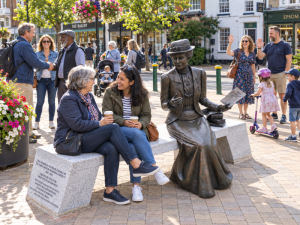
Residents around the Davison statue on Epsom being friendly.

Epsom and Ewell has been ranked among the friendliest and most connected places in England in a new national index examining the strength of community life.

The borough placed 56th out of 296 local authority areas on the National Conversation’s Connection Barometer, giving it a score of 71.2 out of 100 and an “A” grade.

That puts Epsom and Ewell comfortably inside England’s top fifth and fourth highest among Surrey’s 11 boroughs and districts. Waverley was ranked 13th nationally, Mole Valley 21st and Elmbridge 23rd.

The results attracted national attention after The Guardian reported that the Isles of Scilly had been named England’s friendliest place. The islands were followed by South Hams, West Devon, Derbyshire Dales and the nearby London Borough of Richmond upon Thames.

However, the description of the findings as a vote for England’s “friendliest” places needs some qualification. Residents were not simply asked to rate the friendliness of their towns and neighbours.

Instead, the barometer combines eight measures taken from the Government’s Community Life Survey 2024/25. Each council area was ranked against the other 295 areas on every measure, with those rankings averaged to produce a score out of 100.

The Epsom and Ewell figures were:

  • 4.6% said they felt lonely often or always;
  • 65.7% felt strongly that they belonged to their immediate neighbourhood;
  • 48.4% believed many people in their neighbourhood could be trusted;
  • 85.6% agreed that people from different backgrounds got on well together;
  • 70.1% were proud to live in their local area;
  • 69.1% chatted to their neighbours at least once a month;
  • 20.1% undertook formal volunteering at least once a month; and
  • 37.5% had participated in civic activities during the previous 12 months.

The borough performed particularly strongly on civic participation, volunteering, local pride and relations between people from different backgrounds. Its relatively low reported level of frequent loneliness also contributed positively to the overall score.

The findings provide statistical support for the familiar picture of Epsom and Ewell as a borough sustained by residents’ associations, charities, sports clubs, faith groups, heritage organisations and other voluntary bodies.

There are nevertheless reasons for treating precise league-table positions cautiously. The Government survey estimates come with margins of error, meaning small differences between neighbouring positions may not be statistically significant.

The barometer itself describes its score as a “rough guide, not a final measure”. Its eight indicators are given equal weight and cannot capture every aspect of living in a particular community. The survey also covers the whole borough, so it does not reveal whether experiences differ between individual neighbourhoods.

The Community Life Survey questioned adults aged 16 and over between October 2024 and March 2025. A larger sample in 2023/24 and 2024/25 allowed the Government to publish meaningful estimates for individual local authority areas.

The index was produced by the secretariat of the Independent Commission on Community and Cohesion to support the wider National Conversation, a UK-wide exercise examining what connects and divides people.

The Commission is co-chaired by former Conservative Home Secretary Sir Sajid Javid and former Labour MP Jon Cruddas. It has brought together representatives from politics, academia, business, faith and civil society to consider growing concerns about social isolation, division and the weakening of community institutions.

The National Conversation explained that official statistics provide only part of the picture and that the index was intended to prompt discussion about whether the figures reflect people’s lived experiences.

Its public survey closed on 31st August. The findings are expected to contribute to a report by the Independent Commission on Community and Cohesion later in 2026.

At the opposite end of the barometer, Barking and Dagenham ranked 296th, below Stoke-on-Trent, Ashfield, Mansfield and Ipswich.

For Epsom and Ewell, 56th place is not quite a claim to being England’s single friendliest community. It does, however, provide encouraging evidence that neighbourliness, civic involvement and local pride remain notable strengths of the borough.

Lionel Blackman

.

Idealised image


Epsom Scouts joined Swiss adventure

Scouts together and alps behind

More than 700 Scouts and volunteers from Surrey, including Scouts from 3rd Epsom & 8th/14th Epsom (Air Scouts), have returned from an unforgettable international adventure in Switzerland as part of KIX 2026 (Kandersteg International eXpedition).

The expedition marked a significant milestone, celebrating 25 years of Surrey Scouts’ modern-era expeditions to Kandersteg International Scout Centre (KISC), one of the world’s premier Scout destinations. The 2026 contingent was the largest group of Scouts to leave the UK this year.

The first Surrey expedition to Kandersteg took place in 2001 under the name SWaK (Scouts with Altitude – Kandersteg). Since then, Surrey Scouts have returned through a series of major international expeditions, including Expand 2004, K9 in 2009, and KIX events in 2014, 2018, 2023 and now 2026.

During their week in the Swiss Alps, Scouts from 3rd Epsom & 8th/14th Epsom (Air Scouts),  joined fellow participants from across Surrey to experience a programme packed with adventure, challenge and international friendship. While at Kandersteg, they met Scouts from Canada, Portugal, Spain, Australia, Ireland, Switzerland, Germany and other parts of the United Kingdom, demonstrating the truly global nature of Scouting.

Participants travelled to Switzerland aboard twelve coaches provided by Baker Dolphin, departing from Cobham Services.

The expedition offered a wide range of activities, including hiking in the mountains led by trained and KISC-qualified mountain walkers, rafting on the river Aare from Thun to Bern, and high ropes adventures in Interlaken. Scouts also had opportunities to explore local towns and communities, gaining first-hand experience of Swiss culture and life.

Each troop selected a special activity day tailored to their interests. Activities included visiting the Schilthorn, famous for its appearance in a James Bond film; exploring the Jungfrau region; travelling to the Rothorn by steamship and mountain railway; relaxing in the thermal pools at Brigerbad; tobogganing at Lake Oeschinensee; visiting the St Beatus Caves; and climbing in Winteregg.

In addition, the Young Leader (YL) Squad helped KIX in helping to protect local biodiversity through a partnership with the Forestry Commission. KIX has partnered with Flora from the local Forestry team to contribute to the protection and preservation of biodiversity in the Kandertal area.

The Kandertal is one of the regions in the Canton of Bern with the highest concentration of reptiles. Eight of Switzerland’s sixteen native reptile species can be found there, including the sand lizard, grass snake, and the rare smooth snake. Many of these species are under threat, and some are critically endangered, largely due to the loss of important habitats. These habitats include sun-exposed features such as rock piles, dry stone walls, wood piles, and brush piles, as well as natural riverbanks, forest edges, and rocky areas. As part of the Kandertal Reptile Conservation Project, valuable habitats have been surveyed and documented to support their long-term preservation. Working alongside Flora and Luke, the YL Squad helped to maintain and enhance these habitats by clearing brush, creating piles of branches and stones, and improving existing habitat structures. These practical conservation activities make an important contribution to protecting local biodiversity and supporting the survival of the area’s native reptile species.

Mel Wedlock, Young Leader Development Team Lead for Surrey Scouts, said: “Supporting projects like this is a fantastic opportunity for the Surrey Young Leader Squad as part of their service project with KIX. The Squad are taking part in the expedition as members of the wider staff team, giving them valuable experience of supporting and delivering a large-scale international event for young people. Alongside developing their leadership skills, they have been able to make a meaningful contribution to an important local conservation project. It has been great to work with KIX, supporting the local community and helping to protect the natural environment in the Kandertal region.”

A particularly memorable moment came thanks to local shop owner Patrick Straubinger, who gifted every Scout and volunteer a commemorative Swiss pin badge in recognition of Surrey Scouts’ 25-year connection with Kandersteg. Patrick has welcomed generations of Surrey Scouts, alongside visitors from Scout groups across the world, throughout that time.

The expedition also attracted local media attention, with Surrey Scouts appearing on the front page of the Frutigländer, Kandersteg’s local newspaper, as well as featuring in a detailed report inside.

Supporting an event of this scale required an enormous effort from volunteers. Over the course of the week, the catering team provided enough evening meals to feed one person for more than 13 years. The contingent consumed more than 1,322kg of fruit and vegetables, 3,500 wraps, 195kg of cheese, 21,456 slices of salami, 489kg of meat, 1,548 schnitzels, and 255kg of breakfast cereal.

Meanwhile, the high walks team supported participants in covering more than 19,000 kilometres of mountain trails and climbing a combined elevation gain of nearly 650 kilometres. The activities team also coordinated more than 500 cable car journeys and 400 swimming pool visits during the expedition.

As the Scouts returned home, they brought with them new friendships, increased confidence, valuable #skillsforlife and memories that will last a lifetime. Showing Scouting has a #placetobelong.

Ian MacQueen Expedition leader said “KIX 2026 took two years to plan with and aim to give 700 Scouts and leaders the opportunity to try new activities, make new friends and learn skills for life. I think it is safe to say we achieved our aim and more. My thanks to the staff and leaders who made the event a success. We will now start to plan KIX 2029”

Scouts were asked “What were you expecting from the trip before you came?”

A Scout from 3rd Epsom said “I was expecting to be tired from hikes and I was looking forward to the activities, thought it was always cold and there would be lots of always hiking.  I also thought it was going to be like a school trip and was expecting to be fun but wet.”

A Scout from 8th/14th Epsom said “I was expecting adventures, and to meet other Scouts from other countries.”

Scouts were then asked “What’s been the highlight of the week?”

A Scout from 3rd Epsom said “I enjoyed the rafting and going to Brigerbad and it was nothing like a school trip it was much more fun (different to expectations), I got to know lots of Scouts and doing all the different activities including, high ropes. It was a really nice place in general and I want to come again as everything was really fun.”

A Scout from 8th/14th Epsom said “I liked swimming in the pool in the park in Bern after rafting and also the rafting from Thun to Bern.”

We then asked the Adult Volunteers “Why did you want to bring your Scouts on this trip?”

An adult volunteer from 3rd Epsom said “We have been many times before and they get a lot out of the trip and gain great experiences.  It is also great to see true scouting in operation but there are long challenging days but full of fun and excitement.”

An adult volunteer from 8th/14th Epsom said “There is a program for our scouts which is organised by the County team with support & food provision.”

We finally asked the Adult volunteer, “What was there highlight of the week?”

An adult volunteer from 3rd Epsom said “The friendliness, organisation and true Scouting spirit is second to none.  Activities are organised very well with tasks as necessary.  The Scouts found the walks challenging but all survived and surprised they could walk so far and so high.  The food was also very good.”

An adult volunteer from 8th/14th Epsom said “The location, amazing scenery, swimming in Spiez, getting to know other adult volunteers better and hiking way beyond what I would normally do.”

Neil Wibberley


Secret Surrey leaders’ talks challenged by Epsom councillor

A meeting sat around a table silhouetted against backdrop of a map of surrey

An Epsom and Ewell councillor has launched a sustained Freedom of Information campaign to uncover what Surrey’s council leaders have discussed and agreed behind closed doors.

Councillor Alex Coley (Independent, Ruxley) is seeking the agendas, minutes and decisions of the Surrey Leaders’ Group, a forum bringing together the leaders of Surrey County Council and the county’s 11 borough and district councils.

The Group is currently chaired by Epsom and Ewell Borough Council Leader Councillor Hannah Dalton (RA, Stoneleigh).

Cllr Coley’s efforts began in March, when he requested records covering the civic years 2022/23 to 2025/26. Establishing which authority was responsible for answering proved to be the first hurdle.

Surrey County Council said that it did not hold the information. A response sent through a WhatDoTheyKnow account bearing the name “Surrey Leaders’ Group” came from Guildford Borough Council, which also said it did not hold the records because it did not provide the Group’s secretariat.

Guildford directed Cllr Coley to Reigate and Banstead Borough Council, which eventually confirmed that it held at least some of the material.

However, Reigate and Banstead initially refused the four-year request on cost grounds. It said more than 200 documents were spread across different authorities, including records kept by a previous secretariat. Locating, retrieving and reviewing them would exceed the Freedom of Information Act limit of £450, calculated as 18 hours of staff time at £25 an hour.

Cllr Coley expressed surprise that the basic records of a body composed of senior elected representatives should be so difficult to retrieve.

He argued that the failure to maintain a readily accessible publication scheme had itself helped create the situation in which answering an FOI request was said to be too expensive.

He subsequently narrowed his request to 2024/25 and 2025/26 and asked which council held the records for the two earlier years.

After extending its response deadline to consider the public interest, Reigate and Banstead released the Group’s constitution and collections of agendas. It has, however, refused to disclose the minutes.

The Council relied upon section 36 of the Freedom of Information Act, which can protect information where disclosure would be likely to inhibit the free and frank provision of advice or exchange of views.

It said the Group provided a “safe space” in which senior councillors could test ideas, challenge assumptions and discuss politically sensitive or developing issues before proposals entered the formal decision-making processes of their respective councils.

Disclosure, it argued, could have a “chilling effect”, making participants less candid and ultimately weakening the quality of subsequent council decisions.

The Council also maintained that the Surrey Leaders’ Group is not itself a formal decision-making body. It said any binding decision would still have to be taken through the constitutional and democratic procedures of the council concerned.

Constitution complicates the picture

The constitution disclosed through the FOI request presents a more complicated picture.

Among the Group’s stated objectives is taking decisions about joint activities across Surrey. It may make representations, determine certain nominations to outside bodies, levy subscriptions upon its member councils and maintain a fund that can be used to employ consultants or commission research.

Although it cannot bind constituent councils without referring an issue back to them, the constitution states that the decision-making powers of the former Surrey Delivery Board are to be exercised by the Leaders’ Group, subject to council ratification where required.

It also provides for voting, with each council leader having one vote, although the stated aim is to reach decisions by consensus.

The agendas demonstrate that the Group has considered matters extending far beyond informal networking. Subjects have included local government reorganisation, the allocation of reorganisation costs, strategic planning, health services, policing, economic growth, staff retention and the future governance of Surrey.

One agenda expressly recorded that a “decision” was required from leaders on proposals for funding the implementation of local government reorganisation. Leaders were asked to agree the proposals and take steps to set aside money from their councils’ budgets or reserves.

Another item asked leaders to provide a “steer” on proposed voluntary financial controls associated with the restructuring.

“No transparency”

Cllr Coley has now requested an internal review of the refusal to release the minutes.

He disputes the claim that publication would provide only limited additional transparency. He says the Group does not routinely publish its agendas, minutes, decision notices or even its constitution.

He also claims that at least one Surrey chief executive has acknowledged in writing that decisions were made at the Group rather than by its constituent councils. He says the current chair Cllr Dalton has told councillors that a particular course had to be followed because it had already been agreed by Surrey Leaders.

“The Surrey Leaders Group should not be a secret forum to circumvent public scrutiny,” he wrote in his request for a review.

Cllr Coley contrasted its private proceedings with the new East and West Surrey joint committees, whose agendas, minutes and decisions have been published and whose meetings have been open to the public and available to watch online.

That distinction is particularly important during the reorganisation of Surrey’s councils. Decisions and informal agreements made now could influence the structures, finances and services inherited by the two new unitary authorities.

Cllr Coley also argued that any need for continuing secrecy should be reduced by the impending abolition of the Group’s constituent councils. He told the Epsom and Ewell Times ” Your readers might chuckle at the idea of a “deep state” in Surrey, but what else should we call these arrangements where the most far reaching decisions are made in private with no scrutiny or public record and the mere existence of the Surrey Leaders Group is shrouded in mystery?”

Reigate and Banstead Borough Council acknowledged the internal review request on 2nd September. It aims to provide its decision by 30th September.

The complete FOI correspondence and released documents can be read on WhatDoTheyKnow.

Sam Jones – Reporter