Epsom and Ewell Times

Current

ISSN, LDRS and IMPRESS logos

Golf course housing tees off Green Belt preservers

Artist\'s impression of proposed Hersham golf club development. (Credit: Claudel Venture Holdings Ltd / Elmbridge Borough Council planning documents)

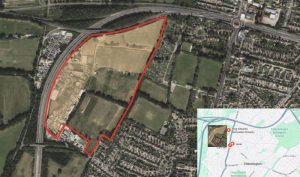
Over 200 homes will be built on a golf course in an “epoch making moment” for Surrey’s green belt. Elmbridge Borough Council’s planning committee approved developer Claudel Venture Holdings Ltd’s vision for the 43 hectare site in Hersham on Wednesday, March 11. 

The former 18-hole golf course off Assher Road will be transformed into a mix of 57 houses and 164 apartments with 246 parking spaces. Half of the homes will be affordable including social and affordable rent as well as shared ownership. 

As well as the 221 homes, the plans feature a GP surgery, café, play areas and a natural green space in the form of a country park. 

Debates around the proposal centred on whether the golf club was previously developed grey belt land or not. “It is almost an epoch-making moment,” said Councillor John O’Reilly. “It is probably the first major application where the green belt will be so compromised.” 

Green belt land keeps countryside spaces free from development and stops the urban sprawl of towns merging together. Building on the green belt is only allowed when special circumstances can be demonstrated. But planning officers found the scheme would not undermine the openness of the green belt.

Michel Phillips, a professional adviser speaking against the scheme for the objectors, called it a “fallacy” the golf club is developed land as it was recognised as green belt land in a 2016 review. He told the committee: “There is no policy for Elmbridge to slice and dice the greenbelt to please development objectives.

“You have all been elected on a promise to protect the greenbelt. [The residents’] plea to you is to honour your commitment to Elmbridge citizens.,

The decision was made despite over 800 objections (some from the same address) were sent against the plans, criticising the loss of countryside views for the neighbours and invasion of privacy. 

Doubts were cast over whether a GP surgery would want to move into the proposed medical building. The developer acknowledged that it cannot ‘force’ the NHS to set up a new surgery on the site. Instead Claudel Venture Holdings said it would add another ten affordable units , in the shape of one and two-bedroom homes, and contribute £150,000 towards the NHS. 

Speaking for the applicant, Mr Edwards said: “The planning inspector concluded that the need for affordable housing is acute and ever worsening and exceeds the council’s assessment that 296 affordable homes need to be built annually.” He told the committee that the proposed affordable homes are “important as Elmbridge is one of the most expensive boroughs in the country”. 

Ward councillor for Hersham Village, Cllr Wendy Gibbs said the affordable housing on the development “doesn’t go far enough” to provide much-needed three-bedroom homes. She slammed the developer for not flats not being inclusive enough with lifts and areas for prams. Some councillors raised concerns whether housing associations would take up new affordable properties. 

Although Cllr Judy Sarsby said she disliked the “overbearing building”, she acknowledged there are 2,500 families currently on a housing waiting list and a hundred families which are homeless. Members from either side of the political spectrum, from Conservative to Liberal Democrats agreed the proposed housing development was in a useful location near the station and would provide social and economic benefits in the area. 

Currently private land, only golfers and those using the public footpath to the River Mole are allowed to access the green. But the applicant has proposed a green space of 21.8 hectares as part of the development to help mitigate the new homes on the former golf course. 

Residents complained the site floods every year from rain and stressed the flood waters could be redirected to the surrounding homes. To combat the flood risk, the applicant is proposing to raise the level of the land meant for residential development to deal with the water run off. 

Transport improvements include new footpaths, bus stops and a signal crossing on Molesey Road is also part of the development. Around £110k is being put towards Hersham station for rail improvements. But some councillors said the money “won’t touch the sides” of what is needed and that the station is from a “bygone” era.

Artist\’s impression of proposed Hersham golf club development. (Credit: Claudel Venture Holdings Ltd / Elmbridge Borough Council planning documents)


Surrey’s fire ruined mansion restoration plan

The Marble Hall could be used to hold events for the community. (Credit: Allies and Morrison/ National Trust)

Plans to restore an 18th century house have been waved through. The National Trust has now revealed its designs to restore and refurbish Clandon Park House to celebrate the rich history and legacy wrapped around the building.

The Grade I listed home near Guildford was considered an architectural masterpiece when it was built 200 years ago. But Clandon Park House was tragically gutted by an accidental fire in 2015, destroying the roof and leaving most of the interior with blackened and scorched brickwork.

Illustrative designs show the trust’s ambitions for Clandon Park House to become a new national treasure and a defining cultural hub, with space for workshops and social events. Guildford Borough Council unanimously approved the plans last week.

Restoring the inside of the mansion house, the scheme will refurbish and replace windows and doors, reinstating the stairs as well as providing a new accessible lift from the basement to the roof. Generous walkways will be carved out in the mansion house and the scheme promises to conserve historic collections, redisplaying them in creative ways.

Alterations to the basement will provide a cafe, toilets and other back of house bits. The project will restore the exterior of the building to appear as it did before it was engulfed by the fire, planning documents state.

Image: The Marble Hall could be used to hold events for the community. (Credit: Allies and Morrison/ National Trust)


Surrey schools not swamped by private VAT escapees

Rosebery school - Google

Figures released by Surrey County Council suggest that state secondary schools admissions have not been overrun with private school pupils after VAT was added to fees by the Labour government.

While critics including Jeremy Hunt MP for Godalming and Ash had predicted up to 90,000 children could swarm the state sector if 20 per cent VAT was thrust on school fees, so far Surrey County Council said it has not impacted applications to join state secondary schools this year.

From January 2025, independent school fees have been slapped with 20 per cent VAT from the Labour government. The controversial policy, aimed at generating £1.5 billion to improve state education, drew up harsh criticisms from local residents. They accused the government of “punishing” hard-working families wanting to invest in their children’s education.

As state school admission results came out last week, it marks the first indicator whether priced-out private school children have spilled over into the state sector. But Clare Curran, county council’s cabinet leader for children, families and lifelong learning, said: “Surrey has not seen a significant rise in the number of applications for a Year 7 state school place for children currently in the independent sector compared to last year.

“For September 2025, 664 on time applications were received from Surrey residents with children in the independent sector, compared to 608 for September 2024, a rise of 56.”

Not a mass exodus of children to the state sector, the policy appears to have not squeezed private schools out of business just yet. Panic over secondary school place shortages has also not materialised in these new figures. Admissions data shows that for Year 7 places there is a mild buffer on the number of families getting their first preference in school places this year.

Cllr Curran said: “While the percentage of applicants offered their first preference school has decreased for September 2025 (80.6%) compared to 2024 (83.1%), the 2025 figure is not dissimilar to the 2023 figure of 81.3%.

“The percentage of applicants offered one of their six preferences for September 2025 was 95.3%, which is comparable with last year’s figure of 95.9%.”

However, it is still early days for the new policy and the ripple effects of the change could have wider implications. The Institute for Fiscal Studies (IFS) said there might not be an immediate effect but the long-term effects could be more significant. The IFS estimated a 3-7 per cent reduction in private school attendance which could require additional £100-£300 million in state funding to manage the overflow within the state school sector.

MPs and educators have raised the alarm that private schools serving students with special educational needs and disabilities should be left out of the VAT tax raid. Sometimes children with an EHCP cannot have their needs met in a regular state school so private school with 1-2-1 support is necessary for their education.

Surrey has around 140 private schools: including primary, secondary and special schools. Fees vary between schools, but the cost of independent education in Surrey is above the national average.

Image: Rosebery School Epsom – Google


Epsom and Ewell Council Approves Public Spaces Protection Order for Borough-Wide Expansion

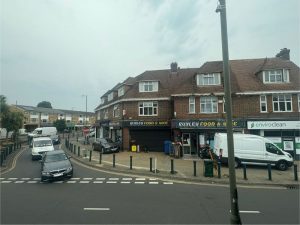
Balaclava wearing youth in Epsom High St

The Epsom and Ewell Borough Council’s Crime and Disorder Committee has voted to recommend the adoption of a borough-wide Public Spaces Protection Order (PSPO) following a public consultation that showed overwhelming community support.

The new PSPO, which will now be referred to Full Council for final approval, aims to tackle anti-social behaviour (ASB) by prohibiting a range of activities, including harassment, intimidation, verbal abuse, and alcohol consumption in public spaces after a warning from an authorised officer. The order also bans wearing face coverings, such as balaclavas, with the intent to commit ASB or crime, a measure police say will help deter group-related intimidation.

At the meeting, Public Protection Manager Oliver Nelson introduced the officers’ report, highlighting the strong public backing for the PSPO. He noted that 92% of respondents supported extending the order for three years, and 83% backed its expansion across the entire borough. “The consultation has given us a clear steer from residents,” he said. “We’ve slightly refined the prohibitions based on feedback, ensuring the PSPO is proportionate and enforceable.”

Police representatives, including Acting Inspector Tommy Pearson and Chief Inspector Kelly Clifton-Sinclair, attended the meeting in support of the proposal. 

Lib Dem Councillor James Lawrence (College) expressed his support, citing the consultation results as key to his decision. “Over 200 people responded to the consultation, with 92% of respondents supporting an extension to the PSPO and 83% supporting it covering the entire borough. My fellow Lib Dem councillors and I are happy to uphold public opinion on this and support the PSPO as proposed,” he said.

However, some concerns were raised over the demographic spread of consultation responses. Councillor Christine Howells (RA Nonsuch) noted that only 2% of respondents were under the age of 24, questioning whether younger voices had been fully heard. In response, Committee Chair Councillor Shanice Goldman (RA Nonsuch) acknowledged the difficulty in securing wider engagement but highlighted outreach efforts to schools, faith groups, and youth charities, including Buddy Up, a mentoring programme for young people.

Councillor Tony Froud (RA Stoneleigh)sought clarification on the geographical scope of the PSPO, asking whether it applied to specific areas or the entire borough. Cllr Goldman confirmed that the order would be borough-wide, expanding upon previous PSPOs that only covered certain locations. “It’s about making sure enforcement is not limited to certain hotspots,” she explained.

The Committee also unanimously agreed to recommend a £100 fixed penalty for breaches (reduced to £80 if paid within 10 days). The PSPO will now go to Full Council for formal adoption, where it is expected to pass with broad support.

If approved, the borough-wide PSPO will be in place for three years, subject to review. Council officers have committed to a public awareness campaign, including new signage and social media outreach, to ensure residents are informed about the restrictions.

Sam Jones – Reporter

Image credits: Google and Tobias “ToMar” Maier Creative Commons Attribution-Share Alike 3.0


Guildford Students protest against PSPOs

Surrey students have come out against a council’s draft rules about public spaces, saying they could be “detrimental” to local students. Under the proposed new rules, students could be banned from being in a group of two or more people in the town centre which could “cause harassment, alarm or distress” to other people.

Guildford town centre has public space protection orders (PSPO) aimed at tackling persistent anti-social behaviour affecting others. Introduced in 2022, the rules are now up for review. Boundaries for the PSPO cover the town centre, Stoke Park and some neighbouring residential roads, the Mount (residential area and green open space), including Black Cat Alley. 

But students at the University of Surrey have attacked the draft regulations as “vague” and have said that they can be “misinterpreted” in a way that can be harmful to students in Guildford. 

Leading the cause, the Student Union’s President Liam White said in a statement: “We are concerned by the overly conditional phrasing of ‘acting in a manner that is likely to cause’ and the vague nature of ‘distress’. This feels like an extremely broad scope to enforce, given that members of the public may potentially be ‘distressed’ when encountering young adults socialising in public, even if it is not disorderly or anti-social.”

Under a PSPO, individuals deemed to be breaching the order can be asked to change their behaviour by police officers, PCSOs, or GBC compliance officers. Fines and written warnings can be given for repeated breaches.

He argued the PSPO is not phrased in a way which prevents groups acting disorderly but instead relies purely on a member of the public claiming to be distressed or alarmed. Mr White claimed this is “unreasonable” to potentially penalise members of the public, including students, in the town centre. 

A spokesperson for Guildford Borough Council said: “We appreciate everyone who has taken time to respond to the Town Centre Public Spaces Protection Order consultation. These were draft proposals and the purpose of the consultation was to encourage feedback.

“In response to our partners and consultees, including the Student Union, we have adapted the proposed restrictions. The revised draft restrictions will be presented to the Executive on 27 March 2025 for consideration.”

Other key concerns raised included how “rowdy and inconsiderate behaviour” could be defined by someone’s clothing. The draft proposals state: “Wearing a piece of clothing with the intent to obscure or hide his/her identity for the purposes of committing crime and/or anti-social behaviour”. 

The Student Union said this is particularly concerning for members of the community who wear clothing that covers their face or hair for religious purposes. “We question how appropriate it is to be enforcing restrictions on clothing, rather than other indicators of anti-social behaviour,” members said.

Students also criticised the proposed public space rules against the “anti-social” use of bicycles, skateboards and scooters in pedestrian areas. They said some of Guildford’s community is already “resistant” to the Beryl Bikes scheme and extending the PSPO will “disincentivise people from using sustainable travel”.

Emily Dalton


Surrey to get new recycling centre?

Surrey Recycling Centre. Credit Surrey County Council

Newspapers, cardboard, plastic bottles and tins of tuna could have a new home to go to in Surrey. Plans for a new recycling centre are on the cards on farmland in Chertsey as the existing infrastructure is “under strain”, a new report says.

Surrey County Council is proposing to build a dry material recycling centre on Trumps Farm, just off the M3. An outline planning application has been submitted and an outline business case has been developed, with a decision hopefully being made in May 2025.

Waste like metal, cardboard and plastic would be collected at the kerbside and then separated from mixed items like paper, card, plastic, metal and glass into single material streams. These streams are then sent on to reprocessors to turn into new products.

Trumps Farm, owned by the county council, was identified as the most suitable location for a recycling facility as it is North West Surrey, closest to where the highest levels of waste are produced, according to the council report. The size of the proposed facility will provide capacity for Surrey’s dry recycling now and into the future, the document said.

The county’s ability to recycle and get rid of waste is under “significant strain”, according to a council report. A report in 2023 highlighted a strain on the current recycling infrastructure and a lack of dry mixed recycling centres in the county.

“If we’re going to build and invest in a recycling centre, we need to up our recycling rates,” said the Leader of the council, Tim Oliver at a cabinet meeting on February 25. He urged members to “renew their energy” for recycling around the districts and boroughs.

The Conservative leader said recycling rates around Surrey had stagnated at around 50 per cent and perhaps residents were not sure what can and cannot be recycled. He added: “I have persuaded my wife to look at a package before she puts it in the bin because it does tell you whether it’s recyclable or not.”

Responsible for around 90,000 tonnes of recycling in Surrey, the council is hoping to find an operator to process all this material without changing the current district and borough collection regimes. These authorities are Epsom & Ewell, Elmbridge, Guildford, Runnymede, Spelthorne, Surrey Heath, Tandridge, Waverley and Woking.

Use of third-party sites to manage recyclable materials collected by the District and Boroughs on the county’s behalf has been increasingly expensive and the service has no control over costs or the separation processes. “Surrey County Council will need greater control over its supply chain and associated infrastructure,” according to a new report.

Imminent waste legislative changes could put the county council at risk of not meeting its duty as the Waste Disposal Authority. The new legal rules include: collection packaging reforms and extended producer responsibility (meaning the need to collect and recycle a broader range of materials) and a new levy on fossil fuel waste which could cost the council up to £10m a year.

The report said: “The delivery of a Surrey material recycling facility will work to mitigate these financial pressures by increasing recycling, particularly with regard to plastics and provide revenue savings which can offset these costs.”

In the event that Surrey was split into a number of unitary authorities that were responsible for waste disposal, the county council said the continued use of strategic waste management facilities would be managed through agreements between local authorities.

Image: Surrey Recycling Centre. Credit Surrey County Council


An Epsom 17th century pub to become supermarket?

View outside the Lava Lounger, and former White Horse Pub, in Epsom. (Credit: Sainsbury\'s/ Epsom and Ewell Planning Documents)

A 17th century pub could be transformed into a Sainsbury’s Local. Plans have been submitted to refurbish the Grade II-listed drinking establishment, on Dorking Road in Epsom, to a convenience store.

If approved, a Sainsbury’s convenience store would take over the ground floor of the historic building and install an ATM machine outside. Plans also include resurfacing and reducing the car park to just 13 spaces, four of which will be reserved for delivery vehicles. 

The former White Horse Public House was converted into Lava Lounge, a restaurant and cocktail bar, in 2020. Lava Lounge closed in January 2024, having been on the market for at least two years according to planning documents. 

Used for centuries for drinking, the former purpose of the pub is no longer viable according to Sainsbury’s. “Given the wealth of drinking establishments in Epsom, not just in the town centre, it is unlikely that the loss of a facility which has already been closed for a year could be considered a detriment,” the application said. 

Serving a specific catchment area, the proposed Sainsbury’s is said to be conveniently located for nearby residents, visitors and employees at Epsom hospital as well as passing trade. The development will also create around 20 new jobs, a mixture of full and part-time.

“Very little appears to have survived” from the 17th-18th century on the ground floor, planning documents state, perhaps only the thick walls around the chimney breasts. The timber framed structure at first floor level appears to be correctly placed for a historic building but, the report says, the timbers appear to be modern.

Sainsbury’s heritage statement states the proposals would have a “neutral effect” on the special interest of a listed building. The report says the vast majority of the building’s internal heritage value has been lost from modern adaptations. 

Planning documents read: “The core of the building has a hipped slate roof and is of timber framed construction, some of which is evidently modern, but which may form the altered remains of the 17th or 18th century building referred to in the Listing description. The pub has a parapeted brick frontage which likely dates from the middle of the 19th century.”

The scheme proposes removing the replacement of the Victorian-style sash window, as well as reconfiguring and refurbishing the insides of the former pub. Demolishing the covered yard at the back of the site, Sainsbury’s plans to build an extension to form a ‘back of house’ for the convenience store. 

Minor modifications to the historic part of the building are needed to use the original pub building for the back office part of the shop. The application clarifies the historic part of the building is not being used for a sales area.

Neighbours can comment on the application on Epsom and Ewell Borough Council’s website. No decision date has been listed yet.

View outside the Lava Lounge, and former White Horse Pub, in Epsom. (Credit: Sainsbury\’s/ Epsom and Ewell Planning Documents)


Councillor thinks new Ewell homes refusal is batty

9-10 Kirby Close in Ewell, where the proposed development would be built. (Credit: Google Street View)

Plans for four new homes in Ewell have been refused over bats potentially living in the two bungalows. Although one survey was done, councillors could not rule out there were definitely no bats in the buildings. 

The scheme involved demolishing two semi-detached bungalows on Kirby Close, and erecting four, 3-bedroom homes in a residential Ewell suburb. The two-storey houses would have two car parking spaces per house with associated landscaping, according to the report. 

However, the applicant had not carried out a phase 2 survey establishing if there were any bats in the bungalow. Officers “could not be satisfied” the demolition of the building did not pose a risk to protected species and its habitat. Members rejected the application at an Epsom and Ewell Borough Planning Committee meeting on February 13. 

Cllr Julian Freeman (LibDem College) said: “This smacks of desperation to find some reason for turning down an application for housing that we desperately need in this borough.” An increasingly frustrated Cllr Freeman reminded the committee that the borough has a “housing crisis”. 

The Liberal Democrat member argued that you would know if bats are on the site as “you would be sweeping up the mess on a fairly regular basis”. He said: “If [the council]  is going to refuse an application because there might be bats then, surely you need some evidence of that.” 

But Cllr Steven McCormick, (RA Woodcote and Langley) chairing the meeting, explained the plans have to be turned down because there is no evidence that bats are not in the two bungalows. Councils have a legal requirement for bat surveys to ensure the mammals are not harmed in the demolition or construction of buildings.

The potential harm to protected species is the only reason why the risks would outweigh the benefits of delivering two houses, planning officers told the committee as they recommended the application for refusal.

If the applicant was to appeal the decision, members asked whether the council would be “laughed at” for refusing on the grounds there was no evidence that bats are non-existent on the site. However, officers told the committee that an application on Reigate Road, which was refused for a lack of satisfactory bat survey, was dismissed at appeal by the Planning Inspector.

Councillors questioned whether they could approve the application with the condition of a further bat survey, but officers said National England guidance is it has to be known early on if bats are in the building before approval could go ahead. The bungalows cannot be demolished until the council knows whether or not bats are there.

Cllr Clive Woodbridge (RA Ewell Village) said he was happy to approve it once the second bat survey is done as he couldn’t see “any significant or demonstrable harm that outweighs the benefit of two additional dwellings”.

A previous similar application for the ‘principle of development’ was rejected in July 2024 on the basis the housing proposal was too dense to match the character of the street. This is currently at appeal.

Image: 9-10 Kirby Close in Ewell, where the proposed development would be built. (Credit: Google Street View)


 Mega Surrey council ruled out as leader says it would ‘lack accountability’

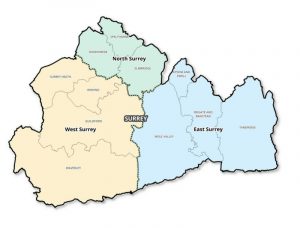
Proposed Surrey County boundaries (Credit contains Ordnance Survey data Crown copyright and database rights 2024)

Council leaders across Surrey have ruled out making the county a single mega authority. The agreement was reached during a meeting on February 7, attended by leaders from all eleven district and borough councils. 

The government confirmed last week that Surrey is among the first areas to take part in devolution to simplify and streamline local government. Elections have also been postponed until at least 2026 as part of the process. 

Catherine Sayer, Leader of Tandridge District Council, said: “I am delighted we have been able to rule out proposing a single unitary which I believe would have been too large and so lack accountability to residents.”

Two-tier systems of borough and county councils could be thrown away with single unitary authorities created instead. The government argues this would not only be more cost effective but also shift power away from Westminster and towards local people. 

Tim Oliver, Leader of Surrey County Council, who was unable to attend last week’s meeting, said: “The government’s White Paper sets out their ambition to create strategic combined authorities under mayoral devolution, and within Surrey’s geography a single unitary wouldn’t meet that criteria.”

A statement from the Surrey Leaders LGR Steering Group said it “remain[s] committed to working together towards submitting one bid for the County”.

Options still on the table include Surrey being made up of two or three smaller council regions, with possibly an elected mayor overseeing the whole county. Last week Spelthorne councillors voted on their preferred make-up of councils depending on whether Surrey would be split into two or three. 

But leaders across the political divide have warned shrewd councils should not be flattened by neighbouring council’s crushing debts. Leader of Reigate and Banstead Borough Council, Richard Biggs, and Leader of Elmbridge Borough Council, Mike Rollings, as well as Cllr Sayer (Tandridge) have raised alarm at being forced to pick up the tab of other councils. 

Council leaders are aiming to meet weekly to develop an interim proposal, in line with government criteria, to be submitted by 21 March with a full proposal to follow by 9 May.


Guildford Borough Council keeps its lights on

Outside Guildford Borough Council\'s HQ, Millmead House. (Credit: Guildford Borough Council)

A Surrey council may have “kept the lights on” and balanced the budget this year but trouble could be looming. The pessimistic warning came during the budget meeting as councillors were told they will have to make tough decisions in the future. 

Members of Guildford Borough Council signed off a balanced 2025/26 budget this week despite an ‘unkind’ settlement from the government leaving levels of funding largely unchanged from the previous year. Councillors from all parties praised officers and finance bosses for turning Guildford’s accounts around in the last two years. The Surrey borough was nearing bankruptcy in 2023 with the strain from rising historical debts.

But all is not as rosy as it seems. Each year Guildford Borough Council must find £2m worth of savings just to keep afloat and cover borrowing costs for its “ambitious” capital programme. The projected budget gap is expected to grow from 0 in 2025 to potentially £5.9 million in four years (2028/29) with at least an £1.6 million increase every year. Service costs from the council are projected to rise from £16.4 million in 2025/26 to potentially £20.3m in 2028/29.

Over the next five years, Cllr Richard Lucas (Lead for Finance and Property) explained the requirement for Guildford to pay back its escalating debt represents a “major financial challenge”. He said: “Each year we will have to find another £2m worth of savings just to stay still and cover our borrowing costs increasing.”

However, the council’s plan for paying back debts for building projects does not include the Weyside Urban Village scheme. A hugely ambitious undertaking, the Weyside Urban Village project is the council’s regeneration scheme aiming to build 1,500 homes. The borrowing costs, or interest, for the project are due after 2029 and so are not incorporated into the medium term financial plan. 

Despite work being underway, the council still has not quite figured out how it’s going to foot the bill. Although it may seem a ‘future problem’, councillors will decide how they are going to finance the project in March.  

“If anything is going to put the council back in the financial mire it is that,” said Cllr Patrick Oven. He said although he was very “committed” to the scheme, he “wondered whether we can afford it”. 

Cllr Richard Lucas told the council the budget was balanced by “finding some savings within the services, increasing some fees and charges”. The Lead Councillor for Finance and Property added the main source of potential savings going forwards is from opportunities of collaboration with Waverley. The councils had recently claimed £600k has been saved in the local authority partnership between Guildford and Waverley. 

National insurance increases took the biggest chunk of the council’s finances, hitting Guildford with around £1,000 per full time employee. Wage rises and inflation is also squeezing the council’s budget, demanding the increase in council tax by the maximum 2.99 per cent. Charges for council services are projected to increase by at least 3.75 per cent. 

Non-ringfenced reserves for a rainy day sit at around £17.7m, well above the minimum 5% of general fund expenditure recommended. 

Cllr Patrick Oven described the accounts as “an austerity budget”. Expenditure is reduced in 2025/26 but for the next four years spending “effectively falls off a cliff” with money dropping to about a third of the £111k promised this year. “But we can’t spend money we haven’t got,” he added. 

Opponents still criticised the Liberal Democrat administration for a “lack of ambition” with the budget as no ‘rabbit out of the hat’ or exciting projects were revealed. Cllr Joss Bigmore said: “It’s really sad that we’re at this stage now where we’re going budget to budget trying to keep the lights on and that leaves so little discretion for any political ambition or choices.”

Guildford council has also agreed to undergo a ‘zero budgeting basis’ by looking at everything it does, covering its statutory duties and long-term priorities. Cllr Lucas said: “It inevitably means we will stop doing some things. There will be pain involved but we have £2m a year, each year, to find extra savings.”

Outside Guildford Borough Council\’s HQ, Millmead House. (Credit: Guildford Borough Council)


Surrey’s flood defences and energy efficiency funding

View from Little Misley, one of the fields set to have solar panels. (Credit: Guildford Borough Council planning documents)

Funding for Surrey’s climate change programme has been reinstated after the county council received £1.5m more in government grants than it was expecting. 

Surrey’s Greener Future’s programme is a climate change strategy that aims to reduce carbon emissions and make the county net-zero by 2050. Budget details had initially proposed to slash £0.5m from the Greener Future’s spreadsheet, as part of Surrey County Council’s identified £66.4m cuts it needs to make in 2025/26. 

But the cuts will now be reversed after an amendment put forward by the Residents’ Association/Independents and the Green Party. Members unanimously agreed to the proposed changes to the budget at a full council meeting on February 4. 

Cllr Catherine Powell said in the meeting: “Younger residents want a long-term focus which I don’t believe this budget fully supports.” The Independent member for Farnham Residents said the funds will safeguard the “vital work on developing and embedding climate adaptation”.

Money reinvested back into the Greener Futures team can be used to develop and integrate climate adaptation policies such as flood defences, heat avoidance, and programmes to improve household energy efficiency. It also includes developing finance opportunities like natural capital and organising health initiatives.

Cllr Jonathan Essex (Green Party/ Redhill East), who initiated the amendment, said: “Now is the time to strengthen and extend, not water down, climate action across Surrey, so I am delighted that we have taken this step to continue tackling the climate emergency. 

“Leadership by local councils, including here in Surrey, is vital to ensure that the health of the economy is defined by community well-being and sustainable living, not by growth at all costs.”

Cllr Powell added: “I firmly believe that climate change is not only real, but impacting Surrey and our residents and our businesses today.” She cited the multiple instances of flooding across Surrey last year which the Environmental Agency said would only happen once every 30 years in normal condition. 

The agreed change was just one of five amendments the Green Party put forward to change the council’s budget, the rest were rejected. The others included creating a voluntary contribution fund for early intervention children services, closing the Your Fund Surrey programme, putting a transport scheme on hold and committing to a cross-party working group for SEND needs. 

View from Little Misley, one of the fields set to have solar panels. (Credit: Guildford Borough Council planning documents)


Surrey mansion tax debated at County Council

Paul Follows speaking at full council meeting 4/02. (Credit: Surrey County Council live stream)

Plans for ‘those with the broadest shoulders’ to voluntarily pay more council tax to help those in need have been labelled ‘morally corrupt’ in a heated debate. The idea is based on a scheme introduced by Westminster Council in 2018, dubbed a “mansion tax”.

Council Tax is based on the property value of a house if it was sold in April 1991 in England. For instance, Band H is for properties valued at over £320,000. But with the average house price in Surrey today at just over £600k, according to Rightmove, councillors agreed the council tax system needs reform.

Paul Follows, Liberal Democrat group leader, put forward an idea to ask residents in Band H if they would be willing to pay more money to support essential services and those in need. He asked the county council to “explore the creation of a voluntary contribution scheme” for those in the highest bracket of council tax.

But the Lib Dem’s amendment to the budget was lambasted by councillors at a full council meeting on February 4. Members voted against proposal 43 against, 25 in favour and six abstentions.

Brandishing the proposal as “morally corrupt”, Cllr Ernest Mallett MBE (Residents’ Association and Independents/ West Molesey) argued many people, like himself, support charities which try to combat poverty. He said that for Cllr Follows to suggest a council with a £2bn turnover should attempt to “levy funds from residents” is “totally immoral” and “unjustified”.

The suggestion was tabled as an amendment to Surrey’s budget for 2025/26 at a full council meeting on February 4. Residents living in a Band H property will be facing a council tax bill of over £3,690 this year as the council’s budget was approved.

Not a concrete plan, Cllr Follows proposed a cross-party working group would be created to flesh out the scheme’s scope and structure. Then the designs would be brought back to council for consideration for the next financial year. He said: “It does not cost us a lot of money to try, and we may help a lot of people if we do.”

Cllr Mark Nuti (Conservative/ Chertsey) said it was “an affront” to the people of Surrey who are generous with their time and money in the voluntary sector and philanthropic investors in the community.

Council leader Tim Oliver agreed and said Surrey “already has one of the highest council tax bills in the country”. Cllr Oliver said members should focus more on local government reform rather than getting residents to pay extra.

Worried about the “unintended consequences” of the scheme, Cllr Denise Turner Steward (Conservative/ Staines South and Ashford West) said putting “moral pressure” on residents to pay more council tax to help others could “divert” funds away from much-needed charities in Surrey.

But not everyone shared the same view. “There is nothing iniquitous of asking those with more to consider voluntarily giving a little extra,” said Cllr George Potter (Lib Dem/Burpham). “If that bastion of socialism in Westminster can manage it, then surely middle of the road Surrey can certainly manage it.”

Other members took a more hard-line approach. “If you can afford a £3m or £4m house, you ain’t poor,” said Cllr Jan Mason (Residents’ Association/ West Ewell). “They know they are buying housing in an affluent area, they are able to pay.” She told the council many of the residents in her ward and it would be an “insult to my residents who are on really low income” if bigger council tax bands were not brought in.

Cllr Lance Spencer (Goldsworth East and Horsell Village), seconding the motion, said he understood not everyone in a Band H property would be able to contribute. However, the voluntary contribution could provide “an opportunity to make a significant impact to the county’s future” with the “further degradation of services realistically inevitable”.

Waverley Borough Council, where Cllr Follows is leader, has also sent a letter to residents asking for their thoughts on a proposal to introduce voluntary tax contributions to support projects and vulnerable residents across the borough.

Paul Follows speaking at full council meeting 4/02. (Credit: Surrey County Council live stream)


Political furies over Surrey election postponement

Tim Oliver Surrey County Council leader - Surrey Live

Rival political parties are furious over the cancellation of Surrey’s 2025 county council elections, with groups claiming the ruling Conservatives are “running scared”. 

The government announced on Wednesday (February 5) that it has accepted Surrey’s request to postpone the county council elections for May 2025 to the following year. The county is now set to be part of the government’s ‘first wave’ of simplifying and streamlining local authorities. 

Specifics of how Surrey will be governed are still yet to be carved out but it could involve either a single mega authority with an elected mayor, or two to three smaller regions.

The news comes much to the despair of some political parties. Liberal Democrats and the Green Party saw a surging level of support in Surrey district and borough council elections last year and they were hoping to repeat the same success at a county-level. 

Surrey MPs have reacted to the cancellation, with newly-elected Liberal Democrats claiming the “Conservative-led Surrey Council has denied local residents their voice”.

A joint statement from the Lib Dem MPs in Surrey and the group leader read: “It is clear that the Conservatives are running scared and have succeeded in stopping these elections from happening in May, in a desperate attempt to cover up their own abysmal record.

“Meanwhile, the Labour Government has stood by and done nothing, knowing they can’t win in Surrey. 

“Voters are rightly fed up with this Conservative council and years of financial mismanagement. From endless potholes, to cutting local frontline services, to letting down thousands of children with special educational needs and much more, its record speaks for itself.”

Tim Oliver, Leader of Surrey County Council, welcomed the decision to postpone the elections to allow for “detailed work for reorganisation” to begin while supporting residents. The Conservative member asserted that devolution is in the “best interest” of residents and businesses.

Meanwhile, the Green Party reacted with anger to the news. Cllr Jonathan Essex (Redhill East) said: “Our fragile democracy can’t afford to ignore the people’s right to vote.” He said: “The local Conservatives have forfeited their right to represent the county as we face an uncertain future for local decision-making.”

The Greens said it would have stood more candidates than ever before at the Surrey County Council elections as the party has been growing in popularity. Cllr Essex said: “People should have a real choice between the failed Tory and Labour parties […] The real aim of so-called ‘devolution’ is quite the opposite: to move decision-making upwards to more unaccountable bodies.”

But Surrey’s two Labour county councillors said the delay was “good news for the people of Surrey”. The pair said the change will hand power from Westminster to local people with new powers and a better deal.

“Surrey County Council was formed in 1889 so the world is very different now,” Cllr Robert Evans (Spelthorne). The population of Surrey has more than doubled since Victorian times and much of what was Surrey then is now in London. The boroughs and districts were formed more than fifty years ago and don’t serve the same purpose as they might have done then.’

Cllr Robert King (Runnymede) added: “In Surrey we have a two tier system which means service delivery can be confusing. Add to that we have 12 headquarters, 12 chief executives, dozens of deputies and more than a thousand councillors. A top-heavy system of local government does not serve our communities as well as it should.”

Out of 16 local authorities which wrote to the government asking to postpone the May 2025 elections, only nine of the requests were accepted by Angela Raynor, Secretary of State for Housing, Communities and Local Government. Other councils that sought a delay included Warwickshire, Devon, Leicestershire, Gloucestershire, Kent and Worcestershire, and Oxfordshire.

“Any party calling for these elections to go ahead must explain how this waste would be justifiable,” Ms Raynor said in her announcement to the House of Commons. She added: “We’re not in the business of holding elections to bodies that won’t exist and where we don’t know what will replace them. This would be an expensive and irresponsible waste of taxpayer’s money.”

Describing the need for creating a sustainable unitary local government for Surrey as “urgent”, the Ministry for Housing, Communities and Local Government said postponing the elections will help “speed up” reorganising local government and its benefits.

Tim Oliver Surrey County Council leader – Surrey Live

Related reports:

Surrey County Council election delay stirring up a storm

What might local government reorganisation mean for Epsom and Ewell?

All change! Epsom and Ewell Borough Council approaching its final stop?

Surrey’s Conservative leader wants to postpone May’s poll reckoning

Tiers to be shed if Epsom and Ewell loses its Borough Council?


Surrey Police hikes its Council tax share

Lisa Townsend, Surrey Police and Crime Commissioner. (Credit: Surrey County Council live stream)

Surrey Police’s share of council tax bills will leap over £335 a year for the average Band D households. Lisa Townsend, Surrey Police and Crime Commissioner (PCC) said the 4.3 per cent increase was needed to “maintain the level of service”. 

Ms Townsend told the Surrey Police and Crime panel the government “absolutely expects” PCCs to raise council tax precepts  by the maximum £14 to cover the police officer wage increase (set nationally) and inflation.  

The annual charge will increase from £323.57 in 2024/25 for a Band D property to £337.57 in 2025/26. 

The commissioner told the panel even with the precept increase and the use of some reserves, the Force will still need to find £3.6m of savings this year and over £15m for the three years after that.

Although the commissioner said Surrey Police is one of the fastest-improving forces in the country, she stressed the increase in funds was needed to “keep us where we are”. Surrey Police has more than doubled its charge rate, with an additional 3,500 offences being prosecuted, according to the PCC. Ms Townsend told the panel the increase is “against a backdrop of a massive increase year on year which our financial resources can’t keep up with”. 

Reports state the cost to operate the Force has increased by £23.2m compared to 2024/25, meaning Surrey Police have to make a saving of £3.6m this year. Ms Townsend argued if the precept was not increased, police services would have to be cut and “achievements would be at risk”. 

The news comes as 59 per cent of people said they would pay more to support Surrey police in the PCC’s online survey. Over 3,200 people voted in the online consultation which asked them if they would be willing to pay an extra £1.16 a month to support policing teams, based on the average Band D property. 

But members of the Surrey Police and Crime Panel voted against the proposed increase in a meeting on February 3. Four councillors opposed the tax hike, four were in favour and one person abstained- leaving the chair of the meeting to cast the deciding vote which was found to be against. 

“There is no doubt that all members want to support the police,” said Cllr John Robini, chair of the meeting. “However, we hear time and time again how our community is struggling with finances.” Yet, there were not enough votes to veto the proposal and the panel accepted the Commissioner’s precept of 4.3 per cent to come into effect.


“I’ve got people in my ward who can’t afford to pay their bills and feed their kids,” Cllr Richard Wilson said. “This squeeze above inflation is going to take more of their pay…and make it more difficult to support their families.” 

Raising the council tax above inflation levels (currently around 2.5 per cent), councillors questioned whether this was an acceptable strain on residents. Kelvin Menon, Chief Financial Officer for the PCC, said: “We have a lot of historic inflation we have to cope with and cover.”

The PCC’s report details recruiting officers can be a challenge with high living costs in Surrey, contributing to over 11 per cent of posts vacant. Increased use of technology by criminals has also led to a growing demand for technological forensic services, with almost all crimes having a digital element to them, according to the report.


Planning a house extension in Epsom and Ewell? A hard lesson from Waverley

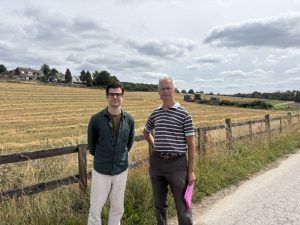
Steve Dally (right) and his wife Caroline. (Credit: Steve Dally)

A man who was charged £70,000 by a Surrey council said it was a “watershed moment” to be given recognition of his struggle and the right to appeal. A couple were slammed with a hefty fee for a home extension and given no opportunity to argue their case.

Community Infrastructure Levy (CIL) is a legal charge designed to get developers to financially contribute towards essential infrastructure. While self-builders and home extensions are exempt from CIL payments, in Waverley applicants must first complete the necessary paperwork for this.

But with residents being unaware they need to apply for an exemption, or due to paperwork errors, some people have unexpectedly had to face extortionate CIL charges and terrifying enforcement action.

Steve and Caroline Dally were granted planning consent to demolish and replace an existing home extension that was exempt from CIL. However, after seeking permission to make some minor amendments (for which consent was granted) they suddenly and unexpectedly faced a £70,000 CIL charge, with no appeal.

Unlike in criminal cases, the paperwork and administrative processes of CIL means people could accidentally face charges between £40,000- £235,000 and have no right for their case to be reconsidered.

They pursue you relentlessly to get the money out of you,” said Steve Dally, “There’s no compassion, there’s no understanding.” He explained the council told him he had 60 days to pay the £70k or his home in Godalming was at risk of being re-possessed and he would go to prison. As this was the start of the Covid lockdown in 2020, he feared the worst.

The 65-year-old has been forced to increase the mortgage on his home by £400 per month, pending full repayment when he turns 70. He may have no choice but to sell the home he has worked his entire life for, just to settle this debt. “It’s traumatic,” Mr Dally said. “You lose sleep and end up crying your eyes out- what can you do about it?”

Fighting the council since 2020, Mr Dally had approached councillors and the local MP and the ombudsman to change the CIL charge levied against him and his wife. But none of them could ultimately remove the fee.

On Tuesday, January 28, Waverley Borough Council agreed to ensure the public have the right to appeal the CIL charges. Mr Dally described it as a “watershed” moment as it was the “first time that someone was prepared to stand up and fight for you”.

Speaking out for the victims, Councillor Lauren Atkins said the “Life-changing unintentional impacts of CIL have resulted in debt, depression and years of feeling unheard and being unanswered.” She called for the council to collaborate and seize the “opportunity to see justice for those wronged”.

But now, householders previously subject to CIL liability can request a discretionary review by Waverley Borough Council within a window from 1 June 2025 to 31 May 2026. The council agreed to have a discretionary review of CIL payments for householder applications and will consider refunds of CIL previously collected.

Mr Dally said the change did not guarantee victims were going to get their money back. “It’s a long way to go yet,” he said, arguing it depends on how “compassionate” the reviewer will be of people’s cases. “There will be a lot of people in Surrey that will be impacted by the same and will not know which way to turn.” he said.

Speaking to the Local Democracy Reporting Service (LDRS), Mr Dally reeled off other people who had been found foul of the CIL charge on their residential properties. He said one man was charged £200k and a wife looking after her husband with dementia was fined £40k.

Councillor Jane Austin said: “We see the unintended consequence of this aspect of s legislation has caused great financial and emotional distress to people who have unwittingly broken rules they didn’t know existed.”

She acknowledged Waverley council is, going forward, trying to ensure householders are made aware of CIL and its exemption paperwork. Cllr Austin added: “But we need to right this wrong for those who have already had to make these huge payments.”

Leader of the council, Cllr Paul Follows, said work is already being done to investigate the CIL levy issues but welcomed the cross-party collaboration. The CIL levies will be reviewed as part of the council’s Local Plan process, according to Cllr Follows.

“I hope the poor folk who are being pestered by Waverley to pay these charges will be left alone until we have resolved this,” said Cllr Michael Goodridge. He raised concern that he has been told everyone has been looking at the issue for a while, but it could take a lot more time in the Local Plan.

The Liberal Democrat council leader also added the CIL regulations was something his party had inherited from the previous administration. Members also broadly agreed more education of the CIL process was needed, both for councillors and the public.

Emily Dalton

Steve Dally (right) and his wife Caroline. (Credit: Steve Dally)


Community Infrastructure Levy (CIL) in Epsom and Ewell Borough

The Community Infrastructure Levy (CIL) is a charge imposed by Epsom and Ewell Borough Council on certain types of new development. It helps fund local infrastructure, such as schools, healthcare facilities, and transport improvements.

Does CIL Apply to Single Residential Developments or Home Extensions?

When CIL is Payable

CIL applies if your project involves:

  • New dwellings – Any development that creates a new residential unit is liable for CIL, regardless of size.
  • Large extensions – If an extension or new build increases the gross internal floor area by 100 square meters or more, CIL applies.

When CIL is NOT Payable

You may not have to pay CIL if:

  • Your project adds less than 100 square meters of additional internal floor space (unless it creates a new dwelling).
  • You qualify for exemptions or reliefs (see below).

CIL Exemptions and Reliefs

Some developments may be exempt from CIL, including:

  • Self-build homes – If you’re constructing your own home, you can apply for a self-build exemption.
  • Residential annexes or extensions – If the work is for your own use and meets specific criteria, it may be exempt.
  • Affordable housing – Developments that meet affordable housing requirements are exempt.

Important: You must apply for exemptions before starting construction. Failure to do so may result in the full CIL charge becoming payable.

How is CIL Calculated?

CIL is based on the net increase in gross internal floor area (GIA) and is subject to annual indexation.

Current Residential CIL Rate (2025): £204.50 per square meter
(Source: Epsom & Ewell Borough Council)

CIL Process & Next Steps

If your project is subject to CIL, follow these steps:

  1. Submit a Planning Application – Include the required CIL forms when submitting your application.
  2. Complete an Assumption of Liability Form – Before starting work, submit this to the Council.
  3. Submit a Commencement Notice – Notify the Council before construction begins.
  4. Receive and Pay Your CIL Charge – Once the Council issues a Demand Notice, make the payment as required.

More Information & Guidance

For full details, access CIL forms, and check the latest updates, visit:
Epsom & Ewell Borough Council CIL Guidance

Sam Jones


Will Epsom and Ewell be bailing out Guildford?

Guildford Council buidings

A Surrey council faces tough decisions in the future after receiving a “very difficult financial settlement from the government”. 

Guildford Borough Council has no extra funding to meet inflation and demand pressures, meaning it will have to cut costs and increase income to make ends meet. Cost pressures looming over the council stand at over £3m, with National Insurance increases and developments causing the most strain.

The local authority said it has been told the settlement it would receive from the government for the financial year 2025/26. However, the “significant change” for the next year is Guildford council will not have a cash increase  despite an assumed council tax rise of 2.99%. 

Even though residents and businesses may face increased council tax and business rates, without extra government funding, the authority’s overall “Core Spending Power” will remain the same,” the council’s report stated. 

No additional funding is coming to meet the cost of pay awards from the central government, inflation and demand pressures. Guildford Council is therefore reliant upon cost reduction and increasing income to meet these costs. Richard Bates, Guildford Council’s Chief Financial Officer, said: “In the light of a poor settlement, we’ve done the best we can.”

The projected budget gap is expected to grow from 0 in 2025 to potentially £5.9m in four years (2028/29) with a at least a £1.6m increase every year, Service costs from the council are projected to rise from £16.4m in 2025/26 to potentially £20.3m in 2028/29. 

Council officers said they will be looking to attack the gap with a series of measures, including budget reviews across the board, service reviews, and comparing charges (e.g. Car parking) with neighbouring councils.

Cost pressures facing the council currently stand at around £3.18m, with the biggest demands coming from firstly the rise in National Insurance and then capital spending on developments. 

National Insurance (NI) increases were announced in the Chancellor’s autumn statement and the combined cost of these changes adds up to around £1,000 per employee, according to council documents. Not only affecting public bodies, the rise in NI costs could impact contractors and suppliers to the council and push up costs further. 

The government is providing some support to public sector employees, but the actual amounts were not announced as part of the provisional settlement. The Ministry of Housing, Communities and Local Government said it plans to put £69bn into council budgets across England.

Paying for the council’s “ambitious” building programme is a significant part of the financial gap, with large amounts being borrowed for major schemes like the Weyside Urban Village development. However, the cost of borrowing has increased significantly since many of the major schemes in the capital programme were approved, in line with the council’s report. 

Although the 10-year-project will require significant borrowing, the council is managing the levels of debt by selling assets. Officers have warned that a borrowing strategy for the next few years will be “critical” to ensure interest costs are minimised and that long term deals are secured at competitive and affordable rates.

However, the Chief Finance Officer said in his report that the “on-going inflation pressure on land values leave a significant projected deficit on [the Weyside Urban Village] scheme”. He added that a “mitigation strategy needs to be agreed in Spring ’25”.

A decision on the council’s medium term budget (2025/2026- 2028/29) will be made at full council on February 5.

Outside Guildford Borough Council (Credit: Google Street View)


Will Epsom and Ewell be bailing out Spelthorne?

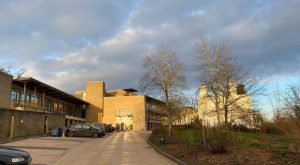
Spelthorne Borough Council offices in Knowle Green, Staines. Credit: Emily Coady-Stemp

“Significant weaknesses” in a council’s financial records have been laid bare in a new report. 

External auditors for Spelthorne Borough Council said they could not fully assess or complete the financial statements as there was inadequate record keeping. Many queries remained unanswered, said auditors, who reported they were unable to conclude on the 2023/2024 closing balances. 

“Without complete and accurate information, the Council cannot have full confidence in the financial decisions reached,” the report said. “The finance papers are detailed but, in our judgement, can be confusing to follow, contain contradictory information in the same paper and lack a clear narrative by way of explanation.”

Spelthorne Council has not fully addressed the funding gaps and risks within its financial plan, according to the report. The latest outline budget for 2025/26 reported in December 2024 shows the council closing its £0.3m funding gap in 2025/26 but it has larger gaps of £3.5m and £5.4m predicted for the following consecutive financial years 2026/27 and 2027/28. The report said the council does not have agreed plans to address the budget gaps which amount to around 15-20 per cent of net revenue expenditure.

Although the council has a significant amount of investment properties for which it receives commercial rents, auditors found recording keeping for monitoring the key leases was “inadequate”. The council had around £52m in commercial rents in 2023/24 but auditors could not be assured by the amount recognised and the cash received. 

The “uncomfortable” report made for “stark reading” by both councillors and officers. Councillor Karen Howkins told members Spelthorne “is a council in crisis” at an Audit Committee council meeting on January 28.

Auditors raised concerns that the minimum revenue position (MRP) – the amount of money the council must put aside in its budget each year to ensure it can repay debt incurred for capital expenditure- is likely to have been played down significantly. But auditors said they did not have enough evidence to conclude this was the case.

Spelthorne Council is currently facing over £1bn debt from investing in shops and offices, including Elmsleigh Retail Centre in Staines.  Paying this sum for the next 50 years, auditors stressed the council were not “effectively managing” the risk. 

Auditors also highlighted issues around Spelthorne’s accounts for purchasing three commercial properties including Carter Building, Thames Tower and Porter Building- worth £351m. The report reads that Spelthorne council only paid £297.9m for the properties and the total figure was ‘grossed up’  by £53.7m to include tax and added the debt to its balance sheet. 

The first audit the council has received since 2017/18, auditors noted auditing requirements and have changes and standards have increased. The report also highlighted issues with council staff not having capacity or capability to carry out or send through the work required for the audit.

Officers said a training session will be provided for council staff and, in future, staff will be separated between those working on the audit and those working on the council’s overall budget setting. 

Several issues and weaknesses were identified during the audit and 16 recommendations have been put forward. 

The report flagged “significant weaknesses” in governance arrangements and “extremely poor relationships” between some political groups is impacting the council’s financial management. Auditors recommended the council “urgently” address the issue of trust and apparent “toxic culture” between members and officers. 

An LGA Peer review in November 2022 concluded: “There is poor behaviour by some councillors towards each other and staff which is widely recognised as damaging the council’s reputation. It is also affecting staff morale and the organisation’s ability to retain and recruit staff.” As of January 2025 there have been 10 complaints outstanding with the monitoring officer regarding councillor behaviour. 

Image: Spelthorne Borough Council offices in Knowle Green, Staines. Credit: Emily Coady-Stemp