Valerie Flanagan passed away suddenly at home on Friday 17 July 2026.
She will be dearly missed by her Daughter Louise, Son in Law Paul, Grandchildren Abi & Oli, Grandson in Law Chris, Grandaughter in Law Danielle and Great Grandchildren Asher & Aurelia.
Also, extended family in the UK & New Zealand.
The funeral will take place at Randall’s Park Crematorium, Leatherhead on Tuesday 1 September 2026 at 11.45, followed by refreshments at The Cricketers Pub, Epsom.
Family flowers only please. In lieu of flowers Valerie’s friends may wish to make a small donation to a charity of their choice.
Free bus travel is a good idea; so why does it stop at 15?
14 August 2026
Dear Editor,
This August, children aged five to 15 can travel free on local buses across England. I think that’s genuinely good. It makes days out cheaper, helps children get to summer activities, and might persuade a few families to leave the car at home.
But I can’t quite work out why it stops at 15. And where I live, age isn’t really what decides the price of a bus seat anyway.
I’m 16. I live in Epsom and travel to school in Wallington, which is in the London Borough of Sutton. I have a 16+ Zip Oyster photocard. Going to school in London, it turns out, makes no difference at all; the rule follows where you sleep, not where you study.
So here is what the same card is worth to different people. If you’re 16 and live in a London borough, it gives you free bus travel. If you’re 16 and live outside London, as I do, it gives you half the adult fare – about 88p a journey. And if you’re 16 and have never applied for one, you tap a contactless card and pay the full £1.75.
Three 16-year-olds. Same bus, same stop. One pays nothing, one pays 88p, one pays £1.75.
Nothing in that reflects need, or distance, or what anyone’s family earns. It reflects which side of the Greater London boundary you sleep on, and whether somebody remembered to tell you the card exists.

That second part bothers me most, because it’s the easiest thing to fix. Some students will inevitably miss out simply because nobody has explained the system clearly enough. A benefit that depends on knowing it exists ends up helping the organised rather than the people who need it.
And the cost starts to matter more at 16 than it did at 15. At 15, most journeys are still with your family. At 16 you’re travelling on your own to sixth form, a Saturday job, or a work experience placement you were told to arrange yourself. Nobody tells you that you can’t apply for those things. On paper they’re open to everyone. But one student can afford the journey every week and another quietly decides they can’t, and from the outside that never looks like unfairness at all.
I should admit I’m arguing against my own convenience here. I have the card, and half fare is not a hardship. I’d still rather Epsom’s 16-year-olds got what Sutton’s get. The Greater London boundary was drawn to decide who administers what; it was never meant to decide which teenager can afford to get to an interview in Croydon. TfL buses cross it every twenty minutes.
Surrey does have its own scheme, the LINK card, which halves fares for under-20s. It’s useful, it’s badly advertised, and it doesn’t work on TfL services – which are the buses that actually serve this town.
Of course the government has to draw a line somewhere, and August’s offer was aimed at families with younger children. That’s fair. Public money isn’t unlimited. But 15 isn’t an obvious place to stop, and a postcode isn’t a principle at all.
Two things would help. Extend the August offer to everyone under 18; we’re legally required to be in education or training, and most of us earn very little. And make sure every pupil in Epsom and Ewell hears about both the 16+ Zip and the LINK card before their sixteenth birthday, with a plain list of what each one covers.
Free buses this August are a good idea. I just don’t think a birthday, a boundary and a form should decide who keeps them.
Yours faithfully,
Emad Rehman Aged 16, Epsom, student at Wilson’s School, Wallington
Epsom Racecourse: Preview and Tips for Friday’s Six-Race Meeting
14 August 2026
Racing returns to Epsom Racecourse this Friday with a six-race meeting, consisting of five handicaps and a fillies’ novice race.
Read on for a preview of and tips for the Epsom card, brought to you by BOYLE Sports, who have all the horse racing odds.
We begin with a seven-furlong nursery handicap (14.48). Oliver Cole’s Greek Symphony and Andrew Balding’s Wise And Wonderful are the only runners to have previously won a race, but the former looks more competitive on this occasion having shown he can still step up at this mark. Sequel Star could be promising on her handicap debut, and might appreciate the step up in trip as well, but she is totally unproven on a testing track like Epsom.
Next is a seven-furlong two-year-old fillies’ novice (15.23). Tiora Time is the only previous winner in the field, having won nicely last time out at Doncaster, and she carries a four-pound penalty here. Tansy Lane has been going quite well in maidens so far and may stand a decent chance here, and she looks to be the only to throw Tiora Time a question.
Race three is a six-furlong handicap (16.00). Modern Times won last time out and has had a modest rise in the weights as a result. He could factor again, but others make appeal too. Ruby’s Profit is down to an attractive mark now and is well drawn, while Sir Garfield is a consistent sort who went well at Goodwood latterly and should run a big race here under Jason Hart.
A 10-furlong handicap follows (16.38). All About George went well last time at Bath on this mark, while Celtic Spirit has been consistently good this term and enjoyed the step back up in trip last time at Lingfield. Haveagobeau beat him that day but looks to be on too tough a mark to win this time.
Second to last is an extended mile handicap (17.13). Sir Mark Prescott’s Chantelle is shaping up as a consistently good filly who gets a result more often than not. She has won two of her four career starts and has shown to handle this track. She is lightly raced this season and ought to be able to win this now, if progressing from a second over course and distance last time. Trio was the one to beat her last time, though, and may throw another question.
Last of all is a seven-furlong handicap (17.48). Ice Cube and Eyes Front both won their latest starts, with both looking competitive once again. A La Noche makes his handicap debut and returns to the track for the first time in nearly three years, so he is worth watching but unlikely to win here. Freddie’s Star might go well in first-time blinkers. Red Mirage is more consistent, though, and coil prevail here.
Epsom selections – Friday:
14.48 – Greek Symphony
15.23 – Tansy Lane
16.00 – Sir Garfield
16.38 – Celtic Spirit
17.13 – Chantelle
17.48 – Red Mirage
Image: Horses racing Image: Credit Paul. CC BY 2.0
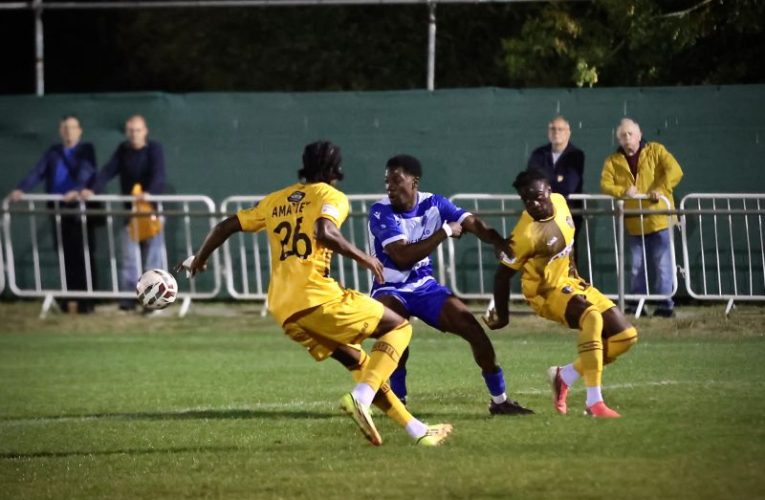
Epsom and Ewell FC 1 – 0 Chipstead. 8th August – Chalky Lane – The Emirates F.A. Cup Extra Preliminary Round A much-changed Epsom & Ewell side showed grit, discipline … Read More
Nuclear physicists at the University of Surrey have become the first to carry out a scientific experiment using the world’s most advanced gamma-ray spectrometer – investigating a sudden change in … Read More
A drone is now operating at London Waterloo to tackle trespass, fix infrastructure faults and reduce disruptionOperated remotely from Southampton, the drone provides live intelligence to South Western Railway and … Read More
Councillor allowance bill rises £19,275 in a year Epsom and Ewell Borough Council’s bill for councillor allowances rose by more than £19,000 last year, with 30 of the borough’s 35 … Read More
Surrey’s future strategic authority could retain a share of locally generated income tax and business rates under government plans to transfer more money and decision-making from Whitehall to England’s regions. … Read More
An east Surrey farm is seeking permission to build a new irrigation pond, as climate change has made water supply a “major operational risk”. Reid Manor Farm Limited has put … Read More
A newly built railway footbridge has been delivered to Epsom Common but cannot be installed after a late dispute emerged between Surrey County Council and Network Rail over its width. … Read More
Strict controls on new HMOs in Reigate and Banstead could be brought in next year. It comes as new bedsits have sprung up and clustered in Redhill and Horley at … Read More
Who pays for the homes we do not build?
14 August 2026
Dear Editor,
My family moved to Epsom five years ago for many of the same reasons cited by those defending the Green Belt: the space, the schools and the feel of the town. I am 16, and I am conscious that a similar family arriving five years later might not be able to manage it.
For the past month, I have been reading the Local Plan and the objections to it. In all of this debate, I have not found the perspective of the generation it is supposedly about.
Both sides speak the language of protection. Those defending the Green Belt want to protect landscape, character and the reasons families came here in the first place. Those supporting the housing numbers want to protect the ability of younger residents to remain here. Neither is a bad-faith position, although the tone of the debate does not always reflect that.
What neither side says plainly enough is where the cost goes when a needed home is not built. It does not vanish. It comes back as a higher price, a longer commute, three adults sharing a two-bedroom flat, a 28-year-old still living in a childhood bedroom, or a teaching assistant unable to afford the borough in which she works.
Those costs often fall on people who cannot object to the plan because they do not live here yet. They have no residents’ association and they do not write to local newspapers. Their silence is not consent. It is absence.
I am 16, so I will not pretend to know the correct number of houses. But I would put the same question to both campaigns: if your proposal is fair, name the people who will bear its cost – and say whether you have asked them.
I would rather grow up in a borough that answers that question honestly and then decides than one that wins by outlasting everyone who might have disagreed.
My family got here in time. That is exactly why I do not think the door should close behind us.
Emad Rehman,
Drones may reduce delays on Waterloo line
14 August 2026
A drone is now operating at London Waterloo to tackle trespass, fix infrastructure faults and reduce disruption Operated remotely from Southampton, the drone provides live intelligence to South Western Railway and Network Rail Wessex for rapid response to incidents.
Trespass and fatalities account for almost 14 per cent of delays, making them a leading cause of disruption and costing taxpayers millions.
Automated drone technology is part of publicly owned South Western Railway and Network Rail Wessex’s plan to improve services for customers ahead of the establishment of Great British Railways RAILWAY customers at London Waterloo may have spotted a new presence overhead: a drone helping to prevent delays at Britain’s biggest station.
South Western Railway (SWR) and Network Rail Wessex (NR Wessex) are deploying automated drone technology to deter and tackle trespass, improve safety and reduce disruption on one of the country’s busiest rail corridors.
Trespassing on the railway is illegal and extremely dangerous. SWR and NR Wessex trains are powered by an ‘always on’ electric third rail carrying 750 volts of direct current, which can cause severe, lifechanging injuries or death.
When trespass is reported on the railway, SWR and NR Wessex must turn off the power, preventing trains from running until the incident has been resolved and power to the lines can be safely restored.
Most of South Western’s 1,600 daily services begin or end at London Waterloo. Even minor incidents can delay thousands of customers and cost taxpayers millions.
Between April 2025 and June 2026, trespass and fatalities caused almost 14 per cent of cancellations and over 200,000 minutes of delay to SWR and NR Wessex services, making it one of the leading causes of disruption.
Last September, a trespasser near Clapham Junction caused more than 57 hours of delays and was later imprisoned for eight weeks.
Another even more serious incident in the New Malden area in August 2024 saw the equivalent of nine days of delays, costing the taxpayer £1.2 million. The trespasser was sentenced to 18 months in prison.
The drone is operated remotely by British firm SkyBound from a high-tech control centre almost 80 miles away in Woolston, in the Southampton area.
When required, operators launch the drone from its trackside station to provide rapid intelligence for SWR and NR Wessex’s control centre, security and engineering teams, even before teams arrive on the ground.
Its high-resolution and thermal imaging cameras give enhanced visibility of trespass incidents, infrastructure concerns or any situation that requires inspection, with live footage streamed directly to the network’s operations centre in Basingstoke.
This allows the railway and emergency services to respond more quickly, reduces the need for ground teams to access the track, and limits the need to switch off the power and delays customer journeys.
The drone at Waterloo is just the first of a planned chain of SkyBound drones to help protect the busiest section of the SWR and NR Wessex network, with further drones to be based at Clapham Junction, New Malden and Walton-on-Thames.
South Western Railways
.
.
.
.
Surrey eyes a share of its own taxes under devolution plans
14 August 2026
Surrey’s future strategic authority could retain a share of locally generated income tax and business rates under government plans to transfer more money and decision-making from Whitehall to England’s regions.
The Government’s “Rewiring the State” programme proposes replacing some central government grants with a share of the income tax generated within each mayoral area from April 2028.
Mayors would not, on the information published so far, be given the power to set income tax rates. Instead, part of the existing tax collected by the Treasury would be assigned to their regions.
The intention is that an area which expands its economy and tax base would benefit from the additional revenue. Councils and strategic authorities would also retain a greater proportion of locally raised business rates.
However, the Government has yet to disclose what percentage of either tax would be retained, how the system would operate during an economic downturn or how revenues would be redistributed between wealthier and less prosperous regions.
Those details are expected in a fiscal devolution roadmap accompanying the autumn Budget, followed by more precise income-tax arrangements in the next Spending Review.
The proposals could prove particularly significant for Surrey, with its comparatively strong economy, high employment and large number of higher-rate taxpayers. Whether that translates into substantially more money for local services will depend upon the formula eventually adopted and the grants which tax revenues replace.
Surrey County Council says a Foundation Strategic Authority is proposed for the county in 2027, providing a possible route to a Mayoral Strategic Authority from 2028.
That distinction matters. The Cabinet statement promises a share of income tax to “every mayor”, while saying that mayoral authorities will receive greater powers than non-mayoral bodies. It does not clearly promise non-mayoral Foundation Strategic Authorities the same income-tax entitlement.
The Government says it will not impose a mayor on an area which does not want one, although it regards directly elected mayors as offering the strongest form of accountability. It wants every part of England to have, or be establishing, a strategic authority by the end of 2027, with authorities operating everywhere by the end of 2028.
Councillor Steve Wotton, Leader of the East Surrey Shadow Authority, welcomed the direction of travel.
He said: “Surrey has a strong economy, a highly skilled workforce and an important role to play in supporting national growth. Giving strategic authorities a stronger link to locally generated revenues has the potential to provide greater certainty for long-term investment in transport, infrastructure, housing and skills.
“The ability to plan over a longer time horizon could help local leaders make better decisions, unlock investment and deliver improvements that residents and businesses want to see.”
Councillor Paul Follows, Leader of the West Surrey Shadow Authority, said the principle was positive but cautioned that the detail would be critical.
“Places like Surrey should have a stronger voice in the decisions that affect their residents, businesses and local economy,” he said.
“However, it will be important that government gets the detail right. Any new funding system must be fair, sustainable and recognise the different opportunities and challenges faced by communities across the country.”
Beyond taxation, the programme proposes giving mayors greater control over transport, housing, skills, employment support, innovation, energy and cultural investment.
Mayors would gain control of budgets for technical and vocational education for 16 to 19-year-olds and locally tailored employment support. They could also be given greater influence over commuter rail services, bus regulation, affordable housing and regional investment.
Police, fire and rescue services and Integrated Care Boards are eventually expected to align with strategic-authority boundaries. Deputy mayors could be appointed to oversee important public services.
All strategic authorities, including non-mayoral ones, would also be able to introduce an Overnight Visitor Levy. The charge, sometimes described as a tourist tax, could be imposed on overnight accommodation, with authorities expected to explain by March 2028 how the proceeds would be invested.
No proposed rate or charging mechanism has yet been announced.
The reforms could therefore give a future Surrey mayor considerable influence over services and investment currently controlled by Whitehall or separate public bodies. They would also create another directly elected political office above the two new Surrey unitary councils.
Epsom and Ewell is due to form part of the new East Surrey authority under the county’s local government reorganisation. The precise relationship between the two unitary councils and a county-wide strategic authority—including how powers, costs and accountability would be divided—has still to be settled.
Tax retention could reward economic growth and provide more predictable funding for long-term projects. It also raises difficult questions. Income-tax receipts fluctuate, affluent regions begin with much stronger tax bases, and replacing government grants with locally assigned revenues could expose authorities to greater financial risk.
The Cabinet statement acknowledges that different areas have unequal starting points and says growth incentives will have to be balanced against fairness. It also proposes stronger oversight, including making the chief executives of mayoral strategic authorities accountable for the use of public money as Local Accounting Officers.
Business-rate retention is scheduled to begin for mayors in April 2027, with locally retained income-tax receipts following in April 2028. A government white paper setting out the legislation, funding arrangements and timetable is promised for the autumn.
For Surrey, the headline prospect is an attractive one: keeping more of the wealth generated within the county. Whether it represents genuinely additional local spending power—or chiefly a new way of funding responsibilities transferred from Westminster—will only become clear when the figures and equalisation rules are published.
Epsom and Ewell (and beyond) residents are being urged to get behind the local Friends of Horton Cemetery after the charity was shortlisted for a national award celebrating the volunteers … Read More
The procedural controversy at Epsom and Ewell Borough Council did not end when 11 councillors walked out of the Council Chamber on 21 July in protest at the Mayor’s ruling … Read More
Dear Editor, Glyn Hall, originally gifted by local benefactor Margaret Glyn, has served generations as a place for education, connection and community activities. However, after more than 150 years, the … Read More
Virginia Water 1–2 Epsom & Ewell Saturday 4th August. Chertsey Town (Groundshare). Combined Counties Premier League The Salts began the new season in perfect fashion, overturning a first-half deficit to … Read More
Most people don’t think about their drains until something goes wrong. By then, the kitchen sink has stopped draining, the toilet is backing up, or an outside drain has overflowed … Read More
A petition has been launched calling for a statue celebrating Ali G to be installed in Staines – tying in with the release of his new film. The petitioners want … Read More
An event structure company and its director have been fined after a worker suffered life-changing injuries. The worker sustained multiple back fractures, a punctured lung and a broken leg. An … Read More
One of the first orders of business for the newly formed Liberal Democrat-run, £4billion indebted West Surrey Council – will be to seek to change its name. A motion is … Read More
East Surrey councillors shared their experience of facing intimidation and harassment from voters as they debated a motion calling for civility in political discourse. At a meeting of the full … Read More
Camera footage and fresh field signs suggest water voles are settling in and spreading along the Surrey chalk stream Water voles are showing encouraging signs of recovery along the Hogsmill … Read More
East Surrey’s shadow council leader has welcomed Andy Burnham’s “strong commitment” to devolution as Surrey continues to take steps that could see the county get its own elected mayor. Speaking … Read More
Glyn Hall thanks Epsom and Ewell Borough Council
14 August 2026
Dear Editor,
Glyn Hall, originally gifted by local benefactor Margaret Glyn, has served generations as a place for education, connection and community activities.
However, after more than 150 years, the building has reached the end of its usable life and has been closed.
Volunteer trustees have worked tirelessly to secure funding and develop plans for a replacement hall. They had already raised significant funds, including £85,000 from local sources, but had exhausted every avenue available to obtain the remaining money needed to regenerate the site.
The trustees are delighted to confirm that Epsom and Ewell Borough Council has approved funding totalling £315,000, inclusive of the previous £85,000 award, enabling the trust to implement its approved planning permission.
The trustees said they were extremely grateful to council members for approving the award and recognising the positive impact that restoring this historic community facility would have on local people.
The project will now enter its next phase, and the trust is seeking additional volunteers and trustees. It particularly wishes to hear from people with experience in construction, social media or project management.
Details of the trust’s forthcoming annual general meeting will be publicised shortly.
The project represents an excellent opportunity to return a much-needed community asset to public use.
Anyone able to help or support the trust should contact Matthew Anderson at mjranderson64@gmail.com.
Yours faithfully,
Matthew Anderson
Trustee Glyn Hall
Glyn Hall was erected around 1870 in Cheam Road, in the heart of Ewell Village. It was bequeathed by Margaret Glyn in 1946 for the use of Ewell residents.
In January 2024, the trustees obtained planning permission to demolish the existing wooden building and replace it with a new hall.
For further information, contact Matthew Anderson by email at mjranderson64@gmail.com or telephone 07801 785403.
Why more homeowners are taking drain problems seriously before they become emergencies
14 August 2026
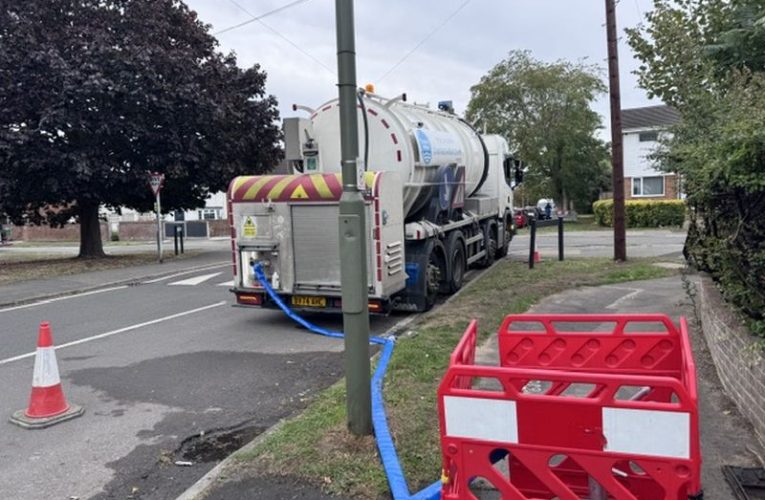
Most people don’t think about their drains until something goes wrong. By then, the kitchen sink has stopped draining, the toilet is backing up, or an outside drain has overflowed after heavy rain. In many cases, these problems could have been avoided by spotting the early warning signs.
Across Surrey and South East England, drainage engineers continue to see the same causes of blocked drains. Wet wipes, cooking fat, tree roots and a lack of regular maintenance remain among the most common reasons for emergency call-outs.
Older properties can also develop cracked or displaced pipework, allowing tree roots to enter the drainage system over time.
The first signs are often easy to overlook. Slow-draining sinks, unpleasant smells, gurgling noises after flushing a toilet, or water collecting around outside drains can all indicate that a blockage is starting to form.
Dealing with these issues early can often prevent more expensive repairs later.
Many homeowners turn to chemical drain cleaners, but these rarely fix the underlying problem and may even damage older pipework.
A professional drain camera inspection can quickly identify whether the cause is grease build-up, tree roots, damaged pipework or another fault, allowing the correct solution to be carried out.
Modern drainage equipment, including high-pressure water jetting and drain camera inspections, allows many drainage problems to be resolved without unnecessary excavation, saving both time and disruption.
Drainage & Plumbing Ltd specialises exclusively in drainage services, including emergency drain unblocking, high-pressure water jetting, drain camera inspections, root removal, drain repairs and preventative maintenance.
The company provides fixed-price quotations, operates 24 hours a day and covers Surrey, South London, Sussex, Kent and surrounding areas.
The company’s advice is simple: don’t ignore the early warning signs. Acting early is usually quicker, less disruptive and far more cost-effective than waiting for a complete blockage or drainage emergency.
For more information about drainage services or to arrange an inspection, visit Drainage & Plumbing Ltd.
Sponsored article
Accident in Leatherhead led to prosecution
14 August 2026
An event structure company and its director have been fined after a worker suffered life-changing injuries. The worker sustained multiple back fractures, a punctured lung and a broken leg. An HSE investigation found the dismantling work had not been properly planned or carried out safely.
iSkate Limited employee, Natalie McCreith, 38, a former outdoor sports instructor, had worked for the company for 14 years when she was seriously injured while working at Beaverbrook Hotel & Golf Course Leatherhead, Surrey, on 26 June 2024.
Ms McCreith underwent an 11-hour operation, spent three months in hospital and she is still recovering following the incident.
During the dismantling of a steel beam temporary structure, a ratchet strap was being used to lower a steel beam weighing over 100kg. The ratchet strap was not designed for lifting or lowering loads and failed, causing the beam to fall onto Ms McCreith. She sustained multiple fractures to her back, a punctured lung and a broken leg.
Neil Munn, director of iSkate Limited, was on site at the time and made the decision to use the ratchet strap, instructing workers where to stand. He continued with the method even after Ms McCreith raised concerns about whether it was safe.
In a victim personal statement, Ms McCreith said:
“Since the accident, my life has been completely turned upside down it’s now the polar opposite of what it once was. I will never live the life I once had or be in a body that isn’t screaming at me all day, I wish I could turn back time.
“My family spent the journey from Liverpool to London thinking I was dead, they have had to watch someone they love go through agonising pain and continue to do so. I am not the person I once was, I can’t be everything I once was and for them this Journey also continues.”
An investigation by the Health and Safety Executive (HSE) found that iSkate Limited had failed to ensure that the dismantling of the internal steel frame was properly planned and carried out safely.
HSE provides guidance on structural stability during alteration, demolition and dismantling which states that demolition or dismantling arrangements should be written down before the work begins. This safe system of work may be in the form of a safety method statement identifying the sequence required to prevent accidental collapse of the structure.
iSkate Limited, of Norfolk House, Station Road, St Ives, Cambridgeshire, pleaded guilty to breaching Regulation 16(1) of the Construction (Design and Management) Regulations 2015, by virtue of Regulation 20(1). The company was fined £12,000 and ordered to pay £6,949 in costs at a hearing at Guildford Magistrates’ Court on 28 July 2026.
Neil Munn, director of iSkate Limited, pleaded guilty to breaching Section 37 of the Health and Safety at Work etc Act 1974, by virtue of Regulation 16(1) of the Construction (Design and Management) Regulations 2015 and Regulation 20(1). He received a community order with 75 hours of unpaid work to be completed.
Speaking after the hearing, HSE inspector Russell Beckett said: “Demolition and dismantling is a high-hazard work activity, but if the work is properly planned it can be carried out safely. This accident has had a devastating effect on Ms McCreith and could easily have been prevented had the right work equipment been used.”
Health and Safety Executive
Phoito: iskate ratchet strap
Water voles thriving in Ewell’s Hogsmill
14 August 2026
Camera footage and fresh field signs suggest water voles are settling in and spreading along the Surrey chalk stream
Water voles are showing encouraging signs of recovery along the Hogsmill River, one year after 50 of the threatened mammals were released into the river and surrounding wetlands in Ewell, Surrey.
Camera traps have captured a continuous flow of images showing the water voles displaying natural behaviours, while recent surveys have found evidence of their presence both upstream and downstream of the original release site.
The field signs include burrows in the riverbanks, feeding remains, vegetation chewed at a characteristic 45-degree angle and distinctive “tic-tac-shaped” droppings found at water vole latrines. The findings suggest the animals are exploring the river and establishing themselves within their restored habitat.
Water voles were released into Chamber Mead wetlands and the adjacent Upper Hogsmill River on 30 July 2025 by the South East Rivers Trust and conservation charity Citizen Zoo.
The release marked the return of water voles to Surrey following an absence of more than 20 years and complemented an earlier reintroduction further downstream on the Hogsmill.
Laura Nee, Catchment Officer at the South East Rivers Trust, said: “It’s wonderful to see how excited local people are to have water voles living on their doorstep. Residents often stop to tell me about hearing the tell-tale ‘plop’ of something entering the water and wondering whether a vole is nearby.
“Although water voles can be difficult to spot, our monitoring with Citizen Zoo is giving us an encouraging picture of how they are settling in. Camera traps have captured a continuous flow of images showing the voles displaying natural behaviours, while recent surveys have found signs of their presence both upstream and downstream, including latrines, feeding remains and burrows in the riverbanks.
“A year after the reintroduction, it’s incredibly exciting to see evidence that the water voles are thriving and making the Hogsmill their home.”
Citizen Zoo is monitoring the population using four latrine rafts, two camera traps and a clay tracking raft positioned along this stretch of the catchment.
The equipment, combined with regular field surveys, helps conservationists understand where the water voles are living, how they are moving along the river and whether the population is successfully establishing.
Water voles were once widespread along the Hogsmill but disappeared from Surrey following decades of habitat loss and pressure from invasive American mink.
Their return was made possible by long-term work to restore the river and create suitable habitat, including the development of Chamber Mead wetlands by the South East Rivers Trust and Epsom & Ewell Borough Council.
The wetlands provide the dense vegetation, connected river habitat and suitable banks that water voles need for food, shelter and burrowing.
The July 2025 release formed part of the WET Hogsmill project, delivered by the South East Rivers Trust in partnership with Citizen Zoo and supported through Natural England’s Species Recovery Programme.
The water voles were bred by Wildwood Trust, which specialises in conservation breeding and the recovery of native species.
The release also helped strengthen the population established further downstream, where Citizen Zoo released 101 water voles in 2022. Creating connected populations along the river can improve genetic diversity and support the species’ longer-term recovery.
Ongoing monitoring will help the South East Rivers Trust and Citizen Zoo track the population’s progress and guide future habitat conservation along the Hogsmill.
The Hogsmill is a rare chalk stream flowing through Epsom and Ewell and the Royal Borough of Kingston before joining the River Thames. Chalk streams are internationally important habitats, supported by clear, mineral-rich groundwater and characterised by distinctive plants and wildlife.
The WET Hogsmill project ran from September 2023 to 2025 and created or improved habitat for water voles, European eels and native trout. It was led by the South East Rivers Trust in partnership with Citizen Zoo and supported through Natural England’s Species Recovery Programme.
The water vole reintroduction was also supported by Wildwood Trust, Epsom & Ewell Borough Council and Thames Water.
Citizen Zoo is a social enterprise and conservation charity working to restore nature and reconnect people with the natural world through community-led rewilding and species recovery.