Staines Ali G fans hope for Massiv support for statue
1 August 2026
A petition has been launched calling for a statue celebrating Ali G to be installed in Staines – tying in with the release of his new film.
The petitioners want Spelthorne Borough Council to explore a “temporary” Ali G attraction in the town linked to the upcoming release of ‘Ali G: Who Iz I?’, while also looking at options to fund a permanent landmark.
Nearly 15 years have now passed since Staines voted to change its name to Staines-upon-Thames – partially in response to negative associations with the character.
But the new petition wants the town to “embrace the attention with humour and pride” – and even asks the council to reach out to actor Sacha Baron Cohen himself to get involved.
It reads: “Ali G and the Staines Massiv have given Staines a distinctive place in British popular culture.
“The release of a new film provides an opportunity to celebrate that connection, promote the town centre and create a lasting community benefit.”
While the petitioners want the council to invest in a permanent statue or landmark to celebrate Ali G, it adds that this should only happen “if external funding is secured for its design, installation and maintenance”.
The petitioners explicitly state they do not want a statue to be bought and upkept using council tax receipts, and want the project to “include a secure donation facility supporting affordable sport, arts, leisure and community activities for children and young people in Staines”.
They add: “We believe Staines should embrace the attention with humour and pride, while using it to support the next generation of the Staines Massiv.”
Just ten people have signed the petition at time of writing, which will run on Spelthorne Borough Council’s website until August 24.
Played by Sacha Baron Cohen, Ali G rocketed to global notoriety following the release of ‘Ali G Indahouse’ in 2002.
While the film was broadly well received with critics and audiences, many people felt the spoof character left viewers with an undeservedly bad impression of Staines.
Staines’ name was officially changed to Staines-upon-Thames in 2012, in a move that was widely seen as being a reaction to Ali G’s depiction of the town.
However, then Spelthorne Borough Councillor Colin Davis told the BBC at the time: “Ali G may have had a role, but I think it goes back further than that.
“I regard Ali G as someone who put Staines on the map, we’re just telling people where it is.”
The character’s new film ‘Ali G: Who Iz I?’ is due to be released on October 23, 2026.
An event structure company and its director have been fined after a worker suffered life-changing injuries. The worker sustained multiple back fractures, a punctured lung and a broken leg. An HSE investigation found the dismantling work had not been properly planned or carried out safely.
iSkate Limited employee, Natalie McCreith, 38, a former outdoor sports instructor, had worked for the company for 14 years when she was seriously injured while working at Beaverbrook Hotel & Golf Course Leatherhead, Surrey, on 26 June 2024.
Ms McCreith underwent an 11-hour operation, spent three months in hospital and she is still recovering following the incident.
During the dismantling of a steel beam temporary structure, a ratchet strap was being used to lower a steel beam weighing over 100kg. The ratchet strap was not designed for lifting or lowering loads and failed, causing the beam to fall onto Ms McCreith. She sustained multiple fractures to her back, a punctured lung and a broken leg.
Neil Munn, director of iSkate Limited, was on site at the time and made the decision to use the ratchet strap, instructing workers where to stand. He continued with the method even after Ms McCreith raised concerns about whether it was safe.
In a victim personal statement, Ms McCreith said:
“Since the accident, my life has been completely turned upside down it’s now the polar opposite of what it once was. I will never live the life I once had or be in a body that isn’t screaming at me all day, I wish I could turn back time.
“My family spent the journey from Liverpool to London thinking I was dead, they have had to watch someone they love go through agonising pain and continue to do so. I am not the person I once was, I can’t be everything I once was and for them this Journey also continues.”
An investigation by the Health and Safety Executive (HSE) found that iSkate Limited had failed to ensure that the dismantling of the internal steel frame was properly planned and carried out safely.
HSE provides guidance on structural stability during alteration, demolition and dismantling which states that demolition or dismantling arrangements should be written down before the work begins. This safe system of work may be in the form of a safety method statement identifying the sequence required to prevent accidental collapse of the structure.
iSkate Limited, of Norfolk House, Station Road, St Ives, Cambridgeshire, pleaded guilty to breaching Regulation 16(1) of the Construction (Design and Management) Regulations 2015, by virtue of Regulation 20(1). The company was fined £12,000 and ordered to pay £6,949 in costs at a hearing at Guildford Magistrates’ Court on 28 July 2026.
Neil Munn, director of iSkate Limited, pleaded guilty to breaching Section 37 of the Health and Safety at Work etc Act 1974, by virtue of Regulation 16(1) of the Construction (Design and Management) Regulations 2015 and Regulation 20(1). He received a community order with 75 hours of unpaid work to be completed.
Speaking after the hearing, HSE inspector Russell Beckett said: “Demolition and dismantling is a high-hazard work activity, but if the work is properly planned it can be carried out safely. This accident has had a devastating effect on Ms McCreith and could easily have been prevented had the right work equipment been used.”
Health and Safety Executive
Phoito: iskate ratchet strap
Epsom Council delivers shock rejection to defibrillator kiosk
1 August 2026
Plans to install a communications kiosk including an advertising screen and defibrillator on Epsom High Street have been refused over concerns it would harm the character of the area.
The proposals would have seen the 2.63 metre tall structure placed on the high street pavement, for which the applicant was seeking both planning permission and advertising consent.
As well as holding a publicly available defibrillator in case of emergencies, the unit also would have offered free calls to landlines, free Wi-Fi and interactive wayfinding.
One side of the unit would have featured an LED advertising display, which planning documents describe as “equivalent to the size of display found on bus shelters”.
But the design was met with pushback from a number of residents, with several complaining about its potential impact on the high street conservation area.
One “frequent visitor” to the town wrote an objection to the advertising consent, calling it “ugly, obstructive and unnecessary advertisement hoarding with several cursory additions”.
In their refusal, Epsom and Ewell Borough Council planning officers wrote that kiosk “would create additional street clutter” and “would be excessive and out of character within the street scene”.
They also noted in their report that the council has received 14 similar applications in the past 18 months.
“If each proposal were to be granted approval, the council would have an excess of public payphones and defibrillators, notwithstanding facilities already in existence in the surrounding area,” officers wrote.
“These applications have been submitted over time by different companies, some of which are in very similar locations, which if all were to be granted would result in several similar structures being built within proximity of each other; resulting in over dominance and harm to the street character and visual amenity.”
They added: “As a result of its unsatisfactory siting, design, scale and appearance, the proposed communication hub structure would create significant clutter on the street causing unacceptable visual harm to the wider character of the area.”
“The Planning Inspectorate has dismissed appeals at Epsom Gateway and Capital Square, agreeing with the council that the harm from the advertising screens outweighs the public benefits of including a defibrillator.
“The health and wellbeing of residents is central to the council’s work.”
Defibrillators are currently placed at the following sites across Epsom & Ewell:
Market Place, Epsom.
Ebbisham Centre, Epsom Square, Epsom.
Town Hall (rear entrance).
Harold Bell Solicitors, 174 Kingston Road, Ewell.
St John’s Parish Centre, Station Approach, Stoneleigh.
Auriol Park Café, Salisbury Road, Worcester Park.
The Parade Dental Practice, 177 Kingston Road, Ewell.
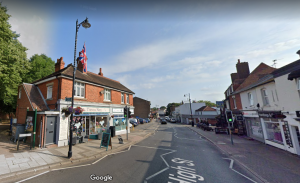
Image: Epsom High Street site of intended Defibrillator Hub (Credit: JCDecaux)
NHS in Surrey prescribe AI solutions to diagnoses
1 August 2026
Surrey NHS trusts are investing tens of thousands of pounds into artificial intelligence tools across clinical and administrative settings, the Local Democracy Reporting Service (LDRS) can reveal.
AI is being deployed across some of Surrey’s largest health trusts amid a worldwide scramble to harness the burgeoning new tech.
Freedom of Information responses to the LDRS have shown that AI-backed diagnostic tools, transcription softwares and phone systems are in use at hospitals across the county.
Chief Clinical Information Officer Dr Andrew Carne from Royal Surrey and Ashford and St Peter’s Hospitals NHS Foundation Trusts – which are among the trusts rolling out AI – told the LDRS: “We are proud to be at the forefront of implementing AI to benefit our patients, supporting our clinicians in the diagnosis of serious medical conditions such as cancer.”
Among the tools used at Royal Surrey County Hospital is Annalise AI, a diagnostic software designed to help with analysis of chest X-rays. The trust is spending £21,120 per year on this technology, which has passed a “robust” evaluation process.
The trust has credited this tool with helping speed up lung cancer diagnoses, giving clinicians the chance to catch more cases as early as possible. It is used across several trusts that are part of the Surrey, Sussex and Frimley Imaging Network.
“These tools are designed to enhance, not replace, the expertise of our clinicians and are rigorously tested before being introduced into clinical practice,” Dr Carne explained.
“The use of AI in any of our processes is subject to robust internal governance and oversight and is implemented in accordance with NHS England guidance and processes.”
An evaluation at Royal Surrey is also ongoing for the use of OlySense, an AI tool engineered to help with gastrointestinal examinations. The trust has so far spent £93,432.96 for two OlySense.
Supplied by healthcare tech company Olympus Medical, it is intended to assist with polyp detection during colonoscopies.
But the use of AI in healthcare goes beyond clinical settings, with trusts across Surrey also using the technology for administrative purposes.
Surrey and Borders Partnership NHS Foundation Trust – the county’s main mental health provider – spends an estimated £65,000 per year on Limbic AI Chat Bot, which is designed to assist with the patient referral process.
A spokesperson for the trust said: “Like other NHS organisations, we are exploring the use of AI as part of the NHS’s ’digital first’ policy. We are not using any patient-facing AI at the moment, but we expect to in the coming months.
“Before deploying any new AI or other technology, we will have strong governance in place and be aligned with all national guidelines.”
Several trusts also use less medically-specific AI tools, such as Microsoft CoPilot – which was found to be used in all trusts that responded to the LDRS’ FOI requests.
Surrey and Sussex Healthcare NHS Trust said it is using CoPilot for “clinical uses including meeting summarisation, document preparation” in its FOI response – with a pilot beginning in September 2025 and evaluation still ongoing.
Dr Deblina Bhattacharjee of the University of Bath’s computer science department told the LDRS that the use of AI in healthcare comes with a balance of pros and cons, with the easing of administrative tasks being the “obvious one”.
Assistance in diagnostics, such as the software used across the Surrey, Sussex and Frimley Imaging Network, is also another crucial area where AI use “has its positives”, Dr Bhattacharjee added.
However, she said that “the risks come from pace outrunning governance”, adding: “Clinical AI should remain a support for human decision making, with clear accountability in place before deployment rather than after.”
Surrey NHS Trusts approached by the LDRS insisted that stringent evaluation criteria are in place before any AI technology is rolled out.
“From my own experience, the projects that succeed are the ones where clinicians, patients and information governance teams are involved together,” Dr Bhattacharjee said.
Epsom’s Love Me Love My Mind celebrates 20 years of community care
1 August 2026
An Epsom charity which has supported thousands of people affected by mental health difficulties has celebrated its 20th anniversary.
Members, volunteers, friends and supporters of Love Me Love My Mind gathered at St Barnabas Church in Temple Road on Saturday 25th July for a buffet meal, raffle, dancing and anniversary celebration. Among those attending was Epsom and Ewell MP Helen Maguire.
The evening marked two decades since the charity’s Monday Drop-In began at St Barnabas in 2006. What started as a welcoming place where people could meet, talk and share refreshments has developed into an entirely volunteer-run charity promoting better understanding of mental health throughout Epsom and Ewell.
Today, Love Me Love My Mind seeks to break down stigma, offer friendship and encouragement to people experiencing mental health difficulties and their families, and direct people towards sources of further help. Its regular Monday Drop-In attracts around 30 to 40 people each week for refreshments, activities and a home-cooked meal. The charity also runs a Men’s Pit Stop group, peer support and community activities, as well as organising the annual Epsom Mental Health Week.
The anniversary exhibition placed the charity’s work within a much longer and sometimes painful chapter of Epsom’s history. From 1896 onwards, five large psychiatric hospitals—Long Grove, Horton, West Park, St Ebba’s and The Manor—were built around the town. By 1925 the “Epsom Cluster” formed what was described as the largest psychiatric facility in the world.
The hospitals provided employment, recreation, companionship and care, but their position on the edge of the town also reflected the isolation and stigma experienced by people with mental illness. St Barnabas developed particularly close links with Long Grove Hospital, while members of its congregation were involved with the Friends of Long Grove.
When the large hospitals were gradually closed under the policy of care in the community, many former patients were discharged into group homes around Epsom, including within St Barnabas parish. Some had lost the friendships and support networks they had known inside the hospitals.
A number began attending weekday services at St Barnabas. The then vicar, the Revd Michael Preston, offered coffee afterwards and listened to the life stories of those who came. The exhibition records that from this modest act of welcome grew “a very significant mental health community support project”.
The charity’s late founder, the Revd Susan Bull, subsequently researched the relationship between churches and people experiencing mental distress. Her study, Voices of the Voiceless: An evaluation of local church care for those in mental distress, examined what enabled St Barnabas to provide acceptance and hospitality at a time when fear and stigma remained widespread.
The anniversary also remembered the long-standing social divide between St Barnabas parish and more affluent parts of Epsom. Separated from the town centre by the railway embankment and reached through low bridges, the neighbourhood was historically home to many lower-paid hospital workers and successive communities arriving from other parts of Britain and overseas.
Against that background, Love Me Love My Mind has spent 20 years building a place in which people can find companionship, belonging and acceptance. The charity says its work over that period has supported thousands of people, promoted positive mental health and helped create a stronger and more connected community.
Saturday’s summer party was one of several events being held during the anniversary year. The charity thanked Direct Residential, Love Your Accountants, Park View Café, St Barnabas Church and the Rotary Club of Ewell for supporting the celebration.
Further information about Love Me Love My Mind, its activities, volunteering and donations is available at www.lovemelovemymind.org.uk.
In Surrey more people are invited to share their home
1 August 2026
A new partner is taking on Shared Lives in Surrey aiming to welcome more people into the service who can open their homes to adults with support needs and help them live independently and well.
Shared Lives enables adults with learning disabilities, physical disabilities or mental health needs to live within a supportive household, for short or long-term stays. Similar to fostering, it offers a home environment where people can build life skills and learn to lead active lives in their local communities.
Surrey County Council has appointed an experienced provider to run the service from this month, following a competitive selection process. The provider, the charity Ategi, has more than 30 years’ experience running care and support services including Shared Lives schemes in England and Wales.
All current Shared Lives carers and arrangements will continue to be supported, and more people from a wide range of backgrounds are being invited to explore the rewarding opportunity of becoming a Shared Lives carer.
Shared Lives carers receive ongoing support, a weekly fee and training according to their needs. No formal care experience is required – carers simply need a spare room, compassion and the willingness to support an adult with additional needs in their own home.
Around 80 Shared Lives arrangements, both short and long-term, have transferred to Ategi from Surrey Choices, the previous provider. People supported by the service have in recent years achieved life-changing outcomes including passing driving tests, securing meaningful employment, and gaining independence and improved mental wellbeing.
Kate Allen, Ategi’s Chief Executive, said: “We are delighted to be bringing Ategi’s extensive Shared Lives experience to Surrey and to build on the strong foundations created by Surrey Choices. We know how important continuity is for the people and families who rely on the service, and our priority is to ensure they continue to receive the high-quality, person-centred support they value.
“With more than 30 years’ experience delivering Shared Lives – including across London and the South East – we bring extensive Shared Lives experience from across England and Wales, which will help us work alongside local partners to support the service’s continued success and future growth. We look forward to working with carers, families and partners across Surrey to enable more people to live independently, build meaningful relationships and play an active role in their communities.”
Sinead Mooney, Surrey County Council’s Deputy Leader and Cabinet Member for Adult Social Care, said: “Shared Lives has long been an important part of the support we offer in Surrey and I’ve seen the difference it can make to people’s wellbeing and independence, and the rewarding experience it offers carers.
“Our new partnership with Ategi will build on Surrey Choices’ foundations, and we’ve been working hard to make sure the transition is as smooth as possible for everyone involved. We’re grateful to our existing Shared Lives carers for the support they provide, and we’re encouraging more people to consider coming forward to help adults with additional needs lead fulfilling lives.”
Louise Hayes, Operations Director at Surrey Choices, said: “We are incredibly proud of everything our Shared Lives colleagues, carers and the people we support have achieved together. We transfer the Shared Lives scheme with enormous pride in the legacy and the positive impact it has had on so many lives. We pass it on with confidence to Ategi, an experienced provider delivering Shared Lives across multiple counties in the UK, knowing the values of compassionate, person-centred support will continue.”
In the words of one family member with experience of Shared Lives, it is “an excellent service enabling adults with additional needs to live as near to independence as they can, with a safety net.”
Some Shared Lives placements in Surrey will continue to be provided by Mencap, as they are currently.
Anyone interested in finding out more about becoming a Shared Lives carer, or who has a query about an existing arrangement, should contact Shared Lives Registered Manager Paul Dawson at Ategi on 01494 932 920. More information can be found on Ategi’s website: www.ategi.org.uk.
Surrey University leads research against anti-biotic resistance
1 August 2026
Faster and more effective ways to treat pseudomonas aeruginosa, a bacterium identified by the World Health Organization (WHO) as one of the most life-threatening pathogens, could be on the cards thanks to a first-of-its-kind 3D computer model developed by the University of Surrey.
The model has shown how pseudomonas aeruginosa grows and reshapes its protective layer and spreads to new surfaces. The WHO estimates that bacterial antimicrobial resistance – where antibiotics are no longer effective – was directly responsible for 1.27 million deaths worldwide in 2019 alone.
In a study published in npj Biofilms and Microbiomes, researchers used BioDynaMo, an open-source simulation platform developed as part of an international collaboration involving the University of Surrey and partners worldwide, to create a three-dimensional agent-based model (ABM) that recreates how pseudomonas aeruginosa forms biofilms.
Biofilms are communities of bacteria encased in a protective sticky layer made up of sugars, proteins and DNA that allows them to cling to surfaces and resist antibiotics. For Pseudomonas aeruginosa, these biofilms commonly form in flowing environments such as catheters and plumbing systems.
Unlike previous computer models, the Surrey-developed ABM captures how biofilms grow under constant fluid flow – similar to real-world conditions – and how the bacteria naturally break away from them to spread and colonise new surfaces. The team validated the simulation against laboratory experiments, demonstrating that it accurately reproduces the growth, structure and detachment patterns seen in real bacterial biofilms.
Ryan Bournes, postgraduate researcher at the University of Surrey and lead author of the study, said:
“Biofilms are incredibly difficult to study because many of the important interactions happen at a microscopic level. Our model allows us to simulate these processes in a virtual environment, making it much easier to test new ideas and understand how these bacteria spread without solely relying on costly and time-consuming laboratory experiments.”
As well as helping scientists study pseudomonas aeruginosa, the modelling framework could be adapted to investigate other biofilm-forming bacteria and predict how factors such as fluid flow, surface design and bacterial behaviour influence the spread of infection.
Dr Roman Bauer, Senior Lecturer at the University of Surrey’s Computer Science Research Centre and BioDynaMo spokesperson, said:
“Antimicrobial resistance is steadily rising due to the overuse and misuse of antibiotics, so finding faster and smarter ways to understand the behaviour of pathogens is essential.
“Using BioDynaMo, we’ve been able to recreate for the first time how Pseudomonas aeruginosa biofilms grow, change shape and spread under flowing conditions – biological processes that would be extremely difficult, expensive or even impossible to observe directly. This gives researchers a powerful new tool for virtual testing before moving into the laboratory.”
The research could help researchers optimise experiments, reduce laboratory costs and support the development of safer medical devices, hospital plumbing systems and other environments where harmful biofilms can form.
Image: Artist’s impression of Pseudomonas aeruginosa bacteria encased within a protective biofilm under flowing conditions.
Readers bemoan Council’s feet-dragging on twinning Epsom with Bucha
1 August 2026
Dear Editor,
Very disappointed with Epsom and Ewell Council, this would have been a simple arrangement. I myself stayed in the borough of Bucha only a few weeks ago on my way to Odesa. I was only a few miles from the area occupied by the Russians, they were only stopped by the Ukrainians destroying the bridge. Imagine living in Epsom and enemy forces occupying Ewell killing people in the streets. Shame on the council members voting against this.
Yours faithfully,
Richard Gough
Dear Editor,
As a Ukrainian, I want to sincerely thank the people of Epsom and Ewell for everything they have done to support Ukraine over the past more than four years. Your kindness, generosity and the incredible humanitarian support you have provided have meant more than words can express.
Humanitarian aid has saved lives. But today, a statement of friendship and solidarity matters too. It tells Ukrainians that we have not been forgotten and that we are not standing alone.
The war has not become easier. Every day people continue to die, and cities continue to be attacked. We all hope this war ends in Ukraine, because if Russian aggression is not stopped here, its consequences will not stop at Ukraine’s borders.
Thank you for speaking up, for raising these issues, and for continuing to stand with Ukraine. It means more to us than you may ever know.
Yours faithfully,
Natalia Pankratova
.
.
.
.
.
.
Epsom and Ewell Council’s final spending spree?
1 August 2026
Nearly £4.92 million of infrastructure and community-project funding has been approved by Epsom and Ewell Borough Council despite a resident’s detailed appeal for the decision—or at least funding for a new Hogsmill footbridge—to be deferred.
The Strategy and Resources Committee approved five strategic Community Infrastructure Levy projects and eight neighbourhood schemes by six votes to one abstention at its meeting on Tuesday 14th July.
CIL is money raised from property development and intended to provide infrastructure required to support growth. The Council had approximately £5.04 million of unallocated strategic CIL and £1.13 million of unallocated neighbourhood CIL available at the beginning of the process.
The projects funded
The strategic allocations were:
£1 million for the Local Cycling and Walking Infrastructure Plan, conditional upon at least £1 million in match funding;
£114,000 for earth bunding and green-infrastructure work at ten open-space sites vulnerable to unauthorised vehicle access;
£144,000 for a new footbridge across the Hogsmill River;
£1 million for initial community sports infrastructure at Hook Road Arena, conditional upon at least £1 million match funding; and
£2 million for Ewell Village public-realm improvements.
The neighbourhood awards included improvements to Ebbisham Sports and Social Club; tennis and pickleball courts at Poole Road and Gibraltar Recreation Ground; play equipment at St Martin’s School; a Scout tomahawk range; modernisation of the Epsom Beekeepers’ classroom; the Glyn Hall replacement project; and the final phase of a Scout headquarters redevelopment.
A correction made during the meeting reduced the published neighbourhood total from £668,871 to £660,911. Together with the £4.258 million strategic allocation, the corrected package amounted to £4,918,911.
The Council stressed that funding would ordinarily be released only after projects had been completed and that applicants remained responsible for obtaining planning permission, landowner approval and other necessary consents.
Stovell asks councillors to wait
Resident Kristy Stovell had sent councillors and Epsom and Ewell Times an eight-page evidence review before the meeting.
Her primary request was for the whole CIL item to be deferred until the next ordinary committee meeting. As a minimum, she asked councillors to remove the £144,000 Hogsmill bridge allocation from the package pending publication of further information.
Her analysis did not allege that every scheme was unsuitable. Instead, it argued that councillors were being asked to approve almost £4.93 million without complete applications, comparable cost plans, individual scoring, supporting assessments or CIL Working Group records being publicly available in one accessible place.
She noted that all five strategic schemes had been classified as “essential but not time critical”, which she argued allowed time for a short deferment.
Among the concerns raised were the absence from the public pack of full applications and supporting evidence; a lack of published Working Group papers and minutes; inconsistent identification of applicants; incomplete financial comparisons; and reports recording no equality, environmental, safeguarding or crime-and-disorder implications for projects that included a river crossing, earthworks, highways schemes, school play equipment and a Scout tomahawk range.
She asked for the full applications, detailed project costs, previous awards, match funding, Stage One assessments, point-by-point Stage Two scores and Working Group attendance, voting and declarations to be published before a final decision.
Bridge evidence questioned
Ms Stovell’s three-minute public statement concentrated on the proposed Hogsmill footbridge.
She said: “I am not opposing accessibility or the principle of providing safe and inclusive routes. I am asking the committee not to approve a substantial award before the proposal’s financial, environmental, accessibility and delivery evidence has been published and properly examined.”
She said the public documents did not clearly identify the applicant, the precise bridge location, a completed design, the full project cost or the additional design and planning funding required.
She also questioned whether the published material demonstrated a continuous accessible route for wheelchair and mobility-scooter users.
“The project was assessed as essential but not time critical,” she said. “There is therefore no demonstrated need to approve it tonight before the missing information has been supplied.”
She asked councillors to decline the recommendation or defer it until the location, design, complete costs, dependencies, environmental effects and whole-route accessibility had been evidenced and published.
Her longer review noted that the bridge application had been submitted before the Environment Committee selected a bridge option on 30th June. It also questioned the absence of an exact location plan, completed design, environmental and hydrological evidence, and clear maintenance and liability arrangements.
Members asked to trust the Working Group
In the Chair, Cllr Hannah Dalton (RA Stoneleigh) told the committee that it was the final CIL funding round and warned: “If we remove this item, we also lose the funding.”
She said councillors had appointed a cross-party Working Group to examine the applications and “there’s got to be some trust that our colleagues took the time to go through that detail”.
An officer said the Working Group had access to the full bids and supporting information and held four meetings during June to undertake the Stage Two assessments.
Councillor Steve McCormick (Conservative Woodcote and Langley) asked where the minutes of those meetings were and whether members could review them. The officer replied that the scores and decision-making were recorded in what he described as a comprehensive spreadsheet.
Councillor Kate Chinn (Labour Court) said that although councillors were being asked to trust the Working Group, it would have been helpful to see more detail, including the locations of the ten sites covered by the £114,000 green-infrastructure bid.
She also questioned why neighbourhood bids could fail where planning permission was missing while the strategic bridge bid could proceed without permission.
An officer explained that the adopted protocol did not require strategic applicants to have all permissions in place at the application stage, although no project could begin and no money would be released without the necessary approvals.
“A rock and a stepping stone”
The committee also wrestled with whether the proposed footbridge was intended to replace the existing stepping stones.
The published project description stated that the bridge would “replace unsafe stepping stones”. Yet Cllr Dalton said at the meeting that the two issues should be treated separately and proposed removing those words.
Councillor James Lawrence (Independent College) pointed out that the Environment Committee had acknowledged that the Environment Agency would remove the stones and had approved a new bridge as an alternative crossing.
“That reads like ‘replace’ to me,” he said.
Councillor Phil Neale (RA Cuddington) said the Working Group had considered only the bridge but had found itself “between a rock and a hard place—or a rock and a stepping stone”.
He strongly supported the bridge, while suggesting that if the Environment Agency removed the stones, campaigners might put new ones back.
Chief Executive Jackie King clarified that the Environment Agency owned the riverbed and banks but apparently not the stepping stones themselves. Their ownership—and therefore liability—remained uncertain.
She said members had responded to the strength of public feeling by separating construction of the bridge from decisions about the stones.
The committee amended the description to read: “Construction of a new footbridge across the Hogsmill River, providing a safer, more inclusive river crossing.” The words saying it would replace the stones were deleted.
The £144,000 figure was also clarified as including a 20 per cent contingency on an estimated £120,000 construction cost.
Questions over Surrey funding
Several councillors questioned how much Surrey County Council was contributing to the larger schemes.
Councillor John Beckett (RA Auroil) said the Council was being asked to fund £1 million towards cycling and walking infrastructure even though highways were a county responsibility.
He said Surrey appeared not to have “any skin in the game”, although officers explained that Surrey had funded much of an earlier phase and that the Epsom and Ewell contribution was intended to unlock funding from bodies such as Active Travel England.
On the £2 million Ewell Village scheme, Cllr Beckett described Surrey’s approach as presenting the borough with “this kind of fait accompli”.
Officers said Surrey had already spent money progressing the design, while rising material costs had increased the sum required.
Funding approved
No councillor formally moved Ms Stovell’s requested deferment, either for the full package or for the Hogsmill bridge alone.
The committee approved all thirteen recommended awards by six votes to one abstention, subject to the revised bridge wording and corrections to the published figures.
The decision commits the CIL money to the projects, but applicants will still have to secure the relevant permissions and deliver their schemes before receiving payment. The new East Surrey authority will assume responsibility for administering and monitoring CIL expenditure from April 2027.
Bucha Ukraine “ducks missiles while Epsom Council mucks about”
1 August 2026
A proposal for Epsom and Ewell Borough Council to support in principle a twinning arrangement with Bucha in Ukraine was defeated only after Strategy and Resources Committee Chair Councillor Neil Dallen (RA Town) used his casting vote against it.
The vote at the committee’s meeting on Tuesday 14th July was tied, with three councillors supporting the declaration and three opposing it. Cllr Dallen then exercised the Chair’s casting vote, saying: “It’s going to leave it to me, and I will vote against that.”
The rejected wording would have approved “in principle the objective of establishing a twinning arrangement between Epsom and Ewell and the City of Bucha in Ukraine”.
The committee did agree that its Working Group should continue examining who could initiate and administer the borough’s existing twinning with Chantilly and, if approved in principle at some future point, any relationship with Bucha, and how both might continue after Epsom and Ewell Borough Council disappears in April 2027.
However, it rejected the declaration of friendship its supporters had sought.
“Bucha is waiting patiently”
Earlier in the meeting Roy Deadman, Chair of Surrey Stands With Ukraine and a committee member of the Bucha Epsom Association, spoke during the public-participation session.
He told councillors: “Bucha is waiting patiently for a clear response from this borough.”
Mr Deadman accepted that local government reorganisation raised practical questions about who would administer a twinning relationship after April 2027. But he argued that those questions did not prevent the Council giving immediate support to the principle. “There is a distinction between approving a principle and settling every future administrative detail,” he said.
“This is not a financial commitment. The report itself says there are no immediate financial implications, nor would there be a practical burden falling upon this Council.”
He said the day-to-day relationship could be developed by volunteers through the Bucha Epsom Association, involving schools, charities, cultural groups and residents. “Bucha is not asking Epsom and Ewell for a blank cheque,” he said. “It is asking for friendship.”
Mr Deadman warned that the real risk was not acting too quickly but that “repeated referral, further delay and a general offer of friendship is allowed to wither”.
He asked the committee to recommend that Full Council support twinning in principle, leaving the formal structure to be resolved later.
The Mayor of Bucha, Anatoliia Fedoruk, has expressed a wish for Epsom and Ewell to become the Ukrainian city’s first twinning partner in the United Kingdom. Local volunteers have sent substantial humanitarian support to Ukraine, while Ukrainian families have been welcomed into the borough.
Epsom and Ewell MP Helen Maguire had also written to committee members supporting the proposal. Cllr Dallen summarised her position at the meeting as supporting “twinning between Epsom and Ewell and Bucha”. Her letter highlighted the 100 year Partnership Agreement between the United Kingdom and Ukraine, signed in January 2025, which envisages partnerships at local levels.
Chinn: offer “the hand of friendship”
Councillor Kate Chinn, (Labour Court), proposed the amendment giving support in principle.
She questioned why the Bucha proposal had become tied so closely to the existing Chantilly arrangement, saying a constituted community organisation already existed locally with strong links to Bucha.
Cllr Chinn said Epsom and Ewell’s relationship with Ukraine was “really quite special”, referring to the welcome given to Ukrainian families and the cultural contribution they had made locally.
“We are a very fortunate generation that we haven’t been in that place where we are under attack,” she said. “I really think it’s important that we offer the hand of friendship to Bucha.”
Responding to suggestions that twinning might be an inappropriate distraction for a city at war, she said: “It’s Bucha who want this. Bucha want it very much, and they want it to happen as soon as possible. It’s not Epsom and Ewell imposing their twinning on the town, and maybe it is in times of conflict when you do need the hands of friendship and support the most.”
Warning against the “long grass”
Councillor Steve McCormick, (Conservative Woodcote and Langley Vale), seconded Cllr Chinn’s amendment and warned that the borough was running out of time before its abolition.
“We do run the risk of just running out of time and just kicking this can down the timeline,” he said. He described approval in principle as “a good positive first step of action, rather than just delay, delay, delay and delay”.
“There’s work to be done, but we can get this done,” he said. “If we kick it into the long grass, it’s never going to get done before this Council basically wraps up.”
Councillor James Lawrence (Independent College) also argued that it should be for Bucha to decide how it used its own resources.
“If they wish to pursue twinning with us, then I would let them be the final arbiters of that decision, rather than us try and second-guess their resourcing,” he said.
He noted that there was no legal requirement for one single twinning association to manage every relationship for the same geographical area. The Council’s Monitoring Officer confirmed that this was a matter of “custom and practice” rather than a legal obligation.
Opposition during wartime
Councillor Phil Neale (RA Cuddington) said he supported Ukraine and had contributed financially, materially and voluntarily. Nevertheless, he questioned whether twinning was appropriate during the war.
“At the moment, it’s totally irrelevant, and it will be totally lost with LGR,” he said. He suggested that twinning should wait until peace returned and the rebuilding of Ukraine was under way.
Councillor John Beckett (RA Auriol) said he was uncomfortable approving the principle without first understanding possible costs and demands on Council officers. “If we were to approve this in principle, what would be the costs? What would it actually take? Have we got the officers to actually deal with it?” he asked.
Cllr Chinn responded that councillors had repeatedly been assured the relationship would not consume Council resources. Chief Executive Jackie King confirmed that the present Chantilly arrangement required the Council to do little more than put its name to the charter, saying nothing had changed in that respect.
The committee report itself said there were no immediate financial implications and no anticipated Section 24 implications if a Bucha twinning agreement proceeded. It acknowledged that any later commitment of Council resources would have to be identified, costed and separately approved.
Principle rejected, process continues
After the tied vote and Cllr Dallen’s casting vote rejected support in principle, councillors approved further investigation.
The Working Group must now clarify who could initiate and administer the Chantilly and Bucha arrangements and how they could continue after “vesting day” on 1st April 2027. It must return with another report to a future committee meeting.
Lionel Blackman, Director of Surrey Stands With Ukraine, commented after the vote: “Extremely disappointing. Bucha ducks missiles while Epsom Council mucks about with meetings and petty analysis. Twinning with Bucha has been on the agenda for over a year now. Anybody’s guess what motivates Councillors to kill off this initiative and why they want to bury it in endless committee meetings.”
He added: “With the rejection of a simple and cost free statement of support for twinning in principle, we will be lucky if we maintain Bucha’s preference for Epsom in all of the United Kingdom. Probably, since World War Two there has been no comparable volunteer community effort experienced in our Borough as that of the support for Ukraine. Demonstrated by sending so far in excess of £5 million of humanitarian aid.”
The result leaves the machinery of the proposal uncertain without any statement of support its local advocates had requested.
Surrey County Council Chair opens new Sensory Services Centre in Ashtead
1 August 2026
A new centre designed to support people with sight and hearing loss across Surrey has officially opened in Ashtead, strengthening services for thousands of residents living with sensory impairments.
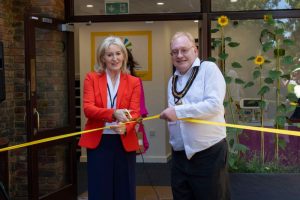
The centre, operated by Sensory Services by Sight for Surrey, was officially opened last week by Councillor Tim Hall MBE, Chair of Surrey County Council, alongside Christine Wilmshurst, Chair of Trustees at Sensory Services by Sight for Surrey, during a special event attended by staff, volunteers, supporters and local partners.
Located at Bridgehead House, which is owned and was refurbished by Surrey County Council, the new facility will provide an accessible and welcoming hub where residents who are blind, partially sighted, Deaf, hard of hearing, or deafblind can access information, advice, specialist support and community activities.
The centre has been designed to enhance the charity’s ability to deliver services across the county and meet growing demand, helping people maintain their independence, wellbeing and social connections.
Tim Hall, Chair of Surrey County Council, said: “It was a pleasure to officially open this fantastic new facility. Sensory Services by Sight for Surrey provides invaluable support to residents across the county, and this new centre will strengthen the charity’s ability to make a positive difference in the lives of people with sensory impairments and their families.
“We are proud that Surrey County Council has supported this project through the refurbishment of Bridgehead House, creating a modern and accessible space that will benefit residents for many years to come.”
Christine Wilmshurst, Chair of Trustees at Sensory Services by Sight for Surrey, said: “The opening of our new Ashtead centre represents an exciting new chapter for the charity. It is a truly transformational time, and we could not have done it without the leadership, passion, dedication and hard work from everyone involved in the project. We are committed to ensuring that people living with sight and hearing loss have access to the support, resources, and opportunities they need to live independently and confidently.
“This centre will be a place where people can find practical help, social connection, and a strong sense of community.”
The opening reflects a shared commitment between Surrey County Council and Sensory Services by Sight for Surrey to improve accessibility, reduce isolation and empower people to live full and independent lives.
Sinead Mooney, Surrey County Council’s Deputy Leader and Cabinet Member for Adult Social Care, added: “The team at Sensory Services by Sight for Surrey do a fantastic job advocating for and supporting people who have sensory needs. As a valued partner delivering services, they make a real difference every day, and we were pleased to work with them to refurbish Bridgehead House and turn it into a centre that will meet the needs of the people they support for many years to come.
“This work is another example of how we are making sure Surrey is fit for the future and passing on a strong legacy of support.”
Each year, Sensory Services by Sight for Surrey supports more than 8,500 children and adults through specialist advice, rehabilitation services, assistive technology support, advocacy, social groups and wellbeing programmes.
For more information about Sensory Services by Sight for Surrey and the services available at the new Ashtead centre, visit www.sightforsurrey.org.uk
Residents invited to help shape New East and West Surrey council brands
1 August 2026
Residents from across Surrey are invited to get involved to help shape the brand identities of the new East and West Surrey councils.
These councils will need to create their own distinct brand identities, to help everyone recognise who is delivering local services from April 2027.
The new brands will be created at no cost by designers working in councils across Surrey. To help inform these designs, residents, businesses, council staff, partners and community groups across Surrey to have a say on the future visual identities of the new East Surrey and West Surrey councils.
This is the first phase of a wider programme of engagement to help shape the new councils.
A survey has been created for people to share their views. This will be available to complete in the 52 libraries across the county to ensure a broad range of voices are heard. We are asking residents to share your views on:
* What makes our area unique?
* What are you most proud of?
* What should your future council’s look and feel reflect?
Insights gathered from the survey will be used to help create the new logos and brands for East Surrey and West Surrey Councils. This means that each brand will reflect the distinct views of the people in each area.
Councillor Steve Wotton, the Leader of East Surrey Shadow Authority said: “We are committed to making East Surrey a place where people thrive. There is a lot to do, but this is a real opportunity to take a new approach, designing a council that is open, transparent and genuinely focused on delivering outcomes for residents, businesses and communities. Creating a new brand identity for East Surrey is an important step as we move forward. This engagement is about understanding what people like about where they live and what makes their communities unique. I would encourage residents, businesses, partners, colleagues and community groups to take part and help shape a brand that truly reflects East Surrey.”
Councillor Paul Follows, the Leader of West Surrey Shadow Authority added: “Our focus remains on creating a council that delivers high-quality services, provides value for money and meets the needs of residents, businesses and communities across west Surrey. This engagement is an opportunity for people across West Surrey to help define how we present ourselves as a new council. We’re not asking for views on logos or designs, but on what really matters to our communities – the character, feel and identity of the area. By taking part, residents can shape the new West Surrey brand and ensure this is a people’s brand. We are also committed to keeping costs to a minimum, so I am delighted that the new brand will be created in-house, with designers working in all councils.”