Epsom and Ewell Times

ISSN, LDRS and IMPRESS logos

An independent view on Epsom and Ewell Council’s future

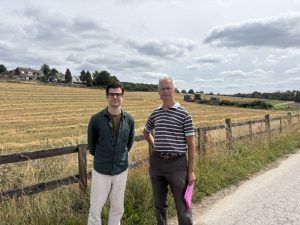
Alex Coley with EEBC behind

Devolution to the middle

Just before Christmas the government in Westminster announced it would be reorganising local government by abolishing the lower tier of councils like Epsom & Ewell, in the name of devolution. From Whitehall’s perspective, power will be devolved down to new, larger unitary councils across much bigger geographic areas. From the perspective of residents power is going up, up and away. For balance, let’s call it devolution to the middle. 

Dissolution from the Ministry

There exists a patchwork quilt of small councils dotted across England like needlework, playing a unique role that dilutes and moderates the big, concentrated politics of national government. They represent the interests of local residents while collecting the bins, planning for housing and keeping the streets clean and tidy. 

These councils and their councillors represent a range of political control that serves as the final layer of pluralist democracy with the greatest proximity to reality. The English don’t like being ‘done to’ and the lower tier of councils which are closest to residents operate like a kind of natural filter against the sometimes harmful UV rays of Whitehall bright ideas. It’s a kind of self-regulating eco-system that looks messy and manic under the microscope but serves an important purpose in the good governance and democratic health of the nation.

Duopoly

The higher up you go with government the more it becomes a two party system. At the lower level, where residents experience local government most acutely, there’s a huge range of political views openly held and discussed. Councillors are local people who live in the neighbourhood and know it really well and they know the local people really well too. Those local relationships are more important than the party flag. 

That will be lost as the whole sector gets shrunk to a handful of people operating across much larger areas at a much higher level; as the obedient servants of one of two political parties. Soon, whole swathes of the country will be concentrated for or against the government of the day. There will be very visible winners and losers at each general election and no patchwork quilt to dilute and moderate the bright ideas which make for good headlines but poor outcomes. 

Bigger is not always better

Are we heading for an American style two-party state with no spectrum of voices or views? Or will it be more like King John and the barons across 12 mayoralty strategic authorities; a conspiracy against the public? 

I believe that three unitaries in Surrey could work. A lot will depend on retaining some plurality of political groups and an affinity between voters and their elected representatives that goes beyond a party flag.  I welcome reformation, and change is a constant, but we must keep democracy close to the people at a local level. Bigger is not always better. 

I’ve done considerable research on the options in THIS REPORT, which I hope your readers will take the opportunity to read. 

Cllr Alex Coley

Epsom & Ewell Borough Council

Ruxley Ward Councillor


Related reports:

Local Labour view on Epsom and Ewell Council’s future

Local LibDem view on Epsom and Ewell Council’s future


Woodland Trust in Epsom and Ewell paradox

© Copyright Ian Capper and licensed for reuse under this Creative Commons Licence.

The Woodland Trust (WT) has highlighted that Epsom and Ewell Borough Council (EEBC) is among the majority of local councils yet to declare a nature emergency or establish a dedicated nature recovery action plan. According to WT, EEBC has not embedded nature recovery into its policies nor committed to managing 30% of council land for nature recovery by 2030.

Ironically, within the borough of Epsom and Ewell lies Langley Vale Wood, one of the UK’s four First World War Centenary Woods, and the sole representative for England. Owned and managed by the Woodland Trust, this expansive woodland spans approximately 259 hectares (641 acres) and features pockets of ancient woodland, diverse wildlife, and panoramic views over the North Downs.

Established as a living memorial to those who sacrificed their lives during the First World War, Langley Vale Wood stands as a testament to the importance of nature conservation and biodiversity. The site was purchased by the Woodland Trust in 2014 and has since seen the planting of around 180,000 trees.

Despite not having a standalone nature recovery action plan, EEBC has implemented biodiversity initiatives. The council is currently five years into its second ten-year Biodiversity Action Plan (BAP), which runs from 2020 to 2030. Councillor Liz Frost, (RA Woodcoate and Langley) Chair of the Environment Committee, emphasised the council’s commitment to biodiversity:

“Epsom & Ewell Borough Council is five years into its second ten-year Biodiversity Action Plan. The current plan contains five objectives with 27 targets to support. It aims to ensure both the long-term protection and enhancement of biodiversity within our borough and prioritises our resources so that they are used effectively.

We work closely with local volunteers and partners to take action to support biodiversity in the borough. For example, last year we worked with the South East Rivers Trust to build a new Wetlands on the Hogsmill Local Nature Reserve, which is helping to improve the water quality of the Hogsmill River. This is a globally-important chalk stream and is supporting biodiversity in the area, including species whose numbers have dwindled, such as water voles, fish and eels.

The council also has an in-house ecologist who scrutinises all planning applications and advises on their impact on biodiversity, and how any impact might be mitigated.

Another example of how biodiversity action is embedded in council strategy can be found in the Proposed Submission Local Plan in which, following the Regulation 18 consultation, we included increased energy efficiency standards for new homes and the allocation of additional sites in the urban area. The Council’s Local Plan also contains specific policies relating to biodiversity and geodiversity which, once adopted, will require development to have regard to nature recovery, and to Surrey County Council’s Local Nature Recovery Strategy once this has been adopted by Surrey.”

EEBC has also adopted a five-year Climate Action Plan (2025-2029), approved by the Environment Committee in October 2024. While EEBC has not formally declared a nature emergency, its biodiversity and climate strategies indicate a commitment to environmental sustainability. The council’s involvement in Surrey’s Local Nature Recovery Strategy further demonstrates its role in regional efforts to promote nature recovery.

Image © Copyright Ian Capper and licensed for reuse under this Creative Commons Licence.


Surrey’s Cutting-Edge Respite for Families of complex-needs Adults

Woking based Surrey respite facility

A new £5.7million short breaks service providing much-needed respite for families caring for adults with additional needs is to be opened by Surrey County Council.

Emily Lodge, located in Woking, will enable family carers to rest and recharge while their loved ones benefit from meaningful experiences at a purpose-built facility.

Surrey-based social care provider Surrey Choices, which has more than 10 years’ experience in running respite services, will operate the service on behalf of the council – and is currently recruiting for roles at the facility.

The new site in Goldsworth Park, due to open later in the spring, is part of the council’s drive to modernise its short breaks service for people with learning disabilities and autistic people, supporting them as well as their carers.

Short breaks accommodation offers family carers the opportunity to take a break from their caring responsibilities to focus on themselves, while their loved one is supported by experts in a fun and enriching environment.  

The new facility features eight spacious en-suite bedrooms, designed to be fully accessible to wheelchair users and suitable for those with complex needs. The site also includes a communal lounge and dining areas, a sensory room and landscaped gardens for enjoyment and relaxation.  

The design of Emily Lodge’s gardens reflects the surrounding woodland and includes native plantings, wildlife-friendly features and calming outdoor spaces. Designed with sustainability in mind, Emily Lodge incorporates renewable energy sources, including solar photovoltaic panels and air source heat pumps. Lighting and heating will be controlled via smart devices, while underfloor heating and the use of natural building materials ensure comfort and wellbeing.  

Sinead Mooney, Surrey County Council’s Cabinet Member for Adult Social Care, said: It’s fantastic to see this wonderful new facility so close to fruition.

We know how demanding it can be for carers looking after loved ones with care and support needs, and this service will offer them a chance to rest and recharge. It’s about giving carers peace of mind, knowing their loved ones are in a safe and supportive environment, surrounded by dedicated professionals. Emily Lodge will enable carers to take a well-deserved break while their loved ones enjoy meaningful experiences.

It’s part of our wider drive to improve and modernise our short breaks service, which will ultimately enable us to increase the number of overnight stays that we’re able to offer in Surrey.”

Natalie Bramhall, Cabinet Member for Property, Waste and Infrastructure said: We’re pleased to be nearing completion on Emily Lodge in Goldsworth Park. This new short breaks service is one of many projects being delivered by our Land & Property Capital Projects Team in partnership with adult social care, to help people stay independent, safe and well, so they can live the lives they want.”

Louise Hayes, Senior Operations Manager at Surrey Choices, said: “We are incredibly excited to partner with Surrey County Council to open this fantastic new short breaks service. This state-of-the-art facility will provide vital respite for families across Surrey, offering much-needed support for both the person with a disability and their carers.  

At Surrey Choices, we are committed to improving the lives of people with disabilities, and this new service will make a real difference to the wellbeing of many families.” 

Surrey Choices is a social care organisation based in Surrey, offering support services for people with disabilities and those with additional support needs. It helps individuals lead fulfilling, independent lives by providing tailored support, meaningful activities and skill-building opportunities.  

Surrey Choices is currently looking to recruit full-time Support Workers for Emily Lodge, and to find out how to apply, please visit: Surrey Choices Openings 


Epsom and Ewell Council Approves Public Spaces Protection Order for Borough-Wide Expansion

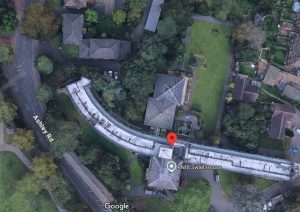
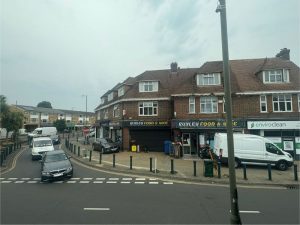
Balaclava wearing youth in Epsom High St

The Epsom and Ewell Borough Council’s Crime and Disorder Committee has voted to recommend the adoption of a borough-wide Public Spaces Protection Order (PSPO) following a public consultation that showed overwhelming community support.

The new PSPO, which will now be referred to Full Council for final approval, aims to tackle anti-social behaviour (ASB) by prohibiting a range of activities, including harassment, intimidation, verbal abuse, and alcohol consumption in public spaces after a warning from an authorised officer. The order also bans wearing face coverings, such as balaclavas, with the intent to commit ASB or crime, a measure police say will help deter group-related intimidation.

At the meeting, Public Protection Manager Oliver Nelson introduced the officers’ report, highlighting the strong public backing for the PSPO. He noted that 92% of respondents supported extending the order for three years, and 83% backed its expansion across the entire borough. “The consultation has given us a clear steer from residents,” he said. “We’ve slightly refined the prohibitions based on feedback, ensuring the PSPO is proportionate and enforceable.”

Police representatives, including Acting Inspector Tommy Pearson and Chief Inspector Kelly Clifton-Sinclair, attended the meeting in support of the proposal. 

Lib Dem Councillor James Lawrence (College) expressed his support, citing the consultation results as key to his decision. “Over 200 people responded to the consultation, with 92% of respondents supporting an extension to the PSPO and 83% supporting it covering the entire borough. My fellow Lib Dem councillors and I are happy to uphold public opinion on this and support the PSPO as proposed,” he said.

However, some concerns were raised over the demographic spread of consultation responses. Councillor Christine Howells (RA Nonsuch) noted that only 2% of respondents were under the age of 24, questioning whether younger voices had been fully heard. In response, Committee Chair Councillor Shanice Goldman (RA Nonsuch) acknowledged the difficulty in securing wider engagement but highlighted outreach efforts to schools, faith groups, and youth charities, including Buddy Up, a mentoring programme for young people.

Councillor Tony Froud (RA Stoneleigh)sought clarification on the geographical scope of the PSPO, asking whether it applied to specific areas or the entire borough. Cllr Goldman confirmed that the order would be borough-wide, expanding upon previous PSPOs that only covered certain locations. “It’s about making sure enforcement is not limited to certain hotspots,” she explained.

The Committee also unanimously agreed to recommend a £100 fixed penalty for breaches (reduced to £80 if paid within 10 days). The PSPO will now go to Full Council for formal adoption, where it is expected to pass with broad support.

If approved, the borough-wide PSPO will be in place for three years, subject to review. Council officers have committed to a public awareness campaign, including new signage and social media outreach, to ensure residents are informed about the restrictions.

Sam Jones – Reporter

Image credits: Google and Tobias “ToMar” Maier Creative Commons Attribution-Share Alike 3.0


Guildford Students protest against PSPOs

Surrey students have come out against a council’s draft rules about public spaces, saying they could be “detrimental” to local students. Under the proposed new rules, students could be banned from being in a group of two or more people in the town centre which could “cause harassment, alarm or distress” to other people.

Guildford town centre has public space protection orders (PSPO) aimed at tackling persistent anti-social behaviour affecting others. Introduced in 2022, the rules are now up for review. Boundaries for the PSPO cover the town centre, Stoke Park and some neighbouring residential roads, the Mount (residential area and green open space), including Black Cat Alley. 

But students at the University of Surrey have attacked the draft regulations as “vague” and have said that they can be “misinterpreted” in a way that can be harmful to students in Guildford. 

Leading the cause, the Student Union’s President Liam White said in a statement: “We are concerned by the overly conditional phrasing of ‘acting in a manner that is likely to cause’ and the vague nature of ‘distress’. This feels like an extremely broad scope to enforce, given that members of the public may potentially be ‘distressed’ when encountering young adults socialising in public, even if it is not disorderly or anti-social.”

Under a PSPO, individuals deemed to be breaching the order can be asked to change their behaviour by police officers, PCSOs, or GBC compliance officers. Fines and written warnings can be given for repeated breaches.

He argued the PSPO is not phrased in a way which prevents groups acting disorderly but instead relies purely on a member of the public claiming to be distressed or alarmed. Mr White claimed this is “unreasonable” to potentially penalise members of the public, including students, in the town centre. 

A spokesperson for Guildford Borough Council said: “We appreciate everyone who has taken time to respond to the Town Centre Public Spaces Protection Order consultation. These were draft proposals and the purpose of the consultation was to encourage feedback.

“In response to our partners and consultees, including the Student Union, we have adapted the proposed restrictions. The revised draft restrictions will be presented to the Executive on 27 March 2025 for consideration.”

Other key concerns raised included how “rowdy and inconsiderate behaviour” could be defined by someone’s clothing. The draft proposals state: “Wearing a piece of clothing with the intent to obscure or hide his/her identity for the purposes of committing crime and/or anti-social behaviour”. 

The Student Union said this is particularly concerning for members of the community who wear clothing that covers their face or hair for religious purposes. “We question how appropriate it is to be enforcing restrictions on clothing, rather than other indicators of anti-social behaviour,” members said.

Students also criticised the proposed public space rules against the “anti-social” use of bicycles, skateboards and scooters in pedestrian areas. They said some of Guildford’s community is already “resistant” to the Beryl Bikes scheme and extending the PSPO will “disincentivise people from using sustainable travel”.

Emily Dalton


Darts mathematics lesson for Epsom college students

Julie Kapsalis and Andy Cowan from Nescot alongside Devon Petersen, Michael Van Gerwen and Paul Nicholson

Nescot (North East Surrey College of Technology) College in Epsom, Surrey welcomed a trio of darts legends and MC, Paul Starr to the college Wednesday to inspire students and encourage them to develop their mental maths skills.  Paul ‘The Asset’ Nicholson, Devon ‘The African Warrior’ Petersen and three-time darts World Champion Mighty Michael Van Gerwen visited the college for the ‘Nescot Loves Darts & Maths’ event promoting arithmetic and numeracy, launching a college darts league and sharing their stories of determination and success.

Nescot hosted a full day of darts events, aimed at students re-taking their maths GCSEs. Nicholson and Petersen played a 5-leg match, then the players and Paul Starr held a Q&A and participated in a darts related maths quiz with students. Smaller groups of students later met the players in workshops on self-belief and inclusion.

The players also formally opened the newly branded Nescot Department of Maths. Each classroom now has a darts board and is named after a darts legend. In addition, Nescot launched a darts club and league, the first college in the country to do so. The inaugural Kapsalis Cup was contested between Nescot and East Sussex College Group, with plans to roll out a wider college league. During the sessions, all three players plus the MC were awarded a Nescot Honorary Fellowship and the day concluded with a ‘meet and greet’ for students.

The event was masterminded by Julie Kapsalis, Principal and CEO at Nescot, and also a massive darts fan. Julie makes an annual pilgrimage to the Lakeside World Championships and loves watching the sport, live and on TV. Having previously worked in sports PR, she also has contacts in the world of darts and reached out to them with the seed of an idea.

Julie said “Exciting and engaging students retaking their maths GCSEs was the challenge that made this day take shape. We regularly invite leaders from business, sport and the community to share their stories and when looking for a maths enthusiast, my mind turned to my own sporting passion – darts.

“The response from the darts community was incredible, after one phone call we were gifted boards, surrounds and darts, then the representatives of top players suggested an entire day of events at the college. We created a mini arena, and it was so exciting to see darts legends step up to the oche at Nescot.  We’re so grateful to the players, their management and everyone involved for taking the time to promote maths and inspire our students. Highlighting role models from all kinds of backgrounds and making learning fun are key at Nescot. I can’t wait to see our students’ playing darts in the classrooms. Game on!”

Michael van Gerwen said “It’s great to see first-hand how Nescot are using darts to inspire their students. It’s a brilliant way to improve mental maths, as the two go hand in hand. I love the fact the college is going to have a dartboard in every maths class too. It will be a fantastic addition, and I’m sure the students will love it.”

Devon Petersen said”It was a pleasure to visit Nescot College, and it’s so good to see them following core values and using darts to enhance their arithmetic. I have seen darts and maths work together in the work that I do for Bullseye Maths with young children, and Nescot will definitely see the benefits of using darts to enhance their education.”

Paul Nicholson said “Seeing young people like the ones at Nescot College enjoying the sport of darts today is so good to see, and I have no doubt that including darts as part of the student’s maths learning journey will only be a good thing. Darts is a sport for all, and it can be educational as well as fun, as proved with what Nescot are doing. Schools and colleges can only benefit from adding darts to their learning program.”

Darts is a sociable, inclusive sport, which almost anyone can access. It can improve mental health by enhancing cognitive function, reducing stress and boosting confidence. It also improves motor skills, hand-eye coordination and problem solving. Importantly for the maths department, the mental maths involved in darts can improve maths skills generally, especially around multiplication and subtraction.

Maths skills and mental maths are important for many employers. Nescot welcomes students who would like to retake their maths GCSEs and improve their employment prospects before they step into the world of work.

As well as functional skills courses in maths and English, Nescot offers a wide range of college courses for school leavers and adults, including Animal Care, Business, Computing and IT, Construction, Performing Arts, Childcare, Health & Social Care and Beauty Therapy. The college has an open event on May 15th, from 4.30 – 7.30pm, where prospective students can learn more about the courses, campus and facilities. To find out more about studying at Nescot call 020 8394 3038, visit www.nescot.ac.uk or email adviceteam@nescot.ac.uk

Image: Julie Kapsalis and Andy Cowan from Nescot alongside Devon Petersen, Michael Van Gerwen and Paul Nicholson


Council Finances Under Strain as National Insurance Rises and Reorganisation Looms

Epsom and Ewell Town Hall with black and red UK pound signs

A new report from the Local Government Information Unit (LGIU) has raised serious concerns about the financial sustainability of councils across England, including those in Surrey. The 2025 State of Local Government Finance report reveals that fewer than one in ten senior council officials are confident in the future stability of local government finances. With spiralling service demands and National Insurance Contribution (NIC) rises adding further pressure, councils are facing a perilous financial future.

The government’s plans for local government reorganisation are also causing alarm, with fewer than one in four council officials believing it will improve council finances. Only one in ten feel they have been properly involved in the process, while just one in five think the proposed timescales are realistic. The lack of clarity around reorganisation has left many councils uncertain about their financial future.

The LGIU report warns that 6% of councils could be effectively bankrupt by the end of this financial year unless urgent reforms are made. Without significant changes, that figure could rise to 35% of councils by 2030, meaning over 100 local authorities may be forced to issue Section 114 notices – the legal declaration of financial failure.

Surrey Councils at Risk

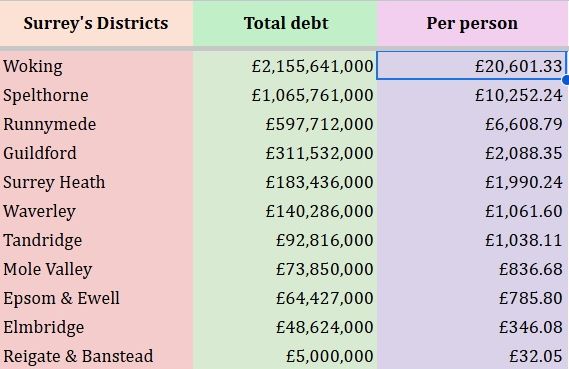
Surrey’s councils are already feeling the strain. Epsom and Ewell Borough Council recently admitted that it faces severe financial challenges, while neighbouring authorities such as Surrey County Council and Guildford Borough Council have been forced to make significant budget cuts. Just last year, Woking Borough Council issued a Section 114 notice, effectively declaring bankruptcy due to unsustainable borrowing and financial mismanagement.

There are concerns over how the government’s reorganisation plans might impact Epsom and Ewell. If plans for widespread restructuring go ahead, smaller councils like Epsom and Ewell could face further financial uncertainty and potential absorption into larger authorities, reducing local accountability.

Tax Rises, Cuts, and Borrowing

To plug the financial gap, councils across the country – including those in Surrey – are turning to drastic measures. The LGIU survey found that:

  • 94% of councils plan to increase council tax
  • 88% will raise fees and charges for services
  • 22% intend to borrow more money
  • 63% will reduce spending on services
  • 56% will use their financial reserves to balance the books

For many councils, this will be the second year in a row of raiding their reserves – a short-term fix that is not sustainable.

In Surrey, these pressures have already led to service cutbacks. Epsom and Ewell Borough Council has warned that further reductions in public services may be necessary, while Surrey County Council is grappling with a funding gap running into tens of millions of pounds. The rising demand for temporary accommodation, adult social care, and children’s services continues to place unbearable strain on local budgets.

Calls for Urgent Reform

The LGIU report highlights near-total consensus among council leaders on the need for major financial reforms. A massive 92% of respondents support the introduction of multi-year financial settlements, which would allow councils to plan their budgets with greater certainty. Additionally, 77% of officials back council tax reform, while around 75% want more fiscal powers, such as the ability to introduce tourism taxes or local sales taxes, as seen in other countries.

Jonathan Carr-West, Chief Executive of LGIU, said:

“At the end of last year, the government made clear that devolution, reform of the local government finance system, and public sector reform should go hand in hand. Our survey shows in stark detail that they are not currently aligned in any meaningful way.

While there is some optimism about multi-year settlements, councils are deeply concerned about the impact of reorganisation and NIC increases on already overstretched budgets. Councils do not believe they have been given sufficient clarity, involvement, or time to prepare for these changes.”

The LGIU has called for the government to introduce a standing commission to oversee local government reorganisation and for councils to be given greater financial powers. Without urgent reform, councils across England – including in Surrey – face an increasingly bleak financial future.

Related reports:

Epsom & Ewell Borough Council: Financial Crisis or Manageable Deficit?

Ex-Council Officers under investigation for Woking’s £2 billion debt

Examination of a Surrey Borough’s 2nd highest UK debt

Surrey’s debts match Woking’s but its position is secure?

Relative relief about Epsom and Ewell’s debt?


Surrey taking care of your future care

A planning session

Residents in Surrey and surrounding areas are being invited to take part in the first ever Planning for Your Future Day aimed at helping people plan for the later life they want.

Two free events – one in Guildford and one online – are being held on 11 March to equip people with information to make the right decisions at a time when they may need extra support.

Planning for Your Future Day – part of a campaign run by Surrey County Council in partnership with local charity Age UK Surrey – aims to raise awareness of care and support options, costs of social care and ways to maintain independence. By understanding options and starting conversations with loved ones early, people can make informed choices and avoid rushed decisions in a crisis.

Resident research shows that 88 per cent of adults in Surrey are concerned about needing future support and 81 per cent of local people are moderately, or really, concerned, about paying for care. This is an increase on the figure from just two years ago.

Separate figures show that, each year, around 300 to 400 Surrey residents who are paying for their own care run out of money, putting them at risk of having to move to a new care home, or their families needing to contribute a top-up to cover the costs of the home.

Planning for Your Future Day is believed to be the first of its kind in the country and is already gaining regional momentum, with three other local authorities – Hampshire, Oxfordshire and West Berkshire – also inviting their residents to join the online event.

In Surrey, more than 2,000 people have already attended a Planning for Your Future presentation held in a community location or joined an online webinar, and nine in ten people would recommend it to a friend.

The event on 11 March – at Guildford Baptist Church in Millmead – is set to be the biggest public event yet and will be followed in the evening by the online webinar.

Sinead Mooney, Surrey County Council’s Cabinet Member for Adult Social Care, said: “It’s great to see Surrey at the forefront of helping people take control of their future so they can make confident, informed decisions. This initiative offers a wealth of useful tips and advice on everything from independent living to care costs, while also directing people to the vast range of local support provided by charities, voluntary organisations, faith groups and neighbourhood networks.

“The Government commission on social care won’t report until 2028 so it’s vital that we equip people to navigate the system that’s in place now. By getting out into the community with information and support, we can help people make the right choices for them and avoid making decisions in a crisis which may not be suitable in the long run.”

Planning for Your Future aims to help those who will need to pay for care themselves or whose family pay members pay. The events will cover key topics such as care options, typical costs of care, Powers of Attorney and practical steps to stay independent for longer, including equipment and technology in the home.

The in-person event starts at 11am on 11 March and will include a talk, Q&A and some light refreshments, with everyone who comes along able to leave with a checklist containing a reminder of the key points.

Alongside the council’s adult social care team and Age UK Surrey, the event will be attended by other organisations such as Mole Valley Life, who can help respond to falls, and the Society of Later Life Advisors, who are financial planning experts.

There will be an online version of the presentation the same evening at 7pm. Both sessions can be booked by visiting the Planning for Your Future information hub on the Age UK Surrey website.

The in-person event will be held from 11am – 1pm on Tuesday 11 March at the Guildford Baptist Church, Millmead, Guildford GU2 4BE.

Parking available at Portsmouth Road, Millmead and other local car parks.

The evening’s online presentation will take place on 11 March from 7pm.

Both sessions can be booked by visiting the Planning for Your Future information hub on the Age UK Surrey website.


Local LibDem view on Epsom and Ewell Council’s future

Cllr Julie Morris and EEBC in background with ?

Local Government Reorganisation (LGR) is a recurring theme in British politics.  Government which is fit-for-purpose contributes to overall efficiency.  Proportional Representation would be by far the best change central government could make toward this.  However, the removal of two tier authorities is what we have to deal with and there are undoubtedly economies of scale to be had from the edict that Surrey should become two or possibly three unitary bodies, instead of one county council and eleven districts/boroughs.

It is really important to create new unitaries using current boundaries as far as possible.  The logistics and costs of any other scenario are complex and could lengthen the process by years.   Debt needs to be spread so that no new authority is immediately bankrupt (as some existing councils are heavily in debt) and, ideally, areas of wealth and deprivation should also be fairly distributed so that each new unitary begins life as both fair and financially viable.  Amalgamating services such as refusal collection, recycling and disposal makes sense as for small boroughs the costs of energy-efficient collection vehicles are prohibitive and it’s worth remembering that some councils already share staff such as legal, chief executive, IT, etc.  Working in partnership is not an entirely new thing, so amalgamation might be relatively straightforward in some areas.  Redistributing services covered entirely by the existing county council could be the key to success in the eyes of local residents, and there are some sensitive areas here e.g. social services and education, to say nothing of potholes.

We do not as yet know the preference of Epsom & Ewell Borough Council, and the Liberal Democrats in Surrey as far as I am aware have not yet come out in favour of any particular scenario.  I personally favour three new unitaries over two, but I’m sure there is room for manoeuvre once the fuller picture is known.  For Epsom, a new Town Council would probably find favour with local people.  Even though it has limited power particularly when it comes to planning applications, it can do a good job of keeping residents informed and, most importantly, involved.  This does nicely lead onto the tricky bit which is how to make sure residents themselves are not further disengaged from local politics (and politicians) and feel they have no say or contribution to make.  Decisions taken many miles away and a local councillor who represents a much wider area could impact voter turnout (and apathy) even more.  Only around 40% of the electorate currently vote in local elections anyway. 

Cllr Julie Morris

Leader of the Liberal Democrat group

Epsom & Ewell Borough Council 

Related reports:

Local Labour view on Epsom and Ewell Council’s future


Epsom and Ewell appeal to owners of empty homes

Empty homes

To mark National Empty Property Week, Epsom & Ewell Borough Council (EEBC) is getting in touch with owners of properties that have been empty for more than two years, to try to bring them back into use.

Empty properties are considered a wasted housing resource, can attract anti-social activity, and can even create environmental problems.

There are currently more than 250 families from Epsom & Ewell in temporary accommodation, with a further 1,336 people on the council’s housing needs register, and many others looking for a property to rent or buy. Bringing empty properties back into use will help households facing homelessness find accommodation within the borough, closer to their schools, jobs and local support networks.

There are currently 64 properties that have been empty for more than two years in Epsom & Ewell. Homeowners still pay council tax on empty properties council tax on a property that has been empty for more than two years increases to 200%, while those empty for more than five years increases to 300%.

There are several options available for empty homeowners:

  • Leasing a property to the council via EEBC’s Private Sector Lease (PSL) scheme for a period of 3-5 years. The homeowner receives a guaranteed rental income, and the council manages the property on their behalf. Where the property requires renovation before it can be leased, the council may even be able to assist with the cost of works. 
  • Letting the property privately.
  • Selling the property to provide residential accommodation within the borough. In some instances, the council may even be interested in purchasing the property.

Councillor Clive Woodbridge, Chair of the Community and Wellbeing Committee, said:

“Across the country, the lack of affordable housing has put massive pressure on local authorities, and Epsom & Ewell is no different. The council’s housing team work extremely hard to house people in need but supply continually outstrips demand.

“I would implore anyone with a long-term empty property in the borough to consider getting in touch with the council or letting it out privately. Not only would you be providing much needed accommodation but, by bringing your property back into use, you can avoid an additional council tax burden.”

Anyone interested in contacting the council with a property to let can fill in the form on the council’s website – Do you have a property to let? | Epsom and Ewell Borough Council

Epsom & Ewell Borough Council operates a private sector leasing scheme which allows us to assist local families in housing need whilst reducing the risks and hassle of letting for landlords. We offer:

  • to manage your property
  • guaranteed rent
  • a lease of three to five years.

Find out more at Private sector leasing scheme | Epsom and Ewell Borough Council

Photo by Jonathan Cooper


Local Labour view on Epsom and Ewell Council’s future

Cllr Chinn with Epsom Town Hall in background

The government has directed a total reorganisation for two-tier local authority areas across the whole country. This was planned by the previous government and outlined in the Labour manifesto. Surrey County Council will cease to exist and will be divided up into, what Surrey Labour Party hopes, will be three unitary authorities.

Labour in Surrey has long argued that twelve councils, twelve civic centres or town halls, with twelve chief executives and a top-heavy administration is not the most economical way to deliver essential services. Small boroughs all with their own legal teams, revenue teams, housing teams, procurement staff—all duplicating roles unnecessarily. On completing the process, unitary authorities will soon start making efficiency savings.

Surrey Labour has been discussing for years how unitary authorities could be most effectively organised to best serve the residents of Surrey. Unlike the Liberal Democrats, who are hardly engaging, or the independents, burying their heads in the sand and calling for elections to be held in 2025, as did some council ruling groups. How they can claim good financial management whilst wanting an unnecessary election to go ahead makes no sense. Wasting taxpayers’ money on a soon-to-be irrelevance would be unforgivable.

Surrey Labour has embraced the process, made a case for three unitary authorities, and carefully examined how they could be organised, taking into account the guidance from the white paper:

  • Sensible economic geographies
  • Travel to work areas
  • The ability for local residents to engage and hold their devolved institutions to account

The Case for Three Unitary Authorities

We believe that there is an overwhelming case for three councils based on existing geography, taking into account expected population growth and recognising the political, economic, and social challenges faced by the county.

Surrey is to be divided into unitary authorities (UAs), with the government suggesting a population of 500,000 or more as ideal but recognising that there may be exceptions to ensure new structures make sense for an area. The population of Surrey is 1.25 million, which implies two or three authorities.

Dividing Surrey into two UAs would mean both would be oversized and geographically challenged in an area of anticipated population growth, whereas three would be initially undersized. The likely divisions would be:

  • Two UAs – (East/West) – as proposed by the Conservatives
  • Three UAs – (North/South-West/South-East) – as proposed by Labour and supported by all the boroughs and districts

Proposed Unitary Authorities

With service delivery to residents being the most important issue, we suggest the following councils:

Middlesex-Surrey Borders

  • Elmbridge, Spelthorne & Runnymede
  • Population: 334,000

Surrey Hills

  • Guildford, Surrey Heath, Woking & Waverley
  • Population: 478,000

North Downs

  • Epsom & Ewell, Mole Valley, Reigate & Banstead, and Tandridge
  • Population: 416,000

These names and details are provisional and will be decided later. However, they best fit geographically and population-wise.

All these areas would have much stronger geographical links and community ties than the larger, two-unitary authority model. While all three are under the government’s ideal 500,000 population threshold, Surrey Hills is closer to that figure, and all are areas of population growth.

These three UAs could provide a more local and focused delivery of key services, ensuring better support for adult social care and SEND needs, both priorities for Surrey. It would give greater clarity for residents, with one authority being responsible for all local services. Service delivery would be more efficient, more accountable, and free from disputes over which council has responsibility in an area.

Local Voices Must Be Heard

It is essential to establish a close relationship between Surrey County and district councillors in shaping their new unitary authorities as they are formulated. The reorganisation process must not descend into factional disagreements but remain focused on communities and democratic engagement at a local level.

Other unitary councils, such as London boroughs, often have local committees to represent community views. Boroughs and districts in Surrey should now begin engaging residents, examining the options, and organising forums to ensure local voices are represented in the new UAs.

Conclusion

The devolution offer in the white paper suggests a Surrey Mayor, offering priorities for funding that suit their areas and providing strategic leadership. This could positively impact key Surrey priorities, including:

  • Skills and employment
  • More housing
  • Increased local investment
  • Making Britain a clean energy superpower

Surrey’s approaches to neighbouring areas for a joint strategic mayor have not been successful.

A Surrey Mayor would automatically represent an area that aligns with the current police and crime commissioner and the Surrey Fire and Rescue Service boundaries, as envisaged by the white paper’s goal of “reforming and joining up public services”.

Overall, we believe that our three-unitary authority model will best serve the needs of Surrey residents going forward.

Much of this is based on previous contributions by Robert Evans & Arran Neathey (2019), Cllr Catherine Powell (2025), Tony Rooth & Michael Moriarty, with additional input from Cllr Robert King, but it does not necessarily represent all of their individual views.

Cllr Kate Chinn
Leader of the Labour Group
February 2025