Epsom and Ewell Times

ISSN, LDRS and IMPRESS logos

No wonder Woking went bankrupt. Scandal of private school loans

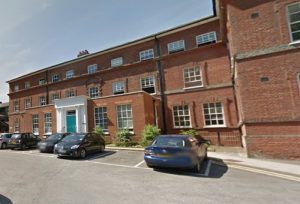
Greenfield School Woking (image Google)

A private school was loaned millions of pounds at favourable rates by Woking Borough Council before it went bankrupt. Now questions are being asked as to whether an independent inquiry will be launched into the “extraordinary use of taxpayer’s money”.

Greenfield School in Old Woking has loans of £13,257,756 according to full accounts published in September on Companies House.

Interest is just one percentage point above the Public Works Loans Board rate. The cash was originally borrowed by Woking Borough Council for “capital projects” before being passed on to the school.

Since then the council’s finances have collapsed under the weight of its unprecedented multi-billion debt from all the money it can not afford to repay – and its investment decisions have come under close scrutiny.

The matter of its role as effectively a bank was raised during the October 17 full meeting of Woking Borough Council.

The local authority was asked directly if it would set-up an independent inquiry into the extraordinary use of taxpayers’ money into the 2019 loan to Greenfield preparatory school, reportedly topping £11m.

According to the school’s set of accounts, its fees, which brought in more than £5m last year, are very carefully controlled and exceptional value for money.

Greenfield, the accounts said,  is highly competitive when compared to other independent educational establishments within the wider Woking area.

In January 2021, Greenfield opened Little School,  a 50.4 week a year day-care for children aged from six months to four years. In April 2022 the school opened its new buildings and took on extra staff.

The council’s loan was challenged on the grounds that the money was not used  for regeneration and education is not in the remit of a borough council.

Woking Borough Council was asked: “Will the council set-up an independent inquiry into the extraordinary use of taxpayers’ money into the loan to the single entity, Greenfield preparatory school?”

Councillor Ann-Marie Barker, who took over as leader of Woking Borough Council after the loans had been agreed. 

She said:  “In July 2023, the council asked Grant Thornton, its newly appointed external auditors, to undertake a ‘Value for Money’ review, looking into the governance arrangements that relate to the council’s historic investment strategy.

“This is an independent report which is reviewing how past decisions (such as those related to Greenfield School) were made and the financial impact of these decisions on the Council’s financial sustainability. 

“Grant Thornton have indicated that the Value for Money report will likely be published in October 2024. 

“The council will make the Value for Money review report, alongside our response to its recommendations, available on our website at the earliest opportunity.

“It is important to wait for the findings of the independent review before coming to any conclusions regarding individual decisions.”

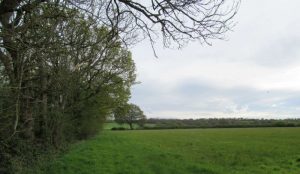
The school is a registered charity in Old Woking and has the benefit of extensive playing fields. In addition it takes advantage of Woking’s Pool in the Park to offer swimming lessons.

The school hosts community events including annual maths and English challenges, anti-bullying training, and football tournaments.

Pupil numbers are growing at a rapid rate and income from charitable activities increased by £582,037 to £5.3m- of which £5.2m was through school fees.

Overall the school made a loss of £502,562 last year according to its accounts and it has loans totalling £13,316,871,  of which £13,257,756 is listed as “other loans”.

Its annual set of accounts read: “The loans were obtained to purchase a new site for the school. The loans are secured on property owned by the school and are for a total period of up to 50 years. 

“During the first three years, no repayments will be made but interest will accrue and then it will be repaid over the next 47 years. 

“The interest rate applicable will be one  per cent point above the 47 year Public Works Loan Board Annuity Rate.”

The Public Works Loan Board  provides loans to local authorities for capital projects – usually in the form of regeneration projects such as Victoria Square or Sheerwater.

The UK Debt Management website reads: “Decisions over which capital projects to pursue and whether to borrow for these investments are the responsibility of the elected council of each local authority, who are accountable to their electorates.

“Local authorities are free to borrow so long as the finance director is satisfied that they are acting in line with statute and can afford to repay the loan. 

“The PWLB is a non-discretionary lender: it does not ask the purpose of a loan, as this would duplicate the decision-making structures of the individual local authorities.”

The Grant Thornton report could be ready for release by the end of this month.

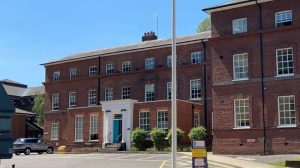
Greenfield School Woking (image Google)


Epsom’s neighbour cracks on with its Local Plan

Artistic Impression Of The Arrival Square from North Street, south east corner. (Credit: Mole Valley District Council and Keir Property)

More than 6,000 new homes will be built in the Surrey borough of Mole Valley, with Leatherhead taking on the largest share after the district council approved its long-term planning bible.

Mole Valley District Council has agreed to build an average of 336 homes a year between 2020 and 2039 with town centre sites in Leatherhead, such as Bull Hill, and Dorking being set aside for large scale housing-led redevelopment.

Office complexes in Ashstead and Dorking have also been earmarked for regeneration, and green belt land in Ashstead, Bookham, Dorking and Leatherhead released so developers can build homes.

The council has also agreed to hand over green belt land for housing within and around Hookwood to “complement” economic growth near Gatwick.

Villages within the green belt, namely Beare Green, Brockham, Capel, Charlwood, and Westcott will have their boundaries amended to allow “appropriate development” after Mole Valley District Council formally adopted its local plan last week (October 15).

In all, Leatherhead is expected to take on 30 per cent of the new homes (1,914), followed by the areas around  Dorking 23 per cent (1,467) , Hookwood, 15 per cent (957) , Ashtead, 11 per cent (701)  and Bookham, seven per cent (446).

The remaining 14 per cent (893) will be spread across the rest of the district.

In Leatherhead the council wants to create what it calls, a Riverside Quarter, at Claire House and James House in Bridge Street. This would go alongside an Urban Quarter at the redevelopment of the Bull Hill.

For Dorking, the Pippbrook House refurbishment remains its flagship development as well as plans to redevelop the Foundry Museum and Church Street workshops.

More locally, housing requirements for neighbourhood areas are as follows:

  • Ashtead – 652 net new dwellings
  • Bookham – 513 net new dwellings
  • Capel Parish – 198 net new dwellings
  • Ockley Parish – 135 net new dwellings
  • Westcott – 123 net new dwellings

Mole Valley District Council, which passed its local plan by  28 votes to five with one abstention, said that 40 per cent of all new units would be affordable, and all come with at least one EV charging point.

The meeting heard that about 76 per cent of Mole Valley land was designated as Metropolitan Green Belt and  protected from most forms of development. 

Under its new plan, it said it has been able to deliver sites for housing while relinquishing less than one per cent of that.

Had the local plan not been agreed, developers would have had carte blanche to build without restrictions.

Cllr Margaret Cooksey, portfolio holder for planning on the Liberal Democrat run council, said: “It gives me enormous pleasure to be able to bring the local plan to this council for adoption at last.

“The local plan is about much more than a document about meeting housing need but a good deal of time and effort is taken up by worrying about specific development sites, particularly green belt sites,

“It’s worth noting again that only 0.65 per cent of the existing green belt in the district has been identified to be released for future development.

“There are sites in most of our wards that we wish were not there however I did say, that I felt that it was a fair plan in as much as what could be seen as pain was spread as evenly as possible across the district.”

Local plans go through long drawn-out processes before they are formally adopted, requiring sign off from planning inspectors. 

Councils need to identify land for development and demonstrate it can meet housing targets. Often there is a trade off between town centre intensification or protecting green belt.

As well as the housing, the Mole Valley plan creates 230 new locally listed buildings and grants 27 parks and open spaces extra protection.

Dissenting voices in the chamber felt the council could have gone further to limit the impact on green belt while Cllr Chris Hunt (Independent, ​​Ashtead Lanes and Common) said more could be done to curb building heights to stop town’s from becoming the next Woking.

He told the meeting: “This is not a sugar coated pill for us to take, it’s got some very good things, affordable housing, the commitment for better health and education facilities, those are very positive things.

“But it’s also got some really hard to agree things.

He added: “There is still quite a lot of uncertainty about whether a key site in our key town of Leatherhead can actually be developed or not.”

Adding: “It’s effectively saying that the plan’s foundations are uncertain in that regard and unfortunately it does echo something else, that there are no clearly defined density agreements.

“It has lots of good things but if I was on Strictly [Come Dancing] it would not be 10 out of 10, it would be a seven.”

Cllr Cooksey said: “We’re not Woking, Mole Valley is not Woking and we don’t want to look like Woking but there’s the dilemma between do we build in the green belt (or in the towns?)”

Cllr Leah Mursaleen-Plank (Liberal Democrat, Mickleham, Westcott and Okewood) said her ward  has been hit by uncontrolled development  “again and again” and called out at those asking to delay the plan’s adoption in order to protect more green belt.

She said: “There is no alternative here.

“We have been in a position in my ward where we haven’t had a local plan and we’ve had uncontrolled developments going through over and over again.

“We’re losing green belt by delaying further.

“To say that we need more time just means more development on green belt sites, the opposite of what you would like to achieve.”

Summing up Cllr Cooksey said: “I’m disappointed that we can’t say that it’s the overwhelming view of the whole council, it would have been very much stronger if we could have had support from the whole chamber. 

‘However we have an excellent plan here, I truly believe it and really think it’s probably the best we could probably have come up with under all the circumstances that we’ve had to deal with over the years.”

Mole Valley covers 25,832 hectares, 16 per cent  of Surrey as a whole and is the third largest borough in the county.

Its population of 87,245 accounts for seven per cent of Surrey’s total, while the average house price of £505,000 makes it second most expensive district in the county.

The ratio of house prices to residents’ salaries was 14:1 in March 2020,  the fifth most unaffordable district in Surrey.

Between 2014 and 2019, 1,265 new homes were completed in Mole Valley –  230 of which were affordable.

Related reports:

Mole Valley  ‘won’t bend’ to petitioners

Mole Valley Plan Paused

Artistic Impression Of The Arrival Square from North Street, south east corner. (Credit: Mole Valley District Council and Keir Property)


Loads of coaches for Epsom tennis

Animation tennis coaches

Epsom & Ewell Borough Council’s Environment committee has authorised the contracts for three tennis coaching providers in Epsom.

R&A Sport will be carrying out coaching sessions at Auriol Park, Sutton Tennis Coaching will be offering sessions at Alexandra Park and Callum Macarty Coaching operating at Court Recreation Ground.

From April, the council moved to a pay-to-play scheme on all its tennis courts. The decision was taken to make the courts self-sufficient with all funds raised being reinvested in maintenance and future improvements.

Since the pay-to-play system was introduced, the council has been committed to ensuring those of all ages, experience, and socio-economic backgrounds are able to participate in tennis. The council offered free tennis sessions throughout the summer, when 173 residents played free of charge.

In addition to this, as part of the tennis coaching contract, all tennis coaching providers are required to take part in the Barclays Free Park Tennis Initiative, offering at least one hour of free, supervised, community tennis activity at their designated location each weekend.

The council is also looking for local volunteers willing to be tennis activators. These activators will lead free tennis sessions in the parks on Saturday mornings. Until these sessions are up and running in all tennis courts across the borough, the council is offering two free, bookable sessions between 9-10am and 10-11am each Saturday.

Councillor Liz Frost, (RA Langley and Woodcote) Chair of the Environment Committee said:

“We are committed to the pay to play model which will future-proof our courts so that residents can enjoy access to tennis now and in years to come.

Residents can pay to play or purchase a membership, including a discounted membership for those or in receipt of Universal Credit or Full Time Carers Allowance or with a disability.

We would also urge anyone interested in volunteering as a tennis activator at one of our courts to get in touch – we’d love to hear from you.

We’re pleased to sign up three coaching providers, which not only provides extra investment income for the courts but also more opportunities for free coaching sessions.”

Related reports:

Anyone for tennis?

LibDems call “Love All” for local tennis

Anyone for tennis? If you pay.

Tennis at 95 is the norm.

Image – C. Epsom and Ewell Times Ltd


Only the cashless will be “on the Hook” Road car park Epsom

Hook Rd Car Park

A town centre car par centre is set to go cashless after plans to upgrade its ticket machines were approved.

Pay metres at the Hook Road multi-storey car park in Epsom are nearing the end of their functioning life-span and need to be replaced.

The problem facing Epsom and Ewell Borough Council is that any new pay-and-display machines at the site only have a limited lifespan as the car park is earmarked for redevelopment – which could begin as soon as September 2025.

Redeveloping the car park will not be a straightforward job however as it was built directly on a historic coal and gas manufacturing site, dating from the 1870s.

A report presented to the council’s environment committee in July read: “Gas works are some of the most contaminated sites in the UK with the council’s car park situated above a concrete capped former tar pit.

“Tar pits have a very high level of contamination, and it is possible that the car park caps are the most contaminated part of the wider gas works site.

“The car park was built in the mid-1980s when it was environmentally acceptable to concrete over former contaminated land uses.”

Earlier this year the council announced it had entered into an agreement with the developers of the SGN Gas Works next door as part of its long-standing ambition to build a new town centre.

The combined sites are part the council’s masterplan for Epsom, and features in its draft Local Plan -which sets out where, and the type, of development that will take place in the borough.

Until then, however, the car park will remain in use – and moves to replace its worn out machines are now underway.

Those who are unwilling to go cashless, or cannot, have been advised to park elsewhere, with Depot Road and the high street named as the most likely alternatives.

Councillor Liz Frost, (RA Woodcote and Langley) chair of the Environment Committee, said: “The current barrier control payment scheme for the car park is at the end of their life and needs to be replaced and the life of this car park is limited.”

The committee had at one stage planned to spend £20,000 on a like-for-like replacement but this was thrown out and the new cheaper alternative agreed.

In 2023/24 the council made £60,000 from the car park – far below the £137,000 it had budgeted for and less than the £65,000 it costs to run and maintain.

The council’s October environment committee heard that many of those using the car park were season ticket holders and would not need the new system. Of those who do , 81 per cent already pay by card.

Ringo, which was selected to replace the pay-and-display machines, adds a 20p ‘convenience charge’ to each transaction. The committee said it would look at parking charges, and whether to pass the full increase on to motorists, at a later date.

Related report:

Epsom and Ewell Council answers parking complaint immediately

Hook Road Car Park, Epsom (Image Google)


Correction to our Epsom and Ewell Council reports

We apologise unreservedly to Epsom and Ewell Borough Council’s Chief Executive Officer Jackie King for an unintended publication of a report dated 26th September 2024 titled Challenges to Epsom and Ewell Council’s Handling of Local Plan, reporting on the 24th September 2024 meeting of the Licensing, Planning and Policy Committee.

This report was overtaken by a report entitled Epsom Local Plan controversy heats up also reporting on the same meeting.

We attributed remarks to Jackie King even though she was not at the meeting. This part of the report has been repeated elsewhere on social media causing some concern in this sensitive area.

The first report was a draft that was intended to be discarded as it was clear that there was a muddle in interpreting the subtitles of the meeting. We do not usually report twice on the same meeting.

The report Challenges to Epsom and Ewell Council’s Handling of Local Plan has now been unpublished.

Let us take this opportunity to appeal for new writers. You do not need a degree in English or Journalism. We can always reorganise the writing to a publishable standard. What we need is observers with time to provide us the facts of local matters. A Borough our size cannot sustain paid journalism. We rely on volunteers.


Epsom & Ewell’s Green Belt controversy tightens

Town Hall and Local Plan

Tensions flared during a heated meeting of the Licensing and Planning Policy Committee (LPPC) in Epsom on October 17th, 2024, as residents voiced strong objections to the proposed housing targets and the perceived threat to the borough’s Green Belt. The meeting was marked by a series of public statements and a notable exchange between committee members and the public, revealing deep-rooted concerns about the future of Epsom’s green spaces and the transparency of the council’s planning processes.

Government’s Revised Housing Targets and NPPF Changes

At the heart of the controversy is the government’s proposed revision of the National Planning Policy Framework (NPPF), which includes significantly higher housing targets for local councils and reduced protections for Green Belt land. Epsom and Ewell face mandatory targets of 817 dwellings per annum—more than four times the current requirement of 181 dwellings per year as stipulated by the borough’s Core Strategy 2007.

Janice Baker, a resident who spoke at the meeting, expressed her dismay at the scale of the new housing targets, equating the requirement to building “50 football pitches of Green Belt land every year.” She warned that such development would irreversibly alter the borough, leading to increased traffic, overwhelmed public services, and environmental degradation. Baker urged the council to take swift action: “There are only a couple of weeks left for you to avert this disaster… the window of time is still there. It is in your hands.”

Public Frustration with Council Process

Several residents, including Adrian Jones, raised concerns over what they perceived as a lack of transparency and accountability in the council’s planning processes. Jones, in a pointed exchange with the committee, highlighted the delays in receiving responses to his queries about the local plan and questioned whether these were deliberate attempts to impede public participation. “Is this deliberate to stop me preparing or just a mistake?” Jones asked. His concerns were met with a promise from Councillor O’Donovan to investigate the delay, but the tension in the room was palpable.

Samantha Bentall, who was denied the opportunity to speak at the meeting, had her written statement rejected by the committee chair on the grounds that it was deemed “defamatory, offensive, vexatious or frivolous.” In an email exchange with the council, Bentall pressed for clarification on which elements of her statement were objectionable but received no detailed explanation. She accused the council of “gagging residents” and in a letter to the Epsom and Ewell Times, called for her concerns to be published, stating that they were in the public interest.

Epsom Green Belt Group’s Alternative Proposal

Adding to the public discourse, the Epsom Green Belt Group presented an alternative housing proposal that seeks to meet the borough’s housing needs without encroaching on Green Belt land. In a letter addressed to the council’s CEO, Jackie King, and leader of the Residents Association, Hannah Dalton, the group outlined a plan to focus development on brownfield sites and previously developed land (PDL), such as West Park Hospital and Hollywood Lodge.

The group argues that the borough’s housing requirement—calculated as 3,840 dwellings over the plan period—can be met entirely on brownfield and PDL land, avoiding the need to release Green Belt land for development. Their proposal includes detailed site-by-site figures, with 4,199 housing units proposed across various brownfield sites, of which 1,105 would be affordable or social housing.

“We hope that you can look on our proposals favourably,” the letter reads, “and utilise the suggestions to update the Local Plan then publish it for consultation as soon as possible to ensure it is submitted for examination in early January 2025.” The group also highlighted the public’s overwhelming opposition to Green Belt development, citing the 87% of respondents to the Regulation 18 consultation who rejected the idea.

Council’s Response and Timetable

Councillor O’Donovan, (RA Ewell Court) chair of the LPPC, acknowledged the public’s concerns but stressed that the council is constrained by legal requirements and external factors in the development of the Local Plan. In response to a question from Adrian Jones about the council’s timetable for submitting the Local Plan, O’Donovan explained that while the council is working towards a May 2025 submission, the timetable is dependent on the completion of external workstreams and the processing of public consultation responses.

“The timetable for progressing the local plan is as set out in our Local Development Scheme,” O’Donovan said, noting that public consultation on the Pre-Submission Local Plan is expected to begin in January 2025. He also reassured residents that the council is exploring ways to expedite the process but emphasised the importance of having a robust evidence base to avoid future challenges to the plan.

However, many residents remain unconvinced by the council’s assurances. Mark Todd, chair of the local Labour Party, expressed his support for the Epsom Green Belt Group’s proposals and urged the council to prioritise the protection of green spaces while delivering the housing the borough needs. “Local people want housing and green spaces,” Todd said. “I commend the local Epsom Green Belt group’s drive to engage with local politicians and highlight all the options available.”

The Next Steps and the Community’s Expectations

The clock is ticking for the council to submit its Local Plan before the anticipated changes to the NPPF come into effect in January 2025. Failure to do so could mean that Epsom and Ewell will be forced to meet the higher housing targets, putting vast swathes of Green Belt land at risk.

Nathan Chan and Casper Grunwald, two Year 8 students, delivered a poignant joint statement, reminding the council of its responsibility to future generations. “This is your past, our present, and many generations to come’s future,” Chan said. “Do you want to be remembered as the people who saved Epsom, or the people who ruined our Green Belt?”

The council now faces the challenging task of balancing the need for new housing with the community’s desire to protect its cherished green spaces. As the debate over the Local Plan intensifies, one thing is clear: the eyes of Epsom’s residents are firmly fixed on the council, and they expect nothing less than a transparent and equitable solution to the borough’s housing crisis.

Conclusion

As the Local Plan moves towards its final stages, the council must navigate a complex web of legal obligations, public opinion, and environmental considerations. The decisions made in the coming months will have a lasting impact on the character of Epsom and Ewell, and the council’s leadership will need to ensure that all voices are heard and that the best possible outcome is achieved for the community.

In the words of Nathan Chan: “This is your past, our present, and many generations to come’s future.” How the council responds to this challenge will determine whether Epsom’s green spaces will be preserved for those future generations or lost to the demands of urban expansion.

Related reports:

Epsom Local Plan controversy heats up

Challenges to Epsom and Ewell Council’s Handling of Local Plan

Time to press the gas on Epsom’s Local Plan?

and many many more. Search “local plan”.


Epsom & Ewell Council Greenlights Local Projects

Nam Yang Martial Arts Epsom figure

Epsom and Ewell Borough Council’s Licensing and Planning Policy Committee has given its provisional backing to over £2 million in Community Infrastructure Levy (CIL) funding for a variety of local projects, following the council’s annual funding round. The funding round, which ran between 7 May and 18 June 2024, saw a total of 28 bids submitted—five for strategic CIL funding and 23 for neighbourhood CIL funding.

Community Infrastructure funding derives from money provided to the Council by developers.

In a significant outcome, three strategic CIL bids, totalling £1.755 million, were recommended for approval. These include £1.25 million for public realm enhancements in Ewell Village, £405,000 for a full-size 3G football pitch at Priest Hill, and £100,000 for a new clubhouse at Old Schools Lane, Ewell. However, bids for Epsom Playhouse lighting replacement and increasing capacity at local GP surgeries were not successful. The latter was deemed “desirable” rather than “essential,” with other bids seen as higher priorities.

In terms of neighbourhood projects, six bids, amounting to £331,966, received backing. These include £85,000 for a new community building at Glyn Hall and £78,644 for footpath improvements at the Hogsmill Local Nature Reserve. Other successful bids include upgrades to playgrounds at Bourne Hall, Gateley Green, and Gibraltar, as well as street tree planting on Waterloo Road.

Despite the committee’s overall approval, 17 neighbourhood bids did not make the cut, with reasons ranging from failing initial assessments to not scoring highly enough in evaluations. This includes several bids that did not meet the “best value” criteria set out in the council’s CIL Spending Protocol.

A key moment in the meeting came when Liberal Democrat Councillor Julie Morris (College Ward) successfully proposed an amendment to include the Nam Yang Martial Arts project for funding, which had initially been overlooked. Her proposal, seconded by Councillor Phil Neale (RA Cuddington), was passed by a majority, ensuring that the martial arts project will be considered for £161,250 in funding by the Strategy and Resources Committee.

The council’s decisions on the CIL funding allocations will now be subject to final approval by the Strategy and Resources Committee, as required by the Council’s financial regulations.

Image Nam Yang Martial Arts Epsom figure courtesy https://martialartsepsom.com/


County pledge to Epsom charity’s fight to end poverty

Poor man - head in hands.

In a significant move for the region, Surrey County Council (SCC) has signed Good Company’s End Poverty Pledge, marking a bold step towards addressing the growing issue of poverty across the county. The pledge, which was approved on 8th October, coincides with the United Nations’ International Day for the Eradication of Poverty. This year’s theme of “acting together” underscores SCC’s commitment to creating fairer and more inclusive communities.

Councillor Mark Nuti, SCC’s Cabinet Member for Health and Wellbeing, signed the pledge on behalf of the council. In doing so, SCC committed to developing a comprehensive, community-led Poverty Action Plan, working in collaboration with partners across the region. Councillor Nuti emphasised the urgent need to support both those already struggling to make ends meet and those at risk of falling into hardship.

“In signing the pledge, we are not only committing to support people who can’t afford basic essentials like food and heating, but we are also standing with those who are on the brink of financial hardship. Poverty has a devastating effect on health and wellbeing, and the consequences ripple out into greater demand on public services,” said Nuti. He highlighted the council’s commitment to targeting welfare support where it’s most needed and using its influence as a major organisation to “buy local,” improve job opportunities, and advocate for essential changes to the benefit system.

This pledge is supported by the local charity Good Company, based in Epsom, and its East Surrey Poverty Truth Commission (ESPTC), a group working closely with individuals who have lived experience of poverty. Jonathan Lees, Founder and Managing Director of Good Company, hailed the pledge as a major step forward in the fight against poverty.

“Surrey is one of the wealthiest counties in the UK, yet we see people in our foodbank centres and pantries struggling daily to afford food and energy. Signing this pledge is an important move by SCC, and we hope that many more local organisations and individuals will join us in this fight. We can’t tackle poverty alone—but together, we can make a difference,” Lees stated.

SCC’s Ongoing Efforts to Combat Poverty

This winter, SCC’s health and welfare hub will serve as a crucial resource for those affected by rising living costs. It will provide information on Warm Welcomes and the Energy Advice Tool, grants for energy-efficient homes, and local foodbank locations. Last year, SCC’s Warm Welcome venues saw 46,000 visitors, and 86,000 residents benefited from the Household Support Fund, which distributed much-needed assistance to those in financial crisis. This year, the council’s Fuel Poverty programme has attracted nearly £1 million in funding, aimed at helping residents in or at risk of fuel debt.

Councillor Nuti acknowledged the strides made to help those in need but recognised the work ahead: “We’ll continue to learn from those with first-hand experience of poverty, ensuring that our services respond more effectively in the future.”

The Work of the East Surrey Poverty Truth Commission

The Good Company’s East Surrey Poverty Truth Commission (ESPTC) has played a pivotal role in shaping the county’s approach to poverty. Launched in 2019, the ESPTC brings together individuals with lived experience of poverty and senior representatives from civic and business sectors to work collaboratively towards solutions. The Commission has helped raise awareness of poverty’s root causes, and its efforts have led to tangible changes in local services.

For example, after hearing first-hand accounts from residents, a local housing association shifted its approach to customer care, ensuring that tenants struggling with rent payments are treated with compassion. The ESPTC also initiated a laptop recycling project, addressing digital exclusion by providing over 360 laptops to students from low-income families.

As Good Company embarks on the second phase of the ESPTC, its focus remains on building relationships and addressing key issues identified by Community Commissioners. The charity is committed to amplifying the voices of those affected by poverty, ensuring they are central to decisions on how to tackle it.

Upcoming Event: East Surrey Poverty Truth Commission Celebration

On Wednesday, 27th November, Good Company will be hosting a special event to celebrate the work of the East Surrey Poverty Truth Commission over the past 18 months. The event, which will take place at Bourne Hall in Ewell from 11am to 1:30pm, will showcase the transformational journey of the Commission’s members and explore the exciting ideas and plans for future change.

This celebration is a chance for the community to come together and hear about the Commission’s work to create long-term solutions to poverty in East Surrey. Tickets are free, and all are welcome to register online.

With Surrey County Council’s pledge and the continued work of Good Company, there is renewed hope for a future where poverty is no longer an invisible problem, but one actively tackled by local communities, organisations, and government alike.

For more information and to register for the event, visit the Good Company’s Eventbrite page.

Image: Mart Production


Mole Valley  ‘won’t bend’ to petitioners

Aerial view of Bull Park Leatherhead

The fight to protect the green gateway into a Leatherhead goes on after campaigners seeking to stop a popular park from being turned into high rises were told the council would not “bend the knee” to their petition.

Mole Valley District Council heard from residents representing the 1,500 people who joined the call to stop the “unnecessary” development at Leatherhead ’s Red House Park by Bull Hill.

They argued the open space could be saved if the council instead redeveloped the raft of empty offices or unused industrial estates in the town.

The petition, discussed at the Tuesday, October 15 full meeting of Mole Valley District Council read: “This park is used by many people and also home to lots of wildlife and historical trees.

“The plans are to build high rise flats and apartments which would look unsightly. The town has barely enough space in schools, and doctors and dentists have waiting lists so understandably very concerning for local residents.”

The plan, part of Transform Leatherhead, seeks to redevelop the land within the existing one-way system known as Bull Hill, including the Red House Gardens.

The council and its development partner Kier say this is to complement the retail and leisure quarters of the town.

Bull Hill is currently made up of office space, public car parks and open space.

It was originally earmarked for retail but after work to the Swan Centre and transport studies, as well as the trend away from high street shopping, the decision was made to go for a mixed development.

In October 2023 the council and Kier Property signed the legal agreements and the joint venture is now working to develop the project.

Presenting the petition, the speaker said: “If we destroy everything that makes Leathehead a destination in favour of becoming a carbon copy of London then people will leave.”

Campaigners pressed for the use of alternative sites and said there was 140,000 square metres of empty office space in Leatherhead – enough for 190 two-bed family homes.

However this was quickly shot down as they were told the council was powerless to force private landowners to hand over vacant properties -and were restricted to sites identified in its local plan.

Instead they want the campaigners to work with the council to make the site the best it can be for the town – while understanding the council needs to build on the land to hit its housing targets.

Cabinet member Councillor Keira Vyvyan-Robinson (Liberal Democrat; Leatherhead North) praised the strength of feeling but said the council can only put forward sites their owners put forward for development.

She said the new local plan has put in restrictions and that developments with high rise buildings have to prove their worth, and that play and open spaces must be provided.

The council also expected the redevelopment to increase biodiversity in the town by at least 20 per cent.

Cllr Vyvyan-Robinson told the meeting she hoped residents would continue to be involved in the process as the plans continued to be revised.

Cllr Ben Wall ( Liberal Democrat; Leatherhead North) dismissed fears the project would turn the town into the next Woking or Croydon. He said: “The tallest building in Croydon is 150metres tall, you can see that for miles, we’re suggestion a building that’s maximum 20m, you are not going to see it from Leatherhead North.

He added: “We’ve been talking about this for the best part of a decade, we’ve had countless opportunities for residents to talk to us. We are listening. Listening is not the same things as bending the knee entirely to a petition. We will listen to a petition, it doesn’t mean we have to come to the same conclusion as a petition.

“Leatherhead has suffered from a chronic lack of investment for decades it’s not the time to start throwing out multimillion investment and investment opportunities without fully assessing their potential benefits.

“I’m cautiously optimistic that these proposals incorporating public feedback can be successful.

“I’m not saying that we will come to a perfect solution but we can not let perfect be the enemy of good.”

Cabinet member Cllr Claire Malcolmson (Liberal Democrat; Holmwoods and Beare Green) added: “ We are listening these are not the final designs.”


Epsom and Ewell adopts new Climate Action Plan

Climate change protest

Tuesday 15th October Epsom and Ewell Borough Council’s Environment Committee approved a new five year Climate Action Plan (2025-2029).

The Plan outlines a comprehensive strategy to meet the Council’s commitment to becoming carbon neutral by 2035. This second five-year plan builds upon the first Climate Change Action Plan, which ends in 2024, and introduces 52 key objectives across six main themes, aiming to reduce the Council’s own carbon footprint and address Borough-wide emissions. The Plan also reflects input from cross-party groups and officers involved in climate change and biodiversity efforts.

The six themes include:

  1. Council Leadership and Influencing Others: Focused on policy development, leadership, and collaboration with external partners to influence carbon reduction across the Borough.
  2. Council Buildings and Energy Use: Aimed at reducing energy consumption in council-owned buildings and exploring renewable energy options such as solar panels and energy-efficient systems.
  3. Transport: The plan includes strategies to reduce emissions from the Council’s fleet and encourage electric vehicle infrastructure in public car parks and on streets.
  4. Environmental Improvements: Objectives include increasing biodiversity, promoting local food production, and ensuring sustainable land management practices.
  5. Waste Management: Targeting reductions in waste production and improving recycling rates across the Borough.
  6. Technology and Information Systems: Leveraging data and new technologies to track carbon impacts and implement climate-smart solutions.

The plan incorporates specific performance indicators, financial costs, and the projected carbon impact for each objective, ensuring transparent monitoring of progress. Key initiatives include transitioning to a green fleet, enhancing energy efficiency in public buildings, supporting local energy projects, and promoting biodiversity and sustainable transport options. The plan stresses the importance of partnerships, particularly with Surrey County Council, to foster local and regional collaboration on environmental sustainability .

Here is a summary of ten interesting objectives from the 52 listed in the Climate Action Plan:

Local Plan Development: Integrate climate change mitigation and adaptation into the Local Plan, focusing on low carbon design, energy-efficient buildings, sustainable transport, and environmental impact minimisation .

Green Procurement: Revise procurement policies to prioritise low-carbon products and services, thereby reducing the Council’s total carbon footprint from supply chains .

Supplier Engagement: Identify the Council’s most carbon-intensive suppliers and collaborate with them to reduce their emissions .

Energy Efficiency in Private Rentals: Support compliance with Minimum Energy Efficiency Standards (MEES) in private rental properties, ensuring properties achieve an Energy Performance Certificate (EPC) rating of E or above .

Green Skills Development: Work with Surrey County Council to promote green careers and skills development, particularly in the areas of construction and retrofitting, to meet future workforce needs .

Tree Planting: Implement the Council’s Tree Management Plan to increase tree cover in the borough, enhancing biodiversity and contributing to carbon sequestration .

Sustainable Energy Production: Explore options for larger-scale sustainable energy projects on Council-owned land, such as solar farms .

LED Lighting Replacement: Replace traditional lighting at Council assets, like Epsom Playhouse and Bourne Hall, with energy-efficient LED lighting .

Solar Energy Feasibility: Investigate the potential for installing solar panels, solar storage, and solar carports on Council-operated assets and land .

Government Funding for Green Projects: Actively pursue government and external funding opportunities for energy efficiency and decarbonisation projects across Council buildings .

These objectives exemplify the Council’s comprehensive approach to addressing climate change, focusing on reducing carbon emissions, enhancing energy efficiency, and fostering community engagement in sustainability efforts.