Epsom and Ewell Times

ISSN, LDRS and IMPRESS logos

LibDems call “Love All” for local tennis

Players shaking hands after tennis match

With charges pending for using Epsom and Ewell Borough Council tennis courts the local LibDems ask for free sport for low income players.

In a bid to bolster recreational opportunities and promote an active lifestyle within the community, Epsom & Ewell Borough Council has joined forces with the Lawn Tennis Association (LTA) to revitalize public tennis courts across the borough.

The LTA has pledged £26,650 towards the refurbishment of a dozen tennis courts spread across key recreational areas including Auriol Park, Alexandra Recreation Ground, Court Recreation Ground, Gibraltar Recreation Ground and Poole Road Recreation Ground.

The initiative encompasses a comprehensive upgrade plan featuring state-of-the-art gate access technology, the implementation of a user-friendly online booking platform, and court enhancements geared towards ensuring top-tier facilities for local residents.

Beyond the infrastructural improvements, the partnership also promises an array of activities catered to all age groups and skill levels. Weekly complimentary tennis sessions, inclusive of equipment provision, will eliminate barriers to entry, fostering inclusivity and accessibility. Additionally, Local Tennis Leagues will host friendly competitions, promoting a sociable and active lifestyle within the community.

The Council will roll out a ‘pay as you play’ scheme across all tennis courts in the borough, slated for implementation in the coming year. The generated revenue will be reinvested to maintain and enhance the borough’s tennis infrastructure, ensuring its longevity for future generations.

Cllr John Beckett, (RA Auriol Ward) Chair of the Environment Committee, expressed enthusiasm over the collaboration, emphasizing its significance in bolstering community well-being and fostering a culture of physical activity. He lauded the forthcoming free coaching sessions as pivotal in diversifying tennis participation across socioeconomic backgrounds.

Julie Porter, Chief Operating Officer at the LTA, echoed Beckett’s sentiments, highlighting the project’s alignment with the UK Government and LTA’s Parks Tennis Project. She affirmed the commitment to providing enduring tennis facilities, thus broadening access to the sport.

In response to the impending introduction of charges for tennis court usage, Cllr James Lawrence, (LibDem College Ward) has launched a petition advocating for free access for disadvantaged groups. The petition proposes complimentary access for children during weekends and school holidays, as well as free usage for households receiving council tax support and other benefits.

The petition underscores the importance of preserving equitable access to public amenities, particularly for vulnerable segments of the population. As the council deliberates on the matter, stakeholders await a decision that balances fiscal responsibility with social inclusivity, ensuring that tennis remains an accessible pursuit for all within the community.

Related reports:

Anyone for tennis? If you pay.

Tennis at 95 is the norm.


Surrey boost for mental health includes Epsom

Counselling session one on one

Surrey County Council has announced a significant investment of £3.6 million from the Mental Health Investment Fund (MHIF) into 13 innovative, community-focused projects. This allocation follows a previous grant of £530,000 in 2023 to 9 projects. The overarching goal of these initiatives is to bolster emotional well-being, with a dual focus on preventing poor mental health and providing support for those already grappling with mental health challenges.

The MHIF operates in collaboration with Surrey Heartlands Health and Care Partnership.

The 2019 Surrey Health and Wellbeing Strategy guides the allocation of MHIF funds, emphasizing the reduction of health inequalities and targeting specific groups and neighbourhoods. The MHIF focuses on prevention, dismantling barriers, and empowering individuals to proactively improve their emotional health and well-being.

Mark Nuti, Surrey County Council Cabinet Member for Health, expressed delight in the diverse allocation of the second round of funding. Spread across all 11 districts and boroughs of Surrey, the funds support a range of organizations employing innovative, community-focused approaches to address mental health challenges.

In the table summarizing mental health projects in Surrey, here are the projects targeting Epsom and Ewell and frequently the Court Ward area in Epsom in particular, among other areas in Surrey.

Emerge Advocacy

Supports people aged 10-25 who are in A&E because of self-harm, a suicide attempt or emotional crisis, 7pm – 11pm when many other services are closed, and hospital staff are very busy. The MHIF funding will allow Emerge to expand their post hospital follow up support so that young people and their families do not have to endure long waits for support during their most vulnerable moments. Emerge Advocacy runs Emerge projects in the Royal Surrey, Epsom, Frimley and East Surrey hospitals.

Other projects involving Epsom and Ewell include: 

Barnardo’s Paediatric Parenting Service

  • Target District: Court in Epsom
  • Description: Barnardo’s will provide support to parents/carers of children under 6 years old, diagnosed with autism and/or ADHD, in key neighbourhoods, including Court.
  • Funding: £409,609
  • Duration: 2.5 years

PAPYRUS: Prevention of Young Suicide

  • Target District:

    • Year 1: Court in Epsom

  • Description: PAPYRUS aims to expand its impact in Surrey schools through various initiatives, including direct intervention in specific neighbourhoods.
  • Funding: £139,834
  • Duration: 2 years

YMCA: Step Forward

  • Target District:

    • Epsom and Ewell
    • Hooley, Merstham, Netherne, Tattenham Corner, Preston, Horley Central and South, Redhill West, Wray Common

  • Description: Step Forward addresses the gap in service provision for young adults with poor mental health, including those in Epsom and Ewell and surrounding districts.
  • Duration: Not specified in the provided information

These projects aim to provide various forms of support, from inclusive wellbeing coaching to parenting services, suicide prevention, and support for young adults, specifically in the mentioned districts of Epsom, Ewell, and Epsom Court.


Red, blue and orange go Green in belt protest

Green Belt protestors in Epsom

Epsom High Street Saturday 3rd February witnessed political parties unite against housing development on the Borough’s Green Belt. The Labour Party, Conservative Party, Liberal Democrat Party, Gina Miller’s True and Fair Party and the Green Party assembled outside the Metro Bank.

Carrying banners and making speeches, the protestors rallied against the Council’s apparent rejection of previous demands to remove Green Belt land from the list of potential housing development sites in the draft Local Plan.

Amid controversy surrounding claims of confidential briefings and secret legal opinions influencing Councillors the protestors called for full transparency.

Gina Miller leader and Parliamentary candidate for True and Fair Party said: “The plan being progressed by the Council to build on precious greenbelt is not based on truthful data, facts,  housing requirements, environmental or full brownfield audits.

Once greenbelt is gone, it’s gone forever.  People across all wards that make up the Epsom and Ewell constituency deserve 100% transparency and honesty and to be assured that decision-making that affects their lives, homes and area are not tainted by conflicts of interest, incompetence or shortermism”

Conservative Parliamentary hopfeul Mhairi Fraser said: “I will fight to the end to save Epsom’s Green Belt, just as your Conservative councillors Bernie Muir and Kieran Persand have tirelessly done alongside Chris Grayling MP – and that is in addition to the thousands of residents who have signed petitions, written to their councillors, and protested in public to make their voices heard. Once the Green Belt is gone, it is gone forever; that would be an absolute travesty, given our entire actual housing need can be met by building on brownfield sites. Epsom and Ewell Borough Council is there to serve us, and it is unacceptable that they are ignoring the very clear will of residents, operating in secret, and threatening to irreversibly destroy the place all of us have chosen to make our home.”

Mark Todd, Chair of Epsom and Ewell Constituency Labour Party said “Over eighty per cent of local residents responded to the recent Council survey saying that they want Epsom and Ewell’s green belt preserved. I have talked to thousands of residents over the past eight years on the street and on the doorsteps of Epsom and Ewell and I believe that figure is accurate. 

I have looked in great detail at Council documents and plans including all the brownfield sites currently available, enough for 3,700 homes. Another 150 can be added by redeveloping West Park Hospital giving us an extra 3,850 homes in the borough. Then there are the Longmead and Kiln Lane industrial estates that can also be redeveloped. These areas could become a mix of residential, retail and office space, generating many more jobs and homes per square foot. 

I believe there is a clear path to preserving Epsom and Ewell’s green belt and building lots of social and truly affordable homes for residents and key workers on these brownfield sites. By truly affordable I mean apartments of varying sizes costing £200-£400,000 rather than houses typically costing £600,000 to £1 Million in Epsom and Ewell that never can be truly affordable.”

Helen Maguire, Prospective Parliamentary Candidate in Epsom and Ewell for the Liberal Democrats said: “Local Liberal Democrat councillors have consistently argued that old ONS data is being used to determine the number of houses required but this is falling on the deaf ears of this Conservative Government. If up to date data was used, fewer houses would need to be built in Epsom & Ewell. Not only is Epsom & Ewell Borough Council being forced to use old data, but we know that despite Conservative government promises to allow local Councils to decide what is best for their area and to exclude the Greenbelt if they wish, this is simply not the case!

Local authorities are being forced to build on the Greenbelt because of successive and cynical conservative policies. In neighbouring Mole Valley (where Ashtead and Leatherhead form part of the new constituency), the Liberal Democrat run council have managed to save 99.3% of the Greenbelt. Last week Mole Valley Liberal Democrat councillors were faced with a stark choice between either continuing with the Local Plan as it is with 0.7% in the Greenbelt or to remove the Greenbelt sites which could put the local plan back another year and expose more Greenbelt sites to planning applications from developers.

Simultaneously the Conservative housing minister Lee Rowley sent them a letter informing them they must not withdraw the plan or delay further. An impossible decision! The Conservatives are deaf to local communities and their housing needs. It’s time for them to go!”

Related reports:

When a meeting is not a meeting, in brief.

Mystery Local Plan critic revealed

Councillors belted-up on Green Belt?

and many more. Search “Local Plan”.


“Audit and Scrutiny” under scrutiny

Meeting of audit and scrutiny with magnifying glass

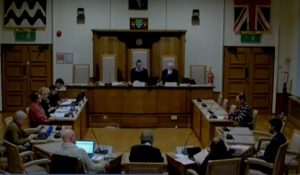
Every day the Epsom and Ewell Times brings you a fresh chess puzzle to solve. Harder to solve than any chess puzzle run so far is what, if anything, at a meeting in the Epsom and Ewell Town Hall Chamber on 1st February of the Audit and Scrutiny committee, was actually resolved on the question of how to get items on the agenda.

We don’t want to get in the way of today’s puzzle, contained in the following transcript of a Council debate, but in fairness to our readers, we should first give a few clues.

Opposition Councillors Lawrence and Ames had both advance requested items to be on the agenda of the meeting. Both requests were refused. One of the rejected items requested was the question “how to get an item on the agenda?” (!)

That issue then in fact became the matter discussed after a question was asked by Cllr Lawrence on the committee’s annual work programme that had come up for debate.

Cllr. Ames disagreed with Cllr. Leach (the Committee’s Vice-Chair) on the latter’s statement that the rules were contradictory and needed re-writing. Cllr. Ames said the rules were clear and an item should go on an agenda if requested by any councillor.  Cllr. Leach stated he agreed with Cllr Ames. And that is where things are a bit puzzling.

The Council officer implied that a request for a matter to be on the agenda might be rejected if to deal with it would take up too much officers’ time preparing for the meeting. Cllr. Leach said the point of the committee was, for example, to investigate whether Council practices could be improved and money saved. If that cannot occur because of the resources that would be taken up by such enquiries it follows that the committee may be a waste of money itself.

Over to you to solve this puzzle.

Submit your answers on our online contact form or by email to admin@epsomandewelltimes.com

The TRANSCRIPT:

Audit and Scrutiny Committee 1st February 2024:

Bridger = Cllr Steve Bridger (RA Stamford Ward and Audit and Scrutiny Committee Chair). Leach = Cllr Robert Leach (RA Nonsuch Ward). Lawrence = Cllr James Lawrence (LibDem College Ward). Ames = Cllr Chris Ames (Labour Court Ward). Bercher = Andrew Bercher (Interim Director of Corporate Services).

Bridger:

Move on to item 8, which is the work programme.

Bercher:

Thank you, Chair. Yes, this is the committee’s annual work programme, and again, it has the planned activities for the next few months. This is detailed, and any changes feature in the footnotes at the bottom of each page. So again, happy for any comments on this one.

Bridger:

Do we have any questions at all for it?

Lawrence:

Thank you, Chair. I’m just going to carry on from an email that I was raising about this. So, I was wanting to have an agenda item—maybe there’s more proof for a work plan on how councillors add scrutiny items or agenda items to this committee because I know at some parts in the constitution, we get given a right to add an agenda item, but I was also told it was at the chair’s discretion. So, I just wanted to check, do councillors, as, for example, as members of the committee, do we have the right to add them, or is it a qualified right with the chair’s permission? Thank you.

Bridger:

It is. As long as you submit a written request, yes, we can put things onto the agenda. But it has to be within the correct time frame; obviously, things have got to be added, etc. No problem. Okay.

Lawrence:

Thanks, yeah, because I did send an email—I can’t remember the exact date it was, but it was a while ago. It was about asking for an agenda item. About December. It was asking for an agenda item for the committee on how we have a scrutiny action or some discussion or to say note to the steps for it. So, I remember other committees asking about it, and it wasn’t very clear to me how that process works. I just wanted to check if that’s something that’s possible to add to the work plan. Thank you.

Bercher:

Thank you, Councillor. I think there’s an element of it that depends on this: because if there is a big piece of scrutiny work that the committee wants to carry out, then that needs to be resourced. And it needs to be resourced not only by officers but potentially by members who are going to then form a separate group to go and look into whatever particular issue it might be. And when I’ve worked with these things in the past typically there’s been a little working group that’s been set up, and members have met over a number of weeks, possibly months, in order to look into things and have worked alongside officers in order to gather data, analyse data, assess, produce a report, and then bring a report back to committee.

So that kind of scrutiny activity can be quite resource-intensive. And currently, unless it’s on the work programme and is resourced, then we won’t have the capacity to do it. But it depends on what it is. If someone says, I’d like to hear at the next committee something about X, and that’s a relatively important thing but it’s an update from a particular piece of work which is already in hand. I don’t know; I’m surmising here. Then that might be relatively easy to do. So in the way that with the chair, we’ve said that we need a report every time we meet on complaints and ICO and something like that that wasn’t previously programmed, but it’s something that we’ve been able to accommodate, and very, very happy to do that. So I think it’s with your discretion as well, chairs, to what gets on the agenda.

Leach:

I think I can take the matter a little further. I had a meeting with the legal officer. It was on a ward issue, but the conversation strayed into this area. Mr. Bercher, is quite correct in saying that a scrutiny report can be very work-intensive. Yes, it can. It can also be not intensive at all. It could be something where a person could just sit down there on the spot and probably write out a report. A scrutiny really should be, as I understand it, limited to an area of the council’s work where we believe that work could be done better, it could be done more quickly and for less cost, or easily. And it is possible that having done the work, we might well conclude that we are doing it as well as it can be done, no changes needed.

I think what Councillor Lawrence is suggesting is there are areas of concern. That’s not really a scrutiny issue, but I think it’s an area where if you have a concern, and I see this committee as being totally non-partisan. So a Liberal Democrat or a Labour member has exactly the same rights as an RA member to have their concerns dealt with. It could be that just an informal conversation behind the scenes which would then be relayed back to you might be a better way than actually trying to go through a whole scrutiny procedure.

Lawrence:

Thank you both. That makes sense. I understand why you want to have a discussion first before coming to a full meeting. I have some other different agenda items, but I’ll see if anyone else wants to ask questions. Thank you.

Ames:

I remain a little bit unclear. I’m trying to reconcile the answer that you gave, Chair, just now about putting an item on the agenda with the response that Councillor Lawrence got when he ironically requested that this issue be placed on the agenda. We’re talking about the very issue of getting an issue on the agenda, and that was refused. And it was reported to Councillor Lawrence that this was your view, that this didn’t need to be placed on the agenda. I’m trying to reconcile the various responses about this being a subjective decision with the very clear statement in the operating procedure that sets out an unfettered right for councillors to request that an issue be put on the agenda for this committee, any councillor, not just a member of this committee. And that should happen.

What the framework says:  Any councillor who wishes to have an item included on the agenda of this committee should give written notice of the item to the scrutiny officer. If the scrutiny officer receives such a notification, he will, in consultation with the committee chair and vice-chair, include it on the first available agenda of the committee for consideration by the committee. I don’t see the chair having a veto in that procedure or making a subjective decision.

This provision puts into the council’s constitution something that would be in statute for a council that didn’t work on the cabinet system. I don’t see it as being something that the chair is entitled to reject. There’s obviously a discussion about what would be the first available agenda, but I can’t see this committee operating its scrutiny role effectively if it’s within the gift of the committee chair and the vice-chair, who are both from the ruling party of this administration, to veto requests for something to be brought to the attention of this committee.

It simply isn’t possible to reconcile the explanations that we’ve been given with a very clear statement in the operating framework that there is an unfettered right for councillors to place an item on the agenda of this committee. These are not subjective decisions that are being taken, judgments being taken by the chair, it’s to be included on the first available agenda. It is quite clear in the operating framework, and both Councillor Lawrence and myself have had requests for something to be placed on the first available agenda rebuffed. This committee, in this sense, is not operating in line with the constitution and the operating framework. It couldn’t be clearer in the operating framework that there is an unfettered right. Things go wrong in local authorities when people are trying to bring this to the attention of a scrutiny committee, and those items are not able to be discussed. So, it’s a matter of great concern that this is happening.

Leach:

I’m not aware of the two issues that you refer to, but if you could tell me either publicly now or perhaps privately we’d certainly look into them. The constitution on how you get an item onto this agenda is actually contradictory, as you know. We have no less than 18 versions of the constitution in the last five and a half years, and the result of it is that we have now improved a constitution to the level where it is poor. We still have further to go. I mean, it is a badly drafted document, and in fact, the constitution contradicts itself. I’ve had a conversation with a view to drafting it into something which is more coherent, which will be the best plan. All this is just basically an idea I’ve had and a conversation I’ve had with the legal officer. It’s got no further than that, but it is a matter that I certainly would like to take forward to make it clearer.

Ames:

I think we’re a little bit going around in circles. What Councillor Lawrence has asked for is for this very issue to be placed on the agenda for this meeting, and that request was rebuffed. That’s a very clear explanation about what was requested.

If you feel that this item in the framework, which I’ve read, is in any way unclear, we clearly need to have a discussion on that because it’s fundamental to how this committee operates.

If members of this committee, or indeed any other councillor, Councillor Coley, for example, is not able to place an item on the agenda for this committee, as is their clear right here, and somebody says that it’s because there’s some kind of anomaly in the constitution, we need to have that discussion. This committee cannot operate as it’s set out and intended to in the constitution and operating framework if the committee chair has a veto over what can be placed on the agenda. It’s simply not what it says in the constitution and the operating framework.

Leach:

You’re absolutely correct. That’s why I believe that part of the constitution needs to be rewritten. And my idea, and this is purely my idea, it’s not an RA group’s, it’s not even the chairman’s view, but my view is if someone puts forward a motion or requests something to go onto the agenda, there should be, first of all, the consideration as to whether it is acceptable. I’m sure your request would be perfectly reasonable, but we have to allow for the fact that you could have people putting vexatious or malicious matters onto the agenda, and I believe there needs to be a filter process there whereby you could turn around and say this is not acceptable.

As for the constitution, if the member is dissatisfied, then that decision will come to this committee as to whether we would be prepared to do a scrutiny. Now that’s my suggestion that I’m happy to forward and will be putting forward. I believe that it’s necessary to have a filter to stop somebody just filling up the agenda with all sorts of things that aren’t scrutiny items while still protecting the rights of members. I stress that’s my personal opinion. It’s not necessarily something that’s going to be happening.

Lawrence:

All right, thank you, Vice-Chair. I understand there needs to be some sort of filter in what comes onto committee or agenda items. I know I’d certainly feel that way if I was the chair of a committee. Just for clarification on what I was also asking for the agenda item, it was what I was just talking about previously to Councillor Ames. It was about this committee, for example, noting the process of how a scrutiny operation would work, certainly would be useful for me, for example, because being a new councillor, I haven’t seen a scrutiny operation. I haven’t seen what can be added to a committee agenda. I haven’t seen what can be a scrutiny item or how the process works or how that filters back to the committee. So, that was the point. That was what I’d requested to go on the agenda item. That’s just for a bit of clarification and thank you.

Bridger:

Any further questions?

Thank you,

Ames.

Thank you. I’m just making one very brief comment, and I’ll leave it there because we’re not getting anywhere. I’m quite shocked by Councillor Leach’s comments. We have to have this committee operate as it is set out in the operating framework and not as Councillor Leach would like it to be. I think that’s a fairly fundamental process of how a council operates under its constitution and operating framework. We have to follow the constitution and not some version of the constitution that’s in the head of a vice-chair that would be like that if he had his way. And we’re not following the process, and we really need to follow the constitution. Otherwise, the whole idea of having a council that operates constitutionally is out the window. Thank you.

Leach:

Sorry, can I say, I again, I agree with you.  I outlined how I believe the constitutional issue could be sorted out. Until that has been implemented, that’s been put to the council and been voted and supported. That is not part of the constitution. I did it as a courtesy to this committee to sort of give you forward notice as to a change that I hope to be able to make to the constitution to resolve it. But Councillor Ames, until that change has been made, if it ever does get made, yes, we have to operate under the constitution as it is. I think your criticism of me was a little unfair.

Related reports:

Local Audit meet: unexpectedly interesting…

Quis custodiet ipsos custodes?


When a meeting is not a meeting, in brief.

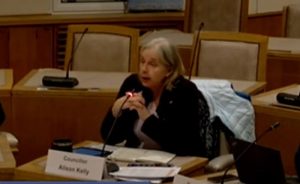
Cllr Alison Kelly at the Council meeting

The vexed issue of whether a “members’ briefing” is a “meeting” or not has received some attention of late. Anxiety was aroused by fears that a “confidential” meeting of Epsom and Ewell Councillors might effectively determine whether Green Belt land would remain in the Local Plan as potential sites for housing development. The “meeting” on 10th January was “met” by a small group of protestors who had caught wind of the event.

According to Cllr. Alison Kelly (LibDem Stamford) “I did tell a friend that I was going to a member’s briefing. I didn’t realize that I was not to disclose that. I just gave that out because a friend asked me why I can’t come out. I don’t understand why they cannot be publicly declared as meetings.”

She revealed this at the meeting of the Strategy and Resources Committee of 25th January. This was a meeting and the press and public were allowed in as usual. During a debate about the Council’s new “Communication Strategy” Cllr Kelly also said: “we’ve recently faced accusations over secrecy with response to the Local Plan Green Belt members briefings and some legal guidance; we’ve also been asked to remain silent on some matters including the existence of a briefing meeting and we seem to have had quite a lot of part two sessions [sections of Council meetings that are closed to the press and public]. How does this strategy help us to address the issue of secrecy levelled at us by the residents?”

In response RA leader Cllr Hannah Dalton (Stoneleigh) said: “The purpose of member briefings is for members [i.e., councillors] to be informed and in a safe and confidential space to ask questions, to understand information, to obtain data from officers, whether from our council or other councils or the LGA [Local Government Association] or whomever. To then provide a steer to… what then comes to committee.”

The Council’s law officer advised: “I don’t think there’s problem actually saying that you’re coming to a council briefing. If you went further to say I’m coming to a council briefing on xxx subject then that is disclosing at times confidential information.”

Cllr Steven McCormick (RA Woodcote and Langley Vale) told the Epsom and Ewell Times 15th January: that the 10th January “members’ briefing”, “…was not a secret meeting; it just wasn’t a public meeting. I stated publicly at the September LPPC Committee and extraordinary full Council on 24 October 2023 that Member briefings regarding the Local Plan would be taking place during this time period assuming the local plan was unpaused by full council, which it was.”

Epsom and Ewell’s Member of Parliament Chris Grayling has weighed in and on 31st January told constituents: “The Council has now decided to press ahead with its plans, and while details of the updated proposals remain confidential, I understand from Councillors in the ruling group that they continue to include substantial green belt development in the area. This is despite the fact that existing brownfield sites can deliver most of what is needed.”

He urged residents to make their views known to the Council.

Related reports:

Councillors belted-up on Green Belt?

Mystery Local Plan critic revealed

Image: Cllr Alison Kelly at the Strategy and Resources Committee meeting


Minister gets heavy on a Local Plan delay

Mole Valley District Council offices

A Surrey borough where the house prices are “amongst the highest in England” has been ordered not to delay its home building programme. The Epsom and Ewell neighbour borough of Mole Valley District Council was ready to pull the plug on its planning bible – which sets out the development it would allow to meet its housing targets.

The council was to debate informing the planning inspector of its decision to withdraw its draft local plan but a last minute intervention by the Department of Levelling up, Housing and Communities has ruled this out. Instead the council agreed to continue working to set out clear guidelines for developers.

In a letter to the council outlining his decision, Lee Rowley, Minister of State for Housing, Planning and Building Safety, said: “I am writing to you over concerns that Mole Valley District Council may withdraw the emerging local plan from examination. The Government is clear that local plans are at the heart of the planning system, and it is essential that up-to-date plans are in place and are kept up to date.”

He said: “Each local planning authority must identify the strategic priorities for the development and use of land in the authority’s area, and policies to address those priorities must be set out in the local planning authority’s development plan documents such as the local plan.”

The last time the council had an up-to-date plan was in 2009 and work on its replacement has begun in earnest. Withdrawing now, Mr Rowley said would extend the council’s time in limbo. He said: “Withdrawing the plan from examination would be a clear failure by the council.”

Since Mole Valley District Council’s last masterplan, more than 90 per cent of all English local authority plans have been updated – pulling out now would leave the borough with “one of the oldest adopted local plans in the country”. It has left the council operating under out-of-date policies, given the amount of change in the 14 years since it was adopted.

Mr Rowley added: “Housing affordability is a significant problem in Mole Valley and the ratio of average house prices to average wages is amongst the highest in England. I can therefore conclude that there is higher housing pressure. Considering the average time taken to prepare a local plan is seven years and we are approaching the phased introduction of a new planning system, withdrawing the plan at this stage could only lead to significant further delay whilst a new plan is prepared. Intervening would therefore accelerate plan production given the current plan is submitted and at examination.”

The order to proceed with the plan will remain in force until formally withdrawn by the secretary of state.

Councillor Margaret Cooksey, Cabinet Member for Planning said: “The Minister of State for Housing, Planning and Building Safety has today [January 25] issued Mole Valley District Council with a direction not to withdraw its local plan from the examination-in-public at the Council meeting tonight. Previous to the new direction, three options had been available to MVDC:  Withdrawal of the plan; continuation of the plan, as submitted (including Green Belt sites); request that the planning Inspector change the plan to remove all Green Belt sites.

“This new direction takes option A away from us and requires Mole Valley District Council to report monthly to the Minister’s officials on the progress of the examination. It will remain in force until the examination concludes with the Inspector’s report.”


How far will £500m go for Surrey Councils?

Tim Oliver Surrey County Council leader - Surrey Live

Additional government funding for local councils will “go some way” towards easing the pain felt by local authorities struggling to balance their books – although calls remain for greater reform.

Communities Secretary Michael Gove announced that English councils would get a share of £500m for their social care grant, and a share of £100m increase in core spending power.

It comes amid a backdrop of councils facing difficult financial times, with  Woking declaring itself effectively bankrupt, Runnymede being served a Best Value Notice, and Surrey County Council admitting it would need to make serious cuts and increase tax by the maximum allowable in order to have a legal budget.

Further pressure has come after a letter from MPs pushed for the extra cash ahead of this year’s general election. In a written statement on Wednesday, January 24, Mr Gove said the extra money would enable councils to provide “crucial social care services for their local communities, particularly children”.

Councils have also been told their funding guarantee, the minimum annual increase available to all authorities would increase by a percentage point, from 3 per cent to 4 per cent, something Mr Gove described as a “key ask” from district councils. He said: “We have listened to councils across England about the pressures they’re facing and have always stood ready to help those in need. This additional £600 million support package illustrates our commitment to local government. We are in their corner, and we support the incredible and often unsung work they do day-to-day to support people across the country.”

Surrey County Council leader, Councillor Tim Oliver (Conservative), is also the chair of the network of county councils. He said the announcement would “go some way to easing the pressures and in particular address the escalating demand and costs of delivering social care and home to school transport. Whilst this extra funding will undoubtedly help us protect valued frontline services, councils, of course, still face difficult decisions when setting their budgets for 2024/25.”

He called for the reformation of local government finance and to how services were provided adding: “Councils require a long-term financial settlement to enable us to plan for, and meet, the demand from our growing elderly populations and the more complex needs of residents requiring social care. This must be coupled with a comprehensive reform programme to bring in line the funding envelope available to enable us to deliver effectively our statutory responsibilities.”

The majority of the funding is ringfenced for social care – this is a service usually provided by top-tier local authorities – in this area it is provided by Surrey County Council.

The £500 million pounds announced by Government is to cover all top tier local authorities in England.
According to Surrey County Council’s most recent set of accounts, it alone spent £727m on Children, Families, Lifelong Learning and Culture, and a further £680 million for adult social care.

For smaller local authorities such as Woking Borough Council, which has debts of about £2 billion, the extra funding from central government works out to be about £152,000 a year, the Local Democracy Reporting Service understands.

Additionally, the four percent announced increase is below the current rate of inflation which at the time of writing was 4.2 per cent – meaning the offer, while better than before, is still a net loss for local authorities.

​​Deputy Leader of Woking Borough Council, Will Forster said: “We welcome this additional financial support announced by the Government yesterday.  This goes some way to filling the funding gap in local government. The majority of this funding will go towards meeting the increasing cost of delivering adult social care by county and unitary councils, whilst we expect the remaining funding to go towards district and borough councils, like ourselves, to alleviate the impact of rising inflation and increased demand on our core services.”

Related reports:

Tory leader pleads with Tory Government

Surrey County chief talks to the BBC

Image: Tim Oliver credit Surrey Live


A helping hand from the Council

EEBC helping hand poster

Epsom & Ewell Borough Council has launched a local campaign to tell residents about community support services that offer them, and their loved ones, a helping hand.

The council offers a range of valuable services for those who are elderly or vulnerable. They are run by staff who provide a personal and caring service, and council subsidies mean that costs are kept to a minimum. Services include:

• The Dementia Hub: respite care for people living with memory loss and dementia.

• Meals at Home: tasty, healthy meals delivered to homes in and around Epsom & Ewell, catering for any dietary requirement. The team can even drop off shopping, too.

• Transport from Home: DBS checked drivers help people in Epsom & Ewell, who are unable to use public transport, with door-to-door travel.

• Community Alarm: easy-to-use devices that raise an alarm in an emergency and can even help find a loved one who has become lost whilst away from home.

• The Community & Wellbeing Centre: support hub for the over 55s; a place to relax, make friends, join activities, and feel at home.

Residents will notice information about the services across the borough on council social media accounts including Facebook, Instagram and X, in the council email newsletter, and in local advertising.

Councillor Clive Woodbridge, Chair of the Community and Wellbeing Committee, said: “As we become older, or for people with additional needs, living independently can feel challenging. We also know that many of our residents are carers for loved ones who would really benefit from our services.

Our trained teams offer care and support for people who need it most, allowing them to stay independent for longer.  We hope this campaign will reach residents who could use a helping hand and encourage them to talk to us to find out how we can help.”

If you or someone you know could use any of these services, please talk to Epsom & Ewell Borough Council today. Call 01372 732000 or visit the website: www.epsom-ewell.gov.uk/communitysupport

The Dementia Hub, meals at home and shopping service are also available for people who live outside of the borough of Epsom & Ewell.


A question of pay for Epsom and Ewell Borough Council

Town Hall Epsom

Epsom and Ewell Borough Council’s annual allowances paid to its elected Councillors has long been lower than all other 10 Surrey Boroughs. Currently standing at the basic allowance of £4031.70 this compares with the highest paid in Guildford of £8348. EEBC is the smallest borough in the County both in size and population.

On Thursday 25th January the councillors serving on the Strategy and Resources Committee (S&R) of EEBC voted to increase the basic allowance for all councillors by 29% to an annual sum of £5736.90 (plus 6%). The committee’s recommendation goes to the Full Council.

The printed decision of the meeting refers to the approval of the recommendation known as “option B” that gives the annual figure of £5736.90. The vote taken at the meeting was “option B plus 6%”.

Cllr Robert Leach (RA Nonsuch) said that for the average number of hours of 15 per week that Councillors devoted to Council business meant that they were the lowest paid of all Council “employees”. That the allowances had increased in the last 10 years at an average of 2.1% per annum. Cllr Leach proposed “option B plus 6%”.

Cllr Alison Kelly (LibDem Stamford) spoke in favour of option B on the basis that the Council needed to attract a diverse range of people to stand as Councillors.

Subject to other Borough’s increasing allowances paid to their members for 2024/2025 the league table of allowances now looks like this:

Other increases were recommended for the chairs and vice-chairs of some of the Council’s committees.

At the same meeting the 6% increase for Council workers for 2024/2025 was confirmed with the following observations being made in an officer’s report to the committee:

The Government has confirmed that the national living wage will rise from £10.42 to £11.44 from April 2024. This represents an increase of 9.8% and it is acknowledged that this is significantly greater than the 6% increase which will be applied to our pay scales from April 2024.

There is currently no formal commitment within our Pay Policy to pay the Voluntary Living Wage (vLW) promoted by the Living Wage Foundation as the minimum hourly rate at which an employee should be paid. The 2024/25 vLW rate for outside of London is £12.00 per hour. This represents a 10% increase on the 2023/24 vLW rate of £10.90.

The bottom of EEBC’s lowest pay scale is £21,734 and the top of the Chief Executive scale is £151,979. This is a pay multiple of 1:7. These figures are based on pay scales and not actual salaries.

As at 30 November 2023 the mean average pay for employees other than Chief Officers was £36,177; therefore currently the ratio of mean average Chief Officer pay to mean average pay of other employees was 1:2.9.

The Chief Executive Officer and Directors remuneration was also considered and a 6 % increase recommended:

In addition to the basic salary the CEO and Directors may receive the following additional benefits:

*Payment into the pension scheme if the employee has opted in and pays into the required employee contribution rate. The employer’s contribution is currently 17.4% of pensionable pay, with the next actuarial valuation due 31 March 2026.

*Chief Executive and Director monthly allowance of 4% of basic salary in respect of subsistence and other expenses, thereby reducing administration and providing a cap on the cost.

*Payment of up to two annual subscriptions to professional institutions where this is an essential requirement of the role. Costs of memberships vary but most are around £200.

*Allowance for the requirement to have a car for the effective performance of duties. The amount varies according to the role of the individual.

Any CEO or Director fulfilling the role of Returning Officer at elections receives additional pay depending on whether an election is contested and the number of electors involved.

Related reports:

Council staff to get 6% pay increase?

County CEO’s pay rise triggering strikes?

Pay rises for Epsom and Ewell Borough Council


“Heat and Dust” epic in Epsom

Montage with Cllrs McCormick, Morris and Muir of Epsom

You don’t need to read or watch the historical romantic drama set in the British Raj epoch in India by Ruth Prawer Jhabvala. The Chalk Pit off College Road Epsom has been the source of noise and dust generated heated debate in Epsom and Ewell Council for years.

Conservative Councillors for Horton, Bernie Muir and Kieran Persand, in July proposed the following motion to full Council:

“That this council mandates officers to install professional noise measurement equipment around the Chalk Pit site in College Road, Epsom, to leave that equipment in place for a minimum period of three months, and to respond to any breaches of noise regulations on the site with the imposition of a noise abatement order on the landowner and any identified operators responsible for the excess noise.”

The full Council referred the matter to the Environment Committee to resolve.

The Chalk Pit site is the centre of a fiendishly complex plot of overlapping planning laws, regulations and three different law enforcement authorities: The Environment Agency (EA), Surrey County Council and Epsom and Ewell Borough Council.

In a detailed report to Councillors of the Environment Committee of Epsom and Ewell, sitting on Tuesday 23rd January, officers attempted to explain.

Here is a summary of that report:


Background:

The Chalk Pit site in College Road, Epsom, has been used for light industrial purposes for around 40 years.  Businesses operating at the site include Skip It, Reston Waste, and a coach company, among others.  Noise and dust emissions from various activities, such as trommel processing, materials handling, and vehicle movements, have led to increased complaints from nearby residents since 2021.

Complaints and Regulatory Responsibilities: 

Prior to 2021, complaints were minimal, but they increased significantly in recent years.  Regulatory responsibilities involve collaboration between the local authority, Environment Agency (EA), and planning authorities (Surrey County Council  SCC and Epsom and Ewell Borough Council  EEBC). 

Complaints related to EA regulated processes are directed to the EA, while non-regulated sources fall under the local authority’s jurisdiction.

Council’s Response to Complaints:

The council’s Environmental Health service conducted an extensive investigation, involving in person monitoring, remote monitoring, and the installation of CCTV.  Despite the intensive investigation, a June 2022 assessment did not provide sufficient evidence to issue an abatement notice. A renewed effort in October 2023 identified a specific nuisance related to a particular piece of machinery, leading to the issuance of an abatement notice.

Enforcement Actions:

The council issued Community Protection Warning Notices to the landowner and various users, mandating specific actions.  Legal steps included a notice requiring a skip company to cease operations on the site.  Ongoing monitoring will determine compliance, potentially leading to further enforcement, including prosecution.

Financial Implications:

The investigation has incurred costs of £5,600. Potential future costs for further investigations, legal proceedings, and appellant expenses may reach £140,000.  The council is exploring funding options within existing budgets and may seek additional funding from reserves.

Professional Opinion and Future Actions:

The report suggests that despite previous efforts, there was insufficient evidence for an abatement notice until October 2023.  Ongoing construction may impact noise levels, but relevant planning conditions could help control noise.  The burden is on the council to demonstrate statutory nuisance, and further evidence may be required for potential legal proceedings.

The report recommends that the Council continues to monitor and take necessary actions to address the noise and dust issues at the Chalk Pit site.


Cllr Muir opened the debate: “I’m alarmed that there is even a suggestion of walking away from funding and monitoring the Chalk Pit against the recommendations of the last Environment Committee and the previous Strategy and Resources Committee. The Chalk Pit site has now increased its activity with another major operator, Reston. Skip-it has not yet completed their building, with major doubts that the building will stop the problems. Anyway, there is still nuisance noise and potential hazard of dust. The Environmental Agency stipulates this operation needs to be enclosed to protect residents. Also, no building will address the noise and dust of skip and truck movements, which is excessive given the massive exponential rise in truck movements. Residents still complain about noise experienced outside permitted hours, starting any time from 5:30 in the morning. It is inevitable that noise will continue.”

She added: “On a personal level, I would not be able to live under these conditions and that they have been subjected to for the last three years. I have sat in on all the borough meetings, which thus far have done little more than kick the can down the road.”

Cllr. Steven McCormick (RA Woodcote and Langley) said: “the Chalk Pit situation is something that I’ve been involved with, and fellow councillors and I have been involved in trying to find a resolution for a significant period of time. It gets bounced around between the different agencies, and there is no light at the end of the tunnel for our residents, which is deeply upsetting.” He added: ” We are primarily a Resident Association Council; we are driven to support our residents and represent our residents, and if we don’t do this, I think we would be failing significantly in our duty.”

Cllr. Julie Morris (LibDem College) said: “It’s a complicated situation, not helped by years of everybody trying to dodge the bullet, really. But we do understand, I think, that the Strategy and Resources Committee are taking the planning breaches quite seriously now, which is good news. There is now light pollution to add to the noise and the dust, isn’t there, because of the various hours of operation and some hefty bulbs that they use to be able to see down there. We can’t just not do anything.”

The debate continued with detailed discussion of the nuisances complained of and the financial implications of the costs of enforcement.

After a lengthy and at times heated debate the Environment Committee finally resolved to “Submit a request to the Strategy and Resources Committee of the Council that funding be allocated from limited Council reserves to instruct external noise consultants to conduct a fresh investigation based upon the activities on the site and that significant complaints continue despite the buildings being constructed and commissioned. It is anticipated that further investigations may require a substantial financial commitment of taxpayer’s funds of up to £140,000”.

Related reports:

Chalk Pit debate deferred by late abatement

Will the dust ever settle on Chalk Pit conflict?

Image – Nick Kenrick – CC BY-NC-SA 2.0 DEED