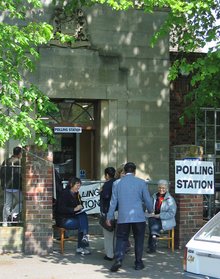
The deadline to register to vote in May’s local elections is approaching. Those who need to register, including those who have recently moved house, need to do so before midnight on April 17.
Local elections are being held on May 4 across the country, including for councils across Surrey.
All 11 district and borough councils in Surrey are holding elections, some for a third of their councillors and some for the whole council. There is also a by-election for Surrey County Council in the Walton South and Oatlands division, following the resignation of Cllr Tony Samuels.
Councils have started sending out poll cards to voters, anyone who has not received one or who has recently moved may not be registered to vote.
Registration should take around five minutes on the gov.uk website, and though people may be asked for their National Insurance number, it is possible to register without one.
Registering anonymously is also possible for those who do not want their name to appear on the electoral register.
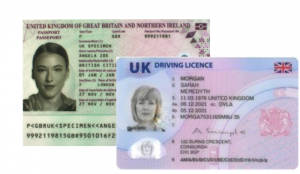
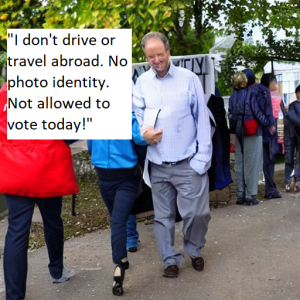
May’s elections will be the first where all voters will need to bring photo ID to vote, with only certain forms being accepted. Those without the necessary photo ID, which includes passports, driving licence and an Oyster 60+ Card, can apply for a free voter ID document.
While online registration is the quickest way, voters can also print off a paper form to be sent to their local Electoral Registration Office, which is the relevant district or borough council.
To check if they are registered to vote, voters also need to contact the electoral services team at their local council.
Voters must be aged 18 or over on election day and be a British, Irish, European Union citizen, or Commonwealth citizen with permission to enter or stay in the UK, or who does not need permission, as well as being registered to vote. Image – Runnymede Council.
The University of Surrey has been awarded £1.7 million to further research into the sleep and circadian rhythms of people living with dementia.
Disturbed sleep is a common symptom for people living with dementia, but it is not known how and to what extent sleep disturbance exacerbates the disease.
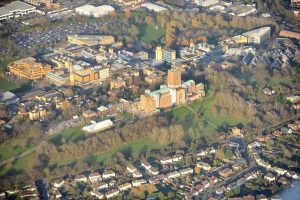
Led by Professor Derk-Jan Dijk, the team at Surrey will expand their innovative programme of research that is using new technologies to non-invasively monitor and improve the sleep of dementia sufferers. The research is conducted in close collaboration with Imperial College London and the Surrey and Borders Partnership Trust, as part of the UK Dementia Research Institute (UK DRI).
Professor Derk-Jan Dijk, Director of Surrey Sleep Research Centre (SSRC), said:
“People living with dementia often have issues with sleep and, often, their memory is seemingly worse after a bad night. Good quality sleep is integral to our cognitive health, and now we need to test whether improving the sleep of those living with dementia will slow down the progression of the condition and preserve an individual’s memory for longer. To assist with this, we have the opportunity to use new technologies to both monitor and potentially improve the sleep of dementia sufferers over an extended period, in a way that is non-intrusive and supportive to people living with dementia and their carers.
“This award is invaluable in helping us to continue our work and I am grateful to the UK DRI, the Medical Research Council, Alzheimer’s Research UK and Alzheimer’s Society for making this possible.”
To learn more and ultimately improve the sleep of those living with dementia, researchers are applying digital health technologies that can sense movements and physiological signals of individuals whilst they sleep. This combined with mathematical modelling, machine learning, video analysis of sleep behaviour and molecular biomarker approaches, will yield a comprehensive understanding of the relationship between sleep, circadian rhythms, symptoms and disease progression in people living with dementia.
Professor Dijk added:
“A major advantage of the novel digital technologies we’re working with, many of which are contactless, is that they pose very little burden on the participant and can be used to monitor sleep and circadian rhythms in the home environment for weeks, months and years.”
The Surrey team will also continue to test new interventions to improve sleep. Interventions to be tested include changing brain oscillations through delivery of precisely targeted auditory stimulation during REM sleep (a sleep stage thought to be particular important for brain function) or improving the light environment to boost circadian rhythms.
Professor Paul Townsend, Pro-Vice-Chancellor and Executive Dean of the Faculty of Health and Medical Sciences at the University of Surrey, said:
“Congratulations to Professor Dijk and the team of researchers from across the University in securing this fantastic award. This is testament to their hard work and dedication in this field.
“This year marks 20 years of the Surrey Sleep Research Centre which continues to go from strength to strength and cements our position as a global leader of sleep research.”
Fiona Carragher, Director of Research and Influencing at Alzheimer’s Society and a Surrey alumni, said:
“As a founding partner and funder of the UK DRI, we are very proud of what the Institute has achieved since its launch in 2017. We congratulate everyone involved in placing it on the map as a global leader in dementia research and for the great impact it has had so far. This has included critical research into developing new diagnostic tools to ensure people living with dementia receive an early and accurate diagnosis, potentially giving them access to one of the disease-modifying treatments we hope to see emerging from the clinical trials pipeline in the coming years.”
Surrey University Press Office
Turn up to turn downturn in turnout!
In an exclusive for Epsom and Ewell Times we report on voter turnout in the last four Epsom and Ewell Borough Council Elections. 2007, 2011, 2015 and 2019. The May 2015 Council election was held on the same day as the UK Parliamentary General Election and the turnout for the local election was much higher as a result. The next election in Epsom and Ewell will be held on Thursday 4th May.
Excluding the 61% 2015 turnout the average turnout across the Borough between 2007 and 2019 was 38.19% of the electorate, with the lowest turnout last time in 2019 with just 32.83%.
Consistently the Wards with the lowest turnouts have been Ruxley, Court and Town. Ruxley having the lowest since 2007 of just 25.23% in 2019.
The highest turnouts are in the richer wards of Woodcote, College and Stamford. Though these wards are also more closely contested and that can explain their higher turnouts as well. The highest recorded since 2007 being College Ward in 2011 with just over 59%. (Again the General Election year of 2015 excluded.)
However, Court Ward is also one of the top three contested Wards in the Borough and that is why it features in the Epsom and Ewell Hustings for three Wards that takes place on 26th April. CLICK HERE for details.
Will the requirement for photo ID see a further decline in voter turnout in Epsom and Ewell?
Voter disenfranchisement and how to overcome it was discussed at Reigate and Banstead Borough Council Thursday 30th March as the authority wound up its business ahead of the May 4 elections.
The country goes to the polls in a little over a month amid the “biggest change to the electoral process in decades” as people will be required to present valid photo identification before casting their ballot.
Councillor Ruth Ritter, during questions from members at the March 30 full council meeting, asked what measures were in place to feed back on its impact on turnout.
She said: “At a time when voter turnout for local elections in Reigate and Banstead Borough Council was as low as 29 per cent in one ward last year and voters need to be encouraged to partake in democracy. Voter ID is the biggest change to the electoral process in decades, and it will affect voters in polling stations at the upcoming elections on May 4. It is therefore important that we have assurances that voters aren’t being disenfranchised by this significant change.
“With that in mind, will the returning officer be gathering data on how many people are unable to vote at polling stations due to not having appropriate ID so that this data can be fed back to national government?”
Last time the average turnout for the borough was 35 percent two power cent higher than the national leverage last year.
Responding was Mari Roberts-Wood, managing director at Reigate Borough Council whose responsibilities include increasing participation in elections.
She spoke of the “extensive communications about the massive changes to electoral law” and how the council had been targeting hard-to-reach groups such as younger voters and the elderly.
Ms Roberts-Wood said: “We can always do more and should do more and with the introduction of voter ID we need to do more than ever.”
Councils, she said, would also be collecting data from polling stations about the impact of the legislation and sending that to the electoral commission – who will be collecting the data centrally.
A report on its impact is expected to be published in November this year.
She said: “This data will include the number of voters who are essentially refused a ballot paper due to suspected forgery or impersonation, or they failed to answer the statutory required questions, they showed the wrong ID – there are 23 different types of ID that you can show on May 4. For those who don’t have one of those or don’t have any ID at all we will be collecting that data. Also recording those asked to show their ID in private and those who are refused a ballot paper but returned with a valid ID. We’re trying to capture as much as possible.”
She added that it was an “opportunity to collect a lot of data to understand the impact of these changes and hopefully increase our reach coming forward”.
Reigate and Banstead Council has a voter ID section on its website that people can use to ensure they can vote on May 4.
Image credit: Crown Copyright fair use and DVLA CC BY-SA 3.0
Pothole payouts and repairs penalise Councillor projects?
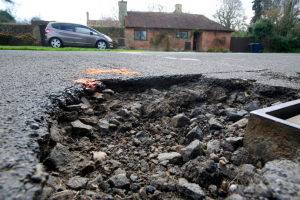
Surrey County Council has spent more than £800,000 in pothole compensation payouts in the last five years but it hopes front-loading the road maintenance budget will help end the broken-road scourge.
In that time it repaired about 221,456 potholes along its rundown road network, at an average of 121 per day. It was also announced that the Government was to give the county £3million to tackle the problem but some say this is “just a drop in the ocean” compared with how much the road budget falls in future years.
County hall’s finances this year include a capital fund of £69.8million for highways maintenance as part of a front-loaded £188m that was announced in February.
That is set to fall back to £29.5m a year – for the next four years – much more in line with the spending under its previous highways strategy which has led to the roads we have today.
It was also announced that individual councillor allowances of £100,000 to spend in their divisions would go, meaning any individual projects earmarked by members can not go ahead.
If highway’s can not be maintained, the opposition leader at Surrey County Council warned, then the roads will fall into further disrepair and the number of potholes, and motorists insurance claims, will rocket.
Councillor Will Forster said: “The cut to is to the road maintenance budget, this will mean the road surfaces will get worse. The cut is notable in the next financial year 24/25 and makes the £3m to repair the potholes from the Government look like a drop in the ocean.”
In 2018, Surrey County Council paid out £399,189 in compensation payments for claims relating to potholes – on both carriage and footway.
This declined to £135,949 in 2019 and was followed by two years where people were off the roads during the pandemic £83,415 and £79,364 in 2020 and 2021 – before climbing again as roads got busier in 2022 to £118,553.
These figures, the council said, relate to both property damage and personal injury with the “best endeavours” made to only include compensation payouts, however, “some figures may also include elements of legal costs and disbursements.”
A spokesperson for Surrey County Council said the road maintenance, capital, budget agreed by council in February totalled £188m for the next five years.
They added that the budget was front loaded, because work had been accelerated in order to realise the benefits sooner.
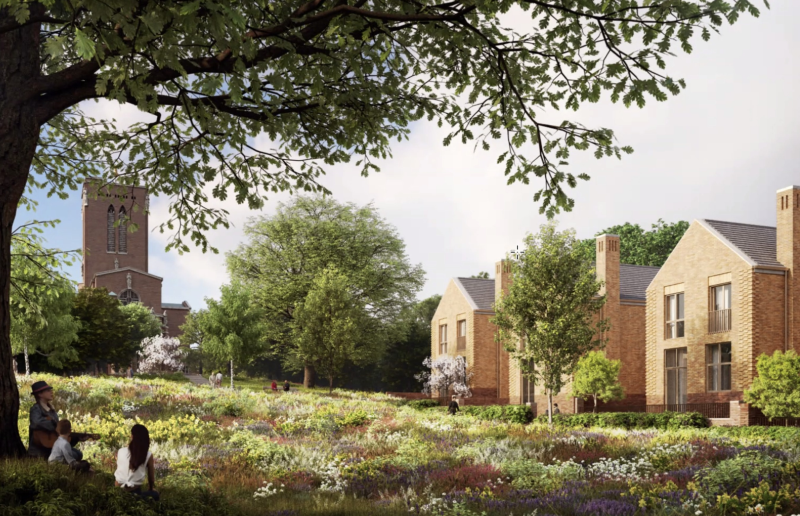
The “fundamental specialness” of Guildford and its cathedral have been preserved after plans to build 124 homes next to the historic site were refused.
Guildford Borough Council’s planning committee met on Wednesday, March 29, and heard a “really definitive” 25 minute officer’s report that outlined the scheme.
The cathedral, along with developer Vivid Homes, wanted to demolish the existing staff housing and create 124 homes in a mix of flats and housing – 54 of which would be affordable properties – on undeveloped woodland. The cathedral said it was selling land surrounding its Grade II listed site to create an endowment fund to pay for maintenance costs but during the presentation, the public heard that cash from this sale would only last five years. When combined with a separate sale, planners said, this would only raise 23 per cent of the budgeted maintenance costs.
Top image: The 124 new homes would be built in the area surrounding the cathedral (Image: Grahame Larter)
Officers at the council recommended refusing the plans of a host of reasons including its harm to the the setting of heritage assets, “visual prominence of the apartment blocks” and the impact on the “green collar” forming part of the “landmark silhouette”.
The plans attracted 286 letters of objection raising issues such as over development, a lack of details on a wider masterplan, and harm to the heritage assets.
Indicative Cgi Of Planning Application For Homes Near Guildford Cathedral. (Image: VIVID Homes)
Councillor Will Salmon said: “We’ve been looking at it this for a number of years and there’s definitely been some improvements made in the application over those years particularly on issues like sustainability. The percentage of affordable housing is also admirable here. My overall feeling is it would have to be somewhere else.
Fundamentally this is not the location for this scheme. My concern is the scale, the whole setting, it’s the openness and semi-wild spaces that you can really appreciate as part of the community, that’s the green collar that we see from all sorts of distances. That is the sense that I can certainly feel coming from the many representations.
“The parkland provides very special setting with different short and long views of the cathedral and it provides a sense of proportion which is really essential for a building as big as the cathedral and I think a lot of that would be lost with the high density scheme. Overall my feeling is very much that this is a heritage asset that must be protected. I do worry that the over development here would actually risk the fundamental specialness of the cathedral.”
His concerns were echoed by both Cllrs Chris Blow and Angela Gunning among others as the chamber united almost unanimously in its opposition to the plans.
The only exception was Cllr Marsha Moseley who did not speak on the application but abstained from voting.
A spokesperson for the Friends of Stag Hill group which has been campaigning against the application, said: “We would like to thank the Guildford Borough Council planning officer for her care and attention to what must at times have been a difficult task, and the committee for looking out for the interests of Guildford.
“Friends of Stag Hill will wait to see the cathedral’s reaction to this second refusal, but would hope that the cathedral now pauses and realises the damaging nature of their proposals, both for the cathedral and the community. The community has now been fighting with the cathedral over the development plans for over seven years, and it is time to accept that developing the land is not an appropriate way to raise funds for the cathedral.
“They have put the local community through significant distress over the last 7.5 years.”
The Grade II-listed cathedral was designed by Sir Edward Maufe and work began at the site 1936. This was interrupted by the Second World War and eventually finished through a fund-raising campaign.
Resident objections to a new children’s home and apartments for care leavers have been labelled “petty” as councillors approved the plans.
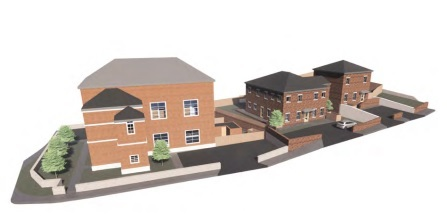
The former Adult Education Centre in Dene Street, Dorking can now be converted to provide accommodation for young people in the home and in “trainer flats” which bridge the gap before young people move into independent housing.
Plans for new children\’s home in Dene Street, Dorking. From Design and Access Statement. Credit: SCC
A meeting of Surrey County Council’s planning and regulatory committee on Wednesday (March 29) unanimously approved the plans, which will include the construction of a new two-storey building on part of the site. But the meeting also heard that of 48 letters received at the time of the meeting, 24 were objecting to the plans.
Three were in support, citing reasons such as the need for suitable accommodation in Surrey and being glad to see a vacant site used, while 21 letters were commenting on the application.
Councillor Ernest Mallett MBE (Residents’ Association and Independent, West Molesey) described residents’ objections as “petty” when he spoke on the application. He said: “I don’t quite know what the population are thinking. They seem to be objecting as if this was some sort of prison for about 100 people. I can’t really understand the objections.”
Cllr Mallett added that on a site visit he thought the plans were “an excellent use of the building”.
The development, which will be owned and run by Surrey County Council, raised concern among residents about rats being displaced and the need for pest control in neighbouring properties, and the authority being “poor at managing children’s home”.
These, along with concerns about the consultation carried out and the protection of the “well-being and mental health of existing residents” were put under the heading “other” by officers, stating in the report they were not material planning considerations for the application.
An officers’ report said: “The majority of objections were concerning the need to protect and enhance the site’s nesting swifts.”
Officers confirmed ten “swift bricks”, which allow birds to nest in them, would be added to the design, while the birds’ current access to the roof of the building would be maintained during building work.
Along with the concerns about swifts, residents raised issues including the design being out of keeping with the residential area, worries about anti-social behaviour, noise and disturbance, and smells from “industrialist catering”.
Cllr Catherine Powell (Farnham Residents, Farnham North), who sits on the council’s corporate parenting board, said the new facilities were “absolutely necessary” and that she “100 per cent” supported the application.
She told the meeting: “Clearly the building is in a state of decay and it puts it back into a useful purpose.”
Officers confirmed the work would be done in two phases, with the children’s home and “no wrong door” facility being built first, followed by changes to the existing building to develop the trainer flats.
The Children’s Home would be for a maximum of four residents and 2 staff, while the “no wrong door” facility, also in the new building, would accommodate two emergency residents and one member of staff.
Top image: Dorking Children\’s home approved in Dene Street, Dorking. Current view from Google Street View
Middling rate for Epsom and Ewell Council Tax
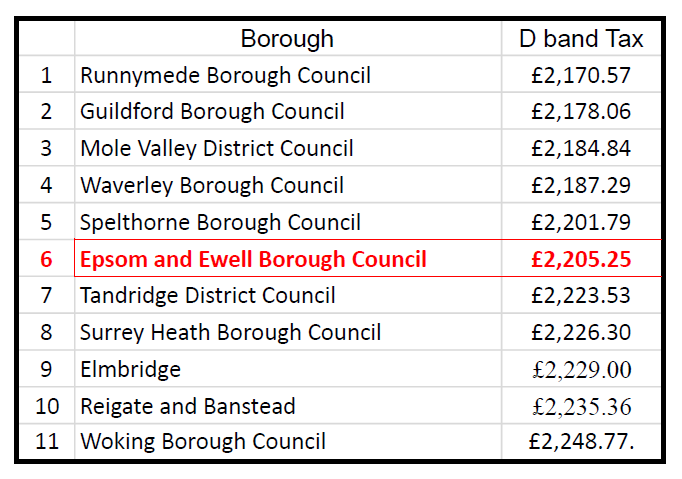
Epsom and Ewell Borough Council is slap in the middle of the 11 Surrey boroughs table of band D council tax charges for 2023/2024. The difference between the highest and lowest is £78.20 per annum. As reported by The Epsom and Ewell Times it should be no surprise to find debt ridden Woking having the highest. Emily Coady-Stemp LDRS reports on the full Surrey County wide picture and Epsom and Ewell Times produces the table.
Council tax bills for Surrey residents will go up from April 1 after authorities confirmed their budgets for the coming financial year. Surrey County Council, the Police and Crime Commissioner, and each of the county’s 11 districts and boroughs, confirmed their increases separately last month, with council tax bills and collection being the responsibility of the districts and boroughs.
The Police and Crime Commissioner, Lisa Townsend, confirmed a rise of £15 per year for residents amid an increase in Surrey Police’s fuel bills of more than £500,000.
While Surrey County Council, which is responsible for adult social care as well as services including road repairs and schools, increased its share by £50 per year on Band D homes.
See below for a breakdown of the council tax bands in your area.
Elmbridge Borough Council The average Band D property in Elmbridge will pay £2,229.00, except in the Claygate parish, where the bill for a Band D home will be £2,243.15.
Band A: £1,486.00 Band B: £1,733.66 Band C: £1,981.33 Band D: £2,229.00 Band E: £2,724.34 Band F: £3.219.67 Band G: £3,715.00 Band H: £4,458.00
Epsom and Ewell Borough Council Residents in Surrey’s smallest borough will see council tax bills of £2205.25 from April, for the average Band D property.
Band A: £1,470.17 Band B: £1,715.19 Band C: £1,960.22 Band D: £2,205.25 Band E: £2,695.31 Band F: £3,185.36 Band G: £3,675.42 Band H: £4,410.50
Guildford Borough Council The bill for Band D households in Guildford will be £2178.06, excluding parish and town councils. For Band D the parish share ranges from no extra charge in Wisley to £2291.71 for a Band D property in Normandy.
Band A: £1,452.04 Band B: £1,694.04 Band C: £1,936.05 Band D: £2,178.06 Band E: £2,662.07 Band F: £3,146.08 Band G: £3,630.1 Band H: £4,356.11
Mole Valley District Council In Mole Valley, the average Band D property will pay £2,184.84, except where there are parish councils. In Charlwood, with the highest parish council precept, residents in a Band D property will pay £2,259.09.
Band A: £1456.56 Band B: £1699.32 Band C: £1,942.08 Band D: £2,184.84 Band E: £2,670.36 Band F: £3,155.88 Band G: £3,641.4 Band H: £4,369.68
Reigate and Banstead Borough Council A Band D home in Reigate and Banstead will pay £2,235.36 from April, while residents in the Horley Town Council Area will pay £2,283.12 and in Salfords and Sidlow will pay £2,265.08.
Band A: £1,490.24 Band B: £1,738.61 Band C: £1,986.98 Band D: £2,235.36 Band E: £2,732.11 Band F: £3,228.85 Band G: £3,725.60 Band H: £4,470.72
Runnymede Borough Council Runnymede residents in Band D property will pay £2,170.57.
Band A: £1,447.05 Band B: £1,688.22 Band C: £1,929.39 Band D: £2,170.57 Band E: £2,652.92 Band F: £3,135.27 Band G: £3,617.62 Band H: £4,341.14
Spelthorne Borough Council Residents in a Band D property will pay £2,201.79 for their council tax in Spelthorne.
Band A: £1,467.86 Band B: £1,712.50 Band C: £1,957.14 Band D: £2,201.79 Band E: £2,691.08 Band F: £3,180.36 Band G: £3,669.65 Band H: £4,403.58
Surrey Heath Borough Council Surrey Heath’s amount for a Band D property is £2226.30, plus the amounts paid to parish councils throughout the borough. Bands listed below are for the most expensive parish, in Bisley.
Band A: £1,523.45 Band B: £1,777.35 Band C: £2,031.26 Band D: £2,285.17 Band E: £2,792.99 Band F: £3,300.8 Band G: £3,808.62 Band H: £4,570.6
Tandridge District Council In Tandridge, a Band D property’s council tax will be £2,223.53 2023/24. Parishes in the district range from no additional charge, to £2,311.97 in the most expensive, Crowhurst.
Band A: £1,482.36 Band B: £1,729.41 Band C: £1,976.47 Band D: £2,223.53 Band E: £2,717.65 Band F: £3,211.76 Band G: £3,705.89 Band H: £4,447.06
Waverley Borough Council A Band D home, excluding parish council charges, is set at £2,187.29 in Waverley. The most expensive parish bills are in Godalming, and shown below.
Band A: £1,530.45 Band B: £1,785.52 Band C: £2,040.60 Band D: £2,295.67 Band E: £2,805.82 Band F: £3,315.97 Band G: £3,826.12 Band H: £4,591.34
Woking Borough Council In Woking, residents in a Band D home will pay £2,248.77.
Band A: £1,499.18 Band B: £1,749.04 Band C: £1,998.90 Band D: £2,248.77 Band E: £2,748.50 Band F: £3,248.22 Band G: £3,747.95 Band H: £4,497.54
How to cut the County’s cake?
A Surrey MP challenges the cuts the County makes to supporting children with special educational and disability needs (SEND), in a classic how to cut the County Council’s cake dilemma. Chris Caulfield LDRS reports.
Surrey County Council “may be in breach” of statutory duties over its decision to cut respite breaks for parents of children with special educational needs. The county council redesigned its short breaks services and has been able to maintain its provision of overnight care but, with the budget frozen at 2017 levels, cuts had to be made elsewhere.
It wrote to care providers saying it was freezing payments from April this year and issued a statement saying it was only “able to fund two-thirds of the current capacity in community-based play and youth schemes for children with disabilities”.
Parents left furious and on the brink as they struggled to find ways to balance full-time care needs and work have been given a glimmer of hope by Runnymede and Weybridge MP Ben Spencer.
Dr Ben Spencer, MP for Runnymede and Weybridge, has written to Surrey County Council. Credit SurreyLive/Grahame Larter.
In a letter to a constituent, he said: “I have now written to Surrey County Council regarding their new policy on short breaks. I share your concerns about the impact the new policy will have on families. I understand the importance of short breaks and am grateful for you taking the time to raise these issues with me.
“Since receiving the response from Surrey CC and doing some research I am concerned that Surrey CC’s new policy may be in breach of their statutory duties. “These duties are set out in the Children Act of 1989 include specific references to breaks for carers.”
A spokesperson for Surrey County Council said the decision to freeze – rather than cut- funding was an “important decision” given the “real challenge for public finances” and that the authority understood the importance of these services for children, young people and their families.
They said: “We have a statutory duty to deliver a balanced budget and this means we have not been able to increase the budget for short breaks services at this time, in line with inflation.
“We understand the concern this may cause families and we are pleased to announce that we have been successful in securing £907k of Short Breaks Innovation funding for 2023/24 from the Department for Education.
“This will enable us to deliver some enhanced short breaks services for children and families with more complex needs in 2023/24, which we believe will make a real difference. Whilst there will still be changes to services, we hope this additional funding will be welcome news to families.
“This funding will be allocated to services that meet the highest level of need. In particular, we are committed to maintaining current capacity of overnight respite services for children who have been assessed as needing them, so that we fulfil statutory commitments in children’s care plans.”
No photo – no vote!
You need photo ID to vote in person at the upcoming 4th May local elections. In an important announcement from Epsom and Ewell Borough Council the new Government rules are explained.
The UK Government has introduced a requirement for voters to show photo ID when voting at a polling station at elections. If you do not show ID then you will not be issued with a ballot paper. This new requirement will apply for the first time at the local elections on Thursday 4 May 2023.
You may already have a form of photo ID that is acceptable. These are some of the main ones you can use: • passport • photo driving licence (full or provisional) • blue badge • Older Person’s Bus Pass, Disabled Person’s Bus Pass, Oyster 60+ Card, Freedom Pass • identity card with PASS hologram (Proof of Age Standards Scheme) • biometric immigration document • defence identity card • national identity cards issued by an EEA state
You can use photo ID if it’s out of date, as long as it looks like you.
The name on your ID should be the same name as you are registered to vote. If it is not then you should take along other proof of name change such as a marriage certificate or deed poll.
There will be more information on your poll card about other acceptable forms of photo ID or you can find out more on the Electoral Commission website https://www.electoralcommission.org.uk/i-am-a/voter/voter-id or call their helpline on 0800 328 0280.
If you don’t already have an accepted form of photo ID you can apply for a free voter ID document, known as a Voter Authority Certificate. You can apply for this online at the Voter Authority Certificate Service https://www.gov.uk/apply-for-photo-id-voter-authority-certificate or contact Electoral Services for a paper form.
The deadline to apply for a Voter Authority Certificate for elections on Thursday 4 May 2023 is by no later than 5pm on Tuesday 25 April 2023. You need to be registered to vote before you apply for a Voter Authority Certificate.
You do not need photo ID if you vote by post.
BOUNDARY CHANGES
The Local Government Boundary Commission completed its review of all Epsom & Ewell electoral wards in 2022 and the changes they made will apply at the elections on 4 May.
Poll cards for the elections on 4 May will be going out from 27 March and will contain information about which ward you are in and the location of your polling station. You should check your poll card when it arrives to see if you need to go to a different polling station since you last voted.