
Epsom and Ewell Times
17th September 2026

ISSN, LDRS and IMPRESS logos

What are the solutions to Epsom’s homeless crisis?

Homeless at Travel Lodge Epsom.

Epsom & Ewell Borough Council, like many local authorities across England, is grappling with a growing homelessness crisis, as highlighted in a recent press release. [Click here for full press release]. The council, which is governed by the Residents Associations (RA), has laid out the stark realities of the situation, detailing the pressures it faces and the steps it is taking to address the problem. This has sparked responses from various political parties, local campaign groups, and concerned residents, each presenting their own perspective on how best to tackle the issue.

The council’s press release reveals alarming statistics, positioning Epsom & Ewell among the top seven boroughs outside of London with the highest number pro rata of homeless households in temporary accommodation. With more than £1.6 million spent on nightly paid accommodation last year, and many families placed outside the borough, the human and financial costs are escalating. Councillor Hannah Dalton, (RA Stoneleigh) Chair of the Epsom & Ewell Residents Association, highlighted the “enormous human impact” of this crisis, pointing out the disruption to education and the health challenges faced by those in temporary accommodation.

Councillor Neil Woodbridge, (RA Ewell Village) Chair of the Community & Wellbeing Committee, echoed these sentiments, stating, “The vast majority of homeless households are those who cannot afford suitable accommodation,” and he pointed to the council’s Homelessness Strategy as a key tool in mitigating the crisis. The council’s initiatives include a Rent Deposit Scheme, a Private Sector Leasing Scheme, and efforts to bring empty properties back into use. However, both Cllr Dalton and Cllr Woodbridge acknowledge that these measures are only partial solutions, and significant action is needed to achieve a sustainable resolution.

Opposition Parties Call for Central Government Support

In response to the council’s press release, opposition parties have voiced their concerns and offered their own solutions. Liberal Democrat Councillor Alison Kelly (College) criticised the council’s approach as “sticking plaster solutions,” emphasizing the need for central government to provide financial incentives for social housing development, particularly on brownfield sites. She pointed out that increasing local housing allowances would provide immediate relief for those struggling to afford rent, arguing that this would reduce the number of families pushed into temporary accommodation.

Cllr Kelly’s comments reflect a broader call for government intervention. “The rental increases and the continuing cost of living crisis mean many can’t keep a roof over their head without going into debt,” she said, urging the government to address these systemic issues to prevent homelessness in the first place.

Green Belt Protection vs. Housing Need

A significant debate centres around the use of green belt land for housing. The campaigning group Epsom Green Belt’s spokesperson Katherine Alexander criticised the council for failing to plan adequately for affordable housing, accusing it of prioritising expensive developments over genuinely affordable homes. They advocate for using brownfield sites to provide low-cost housing, arguing that this would meet local needs without sacrificing green spaces.

“Destroying our valuable Green Belt without providing truly affordable housing would be unforgivable,” she said, pointing to the council’s own evidence that identified the high quality of the green belt land. She called for creative use of identified brownfield sites, such as the Town Hall site and former gas works area, to accommodate affordable housing.

Conservative Councillors Criticise Council’s Approach

Conservative Councillors for Horton, Bernie Muir and Kieran Persand, also weighed in, accusing the council of systemic failures. Cllr Muir argued that the council’s focus on green belt development was a “lazy and short-termist approach,” and that the council had not adequately explored the potential of brownfield sites. “I completely accept that we need social and affordable housing,” said Muir, “but the council is opting for the easy option rather than the optimal solution.”

Cllr Persand highlighted what he saw as a lack of proper investigation into alternative development strategies, including multi-use and multi-purpose sites. He suggested that large-scale developments, common in other towns, could meet housing needs while also providing economic benefits, such as increased footfall for local businesses and opportunities for local graduates.

Labour Councillor Demands Immediate Action on Social Housing

Labour Councillor Kate Chinn (Court) was sharply critical of the Residents Associations’ handling of the housing crisis, “As the Residents Association boast they have had control of the council for over 80 years, it is absolutely astonishing that they have put out a press notice highlighting their own failures on housing and homelessness.” She added “When it comes to supporting homeless people, sending them to temporary accommodation away from friends, family and schools is highly damaging and the council is boasting about placing families in the private rented housing that it says itself is “expensive and insecure”.”

Cllr Chinn called for the Town Hall site [see Epsom and Ewell Times report HERE on Town Hall development] to be used for social housing, insisting that the council should ensure 40% of any new homes built there are for social rent. She pointed to the successful development of mixed affordable and social housing in Hollymoor Lane as a model to replicate, advocating for an immediate start on building more council houses.

“The council needs strong leadership and a Community and Wellbeing committee that has a laser focus on housing and homelessness,” she stated, calling for more resources for the housing team to manage the increasing demands placed on them.

Public Sentiment Reflects Diverse Concerns

Residents also voiced their opinions, questioning how Epsom & Ewell ended up among the worst boroughs for homelessness. Some suggested that the borough might be seen as a “soft touch” for homelessness registrations, while others pointed out that the affordability criteria used for new housing developments do not realistically address the needs of those facing homelessness. “A 20% discount on a £750k home on Green Belt does not help with homelessness,” said one informant, advocating for lower-cost housing solutions on brownfield land.

The Path Forward

The council’s press release and the responses it has provoked highlight the complexity of the housing crisis in Epsom & Ewell. While the council has implemented a range of initiatives, there is a clear consensus that more needs to be done, both locally and at the national level. The debate over green belt versus brownfield development, the call for greater government support, and the need for genuinely affordable housing options are central to finding a sustainable solution.

As Councillor Woodbridge remarked, “This is a situation which requires significant action to bring about a long-term and sustainable solution.” With various stakeholders advocating different approaches, the challenge for Epsom & Ewell Borough Council will be to find a balance that addresses the immediate needs of homeless residents while planning for a future that includes both affordable housing and the preservation of the borough’s natural environment.

Related reports:

Epsom and Ewell Press Release on Homelessness

Stoneleigh library flats for homeless

Council Grapples with Rising Cost of Homelessness

Do good intentions square with homeless savings?

Council targeting the homeless

Image – Street View Google and added persons with suitcases at Epsom’s Travelodge (frequently used by Epsom and Ewell Council for temporary accommodation for the homeless)

Time to press the gas on Epsom’s Local Plan?

Town Hall and Local Plan

As reported in the magazine Local Government Lawyer (19/08/24) several local councils in England are accelerating the development of their local plans in response to proposed amendments to the National Planning Policy Framework (NPPF) that could substantially increase their housing targets and require reviews of green belt boundaries.

The proposed changes, detailed in a recent government consultation, include the reintroduction of mandatory housing targets and the possibility that a council’s failure to meet its housing needs could justify revising green belt boundaries. Additionally, the consultation suggests alterations to the standard methodology for calculating housing need, which would likely result in most councils being required to plan for significantly more new homes.

Under the current proposals, local plans submitted for examination before June 2025 will be assessed under the existing NPPF rules. This has prompted councils like Winchester and Uttlesford to expedite their plans to avoid the more stringent requirements that could be imposed by the new NPPF.

In Winchester, the council’s planning officer emphasized the urgency of submitting the local plan due to the potential increase in the housing need figure from 676 to 1,099 dwellings per annum. Similarly, Uttlesford District Council, which currently operates under one of the oldest local plans in England, is also moving quickly to submit its plan before the deadline.

Not all councils are in favor of the proposed changes. Wirral Council, for example, is set to hold an extraordinary meeting to express its concerns, particularly regarding the potential impact on its green belt. The council’s draft plan focuses on brownfield development, but under the new proposals, it could be required to deliver an additional 14,000 homes, potentially affecting large areas of its green belt.

Councillors in Wirral have expressed strong opposition, with motions being tabled to challenge the proposed standard method for housing calculations, which they argue could undermine local regeneration efforts.

Epsom and Ewell Times asked Epsom and Ewell Borough Council if it had any plan to accelerate the Draft Local Plan process. Councillor Peter O’Donovan, (Residents Association – Ewell Court) Chair of the Licensing & Planning Policy Committee responded: “Epsom & Ewell Borough Council is currently interrogating the documents for the Government’s consultation on proposed reforms to the National Planning Policy Framework and will prepare a response to the consultation to be submitted within the timeframe. We are dedicated to the development of a Local Plan that meets the needs of current and future residents of Epsom & Ewell. We will continue to consider the implications for the borough following the Government’s consultation, when more detail becomes available.”

Cllr Julie Morris (Leader of the Liberal Democrat Group) (College Ward) said “Unfortunately the ruling Residents Association seems to have only one speed, DEAD SLOW, when it comes to the Local Plan which is already around 12 years late. It has never been a priority for them. We can’t see any possibility of speeding things up now and recent progress is mostly unknown : there has been no open debate on the matter since last year. There is a meeting on 24th September which might throw some light on what’s happening. Even councillors from the ruling group believe that an update on progress and potential changes to the Plan, in the run up to Regulation 19 and (hopefully) final adoption of the document, is long overdue.”

A spokesperson for the campaigning group Epsom Green Belt commented on the Council position: “The NPPF proposals were published a month or so ago online. Without proposals it would not have been possible to launch the consultation, which runs until 24 Sept. The government’s stated plan is to issue the new NPPF in Dec, applicable immediately. 

Waiting until the changes are published and applicable would miss the current, and brief, window of opportunity to avoid their impact, which is why other (more enlightened and forward thinking) councils are choosing quickly to act. Epsom and Ewell Borough Council should be acting immediately to capture this opportunity.”

The Epsom Green Belt spokesperson added: “The current NPPF, issued in Dec 2023, remains in force until or unless replaced by a new version. The Dec 2023 version does not require the release of Green Belt, specifically providing the option not to review any Green Belt boundaries. The Council therefore can retain the existing Green Belt boundaries and focus all housing on identified brownfield sites which, according to the Regulation 18 draft Local Plan can accommodate 3,700 dwellings. If they fail to take the opportunity to accelerate the Regulation 19 process, the target house building will exceed 14k.”

Related reports:

Epsom and Ewell Brace for Government Housing Targets

Here we go again on the Local Plan?

Minister gets heavy on a Local Plan delay

Mystery Local Plan critic revealed

Local Plan costs eat into Council reserves

Local Plan to move forward after passionate debate

and many many more. Search “local plan”.


Epsom and Ewell Brace for Government Housing Targets

New housing being built

In a significant policy shift, the newly elected Labour government has reintroduced mandatory housing targets, a move that is set to have far-reaching implications for communities across the UK, including Epsom and Ewell. The ambitious plan aims to deliver 1.5 million new homes over the next five years, following the scrapping of such targets by the previous Conservative government. This sweeping reform has sparked debate over its potential impact on local areas, particularly in relation to the use of green belt land.

Among the key changes introduced by the Labour government is the reinstatement of mandatory housing targets for local councils, which must now be met based on a recalculated assessment of local housing needs and affordability. This approach differs from previous national metrics, focusing on areas where housing is less affordable relative to income. Consequently, regions like Epsom and Ewell, where property prices are high, may face increased pressure to deliver more housing.

Another controversial aspect of the policy is the introduction of the so-called “grey belt” land. This term refers to lower-quality land within the green belt that could be considered for development, in an effort to balance the need for new homes with the preservation of high-quality green spaces. Furthermore, the government has mandated that at least 50% of the homes built on grey belt land must be affordable, with a strong focus on social rent, addressing the UK’s chronic shortage of affordable housing.

For Epsom and Ewell, traditionally resistant to large-scale development, particularly within the green belt, these changes could mark a significant shift. The new mandatory targets might require the local council to approve more housing projects than previously anticipated, including the controversial use of grey belt land. This could lead to tensions with residents keen to maintain the area’s character, but it also presents an opportunity to address the local housing shortage, especially in terms of affordable homes.

The exact impact on Epsom and Ewell will depend on the specific targets assigned to the area and the availability and suitability of grey belt land for development. Local planning authorities with existing Local Plans may now be required to revise these plans to align with the new government mandates.

Tim Murphy of the local Council for the Protection of Rural England expressed his concerns, stating, “I think the new target is 821 new homes per annum. The figure is unattainable—we don’t have the required skills available in this country to build all the homes the Government wants, and there will be widespread opposition across large swathes of the country to the loss of so much countryside. I calculate that the Borough, with a current population of just over eighty thousand, will need to accommodate a further 32,000 people if this target is to be met over the eighteen-year period of the Local Plan.”

The Epsom Green Belt Group also voiced their concerns, highlighting the discrepancy between the current housing build rate and the new targets. A spokesperson for the group stated, “The current annual build rate (based on the 2007 Core Strategy) is 181 dwellings per annum. The current NPPF standard method figure (based on 2014 data) used in the regulation 18 draft Local Plan was 576 dpa. The new government proposals for a revision to the standard method would result in a target of 817 dpa. This is over four times the real need in the borough and almost triple the council’s current proposals.”

Cllr Bernie Muir, (Conservative) representing Epsom West Division and Horton Ward, acknowledged the need for more housing but raised concerns about the strategic approach. “I believe that we do need homes as we have a huge homeless issue in Epsom, plus we are desperately short of homes for key workers and those that support our care, retail, and hospitality sectors. However, the Local Plan will almost certainly end up building the wrong homes in the wrong place, primarily on Greenbelt land, with serious negative consequences,” she warned. Cllr Muir advocated for the development of town centre brownfield sites instead, arguing that this would provide the right homes in significant numbers, support the local economy, and improve the socio-economic prospects for the borough.

Epsom and Ewell Borough Council has responded to the recent reinstatement of mandatory housing targets by the UK Labour government, highlighting the challenges posed by its outdated Core Strategy. The current Core Strategy, adopted in 2007 and covering the period up to 2022, is now considered out of date, particularly as it predates the National Planning Policy Framework (NPPF) introduced in 2012.

In its statement, the Council pointed out that its historic housing completions, detailed annually in the Authority Monitoring Report (AMR), show a consistent shortfall when compared to the significantly higher requirements generated by the standard method for calculating housing needs. For the 2022/23 monitoring year, the Council reported a notable deficit against these figures.

The draft Local Plan, which was subject to public consultation earlier this year, proposed a supply-based housing requirement of 5,400 homes over the plan period, equating to 300 dwellings per annum. However, the Council acknowledged that this figure does not meet the actual housing need calculated using the standard method, which suggests a much higher need—576 dwellings per annum based on 2022 data, with projections potentially rising to 817 dwellings per annum under the government’s proposed revisions.

Councillor Peter O’Donovan, (RA Ewell Court Ward) Chair of the Licensing and Planning Policy Committee said “The draft Local Plan (Regulation 18) that was subject to consultation in February and March 2023 proposed a housing requirement for the borough of at least 5,400 homes of the plan period (which equates to 300 dwellings per annum). This was a supply-based requirement and is not a reflection of need which is calculated using the standard method (see above).

The Draft Local Plan identified supply exceeding this minimum requirement to provide flexibility for non delivery of sites included in the supply.”

He added: “The government are currently consulting on Proposed reforms to the National Planning Policy Framework and other changes to the planning system to which the council will be responding. The consultation is open to all and we would encourage those with an interest in planning to respond to the consultation.

One of the proposals is to amend the standard method for calculating housing needs. As part of the consultation, the government have published the housing need that would be generated using the revised method for all English Local Planning authorities and calculates the housing need for the borough to be 817 dwellings per annum.”

The consultation ends 24th September 2024 and the Council intends to take a report to its scheduled Licensing and Planning Policy Committee on that date which sets out the implications for the Borough and the Council’s suggested response to the consultation.

As the debate continues, residents and local officials in Epsom and Ewell will be closely watching how these new housing targets and policies unfold, weighing the potential benefits of increased housing against the risks to the borough’s character and green spaces.

Image: License details Credit:David Wright

Related reports:

Here we go again on the Local Plan?

Minister gets heavy on a Local Plan delay

Mystery Local Plan critic revealed

Local Plan costs eat into Council reserves

Local Plan to move forward after passionate debate

and many many more. Search “local plan”.


Leatherhead town on the way up?

Artistic Impression Of The Arrival Square from North Street, south east corner. (Credit: Mole Valley District Council and Keir Property)

Leatherhead could become a “destination town” with an updated shopping arcade and cinema screens, according to regeneration plans. The future project could also see a ‘new neighbourhood’ created with up to 11-storey apartment block and townhouses in Bull Hill.

The Swan Centre has been earmarked to be the “catalyst to revitalise the town” of Leatherhead. A new leisure area is set to be the “heart” of the Surrey town with four new restaurants, bars and cafes. 

Plans include 14 retail units, four cinema screens for leisure and a new central market square for events. Retaining stores like Sainsbury’s, Boots, WHSmith and others is also being considered in the development proposals.

Demolishing Leret House, the former offices on Swan Street, is another key part of the proposal. Speaking at a webinar on July 30, project officers said they are looking to reuse as much of the fabric of the building as possible by retaining the concrete frame. 

Locals could see apartment buildings up to 11 storeys popping up in the town centre, with houses ranging between three to four stories. Prospective plans for Bull Hill, the second part of the regeneration scheme, include apartment flats and townhouses, as well as parking facilities, offices, and a park. Officers are also looking at plans for a hotel with retail spaces on the ground floor.

Between one, two and three bedroom flats could be available in the new apartments, with the family houses being three to four bedrooms each. MVDC and Keir Property detail a mixture of open market and affordable homes for purchase and rent could be on the offer.

Councillor Keira Vyvyan-Robinson said: “We appreciate that building heights are a sensitive matter, and this is why the sketches and layouts in the masterplan show illustrative heights only at this stage.” The Cabinet Member for Projects stressed that “nothing has been decided” as the plans were still in the pre-application phase and  “are likely to evolve based on [consultation] feedback”.

A Kier Property officer said the project is “looking to get the right balance” of housing heights, so it can “sit comfortably in its environment.” Upgrading the existing park in Bull Hill is also part of the initial proposals. Project officers said they wanted to make the park more accessible to people in Leatherhead by improving the play areas. 

Launched on July 8 with five consultation events, people can give feedback to the prospective plans until September 26. Leigh Thomas, Group managing director, Kier Property said the consultation events so far had given him “much food for thought”. He added the team were looking to adapt the plans “according to the needs of the local community”. 

MVDC and Keir Property has announced new consultation dates, including:

  • Monday 19 August, 5:30pm to 7:30pm at St Mary’s Church Hall, 10A The Ridgeway, Fetcham, Leatherhead KT22 9AZ
  • Thursday 5 September, 5:30pm to 7:30pm at Ashtead Peace Memorial Hall (Ralli Room), Woodfield Lane, Ashtead KT21 2BE
  • Wednesday 11 September, 5:30pm to 7:30pm at The Old Barn Hall Bookham (Main Hall), 55 Church Road, Great Bookham, Leatherhead KT23 3PQ

Keir Property and MVDC is looking at submitting a planning application in 2025 and, if approved, to start building by spring/summer 2026.

Artistic Impression Of The Arrival Square from North Street, south east corner. (Credit: Mole Valley District Council and Keir Property)


Social housing options boxed in

New homes set for Dorking (image Clarion Housing)

Hundreds of people desperate for social housing will finally have homes to call their own after a seven storey block was approved – despite concerns it would blight historic views from Box Hill.

There are 640 names on Mole Valley District Council’s housing waiting list and the plans, approved on Wednesday, August 7, will add 126 new affordable homes to the borough’s stock.

Developers Clarion Housing Group will demolish the existing office and residential buildings at the vacant Regent House. The homes will be spread across two blocks ranging from three to seven with shops on the ground floor.

Officers told the meeting the council was behind its housing targets and the huge number of affordable housing on offer meant it was hard not to recommend the proposals.

Of the 640 names on the council’s housing waiting list, 218 households are currently waiting for two bed units and this development will accommodate 42 per cent of those with a further 10 per cent of the 316 households waiting for one-bed homes also set to benefit.

Councillor Monica Weller (Liberal Democrat:  Bookham West) said: “I am particularly mindful of the horrendous number of people on the housing list.

“That really is quite shocking, 640 on the housing list. A lot of my time is spent with people who are actually living with a partner and children in their parents houses or homes or flats.

“The situation is actually dire and I think there are a lot of people who don’t actually realise that.

“A lot of people who I have contact with do not have cars, they can’t afford cars, and I think that with this site so close to Dorking, it is walkable.

She added: “I am particularity interested in the National Trust’s case about the view from Box Hill but seeing the proposal from the planning officer and the photographs I think there is a limit to how much we can protect these views weighed against the need for homes

Some spoke out against the plans and warned of a “slippery slope” of allowing too many tall buildings.

Andrew Holden speaking on behalf of a number of residents in Lincoln Road and the surrounding area said a development with fewer floors could still provide a large number of homes while minimising the impact on the area.

He told the meeting: “The view of Dorking from Box Hill and to visitors arriving by train will be of a significant cluster of multi-storey  buildings thoroughly out of character with our historic market town.

“To avoid this slippery slope leading to irreversible harm, its important that councillors draw a clear line in the sand of what the scale of development is appropriate n this area..”

The plans were approved unanimously by planning committee members.

Image: New homes set for Dorking (credit Clarion Housing)


East Street development not off the Hook

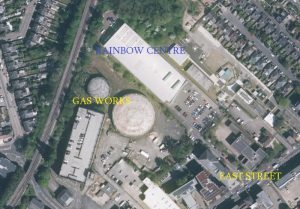
Hook Road Car Park and gasworks

On Tuesday, 16th of July, the Environment Committee at Epsom and Ewell Council sat down to discuss the possibility that there might be considerable environmental issues at the Hook Road Multi-Story Car Park.

It was decided in principle to release the Hook Road Car Park to facilitate wider redevelopment of the gas holder site. Hesitation is largely due to the lack of information on the severity of the level of contamination in the area.

In the report provided by council officer Mark Shepard, it was stressed that the issues of contamination are based on what is underneath the car park, that there is no present risk to people’s health, and it is safe to use for its intended purpose.

The Hook Road Car Park sits on top of a water aquifer and operates directly adjacent to a former gas works that has been in operation since circa 1870 (which can be seen on the historical land use map). Given the lack of environmental research into the soil and water of the gas holder site, it’s not known to what extent the Hook Road Car Park is dealing with a ticking time bomb of contaminants. Gas sites are generally considered some of the most contaminated sites across the United Kingdom, especially ones that have been in operation from the 19th to 20th century, when there were next to no regulations for the disposal of industrial waste.

The byproducts of coal gasification include tar and pitch, which contain toxic and potentially carcinogenic polycyclic aromatic hydrocarbons (PAHs). Ammonia, another byproduct, can contaminate soil and groundwater. Other harmful substances, such as toxic phenolic compounds, spent oxides, and sulphur compounds, also pose contamination risks to soil and water. Additionally, the process involves toxic chemicals that contribute to heavy metal pollution, including lead, arsenic, mercury, and chromium. These byproducts pose significant environmental and health risks due to their persistence and toxicity. As for the gas holder site at Hook Road, council officer Mark Shepard stated in the committee meeting that “we don’t yet know the level of contamination.”

There is the additional factor of Thames Water’s Epsom Water Works, located a short distance away. The East Street drinking water boreholes are in close proximity (less than 200m) to the former gas works site. This means that if there are any attempts for a clean-up at the former gas works site, it would necessitate thorough monitoring by the Environment Agency on account of its potential risk for contamination. In the meantime, the council’s decision remains provisional as they await more detailed environmental assessments to determine the appropriate course of action.

Image: Hook Road Car Park and gasworks – Google


A lesson in Green Belt development?

View of development land west from Hookwood, Horley. (Credit: Google Street View)

A controversial plan to build 446 homes on Green Belt land near Horley, Surrey, has been approved on appeal, overturning the local council’s initial rejection.

The development, proposed by Rydon Homes, will include up to 446 homes – including 201 affordable homes (45 per cent), and four Traveller pitches on land west of Reigate Road in Hookwood. Mole Valley District Council (MVDC)  confirmed there is a significant unmet need for this type of specific housing within the local area.

Despite concerns about its impact on the Green Belt, the planning inspector ruled that the “very substantial public benefits” of the housing outweighed the harm to the protected area. This decision comes amid what the inspector called “an acute need for affordable housing” in the district.

MVDC rejected the outline planning application, claiming it could appear “cramped” and “incongruous” with the surrounding area. MVDC’s initial decision report from November 2023 said the development will have a “detrimental transport impact”.

However since then, the authority changed the site from being a ‘protected area’ in the Local Plan to a ‘potential development site’ – so they could not defence their original decision. The developer launched an appeal.

The scheme was allowed after the developer Rydon Homes attended the inquiry with a team of 16 headed by a KC. At the start of the hearing MVDC & Charlwood Parish Council withdrew their objections to the planning application.

The inspector noted the opportunities for transport, employment and other facilities due to its proximity to Hookwood, Horley and Gatwick Airport. He also found transport options were satisfactory and in agreement with Surrey County Council.

Concerns were raised by locals that the increase of around a thousand new residents would put pressure on GPs and schools. Rough plans put forward by the developer suggests it will create new community facilities like early education, but details are not yet apparent.

Although the inspectorate agreed there was a degree of harm to the character and appearance of the neighbourhood, he concluded there was “very special circumstances” to build on the Green Belt.

Image: View of development land west from Hookwood, Horley. (Credit: Google Street View)


Mutual easing of access benefits Epsom development

East Street Epsom aerial view.

Epsom & Ewell Borough Council has agreed to enter into a mutual deed of easement with the developer of the SGN Gas Works site in Hook Road, Epsom. This site is situated next to the council-owned Hook Road car park, and the deed of easement grants reciprocal access rights over each site’s roads.

This agreement is an important step in the council’s long-standing ambition to promote the redevelopment of this combined site, in order to provide an improved, attractive, better connected and rejuvenated area that would attract new residents and businesses to Epsom Town Centre.

The combined site has previously been included in the November 2023 consultation of the Epsom Town Centre Masterplan, and the Reg 18 March 2023 consultation of the Draft Local Plan.

The deed of easement will enable the Gas Works site developer to design a scheme that could use the council’s Rainbow Leisure Centre access road as the main entrance off East Street. In return, the council would have access across the Gas Work developer’s estate road infrastructure from the current Hook Road car park entrance. By removing the need for separate, duplicated road infrastructure, the Gas Works site can be designed to maximise open space and connectivity across the wider combined site.

The deed of easement is conditional, which means it will not be completed or take effect until such time that the developer of the Gas Works Site is granted planning permission for development. This will ensure the council can maintain its two separate, independent capacities as landowner and as Local Planning Authority.

Cllr Hannah Dalton, (RA Stoneleigh) Vice Chair of the Strategy & Resources Committee, said: “Members unanimously voted for the mutual deed of easement at a special Strategy and Resources Committee held on Wednesday 19 June. This is an excellent example of the council working in partnership with other landowners and we hope that, as a result of this decision, we can deliver wider benefits for the community through appropriate high-quality redevelopment and regeneration of the SGN Gas Works site.”

Image aerial view East Street Epsom – Google.


No more German supermarkets in Epsom

Aldi superstore rejected. (Credit: Marques Thomas/Unsplash)

Plans for an Aldi store have been rejected again over fears the increased traffic would have a severe impact on road safety.

[The site is a few hundred yards away from another German owned supermarket Lidl in Upper High Street.]

A proposal to create the budget supermarket on the vacant former Dairy Crest site in Alexandra Road was refused a second time at an Epsom and Ewell council meeting on July 10.

The application was first thrown out in 2015 following concerns about the site’s location, level of car parking and traffic, and the effect on the character of the neighbourhood.

The new application for the £5m development in Epsom includes car parking, some landscaping but plans for residential units have been scrapped.

Councillor Jan Mason (Residents’ Association/Ruxley Ward) said the supermarket giant should “do far better” on the design of the building if it “wants to come to a lovely area such as Epsom”.

Although Aldi said it had “refined” its proposals, carefully designing an “attractive, bespoke Aldi food store” which would “respect the surrounding area”, councillors were still concerned about its location.

Despite Surrey Highways advising the development “would be unlikely to result in a severe impact” on local traffic, councillors remained sceptical. Speaking before the debate, Ward Cllr Julie Morris (Lib Dem/College Ward) said there would be a “huge” impact on local residents who already feel the surrounding residential roads are a “rat run”.

“The one thing you can’t put in a spreadsheet is common sense,” Cllr Chris Watson (Residents Association/ Ewell Court Road) said. He argued that regardless of “clever” data from the county council, “common sense” says it is a busy junction which could result in queuing traffic.

Agreeing with him, other councillors said the “already challenging junction” is “fraught with danger”. It was agreed it was in the interests of residents, motorists, pedestrians and children crossing to go to school that councillors had to reject the application.

However, Cllr Clive Woodridge (Residents’ Association/ Ewell Village Ward) argued it was not viable to refuse the application on traffic and road concerns. He said Surrey Highway experts have judged the development acceptable and this could not be easily defended at appeal.

But Cllr Mason called the development a ticking “time bomb”, which could lead to a fatal collision if plans goes ahead.

Speaking to the committee, local resident Leah said: “The council has had feedback multiple times that local residents don’t want a food store here.” She cited Aldi’s own research from its application that 58-61% of local residents objected to the proposal.

Around 91 letters were sent opposing the scheme, arguing it was an ‘unacceptable location’ for a food store at a busy junction. Concerns were raised that traffic would be exacerbated, a pedestrian crossing would be dangerous and the brownfield site should be saved for affordable housing.

Aldi superstore. (Credit: Marques Thomas/Unsplash)