Epsom and Ewell Times
1st October 2026

ISSN, LDRS and IMPRESS logos

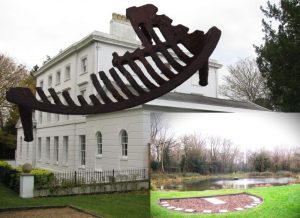
Grate find in Epsom’s Millennium Green

The found grate with Woodcote House and Millennium Green in background.

The Woodcote Millennium Green is unique in Surrey.  It comprises of an area of 7 acres, bounded by Woodcote Green Road to the north and the Woodcote Estate to the south and is located at the rear of Epsom General Hospital.

The land forming The Woodcote Millennium Green has passed through the ownership of monks, lords and developers over the last thousand years and now flourishes under the stewardship of a Trust whose members are passionate to retain the character of this landscape gem.

The land was originally part of the estate of the Manor of Horton, owned by Chertsey Abbey until the dissolution of the lesser monasteries in 1536-7.  After passing through several owners, the Manor passed to the sister-in-law of John Evelyn, the 17th Century diarist.  Woodcote House was re-built at this period, on a site which is now just south of the Millennium Green.

Woodcote House was acquired by Sir Edward Northey (1652-1723) in the late 17th Century and became the family seat to the Northey family for 250 years.  The present house dates mainly from the early 19th Century.  Photographs of the area show an open wooded landscape with cattle grazing by the pond.  The pond is shown on the earliest Ordnance Survey maps of Epsom and surroundings and must pre-date the mid 19th Century. 

In the late 1930s, Woodcote House and the surrounding land was sold to Earnest Harwood, whose building company developed most of the land for housing, forming The Woodcote Estate.  Woodcote House itself was subdivided into flats and has undergone a major refurbishment.

In 1999, the Harwood family donated a large portion of the remaining woodland including the pond to be held in perpetuity by the Trustees of The Woodcote Millennium Green Trust.  The Mayor of Epsom and Ewell officially opened The Woodcote Millennium Green in July 2000. 

Whilst The Millennium Green was once a 7-acre site of overgrown brambles, it has been transformed by residents and volunteers into the attractive piece of managed natural woodland that it is today.

It was during one of my own walks through the woodland that I discovered a cast iron fire grate close to the rear of Woodcote House that had been unearthed by tree roots.  Having obtained permission from one of the trustees of The Millennium Green to remove the fire grate, I contacted Bourne Hall Museum in Ewell and was later informed by one of the curator’s contacts that the cast iron fire grate is likely to date to the 19th Century and was probably used inside a room of Woodcote House prior to being replaced and buried in the ground at the back of the building. 
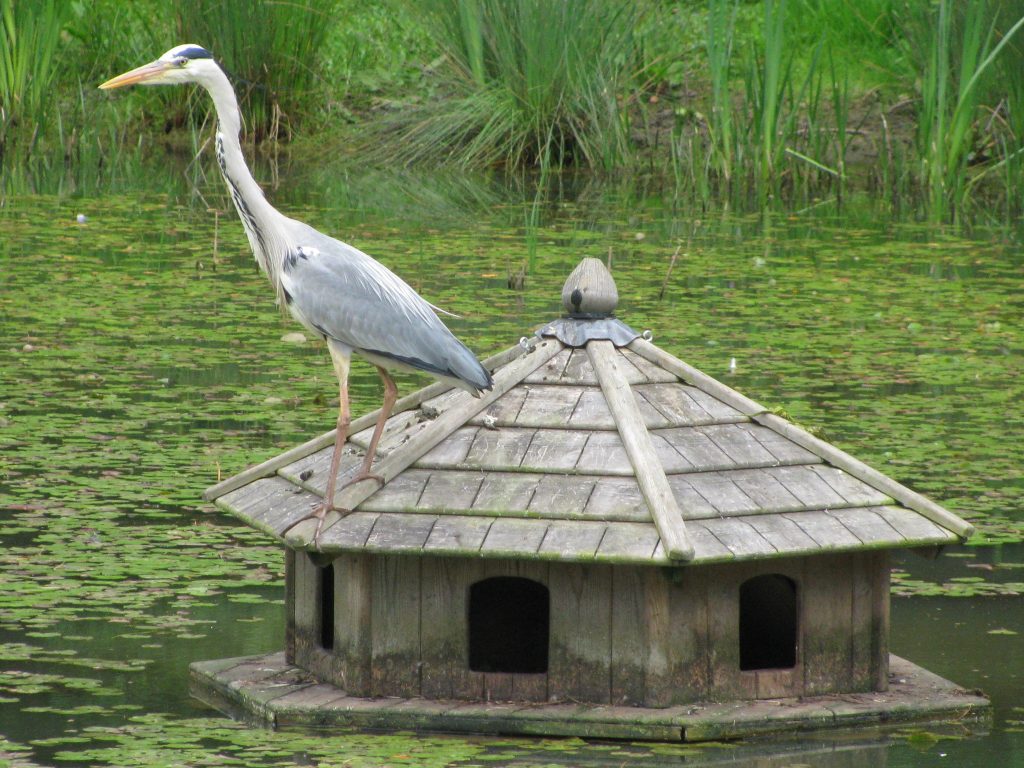
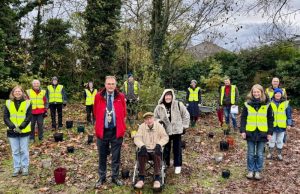
Four times a year The Woodcote Millennium Green Trust holds maintenance days to help with the upkeep of the green which can be found at the rear of Epsom General Hospital.  

It is a great community experience open to all ages and abilities so if you would like to get involved, or make a donation to fund maintenance and improvements, please email:
info@woodcotemillenniumgreen.org.uk


Improving Surrey’s rights of way

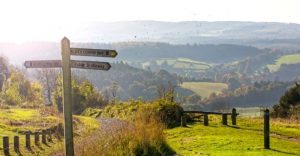
newlandscorner-24c2a9jonhawkins_surrey-hills-photography-1

Surrey County Council is seeking the views of residents on the county’s Rights of Way to help drive improvements.

The county council is responsible for around 2,164 miles (3,482 km) of paths known as ‘public rights of way’ in both the countryside and urban areas. Accessing these paths is important for residents to enjoy and explore, travel to work or school and for health and wellbeing.

A public right of way is a path that anyone, by law, has the right to use. There are four types:

  • Footpaths for walking, mobility scooters or powered wheelchairs
  • Bridleways for walking, horse riding, cycling, mobility scooters or powered wheelchairs
  • Restricted byways for walking, horse riding, cycling, mobility scooters or powered wheelchairs and horse-drawn carriages
  • Byways for all modes including motorised vehicles.

Marisa Heath, Surrey County Council Cabinet Member for Environment said: “This is a fantastic opportunity for residents to share their views and really shape how we manage and improve our rights of way both in rural and urban areas. Exploring the countryside and being close to nature is so important for our health and wellbeing and also to understand the benefits of the natural environment we are doing our upmost to protect, so we want to support everyone by improving our networks.”

Residents are invited to feedback their views on Surrey’s Rights of Way network, sharing how they use them, their importance, what if anything may prevent residents from using them and how the council can support their needs. All views will help inform the new Rights of Way Improvement Plan which will be produced at the end of 2024.

The survey is open until 10 March 2024 and can be accessed on the Surrey Says website.

Image: newlandscorner jon hawkins surrey-hills-photography


Dedicated Epsom tree-man

Henry Ford tree man of epsom

Dedication event at Alexandra Recreation Ground honours local hero Mike Ford Epsom & Ewell, 3rd December 2023. In a heart warming event volunteers from Friends of Alexandra Park and the Epsom & Ewell Tree Advisory Board (EETAB), local councillors Steven McCormick, James Laurence and Bernie Muir, the Epsom & Ewell Tree Officer and the Mayor, Councillor Rob Geleit gathered on December 3rd at Alexander Recreation Ground to pay tribute to a beloved local figure, Mike Ford, affectionately known as ‘Mr. Tree.’

Mr. Ford has been a cornerstone of our community, dedicating countless hours to the preservation and enhancement of our natural environment. His unwavering commitment to the cause of tree conservation and environmental stewardship has left an indelible mark on Epsom & Ewell.

The dedication event served as a poignant moment to recognize and express gratitude for his exceptional contributions.

The event was opened by Howard Gregory the chair of EETAB with words from Kevin Greening and Simon Alford, EETAB members, before introducing the Mayor of Epsom & Ewell. The Epsom and Ewell Tree Officer then presented Mike with a collection of photographs taken when the original copse was planted.

In his speech Mayor Rob Geleit said “Mike is firmly rooted in his conviction that planting a tree today is an investment for the whole community, combating climate change and helping biodiversity as well as a thing of beauty in itself. His and the Epsom & Ewell Tree Advisory Board’s aim is ensure that they pass on to future generations a borough that is at least as leafy as the one we have all inherited.”

As well as speeches, the event included a symbolic tree layout for the planned rejuvenation of the Ford copse, and the unveiling of a commemorative plaque to forever mark Mike Ford’s contributions at Alexander Recreation Ground.

The event concluded with a sense of community pride and a commitment to carrying forward Mr. Tree’s legacy.

For further information about Epsom & Ewell Tree Advisory Board:
epsomandewelltab@gmail.com
www.eetab.org.uk/
Facebook: @EpsomEwellTreeAdvisoryBoard


Surrey Hills now a “National Landscape”

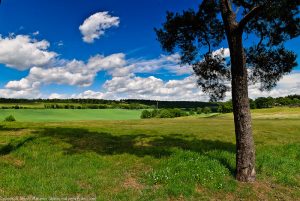
Surrey Hills landscape. Image – Surrey Hills Credit Aleksey Maksimov CC BY-NC-ND 2.0 DEED

All designated Areas of Outstanding Natural Beauty (AONBs) in England and Wales are becoming National Landscapes, including the Surrey Hills National Landscape. The new name reflects their national importance; the vital contribution they make to protect the nation from the threats of climate change, nature depletion and the wellbeing crisis, whilst also creating greater understanding and awareness for the work that they do.

This is a significant milestone for the UK and the next step in fully realising the National Landscapes’ vision to be the leading exemplars of how thriving, diverse communities can work with and for nature in the UK: restoring ecosystems, providing food, storing carbon to mitigate the effects of climate change, safeguarding against drought and flooding, whilst also nurturing people’s health and wellbeing.

The Surrey Hills National Landscape was designated an Area of Outstanding Natural Beauty in 1958, the second to be designated in the country. It covers around a quarter of Surrey, the most wooded county in England, and is situated within the London Metropolitan Greenbelt with 1.5 million people living within 10km of the landscape. With rising national pressures regarding climate change, the biodiversity emergency the mental health crisis, the Surrey Hills as a National Landscape will better protect precious habitats such as heathland, downland and woodland which are home to important species, as well as providing space for people and nature to thrive.

Kathy Atkinson, Chair of the Surrey Hills National Landscape says:

“There’s often a healthy scepticism around talk of “re-branding” and people might reasonably ask, “What’s the point?” in calling the Surrey Hills a National Landscape instead of an ‘AONB’.

Firstly, the legal status of the Surrey Hills as an Area of Outstanding Natural Beauty is unchanged. This amazing area retains the same protections in law as a National Park. As set out by the Glover review in 2019, AONBs are fragmented, misunderstood and often see even greater pressures with less resource. Glover recommended not only a renaming of ‘AONBs’ to National Landscapes, but the power which could follow in terms of a strengthened network, with increased funding, governance reform, and new shared purposes to help us fight against the challenges our protected landscapes may face.

We need to use this rebrand as a step change to how we connect with our protected landscapes. To excite and engage the widest possible public in the task of protecting the Surrey Hills, a cherished landscape that is under threat like never before. This is a critical decade for our natural world, and National Landscapes brings the opportunity to collectively reduce the impact of substantial threats from a National and localised perspective. So, I urge everyone to embrace our National Landscapes vision as a tool to help us support a healthy and thriving landscape, for nature and for people.”

Text provided by Surrey Hills National Landscape

Related Reports:

Winter walks in the Surrey wilds

Oiling the wheels of justice on Surrey Hills

Image – Surrey Hills Credit Aleksey Maksimov CC BY-NC-ND 2.0 DEED


No reservations to put reserves in “Thames to Downs”

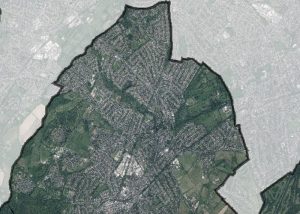
Part of Epsom and Ewell aerial view

Epsom & Ewell Council Eyes Inclusion of Local Natural reserves in the ‘Thames To Downs’ National Nature Reserve.

The Council’s Environment Committee 17th October debated an ambitious move to preserve its natural heritage and enhance biodiversity. The Council is considering the inclusion of several of its green spaces within the proposed ‘Thames To Downs National Nature Reserve’ (NNR). The council plans to report back to the committee if Natural England deems them suitable for this scheme.

The recommendation comes as a bid to consolidate and expand upon the Council’s ongoing efforts in managing biodiversity and public access within its open spaces. The move also carries the potential for national recognition, designating the council as an ‘Approved Body’ known for maintaining its land to the highest environmental standards on a permanent basis.

The NNR management criteria align with the council’s strategy of balancing biodiversity conservation with ensuring public access to these natural sanctuaries. Collaborating as part of the NNR partnership with neighboring landowners is anticipated to attract substantial external funding to aid in long-term land preservation and management.

Furthermore, inclusion in the NNR not only fulfills key service priorities but also demonstrates the council’s commitment to its statutory responsibilities. It aligns seamlessly with the ‘Biodiversity Duty’ and other environmental requirements, such as upcoming Local Nature Recovery Strategies.

The NNR status will not only showcase the borough as an exceptional place to live and work but also contribute significantly to preserving and expanding local biodiversity.

Epsom Common Local Nature Reserve (LNR), a site of national importance for nature, gained recognition as a Site of Special Scientific Interest (SSSI) alongside Ashtead Common back in 1955. In the 2005-2015 Epsom Common Management Plan, the council committed to achieving a ‘Favorable’ SSSI condition assessment for Epsom Common. Subsequently, the goal was to apply for National Nature Reserve status, encompassing the entirety of the Epsom & Ashtead Commons SSSI as part of a National Nature Reserve.

The endeavor to secure NNR status for Epsom Common LNR is well-documented in the council’s current Epsom Common LNR Management Plan 2016-2116 and the Climate Change Action Plan.

An officer explained to the committee: “We are really keen that Epsom Common joins Ashtead Common in being declared a National Nature Reserve. We’ve all been set up for that for over a decade. It’s in the management plan; it’s Council policy to do that. But Natural England has changed its approach to National Nature Reserves in the last two or three years. They have put forward the offer to work with us and other partners to form a much larger, what they would term a super-national Nature Reserve, going from the Thames at Kingston to the North Downs.”

Cllr Julie Morris (LibDem College) raised the question what legal status such a NNR would have? Could landowners within them nevertheless develop their land? The officer answered: “Epsom Common, for example, is a Site of Special Scientific Interest, and that’s the strongest legal protection that you can afford a site like that. The other sites that are being put forward are in the Green Belt. They are sites of nature conservation importance. They have ancient woodlands. All of those are material considerations for a planning application. Alistair Helwell, who is the lead person at Natural England for National Nature Reserves, does make a point of saying it is a declaration, not a designation. So it doesn’t afford greater protection, but it does afford a greater level of kudos, obviously”

National Nature Reserves (NNRs) are vital for preserving significant habitats, species, and geology while serving as invaluable ‘outdoor laboratories’ for research. These reserves offer opportunities for schools, special interest groups, and the general public to directly experience wildlife and learn more about nature conservation.

Currently, England boasts 221 NNRs covering over 105,000 hectares of land, approximately 0.7% of the country’s surface. The largest among them is The Wash, sprawling over almost 8,800 hectares, while Dorset’s Horn Park Quarry is the smallest at 0.32 hectares. The five proposed sites in Epsom & Ewell together span an impressive 455 hectares, equivalent to 13.4% of the borough’s land.

A ‘Favorable’ SSSI condition assessment was successfully attained in 2010, prompting the council to commence the NNR application process. Unfortunately, due to funding cuts at Natural England, the application was postponed for nearly a decade. It was only in 2021 that the council was approached once again by Natural England, offering renewed prospects for an NNR application. In 2022, Natural England’s approach evolved, emphasizing the creation of more extensive landscape-scale NNRs in line with the government’s ‘Making Space For Nature’ initiative.

The council has been invited to put forward other sites under its ownership/management for possible inclusion in a landscape-scale NNR stretching from the Thames at Kingston to Box Hill on the North Downs.

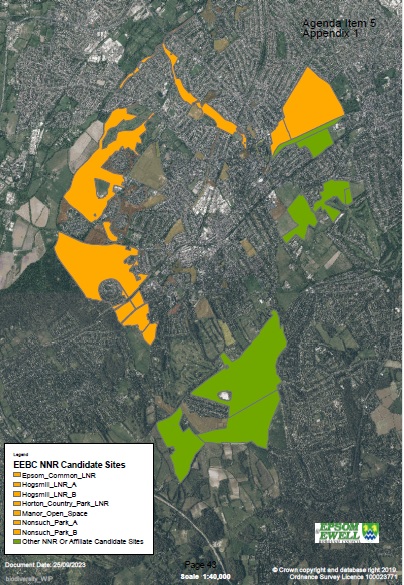
Five potential sites in Epsom & Ewell, including Epsom Common Local Nature Reserve (LNR), Manor Open Space, Horton Country Park LNR, Hogsmill LNR, and Nonsuch Park, have been identified. Natural England has suggested an affiliate status for sites primarily designated for purposes other than nature conservation, such as Epsom Downs. It’s important to note that the inclusion of Nonsuch Park will require separate permission from the Nonsuch Park Joint Management Committee.

A comprehensive partnership with a variety of landowners is envisioned, including local authorities, Surrey Wildlife Trust, National Trust, Woodland Trust, Crown Estates, Merton College (Oxford), and City of London (Ashtead Common).

The unanimous decision of the committee to include the named sites within Epsom & Ewell for consideration will be followed by assessments of their suitability and the council’s capability as an ‘Approved Body’ for managing an NNR.


Epsom Common Association: A History of Conservation and Biodiversity

Founded in 1974 by local residents deeply concerned about the state of Epsom Common and the looming threats to its existence, the Epsom Common Association has since been a stalwart defender of this natural haven. The roots of their mission trace back to the 1930s when borough and county planners contemplated the construction of an Epsom bypass, with a road cutting across the Common at the forefront of their plans.

By the 1960s and 70s, these proposals began to take concrete shape, much to the dismay of the community. In response, determined local individuals rallied to form the Epsom Common Association, a pivotal moment in the ongoing debate that would rage on throughout the following decades.

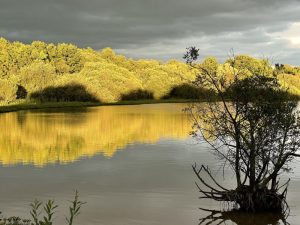
One of their early triumphs was the restoration of the Great Pond, a landmark achievement completed in 1979. Yet, their work encompassed a broader range of objectives:

  1. Preserving the Common: The Association was committed to safeguarding the Common from any potential housing or construction projects, road developments, or encroachments.
  2. Enhancing Amenity Value: Their mission extended to preserving and enhancing the Common’s amenity value for all users.
  3. Conservation of Biodiversity: Recognizing the Common’s unique status as a Site of Special Scientific Interest (SSSI), they sought to maintain and enhance a diverse range of habitats for various wildlife species.
  4. Nature Reserve Status: Their efforts also aimed at maintaining the Local Nature Reserve status and advocating for National Nature Reserve status.
  5. Contributing to Conservation: The Association played a vital role in conservation work through their volunteer team, ECoVols. These volunteers were engaged in various tasks, including scrub clearance, charcoal burning, tree planting, and bracken reduction.

To keep their members informed, the Association produces three newsletters each year, covering recent activities, wildlife observations, news, and potential threats. They also maintain an active online presence through their website and a Facebook page. See www.epsomcommon.org.uk

The Association’s governance is facilitated by a Committee, elected annually during the AGM. This Committee includes representatives from Epsom & Ewell Borough Council and the Lower Mole Partnership, ensuring collaboration and effective management.

Membership of the Association is just £3.00 per household, and an additional £2.00 for postal members, making it accessible to a wide range of residents.

Epsom Common, though no longer a pristine wilderness untouched by human influence, has been integral to the local community for centuries. From its historical use for grazing animals and gathering firewood to wartime cultivation, the Common has a rich heritage intertwined with human activity.

To guide its future as a public nature reserve and promote biodiversity, the Epsom & Ewell Borough Council unveiled a Hundred Year Management Plan (2016-2116), approved by Natural England. The Association wholeheartedly endorsed this long-term approach and commitment to biodiversity conservation.

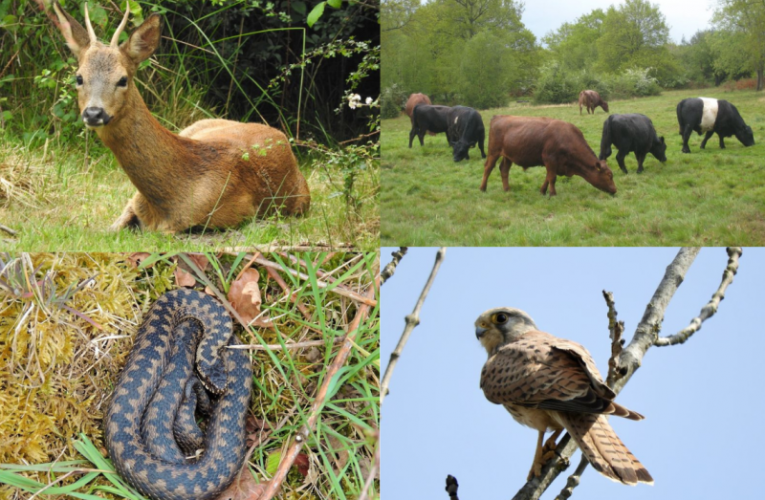
In their bid to create a mosaic of habitats and maintain a balance between grassland and woodland, the Association undertakes various management activities. These include the removal of young secondary woodland to restore lost grassland and heath, as well as the reintroduction of summer cattle grazing.

A success story of their strategy lies in the thriving butterfly population on the Common. It now hosts a range of butterfly species, from woodland dwellers like the Purple Emperor and White Admiral to grassland species like the Meadow Brown and Marbled White.

The diverse habitats have not only benefited butterflies but also thousands of other flora and fauna, including plants, fungi, insects, amphibians, reptiles, birds, and mammals.

The Association ensures active engagement with its members through events such as two annual evening meetings featuring guest speakers on topics related to the Common’s heritage and natural history.

Additionally, they organize natural history walks led by experienced naturalists, covering topics like butterflies, wildflowers, bush crickets, birds, fungi, and bats. These walks provided valuable insights into the richness of the Common’s ecosystem.

The Association’s commitment to conservation extends to the welfare of cattle on the Common, with members responsible for daily health and security checks.

Another intriguing facet of their work is charcoal production, a monthly endeavor from February to November. The charcoal is made from felled trees on Epsom and Ashtead Commons.

Finally, conservation task days, carried out from January to May and September to November, involve both hand tools and some power machinery. These efforts are conducted in close coordination with the Epsom & Ewell Borough Council and Natural England.

As the Association looks ahead, their plans include the removal of young trees to enhance wetland meadows, continued scrub and young tree removal to improve habitat for heathers and flowering plants, and hand-pulled bracken during the summer months to encourage grasses, meadow flowers, and heathers.

In sum, the Epsom Common Association stands as a shining example of community-led conservation efforts, dedicated to preserving the beauty, biodiversity, and heritage of the Epsom Common for generations to come.

You can get involved in the upcoming activities:

Sunday 15th & Monday 16th October at the Great Pond:
Removal of young trees along part of the eastern margin to open up a small wet land meadow for benefit of wild flowers and water fowl.

Sunday 19th & Monday 20th November at Bramble Heath:
Removal of scrub and young trees to maintain the open area and improve habitat for heathers and flowering plants.

Related reports:

Epsom Common Green Flagged again

Epsom Common Bird Walk Poem

Uncommon commitment to the Common


Epsom horse owners asked to take survey

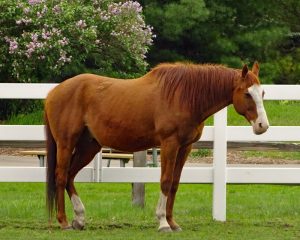
Retired race horse

Britain’s inaugural Thoroughbred Census has been initiated, inviting former racehorse owners to partake in the survey open until December 31, 2023. The primary aim is to enhance the traceability of retired racehorses.

About the Census: The census is a collaborative effort with Retraining of Racehorses (RoR), the official aftercare charity of British Racing, funded by the Racing Foundation. It receives support from World Horse Welfare and Weatherbys General Stud Book and is coordinated with experts from Hartpury University. This initiative is a crucial component of British Racing’s Horse Welfare Board’s five-year welfare strategy, ‘A Life Well Lived.’ The project’s objective is to enhance the traceability of thoroughbreds after their racing careers conclude.

The Census seeks to address a recognized data gap resulting from infrequent updates to equine identification documents (passports) once thoroughbreds transition into private ownership. By improving data accuracy, British Racing and RoR aim to provide enhanced support to owners, including access to educational resources and avenues for competition if desired. Additionally, it fosters informed and supportive communities. Furthermore, it equips the Horse Welfare Board and RoR to enhance and adapt welfare initiatives and facilitates rapid and effective communication in the event of an equine disease outbreak.

Helena Flynn, Programme Director of the Horse Welfare Board, stated, “This campaign will help us emphasize responsible ownership and the critical role every thoroughbred owner plays in ensuring the accuracy of their equine identification document (passport).”

What Information Does the Census Require? To complete the survey, owners must provide the horse’s equine identification document (passport) number, microchip number, age, current residence, second career, and other pertinent details to compile a comprehensive dataset for retired British racehorses in 2023.

Why is an Additional Objective of the Census Necessary? Typically, new horse owners are expected to update ownership information within 30 days. During their racing careers, this information is meticulously maintained by breeders, owners, and trainers in the Weatherbys General Stud Book. However, data for former racehorses significantly declines when they enter private ownership after retiring from racing, with equine identification document (passport) compliance averaging just 20% across the equestrian community. This decline may stem from a lack of awareness regarding the importance of this phase, uncertainty about associated costs, a reluctance to update documents even after a horse has passed away, and a general disinterest in participating in the process.

Therefore, an additional goal of the census is to engage with private owners to encourage them to review and, if necessary, update their horse’s equine identification card (passport). Moreover, owners of horses previously registered with licensed British trainers will be invited to register their horses for free with RoR.

David Catlow, Managing Director of Retraining of Racehorses, emphasized, “The ‘social license’ for the use of horses in sport is under increasing scrutiny, with the welfare of former racehorses after retirement being a specific concern. This initiative is a significant stride toward ensuring thoroughbreds enjoy a healthy and caring existence throughout their lives, while also providing the racing industry with pertinent data to inform future decisions.”

To complete the form, please visit: https://uwe.eu.qualtrics.com/jfe/form/SV_8bNJFzR2FB95ZlQ

Participation in the census is voluntary, but owners are strongly encouraged to join the community and contribute. Full findings will be disclosed in the first quarter of 2024.


Surrey Uni film award in the Cannes

Surrey University award winning animation

A thought-provoking animated film made at the University of Surrey, which encourages its viewers to Remember the Future, has achieved the accolade of ‘Best Environmental Film’ at the Cannes World Film Festival.  

Co-created by the University’s Institute for Sustainability to support its vision of a world where everyone can live fulfilling and healthy lives within the limits of the planet, the film seeks to draw in viewers emotionally and win hearts and minds to the need to collaborate and act. 

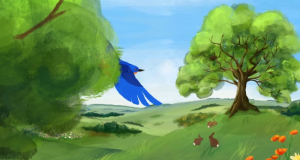
Remember the Future was produced and directed by Jon Weinbren, who is the Programme Director for Surrey’s MA in Film, Animation and Digital Arts within the University’s Department of Music and Media. The film shows a tree that is ailing because of environmental damage. The tree is saved from destruction by cooperation between an optimistic, visionary child and a songbird, delivering an upbeat, hopeful way forward. 

Professor Lorenzo Fioramonti, Founding Director of the University of Surrey’s Institute for Sustainability, said: 

“A tree is a symbolic and almost permanent thing. We see it through the seasons and ages, with a child dreaming of a future which rubs out the climate emergency. We see the solutions which are within our reach. We hope this film plants the seed and encourages people to work with each other and be connected.” 

Co-written by Tom Hill and brought to life by a team of artists led by animation director Izzy Barszcz, the film was crafted using digital natural media techniques to create an evocative water-colour feel. It also features an original song composed and performed by Surrey alumna Alice Mills. 

Jon Weinbren said: 

“We experimented with using some of the latest AI-based image generation and style transfer techniques, but the quality we were achieving wasn’t high enough. Instead, our team of animators resorted to ‘traditional’ digital painting techniques to create the hand-crafted look and feel which, along with a beautifully arresting, specially composed song, helps the film engage on a powerful emotional level.” 

Nathalie Hinds, Head of Operations and Partnerships at the Institute for Sustainability, said: 

“Achieving a sustainable world takes cooperation and inspiration, as well as technology and regulation. At Surrey, we’re working on all of these, with the Institute for Sustainability taking an active, leading role. Strategic partners of the Institute, who were lucky to have an exclusive preview of the film, gave feedback how the film not only creates a sense of urgency, but is a true beacon of hope. They hope to use it within their organisations to inspire staff and suppliers.”  

Remember the Future has been entered for other film festivals and will also screen at the Electric Theatre as part of Guildford’s Car Free Day on Sunday 24 September. Find out more about Car Free Day, watch a trailer or see how the film was made on YouTube. 

For information about the MA in Film, Animation and Digital Arts, visit the website. 


Surrey to fight Ash dieback

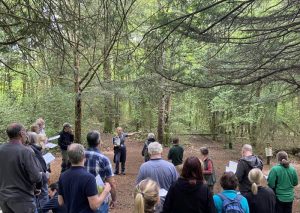
Surrey woodland talk for volunteers.

Surrey County Council will undertake a programme of woodland management across its countryside estate this autumn, with a focus on tackling Ash dieback to protect public safety where needed, as well as identifying current and future nature recovery opportunities.

As England’s most wooded county, Surrey is heavily affected by Ash dieback, a non-native fungus which weakens the structure of Ash trees, making them liable to fall in an unpredictable way. Unfortunately, there is no known cure for Ash dieback and the disease spreads rapidly, with around 80% of the nation’s ash trees anticipated to succumb to it.

While trees in higher risk areas will need to be felled in the interest of public safety, Surrey County Council recognises the amount of ecological, historical and cultural importance that woodland has in the county, as well as its contribution to biodiversity and carbon sequestration.

Residents had previously raised concerns about getting the balance right between protecting the public and protecting nature. As part of the planning process for this year’s upcoming works, several local experts have been consulted to support in developing an appropriate approach and methodology, including Surrey Bat Group, Surrey Badger Group, Surrey Dormouse Group, Save Surrey’s Countryside, Surrey Botanical Society and Butterfly Conservation Surrey amongst others. The Council will continue to liaise with local experts throughout the season in addition to its work with organisations such as Natural England, the Forestry Commission and Surrey Wildlife Trust.

Recognising the guidance provided, the Council’s approach will now focus on higher risk areas around public rights of way, car parks and roads. This approach has led to around 2400 metres of permissive path being removed from the felling programme at Sheepleas in West Horsley. Notices to divert the public away from some quieter permissive paths have been installed, an approach which follows similar action on National Trust land to minimise disturbance to biodiversity and encourage areas for wildlife to thrive.

A number of other measures are being put in place to minimise the impact of necessary works on nature including:

  • Having a qualified ecologist on site throughout the works;
  • Investing in specialist equipment and using specialist contractors to minimise disturbance;
  • Undertaking work outside of ground nesting bird season;
  • Creating new habitats for protected species such as Dormice;
  • Development of new long term woodland plans linked to the Council’s nature recovery strategy;
  • Replanting or encouraging natural regeneration of suitable tree species wherever appropriate.

Following extensive arboricultural and ecological surveys, works are anticipated to focus around targeted areas of Sheepleas (West Horsley), Newlands Corner (near Guildford), Park Ham (near Bletchingley), Norbury Park (Leatherhead/Dorking), Brockham Quarry, Beech Avenue (Effingham) and areas of the Downs Link path. All works are subject to all necessary permissions and licenses being secured, so may be subject to change. Where Ash dieback works are taking place, tree species other than Ash may also be removed for safety reasons.

Marisa Heath, Surrey County Council Cabinet Member for the Environment comments: “Ash dieback has had a devastating effect on ash trees not only across Surrey but nationally. Over the coming months we will be undertaking safety works across our countryside estate, however we will be managing this carefully and have minimised felling where we can.

“We will also be looking at how we can improve the overall quality and biodiversity of our woodland in order to develop long term woodland habitat management plans, as we understand the important role that trees play in helping us reduce the impacts of climate change and also in providing important habitats to a range of species. We have facilitated the planting of over 385,000 trees and we have plans to plant more during this tree planting season, but also to ensure we have a range of habitats for nature recovery.”

As part of Surrey’s ambition to be a carbon neutral county by 2050, Surrey County Council has a target to facilitate the planting of 1.2 million new trees (one for every resident) by 2030. Tree planting season is underway and more details on how to get involved can be found online. 

‘Show and tell’ walks are being offered to the public as an opportunity to find out more about Ash dieback and the Council’s plans to address it. Details of the events are below:

  • Beech Avenue, Effingham: 9 September, 9.30am to 11am. Meet on corner of Beech Close and Beech Avenue, KT24 5PQ. Please park respectfully in nearby roads.
  • Sheepleas, West Horsley: 9 September, 12pm to 1.30pm. Meet at Green Dene car park, KT24 5TA.
  • Newlands Corner, near Guildford: 16 September, 9.30am to 11am. Meet at White Lane car park, GU5 9BQ.
  • Norbury Park, Leatherhead: 16 September, 11.30am to 1pm. Meet by Wild About Coffee (please note there is no parking at the coffee van – use Young Street, Fetcham or Crabtree car parks and follow signs)

Booking is not required, simply turn up at the meeting location shortly before the start time. For those unable to attend site walks, there will also be public drop-in sessions during September and October with details available online.

Further details on Ash dieback works are available atwww.surreycc.gov.uk/ashdieback , including a short information video. Onsite information will also be available at each site throughout the works. 


Epsom Common Green Flagged again

Epsom & Ewell Borough Council is celebrating receiving a Green Flag Award for Epsom Common Local Nature Reserve (LNR) for the 17th consecutive year.

The news that Epsom Common LNR has once again achieved the accreditation – the international quality mark for parks and green spaces – is testament to the hard work and dedication of the team that care for the green space so that everyone can enjoy it.

Councillor John Beckett, Chair of the Environment Committee said: “Epsom Common is a beautiful and biodiverse space that we are incredibly fortunate to be able to enjoy in our borough. The Countryside Team at Epsom & Ewell Borough Council work tirelessly with volunteers and partners, including the Epsom Common Association, the Lower Mole Partnership and Natural England, to manage and protect this precious Local Nature Reserve and Site of Special Scientific Interest.

“The news that Epsom Common Local Nature Reserve has achieved the Green Flag Award for the 17th year in a row is a welcome tribute to the hard work of all the people who work year-round, rain or shine, to ensure it continues to flourish.” 

To find out more about the wonderful countryside managed by the Countryside Team at the council, take a look at the walks and tours run by the team here: What’s on | Epsom and Ewell Borough Council (epsom-ewell.gov.uk).

Keep Britain Tidy’s Green Flag Award Scheme Manager Paul Todd MBE said: “I would like to congratulate everyone involved at Epsom Common LNR in achieving a Green Flag Award.

“Epsom Common LNR is a vital green space for the community in Epsom & Ewell, bringing people together and providing opportunities to lead healthy lifestyles. Epsom & Ewell staff and volunteers do so much to ensure that it maintains the high standards of the Green Flag Award and everyone involved should feel extremely proud of their achievement.”

The Green Flag Award scheme, managed by environmental charity Keep Britain Tidy under licence from the Department for Levelling Up, Housing and Communities, recognises and rewards well-managed parks and green spaces, setting the benchmark standard for the management of green spaces across the United Kingdom and around the world.

A full list of Green Flag Award-winning parks and green spaces is available here.

Related Reports:

Epsom Common Bird Walk Poem

Flagging Up Epsom Common

The Green Flag Award Scheme (http://greenflagaward.org/) is run by the environmental charity Keep Britain Tidy, under licence from the Department for Levelling Up, Housing and Communities, in partnership with Keep Scotland Beautiful, Keep Wales Tidy and Keep Northern Ireland Beautiful.

Keep Britain Tidy is a leading environmental charity. They set the standard for the management of parks and beaches, inspire people to be litter-free, to waste less and live more sustainably. They run campaigns and programmes including the Great British Spring Clean, Eco-Schools, Love Parks, Eco-Schools, the Green Flag Award for parks and green spaces and the Blue Flag/ Seaside Awards for beaches. To find out more about Keep Britain Tidy and their campaigns and programmes, visit www.keepbritaintidy.org.

Any green space that is freely accessible to the public is eligible to enter for a Green Flag Award.  Awards are given on an annual basis and winners must apply each year to renew their Green Flag Award status.  A Green Flag Community Award recognises quality sites managed by voluntary and community groups. Green Heritage Site Accreditation is judged on the treatment of the site’s historic features and the standard of conservation.


Reviving nature by the M25 in Leatherhead

Wildlife Aid Centre

A £2.8million grant has been awarded to a wildlife charity as it aims to fulfil its founder’s last wishes.
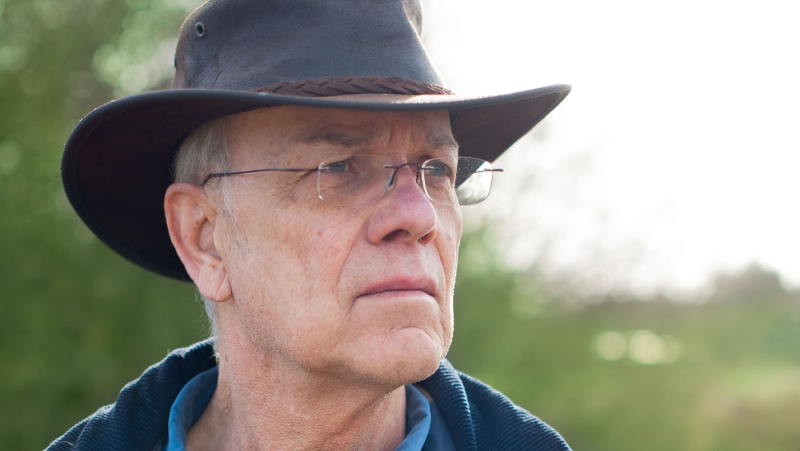
The Wildlife Aid Foundation, based in Leatherhead, was founded 40 years ago by Simon Cowell.

The money, which Surrey County Council’s cabinet approved today (Tuesday 25th July) will be used to build a community hub for hosting school, college and community groups, as well as family sessions and talks. The £2.8m represents just less than a quarter of the project cost, with the remainder being raised by the charity.

The Wildlife SOS star, who was diagnosed with terminal cancer in 2022, launched a Simon’s Last Wish appeal to help the charity after his death.

Documents for the cabinet meeting, which made the decision on awarding the funding as part of the Your Fund Surrey money that community projects can bid for, say the project has the “potential to have a long-lasting positive impact on the environment and wildlife in Surrey”.

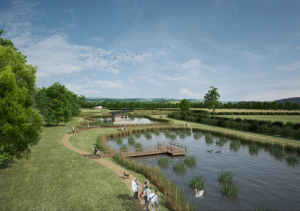
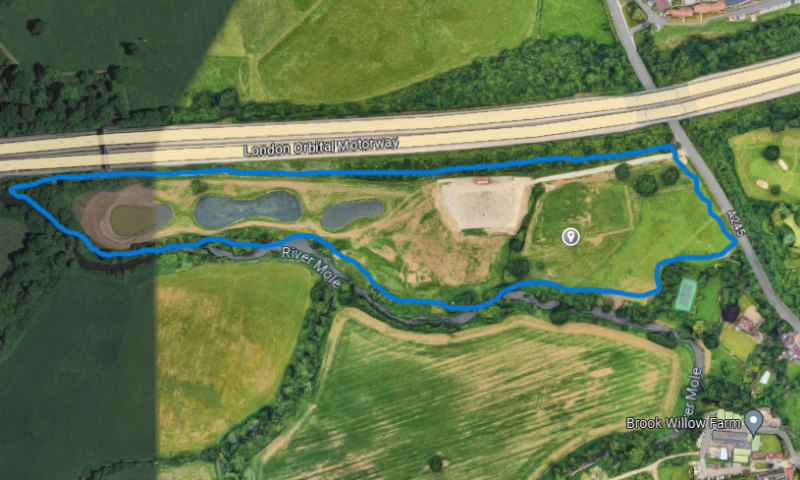
A planned wildlife centre would restore land bordered by the M25 and the River Mole, and give the charity a future rescuing and rehabilitating animals in Surrey.

The Wildlife area between River Mole and clockwise carriageway of M25

Mr Cowell said the charity had got far bigger than he ever thought it would when he founded it 40 years ago and praised the 400 volunteers at the charity.

He told the LDRS earlier in the year: “They just do an amazing job, and without them we would not be here. It’s as simple as that.”

On his cancer diagnosis, Mr Cowell said he was in “total denial of the whole thing”. He said: “We all think we won’t get it, and when you do get cancer, you’ve got two choices. You sit in the corner and sulk, or you just ignore it and get on with it while you can. So I’ve done that, basically.”

Emily Coady-Stemp LDRS


Epsom and Ewell Times adds:

After the grant was announced Simon Cowell said: “It’s an astonishing fact that a third of Surrey’s biodiversity is either locally extinct or heading that way. The power of the Wildlife Aid Centre shows that, by all of us working together, we will be able to change this. We will inspire visitors to carry out regular, small actions which will have significant, positive impact on the environment. And by all of us doing it, our joint strength is enormous.

This amazing funding means we can finish creating the habitats and build a visitor centre that will welcome everyone. I am thrilled that Your Fund Surrey is supporting the Wildlife Aid Centre; together we will create a replicable movement for environmental good that is driven by our communities.”

Surrey County Council Deputy Leader and Cabinet Member for Communities and Community Safety Councillor Denise Turner-Stewart said: “I would like to congratulate the Wildlife Aid Foundation who have been successful in their application to Your Fund Surrey’s Community Project Fund.

“This is fantastic news for the Wildlife Aid Foundation and indeed for Surrey’s residents. This is a truly ambitious and inspiring community legacy project. The new centre aligns with our ambition to promote a greener future in Surrey, to help restore and protect the future of the county’s natural environment and encourage nature and wildlife to thrive. It will also offer huge benefit, opening the doors for people of all ages and backgrounds to learn more about wildlife conservation.”

A £2.9m award given to Guildford’s Yvonne Arnaud Theatre in June saw the total amount of money given out from the pot reach £10m since its launch in November 2020.


The Wildlife Aid Foundation is a charity dedicated to the rescue, care and rehabilitation of sick, injured and orphaned animals. Based in Leatherhead, Surrey, UK, the centre operates Surrey County’s only wildlife hospital (one of the three largest such hospitals in the UK) and maintains a referral service for wildlife hospitals throughout Europe. The organisation also carries out environmental activist and educational roles. Wildlife Aid has attracted media attention for its rescues of photogenic wild animals like young foxes and baby badgers; Animal Planet’s TV program Wildlife SOS chronicles the activities of Wildlife Aid volunteers as they rescue imperiled animals


Surrey cows driven by solar powered GPS

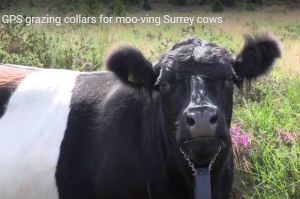
Surrey cow with GPS collar

Ground-breaking GPS technology is now being used on cattle across Surrey County Council’s Countryside Estate at Chobham, Wisley and Puttenham Commons to help with conservation grazing and benefit biodiversity.  

‘Nofence’, is the world’s first virtual fencing for grazing cattle, helping to control where they graze without the need for traditional electric fencing. The new technology helps to better target exact grazing areas for ecological enhancements and saves time and money by not building, moving and maintaining traditional fencing. 

GPS collars are fitted to adult cattle and land managers map out virtual geographic boundaries of where cattle can go via an app. If cattle enter an area they are not allowed to go, the collar emits audio signals which increase in pitch until eventually a small electrical pulse is physically experienced. The cattle quickly learn that increasing levels of sound mean they need to change their direction of travel. Land managers receive regular alerts to keep track of where each member of the herd is. Cattle collars are individual to each cow and charged using an inbuilt solar panel.  

The new system, approved by veterinary professionals, has been successfully initiated by Surrey Wildlife Trust who undertake the conservation management at Chobham and Wisley Commons and the Hampton Estate who own Puttenham Common.  

Marisa Heath, Surrey County Council Cabinet Member for Environment says: “We are delighted to be working in partnership with Surrey Wildlife Trust to make smart choices that make big differences to conservation. This technology works brilliantly on our large, open countryside sites, allowing us to successfully graze much wider areas of land. Not only does it save money but more importantly it hugely benefits biodiversity. At a time when nature is in global decline it is vital, we grab hold of new technologies like this to safeguard Surrey’s countryside for generations to come.” 

Surrey Wildlife Trust Conservation Manager Adam Bolton says: “From training the animals and drawing up management plans to securing the backing of government agencies and other partners, the introduction of no-fence conservation grazing in Surrey has been a long but important journey for our team.  It’s great to be working with Surrey County Council to help preserve the beauty and biodiversity of Chobham Common, and to pioneer a new phase in the conservation of this special site.”

Conservation grazing plays a vital part in managing Surrey’s countryside sites for wildlife and helps to promote biodiversity. It can be carried out on many types of land including woodland, scrub, wetlands and grassland. Grazing animals have shaped our landscapes for generations and are the most effective and sustainable way of maintaining habitats.  

An example of how the new technology is already benefiting Surrey’s countryside can be seen at National Nature Reserve (NNR), Chobham Common which is home to rare heathland plant species, Marsh Gentian. This plant grows in wet, humid heath which is difficult to install stable fencing. Surrey Wildlife Trustcan plot the plant location and install virtual barriers so cattle graze elsewhere, protecting the clusters of plants.