Epsom and Ewell Times

Current Front Page

ISSN, LDRS and IMPRESS logos

Surrey’s Police and Crime Commissioner re-elected

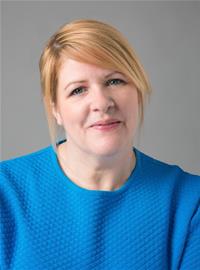
Lisa Townsend

The result of the 2nd May 2024 election for Surrey’s Police and Crime Commissioner was announced Friday and the Conservative Candidate, Lisa Townsend, was re-elected despite a substantial drop in turnout.

The re-elected Commissioner vowed to continue supporting a “back to basics” approach to policing in Surrey. She received 95,538 votes in Thursday’s PCC election. Paul Kennedy for the Liberal Democrats closed the gap significantly. Trailing by 12% points in 2021 he narrowed Lisa Townsend’s lead to 5% points this time round.

Epsom and Ewell‘s own candidates fared honourably with Kate Chinn for Labour narrowly ahead of independent Alex Coley with 42, 813 and 42,052 votes respectively. Ms Chinn is Borough Councillor for Court Ward and Mr Coley for Ruxley Ward.

The result was announced in Redhill Friday afternoon after votes from across the county were counted.

Ms Townsend, who has served as Commissioner for more than three years since winning in 2021, vowed to continue supporting Surrey Police’s renewed focus on issues that matter most to residents, such as tackling anti-social behaviour, shoplifting, and targeting persistent offenders.  

She said the Force now has more officers than ever before, and under the leadership of new Chief Constable Tim De Meyer, they are concentrating on combatting those crimes that matter most to the Surrey public.  

Chief Constable Tim De Meyer said: “Surrey Police warmly congratulates Lisa Townsend on her re-election as Police and Crime Commissioner. We look forward to continuing to work with her on challenges such as tackling violence against women and girls, improving our response to calls from the public and bringing more offenders to justice.”  

Turnout was 29.9 per cent, compared to 38.8 per cent in the last Police and Crime Commissioner election in 2021. The total number of verified ballot papers was 265,682 from a total electorate of 888,083.

Related reports:

Surrey’s next Police and Crime Commissioner will be?

Epsom and Ewell candidates dominate Police Commissioner election

Clash Over Funding and Priorities in Surrey PCC Race


From blow your hair to blow your mind?

NESCOT VR simulator

Nescot college in Ewell, Surrey is investing £650,000 to transform a hair studio on campus into a virtual reality (VR), immersive space for its students. The state-of-the-art technology, currently being installed, will be used across a wide range of courses on offer at Nescot and includes driving simulators and immersive learning spaces which work with a variety of artificial intelligence (AI) tools. This will allow students to gain specialist skills and experiences, like driving a forklift truck, or navigating a busy A&E ward, without even leaving the classroom.

Nescot will have a range of cutting-edge technology, including an Igloo, immersive room, and vehicle simulators. The Igloo is cylindrical, six metres in diameter and features a 360-degree projection system that can ‘transport’ groups of students around the world. It offers things like virtual field trips, design opportunities and gaming development. It can also recreate complex activities or hazardous environments so students can safely learn.

A suite of four advanced simulators will provide vehicle handling training for a wide range of machinery, from cranes to fire engines.  These simulators, alongside virtual reality headsets, will mean students can work together to refine their driving or operation skills in a realistic scenario where multiple machines or vehicles are in use.

The immersive room has a projection system which equips all the walls with screens. Two of the screens are interactive and respond to touch, creating a hands-on learning experience. Two ultra-high-definition screens are also incorporated, and cameras enable instructors and students to magnify objects of interest and project them onto any of the four screens, facilitating discussion. The technology also brings remote learners into the classroom via a dedicated video call screen.

The facility further cements Nescot’s reputation as a hub of innovation, having recently opened robotics, AI and cyber security facilities as part of its Institute of Technology. The staff/student hair studio, which was a commercial salon and not a learning space for students, has already moved out of the space and has been relocated nearby. There is no impact at all on the Nescot hairdressing course, which is still a valued part of the curriculum.

Julie Kapsalis, CEO and Principal at Nescot said “We pride ourselves on innovation, and giving our students the best experience at Nescot, so we’re adopting this cutting-edge technology which will be a game changer. It can virtually transport students around the world to learn, allows them to safely practice dangerous scenarios, and is a fun and exciting way to boost motivation, creativity, and engagement. We can’t wait to get it installed.”

Somayyeh Clifton, Head of Quality Improvement & Innovation at Nescot said “This is not just for students doing IT related subjects, we expect it to be used across the whole curriculum, giving students the skills and experience they need to succeed in the modern world. We’ve come a long way since teaching from the front of the room and we really value the importance of learning through experience. We’re keen to get prospective students along to our open days to find out more about this, and what we’ll have to offer in the next academic year.”

Julie and Somayyeh are both part of AI in Education initiative, with Julie sitting on the Strategic Board and Somayyeh on the Practitioners Panel. AI in Education aims to support and advise schools and colleges so they can maximise the benefits of AI and minimise the risks.

The funding to create the immersive space has been provided from the Government’s Local Skills Improvement Fund, a project which aims to support local people into work. Nescot is working with other local colleges and universities to better support the skills needs of the labour market in key areas identified by local businesses – CreaTech, Advance Manufacturing, Engineering and Construction, Digital, and Employability and Professional skills.

As well as being beneficial for Nescot students, the college will be encouraging local businesses to get involved, by using the technology to train staff. Partnerships with business and enterprise are invaluable for both parties as organisations get to access cutting edge training and learning resources, plus a pool of talented, experienced students who can enter the workforce via apprenticeships, work placements and post-college recruitment.

Nescot offers college courses for school leavers and adults, with a wide range of career-focused vocational courses including Animal Care, Business, Computing and IT, Construction, Performing Arts, Childcare, Health & Social Care and Beauty Therapy. The college has two events coming up, where prospective students can see what’s on offer, and learn more about the immersive classroom as it’s being built.

  • Open evening, Wednesday 22 May 2024, 4.30 – 7.30pm
  • Summer fair, Saturday 15th June 2024, 10.00am – 2.00pm

To find out more, call 020 8394 3038, visit www.nescot.ac.uk or email adviceteam@nescot.ac.uk

Local businesses interested in using the immersive classroom for training, or working with the college on apprenticeships, work placements or recruitment should contact businesscentre@nescot.ac.uk or call 020 8394 8593.


Meat-free Mondays coming to all Surrey schools?

Three children with school dinners

Meat-free and plant-based options could be mandated across Surrey schools every Monday according to new council guidance. Only some Surrey schools currently participate in a form of ‘meat-free Monday’ so the new food strategy would expand its remit.

The new policy forms part of the so-called Surrey Healthy Schools initiative. The initiatives aims to address food insecurity, reduce climate impact of the local food system and support the local population to keep a healthy weight by improving the accessibility and affordability of nutritious food.

Speaking at a Surrey County Council (SCC) meeting on April 29, Officer Marisa Heath said: “I don’t think meat-free Mondays is too much to ask for one day a week. We’re still giving six days a week for people to make other choices so I don’t think it is draconian or heavy handed.”

Council officers said the preferred menu would prioritise fruit, vegetables and legumes- rather than processed, plant-based meat alternatives. Only schools signed up to the Surrey Healthy Schools will be part of the initiative, including all SCC public schools and some private schools.

Framing the programme as being to “educate and not dictate”, Cllr Mark Nuti (Conservative/ Chertsey) said the policy is empowering individuals and families to make informed and healthy food choices.

The committee discussed the importance of sustainable and locally sourced farming, as well as cutting meat to decrease carbon emissions and environmental resources. It was noted that ‘plant-based’ food was not always “nutritional”, but that children needed fibre from fruit and vegetables.

The new strategy aims to increase children’s nutrition and combat obesity, as well as increasing sustainability and environmentally conscious eating. Around 1,210 of 9,355 Year 6 pupils measured in Surrey were classed as obese or severely obese in 2022-23, NHS figures show.

Healthy food, such as fruit and vegetables, are often out of reach for many parents on low incomes who prioritise affordability over nutrition. The amount of vegetables being purchased in the UK has fallen to its lowest level in 50 years, according to The Food Foundation.

“Levelling up is not just about buildings, it’s about people,” Officer Marisa said. “It’s about their wellbeing, mental and physical, and allowing them to reach their [potential].”

Councillors argued the strategy must be adaptable to children who may suffer with eating disorders, have neurodiversity requirements or medical issues, and not be able to eat (or do not want to eat) plant-based food.

In a heated debate, concerns were raised about the policy going ‘too far’. Cllr Trefor Hogg (Conservative/ Camberley East) said an extension to adults and elderly people with dementia could mean “being confronted with things they just can’t cope with”.

He added: “My particular concern of those who are in any form of social care have had their liberties and freedom restricted to some degree. It’s very very important that they have a full choice. This is particularly important where there are neurodiverse and mental health issues as well. I think we should be very explicit on the subject. I would be very concerned about the adults and the elderly being confronted with things they just can’t cope with.”

Meeting documents stated the eating environment should be inclusive and social as restricting to plant based only options may make some feel excluded.

Image: Creator: Chris Radburn | Credit: Pa Photos, NTB scanpix License details


Clash Over Funding and Priorities in Surrey PCC Race

4 PCC candidates montage

On the eve of the Surrey Police and Crime Commissioner election, candidates are locked in a battle of ideas over funding allocations and the strategic direction of law enforcement in the county.

Independent candidate Alex Coley, former barrister Paul Kennedy of the Liberal Democrat Party, and Kate Chinn representing the Labour Party have all weighed in on the key issues facing Surrey’s police force and incumbent Commissioner Lisa Townsend for the Conservative Party responds.

Alex Coley, (Residents Association Councillor on Epsom and Ewell Borough Council for Ruxley Ward) a vocal critic of current spending practices, has campaigned on the issue of financial management within the force. “Over the past six weeks Surrey has been my treadmill, six weeks of walking and talking to residents all over this county,” Mr Coley stated. He emphasized concerns raised by residents about the allocation of resources, particularly in light of a significant underspend by the Police and Crime Commissioner (PCC) office. “The number one question from residents has been: ‘how are you going to pay for more police?’” Coley highlighted, pointing to unutilized funds that he argues should be directed towards bolstering the police force.

Furthermore, Mr Coley raised eyebrows with his critique of what he termed “casino politics in policing,” alluding to financial dealings between the PCC and Surrey County Council. “I don’t think residents want a PCC acting like an investment bank that dabbles in the gilt markets, backed by your council tax,” he asserted, painting a picture of fiscal irresponsibility that he vows to rectify if elected. Full statement HERE.

In contrast, Paul Kennedy of the Liberal Democrat Party takes a different approach, drawing on his legal and financial background to advocate for prudent fiscal management. “The challenge of funding more community policing requires professional discipline, not simplistic solutions,” Kennedy remarked. With experience as a barrister and an accountant, Kennedy positioned himself as a candidate with the expertise necessary to navigate the complex financial landscape of law enforcement.

Mr Kennedy defended the current funding structure of Surrey Police, stressing the importance of maintaining a buffer to address cash flow fluctuations. “Temporary surpluses can’t just be run down as some have suggested,” he cautioned, echoing sentiments of fiscal conservatism that have resonated with some voters. Full statement HERE.

Meanwhile, Kate Chinn (Epsom and Ewell Borough Councillor for Court Ward) of the Labour Party emphasized the human aspect of policing, focusing on recruitment and retention as key priorities. “Of course the budget needs scrutiny and increasing, but as Alex Coley identifies it is ensuring enough officers are recruited and retained that is the real priority,” Ms Chinn argued. She outlined a series of measures aimed at bolstering recruitment and supporting existing officers, including streamlining the recruitment process and providing adequate mental health resources.

Ms Chinn’s vision for policing centred on valuing and supporting front-line officers, with a pledge to advocate for fair pay and long-term investment in law enforcement. “A Labour government would ensure police pay recognizes the value of the work our officers do and commit to long-term investment,” she asserted, positioning herself as a champion of the men and women who serve on the front-lines of policing. Full statement HERE.

As the candidates make their final pitches to voters, the future direction of policing in Surrey hangs in the balance. With each candidate offering a distinct vision for the role of the Police and Crime Commissioner, residents face a critical decision that will shape the county’s law enforcement priorities for years to come.

A response from Conservative candidate and current Police and Crime Commissioner, Lisa Townsend, was awaited at the time of going to press and just came in minutes after…….

Lisa Townsend refutes Mr Coley’s claims: “There is no loan to Surrey County Council. The £43m is the amount of cash held at the 31/8/23. This represents reserves of about £30m as well as cash held due to the timing of council tax receipts, grants, payments out, etc. Rather than holding all our cash in a single bank we pool it on an overnight basis with SCC who add it to their spare cash and invest it in overnight money market deposits with many banks. This reduces the risk as this pooled money is spread over a larger number of institutions than if we were to do this alone, and it also reduces the cost of management.”

In respect of underspending the Commissioner points out the small underspend in proportion to the total budget and how it arose from a higher staff vacancy rate than expected. Full statement HERE.


Full eve of poll statements of PCC candidates

Alex Coley – Independent

Over the past six weeks Surrey has been my treadmill, six weeks of walking and talking to residents all over this county. The number one question from residents has been: “how are you going to pay for more police?”

One resident, a retired police officer, was about to put my leaflet in the recycling bin when he asked me that very question. I told him that the Surrey Police & Crime Commissioner is loaning £43m to Surrey County Council. I told him the PCC underspent by £8.7m last year and is on course to underspend £3m this year, because of vacancies and projects falling behind. The leaflet did not go in the bin. That retired officer was horrified to hear how much money is available but not being used. I want to put that money to work, it’s the reason I am standing for Police & Crime Commissioner.

I don’t think residents want a PCC acting like an investment bank that dabbles in the gilt markets, backed by your council tax. Do you really want casino politics in policing? Surrey County Council has £0.6bn of debt which it expects to increase by a further £1.2bn. Let’s just hope they don’t go bust like so many councils have and take tens of millions of pounds of police funding down with them. It’s public money, your money, that you pay for your police service, which is desperately stretched. I want to use that money for policing, but I need to get elected first.

Is it any wonder a third of police officers have left since April 2020 and a fifth say they want to leave. Surrey Police has an establishment figure of 2,263 police officers, with 1,000 of them new recruits. This means almost half of our police officers are probationers looking for leadership. Let’s not gamble with their future.

The PCC boasts of bringing in £10m of funding to Surrey Police. Last year the Audit & Governance Committee at Surrey County Council showed a movement of £10m from Surrey Police into SCC’s treasury management.

In response to a written question from me the Office of the Police & Crime Commissioner advised: At the Surrey Police triennial review for civil staff pensions, as at 31st March 2022 the actuary determined historic deficits to be:
2023/24 – £1.612m
2024/25 – £1.671m
2025/26 – £1.733m
The actuary also determined that paying off this historic pension deficit would benefit from a discount amounting to £224k, equivalent to 7 new police officers.


Kate Chinn – Labour

Of course the budget needs scrutiny and increasing  but as Alex Coley identifies it is ensuring enough officers are  recruited and retained that is the real priority. Only then can the money be spent so projects and initiatives are delivered. If Surrey Police can’t do that it doesn’t matter how much money there is in the pot. 

I would increase  police recruitment by: simplifying the recruitment process, providing more resources for vetting and putting support in place so keen candidates who fail  can reapply and succeed. 

I would ensure retention by, providing adequate supervision and mentoring for officers. Ensure resources were in place to protect their mental well-being and mental health professionals are available to suppors officers to process any traumatic events they encounter in the challenging role of policing. All staff must  be supported in their  career development and enabled to develop pathways into specialist areas with the training needed to succeed. Senior staff must have incentives to encourage retention, 

For a government to retain dedicated hard working officers, motivate new recruits and slow the increasing falls in officer it must value policing with actions not words. 

A Labour government would ensure police pay recognises the value of the work our officers do and commit to long term investment. They would value  the police for the work they do everyday to protect our communities’. 

If elected I would be a Labour PCC in a Labour government giving Surrey police the respect they deserve.


Paul Kennedy Liberal Democrat

The challenge of funding more community policing requires professional discipline, not simplistic solutions. As a former barrister, I’m best placed to address the criminal and public law challenges of the PCC role. And to boost Surrey Police’s performance and morale, after 10 years overseeing public interest bodies.

I’m also a former accountant and actuary. I’ve chaired my local council’s audit committee; and for 3 years I’ve served on Surrey police and crime panel’s finance committee which scrutinises the PCC’s budget.

Surrey Police’s budget is £310m a year, mostly salaries and services but also capital projects. Funding is primarily Government grants and charging Surrey residents the highest Council Tax in the country, plus income from lending officers to the Met and renting out police cells to the prison service.

As a small organisation facing cashflow fluctations, it makes sense for Surrey Police to share Surrey County Council’s larger banking and treasury management arrangements. Temporary surpluses can’t just be run down as some have suggested. Prudent treasury management principles require every organisation to hold a buffer to meet monthly expenditure requirements plus a contingency, and Surrey Police is no exception.


Lisa Townsend – Conservative and current Surrey PCC

Since I was elected as Police and Crime Commissioner in 2021, Surrey now has more police officers than ever before, and it has been great to hear from residents across the county that this is making a difference in our communities.

I believe the £43million figure comes from Cllr Coley’s misunderstanding of how the Police receive council tax each year – the extra £13million represents surplus cash due to the timing of council tax receipts at the time of the Budget meeting in February.

There is no loan to Surrey County Council. The £43m is the amount of cash held at the 31/8/23. This represents reserves of about £30m as well as cash held due to the timing of council tax receipts, grants, payments out, etc. Rather than holding all our cash in a single bank we pool it on an overnight basis with SCC who add it to their spare cash and invest it in overnight money market deposits with many banks. This reduces the risk as this pooled money is spread over a larger number of institutions than if we were to do this alone, and it also reduces the cost of management.

With regard to underspend, Surrey Police is a large organisation with a budget of over £300million and more than four thousand employees. When the Chief Constable and his finance team set the budget, they make every effort to consider as many possible scenarios and circumstances as possible, including how many officers and staff are expected to leave or join. These forecasts are, understandably, not always entirely accurate and for the year 2022/23 a higher than expected staff vacancy rate contributed to a large underspend. For the year 2023/24 the Force underspend is projected to be around £1million. Cllr Coley sat on Surrey’s Police and Crime Panel for almost a year and was present at the latest budget meeting so is aware of these figures and the reasons behind them.

When it comes to reserves, it is prudent practice for most organisations to hold some money in reserve to deal with unexpected costs or emergencies. Major incidents and investigations such as the Covid-19 pandemic, a period of prolonged protest, cyber attack or a terrorist attack would require large amounts of money to be spent quickly, without a guarantee that these costs will be paid back by the Government. The latest financial information from Surrey Police shows that the reserves are currently predicted to be £30.3m. Given the annual budget for 2024/25 is nearly £310m – this represents around 10% or the equivalent of about 5 weeks budget.

This is less than the average for police forces nationally, which stands at 13%, and significantly lower than our neighbouring forces and Borough and District Councils in Surrey who typically who hold up to 150% of their annual budget in reserve. I’m not entirely comfortable having a lower reserve than other forces but I have to balance the demand on taxpayers with the money available for use in an emergency and I believe that 10% is fair given the other pressures. As we have seen in Surrey and beyond in recent years, over-spending and imprudent management of finances and reserves is the fastest way to become a failing council and I will do all I can to ensure that Surrey Police are not put in this position.

Whilst it sounds lovely to spend this reserve amount on additional officers, this would only be possible once. Of course, once reserves are spent, they are gone forever, meaning not only could these officers not continue to be funded, but Surrey Police would also be in a difficult position is any crisis or challenge occurred.


Surrey Uni joins top beam team

image of Ionoptika's J105

The creation of a first-of-its-kind imaging system at the University of Surrey could help the UK lead a revolution in materials sciences. The new facility promises a better understanding of the effects of pharmaceuticals and could eventually lead to better drug development.  

Thanks to a £3 million grant from the Engineering and Physical Sciences Research Council, Surrey will work with the UK SME Ionoptika and the University of Manchester to deliver a new Multimodal Ion Beam Imaging Facility, which will allow researchers and businesses to understand materials at an unprecedented microscopic level. 

Professor Melanie Bailey, Principal Investigator of the project from the University of Surrey, said: 

“The fact that Surrey and, indeed, the UK has the ambition to build this truly unique facility should not only excite researchers in academia and industry, but it signals that we are serious about breaking new ground in a range of scientific areas.” 

The facility will house a “multimodal 3D elemental and molecular imaging system at a sub-micron scale”. This highly advanced system, similar to a powerful microscope, will be able to see the tiniest details of materials and molecules, smaller than a speck of dust.  

The new system will be the first in the world to use beams of charged particles at high and low energies to measure biological systems and materials. The high-energy beams will be delivered by a particle accelerator at the UK National Ion Beam Centre, a national research facility funded by EPSRC and led by Professor Roger Webb at Surrey. The system will produce X-rays, gamma rays, and particles, and the combination of this information will give a detailed map of the elemental and molecular makeup of materials. 

Professor Roger Webb, co-investigator of the project and Director of the Surrey Ion Beam Centre, said: 

“This is a really exciting development for the Surrey Ion Beam Centre. We have been a national research facility since 1979, and we support over £100 million in funding from more than 30 universities. This is one of several upgrades to our centre, and we are looking forward to opening our doors to researchers across the UK to make the most of this investment.” 

Surrey’s new facility is expected to benefit more than 25 UK universities and companies in health, energy, technology, and engineering. 

 Professor Paul Townsend, co-investigator of the project, said:

“There is currently nothing in the world quite like this new facility of ours. It signals to the global scientific community that the UK means business. We are confident that we will attract researchers worldwide to use this facility, giving the UK an edge in materials science.” 

Along with medical breakthroughs, Surrey’s researchers believe the facility could help the energy sector create more efficient solar cells and durable batteries. The team also hopes this project will allow them to understand pollutants better and develop new ways to reduce climate change.  

Paul Blenkinsopp, Managing Director of Ionoptika, said: 

“Ionoptika is delighted to have been chosen to build the new imaging system in collaboration with Surrey. Whilst an SME, we have established ourselves as global experts in ion beam technology over the past 30 years and will be very proud to bring our decades of imaging expertise to this unique facility.” 

This project contributes to the United Nations Sustainable Development Goals (SDG), especially SDG 3 (Good Health and Wellbeing), SDG 7 (Affordable and Clean Energy) and SDG 13 (Climate Action). 

Image of Ionoptika’s J105


Police post taken down before election

Surrey Police Commissioner post

The Surrey Police and Crime Commission social media team were made to remove a graphic from Twitter, now X and Facebook after a complaint it could influence the May 2 elections.

The post was made during the run up to the election when public bodies are supposed to remain completely impartial to avoid favouring any one candidate or using taxpayer money to look to influence voters.

The message said it had re-opened funding for local services that promote community safety, support children and young people and help reduce reoffending in Surrey. It was accompanied by an image that showed more than £2m had been provided to support local services in the last financial year.

The complainant, the Liberal Democrat Councillor for Bagshot and North Windlesham Richard Wilson, felt this was a breach of  pre-election publicity rules.

Writing to the Monitoring Officer, he said: “Any reasonable person would conclude that the post, in particular its use of the graphics, is likely to improve the electorate’s opinion of the incumbent PCC ( Police and Crime Commissioner). This constitutes a breach of the guidance and, therefore, of the rules laid out in the Acts. 

“It would be possible to direct readers to the funding website without publicising the £2m which has already been provided. This piece of information is wholly unnecessary and its purpose is clearly to promote the PCC. This is a use of public resources to influence an election.”

After receiving the complaint, Alison Bolton, chief executive and monitoring officer of the Police and Crime Commission, told the communication team to delete the images but felt the text was fine to be republished –  and did not merit an apology.

Media policies had been reviewed ahead of the pre-election period and the use of social media and their website has been “significantly” limited, she added.

The posts were scheduled, she said, as the funding process opened on April 1 and they wanted to give organisations the greatest amount of time possible to apply. She said: “Your view that the posts are “likely to improve the electorate’s opinion of the incumbent PCC” is arguably a subjective one. I can assure you that the posts were made in good faith by comms colleagues with the intention of promoting a funding opportunity and not, as you suggest, to “promote the PCC. “We had purposefully not made reference to the incumbent PCC or included any images of her.

“That said, I recognise that the aim of promoting the funds could have been achieved with a simpler post and as such, I have asked my colleagues to remove the posts that include the ‘graphic’.  We will re-issue the link, but I don’t believe that issuing an apology is necessary.”

A spokesperson for the Office of the Police and Crime Commissioner said it restricted its output to some “business-as-usual work” in line with pre-election guidelines.

They said: “On April 3, the Communications Team posted a message on social media highlighting the process for which organisations and services can apply to our funding streams which opened for the new financial year two days earlier on April 1.

“These streams provide vital support for some of the most vulnerable people in our communities including victims of crime, young people and domestic abuse survivors as well as funding important projects that enhance community safety across Surrey. 

“Allocating these funds and commissioning these important services is a significant role that the OPCC undertakes and we wanted to give local organisations the greatest amount of time possible to apply. The message posted did not name or reference the current PCC or contain any image of her. However the message did have an accompanying graphic which highlighted the amount of funding the office had provided to support local services during the last financial year.

“The post was created in good faith with the intention of promoting the funding opportunity and was not designed to promote the current Commissioner. However upon review by the OPCC Monitoring Officer, the decision was taken to remove the graphic and replace it with one that had removed the reference to the amount of funding given last year to avoid any inference during the pre-election period. 

“The current commissioner was not aware and did not have any involvement in the creation of the original message.”

The elections for the Surrey Police and Crime Commissioner take place countywide on Thursday May 2. Counting takes place the following day with the results expected around 2pm.

The vote takes place across Surrey with the count taking place the following day with the result expected to be announced between 3pm and 4pm.

Related reports:

Surrey’s next Police and Crime Commissioner will be?

Epsom and Ewell candidates dominate Police Commissioner election

Surrey Police funding: not a fair cop

The Cost of Surrey’s Crime Commissioner: “It’s criminal”?


Leatherhead residents call for more policing

Jen Royal Leatherhead (Image Chris Caulfield)

A serious assault that left a man fighting for his life has left a community in shock – with some saying there aren’t enough police officers and others calling for greater CCTV provision.

On Sunday night (April 21) a man was attacked near a Leatherhead nursery by up to four teenagers.

Surrey Police has said an 18-year-old man and a 17-year-old boy have been arrested on suspicion of attempted murder with enquiries ongoing to identify and locate two other people.

Surrey Police say they do not anticipate a wider risk to the public at this time.

The violent attack, in Cleeve Road, comes on the eve of the May 2 Surrey Police and Crime Commissioner elections. with people able to cast their vote on how crime is tackled and to make sure the police provide a good service. 

The Local Democracy Service visited the town to get people’s views on whether they felt safe, and if they planned to vote in the upcoming ballot.

If the 2021 election is a fair guide then the candidates have their work cut out to get their message to the public with the winning candidate getting 155,116 total votes, out of a Surrey population  of 1.19 million,

As a percentage that figure is low but overall it makes them the individual with the highest single vote total in the county, more than any MP.

Leatherhead is one of the main towns in Mole Valley and lies near the M25. This good connectivity has brought its own issues, particularly transient crime.

One shopper in the town felt the area was no different to anywhere else, saying: “It’s the same as in most towns.  You get young kids. There was a robbery the other day at Leatherhead Station which is worrying, especially if you get a train on your own.”

She added that she wasn’t aware that elections for the Surrey Police and Crime Commissioner were due to take place on May 2.

After the Cleeve Road attack, residents took to social media calling for better CCTV, an issue that has taken greater prominence after it emerged that 77 public-space cameras in Mole Valley were left unmonitored when  Reigate Police Station closed due to dangerous RAAC.

Jen Royal said she wouldn’t be voting in the elections as she was unaware of who was running or what they stood for, but was not happy with the direction of travel the force was going.

She said: “Policing on the whole….People call them out and it doesn’t matter if it’s small crimes or big crimes and they don’t appear to get a lot of response.”

One shopper who has lived in Leatherhead for 50 years was more aware of the four candidates standing for the position. 

She told the LDRS: “It’s not safe to go out in the evening. That’s why I take a stick”.

She says the area has changed a lot in that time with many of the smaller shops disappearing, adding “it’s like a ghost town…you never see any police officers.

“We used to see them walking down the road and quite a few cars going by, but now nothing. It’s a shame. There should be more police on the streets.”

Asked if she had heard of the upcoming elections, she said she  already voted before suddenly opening her bag  saying “thank you for reminding me, I need to post it, I’m carrying it here in my bag.”

The Sunday assault happened at night in the north of the town and the victim was taken to hospital and is in serious condition.

According to the most recent published data there were 41 crimes reported in February in Leatherhead,  including 11 instances of violence and sexual offences, eight for anti-social behaviour and six for public disorder.

Olive Lee was on her way to the Fairfield Centre in Leatherhead, somewhere she sees as a real asset to the town and where she visits regularly. Some of the people the LDRS spoke with wished north Leatherhead had similar facilities for younger people.

Olive said: “Some of my friends in the centre are worried about going out in the evening but  I like Leatherhead as a place.

“I moved in with my daughter about six or seven years ago, I had retired to Cornwall, or so I thought, and I am quite happy here as a place. But I don’t go out in the evening.”

She said she was undecided about voting though as the polling station was too far from home, though she admitted it was an important election.

Olive added: “I think it makes a difference, who is running the police,  but I don’t know too much about the candidates.”

The Police and Crime Commissioner is responsible for holding the Chief Constable and Surrey Police to account  – on the public’s behalf. They are also tasked with overseeing how crime is tackled and ensuring Surrey Police provides a good service. 

All British, Irish or EU citizens, as well as qualifying Commonwealth citizens with permission to enter or stay in the UK, can vote so long as they are over 18 and registered in Surrey can vote, unless legally excluded.

The general feeling in the town is one where it feels safe, particularly compared with London, but Leatherhead is not without its issues.

A woman said: “It feels safe in the town and you don’t hear about too many of these things bar a few very serious incidents and they are very few and far between.

“I don’t know about the Police and Crime Commissioner elections but I will vote, I just need to find out (about the candidates and what they stand for). 

“Another worry is always anti-social behaviour but I don’t see it. If you come in in the evening it’s fine.”

The vote takes place across Surrey with the count taking place the following day with the result expected to be announced between 3pm and 4pm.

Related reports:

Surrey’s next Police and Crime Commissioner will be?

Epsom and Ewell candidates dominate Police Commissioner election

Jen Royal Leatherhead (Image Chris Caulfield)


Epsom’s flat season springs into action

Epsom racecourse

The Flat racing season gets underway at Epsom on Tuesday with the Spring Meeting – a competitive six-race card to kick off the new campaign at the Surrey track. 

Racing gets underway at 2.10 with a 13-runner handicap before rounding off at 5.05 with another big field handicap, this time with 11 set to head to post. 

The opener (2.10) gets the new season underway and it’s set to be a fast and furious 5f sprint. Last year’s winner of this race, Lihou, is back to defend his crown having returned to the turf after some less than impressive outings on the all-weather over the winter. The chief threat to the reigning champion could come from Glory Hunter, who won in the mud over this distance at Thirsk a fortnight ago. 

Race two on the card (2.40) is the Blue Riband Trial Stakes, seen by many as a trial for the Epsom Derby later this year. Chief Little Rock doesn’t hold a Derby entry but sets the standard in the Trial on Tuesday, having finished second in both the Beresford Stakes at the Curragh and the Autumn Stakes at Newmarket. Arabic Legend is worth keeping an eye on as well, second in a listed race at Salisbury last season before switching to a new yard having disappointed in the Autumn Stakes. 

The third race of the afternoon (3.20) is a class two handicap over the 1m2f trip around Epsom and the preference is for Qitaal, trained by Charlie Johnston, who returned to racing after two years off to score at Doncaster and can defy a 7lb hike in the weights here to make it two wins from his last two runs. 

Race four (3.55) sees 13 runners head to the start for the 1m4f handicap in class three and Sussex trainer Gary Moore sends Champagne Piaff to Epsom – and with a very eye catching jockey booking to boot with one of the world’s best Flat jockeys, Ryan Moore, set to get the ride. He is very much of interest in this one, but could find stern competition from Splendent, who is back at his optimum trip having previously ran over two miles and not found it to his liking. 

The penultimate race on the card (4.30) is a novice stakes over the extended one mile trip and the selection is for the Harry Charlton-trained Midair, second of nine in a Goodwood maiden and subsequently only narrowly beaten at Kempton in the final strides last time out. 

Finally, the Epsom card comes to a close (5.05) with the 1m handicap for three-year-old’s and the preference here is for Mr Baloo, who secured a third career win at Kempton last time out and a winner of a Nursery contest at Epsom back in October last year so track experience could come to the fore. 

Epsom selections – Tuesday (via Punchestown odds)

2.10 – Lihou

2.40 – Chief Little Rock

3.20 – Qitaal

3.55 – Champagne Piaff

4.30 – Midair

5.05 – Mr Baloo

Image: David Jones  Creative Commons Attribution 2.0 Generic license


Animal health benefits human health

Pigs in a pen

Ensuring animals are treated well throughout their lives and using sustainable farming practices are at the heart of an ambitious partnership to control the spread of infectious diseases and improve animal welfare. The University of Surrey’s School of Biosciences and School of Veterinary Medicine have joined the European Partnership on Animal Health and Welfare. The University is set to receive over £2 million from the Horizon Europe Research and Innovation Programme.

Along with helping to prevent and control diseases in terrestrial and aquatic animals, the partnership will also encourage the careful use of medicines and develop methods to maintain high welfare standards. The partnership involves 90 members from 24 countries, and the initiative’s total funding is €360 million.

Professor Roberto La Ragione, the Surrey Principal Investigator and Head of the School of Biosciences at the University of Surrey, said:

“With the rising numbers of diseases in animals that are spreading to humans, the scientific community is waking up to the fact that animal health and welfare are inextricably linked to our own.

“I’m proud that our University is joining colleagues from across the country and Europe, so that we can not only share and tackle these issues at a large scale, but also find sustainable solutions that improve the wellbeing of the animals that we share this planet with.”

The European Partnership on Animal Health and Welfare aims to support a food system that is fair, healthy, and environmentally friendly. Its goals align with the European Green Deal and the related Farm to Fork strategy, which focuses on sustainable food production.

Professor Kamalan Jeevaratnam, Head of the School of Veterinary Medicine at the University of Surrey, said:

“Our University has a long-standing commitment to the One Health, One Medicine ethos, and we are excited to share our expertise and learn from our partners. This collaboration underscores the UK’s significant role in advancing the wellbeing of humans, animals, and our natural environment for a better future.”

Nathalie Vanderheijden of the University of Ghent, coordinator of the EUP AH&W, sums up the partnership as follows:

“Our partnership is a new, open initiative, bringing together EC funding, national/regional funders and research-performing organisations to concentrate efforts on developments with high societal, economic and policy impact. Belgium, with its current presidency of the European Council for six months, appreciates the potential of unity in driving change!”

Speaking of the Partnership EFSA’s, Chief Scientist Carlos Das Neves said:

“We are pleased to announce that EFSA will be a full partner of the European Partnership Animal Health & Welfare. This is the first time that we will be a beneficiary in a research partnership under Horizon Europe, which will enable a smoother transition from research to regulatory science. We are prepared and committed to bring our expertise to the table, together with the best experts in Europe, for the benefit of animal health and welfare.”

The European Partnership on Animal Health and Welfare started on the 1st of January 2024 and held its kick-off meeting on the 26th and 27th of February 2024 in Brussels. All partners signed the Grant Agreement on the 29th of March 2024.

Image: Marie Anna Lee 


Epsom and Ewell braces for M25 closure traffic

M25 diversion route

Greater chaos has been avoided by the Epsom and Ewell Times correcting the Highway Authority‘s belief you could turn off the northbound A3 to go south at the Hook Junction. “Thank you for your email of 19 April 2024 in relation to the M25 junction 10/A3 Wisley interchange improvement project and specifically regarding the error in the M25 weekend closure diversion route published on our webpage. I’d like to apologise for this error and to also thank you for bringing it to our attention. This has now been corrected….” wrote Chris Davis, the Project Support Officer.

The Highways Authority has announced the closure of a section of the M25 motorway between junctions 9 (A243 Leatherhead) and 10 (A3 Wisley) from 9pm Friday, May 10, to 6am Monday, May 13, 2024. This closure is necessary for the installation of a new bridge.

Travellers are advised to avoid unnecessary journeys during this period, with the authority expressing gratitude to drivers who complied with similar closures in the past. A 19-mile diversion route has been planned, utilizing the A3 and the A240. Drivers are urged to follow this diversion and not rely on their SatNav systems.

For clockwise diversion, except for over-height vehicles, drivers are advised to leave the M25 at junction 8 onto the A217 (Reigate), then follow signs for London, Sutton, and Kingston on the A217 and A240. At the Esso roundabout, they should turn right onto the A24 (A240) towards Kingston, then left onto the A3 towards Portsmouth and Guildford. After 9½ miles, they can rejoin the M25 at junction 10.

Fortunately, the works at the Tolworth roundabout have all but completed for traffic. The northbound A240 has four lanes to filter at the junction approach.

For anticlockwise diversion, except for over-height vehicles, drivers should leave the M25 at junction 10 and join the A3 towards London. After 9½ miles, they should turn right onto the A240 towards Epsom and Reigate, then follow signs for Reigate and the M25 on the A240 and A217. After 3½ miles, they can rejoin the M25 at junction 8.

Drivers using the signed diversion route will not incur any Ultra Low Emission Zone (ULEZ) charges that may usually apply in London. However, over-height vehicles must follow a different diversion route to avoid a low bridge.

The Highways Authority also announced plans for three more weekend closures of the M25 this year, with no closures scheduled for June. The remaining closures will occur between July and the end of 2024, with dates to be announced following the May closure.

Plan your local Epsom and Ewell lunch dates with relatives accordingly…

Related reports:

M25 diversion cost me £12.50 ULEZ charge

Going South this weekend?


Surrey’s next Police and Crime Commissioner will be?

4 PCC candidates montage

2nd May 2024 four candidates hope to get your vote for the £73,000 per annum post of Surrey Police and Crime Commissioner (PCC). The core functions of a PCC is to secure the maintenance of an efficient and effective police force within their area, and to hold the chief constable to account for the delivery of the police and crime plan.

Four candidates are vying for the position and here are their responses to Epsom and Ewell Times’ request to provide statements for your consideration.


Kate Chinn
Kate Chinn – Labour

The Conservatives have lost control of crime in Epsom and Ewell’, says Kate Chinn, Labour’s candidate for Surrey’s police and crime commissioner.

‘Under the present Conservative commissioner, the record in Surrey is one of utter failure’, added Cllr Chinn, Labour leader on Epsom and Ewell Council.

Read more……..


I was born and raised in Surrey and live with my wife and two daughters in Epsom & Ewell. We don’t believe that 75% of women and girls feel safe after dark, like the Office of the Police & Crime Commissioner says.

Since 2018 I’ve been a borough councillor. I’m also a member of the Surrey Police & Crime Panel and my local Community Safety Partnership. I’ve been a senior police manager and I’m currently an independent adviser on policing. I also founded a local charity to help people living in deprivation in our borough. We focus on helping vulnerable children.

Read more ………

Alex Coley – Independent


Paul Kennedy – Liberal Democrat

I came a strong 2nd in the last PCC elections with over 112,000 votes across Surrey; and with Epsom & Ewell constituency now a Liberal Democrat target for the general election, I’ve already spoken to many of you with our inspirational (ex-military police) parliamentary candidate Helen Maguire.

You’ve told us you want action on antisocial behaviour, drugs, shoplifting, burglaries and vehicle crime. You’re fed up with paying the highest council tax in the country for policing yet feeling less safe.

Read More ……….


I want to be re-elected as your Police and Crime Commissioner to continue building on the improvements I have driven within Surrey Police. 

Since you elected me 3 years ago, I’ve worked hard to keep Surrey safe, helping secure more police officers for our county than ever before and investing in projects to support communities. I have spoken with many of you and prioritised championing your voice and concerns.

Read more…… 

Lisa Townsend – Conservative


The 2021 election produced the following result:

Related Reports:

Epsom and Ewell candidates dominate Police Commissioner election