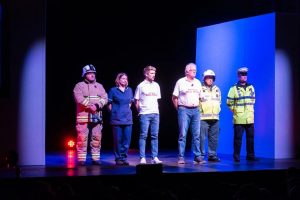
To Dorking Halls next month, for its first live performances in three years. The live show has been performed in front of 190,000 young people between the ages of 16-19 since its inception in 2005 and is an emotionally engaging and thought-provoking education production, coordinated by Surrey Fire and Rescue Service.
Working with the other emergency services, the event aims to raise road safety awareness amongst young people and positively influence their attitudes to driving as well as their role as a passenger in cars.
The performance has been designed to engage an audience of young learner and novice young drivers, a group that is at higher risk of collisions, injury and death on the UK’s roads and aims to make young people aware of their responsibilities as road users and the wide ranging and potentially devastating consequences should these not be taken seriously. The ultimate aim is to reduce the number of road traffic collisions involving young people and the number of deaths and injuries amongst this at-risk driver group.
The performances comprise a series of films featuring people recalling true stories and real-life impacts of road traffic collisions. Between each of these films, speakers, including personnel from the emergency services and members of the public personally affected by a road death, recount their own experiences.
Over the last 17 years, 285 performances have been held, with, this year, 70 different schools, colleges, youth groups and even army bases from across the county attending. In the past two years, Coronavirus restrictions forced the event to be staged online, where an estimated 28,000 young people tuned in.
This year, Safe Drive Stay Alive are offering free tickets to the public performance on Wednesday 9 November, providing an opportunity to witness this impactful performance for yourself. Spaces are limited, so secure your today by visiting: https://www.eventbrite.co.uk/e/safe-drive-stay-alive-tickets-430812460667
The event has been supported by organisations including the Office of the Police & Crime Commissioner for Surrey, Surrey RoadSafe, Toyota GB, esure and Sheilas’ Wheels, Ringway, Surrey Educational Trust (SCC), as well as the High Sheriff of Surrey, the Safer Guildford Partnership and Safer Surrey Heath. Additional funding is provided by a large number of town and parish councils across Surrey. This funding allows the event to be put on free of charge, and cover venue hire and transportation costs for attendees to and from the venue. To find out more about Safe Drive Stay Alive, please visit: https://safedrivesurrey.org/
Surrey County Council News
Re so la – “a very good place to start”?
24 October 2022
Guildford’s MP has labelled a “blanket ban” on solar farms “unwise” and says she supports a bid by the University of Surrey for a site outside of the town. The plans, put forward by the university for a solar farm across three fields, are described as an “essential component” of the university’s target to be net-zero by 2030.
Early plans for the site can be found in a request for an environmental impact assessment screening submitted by SSE Energy Solutions to Guildford Borough Council. A planning application has not yet been submitted for the approximately 21.6 hectare site, called Blackwell solar farm in documents.
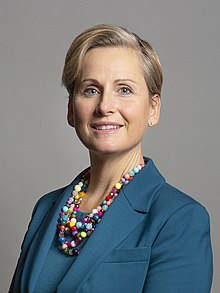
Angela Richardson MP Conservative Guildford
Angela Richardson MP (Conservative) said on Twitter: “There is a planning application for a solar farm in my constituency which I support as it will help my local university meet its net zero aims by 2030. A blanket ban on solar farms would be unwise. Should be looked at on a case by case basis.”
The land is currently being used as farm land, and plans show the panels, of a maximum height of around 3 metres, could be surrounded by two-metre high fencing, with CCTV cameras on four-metre poles. PM Liz Truss could ban solar panel installations from most farms in England, with The Guardian reporting on Monday (October 10) that, Ranil Jayawardena, Secretary of State for Environment, Food and Rural Affairs, was understood to oppose solar panels on agricultural land. It also said he had asked that the definition of “best and most versatile” land be broadened to include the current 3b grade of agricultural land.
The screening request submitted to the borough council said though there were different grades of land on the fields, the whole site would be farmed as grade 3b. Documents also showed the applicants did not think the site would be visible from nearby villages or the nearby Area of Outstanding Natural Beauty, though two farmhouses nearby could have a partial view of it.
In a release about the project, being put forward with SSE Energy Solutions, The University of Surrey said once complete the site could generate enough energy to supply the equivalent of 4,000 UK homes each year. Professor Bob Nichol, the university’s executive lead for climate change, said: “The University of Surrey community is dedicated to doing our bit to minimise global warming and our move to home-generated solar power is an important part of our plans. Big strides like this are essential for organisations to reduce their carbon footprints. Increasing our solar generation is just one part of Surrey’s sustainability story and our road to ‘Net Zero’.”
A university spokesperson said: “The University of Surrey is putting finishing touches to the application for the solar farm proposals we announced for consultation in May. We have not yet submitted a formal planning application, but will do soon. We welcome the support for this important green energy plan from our local MP and other local stakeholders who have engaged with us. We look forward to progressing the proposal, which is an important part of our sustainability story and our road to ‘Net Zero’.”
Can we be sustainable?
24 October 2022
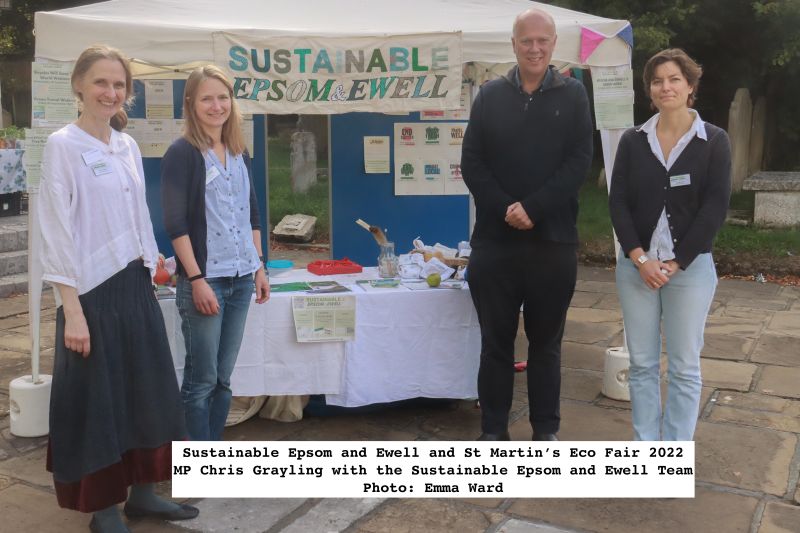
Sustainable Epsom and Ewell is an independent, apolitical and entirely volunteer led environmental group aiming to raise environmental ambitions in the Borough. Sustainable Epsom and Ewell was founded in late 2019.
As a group they organise events for local residents, have a website with useful local information and tips for residents, and take action with our Council. They also have a social media presence on Facebook and Instagram.
At Sustainable Epsom and Ewell they feel strongly about our local environment and want to share their resources and extensive local knowledge to get more residents involved and taking action. They have high ambitions for our Borough and believe the Council can and should take a greater lead and bolder actions to address, mitigate and adapt to the Climate and Environmental Crises.
Over the past years they have organised several events including “Green Friday” to raise awareness about the excessive consumption culture promoted through Black Friday events, a Cycling themed debate where both Surrey and Local councillors spoke as well as committee members of the Epsom and Ewell Cycle Action Group.
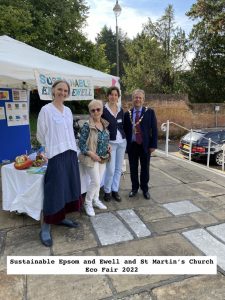
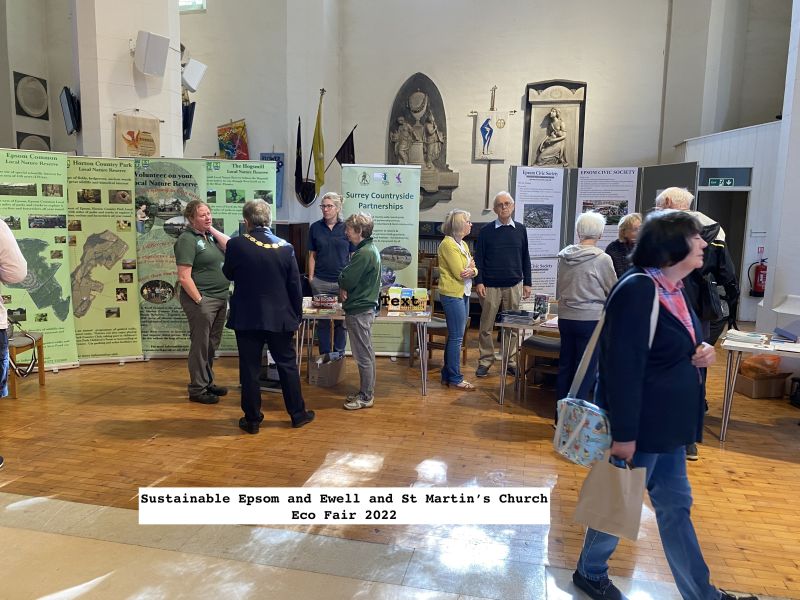
However, their biggest events to date have been two Eco Fairs, organised in partnership with St Martin of Tour’s Church in 2021 and 2022. The aims of the Eco Fair are threefold:
1) to highlight and showcase the groups active in our Borough as well as Council teams active in the environment fields,
2) to inspire local residents and groups to volunteer, take action and share experiences,
3) to highlight the strong proportion of residents keen to take personal action whilst encouraging the Council raise their green ambitions through action.
The 2022 fair included over 14 different groups, including Surrey Wildlife Trust, Epsom and Ewell Tree Advisory Group, the Lower Mole Partnership, Oxfam, the Epsom Repair Cafe, Dr Bike and the Epsom Civic Society as well as local green businesses.
This year in addition to the many residents who attended, the Fair attracted a visit from MP Chris Grayling and Epsom and Ewell’s Mayor Clive Woodbridge.
In the short-term future, they hope to continue to expand their reach to residents, campaign for real, ambitious and proactive Council measures in the environmental fields and provide opportunities for local groups and residents to meet and engage through events.
£11.9m to help Surrey residents cut their energy bills
24 October 2022
Grants of up to £25,000 are now available for eligible Surrey residents to help make their homes warmer and more energy efficient.
People living in hard to heat homes and on lower incomes, could receive grants between £10,000 and £25,000 to improve insulation and install renewable technology – helping to save energy, reduce emissions and combat rising energy prices. Improvement measures include loft insulation, cavity and external wall insulation, underfloor insulation and renewables, such as solar electricity panels.
Residents can check if they are eligible by visiting the Action Surrey website – www.actionsurrey.org, or calling them on 0800 783 2503.
Marisa Heath, Cabinet Member for Environment at Surrey County Council said: “We know this is a challenging time for many and we’re really pleased to be offering this funding to our residents who need our support the most.
“Improving the energy efficiency of homes in Surrey will also help us achieve our goal to be a net zero county by 2050.
“I encourage residents to check if they are eligible as soon as possible.”
Funding totalling £11.9m has been awarded through central Government to Surrey County Council, leading on behalf of the local authorities across the county. The project will be delivered and managed by Action Surrey – an energy efficiency advice service set up in partnership with all Surrey local authorities.
Epsom and Ewell has so far escaped the grant of licences for shale-gas exploration. Other Boroughs in Surrey are targeted. 25th September Business and Energy Secretary Jacob Rees-Mogg announced: “In light of Putin’s illegal invasion of Ukraine and weaponisation of energy, strengthening our energy security is an absolute priority, and – as the Prime Minister said – we are going to ensure the UK is a net energy exporter by 2040. To get there we will need to explore all avenues available to us through solar, wind, oil and gas production – so it’s right that we’ve lifted the pause to realise any potential sources of domestic gas.” Including through new oil and gas licences and shale gas extraction.
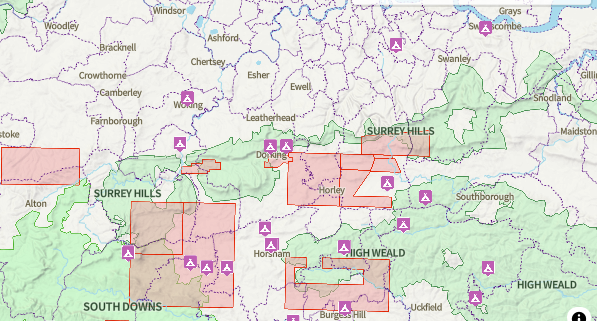
Red blocks are areas licensed for shale-gas exploration. Purple triangles are local anti-fracking protest groups
Friends of the Earth has provided a map and statistics showing the areas and licences for shale-gas exploration in Surrey.
Constituency
Number of licences
Licences total area (sq m)
Proportion of constituency under licence
Guildford
2
54,008,711
28.6%
East Surrey
5
122,524,280
47.2%
Mole Valley
3
59,441,785
16.1%
South West Surrey
3
94,052,391
36.7%
Reigate
3
35,937,442
32.1%
Between now and 2040 will Epsom and Ewell’s natural resources have to play their part in energy self-sufficiency?
Let us know your views.
Housing plan flying in the face of opposition
24 October 2022
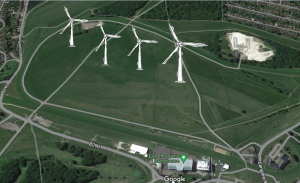
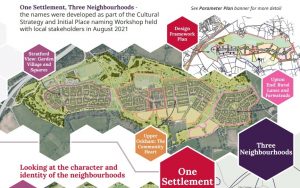
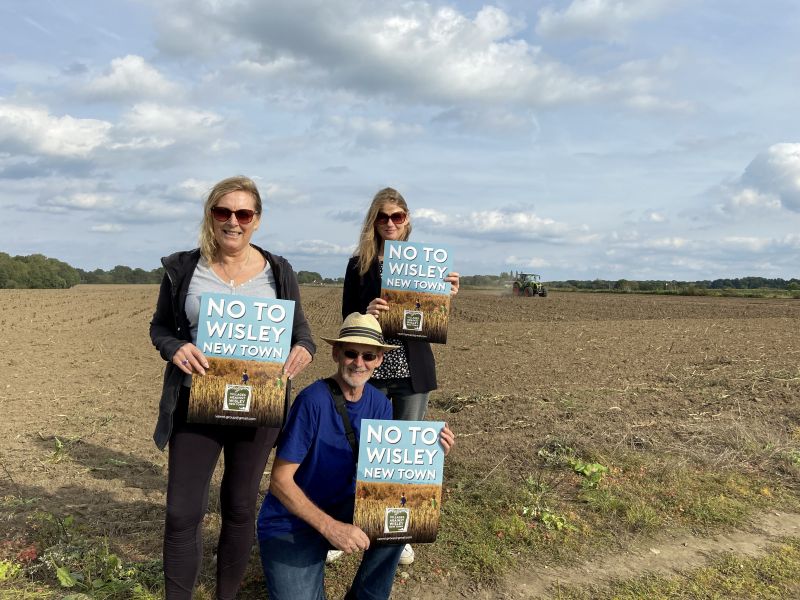
Wisley Airfield town plan: We report on a Surrey housing application that illuminates issues all local boroughs face today [Ed.] : To paraphrase from a popular TV show: “Wrong location, wrong location, wrong location.” That’s the message from campaigners against plans for 1,700 homes on the former Wisley Airfield. They say traffic concerns, an abundance of wildlife and trying to fit an urban development in a rural area are all reasons for the plans not to go ahead.
The former airfield is located alongside the A3 and is just over a mile from junction 10 with the M25, where another set of controversial works started this month. It was allocated as a new settlement in Guildford Borough Council’s local plan for around 2,000 homes, shops and offices. An outline planning application was submitted to the borough council by Taylor Wimpey for the first 1,700 in the summer, and residents have until Monday (October 3) to comment on the plans.
There are so far 168 objections to the outline plans on the borough council’s planning portal and comments received after the deadline will ordinarily also be considered. On a walk around the current site, which was used as an airfield from 1942 until 1972 and still has a tarmac landing strip in the middle, campaigner Chris Campbell, from Villages against Wisley New Town, told the LDRS he did not believe a new town should be built there. “Wrong location, wrong location, wrong location,” he said. “Location is everything and as you can see, this is not the location for a town.”
Around the old runway, the site is used as farmland, with two tractors out on the fields on the day of our visit. We also see several kites in the air, and pass “Snakes Field”, so-called, the campaigners tell me, because there are grass snakes, slow worms and amphibians living there. They’ve also seen badgers and owls on and around the site, and Mr Campbell raises concerns particularly about the impact of an increase in the number of dogs walking through woodland, a special protection area, between the site and the A3.
He said the “last thing” that’s needed for the ground nesting birds on the site, including the Dartford warbler, night jar and woodlark, would be the additional 400 dogs that could come with the new homes.
A suitable alternative natural green space (SANG) will be allocated on the site to “avoid adverse effects on the integrity” of the special protection area according to the borough council’s local plan. Taylor Wimpey documents state that the SANG provision is a “bespoke provision agreed with Natural England” and that more than half of the site will be accessible open space, as well as a 20 per cent biodiversity net gain on the site.
Frances Porter, chair of Ockham and Hatchford Residents’ Association, walks across the former airfield every day with her dogs. She claimed she was told at a meeting with Taylor Wimpey representatives that traffic calming measures around the new town were designed to “frustrate” motorists out of their cars. But she doesn’t think that people living in the town will be pushed out of their cars. “People haven’t got anywhere else to go,” she said. “You’re going to need a car; you can’t get the bus.”
The borough council’s local plan identifies requirements for the site including a “significant bus network” going to Effingham Junction and/or Horsley stations, as well as Guildford and Cobham. It would also require a cycle network to key destinations including stations, Ripley and Byfleet “to a level that would be attractive and safe for the average cyclist”.
Frances Porter, Imogen Jamieson And Chris Campbell of Villages Against Wisley New Town. Credit Emily Coady-Stemp
Imogen Jamieson, vice chair of Ockham Parish Council, does not think the narrow roads surrounding the site can support the additional traffic, and isn’t convinced cycle lanes would be used anyway. She said: “You’re not going to pack your three children onto the back of bikes and cycle them to Horsley to get to school in the pouring rain.” The parish councillor also said she believes it’s a “myth” that so many new homes are needed, though she does acknowledge that there is a need for places for people to live. She said the environmental impacts of building new homes are far greater than re-purposing and retrofitting existing buildings, which can be done in towns and urban areas.
On top of the plans for the airfield, a further 1,500 new homes are planned in a three-mile radius of the site, but Mrs Jamieson said homes would be better built in areas where there are already transport links, employment opportunities and facilities such as doctors and schools. She said: “Here you’re entirely reliant on a car. It’s positioned right by the strategic road network. So it’s going to mean that people are constantly in their cars trying to access everything.” She claimed there was an over-allocation of homes in the local plan, which came to light when the census released in June showed the figures used to draw up the plan were too high. “I’m still trying to understand the way housing is delivered in the country,” she said. “I think it’s a bit of a myth that we need homes in the way that we’re constantly told we do.”
A Taylor Wimpey spokesperson said: “The former Wisley Airfield is allocated for development in the Guildford Borough Council local plan and our proposals have been carefully considered following close engagement with key stakeholders and the local community. We understand the concerns of local residents regarding traffic and our proposals include a number of measures to encourage the use of sustainable transport options, including new bus services and cycle routes. The design and layout of the development has been considered with the surrounding area in mind and we will continue to consult with residents on this as our plans progress.”
Guildford Borough Council was contacted for comment.
Image: Wisley Airfield plans. Credit Taylor Wimpey and Vivid
More trees please for Surrey
24 October 2022
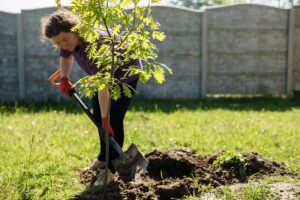
Surrey County Council will receive £298,000 from the Defra Local Authority Treescapes Fund (LATF) to increase tree planting and keep on target with the planting of 1.2 million trees, one for every resident, by 2030, supporting the Council’s aim to be carbon neutral by 2050.
This funding will help to facilitate planting in non-woodland settings such as parks and community spaces as well as along roads and footpaths helping communities to fight the effects of climate change. Trees in these settings are particularly valuable as they can provide the greatest levels of benefit to ecosystems, such as carbon absorption, flood protection and support for biodiversity, as well as connecting fragmented habitats through wildlife corridors.
Marisa Heath, Surrey County Council Cabinet Member for the Environment comments: “Since 2019 over 333,749 trees have been planted across Surrey. We are well on our way to achieving the County Council’s ambition to plant 1.2 million new trees and this boost in funding will help us to achieve this. We can’t do this alone and encourage Schools, Parish Councils, landowners and community groups to help us achieve this”.
The LATF fund will help the nation build back greener from the pandemic and will target landscapes that have been neglected in the past, ecologically damaged or affected by tree diseases like ash dieback – with ash being the most common species of tree found in non-woodland locations. For further information on the LATF Fund visit Local Authority Treescapes Fund – GOV.UK (www.gov.uk).
If you are a school, Parish Council, Charity or formal community group who own, or have a formal lease agreement on land and you are interested in receiving free trees to plant, you can contact SCC at trees@surreycc.gov.uk.
Keep up to date on the progress towards SCC’s target of making Surrey net zero carbon by 2050, and find out what you can do to help. Sign up to SCC’s Greener Matters newsletter to get updates.
County Town to charge congestion?
24 October 2022
Not an Epsom and Ewell report but Guildford’s ambitions may signal a local future? [Ed.]
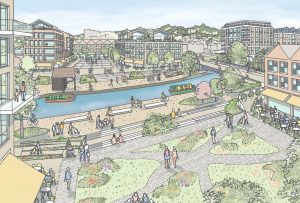
Congestion charge could be coming to Guildford as the council looks at ways to reduce traffic and raise money to support sustainable travel. As part of wide-ranging plans for the town centre, including more than 2,000 new homes, opening up the area around the river and overhauling the one-way system, officers are also starting to look at the options for some form of charge to drive into the town.
A meeting of the borough council’s executive on Thursday (September 22) approved £3m to be moved into the relevant budget for the next stage of planning to begin. The meeting heard that more had to be done to encourage businesses to set up and stay in the town, and more measures needed to be taken to protect from flooding.
Council leader Cllr Joss Bigmore introduced the range of consultants at the meeting as “a number of very expensive people” who would talk through the plans as they currently stand. All works will go through the usual planning stages at the borough council. Andreas Markides, from independent consultancy Markides Associates, told the meeting a lot of work had been done to gather data on how people were travelling to the town and where from, using car parks, traffic surveys and mobile phone data.
He said many elements would be considered including improved cycling and walking in the town, a better park and ride service and the consideration of “some form of congestion charging”. Mr Markides added: “I don’t know at this stage what form that will take, there are dozens and dozens of different forms. “But I think that would be a very good way of not only deterring car traffic to come into the town, but also to get money that we can put towards more sustainable measures.” He said the next step was to work on traffic modelling plans with Surrey County Council and looking at the whole town.
The basics objectives of the plans were as follows according to Mr Markides:
Getting rid of the one way system because two-way roads mean slower traffic and more attention paid to pedestrians; Opening up the riverside to the town centre, “cutting out” a lot of existing roads “so that the the town centre can roll down to the river as required by the master plan”; Removing some traffic lanes to give priority to cyclists, pedestrians and buses; Maintaining access to all key destinations in the town such as the bus station, train station and car parks.
Walk, cycle, scoot – don’t drive!
24 October 2022
Surrey County Council will launch a new campaign on World Car Free Day, 22 September, to encourage residents to change the way they travel to stay healthy, save money and help the environment by reducing their carbon footprint.
In Surrey, 41% of carbon emissions come from transport, with around half of that coming from private vehicles. For shorter journeys such as the school run, the commute to work or a trip to the shops, residents are being encouraged to consider leaving the car at home and walking or cycling instead
The County Council has teamed up with BetterPoints to reward anyone in Surrey who opts to travel by foot, bike or public transport, instead of using a car. Each car-free journey earns residents points which can be redeemed for high street vouchers to spend at shops, local coffee shops or can be donated to charity.
Surrey County Council is developing Local Cycling and Walking Infrastructure Plans (LCWIPs) across the county to help determine where best to prioritise improvements to continue to enable residents to walk and cycle more often. Residents can use an interactive map to ‘pin’ locations and comment on how walking and cycling could be made easier there.
Matt Furniss, Surrey County Council’s Cabinet Member for Transport, Infrastructure and Growth, said: “We know it’s not always possible for everyone to walk or cycle everywhere, but for shorter journeys we could all think about making a small change which on mass would make a big difference.
“We’re continuously looking at ways to improve our infrastructure to make walking and cycling easier for the people of Surrey and would really encourage feedback on our interactive map.”
The council has a target to be a net zero carbon council by 2030 and a net zero county by 2050, in line with government targets. Information about making active journeys can be found on the Surrey County Council website.
If Crossrail 2 came to Epsom……
24 October 2022
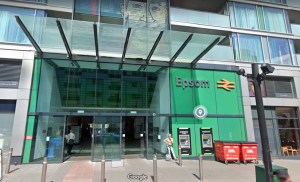
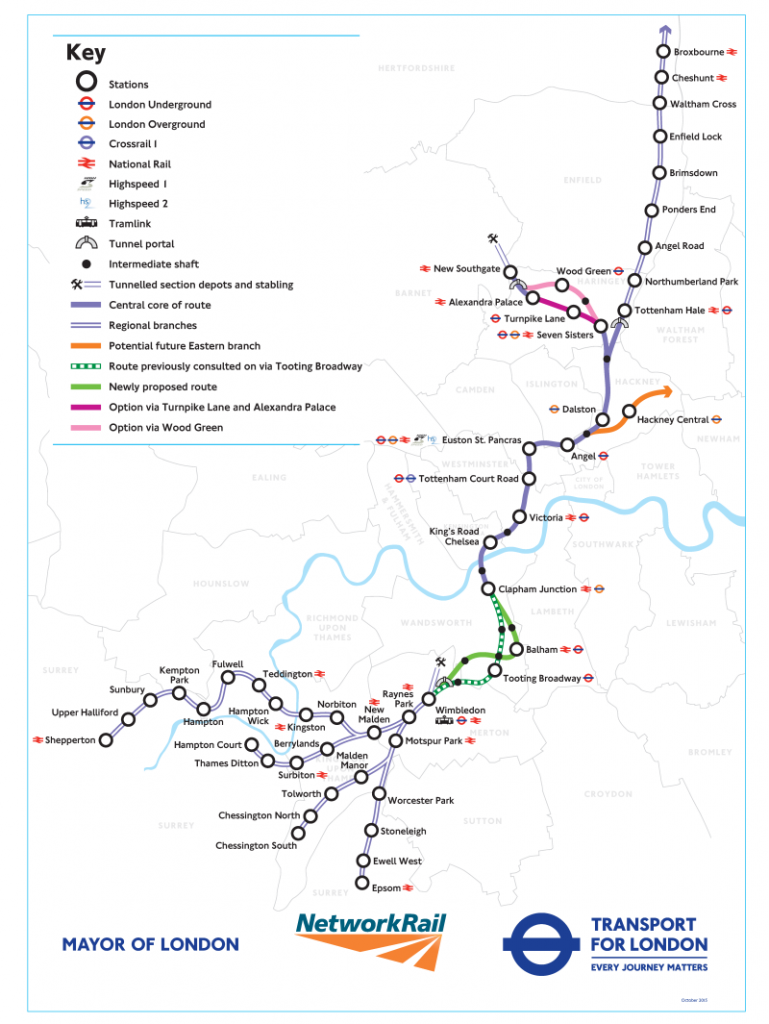
Plans were published by Transport for London and Network rail for a north south route running from Wimbledon to New Southgate in the north under the name of Crossrail 2. Epsom was mentioned as a possible terminus. But so too are Shepperton, Hampton Court & Chessington South. The reasons given are that London’s population is growing rapidly and will increase from 8.6 million to 10 million people by 2030. Whether this projection can be believed is a matter for debate because official statistics show that this would be 75% of the increase in population for the whole country If they are correct in their assertions then the then an increasing population will require more housing, more jobs and greater transport capacity which is why Crossrail 2 is proposed.
The proposal is for a new line in a tunnel from just north of Wimbledon via either Tooting or Balham to Clapham Junction then Kings Road, Chelsea, Victoria, Tottenham Court Road, Euston/St Pancras, then Angel and north from there to Tottenham Hale and New Southgate. The black dots on the map are intermediate shafts for building access.
Trains More of a cause for concern might be whether current routes might be curtailed. If there is no increase in capacity between Raynes Park & Wimbledon then either we will have Crossrail trains taking the place of current services or there will be a great need for line capacity to be increased. The latter solution has already been ruled out so it looks as if todays withdrawn services become the norm.
That assertion would appear to be borne out as passengers from Epsom will be expected to change at Raynes Park for Waterloo for 2 of the 4 services per hour. Motspur Park that is served by both Epsom & Chessington South will be reduced to just the two trains from Epsom. Chessington will have no services to Waterloo. All stations on the proposed South West branches would benefit from an increased frequency of trains into London. Fast interchange to and from trains at Waterloo would be available at Raynes Park and additional interchanges with London Underground, Crossrail 1 and National Rail services would also be available across Central London.
The local line on that stretch could theoretically take 20 trains an hour. During the peak hours there could only be two more trains.
Crossrail 2 would support 200,000 jobs, spur the development of 200,000 new homes across the region and increase London’s rail capacity by 10 percent. Its impact would be felt across the wider South East and beyond: Crossrail 2 will cut journey times in an area from the South Coast and stretching up to East Anglia and the Midlands.
Is there a demand for the extra housing and if so how will it be satisfied? And how many will our Borough be expected to provide?
The government directs councils as to how many housing units they have to provide and with the next, probable, Prime Minister on record as freeing up Green Belt land for housing it is too obvious where Epsom’s share will be expected to be built.
Level Crossings In order to facilitate reliability with the added benefit of increased safety it is proposed that a number of level crossings would be closed. Throughout Europe misuse of these have been a regular cause of accidents and despite efforts to mitigate risk accidents and near miss incidents still too often occur. Network Rail say that they will work closely with local communities and local authorities to provide “appropriate resolution for each crossing”. However, they restrict the options to ones inconveniencing the public, especially pedestrians. The alternatives proposed are either tunnels or bridges across the railway while no thought is given to the railway crossing over or under the roads.
Any of these options might impact on the local community in those areas by the need to acquire land; re-siting the crossing or the impact of the actual construction. However, there are only five of these on the proposed southern routes at Motspur Park; West Barnes (between Raynes Park and Motspur Park); Elm Lane (Malden); Hampton; and Summer Road (Hampton Court). Regular travellers will know that only the first two of these might affect Epsom services. So, the inconvenience to the public should not affect our Borough.
Let’s go Electric Epsom and Ewell
24 October 2022
Friday 9 September is World EV day, a global movement to celebrate switching to electric vehicles and driving change. In Surrey, almost half our emissions come from transport, and about half of that is from private vehicles. So, reducing the emissions from the way we travel about – whether that’s by walking or cycling more, using public transport or switching to an electric car – can help to drastically reduce our carbon footprint.
Electric vehicles produce virtually no exhaust emissions, so are much cleaner than petrol or diesel cars. And lots of people are choosing to make the switch.
Recent Government data shows a 62% increase in battery-operated electric vehicles in the UK, compared to the same period last year and, for the first time, registrations of new electric vehicles outstripped registrations of new diesel vehicles.
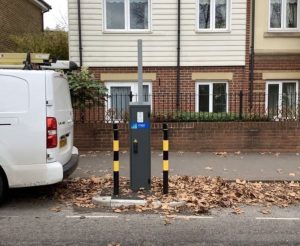
To support residents’ switch to electric vehicles, Surrey County Council is installing on-street chargepoints across the county. Phase one of the installation programme will see 80 chargepoints installed across four boroughs – Woking, Guildford, Spelthorne and Waverley. Phase two has already started and includes plans to install 110 chargepoints across six boroughs in the coming months.
Residents can suggest a location for an on street chargepoint near them via a dedicated online map – Have Your Say Today – Surrey EV – Commonplace. Over 1700 suggestions have already been submitted and the information is being used to inform future EV chargepoint installations.
Matt Furniss, Surrey County Council’s Cabinet Member for Transport, Infrastructure and Growth, said: “On World EV Day, it’s important we recognise the progress we have made in supporting residents to switch to electric vehicles, and the ongoing work to ensure we meet our goals. Transport is such a huge contributor to our carbon emissions in Surrey, so changing the way we travel and reducing our emissions from transport is a key area for achieving our climate change targets.
“We have recently invested over £39m in buses including a new, electric on-demand bus service in Mole Valley.”
Surrey County Council has a target to be a net zero carbon council by 2030 and a net zero county by 2050, in line with government targets.
Access to chargepoints for electric vehicles is essential in order to give resident’s the confidence to make the switch, especially those who do not have access to their own driveway or for whom it’s not appropriate to install a chargepoint at home.
Current estimates are that we would need 10,000 chargepoints in the county by 2030 to meet demand from electric vehicle owners.
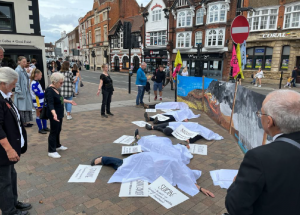
Sunday 4th Sept, Epsom & Ewell’s climate action group put on a hard-hitting and thought- provoking street-theatre performance in Epsom centre. Right in the middle of town, on the big crossroads near the clock tower, a colourful backdrop had been erected, depicting landscapes ravaged by drought, forest fires and flooding. Against this backdrop, a dozen actors played out a silent lament, mourning the victims of climate disasters in the global South. The emotional impact of bodies on the ground being covered by shrouds was further amplified by a slow, powerful drumbeat and a bugle playing ‘the last post’…
Not surprisingly, this performance drew strong reactions from the public. Some felt greatly strengthened in their perception that a changing climate is a grave danger to us all, and the cause of worldwide injustice. However, there were also some who disapproved of the graphic nature of the performance and who felt that ordinary people were made to feel bad for things that are really the responsibility of governments and commerce?
As far as the local climate action group (Epsom & Ewell XR) is concerned, all views for-and against are welcomed, as they feel the gravest danger to us all will come from indifference to the issues.
Further actions and street-theatre are being planned.
Epsom & Ewell XR can be contacted at epsomewellxr@gmail.com