Epsom and Ewell Times

2nd April 2026 weekly

ISSN, LDRS and IMPRESS logos

Million-pound FIFA-standard football pitch opens at Glyn School in Ewell

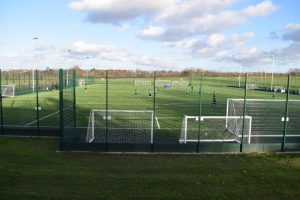
New Pitch at Glyn School x 2. Credit: GLF Schools

A new state-of-the-art FIFA-standard 3G football pitch and pavilion has been officially opened at Glyn School in Ewell after more than £1 million of investment from national and local partners.

The Premier League, The FA and the Government’s Football Foundation contributed just over half of the total cost, with further funding from Epsom & Ewell Borough Council, Your Fund Surrey (Surrey County Council) and the Epsom & Ewell Colts. The new pitch will be used by Glyn School, other GLF Schools, Epsom & Ewell Colts FC and the wider community.

Epsom & Ewell Borough Council’s Playing Pitch Strategy and Corporate Plan identified the need for high-quality sports provision to promote healthy lifestyles, widen participation and meet the needs of a growing population. With more than 1,800 students at Glyn and around 5,000 across other GLF Schools, the facilities are expected to make a significant daily impact on school and community sport.

A partnership with Epsom & Ewell Colts FC means the pitch will become a major hub for grassroots football, supporting over 1,200 players across 82 teams, including 30 girls’ and women’s teams. The GLF Schools Foundation will help expand access for disadvantaged groups, disabled players and young people historically underrepresented in sport, aligning with both borough and national priorities for community wellbeing.

The official opening took place on Wednesday (Dec 10), with GLF Schools Interim CEO James Nicholson addressing guests and the Mayor of Epsom & Ewell, Cllr Robert Leach, cutting the ribbon. Also present were Liz Pill from the Football Foundation and Rosanne Fine from Surrey Football Association. Visitors toured the pitch and pavilion after watching players take to the new surface.

Jo Garrod, Headteacher at Glyn School, said: “This new pitch and pavilion are a fantastic addition to the sports facilities at our school and will be a huge benefit to all our students. We’re extremely grateful to the Football Foundation for the funding and investment and delighted that they have made such a significant contribution to improve the quality of sports facilities for everyone in the community.”

James Nicholson, Interim CEO of GLF Schools, said: “The range of sports and activities we offer at GLF Schools is central to the educational experience for all students. Having the latest modern facilities is key to giving every student the best opportunities to reach their full potential and enjoy their time with us. I’d like to thank The Football Foundation, whose major grant made this development possible, Epsom & Ewell Council, Your Fund Surrey (Surrey County Council), and the Epsom & Ewell Colts, who also supported this project with substantial financial contributions. As well as Surrey FA for their strategic guidance and endorsement, and all the consultants in design, fundraising, planning, and project management who worked so hard to build such an impressive pitch and pavilion.”

Robert Sullivan, Chief Executive of the Football Foundation, said: “The Football Foundation is working closely with our partners, the Premier League, The FA and Government, to transform the quality of grassroots facilities in England by delivering projects like this across the country. Good quality playing facilities have a transformative impact on physical and mental health and play an important role in bringing people together and strengthening local communities. We’re delighted that the local community in Epsom and Ewell will now be able to enjoy all these benefits thanks to the new facilities at Glyn School.”

Epsom & Ewell MP Helen Maguire said: “The opening of this new pitch and pavilion at Glyn School is a real milestone for Ewell and the wider borough. It gives young people and local clubs a first-class space to train, play, and grow – and it strengthens the role that sport can play in building confidence and aspiration, as well as the improvements it can bring to both physical and mental health. I’m delighted to see this project completed and look forward to visiting soon.”

Many local clubs, organisations and community groups provided letters of support, including NESCOT, Chelsea FC Foundation, Fetcham United FC, Active Surrey, Surrey Schools FA, Surrey Cricket Foundation and Tidy Keepers.

A 3G (Third Generation) astro pitch is an advanced artificial turf surface combining synthetic grass, sand and rubber infill to mimic natural turf, offering all-weather durability and consistent performance.

About the Football Foundation

The Football Foundation is the Premier League, The FA and the Government’s charity dedicated to delivering outstanding grassroots facilities. Since 2000 it has raised £1.3 billion to improve facilities nationwide, including 1,300 3G pitches, 15,000 grass pitches and 1,700 changing rooms, attracting an additional £1.5 billion in partnership funding. It works with local authorities, County FAs and community partners to create Local Football Facility Plans for every area of England. More information at footballfoundation.org.uk.

About GLF Schools

GLF Schools is a multi-academy trust of 43 schools serving more than 17,000 pupils aged 2 to 19 across Oxfordshire, Berkshire, Hampshire, Surrey, West Sussex and parts of London. The Trust includes eight secondary schools and 35 primary settings, each serving its own community while sharing a commitment to excellent educational outcomes.

Sam Jones – Reporter

New Pitch at Glyn School x 2. Credit: GLF Schools


Public of Epsom and Ewell to be asked if they want two new Councils

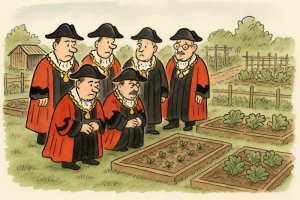
People paying council tax and councillors pouring money into an allotment vegetable patch

Epsom and Ewell Borough Council has voted to continue exploring the creation of two new community councils—one for Epsom and one for Ewell—following an often heated debate at the Full Council meeting on Tuesday 9 December. The decision means the proposals will now go to a second phase of public consultation before a final vote in March 2026.

The meeting also saw Cllr Hannah Dalton (RA Stoneleigh) elected—by 17 votes to 11—over Cllr Alex Coley (Independent Ruxley) as the Borough’s representative on a Local Government Association forum related to Local Government Reorganisation (LGR).

The main item of the night, however, was whether to progress the Community Governance Review (CGR) and consult residents further on the proposed new parish-style councils.

What was decided

Two recommendations were voted on separately, both by recorded vote:

• Recommendation 1: Proceed to a second-stage consultation
• Recommendation 2: Confirm the amended Terms of Reference and delegated arrangements for running that consultation

Both recommendations were carried by 17 votes to 6 (or 7) with 6 (or 5) abstentions, depending on the motion.


Supporters: “Residents must have a voice before the borough is abolished”

Cllr John Beckett (RA Auriol), who proposed the motion, framed the issue as a democratic response to the looming abolition of the borough council under Surrey’s move to two unitary authorities. He warned of a 75% reduction in elected representation once Epsom and Ewell’s 35 borough councillors and 5 county councillors are replaced with just 10 unitary councillors.

Beckett said: “These changes are about the centralisation of power and money all at the expense of local democracy.” He added that the first consultation—352 responses, with 67% supporting further investigation—was “the second highest response to a borough-wide consultation outside the Local Plan”.

He argued that parish-style councils could preserve local identity and provide continuity: “For our residents… this gives our residents a choice, and it gives our residents a voice.

Cllr Hannah Dalton told councillors that other areas undergoing unitary transitions, including Northamptonshire, Wiltshire and Somerset, saw unparished areas “left behind”. She said that if Epsom and Ewell did not act now, it risked becoming “the only unparished area in East Surrey”.

She added: “Tonight we are only asking you to support further consultation… with a precept that has no transfer of assets, whatever our colleagues are saying.

Cllr Neil Dallen (RA Town) said the proposal was modest: “We go out to the residents and we ask them… whether they want us to continue.

Cllr Rachel King (RA Town) emphasised that the public had only given feedback on principles so far: “We now need to give them a proper opportunity to respond to a fleshed out proposal… We owe it to our residents to give them a voice.


Opponents: “A flawed consultation, a financial burden, and a political stitch-up”

Opposition councillors delivered some of the sharpest criticism heard in the chamber for years.

Claims of a flawed consultation

Cllr Julian Freeman (Lib Dem College) said the consultation process was “flawed” because respondents were forced to select an option rather than reject the idea outright. He argued: “This is the wrong issue at the wrong time… The only reason this is being raised now is to create a role for the people in this room.

Cllr Rob Geleit (Labour Court), speaking also on behalf of absent Cllr Kate Chinn, said the proposals lacked community backing: “A flawed and skewed consultation, a lack of engagement… giving no mandate… and poor financial analysis.” He added: “I see no point in removing a layer of democracy only to add it back again on a lesser level.

Cllr Alison Kelly (Lib Dem Stamford) said residents were mostly concerned about planning, but that the parish proposals did not address this: “Most people… give the issue of allotments very little thought. We are showing a cost of a parish council around £45 for an allotment you don’t need in a flat.” She noted that only around 230 respondents had expressed a desire for a parish council.

Financial warnings: 98.7% admin, 1.3% allotments

Cllr James Lawrence (Lib Dem College) highlighted the ratio in the report: approximately £1.5m in administrative overheads versus £20,000 for allotment running costs. “You will be telling [residents] you’re creating a parish council that is just for allotments… the allotments cost is 1.3% of the tax you’re going to charge.” He added that consultation documents risked misleading residents by listing admin and allotments side-by-side “as if they were roughly equal”.

“An uncapped tax burden on struggling households”

Cllr Alex Coley warned that the real precept could be much higher—up to £180 for Band D properties—if the community councils later took on community buildings with significant maintenance liabilities such as Bourne Hall: “It would be disingenuous to go to residents with £40-something pounds when it could be £180… We should not seek a view from residents with a lower figure and then quadruple it.” He said many residents were “struggling financially” and called the proposals “an astonishing waste of time, energy and money.

Cllr Bernie Muir (Conservative Horton) urged councillors to wait until the new unitary structure and Surrey’s pilot Neighbourhood Area Committees (NACs) bedded in: “I think this is a premature discussion… we should see how the unitaries and NACs pan out and then move forward if we need to.

Cllr Chris Ames (Labour Court) was highly critical of the RA leadership: “This wasn’t a review. This was one option chosen by the Residents’ Association to meet its own purposes… It’s all about providing a jumping-off point for the clique that runs this council.

Admin cost vs allotment cost: the core numerical controversy

Using the figures in the Report to Council:

• Admin and support costs for new community councils: approx. £1.5 million
• Cost of allotment management: approx. £20,000

That means roughly:

• 98.7% of the expenditure is administration
• 1.3% is allotment provision

This ratio became a central argument for opponents, particularly Cllr Lawrence, who said allotments would be a “rounding error” in the parish budget.

Supporters responded that these were not final budgets, merely illustrative maxima, and that Phase 2 consultation would use the true starting point—around £43–£46 Band D—with no asset transfers.

Conclusion

The council has opted to continue exploring parish councils despite sharp divisions. The second public consultation will now seek residents’ views on more detailed proposals before a final decision in March 2026—months before the borough is abolished and replaced by the new East Surrey unitary authority.

Sam Jones – Reporter

Related reports:

Do Epsom and Ewell Borough’s allotments need their own elected Councils?

Neighbour Area Committees in Surrey

Local government reform or just more layers?

Where do we stand on local government reorganisation in Epsom and Ewell and the County?

Parishing Epsom and Ewell is unholy?

Debate Opens on the Future Shape of Surrey’s Local Government


Epsom’s Five Tries Not Enough to Halt Brighton Charge

Match action.

Sutton & Epsom RFC 33 Brighton 43. Saturday 6th December.

Brighton is one of Sutton & Epsom’s oldest fixtures dating back to 1897. The arrival of Brighton also marked the midpoint of the campaign with Round 11 of 22, with the men from Sussex being the last opponent to face the Black & Whites. So it was appropriate that there was a curtain-raiser as an appetiser before the main course. A thrilling junior match concluded with the S&E XV winning 35-30 against the South Coast visitors thanks to a late score from Will Birch. Sadly for Rugby Lane supporters this was not a propitious omen for the 1st XV. Brighton confirmed their status as league leaders with a 43-33 victory in a match that was not only highly entertaining but also competitive.

Brighton had not lost since the opening day of the campaign, a narrow home defeat to Beckenham. Since that day they had won nine on the spin and sat proudly atop the league. In contrast, the Black & Whites had lost their last three. Home supporters were hoping that once again Rugby Lane would be a graveyard for the top team in Regional 2 South East as it had proved last season for the Kent triumvirate of Sidcup, Medway and Beckenham. On an overcast December afternoon Freddy Bunting kicked off towards the clubhouse. The visitors monopolised the opening ten minutes with a splendid 50/22 from fly-half Maxx Morris providing the first opportunity of the game. Excellent Sutton & Epsom defence culminated in a turnover and S&E cleared their lines.

Against the run of play Sutton & Epsom scored the first try of the afternoon. Gareth O’Brien did well to cut back inside to find support and the hosts advanced centrally. The forwards carried before releasing the backs. A perfectly timed and angled run by captain Bunting to an inside pass saw him surge 30 metres untouched to score under the posts. The captain added the extras for a 7-0 lead. Within five minutes the crowd were roaring on winger Finlay Scott, who was just forced into touch by the cover. Filled with confidence S&E went in search of their second score. The supporters did not have long to wait. Playing their best rugby of the game, the Surrey men were awarded a couple of penalties 5 metres from the line. Mr Ollie Carter issued a warning to curb the indiscretions of Brighton. From the second opportunity under the sticks the forwards finally forced their way over, with flanker Josh Rae scoring. Bunting doubled the advantage with the simple conversion for a 14-0 lead.

Within five minutes the table-toppers were on the board. Having kicked a penalty to the corner, the catch and drive ushered hooker Tom Youngs over the line. The conversion was not met by unanimous approval and was declared to have passed over the top of the upright and so a miss. This initiated a period of Brighton dominance. Dogged defence offered Sutton & Epsom relief with a penalty. The failure to find touch received the ultimate punishment. Maxx Morris countered from halfway, glided around the cover and popped the ball inside for Number 8 Fergus Matla to run in unopposed. Centre Marcus Condon added the extras as Brighton trailed 12-14. Moments later they were celebrating the lead. Fullback Ross Miller made the telling break and winger Tyrone Makasi was sprinting to the corner. Fullback Gareth O’Brien desperately corner-flagging forced his man into touch. Mr Carter ruled the challenge illegal and correctly awarded a penalty try and a yellow card. Brighton now led 19-14.

Having conceded three tries without reply, and being reduced to 14 men, the half-time whistle could not come quickly enough for Sutton & Epsom. S&E rallied and ended the first period on the front foot. As the teams turned around it seemed the remaining minutes on the yellow might be crucial. Damage limitation for Sutton & Epsom or the pressing home of numerical superiority by Brighton seemed the likely scenarios. The hosts had demonstrated in the first half that at their best they might still prevail. It appeared it would take the Black & Whites’ best to down Brighton’s colours.

Against the odds Sutton & Epsom opened the second-half scoring within five minutes. A couple of kicks from scrum half Munford behind the defence led to a penalty. The ensuing 5-metre lineout created the try for the irrepressible hooker Sam Lennie. Despite being a man down S&E were level at 19-19. But Sutton & Epsom were soon deep in defence following a brace of penalties and the Morris boot. A 5-metre lineout created quick ball, a powerful carry by flanker Kas Lee set up the try for his captain, fellow flanker Will Hoare. Condon bisected the uprights for 26-19. Then a break by Morris set up Makasi but excellent defence denied the winger. It was temporary relief. Again, the Morris boot advanced his charges. A lineout was secured in the 22, the forwards took charge and Matla had his second try. Condon extended the lead to 14 points with Brighton 33-19 ahead.

The game, yet to enter the final quarter, was at a critical phase. Would Brighton disappear over the horizon or could Sutton & Epsom claw back into contention? The Black & Whites rallied. Perhaps a quick tap penalty 30 metres out was the wrong option; a kick to the corner or an easy 3-pointer might have been wiser. Fortunately, shortly after the scrum won S&E a penalty and they reprised their lineout success. A touch of “same same but different” as this time Jack Howes was the beneficiary, scoring off the bench for the second week running. The conversion made it 33-26.

Brighton responded swiftly with a penalty, taking the easy three for 36-26. The Rugby Lane reply was instant. Adam Bibby collected the restart and Sutton & Epsom surged down the touchline. The ball was spun open and Sam Lennie, like a rhinoceros on the charge, ran over the not inconsiderable presence of Kas Lee. Gareth O’Brien, now at 9, picked up from the ruck and burst to the line, sidestepping the last man. Bunting added the extras and Brighton had a slender 36-33 lead. The men from Waterhall stayed calm. Matla’s powerful 30-metre carry put the visitors in the Sutton & Epsom half. Then a penalty conceded at the scrum was punished. In the blink of an eye the Blues were advancing to the posts and Kas Lee joined the Brighton back-row try club. Condon’s conversion made it 43-33. A late Morris break resulted in Kyren Ghumra receiving a yellow card for failing to intercept. Minutes later Mr Carter concluded proceedings with Brighton 43-33 to the good.

This might have been the fourth loss on the bounce but it was a far better performance from Sutton & Epsom. They fought back after trailing by 14 points and at 33-36 it was anyone’s game. They scored five excellent tries, dividing the spoils 3-2 in favour of the tireless forwards. Now that S&E have faced every side in the league, Brighton look excellent value as league leaders. Kieran Finney, starting at lock, had his best game of the season, Gareth O’Brien coped admirably as stand-in 9 in the final quarter and the effort could not be faulted. It was a game with guts and tenacity to the fore, sprinkled with a couple of stunning Sutton & Epsom scores.

Brighton were well worth their bonus-point win. Consistency in selection reaps rewards as five of their forwards have played every match. The powerful back-row trio of Captain Hoare, Lee and Matla contributed four of their six tries and impressed throughout. Another ever-present was fly-half Maxx Morris. The affectation of the extra ‘x’, on this showing, looked to stand for extra special, thankfully sparing a third that might imply a career in adult entertainment. The fly-half had an outstanding game, kicking with precision, making numerous breaks and running the game. Back in 2015-16, when he was breaking into the 1st XV, he impressed at Rugby Lane in a 22-3 loss to Sutton & Epsom’s title-winning team playing opposite Paul Hodgson, and it is wonderful to see a player of great promise develop into such a talent and stay at his boyhood club.

Next Saturday Sutton & Epsom travel to Dartfordians, who they beat 33-29 at Rugby Lane back in September. The Black & Whites will be looking to start the return leg of the season with a win. Kick off 2pm at Horn Park. Meanwhile, Brighton host Battersea Ironsides with their lead extending to eight points following Sidcup’s 29-31 home loss to Bromley.

Sutton & Epsom:
O’Brien, Scott, Bibby, Bunting ©, Ghumra, Lennard, Munford, Johnson, Lennie, Boaden, McTaggart, Finney, Rea, Tame & Hegarty. Reps: Howes, Duey & Bennion.

Brighton:
Miller, Challis, Condon, Pratt, Makasi, Morris, Taylor, Peake, Young, Rowlandson, Simpson, Egerton, Hoare ©, Lee & Matla. Reps: Travis, Ashby & O’Hagan.

John Croysdill

Photo credit: Robin Kennedy


Blockbuster cinema and 480 homes plan for Leatherhead town centre

Jv Planning Submission

Hundreds of new homes in blocks of up to 12 storeys high, as well as a three-screen cinema, could be coming to Leatherhead town centre if newly submitted plans are approved. The Leret Partnership, a joint venture between Mole Valley District Council and Kier Property, has submitted its formal application to regenerate the Swan Centre and Bull Hill in Leatherhead. They want to build up to 480 new homes with 81 of those, spread between two blocks, classed as affordable. The site, already set aside for development as part of the council’s local plan, would also get a cinema.

The plan has been submitted as a single build but is split across two distinct sites: Bull Hill and the Swan Centre. Detailed plans show Bull Hill will be converted into six blocks of 276 homes, 133 of which will be one-bed flats, with a further 133 two-bed apartments and 10 three-bed homes. The 81 affordable homes will be housed in blocks E and F. The private blocks will be six storeys high while block E will stand five storeys tall and block F rising to nine storeys. There are also further outline plans to go up to 12 storeys at the site to provide an additional 203 homes, office space and potentially a nursery.

The second part of the application covers The Swan Centre, which has served as Leatherhead’s shopping hub since it was constructed in the 1980s. The plans want to demolish Leret House to open the space and create a new public square with a three-screen 239-seat cinema. “The Applicant has been in discussion with leisure agents and cinema operators and the building has been designed to accommodate other leisure uses (competitive socialising) should the occupier change in the future”, planning documents read.

There are also plans to build a new multi-storey car park, office space, as well as a potential GP surgery, shops, and cafes and restaurants. The council described the submission of the planning application as a key milestone in its Transform Leatherhead regeneration and that, when built, it will bring more people into the town centre. It also expects to receive about £9m in developer contributions, which can then be used on infrastructure and community improvements elsewhere in the borough. Residents are able to submit their views to the council before its planning committee votes on the proposals.

Cllr Keira Vyvyan-Robinson, cabinet member for property and projects, Mole Valley District Council, said: “The submission is a significant milestone in the delivery of the Transform Leatherhead programme and a real step forward in boosting Leatherhead’s unique position as the gateway to the Surrey Hills. The proposals will breathe new life into Leatherhead’s town centre, rejuvenate the Swan Centre and deliver much-needed homes for the district, providing jobs and securing sustainable investment for the local community.”

Chris Caulfield LDRS

Image: Jv Planning Submission


Do Epsom and Ewell Borough’s allotments need their own elected Councils?

Cartoon of councillors surrounding a plot on an allotment

Epsom and Ewell Borough Councillors will meet on Tuesday 9 December to decide whether to progress the next stage of creating two new parish councils for the borough before the authority itself is abolished in 2027. The proposal comes amid the Government’s reorganisation of Surrey, which will see all boroughs, districts and Surrey County Council replaced by two large unitary authorities.

Parliament’s direction of travel is clear: to simplify local government by replacing the current two-tier structure with single, consolidated authorities. East Surrey Council, which will take over responsibility for all local services from 1 April 2027, is intended to achieve economies of scale and reduce duplication between bodies. The question now before councillors is whether introducing new parish councils beneath the new unitary structure would support or undermine that objective.

Earlier this year the Borough Council launched a Community Governance Review seeking resident views on the creation of parish councils. Of a borough population of around 80,000, the consultation received 352 responses. The most favoured option was the creation of two parishes—one for Epsom and one for Ewell—each with its own parish council and councillors. Whether this level of public engagement constitutes a sufficient mandate for a constitutional change that introduces a new local taxation and governance layer is one of the issues councillors must now weigh.

The proposal is also set against the backdrop of Surrey County Council’s own recent approach to local engagement. In other parts of Surrey the County Council has piloted “Neighbourhood Area Committees” aimed at bringing councillors, residents and partners together to shape local priorities without creating new bodies with precept-raising powers. These committees are designed to provide an alternative route for local consultation and influence that stops short of formal parish governance. Whether such models should be adopted more widely under a single-tier system—and whether they might re-emerge under the new East Surrey Council—adds a further dimension to the discussion about the need for, and value of, parish councils.

Supporters of parishing argue that the disappearance of the borough council leaves a significant democratic gap. Once abolished, the entire former borough area will be represented by just ten East Surrey councillors instead of the 40 elected representatives residents currently have across county and borough levels. Parish councils would help preserve local identity, provide a community voice on issues close to home, and maintain civic traditions, including the mayoralty, which would otherwise require Charter Trustees.

However, the financial implications remain uncertain. Initially, the proposed parish councils would take on only the minimum legal duty of managing allotments, with no parks, community buildings or other assets transferred. On that basis, it is estimated by Epsom Council officers, a Band D property would pay a parish precept of about £43–£46 per year. But if parish councils later seek wider responsibilities—whether by local choice or because East Surrey Council wishes to devolve services—the cost to residents could increase. In time, this could reintroduce something resembling a two-tier model from below, even as the new unitary seeks to simplify structures from above.

Proponents of the unitary approach argue that genuine savings depend on consolidating services, not recreating local administration. Advocates of parish governance counter that representation and community influence have a value that cannot be measured solely in financial terms. Councillors, meanwhile, must judge whether the balance of risks and benefits favours moving to the next stage of consultation or pausing the process entirely.

If the Borough Council votes to proceed on Tuesday, a second consultation will run from mid-December to early February, with a final decision required before March 2026, when powers transfer to the East Surrey Shadow Authority. If the proposal is halted, decisions about any future local governance arrangements—whether parish councils, neighbourhood committees or other models—will fall to the new unitary authority.

The choice before councillors therefore becomes one of the last major decisions the Borough Council will make about the shape of local democracy in Epsom and Ewell. Residents can follow the meeting live via the council’s YouTube channel.

See

Neighbour Area Committees in Surrey


Neighbour Area Committees in Surrey

LGR graphic

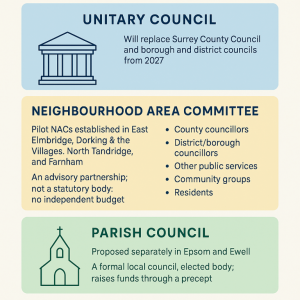
As Surrey prepares for major local government reorganisation, the County Council has been trialling a new model of community involvement known as Neighbourhood Area Committees (NACs). These committees, currently operating in four pilot areas, are designed to give residents and partners a stronger voice in shaping local priorities without creating new councils or adding an extra layer of taxation. With Epsom and Ewell facing the abolition of its borough council in 2027 and debating whether two parish councils should be established, attention is turning to whether NACs offer an alternative blueprint for local influence in the new unitary era.

The first three pilot NACs were launched in summer 2025 in East Elmbridge, Dorking and the Villages, and North Tandridge. A fourth area, Farnham, joined the initiative in September. These areas were selected to test the model across different geographies and community types, including both parished and unparished areas. Epsom and Ewell is not currently included in the pilot scheme, but the County Council has indicated that NACs could eventually be rolled out county-wide if the pilots prove successful.

Unlike parish or town councils, NACs are not statutory bodies. They do not have legal powers, budgets or the ability to raise a precept through council tax. Surrey County Council describes them as advisory partnerships that bring together elected representatives, public services, voluntary and community organisations and local residents to identify shared priorities and shape decision-making at a neighbourhood level. Typical membership includes county councillors, district or borough councillors (where applicable), representatives from health, police, education and the voluntary sector, alongside community groups and residents. Subject specialists from County Hall provide officer support.

The aim is to encourage more collaborative working between public services and communities, promote preventative approaches, and ensure that future unitary authorities have access to local intelligence when planning services. NACs sit outside the formal structures of governance and do not replace any existing body. Where parish councils exist, they may participate in a NAC, but the NAC itself has no authority over them.

NAC boundaries are formed using existing county electoral divisions as building blocks, refined to ensure the populations are of manageable size, roughly around 50,000 residents. The pilots are running until the end of 2025, after which Surrey County Council will assess their effectiveness and consider whether to expand them across the county. The evaluation will look at levels of participation, the quality of partnership working, community impact and how well NACs might support the new East and West Surrey unitary councils from 2027.

The emergence of NACs adds an additional dimension to the ongoing debate within Epsom and Ewell about whether to create parish councils. Parish councils are formal, elected bodies with defined legal powers and the ability to raise funds through a precept. NACs, by contrast, are informal community partnerships with no statutory authority. Supporters of the parish council model argue that a legally constituted local body is necessary to preserve democratic representation once the borough disappears. Others believe NACs might offer a lighter-touch mechanism to maintain local influence without recreating a second tier of government or introducing new local taxes.

Whether NACs become a central feature of local engagement under East Surrey Council will depend on the outcome of the pilot phase and the design decisions made by the incoming Shadow Authority after May 2026. For now, Surrey’s NAC pilots provide an insight into one possible direction for neighbourhood-level involvement in the years after reorganisation.

Sam Jones – Reporter

Related reports:

Local government reform or just more layers?

Where do we stand on local government reorganisation in Epsom and Ewell and the County?

Parishing Epsom and Ewell is unholy?

Debate Opens on the Future Shape of Surrey’s Local Government


Surrey author’s unexpected journey to global football goodwill

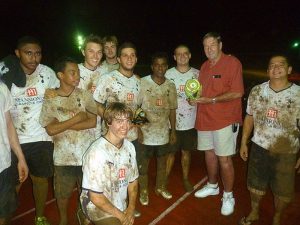
International FC, being awarded the Berry-Town.com Pohnpei Premier League Runners-Up Cup

If you had asked Surrey-based accidental author Stephen Johnson twenty years ago whether he would one day write a ten-book children’s series, sponsor a grassroots football kit in East London, and end up backing a trophy for “the worst team in the world” in Micronesia, he says he would have laughed. Yet life, he reflects, has a habit of surprising you.

Johnson, who has lived in the Epsom & Ewell area for many years, says the whole adventure began almost by accident, from the writing to the football involvement. His children’s picture-book series Berry Town did not begin with a long-held dream but with a workplace bet. “I’d been telling a colleague that anyone can achieve anything with enough persistence,” he recalls. “He challenged me to write a book. I told him books take years, so he said, ‘Fine, write a children’s book.’ Challenge accepted.”

The idea took shape around characters inspired by fruit. Years earlier, Johnson had pitched a fruit-based TV concept that was dismissed on the grounds that “kids aren’t interested in fruit”, but the idea stuck with him. When the challenge arrived, he created the Berry Town community, beginning with Mrs Straw, a character he describes as having “very Hyacinth Bucket vibes”. Illustrator David Leonard joined after Johnson scoured the internet for artists willing to take on the unusual brief with a modest budget. “David just got it,” he says. “My sketches needed rescuing, and his flat, colourful artwork brought the whole world alive.”

There were some early hiccups, including a character name that had to be changed after a reviewer pointed out an unfortunate slang meaning. “That one needed fixing straight away,” Johnson admits. “You never forget moments like that.”

Before Berry Town ever reached Micronesia, it first made its mark in East London. In 2009, Johnson sponsored a full kit for Senrab FC, a grassroots club renowned for producing future Premier League players. The shirts featured bespoke artwork of two Berry Town characters, the Boysen Twins. “I was doing well at the time and wanted to give back,” he says. “Helping kids felt right.” Many of the young players still remember “the Berry Town kit”, and several were given copies of the books — one child telling him it was the first book they had ever owned. “If you can support kids in football and in reading, you do it,” Johnson says.

But the most surprising chapter unfolded 7,000 miles away in Pohnpei, Micronesia. Johnson came across an article about two British men, Paul Watson and Matt Conrad, who travelled there to coach what was widely considered the worst football team in the world. “I loved their ambition,” he says. “I contacted them and asked if I could help.”

He ended up sponsoring the Berry Town Cup — awarded to the runners-up of the Pohnpei Premier League. The main trophy had already been sponsored, so he took the next one available. Only later did he realise the league was often improvised, with teams struggling to assemble due to travel costs. “But none of that mattered. I just wanted to help,” he says. He also sent copies of the books to local schools, where they became unexpected resources for children learning English.

More than a decade later, Johnson rediscovered the original artwork, drafts, and even the formal sponsorship certificate tucked away on an old computer. “It was labelled ‘Old Projects, Berry Town’,” he says. “I opened it all up and smiled. I’d forgotten how much heart went into it.” Sharing the story with his football-mad 13-year-old son brought new joy. “He loved it,” Johnson says. “He started researching Pohnpei, asking questions. It became this lovely bonding moment.”

Although Johnson believes Berry Town “has had its time”, he is considering releasing the books digitally, probably for free. “Why not let the world enjoy them?” he says.

What began as a playful dare became a decade-spanning adventure involving creativity, kindness, international football, and a legacy that travelled far further than its author could ever have imagined.

Sam Jones – Reporter

Photo: International FC, being awarded the Berry-Town.com Pohnpei Premier League Runners-Up Cup


“Us and Them” visualises connections with former Epsom patients

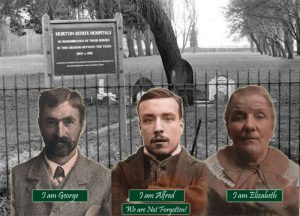
Horton Cemetery with former patients photos

A ground-breaking heritage project exploring the lives of disabled people detained in Surrey’s former mental hospitals is turning fresh attention on Horton Cemetery in Epsom – the burial ground of some 9,000 men, women and children whose resting place remains locked, overgrown and inaccessible under the control of a property speculator who has neglected the site since the 1980s.

Freewheelers Theatre and Media, a creative company of disabled artists based in Leatherhead, is leading Us and Them, a National Lottery Heritage Fund-supported initiative using original medical portrait photographs and case records from Surrey’s long-closed asylums. Working with photographer Emma Brown, community history group On the Record and researchers at King’s College London, they are uncovering the stories of patients whose voices were seldom heard in their lifetimes. The project includes new wet-collodion portraits of Freewheelers members made using the same Victorian techniques once used in institutions such as The Manor Hospital and West Park. These contemporary portraits will be shown alongside the originals in a touring exhibition, with the first major display due to take place at The Horton, Epsom, in 2026.

For Epsom, the work resonates particularly with Horton Cemetery – the former burial ground for patients from the Epsom Cluster hospitals, including The Manor, Horton, Long Grove, West Park and St Ebba’s. Despite its national historic significance as the largest asylum cemetery in the UK, the cemetery has been left to decay for decades and remains closed to relatives, historians and the wider community. The Friends of Horton Cemetery continue to campaign for its return to public or charitable ownership so that the site can be restored, documented and respected as the resting place it once was.

The Freewheelers project highlights the human stories behind those buried there. One participant, Alice Scott, chose to pair herself with Rose Harris, a woman confined to The Manor Hospital in 1910 and buried in a pauper plot at Horton Cemetery in 1917. Another member, Pete Messer, recreated the photograph of workhouse survivor Frederick Tarrant, who spent 15 years in various institutions, part of the same system that funnelled thousands of patients to unmarked graves in Epsom.

Historians involved in Us and Them emphasise how the original photographs were created without consent for purposes of classification and diagnosis, often contributing to stigma. Today, the Freewheelers portraits aim to prompt public reflection on how disability is perceived and represented, and how society remembers – or forgets – those who lived and died within institutional care. The project’s December creative sessions coincide with a Christie’s auction of similar historical images, underlining renewed public interest in the stories of institutionalised people.

The Friends of Horton Cemetery say the renewed national attention generated by projects like Us and Them strengthens the argument that the burial ground must be brought back into community hands. Volunteers have long argued that the cemetery is a unique and irreplaceable heritage site, containing the life histories of people from across Britain and the world, many of whom have living descendants still searching for answers.

Recent BBC reporting has highlighted the scale of the neglect, the site’s condition and the growing calls for public ownership. For many families, the cemetery is the last physical link to relatives whose lives were shaped by the former Epsom institutions. Campaigners say that without intervention, the stories now being rediscovered risk remaining disconnected from the very place where so many of those patients were laid to rest.

More information about the Friends’ campaign and the history of the site and some 500 personal stories of the patients buried in the Epsom Hospital Cluster cemetery in Hook Road/Horton Lane, Epsom can be found at www.hortoncemetery.org

Sam Jones – Reporter

See BBC coverage here:

Disability group recreates Victorian hospital images

‘Grandad is one of 9,000 buried in derelict site’

Call for public ownership of asylum cemetery

Related reports in Epsom and Ewell Times:

Portraits of pauper patients in Epsom’s Horton Cemetery, inspires artist

Petition to reclaim Horton Cemetery from property speculator

Local community gathered at Horton Cemetery

Another Horton Cemetery Life Story

Image: Background Horton Cemetery: photographed on 28 February 1971 by L R James. Epsom & Ewell Local & Family History Centre. Foreground: Courtesy Friends of Horton Cemetery


MP warns as 3,600 Epsom homes face fuel poverty

Couple huddled by single bar fire while under blankets

More than 3,600 households in Epsom and Ewell are estimated to be living in fuel poverty this winter, according to new figures that have reignited debate over the Government’s decision to scale back national home-insulation funding.

The estimates come in the same week the Chancellor announced cuts to the Energy Company Obligation (ECO) scheme, a long-running programme that funds energy-saving improvements such as insulation in low-income households. Government data indicates ECO has delivered 1,866 installations locally, helping families reduce heat loss from older homes that are often poorly insulated. Local MP Helen Maguire said withdrawing support now would leave “thousands of families in draughty homes and facing high bills” at a time when many residents already feel financially stretched.

Fuel poverty is measured by comparing a home’s required energy costs with household income. National charities warn the UK remains one of the worst-insulated housing stocks in Western Europe, meaning households are more vulnerable to spikes in market energy prices. Despite a fall in wholesale gas costs over the past year, Ofgem confirmed that bills remain significantly above pre-crisis levels, and several support schemes introduced during the 2022–23 energy shock are winding down.

Analysts at the Resolution Foundation have noted that around half of the temporary support announced in the Budget is due to expire within three years. Separate modelling by climate think-tank E3G suggests reducing the scope of ECO could prevent up to a million homes nationwide from receiving insulation improvements over the next four years and may lead to job losses in the retrofit and construction sector.

The Government has argued that its energy efficiency targets remain in place and that the Budget decisions reflect wider fiscal pressures. Ministers say additional measures to stabilise wholesale prices and support low-income households will continue. But campaigners and industry groups have expressed concern that cutting insulation programmes risks higher long-term costs for both consumers and the state, as poorly insulated homes require more energy to heat.

Helen Maguire said residents are already reporting that “they feel poorer by the day” and called on ministers to back a more ambitious national upgrade scheme. The Liberal Democrats are advocating an emergency programme offering free insulation and heat pumps for people on low incomes, alongside removing the Renewables Obligation levy from electricity bills. The party claims that breaking the link between gas and electricity prices and scaling up home retrofit work could halve household energy bills by 2035.

As temperatures fall, local authorities, charities and advice services expect increased demand from households struggling to balance heating costs with other essential spending. Nationally, fuel poverty campaigners continue to urge the Government to treat insulation as an infrastructure priority, warning that winter pressures will persist until the UK’s older housing stock is modernised at scale.

Sam Jones – Reporter


Woking up to Surrey face recognition cameras

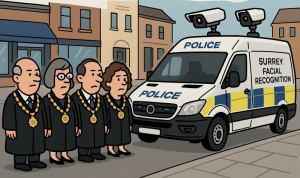
Cartoon councillors protesting against police camera van

Formal protests have been lodged against Surrey Police’s use of facial recognition technology that scans the faces of every adult and child in a bid to identify known suspects. Surrey Police was given two live facial recognition vans from the Home Office in November and has since put them to use in Redhill and Woking. The surveillance cameras record the images of everyone who walks across their paths to see if they are a match for people on their watchlist. The force says it deletes anybody who does not match to “minimise the impact on their human rights”, with watchlist images deleted within 24 hours. The police said there were known issues in the past with facial recognition technology, including potential gender and ethnic bias, but that developments and new AI-driven algorithms have reduced this.

Now, a group of 25 cross-party Woking Borough Councillors have written to the force demanding the cameras are mothballed until meaningful consultation with residents and their elected representatives takes place over how, or whether, they are used. The letter says that fundamental questions of governance and human rights should have been resolved before any decision was made – including accountability for wrongful stops or arrests from misidentification, whether cameras record continuously or selectively, and how and when data is processed, shared, stored and deleted. A resolution has also been passed by Woking Borough Council’s Communities and Housing Scrutiny Committee calling on Surrey Police and the Crime Commissioner to join its January 20 meeting to answer questions about the use of live facial recognition cameras in Woking. In the meantime, councillors want the cameras’ usage suspended immediately, pending full consultation with residents, with a focus on young people and those from ethnic minority backgrounds and community groups, as well as a full independently led equality and human rights impact assessment.

Chairing the Tuesday, December 2 committee was Councillor Tom Bonsundy-O’Bryan. He said: “They were deployed in Woking on November 26 and in Redhill on November 13. They scanned the faces of more than 8,000 members of public; 99.9 per cent of those scanned were not arrested. Of the individuals explicitly flagged as alerts by the technology in Redhill, 60 per cent were ultimately not arrested; only two arrests were made. There are serious questions about the proportionality of this. Imagine the police standing down the road, and asking to see everyone’s passport, checking their ID, just in case they are a criminal. It would be a ludicrous thing, we wouldn’t stand for it, it would be outrageous, and that is effectively what this technology is doing. It scans the face of anyone, child or adult, walking down the street and compares it to a watch list. Everyone wants the police to stop criminals, to find and arrest the people responsible for crime, but is this technology really proportionate in being deployed here in Woking?”

A spokesperson for Surrey Police said: “The introduction of live facial recognition technology, which is already being used successfully by other forces in the UK, is a vital tool to help us investigate crime thoroughly and relentlessly pursue criminals. We meticulously planned the rollout of the technology to ensure our use is appropriate, proportionate, and that we are operating with transparency. As part of this, we appropriately engaged with a wide variety of stakeholders and have ensured all information, documentation and policies are publicly available on our website. Since the launch on November 13, we have successfully completed a deployment in Redhill where officers arrested a 69-year-old man for breaching his sexual risk order and conducted condition checks for a sexual harm prevention order and a stalking protection order. On a further deployment in Woking, a 29-year-old man was arrested on suspicion of rape and shoplifting and two women were issued community resolutions for shoplifting.”

Police added that the technology has been extensively tested by the National Physical Laboratory and that the algorithm used “shows no statistical bias towards gender or ethnicity (as tested nationally)”. They said officers are briefed before each deployment regarding any potential disparity relating to race, age and gender, and that “extra corroboration” is required before any action is taken. “It is our responsibility to use every tactic and innovation available to us to keep the public safe, deter criminal behaviour, protect people from harm, and locate the most serious of offenders – and the live facial recognition technology has helped us to do exactly that.”

Police and Crime Commissioner Lisa Townsend said: “I want to make sure our communities are as safe as possible for Surrey residents which is why our police officers must have every tool at their disposal to track down criminals operating in our midst. I do understand that people may have concerns which is why it is important that the debate on policing technology reflects the facts, the safeguards in place and the clear benefits to public safety. These vans will be used proportionately and it is important to stress that law-abiding members of the Surrey public going about their daily business have nothing to fear by their use. The cameras will help our policing teams identify and detain those on a pre-determined watchlist such as violent criminals and sex offenders.”

Chris Caulfield LDRS

Related reports:

Live facial recognition policing comes to Surrey


Young Surrey volunteers help shape new neuroinclusive travel app

Young people on train

Young people in Surrey have helped test a new travel-planning app designed to make public transport less stressful for neurodivergent passengers. Members of ATLAS, Surrey Youth Voice’s participation group for young people with additional needs and disabilities, spent three days trialling Aubin, a free app that takes a different approach to journey planning.

Unlike standard apps that prioritise the quickest route, Aubin focuses on reducing anxiety and supporting users who may find travel overwhelming. The app allows travellers to tailor their journey according to personal needs, rather than simply finding the fastest option. ATLAS members used it to plan and carry out trips across North, East and West Surrey, assessing how effectively it helped with independence and confidence.

Aubin functions as both a route planner and a “travel companion”. Alongside directions, it offers practical tools to support users in moments of uncertainty. These include grounding exercises to help regulate emotions during difficult points in a journey; a type-to-speech feature for anyone who may struggle to speak when stressed; and an editable Autism Card that allows travellers to explain needs quickly and discreetly to staff or fellow passengers. Users can also set preferences that shape the route suggested, such as avoiding busy interchanges or long waits.

ATLAS has long advocated for more accessible, neuroinclusive transport options, arguing that navigating public transport is essential for young people to reach education, work and social opportunities. Members described the trial as a chance to influence a product that could help reduce isolation and build independence for others with similar needs.

At the end of the pilot, ATLAS met with Aubin’s co-founder and product manager, Corinna Smiles, to give detailed feedback. Suggestions included adding journey-sharing options so a trusted contact can follow someone’s progress, communication prompts for stressful situations, and a checklist to help users prepare before leaving home. Aubin welcomed the recommendations and said they would incorporate them into future updates.

Ms Smiles said the pilot was a valuable example of user-led design and thanked the group for helping shape the app. ATLAS members have since given Aubin their “seal of approval”, encouraging other neurodivergent young people to try it.

ATLAS member Emily said taking part “felt empowering” and that knowing the group’s input would help autistic travellers made the experience worthwhile: “I feel honoured to have been part of shaping this app, which I’m sure will give many people the tools to travel with confidence.”

Councillor Helyn Clack, Deputy Cabinet Member for Children, Families and Lifelong Learning, said the collaboration showed the importance of designing tools with “the voices of the community they serve”, and that the app has real potential to improve accessibility.

Aubin is free to download from app stores.

Sam Jones – Reporter

Image – Surrey County Council news


Surrey fast to introduce slow speed limits?

20mph sign. Picture taken by LDR. Permission for use by all partners.

20mph speed limits could soon be introduced across three Surrey neighbourhoods, with residents now invited to give their views.

Surrey County Council is consulting on new slower-speed zones in Barnsbury and Bonsey Lane in Woking, the Goodwyns estate in Dorking, and the Parsonage Road area of Cranleigh. The aim, the council says, is to make streets safer and more pleasant for people travelling on foot, bike and especially children heading to and from school.

Speed surveys carried out by the council show drivers in all three areas are already mostly respecting limits, meaning the new rules could be brought in without speed bumps or chicanes. In Woking, some “light-touch” measures such as vehicle-activated signs or painted roundels could be added on Bonsey Lane as an extra reminder to keep speeds down.

If approved, the schemes would each cost around £20,000 from a budget specifically set aside for 20mph zones. Details on the council’s website highlight that money cannot be spent on potholes or other road maintenance, which is funded separately.

Residents may spot a few extra road signs, though council officers say they will only install what’s needed and will make use of existing posts wherever possible to avoid cluttering pavements.

Currently, there are no plans for police to step up enforcement. Instead Surrey said the new limits must “self-enforce” and remain credible to drivers. Information online stressed that action should not wait for someone to be hurt: slower traffic means fewer crashes, and those that do happen are much less severe.

The consultation website read: “Research suggests 20 mph schemes do not increase air pollution. Slower vehicle speeds support a shift to more walking, scooting and cycling and then fewer polluting vehicles on the roads. 20 mph schemes can also encourage a smoother driving style with less acceleration and deceleration between junctions and pedestrian crossings.

“The amount of fuel a vehicle uses is mainly influenced by the way we drive – driving at a consistent speed is better than stopping and starting. Accelerating up to 30 mph can take twice as much energy as speeding up to 20 mph.

“Some people are concerned that 20 mph may lead to increased journey times. However, most of the delays that occur for motor vehicles in built up areas are at junctions, rather than the roads between junctions.”

Plans and maps for each scheme are now available online, and residents living in or near the affected roads are being encouraged to take part in the consultation and share their feedback.

Emily Dalton LDRS

Related reports:

Surrey examines a plea for a 20mph road

Mixed responses in Surrey to 20mph zones

I want to resist 20mph speed limits

Image: 20mph sign. Picture taken by LDR. Permission for use by all partners.


The Mayor of Epsom and Ewell meets local climate volunteers

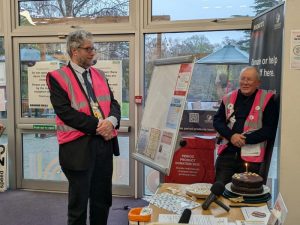
Mayor Leach at EECan event.

The Mayor of Epsom & Ewell, Cllr Robert Leach, met with members of the Epsom and Ewell Climate Action Network (EECAN) to hear about the community projects they are mobilising over the next six months, including the borough’s first Library of Things. EECAN, which was marking its first anniversary, was founded by residents concerned about the environmental and social impacts of climate change and has grown steadily into an active network of volunteers leading initiatives that encourage climate-friendly actions, build resilience and support sustainable choices across the borough.

The volunteers explained that the Library of Things will allow residents to borrow items such as DIY tools, gardening equipment, sewing machines, pressure washers and even party or camping gear. For many households, the cost of purchasing these items outright can be prohibitive, and for others it simply isn’t necessary when the item might only be used once or twice a year. EECAN believes the scheme could help cut waste, save families money and encourage the communal sharing of resources.

The project is currently in the planning stage, with the group sourcing donated items and recruiting volunteers ahead of a planned launch in April 2026. During the meeting, Cllr Leach expressed strong support for EECAN’s work, welcomed its potential benefits for local residents, and even signed up as an early supporter while taking an interest in how the project might expand once established.

Past and ongoing EECAN initiatives include November’s successful Bike Amnesty event, which collected around 70 bikes for the Surrey Bike Bank to refurbish and redistribute, and regular Climate Conversations held on the second and fourth Monday of each month. Both projects have attracted increasing interest from residents wanting to learn more about sustainable living and community-driven solutions.

EECAN founder and chair William Ward spoke about the group’s longer-term ambitions, which include expanding outreach, increasing visibility across the borough and eventually achieving official charity registration. Becoming a registered charity would help them access currently unavailable funding streams and deliver larger, more stable projects. In just 12 months the group has grown from seven to 50 volunteers and from two to eight trustees, who are now preparing their application to the Charity Commission.

The meeting concluded with cake-cutting and a discussion about strengthening links between EECAN and the council. The Mayor encouraged the group to continue raising awareness of their activities and said he would share their projects with fellow councillors when appropriate. Volunteers said they hoped the meeting would lead to deeper collaboration and stronger recognition of grassroots environmental initiatives within local decision-making.

As EECAN prepares for a busy six months, the group says it remains committed to promoting practical, affordable and community-led climate action. Residents interested in getting involved or joining the paid Heat Champion team can visit https://www.eecan.org/home or email eeClimateActionNetwork@gmail.com. Sign up for the free Home Energy Advice service here: https://www.zerocarbonguildford.org/energy-surveys

Written by:
Jen Din, from The Epsom Edit (www.theepsomedit.co.uk)

Related report:

Epsom and Ewell Climate Action Network launches with community events and initiatives


Epsom and Ewell FC’s narrow defeat

Epsom and Ewell football team greet officials

Tooting & Mitcham 2 – 1 Epsom and Ewell FC. Saturday 29th November. Imperial Fields, Morden. Combined Counties Premier South League

The Salts slipped to a narrow 2-1 defeat at high-flying Tooting & Mitcham Utd on Saturday afternoon despite playing most of the football that was played. The referee showed 7 yellow cards to the two sides on the pitch (5 to The Salts), as well as a couple of yellows to the management teams and a red card to one of Tooting & Mitcham’s assistants. We did wonder if the game would be played due to torrential rain in the Epsom area, but if it did rain in Tooting, the ground played very well. The number of yellows does provide a suggestion of the type of game played out.

We kept the same starting team from last week’s abandoned game v Badshot Lea, with only Ethan Charles-Brazier replacing Ryley Merrett on the bench. The game started well for Epsom & Ewell as we went on the attack from the kick-off and Ali Fofahan was on the receiving end of a bad tackle from T&M No. 6 Jordy Ndozid, who found himself in the book in the 1st minute. Unfortunately, nothing came from the free-kick. Fofahan was causing problems on our right and a great ball in found three players at the back post but Aiwone could only head the ball high and wide from close in. Shortly after, T&M No. 10 Simeone played a ball back to his keeper without really looking, but fortunately for him it was just ahead of Robinson, who was just a little too far out to get to it before the keeper cleared.

On 15 minutes a long ball from T&M found its way into the Salts’ box and it was allowed to bounce. Unfortunately, it bounced up and hit Nazareth on the hand and even though it was by his side and not in an unnatural position, the referee pointed to the spot, aided by the shouts of the large crowd of T&M fans behind our goal. T&M No. 9 Shay Brennan made no mistake. Tooting & Mitcham 1-0 Epsom & Ewell.

We were still in the game causing lots of problems on our right. Luis Oliveira went on a mazy run and was clipped just inside the box. Deciding to stay on his feet he chased the ball but was unable to cross it. Should he have gone down? I would say if he had, the referee would have pointed to the spot, but it was still a foul that made him lose control, so really it should have been awarded either way. A few minutes later Oliveira went on another run, the T&M defenders this time not wanting to touch him, but he was unable to get any power in the cross and it went back to McKimm in the goal.

There was very little action for the rest of the half, and just when we thought we would be heading into half-time a goal down, Brennan found his winger Oldham on their right. He quickly moved towards the byline where there didn’t seem much danger, but for some reason all three defenders were drawn to the ball and he was able to send a nice ball to the far post where Tariq Mahmoud was unmarked and he slid the ball past Salts keeper Nabbad. We definitely didn’t deserve that but on the other side we didn’t force the T&M keeper to make a save either.

HT Tooting & Mitcham 2-0 Epsom & Ewell

Two minutes into the second half we nearly gave T&M a third when Nabbad came off his line to clear a long ball but missed it. The T&M forward had to take the ball wide to get it under control. This allowed Aiwone to get back and make a great saving tackle to prevent the ball hitting an empty net. Most of the rest of the game was played with balls over the top or missed passes as both teams tried to take hold of the game. As I said, we were playing the better football but seemed to go for the long pass rather than short, easy balls. Players seemed to want to run with the ball rather than making a quick pass, by which time the recipient was closed down and we invariably had to go back.

Adam Green came off the bench when Tom Collins received a nasty kick on his ankle in the box, and again we believed the ref should have pointed to the spot, but nothing was given. Green, though playing alongside Shane Dunne, started to give The Salts some impetus and control and we looked dangerous. In the 67th minute we got our reward. With some good play on the right, the ball was switched across to Robinson, whose first shot was blocked and the ball fell out to Green, whose shot was also blocked. This time it came back to Robinson who made no mistake. Tooting & Mitcham 2-1 Epsom & Ewell.

On the 72nd minute we made two substitutions with Obasanjo Akinniranye and Karl Bailey replacing Brendan Murphy-McVey and Callum O’Keeffe respectively. Oba was straight into the game, making another good run on our right and getting to the goal line but Herring was unable to put it away, and it seemed he was possibly fouled, but the referee was not giving again and unfortunately a lot of anger from the benches made him come over and book Max Johnson, not for the first time this season.

The referee indicated 9 minutes of injury time, and we tried our best, pinning T&M in their own half. Another run from Oba was defended well and in the last minute a great shot from him just went by the post, ending our last chance of an equaliser.

FT Tooting & Mitcham 2-1 Epsom & Ewell.

The T&M assistant who had been sent off returned to the pitch to “tease” our own management team and this set off another melee in the centre circle as the teams were trying to leave the pitch. Our coach remonstrated with the referee about him getting back on the pitch, which only earned him a very unfair yellow. It’s always difficult for the referee when players start play-acting or calling for every tackle to be a yellow or possibly red, but the game certainly lacked any discipline, so it will be interesting to read his report. We stayed in 13th place as the teams around us lost and Tooting move up to 2nd place.

There is a quick turnaround for our next game away at Abbey Rangers on Tuesday evening, KO 7.45pm, and on Saturday we are away to bottom side Guildford City with a 3pm KO. We look forward to seeing you there.

Epsom & Ewell:
Sami Nabbad, Luis Oliveira, Ethan Nelson-Roberts ©, Shane Dunne, Antonios Nazareth, Stefan Aiwone, Callum O’Keeffe, Tom Collins, Tyler Robinson, Brendan Murphy-McVey, Ali Fofahan.
Subs: Green (54), Bailey (71), Herring (71), Akinniranye (71), Brazier (78).

Report and image: Epsom and Ewell FC Media


Toyota prevention of future death report

Toyota HQ Epsom Google

A senior coroner has warned that more drivers could die because a Toyota braking system failed to stop a woman’s car before a deadly M25 crash. Lisa Bowen, 48, died instantly when her Toyota Corolla hit the back of a stationary lorry on the hard shoulder at almost 38mph in January 2022 despite her pressing the brake pedal repeatedly. Senior Surrey coroner Richard Travers said the car’s anti-lock braking system (ABS) “operated to reduce the braking effect almost entirely” and was “working in accordance with its design”, but the design did not account for what happened when her tyre deflated and detached at speed. He said the outcome was “an unintended effect of the system’s design which arose because the specific scenario […] had not been taken into account in the design process.” Mr Travers warned this creates “a continuing risk that future deaths could occur unless action is taken”.

The senior coroner said he was noting that a large number of Toyota Corollas on UK roads have the same anti-locking braking system as Ms Bowen’s car, and other brands may well be affected too. He also criticised the “catastrophic failure” of the lorry’s under-run protection bar saying its strength was “grossly insufficient” under current laws. The coroner said he was concerned that the risk of future death will arise without more stringent requirements for how much force such bars must withstand.

He has issued a statutory Prevention of Future Deaths report to Toyota, the Driver and Vehicle Standards Agency and the Department for Transport (DfT), saying: “Action should be taken to prevent future deaths by addressing the concerns set out above.” They must reply by 16 January 2026. A DfT spokesperson said: “Every death on our roads is a tragedy, and our thoughts are with Lisa’s family and loved ones. We will carefully review the coroner’s findings from this tragic case to determine the appropriateness of further amendments to these requirements.”

A Toyota spokesperson [Toyota’s HQ is in Burgh Heath, Epsom] said the company was “deeply saddened by this tragic accident” and “acknowledges the findings of the coroner”, adding it would “carefully review the Senior Coroner’s conclusions.”

Emily Dalton LDRS

Toyota HQ Epsom Google


Surrey to get new recycling centre

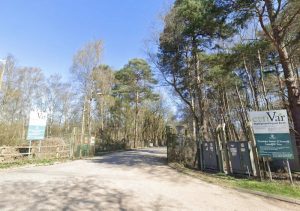
Former landfill site in Trumps Farm, Kitsmead Lane, Longcross (image Google)

Bin lorries rumbling through Wentworth, Virginia Water and Chertsey could become a much more common occurrence after plans for a massive recycling plant on former green belt land just south of the Surrey towns was approved. The Kitsmead Lane site in Longcross will be capable of processing up to 100,000 tonnes of recycling each year – with 164 rubbish vehicle ‘movements’ every day. Most would be the bin lorries carrying recycling to and from the plant with the rest articulated lorries transporting the sorted waste off site.

Once built it would take recycling from the north and west of Surrey. Currently this gets shipped out to Kent, with a small amount dealt with in Leatherhead. The new facility will therefore mean fewer long journeys out of the county, but an intensification in lorries around the site. To minimise the impact, Surrey County Council’s planning committee has called for a transport plan to be drawn up, but admitted it would be difficult to actually enforce it. Officers told the Wednesday, November 26, meeting: “Understandably, there still have been concerns about the potential for this to add further vehicles through some of the more sensitive locations. To that end we are also recommending, as part of the travel-plan condition, more details on the exact routes that will be used and what measures are in place to minimise movements through sensitive places.”

Sight lines leading out of the plant are also poor, the meeting heard, so the speed limit along Kitsmead Lane would be reduced to 30mph. It’s the first new waste recycling plant application approved by Surrey in the last quarter century, due in part to its long-term relationship with Suez. Kitsmead will sort and separate co-mingled recycling collected from residents’ household bins and become the county’s second recycling plant – with Leatherhead being the other.

In 2026, Surrey County Council and the 11 boroughs and districts will be dissolved and reformed into two huge authorities for the entire region. The new site is expected to take waste from across the two new councils, East and West Surrey, although this has not been formally agreed. The plans were voted through unanimously after hearing the former green belt site was now classified as grey field – and had been designated in the Surrey Waste Plan. Runnymede Borough Council raised concerns over the size of the building and the impact on nearby residents. Its views were echoed in the 21 letters of objection from residents who were worried about the increased traffic, both in volume and scale.

Chris Caulfield LDRS

Former landfill site in Trumps Farm, Kitsmead Lane, Longcross (image Google)