
Epsom and Ewell Times

2nd April 2026 weekly

ISSN, LDRS and IMPRESS logos

Epsom on course to connect Surrey businesses

Source in Surrey lanches with Matt Furniss (centre) alongside Charlotte Webb (Surrey Chambers) and Dawn Redpath (SCC Director for Economy and Growth)

An innovative initiative to help Surrey businesses benefit more from spending in the region’s £50 billion economy will soon launch. Source in Surrey has been developed by Surrey Chambers of Commerce after it secured a grant from Surrey County Council’s Economic Growth Fund.

The six-figure initiative is designed to strengthen the regional economy by connecting small and medium-sized businesses with larger organisations for major contract opportunities. It kicks off next month, with the first of 10 roadshow events taking place in Woking on February 11.

The programme will also include sales masterclasses and the creation of an AI-powered platform, streamlining connections between buyers and suppliers.

Source in Surrey is one of several projects funded via the council’s Economic Growth Fund, which pools public and private funds — including government Shared Prosperity Funding — into a single pot.

Since launching in April, more than £3 million has been invested via the council in local businesses and organisations to support business growth, innovation and employment opportunities.

Cabinet Member comment

Matt Furniss, Surrey County Council’s Cabinet Member for Highways, Transport and Economic Growth, said:

“Source in Surrey will tackle a real challenge – helping our smaller businesses access the kind of major contracts that can transform their growth trajectory. By connecting SMEs with larger organisations and equipping them with the skills to compete, we’re not just creating jobs and boosting our economy, we’re building a more resilient and collaborative business community across the county.

“We’re pleased to have been able to support the initiative via the Economic Growth Fund and I look forward to seeing our people, places and businesses benefit from closer connections in the future.”

How the programme works

Source in Surrey will look to bridge the gap by focusing on four key areas: enhancing selling capabilities, improving procurement access, building customer databases and forging closer connections, starting with a county-wide roadshow programme.

Each roadshow session includes a keynote session from a business leader. Attendees will also be introduced to the AI platform, designed to help businesses find and procure suitable contracts.

Roadshow dates and venues

The roadshows, which are free to attend, take place at:

  • Dukes Court, Woking (February 11)
  • Tandridge Golf Course, Oxted (February 24)
  • Hartsfield Manor, Betchworth (February 26)
  • Login Lounge, Camberley (March 3)
  • The Thames Club, Staines (March 11)
  • Farnham Maltings (March 17)
  • Reigate Manor, Reigate (March 24)
  • Guildford Pavilion (April 14)
  • Epsom Racecourse (April 23)
  • Brooklands Museum (April 28)
Sales training programme

The initiative also includes expert-led sales training courses delivered by Anita Saini of HX Solutions. Sessions begin on 10 February at Login Lounge, Camberley, and 10 March at Dukes Court, Woking.

These practical courses aim to equip smaller businesses with the confidence and skills needed to compete for and win significant contracts.

Surrey Chambers comment

Louise Punter of Surrey Chambers said: “The Surrey economy is large but much of the spend of the larger organisations is made outside of Surrey, so we want to encourage larger businesses and organisations to ‘buy local’ and make it easier for smaller businesses to win contracts. By bringing these different parts of the business eco-system together we will also facilitate other ways of supporting the smaller businesses through training opportunities and economies of scale.”

Further information

Businesses can find out more and book onto announced events online at:
https://www.surrey-chambers.co.uk/event-listing

Alternatively, enquiries can be made by email to:
sourceinsurrey@surrey-chambers.co.uk

Surrey County Council

Source in Surrey lanches with Matt Furniss (centre) alongside Charlotte Webb (Surrey Chambers) and Dawn Redpath (SCC Director for Economy and Growth)


Penchant for porn on Surrey police computer leads to ban

Surrey Police ethics print on wall at Mount Browne HQ. (Credit: Emily Dalton/LDRS)

A Surrey Police officer was dismissed for watching porn, taking pictures of his genitals and buying cocaine on a work device. Former Detective Constable (DC) Luke Turner has also been given a lifetime ban from the Force.

An accelerated misconduct hearing on December 19 found that Mr Turner had used his police-issued mobile data terminal (MDT), a work device used to access police systems, for explicit and unprofessional purposes.

The hearing concluded Mr Turner used it to help buy cocaine on four occasions between July and August 2025, searched and watched porn, took photos of his genitals and engaged in sexual messages with another individual.

Chair Sarah Grahame rules that his actions seriously damaged public trust and breached multiple police standards. Mr Turner was immediately dismissed without notice and placed in the national barred list.

The chair said: “I believe that the public of Surrey would be rightly appalled if they knew that this officer was engaging in this behaviour.” They said such behaviour would discredit the police service and damage its reputation.

Mr Turner denied and disputed the allegation that he used the work device to buy Class A drugs as well as sending or receiving sexual messages on it.

He did not contest allegations that he watched porn and took pictures of his genitals on his work device but argued they did not amount to gross misconduct.

But Assistant Chief Constable Grahame said she reviewed all the evidence and decided, on balance, that the behaviour had taken place. She said his actions broke two professional standards: discreditable conduct and failing to follow force policies and rules.

Under updated police conduct rules introduced in 2025, there is now a presumption that officers found guilty of gross misconduct will be dismissed unless there are exceptional circumstances.

The chair said there were not mitigating factors strong enough to justify a lesser punishment.

She said: “I do not believe that DC Turner could remain with Surrey Police given the seriousness of the behaviour found on duty.”

Emily Dalton LDRS

Surrey Police ethics print on wall at Mount Browne HQ. (Credit: Emily Dalton/LDRS)


Paradox of Protection policy for tenants: triggers Surrey police evictions

Cartoon - policeman and family leaving home with eviction notice on door.

A pregnant mum says families have been left facing a “very real prospect of being homeless” after being told to leave Surrey Police subsidised housing.

At least 15 households living in homes owned by the force have been served Section 21 ‘no fault’ eviction notices and told they must move out within 12 weeks.

The Surrey Police and Crime Commissioner’s (PCC) office owns a number of properties, which are rented to officers at subsidised rates to help ensure high housing costs are not a barrier to joining the force.

However, up to 15 families say they have now been told they must leave after building their lives in police-owned homes. Some of the officers affected have served with the force for several years, if not decades.

‘Very real prospect of being homeless’

One woman, who is due to give birth in five weeks and asked not to be named to protect her identity, said: “I don’t sleep at night. I wake up in the middle of the night and my brain is just ticking over. What are we gonna do?” She added: “We face a very real prospect of being homeless.”

She said families are being pushed into Surrey’s expensive private rental market with little time and no savings for upfront costs. She told the Local Democracy Reporting Service (LDRS) that families did not make a down payment when moving into the subsidised housing. The 34-year-old said: “What we’ve now got to do is go out into a private rented sector […] vastly more expensive than what we’re paying now […] and 12 weeks in which to gather enough money to find a deposit.”

She explained that if the force had given more notice of its intention to sell or repurpose the properties, families could have built up savings.

‘We have been totally abandoned’

Beyond the financial pressure, she said families feel unsupported. “There has been a total lack of support,” she said. “There’s no consideration for welfare, there’s no referrals or anything. They’re not keeping check on anybody.” She added: “We have been totally abandoned.”

‘Very tough decision’

Lisa Townsend, PCC, told the Local Democracy Reporting Service: “The imminent introduction of the Renters Rights Act has given us little choice but to take these steps now.” She said the “very tough decision” was motivated by a desire to do right by “the Surrey taxpayer and for the wider workforce at Surrey Police”.

The PCC added: “I appreciate the impact this will have on those current tenants and we have given them the longest notice period we were able to.”

Officers and their families have been told they must find alternative accommodation by May 1 — the same day the Renters’ Rights Act is due to come into force. The Act is designed to give greater protection to tenants, including banning no-fault evictions.

Plans change?

The 34-year-old mum questioned the explanation that legal changes forced the timing. “To say to somebody who’s got decades of service with this force, and you turn around and say to them, you need to leave because we want somebody who’s new in service […] there’s kind of an age discrimination there,” she said.

She explained that because of the eviction, her partner is considering quitting the force. “If this is how you treat people so badly, why on earth would [he] want to stay?” she said. She added that the force appeared to be casting out long-serving officers in favour of “newbies”.

Families say they were previously told there were no plans to change their housing situation, including during refurbishment works in 2024. The tenant said: “We were told any future eligibility changes wouldn’t affect current tenants.”

A Surrey Police spokesperson said that in December 2024 the PCC and Surrey Police advised all tenants they could be required “to give up possession of the property in the future for several reasons, including earnings exceeding the eligibility criteria”.

What Surrey Police say

Surrey Police said the move is part of a long-term plan to prioritise housing for newer staff. A force spokesperson said: “It is the ambition of the Police and Crime Commissioner and the Force to provide, and potentially grow, the temporary and subsidised housing stock available for employees who are early in their service and meet our eligibility criteria.”

The force said new rules mean applicants “must have been in Force less than three years” and must meet income limits, among other conditions. It confirmed: “Surrey Police has informed all serving police officers and their families currently residing in force-owned accommodation that they will be required to vacate their homes to make way for new recruits.”

It added: “This has been a very difficult decision to make, however, to meet the ambition of our future housing strategy, we must ensure we are utilising our housing stock in the fairest way possible for all colleagues within Surrey Police.”

Surrey Police said affected tenants have been offered meetings with senior leaders.

Emily Dalton LDRS


“Go all in” is Surrey’s literary call to read books

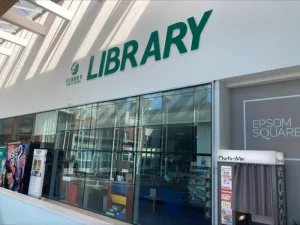
Epsom library

Surrey Libraries are thrilled to be taking part in the National Year of Reading, a UK-wide campaign designed to inspire more people to rediscover the joy of reading.

A Department for Education initiative and led by the National Literacy Trust, this year’s theme is “Go All In” and is being delivered by a group of more than 60 literacy sector charities and partners.

Throughout 2026, Surrey Libraries will host a vibrant calendar of events and activities to celebrate reading in all its forms. Each month, one of the county’s main libraries will take the lead on a key theme linked to the campaign, with all 52 libraries in Surrey joining in through themed activities, events, workshops and family-friendly sessions to engage and inspire readers of all ages.

February will see Redhill Library host a ‘Love Your Library’ family fun day on Saturday 14 February.

Residents are encouraged to explore their local library, where they can join for free if they are not already members, and discover a wide range of books and resources to borrow at no cost. Libraries also offer services including free Wi-Fi and computer access, e-books and audiobooks, e-magazines, digital skills support, and welcoming spaces for learning and wellbeing.

Cabinet Member comment

Denise Turner-Stewart, Surrey County Council Deputy Leader and Cabinet Member for Customer and Communities, said:

“The National Year of Reading is a fantastic opportunity for us all to ‘Go All In’ and celebrate the joy of reading together. We will continue to champion our libraries as welcoming, inclusive spaces in the heart of our communities that inspire, connect, and empower people; whether through borrowing a book, joining an event, or learning new digital skills.

“I encourage everyone to visit their local library, take part in the exciting events planned throughout the year, and help us make the joy of reading a shared experience across Surrey.”

Volunteering in your local library

Have you thought about volunteering in your local library?

Libraries are great places to volunteer, and there are many ways to get involved. Volunteering can help people learn new skills, meet and connect with others, and make a difference in the community. Some people volunteer to gain work experience which they can use to help find employment.

Volunteering can be for just a few hours each week, making it easier to fit around other commitments while still making a meaningful contribution.

Examples of how volunteers can support libraries include:

  • Running reading groups or book clubs
  • Helping at author events and workshops
  • Becoming a Summer Reading Challenge volunteer or supporting children’s storytime sessions
How will you ‘Go All In’?

Residents are encouraged to stay connected by visiting the Surrey Libraries events and activities webpage for the latest updates throughout the year.

Notes

For more information on events and activities in Surrey Libraries, visit: Events and activities in libraries – Surrey County Council

For more information on volunteering in Surrey Libraries, visit: Volunteering in libraries – Surrey County Council

Surrey County Council


Epsom & Ewell’s Council responds to Local Plan concerns

Town Hall and Local Plan

Epsom and Ewell Borough Council has responded to questions raised about the handling of its Local Plan examination, following criticism from a local resident that key issues were not discussed at the January meeting of the Licensing and Planning Policy Committee (LPPC).

The concerns, raised by Alex Duval and subsequently put to the council by Epsom & Ewell Times, centred on the absence of any Local Plan item on the LPPC agenda, whether revised evidence requested by the Planning Inspector had been submitted on time, and how the plan is being managed during the transition to a new unitary authority.

No committee decision required, says council

Responding to the first point, a council spokesperson said that although the Planning Inspector had requested additional work on two areas of the Local Plan evidence base following the public hearings in autumn 2025, no LPPC agenda item was required on 22 January because no formal decision was needed.

“The Local Plan Inspector requested that the planning authority undertake two pieces of work, as set out in her post-hearing letter dated 22 October 2025,” the spokesperson said.

“There was no item on the agenda for the Licensing and Planning Policy Committee on 22 January 2026 as there was no decision to be made in relation to the submission of this evidence base.”

Critics had argued that, given the significance of the work and the proximity to the council’s own stated submission deadline, the committee should at least have been asked to note or review the position.

Evidence submitted by deadline

On the question of whether revised Green Belt and Land Availability Assessment material had been submitted by the deadline of 22 January 2026, the council confirmed that it had.

“Yes, the work was submitted by the agreed deadline,” the spokesperson said.

“The Planning Inspector will review the information in due course and advise how the examination will proceed.”

At the time the concern was raised, the updated material was not visible on the examination website, prompting uncertainty among observers about whether the deadline had been met.

Examination remains Inspector-led

Addressing wider concerns about how the Local Plan will be managed as Epsom and Ewell moves towards abolition under local government reorganisation, the council said the examination process remains unaffected.

“Following the submission of the Local Plan in March 2025, approved by Full Council on 10 December 2024, the Local Plan entered its Examination stage, which is led by the appointed Planning Inspector,” the spokesperson said.

“This will continue to be the case until the Examination stage concludes.”

The council’s response does not address whether any further member oversight or discussion of the Local Plan will take place before the examination ends, but confirms that responsibility for the process now rests with the Inspector rather than the council’s policy committees.

Sam Jones – Reporter

Related reports:

Stage 2 Examination of Epsom & Ewell’s Local Plan opens Tuesday

Epsom & Ewell’s Local Plan under the Green microscope

Epsom and Ewell Local Plan Submitted for Examination

Epsom and Ewell Council response to Local Plan criticism

The Local Plan plot thickens after revised NPPF

Council minority vote Local Plan to next stage with Green Belt in

…and many more – search “local plan” in our search box.


A recipe for success – Dame Prue Leith visits Ewell’s Nescot

Prue with Julie and students in the Nescot professional kitchens. NESCOT

Dame Prue Leith DBE visited students at Nescot college in Epsom today, to share her experience, expertise and enthusiasm with students, including the next generation of culinary talent. 

Prue, a chef, author and founder of Leiths Education, as well as a broadcaster and former judge on ‘The Great British Bake Off’, met students and staff and toured Nescot’s award-winning catering and cookery facilities. She also watched students in action, chatting to them as they prepared some of her own recipes in the college’s professional kitchens.

During the visit, Prue spoke about her incredible life, during an ‘in conversation’ session attended by around 250 students from business, catering, art and design, healthcare and media courses. The session, facilitated by Nescot’s CEO and Principal, Julie Kapsalis, included questions about setting up her cookery school, her writing career, including her new book due out in February, and how she moved into broadcasting. Prue also shared personal anecdotes from her time on TV and highlighted the importance of healthy eating and nutrition, an area she has previously advised the government on.

Julie Kapsalis, CEO and Principal at Nescot said “Although many of our students know her from the Bake Off, Prue is a powerhouse business leader, an amazing chef, an author and an educator. Her career is an incredible demonstration of how with determination, resilience and hard work, one person can achieve across several fields. Our Professional Cookery students loved showing her their skills and I know they appreciated her advice, which no doubt they’ll refer to when they’re running kitchens of their own. Prue has shown our students that the sky’s the limit – we’re so grateful for her time.”

Prue Leith said “Nescot is amazing! Truly professional, caring teachers and enthusiastic students.”

As well as Professional Cooking qualifications, Nescot offers a wide range of courses for school leavers and adults, including Animal Care, Hair & Beauty, Computing and IT, Construction, Performing Arts, Childcare and Health & Social Care. To find out more about studying at Nescot call 020 8394 3038, visit www.nescot.ac.uk or email adviceteam@nescot.ac.uk

NESCOT

Prue with Julie Kapsalis CEO and students in the Nescot professional kitchens.


Epsom & Ewell MP presses government on firearm licensing safeguards

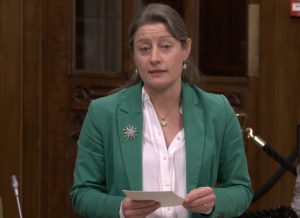
Helen Maguire MP speaking in the Westminster Hall debate

Epsom & Ewell’s MP Helen Maguire led a Westminster Hall debate on 28 January calling for tighter safeguards in the firearms licensing system, with a particular focus on making medical markers on GP records mandatory for gun licence holders.

Opening the debate, Ms Maguire set out the case for reform by referencing a series of fatal incidents where legally held firearms were used, including cases with direct relevance to Epsom & Ewell. She told MPs that the issue was not about restricting lawful gun ownership, but about closing gaps in safeguarding where warning signs were missed.

“This is a missed opportunity to save lives,” she said. “A missed opportunity to safeguard vulnerable adults with access to firearms and protect public safety.”

Local tragedy cited in Parliament

In a powerful and emotional passage, Ms Maguire referred to the double murder and suicide connected to Epsom College, a case that attracted national attention in 2023. She told the House:

“Gemma and her daughter Letty Patterson, who lived in my constituency, were shot and killed by Gemma’s husband almost three years ago, before he turned the gun on himself… If they had [been able to intervene], maybe Gemma would still be working at Epsom College and Letty might have celebrated her 10th birthday this year.”

Ms Maguire argued that the perpetrator’s use of online medical services meant that neither his GP nor the police were aware of changes in his mental health when his shotgun licence was renewed.

Case for mandatory medical markers

Medical markers are digital flags on GP systems indicating that a patient holds a firearm or shotgun licence. They are intended to prompt doctors to consider whether changes in a patient’s mental or physical health should be shared with police firearms units.

Although such markers are now available, their use by GPs remains voluntary. Ms Maguire said that this undermined their effectiveness:

“There is currently no obligation on GPs to use this marker. Their use is left to best endeavours… This cannot be allowed to happen again.”

She cited support for mandatory markers from a wide range of bodies, including the British Medical Association, the Royal College of GPs, shooting organisations and police representatives. Quoting survey evidence, she added that “87% of existing certificate holders believe GPs should inform the police if they become aware of a change of health which could impact a certificate holder’s ability to safely own a gun.”

Balancing safety and rural life

Anticipating concerns from rural MPs, Ms Maguire stressed that her proposals were not an attack on shooting sports or countryside livelihoods.

“Our country is home to proud rural communities and individuals who rely on gun ownership for their work,” she said. “This debate is in no way about firearm ownership… Today’s discussion is on how we can ensure medical professionals have the information required to best support the individuals they serve.”

She pointed to other licensing regimes, such as driving licences, where medical fitness is routinely monitored in the public interest.

Government response

Responding for the government, the Minister acknowledged the tragedy at Epsom College and confirmed that thousands of digital medical markers are already being applied each year. However, he stopped short of committing to make them mandatory, arguing that existing data suggested most GPs were using the system appropriately.

Ms Maguire challenged that position directly in the debate, asking: “If we’re saying there’s no additional cost to it, then I’m struggling to understand why it’s difficult to change the position.”

In her closing remarks, she expressed disappointment at the government’s stance and warned against complacency: “I do not want to be here again talking about another incident. And I truly hope the Minister will go away and really consider this.”

The debate concluded with broad cross-party support for the principle of stronger safeguards, even as ministers resisted calls for immediate legislative change.

Sam Jones – Reporter

Helen Maguire MP speaking in the Westminster Hall debate. Parliament TV

Related reports:

Epsom College murder inquest

Epsom College deaths update


Surrey declares experiment in community engagement a success

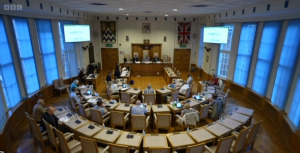
Epsom and Ewell Borough Council chamber

Surrey County Council has endorsed the continuation of its pilot Neighbourhood Area Committees (NACs), hailing them as a successful new way of ensuring that “community voices are heard” during the transition to new unitary authorities.

At its Cabinet meeting on 27 January, the Council agreed that the four existing pilot NACs – in Dorking and the Villages, East Elmbridge, Farnham and North Tandridge – should continue operating until the pre-election period in 2026. Cabinet members also backed proposals to share learning from the pilots with the new shadow unitary authorities from May 2026, and to consider expanding the model to one or two further areas.

In a strongly positive Cabinet report, Surrey said the pilots had demonstrated “strong stakeholder engagement and consensus on evidence-based local priorities”. All 24 NAC members who responded to the final evaluation survey supported continuation, with 83 per cent reporting a positive impact on their work.

Council Leader Tim Oliver (Conservative) described the pilots as proof of what could be achieved “when communities, councils, and partners work even closer together”, adding that the NACs had delivered “stronger neighbourhoods” and could be scaled up across Surrey.

Senior figures from health bodies, the voluntary sector and district councils also welcomed the model, with supporters arguing that NACs provide a forum for aligning priorities across councils, the NHS, police, education providers and community organisations at a neighbourhood level.


EEBC CGR Consultation

Click HERE to access the Epsom and Ewell Times reader survey.


Advisory forums – not elected bodies

However, the Cabinet paper and accompanying statements also underline a key limitation: NACs are advisory and collaborative bodies, not democratically elected councils.

Membership varies by area and includes appointed representatives from public bodies and voluntary organisations alongside councillors from existing authorities. While Surrey says this flexibility allows NACs to reflect local circumstances, critics argue it also raises questions about accountability, transparency and duplication – particularly as Surrey moves towards unitary local government.

In Epsom & Ewell no NAC pilot currently operates. Under current proposals, the borough will be represented by 10 elected councillors on the new East Surrey Unitary Authority, covering a population of more than 80,000 residents. Decisions about neighbourhood-level governance will therefore have to sit alongside – or potentially compete with – a smaller number of unitary councillors holding formal democratic mandates.

Parish councils versus NACs

The NAC model also sits uneasily alongside longer-established forms of local democracy, such as parish and town councils, which are directly elected and have statutory standing.

Several Surrey districts, including parts of Epsom & Ewell, have debated whether the creation of new parish or community councils would provide a clearer, more accountable way of preserving local voice following local government reorganisation. NACs, by contrast, have no independent legal status, no direct electoral mandate and no guaranteed budgetary powers.

Supporters of NACs argue that they are intended to complement, not replace, existing councils and that they are particularly useful during a period of structural change. The Cabinet report stresses their value in identifying shared priorities, coordinating preventative work and encouraging partnership working ahead of the 2026 unitary elections.

Yet the report stops short of explaining how NACs would interact with elected parish councils where these exist – or whether they risk becoming a parallel governance layer once the new unitaries are fully operational.

A transitional solution?

For now, Surrey’s Cabinet appears to see NACs primarily as a transitional mechanism, helping to bridge the gap between the current two-tier system and the new unitary arrangements.

The four pilots ran between July and December 2025, and the decision to extend them only until the pre-election period in 2026 suggests that their long-term role remains unresolved. Expansion to further areas is framed as something to be “considered”, rather than guaranteed.

As Surrey moves closer to the creation of East and West Surrey unitary authorities, the key question for places like Epsom & Ewell will be whether neighbourhood engagement is best delivered through appointed partnership forums – or through elected local councils with clearer lines of accountability to residents.

For now, Surrey County Council is celebrating what it describes as a successful experiment. Whether NACs evolve into a permanent feature of local governance, or give way to more traditional democratic structures, is a debate that is only just beginning.

Sam Jones – Reporter

Related reports:

The process of appointing the new local government chiefs begins

More erudition on local government reorganisation in Epsom and Ewell

Is Epsom and Ewell getting “proportional representation” under Council shake-up?

Long serving Epsom Councillor blasts LGR and NACs

Parish power, democratic ideals — and the Residents’ Association dilemma

Have your say on the future of local representation in Epsom and Ewell

Epsom and Ewell’s Local Democracy Debate: What’s at Stake as Consultation Enters Phase Two

Letters from local Councillors on Epsom and Ewell parishes

Neighbour Area Committees HERE


Royal visit to Surrey University

HRH The Duchess of Edinburgh looking at a picture of Her Late Majesty Queen Elizabeth II at the University of Surrey. Credit Surrey University

On 28 January, HRH The Duchess of Edinburgh and the University of Surrey’s Chancellor, HRH The Duke of Kent, visited Surrey to celebrate the University’s innovation, research and hands on learning. During their visit, they met students and staff from across campus, gaining insight into Surrey’s multidisciplinary approach to education.

Medical students at the first and only medical school in Surrey met The Duchess of Edinburgh to demonstrate the collaborative training that will shape their careers in the NHS. The Duchess returned to the University of Surrey’s Kate Granger Building six years after she opened it as the home of its School of Health Sciences. Her Royal Highness met some of the University’s first cohort of UK government-funded medical students who began their studies in September 2025.

The Duchess also met medical, nursing, midwifery and paramedic students learning together in the collaborative training wards before joining a virtual reality anatomy teaching session.

The University’s Chancellor, The Duke of Kent, joined her Royal Highness at the Surrey Space Centre, where they visited labs to see a student-designed satellite deploy pod which will push a payload from a rocket into space.

At the Space Centre, The Duchess visited the satellite clean room toured by Her Late Majesty Queen Elizabeth II in 1998. In the clean room, Her Royal Highness helped to fit a panel engraved with Their Royal Highnesses’ Royal Cyphers to Jovian-1, a satellite which Surrey students helped develop.

Schoolchildren who took part in the University’s widening participation summer schools returned to campus to show off the hands-on STEM projects they enjoyed last year, with The Duke and Duchess joining in. Students from the University’s Engineering Design Centre also had the opportunity to show His Royal Highness a range of projects, including rocket designs and Formula E racing cars.

Professor Stephen Jarvis, President and Vice-Chancellor of the University of Surrey, said:

“Training medical students alongside nursing, midwifery and paramedic students reflects how the NHS operates in practice. Our students graduate already equipped to work effectively in multidisciplinary teams, rather than having to learn this solely once they enter the workplace. The Duchess saw this first-hand in our training wards, where students from different disciplines learn together in realistic clinical settings.

“Her Royal Highness also saw our engineering students working on satellites they have designed and built themselves – hardware that will ultimately be launched into orbit. That combination of world-class research and practical, employer-ready skills lies at the heart of what we do. For our students, whether still studying or already well into their careers, having two members of the Royal Family witness this work first-hand is an experience they will long remember. It was a truly memorable day for our entire community.”

The visit marked a return to sites with strong royal connections. Queen Elizabeth II visited the University’s Guildford campus three times during her 70-year reign: in 1992, where she inaugurated the University’s Centre for Satellite Engineering Research; 1998, when she once again paid a visit to the Surrey Space Centre; and in 2015, when she opened Surrey’s School of Veterinary Medicine.

Patrick Degg, Vice-President, Global at the University of Surrey, said:

“We thank both The Duchess of Edinburgh and The Duke of Kent for their continued support for Surrey. The Duke has served as our Chancellor since June 1976. To have him return in this 50th year of his Chancellorship alongside The Duchess, and for them both to see the breadth of the research and teaching Surrey delivers has been a moment of collective pride.

“A programme that took in our pioneering space engineering, our new medical school and other aspects of our multidisciplinary research and teaching, spoke to the transformation The Duke has witnessed and championed throughout his tenure. His presence continues to inspire our community and affirm the values at the heart of this institution.”

About Surrey Space Centre

Since its founding in 1979, the Surrey Space Centre has been a leading space engineering hub and is widely seen as the birthplace of the small satellite revolution. Professor Sir Martin Sweeting spun out Surrey Satellite Technologies Limited from his work at the Centre, and its recent missions have included RemoveDEBRIS, which demonstrated ways to capture debris in orbit.

The University recently announced the creation of the Surrey Space Institute, which brings together expertise across engineering, law, biosciences and artificial intelligence to build skills, partnerships and future space missions – with a particular focus on protecting Earth’s resources and critical orbital infrastructure.

Surrey University

HRH The Duchess of Edinburgh looking at a picture of Her Late Majesty Queen Elizabeth II at the University of Surrey. Credit Surrey University


Council agrees to continue jobseeker support in Epsom & Ewell

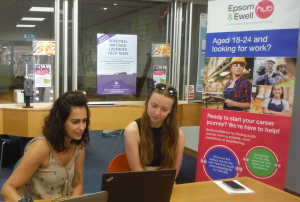
Advice session at the Epsom and Ewell Hub

On 27 January 2026, Epsom & Ewell Borough Council’s Strategy & Resources Committee approved continued funding and delivery arrangements for the Epsom & Ewell Hub (EE Hub). This decision ensures that this valuable community service can continue helping residents develop their skills, build confidence and improve emotional wellbeing in an easily accessible location— supporting more residents to move successfully into employment. Between 2022-2025, over 1,319 residents registered with EE Hub.

The EE Hub will continue to be delivered by Surrey Lifelong Learning Partnership – a local charity that is active in employment support, skills training and community learning.

Councillor Clive Woodbridge (RA Ewell Village), Chair of the Community & Wellbeing Committee, said: “We are extremely proud to continue supporting the Epsom & Ewell Hub, which has become an invaluable resource for residents taking positive steps towards work.

“The Hub’s strength lies in its holistic, people‑centred approach—helping individuals overcome both practical barriers to employment and the anxiety or low confidence that can often accompany time out of work. For many, challenges linked to education, confidence or personal circumstances can hinder progress, and the Hub provides exactly the support needed to move forward.

“Over the past five years, the Hub has built strong partnerships with local businesses, NESCOT and DWP Jobcentre work coaches, which are essential to helping residents access training and meaningful opportunities.

“I am delighted that we are continuing our partnership with Surrey Lifelong Learning Partnership to deliver this service, and I would like to thank them—and all our partners—for their commitment to providing such an effective and supportive resource for our borough.”

EE Hub services available

The Epsom & Ewell Hub provides free support for residents entering the workforce or returning to work, offering help with CVs, interviews and interpersonal skills, while also supporting those facing barriers such as anxiety or low confidence. Its holistic approach includes creative activities that build resilience, and it maintains strong links with local employers—connecting jobseekers to opportunities across organisations and high street businesses—and hosting regular job fairs.

Digital support is also available, helping anyone who wants to set up a mobile phone, access email through to using Microsoft Office or finding jobs online.

Residents can also access complementary programmes and training such as Work Well, which supports adults with long-term conditions to re-engage with employment; and Multiply, a numeracy skills initiative.

Mandy Bosher, Deputy Chief Executive, Surrey Lifelong Learning Partnership said: “We are delighted that, with the support of Epsom & Ewell Borough Council, the Epsom & Ewell Hub has been able to help residents build new skills and gain the confidence needed to move into work. Empathy and understanding are at the heart of everything we do, and our focus is always on providing the personalised support individuals need to move forward. What inspires us most are the individual learning journeys—each one unique, powerful and truly heartwarming.”

How to access EE Hub services

No appointment is needed, residents can simply drop in.

Residents can also be referred through the local Job Centre Plus or other local charities and voluntary sector organisation.

More information on the EE Hub services can be found here: Employments, skills and training support | Epsom and Ewell Borough Council

About the Epsom & Ewell Hub (EE Hub)

Initially the service was funded by the DWP and focused on supporting people aged 18-24 into employment. Following marked improvements in local youth unemployment, DWP funding ceased in 2023. From August 2023 the council utilised funding from the UK Prosperity Fund to support a service providing a wider range of employment support to residents of all ages across the borough and the Hub became the Epsom & Ewell Hub.

The service employs a small team of three dedicated staff, alongside other partners who deliver complementary services such as Work Well (helping to get long term sick back into employment) and other training schemes such as Multiply, a mathematical skills programme. www.epsomandewellhub.com is currently being updated

About Surrey Lifelong Learning Partnership
Established in 1999, Surrey Lifelong Learning Partnership (SLLP) is a registered charity. Each year they help around 2,000 people return to learn to gain new skills, qualifications and employment. They rely on a mix of income streams, including generating funds through their Bike Project social enterprise and securing grant funding for projects. About Us – Surrey Lifelong Learning Partnership

About NESCOT

The North East Surrey College Of Technology (NESCOT) is a large further education and higher education college in Epsom and Ewell, Surrey. Attracting learners from the local community, nationally and from overseas, their range of courses include Further Education, Higher Education, professional, leisure, short, full- and part-time courses. Nescot College Surrey. College of Further and Higher Education | Nescot

Epsom and Ewell Borough Council

Related reports:

Big employment hub coming to Leatherhead

Employment Hub opening to all


Bit of monkey business in Epsom’s Town Hall Chamber

Monkey walking down high street with man and being asked by inspector for licence. Cartoon.

A meeting of the Licensing and Planning Policy Committee of Epsom and Ewell Borough Council on 22nd January saw councillors approve a new schedule of planning fees and charges for 2026/27, despite repeated concerns being raised during the meeting about the absence of planning officers, gaps in supporting information, and the committee’s ability to scrutinise what it was being asked to approve.

The committee was considering fees for discretionary planning services, including Planning Performance Agreements and tree-related services, rather than nationally set statutory planning application fees.

Early in the discussion, councillors were told that questions on planning matters would need to be answered after the meeting. Chair Peter O’Donovan (RA Ewell Court) explained this was because no planning officers were present.

One of the first issues raised concerned retrospective planning applications. Cllr Phil Neale (RA Cuddington) recalled that councillors had previously discussed introducing higher charges to discourage developers from building first and seeking permission later.

“We get a lot of developers playing the game… trying to do developments without planning and then getting caught and putting in retrospective applications,” he said, adding that he was disappointed not to see such a charge included.

The officer response was that the matter would need to be taken away and clarified with planning colleagues.

During the same exchange, Cllr Humphrey Reynolds (RA West Ewell) interjected that “the worst culprit is Hobbledown… application after application retrospectively,” referring to the local visitor attraction.

Concerns then turned to the scale and transparency of proposed discretionary fees. Cllr Julian Freeman (LibDem College) questioned why discretionary fees were rising by 4.8 per cent, above the headline inflation rate, and whether councillors had sufficient information to justify approving them.

A officer explained that the increase followed the council’s Medium Term Financial Strategy, which sets fees at CPI plus one per cent, using September inflation figures.

A more sustained exchange followed over officer hourly rates, particularly for tree-related services. Cllr Alex Coley (Independent Ruxley) calculated that the proposed hourly rate for a tree officer – £133 per hour – implied an equivalent daily rate of over £1,000. “That’s an extraordinary amount of money to charge,” he said, adding that residents as well as developers were affected by these fees.

An Officer responded that the hourly rates were not based on salary alone and reflected overheads, travel time and the need to maintain regulatory services alongside discretionary work. “These are the prices that we charge for the services we provide,” she said, adding that councils were effectively competing with the private sector for this type of work.”

However, when pressed on the specific breakdown of what residents receive for certain charges – including a £550 fee to plant a tree – officers acknowledged they could not provide detailed explanations during the meeting and would need to come back with written responses.

At one point, Chair Peter O’Donovan cut short the line of questioning, telling councillors: “That’s our charge. People can take it or not use it.”

Cllr Coley responded that this was not always the case, noting that some services, such as tree-related consents, could only be authorised by the council.

Questions were also raised about whether councillors had been given comparative data showing how Epsom and Ewell’s charges stack up against neighbouring boroughs. Officers said some benchmarking had been carried out but accepted that “it’s difficult to compare like for like” because councils offer services in different ways.

Later in the meeting, Cllr Freeman drew attention to newly introduced charges for primate licences, jokingly asking whether the borough was “expecting an invasion from Planet of the Apes”. Officers were unable to explain the origin of the charge at the meeting and undertook to respond later.

Despite the unresolved questions, the committee voted to approve the fees and charges as presented.

After the meeting Cllr Freeman told the Epsom & Ewell Times his view the debate left councillors and viewers “feeling that relevant evidence was not provided to committee members when making their decision”, particularly given that Epsom and Ewell Borough Council is due to be abolished in 2027 as part of local government reorganisation.

“The implication that issues could be looked at ‘next time’ rather misses the point,” he wrote. “There may not be a next time.”

.

.

Sam Jones – Reporter

.

.

.

PS If you wish to keep a monkey or other primate the fee is £450

.

.

.

.


Independent view of Ewell’s Bourne Hall

View of Bourne Hall and Museum, Spring Street, Ewell. (Credit: Google Street View)

BBC LDRS reports: Up to £359,000 could be spent on rejuvenating Ewell’s Bourne Hall Museum under new plans but opposition councillors have stressed that key information on the decision has been made available too late.

An independent report into the museum has now been published, laying out both the problems and the potential at the popular local attraction. The document says the museum could have a strong future, but only if the council invests money, improves how it is run and does a much better job of attracting visitors and funding.

Councillors voted earlier in January to back plans to improve the museum instead of closing it or leaving it as it is. However, no money has actually been approved yet: the decision on whether to release up to £359,000 is expected in March.

Cllr Alex Coley (Independent Ruxley) says councillors should have seen the full report before they agreed to support the plans in principle. “Problems with Epsom & Ewell Borough Council’s secrecy and reluctant transparency are well documented,” he said. “Even the council’s auditors call it out in reports. Refusing to share an LGA report with committee members when they make a decision is another demonstration of the instinct to cover up bad news.”

Cllr Kate Chinn (Labour Court), Leader of the Labour Group, agreed, adding: “It doesn’t make sense for councillors to be asked to make decisions without access to all the available information.”

At the January meeting, committee chair Cllr Clive Woodbridge (RA Ewell Village) admitted that, “in hindsight”, the full report should have been included in the papers after opposition councillors challenged its absence.

What the report says about the museum

The independent review made clear the museum is not in crisis but it is struggling to move forward. One of the biggest issues is money. The report said it is hard for the museum to win grants or sponsorship because it does not have solid information about its visitors.

Funders want to know who comes through the door, how often, and how numbers might grow in future. But at the moment the data is limited.

The report also says that the way the council currently counts costs makes it hard to see the true price of running the museum. It recommends sorting this out so future funding bids are more realistic and transparent.

Visitors may also recognise some of the other issues raised. Displays are described as dated, marketing as uninspiring, and the museum’s overall “identity” as unclear. Reviewers said the space could be made more interactive and appealing, especially for families and younger people.

The report praised the museum for already attracting a strong mix of ages, especially families. Its location inside Bourne Hall which also houses the library and community spaces was also seen as a major advantage. With better use of the building and stronger promotion, it could become more of a destination.

Volunteers are another key part of the picture. The report says there are some highly committed people helping out, but not enough of them. It suggests recruiting more volunteers from a wider range of backgrounds to better reflect the local community.

A council spokesperson said: “The Community and Wellbeing Committee has initiated the first step in a process to invest in the future of Bourne Hall Museum by submitting their preferred option, which was to spend up to £250,000 over two years, to the Strategy and Resources Committee for their consideration in March.

“Before committee, Community & Wellbeing Committee members saw a summary of the Culture Peer Challenge in the committee report and were invited to attend a briefing session which also summarised the findings of the report. The LGA Culture Peer Challenge for Bourne Hall Museum has been made available to all EEBC councillors and is also available on our website: Culture Peer Challenge | Epsom and Ewell Borough Council.”

What happens next?

In short, the museum’s future now depends on whether councillors agree to invest. If funding is approved in March, work could begin on modernising the space and building a stronger long-term future. If not, things are likely to stay much as they are.

Emily Dalton LDRS

Related reports:

Another Epsom and Ewell Borough Council cover-up of criticism?

A Decision Not Fully Bourne Out?

Ewell’s “UFO” shaped Bourne Hall to take off anew

Epsom Councillor claims he is being silenced for his transparency concerns

Cllr Dallen accused of £1/2 m Epsom & Ewell Council cover-up

View of Bourne Hall and Museum, Spring Street, Ewell. (Credit: Google Street View)


100 years campaigning to keep Surrey Green

Surrey Hills landscape. Image – Surrey Hills Credit Aleksey Maksimov CC BY-NC-ND 2.0 DEED

Dear Surrey,

The countryside is your greatest achievement. A beautiful masterpiece built by centuries of collaboration between people and nature. From meadows and woodlands to rivers, coasts, and the green spaces that bind us together, the countryside connects and sustains us all.

For a century, the Campaign to Protect Rural England has been its guardian. Despite the relentless, growing pressure on our landscapes, we’ve stood up for the countryside and helped give the people who love it a voice. That will never change.

Many of the pressures facing our countryside today were familiar to our founders – not least the challenge of providing homes, infrastructure and prosperity on a small island. But new pressures have emerged with more catastrophic impacts on the land we love. Nature is in freefall and climate change threatens to alter our landscapes for good.

Now more than ever, decisions about how we use our land are leading to the needless loss of landscapes and everything they support. Without drastic action, much of what makes our countryside unique and beautiful will be lost.

Wherever we live, we rely on the countryside for clean air, home grown food, thriving wildlife and resilience in the face of climate change. Yet these foundations are being chipped away. Too often decisions are shaped by profit, not what’s needed most – and the countryside pays the price.

Here in Surrey, we have even been faced with a series of major housing developments, access roads, ‘solar farms’ and ‘battery energy storage systems’, in Green Belt countryside. Many of these sites are on the edge of the Surrey Hills National Landscape itself.

Now, as 2026 dawns we are now battling a growing number of planning applications which rely on councils downgrading Green Belt land to so-called ‘grey belt’, as well as excessive and unsustainable housebuilding targets imposed on local communities.

Our centenary vision is for a countryside that’s greener, more resilient and protected for future generations.  There is a better way – one we’re calling for, and one everyone can be part of:

• Stop the loss of countryside. Let’s protect what we love and do everything we can to make sure green fields and woodlands aren’t needlessly lost.

• Improve the quality of the countryside for future generations. That means thriving communities, clean rivers, healthy food and resilient landscapes rich in nature.

• Inspire more people to care for the countryside. A countryside for all where more people take action to enjoy and protect it.

Across the country, people are already showing what’s possible – restoring hedgerows, rethinking development and sustainable farming, and making space for nature.

As we begin our centenary year, we’re sending this message to everyone: love your countryside and be part of its future. This is just the beginning – and we all have a part to play in shaping what comes next.If you share this vision, join the movement today, add your name to this letter and stand with us.

Yours faithfully,

Andy Smith

Campaign for the Protection of Rural England (Surrey)

Photo: Surrey Hills Credit Aleksey Maksimov CC BY-NC-ND 2.0 DEED


A surprise glimpse into 1883: Christ Church Epsom Common’s Parish Magazine

Christ Church from postcard 1900 and The front pages of the January and April 1883 editions Photographs by Roger Morgan © 2022

Out of the blue, Christ Church Epsom Common was recently approached by a Worcestershire-based bookseller and gratefully accepted her kind gift of a bound volume (about the size of a modern paperback) of parish magazines from 1883. The volume, too battered and niche for resale, nonetheless provides a fascinating glimpse into the life of the parish just seven years after the church’s consecration in 1876.

There were Christ Church parish magazines before this: the January 1883 edition refers to an item in the now-lost December 1882 magazine. As with many such publications, they were seen as ephemeral at the time. Although issued monthly, the next surviving edition in the Christ Church archive dates from 1900, with records then remaining patchy until the late 1940s, when systematic retention began.

Both the gold-stamped spine and the frontispiece give the contents simply as Parish Magazine 1883, with no mention of the parish name. The editor is listed as J Erskine Clarke MA, an Anglican clergyman who, in January 1859, launched what is regarded as the world’s first commercial parish magazine inset, prosaically titled Parish Magazine. Each monthly edition ran to around 24 pages and combined religious material with a surprisingly wide range of secular content.

Alongside sermons and Bible studies were items of fiction (often moralising), practical advice, articles on British wildlife, and descriptions of churches and places at home and abroad. The 1883 editions included pieces such as First Aid to the Sick, Making a Will, an account of a visit to Malta, an unexpectedly open-minded article on Islam and the Prophet Mohammed, and the intriguingly titled Worms and their Habits. Each issue carried at least two engraved illustrations, particularly to accompany the travel articles.

The inset was published by Wells Gardner, Darton & Company of Paternoster Buildings, London, specialists in ecclesiastical publishing, and printed by Strangeways & Sons. It was always intended to be surrounded by locally produced parish material. At Christ Church this usually amounted to a further eight pages, printed and bound with the inset by local firm L W Andrews & Son. In some months, when local material ran to only four pages, the usual plain cover was altered to make better use of the available space.

Parishioners paid 2d per issue – roughly £1 in today’s money.

Much of the local content was routine but revealing. Each issue set out the full schedule of services for the coming month, listing not only Sunday services but weekday Mattins and Evensong, along with the hymns to be sung. Lists of baptisms, marriages and funerals followed, together with a standard notice inviting women to offer Thanksgiving after Childbirth, “there being no fee, but it being usual for a Thank-offering to be made at the Altar”. Details of the previous month’s collections were also carefully recorded.

Christ Church did not acquire its own church hall until 1899, so meetings and events were held in a variety of venues. The January 1883 magazine lists the Vicarage, the Working Men’s Club, the Infant School and the Guild Room. The then-new Working Men’s Club, opened in 1881 and later renamed the Epsom Common Club, stood just across Stamford Green.

The Infant School, now lost, stood on West Hill (then known as Clay Hill). Founded through an 1844 endowment by Miss Elizabeth Trotter of Horton Manor, O’Kelly’s former racing stables were converted for the education of children from families on Epsom Common. The school closed in 1925 and was later demolished.

Another regular feature was the “Penny Bank”, encouraging thrift among parishioners. Deposits could be made weekly at the Vicarage, with interest paid at 2½ per cent – or 5 per cent for children attending Christ Church Sunday School.

The January issue opened with a letter from the Vicar, the Revd Archer Hunter, then barely a year into what would become a 30-year incumbency. After setting out his vision for the developing parish, he appealed for more Sunday School teachers and closed by wishing all a Happy New Year – though only, he cautioned, for those “determined to spend it in the constant Presence of their God and Saviour”.

Later editions offer vivid glimpses of parish life. February records a recitation of Dickens’ Christmas Carol in the Infant School room, delivered by Mr Mechelen Rogers before a large audience. While not all were amused, those “qualified to give an opinion” spoke in the highest terms of his performance, promising him an “enthusiastic and noiseless” reception should he return.

March saw the founding of a parish branch of the Church of England Temperance Society, with 37 parishioners unanimously adopting a strongly worded resolution identifying intemperance as a source of poverty, crime and irreligion. Members signed pledges ranging from total abstinence to more qualified commitments, and the movement quickly attracted both adult and juvenile members.

The same edition listed the parish’s current “Wants”, including Sunday School teachers, a parish bier, a bookcase and books for a parochial library, and a new organ stop. It is a pleasing historical coincidence that this very volume survives bearing a library label inside its front cover, suggesting it was once item number 436 in that collection and heavily used.

For parishes that bound their magazines into annual volumes, the national publishers supplied a frontispiece and index, with the binding undertaken locally. A small label inside the rear cover of this book shows it was bound by John Snashall of Epsom High Street. Though now in poor condition, the quality of the leather spine and gold-blocked title speak of careful craftsmanship.

More than a century on, this battered volume offers a remarkably intimate picture of parish life in Victorian Epsom Common – practical, moral, communal and often surprisingly vivid.

This article is reproduced with permission from the Epsom and Ewell History Explorer (www.eehe.org.uk). The original article, written by Roger Morgan, forms part of EEHE’s extensive and richly illustrated archive of local history. EET readers are warmly encouraged to explore the many other fascinating histories available on the site.

Image: Christ Church from postcard 1900 and the front pages of the January and April 1883 editions by Roger Morgan © 2022


Surrey council budget published

Surrey County Council headquarters. Credit: Emily Coady-Stemp

Surrey residents can expect to pay 4.99 per cent more council tax next year under plans in the new budget. Surrey County Council has revealed it is losing a huge chunk of government funding and has ‘no choice’ but to fill the gap locally. 

Councillors are being asked to approve a 2.99 per cent council tax rise plus a 2 per cent adult social care levy from April 2026, the maximum allowed. For a typical Band D household, that means paying £7.67 more per month.

The increase comes after the Government announced a new three-year funding deal covering 2026-2029. While ministers say councils will get more money overall, most of the so-called “increase” relies on councils raising tax locally, not extra cash from Westminster.

Tim Oliver, Leader of Surrey County Council, said: “This is one of the most challenging financial periods we’ve faced. 

“The removal of funding from the government means that within three years, 92 per cent of the local government budget in Surrey will have to come from Council Tax. Even putting Council Tax up by the maximum amount each year – as expected by government – will see no real increase in spending power for Surrey Councils. As costs rise with inflation and demand for services increases, there will be a local government funding black hole in Surrey without driving out further efficiencies. 

“Our focus is to protect the services residents rely on: adult social care, children’s services, support for communities, and the roads that keep Surrey moving, while continuing the strong financial discipline Surrey has shown in recent years and building a stable financial foundation for the new councils in April 2027.”

For Surrey, the picture is stark. The council argues that even after maxing out council tax, the council’s core spending power will rise by just 0.6 per cent next year and 1 per cent by 2028/29, effectively a cut once inflation is factored in.

The council’s finance boss warned Surrey will lose more than £180m in government funding over the next three years. “There is nothing fair about this funding review for Surrey residents,” they said. “Even with maximum council tax rises, we’re still facing a funding gap of over £100m by 2028/29.”

“The broken funding system we inherited has left local authorities across the country in crisis,” the ministerial forward from the Funding Review 2.0 reads. “To turn this around, we need to reset local government so that it is fit, legal and decent and can, once again, reliably deliver for our communities. We are going to work with local authorities to rebuild throughout this parliament.”

Why is funding being cut?

The changes stem from Fair Funding Reform, which reshuffles how government money is shared out. Areas with higher deprivation get more support, while wealthier areas lose out.

Since Surrey can raise more through council tax, the Government assumes it needs less help. This is despite soaring demand for services, especially children’s services and adult social care.

What’s in the budget?

The council’s final-ever budget before it is abolished in 2027 totals £1.27bn – up just 1 per cent on last year. Officers warn finances are now more stretched than ever and tough decisions will continue.

To balance the books, the council plans:

  • £50m in service cuts and efficiencies
  • £42m in corporate savings
  • Continued investment in:
  • SEND support (nearly £15m extra)
  • Adult social care (over 5 per cent increase)
  • Road repairs
  • New school places
  • Children’s homes
What happens next?

The Cabinet will decide what to recommend to the full council, including tax levels and spending plans. Despite the pressure, leaders insist the council remains financially stable, with £114m in reserves. But they admit the next few years will be tough and the new councils taking over in 2027 will inherit some hard choices.

Emily Dalton LDRS

Surrey County Council headquarters. Credit: Emily Coady-Stemp

Surrey consults on next year’s budget

Surrey to sell off property in Epsom and elsewhere to fill budget gaps


A Surrey Council’s finances don’t add-up for 6th year running

Spelthorne Borough Council offices in Knowle Green, Staines. Credit: Emily Coady-Stemp

Spelthorne Borough Council’s finances are still so muddled that they will not be fully fixed before it disappears into a new mega-council in West Surrey, says a new report. External auditors have once again refused to sign off the accounts, warning “time is not necessarily on the [council’s] side”.

Audit firm Grant Thornton told Spelthorne councillors at an Audit Committee meeting on January 22, that they cannot get enough evidence to say the numbers of the council’s 2024/25 accounts are right. The auditors said they will issue another “disclaimer of opinion” on the council’s 2024/25 accounts.

It is now the sixth year in a row Spelthorne has failed to get a clean audit. Meaning, the council cannot show all its balance sheets add up. This means the local authority does not know how much usable reserves it has or the true value of its assets.

The core problem is historic. For years the council’s accounts were not properly audited, leaving big question marks over old balances, reserves and property values. As auditors cannot trust the starting figures, they cannot fully trust the current ones either.

Auditors said the lack of assurance will carry forward into next year and even into the new West Surrey unitary council when local government reorganisation happens.

Cllr Chris Bateson said: “And there’s nothing we can do about that.?” To which, one auditor responded: “Time is not necessarily on your side.” But she added, most of the councils in Surrey face the same challenging position of being sure of their accounts. 

What does this mean for residents?

This is not a bankruptcy notice, the council has not run out of money. Residents’ bins will still be collected and parks will be maintained. But this signals a long-running uncertainty about how solid the council’s position really is.

For instance, this means big financial decisions are being made with an incomplete map and so increases the risk of mistakes. However, if finances are unclear, the council is monitored more closely by the financial watchdog and less likely to make major investment decisions

As Spelthorne is heading into a new unitary authority in 2027, these historic accounting issues will be transferred to the new council. The new West Surrey Council will have to deal with not just Spelthorne’s accounts, but potentially five other ones.

Some progress but still serious problems

It was not all bad news. Auditors said Spelthorne’s finance team has improved over the past year. Records are better organised, responses to questions are quicker, and the draft accounts were in better shape than before. So Grant Thornton could check more figures than last year.

One long-running mystery is a £17.6m gap between two key financial measures. The difference has been sitting in the accounts for years and still has not been fully explained, according to the report.

Auditors also found the council has been using the wrong method to set aside money to repay borrowing, something that affects long-term financial stability. A £9.9m property value increase was also put in the wrong set of accounts and now has to be reversed.

On top of that, there were dozens of technical mistakes and missing disclosures that auditors said should have been spotted internally before the accounts were sent over.

Bigger worries about value for money

In a separate verdict, auditors said they are not satisfied the council currently has strong enough arrangements to ensure it is spending money efficiently and sustainably.

Council officers said they have strengthened the finance team and are building more time into the process of preparing next year’s accounts. But with reorganisation looming, the clean-up job now looks set to become the new council’s problem too.

Emily Dalton LDRS

Spelthorne Borough Council offices in Knowle Green, Staines. Credit: Emily Coady-Stemp

Related reports:

Need to sell Council property spelt out for Spelthorne

Spelthorne Borough Council commissioners

Who will be saddled with Spelthorne’s and Woking’s £3 billion debts?