In Surrey more people are invited to share their home
24 July 2026
A new partner is taking on Shared Lives in Surrey aiming to welcome more people into the service who can open their homes to adults with support needs and help them live independently and well.
Shared Lives enables adults with learning disabilities, physical disabilities or mental health needs to live within a supportive household, for short or long-term stays. Similar to fostering, it offers a home environment where people can build life skills and learn to lead active lives in their local communities.
Surrey County Council has appointed an experienced provider to run the service from this month, following a competitive selection process. The provider, the charity Ategi, has more than 30 years’ experience running care and support services including Shared Lives schemes in England and Wales.
All current Shared Lives carers and arrangements will continue to be supported, and more people from a wide range of backgrounds are being invited to explore the rewarding opportunity of becoming a Shared Lives carer.
Shared Lives carers receive ongoing support, a weekly fee and training according to their needs. No formal care experience is required – carers simply need a spare room, compassion and the willingness to support an adult with additional needs in their own home.
Around 80 Shared Lives arrangements, both short and long-term, have transferred to Ategi from Surrey Choices, the previous provider. People supported by the service have in recent years achieved life-changing outcomes including passing driving tests, securing meaningful employment, and gaining independence and improved mental wellbeing.
Kate Allen, Ategi’s Chief Executive, said: “We are delighted to be bringing Ategi’s extensive Shared Lives experience to Surrey and to build on the strong foundations created by Surrey Choices. We know how important continuity is for the people and families who rely on the service, and our priority is to ensure they continue to receive the high-quality, person-centred support they value.
“With more than 30 years’ experience delivering Shared Lives – including across London and the South East – we bring extensive Shared Lives experience from across England and Wales, which will help us work alongside local partners to support the service’s continued success and future growth. We look forward to working with carers, families and partners across Surrey to enable more people to live independently, build meaningful relationships and play an active role in their communities.”
Sinead Mooney, Surrey County Council’s Deputy Leader and Cabinet Member for Adult Social Care, said: “Shared Lives has long been an important part of the support we offer in Surrey and I’ve seen the difference it can make to people’s wellbeing and independence, and the rewarding experience it offers carers.
“Our new partnership with Ategi will build on Surrey Choices’ foundations, and we’ve been working hard to make sure the transition is as smooth as possible for everyone involved. We’re grateful to our existing Shared Lives carers for the support they provide, and we’re encouraging more people to consider coming forward to help adults with additional needs lead fulfilling lives.”
Louise Hayes, Operations Director at Surrey Choices, said: “We are incredibly proud of everything our Shared Lives colleagues, carers and the people we support have achieved together. We transfer the Shared Lives scheme with enormous pride in the legacy and the positive impact it has had on so many lives. We pass it on with confidence to Ategi, an experienced provider delivering Shared Lives across multiple counties in the UK, knowing the values of compassionate, person-centred support will continue.”
In the words of one family member with experience of Shared Lives, it is “an excellent service enabling adults with additional needs to live as near to independence as they can, with a safety net.”
Some Shared Lives placements in Surrey will continue to be provided by Mencap, as they are currently.
Anyone interested in finding out more about becoming a Shared Lives carer, or who has a query about an existing arrangement, should contact Shared Lives Registered Manager Paul Dawson at Ategi on 01494 932 920. More information can be found on Ategi’s website: www.ategi.org.uk.
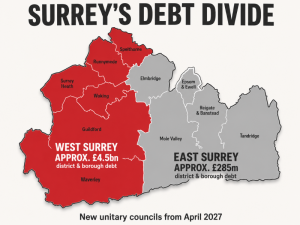
A single commissioner team will oversee the combined financial messes across Woking and Spelthorne as fears mount that their enormous unsupported debts and tangled property webs could spill over and impact the newly formed West Surrey Council.
If the problems are not fixed, government-appointed commissioners could remain in place at the new authority, the Department for Local Government said this week.
The government has already committed £500 million to support Woking – and more is expected – and the council is currently selling off its assets left, right and centre in an effort to bring down its unprecedented multi-billion-pound debt. These sales may need to continue past vesting day, when Surrey’s councils merge into two mega-authorities.
In Spelthorne, commissioners have said there are still challenges over its financial sustainability, commercial portfolio and capacity to deliver changes. With the councils set to dissolve in April 2027, the government is concerned the problems could transfer into the new West Surrey authority.
At the same time, commissioners will work in a more joined-up way with West Surrey, letters from government ministers read, to provide advice, challenge decisions and offer independent assurance on how the new council will run from day one of the new authority. This will include its financial strategy, management of inherited risks and governance framework – although at this stage they will not have executive powers at the new authority.
Woking and Spelthorne remain two of the most indebted councils in the country after years of financial mismanagement and have been under watch to oversee their turnarounds.
Alison McGovern, Minister of State for Local Government, wrote to inform the councils that their special measures will remain in place and of the changes that will be made.
The letter read: “Significant challenges…remain, particularly financial sustainability, continued reliance on reserves, risks within the commercial portfolio, and capacity pressures. I agree that maintaining pace in the final phase of the intervention and managing these risks through transition will be critical.
“Findings reinforce the need for a more integrated approach to risks across Spelthorne and Woking. I have therefore decided to establish a single commissioner team across both councils.”
They will be tasked with providing an independent view of the financial, commercial and governance challenges that West Surrey may inherit from Woking and Spelthorne.
It added: “Their assessment will inform the department’s view of whether West Surrey has sufficient grip of those challenges and whether any further supportive arrangements may be needed beyond vesting day.”
On April 1, Woking, Spelthorne, Guildford, Surrey Heath, Waverley and Runnymede borough councils will dissolve and be merged with the western half of Surrey County Council to create West Surrey Council, which will be responsible for all services in the area.
A Surrey Council’s enforcement against landlords examined
24 July 2026
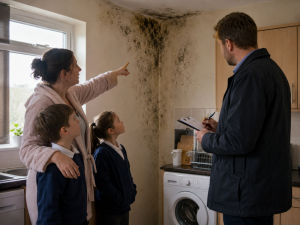
Private landlords have been hit with almost £75,000 in fines over the past two years by Reigate and Banstead Borough Council.
The figures were presented following questions over levels of enforcement in the borough and comes after the government announced new powers allowing local authorities to fine landlords up to £7,000 if their rented properties were found to have serious hazards.
Other tools available include the ability to issue fines up to £40,000 for illegal evictions or multi-occupancy breaches – as was the case in May this year when the council secured a fine of £9,000.
There, environmental health officers found a Horley landlord had been renting their flat to vulnerable elderly individuals without appropriate fire measures – and evicting them when they complained about safety measures.
The totals were made public after questions from Councillor Neha Boghani (Green Party: Horley East and Salfords).
She asked the July 22 meeting of Reigate and Banstead Borough Council what level of enforcement the council had been taking against private landlords, how many civil penalties had been issued, and the total revenue recovered.
Councillor Kate Fairhurst, portfolio holder for place, planning and regulatory services, said: “In the financial year 24/25 the team issued 17 civil financial penalties, the total value was £51,964.
“The final value includes adjustments after an appeal. The value of recovered in £43,456. With regards to the outstanding debt, this mostly relates to one case and debt recovery proceedings have been issued and a county court judgement applied for. For the financial year 25/26 the team issued seven penalties with a total value of £30,515. So far £14,015 has been recovered.
“Two cases have appeals in process so they are not yet fully settled and a third case has debt recovery proceedings initialed and a county court judgement applied for.”
The council has said it welcomed the introduction of the Renter’s Rights Act and would use it to combat unscrupulous and negligent practices.
Councillor Kate Fairhurst said of it: “The Renters’ Rights Act 2025 is bringing in new rights and responsibilities for landlords, letting agents and tenants. It is essential that landlords are compliant with the new law.”
A family-run lavender business has celebrated 20 years after growing from a simple stall and tent into one of the area’s best-known attractions.
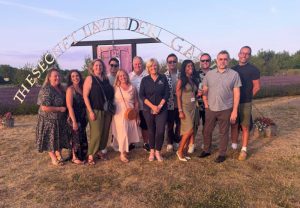
Mayfield Lavender marked the milestone at its Epsom site, where its founder, Lorna Maye, reflected on two decades of family life, hard work, community connections and the challenges of building a business from the ground up.
“My goodness knows how we’ve got to 20 years and are still standing upright,” she joked. “It’s been lots of fun. It’s been extremely hard work.”
Her daughters were just four and six when the family started Mayfield Lavender and have grown up alongside the business. In the early days, they would play with Polly Pocket and Playmobil in the back of the family camper van while their parents worked at the lavender fields. “We used to bribe them to come up to the lavender fields,” she recalled.
She said she now wishes the family had filmed those early years after watching Clarkson’s Farm. “It has been a huge learning curve,” she said. “We’ve come a long way.”
But after two decades, one of the things she is proudest of is that the business remains a family affair. “What’s really important to me is working with my girls,” she said. “I think hard work pays off in lots of different ways.”
She admitted that running the business has often meant long hours and that achieving a good work-life balance has not always been easy. “Sometimes people chastise you for working all the time and say, ‘Why do you work so hard? You should be doing other things. But actually, I really enjoy a lot of it. I’ve been doing it for 20 years and I kind of feel like I don’t know anything else.”
From lavender fields to an Epsom café
The family bought its Epsom site in 2011, when it was considerably more dilapidated than it is today. The site had previously been used for growing crops, before the family planted lavender and began transforming the land. Their next major step came in November 2022 when they opened a full café, a venture which quickly became much busier than expected.
Despite its popularity, she told fellow local business owners that hospitality can be a difficult industry in which to make money. She added that while the café is regularly full, the challenge is now working out how to turn that popularity into a sustainable business.
“We tick a lot of the boxes. We’re doing something right, but we just have to work out how we can maximise our opportunity.”
She also praised the staff, friends and family who have helped Mayfield Lavender grow over the years, describing the business as very much a team effort.
The work continues for much of the year. Preparations for the summer lavender season begin around March, before the fields open to visitors. By September, harvesting and closing the fields is under way, before the family turns its attention to Christmas trees and preparations begin once again for the following summer.
A place with meaning
Beyond the business itself, one of the most rewarding parts of Mayfield Lavender has been discovering what the fields mean to the people who visit them. Some customers have returned year after year for two decades.
The fields have also become a place of comfort for some people undergoing treatment at the nearby Royal Marsden. “We’re lucky enough to have the Royal Marsden on our doorstep,” she said. Over the years, memorial benches have been placed at the fields, while patients and their families have visited during and after treatment.
“Sometimes you forget that it actually means a lot to people,” she said. “The lavender makes them feel relaxed. It’s a good thing to have provided something that is a nice environment for people.”
For the founder herself, one of the rewards of all those years of work comes from seeing the fields at the start of the day. “There’s nothing better than going up first thing in the morning and seeing the blue sky over the purple fields,” she said.
‘Resourcefulness is greater than strength’
After 20 years in business, there is one phrase the family regularly returns to: “Resourcefulness is greater than strength.”
She described it as something of a company motto. “There’s always something that challenges you,” she said. “I think the biggest challenge actually is thinking more cleverly rather than the doing. Like many independent businesses, Mayfield is dealing with rising costs, including business rates, taxes and wages.
“Business is challenging for everybody,” she said. “We just have to figure it out. It’s part of the challenge of business.”
The anniversary event also gave the family a rare opportunity to meet and exchange ideas with other local businesses. Although Mayfield Lavender welcomes large numbers of visitors and has strong ties with the community, its founder said running a business can sometimes be surprisingly isolating.
Discovering Epsom’s Secret Lavender Garden
While many people know Mayfield Lavender’s Banstead fields, the family is also keen for more residents to discover its Secret Lavender Garden in Epsom. Unlike the Banstead fields, which can be seen from the road, the Epsom garden is tucked away, which inspired its name.
She added: “What I want is for people to have the confidence to come and discover new things and to support local business.”
Renewal, regrowth and regeneration
Looking to the future also means looking after the lavender itself. Mayfield has begun a major regeneration programme as some of its original lavender plants approach 20 years old. As lavender plants age, they can become more straggly and produce less oil, both in terms of quantity and quality, meaning areas of the fields eventually need to be replanted.
The programme, which began last year, centres on three words: renewal, regrowth and regeneration.
“You can’t come to a lavender field and expect it to look picture-postcard every year because it’s a natural plant,” she said. “The weather plays its part, tourism plays its part, and sometimes the plant ages and it needs to be replaced.”
When some of the older plants were removed, visitors were shown how to take lavender cuttings and were encouraged to take them home and grow them in their own gardens.
The idea was that a small part of Mayfield Lavender could continue growing elsewhere while the main fields themselves were regenerated. The business also grows young plants in its Epsom glasshouse ready for replanting.
The founder hopes the project will encourage more people to grow lavender at home, particularly during increasingly hot and dry weather. Once established in a sunny position and well-drained soil, lavender requires relatively little water and can be a valuable drought-tolerant addition to a garden.
It also provides an important food source for bees and other pollinators. For Mayfield Lavender, the regeneration programme is therefore about much more than keeping the fields looking beautiful.
“You have to keep providing, not just for people to enjoy the field, but for all the wildlife and other plant life that grows around it to carry on.”
Twenty years after the family began with a stall, a tent and two young children in tow, Mayfield Lavender is continuing to evolve, while holding on to the family, community and landscape at the heart of the business.
Visit and get involved
Local residents are invited to discover Mayfield Lavender’s Secret Lavender Garden in Epsom, visit the café and explore the lavender for themselves. The family is also keen to hear from local businesses, community groups and organisations interested in collaborating or developing new ideas at the site. As its founder put it: “If there’s something that you think, ‘I could be doing something really cool here,’ just let us know.”
Where to find us?
Caffee: Mayfield Lavender Glasshouse Cafe and Gift & Plant Shop, 139 Reigate Rd, Epsom KT17 3DW
Epsom and Ewell Council votes for continuing a local Mayoralty after its abolition, for a small fee …
24 July 2026
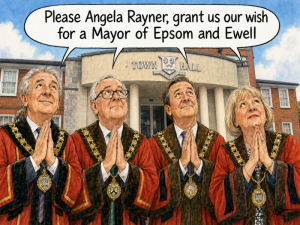
Epsom and Ewell could retain its mayor, civic traditions and borough regalia after the borough council is abolished next year following a vote by councillors.
Epsom and Ewell Borough Council agreed on Tuesday 21 July to ask the Government to establish Charter Trustees for the borough. The new East Surrey Council will also be asked to support the proposal.
The trustees would preserve the ceremonial office of Mayor of Epsom and Ewell after East Surrey Council assumes responsibility for local services on 1 April 2027.
They would not exercise normal council powers. Their duties would be limited to maintaining the mayoralty, civic ceremonies, historic rights and property such as the borough’s regalia.
Councillor Neil Dallen (RA, Town), who proposed the recommendations, said he had been approached by scores of residents concerned about what would happen to the mayoralty.
“The number of residents that have come to me about what’s going to happen about the mayor have been quite numerous,” he said. “I won’t say they’re in the hundreds, but they’re certainly in the tens, probably closer to 100.
“I have been a mayor, and there are a number of other councillors here who have been a mayor. Once you’ve been a mayor, I think you appreciate what the residents want as a mayor, and it will be a great loss if we don’t have a mayor.”
Cllr Dallen said several members of the new East Surrey Council had indicated support, although the final decision would not rest with Epsom and Ewell.
“We’ve got to get agreement of East Surrey to do this,” he said. “But I’ve spoken to three or four East Surrey councillors, and they are all very much in favour of keeping the mayor.”
Before the main debate, Councillor Alex Coley (Independent, Ruxley) attempted to have the proposal referred to the Strategy and Resources Committee. His move was defeated.
Cllr Coley argued that the proposal had come directly to Full Council without committee scrutiny, public consultation or a detailed estimate of its eventual cost.
Charter Trustees may ask East Surrey Council to fund their activities during the first year. After that, they can raise a council tax precept. The council report said the average Band D charge among existing Charter Trustee bodies was around £2.50 a year, with examples ranging from 46p to £5.
Cllr Coley drew a comparison with the council’s recent Community Governance Review, in which 82 per cent of approximately 2,200 respondents opposed the establishment of parish councils.
“The Charter Trustee item in front of us contains powers to raise a precept – i.e. council tax,” he said. “There was no consultation on this. It does include precepting powers and would create a new instituted body, and I believe that it should go to consultation.”
He added: “We don’t know what this will cost because no work has been done on costing it. For those reasons, I’d like this to go to Strategy and Resources for a debate where questions can be answered.”
Cllr Dallen said referring the proposal to committee could cause the borough to miss a narrow legislative window.
“There are two or three reasons why I think we need to make the decision tonight,” he said. “There is the urgency of trying to get a response before March 31 because, if we don’t get a response and we’re not set up, then everything goes into East Surrey and we lose control.”
He said East Surrey would meet the first year’s cost and described even a possible £5 annual charge as “really good value for money for having a mayor in the borough”.
Councillor Alison Kelly (Lib Dem, College) supported retaining a recognisable civic institution when the borough becomes part of a much larger authority. “Epsom and Ewell, as a relatively small borough, has benefited from a strong local identity,” she said. “With the new unitary authority, there is a risk that we will lose our distinctiveness.”
She said discussions with businesses, charities and East Surrey councillors had indicated appreciation for the mayoralty. “In this case, the relatively small additional charge would be outweighed, in my opinion, by the funds the mayor’s charities have gained,” she said.
Former mayor Councillor Robert Leach (RA, Nonsuch) said his year in office had shown him that the mayoralty was particularly appreciated by residents who might otherwise receive little civic recognition. “The people who valued the mayor were often some of the most disadvantaged people,” he said, recalling presenting certificates to children with special educational needs.
“People really felt honoured. Sometimes I almost felt embarrassed. They were saying, ‘We’re greatly honoured to have His Worshipful the Mayor here,’ and I was sitting there thinking, ‘Why?’ But they do really value it.”
He acknowledged concerns about a precept but said the borough already possessed its mayoral regalia, gowns and chains, making the cost of continuing the office comparatively modest.
Councillor Peter O’Donovan (RA, Ewell Court), another former mayor, said the office involved far more than its small number of compulsory civic engagements. “You do as much as you like because it’s such a fantastic position to hold,” he said. “It’s raising money for charities and seeing people.”
He recalled one child asking his father who the mayor was. “The dad said, ‘That’s the King of Epsom.’ So I’m royalty now as well,” he joked.
Councillor Alan Williamson (RA, West Ewell) said he had changed his mind after initially concluding that the scale of local government reorganisation counted against retaining a separate Epsom and Ewell mayor. “I think it’s necessary for the community to have a focal point, a focus of civic pride and for local identity,” he said. “If we lose that, we’ll be losing something significant.”
He warned that many residents did not yet appreciate “the enormity” of the borough council’s abolition. “We’re going to be subsumed into a rather amorphous administrative unit known as East Surrey, which very few people will be able to relate to on a day-to-day level,” he said.
Councillor Rachel King (RA, Town) said Charter Trustees could also help preserve Epsom and Ewell’s formal relationship with its French twin town, Chantilly. “The structure of the French government is such that it has to be twinned between a government body in France and a government body in the UK,” she said. “This would enable twinning to happen for our existing twinning and if we were to look for further twinning in the future.”
Councillor James Lawrence (Independent, College) opposed the proposal, arguing that councillors had not learned from the rejection of parish councils. “When the public were last asked for a precepting authority, they said no,” he said. “It is a concern to me that the learning moment from our last consultation seems to be: don’t consult, just take the decision straight to Full Council.”
He said that, despite growing up in the borough, he had little awareness of the mayor before becoming a councillor. “Not once did I come across the mayor,” he said. “I think I once saw a picture of someone in funny clothes wearing a big gold chain, which is largely accurate.”
Cllr Lawrence also questioned whether a mayor chosen from among councillors could claim to represent residents in the same way as a directly elected officeholder. “The mayor is not popularly elected,” he said. “It’s not chosen by the people of this borough. It’s chosen by a bunch of politicians.”
Councillor Clive Woodbridge (RA, Ewell Village) said the council was not itself creating the trustees but ensuring that East Surrey and the Government had an opportunity to consider doing so. “There’s a narrow window of opportunity,” he said. “If we don’t pass it today, then it won’t happen. At least we give it a chance of happening.”
Cllr Coley returned to the potential demands on East Surrey’s ten councillors representing Epsom and Ewell. The regulations require at least five Charter Trustees, who would elect a mayor and deputy mayor from among themselves. “Half of all councillors will need to be Charter Trustees minimum,” he said. “We know that the unitary councillors will have an extraordinary workload. They will be doing the work of the district and of the county.”
He added that continuing costs could include civic events, hospitality, expenses and administration, not merely the preservation of existing regalia.
Council leader Hannah Dalton (RA, Stoneleigh) said consultation was not legally required because Charter Trustees would have ex-officio membership and exclusively ceremonial responsibilities. She stressed that neither Epsom and Ewell nor East Surrey could guarantee that the Government would approve the request. “The answer from the ministry may be no. The answer from East Surrey may be no,” she said. “But if we don’t do it, and we don’t do it now, we are actually going to have lost that opportunity altogether.”
The recommendations were carried. The voting figures were not announced.
Under the proposal, the Government would need to introduce a further statutory instrument, approved by both Houses of Parliament. East Surrey Council must support the application before it can proceed.
Bitter exchanges in Epsom and Ewell Council Chamber on Local Plan oversight
24 July 2026
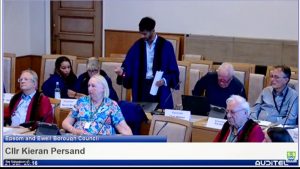
A bid to force greater councillor oversight of Epsom and Ewell’s Local Plan was defeated after an extraordinary council meeting descended into bitter accusations of dishonesty, procedural obstruction and democratic failure.
The motion, proposed by Councillor Kieran Persand (Conservative, Horton) and seconded by Councillor Julian Freeman (Lib Dem, College), was rejected by 15 votes to 12, with three abstentions, on Tuesday 21 July.
It sought to instruct the Licensing and Planning Policy Committee (LPPC) to review additional Local Plan documents submitted to the Government-appointed Planning Inspector after the 2025 examination hearings.
It also called for consultation responses not to be sent to the Inspector without LPPC approval. By the time the extraordinary meeting was held, however, the consultation had closed, 346 responses had been submitted and a further examination hearing had taken place on 2 July.
Recognising that events had overtaken parts of his original motion, Cllr Persand attempted to substitute proposals for an independent external review of the Local Plan’s governance.
His amendment questioned whether delegated authority allowing officers to propose “changes and corrections” to the plan and its supporting documents had been used more extensively than councillors intended.
It listed eight additional documents, covering urban sites, the Green Belt, potential housing allocations, sustainability, habitats, infrastructure and transport. Cllr Persand argued that the “scale and significance” of these documents raised questions about whether they should have gone before LPPC.
The proposed review would have examined:
The use of delegated powers during the examination;
Whether LPPC had fulfilled its constitutional role;
Whether councillors received adequate opportunities to scrutinise material changes;
Whether appropriate constitutional and legal advice was available;
How governance and transparency could be improved.
A separate factual report would have listed the documents submitted, the powers relied upon and the reasons they had not been considered by LPPC beforehand. The review’s findings would have gone to the Standards and Constitution Committee, the Planning Inspector and the shadow East Surrey Council.
Cllr Persand said the purpose was “to strengthen governance, transparency and democratic accountability, not to revisit the planning merits of the Local Plan”.
Mayor rejects amendments
Mayor Councillor Lucie McIntyre (RA, West Ewell) rejected the amendment under Full Council Rule 17.5 after taking officer advice.
She ruled that it was outside the scope of the published motion and did not identify a source of funding for an external review.
“The proposed amendment has no relation to the scope of the original motion,” she said. “It would not be in order to allow your proposed amendment, which seeks to make decisions which have no bearing on the original motion and provides no source of funding for the request.”
Cllr Persand disputed the ruling. “You’ve just quoted back my amendment, not really telling me why it’s out of scope,” he said. “It is about the Local Plan, but it’s also about transparency and governance, which the original motion was about.”
The Mayor said she had made her decision and invited him to follow the issue up in writing after the meeting. Following further exchanges, she agreed to adjourn the meeting so that Cllr Persand could prepare a revised amendment.
After consulting the Chief Executive and legal advisers Cllr McIntyre rejected the second version on the same basis.
When Cllr Persand continued to challenge the decision, she warned that she would ask him to leave the meeting if he persisted. “I have made my decision,” she said. “I have given my rationale. I am not going to discuss it any further.”
Councillor Bernie Muir (Conservative, Horton) intervened after another member called out during Cllr Persand’s speech. “This is not normal,” she said. “I haven’t seen this happen at county or anywhere else, where a member of the floor has piped up in the middle of someone’s speech.”
The Mayor then warned all members against interruptions.
“Masterclass” in democratic failure
Forced to proceed with his original motion, Cllr Persand launched a fierce attack on the council’s administration and handling of the plan. “This Local Plan process has become a masterclass of how not to conduct democratic decision-making,” he said. “Time and again, councillors have been denied the opportunity to do the very jobs residents elected us to do – scrutinise.”
He accused the council of cancelling meetings, delaying discussions and relying too heavily on decisions taken under delegated authority.
“Important decisions have been taken away from the committee whose constitutional role is to review, consider and help shape the Local Plan,” he said. “Councillors have too often been told what has been decided instead of being given the opportunity to help make those decisions.”
Cllr Persand claimed LPPC chairman Councillor Peter O’Donovan (RA, Ewell Court) had previously admitted not reading what was submitted to the Inspector.
“Think about that,” he said. “The chairman of the committee responsible for planning policy doesn’t know what was submitted in the council’s name. If that does not ring alarm bells across this chamber, I genuinely do not know what will.”
He also criticised the absence of a legal officer when constitutional concerns were previously raised at LPPC.
“Members were asked to consider important constitutional issues without legal advice being available in the room,” he said. “That should be a concern to every councillor here, regardless of political party.”
Cllr Persand said residents had been encouraged to spend hours responding to consultations but increasingly believed their views had “disappeared into a black hole”.
“Whether residents supported the Local Plan or opposed it is almost beside the point,” he said. “They deserve confidence that their views have been properly considered and that decisions affecting the future of this borough are being taken openly and transparently. That confidence has been damaged.”
He argued that the affair was symptomatic of broader problems at the council, referring to recent Audit and Scrutiny Committee criticism of the procedure followed over an urgent decision concerning Rainbow Leisure Centre dilapidations.
“What we are seeing is not one isolated issue,” he said. “It points to a wider pattern where proper scrutiny is too often treated as optional, where transparency comes too late and where councillors are expected to accept decisions that have already been made rather than being given the opportunity to shape them.”
Motion “out of time”
Councillor Steve McCormick (Conservative, Woodcote and Langley Vale) agreed with the motion’s underlying concerns but acknowledged that one of its proposed instructions was no longer capable of being implemented.
“Major, highly sensitive Local Plan evidence submitted under delegated authority was sent to a Planning Inspector without prior consideration or scrutiny by the Licensing and Planning Policy Committee,” he said. “When the committee tasked with setting out our planning framework is bypassed, our elected members are sidelined and our residents are completely left in the dark.”
However, the consultation had already closed and its responses had been sent to the Inspector. “Recommendation two is simply out of time,” Cllr McCormick said. “All 346 responses have long been sent to the Inspector, and the hearing itself concluded on July 2.” He added: “We cannot rewrite the past, but we must urgently address how we restore transparency, enforce committee oversight and ensure our residents are never shut out again as we move towards the main modifications stage.”
Councillors “struggled” to participate
Councillor James Lawrence (Independent, College), elected in 2023, said he had struggled to become meaningfully involved in Local Plan decisions. “I haven’t been able to be involved in a single public committee, apart from the one committee in November 2024, which released over 1,000 new pages in seven days to read,” he said.
“That’s not a realistic way to run a committee system. We’re not resourcing our committee system properly. You cannot make considered decisions on that basis.” Cllr Lawrence said committees should be properly engaged because they provided the principal means by which backbench councillors could influence decisions. “If we just get presented with 1,000 pages and seven days to read them, you’re not going to get a meaningful decision,” he said.
Councillor Kate Chinn (Labour, Court) said the “spirit of the motion is absolutely correct”. “We need a plan for the borough,” she said. “It needs to go to Licensing and Planning Policy Committee to make those decisions in the authentic and proper way.”
Cllr Muir described three recurring problems: “Transparency, scrutiny and a fair understanding of our concerns.”
“It has been an almighty struggle to actually have any input that’s been considered,” she said. “We cannot treat members like this. When you treat members like this, you are treating our residents like this.” She said councillors in other authorities were astonished when told how the process had operated in Epsom and Ewell. “Every single member in this room should feel appalled – absolutely appalled – at how we are consistently treated,” she said.
Councillor Christine Howells (RA, Nonsuch) said the sole issue should be whether the correct process had been followed. “It is eminently clear that this process was fundamentally flawed,” she said. “Due diligence now has to take place to show transparency, accountability and regain trust in the system.”
She urged members to put “duty, honesty and integrity” above political allegiance, warning: “This vote will be judged and scrutinised by the residents.”
“Democracy is being subverted”
Councillor Chris Ames (Labour, Court) linked the Local Plan dispute to wider concerns about transparency and officer decisions. When he began referring to the Rainbow Leisure Centre dilapidations issue, the Mayor twice directed him back to the motion. The Mayor being the daughter of Cllr Neil Dallen, who Ames has criticised in connection with the alleged “cover-up” of the £500,000 dilapidations Rainbow Centre bill.
“I really don’t think it’s for you to tell me what my speech is to be about, Madam Mayor,” he replied. “If I think this is relevant, I will make this point. I will not be silenced.”
He accused the administration and senior council figures of using procedural rules to prevent legitimate debate.
“There’s a pattern here,” he said. “Procedural rules are being used all the way along to stop councillors discussing things. This is supposed to be a democratic council, and democracy is being subverted.”
Defence of officers and administration
Councillor Clive Woodbridge (RA, Ewell Village) mounted a forceful defence of council officers and rejected opposition claims that the process lacked transparency.
“One of the most disgraceful things about this whole Local Plan process is the way that the opposition criticises officers – officers who work diligently and hard on behalf of us and our residents, and they’re not in a position to fight back,” he said. He described Cllr Ames’s criticism as “unconscionable” and called on opponents to reconsider the appropriateness of their language.
Cllr Woodbridge said opposition councillors had been given time to prepare an amendment which could properly be debated but had failed to do so. “Rather than blaming us, blaming the Mayor or blaming officers for this, they only have themselves to blame,” he said.
He said an officer had given a lengthy explanation at the previous LPPC meeting and the council’s Monitoring Officer had repeatedly stated that the constitution and due process had been followed. “It’s not about transparency,” Cllr Woodbridge said. “They just don’t like the answer that they get.”
He alleged that the opponents’ real objective was to stop the plan. “What they’re dressing up as transparency and integrity is that they want to stop this Local Plan,” he said. “We know we have to deliver a Local Plan for our residents that protects the Green Belt, protects our environment and delivers the housing that our current and future generations need.”
Cllr Woodbridge nevertheless agreed that residents and councillors should be involved when the Inspector’s proposed main modifications were published.
Delegation dispute
Councillor Shanice Goldman (Conservative, Nonsuch) said she had been an LPPC member when the disputed delegated authority was approved. “In no uncertain terms, we were told that the delegated authority was going to be for the purpose of making small changes, including grammatical errors and spelling mistakes,” she said. “We were not told that material changes would be made by way of delegated authority.”
She said members had been misled about the effect of their decision, while stressing that she was not alleging bad faith. “We took a vote with the information that was given to us,” she said. “That information was misleading. It was wrong.”
Councillor Alex Coley (Independent, Ruxley) said he had raised infrastructure issues directly at the examination hearing because he felt unable to do so through the council. “I made the point that I did it in that forum because I’m not able to do it at this council, either by committee or by talking directly to officers,” he said.
Although the Inspector suggested that councillors and officers should communicate, Cllr Coley said he had received no subsequent approach from the planning policy team. “This blanket, umbrella coverage of delegated authority suggests that councillors are not allowed to take part any more in their own process,” he said.
Councillor Alison Kelly (Lib Dem, Stamford) rejected Cllr Woodbridge’s contention that critics wanted to derail the Local Plan. “What we want is a Local Plan that has fulfilled all the consultation that’s necessary,” she said. “My personal disappointment was that we couldn’t have had an extra LPPC meeting before those original documents were submitted.”
She added: “I definitely want a Local Plan because it’s in the residents’ interest to have a Local Plan.”
“Worst-run council”
Cllr Freeman, who seconded the motion, strongly criticised the handling of the meeting itself.
He said the original motion had been available for two weeks, yet councillors received procedural advice shortly before the meeting which raised doubts about what they could debate. “This should have been quite a simple, straightforward process,” he said. “Instead, it has descended into farce, with people shouting out, being accused of things and being told they can’t talk about this and they can’t talk about that.”
Drawing a comparison with the shadow East Surrey Council, where he serves as a member, he described Epsom and Ewell as “probably the worst-run council I’ve ever had experience of….. For me, there has been a complete lack of due process,” he said. “This underlines why it is a good thing, in my view, that this council will soon cease to exist.”
He added: “In the end, I think there has been a failure of adequate oversight over this whole Local Plan process.”
The Mayor subsequently said Cllr Persand’s amendment had been submitted at 6.39pm, but corrected herself after he protested, confirming it had been sent at 5.04pm. The original motion had been published two weeks earlier.
LPPC chairman rejects accusations
Cllr O’Donovan disputed Cllr Persand’s assertion that he did not know what had been submitted.
“I did not read the actual responses, but I was in full conversation with the Head of Planning Policy and Economic Development,” he said. “I knew what was being asked, what was being replied to and therefore I was in full knowledge of what was being sent.”
He stressed that delegated authority did not require him to sign off individual documents. “I have to make it clear: under the delegated authority, it is not for me to sign anything off,” he said. “But I was well aware of what was being said.”
Responding to Cllr Goldman, Cllr O’Donovan said the full wording of the delegation appeared in the committee papers available to councillors before the November 2024 meeting. “I did not mislead anything,” he said. “The full motion was there, and you could have read it.”
Cllr O’Donovan said the necessary political decisions had been made during preparation of the plan. During examination, responsibility for the process rested with the Planning Inspector, who requested additional evidence to address concerns about soundness. “That work was completed under the delegated authority granted in November 2024,” he said.
The Inspector then approved publication of the additional documents for consultation. At the 2 July hearing, she indicated that documents submitted during the examination could only be withdrawn at her direction.
“As the documents and consultation responses have been published on the examination webpage under the direction of the Inspector, both parts of the motion being considered this evening cannot be implemented,” he said.
Cllr O’Donovan said the Inspector appeared likely to find the plan sound, subject to main modifications. Those modifications would be consulted upon before Full Council decided whether to adopt them. “If we decide not to, then the plan will not be found sound, and we will be in serious trouble,” he said.
Cllr Goldman replied that she had read the papers and fully participated in the November 2024 debate.
“Members of the committee queried the scope of the delegated authority,” she said. “We were then given assurances by the chair that the scope would be limited to small changes, including grammatical errors. That’s what we were told.”
Accusations of lying
In his final reply, Cllr Persand accused Cllr O’Donovan of making two false statements and said video evidence supported his account of what the LPPC chairman had previously said. “You did say that you hadn’t read the papers,” he said. “That is on a video recording.”
He accused Cllr O’Donovan of having “passive involvement versus active involvement” as LPPC chairman and said it was inappropriate given the significance of the Local Plan. “You’re under no obligation to read a paper for us, but you are under an obligation not to mislead the committee and to lie,” he said – apparently meaning not to lie.
Cllr Persand maintained that the November 2024 delegation had been presented as covering minor amendments rather than the material changes subsequently submitted. “There is a culture in this chamber and council where scrutiny is treated as an inconvenience, where transparency is something to be managed rather than embraced,” he said.
He rejected claims that the opposition wanted to defeat the plan. “All of us want a Local Plan. All of us want a sound Local Plan,” he said. “It’s the RA who are bulldozing decisions through without proper consultation, notification or working with other councillors.”
Cllr Persand turned his fire on the Residents’ Association’s record in local government, arguing that voters had already passed judgement in the East Surrey elections, at which only two RA candidates were elected. “You will not be leaving a positive legacy,” he told the administration. “Residents made that very clear in the last local elections.”
Cllr O’Donovan immediately objected to being accused of lying. “I’ve been accused of deliberately misleading the council and lying,” he said. “I just think that is unacceptable language.”
“I’m not lying,” he added during a brief exchange across the chamber.
The Mayor ended the argument and called the vote. Twelve councillors supported the motion, 15 opposed it and three abstained.
The motion was therefore defeated, leaving the additional examination documents without the retrospective LPPC review sought by its supporters. No external governance review or factual report will be commissioned under Cllr Persand’s rejected amendment.
Surrey Council leader thinks new PM will back a County Mayor
24 July 2026
Surrey County Council’s leader says he expects Andy Burnham to “turbocharge” initiatives that could see the county get its own elected mayor.
Speaking at a meeting of the full council, Councillor Tim Oliver said he “fully expects” the new Prime Minister to lean hard into the devolution of powers to England’s regions.
Councillor Oliver is serving a final stint in office before the county council he leads is abolished, along with Surrey’s 11 district councils. These will be replaced next April by two unitary councils in East Surrey and West Surrey, each of which will be responsible for all local government services in its respective area.
But Councillor Oliver expressed his hope that these reforms will go one step further, leading to the creation of an overarching elected mayor for all of Surrey.
He said he is “pleased to see” progress being made towards the establishment of a foundation strategic authority (FSA) – a county-wide body that would serve as a stepping stone towards a new mayoralty.
Councillor Oliver said: “Having seen the Secretary of State last week at the LGA (Local Government Association) conference, I know it is his hope to establish that FSA here in Surrey. And I’m confident that will lay the ground for a directly elected mayor of Surrey in the near future.”
Former Greater Manchester Mayor Andy Burnham, who was elected as MP for Makerfield last month succeeded Keir Starmer as Prime Minister yesterday
Mr Burnham has championed greater devolution of powers to regional governments across Britain, which is set to be a signature part of his policy programme. He served for nine years at the head of Greater Manchester’s combined authority, a body that brings together the region’s 10 boroughs under one directly elected mayor.
Councillor Oliver said he hopes Mr Burnham’s experience as a regional mayor will inspire him to roll out further devolved powers and new mayoral authorities.
He said: “I fully expect our incoming Prime Minister to turbocharge that devolution agenda, having seen first hand the benefits of a mayoral system – and with change, growth, and improvements in local services that can be delivered.”
The abolition of Surrey County Council comes as part of a wider local government reorganisation, which is seeing mergers in many “two-tier” authorities where there are separate county and district councils.
Areas with this two-tier structure have local government responsibilities split between these two types of council, while newer unitary authorities oversee all services.
Councillor Oliver said he believes Surrey County Council officers and councillors have “a record to be proud of”.
“We said we would make Surrey fit for the future, and we have done just that,” he added. “Over recent years, many councils across the country have struggled, and Surrey has met those challenges head-on and thrived. Our finances have been transformed to a point where we have a stable, balanced budget, even in the face of extreme pressures.”
Elections were held for the West Surrey and East Surrey “shadow authorities” in May, which will work to get the new councils up and running in time for the handover of power in April 2027.
Councillor Oliver previously told the Local Democracy Reporting Service (LDRS) it is his “expectation” that Surrey could be ready for mayoral elections in 2028, alongside four other new combined authorities.
However, this would depend on the green light for its creation being given by central government.
Wild Arts brings Mozart and opera favourites to Surrey
24 July 2026
Opera will be coming to Surrey this summer as the touring company Wild Arts presents Mozart’s The Marriage of Figaro in Guildford and at Titsey Place.
The production visits the Yvonne Arnaud Theatre in Guildford on Friday 7 August before returning to the county for a performance at Titsey Place, near Oxted, on Sunday 6 September.
Titsey Place will also host An Evening of Opera on Saturday 5 September, combining well-known operatic arias with songs from classic musicals.
Founded in 2022, Wild Arts takes opera and classical music to theatres, country houses, gardens and other distinctive venues around the UK. Its productions favour intimate staging, imaginative costumes and close engagement between performers and audiences rather than large sets and heavy touring equipment.
The company also supports singers, musicians and theatre practitioners at the beginning of their professional careers through its Emerging Artist Programme.
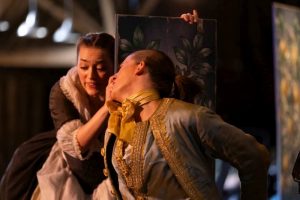
Its new production of The Marriage of Figaro marks the directorial debut of international opera singer Danielle de Niese. Orlando Jopling conducts the ten-player Wild Arts Ensemble, with the opera performed in English in a new translation by de Niese and Jopling.
Mozart’s comedy follows Figaro and Susanna on the morning of their wedding, when they discover that their employer, Count Almaviva, has designs on the bride-to-be.
A day of disguises, misunderstandings and plotting follows as servants attempt to outwit their master and ensure that the wedding goes ahead. Among the opera’s best-known musical moments are its fizzing overture, the Countess’s aria “Dove sono” and the jubilant finale.
The cast includes Jack Sandison as Figaro for the Guildford performance, Ellie Neate as Susanna, Timothy Nelson as Count Almaviva and Elinor Rolfe Johnson as Countess Almaviva. Matt Siveter takes over the role of Figaro for the September performances.
They are joined by Abbie Ward as Cherubino, Olivia Ray as Marcellina, Timothy Dawkins as Bartolo and Antonio, William Searle as Don Basilio and Don Curzio, and Eleanor O’Driscoll as Barbarina.
Wild Arts describes the production as an evening of “sparkling tunes, tangled romances and razor-sharp wit”, staged with bold costumes, inventive props and an emphasis on pace and storytelling.
The company’s second Surrey offering, An Evening of Opera, is intended to provide an accessible introduction to the art form as well as an entertaining programme for established opera enthusiasts.
Devised and directed by Guido Martin-Brandis, the semi-staged production follows four singers through a 75-minute story of intrigue, jealousy, comedy and love, accompanied by a string quintet.
The programme brings together music by Handel, Mozart, Puccini, Rossini and other leading opera composers alongside songs by Irving Berlin, Leonard Bernstein, Rodgers and Hammerstein and Noël Coward.
Selections include the Flower Duet from Delibes’ Lakmé, the overture to Rossini’s William Tell, “Anything You Can Do” from Annie Get Your Gun, “On the Street Where You Live” from My Fair Lady and “Make Our Garden Grow” from Candide.
The Surrey performances are:
The Marriage of Figaro Friday 7 August – Yvonne Arnaud Theatre, Millbrook, Guildford GU1 3UX
An Evening of Opera Saturday 5 September – Titsey Place, Oxted, Surrey
The Marriage of Figaro Sunday 6 September – Titsey Place, Oxted, Surrey
Lionel Blackman Photo: Marriage of Figaro scene courtesy Wild Arts
New Gatwick wetland aims to reduce flood and drought risks
24 July 2026
A new wetland capable of holding up to 600,000 litres of water has been created near Gatwick as part of efforts to make the Upper Mole catchment more resilient to flooding, heatwaves and prolonged dry weather.
The South East Rivers Trust has completed the latest phase of a project using natural measures to slow, store and filter water before it travels downstream.
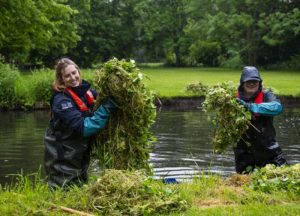
Across two sites, the environmental charity has created the wetland and reconnected 100 metres of river with its natural floodplain.
The wetland will collect rainfall and surface water, releasing it gradually downstream. Restoring the connection between the river and its floodplain will also give water more space to spread out and be held temporarily during periods of heavy rain.
The measures are intended to ease pressure on downstream communities when rainfall is intense, while keeping more water in the landscape during hot and dry periods. The restored areas should also provide new and improved habitats for wildlife.
The work was funded by London Gatwick through its Decade of Change sustainability programme, a strategy covering 10 environmental and social priorities up to 2030.
The latest phase, delivered between July 2025 and June 2026, included:
Installing more than 50 “leaky barriers” to slow the movement of water;
Planting a 100-metre hedgerow containing 400 native trees;
Bringing two more landowners into the catchment project; and
Monitoring rainfall, river levels and water clarity to study how water moves through the landscape.
Leaky barriers are carefully positioned structures made from natural materials such as branches and logs. Under normal conditions, water can continue to flow through them, but during heavier rainfall they slow the flow and hold back some of the water temporarily.
George Biggs, project officer at the South East Rivers Trust, said the recent spell of hot and dry weather illustrated one side of the challenge facing the area.
“During the current hot and dry weather, it can be difficult to imagine how quickly heavy rainfall can create problems for our rivers and local communities,” he said.
“The Upper Mole responds very rapidly when it rains, with water moving quickly through the catchment. By restoring wetlands, reconnecting rivers with their floodplains and installing leaky barriers, we can give that water more space and more time.
“These measures help create a healthier, more resilient landscape that is better prepared for both very wet and very dry conditions. They also provide valuable new habitats for wildlife.”
The Upper Mole is particularly responsive to rainfall because of its clay soils, modified river channels and surrounding urban development. Heavy rain can move rapidly downstream, increasing the risk of flooding and placing additional pressure on water quality and river habitats.
Natural flood management seeks to tackle those problems nearer their source by working with the landscape to slow, store and filter water.
Mark Edwards, head of sustainability at London Gatwick, said: “This important initiative, delivered in partnership with the South East Rivers Trust, is a vital part of London Gatwick’s Decade of Change sustainability programme.
“This partnership is a great example of bringing together technical expertise, landowners and local knowledge to deliver practical measures that support biodiversity, water quality and climate resilience.
“It demonstrates how London Gatwick can support enhancements to the local area outside the airport.”
Further restoration work is now being planned across the Upper Mole catchment. Proposals include restoring an old pond so that it can store more water and support biodiversity, installing additional leaky barriers and designing another wetland to improve water quality and availability.
The partners also intend to extend the project into another of the Upper Mole’s six waterbodies, continue monitoring the measures already installed and hold community engagement days about the river and natural flood management.
The project initially concentrated on the headwaters of the River Mole, including Baldhorns Brook near Rusper. Its longer-term ambition is to expand throughout the Upper Mole catchment and demonstrate how nature-based measures could help restore other urban river headwaters across the South East.
Monitoring equipment is recording rainfall, river levels and turbidity – a measurement related to water clarity – so that the Trust can assess how the catchment and the completed interventions respond to wet weather.
Surrey University leads research against anti-biotic resistance
24 July 2026
Faster and more effective ways to treat pseudomonas aeruginosa, a bacterium identified by the World Health Organization (WHO) as one of the most life-threatening pathogens, could be on the cards thanks to a first-of-its-kind 3D computer model developed by the University of Surrey.
The model has shown how pseudomonas aeruginosa grows and reshapes its protective layer and spreads to new surfaces. The WHO estimates that bacterial antimicrobial resistance – where antibiotics are no longer effective – was directly responsible for 1.27 million deaths worldwide in 2019 alone.
In a study published in npj Biofilms and Microbiomes, researchers used BioDynaMo, an open-source simulation platform developed as part of an international collaboration involving the University of Surrey and partners worldwide, to create a three-dimensional agent-based model (ABM) that recreates how pseudomonas aeruginosa forms biofilms.
Biofilms are communities of bacteria encased in a protective sticky layer made up of sugars, proteins and DNA that allows them to cling to surfaces and resist antibiotics. For Pseudomonas aeruginosa, these biofilms commonly form in flowing environments such as catheters and plumbing systems.
Unlike previous computer models, the Surrey-developed ABM captures how biofilms grow under constant fluid flow – similar to real-world conditions – and how the bacteria naturally break away from them to spread and colonise new surfaces. The team validated the simulation against laboratory experiments, demonstrating that it accurately reproduces the growth, structure and detachment patterns seen in real bacterial biofilms.
Ryan Bournes, postgraduate researcher at the University of Surrey and lead author of the study, said:
“Biofilms are incredibly difficult to study because many of the important interactions happen at a microscopic level. Our model allows us to simulate these processes in a virtual environment, making it much easier to test new ideas and understand how these bacteria spread without solely relying on costly and time-consuming laboratory experiments.”
As well as helping scientists study pseudomonas aeruginosa, the modelling framework could be adapted to investigate other biofilm-forming bacteria and predict how factors such as fluid flow, surface design and bacterial behaviour influence the spread of infection.
Dr Roman Bauer, Senior Lecturer at the University of Surrey’s Computer Science Research Centre and BioDynaMo spokesperson, said:
“Antimicrobial resistance is steadily rising due to the overuse and misuse of antibiotics, so finding faster and smarter ways to understand the behaviour of pathogens is essential.
“Using BioDynaMo, we’ve been able to recreate for the first time how Pseudomonas aeruginosa biofilms grow, change shape and spread under flowing conditions – biological processes that would be extremely difficult, expensive or even impossible to observe directly. This gives researchers a powerful new tool for virtual testing before moving into the laboratory.”
The research could help researchers optimise experiments, reduce laboratory costs and support the development of safer medical devices, hospital plumbing systems and other environments where harmful biofilms can form.
Image: Artist’s impression of Pseudomonas aeruginosa bacteria encased within a protective biofilm under flowing conditions.
When the Rolling Stones rolled into Epsom — twice
24 July 2026
Before the stadium tours, private jets and worldwide fame, five young rhythm-and-blues musicians performed on a temporary floor laid over the swimming pool at Epsom Baths Hall. More than six decades later, as the Rolling Stones celebrate another chart-topping album, local history reveals that the band visited Epsom not once, but twice.
The Rolling Stones have returned to the top of the British album chart with Foreign Tongues, released on 10 July. It is the band’s 25th studio album and their 15th to reach number one in the UK—putting them level with the Beatles and one behind record-holder Robbie Williams.
That remarkable longevity offers an opportunity to look back to two winter Saturday nights in Epsom, when Mick Jagger, Keith Richards, Brian Jones, Bill Wyman and Charlie Watts were still climbing towards stardom.
A swimming pool became a concert hall
Epsom Municipal Baths opened in East Street on 15 March 1939. The £65,000 complex had been designed from the outset to serve two very different purposes: swimming during the warmer months and public entertainment during the winter.
Its main pool was 100 feet long and 35 feet wide, with galleries seating 412 people. For dances, concerts, boxing and theatrical performances, a moveable maple floor supported by tubular scaffolding was erected over the water. A stage, lighting system, microphone and record turntable completed the transformation. The converted hall was licensed to accommodate as many as 1,396 people for music, dancing and public meetings.
It must have produced an unusual atmosphere: a rock-and-roll audience gathered on boards above the drained or concealed pool, surrounded by tiled walls, diving boards and the acoustics of a municipal swimming bath.
After the Second World War, the Baths Hall became one of Epsom’s principal social venues, hosting dances, boxing, orchestral performances and visiting entertainers. The Epsom and Ewell History Explorer describes the Rolling Stones’ 1963 engagement as a sold-out highlight for which the band received a fee of £60.
Saturday 14 December 1963
The best-documented Stones appearance took place on Saturday 14 December 1963.
“Star Rhythm Blues Time with the Rolling Stones”
The publicity picked out the band’s two records, Come On and I Wanna Be Your Man, and advertised an appearance by supporting group The Presidents, described as “that ever popular attraction”. Dancing and music were scheduled from 8pm until 11.30pm. Tickets cost five shillings and sixpence in advance or six shillings and sixpence at the door, with reduced rates offered for parties.
The instruction to “get your tickets early and avoid disappointment” proved well judged if the History Explorer’s record of a sell-out is correct.
A surviving business trail also corroborates the engagement. Christie’s has catalogued an Eric Easton Ltd performance contract for the Rolling Stones at Epsom Baths Hall among a collection of early Stones agreements covering venues in and around London during late 1963. Eric Easton was then managing the group with Andrew Loog Oldham.
The Epsom booking came at a fascinating point in the band’s ascent. They were no longer an unknown club act, but neither had they become the international institution familiar today.
On the chart dated 11 December 1963, three days before the concert, I Wanna Be Your Man stood at number 16. It moved to number 15 the following week and eventually reached number 12. Their self-titled debut album had not yet appeared; it would enter the albums chart in April 1964 and spend 12 weeks at number one.
Thus, Epsom caught the Stones in the narrow interval between their first taste of chart success and their transformation into one of Britain’s biggest bands.
Back again four weeks later
Concert chronologies reveal something overlooked in the familiar local account: the Rolling Stones returned to Epsom Baths only four weeks later, on Saturday 11 January 1964.
The second appearance is listed in detailed Stones performance records as an “extracurricular gig”—a separate engagement fitted around the band’s first major tour of 1964. Their schedule at the time was punishing. They performed two shows at Walthamstow’s Granada Theatre on 10 January, played Epsom the following evening, and then gave two more shows at the Granada in Tooting on 12 January.
They were recording at the same relentless pace. On 10 January—the day before returning to Epsom—the band worked at Regent Sound Studios on Honest I Do, I’m a King Bee and an early version of Not Fade Away, before travelling to Walthamstow for the evening performances.
Their chart fortunes were still improving. I Wanna Be Your Man was at number 15 during the week of the second Epsom appearance and rose to its number 12 peak on the chart dated 15 January.
Contemporary touring accounts estimate that the Stones travelled more than 5,000 miles during this period, playing clubs, colleges, ballrooms, cinemas and halls across Britain. The Epsom concert was one of several additional ballroom engagements squeezed between the formal package-tour performances.
No dependable set list has yet emerged for either Epsom show. The December poster establishes that Come On and I Wanna Be Your Man were central to the promotion, while the band’s contemporary touring repertoire included blues, rhythm-and-blues and Chuck Berry numbers. It would, however, be unsafe to present any reconstructed list as the exact programme heard at Epsom.
Before the world knew their names
The contrast with the present could hardly be greater.
In December 1963, the Stones were travelling from town to town, earning comparatively modest appearance fees and promoting two singles. Their audience in Epsom paid a few shillings to see them in a converted public swimming bath.
Within months, their first album would displace the Beatles’ With the Beatles at the top of the UK chart. Their first British number-one single, It’s All Over Now, followed in the summer of 1964. The tours, television appearances and scenes of mass excitement then spread far beyond Britain.
Yet the five musicians who appeared in Epsom were already the classic early Stones: Jagger at the microphone, Richards and Jones on guitars, Wyman on bass and Watts behind the drums. Brian Jones and Charlie Watts are no longer alive, while Mick Jagger and Keith Richards—then barely out of their teens—remain at the centre of a band topping the album chart in 2026.
The hall has gone, but the night remains
Epsom Baths Hall continued to host entertainment after the Stones, including a performance by Genesis in 1972. Its popularity eventually declined as alternative venues opened and leisure habits changed. The hall closed in 1989; the original baths complex was demolished in 2001 and replaced by the present Rainbow Leisure Centre.
Nothing visible at the modern centre readily tells visitors that one of the most famous bands in the world once performed there—twice—on a wooden floor constructed above the municipal pool.
What is still missing are the human memories: who queued at the Baths Hall box office, who danced at the front, what the band sounded like through the hall’s public-address system, and whether anyone kept a ticket, photograph or autograph.
Epsom and Ewell Times would be delighted to hear from readers who attended either concert—or whose parents, relatives or friends remembered the Rolling Stones’ two visits to Epsom Baths.
Readers bemoan Council’s feet-dragging on twinning Epsom with Bucha
24 July 2026
Dear Editor,
Very disappointed with Epsom and Ewell Council, this would have been a simple arrangement. I myself stayed in the borough of Bucha only a few weeks ago on my way to Odesa. I was only a few miles from the area occupied by the Russians, they were only stopped by the Ukrainians destroying the bridge. Imagine living in Epsom and enemy forces occupying Ewell killing people in the streets. Shame on the council members voting against this.
Yours faithfully,
Richard Gough
Dear Editor,
As a Ukrainian, I want to sincerely thank the people of Epsom and Ewell for everything they have done to support Ukraine over the past more than four years. Your kindness, generosity and the incredible humanitarian support you have provided have meant more than words can express.
Humanitarian aid has saved lives. But today, a statement of friendship and solidarity matters too. It tells Ukrainians that we have not been forgotten and that we are not standing alone.
The war has not become easier. Every day people continue to die, and cities continue to be attacked. We all hope this war ends in Ukraine, because if Russian aggression is not stopped here, its consequences will not stop at Ukraine’s borders.
Thank you for speaking up, for raising these issues, and for continuing to stand with Ukraine. It means more to us than you may ever know.