
Epsom and Ewell Times
15th October 2026

ISSN, LDRS and IMPRESS logos

Chance for Epsom and Ewell’s say on Heathrow flights

Flight over a town

Epsom and Ewell residents see and hear planes flying to and from Heathrow Airport. They are usually at a height of 6,000 to 7,000 feet. A new consultation is out for everyone effected by flight noise and pollution from the main London Airports of Heathrow, Gatwick and Stansted. Chris Caulfield of LDRS reports generally on the topic and with reference to Gatwick in particular:


Communities living under the Gatwick flight path face trading off quieter modern aircraft for an increase in night flights. Current restrictions on night flights are due to expire in 2025 and the government is seeking views as part of its next night flight abatement policy. 

It says it is aiming to balance the impact of sleep deprivation with the benefits to the wider economy.

Aviation minister Baroness Vere of Norbiton said: “There’s no doubt night flights have an effect on local residents underneath busy flight paths, but as aircraft become quieter, we have an opportunity to strike a balance to make sure we can support the aviation industry without having a debilitating impact on people’s lives. This consultation will help us to shape policy and create a flightpath towards a more sustainable approach to night-time aviation noise.”

Currently about 16 aircraft, about 80 per cent of Heathrow’s night flights, land at the airport between 4.30am and 6am. At Gatwick and Stansted, which are in more rural areas, the figures are higher.

Overall Heathrow can have 3,250 total night flight “movements” during seven summer months and 2,550 during winter. At Gatwick that figure is far higher at 11,200 in summer and 5,150 in winter, with Stansted taking 8,100 and 5,600 respectively.

Paul Beckford, chairperson of HACAN group which acts as a voice for those under Heathrow flight paths, said: “We welcome the recognition of the health impact of night flights which is a shift in the right direction, but we are worried about the change in wording in the economic benefits.”

He said the 16 flights currently arriving before 6am were “the most disturbing” and had a cumulative effect on people. Any one flight could wake a person up “but the real problem is when there are more and more flights coming. You wait for the next one. You are woken up at 4.30am and then you know another one is coming.”

Most night flights, he said, were long-haul trips in demand for their cargo haulage but Mr Beckford suggested these could be reorganised into the normal flight schedule which would both preserve people’s restful nights as well as bring economic benefits.

He cited the drop in aviation traffic post pandemic and the increase in online meetings as reasons for there being greater flexibility in runway slots.

Mr Beckford also questioned the consultation being carried out before the results of the Dr Charlotte Clark report into the health impacts of night noise was published – due out in 2024/25.

Sally Pavey, chairperson of the Community Against Gatwick Noise Emissions, said the group was pleased to see the “long-awaited” consultation but that night flight, and the subsequent noise, was “much hated by residents and well documented to cause health issues”. 

She said: “We would like to see a ban on night flights at Gatwick Airport but we know that the airlines are far too powerful for this to ever happen no matter how many reports are produced by medical officials to the health impacts they have on those seeking sleep.

“The government needs to change its attitude towards aviation and seek to address this health risk that they are subjecting residents to every night in Surrey, Sussex, and Kent all the time they continue to allow holiday makers flying during the night. We can’t believe that bucket and spade travellers seeking all year round sun and leisure overseas really want to travel at night, so we can only keep up pressure on government and the airline to have night flights banned on health grounds.”

The six-week consultation is taking input and evidence from the aviation industry and communities before forming the backbone of to manage aviation noise from October 2025.

Once decided upon, the government said it will pursue the “most cost-effective measures for achieving the desired outcomes”.

Night noise at airports was last consulted on in December 2020 which resulted in rolling over existing restrictions from October 2022 to October 2025.

The consultation closes on May 9 and is available here.


4th May Surrey goes to the polls

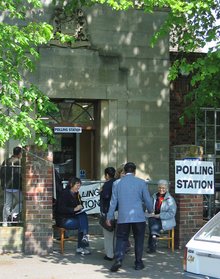
A polling station

Election day in Surrey takes place on May 4 this year but because of the way the county is broken up, not every poll will be the same. Surrey operates under a two-tier system, so there is a county-wide council that sits atop of 11 boroughs and districts. On May 4 it’s the boroughs and districts that go to the polls.

But even the boroughs and districts are holding different types of election. Surrey Heath, Spelthorne, Epsom and Ewell, and Guildford will have all out elections, where every councillor, in every ward will be decided on election day.  The same process is also happening in Mole Valley and Waverley, although this is because of boundary changes.

In Mole Valley there will be 13 new wards, down from 21, represented by 39 seats rather than the previous 41. Waverley too has undergone major changes and instead of returning 57 members there will now only be 50 councillors. The remaining five boroughs and districts, Elmbridge, Tandridge, Runnymede, Reigate and Banstead, and Woking will be going out in thirds.

This year will also be the first time people will be required to show photo ID to vote in person.

In previous elections, residents of Woking have taken part in the Government’s photo ID pilot tests. The law was changed last year so that voters have to show photo ID before being issued a ballot paper in polling stations for general, local, police and crime commissioner elections, or any future referendum.

Related reports:

Register to vote deadline for elections

Turn up to turn downturn in turnout!

Worrying about voter ID law

No photo – no vote!


Register to vote deadline for elections

Ballot box

The deadline to register to vote in May’s local elections is approaching. Those who need to register, including those who have recently moved house, need to do so before midnight on April 17.

Local elections are being held on May 4 across the country, including for councils across Surrey.

All 11 district and borough councils in Surrey are holding elections, some for a third of their councillors and some for the whole council. There is also a by-election for Surrey County Council in the Walton South and Oatlands division, following the resignation of Cllr Tony Samuels.

Councils have started sending out poll cards to voters, anyone who has not received one or who has recently moved may not be registered to vote.

Registration should take around five minutes on the gov.uk website, and though people may be asked for their National Insurance number, it is possible to register without one.

Registering anonymously is also possible for those who do not want their name to appear on the electoral register.

May’s elections will be the first where all voters will need to bring photo ID to vote, with only certain forms being accepted. Those without the necessary photo ID, which includes passports, driving licence and an Oyster 60+ Card, can apply for a free voter ID document.

While online registration is the quickest way, voters can also print off a paper form to be sent to their local Electoral Registration Office, which is the relevant district or borough council.

To check if they are registered to vote, voters also need to contact the electoral services team at their local council.

Voters must be aged 18 or over on election day and be a British, Irish, European Union citizen, or Commonwealth citizen with permission to enter or stay in the UK, or who does not need permission, as well as being registered to vote.
Image – Runnymede Council.


Epsom and Ewell Times adds: For guidance on photo ID read our report HERE “No Photo, No Vote”.

Related reports:

Turn up to turn downturn in turnout!

Worrying about voter ID law


A Valentine unloved for over 125 years, till now

Valentine Ridley

Another short and tragic life buried in an unmarked grave in Epsom’s abandoned Horton Cemetery is brought to life by one of the volunteer team of researchers. The full story can be read on www.hortoncemetery.org

The story of Valentine Ridley: At just 6 years old, in 1897, we find Valentine and his sister Elizabeth in the Greenwich Union Poor School. Their father George is “in house”, that is, living in the workhouse. There is no mention of Valentine’s mother or his younger sisters. Later in October Elizabeth is released ‘c/o Father’.

In May 1898 Valentine and all three of his sisters were admitted, along with their father, to the Greenwich Union Work House, their address is given as Snead Street, New Cross which is shown on Booth’s Maps as “comfortable” two storey houses, with bay windows, usually shared by two families.  Sadly, by August of that year Valentine was in the Brighton Road, School, Sutton.  His father is now shown as ‘out of house on leave’. In June of this year Valentine’s youngest sister, Florence,  was transferred to the Work House Infirmary where she died in October 1898, having lived a short sad life, so possibly George’s ‘leave’ was due to this event.

Periods of leave were granted to look for work, deal with family problems or celebrations.  Someone like Valentine’s father George, became known as an “in and out” as they spent their lives in and out of the workhouse/infirmary.

The 1901 Census, taken on 31st March, shows all three children in the Banstead Road School, Sutton, but on 23rd Dec 1901 Valentine, Elizabeth and Mildred are discharged from the Brighton Rd School and returned to the Workhouse again. These two schools were run by the same authority and seem almost interchangeable.

on 18th November 1909 he is admitted to the Ewell Epileptic Colony where he lived for the next 7 years. According to the 1911 Census he developed Epilepsy when he was 16 years old, just one year prior to being admitted. With no family to care for him we can assume that the Greenwich Union was happy to pass his care to the Epileptic Colony in Ewell.

Valentine died on 21st February 1916 and was buried in the Horton Estate Cemetery on 25th February in plot number 2014a, he was just 23yrs old.

The ‘Epsom Colony’, part of the Epsom Cluster of five mental hospitals’ had been opened in 1903 to care for “the Epileptic insane of the Metropolis”. This new approach housed patients in a collection of villas, avoiding the stigma of living in a mental asylum.  The treatment consisted of a specially regulated diet and doses of potassium bromide, the first effective treatment for controlling epilepsy.  The patients were expected to contribute to their costs by working on the hospital farm or in the kitchens, laundry or bakery, all of which supported the Epsom cluster of hospitals.

Lesley Lee

Copyright: The Friends of Horton Cemetery


Surrey sleep specialists supported

Someone difficulty sleeping

The University of Surrey has been awarded £1.7 million to further research into the sleep and circadian rhythms of people living with dementia.  

Disturbed sleep is a common symptom for people living with dementia, but it is not known how and to what extent sleep disturbance exacerbates the disease. 

Led by Professor Derk-Jan Dijk, the team at Surrey will expand their innovative programme of research that is using new technologies to non-invasively monitor and improve the sleep of dementia sufferers. The research is conducted in close collaboration with Imperial College London and the Surrey and Borders Partnership Trust, as part of the UK Dementia Research Institute (UK DRI). 

Professor Derk-Jan Dijk, Director of Surrey Sleep Research Centre (SSRC), said:  

“People living with dementia often have issues with sleep and, often, their memory is seemingly worse after a bad night. Good quality sleep is integral to our cognitive health, and now we need to test whether improving the sleep of those living with dementia will slow down the progression of the condition and preserve an individual’s memory for longer. To assist with this, we have the opportunity to use new technologies to both monitor and potentially improve the sleep of dementia sufferers over an extended period, in a way that is non-intrusive and supportive to people living with dementia and their carers.  

“This award is invaluable in helping us to continue our work and I am grateful to the UK DRI, the Medical Research Council, Alzheimer’s Research UK and Alzheimer’s Society for making this possible.” 

To learn more and ultimately improve the sleep of those living with dementia, researchers are applying digital health technologies that can sense movements and physiological signals of individuals whilst they sleep. This combined with mathematical modelling, machine learning, video analysis of sleep behaviour and molecular biomarker approaches, will yield a comprehensive understanding of the relationship between sleep, circadian rhythms, symptoms and disease progression in people living with dementia.  

Professor Dijk added:  

“A major advantage of the novel digital technologies we’re working with, many of which are contactless, is that they pose very little burden on the participant and can be used to monitor sleep and circadian rhythms in the home environment for weeks, months and years.” 

The Surrey team will also continue to test new interventions to improve sleep. Interventions to be tested include changing brain oscillations through delivery of precisely targeted auditory stimulation during REM sleep (a sleep stage thought to be particular important for brain function) or improving the light environment to boost circadian rhythms. 

Professor Paul Townsend, Pro-Vice-Chancellor and Executive Dean of the Faculty of Health and Medical Sciences at the University of Surrey, said:  

“Congratulations to Professor Dijk and the team of researchers from across the University in securing this fantastic award. This is testament to their hard work and dedication in this field.  

“This year marks 20 years of the Surrey Sleep Research Centre which continues to go from strength to strength and cements our position as a global leader of sleep research.”  

Fiona Carragher, Director of Research and Influencing at Alzheimer’s Society and a Surrey alumni, said:  

“As a founding partner and funder of the UK DRI, we are very proud of what the Institute has achieved since its launch in 2017. We congratulate everyone involved in placing it on the map as a global leader in dementia research and for the great impact it has had so far. This has included critical research into developing new diagnostic tools to ensure people living with dementia receive an early and accurate diagnosis, potentially giving them access to one of the disease-modifying treatments we hope to see emerging from the clinical trials pipeline in the coming years.” 

Surrey University Press Office


Passion in the heart of Epsom

Epsom Chamber Choir and Ensemble

Epsom Chamber Choir performed “Music for Passiontide” in Epsom’s St Martin’s Church on Saturday 25th March in a varied programme of singing and playing. Passiontide is a name for the last two weeks of Lent, and the repertoire for the concert, which was directed by guest conductor Jack Apperley, had been carefully chosen to reflect the emotions and suffering of this time.

The central work was Dieterich Buxtehude’s Membra Jesu Nostri, a Passion-meditation for Holy Week, which consists of a series of seven cantatas. On this occasion, the cantatas were performed over the course of the evening, interspersed with other a cappella anthems and motets.

For the Buxtehude, the choir was joined by the Chamberlain Ensemble, an early music group of 9 members, including violins, a violone (a large viol), viols, theorbo and organ, along with four excellent soloists (Lily Platts – soprano, Pete Dockrill – alto, Dominic Edwards – tenor, and Fionn Ó hAlmhain – bass). I was particularly moved by Lily’s aria in the third cantata, “Ad manus” (to the hands) and I very much enjoyed the well blended trios with alto, tenor and bass in the later cantatas.

The accompaniment by the Chamberlain Ensemble enhanced the variety of moods, often reflective and sombre but sometimes uplifting, and the sound became even more intense when 5 viols joined in the sixth cantata for orchestra and soloists alone. Each member of the ensemble added to the texture and brought out the beauty and
sensitivity in the music. An extra special mention needs to be made here to one of the viol players, Helen Williams, who is also a long-standing member of the Chamber Choir.

But what of the Epsom Chamber Choir themselves? They obviously knew all the music very well and maintained good contact with the audience throughout. Dynamics, diction and storytelling were beautiful and well executed, and the blend and balance between the voice parts (as many as 9 in Paul Mealor’s Ubi Caritas) was clearly heard.

The anthems and motets were all unaccompanied and ranged from the 16th to the 21st centuries. I had two particular favourites. To begin the second half of the concert, the choir processed to the back of the church, formed a semi-circle using the full width of the building, and sang Antonio Lotti’s 8-part Crucifixus (written around 1718). The sound was fuller in this configuration, as if surround sound had been switched on… The
suspensions were spine tingling, and the emotional intensity exceptionally powerful representing the agonies of the Crucifixion. You could have heard a pin drop at the end.

My other favourite was Crux Fidelis, (Faithful Cross) with music by Sarah MacDonald (born in 1968) and set to words written by Emilia Lanier (1569 – 1645) and Emily Dickinson (1830-1886). The piece is not as complex from a musical point of view as some of the others we heard, but you could tell that the choir were fully engaged in
delivering its message, with the meditative refrain of “Crux Fidelis” underpinning the excellent storytelling.

Jack Apperley, the Guest Conductor for this concert was in fine form, giving clear direction throughout. His energy, his explanations of the music in between items, and his obvious enjoyment of the performances, completed the experience for everyone.

Anne Ridge


Turn up to turn downturn in turnout!

Polling station UK

In an exclusive for Epsom and Ewell Times we report on voter turnout in the last four Epsom and Ewell Borough Council Elections. 2007, 2011, 2015 and 2019. The May 2015 Council election was held on the same day as the UK Parliamentary General Election and the turnout for the local election was much higher as a result. The next election in Epsom and Ewell will be held on Thursday 4th May.

Excluding the 61% 2015 turnout the average turnout across the Borough between 2007 and 2019 was 38.19% of the electorate, with the lowest turnout last time in 2019 with just 32.83%.

Consistently the Wards with the lowest turnouts have been Ruxley, Court and Town. Ruxley having the lowest since 2007 of just 25.23% in 2019.

The highest turnouts are in the richer wards of Woodcote, College and Stamford. Though these wards are also more closely contested and that can explain their higher turnouts as well. The highest recorded since 2007 being College Ward in 2011 with just over 59%. (Again the General Election year of 2015 excluded.)

However, Court Ward is also one of the top three contested Wards in the Borough and that is why it features in the Epsom and Ewell Hustings for three Wards that takes place on 26th April. CLICK HERE for details.

Will the requirement for photo ID see a further decline in voter turnout in Epsom and Ewell?

Related reports:

Worrying about voter ID law

No photo – no vote!

Click HERE for the full analysis.

Photograph © Andrew Dunn,


Worrying about voter ID law

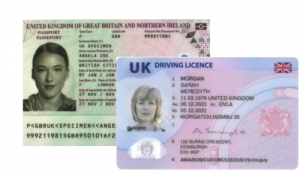
Photo identity documents UK passport and driving licence

Voter disenfranchisement and how to overcome it was discussed at Reigate and Banstead Borough Council Thursday 30th March as the authority wound up its business ahead of the May 4 elections.

The country goes to the polls in a little over a month amid the “biggest change to the electoral process in decades” as people will be required to present valid photo identification before casting their ballot.

Councillor Ruth Ritter, during questions from members at the March 30 full council meeting, asked what measures were in place to feed back on its impact on turnout.

She said: “At a time when voter turnout for local elections in Reigate and Banstead Borough Council was as low as 29 per cent in one ward last year and voters need to be encouraged to partake in democracy. Voter ID is the biggest change to the electoral process in decades, and it will affect voters in polling stations at the upcoming elections on May 4. It is therefore important that we have assurances that voters aren’t being disenfranchised by this significant change. 

“With that in mind, will the returning officer be gathering data on how many people are unable to vote at polling stations due to not having appropriate ID so that this data can be fed back to national government?”

Last time the average  turnout for the borough was 35 percent two power cent higher than the national leverage last year.

Responding was Mari Roberts-Wood, managing director at Reigate Borough Council whose responsibilities include increasing participation in elections.

She spoke of the “extensive communications about the massive changes to electoral law” and how the council had been targeting hard-to-reach groups such as younger voters and the elderly.

Ms Roberts-Wood said: “We can always do more and should do more and with the introduction of voter ID we need to do more than ever.”

Councils, she said, would also be collecting data from polling stations about the impact of the legislation and sending that to the electoral commission  –  who will be collecting the data centrally.

A report on its impact is expected to be published in November this year.

She said: “This data will include the number of voters who are essentially refused a ballot paper due to suspected forgery or impersonation, or they failed to answer the statutory required questions, they showed the wrong ID – there are 23 different types of ID that you can show on May 4. For those who don’t have one of those or don’t have any ID at all we will be collecting that data. Also recording those asked to show their ID in private and those who are refused a ballot paper but returned with a valid ID. We’re trying to capture as much as possible.”

She added that it was an “opportunity to collect a lot of data to understand the impact of these changes and hopefully increase our reach coming forward”.

Reigate and Banstead Council has a voter ID section on its website that people can use to ensure they can vote on May 4.

Related reports:

No photo – no vote!

Image credit: Crown Copyright fair use and DVLA CC BY-SA 3.0


Jail for prolific Epsom burglar who preyed on vulnerable women

Thanks to the determination of Surrey officers, a prolific burglar from Epsom has found himself sentenced to over three years behind bars.

Frank Smith, 27, from Rutland Close was sentenced at Guildford Crown Court on Friday (17 March), after he pleaded guilty to 19 offences over the last year making the lives of many in the borough of Epsom and Ewell a misery.

Victims spoke about being left “traumatised and anxious” after being targeted by Smith, with one saying: “I should feel safe in my home and not have to worry about things like I do, because of him”.

Another victim described how she had been “manipulated” by Smith and said it was “hard to trust people after what he did”.

A woman whose house was burgled by Smith said: “It is very difficult to put across in words how devastating it has been for me, and my family, to suffer such a violation of our home, peace of mind and family life.

 “Home should be a safe and comforting place, but since the burglary, both of my children are deeply afraid to be in the house. Our home was utterly ransacked. My children’s belongings were strewn on the floor, my daughter’s toys and horse figures were left broken and they had even broken into her money box.”

In this series of offences, which started in May 2022, Smith pleaded guilty to a burglary at Buildbase in Epsom, where he stole tools totalling £4,400.

That same month he stole a black Peugeot 3008 from outside a takeaway while the owner was inside the restaurant. This was followed by the theft of a VW van from the forecourt of a petrol station while its owner was in the garage paying for fuel. He later burgled the Co-Op store on Chessington Road, Epsom managing to get into the safe in the staff room and taking several hundred pounds.

In June 2022, whilst on bail under investigation for these offences, Smith saw a woman taking out cash from a Sainsbury’s in Epsom. He then followed her outside and back to her car. She described how Smith ran past her and snatched her bag out of her trolly whilst she was unloading shopping into the boot. The cost to the victim was estimated to be around £1,000 as she had to change the locks to her home, order replacement car keys and get a new phone. Her bank cards were then used shortly after to make two purchases totalling just under £60. Smith was caught on CCTV getting lottery scratch cards and making contactless payments, while holding the cash he had taken from her.

Smith then moved on to targeting private homes. After going out for the day, an elderly woman returned home to find a whole drawer missing from her dresser which had contained jewellery including a gold watch, two bracelets and several pairs of earrings with a total value of around £4,000.  Smith was caught on CCTV carrying the drawer with its contents partly visible.

In July 2022, Smith approached an 83-year-old woman as she was being dropped home, telling her that she had a leaking gutter and offering to fix it. The victim described how he initially quoted £15 but after a brief amount of work, claimed he’d had to replace the rubber seals and the cost would now be £135. When the victim’s son later checked the guttering, he found that no work had been done. Smith later returned to the property via a side gate before climbing in her front bedroom window and taking her purse.

In September 2022, Smith knocked on the door of a property in Epsom and told the 90-year-old occupant she had a rat problem in her back garden. The victim went through the house to the garden followed by Smith. Later she checked her handbag and found that her wallet and purse were missing. She later said Smith had been constantly pestering her to do guttering or other jobs around her home. Following this burglary, Smith used the victim’s card on six occasions making contactless payments.

A further nine offences committed by Smith were also taken into consideration, including four burglaries, three thefts of motor vehicles, one offence of fraud by false representation and one theft of a pedal cycle.

Detective Constable Sam Wightman, who led the investigation, said: “Smith is a serial offender and over time, escalated from opportunistic acquisitive crime, to targeted burglaries and fraud – targeting primarily elderly women. He has caused untold distress to his victims leaving them feeling unsafe in their own homes and costing them thousands because of the way he preyed on their vulnerabilities. This case has involved a lot of hard work and tenacity from officers across several units to track down the evidence needed to link these offences to one person and, because of this work, Smith is now where he deserves to be – behind bars.”


The above is reprinted from Surrey Police website with permission. It is not a court reporter’s report.


A different kind of cutting in Surrey’s NHS?

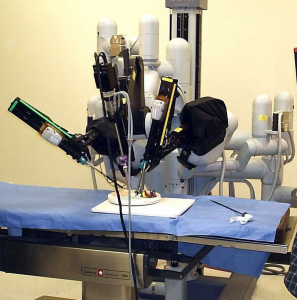
Robotic surgeon

Robots will be performing more operations, including general surgery and gynaecology at a Surrey NHS hospital trust seeking to introduce “significant savings”, a board meeting heard.

The Surrey and Sussex NHS trust held its much delayed annual general meeting on Thursday, March 30, where attendees heard from its chairperson, chief executive, and head of finance.

The afternoon meeting, which board members suggested may have led to its lower than usual attendance, was broken into three sections: a review of the year, a run through of its financial health, and questions from the floor.
Chairperson Richard Shaw led off proceedings explaining the AGM should have taken place in autumn last year but was delayed because of the late filing of its 2021/22 audited accounts.

Chief executive Angela Stevenson told the meeting that the 2021/22 year was heavily influenced by the “significant impact” of covid with “very tired”  staff “having to work under pressure”. This created a backlog the trust was only beginning to get back under control.

She said: “Staff were working with a disease that we didn’t know how to treat. We had high staff absences due to covid or due to family members having covid. Since then we’ve really got to grips with the backlog. We started to work through but at the start of 2022 these numbers were at their peak.”

Post pandemic, she said,  there was a huge increase in patients seeking primary care  compounded by the increase in “baseline complexity” as cases were left untreated during the pandemic.”

Ms Stevenson praised the trust for delivering robotic surgery for the first time and that it would be rolled out further to include general surgery and gynaecology services. They will also be investing in services with a new MRI department on the horizon – including new CT scanners at East Surrey and Crawley hospitals.

The trust also plans to work in partnership with other groups to better manage the health of the population rather than solely focus on its role as an acute hospital.

On finances, the meeting heard how its deficit continues to grow – even  not including the covid years.  It expects to run at a £26.5m deficit  for 2022/23.  This will be the first time the trust has run at a deficit since at least 2013/14 as spending pushes towards £400m a year.

Chief finance officer Paul Simpson said this could be partly attributed to an increase in staff costs. The hospital expects to take on an extra 130 new nurses. He said: “Now we have to recover the growth in costs that has happened and now we are (looking at) a significant savings plan.”

They were, however, quick to say “there should be no reason why we accept any reductions in quality of (care) for patients  and that before any cuts were made there would be full impact assessments on cost improvement plans.”

Image: Nimur at the English-language Wikipedia CC BY-SA 3.0


Surrey’s leader’s life pledge for brain tumour research

Tim Oliver Surrey County Council leader - Surrey Live

Surrey County Council’s leader said his focus “for the rest of his life” will be fulfilling a promise made to his daughter before she died to fundraise for brain tumour research.

Emily Oliver was 21 when she died, 18 months after being diagnosed with a diffuse midline glioma, and after seeking medical advice “from across the world”.

Her father, county council leader Councillor Tim Oliver, said the fund the family set up for her 21st birthday was now nearing £150,000 but vowed to continue to raise awareness and money.

He told the LDRS: “We promised Emily that we would do all that we could. We promised her that we would fundraise for what she wanted, specific research into her type of high grade glioblastoma. Hers was a very, very rare form.

“That is our focus and that will be our focus for the rest of our lives, to raise as much as we can and to find a research team that will look at predominantly her type [of brain tumour].”

Cllr Oliver said brain tumours didn’t get the level of attention or funding as other types of cancer, because the number of cases was not as high, but said they were the biggest cause of cancer death for under 40s.

He said he and his wife, Debi, hoped to find a specific research project in the near future to give the money to. “It’s really important to us that we continue to keep that alive and deliver on that promise to her,” he added.

The council leader also has his sights set on creating a Surrey-wide bereavement service and has been having conversations about it with the chief executive at Surrey Heartlands and Surrey hospices.

He said “pulling together” the different organisations that offer support for both before and after death would help people know where to turn.

Cllr Oliver added: “I think that would be a great thing for people to be able to know where to go.” He also praised the work of the Brain Tumour Charity and the support they give to families on what their journey may look like and understanding what their diagnosis actually meant.

He will take part in the Princess Alice Hospice’s “Talk the Walk” event in April which aims to get men, in particular, to talk about bereavement.

Debi said: “The pain of her loss is with us every minute of every day, but Emily was passionate about fundraising to find a cure for brain tumours, and I absolutely know she would be really pleased that what she had started is being continued.”

Cllr Oliver also called on the government to deliver on its promise of delivering £40million for research into brain tumours.

An inquiry by the All-Party Parliamentary Group on Brain Tumours was launched in 2021, and said that as of January 25 2023, just £15 million had been awarded since June 2018.

For advice and support from the Brain Tumour Charity, you can call its Support and Info Line on 0808 800 0004 or go to the website at: https://www.thebraintumourcharity.org/

Image Tim Oliver credit Surrey Live


Goalless draw a relief from 4 goal defeats for both sides.

Mile Oak 0-0 Epsom & Ewell. Southern Combination League – Division One. Wednesday 29th March.

On Wednesday evening two teams came together, both low on confidence and nursing 5-1 defeats from the previous Saturday, and they battled each other to a standstill with a competitive, but goalless draw.

I asked in my Arundel report just exactly who is in charge and we got our answer a couple of hours before the match as it was advised that our newly appointed Director of Football Anthony Jupp had left the club. In addition, Assistant Manager Matt Chapman was no longer in charge, but was still in the dugout while Vice-Chairman Barry Gartell took over again as Manager. Some may recall him having a successful stint following the dismissal of Sam Morgan in August of 2021, although these were different circumstances, as last time we were sitting near the foot of the table. The club finally advised that it was “still looking for a new long-term Manager” which tells me that they are not looking to advertise the position, or you would think they’d have said so!

On a heavy pitch we finally managed to get the match underway at the fourth time of asking, following three previous postponements, and as usual we had changes to our line up. Gartell decided that the midfield needed changing up, so club Captain Ryan Smith and Nick Wilson started on the bench, having been replaced by Rory Edwards who made his first start for the club, while Jaan Stanley came back in on the left wing in what appeared to be a slightly different formation with Athan Smith-Joseph still absent. At the back Chris Boulter and Alex Penfold came back into the line up in place of the absent Kevin Moreno-Gomez and Oliver Thompson, both of whom had failed to complete the match at Arundel.

We started brightly enough and had the majority of the possession in the first half. An early Penfold cross was met by a Jamie Byatt header, but it was a tough chance and he was unable to get the ball on target. The ball stayed mainly in the Mile Oak half as the predicted heavy rain began to come down, sheeting across the ground and the home side then had a couple of chances, firstly when a free kick was headed over from close range, but then in the 25th minute when a right wing cross was met by the head of Zak Kladis who directed his header back across goal. Tom Theobald made a great diving save to divert the ball on to the post and then as it bounced back towards him, he clawed the ball away before it crossed the line. It was a fantastic save and one that ultimately would earn us a point.

Gavin Quintyne saw his shot deflected wide for a corner and Jaevon Dyer produced a low shot that was well saved by the foot of Aaron Stenning in the Oak goal before he had to be alert to parry a Stanley free kick to safety. Stenning also had a slice of luck as the pitch bobbled on him and he produced an air shot, just getting back in time to save a corner. As the half ended Quintyne was only just over the bar from twenty yards, so you could argue that it was a fairly respectable first half from an Epsom perspective as the teams went for their half time break.

Regrettably the second half was nowhere near as interesting from an Epsom point of view. Mile Oak had a header at goal in the early stages which was deflected over and Theobald then had to make a low save on the hour mark. He had a lucky escape in the 66th minute when he came out to clear a ball near the edge of the penalty area but missed it. Fortunately we had defensive cover.

For our part, we seemed to be restricted to sending long balls up to Byatt, who tried his best with the limited service he had. In the 68th minute a nice one-two with Lewis Pearch gave him a shooting opportunity, but he dragged his shot beyond the far post from twelve yards and our best chance of the night had gone.

As so often happens with tight encounters, a little bit of niggle started to enter the contest and after Kladis had been fouled, he then clattered into Gideon Acheampong who reacted; both players earning yellow cards for their trouble, following the obligatory player scuffle. However, the game was beginning to deteriorate by this stage and our threats were becoming less and less. Dyer and Stanley became non-factors on the wings, although Dyer nearly pulled a moment of magic out in the 86th minute with a good run and powerful strike that missed the far post by inches.

In truth though we were beginning to lose the game in midfield as the home side kept pushing us back and it did seem odd that on such a heavy surface we waited until the 88th minute before making a substitution. We appeared to be crying out for fresh legs in the middle of the park, yet with two players that could do just that job on the bench, Wilson would only get on in the fifth minute of injury time, while Smith wouldn’t take the field at all. We did nearly pinch a winner when a long throw bounced up, but I don’t think Byatt expected the ball to reach him and he only managed to get the faintest of glances to the ball literally two yards out, which Stenning still caught anyway.

In reality the longer this game went on, the more it looked like Mile Oak would pinch the win, but ultimately neither team really did enough to deserve all three points and we had to settle for the goalless draw.

These dropped points mean that the opportunity to finish in second place is now no longer exclusively in our hands, with both Wick and Godalming Town now three points behind us and holding a game in hand. Godalming also now have a better goal difference than us and are clearly in a better run of form, although they have a tough finishing schedule so there is still hope if we can win our final four fixtures. Who do we face this Saturday? It’s Mile Oak again!!

Epsom & Ewell: Tom Theobald, Gideon Acheampong, Alex Penfold, Rory Edwards, Chris Boulter, Dylan Merchant, Jaevon Dyer, Gavin Quintyne, Jamie Byatt, Lewis Pearch, Jaan Stanley

Subs: Musa Beegun for Pearch (88), George Owusu for Stanley (91), Nick Wilson for Edwards (95)