
Devolution or dilution? And who decides?


Surrey’s proposal to form a Foundation Strategic Authority is framed as a step forward — aligning transport, housing and economic planning across the county and bringing decision-making closer to local areas.
It may yet prove to be that. But the way in which such steps are taken matters just as much as the structures themselves.
The reorganisation of local government in Surrey is already one of the most significant changes in decades. Boroughs such as Epsom & Ewell are to be abolished and replaced by two large unitary councils. Now, alongside that, a new county-wide strategic authority is proposed. In some areas, parish councils may also emerge.
This is presented as simplification. To many residents, it may look more like substitution — one system replaced by another whose overall shape is no less complex.
A Foundation Strategic Authority would not initially be directly elected. It would operate through existing council leaders, taking decisions that could shape the county’s future for decades. That makes clarity of accountability all the more important.
Which is why process matters.
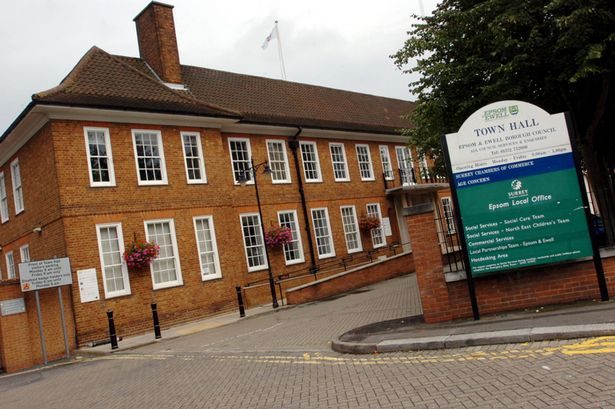
When asked to explain the basis on which Epsom & Ewell supported the Expression of Interest, the council leader Hannah Dalton (RA Stoneleigh) declined to comment, citing the pre-election period. Caution during such periods is understandable. But it is important not to overstate what the law requires.
The statutory rules in question are aimed at preventing local authorities from issuing politically sensitive publicity using public resources. They are not a shield against legitimate questions about how decisions have been made — still less where the very question is whether the authority itself took the decision at all.
If a council has formally acted, it should be able to say so, and explain how. If it has not, then that too is a matter of legitimate public interest.
Invoking restrictions designed for publicity to avoid answering questions about authority risks blurring a distinction that ought to remain clear.
The lack of democratic scrutiny over the FSA submission contrasts with the level of scrutiny to which and recently the same Council leadership is subjecting the popular proposal to twin Epsom and Ewell with Bucha in Ukraine: Full Council to Strategy and Resources Committee to a Working Group and then all the way back again.
Beyond this local issue lies a wider one. English devolution has long carried a tension between promise and practice. Powers are announced, structures created, and expectations raised. Yet control — particularly financial control — often remains at the centre.
The risk is not simply that new layers are added. It is that they exist without the clarity, authority or autonomy needed to justify them.
None of this is an argument against devolution. The case for decisions being taken closer to the communities they affect remains strong. But devolution requires more than new institutions. It requires transparency about who is making decisions, on what basis, and with what authority.
As Surrey moves through this period of change, those are not peripheral questions. They are central ones.

Related reports
Cllr Dalton seeks another layer of local government
Cllr Coley on an attempt to create another layer of local government
Epsom on road to twin with world-famous Ukraine town of Bucha