

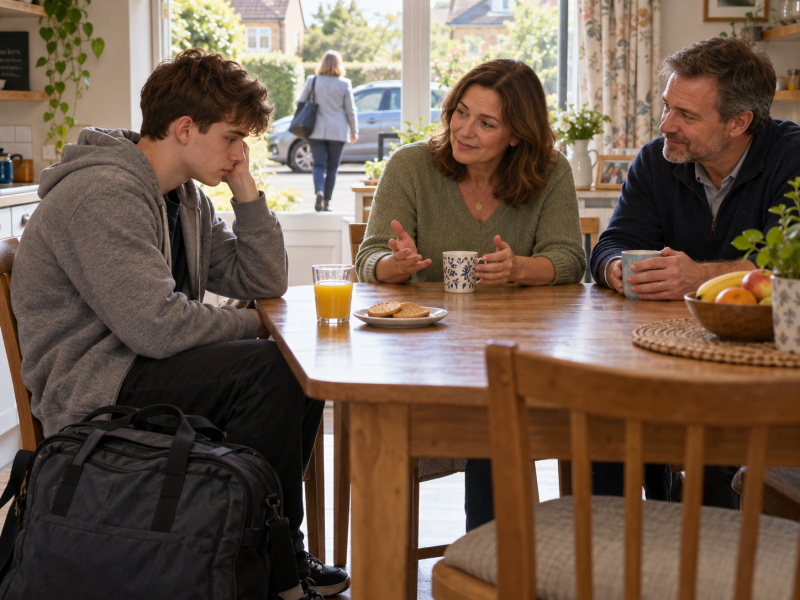
Surrey seeks more families to open their homes to children in care


Surrey residents are being urged not to rule themselves out as potential foster carers as the county seeks more local homes for children and young people who cannot live with their birth families.
Surrey Fostering Service says misconceptions about age, employment, income, home ownership and family circumstances can deter people who might otherwise make excellent foster carers.
The appeal comes as the Government launches a national drive intended to create 10,000 additional foster care places in England by the end of this Parliament. The campaign, launched at Downing Street on 13 October, is particularly seeking to reach adults in their 30s and 40s who may have the capacity to foster but have never seriously considered doing so.
Surrey County Council approached the Epsom and Ewell Times saying there was a “growing need for foster carers across Surrey”. It said many people who believe they might make good carers nevertheless eliminate themselves because of mistaken assumptions about who is eligible.
The council says fostering families can come from many different backgrounds and that what children most need is “stability, encouragement and care”.
Fewer fostering households
The need is borne out by Surrey’s own figures.
The number of fostering households in the county stood at 393 in March 2020. By March 2024 it had fallen to 331, before recovering only slightly to 335 in March 2025. The corresponding number of fostering places fell from 656 in 2020 to 574 in 2025.
Surrey’s 2025-28 sufficiency strategy acknowledges that the council has experienced a loss of its own foster carers, reflecting a national problem. In March 2024, 644 Surrey children in care – 66 per cent – were living in general or kinship fostering arrangements. But 43 per cent of those in foster care were living with independent fostering agencies rather than Surrey’s own service.
The consequences of a shortage can extend beyond administrative inconvenience.
In January this year Surrey reported that 38 per cent of its 350 looked-after children were living more than 20 miles from their home address and outside the county. The council said it could not always find placements locally which met children’s needs.
Being able to remain near school, friends, relatives and established support networks can be particularly important for children whose lives have already been disrupted.
From respite care to a permanent place in the family
Surrey has sought to put human stories behind those figures.
One of the foster carers highlighted to EET is Ben. He originally offered respite care – providing a child with somewhere to stay for shorter periods – but that relationship eventually developed into a long-term placement.
The young person remained part of Ben’s household into adulthood and has recently passed their driving test. Surrey says Ben’s story demonstrates how fostering can begin with a comparatively modest commitment to help and develop into a lasting relationship. Surrey Needs More Foster Carers Surrey Needs More Foster Carers
The council’s current collection of fostering stories also includes foster carers from markedly different backgrounds and people offering different kinds of care. Its online material ranges from carers looking after teenagers and young refugees to short-break carers, kinship carers and households supporting neurodivergent young people. Linktree
One care-experienced young person, writing under the name “Thomas”, described moving between four placements in six years and the importance of finally feeling that a foster home offered belonging as well as simply somewhere to live.
For Thomas, “home” was not merely a physical address but somewhere a young person felt safe, wanted and cared for. His account also describes the fear that can remain after repeated placement changes – even when a later placement is going well.
Another Surrey foster carer, Fatima, and her husband have spent almost a decade fostering young asylum seekers.
Their foster sons have included young people from Iran, Eritrea, Sudan and Somalia. One stayed with the family for nearly five years before moving into his own accommodation at 21; another is now married and remains in contact with the family.
Fatima describes the experience as enriching their own wider family as well as providing sanctuary for young people who have fled persecution and war.
Surrey’s fostering service has also recently published the experience of a neurodivergent foster carer who describes using unconventional approaches to help young people overcome barriers. In one case, a child disengaged from conventional schooling but interested in carpentry was helped into a combination of school and practical carpentry training, with maths and English incorporated into the work.
You do not have to fit a traditional mould
Government guidance confirms that potential carers do not have to own their home and may be able to continue working.
Applicants must be at least 18, although most fostering services require carers to be at least 21. They must be able to care for a child or young person and normally need a spare bedroom. Applicants undergo assessment and checks before approval.
The Department for Education says the number of approved foster carers in England has fallen by almost 12 per cent over the past decade while the number of children in care has increased.
It is specifically trying to dispel the assumption that foster carers must be married, own their homes or give up employment.
Surrey’s recruitment performance has shown some improvement. During 2025/26 it received hundreds of initial enquiries and reported increased numbers progressing to home visits. Thirty fostering households had already been approved at the point of a council report earlier this year, with further applicants due before fostering panels.
But that recruitment has to compensate not only for additional demand but also for experienced foster carers retiring or leaving the service.
Surrey Fostering Service is therefore asking residents who have wondered whether they could foster to speak to the team rather than assuming that their circumstances exclude them.
As its message to potential carers puts it: “What if you are exactly what a Surrey child needs?” Surrey Needs More Foster Carers
More information about fostering and making an enquiry is available through Surrey County Council’s fostering service. The recruitment team can also be contacted on 01372 832929.
Surrey seeks more families to open their homes to children in care
Surrey residents are being urged not to rule themselves out as potential foster carers as the county seeks more local homes for children and young people who cannot live with their birth families.
Surrey Fostering Service says misconceptions about age, employment, income, home ownership and family circumstances can deter people who might otherwise make excellent foster carers.
The appeal comes as the Government launches a national drive intended to create 10,000 additional foster care places in England by the end of this Parliament. The campaign, launched at Downing Street on 13 October, is particularly seeking to reach adults in their 30s and 40s who may have the capacity to foster but have never seriously considered doing so.
Surrey County Council approached the Epsom and Ewell Times saying there was a “growing need for foster carers across Surrey”. It said many people who believe they might make good carers nevertheless eliminate themselves because of mistaken assumptions about who is eligible. Surrey Needs More Foster Carers
The council says fostering families can come from many different backgrounds and that what children most need is “stability, encouragement and care”. Surrey Needs More Foster Carers
Fewer fostering households
The need is borne out by Surrey’s own figures.
The number of fostering households in the county stood at 393 in March 2020. By March 2024 it had fallen to 331, before recovering only slightly to 335 in March 2025. The corresponding number of fostering places fell from 656 in 2020 to 574 in 2025.
Surrey’s 2025-28 sufficiency strategy acknowledges that the council has experienced a loss of its own foster carers, reflecting a national problem. In March 2024, 644 Surrey children in care – 66 per cent – were living in general or kinship fostering arrangements. But 43 per cent of those in foster care were living with independent fostering agencies rather than Surrey’s own service.
The consequences of a shortage can extend beyond administrative inconvenience.
In January this year Surrey reported that 38 per cent of its 350 looked-after children were living more than 20 miles from their home address and outside the county. The council said it could not always find placements locally which met children’s needs.
Being able to remain near school, friends, relatives and established support networks can be particularly important for children whose lives have already been disrupted.
From respite care to a permanent place in the family
Surrey has sought to put human stories behind those figures.
One of the foster carers highlighted to EET is Ben. He originally offered respite care – providing a child with somewhere to stay for shorter periods – but that relationship eventually developed into a long-term placement.
The young person remained part of Ben’s household into adulthood and has recently passed their driving test. Surrey says Ben’s story demonstrates how fostering can begin with a comparatively modest commitment to help and develop into a lasting relationship.
The council’s current collection of fostering stories also includes foster carers from markedly different backgrounds and people offering different kinds of care. Its online material ranges from carers looking after teenagers and young refugees to short-break carers, kinship carers and households supporting neurodivergent young people.
One care-experienced young person, writing under the name “Thomas”, described moving between four placements in six years and the importance of finally feeling that a foster home offered belonging as well as simply somewhere to live.
For Thomas, “home” was not merely a physical address but somewhere a young person felt safe, wanted and cared for. His account also describes the fear that can remain after repeated placement changes – even when a later placement is going well.
Another Surrey foster carer, Fatima, and her husband have spent almost a decade fostering young asylum seekers.
Their foster sons have included young people from Iran, Eritrea, Sudan and Somalia. One stayed with the family for nearly five years before moving into his own accommodation at 21; another is now married and remains in contact with the family.
Fatima describes the experience as enriching their own wider family as well as providing sanctuary for young people who have fled persecution and war.
Surrey’s fostering service has also recently published the experience of a neurodivergent foster carer who describes using unconventional approaches to help young people overcome barriers. In one case, a child disengaged from conventional schooling but interested in carpentry was helped into a combination of school and practical carpentry training, with maths and English incorporated into the work.
You do not have to fit a traditional mould
Government guidance confirms that potential carers do not have to own their home and may be able to continue working.
Applicants must be at least 18, although most fostering services require carers to be at least 21. They must be able to care for a child or young person and normally need a spare bedroom. Applicants undergo assessment and checks before approval.
The Department for Education says the number of approved foster carers in England has fallen by almost 12 per cent over the past decade while the number of children in care has increased.
It is specifically trying to dispel the assumption that foster carers must be married, own their homes or give up employment.
Surrey’s recruitment performance has shown some improvement. During 2025/26 it received hundreds of initial enquiries and reported increased numbers progressing to home visits. Thirty fostering households had already been approved at the point of a council report earlier this year, with further applicants due before fostering panels.
But that recruitment has to compensate not only for additional demand but also for experienced foster carers retiring or leaving the service.
Surrey Fostering Service is therefore asking residents who have wondered whether they could foster to speak to the team rather than assuming that their circumstances exclude them.
As its message to potential carers puts it: “What if you are exactly what a Surrey child needs?” Surrey Needs More Foster Carers
More information about fostering and making an enquiry is available through Surrey County Council’s fostering service. The recruitment team can also be contacted on 01372 832929.
.
Related reports:
- Surrey needs more foster carers – 7 November 2024. EET’s earlier report on Surrey’s recruitment campaign, when the county said it had more than 1,000 children in care but fewer than 400 foster families. Epsom and Ewell Times
- More Surrey children in care to be cared for in Surrey – 28 February 2024. Surrey’s investment in new children’s homes, intended to reduce the number of children placed outside the county. Epsom and Ewell Times
- Surrey’s children services improve – 16 May 2025. Ofsted rated Surrey’s children’s services “Good” following a seven-year improvement programme. Epsom and Ewell Times
- Now regulated, Epsom and Ewell greenlights children home – 31 January 2026. Epsom and Ewell approved plans for a regulated children’s home for up to three vulnerable young people.