Epsom and Ewell Times

Current Front Page

ISSN, LDRS and IMPRESS logos

Junior doctor strikes to be ‘monthly’ in Surrey?

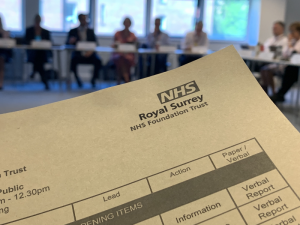
Royal Surrey NHS Board meet

Junior doctor strikes at a Surrey NHS trust is feared to become ‘monthly’ with ‘a lot less willingness’ from people to cover gaps in maintaining levels of service.

The Royal Surrey NHS foundation board meeting took place on Thursday, May 25, and almost immediately the issue of striking doctors came to the fore with staff retention and breaches of patient confidentiality also featuring prominently. 

Front and centre though was the dispute over pay and conditions between the Government and junior doctors. Royal Surrey CEO Louise Stead said, with three days of industrial action already announced for June, the trust “would be going into overdrive to plan for that” but said it would be more difficult as there would be “a lot less willingness” from people to cover any gaps – a problem that would only increase “as this goes on”.

She told the meeting it was increasingly likely that there would be “strikes every month until there is a resolution”, adding “this will be very difficult”. Trust chairperson Joss Bigmore said the “whole situation was becoming “increasingly frustrating on the hard working people”. He told the meeting: “Until they find a resolution to this its just going to get worse and worse.

He said: “It was galling to see the health secretary canvassing during the election when the junior doctors were on strike”, before adding “We have managed incredibly well so far but it won’t last. We really need to find a resolution to this.”

Junior doctors in England are planning a new  72-hour walkout in June as talks with the government once again broke down. The walkout will start at 7am on Wednesday, June 14, and run until Saturday, June 17 with the British Medical Union labelling the government’s 5 per cent pay offer as not “credible”.

Among the other items discussed during the morning meeting were the increase in the number of healthcare infections being detected across the hospital, in line with the rest of the UK since coming out of the Covid-19 pandemic.

Jacqui Tingle, the director of nursing and midwifery, said that while there had been a nationwide pattern for infectious diseases to rise as a whole, Royal Surrey had specific recorded a “spike” in c-difficile cases. 

The meeting also heard about the on-going issues with recruitment, which had played a role in the three month increase in complaints received from patients.

On IT,  she spoke to the “significant rise” in patient data breaches  – 248 from 90 reported last year, which she said was due to the implementation of a new electronic patient record system though these are said to be in decline,

What has been happening, she said, was the new system pulled patient data from a central hub rather than the most up-to-date local lists resulting, in some cases, in confidential medical letters being sent to the wrong address.

Related reports:

Surrey doctors to go on strike?

Image: Royal Surrey Hospital Trust Board (Chris Caulfield)


Housing rights enhanced by neighbours from hell?

The experiences of Epsom and Ewell’s nearby Surrey Borough Councils help to enhance public understanding of the rights and responsibilities of local residents and our Council. This report of Chris Caulfield from our BBC LDRS partner is the subject of today’s editorial.


A woman whose mental health suffered at the hands of  “intimidating” anti-social neighbours was refused higher priority status by a council’s housing team, a local government watchdog said. 

The woman, named only as Ms B, raised the complaint about how Reigate and Banstead Borough Council dealt with her housing application – even after she provided medical evidence from her doctor about the impact of her neighbours’ actions.

It would also emerge that the council’s housing team failed to pass her case on to its medical advisor – despite claiming the decision was based on their feedback.

Ms B first contacted the council in 2021 seeking a larger housing association home and was placed in band c – medium priority. In June 2022, she then submitted a letter from her GP saying she “would greatly benefit from a house move away from disruptive neighbours” and that the “situation had affected her mental health and she needed high intensity psychotherapy”.

On September 26, 2022, she then submitted a fitness for work note from her GP, documents relating to her therapy, three police incident letters , and a letter from social prescribing.  On 26 October 2022, the council reviewed her status and ruled she “did not have any medical priority and sent her a decision by email”.

The council said this was based on advice from its own medical adviser – however it later admitted that it “erroneously said the case was passed to the Medical Adviser when it was not”.

The decision read: “Following careful assessment, we have concluded that your application should not be awarded any additional priority on medical grounds.”

Finally on November 23, 2022, on advice from her ward councillor, Ms B sent a statement explaining the anti-social behaviour and harassment experienced. It detailed incidents from 2017 but said problems escalated in December 2021, “mainly involving damage to her car but also some intimidating behaviour”.
Eventually the council reviewed her case and, at the beginning of January 2023, increased her priority to band b – and backdated it to November 23 the 2022.

The ombudsman found the council to be at fault, with the authority now agreeing to backdate her new priority to September 26 2022 , as well as pay her £150 for her time and trouble – and  to improve its procedures for the future.

The  council now has three months to review its housing allocation review procedures to ensure decisions are accurate, contain reasons, and provide a right of review where appropriate. They must also remind staff that they should make further enquiries when they receive information about changes in circumstance.

A spokesperson for Reigate and Banstead Borough Council said: “We accept the Ombudsman’s findings and we have worked with them to resolve the complaint and have fully complied with the mutually agreed actions.”


Woking Council has the worst debt in Britain!

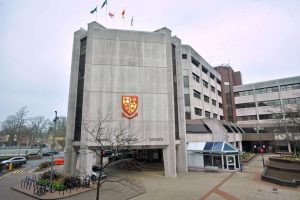
Woking Council

Woking Borough Council has crumbled under the sheer weight of its crippling £2billion debt as Government appointed commissioners have been sent in.

The borough council had amassed the billions in debt as part of a failing investment strategy that has spiralled out of control leading to the situation it is in now – its annual interest repayments are more than it brings in from council tax.

Today, the Department of Levelling Up, Housing and Communities (DLHUC) has sent in three commissioners over the  “serious concerns that have been raised regarding the exceptional level of financial and commercial risk” the authority exposed itself to, “as well as its approach to strategic financial decision making and debt management”. 

The council might also switch to full all-out elections every four years as that “can facilitate stable, strategic local leadership, delivering a clear programme for which it can be held to account by the electorate, and having the time to tackle some of the longer-term issues its communities might face”.

“The absence of such elections is often a consistent feature of under-performing councils and a common thread through many council interventions”, letters from DLUHC to the council read.

In a letter to the borough’s chief executive, DLUHC also criticised its “failure” to provide assurance “on the adequacy of the actions that it is taking to address the issues or provide assurance of its capacity to take the necessary action, considering the scale and pace of the response required.”

A Government report titled ‘Woking Borough Council: External assurances review’ published today (May 25) said: “In conclusion, as a result of past investment decisions, the Council has failed its best value duty leaving an unprecedented legacy for the current Leadership Team, which they have not been able to address to prevent financial failure. It is evident that the Council does not have the capacity and expertise to address the scale and complexity of these issues, and so it will continue to fail its best value duty.

“Resolving the issues and moving the Council back to a place of financial stability and value-for-money for the taxpayer will require significant support, including statutory oversight. There is a need for commercial and financial support including capital, legal and forensic accounting specialists. The Council will also need additional leadership capacity to help deliver this swiftly…….

“There are critical decisions that need to be taken in the next 2-3 months, for which immediate expert support is required.”

Within six months, the council must now prepare and agree a credibly resourced “Improvement and Recovery Plan” to the satisfaction of appointed commissioners.

The plan should set out “measures to be undertaken, together with milestones and delivery targets against which to measure performance, in order to deliver rapid and sustainable improvements in governance, finance and commercial functions”.

DLUHC said it had been closely monitoring the concerns around Woking Borough Council’s commercial activity and financial situation. 

Relative to its size, Woking is “the most indebted local authority” in the UK according to DLUHC.

DLUHC documents show that, as of December 2022, it had £1.9bn in borrowing compared to a core spending power of £14m. 

It has two main companies, ThamesWey Group and Victoria Square Woking Ltd, that generated the majority of its debt – through associated housing and regeneration schemes.

In January 2023, DLUHC commissioned an External Assurance Review, covering governance, finance and commercial issues, stating that it was “in the territory” of issuing a section 114 notice as part of setting its 2023/24 budget.

In a letter to Julie Fisher, chief executive of Woking Borough Council, Suzanne Clarke, deputy director at the Local Government Finance Stewardship, said: “After careful consideration of the evidence provided by the reviewers and officials, the Secretary of State considers that there is a pressing case for urgent government action to protect the interests of the residents and taxpayers of Woking, as well as national taxpayers. 

“The financial challenge is acute, and the Secretary of State is concerned that key decisions need to be taken in the coming weeks and months to secure Woking’s financial position, as well as provide assurance that your authority is taking all steps necessary to comply with its best value duty.”

Councillor Ann-Marie Barker, Leader of Woking Borough Council, said: “I am committed to openness and transparency and will continue to keep residents up to date on progress as we deal with the council’s finances. I welcome the letter I have received today from the Minister and the recommendations being proposed by the team that undertook this review.

“I am pleased that there is acknowledgement of the strong collaboration between officers of the council and the review team on the progress that has been made to address the council’s financial resilience. My administration is very clear about the huge challenges facing the council due to the legacy of both the extraordinarily high and disproportionate levels of debt that we have inherited from the previous administration. We are also very clear and focused on the significant risks that the council is now facing up to as a result of that debt.

“We also recognise that these challenges are so significant that the council and its officers cannot deal with these on its own. We therefore fully acknowledge and accept the findings of the report and welcome the support set out by the Minister in his letter.

“I know that councillors and officers will work at pace alongside the government-appointed commissioners to address the issues identified in the report and achieve best value for the public purse through the preparation and delivery of an action plan.

“When my administration gained control of the council last May, I pledged to take on the challenge of major change and embed affordable, responsible and sustainable principles into how the council conducts its future business and this remains my priority. As part of this pledge, we have taken steps to control borrowing, made changes to the governance of our commercial investments and I have instigated independent reviews of all the council’s borrowing and investments.

“I recognise we need to deliver our plans for recovery of the council’s finances with greater pace and urgency and we face difficult decisions in the months ahead. I will work with my officers to ensure, with the support of the commissioning team, we have the capacity and experience to deliver the improvements needed.

“I remain committed to keeping residents, businesses, and community partners fully informed as we progress through this process and develop the detailed plans for recovery with support and oversight from the commissioning team.”

Related reports:

Woking £490m write down sparks ‘worst fears’

Waking to Woking’s woeful debt

Would you want to live in Woking?

Woking up to a very big debt problem


Esher & Walton up for GRaabs

Dominic Raab MP

Dominic Raab, former Deputy Prime Minister and Conservative MP for Esher and Walton, will step down at the next general election due to the “increasing concerns over the last few years about the pressure the job has placed” on his young family.

His decision was confirmed in a letter sent on Friday, May 19, to the local party’s group chairperson Peter Szanto. The announcement comes a month after he stood down as Deputy PM after the results of a bullying investigation into his conduct were handed to Prime Minister Rishi Sunak.

Mr Raab was first elected in May 2010 with an 18,593 majority,  although this was cut to just 2,743 in the May 2019 election.

As MP, he served as Deputy Prime Minister, Lord Chancellor, and Secretary of State for Justice.
He was also the Secretary of State for Exiting the European Union from July to November 2018. He is married with two children. 

His resignation letter, which the Local Democracy Service has seen, read:

Dear Peter, 

I am writing to let you know of my decision to step down at the next General Election.
It has been a huge honour to represent the Conservatives, since 2010, in this wonderful constituency.
Thank you for your steadfast support and tireless efforts, alongside all the teamwork and hard graft put in by our superb officers, Councillors and members.

As we have discussed, I have become increasingly concerned over the last few years about the pressure the job has placed on my young family.
I will continue to carry out all my responsibilities to my constituents, and provide every support in campaigning, so that we may win here next year – which I am confident we can do under this Prime Minister’s leadership.

Yours Sincerely,

Dominic Raab.

In April this year, Mr Raab quit as Deputy Prime Minister after a report looking into bullying allegations was delivered to Downing Street. 

The Esher and Walton MP announced his resignation via a statement and said he would keep his word if any findings of bullying were found.

The inquiry, conducted by lawyer Adam Tolley KC,  upheld two of the allegations against Mr Raab.
His decision now to not stand as an MP was greeted with  “deep regret” by the group chair who said Mr Raab had “the full support of the Association to continue as our candidate”.

Mr Szanto said that “on a personal level” he knew of the sacrifices Mr Raab and his family had made but that his commitment to the residents of Esher and Walton had “always been outstanding”.

The Esher and Walton Conservative Association has since been in touch with Conservative campaign headquarters about the selection of a new parliamentary candidate although at this stage no timetable has been given. 


Future of the Planet in Surrey hands?

Surrey County with Earth in background

A Cumbrian coal mining firm is intervening in a landmark legal hearing to determine whether oil drilling should be allowed in SurreyThe Horse Hill drilling case is set for the Supreme Court in June with protesters hoping for a ruling that could severely restrict fossil fuel exploration in the UK.

West Cumbria Mining Ltd, the company behind Britain’s first new prospective coal mine for decades has been given permission to intervene in the case over plans for oil drilling at Horse Hill, Surrey according to a Supreme Court order published earlier this month.

In law, an intervention is when a non-party joins ongoing litigation, as the case may affect their rights and they should have the right to be heard. The other intervening parties are Friends of the Earth, the Office for Environmental Protection (OEP) and Greenpeace.

The case is being brought by Redhill resident Sarah Finch on behalf of the Weald Action Group, which represents communities opposing onshore oil and gas projects. 

Ms Finch is challenging Surrey County Council’s 2019 decision to grant  UK Oil and Gas (UKOG) planning permission for drilling – on the grounds that environmental impact assessments must take into account downstream emissions caused by burning extracted oil.

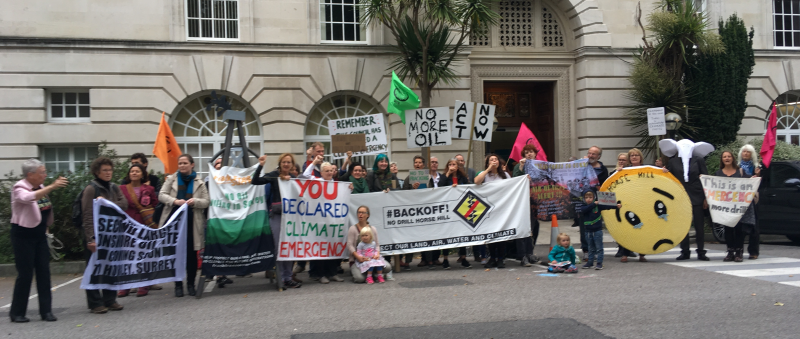
Horse Hill protest outside Surrey County Hall when planning application was being considered in September 2019. Credit Rebecca Curley.

Her fight has now reached the country’s highest court after three judges were split over the lawfulness of the county council’s decision to grant permission for 25 years of oil drilling and production – in the same year the county declared a climate emergency.

Carbon emissions from burning the extracted fossil fuels were not included in either the Horse Hill or Cumbrian coal mine’s environmental impact assessments.

Ms Finch said: “The fact that West Cumbria Mining wants to have its say in a case about a small onshore oil development 370 miles from their proposed coal mine shows the national importance of this case. I hope that the Supreme Court will confirm that no fossil fuel development – coal, oil or gas – should be allowed without consideration of its full climate impact.”

According to UKOG the Horse Hill site in Reigate and Banstead has so far produced about 185,000 barrels of oil. Approximately 1.362 million remain.

Friends of the Earth campaigner, Tony Bosworth, said: “The biggest climate impact from gas, coal and oil projects occurs when the fuel they produce is eventually burned – it’s unbelievable that this is effectively ignored when planning decisions are made. This landmark legal challenge could have huge implications for fossil fuel developments across the country, including the new coal mine in West Cumbria. West Cumbria Mining are clearly concerned, which is why they have intervened. 

“West Cumbria Mining boast that they will build the world’s first zero carbon mine, which is a complete contradiction in terms. Their calculations also ignore emissions from when the coal produced is actually used – that’s like saying that we should ignore the health impacts of smoking cigarettes and just look at how they are produced. 

“We need to stop burying our heads in the sand. Sarah Finch’s legal case could play a huge role in building a net zero future.”

OEP general counsel, Peter Ashford, said: “Environmental impact assessment is so important for integrating the environment into planning decision-making. We are interested in this case because of the opportunity to clarify the law here to ensure proper decision-making that enhances environmental protection.  We hope that the Supreme Court will take this opportunity, and will develop principles for determining the proper approach to the assessment of indirect effects under the EIA legislation.”

The hearing is scheduled for June 21.

The coal firm is now battling on two legal fronts after a judge ruled on Friday May 19 to grant Friends of the Earth and South Lakes Action on Climate Change a hearing to challenge the UK Government’s decision to approve West Cumbria Mining’s deep coal plans.

That hearing is expected to last for three days when it is heard later this year.

A spokesperson for West Cumbria Mining Limited said it would be inappropriate to comment on a live legal case. UKOG have been approached for comment.

Related Reports:

A Surrey Borough funds legal fight to stop oil drilling

The Hills Are Alive With the Sound of Drilling… ?

Surrey MPs oppose each other on drills in the hills

Oiling the wheels of justice on Surrey Hills

Image credits: NASA’s Earth Observatory and Rainer Lesniewski Getty Images


Council pays £3,900 to mother of SEND child

Surrey County Council HQ

Surrey County Council failed to provide suitable full-time education to an SEND primary school child, causing the youngster to miss valuable learning time and creating undue stress for his mother, a local government watchdog has ruled.

The county council was ordered to pay £3,900 and apologise to the boy and his mother to acknowledge the injustice caused after the Local Government and Social Care Ombudsman completed its investigation into the matter.

The council must pay £2,900 for the lack of education provided over a six-month period and a further £1,000 for the inconvenience, distress, time and trouble caused to his mother – including the impact on her employment. It must also provide updated guidance clarifying the legal position on complaints and appeals as well as evidence it has complied with the ruling.

The Ombudsman said it would not make further recommendations for service improvements to the council’s alternative education provision as these have been covered in “similar findings against the council in other cases in the recent past covering the same period”. Staff are also to be retrained and better records kept to “prevent a recurrence of the same fault in future cases.”

In 2020 the boy was on a waiting list for an autism assessment by the Child and Adolescent Mental Health Services (CAMHS). In November 2021, his mainstream school then placed the youngster on a part-time, mornings only, timetable and by January 2022 it was assessed he should no longer attend school due to mental health concerns. 

His mother said he was then given worksheets but no online or face-to-face tuition was offered. His mother, a single parent, said she had to cut her hours at work as her son could not attend school.

In late March 2022, the council offered the family two hours per week teaching assistant (TA) support. 
Convinced her son was falling behind, his mother began paying private tutor to help for one hour a week.
Shortly after this the council increased TA time to three hours a week, and then later added one hour tutor time. By late June this was extended to four hours, increasing to seven and a half hours in September, and 14 hours in October 22.

Eventually,  the council said the boy should have access to mainstream provision for the remainder of his time at primary school but he would not be in a position to return immediately.  Discussions then turned to offering 25 hours educational provision through the county’s SEN team from September and a draft plan proposed he stay with his current school but likely to require specialist provision at secondary age.

In July, a meeting was then held with tutors, the school, and CAMHS – and an Education otherwise than at school (EOTAS) programme was suggested. His mother asked for this to be continued on an ongoing basis.

However, Surrey County Council decided he should continue with his current school in Summer 2022 and did not specify EOTAS or interim provision, or details of how he would reintegrate into the school.

His mother complained that the council failed to provide her son with proper education from January 2022 and failed to follow professional advice that he should receive EOTAS until he transferred to secondary school in September 2023 – instead proposing he be sent back to mainstream primary school for the remainder of the school year.

The Ombudsman upheld her complaint and found fault by the council in “failing to provide suitable fulltime education when a child was unable to attend school.” The report said: “This caused the child to miss out on education and caused the parent carer unnecessary inconvenience and distress. The agreed actions set out above are a satisfactory resolution to the complaint.”

A spokesman for Surrey County Council said: “We take the findings from the Ombudsman very seriously and we apologise for any distress the family experienced. We are not able to comment on any individual children specifically, however we know how important access to fulltime education is for all children to support their development and wellbeing, including when this must be provided outside of school.

“We remain committed to improving outcomes for children with additional needs so that they are happy, healthy, safe and confident about their future.”

Image – Emily Coady-Stemp

Related reports:

Surrey County failed SEND boy

Surrey to SEND £40m for special schools


Woking £490m write down sparks ‘worst fears’

Woking Victoria towers

Epsom and Ewell Times has been following a nearby Surrey Borough’s debt woes. Epsom and Ewell Borough Council, in contrast to Woking, has consistently balanced its budgets. The Woking towers in question are visible from Epsom Downs. Chris Caulfield reports.


“Worst fears” have been confirmed in newly published accounts that exposed a half billion pound “black hole” in Woking Borough Council’s finances and plunged the future of many services into doubt.

The figures, released this week on Companies House for 2021, show the council’s biggest investment, Victoria Square, has had £490,479,300 wiped off its value.

Construction on the development began in 2017 after the previous administration signed off on £750m of loans to cover the investment. 

It was billed as one of “the most ambitious developments in the South East” and included 429 apartments, retail and leisure space, a performing arts academy, a four star hotel, and a medical centre. It means its fair market value is now hugely below its carrying book value but the scale of the figures, though predicted by councillors,  still shocked.

Councillor Adam Kirby (Lib Dem, Horsell) told the LDRS: “We’ve been looking at this for a really long time. We’ve taken control of the council a year ago and can now get a better idea of the council’s financial position. This is our worst fears come true. We didn’t want to be right about this but in the last few days the Company’s House valuation has been eye catching. “We were told for many many years that these investments, if you could call them that, wouldn’t impact the budget for council services, but what is likely is it will.

“There are statutory functions we have to provide by law and we could be going into special measures to help us – we are in conversation with a government task force who are working with councillors and the CEO. We are trying to protect things people need. Meals on Wheels, the leisure centre, don’t have legal requirements to support them but we do not want to take them away. Stopping them won’t solve the problem.”

He added: “It would be irresponsible to speculate on what changes will be made at this stage, its people’s jobs and residents who rely on these services. People who were told these investments wouldn’t impact them.” He said there were two ways to look at the problem, cash flow or valuation, but that it was the same problem.

The council borrowed £750m for the project and, according to the latest valuation report, it is only worth £199m. Cllr Kirby added: “There is a black hole in the balance sheet.”

Furthermore the council’s total debt is expected to hit £2.5billion by 2024/25, up from its current level of £2.1bn. The council, he said, was firmly in “section 114 territory” where the government takes over the financial running of a local authority that is effectively bankrupt and unable to pay for even basic services.

Woking Borough Council is running on a budget deficit of about £10m on a budget of £45m. There is £11m collected in council tax with the rest coming from sources such as parking or rent rates.

The Companies House report on Victoria Square Woking Limited (VSWL)  indicates the company incurred a net loss of £490,479,300 during the year ended December 31, 2021.

VSWL owns the new shopping centre, residential development, and hotel –  backed by a longstanding agreement with Woking Council.

The report adds that its current liabilities exceeded its total assets by £501,988,671 indicating a “material uncertainty exists that may cast significant doubt on the company’s ability to continue as a going concern and, therefore, “that it may be unable to realise its assets and discharge its liabilities in the normal course of business”.

Cllr Kirby said: “We are going to find out the impact on the council soon and it’s not going to be good.”
The council has said the £490 million write down not only “confirms its worst fears” but casts “uncertainty on further funding for Victoria Square project beyond May with imminent reports into financial implications for the council itself.”

Cllr Dale Roberts, portfolio holder for finance and economic development at Woking Borough Council, said: “Even though we had fully anticipated massive losses and signalled them earlier in the year, this is still devastating news.  He added: “As soon as we won last year’s elections, we took immediate action to limit the damage. First, we reduced the period for which we would commit working capital to VSWL from ten to five years. Then, we began to put in place the missing systems and processes to properly run a commercial operation – and to protect the long-term interests of all Woking residents.

“Now, these accounts will further inform ongoing work being carried out by public sector finance experts, who we commissioned earlier this year to better understand the sustainability of the council’s own annual budget. Looking ahead, it would be irresponsible to speculate on the details and timings of what happens next. However it is responsible to be transparent about the scale of this situation. Only complete transparency will enable our commitment to finding solutions as soon as possible.”

Related Reports

Waking to Woking’s woeful debt

Would you want to live in Woking?

Woking up to a very big debt problem

Blot on Epsom Downs horizon to grow no more?


Epsom and Ewell planning improving after Government threat?

Michael Gove

Three Surrey councils have been warned that their planning departments are “not good enough” and threatened with having their decision-making powers stripped.

Guildford, Waverley, and Epsom and Ewell Borough Councils have each been written to by the Housing Secretary Michael Gove over their “very poor” quality of service that fell “far below” expected thresholds.

Councils must determine at least 70 per cent of non-major planning applications within eight weeks – or agree to an extension. The three Surrey councils have fallen well below that figure, the department said.
Mr Gove was therefore “minded” to designate the councils, meaning developers could bypass them completely and submit planning applications directly to the Planning Inspectorate. The impact effectively strips a local authority’s say over planning matters.

The letter to all three councils, part of a group of 10 nationally to be given final warning, read: 

“The Government is clear that having an efficient and effective planning service at local authority level is essential to delivering the homes, building and investment the country needs. 
“The planning performance regime was introduced to ensure that all local planning authorities contribute to this objective. I have significant concerns about the performance of a handful of local authorities including your council.”

For Guildford, its performance of 50.1 per cent between October 2020 and September 2022 was far below the expected threshold of 70 per cent. In Epsom and Ewell that level was 52.5 percent, and in Waverley it was 61.7 per cent.

The letter continued: “That is indicative of a very poor quality service to local residents and a significant deterrent to investment in your local housing market and wider economy. That is not good enough, and despite some more encouraging recent data, I am therefore minded to designate [the council]. “

Mr Gove has now asked the Planning Inspectorate to prepare for designations over the summer period but said they had until June to make the required improvement to their planning service and “to exceed our performance thresholds and stay above it consistently”. 

If levels were to drop again, he said, he would “ not hesitate” to use his “powers to designate your council later this year”.

Waverley Conservatives have since called on the council’s ruling coalition to “get a grip” on planning.
Councillor Carole Cockburn, acting leader of Waverley Conservatives, said: “Communities and local businesses have had the threat of the planning department being taken into special measures hanging over them for months because of the Lib Dem-Labour-Green-Farnham Residents Party coalition administration’s inability to deal with the problem. They need to get a grip, and fast, to save our local voice in planning matters. Otherwise, people and businesses across Waverley will continue to suffer.”

A spokesperson for Waverley Borough Council said that planning performance suffered in 2021 and early 2022, was a result of the pandemic, “teething issues” with a new planning IT system, an increase in applications following lockdown and a nationwide shortage of planning officers.

Since then, they said there had been a “significant uplift in planning performance, and we are making headway in reducing the backlog of planning applications, but caseloads for our officers remain high” . Staffing remains a “significant challenge”.

They added: “Mr Gove has acknowledged the improvement in our performance and rather than moving to formally designate the council, has given us the opportunity to demonstrate this improvement over a longer period of time.”

Waverley Borough Council portfolio holder for planning and economic development, Councillor Liz Townsend, said: “We have been working closely with the Planning Advisory Service to improve our performance, and during the three most recent quarters 83 per cent, 92 per cent and 96 per cent of non-major applications respectively, were determined within the allotted time – significantly above the Government’s 70 per cent target. Our view is that designation is not appropriate and would be counterproductive to sustaining and improving on the gains in planning performance we have achieved over the last year.”

A Guildford Borough Council spokesperson said that it have been working to reduce backlog since June but that caseloads remain high. They said: “To supplement our internal planning team and improve performance, we have employed external planning consultants and temporary planning officers. 
“With housing and the cost of living so high in Surrey, recruiting and retaining talent in the South-East remains a significant challenge. However, we are actively recruiting new permanent planners to help build a resilient planning function. Our new executive head of planning development, Claire Upton-Brown, took up post on March 20, 2023. She has a strong history of turning services around and is well qualified to address the challenges we are facing, with the support of the senior management and councillor team.”

Jackie King, chief executive of Epsom and Ewell Borough Council said the authority was hopeful the secretary of state would recognise the “significant” improvements it had made in recent months.  She said: “The council has been fully aware of this historic issue relating to performance over that period, which was a result of Covid and capacity-related issues. “Having acknowledged the issues, the council took swift decisive action to address issues, resulting in the recruitment of a new management team in early 2022, the securing of additional staffing resourcing within the department as well as investing in IT and improved ways of working. Additional process reviews and follow on improvements were identified and implemented.  All actions and process improvements have the full support of members. As a result of the council’s actions, performance on planning applications has improved rapidly and significantly. Since early 2022, the council has continued to determine well over 90 per cent of planning applications within the statutory timescale target.”

She added: “Epsom and Ewell Borough Council has demonstrated a sustained improvement in service and performance and have been in regular contact with officials at DLUHC over the past year to keep them up to date with the progress which the council has made. When the Minister reviews Epsom and Ewell’s performance again in June, the council will be able show five successive quarters of performance well above the 70 per cent target: 

 APR/MAY/JUN 2022 – 95 per cent
JUL/AUG/SEP 2022 – 92 per cent
OCT/NOV/DEC 2022 – 94 per cent
JAN/FEB/MAR 2023 – 96 per cent
APR/MAY/JUN 2023 – 97 per cent (to date)

“Once reviewed we are hopeful that the minister will acknowledge and recognise that the issues the council faced were historic and temporary in nature and this council has taken significant proactive steps to address and improve.”

The full list of councils written to by Michal Gove were:

Calderdale, Cotswold, Epsom and Ewell, Guildford, Hinckley and Bosworth, Pendle, Portsmouth, Vale of White Horse and Waverley councils, as well as the Peak District National Park Authority.


A Surrey Borough funds legal fight to stop oil drilling

London's High Court

The June 8th judicial review against the Government’s decision to allow fossil fuel drilling near an Area of Outstanding Natural Beauty will go ahead. Waverley Borough Council held a special meeting of its executive committee to approve the £82,500 in funding to proceed – £32,500 for legal costs with a further £50,000 set aside in case it is liable for the oil driller’s costs.

According to the published papers, the executive considered “it a moral imperative to continue its legal challenge”. The money was approved on Thursday, May 11, as the council continues its four-year battle to stop UK Oil and Gas from drilling at Loxeley Well in Dunsfold  – and means the judicial review into the exploratory drilling of £123 million of oil by UK Oil and Gas (UKOG) can proceed.

Addressing the meeting was Councillor Steve Williams, Green Party member and portfolio holder for environment and sustainability. He said: “In July 2019, we held a listening panel where we could listen to the views of residents on this proposal that was in the air to undertake on-shore drilling in Waverley, in Dunsfold. We listened and we listened to the concern after concern in terms of the local environment as well as to the planet and the people of Dunsfold. The impact was absolutely clear and from that point on Waverley Borough Council saw it as its mission to do exactly that, to protect Dunsfold and to stop the drilling. It was consistent in terms of our position in declaring a climate emergency and committing ourselves to carbon neutrality.”

The original planning applications were rejected by Surrey County Council’s planning committee members in 2020. UKCOG then mounted an appeal which was eventually called in for review by the Secretary of State, Michael Gove. Mr Gove recused himself due to possible conflicts of interest, but former Housing Minister, Stuart Andrew ruled in favour of the plans.

Cllr Williams added: “Now is the opportunity for Waverley executive to follow this through.We would, if we did not do so, be inconsistent with our previous clear commitment on this issue. We would be neglecting our duty to the people of Dunsfold, we would be flying in the face of our climate emergency. It is imperative, for if we are to be successful in this, and I very much hope we shall be, but we should be putting our money where our mouth is, for the people of Dunsfold, for the natural environment, and for the planet.” He said the council must “take the next step and secure that judicial review in the anticipation of the outcome we’ve been working for four years”.

Cllr Liz Townsend, Lib Dem member and portfolio holder for planning and economic development, said the application had “wide implications”, not just for the borough, but the country as a whole. She said: “It’s difficult to believe that the UK already has 509 fossil fuel sites specifically in protected areas. More than any other country in the world. South Downs national park already holds nine oil and gas sites. If the Loxley well site is successful how many other sites will be allowed?”

She added, while some may view this as a David versus Goliath battle we “should remember who was the winner of that conflict”.

The committee heard that the cost to residents would work out to about 65p per person but had the potential to set a national precedent.

The committee also called on Dunsfold and Alfold Parish Councils to offer their “substantive” and vocal support.

Related Reports:

The Hills Are Alive With the Sound of Drilling… ?

Oiling the wheels of justice on Surrey Hills

Surrey MPs oppose each other on drills in the hills

Fractious Court case anticipated


Don’t forget your ID when you vote

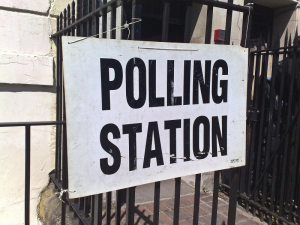
Polling station

Thursday, May 4th, is election day in all of Surrey’s 11 boroughs and districts. This means voters in Elmbridge, Epsom and Ewell, Guildford, Mole Valley, Reigate and Banstead, Runnymede, Spelthorne, Surrey Heath, Tandridge, Waverley, and Woking will be going to the polls.

These are the councils that decide planning matters, housing, and bin collections. With a year to go until the next general election this could serve as an indication of the national mood towards the current government.

As ever, voters will have plenty of questions about the rules and what needs to be taken to polling stations – even more so in the light of recent changes to voter ID requirements.

The Local Democracy Reporting Service  answers some of the most common questions so voters can be are armed with everything they need to know as they head to their polling stations between 7am and 10pm.

Changes to voter ID rules – Bring ID

These local elections will be the first where all voters need photo ID in order to cast their ballot. Forms of ID accepted at polling stations will include a driving licence, passport, Blue Badge, Oyster 60+ Card, Older Person’s Bus Pass and more. Equivalent travel cards for young people, such as the Oyster 18+ card, will not be accepted forms of ID.

Expired ID, for example an out-of-date passport, is allowed so long as the photograph still bears a strong resemblance. 

The full list is HERE

Where do I go to vote?

Vote at the polling station listed on your polling card. Your poll card is for information only, you do not need to bring it with you to vote. If you do not know where your card is, you can always check your polling station location by entering your postcode here.

Ballot papers

Your ballot paper will list out all the candidates and parties you can vote for.  You may be given more than one ballot paper, particularly if there is a parish council election happening in your area on the same day. Take your ballot into a polling booth, so no one can see how you vote. Read it carefully as it will tell you how to cast your vote. Mark your paper according to your own wishes,  fold it in half and put it in the ballot box.

What time do polling stations shut?

Polling stations always open at 7am and close at 10pm. If you want to avoid a queue it’s best to head down during the workday or in the evening as it tends to be the busiest first thing in the morning, before school run, and around 5pm-6pm after work. People who are in the queue before closing time are still allowed to vote, regardless of whether you are inside or outside the building.

Can I take my own pen to vote in the 2023 Local Elections?

There is nothing in the legislation that says ballot papers must be marked with a pencil. Pencils are provided in polling stations but you can choose to take a pen with you. There is a risk ink may transfer onto the other side of the ballot paper when folded, and if it looks like the voter has chosen more than one candidate, it could potentially lead to their vote being rejected. Some people prefer to use a pen in case someone erases their cross and adds one elsewhere.

Can I take a selfie when I vote?

Although not against the law to take a selfie at a polling station, it is strongly discouraged in or near a voting booth. Anyone who reveals  how someone else voted, even without meaning to, could be fined £5,000 or get sent to prison for six months. Voting is supposed to be secret and it’s illegal to share a photo of a ballot paper – including your own – under Section 66 of the Representation of the People Act 1983.

Can I bring my dog?

Please do! Pictures of dogs at polling stations are one of the highlights of any election.