Hospitals serving Epsom and Ewell are facing one of their toughest starts to a year in recent memory, with dozens of beds taken up by flu patients and others closed because of infection control, as winter illnesses surge across the country.
As of Sunday, 45 beds across St George’s, Epsom and St Helier hospitals were occupied by patients with influenza, according to the St George’s, Epsom and St Helier University Hospitals and Health Group. At the same time, further beds have had to be taken out of use due to flu and norovirus outbreaks, reducing the system’s overall capacity just as demand is rising.
The combination of cold weather, widespread winter viruses and a growing number of patients needing specialist treatment has created what NHS leaders locally describe as a “bleak” start to the new year.
Elaine Clancy, Group Chief Nurse for St George’s, Epsom and St Helier, said hospitals across the group were seeing “some very sick patients” as winter illnesses and low temperatures take their toll. “Don’t make the mistake of thinking flu is just a bad cold,” she said. “These figures show the infection can make people seriously ill, and I’d urge people to take steps to ensure they and their loved ones don’t suffer.”
A national problem, not just local
The pressure on Epsom and St Helier reflects a wider national trend. NHS England has warned that socialising over Christmas and New Year is likely to have fuelled a rebound in flu, Covid-19 and other winter viruses, with senior figures cautioning that the worst of the season is “far from over”.
Across England, hospitals are again reporting high numbers of admissions for respiratory illness, alongside continued demand from people with complex medical needs who are more vulnerable in cold weather. The knock-on effect is felt most sharply in accident and emergency departments, where delays grow when wards are full and patients cannot be moved on.
Public health experts have long warned that flu remains a serious illness, particularly for older people, pregnant women and those with underlying conditions. In bad seasons, it contributes to thousands of excess deaths nationally, even though it is often dismissed as minor.
Norovirus, meanwhile, spreads rapidly in hospitals and care settings, forcing wards or bays to close for deep cleaning, further reducing available beds at precisely the moment they are most needed.
What people can do
Local NHS leaders are urging residents to take simple but effective steps to reduce the spread of infection and help protect the health service. These include getting vaccinated against flu if eligible, washing hands regularly, staying at home if unwell, and avoiding contact with vulnerable people when displaying symptoms. Keeping homes warm – ideally at 18°C or above in key rooms – and wrapping up when going outdoors also helps reduce the risk of illness.
People are also being asked to use health services appropriately, so that emergency departments remain available for those in urgent need. NHS 111, which is available online and by phone 24 hours a day, can direct people to the right service, while community pharmacists can advise on many minor illnesses and treatments.
Residents are encouraged to check on neighbours, friends and family who may be vulnerable, to make sure they have food, medication and adequate heating during the cold snap.
With flu and winter viruses still circulating widely, health leaders say the coming weeks will be critical — both for hospitals trying to manage demand, and for communities doing their part to keep themselves and others safe.
Epsom lamppost flags: symbol of pride — or cause of anxiety?
9 January 2026
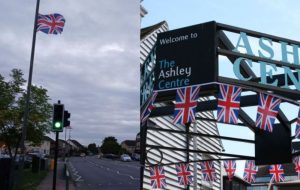
Across parts of Epsom and Ewell, the appearance of Union Jack flags tied to lampposts has prompted sharply differing reactions. For some residents, the flag remains a symbol of shared identity and national belonging. For others, the manner of their sudden arrival — often without permission and fixed to public infrastructure — has caused unease, sparking wider anxieties about division, ownership of public space, and the meaning of patriotism in modern Britain.
In September 2025 Surrey County Council restated its position on flags and attachments to street furniture, reminding residents that anything fixed to a lamppost or painted on a public highway requires formal consent. The council emphasised safety considerations for drivers, pedestrians and maintenance crews, and said unauthorised attachments may be removed during inspections. Residents wishing to display flags on public land are advised to apply in advance through established procedures. The council was clear, however, that anyone may fly a flag from their own property if they wish to do so.
The debate has not only been technical or regulatory. One local resident, writing to the Epsom and Ewell Times, described attempting to remove some of the flags in their neighbourhood and being confronted in the process. Their concern was less about flags as symbols, and more about how — and by whom — they were placed, and whether they were being used to signal exclusion rather than unity. The writer reflected on the way social and political polarisation in recent years has shaped how national imagery is read, and expressed frustration at what they saw as a lack of clarity over which authority is responsible for removing unauthorised items from street furniture.
Others in the borough have reacted very differently, seeing the flags as benign expressions of pride, or as gestures intended to lift spirits at a time of economic and social uncertainty. Some residents have argued that the Union Jack should not be regarded as belonging to any one political tradition, recalling moments when people across the country — including at national sporting events and during major civic occasions — have gathered beneath it without controversy.
That broader question — who “owns” the flag — has recurred throughout modern political history. When crowds waved the Union Jack outside Downing Street on the night of Labour’s 1997 election victory, commentators spoke of the centre-left “reclaiming” national symbolism from the political right, attempting to make it inclusive rather than exclusive. Others have suggested that opportunities were later missed to develop a more layered sense of identity, for example by flying the European Union flag alongside the Union Jack on public buildings, as was commonplace in many EU member states. For some, that dual display might have normalised a shared British and European identity; for others it would itself have been contentious. The difficulty of striking a balance illustrates how strongly flags can be read in different ways.
In Epsom and Ewell, the present concerns appear to rest less on the flag itself than on process, tone and consent. The sudden appearance of flags on lampposts — without clear identification of who has installed them and without permission from the asset-owning authority — has left some residents feeling unsettled or excluded, while leaving councils fielding questions about responsibility and enforcement. The practicalities are not trivial: removing items at height may require equipment, contractor time and public money.
One constructive suggestion arising from local discussions is that the right of individuals to fly a flag from their own homes could be matched by a more open and confident approach from civic bodies, schools, churches, voluntary groups and local businesses — flying the Union Jack from their own buildings in clearly identifiable and lawful ways, and on agreed occasions. In that model, the flag becomes visible as a symbol belonging to all, rather than as an anonymous street-level intervention that some interpret as a political statement.
Another proposal is for clearer published guidance from the relevant authorities — setting out who owns which assets, how permission can be sought, what safety standards apply, and how residents may raise concerns or objections. Transparency about due process may help reduce tension, even where views differ about meaning and symbolism.
What the current debate in Epsom and Ewell perhaps most clearly reveals is that flags still carry emotional weight — capable of reassuring some while unsettling others. Between those positions lies a space for thoughtful discussion about how shared symbols are used in public places, and how a sense of belonging can be fostered without causing anxiety to neighbours who may read them differently.
The Government has announced plans to give councils across England new legal powers to tackle pavement parking, following years of concern from disability groups, parents, and local campaigners about blocked pavements forcing people into the road.
In a statement issued on 8 January, the Department for Transport said the changes are intended to make it easier for local authorities to restrict pavement parking across wider areas, rather than relying on street-by-street restrictions that can be slow and complex to introduce.
The Department said blocked pavements create serious barriers for wheelchair users, parents with pushchairs, blind or partially sighted people, and older residents, limiting independence and making everyday journeys less safe. Ministers say the new approach will allow councils to act where pavement parking causes the greatest local problems, while retaining flexibility where limited pavement parking may still be considered acceptable.
Local Transport Minister Lilian Greenwood said clear pavements are essential for people to move around safely and independently, and that councils will be given the power to “crack down on problem pavement parking” while taking account of local conditions. National organisations including Guide Dogs and the RAC welcomed the announcement, calling for consistent enforcement and proportionate use of the new powers.
Surrey County Council: details awaited
Responding to questions from Epsom and Ewell Times, Surrey County Council said it welcomed the announcement but stressed that it is too early to comment on how it might operate in practice.
A Surrey County Council spokesperson said the authority is “looking forward to finding out more about new powers allowing local authorities to tackle antisocial pavement parking,” but added that further detail is needed on what exactly is proposed and what the powers will entail once introduced. The council said it would be happy to revisit the issue once more information is shared by the Department for Transport.
The Government has said that guidance on how councils should use the new powers will be published later in 2026.
Local MP claims campaign success
The announcement was welcomed by Epsom and Ewell MP Helen Maguire, who described it as a significant step forward following sustained local and parliamentary campaigning.
Ms Maguire said she had raised pavement parking repeatedly in Parliament, including through a Westminster Hall debate, an Early Day Motion, written questions to ministers, and local campaigning with residents. She said pavement parking makes streets unsafe and inaccessible, and that no one should be forced into the road when walking to school or the shops.
Following the announcement, the Minister for Local Transport wrote directly to Ms Maguire, thanking her for her advocacy and citing her work in highlighting the challenges caused by pavement parking.
What powers already exist?
At present, pavement parking outside London is not subject to a general nationwide ban. Enforcement relies on a patchwork of existing powers, which can be limited or difficult to apply.
Yellow line parking restrictions, for example, apply from the centre of the carriageway to the highway boundary, which usually includes the pavement. However, these restrictions only apply during the signed controlled hours and do not always prevent vehicles from mounting the pavement if enforcement is not prioritised.
Councils can also act where a vehicle causes an obstruction of the highway, an offence under existing road traffic legislation. In practice, enforcement is often reserved for cases where access is completely blocked, such as preventing wheelchair passage or emergency access. This can leave many partially obstructed pavements unaddressed.
Local authorities may also introduce specific Traffic Regulation Orders banning pavement parking on individual streets or sections of road, but this process can be time-consuming, requires consultation and signage, and is rarely applied borough-wide.
The Government has said the new powers are intended to move away from this piecemeal approach, allowing councils to introduce area-wide pavement parking restrictions more easily, while still permitting exemptions where pavements are wide enough and pedestrian access is not compromised.
What happens next?
The Department for Transport says further guidance will be published later this year, setting out how councils can use the new powers in a proportionate and locally appropriate way. Until then, councils such as Surrey County Council say they are unable to comment on how enforcement might change on the ground.
For residents in Epsom and Ewell, the announcement signals political momentum on an issue that has generated long-standing concern, particularly with food delivery mopeds in the Epsom High Street area, but any practical change to enforcement will depend on the detail of the legislation and how quickly local authorities choose to act once the new framework is in place.
Epsom and Ewell’s Local Democracy Debate: What’s at Stake as Consultation Enters Phase Two
9 January 2026
Epsom and Ewell Borough Council has launched the second stage of its Community Governance Review (CGR), inviting residents to give their views on whether two new parish-style bodies — Epsom Community Council and Ewell Community Council — should be created when the borough is abolished in 2027 under Surrey’s Local Government Reorganisation.
The consultation runs from 16 December 2025 to 1 February 2026. It proposes that the two new bodies would:
• cover the same geographic area as the present borough • retain the existing 14 ward structure • have two elected community councillors per ward • levy a parish precept of around £43–£46 for a Band D household
If established, the new councils would initially be responsible for allotments and would act as statutory consultees on planning applications. Elections would be expected in May 2027.
The consultation takes place against the backdrop of the transition to the new East Surrey unitary authority, which from April 2027 will replace both borough and county councils across Epsom and Ewell, Tandridge, Reigate and Banstead, Mole Valley and Elmbridge.
The council states that while reorganisation “may open a number of opportunities”, it is also “mindful of the potential impact that losing a more local tier of governance may have for local residents in relation to local representation, resource allocation and priority of services.”
The consultation documents do not present alternative engagement models — such as Surrey County Council’s pilot Neighbourhood Area Committees (NACs) — as response options, a point that several opposition councillors have since raised in correspondence with the Epsom and Ewell Times.
Support for Community Councils: Dalton argues democratic voice must be protected
In a detailed response to the Epsom and Ewell Times, Cllr Hannah Dalton (RA leader – Stoneleigh Ward) set out the Residents’ Association case for progressing the consultation and exploring the creation of community councils.
She notes that Epsom and Ewell “is not alone” in carrying out such reviews, with similar work also under way in a number of other Surrey boroughs and districts. She states that 67% of respondents to the first consultation supported the proposal to investigate community councils further, and argues that residents should not be denied the opportunity to take part in this second and final consultation.
Cllr Dalton links the case for community councils to the scale of democratic change under the new East Surrey authority, writing that the reduction from 35 borough councillors and 5 county councillors to 10 unitary councillors represents “a 75% decrease in democratic representation,” which she describes as “a compelling reason to explore introducing a local Community Council.”
She describes the current proposal as a pragmatic starting point, with a modest precept that would fund administrative capacity and statutory planning consultation functions, while future roles could be agreed with the new unitary authority if appropriate.
Cllr Dalton also expresses scepticism about Surrey’s pilot Neighbourhood Area Committees, stating that evidence from other reorganised areas suggests that such bodies “do not have the requisite powers or representation to deliver for the residents they represent.”
Opposition concerns: cost, mandate and scope of responsibilities
Opposition councillors from the Independent, Liberal Democrat and Conservative groups have written separately to the Epsom and Ewell Times to set out their concerns.
Cllr Alex Coley (Independent Ruxley) warns that while the consultation presents an initial Band D precept of around £45, costs could rise significantly if community buildings and major assets were later transferred to the new bodies. He argues that residents risk facing an “uncapped” additional tax burden if responsibility for high-maintenance assets is devolved in future years.
Cllr James Lawrence (LibDem College) questions the proportionality of the financial model at this stage, highlighting that the only defined operational responsibility is allotment management, while the bulk of projected expenditure relates to administration rather than service delivery. He argues that residents are being asked to approve a structure whose long-term role and cost profile are not yet clear.
Cllr Bernie Muir (Conservative Horton) argues that the proposals recreate an additional layer of local government at a time when reorganisation is intended to simplify structures. She questions the value for money of establishing elected community councils when Surrey’s Neighbourhood Area Committees are being piloted as a lower-cost forum for local voice and partnership working.
A number of opposition members also point to the relatively small number of responses to the first-stage consultation and argue that this does not amount to a clear mandate for creating new precept-raising bodies.
The letters from Councillors — published in full HERE on the Epsom and Ewell Times website — set out contrasting views on democratic representation, accountability, taxation and local identity in the new unitary era.
Neighbourhood Area Committees: an alternative model not included in the consultation
Surrey County Council’s pilot Neighbourhood Area Committees are currently being evaluated after operating across four areas during 2025.
Surrey describes NACs as advisory partnership forums bringing together councillors, public services, voluntary and community organisations and residents to discuss local priorities. They do not have statutory powers or the ability to levy a precept, and have so far been delivered largely using existing staff resources and modest meeting costs.
Supporters of NACs argue that they provide a mechanism for local influence without creating a new tax-raising organisation. Supporters of community councils counter that advisory bodies cannot substitute for an elected local tier with formal status and statutory consultation rights.
The current CGR consultation does not invite residents to express a preference between these models.
The most recent full borough elections in May 2023 recorded an overall turnout of around 34% across Epsom and Ewell. Some opponents of the community council proposals question whether introducing an additional elected body represents good value where participation in local elections is already comparatively low.
Supporters respond that the reduction in democratic representation under the new unitary structure makes it more important, not less, to retain an additional tier through which residents can engage directly with locally-focused representatives.
The debate therefore continues to centre on differing conceptions of democratic voice, accountability and financial prudence during a period of structural change.
What happens next
The CGR consultation materials and questionnaire are available online and in hard copy at Epsom Town Hall, Bourne Hall, local libraries and the Community & Wellbeing Centre.
Public engagement events are scheduled for January, after which councillors will consider the consultation responses at a special meeting on or before 20 March 2026. At that meeting, the council will decide whether to make a Reorganisation Order to create the two new community councils.
Whatever the outcome, the decision will help shape how local representation, identity and civic life in Epsom and Ewell evolve as the borough approaches its transition into the new East Surrey authority in 2027.
Epsom and Ewell one of the most expensive places to own a home in the UK
9 January 2026
Residents in Epsom and Ewell could be spending the equivalent of more than four-fifths of a single average salary on mortgage repayments, according to a new affordability analysis published by property buying firm Sell House Fast. The study ranks Epsom and Ewell fourth among UK areas outside London for the proportion of “net annual pay” it estimates would be taken up by annual mortgage repayments, putting the figure at 82.2%.
The analysis combines earnings data from the Office for National Statistics (ONS) Annual Survey of Hours and Earnings with local average house prices from the UK House Price Index. It then models mortgage repayment costs by assuming a 20 per cent deposit and applying the Bank of England base rate. On that basis, Sell House Fast lists Epsom and Ewell with a median annual net pay of £35,380, an average house price of £560,957, and estimated annual mortgage repayments of £29,083.
Official figures suggest the house-price element of the estimate is broadly consistent with published data. ONS housing statistics show the average house price in Epsom and Ewell was around £556,000 in October 2025 (provisional), rising to about £570,000 for homes bought with a mortgage.
Housing analysts caution, however, that figures of this kind are highly sensitive to assumptions. The analysis does not describe what existing homeowners in Epsom and Ewell actually pay each month, but instead models repayments using a fixed deposit level and an interest-rate assumption that may not reflect the mortgage products many households are on, particularly those who secured fixed-rate deals in earlier years. The Bank of England base rate has also changed several times over the past year, which can significantly affect illustrative repayment calculations.
It is also important to note that the comparison is based on the average net salary of a single individual. In practice, many mortgages in Epsom and Ewell are taken out jointly, with repayments shared between two wage earners, which can substantially alter affordability at the household level.
Even with these caveats, the analysis adds to wider evidence that Epsom and Ewell remains one of the least affordable areas in the South East when local incomes are set against local house prices, underlining the continued pressure faced by first-time buyers and households seeking to move within the borough.
From Abramovich’s frozen wealth to Epsom’s Ashley Centre – support for Ukraine continues
9 January 2026
The Government has announced that £2.5 billion from the frozen proceeds of the sale of Chelsea Football Club by sanctioned Russian oligarch Roman Abramovich is to be directed towards humanitarian aid for Ukraine, following years of political and legal delay.
The money has been held in the UK since the forced sale of the football club in 2022, after Abramovich was sanctioned in the wake of Russia’s invasion of Ukraine. Ministers have now confirmed that the funds will be transferred to a foundation dedicated to humanitarian support for Ukraine, with legal action threatened if the process is not completed.
Helen Maguire, Liberal Democrat MP for Epsom and Ewell, welcomed the decision, describing it as “long-overdue action” and a step towards accountability. She said billions of pounds linked to sanctioned Russian oligarchs had remained frozen while Ukrainians continued to suffer the consequences of what she described as Putin’s illegal war, and that she would continue to press the Government to ensure the money reaches Ukraine swiftly.
While £2.5 billion is a significant sum, it represents only a small proportion of the overall cost of the war’s impact on Ukraine. According to the World Bank, the United Nations, the European Commission and the Ukrainian government, the estimated cost of recovery and reconstruction in Ukraine now stands at around $524 billion over the next decade. That figure includes widespread destruction of housing, hospitals, schools, energy infrastructure and transport networks, alongside the long-term costs of healthcare, rehabilitation, psychological trauma and landmine clearance.
Direct physical damage to infrastructure alone is estimated at more than $170 billion, while millions of civilians have been displaced and tens of thousands injured. The long-term health consequences of the war, including treatment for complex injuries and trauma, are expected to place a continuing burden on Ukraine’s public services for many years. Against that backdrop, the Abramovich funds amount to well under one per cent of the estimated total cost of rebuilding, though they could make a substantial difference to targeted humanitarian and medical programmes.
The announcement has renewed local focus on the role of Surrey Stands With Ukraine, a volunteer-run charity based in Epsom which has been providing humanitarian aid since the early weeks of the invasion. Operating under Harrop HR Missions Ltd, the group has sent more than 148 vanloads of aid to Ukraine and has supported both medical relief overseas and displaced Ukrainians in the UK. The charity has also been recognised in Parliament, with Helen Maguire MP praising its work in providing medical aid and rehabilitation support.
For nearly four years, Surrey Stands With Ukraine has maintained a highly visible permanent kiosk in the Ashley Centre near Waitrose, which volunteers describe as central to sustaining donations, public awareness and community engagement. The kiosk is due to close permanently on 1 January 2026 following a change in the Ashley Centre’s policy on charity fundraising.
Under the new arrangements, Surrey Stands With Ukraine has been selected as one of a small number of charities allowed to operate a branded market stall inside the centre for limited periods each month. From January 2026, the charity will operate a stall near the soon to open Primark on a restricted schedule, typically four days per month. Physical donations will continue to be accepted at the charity’s Ukraine Hub in Global House, accessed via the rear entrance to the Ashley Centre.
Surrey Stands With Ukraine will operate a fundraising and information stall inside the Ashley Centre on the following dates in 2026. The stall will be located near Primark.
January: Tuesday 6, Thursday 8, 15 and 22 February: Tuesday 3, Thursday 5, 19 and 26 March: Tuesday 3, Thursday 5, 19 and 26 April: Tuesday 7, Thursday 9, 16 and 30 May: Tuesday 5, Thursday 7, 14 and 21 June: Tuesday 2 and 16; Thursday 4 and 11 July: Tuesday 7, Thursday 9, 16 and 30 August: Tuesday 4, Thursday 6, 13 and 20 September: Tuesday 1, Thursday 3, 10 and 17 October: Tuesday 6, Thursday 8 and 15
Physical donations can also be made at the Surrey Stands With Ukraine Hub in Global House, accessed via the rear entrance of the Ashley Centre by pressing the “Ukraine Hub” buzzer.
The loss of a permanent stand is expected to reduce income by around £30,000 a year and significantly limit the collection of physical aid. A spokesperson for SSWU stated the daily presence allowed volunteers to build relationships with regular donors and served as a constant reminder of the ongoing humanitarian crisis in Ukraine.
The Ashley Centre provides Surrey Stands With Ukraine with a suite of rooms and storage space in Global House, Ashley Avenue. The premises also are home to the Epsom and Ewell Refugee Network and is known as the “Ukraine Hub”. Previously a retail unit facing the mall was used by SSWU until the unit was re-let commercially. The Ashley Centre has not responded to questions from the Epsom and Ewell Times about the decision to remove the permanent kiosk.
Surrey Stands With Ukraine thanks the Ashley Centre for its ongoing support and confirmed it will continue its work, stressing that the reduction in visibility makes public backing more important than ever. The charity says it is exploring alternative ways to maintain a visible presence in Epsom town centre and is encouraging residents to visit the new stall dates in the Ashley Centre and to continue donating through the Global House hub.
NATO Secretary General Jens Stoltenberg has repeatedly warned that Russia’s war against Ukraine is not an isolated conflict but a direct threat to the security of the whole of Europe, arguing that Moscow’s actions demonstrate a willingness to use military force to pursue imperial ambitions beyond its borders. Sustaining humanitarian support for Ukraine is essential in maintaining civilian morale, stressing that resilience among the Ukrainian population is a decisive factor in resisting aggression and deterring further expansionism by President Vladimir Putin.
The contrast between the scale of national and international funding announcements and the challenges faced by local charities has highlighted the continued reliance on community-level support to meet urgent humanitarian needs. While the release of frozen oligarch assets has been widely welcomed, organisations working on the ground say sustained public engagement remains essential as the war and its consequences continue.
Since the war began the 14th Ukraine Social and Music Evening will take place at the Epsom Methodist Church this Saturday 20th December. Helen Maguire MP will welcome guests and performers. See listing here for details.
Image: Abramovich – licensed HERE. Credit: IAN KINGTON / AFP / picturedesk.com. Ashley Centre entrance – Google Maps
Surrey countryside campaigners warn new planning rules risk more speculative development
9 January 2026
Local countryside campaigners have voiced strong concerns over the Government’s newly announced changes to the National Planning Policy Framework (NPPF), warning that the reforms could increase speculative development across Surrey without delivering the affordable housing and infrastructure communities need.
The changes, announced by the Housing Minister this week, form part of the Government’s wider pledge to accelerate housebuilding and address England’s housing shortage. Ministers say the revised framework is intended to simplify the planning system, reduce delays, and ensure local authorities play a more active role in meeting housing need.
Among the key changes outlined by the Government are a renewed emphasis on meeting housing targets, revisions to how land supply is assessed, and proposals to allow some areas of the Green Belt to be reclassified as so-called “grey belt” land where development is judged to have limited environmental or landscape value. Ministers have also argued that the reforms will reduce repeated legal challenges and appeals that, they say, slow down development.
Responding to the announcement, CPRE Surrey said it was “deeply concerned” that the changes would fail to meet their stated aims while placing greater pressure on countryside land.
Andy Smith of CPRE Surrey said the proposals were “unlikely to meet the Government’s aim of speeding up housebuilding but will certainly blight more of our countryside with the shadow of unwanted development”.
“Yes, we need more affordable housing but these proposals won’t achieve that,” he said. “What we will see is a further increase in speculative development which boosts the profits of developers but will not produce the housing or public services that we really need.”
CPRE Surrey has questioned why the Government is pursuing development on Green Belt land when national figures indicate there is capacity for at least 1.4 million new homes on brownfield sites across England. Campaigners argue that the absence of a legally enforceable “Brownfield First” policy means developers will continue to prioritise greenfield sites, where land values are higher and projects are more commercially attractive.
“Why, when across England there is space for at least 1.4 million new homes on brownfield sites, does the Government still want to reclassify much of the Green Belt as ‘grey belt’ and build on it?” Mr Smith asked. “Why do Ministers want us to lose farmland and open spaces to the developers?”
The Government has also said the changes are intended to prevent repeated attempts to overturn planning decisions. In Parliament, the Housing Minister said the reforms would help end a system that allows parties to “come back again and again if they don’t get the outcome they want”.
CPRE Surrey disputes that characterisation, arguing that it is developers, not local communities, who benefit from repeated appeals. Mr Smith said that if a planning application is approved by a Surrey council, local residents generally have no right of appeal, whereas developers can submit multiple revised applications or appeals following refusals.
“Developers can indeed ‘come back again and again’ with appeals and revised, often barely changed, planning applications, aiming to wear down the objectors,” he said. “The proportion of legal challenges brought by local communities is tiny compared to the number of developments that are pushed through.”
While ministers insist the revised NPPF will streamline decision-making and unlock new housing supply, CPRE Surrey said it could not see how the changes would genuinely speed up development or improve outcomes for communities.
“All these changes will do is play into the hands of speculative developers,” Mr Smith said.
The revised National Planning Policy Framework is expected to guide planning decisions across England once formally adopted, with local authorities required to update their planning policies in line with the new national framework.
A year in the life of Epsom’s Deputy Lieutenant Mary Zoeller
9 January 2026
From scout band concerts to royal visits, the past year has offered Epsom resident Mary Zoeller a front-row view of some of Surrey’s most inspiring community activity. Appointed a Deputy Lieutenant of Surrey in 2023,Mary Zoeller is now well into the rhythm of a role that quietly connects the Crown with everyday life across the county — celebrating voluntary service, youth achievement and civic endeavour.
Based in Epsom, where she has lived for 33 years, Mary Zoeller was asked to take on the role in part because of her long-standing involvement with the voluntary sector, particularly youth organisations. “I was honoured to be asked to support the Lord-Lieutenant as one of his Deputy Lieutenants,” she said. “My location of Epsom and my connections with the voluntary sector were some of the reasons I was approached.”
An ancient office with a modern purpose
The Lieutenancy is one of the oldest institutions in county life. The role of Lord-Lieutenant was created by King Henry VIII, originally to act as the Monarch’s personal representative and organise local defence. While the military function has long since disappeared, the modern Lieutenancy plays a vital civic role.
In Surrey, the Lord-Lieutenant — currently Michael More-Molyneux — represents the Sovereign at major events, supports Royal visits, promotes voluntary service and recognises achievement through honours and awards. He is supported by a team of Deputy Lieutenants (DLs), drawn from across the county to reflect Surrey’s diversity of place, background and experience.
Deputy Lieutenants deputise for the Lord-Lieutenant at engagements across Surrey and may be appointed for a fixed term, typically five years, or serve until the age of 75.
On the ground across Surrey
Over the past year, Mrs Zoeller has represented the Surrey Lieutenancy at a wide range of events, many focused on young people and volunteers.
Highlights have included attending the 1st Claygate Scout and Guide Band Concert, the Elmbridge Junior Citizen event, and a Chief Scout’s Gold Award presentation evening, where she met young people being recognised for exceptional commitment and leadership.
One particularly notable occasion saw her escort HRH The Duchess of Edinburgh during a visit to Brooklands Museum for an International Space Station live contact, linking local students with astronauts in orbit.
Reflecting on her experiences, Mary Zoeller said she has been repeatedly struck by the scale of voluntary effort across the county. “I have met volunteers who have astonished me with their commitment and passion for the organisations they represent,” she said.
Epsom connection
Although born in Bookham, Mary Zoeller has made Epsom her home for more than three decades and remains closely connected to the town’s community life. Her contribution has already been recognised locally, including being named one of Epsom & Ewell’s Coronation Champions in 2023.
Asked whether she wished to comment on questions of Surrey identity in the context of local government reorganisation, Mary Zoeller was clear that this would not be appropriate in her official capacity. “It would be my personal opinion and not that of the Surrey Lieutenancy,” she said.
As she enters another year as a Deputy Lieutenant, Mary Zoeller’s experience offers a glimpse into a role that is largely unseen but deeply woven into the county’s civic fabric — quietly celebrating service, commitment and community across Surrey.
Derby Prize Money to Rise to £2m as Epsom Seeks to Reassert Its Place at the Top of British Racing
9 January 2026
The Derby at Epsom is set to regain its position at the very summit of British flat racing after The Jockey Club confirmed that prize money for the 2026 renewal will rise to £2 million, making it the joint-richest race in the UK.
The £500,000 uplift takes the Derby’s total prize fund to £2 million, with £1 million awarded to the winner, placing the race on a par with Ascot’s King George VI and Queen Elizabeth Stakes, long regarded as Britain’s most valuable middle-distance contest.
The announcement comes after a six-month review by Epsom Downs Racecourse and The Jockey Club, prompted by a notable fall in attendance at this year’s Derby meeting. Official figures show the Derby crowd dropped by more than 4,500, from over 26,800 in 2024 to 22,312 in 2025, raising concerns about the long-term appeal of Britain’s most famous Classic.
A race whose prestige once eclipsed prize money
Historically, the Derby’s importance has never rested on prize money alone. For much of its 245-year history, victory at Epsom carried unparalleled breeding and reputational value, dwarfing the cash rewards on offer.
Well into the late twentieth century, the Derby paid significantly less than major jumps races such as the Grand National or Cheltenham Gold Cup, yet remained the race every owner, trainer and breeder wanted to win. A Derby victory could transform a colt’s value overnight, securing a lucrative stud career that far exceeded any prize cheque.
In recent decades, however, that imbalance has begun to shift. With global investment in racing concentrated increasingly in prize money-led jurisdictions such as Ireland, France, Australia and the Middle East, British racing has faced mounting pressure to compete financially as well as historically.
How the Derby now compares
At £2 million, the Derby will now sit at the top tier of UK racing alongside:
King George VI and Queen Elizabeth Stakes (Ascot) – £2 million
The Derby (Epsom) – £2 million from 2026
By comparison:
Cheltenham Gold Cup currently offers prize money in the region of £625,000
The Grand National, Britain’s most famous jumps race, has a total prize fund of £1 million
The Oaks, run on the Friday of the Derby meeting, remains below the Derby but continues to hold major Classic status
The uplift therefore restores a sense of hierarchy at the very top of British flat racing, ensuring that the Derby once again leads from the front rather than trailing its peers.
Wider changes to the Derby meeting
Prize money is not the only area where change is planned. In an effort to attract a younger and more diverse audience, under-18s will be given free entry to both days of the Derby meeting in 2026. Racecourse officials hope this will help introduce a new generation to Epsom Downs and to racing more generally.
There are also significant changes to the structure of the meeting itself. The Coronation Cup will move from Friday to Saturday, where it will be run alongside the Derby. Its prize money has more than doubled, rising from £450,000 to £1 million following new sponsorship from leading racehorse breeders Coolmore.
Across the two-day meeting as a whole, total prize money will increase by £1.375 million, while the Oaks will remain the feature race on the Friday.
A response to changing times
The changes follow a 2025 Derby won by Lambourn, trained by Aidan O’Brien, who recorded a record-extending 11th victory in the Classic. While the quality of racing on the track remains undiminished, the attendance figures suggest Epsom is grappling with wider challenges facing British racing: competition from other sports, rising costs for racegoers, and shifting leisure habits.
By restoring the Derby’s financial standing, restructuring the meeting, and lowering barriers to entry for younger fans, Epsom Downs is clearly attempting to balance tradition with modern realities.
Whether higher prize money alone can reverse attendance trends remains to be seen. But with the Derby once again sitting at the very top of the British racing prize-money tree, Epsom is making a clear statement of intent: that the world’s greatest flat race should also be one of its most valuable.
A major new public art project celebrating neurodiversity is planned for Epsom, led by local autistic artist Marcele Silvina Rodrigues White, following support from the rail operator and council to create a large mural close to Epsom railway station.
The mural, expected to be painted in late spring or early summer next year, aims to raise awareness of neurodiversity while celebrating inclusive artistic expression. It will involve artists who are autistic, neurodivergent, and disabled, with the project designed to give visibility to artists who often face barriers within the mainstream art world.
Marcele, who has lived in Epsom for the past seven years, said the project is both personal and community-focused. After moving from London, she describes settling in Epsom as “coming home”, drawn by its green spaces, calm rhythm of life and supportive community. It was in Epsom, five years ago, that she began painting and started the artistic journey that has since taken her work across the UK and internationally.
An autistic artist and curator, Marcele has exhibited widely, including in London, Greece, New York and Rome. In 2024 her work was shown internationally, including at an exhibition organised by DaisY at The Lightbox in Woking and later at the Dantebus Art Gallery in Rome. She subsequently exhibited at Art Expo in New York and was invited to present her work in France at a special event organised by Fondazione Effeto Arte.
Alongside her own practice, Marcele has focused on creating platforms for other artists. In March 2025 she launched Evoking Connections, her own exhibition and arts initiative, at Horton in Epsom. The event brought together autistic, neurodivergent and disabled artists with the aim of raising awareness of neurodiversity and celebrating difference through creativity. Further editions followed at venues including Art & Grind in Guildford and Caballo Lounge in Epsom, with participating artists including those with multiple sclerosis, wheelchair users, autistic artists and neurotypical contributors.
More recently, Marcele was selected as one of the curators for the DaisY-Chain network, which supports artists in the spectrum and artists with different kinds of disabilities. She also shares her artwork and advocacy through her Instagram page, thoughts_art_poem.
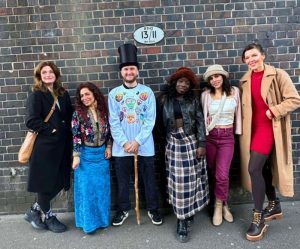
The planned Epsom mural will reflect these values, with design approval forming part of the next stage of the project. The rail operator has expressed enthusiasm for the proposal and may also provide financial support, subject to confirmation. Images from Marcele’s previous work will be used to accompany coverage of the project, and a group photograph of Marcele with participating artists will form part of the public launch.
Marcele said she hopes the mural will not only brighten a prominent public space, but also help challenge perceptions around disability and neurodiversity. “I understand the transformative power that art can have in our lives,” she said. “I want others to experience that same sense of expression, connection and empowerment.”
Further details about the mural design and painting dates are expected to be confirmed in the coming months.
Million-pound FIFA-standard football pitch opens at Glyn School in Ewell
9 January 2026
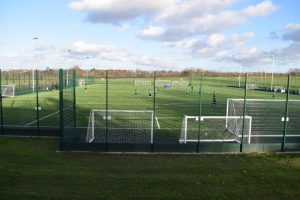
A new state-of-the-art FIFA-standard 3G football pitch and pavilion has been officially opened at Glyn School in Ewell after more than £1 million of investment from national and local partners.
The Premier League, The FA and the Government’s Football Foundation contributed just over half of the total cost, with further funding from Epsom & Ewell Borough Council, Your Fund Surrey (Surrey County Council) and the Epsom & Ewell Colts. The new pitch will be used by Glyn School, other GLF Schools, Epsom & Ewell Colts FC and the wider community.
Epsom & Ewell Borough Council’s Playing Pitch Strategy and Corporate Plan identified the need for high-quality sports provision to promote healthy lifestyles, widen participation and meet the needs of a growing population. With more than 1,800 students at Glyn and around 5,000 across other GLF Schools, the facilities are expected to make a significant daily impact on school and community sport.
A partnership with Epsom & Ewell Colts FC means the pitch will become a major hub for grassroots football, supporting over 1,200 players across 82 teams, including 30 girls’ and women’s teams. The GLF Schools Foundation will help expand access for disadvantaged groups, disabled players and young people historically underrepresented in sport, aligning with both borough and national priorities for community wellbeing.
The official opening took place on Wednesday (Dec 10), with GLF Schools Interim CEO James Nicholson addressing guests and the Mayor of Epsom & Ewell, Cllr Robert Leach, cutting the ribbon. Also present were Liz Pill from the Football Foundation and Rosanne Fine from Surrey Football Association. Visitors toured the pitch and pavilion after watching players take to the new surface.
Jo Garrod, Headteacher at Glyn School, said: “This new pitch and pavilion are a fantastic addition to the sports facilities at our school and will be a huge benefit to all our students. We’re extremely grateful to the Football Foundation for the funding and investment and delighted that they have made such a significant contribution to improve the quality of sports facilities for everyone in the community.”
James Nicholson, Interim CEO of GLF Schools, said: “The range of sports and activities we offer at GLF Schools is central to the educational experience for all students. Having the latest modern facilities is key to giving every student the best opportunities to reach their full potential and enjoy their time with us. I’d like to thank The Football Foundation, whose major grant made this development possible, Epsom & Ewell Council, Your Fund Surrey (Surrey County Council), and the Epsom & Ewell Colts, who also supported this project with substantial financial contributions. As well as Surrey FA for their strategic guidance and endorsement, and all the consultants in design, fundraising, planning, and project management who worked so hard to build such an impressive pitch and pavilion.”
Robert Sullivan, Chief Executive of the Football Foundation, said: “The Football Foundation is working closely with our partners, the Premier League, The FA and Government, to transform the quality of grassroots facilities in England by delivering projects like this across the country. Good quality playing facilities have a transformative impact on physical and mental health and play an important role in bringing people together and strengthening local communities. We’re delighted that the local community in Epsom and Ewell will now be able to enjoy all these benefits thanks to the new facilities at Glyn School.”
Epsom & Ewell MP Helen Maguire said: “The opening of this new pitch and pavilion at Glyn School is a real milestone for Ewell and the wider borough. It gives young people and local clubs a first-class space to train, play, and grow – and it strengthens the role that sport can play in building confidence and aspiration, as well as the improvements it can bring to both physical and mental health. I’m delighted to see this project completed and look forward to visiting soon.”
Many local clubs, organisations and community groups provided letters of support, including NESCOT, Chelsea FC Foundation, Fetcham United FC, Active Surrey, Surrey Schools FA, Surrey Cricket Foundation and Tidy Keepers.
A 3G (Third Generation) astro pitch is an advanced artificial turf surface combining synthetic grass, sand and rubber infill to mimic natural turf, offering all-weather durability and consistent performance.
About the Football Foundation
The Football Foundation is the Premier League, The FA and the Government’s charity dedicated to delivering outstanding grassroots facilities. Since 2000 it has raised £1.3 billion to improve facilities nationwide, including 1,300 3G pitches, 15,000 grass pitches and 1,700 changing rooms, attracting an additional £1.5 billion in partnership funding. It works with local authorities, County FAs and community partners to create Local Football Facility Plans for every area of England. More information at footballfoundation.org.uk.
About GLF Schools
GLF Schools is a multi-academy trust of 43 schools serving more than 17,000 pupils aged 2 to 19 across Oxfordshire, Berkshire, Hampshire, Surrey, West Sussex and parts of London. The Trust includes eight secondary schools and 35 primary settings, each serving its own community while sharing a commitment to excellent educational outcomes.
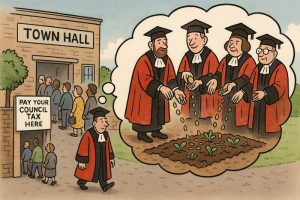
Public of Epsom and Ewell to be asked if they want two new Councils
9 January 2026
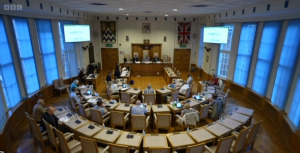
Epsom and Ewell Borough Council has voted to continue exploring the creation of two new community councils—one for Epsom and one for Ewell—following an often heated debate at the Full Council meeting on Tuesday 9 December. The decision means the proposals will now go to a second phase of public consultation before a final vote in March 2026.
The meeting also saw Cllr Hannah Dalton (RA Stoneleigh) elected—by 17 votes to 11—over Cllr Alex Coley (Independent Ruxley) as the Borough’s representative on a Local Government Association forum related to Local Government Reorganisation (LGR).
The main item of the night, however, was whether to progress the Community Governance Review (CGR) and consult residents further on the proposed new parish-style councils.
What was decided
Two recommendations were voted on separately, both by recorded vote:
• Recommendation 1: Proceed to a second-stage consultation • Recommendation 2: Confirm the amended Terms of Reference and delegated arrangements for running that consultation
Both recommendations were carried by 17 votes to 6 (or 7) with 6 (or 5) abstentions, depending on the motion.
Supporters: “Residents must have a voice before the borough is abolished”
Cllr John Beckett (RA Auriol), who proposed the motion, framed the issue as a democratic response to the looming abolition of the borough council under Surrey’s move to two unitary authorities. He warned of a 75% reduction in elected representation once Epsom and Ewell’s 35 borough councillors and 5 county councillors are replaced with just 10 unitary councillors.
Beckett said: “These changes are about the centralisation of power and money all at the expense of local democracy.” He added that the first consultation—352 responses, with 67% supporting further investigation—was “the second highest response to a borough-wide consultation outside the Local Plan”.
He argued that parish-style councils could preserve local identity and provide continuity: “For our residents… this gives our residents a choice, and it gives our residents a voice.”
Cllr Hannah Dalton told councillors that other areas undergoing unitary transitions, including Northamptonshire, Wiltshire and Somerset, saw unparished areas “left behind”. She said that if Epsom and Ewell did not act now, it risked becoming “the only unparished area in East Surrey”.
She added: “Tonight we are only asking you to support further consultation… with a precept that has no transfer of assets, whatever our colleagues are saying.”
Cllr Neil Dallen (RA Town) said the proposal was modest: “We go out to the residents and we ask them… whether they want us to continue.”
Cllr Rachel King (RA Town) emphasised that the public had only given feedback on principles so far: “We now need to give them a proper opportunity to respond to a fleshed out proposal… We owe it to our residents to give them a voice.”
Opponents: “A flawed consultation, a financial burden, and a political stitch-up”
Opposition councillors delivered some of the sharpest criticism heard in the chamber for years.
Claims of a flawed consultation
Cllr Julian Freeman (Lib Dem College) said the consultation process was “flawed” because respondents were forced to select an option rather than reject the idea outright. He argued: “This is the wrong issue at the wrong time… The only reason this is being raised now is to create a role for the people in this room.”
Cllr Rob Geleit (Labour Court), speaking also on behalf of absent Cllr Kate Chinn, said the proposals lacked community backing: “A flawed and skewed consultation, a lack of engagement… giving no mandate… and poor financial analysis.” He added: “I see no point in removing a layer of democracy only to add it back again on a lesser level.”
Cllr Alison Kelly (Lib Dem Stamford) said residents were mostly concerned about planning, but that the parish proposals did not address this: “Most people… give the issue of allotments very little thought. We are showing a cost of a parish council around £45 for an allotment you don’t need in a flat.” She noted that only around 230 respondents had expressed a desire for a parish council.
Financial warnings: 98.7% admin, 1.3% allotments
Cllr James Lawrence (Lib Dem College)highlighted the ratio in the report: approximately £1.5m in administrative overheads versus £20,000 for allotment running costs. “You will be telling [residents] you’re creating a parish council that is just for allotments… the allotments cost is 1.3% of the tax you’re going to charge.” He added that consultation documents risked misleading residents by listing admin and allotments side-by-side “as if they were roughly equal”.
“An uncapped tax burden on struggling households”
Cllr Alex Coley warned that the real precept could be much higher—up to £180 for Band D properties—if the community councils later took on community buildings with significant maintenance liabilities such as Bourne Hall: “It would be disingenuous to go to residents with £40-something pounds when it could be £180… We should not seek a view from residents with a lower figure and then quadruple it.” He said many residents were “struggling financially” and called the proposals “an astonishing waste of time, energy and money.”
Cllr Bernie Muir (Conservative Horton) urged councillors to wait until the new unitary structure and Surrey’s pilot Neighbourhood Area Committees (NACs) bedded in: “I think this is a premature discussion… we should see how the unitaries and NACs pan out and then move forward if we need to.”
Cllr Chris Ames (Labour Court) was highly critical of the RA leadership: “This wasn’t a review. This was one option chosen by the Residents’ Association to meet its own purposes… It’s all about providing a jumping-off point for the clique that runs this council.”
Admin cost vs allotment cost: the core numerical controversy
Using the figures in the Report to Council:
• Admin and support costs for new community councils: approx. £1.5 million • Cost of allotment management: approx. £20,000
That means roughly:
• 98.7% of the expenditure is administration • 1.3% is allotment provision
This ratio became a central argument for opponents, particularly Cllr Lawrence, who said allotments would be a “rounding error” in the parish budget.
Supporters responded that these were not final budgets, merely illustrative maxima, and that Phase 2 consultation would use the true starting point—around £43–£46 Band D—with no asset transfers.
Conclusion
The council has opted to continue exploring parish councils despite sharp divisions. The second public consultation will now seek residents’ views on more detailed proposals before a final decision in March 2026—months before the borough is abolished and replaced by the new East Surrey unitary authority.