Epsom and Ewell Times

Current Front Page

ISSN, LDRS and IMPRESS logos

Satellite comms. pass Surrey Uni test

LEO satellites

A satellite company called Eutelsat OneWeb recently made a big advancement. They successfully connected their low Earth orbit (LEO) satellites to a 5G mobile network for the first time. This achievement is a big step towards bringing super-fast internet to people in remote and rural areas.

They were able to do this with the help of a partnership called the Sunrise Programme, which is supported by the European Space Agency. In a test, researchers from the University of Surrey used these satellites to connect to a 5G network. These satellites are orbiting the Earth and make up the second-largest satellite constellation in the world.

During the test, they checked things like video calls, streaming videos, online gaming, virtual and augmented reality, and web browsing. With the LEO satellites, they were able to provide fast internet with very little delay, or “low latency.” They also made sure that users could smoothly switch between the satellite network and regular mobile networks, providing a seamless 5G experience.

Barry Evans, Professor of Satellite Communications at the 6G/5G Innovation Centre (6G/5GIC) at the University of Surrey, said:  “It was thrilling to see no degradation when using the 5G connection made possible by the LEO constellation. This is a step closer to increasing internet access for more people around the world – a privilege that many of us take for granted. The work performed in the 5G pilot tests has demonstrated the feasibility of 5G backhaul over LEO satellites.”

Eutelsat OneWeb’s technology is similar to what we have with 4G, and they matched the quality of 5G in the mobile network with 4G quality in the satellite network. This allowed them to support all the applications they tested.

Eutelsat OneWeb has also made a deal with Telstra in Australia to support their 4G and 5G networks.

Overall, this is a significant achievement in bridging the gap in internet access and improving connectivity for people in remote areas. It’s also a testament to the Surrey’s leadership in space and telecommunications technology.

Image: Attribution-ShareAlike 3.0 Unported CC BY-SA 3.0 DEED


Bloomin’ marvellous for Epsom and Ewell

Rosebery Park Epsom

Epsom & Ewell Borough Council, Go Epsom Business Improvement District, and dedicated volunteers from across the borough were delighted to pick up a number of awards for Nonsuch Park, Epsom Town Centre and Ewell Village at this year’s South & South East in Bloom awards.

For the first time, Nonsuch Park picked up two awards, a prestigious Gold Award for Large Conservation Area and a Silver Gilt Award for Heritage Park. 

Judge Peter Holman, who is also Chairman of the South & South East in Bloom scheme, praised the efforts of the Nonsuch Voles Volunteering Group, and Epsom and Ewell Borough Council’s Operational Services and Countryside Team, who all work together for the overall benefit of the park.

Mr Holman said, “Woodland management, planting new trees and beds, and uncovering and restoring horticultural features all add value. Since my last visit, it’s good to see progress and the natural areas of the park are an excellent example of what can be achieved to benefit wildlife.”

Ewell Village kept its Silver Award status in the Large Village of the Year category and was congratulated on the efforts of the community volunteers who help maintain the Gertrude Longhurst Memorial Garden and Bourne Hall Park.

The council’s work at Bourne Hall was also praised. The judges said, “With its historic grounds, Bourne Hall showed noticeable improvements to the area at the rear of the building, which now forms an outdoor extension to the café area. It is understood that planting to soften its appearance is planned along with a new children’s play area. Adjacent to the pond, a new pollinators bed has been successfully planted and looked attractive.

“The Wheatsheaf public house was pleasing to see and welcoming. Also of note was the work at Gertie’s garden.”

Epsom Town Centre entered the Business Improvement District category and retained its Silver Award status. The judges noted the planting schemes in Rosebery Park, the ‘Pocket Park’ in South Street and the new planters outside TK Maxx, they were also impressed with the murals around the Town Centre and the Lidl Living Wall in Upper High Street.

Councillor John Beckett, Chair of the Environment Committee, said “I am pleased to see the hard work and dedication of the council, Go Epsom, businesses, residents and volunteers has been formally recognised at this year’s South & South East in Bloom awards.

“Maintaining our standards by winning Silver Awards in Ewell Village and Epsom Town Centre again and improving on last year’s awards tally by winning Gold and Silver Gilt for Nonsuch Park is a brilliant achievement.

“Plans are already being put in place for the borough to take part in Bloom next year. I would like to take this opportunity to thank everyone who is committed to ensuring our borough is the best it can be for the local community, visitors and wildlife all year round.”

Karen Pengelly, BID Manager at Go Epsom said, “Epsom is a lovely town, and the introduction of planters, murals and general greenery are welcome additions to our street scene. Visitors and local workers have commented on how much they appreciate the efforts of everyone involved in making Epsom look even better. Onwards and upwards for 2024 – there’s always more to do!”

The awards were held at RHS Wisley on Friday 29 September 2023.

South & South East in Bloom is part of Britain in Bloom and runs annual competitions across the counties of Kent, Surrey, East & West Sussex, Hampshire and the Isle of Wight, East & North Dorset and East Wiltshire.

Related reports:

Bloom awards for Epsom and Ewell (2022)

Image: Rosebery Park in Spring:  © Copyright Marathon and licensed for reuse under this Creative Commons Licence


Thames Water rebate

Hogsmill

Thames Water has been ordered to pay back more than £100million to its customers by regulators.
Water watchdog Ofwat ordered the under-performing company to return the money following a string of failings, it announced today, September 26.

The rebate follows its assessment of Thames Water’s performance with customers seeing the results on their bills next year. Ofwat’s decision was published in its annual Water Company Performance Report, which rates companies based on pollution incidents, customer service and leakage. 

Targets are set to incentivise water companies to deliver more for customers and the environment, Ofwat’s report read. It added: “Where they fall short, we reduce the amount of money companies can collect from customers.” On Thames Water customers receiving £100 million back next year, it said: “While that may be welcome to billpayers, it is very disappointing news for all who want to see the water sector do better.”

David Black, Ofwat chief executive said: “The targets we set for companies were designed to be stretching – to drive improvements for customers and the environment. However, our latest report shows they are falling short.” He added: “It is not going to be easy for companies to regain public trust, but they have to start with better service for customers and the environment. We will continue to use all our powers to ensure the sector delivers better value.”

It is yet more bad news for the firm following the report in July that found Thames Water among worst in country due to standout levels of pollution and poor monitoring left if joint last among the country’s “very disappointing” water and sewerage companies. 

Thames Water is the largest water company in the country and serves 15 million people including many in Surrey and Kent. It is owned by a consortium of pension groups and sovereign wealth funds and, in 2023 reported an annual loss of £30.1 million.

Environment Secretary Therese Coffey has now written to Thames Water informing it to expect a meeting in order to scrutinise its improvement plans.

A spokesperson for Thames Water said “Our customers expect a great service from us every time, and we’re sorry when we fail to deliver at the first opportunity. In 2022-2023 , we met 55 per cent of our annual performance commitments.

“While it is our job to deliver our services whatever the weather, our performance last year was severely affected by the summer drought and December freeze/thaw event. In March this year our shareholders injected £500million of new equity into Thames Water to help fund improved operational performance. Our shareholders are willing to provide a further £750million of equity funding before 2025, subject to certain conditions. 

“They also acknowledge that additional equity funding, indicatively of £2.5billion, will be required during the next regulatory period, 2025-2030, to further improve operational performance and financial resilience. This is the largest equity support package ever seen in the UK water sector and underscores our shareholders’ commitment in delivering Thames Water’s turnaround and life’s essential service for the benefit of our customers, communities, and the environment.

“Our turnaround is already delivering performance improvements. Our complaints fell by 28 per cent, the second consecutive significant year-on-year reduction and we have seen improvements in several key performance commitments including a reduction in sewage discharges, internal sewer flooding, and sewer blockages. 

“We’re making progress and we’ll continue to engage and work with Ofwat as we implement our plan. We’re determined to do better for our customers and the environment.”

Related reports:

Thames Water among worst in country

Wasting water?

Local sewage uploaded

Image: Hogsmill river in Ewell where there were sewage leaks.


Healthy future for Epsom’s restored White House

Whitehouse Waterloo Road Epsom

The White House, located at 16 Waterloo Road, Epsom, nestled between Blacks Burgers and Nandos, is a Grade II listed building that dates back to the early 1700s. Recently, it has undergone a beautiful restoration in preparation for an exciting new phase in its rich history.

The new owner has successfully preserved the building’s charm and character, while modernizing its internal features to create comfortable and contemporary treatment and therapy spaces. The White House is transformed into a Health and Wellness Centre, where professionals with various skills can utilize rooms once occupied by two historically significant individuals, as confirmed by the plaque on the building’s front, visible from the pathway.

Around 1800, Prince George and Mrs. Fitzherbert resided in the same building now known as The White House. However, the question arises: What became of Princess Caroline, the woman Prince George married just five years earlier, and why is her name absent from the plaque?

While King George III led a scandal-free life, the same cannot be said for his son, Prince George, who lived an extravagant lifestyle characterized by heavy drinking and entertaining mistresses. Burdened by mounting debts, Prince George sought financial assistance from his father, who agreed to help him under the condition that Prince George marry his cousin, Princess Caroline of Brunswick.

Although Prince George had previously secretly married the twice-widowed Maria Anne Fitzherbert, this marriage was invalid because King George III had not consented to it. On April 8, 1795, Prince George married Princess Caroline at the Chapel Royal, St. James’s Palace. However, the couple proved incompatible despite Caroline giving birth to Princess Charlotte, George’s only legitimate child, just nine months after their wedding ceremony.

Upon their first meeting, Prince George called for a glass of brandy, while Princess Caroline commented on how much thinner and more handsome George appeared in the portrait she had seen of him. Prince George found his wife unattractive and “unhygienic” and could not bear to have intimate relations with her (he ensured he was drunk on the night of their wedding). Princess Caroline, on the other hand, was beloved by the public, who generally despised her husband, “the Prince of Pleasure,” due to his continuous overindulgence and accumulating debts.

On January 29, 1820, George ascended to the throne as King of the United Kingdom and Hanover, with Caroline becoming Queen Consort in name. George sought a divorce from Caroline but couldn’t obtain one due to the weak evidence against her. This was partly because Caroline was held in high regard by the public, who viewed George’s conduct as immoral.

Caroline was barred from attending King George IV’s coronation on July 19, 1821, and subsequently fell ill in London. Tragically, she passed away three weeks after the coronation she had not been allowed to attend. Her funeral procession moved slowly through London en route to Brunswick, where she was laid to rest. This allowed George to continue his romantic attachment to Maria Fitzherbert and entertain other mistresses.

The brass medallion, which I purchased a few years ago at Oxfam in Epsom High Street, likely belonged to one of Queen Caroline’s supporters before her death. It resembles a miniature portrait, much like the one of Prince George shown above. “Caroline Queen of England” is inscribed around the perimeter of the medallion, featuring a bust of King George IV’s lawful wife.

The brass medallion serves as a poignant reminder of how poorly Queen Caroline was treated by her husband, King George IV, and underscores the ongoing need to ensure that women from all cultures and walks of life are shown respect and treated fairly in today’s modern society.


Pot of gold for Rainbow?

Rainbow leisure centre. Epsom.

Rainbow Leisure Centre in East Street Epsom has been shortlisted for a prestigious award from trade association UK Active.

The centre – which was renovated recently- boasts a 25m pool, dance studio, large gym and over-60s social room. As a result, it has been nominated for ‘Local and Regional Club/Centre of the Year’ in recognition of its huge contribution to the local community.

Rainbow caters to customers of all ages with an innovative programme that includes fourteen classes dedicated to people over 60, plus swimming, gym sessions and classes for the centre’s junior members – currently numbering more than 500. The centre is also used by three disability clubs and four special needs schools who participate in tailored activities such as ping pong, dance and Boccia.

Customers are kept involved in the centre’s plans with social events and ‘Meet the Manager’ sessions. Currently, they are accepting almost 30,000 bookings per month.

The centre is run by charitable social enterprise GLL under the ‘Better’ brand. The organisation’s ethos is to reinvest profits to support local communities and Rainbow is an important part of this commitment.

Darren Pope, Rainbow’s General Manager, comments, “We couldn’t be prouder to have been shortlisted for the best centre/club in the South of England. Making the shortlist would not have been possible without the incredible work from the staff at Rainbow. No matter what the result, I am very proud of my team’s achievements this year.”
 
UK Active award winners will be announced at the end of October this year.

Better was founded in 1993 as a charitable social enterprise with seven leisure centres in Greenwich. In 1996 the social enterprise started expanding outside of the London Borough of Greenwich and now runs all kinds of community services and spaces across the UK. Now renamed Better, over 250 public sport and leisure centres and 57 libraries are managed in partnership with more than 30 local councils, public agencies and sporting organisations. Membership to the organisations’ centres has increased to over 650,000 with 40 million visitors a year.


“The Gas” and brewery back Cuddington community

Councillor Spickett, Gary, Dennis, Sam, Alison, David, Gary.

Wandgas Sports and Social Club in Cuddington is very proud to announce their partnership with Shepherd Neame. An open day was held on Friday 25th August, with the Kent brewery – the oldest in Britain – showcasing real ales and an impressive selection of wines to the locals.

Epsom and Ewell Borough Councillor Kim Spickett said “This is a wonderful facility, offering sporting opportunities to all ages and abilities. It is a social hub for us too – the Jubilee and Coronation Beacon ceremonies for Cuddington took place on the field, organised by Cuddington WI, who hold their monthly meetings at the clubhouse.

Shepherd Neame are already a big name in the cricket world, sponsoring Kent and Surrey County
Leagues, so it is a good fit! Their event has been most enjoyable – we even had a wine expert on hand! Having decent real ale available where you live is wonderful.”

Cricket at Wandgas is year round, with net sessions throughout the winter in floodlit nets. Youth cricket takes place every Thursday throughout the summer from mid April. “Cricket For All’ for players with special needs starts in April.

The club also hosts adult and youth football sides. A “Football For All” section for players with disabilities train on a Saturday morning – two under 16 and 3 adult teams.

Wandgas also run a community football ‘turn up and play’ for Under 7’s. Two dart teams and a pool team play in local leagues.

Wandgas is unique in having developed a corner of the grounds into an area for a Sensory Garden. They are currently working with teachers and parents from Linden Bridge School and Orchard Hill College.

Chairman Dennis Jones said “the idea is to introduce children and adults with special needs to nature and the rhythms of the seasons through gardening”.

Wandgas Sports and Social Club in Cuddington is on Grafton Road, Worcester Park in the Borough of Epsom and Ewell. Across the road Linden Bridge School enjoys open access to the ground. The Club will allow any local group reasonable access and fosters a continuing relationship with sports development officers at Epsom & Ewell Borough Council.

The Club was developed in 1938 to provide sports and social facilities for gas industry employees of SEGAS. Known by the locals as “The Gas”

Wandgas has a determination to retain the site as an open field sports facility for the local community as its key objective.

Image: Councillor Spickett, Gary, Dennis, Sam, Alison, David and Gary.


Objectors fail to tear a strip off

Stir night club

An Epsom strip club has had its licence renewed despite dividing residents on what it brings to the town.
Stir, in the town centre’s East Street, has run as a sexual entertainment venue since 2011, though operations manager Damon Wellman has been running it as a bar since 2007.

Residents who wrote to the council about the application raised concerns about going into town late at night because of it, while another in support said the bar did not have the “creeps” you would find in other venues.

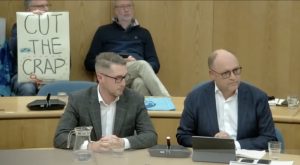
A licensing sub committee meeting at Epsom and Ewell Borough Council on Thursday (August 24) granted renewal of the venue’s licence, which was due to expire.

Stir is Epsom and Ewell’s only establishment licenced as a sexual entertainment venue.

The sub committee considered six letters of support and four objections to the application, as well as hearing from Mr Wellman in the meeting.

Letters of support included one person who used to live very close to the venue, who said they were being followed home one night by three men having left another nearby pub. The letter said: “It was late and we had to walk past Stir bar so we asked the doormen if they could help and they were brilliant. “They let us stay in the bar for free, offered to call the police if the men stayed outside, which they did not, and then after some time walked us back to our flat. After that we would sometimes just go in there for a drink as it was a really nice bar and never had the creeps that we would encounter in other bars.”

But one objector said she would not go into town late at night because of the club, saying she had “seen the men coming in and out” and felt “unsafe”.

 
Another person who wrote in support said they understood people’s “reservations to this sort of thing”, but added “it’s important that perceptions and prejudice do not take precedent over facts and reality.”

Another letter said the venue “tainted” the town, raising concerns about it being so close to a nursery and to a residential area. They went on to say: “I write to and on behalf of the young women who walk home late at night and ask you to reconsider your renewal and shut the premise down and protect young adults from these dangers.”

While another letter claimed there had been a “significant increase in anti-social behaviour associated with the establishment”, Mr Wellman disputed this in the meeting.

He produced a response to a Freedom of Information request he had submitted to the council regarding complaints, whether noise or otherwise, about the premises which said there had been none in the last five years.

Mr Wellman said: “We have to run a venue like this strictly. That’s why we have a great reputation. We are phenomenally strict. We are very strict on who we let in. We’re not a volume-led venue, this industry generally isn’t.”

The licence was granted, with minor changes including removing the words “female only” from a condition regarding the locations where “exotic dancing” could take place.


Report against airport expansion

Flight over a town

Airport expansion benefits a “small and wealthy subset of the British population” leaving the rest to deal with its environmental impact, according to a new report.

The paper, Losing Altitude the economics of air transport in Great Britain, was published just weeks before plans to double capacity at Gatwick were made public for the first time.

It argues that the “significant” environmental downsides that come with the growth in flight numbers is not matched by its economic benefit – and that data arguing otherwise is out-dated.

However, while it says overall tourism in the UK is harmed by increased aviation, Surrey and the south east benefit.

Gatwick Airport says a second runway would bring an extra £1billion to the south east and that its “detailed economic analysis is robust and is based on UK-specific data”.

It has submitted proposals to the Planning Inspector to add a permanent second runway to allow an extra 100,000 flights a year. A six-month enquiry is set to start later this year to determine the matter.

The report, by New Economics Foundation, read: “The Government continues to provide conditional support to air capacity growth on the, often tacit, basis that the economic upsides outweigh the negative impacts and future risks. “But, the economic assumptions that underpin this position favouring growth are dated and have not been reviewed for some years.

“Given the urgent and sizeable nature of the climate risk, it is imperative that the evidence, and relative balance, of the economic and environmental impacts of air transport growth are kept up to date and under constant review.”

The last comprehensive Government review of the economic impacts of air travel was in 2012 and the industry has “changed dramatically” since then, the report argues.

Growth in business travellers has effectively ceased and new passengers are “exclusively from the leisure market” – in particular, “growth has been driven by wealthy British residents rather than foreign tourists or those on lower incomes”. The pandemic, it says, accelerated the trend.

Welfare, jobs and wages, tourism.

It said the social benefits that access to international travel brings to UK residents can be vast but is “typically captured by a small and wealthy subset of the British population while, each year, around half of British residents do not fly at all. Furthermore, the welfare benefit must now be offset against welfare losses resulting from greater environmental damage; these are substantial”.

On job creation, it said that aviation “supports a large number of British jobs, but the amount of employment created by growth has been diminishing over time” and has now become “one of the poorest job creators in the economy per pound of revenue” – due to automation and efficiency savings.

It also found productivity growth failed to translate into increased wages; after inflation.

On tourism it said there are now two decades of evidence showing air transport does not help the UK domestic tourism industry with cash instead flowing overseas.

The exception to this is in Surrey, London and the wider south east, where the majority of foreign tourists visit.

Dr Alex Chapman, senior researcher at the New Economics Foundation (NEF), said: “For years, this government has let the air travel industry balloon in size, based on dangerously outdated claims that it is boosting the UK’s economy. The reality is declining business air travel, declining wages for air travel workers, declining job numbers, and declining domestic tourism spending in the UK.

“And that’s before you consider the rise in noise, air pollution and dangerous emissions driven by UK airports. So who exactly is benefiting from ever more air travel? You needn’t look much further than the highly paid executives, the private shareholders, and the wealthy minority of ultra-frequent flyers.”

Cait Hewitt, policy director at the Aviation Environment Federation, said: “The question of whether or not airports should expand is often assumed to be about balancing environmental harms against economic benefits. This new analysis suggests we should think again; while flying definitely causes harm in terms of noise and emissions, it’s uncertain if it actually brings any economic benefits.

“Obviously people benefit from going on holiday, but policies that support British tourism and leisure – rather than increasing travel abroad – would be good for the UK economy as well as the climate.”

A London Gatwick spokesperson said: “We are aware of the… report and its claims, however our detailed economic analysis is robust and is based on UK-specific data. Our analysis shows that the Northern Runway plans would deliver 14,000 new UK-based jobs and inject £1 billion into the economy of the south east every year.

“Our plans would also benefit many communities across the south east by providing new economic and business opportunities as well as benefits for tourism and international trade.
“We recognise the climate emergency and the need for the whole aviation industry to act to reach net zero by 2050.

“To that end, we accelerated our plans to achieve net zero for airport emissions, Scope 1 and 2, by 2030 and will invest over £250 million so that we achieve this 10 years ahead of our previous target. The government is also committed to work with airlines to ensure they meet a trajectory of reducing carbon emissions to get to net zero, 2050, through measures including airspace modernisation; sustainable aviation fuel, electric, hydrogen and hybrid aircraft and setting carbon budgets for airlines.”

Related Reports:

Gatwick expansion plans revealed

Gatwick to get 2nd runway?

Chance for Epsom and Ewell’s say on Heathrow flights


Gatwick expansion plans revealed

Gatwick expansion plans

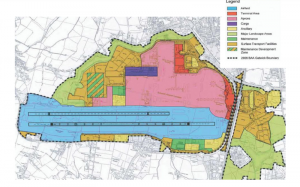
The first details of Gatwick’s multi-billion pound expansion plans – to double capacity and create a second Heathrow Airport in the south east – have emerged.

Gatwick originally submitted its bid to create a fully functioning two-runway airport to the planning inspector in July, as it pushes to increase annual capacity to 78 million passengers.

The plans have now been released to the public ahead of an expected six-month hearing due to begin at the end of the year.

The airport’s current annual capacity is 32.8million passengers. It wants to double that by building space for an extra 100,000 flights a year.

The project “would also include the development of supporting infrastructure and facilities to enable increased capacity at Gatwick airport to service 75 million passengers per year by 2038”.

The plans include:

Repositioning northern runway so both can be used together
Reconfigured taxiways
A new pier
Extensions to the north and south terminals
New hotel and office space
New car parks
Highways improvements

Opponents, including 10 neighbouring councils, and the Communities Against Gatwick Noise Emissions (CAGNE), said they were “disappointed” the application is moving forward as they had raised “significant concerns about Gatwick’s approach towards engagement and consultation”.

A spokesperson for CAGNE said: “Time and time again, airports that seek expansion and growth during the climate emergency use the same straplines to convince the government that it will be good for the country and that everything else can be mitigated. “Gatwick seems to have done the same.”

They added: “The planet cannot afford this expansion. We are horrified that a government Planning Inspector would agree to a second runway when it impacts the wellbeing and house value of so many residents, as well as the planet.”

The group said it was preparing a “strong legal team” to put forward a case against expansion. “The broken record keeps spinning as far as Gatwick’s management are concerned. The Development Consent Order is a cheap way to significantly increase capacity, without having to pay for the infrastructure needed to support such vast growth”, the spokesperson said.

Final sign off will be decided by the  Secretary of State .

Tandridge District Council is a member of a consortium of 10 local councils in Surrey, Kent, East Sussex and West Sussex, which have come together to ensure their interests are represented.

A joint statement read: “We are disappointed that the Planning Inspectorate has this week decided to “accept” Gatwick Airport Limited’s development consent order application for dual runway operations through the routine use of the existing northern runway for its detailed consideration and examination.

“We had raised significant concerns about Gatwick’s approach towards engagement and consultation with us and the wider local community and felt that further, more meaningful consultation should have taken place before the application was submitted.

“Now the application has been accepted, we will engage with the Planning Inspectorate with the many outstanding issues that are unresolved and without agreement across a wide range of issues. We believe this challenging situation will require significant resources from the local authorities to present its case on the many and varied environmental and economic impacts arising from the development and the associated growth of the airport.

“It is hoped that engagement and provision of information by( Gatwick) will improve as we approach examination to give confidence to all parties about the impacts of the proposals and enable the Secretary of State to make a robust decision.”

London Gatwick’s chief planning officer Tim Norwood, said: “In coming weeks, the airport will let residents and other stakeholders know how they can register their interest in taking part in the examination stage of the planning process, so they can submit comments and feedback on our important proposals.”

London Gatwick’s DCO application is available on the Planning Inspectorate’s website.

Those interested in finding out about CAGNE’ fundraising can visit www.cagne.org.

Crawley Borough Council, East Sussex County Council, Horsham District Council, Kent County Council, Mid Sussex District Council, Mole Valley District Council, Reigate and Banstead Borough Council, Surrey County Council, Tandridge District Council, West Sussex County Council form the coalition of councils.

Related reports:

Gatwick to get 2nd runway?


Epsom’s child-play hobbled by e-coli

The popular adventure park off Horton Lane in Epsom known as Hobbledown has temporarily closed. This follows reports by the UK Health and Security Agency that three children who had visited the park had developed symptoms consistent with STEC (Shiga toxin-producing Escherichia coli)

Most E. coli strains do not cause disease, naturally living in the gut, but virulent strains can cause gastroenteritis, urinary tract infections, neonatal meningitis and other conditions.

Nick De Candole, the owner, published a statement on the business’s website as follows:

“We have been informed by health authorities of a very small number of cases of an E. coli infection in individuals who recently visited the Park. After learning of this we immediately and voluntarily closed the Park as a precaution.

We are in close contact with Epsom & Ewell District Council Environmental Health team and also the UK Health Security Agency and co-operating fully with both on their respective investigations.

I have written to everyone who visited between 11 and 27 July to inform them of the situation and included with this a letter from the UKHSA with further information and guidance.

We are offering those who have booked to visit while we’re closed options to reschedule or a full refund, plus 50% off next visit.

I can assure everyone that the wellbeing of visitors to Hobbledown is our absolute priority and we do everything in our power to keep guests safe. We look forward to welcoming everyone back soon.”

Epsom and Ewell Borough Council advises “The symptoms of STEC , which include diarrhoea and stomach cramps, usually resolve themselves over a few days, but can occasionally lead to more serious outcomes. If you or someone in your family are showing symptoms of STEC, including bloody diarrhoea, and have visited the farm since 12 July, please contact NHS 111.”

Personal injury adviser Claire Glasgow of law firm Field Fisher explains why E.coli must be taken seriously. “Several children involved in past claims for damages for negligent exposure to the E.Coli O157 bacteria subsequently developed HUS (haemolytic uraemic syndrome). HUS can lead to very serious complications including high blood pressure, heart failure, kidney failure, diabetes, seizures, neurological damages, coma, and, in severe cases, brain damage.

“An additional concern for the families involved is the uncertainty of the impact of the infection on their children as they grow up. At the very least, they face regular and ongoing hospital tests and live under the stress of potential long-term health problems.”