
Epsom and Ewell Times
24th September 2026

ISSN, LDRS and IMPRESS logos

Report against airport expansion

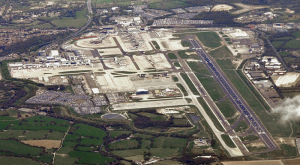
Flight over a town

Airport expansion benefits a “small and wealthy subset of the British population” leaving the rest to deal with its environmental impact, according to a new report.

The paper, Losing Altitude the economics of air transport in Great Britain, was published just weeks before plans to double capacity at Gatwick were made public for the first time.

It argues that the “significant” environmental downsides that come with the growth in flight numbers is not matched by its economic benefit – and that data arguing otherwise is out-dated.

However, while it says overall tourism in the UK is harmed by increased aviation, Surrey and the south east benefit.

Gatwick Airport says a second runway would bring an extra £1billion to the south east and that its “detailed economic analysis is robust and is based on UK-specific data”.

It has submitted proposals to the Planning Inspector to add a permanent second runway to allow an extra 100,000 flights a year. A six-month enquiry is set to start later this year to determine the matter.

The report, by New Economics Foundation, read: “The Government continues to provide conditional support to air capacity growth on the, often tacit, basis that the economic upsides outweigh the negative impacts and future risks. “But, the economic assumptions that underpin this position favouring growth are dated and have not been reviewed for some years.

“Given the urgent and sizeable nature of the climate risk, it is imperative that the evidence, and relative balance, of the economic and environmental impacts of air transport growth are kept up to date and under constant review.”

The last comprehensive Government review of the economic impacts of air travel was in 2012 and the industry has “changed dramatically” since then, the report argues.

Growth in business travellers has effectively ceased and new passengers are “exclusively from the leisure market” – in particular, “growth has been driven by wealthy British residents rather than foreign tourists or those on lower incomes”. The pandemic, it says, accelerated the trend.

Welfare, jobs and wages, tourism.

It said the social benefits that access to international travel brings to UK residents can be vast but is “typically captured by a small and wealthy subset of the British population while, each year, around half of British residents do not fly at all. Furthermore, the welfare benefit must now be offset against welfare losses resulting from greater environmental damage; these are substantial”.

On job creation, it said that aviation “supports a large number of British jobs, but the amount of employment created by growth has been diminishing over time” and has now become “one of the poorest job creators in the economy per pound of revenue” – due to automation and efficiency savings.

It also found productivity growth failed to translate into increased wages; after inflation.

On tourism it said there are now two decades of evidence showing air transport does not help the UK domestic tourism industry with cash instead flowing overseas.

The exception to this is in Surrey, London and the wider south east, where the majority of foreign tourists visit.

Dr Alex Chapman, senior researcher at the New Economics Foundation (NEF), said: “For years, this government has let the air travel industry balloon in size, based on dangerously outdated claims that it is boosting the UK’s economy. The reality is declining business air travel, declining wages for air travel workers, declining job numbers, and declining domestic tourism spending in the UK.

“And that’s before you consider the rise in noise, air pollution and dangerous emissions driven by UK airports. So who exactly is benefiting from ever more air travel? You needn’t look much further than the highly paid executives, the private shareholders, and the wealthy minority of ultra-frequent flyers.”

Cait Hewitt, policy director at the Aviation Environment Federation, said: “The question of whether or not airports should expand is often assumed to be about balancing environmental harms against economic benefits. This new analysis suggests we should think again; while flying definitely causes harm in terms of noise and emissions, it’s uncertain if it actually brings any economic benefits.

“Obviously people benefit from going on holiday, but policies that support British tourism and leisure – rather than increasing travel abroad – would be good for the UK economy as well as the climate.”

A London Gatwick spokesperson said: “We are aware of the… report and its claims, however our detailed economic analysis is robust and is based on UK-specific data. Our analysis shows that the Northern Runway plans would deliver 14,000 new UK-based jobs and inject £1 billion into the economy of the south east every year.

“Our plans would also benefit many communities across the south east by providing new economic and business opportunities as well as benefits for tourism and international trade.
“We recognise the climate emergency and the need for the whole aviation industry to act to reach net zero by 2050.

“To that end, we accelerated our plans to achieve net zero for airport emissions, Scope 1 and 2, by 2030 and will invest over £250 million so that we achieve this 10 years ahead of our previous target. The government is also committed to work with airlines to ensure they meet a trajectory of reducing carbon emissions to get to net zero, 2050, through measures including airspace modernisation; sustainable aviation fuel, electric, hydrogen and hybrid aircraft and setting carbon budgets for airlines.”

Related Reports:
Gatwick expansion plans revealed

Gatwick to get 2nd runway?

Chance for Epsom and Ewell’s say on Heathrow flights


Gatwick expansion plans revealed

Gatwick expansion plans

The first details of Gatwick’s multi-billion pound expansion plans – to double capacity and create a second Heathrow Airport in the south east – have emerged.

Gatwick originally submitted its bid to create a fully functioning two-runway airport to the planning inspector in July, as it pushes to increase annual capacity to 78 million passengers.

The plans have now been released to the public ahead of an expected six-month hearing due to begin at the end of the year.

The airport’s current annual capacity is 32.8million passengers. It wants to double that by building space for an extra 100,000 flights a year.

The project “would also include the development of supporting infrastructure and facilities to enable increased capacity at Gatwick airport to service 75 million passengers per year by 2038”.

The plans include:

Repositioning northern runway so both can be used together
Reconfigured taxiways
A new pier
Extensions to the north and south terminals
New hotel and office space
New car parks
Highways improvements

Opponents, including 10 neighbouring councils, and the Communities Against Gatwick Noise Emissions (CAGNE), said they were “disappointed” the application is moving forward as they had raised “significant concerns about Gatwick’s approach towards engagement and consultation”.

A spokesperson for CAGNE said: “Time and time again, airports that seek expansion and growth during the climate emergency use the same straplines to convince the government that it will be good for the country and that everything else can be mitigated. “Gatwick seems to have done the same.”

They added: “The planet cannot afford this expansion. We are horrified that a government Planning Inspector would agree to a second runway when it impacts the wellbeing and house value of so many residents, as well as the planet.”

The group said it was preparing a “strong legal team” to put forward a case against expansion. “The broken record keeps spinning as far as Gatwick’s management are concerned. The Development Consent Order is a cheap way to significantly increase capacity, without having to pay for the infrastructure needed to support such vast growth”, the spokesperson said.

Final sign off will be decided by the  Secretary of State .

Tandridge District Council is a member of a consortium of 10 local councils in Surrey, Kent, East Sussex and West Sussex, which have come together to ensure their interests are represented.

A joint statement read: “We are disappointed that the Planning Inspectorate has this week decided to “accept” Gatwick Airport Limited’s development consent order application for dual runway operations through the routine use of the existing northern runway for its detailed consideration and examination.

“We had raised significant concerns about Gatwick’s approach towards engagement and consultation with us and the wider local community and felt that further, more meaningful consultation should have taken place before the application was submitted.

“Now the application has been accepted, we will engage with the Planning Inspectorate with the many outstanding issues that are unresolved and without agreement across a wide range of issues. We believe this challenging situation will require significant resources from the local authorities to present its case on the many and varied environmental and economic impacts arising from the development and the associated growth of the airport.

“It is hoped that engagement and provision of information by( Gatwick) will improve as we approach examination to give confidence to all parties about the impacts of the proposals and enable the Secretary of State to make a robust decision.”

London Gatwick’s chief planning officer Tim Norwood, said: “In coming weeks, the airport will let residents and other stakeholders know how they can register their interest in taking part in the examination stage of the planning process, so they can submit comments and feedback on our important proposals.”

London Gatwick’s DCO application is available on the Planning Inspectorate’s website.

Those interested in finding out about CAGNE’ fundraising can visit www.cagne.org.

Crawley Borough Council, East Sussex County Council, Horsham District Council, Kent County Council, Mid Sussex District Council, Mole Valley District Council, Reigate and Banstead Borough Council, Surrey County Council, Tandridge District Council, West Sussex County Council form the coalition of councils.

Related reports:

Gatwick to get 2nd runway?


Epsom’s child-play hobbled by e-coli

The popular adventure park off Horton Lane in Epsom known as Hobbledown has temporarily closed. This follows reports by the UK Health and Security Agency that three children who had visited the park had developed symptoms consistent with STEC (Shiga toxin-producing Escherichia coli)

Most E. coli strains do not cause disease, naturally living in the gut, but virulent strains can cause gastroenteritis, urinary tract infections, neonatal meningitis and other conditions.

Nick De Candole, the owner, published a statement on the business’s website as follows:

“We have been informed by health authorities of a very small number of cases of an E. coli infection in individuals who recently visited the Park. After learning of this we immediately and voluntarily closed the Park as a precaution.

We are in close contact with Epsom & Ewell District Council Environmental Health team and also the UK Health Security Agency and co-operating fully with both on their respective investigations.

I have written to everyone who visited between 11 and 27 July to inform them of the situation and included with this a letter from the UKHSA with further information and guidance.

We are offering those who have booked to visit while we’re closed options to reschedule or a full refund, plus 50% off next visit.

I can assure everyone that the wellbeing of visitors to Hobbledown is our absolute priority and we do everything in our power to keep guests safe. We look forward to welcoming everyone back soon.”

Epsom and Ewell Borough Council advises “The symptoms of STEC , which include diarrhoea and stomach cramps, usually resolve themselves over a few days, but can occasionally lead to more serious outcomes. If you or someone in your family are showing symptoms of STEC, including bloody diarrhoea, and have visited the farm since 12 July, please contact NHS 111.”

Personal injury adviser Claire Glasgow of law firm Field Fisher explains why E.coli must be taken seriously. “Several children involved in past claims for damages for negligent exposure to the E.Coli O157 bacteria subsequently developed HUS (haemolytic uraemic syndrome). HUS can lead to very serious complications including high blood pressure, heart failure, kidney failure, diabetes, seizures, neurological damages, coma, and, in severe cases, brain damage.

“An additional concern for the families involved is the uncertainty of the impact of the infection on their children as they grow up. At the very least, they face regular and ongoing hospital tests and live under the stress of potential long-term health problems.”


Employment Hub opening to all

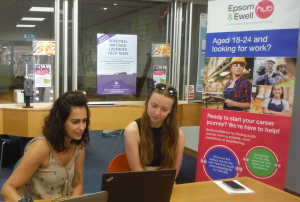
Advice session at the Epsom and Ewell Hub

Epsom & Ewell Borough Council is pleased to announce that the Epsom & Ewell Employment Hub is expanding its service to help all residents who are looking for work.

The Hub is a free employment and skills service, designed to help residents plan their next steps. Since the service launched in December 2021, the Hub has focused on those aged 16-24 in receipt of Universal Credit and has supported more than 600 young people. The team will now be able to help people of all ages in Epsom & Ewell find lasting work, including those who are refugees and people with additional needs.

The dedicated team at the Hub mentor residents who are looking for work, offering friendly support and advice on all aspects of job searching as well as helping them overcome barriers to employment. This includes holding workshops to develop interview skills, build CVs and improve interpersonal skills, as well as liaising with local employers to offer apprenticeships and work placements. The team hold regular job fairs where local employers and job seekers are matched.

The expansion of services at the Hub has been made possible following a change in funding; the Hub will now be funded by Epsom & Ewell Borough Council from the UK Prosperity Fund. The council continues to lead on the project with Surrey Lifelong Learning Partnership. Both organisations work with a steering group of partners, including NESCOT, Go Epsom and Coast to Capital.

Councillor Clive Woodbridge, Chair of the Community and Wellbeing Committee, said “The Epsom & Ewell Employment Hub is an incredible resource for our community and the team there are already doing a fantastic job supporting young people to find employment.  It is great news that they will now be able to help even more people in the borough find meaningful and lasting work.”

Kevin Delf, from Surrey Lifelong Learning Partnership, said “The employment market can be daunting. The team at the Hub can now ensure that all residents who are looking for employment are given the skills and support they need to succeed.”

Anna, a previous Employment Hub client, said “The workshops at the Hub helped me improve my body language and build my confidence, as well as giving me useful interview tips. Thanks to the support provided by the Hub, I was successful in my application for a new role.” Read Anna’s case study at the end of this release.

The Hub has relationships with charities including the Workers Educational Association, National Careers Advice, Multiply (Maths & English), Step Forward YMCA, Mary Francis Trust and Work Stress Solutions.

The Hub assists local businesses with their recruitment needs, connecting employers with local residents who are actively searching for their next move. Local business owners who would like to be involved should email:epsomandewellhub@surreyllp.org.uk

The Hub is open Monday to Friday, 9am – 5pm and is based in Global House in the Ashley Centre, in Epsom town centre.


Case Studies:

Anna

Originally from Ukraine, achieved both a degree and a master’s degree in food technology in Ukraine, and had experience in sales management. Anna was looking for employment and Epsom Jobcentre Plus referred her to the Epsom & Ewell Employment Hub for support. The Hub worked with Anna to prepare her for interviews, which were very different from those she had experienced in Ukraine.

The team also helped encourage Anna, who was simultaneously working to improve her English with the Epsom Refugee Network. Anna attended workshops at the Epsom & Ewell Employment Hub to help her manage nerves and improve her interview skills.

Anna said: “The Employment Hub workshops, hosted with Nescot performing arts, taught me techniques to improve my body language and build my confidence, as well as voice projection exercises and useful interview tips.

Thanks to the support provided by the Epsom & Ewell Employment Hub, I was successful in my application for a new role a few weeks later. In Epsom & Ewell I feel I have been supported and welcomed, and I’m looking forward to continuing to live and work here.”

Lily

A graphic design graduate, was referred to the Epsom & Ewell Employment Hub during the summer. She was receiving Universal Credit after struggling to find employment after graduating.

The Epsom & Ewell Employment Hub worked with Lily to prepare her for an intern interview. The team supported Lily to find ways to deal with the emotional ups and downs of job seeking and to remain resilient and motivated throughout the process.

Although Lily was not successful on that occasion, the team were able to continue to support her as she continued to network and apply for roles. A few weeks later, Lily successfully obtained a role with a London agency as a creative designer.

Lily said: “I felt that the Hub was a great support in aiding with my anxieties and keeping up my motivation when applying for jobs and going to interviews, and the ways I could reflect on my rejections.”


 Related reports:

Council will get a Youth Hub

Local £1200 per job matching service to continue, unquestioned by Council…


Nonsuch girls solving tomorrow’s problems

Nonsuch girls prize winners

Samsung Electronics Co. (UK) Ltd has revealed today the winners of its third Solve for Tomorrow: Next Gen Competition, with a refreshed set of resources for 2023 on the theme of inclusivity.

593 secondary schools across the UK and Ireland signed up to receive free online resources including an interactive video tutorial to help inspire the next generation of innovators. Through the lesson, students aged 11-15 learn the basics of Design Thinking and receive insight into creative STEM careers such as design and marketing.

Samsung colleagues also volunteered their time to support with delivering the lesson in schools, judging entries and answering questions about their career. Students then entered their tech-for-good ideas to help design a future where everyone belongs into the Solve for Tomorrow: Next Gen Competition.

Dimanya, Dora and Marina from Nonsuch High School for Girls, (located Ewell’s borders) were awarded 1st place in the 13-15 category with ‘Signify’, an app that helps people with hearing impairments by educating the public about sign language and how to communicate considerately with this community.

In the 13-15 age category, the runners-up were Ella, Mischa and Saliha from Nonsuch High School for Girls – awarded 2nd place for their app ‘Beaumatch’ to help people with darker skin tones find their right match of makeup, haircare, and skincare.

Commenting on the competition, Soohyun Jessie Park, Head of Corporate Social Responsibility at Samsung Electronics UK, said: “The calibre of ideas that our Solve for Tomorrow: Next Gen participants come up with is mind-blowing, proving world-beating innovations really can come from anyone and anywhere. We were thrilled to receive over 1,000 ideas from across the UK and Ireland this year and will continue to find new ways to support our next generation of innovators. Technology is a brilliant enabler of solutions to many of the issues our world faces, and the entries we receive show that young people are maximising their imagination and learning in abundance.”

About Solve for Tomorrow

Solve for Tomorrow originally launched in the US in 2010 and has since seen more than 2.3 million students take part from over 55 countries, in a quest to use technology as a force for good. Every year, the competition is open to young students from all backgrounds with no experience or qualifications needed, empowering the next generation of creators and innovators to imagine a better world, thinking about ways technology can solve some of society’s biggest issues.


New timetable for ticket office consultation

Epsom rail ticket office

Train operators are extending the time available to respond to a consultation reviewing “how tickets are sold” at stations by an extra five and a half weeks. It means passengers will now have until 1 September to complete the consultation, which they can do online on their local train company website or by visiting www.transportfocus.org.uk or Londontravelwatch.org.uk Operator information about the consultation will be made available in accessible formats.

In increasing the time available, train operators are “listening to feedback and hope that more people will have the opportunity to have their say in to changes to how tickets are sold at stations”.

The Rail Delivery Group added: “Together with the extensive and on-going engagement with accessibility groups, as well as the independent passenger watchdogs scrutinising the proposals, the responses will shape final plans so that all passengers are supported as railway retailing is updated for the smartphone era. In addition to these proposals, the rail industry continues to roll out improvements to ticketing such as pay as you go and single leg pricing.”

“Although local plans vary, overall the proposals aim to bring staff out from behind ticket office windows to provide more support for customers buying tickets and navigating stations, as they move in to new, multi-skilled ‘customer host’ roles.

“An estimated 99% of all transactions made at ticket offices last year could be made online or on ticket vending machines (TVMs). Where needed, TVMs across the network will be upgraded to sell a greater range of tickets and in rare cases where customers are unable to buy the ticket they need at a station, they would be able to buy on their journey, at a ticket selling facility en-route or at their end destination. Across the network as a whole, many ticket retailing facilities will remain open at busy interchanges, smoothing the transition.

Rail union, RMT hits back and declared today the consultation extension on the future of rail ticket offices is wholly inadequate and called for the whole “disastrous closure programme to be abandoned”.

Following mass campaigns by RMT, disabled and passenger groups, the train operators and their “paymasters in government have been forced to extend ticket office closure consultations until September 1.”

According to the RMT over 1,000 ticket offices are due to be closed with the loss of over 2,000 railway station staff.

RMT General Secretary Mick Lynch said: “Campaigning by our members on stations across the country alongside tenacious disabled peoples groups and passenger bodies has forced rail bosses and ministers to admit the original consultation was not fit for purpose and must be extended.

“Although our pressure has forced their hand, it is still a deeply flawed and a wholly inadequate consultation process which we are considering challenging legally in the courts.

“Our campaign to save ticket offices, protect our members jobs and look out for the best interests of all rail passengers will only intensify in the coming weeks.

“20,000 rail workers will walk out on 29 July in pursuit of a negotiated settlement on job security pay, conditions and saving ticket offices.”

Would you like to see ticket offices at Epsom, Ewell East, Ewell West and Stoneleigh stations closed? Write in your view to Epsom and Ewell Times.

Image: Epsom Railway Station ticket office today.


Contractors occupying the high-ground

Social value alliance clear school ground

Ewell school benefits from local highway contractors’ social value activities.

Milestone Infrastructure, a part of M Group Services, is committed to supporting the communities in which it operates and was delighted to volunteer its services to West Ewell Primary School recently by helping to clear a large, abandoned area of the school playground containing a disused swimming pool and outbuildings.

Milestone Infrastructure is the street lighting contractor for Surrey County Council and, as part of its commitment to undertaking social value activities and events throughout the year, the team formed a Social Value Alliance with the council and other highways contractors including Yunex, Atkins, Ringway and Surrey Skill Mill.

A team of 36 volunteers representing the Alliance met onsite to help remove the old swimming pool and outbuildings surrounding it and cut back overgrown foliage to make the area safe and accessible for the school children to use in future.

Once the ground has been cleared and the overgrown vegetation removed, the area will provide an accessible space for the children to use and enjoy in future.

Vikki Kelly, Strategic Improvement Manager at Milestone Infrastructure, said: “Building social value into what we do and giving back to the local communities where we work is a large part of what we do. It was a rewarding day and, together with our alliance partners, we managed to achieve everything we needed to onsite and more.”

James Joyce, Business Manager at West Ewell school, said: “We would like to thank Milestone Infrastructure who organised the event but also the other companies that attended: Surrey County Council, Yunex Traffic, Atkins, Surrey Skill Mill and Ringway. On the day they achieved more than you could expect for a day volunteer event and transformed the area, giving the school a regenerated space that can now be used.”

Mia Bennett, Head teacher at West Ewell school, added: “We really appreciate the time, effort and resources your teams invested in making this project a reality. The cleared area is now a blank canvas which we plan to transform info a flourishing wildlife area and outdoor classroom which all our pupils can enjoy, while learning about nature, biodiversity and developing a deep appreciation for our environment.”

Milestone’s focus on social value is an essential element of M Group Services’ environmental, social and governance (ESG) commitments.

Zoë Johnston Corporate Communications Manager | M Group Services


Thames Water among worst in country

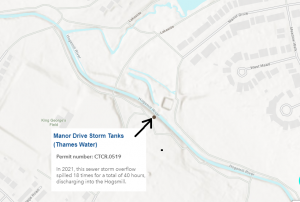
Hogsmill leak.

Standout levels of pollution and poor monitoring has left Thames Water languishing joint last among the country’s “very disappointing” water and sewerage companies.

The damning verdict was delivered in a report by the Environment Agency which measured the performance of the nine companies operating in England.

It found that there were 2,026 “pollution incidents” from sewerage and water supply – up from 1,883 in 2021 leading to the EA’s chair, Alan Lovell to describe the situation as “simply unacceptable”. Worse, he said, was that early unconfirmed data for 2023 suggests there has been no improvement this year either.

The report, published July 12, found that for serious pollution incidents four companies performed significantly below target – and none more so than Anglian Water and Thames water.

In total there were 44 of the serious incidents – and 38 per cent of those were from Thames Water alone – its worst performance since 2013. Of the six worst polluting incidents, half were from Thames Water.

The beleaguered company, which has faced calls to be renationalised in recent weeks, also led the way in the number of category 3 incidents that caused minor impacts to air, with four.

For planned environmental improvement schemes, 99.5 per cent were completed as part of the Water Industry National Environment Programme however three companies failed to meet all requirements and Thames Water, with its red rating, performed the worst.

In 2019,regulators Ofwat set the prices water companies could charge and developed environmental programmes for each firm to follow.. Thames Water was the only one to have performed “significantly below target” due to 12 water-quality schemes not meeting requirements within planned deadlines.

The EA also expects water companies to report pollution to the body first as “without a rapid response, the impact of pollution can escalate and the opportunity for mitigation measures can be lost.” The report said that Thames Water was one of four companies to fall below this target, the others being Anglian Water, South West Water, and Yorkshire.

According to the EA, water companies must also install monitoring devices on their storm overflows to capture how often and how long they are used. Thames Water again came last among the utility companies with 61.8 per cent coverage compared with market leader Severn Trent Water which had 99.6 per cent coverage.

Thames Water scored well for satisfactory sludge use and disposal, as well as for its compliance with permits to discharge treated wastewater.

Concluding, the report read: “The sector as a whole needs to improve in order to achieve and sustain expected levels of regulatory and environmental performance. The majority of water companies are not meeting basic environmental requirements. Although we have acknowledged some improvements, these results cannot be taken in isolation. They are set against the backdrop of poor and inconsistent results over recent years.

“We are concerned that some companies will not or cannot change. Anglian Water and Thames Water repeatedly dominate serious incident numbers.” It added: “These water companies in particular need to make radical changes now, but all water companies have areas to improve.”

A spokesperson for Thames Water said: “Protecting the environment is fundamental to what we do and we recognise our performance in preventing pollutions is still not good enough. We’re committed to turning this around and our shareholders have approved additional funding into the business so we can improve outcomes for customers, leakage and river health.

“Alongside implementing our pollution reduction plan to deliver these changes, we have plans to upgrade over 250 of our sewage treatment works and are striving every day to reduce the discharge of untreated sewage into our rivers. This is a key part of our River Health Action Plan to radically improve our position in order to protect and improve the environment, as we strive to eliminate all incidents in the future.”

The company has also announced that shareholders agreed to provide an additional £750m to “further improve operational performance and financial resilience”.

Related reports:

Local sewage uploaded

“Garden of Eden” coming to West Ewell as Wetlands Plan is approved. Will this stop pollution?

River “Bogsmill” blights Borough

An alternative view from Labour


Capital punishment for local businesses?

Bank loan via internet

South East businesses are being forced to put the brakes on growth plans, as 97% of companies admit difficulty in accessing capital is impacting their business.

According to BDO LLP’s bi-monthly Economic Engine survey of 500 mid-market businesses, one in five regional companies are struggling to finance expansion plans, with 30% finding it difficult to invest in the technology or software they need to improve the business. Nearly a quarter (23%) admit that a shortage of funding means they’re struggling to recruit new staff with the right skills and experience.

The survey by the accountancy and business advisory firm, also highlighted the ongoing challenges facing South East businesses. Over the next six months, increased operating costs will continue to blight regional companies, with a third (33%) saying rising energy bills, rent, and the cost of recruitment are some of their top concerns. Supply chain disruption, including delayed deliveries, stock shortages and cost increases, also continues to dominate for a third of South East companies (33%).

As businesses in the region contend with a growing list of problems, the task of upskilling and retaining their existing workforce is one of the top business priorities for almost half of regional companies (43%), with a further 30% also looking to invest in research and development and new technologies. In addition, more than a quarter (27%) intend to raise new finance from existing sources of funding, such as loans and re-mortgaging property, as South East companies look to take action over the next six months.

Phil Cliftlands, Regional Managing Partner at BDO in the South East, commented: “As a result of the tough economic conditions that continue to hamper regional businesses, companies are facing a real and immediate need to raise funds within the next 12 months, in order to kick-start their growth plans.

“Against a challenging backdrop, South East businesses are having to explore every option when it comes to raising additional finance, with many struggling to access the capital they need. For a third, the equity capital markets are the most appealing source of funding, with private equity and investment trusts also high up on the list.”

Mid-sized companies, which employ eight million people and provide around a quarter of UK jobs according to further research,[1] are now calling on the Government to support them with rising costs and improve access to capital to make the UK a more appealing place to do business.

Cliftlands added: “So far, mid-market businesses in the South East have shown real grit and determination to fend off the challenges that continue to rain down on them.

“However, many are reaching tipping point. The need for greater capital is critical for a significant proportion of businesses, not just to finance growth plans, but also to address key issues such as investing in staff retention, repaying debts, improving salaries and, importantly, recruiting new employees with the right skills and experience.

“South East businesses cannot tackle these challenges in isolation. Business leaders in the region believe more can be done to address their concerns, to help to drive growth, and to ensure the UK remains an attractive place to do business.”

Emma Ordridge


Gatwick to get 2nd runway?

Gatwick airport

Gatwick Airport’s bid to double its capacity to 78 million passengers and effectively create a second Heathrow will cause a “bigger impact locally than Horse Hill” oil drilling, a local councillor has claimed.

The international airport submitted plans to the Planning Inspectorate last week (July 6) for a second runway, in which its CEO Stewart Wingate said the proposal is vital to its the long-term future and economic prosperity.

Opponents in Surrey impacted by the plan say airports cannot be expanded at the same time as trying to hit net zero carbon emission targets – and campaigners have so far raised more than £5,000 to launch a fight against the airport through the courts.

Jonathan Essex, Surrey County Councillor (Redhill East, Green Party) urged inspectors to listen to the Government’s climate scientists and told the LDRS: “This is a big deal. This blows Horse Hill out of the ground and it will make a bigger impact locally. This expansion will mean 100,000 extra flights and a million tonnes of extra carbon. If you accept you need to deal with climate change and we need to do it now, you need to stop expanding airports.”

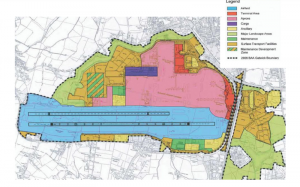
The existing northern runway is mostly used as a taxiway and the application proposes repositioning it 12 metres north to allow dual runway operations – like Heathrow.

According to Gatwick’s website, operating as a two-runway airport would “unlock new capacity and allow for a more efficient and resilient operation. If approved the £2.2 billion privately financed plan would be one of the largest capital investment projects in the region for decades. And it would help the airport meet future passenger demand by serving around 75 million passengers a year by the late 2030s.”

Gatwick Airport currently serves 32.8million passengers. Heathrow is used by between 70 and 78 million people.

Sally Pavey, chairperson of the Communities Against Gatwick Noise Emissions group said it is crowdfunding for a long legal battle as they didn’t believe planners would reject the application. “This benefits Gatwick, there are very few for the local communities. Gatwick is saying it will bring jobs and economic benefits but aviation and low-cost airlines are going towards automation. The jobs are decreasing.

“People really need to wake up to the fact that this is a second runway through the back door. It really slaps in the face of what we are all trying to do which is to cut our carbon footprints.”

According to the airport an expanded airport would ‘boost’ the region’s economy by £1billion and generate 14,000 new jobs.

The proposals also feature infrastructure work to improve the main access routes to the airport, but campaigners said the wider impact on the smaller roads would be huge.

Gatwick Airport chief Mr Wingate said: “The northern runway plan will help secure the long-term future of the airport and economic prosperity for thousands of families, businesses, and future generations across the region. If approved, our plan will also improve airport resilience, meet future passenger demand, and increase competition in the London airport market, by providing vital new international connections to support ‘Global Britain’.

“The consultation and engagement activity over the past two years has been hugely valuable in shaping our plans to ensure they best meet the needs and requirements of local people, as well as our airlines, passengers and other stakeholders. We are confident that our plans are both economically and environmentally robust.”

Applications of national importance are dealt with by planning inspectors and signed off by the relevant government departments. Construction could start in 2025 and be ready for operational use by the end of the decade, the airport said.

Image: Mike McBey – Gatwick Airport CC BY 2.0


Epsom and Ewell High getting fitter

Lifestyle gym in Epsom

Lifestyle Fitness and Bourne Education Trust have announced they will be working together to provide the leading sports facilities at Epsom & Ewell High School to the local community.

Lifestyle Fitness will begin operations at the site from 1st September. Development of this facility will see Lifestyle Fitness take over management of the existing sports amenities, which include outdoor pitches, tennis courts, a brand-new sports hall, and even a sprinting track, whilst also developing a Lifestyle Fitness gym, studio space, and group fitness classes. This combination of sports facilities, fitness suite and group exercise studios will make the club the perfect hub for fitness and wellbeing for students, teachers, and the community.

“We’re so thrilled to be opening our 25th site and working in partnership with the Academy to provide these facilities to the community” said Lifestyle Fitness Managing Director, James Lawrence. “The facility will be the perfect location for the town’s fitness needs, whether it be to play football or tennis outdoors, or to take a group exercise class or get a workout in at the gym.”

The facility, which is situated within Epsom & Ewell High School, forms part of the planned growth and development of both Lifestyle Fitness and the Bourne Education Trust, who currently have a partnership at another school site, located at The Matthew Arnold School in Staines. Students of all ages will benefit from use of the facility during the school day, with the gym floor and sports facilities opening from 4:30pm for the wider community on weekdays, and 9:30am to 5:00pm on weekends.

“After working with Lifestyle Fitness for many years at The Matthew Arnold School in Staines, I am delighted to welcome them to Epsom & Ewell High School to manage the sports facilities on our behalf.” said R. Davey, Bourne Education Trust Sports Director. “I look forward to seeing the benefit this will have on the local community and surrounding areas in the coming months. We have collaborated with numerous schools and educational trusts over the last forty years.”

James continued. “Their positions as vital hubs in the local community that connect students, teachers, parents, and the wider town allow us to do what we do best: create healthier and more active communities, with a focus on well-being. With facilities like these, we can take fitness and wellness to an even wider audience in the local area.”

You can follow lifestylefitness.co.uk/club/epsom for any more information and updates on the club’s progress. Anyone wishing to join the club ahead of its opening can also do so now online, with memberships from as low as £14.99 per month when using the promotional code ‘EARLYBIRD’.

Morgan Kimbel


Accountant’s fees in dispute

Counting money

Epsom and Ewell Borough Council‘s external audit fees, provided by Grant Thornton UK LLP, are in the region between £50,000 to £60,000 per annum for an annual budget in the region of £8.5 million. Another Surrey council with a budget in the region of £11.5 million is facing auditor fees between about £160,000 and £245,000. Emily Coady-Stemp reports:


A Surrey council will challenge its auditors over a staggering 479 per cent increase in fees for the work it did on two years of the authority’s accounts.

Standard fees for the audits, which relate to accounts for 2019/20 and 2020/21, were set at £36,000 per year. But Tandridge District Council has now been hit with a bill for additional fees totalling £345,000, a difference which officers say represents three per cent of the council’s annual budget.

Mark Hak-Sanders, the district council’s chief finance officer, told the meeting that officers were in the early stages of discussing fees with Deloitte and would undertake the first stage of challenging them.

Should they not be able to reach an agreement with the auditors, which he said was a “distinct possibility”, the challenge would be escalated to the Public Sector Audit Appointments, the body responsible for setting the standard scale fees.

Meeting documents set out the reasons for the increase in fees charged, which stood at an additional £136,000 for 2019/20’s account and an additional £209,000 for 2020/21.

Deloitte’s submission said: “The scale fee is based on assumptions about the scope and required time to complete our work, and does not reflect any additional audit issues for the year, or the increasing scope of work required due to new auditing requirements and regulatory requirements.”

Quality or preparation issues led to the largest additional fees in both years, and documents showed that compared to around 700 hours of work built in to the scale fee, the total time spent on the 2019/20 audit was around 4,600 hours and in 2020/21 around 5,800 hours.

The meeting heard that some level of variation was expected, though not as high as this, and Mr Hak-Sanders said officers would report back to the committee on the progress of the challenge.

Additional work on the audits included more detail requested by the Financial Reporting Council, new assets being bought in a year which were not included on original figures, and in one case a delay of five months for a document to be passed on to auditors by the council.

Mr Hak-Sanders said any increase in the fees should not impact on the council’s service delivery for the coming financial year but there nonetheless was a risk associated with the increase which needed to be managed. He told the meeting: “As with any risk, the council has contingency set aside to manage it and so it wouldn’t affect frontline spending decisions as such. In the long term, any money that we spend on audit is money that’s either less in reserves or less to spend on front line delivery.”

After the meeting, Mr Hak-Sanders said: “The accounts for 2019/2020 and 2020/2021 were produced before a complete transformation of financial management at Tandridge District Council.

“The transformation of the council’s finances has put us in a much stronger place to meet challenges such as reduced funding, inflation and the cost of living crisis, as well as strengthening our approach to financial reporting and accounts