
Epsom and Ewell Times

Current Front Page

ISSN, LDRS and IMPRESS logos

Greener solution for white goods?

White goods at a dump

When a housing association tenancy comes to an end what happens to the fridges, washing machines and carpets? Invariably, they are removed before the new tenants move in. Is this not a waste and could they not stay in place, if in good condition, for the benefit of the new tenants moving in? Especially those who are struggling financially?

This was the subject of a question posed to Epsom and Ewell Borough Council by Cllr Alison Kelly (LibDem Stamford). In answer Cllr Clive Woodbridge (RA Ewell Village Ward and Chair of the Community and Wellbeing Committee) stated “I have asked that officers write to all our local Housing Associations to ask them not to remove good quality and clean carpets/flooring during the voids process and for these then to be gifted to the incoming tenant. Hopefully, this will help our residents further during what is a very challenging time”

At the Full Council meeting of 25th July Cllr Julie Morris (LibDem College) asked Cllr Woodbridge to accept that the reasons for this included “the need to re-use these goods and not be so much of a disposable society”. Cllr Woodbridge agreed saying “each case had to be treated on its own”. He added “the Council were working much more closely with Town and Country Housing that had taken over from Rosebery Housing Association.”


Little plots of Council land for housing?

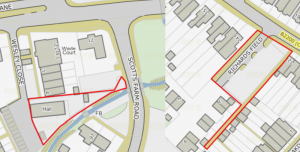
Graphics of Scott Farm and Richard Field Council owned land

Epsom and Ewell Borough Council’s Strategy and Resources Committee decided Thursday 13th July to submit two Council owned sites for housing. The Draft Local Plan sets out the framework for local development including meeting housing targets. Proposals to release green belt land for development were met with strong local opposition and a brake on the Plan’s adoption.

Council officers were tasked with seeking additional brownfield sites suitable for housing, including land owned by the Council itself.

The Council owns 37% of the Longmead and 35% of the Kiln Lane industrial estates. However, the grant of long leases to various businesses means that none of its land can be made available in the Local Plan timescale within 2040.

Consideration was given to the Council owned Cox Lane Community building and car park but a doctor’s surgery and nursery need medium term certainty for their future with the surgery’s lease expiring just before the plan period ending 2040..

Two small plots of Council owned land were stated to be suitable to be submitted to the Local Planning Authority, (the Council itself) for consideration for inclusion in the Local Plan. They are a small 0.08 ha site (a former Scout’s Hut) on Wesley Close / Scotts Farm Road and Richard’s Field Car Park accessed off Chessington Road, offering approximately 35 parking spaces of which about 14 are reserved as resident permit spaces.

Cllr Graham Jones MBE (RA Cuddington Ward) noted the Wesley Close site had not been submitted before as it was too small. “What had changed?” An officer explained the proposal was “directly on the back of members request to find more brownfield sites to meet housing targets. The site had been looked at again and it could achieve 5 dwellings which is the threshold for a call for sites”.

Cllr Jones asked the same question in relation to the Richards Field car park and Cllr Dallen suggested that there maybe a way of building residences while keeping parking provision.

The meeting agreed to the submission of the two sites for consideration to be included in a revised draft Local Plan.

In a lengthy explanation officers reported that the legal and cost obstacles to pursuing compulsory purchase orders to acquire land for housing development are too high. Thus, exercising such powers was not recommended.

Related Reports:

Motion to pause Local Plan process

Public meeting on Local Plan dominated by greenbelters.

Planning or pantomime? Councillors press pause on Plan.


Housing rights enhanced by neighbours from hell?

The experiences of Epsom and Ewell’s nearby Surrey Borough Councils help to enhance public understanding of the rights and responsibilities of local residents and our Council. This report of Chris Caulfield from our BBC LDRS partner is the subject of today’s editorial.


A woman whose mental health suffered at the hands of  “intimidating” anti-social neighbours was refused higher priority status by a council’s housing team, a local government watchdog said. 

The woman, named only as Ms B, raised the complaint about how Reigate and Banstead Borough Council dealt with her housing application – even after she provided medical evidence from her doctor about the impact of her neighbours’ actions.

It would also emerge that the council’s housing team failed to pass her case on to its medical advisor – despite claiming the decision was based on their feedback.

Ms B first contacted the council in 2021 seeking a larger housing association home and was placed in band c – medium priority. In June 2022, she then submitted a letter from her GP saying she “would greatly benefit from a house move away from disruptive neighbours” and that the “situation had affected her mental health and she needed high intensity psychotherapy”.

On September 26, 2022, she then submitted a fitness for work note from her GP, documents relating to her therapy, three police incident letters , and a letter from social prescribing.  On 26 October 2022, the council reviewed her status and ruled she “did not have any medical priority and sent her a decision by email”.

The council said this was based on advice from its own medical adviser – however it later admitted that it “erroneously said the case was passed to the Medical Adviser when it was not”.

The decision read: “Following careful assessment, we have concluded that your application should not be awarded any additional priority on medical grounds.”

Finally on November 23, 2022, on advice from her ward councillor, Ms B sent a statement explaining the anti-social behaviour and harassment experienced. It detailed incidents from 2017 but said problems escalated in December 2021, “mainly involving damage to her car but also some intimidating behaviour”.
Eventually the council reviewed her case and, at the beginning of January 2023, increased her priority to band b – and backdated it to November 23 the 2022.

The ombudsman found the council to be at fault, with the authority now agreeing to backdate her new priority to September 26 2022 , as well as pay her £150 for her time and trouble – and  to improve its procedures for the future.

The  council now has three months to review its housing allocation review procedures to ensure decisions are accurate, contain reasons, and provide a right of review where appropriate. They must also remind staff that they should make further enquiries when they receive information about changes in circumstance.

A spokesperson for Reigate and Banstead Borough Council said: “We accept the Ombudsman’s findings and we have worked with them to resolve the complaint and have fully complied with the mutually agreed actions.”


Epsom and Ewell tenants paying for energy inefficient homes?

Lady in cold room

55% of inspected rented homes in Epsom and Ewell are below Grade C in Energy Performance ratings. Landlords are required to obtain Energy Performance Certificates for their rentals. To obtain a certificate an independent expert must inspect the property. In an analysis of inspections across the country between 2018 and 2022 Epsom and Ewell’s figures are consistent with the country average. 5% of those below grade C are not going to be able to rise to a C grade in the future because of structural limitations.

The Government has plans to make a C grade mandatory for all rental properties from 2025. The most energy efficient homes are graded A and the worse G. Those tenants living in sub C standard homes are paying more for their heating due to poor insulation. Insulation was the most frequently recommended improvement measure for private rental properties, making up 35% of all recommendations. On average tenants could save one third on their fuel bills if landlords brought their properties up to the C grade.

Inspections for EPCs involve an assessment that looks at heating, windows and doors, insulation and other structural factors, estimating how much it will cost to heat and light the property, what its carbon dioxide emissions are likely to be and how to improve the rating.

Jonathan Winston, occupier support manager at the Carbon Trust said  “14% of UK emissions arise from residences, homes. That means the reductions that need to be made there are very significant in order for the UK to meet its legally binding net zero target by 2050. The emissions are quite difficult to tackle, particularly around heating. There’s a major need to decarbonize our heating sources.”

Chris Norris, Director of policy at the National Residential Landlords Association said “I think there’s an awful lot of misunderstanding and uncertainty about what landlords need to do in terms of energy efficiency.

“But the future proposals are to get to a C or above, because the Government have got this Net Zero target for 2050. The problem is, they consulted on those new rules about three years ago, they closed that consultation two years ago in January 2021, and they’ve never actually confirmed what new rules will be.

“You’ve got lots of landlords that are actually quite open to making changes to their properties, or making decisions at least about what they need to do, but they really don’t know what path to take and they can’t commit to those spending decisions until we find out exactly what the Government wants to do.”

He added: “At the moment the Government is doing very little to support landlords to make these changes. They’ve not even given us the target or the deadline for what we’ve got to do.”

Rachelle Earwaker, senior economist at the Joseph Rowntree Foundation, said: “Living in a home with a poor EPC rating has a range of impacts on the tenants. Homes are colder, often damper. They are much more expensive to heat. At the moment in the energy crisis, that has had a massive impact. 

“What our research has shown is that 35% of low income private renters across the UK said they couldn’t afford to keep their homes warm even before the recent winter that we’ve just had, and we know that a quarter were in arrears with the energy bills in October and November, again before the winter.”

You can check any property’s EPC status on this Government link.

Related Reports:

Cllr Gulland: Insulate & Generate – two key aspects to include in the Local Plan for Epsom & Ewell

Is this Epsom Couple getting their heating for free?


Breaking the mould for Ukrainian refugees

Councillor Paul Potter. Image credit: Surrey Live - Grahame Larter

Families fleeing war-torn countries such as Ukraine should not be placed in “derelict” and “mouldy” homes run by a Surrey council’s housing association partner, a councillor has claimed.

Mole Valley District Council’s scrutiny committee met to discuss the Department for Levelling Up, Housing and Communities £500million funding for local authorities to provide homes to Ukrainian and Afghan families via the resettlement and relocation schemes. 

Councillor Paul Potter. Image credit: Surrey Live – Grahame Larter

If fully progressed, the council would receive about £1.5m to help deliver up to nine properties for families seeking refuge. These would then become part of the area’s long-term affordable housing stock  – available on a rental basis of 80 per cent market value.

The move was widely supported by members at the March 7 meeting but the council’s main social housing provider, Clarion was criticised by councillors.

The housing association said it was investing £5m and  “hiring 100 new staff” to tackle the problem.

Councillor Paul Potter (LD, Brockham, Betchworth and Buckland) said: “Great that we are helping people less fortunate than ourselves but I did have a couple of concerns, the first was that affordable rent was not actually affordable. My bigger concern is Clarion, if you are going to pick someone to do houses we should be doing it ourselves because my dealings with Clarion over the last God knows how many years has been a nightmare. It has got better, the chap they got now he’s done more in seven days than they have in 10 years – so something is happening there. But to put someone in the houses I’ve seen, in the state they’re in.

“I had a family actually move into Tanners Meadow from a house that was quite frankly derelict, mouldy, the kids area all on inhalers. These people have come from a war zone. They really don’t want to be going into a damp house, like that young kid last year. So I do have a big concern that Clarion is taking over.”

Cllr Potter was referencing the decision reached at Rochdale Coroner’s Court which said two-year-old boy Awaab Ishak died following prolonged exposure to mould –  three years after his parents first complained about damp in their one-bed Rochdale Boroughwide Housing association flat.

It also follows a statement issued in December 2022 when district leader, Cllr Stephen Cooksey, said he would write to Clarion Housing to address “widespread issues of mould and damp problems” and urged the association to give the problem “higher priority”.

He said he was “fully supportive” of the Housing Ombudsman’s report – where Clarion Housing was one of the six housing associations highlighted for multiple failings of damp and mould, complaint handling and record-keeping.

Cllr Caroline Salmon who presented the local authority housing fund report to the committee agreed that there has been an issue with damp and that efforts were underway to remedy the situation in Mole Valley.

The Lib Dem member for Beare Green said: “Clarion have been trying to improve damp, and we’ve been working with them too. There have been some really good changes.”

The meeting was wound up with the select committee chairperson, Cllr Joanna Slater, recommending that cabinet moves forward with the proposals with a preference for freehold housing and a discussion over the choice of partners.

A Clarion Housing spokesperson said: “Members of our senior management team recently met with cabinet members of Mole Valley District Council to outline Clarion’s strategy to address the conditions of a small number of our properties in the region, including issues with leaks, damp, condensation, and mould.  Housing for refugees was part of the discussion and we look forward to working closely with the council to provide essential housing for those in need.  We at Clarion are determined to resolve condensation, damp and mould in our homes promptly and effectively. 

“As part of this effort, we have increased the ways residents can get in touch with us to report it and are investing an additional £5 million annually to tackle the issue, including hiring 100 new staff – which will include specialist surveyors and new Resident Liaison Officers to deal specifically with leaks, condensation, damp and mould cases.”


Will Cathedral repairs threaten Canadian WW1 memorial?

Guildford Cathedral aerial view

Plans to build 124 homes on undeveloped woodland next to Guildford Cathedral will threaten a memorial to Canada’s First World War military sacrifice, a preservation society has warned. Guildford Cathedral needs to carry out an estimated £3.2million in repairs, but unlike other cathedrals in the UK, it says, has “never possessed endowments of any significance and has always struggled to fund repairs to the Grade II* listed building”.

Image: Grahame Larter

To solve the issue, the cathedral sold a parcel of land to developers which, it says, will “enable the endowment to be secured for the cathedral which is vital for its survival” and secure its long-term maintenance.

The issue, says the Vimy Foundation, which oversees the public historical resources and modern perspectives on Canada’s participation in the First World War, is that land is a memorial to the 650,000 Canadians and Newfoundlanders who fought in Europe during the First World War, 66,000 of whom lost their lives.

Writing to Guildford Borough Council’s planning committee, the foundation said: “This undeveloped wooded area was created on the initiative of R.B. Bennet, prime minister of Canada from 1930 to 1935, who lived near Guildford, to provide a place for reflection and remembrance of Canada’s contribution during the conflicts that shook the first half of the 20th century.”

They added: “While understanding the needs of the Guildford community, The Vimy Foundation wishes to reaffirm its commitment to the preservation of memorial sites honouring Canada’s fallen soldiers. In recognition of the bravery and sacrifice of these men and women, their memory must continue to be honoured. The Vimy Foundation calls on decision-makers, Guildford Cathedral, Guildford Borough Council and developers, to preserve the commemorative and memorial dimension of this site and will support initiatives in this direction.”

There are currently seven homes on the site and used by staff cathedral staff. It is designated as open space as part of the Cathedral land but earmarked for 100 homes within the council’s local plan.  

A previous planning application to build 134 homes on the slopes of the cathedral was turned down, despite officer recommendations, by Guildford’s planning committee. Background papers to the application said it was due to the plans being “poor quality and out of character with the surrounding area”.

This led to the cathedral working with developers Vivid to carry out what it described as a “comprehensive review” that included “extensive work to address the reasons for refusal in the 2015 scheme”. The new plans would demolish the existing staff buildings to create 124 homes, 44 of which would be affordable. Cathedral staff would have use of 13 dwellings, with the remaining 111 consisting of 19 one bed units, 61 two-beds, 28 three-beds and three four-bed homes.

Matt O’Grady, chief operating officer at Guildford Cathedral, said: “The Charity Commission, the regulatory body responsible for these matters, was given the full details of the gift of land, including all associated historical correspondence. After a thorough assessment the commission approved schemes allowing the cathedral to sell the relevant land – allocated in Guildford’s Local Plan – for development.  R Bennet will always be acknowledged as the generous donor who enabled land to be purchased from the Earl of Onslow. 

“His contribution is commemorated in a ledger stone on the south elevation of the Cathedral and the protection of this is encapsulated in the Cathedral’s Grade II* listing and in the Care of Cathedrals Measure 2011. The Grade II* listed Guildford Cathedral doesn’t benefit from a large income in the same way as many English cathedrals; because it is relatively new, it doesn’t have any historic endowments. The sale of land to Vivid for new homes will safeguard the long-term future of the building. 

“The income generated will be used to create an annual endowment that will provide for the long-term repair, maintenance, and improvement of the cathedral.  The cathedral is proud of its community links and believes very strongly that it should play a part in contributing to new homes in Guildford.”

The latest neighbourhood consultation expired in January.  A date has yet to be set for the matter to appear before committee.


Micro-homes for a macro-problem?

Modular house

Epsom and Ewell Borough Council is planning to purchase movable micro homes for families needing temporary accommodation in the borough. In a report to the Strategy & Resource Committee on 26th January, officers stated that demand in the borough for temporary accommodation is acute. They plan initially to purchase three family micro homes at a cost of £435,000. The homes, which boast exceptional energy efficiency, will be constructed off site and craned into position. They have a 50 to 60 year life span, come fully furnished and can be moved to another site if required. Several councils, from Cornwall in the west to Southend in the east, have already developed schemes with similar units.

Subject to planning permission, which will be applied for in the next three months, the units will be located on a brownfield site near the Kiln Lane Sainsbury’s. The Council has already secured a £75,000 grant from the Brownfield Land Relief Fund to assist with the preparation of the site for development.

The report was greeted with enthusiasm by councillors. “It looks a progressive and radical solution,” said Councillor Alan Williamson (RA, West Ewell Ward), “and it’s to be commended. I would like to see this as the basis for further developments in the borough.”

The interest was so great that one officer suggested arranging some tours before the homes are occupied.

Councillor Kate Chinn (Labour, Court Ward) was also wholehearted in her support. “Anything that stops families being separated, moving out of the borough, being able to remain with their support networks is fabulous,” she said.

After the meeting the Council issued a press release confirming:

Epsom & Ewell Borough Council has submitted a planning application to create three new temporary homes to house local families at risk of homelessness.

The proposal is in response to the acute demand for temporary accommodation in the borough, particularly for family-sized homes. It forms an important contribution to the Council’s recently launched Homelessness and Rough Sleeping Strategy, which includes the objective to increase accommodation options in the borough including temporary accommodation.

The proposal makes use of brownfield land alongside Fairview Road in Epsom and was approved by the Strategy & Resources Committee on Thursday 26 January. The proposal will now go through the due planning process and if approved, work will start in March 2023.

Alongside providing life-changing support to the families who will make use of the homes, investment in the properties will lead to savings for the Council over time, as the cost of the development is offset by rental income and a reduction in the need for expensive nightly paid accommodation. The Council has also been successfully awarded funding of £75,000 from the Department for Levelling Up, Housing and Communities’ Brownfield Land Relief Fund, to be invested in this project.

The homes are pre-fabricated and built offsite to provide an innovative, attractive and low-cost housing solution. They are at the forefront of energy efficient design and provide safe, welcoming spaces for families.

Cllr Neil Dallen, Chair of the Strategy & Resources Committee, said: “I am delighted that this key project has been approved by Committee, and that its importance has been emphasised by the level of funding we have received from central government. The impact of homelessness cannot be underestimated, and increasing temporary accommodation provision for local families will have a positive impact not only on those being housed, but on the borough as a whole.

“This will now progress through the planning process and we will await the outcome with interest.”


Do good intentions square with homeless savings?

Homeless person in sleeping bag in doorway

Epsom & Ewell Borough Council has launched its Homelessness and Rough Sleeping Strategy, setting out how it intends to meet the needs of residents who are homeless or at risk of homelessness over the next five years.

The Strategy details the Council’s strategic vision and key objectives to address homelessness within the borough. It focuses on a commitment to preventing homelessness at an earlier stage, and the importance of working with partners across all sectors to develop an integrated approach to tackling homelessness and rough sleeping.

A detailed review of homelessness in Epsom & Ewell was undertaken to inform the strategy, which helped to establish the extent of homelessness in the area, identify future trends and any gaps in the service currently being provided.

The Strategy identifies six key objectives which emphasise the importance of early intervention and prevention, as well as the development of new affordable housing in helping to meet the need of homeless people:

  1. The early identification, intervention & prevention of homelessness
  2. Reduce Rough Sleeping
  3. Increase accommodation options including social rented, private rented, supported and move on accommodation and in-borough temporary accommodation
  4. Improve the Health & Wellbeing of homeless people
  5. Ensuring sufficient support is available for homeless people
  6. Partnership working
Alex Coley
Cllr Coley

Cllr Alex Coley, (Residents Association – Ruxley Ward) Chair of the Community and Wellbeing Committee, said: “The impact of homelessness cannot be underestimated. A home keeps you warm and safe, but it is so much more than just a roof. Homelessness leads to a significant reduction in emotional wellbeing, self-identity, social inclusion and life opportunities. Reducing homelessness in Epsom & Ewell will benefit everyone who lives in the borough.

“Over the past year we have expanded the Private Sector Leasing scheme, acquired an additional 14 emergency accommodation placements, and secured additional funding to enhance the East Surrey Outreach Service, who work with rough sleepers, but there is much more to be done. This Strategy will allow us to build on this progress to fully address the challenges local homeless people are facing, and ensure better outcomes for all.”

Commenting on the strategy Cllr Julie Morris (LibDem College Ward) said “We are particularly concerned with the increase in single people with mental health issues who require homes, so the integrated approach is really key here.  There’s a shortage of homes for families with children and private landlords can help here. There are some incredibly dedicated council officers who are charged with implementing this strategy and councillors will support them as much as they can.”

  • The Homelessness Act 2002 places a duty on every local authority to develop and publish a Homelessness Strategy, setting out how the local authority intends to tackle and prevent homelessness in their area.
  • The strategy must be based on a review of all forms of homelessness within that local authority’s area and should be reviewed at least every five years. The Council carried out six weeks consultation between 12 July and 23 August 2022 with a range of stakeholders, service users, staff and residents.
  • Central to reducing homelessness within the borough is increasing the amount of affordable housing available. The Council is currently developing a Draft Local Plan which is due to go out for public consultation on 1 February 2023, and proposals for affordable housing in the borough will form part of the Plan.
  • In Epsom & Ewell and nationally the 3 main causes of homelessness are:
    • Asked to leave by family and friends
    • Termination of Assured Shorthold tenancies
    • Domestic Abuse
  • The full strategy can be found here:

https://epsom-ewell.gov.uk/residents/housing/homelessness

Information provided by Epsom and Ewell Council. Cllr Morris quote obtained by Epsom and Ewell Times. Other parties were invited to comment.

Related reports:

Council targeting the homeless

Simone Pellegrino 

In a vote dominated by abstentionism, a service-specific savings target of £243k to offset this year’s potential overspending for homelessness, was approved by Epsom and Ewell Borough Council last Tuesday. … READ MORE


Labour Councillor moves on housing

House building

An affordable housing commitment was put off at yesterday’s meeting of Epsom and Ewell Borough Council. A motion proposed by Labour’s Court Ward Councillor Kate Chinn read: “We as the Labour Group move that in the Local Plan Epsom and Ewell Borough Council will specify a minimum requirement of 40% of affordable housing in each new housing development of 10 or more units (Use Class C3) of which at least 25% will be reserved for social rent and comply with the vacant building credit.”

The matter was referred back for further consideration by the Council’s Licensing, Planning and Policy Committee that next meets 19th January 2023.

Cllr Chinn writes to The Epsom and Ewell Times – see our letters page.


Auriol school field for golden years?

Auriol school field

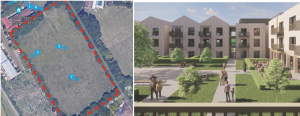
Auriol School sports field in Cuddington is earmarked by Surrey County Council for 50 elderly care housing units. According to SCC: “The Cuddington site is ideally situated for Extra Care Housing and has been selected specifically for its location. The site will provide new homes in the form of 1-bedroom self-contained apartments. All of the homes will be accessible, with features designed for wheelchair users.

The accommodation has been designed around the constraints of the site and its neighbours but is still able to offer residents ready access to safe external space including landscaped gardens designed expressly to address the needs of older people; encouraging activity and promoting exercise, healthy living and wellbeing.

The design focuses on ensuring residents have sufficient space, both private and communal, and key to this have been considerations around accessibility. The development has been designed to ensure residents can remain in their homes as they grow older and/or as their needs change.”

SCC have plans for three other sites in the County. Mark Nuti, Surrey County Council’s Cabinet Member for Adults and Health, said: “Our ambition is to bring affordable extra care housing to locations around Surrey and these four sets of proposals bring us a step closer. Not only would the schemes help older people live life to the full, they would also breathe new life into four community sites.”

SCC is holding a consultation exercise and if you want more information and to participate go to:

Cuddington Extra Care Housing (communityuk.site)