
Epsom and Ewell Times
27th August 2026

ISSN, LDRS and IMPRESS logos

Surrey to sell off property in Epsom and elsewhere to fill budget gaps

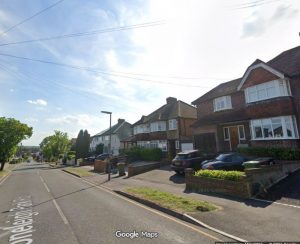
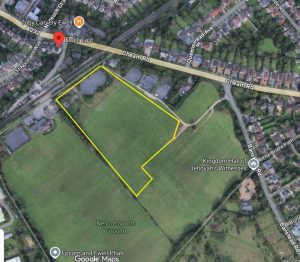
Beechcroft Nursery Ewell

Surrey County Council is looking to bank a major cash boost by selling off a string of properties sitting idle across the county. The money is earmarked to help plug budget pressures and support future investment in council services.

Cabinet members gave officers the green light to pursue the sale of six unused council sites at a meeting on November 25. Cabinet papers show the deals are expected to generate significant capital receipts, while saving taxpayers thousands more in ongoing security and maintenance costs. The detailed sale values were kept behind closed doors in restricted documents due to commercial sensitivity.

The properties, spread across Staines, Ewell, Tongham, Wallington, and Mickleham, include former social care and nursery buildings, vacant houses, and small plots of land. The sales follow open marketing campaigns and recommended offers from prospective buyers.

Properties up for sale include:

  • 33 Rookery Road, Staines: Former supported living houses, now demolished, being marketed for residential redevelopment.
  • Former Fairways Day Centre, Staines: A large, partially vacant building in a flood zone that the council said would be costly to maintain.
  • Beechcroft Nursery, Ewell: An empty house and three acres of scrubland, with 11 bids received from developers.
  • Land west of Oxenden Court, Tongham: Small 0.03-hectare plot with access and contamination issues.
  • 42 Little Woodcote Estate, Wallington: 3-bed house previously leased to Halsey Garton Residential Ltd, now vacant. Sale includes surrender of the lease.
  • 2 Pressforward Cottages, Mickleham: Terraced 3-bed house with a leasehold to be surrendered before sale.

Together the properties have been vacant and unused for months, in some cases years, leaving the council to pick up costs for business rates, insurance and preventing vandalism. By selling them, the authority says it will cut those losses and funnel the money into frontline priorities: ensuring the stable provision of services for Surrey county council and the future unitary authorities.

Officials stress that legal checks, including anti-money-laundering safeguards, will be completed before any contracts are signed. Cabinet is also being asked to give senior directors delegated authority to finalise the deals swiftly, avoiding developer drop-out and market risk.

Decisions on the disposals will be made at upcoming Cabinet meetings, with the detailed sale values kept behind closed doors for now due to commercial sensitivity.

Emily Dalton LDRS

Image: Beechcroft Nursery Reigate Road Ewell Epsom – Google maps


Epsom and Ewell’s first neighbourhood plan

View from Newbury Gardens down to Stoneleigh Park Road. (Credit: Epsom and Ewell Borough Council documents)

A leafy Surrey suburb is about to make its mark for the local community. Stoneleigh and Auriol are poised to be able to say ‘yes’ or ‘no’ to planning developments that do not match their design plan for the neighbourhood with legal backing.

Members of Epsom & Ewell Borough Council’s (EEBC) licensing and planning policy committee gave the new local scheme the go ahead to move to the next stage on November 25. The Stoneleigh and Auriol Neighbourhood Plan (SANP) is the first of its kind in Surrey’s smallest borough. 

“This  plans’ compilation has taken an immense amount of effort by all those involved and it’s been an enormous undertaking,” said Cllr Tony Froud (RA Stoneleigh), part of the SANP working group. “The remarkable thing about this is they [the residents group] have done it all on their own with just a keen interest in preserving the character of the neighbourhood. It’s an immense body of work by residents, lay people and non-professionals. Due to the costs involved, no outside help could be sought or brought in.”

The SANP, along with some tweaks, is set to go to a public referendum in February 2026. If residents vote ‘yes’, this plan will become law for the area. This will shape what can be built, how it looks and protect things like shops, green spaces, housing character, and more.

If adopted, future planning applications in Stoneleigh and Auriol will be judged against the neighbourhood plan’s policies as well as broader strategic policies. 

For locals, that could mean tighter control over what gets built. This aims to preserve the area’s distinctive character, leafy streets and sense of community, while still allowing carefully managed change. The SANP must strike a balance between protecting what residents love and accommodating new housing and development where appropriate. 

The journey has not been quick. The neighbourhood forum behind the plan took on the task over five years ago in gathering evidence, consulting residents, drafting policies, and refining proposals. 

Cllr Alex Coley (Independent Ruxley) said: “This has been a great example of what residents can do when they want to put together really clear guidance around planning.” He told the committee that not every group of residents can put in the amount of work, time and effort into making a neighbourhood plan rather than campaigning and protesting about developments and planning decisions.

After the Plan was submitted to EEBC in May 2025, a six-week public consultation took place between June 20 and August 1. Eight organisations and individuals, including expert bodies, submitted comments.  An independent examiner was then appointed and delivered their report on 23 October 23, recommending the plan proceed to referendum subject to a number of changes.

Council planners and the neighbourhood forum have now accepted all the examiner’s recommendations. The revised plan contains 11 clear policies, setting out rules for building, design, green spaces, flood risk, transport and more.  

Emily Dalton LDRS

Image: View from Newbury Gardens down to Stoneleigh Park Road. (Credit: Epsom and Ewell Borough Council documents)


Surrey consults on next year’s budget

Surrey Budget graphic from Surrey County Coucil Youtube video

Surrey County Council has opened a public consultation on its draft budget for 2026/27, asking residents across the county to comment on proposals ahead of final decisions next year. Each year the council sets out how it will fund essential local services including adult social care, children’s services, special educational needs provision, highways, libraries, public health programmes, fire and rescue, and environmental maintenance. The authority says the coming year presents one of its most difficult financial challenges for over a decade due to the government’s Fair Funding Review, which will reduce Surrey’s central government grant and increase reliance on council tax and other locally-raised income. At present, the council reports a provisional £21.3 million funding gap for 2026/27.

The Fair Funding Review is a long-anticipated national reform intended to change how Whitehall allocates money to local authorities. Early modelling indicates that areas with strong tax bases such as Surrey will see reduced relative need-based funding, while more deprived areas gain. Surrey has already seen its core government grant fall dramatically over the past decade. According to publicly available Local Government Finance Settlement figures, Surrey’s Revenue Support Grant dropped from over £130 million in 2010 to effectively £0 in recent years, leaving the council heavily dependent on council tax, which already accounts for around 74% of its income. Rising inflation, growth in demand for adult social care and special educational needs services, and ongoing cost pressures linked to contract inflation and staffing shortages have compounded these challenges.

Councillor Tim Oliver, Leader of Surrey County Council, said Surrey was “facing one of the most challenging financial periods in its history”. He added that the government’s new funding approach “has a direct impact on the services we provide”, stressing that protecting the most critical functions remains the priority, including support for vulnerable adults, children, and families and the infrastructure that keeps the county moving. He noted that this is the final budget to be set before Surrey’s existing county structure is dissolved and replaced with two new unitary authorities, East Surrey Council and West Surrey Council, from April 2027 following the government’s recent decision on local government reorganisation.

Surrey County Council has pointed to its past record of setting balanced budgets in contrast to several authorities nationally that have issued Section 114 “bankruptcy” notices in recent years, including Northamptonshire, Croydon, Slough, Woking and Birmingham. However, the council’s financial resilience has been tested. The county faces one of the largest high-needs deficits for special educational needs in the South East.

Councillor David Lewis, Cabinet Member for Finance and Resources, said that reduced government support combined with rising costs means the authority must “plan even more carefully to ensure support reaches those who need it most”. Adult social care, children’s services, and SEND support together account for close to two-thirds of the council’s entire net budget. He acknowledged that residents also value “visible services” such as road maintenance, libraries, and community spaces, emphasising the importance of public feedback in prioritising investment.

The draft budget consultation will shape the final budget papers to be published in January 2026 and submitted to Full Council in February. Residents can view the proposals online and submit comments until 11.59pm on Sunday 4 January 2026.

Sam Jones – Reporter

Image: Surrey Budget graphic from Surrey County Council Youtube video

Related reports:

Surrey gets a sinking feeling over cost of its holes

Surrey Police tax set to rise

Surrey County Council claim funding review “unfair”.

Surrey leaders review spending review


Epsom and Ewell homeless costs set to overshoot by £900k

Geograph Britain and Ireland | Licence details Creator: Evelyn Simak | Credit: Evelyn Simak Copyright: © Evelyn Simak and licenced for reuse under cc-by-sa/2.0

Epsom and Ewell Borough Council is forecasting a substantial overspend on its homelessness budget this year, as reported to the BBC, with demand for help remaining “consistently high”.

According to figures provided by the council via the BBC, the number of people seeking assistance in the first quarter of the 2025/26 financial year rose by 19% compared with the same period last year. The authority has already overspent by £587,412 in the first six months and now expects the gap to widen to £895,000 by March 2026.

Local and national pressures

Councillor Clive Woodbridge (RA Ewell Village), who chairs the Community and Wellbeing Committee, told the BBC the pressures facing the borough echoed those “found nationwide”, driven largely by the lack of affordable, permanent housing and the continuing cost-of-living crisis.

He added that Epsom and Ewell faces its own structural challenges, including a limited supply of affordable private rented homes, no council-owned housing stock, and a long-standing shortage of social housing.

The council’s budget for 2025/26 was set on the assumption that 70 families would be in nightly paid temporary accommodation. However, as of 24 October, the figure had climbed to 114.

Prevention schemes and charity support

Councillor Woodbridge said the council was concentrating on homelessness prevention, expanding private sector leasing arrangements and making greater use of rent deposit schemes. Local charities are also involved in reducing demand for emergency housing, notably YMCA East Surrey, which provides guidance and support for people at risk of losing their homes.

One woman from Redhill, who spoke to the BBC, said YMCA assistance stopped her falling into homelessness after a period of severe illness. She described how disability and post-traumatic stress disorder left her unable to work during and after the pandemic. With rent arrears mounting and her informal support network exhausted, she feared emergency accommodation was the next step. YMCA staff helped her with the paperwork and guided her into permanent housing.

A wider Surrey picture

Epsom and Ewell is not alone in facing escalating temporary accommodation bills. As reported by the BBC, Woking Borough Council expects to overspend by £350,000 this year, while Waverley Borough Council has forecast a £165,000 shortfall.

The national situation is equally stark. Government statistics published earlier this year showed the number of households in temporary accommodation in England at its highest level since records began in 1998, driven by rising private rents, the freeze on housing benefit Local Housing Allowance rates, and continued shortages of social housing. Councils across the South East report similar difficulties securing affordable lets for families, often at prices far above their budgets.

Epsom and Ewell Borough Council is expected to revisit its temporary accommodation strategy early in 2026 as financial pressures continue to mount.

Sam Jones – Reporter

 Image: © Copyright Evelyn Simak and licensed for reuse under this Creative Commons Licence.

Related reports:

Epsom’s homelessness crisis

What are the solutions to Epsom’s homeless crisis?

Pods off in bricks grant for Epsom homeless

Did a fair view prevail on Epsom’s modular homes for the homeless?


Need to sell Council property spelt out for Spelthorne

Spelthorne Borough Council offices in Knowle Green, Staines. Credit: Emily Coady-Stemp

Spelthorne Borough Council has been warned it must sell off its commercial property empire fast or risk losing tens of millions of pounds and plunging even deeper into financial crisis. The financially-stricken authority agreed on November 17 to overhaul the way it repays its £1.1bn debt, adopt a new debt-repayment policy ordered by government commissioners, and start a rapid sell-off of its investment portfolio.

If the council delivers the plan on time, it could strengthen its budget by around £37m over the next decade, thanks largely to a £361m discount for repaying long-term Public Works Loan Board debt early. But the window to the cash in is narrow. Council officers say that slipping just six months behind schedule would slash the benefit to £12m, and a 25 per cent drop in sales prices could wipe out around 60 per cent of expected gains. The message from senior officials was blunt: delays are dangerous.

The warning triggered fierce rows in the chamber. Conservative councillors argued members still lacked key information and should not be rushed into decisions with such huge consequences. Cllr Margaret Attewell said the analysis so far was “all interpretation and it is not right”, calling for more advice before committing to the strategy.

But others insisted hesitation would be reckless. Cllr Howard Williams said rejecting the new repayment policy would be “the most irresponsible thing this council could do”, warning that commissioners could seize control and force a fire sale if Spelthorne failed to act.

Tory members remained unconvinced. “I don’t see how Spelthorne residents are going to be the winner in this,” said Cllr Sinead Mooney. “Why rush this through now?” Cllr Karen Howkins added that councillors had once believed their previous investment decisions were sound and could not be certain history wouldn’t repeat itself.

Behind the political clash lies a collapsing property empire. The council bought £1.077bn of commercial buildings over several years; they’re now valued at just £552m. Selling them is essential to meet government demands, but the council must still prove it is getting “best value” for every disposal.

The financial strain will be felt quickly. The amount Spelthorne must set aside for debt repayments, its Minimum Revenue Provision, will jump to £59m next year before slowly dropping to £9m over the next decade.

With stakes this high, the council plans to hire external property specialists to handle valuations, marketing and negotiations, admitting its in-house team is far too small to manage such a vast sale programme.

What this all means for residents is still unclear, but councillors warned cuts and higher council tax are almost inevitable. “We’ve looked purely at the financial side,” said Cllr Paul Woodward. “We have no idea what impact on our residents this is going to be.”

Emily Dalton LDRS

Image: Spelthorne Borough Council offices in Knowle Green, Staines. Credit: Emily Coady-Stemp

Related reports:

Spelthorne Borough Council commissioners

Who will be saddled with Spelthorne’s and Woking’s £3 billion debts?

Spelthorne in financial trouble


Epsom and Ewell Borough Council to stay put awaiting its demise

Old Town Hall and 70 East Street for sale.

Epsom and Ewell Borough Council’s Strategy and Resources Committee has formally abandoned the plan to relocate the Town Hall to East Street, voting on 11 November to remain in the existing building until Local Government Reorganisation in 2027. The meeting also agreed to recommend a 3% staff pay award for 2026/27 and to support adoption of the Real Living Wage.

The decisions reverse the direction taken in earlier years which saw the Council identify 70 East Street as the future civic office site, a plan covered previously by the Epsom and Ewell Times. The East Street building will now instead be declared surplus and placed on the market.

Town Hall stays put

Members unanimously approved Option 1, an approach which keeps both the New and Old Town Hall buildings in use with only legally-required and essential health and safety works carried out. Officers advised that the council must now implement recommendations from the building’s fire risk assessment, previously deferred when a move to East Street was expected.

The work will cost £431,000, with a total capital provision of up to £517,200 once contingency is included. A further deferred-liabilities fund could be needed if ageing equipment fails during the next two to three years.

With Local Government Reorganisation due by April 2027, the report said investing more heavily in a short-term location would offer poor value. Options involving the Old Town Hall’s closure or bringing the decommissioned second floor of the New Town Hall back into service were judged significantly more expensive.

Sale of 70 East Street

Under a later agenda item, the Committee agreed that 70 East Street should be declared surplus to operational requirements and prepared for sale with a budget of up to £10,000 for marketing and upfront costs.

This effectively ends the former civic office relocation project. Surrey County Council’s departure from the second floor of the New Town Hall, the worsening condition of parts of the estate, and the uncertainties of a possible unitary-authority future all contributed to the reassessment.

Staff pay award: 3% recommended

The Committee unanimously backed recommending a 3% pay increase for 2026/27, alongside granting all staff an extra day of annual leave. Officers reminded councillors that the September CPI stood at 3.8% and that around 18% of staff at the top of their pay scales would not receive incremental rises.

Members also supported adopting the Real Living Wage from April 2026. The financial impact, estimated between £35,000 and £68,000 depending on next year’s National Living Wage, will be built into the Council’s Medium Term Financial Strategy.

Coley raises concerns over transparency and financial risk

During the public session, Cllr Alex Coley (Independent Ruxley) spoke to highlight his continuing concerns about the handling of major financial decisions, particularly those arising from Local Government Reorganisation. He noted that asset-transfer discussions risked obliging future parish-level bodies to take responsibility for community facilities without councillors being given the information they needed about long-term maintenance liabilities.

He told the Committee he had attempted several times to obtain estimated maintenance costs and values for potential transfer assets and warned of “blank cheques with unknown risks and liabilities” that could fall on residents through an uncapped parish precept.

Cllr Coley thanked the Section 151 Officer for constructive engagement on reserve reviews but cautioned colleagues not to proceed with decisions without full supporting data.

His remarks contributed to a wider discussion later in the meeting, after the press and public were excluded, on the Council’s strategic priorities and preparation for possible reorganisation.

Funding pressures still ahead

Officers confirmed that the 3% pay award would increase the projected 2026/27 budget deficit to around £2 million, with work continuing to close the gap before the February Full Council budget.

Councillors approved all recommendations put before them on the evening.

Sam Jones – Reporter

Related reports

Epsom and Ewell Council goes East

A new Town Hall for Epsom and Ewell?


Epsom and Ewell Council transparency disputes revisited

Audit and Scrutiny Committee get ready for the meeting. Epsom and Ewell Borough Council YouTube.

The Audit and Scrutiny Committee of Epsom and Ewell Borough Council met on 13th November, with long-running disputes about transparency once again overshadowing its agenda. Questions from the public and exchanges between councillors highlighted continuing disagreements over how openly the Council has handled its governance issues and its dealings with external auditors.

Public challenge over unrecorded meetings with auditors

Resident Previn Jagutpal opened the meeting by questioning the Council’s claim to have established “a very open dialogue” with its external auditors, Grant Thornton. He noted that a Freedom of Information response confirmed that no minutes were taken of the Chief Executive’s first meeting with the auditors. He suggested that unrecorded, closed-door discussions were difficult to square with recent criticisms of the Council’s transparency.

Committee Chair Cllr Steven McCormick (RA Woodcote and Langley) replied that not all internal meetings were minuted and that the quality of discussions with auditors did not depend on the existence of formal notes. He maintained that the sessions were appropriate and did not represent secrecy.

Jagutpal pressed further, but the Chair repeated that such meetings were professional exchanges and were not inconsistent with openness.

“Culture of secrecy” dispute resurfaces

Jagutpal’s second question revisited an earlier controversy over whether the Local Government Association peer review team had used the phrase “culture of secrecy” when assessing the Council’s decision-making. In September, Chief Executive Jackie King told the Committee she had an email from the peer-review lead saying they did not recall using that wording.

Jagutpal said that a fuller email chain disclosed under FOI showed that the LGA lead was “not present at every discussion”, leaving open whether the phrase had surfaced elsewhere. He accused the Council of selectively presenting the peer review comments. Cllr McCormick rejected any suggestion of misrepresentation and said the full email would be circulated to members and attached to the minutes of the meeting.

Clash over what may be discussed in public

Labour councillor Chris Ames (Court) then raised a formal point of order. He said councillors had been told they could not discuss certain matters in public that related to the 2023 changes to the Scheme of Delegation — the very subject that led auditors to conclude there was a “significant weakness” in governance. He argued that restricting discussion created the impression that matters were being “stitched up behind the scenes”.

The Chair and the Monitoring Officer both insisted that exempt-information rules applied and that certain details could only be taken in a private session. Ames protested that this prevented transparent scrutiny, but the Chair declined to widen public discussion further.

Disputed minutes and calls for further scrutiny

During approval of the September minutes, councillors and officers agreed to make a minor correction to a sentence summarising the Chief Executive’s comments. The amendment was adopted without dissent.

The meeting’s most heated exchange followed when Ames asked the Committee to add a future agenda item examining why the external auditors had not been informed earlier about changes to the Scheme of Delegation. Cllr McCormick initially resisted, saying the matter had already been covered by previous meetings.

Ames said that earlier discussions had been “stage-managed” and that the Committee had not been allowed to probe key issues. Liberal Democrat councillor James Lawrence (College) supported bringing the item back, saying members simply wanted clarity on when and how auditors were informed.

After a prolonged exchange, the Chair agreed that the subject could be added to a future agenda. Officers, not councillors, will prepare a report to support that discussion.

Wider business proceeds quietly

Following these debates, the Committee turned to counter-fraud matters, financial monitoring, and internal-audit progress reports. These items attracted few comments and passed without controversy — in contrast to the extended disputes over transparency that continue to dominate the Committee’s work.

Transparency remains the unresolved issue

Once again, the meeting demonstrated that the central challenge facing the Council is not simply the content of audit recommendations, but the competing interpretations of what “transparency” requires in practice. With further reports now expected, the question of how openly Epsom and Ewell Borough Council takes and explains its decisions seems set to return to the Committee table in the months ahead.

Sam Jones – Reporter

Related reports:

Epsom and Ewell Council CEO contests ‘culture of secrecy’ claim and outlines fixes

RA councillor replaces Independent member as scrutiny row erupts at Epsom Town Hall

“Audit and Scrutiny” under scrutiny

Image: Audit and Scrutiny Committee get ready for the meeting. Epsom and Ewell Borough Council YouTube.


How the Council’s transparency dispute unfolded

The debate over transparency at Epsom and Ewell Borough Council has stretched across several meetings of the Audit and Scrutiny Committee. What follows is a clear timeline of how concerns first surfaced, how councillors reacted, and how the Council’s leadership has responded.

March 2024 – Peer review flags concerns

An LGA Peer Review identifies weaknesses in decision-making processes, warning of confusion among councillors and raising concerns about the Council’s use of confidential sessions. It calls for clearer, more transparent explanations of how decisions are made under the committee system.

February 2025 – External auditors find a “significant weakness”

Grant Thornton reports a “significant weakness” in the Council’s governance arrangements, citing both the peer review and the lack of transparency over 2023 changes to the constitution and Scheme of Delegation. The Council disputes the auditors’ interpretation, arguing that it is already operating transparently.

March 2025 – Committee requests Chief Executive attendance

Audit and Scrutiny calls for Chief Executive Jackie King to attend its July meeting to explain management responses to the auditors’ findings. Concerns centre on whether officers properly informed auditors about the delegation changes.

May 2025 – Governance statement controversy

A draft Annual Governance Statement presented to the committee is criticised for downplaying the auditors’ “significant weakness” finding. Members send it back for redrafting, saying it fails to give an honest account of the issues raised.

17 July 2025 – CEO absence sparks anger

At the July meeting, members express frustration that the Chief Executive is absent despite earlier requests. Labour councillor Chris Ames repeatedly raises objections, accusing the Council of stalling accountability. The Chair says the CEO will instead attend the September meeting.

30 September 2025 – CEO gives evidence and defends actions

Chief Executive Jackie King attends and answers questions for the first time. She denies that the peer review described the Council as having a “culture of secrecy”, saying the LGA peer-review lead did not recall using the phrase. She outlines changes to reporting practices, including splitting public and confidential papers and providing plain-English explanations for exemptions.

Councillors, including Liberal Democrat James Lawrence, challenge the Council’s transparency record, citing confusing urgent-decision processes, late information at the May AGM, and the need for clearer oversight of how auditors are kept informed.

The Committee receives the officers’ report but signals that further scrutiny will be needed.

Early November 2025 – FOI reveals fuller peer-review email chain

A resident obtains an email chain via Freedom of Information showing that the LGA lead was “not present at every discussion” during the peer review, raising questions about whether the term “culture of secrecy” may have arisen elsewhere. This adds fuel to concerns about whether the Council has selectively interpreted criticism.

13 November 2025 – Transparency dispute dominates meeting

Two public questions challenge the lack of minutes for meetings between the CEO and auditors and question whether the Council has “fileted” peer-review comments. The Chair defends the Chief Executive’s position, saying not all professional meetings require minutes, and promises to append the full email to the minutes of the meeting.

A tense exchange follows when Cllr Chris Ames raises a point of order, arguing councillors are being prevented from openly discussing matters central to the auditors’ “significant weakness” finding. The Chair and Monitoring Officer insist some discussions must remain exempt.

Ames calls for a future agenda item explaining when and how auditors were told about the delegation changes. With support from Cllr James Lawrence, the Chair eventually agrees that officers will prepare a report for future consideration.

Routine business proceeds quietly, but the transparency issue clearly remains unresolved.

Looking ahead

With further reports pending and the Committee determined to revisit key questions, the transparency debate shows no sign of easing. How openly Epsom and Ewell Borough Council explains its actions, documents its decisions, and engages with auditors is likely to remain at the heart of future Audit and Scrutiny meetings.


Epsom and Ewell housing targets in the crosshairs

New houses in green field under the cross hairs

The borough of Epsom and Ewell is currently engaged in a critical juncture of its planning future. The Council’s Regulation 19 draft Local Plan is under examination by the Planning Inspector, and at the same time the Government’s own statisticians, the Office for National Statistics (ONS), have published their new household projections. The juxtaposition of these two sets of figures highlights a growing tension between demographic trends, the Government’s national housing policy tool (the “standard method”), and local deliverability constraints.

Household growth projected by ONS

According to the ONS’s “2022-based” household projections for local authority areas, the number of households in Epsom & Ewell is forecast to rise from approximately 31,299 in 2022 to 35,493 in 2042 — an increase of about 4,194 households over 20 years, which corresponds to roughly 209 additional households per year.

It is important to emphasise that these are demographic projections (households forming under assumed migration, fertility, mortality etc). They do not translate directly into the number of homes that must be built: they make no allowance for planning constraints, land supply, local infrastructure, or policy decisions.

What the draft Local Plan proposes

The draft Local Plan for EEBC, covering the period 2022-2040, sets out the following key housing supply/requirement numbers:

  • A minimum housing requirement of 4,700 dwellings over the Plan period, which equates to approximately 261 dwellings per year.
  • An identified supply to deliver around 4,900-4,914 dwellings, providing a modest buffer above the minimum requirement.
    These numbers reflect the Council’s assessment of what is realistically deliverable given local constraints (Green Belt, flood risk, infrastructure, viability etc).
The “standard method” for housing need

Under national planning policy (the National Planning Policy Framework or NPPF) the “standard method” is the Government’s default tool for calculating housing need in local authorities. This is not a requirement automatically to be delivered by local authorities, but sets a starting point that local plans should address.
In the case of EEBC:

  • In the Plan examination evidence the Council cites a standard method calculation of 10,242 dwellings over the plan period, which equates to about 569 dwellings per year — a figure more than double the Plan’s proposed annual rate.
  • Separately, analysts have calculated that under the more recent stock-based standard method (introduced in late 2024) which uplifts areas with higher affordability pressures, EEBC’s implied requirement would be around 871 dwellings per year, i.e. nearly 900 homes a year.
Why the “affordability uplift” matters

A key message that has emerged from CPRE Surrey and elected members is that the new standard method gives very heavy weight to the “affordability uplift” — the ratio of house prices to local earnings — and that this seriously disadvantages boroughs such as Epsom & Ewell.

As Tim Murphy (CPRE Surrey) put it: “The latest numbers from the Government’s own statisticians show that the housing target set by the Government for Epsom and Ewell is totally unrealistic. The target would mean that, over the next twenty years, the Borough would lose much of its existing open space – the character of the area would be changed for the worse for ever.”

Specifically:

  • The standard method compares local house prices with local earnings. In Epsom & Ewell many resident households earn London or Canary Wharf salaries (commuting to central London) which inflate local house prices but are not captured in the earnings base used for the formula.
  • There is no adjustment (in the national method) for such commuting-induced distortion of house prices. The result: the formula treats Epsom & Ewell as a high affordability-pressure area and drives a very large uplift in the ‘need’ figure.
    In short: the standard method may be overstating “need” in places where price inflation is driven by non-local earnings rather than purely local demand or local pay.
Contrasting the figures: ONS vs Local Plan vs Standard Method

Here are the headline comparisons:

  • ONS household formation projection: ~209 new households per year (2022–2042)
  • EEBC draft Local Plan requirement: ~261 homes per year (2022–2040)
  • Standard method (2023 NPPF basis): ~569 homes per year (10,242 over the period)
  • Updated stock-based standard method (2024 NPPF basis): ~871 homes per year (analyst estimate)

What this shows:

  • The Local Plan’s 261 homes per year is above the demographic projection of ~209 households per year, thus it can be argued that the Plan is planning for growth above simple demographic trend.
  • However, it remains far below the standard method starting points (569 or 871 per annum) — representing a significant gap between what the national policy tool implies and the local Plan provides.
  • The gap calls into question how far the Borough should be expected to “deliver” the full standard-method figure given local constraints, and whether a higher rate is justified (or deliverable) in practice.
Additional context from councillors

Councillor Kate Chinn (Labour Court) notes that: “Epsom and Ewell has a huge housing crisis now and can’t provide suitable homes for its current residents so the borough needs to build more than just enough to keep up with household growth. There are people in serious need of rehousing who are waiting years … the Residents Association … needs to stop looking for reasons to block new housing and start working with developers to build decent homes for residents.”

This underlines that local housing need is not only about future households but existing unmet need: social housing shortages, long waiting lists, temporary accommodation of poor quality, and the knock-on effects on children’s life chances, health, education and emotional well-being.

Councillor James Lawrence (LibDem College) adds further policy context, reminding us that the draft Local Plan is being prepared under the December 2023 NPPF (which uses the earlier standard method approach). He points out that the updated 2024 NPPF uses the stock-based standard method, raising further questions of whether the Plan needs to be reassessed in light of the new method. He also highlights the circularity argument: using future population projections to determine how many homes to build, when building more homes will itself change future population.

Councillor Peter O’Donovan (RA Ewell Court), Chair of Epsom and Ewell Borough Council’s Licensing Policy and PLanning Committee responded: “The Councils Local Plan was submitted to government in March 2025 and is now being examined by a government appointed Planning Inspector, this is known as the examination stage. The revised ONS household projections data do not impact the examination of the Local Plan. Keep up to date with the Local Plan Examination here: Local Plan Examination | Epsom and Ewell Borough Council

Implications for Epsom & Ewell

The mismatch between demographic projections on the one hand and national policy-based housing “need” on the other has several implications:

  • Deliverability and infrastructure: The higher standard method numbers assume a very much higher rate of building than the Borough has historically achieved. If such rates were imposed, the supply of suitable land, infrastructure capacity (transport, schools, services), viability of development and environmental constraints (Green Belt, flood zones) would all come under significant pressure.
  • Green space and character: As Tim Murphy rightly flags, if nearly nine hundred homes per year were required over twenty years, the borough’s character, open spaces, suburban nature and amenity would face significant change. For many local residents preservation of character is a live concern.
  • Affordability link and commuting distortion: The standard method’s reliance on local earnings means that boroughs like Epsom & Ewell (with many commuters earning London wages) may be unfairly treated. The commuting effect inflates prices but is not compensated by the earnings measure. The formula may therefore over-inflate “need” in such areas.
  • Focus on genuine need: The local context shows that, beyond future household growth, there is an existing backlog of need (e.g., social housing, temporary accommodation, unsuitable homes). If the borough simply aimed to match new household formation it might still fail to meet the existing need. Councillors emphasise that making provision for those already housed in inadequate conditions must be part of the strategy.
  • Policy and timing: The draft Local Plan uses the earlier standard method (2023 NPPF) calculations; the switched methodology in the 2024 NPPF potentially changes the baseline “need” significantly. This raises questions as to whether the Plan remains future-proof and whether the examination will ask for an updated technical basis.

For the readership of the Epsom & Ewell Times and stakeholders across the local community, the following points merit emphasis:

  • Clarify that the ONS figure (~209 homes per year) shows what is likely in demographic terms, but that housing targets set by policy may differ significantly.
  • Highlight the role of the affordability uplift and how the standard method treats areas like Epsom & Ewell (with commuting wage influences) differently from truly local‐wage areas.
  • Encourage the Council and stakeholders to scrutinise whether the standard method’s assumptions are appropriate in the local context and whether the draft Plan provides sufficient evidence to justify deviation from higher figures.
  • Promote transparency on how the Plan addresses existing housing deprivation, not just future household formation: how many social or affordable homes, how many temporary accommodation units, how many conversions of unsuitable homes, etc.
  • Ask whether the local infrastructure, land supply and environmental constraints realistically allow delivery of very high build rates, and whether the Plan sufficiently tests viability at the higher levels implied by the standard method.
  • Encourage local residents to comment on the Plan and its housing provision strategy, especially in light of the gap between national “need” figures and local deliverability.
  • Recommend that the Council monitors any changes in Government policy or standard method revisions (e.g., if further changes to the affordability uplift or commuting adjustments are introduced) and updates the Plan accordingly.

Epsom & Ewell’s draft Local Plan appears modest but credible when viewed against demographic household growth alone. However, it falls far short of the housing “need” implied by the Government’s standard method calculations. The prominence of the affordability uplift in that method raises particular concerns for commuter-belt boroughs such as this, where local earnings do not fully capture the incomes of many resident households. The key challenge for the borough is to strike a balance between realistic deliverability, protection of local character and amenity, and the clear social housing need that exists today. The examination process offers an opportunity to test whether the Plan is positively prepared, justified and effective — but it will also require robust scrutiny of whether national formulae appropriately reflect local circumstances.

Sam Jones – Reporter

Related reports:

Stage 2 Examination of Epsom & Ewell’s Local Plan opens Tuesday

Epsom & Ewell’s Local Plan under the Green microscope

The Local Plan plot thickens after revised NPPF

….. and many more. Search “local plan”.


Surrey to get a higher level of heart care

St Peter's Hospital, Chertsey (Image Google)

Heart patients and the tiniest and most vulnerable babies across Surrey are set to benefit from major investment in local specialist services, following confirmation of a £3.2 million upgrade at Ashford & St Peter’s Hospitals NHS Foundation Trust in Chertsey. Although the improvements are centred at St Peter’s Hospital, the effects will be felt across the county, including by patients who would typically access services at Epsom.

The investment is being funded largely by Runnymede Borough Council’s Community Infrastructure Levy, and will see the cardiac catheter-lab at St Peter’s upgraded to deliver more complex and less invasive heart procedures at a faster rate. It will be complemented by a £296,000 refurbishment of the Neonatal Intensive Care Unit, which is the only Level 3 neonatal facility in Surrey. Councillor Robert King, co-leader of Runnymede Borough Council, stated to the BBC’s LDRS: “For families, the moments when a loved one needs specialist care are when the NHS matters most. That is why this investment we have championed at St Peter’s Hospital is so vital.”

Across Surrey, hospitals offer a range of cardiac services. Epsom provides extensive inpatient and outpatient cardiology care, including angiograms, non-complex stenting, pacemakers, complex device implants and heart-failure treatment. However, for confirmed heart attacks and the most complex interventional procedures, patients are transferred to the regional heart-attack centre at St George’s in London. Other Surrey hospitals, including East Surrey Hospital and the Royal Surrey in Guildford, also run catheter labs and offer broad specialist cardiology care, though not all services are identical between sites.

The enhancements at St Peter’s therefore represent a significant expansion of Surrey’s own capacity to deliver more advanced, less invasive heart procedures locally, reducing pressure on London hospitals and improving access for patients across the county. In neonatal care, the upgraded Level 3 unit will strengthen Surrey’s ability to care for the sickest and most premature babies, with facilities designed to improve comfort, privacy and support for families during long and emotionally demanding stays.

Ashford and St Peter’s Hospitals CEO, Louise Stead, stated to the BBC’s LDRS: “These improvements will strengthen our ability to deliver timely, life-saving care in modern, purpose-built environments.” The funding, described as one of the most significant local healthcare investments in recent years, is expected to deliver the improvements within the next two years.

Sam Jones – Reporter

Image: St Peter’s Hospital, Chertsey (Google)


Epsom & Ewell Borough Council Green Guide

Green Guide cover

Epsom & Ewell Borough Council is proud to launch its Green Your Home Guide to help residents take simple, everyday actions to contribute to a healthier environment and help combat climate change. The guide offers practical advice and tips for making small changes that collectively make a big difference.

The initiative empowers individuals and households to take ownership of their environmental impact through easy-to-follow steps. From reducing waste and conserving energy to choosing sustainable transport and supporting biodiversity, the guide highlights how everyone can play a part.

The Green Your Home Guide is being rolled out as part of Epsom & Ewell Borough Council’s Climate Change Action Plan 2025-2029, which has already helped reduce the council’s operational emissions by 16% since 2019/2020. This is part of the council’s commitment to becoming carbon neutral by 2035.

Councillor Liz Frost, Chair of the Environment Committee, said:

“This guide is about showing people they don’t need to make radical changes to their lives to make a difference. Simple, ongoing changes—whether building on existing efforts or starting something new – can have a meaningful, long-term impact. From making homes more energy efficient, to planning wildlife-friendly gardens, and investing in systems that reduce reliance on fossil fuels, every step counts. We want residents to feel confident and motivated to take action, and we hope the guide supports their decision-making along the way.”

The Council’s Green Your Home Guide is available here – Green Your Home Guide | Epsom and Ewell Borough Council

More information about the Council’s Climate Change Action Plan 2025-2029 can be found here – Climate Change | Epsom and Ewell Borough Council

About Epsom & Ewell Borough Council’s (EEBC) Green Your Home Guide
The council’s Green Your Home Guide explains a number of ways residents can improve their property and garden, helping homes work with nature and reduce their household carbon footprint.  Topics include: Insulate to end heat waste; generate green energy with renewable technology; let it drain with permeable driveways; go ahead, go electric; lights out to help nocturnal wildlife; mind the gap to save hedgehogs; give nature a home; save our streams with water butts; turn scraps to soil by composting; turf for earth; wild your garden with diverse, native landscaping; plants for bees; plants for butterflies; plants for birds; plant for the planet: plant new trees and keep existing ones. Green Your Home Guide | Epsom and Ewell Borough Council

About EEBC’s Climate Change Action Plan including progress so far

In 2020, the council’s first Climate Change Action Plan (2020-2024) was developed, setting an ambitious target of becoming carbon neutral by the year 2035. It set out plans to implement a range of measures to reduce the council’s own emissions as well as promoting good practice throughout the borough. The council has since adopted its second Climate Change Action Plan 2025-2029. The plan is a living document which will be reviewed and updated over time. Climate Change | Epsom and Ewell Borough Council

About EEBC Biodiversity Action Plan 2020-2030

The council’s local Biodiversity Action Plan is a long-term plan aimed at protecting, maintaining and, where possible, enhancing biodiversity at a local level, taking into account both local, regional, national and sometimes international priorities. Epsom and Ewell Borough Council – Biodiversity

Epsom and Ewell Borough Council


Sara Sharif murder report on Surrey services

Surrey County Council headquarters. Credit: Emily Coady-Stemp

Numerous safeguarding flaws over many years “cumulatively laid the foundations for the severe abuse” Sara Sharif experienced, a new independent report has revealed. The 10-year-old schoolgirl was found dead in her dad’s home in Byfleet, Surrey, in August 2023. After Sara’s dad, Urfan Sharif, and stepmum, Beinash Batool, were sentenced for murdering the girl in December 2024, Surrey Safeguarding Children Partnership (SSCP) launched an independent safeguarding review. The reviewers were tasked to investigate how professionals responded to concerns about Sara’s welfare throughout her life. The 62-page review, published on November 13, concluded that weaknesses in how professionals assessed risk, shared information and followed safeguarding procedures meant signs of harm were not acted on effectively. “Expected robust safeguarding processes were not followed,” the report found. “Information gathering and assessment at this stage did not adequately triangulate information and respond to the presence of bruising alongside inconsistent explanations. Sara’s ‘voice’ expressed through her change in demeanour was not heard.”

In March 2023, Sara’s school raised concerns with Surrey’s children services after she appeared with bruising on her face and teachers were given inconsistent explanations for how it had happened. Her normally positive demeanour had also changed, but the report found that this was not sufficiently recognised as a sign that she might be at risk. Instead, the service decided no further action was needed after speaking to her father and did not hold a formal strategy discussion with other agencies. The review also found that information was held across multiple agencies but not consistently shared, leading to an incomplete understanding of the family’s situation and therefore assessment of Sara’s safety. It read: “This serves to highlight the challenge for practitioners in coming to a holistic understanding of a child’s life both in the past and present and using this understanding to identify risk of harm.”

Sara was withdrawn from school to be home educated in April 2023, which the review said removed her from professional oversight. Surrey’s policy at the time required a home visit within ten working days when a child is withdrawn from school but this did not take place. The report added that management oversight failed to identify this gap in practice. The decision to home educate should have triggered further checks given the family’s history with children’s services. The review also identified long-standing domestic abuse concerns, finding that professionals underestimated the risks posed by Sara’s father and relied too heavily on his reported attendance at a perpetrator’s programme rather than assessing if his behaviour had changed. The authors recommended domestic abuse training and awareness should be strengthened across agencies locally and nationally.

Additionally Sara’s mum had limited access to Polish interpreters during key family court proceedings in 2019. The report said her views were not fully heard and that little consideration was given to Sara’s mixed Polish and Pakistani heritage in decision-making. The review also admits that sometimes agencies must “think the unthinkable” and consider the potential risk of harm in daily practice. It states: “Although the aim will always be to try and work alongside families and support them to care for their children, […] we must remain alert to the possibility that some parents will deliberately harm their children […] This is not the responsibility of any one agency.” The review made 15 recommendations, including ensuring multi-agency discussions in all cases of unexplained injuries, improving home education oversight, and embedding cultural and domestic abuse training for staff.

Terence Herbert, Chief Executive of Surrey County Council said: “We are deeply sorry for the findings in the report related to us as a local authority. We have already taken robust action to address those relating to Surrey County Council, and that work will continue with every recommendation implemented in full. We will also work with partners across the Surrey Safeguarding Children Partnership to ensure a joint action plan is implemented as quickly as possible.” In 2019 Surrey’s Children Services was given an ‘Inadequate’ rating from Ofsted. This was then upgraded to ‘Requires Improvement’ in 2022 and then ‘Good’ in 2025. Surrey County Council has said it has already made “significant change” to how it handles child safeguarding. These include the creation of a multi-agency safeguarding hub to improve information sharing between social care, the police, and health services and mandatory domestic abuse training for all children’s social workers. The council said it has also strengthened oversight of home education cases and requires additional checks and management reviews when a child is taken off the school roll.

However, the council has not clarified how it will acknowledge the importance of race and culture when considering child safeguarding, or how it will provide access to a translator if needed. Tim Oliver, Leader of Surrey County Council said: “I am certain that everyone involved with this family will have reflected on what more could have been done to protect Sara, and my thoughts and condolences are with anyone affected. The independent and detailed review makes a number of recommendations both for national government and local partners and it is now essential that every single person in every organisation involved in child safeguarding reads this report and understands the lessons learnt. I am deeply sorry for the findings in the report that relate to us as a local authority. We will now act on those findings and continue to review and strengthen our culture, systems and processes designed to support good practice in working with children and families, as per the recommendations. I call on the government to review the findings and, where appropriate, legislate for the changes in the national system that it calls for.”

Emily Dalton LDRS

Image: Surrey County Council headquarters. Credit: Emily Coady-Stemp


Epsom and Ewell Borough Council gears up for – you know what

Santa Claus in sky around Epsom Clocktower

It’s that time of year again – Christmas is coming to Epsom! Join us on Sunday 23 November for the Christmas lights switch-on in Epsom marketplace, led by the Mayor of Epsom & Ewell and the cast of this year’s pantomime at Epsom Playhouse, Aladdin. Enjoy a day of festive cheer, with performances from local dance schools and a community choir, family-friendly rides, seasonal stalls, and a special visit from Inka the Polar Bear. The fun starts at 10.30am and the Christmas lights in Epsom marketplace will be switched on at 4.30pm.

Councillor Clive Woodbridge (RA Ewell Village), Chair of the Community and Wellbeing Committee at Epsom & Ewell Borough Council, said: “Seeing Epsom lit up for the Christmas season is one of my favourite moments in the community calendar. It’s heart-warming to see people from across the borough and beyond come together to enjoy seasonal, festive fun. The day would not be possible without the support of Go Epsom, and local Epsom & Ewell charities and community groups. Thank you to all those who have worked so hard to make it possible for us to hold the event again this year.”

The Paparazzi Guys will also join the festivities, providing the perfect opportunity for family Christmas pictures.

Find out about more events taking place in Epsom & Ewell over the festive period, including Christmas activities at Bourne Hall, What’s on | Epsom and Ewell Borough Council

Free parking days in Epsom & Ewell

Over the Christmas period, there will be selected days when it will be free to park in Epsom & Ewell Borough Council (EEBC) managed car parks:

  • 5 December: Dorset House and Ewell High Street car parks – free from 4pm until 7am on 6 December
  • 7 December: EEBC car parks – free all day
  • 14 December: EEBC car parks – free all day
  • 21 December: EEBC car parks – free all day
  • 25 December: EEBC car parks – free all day
  • 26 December: Dorset House and Ewell High Street car parks – free all day

Full details about EEBC-managed car parks are available on the council’s website. Please note; Hook Road car park is closed on Sundays and bank holidays.

Changes to council services

The Town Hall will be closed on 24, 25, and 26 December 2025 and 1 January 2026, and will close at 3pm on 31 December 2025.

Waste and refuse services

During the Christmas and New Year’s weeks, collections must accommodate the public holidays, and at a time when bins are much fuller than usual. Some services may not be available as usual, and your normal collection day may change.

  • All planned changes can be found on the council’s website: Christmas and New Year collections | Epsom and Ewell Borough Council.
  • Christmas week: there will be no refuse collections during Christmas week. Please leave out food and recycling (including glass recycling) only. During Christmas week, collection days may change. Please check the EEBC website for recycling and food bin collection days during Christmas week.
  • New Year’s week: normal refuse collections start again in New Year’s week. However, collection days may change. Please check the EEBC website for collection days during New Year’s week.
  • Before Christmas, Epsom & Ewell Borough Council will place a label on resident bin handles with collection details for the festive period. If you are an Epsom & Ewell resident, please look out for this reminder about how services will be changing in your road over Christmas and New Year’s weeks.

Community support services

Opening times will differ over Christmas and the New Year. Please check the EEBC website for details: Council services over Christmas and the New Year 2025 | Epsom and Ewell Borough Council

Christmas tree recycling

In January, EEBC offer free real Christmas tree recycling for all residents. This is a fortnightly service – check your Christmas bin label for details of when real Christmas tree collections happen in your road. Don’t cut up your tree – it’s easier to collect whole.

  • The Christmas lights switch-on in Epsom marketplace will take place at 4.30pm and there will be local performances from 10.30am. The fun fair and stalls will close at 10pm.
  • Aladdin will be performed at The Playhouse, Epsom, from Friday 12 December to Sunday 4 January. Book tickets on the website: Aladdin | Epsom Playhouse

Epsom and Ewell Borough Council

Image background credit Andrew Tijou. Licence Details


Vital Surrey bus reduced from hourly to three mornings a week

Cllr Neha Boghani right), Green councillor for Horley East, with residents of the Gardens Estate, south Horley, at the ‘ghost bus stop’ where they used to get on the 424 Metrobus (image Cllr Boghani)

People who wait for buses are often left disappointed and that only looks set to continue after the company behind an axed service said it was “not likely” to return. Residents in Horley gathered at what they have dubbed a ‘ghost’ stop in protest to the axing of the hourly 424 bus which served their estate and went between the town centre and Gatwick Airport. It has left them with just a single service – but that just runs three mornings a week.

Councillor Neha Boghani, Green Party member for Horley East and Salfords said: “For Surrey County Council, whose strapline is ‘we leave no-one behind’, to cut buses this savagely without even any public consultation is shameful, and a dereliction of their commitment to serve all residents. Our residents deserve better.” One resident at the bus stop protest said the loss of the route had taken away her social life with another adding the impact had been unbelievable. She said: “There are so many elderly people and people with disabilities living around here and we can’t afford to keep taking taxis.”

Metrobus’s commercial director Nick Hill said the two-way loop the 424 used to run along made it unreliable and the decision was made to simplify the route. The detour through Horley Riverside Gardens Estate was then dropped to make scheduling more reliable and because it was so poorly used – it would only pick up passengers on one in five journeys. He said: “It is not likely that a conventional bus service will return to the area on a frequent basis due to such low demand. Residents in the area do also have other alternatives: much of the area is a short walk to access more frequent bus services.”

The dial-a-ride type service Surrey Connect is to be made available in the area and for Gatwick Airport. A spokesperson for Surrey County Council said they understood the disruptions alterations to bus services can make but that no areas have been left unserved by the cuts. They said: “Residents in the Horley Gardens Estate were previously served by Metrobus service 424, however data showed less than one passenger per journey travelled on most of the 424 journeys, which was unsustainable. This area continues to be served by local bus service 26 three days a week, providing links with Horley Town Centre and Hookwood Tesco, as well as the Surrey Connect service, which operates between 7am to 7pm weekdays and 8am to 6pm on Saturdays, with alternative services available for most passengers within a five-minute walk.”

“These changes form part of a wider review, which has seen the off-peak service 100 rerouted from Park 25 in Redhill, where data showed a usage of less than one passenger per journey, to instead serve residents in Westvale Park, Horley. This has enabled in the region of 4,000 otherwise isolated residents to be served, and initial patronage figures from the bus operator indicate that the number of passengers now travelling in the area have since quadrupled. Residents in Park 25 continue to be served by service 100 in the peak hours and on Sundays, and off-peak service 424 provides an hourly service throughout the day. We will continue to work alongside bus operators to create travel opportunities which encourage greater bus use and will keep the prospect of rerouting an alternative service via Park 25 under review.”

Chris Caulfield LDRS

Image: Cllr Neha Boghani right), Green councillor for Horley East, with residents of the Gardens Estate, south Horley, at the ‘ghost bus stop’ where they used to get on the 424 Metrobus (image Cllr Boghani)


Epsom Station joins app helping visually impaired bus users

Visually impaired lady with smartphone app outside Epsom Railway station - background - Google Maps

Epsom Station has become one of eight new locations added to a Surrey County Council (SCC) scheme that uses an innovative app to help blind and partially sighted people travel more independently by bus and rail.

Seeing the way through technology

The Aira Explorer app connects users by video call to a trained visual interpreter who, using the smartphone’s camera, can describe surroundings, read timetables, or guide the traveller safely between a bus stop and nearby rail station. The service is free to use at designated Surrey locations thanks to SCC’s allocation from the Government’s Bus Service Improvement Fund.

Initially launched in June 2025 at Guildford, Redhill, Staines and Woking bus stations, the trial has now expanded to cover bus stops and interchanges serving Caterham, Dorking, Oxted, Leatherhead, Reigate, Horley, and Epsom Station and Clocktower.

Support for independent travel

Matt Furniss, Cabinet Member for Highways, Transport and Economic Growth at Surrey County Council, said: “We’re keen to make bus travel accessible for everyone and hope this expansion will support people to travel confidently and independently. We’ve expanded this trial to cover more bus stops and rail interchanges to create better and joined-up journeys for people who are visually impaired.”

He added that the initiative forms part of a wider programme of investment in the county’s bus services, including £6.3 million for ultra-low and zero-emission community transport minibuses, £9 million in bus priority measures to keep services punctual, and £1.4 million to improve passenger information at bus stops.

Backing from rail and disability organisations

Carl Martin, Accessibility Lead at Govia Thameslink Railway, welcomed the expansion:
“We’re really pleased to see the expansion of Aira to further bus stops, as it’s a vital step in making multimodal journeys more seamless for blind and visually impaired customers.”

Clare Burgess, Chief Executive of Sensory Services by Sight for Surrey, called the scheme “great news” for people living with sight or combined sight and hearing loss:
“Travelling alone when you have a sensory impairment can be a daunting prospect, but having the Aira Explorer App at your fingertips makes independent travel so much easier and less stressful.”

Nikki Roberts, Chief Executive of the Surrey Coalition of Disabled People, said:
“It’s fantastic news that the Aira app coverage has now been extended to twelve locations in Surrey. The app will provide our visually impaired members the support they need to feel much more confident when travelling independently.”

A national first for Surrey

When the project began in summer 2025, Surrey County Council became the first local authority in the UK to introduce the app for bus users. It followed the success of a similar partnership between Aira.io and Govia Thameslink Railway to help visually impaired rail passengers navigate station environments.

The trial was originally launched to coincide with Better Transport Week, celebrating initiatives that help connect communities and improve access to public transport.

Ben Curtis from Campaign for Better Transport said at the time:
“Good public transport networks help connect us to the people we love, the things we need and the places that matter. The new Aira app will help ensure that everyone can access and use the county’s buses, building a fairer future for everyone.”

Making travel more inclusive

The Aira Explorer scheme represents one part of Surrey County Council’s wider drive to make sustainable travel options more inclusive and reliable. For residents in Epsom and across the county, it means greater independence, safer journeys, and a more connected community.

More information about the service is available on Surrey County Council’s website.

Sam Jones – Reporter

Related reports:

Bus station app for visually impaired first in Surrey