
Surrey declares experiment in community engagement a success


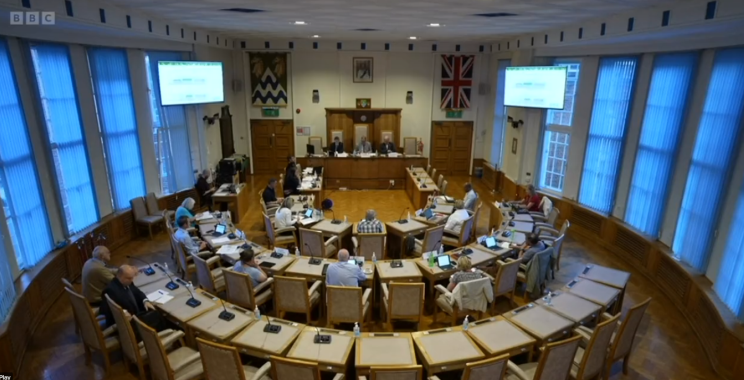
Surrey County Council has endorsed the continuation of its pilot Neighbourhood Area Committees (NACs), hailing them as a successful new way of ensuring that “community voices are heard” during the transition to new unitary authorities.
At its Cabinet meeting on 27 January, the Council agreed that the four existing pilot NACs – in Dorking and the Villages, East Elmbridge, Farnham and North Tandridge – should continue operating until the pre-election period in 2026. Cabinet members also backed proposals to share learning from the pilots with the new shadow unitary authorities from May 2026, and to consider expanding the model to one or two further areas.
In a strongly positive Cabinet report, Surrey said the pilots had demonstrated “strong stakeholder engagement and consensus on evidence-based local priorities”. All 24 NAC members who responded to the final evaluation survey supported continuation, with 83 per cent reporting a positive impact on their work.
Council Leader Tim Oliver (Conservative) described the pilots as proof of what could be achieved “when communities, councils, and partners work even closer together”, adding that the NACs had delivered “stronger neighbourhoods” and could be scaled up across Surrey.
Senior figures from health bodies, the voluntary sector and district councils also welcomed the model, with supporters arguing that NACs provide a forum for aligning priorities across councils, the NHS, police, education providers and community organisations at a neighbourhood level.
If you have not already done so we do urge you to take part in the Epsom and Ewell Borough Council consultation on creating new Parish or Community Councils and also the Epsom and Ewell Times reader survey designed to offer wider options for you to express your views on.
Click HERE to access the Epsom and Ewell Times reader survey.
Advisory forums – not elected bodies
However, the Cabinet paper and accompanying statements also underline a key limitation: NACs are advisory and collaborative bodies, not democratically elected councils.
Membership varies by area and includes appointed representatives from public bodies and voluntary organisations alongside councillors from existing authorities. While Surrey says this flexibility allows NACs to reflect local circumstances, critics argue it also raises questions about accountability, transparency and duplication – particularly as Surrey moves towards unitary local government.
In Epsom & Ewell no NAC pilot currently operates. Under current proposals, the borough will be represented by 10 elected councillors on the new East Surrey Unitary Authority, covering a population of more than 80,000 residents. Decisions about neighbourhood-level governance will therefore have to sit alongside – or potentially compete with – a smaller number of unitary councillors holding formal democratic mandates.
Parish councils versus NACs
The NAC model also sits uneasily alongside longer-established forms of local democracy, such as parish and town councils, which are directly elected and have statutory standing.
Several Surrey districts, including parts of Epsom & Ewell, have debated whether the creation of new parish or community councils would provide a clearer, more accountable way of preserving local voice following local government reorganisation. NACs, by contrast, have no independent legal status, no direct electoral mandate and no guaranteed budgetary powers.
Supporters of NACs argue that they are intended to complement, not replace, existing councils and that they are particularly useful during a period of structural change. The Cabinet report stresses their value in identifying shared priorities, coordinating preventative work and encouraging partnership working ahead of the 2026 unitary elections.
Yet the report stops short of explaining how NACs would interact with elected parish councils where these exist – or whether they risk becoming a parallel governance layer once the new unitaries are fully operational.
A transitional solution?
For now, Surrey’s Cabinet appears to see NACs primarily as a transitional mechanism, helping to bridge the gap between the current two-tier system and the new unitary arrangements.
The four pilots ran between July and December 2025, and the decision to extend them only until the pre-election period in 2026 suggests that their long-term role remains unresolved. Expansion to further areas is framed as something to be “considered”, rather than guaranteed.
As Surrey moves closer to the creation of East and West Surrey unitary authorities, the key question for places like Epsom & Ewell will be whether neighbourhood engagement is best delivered through appointed partnership forums – or through elected local councils with clearer lines of accountability to residents.
For now, Surrey County Council is celebrating what it describes as a successful experiment. Whether NACs evolve into a permanent feature of local governance, or give way to more traditional democratic structures, is a debate that is only just beginning.

Related reports:
The process of appointing the new local government chiefs begins
More erudition on local government reorganisation in Epsom and Ewell
Is Epsom and Ewell getting “proportional representation” under Council shake-up?
Long serving Epsom Councillor blasts LGR and NACs
Parish power, democratic ideals — and the Residents’ Association dilemma
Have your say on the future of local representation in Epsom and Ewell
Epsom and Ewell’s Local Democracy Debate: What’s at Stake as Consultation Enters Phase Two