
Epsom and Ewell Times

ISSN, LDRS and IMPRESS logos

Scrutinising complaints against Council

Epsom and Ewell Town Hall Building

The Epsom and Ewell Borough Council met Tuesday 25th July. Questions arose surrounding the Annual Report of the Audit and Scrutiny Committee 2022-2023.

The report is ‘designed to ensure the Council meets its statutory and local responsibilities’. However, concerns were raised about the report.

Cllr. Chris Ames, ( Labour Court Ward), spoke out against adoption of the report. He stated ‘the report misses out key events’ which should not be ignored. He referred to the absence of a letter issued by the Local Government and Social Care Ombudsman’s Office regarding complaints to the Council. This letter was ‘not presented to the committee’ and thus the committee was ‘deprived of the ability to carry out scrutiny of this important issue’.

The Ombudsman’s letter, published online, provides feedback on the Council’s work in 2023. The letter details how they had ‘noted difficulties’ in dealing with the Epsom and Ewell Borough Council in previous years. These difficulties a ‘result of poor communication and late responses to our enquiries’ but does proceed to mention how this has ‘improved’.

Cllr Kate Chinn, (Labour Court Ward), echoed the concerns raised by Cllr Ames and spoke of further concerns. Chinn recounted a previous meeting in which ‘a member of the public asked a question and a supplementary question’. The Council saw the supplementary question as a ‘second (unrelated) question so it was deemed inadmissible’. It was only when Chinn emailed the then monitoring officer that it was ‘agreed it was indeed a supplementary question’. Training was required to prevent this happening again.

Cllr Chinn spoke about a complaint she’d recently been emailed. The complaint centred around how ‘the council’s complaints procedure had not been followed. The complaint had to be made three times before it was recorded and then it was not progressed’.

Chinn finished by adding that she believes ‘this report should document the year’s failures in governance’ as well as ‘actions required to remedy them’. Until the report indicates these failures it shouldn’t be received as ‘a full account of the committee’s work for the year 22-23’, she concluded.

The Council received the report and did not refer it back to the Audit Committee.

The Local Government and Social Care Ombudsman has today (26th July) released a report stating the South-East gave rise to the second highest level of complaints (16%) behind the London Area.

In the South East:

  • The overall uphold rate for the region stood at 76%, above the average of 74% for all regions;
  • 33% of complaints and enquiries received were about Children and Education, above the average for all regions (24%) and the highest share across regions.
  • 234 upheld decisions in Children and Education, of which Surrey CC made up 56, Kent CC 39, Oxfordshire CC 29 and Hampshire CC 27; together accounting for 65% of the region’s upheld decisions in this area.
  • Had the highest uphold rate of any region for Children and Education at 86%, compared with a national average of 84%
  • 14% of complaints and enquiries received were about Planning & Development, above the England average of 12%.
  • Lower than average percentage shares for Housing (10% compared with average of 15%) and Highways & Transport (7% compared with average of 12%).

Complaints are accepted by the Ombudsman’s office only after the local authority in question has acknowledged the complaint. The complainer may turn to the Ombudsman if he or she is not satisfied with the outcome of the local authority’s complaint procedure.

The figures below reflect the complaints that proceeded to the Ombudsman and not those that were finalised through the Councils’ own complaint processes.

For the year 2022/2023 in respect of Epsom and Ewell Borough Council the Ombudsman “Referred Back for Local Resolution” 6 complaints, “closed after initial enquiries” 10 complaints, upheld 2 complaints and did not uphold 2.

In respect of Surrey County Council the Ombudsman “Referred Back for Local Resolution” 46 complaints, “closed after initial enquiries” 55 complaints, upheld 68 complaints and did not uphold 13.

Paul Najsarek, Local Government and Social Care Ombudsman, said:

“We all want decent education services for our children, quality care for our loved ones when they are in need, and the reassurance of a safety net if we fall on hard times but all too often the complaints we receive show this isn’t what people experience.

“We know councils face huge challenges, so it is more important than ever for them to focus on the getting the basics right in services for residents and handling complaints effectively. Although local authorities often get things right, we frequently find councils repeating the same mistakes, ploughing ahead and not taking a step back to see the bigger picture.

“Our latest statistics shed light on the harsh realities people across the country face in crucial aspects of their lives. Council leaders now need to focus on learning from common faults and injustices so they can make a significant difference to the people our local authorities serve.”

Reporting by George Schofield and Sam Jones


Guildford Council to cut to the bone

Man cutting meat

The Epsom and Ewell Times has been reporting on the fate of Woking’s and Guildford’s Borough Councils. In contrast to Epsom and Ewell Borough Council, which recently proclaimed healthy solvency, Woking has been declared bankrupt and Guildford is close to bankruptcy. Valuable lessons are here for the role of our local Councillors, Council officers and the local media in reporting. Chris Caulfield reports:


Services will be cut back to the bone as Guildford Borough Council looks to carve out more than £18 million from its annual budget to avoid effective bankruptcy.

The level of cuts was agreed at the Thursday, July 25, full council meeting to address the authority’s £300m debt. Councillor Richard Lucas, lead member for finance and property said , the borough would have to make “structural changes” and dispose of its assets if it wanted to get its house in order ahead of a revised November budget.

He told the meeting: “Our officers are trying to deal with the reality of the situation. We won’t deal with this by pretending there is no problem. This is going to result in difficult decisions for the operational spending and capital disposal. This is not Section 114. We are taking action to avoid this. However, if we do nothing Section 114 comes into play which would pretty much make this council useless.”

A Section 114 notice is when a council declares itself effectively bankrupt and can no longer run a balanced budget. It stops all but essential spending to ensure a council can continue to provide its legally obligated services to its most vulnerable residents.

The approved measures, however, are not too dissimilar after the council said that new spending would need the explicit agreement of its chief finance officer (CFO) until further notice, and that breaches would be “considered a disciplinary matter”.

Recruitment and contract renewal has to be signed off by the corporate management board and the council’s investment programme has been suspended immediately, save for existing contracts that need to be fulfilled.

This applies to all council services, including statutory ones. The only exemptions are the council-owned housing company North Downs Housing Ltd and the Housing Revenue Account.

These controls will remain until at least the 2023-24 financial year.

Cllr Philip Brooker (Con, Worplesden) said “we as a council must take immediate action to solve this” but called on it to be done in a way that minimises the impact on services. Cllr Bob Hughes (Con, Shere) said “it was doubtless services would go” and that people “would get hurt”.

The authority will undergo radical change as it “reconfigures services so they can be managed within the financial resources available to the council”.

Every service and budget, the bleak report read, would undergo a review to establish minimum viable service levels and options for savings and income growth.

The report read: “The council will no longer be able to afford to deliver the current range of services or maintain some services at existing levels and significant rationalisation of the current service offer will be required to live within a reduced financial envelope.”

Services that protect the most vulnerable residents would be prioritised for protection with the remaining services transformed “to ensure they are as efficient and cost effective as possible”.

The authority announced it had to impose a series of strict cuts to its budgets to cover an £18m deficit by the end of the financial year if it was to avoid effectively declaring itself bankrupt this autumn.

The deficit, council papers said, equates to 145 per cent of its net budget and “will fundamentally change the services the council delivers and will require political will and a step change in activity to reconfigure services accordingly”.

Related reports:

Woking bankruptcy, far or near to us?

Guildford contemplates financial “Armageddon”.

The knives are out in Woking

Woking’s debt crisis explained

Council’s financial reservations (report on Epsom and Ewell Borough Council)


Scrap on charges for DIY rubble waste

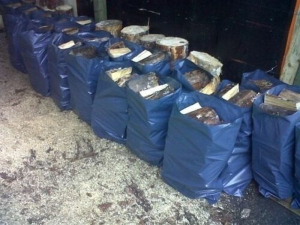
Rubble bags

The Liberal Democrats on Surrey County Council claim the Conservative administration have ignored their own Government’s demand to stop charging local residents for bringing DIY waste to local tips.

In 2018, the Surrey Lib Dems used a motion to call on the County Council to “Listen to the Government and drop the DIY charges” and the Lib Dems are again calling on the Council to do just that.

Five years on from that motion Surrey County Council is continuing to charge householders who bring DIY waste to their local community recycling centre for disposal, even though the practice contravenes government policy. 

A statement published by DEFRA last month clarified that there should be a distinction made between the waste generated by a householder undertaking minor works to maintain and enhance their property and that emanating from the professional construction of buildings, demolition etc. 

Leader of Surrey Lib Dems, Will Forster said: 

“I don’t normally agree with a Conservative government, but for once it does seem to be on the side of normal residents. The Tory administration in Surrey decided to interpret the rules differently from some other waste authorities and will now have to admit they were wrong. It is quite clear that Surrey residents should not be subject to these charges, and it is unacceptable that the County Council is continuing to make them pay. It is a shame that they didn’t listen to us back in 2018”

Epsom recycle centre.

A spokesperson for Surrey County Council responded to the Epsom and Ewell Times: “On 18th June the Government announced that it was proposing to change the law to require local authorities to accept small amounts of construction waste from ‘do it yourself’(DIY) activities, from householders, free of charge. Surrey County Council, like most of our neighbouring authorities currently make a charge for all rubble and plasterboard.

“As part of the announcement, the Government has set out the quantity of construction waste that will have to be accepted free of charge – up to two 50-litre rubble bags or one large item no larger than 2m X 0.75m x 0.7m per household at a maximum frequency of 4 visits over 4 weeks.

“Whilst it is as yet unclear as to when the Government intend to change the law to implement the policy change Surrey County Council’s Cabinet had already been reviewing the potential to change our policy around charging for DIY waste with the intention of introducing a free allowance for householders in line with the Government’s announcement.

“It is proposed to implement this change at the beginning of September this year.”


Reviving nature by the M25 in Leatherhead

Wildlife Aid Centre

A £2.8million grant has been awarded to a wildlife charity as it aims to fulfil its founder’s last wishes.
The Wildlife Aid Foundation, based in Leatherhead, was founded 40 years ago by Simon Cowell.

The money, which Surrey County Council’s cabinet approved today (Tuesday 25th July) will be used to build a community hub for hosting school, college and community groups, as well as family sessions and talks. The £2.8m represents just less than a quarter of the project cost, with the remainder being raised by the charity.

The Wildlife SOS star, who was diagnosed with terminal cancer in 2022, launched a Simon’s Last Wish appeal to help the charity after his death.

Documents for the cabinet meeting, which made the decision on awarding the funding as part of the Your Fund Surrey money that community projects can bid for, say the project has the “potential to have a long-lasting positive impact on the environment and wildlife in Surrey”.

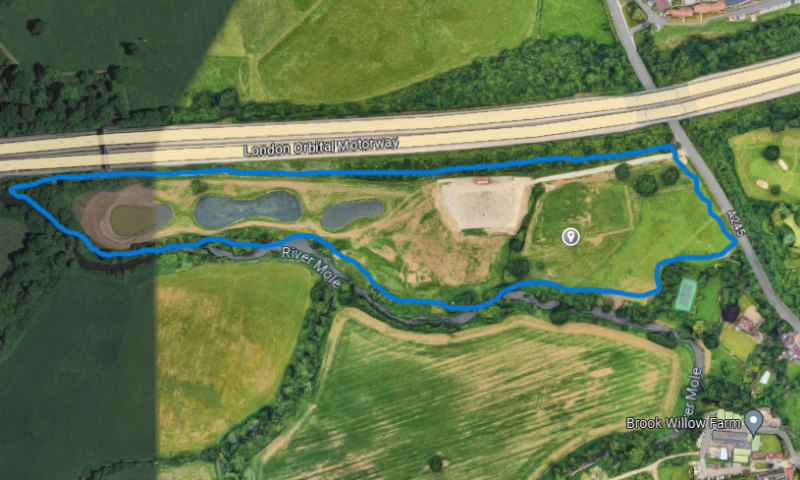
A planned wildlife centre would restore land bordered by the M25 and the River Mole, and give the charity a future rescuing and rehabilitating animals in Surrey.

The Wildlife area between River Mole and clockwise carriageway of M25

Mr Cowell said the charity had got far bigger than he ever thought it would when he founded it 40 years ago and praised the 400 volunteers at the charity.

He told the LDRS earlier in the year: “They just do an amazing job, and without them we would not be here. It’s as simple as that.”

On his cancer diagnosis, Mr Cowell said he was in “total denial of the whole thing”. He said: “We all think we won’t get it, and when you do get cancer, you’ve got two choices. You sit in the corner and sulk, or you just ignore it and get on with it while you can. So I’ve done that, basically.”

Emily Coady-Stemp LDRS


Epsom and Ewell Times adds:

After the grant was announced Simon Cowell said: “It’s an astonishing fact that a third of Surrey’s biodiversity is either locally extinct or heading that way. The power of the Wildlife Aid Centre shows that, by all of us working together, we will be able to change this. We will inspire visitors to carry out regular, small actions which will have significant, positive impact on the environment. And by all of us doing it, our joint strength is enormous.

This amazing funding means we can finish creating the habitats and build a visitor centre that will welcome everyone. I am thrilled that Your Fund Surrey is supporting the Wildlife Aid Centre; together we will create a replicable movement for environmental good that is driven by our communities.”

Surrey County Council Deputy Leader and Cabinet Member for Communities and Community Safety Councillor Denise Turner-Stewart said: “I would like to congratulate the Wildlife Aid Foundation who have been successful in their application to Your Fund Surrey’s Community Project Fund.

“This is fantastic news for the Wildlife Aid Foundation and indeed for Surrey’s residents. This is a truly ambitious and inspiring community legacy project. The new centre aligns with our ambition to promote a greener future in Surrey, to help restore and protect the future of the county’s natural environment and encourage nature and wildlife to thrive. It will also offer huge benefit, opening the doors for people of all ages and backgrounds to learn more about wildlife conservation.”

A £2.9m award given to Guildford’s Yvonne Arnaud Theatre in June saw the total amount of money given out from the pot reach £10m since its launch in November 2020.


The Wildlife Aid Foundation is a charity dedicated to the rescue, care and rehabilitation of sick, injured and orphaned animals. Based in Leatherhead, Surrey, UK, the centre operates Surrey County’s only wildlife hospital (one of the three largest such hospitals in the UK) and maintains a referral service for wildlife hospitals throughout Europe. The organisation also carries out environmental activist and educational roles. Wildlife Aid has attracted media attention for its rescues of photogenic wild animals like young foxes and baby badgers; Animal Planet’s TV program Wildlife SOS chronicles the activities of Wildlife Aid volunteers as they rescue imperiled animals


Surrey cows driven by solar powered GPS

Surrey cow with GPS collar

Ground-breaking GPS technology is now being used on cattle across Surrey County Council’s Countryside Estate at Chobham, Wisley and Puttenham Commons to help with conservation grazing and benefit biodiversity.  

Nofence, is the world’s first virtual fencing for grazing cattle, helping to control where they graze without the need for traditional electric fencing. The new technology helps to better target exact grazing areas for ecological enhancements and saves time and money by not building, moving and maintaining traditional fencing. 

GPS collars are fitted to adult cattle and land managers map out virtual geographic boundaries of where cattle can go via an app. If cattle enter an area they are not allowed to go, the collar emits audio signals which increase in pitch until eventually a small electrical pulse is physically experienced. The cattle quickly learn that increasing levels of sound mean they need to change their direction of travel. Land managers receive regular alerts to keep track of where each member of the herd is. Cattle collars are individual to each cow and charged using an inbuilt solar panel.  

The new system, approved by veterinary professionals, has been successfully initiated by Surrey Wildlife Trust who undertake the conservation management at Chobham and Wisley Commons and the Hampton Estate who own Puttenham Common.  

Marisa Heath, Surrey County Council Cabinet Member for Environment says: “We are delighted to be working in partnership with Surrey Wildlife Trust to make smart choices that make big differences to conservation. This technology works brilliantly on our large, open countryside sites, allowing us to successfully graze much wider areas of land. Not only does it save money but more importantly it hugely benefits biodiversity. At a time when nature is in global decline it is vital, we grab hold of new technologies like this to safeguard Surrey’s countryside for generations to come.” 

Surrey Wildlife Trust Conservation Manager Adam Bolton says: From training the animals and drawing up management plans to securing the backing of government agencies and other partners, the introduction of no-fence conservation grazing in Surrey has been a long but important journey for our team.  It’s great to be working with Surrey County Council to help preserve the beauty and biodiversity of Chobham Common, and to pioneer a new phase in the conservation of this special site.”

Conservation grazing plays a vital part in managing Surrey’s countryside sites for wildlife and helps to promote biodiversity. It can be carried out on many types of land including woodland, scrub, wetlands and grassland. Grazing animals have shaped our landscapes for generations and are the most effective and sustainable way of maintaining habitats.  

An example of how the new technology is already benefiting Surrey’s countryside can be seen at National Nature Reserve (NNR), Chobham Common which is home to rare heathland plant species, Marsh Gentian. This plant grows in wet, humid heath which is difficult to install stable fencing. Surrey Wildlife Trustcan plot the plant location and install virtual barriers so cattle graze elsewhere, protecting the clusters of plants.


Guildford contemplates financial “Armageddon”.

Weyside Urban Village

Guildford’s task to avoid issuing a bankruptcy notice requires “urgent” attention and councillors are branding the local council’s problems a “wake up call” – here’s everything we learned from a series of key meetings this week.

Guildford Borough Council is working to address its £300million of borrowing and an £18.3m projected deficit over three years.

Two crucial meetings this week have seen officers set out plans to combat rising costs of borrowing, in a situation compounded by an accounting error which made it look like the council had more in reserves than it did.

In March, the discovery of a £10m accounting error, along with other issues, led to a prediction that at the end of March 2024, the council would have £8.5m in its reserves. This was compared with a reported £32m in February 2023 when the budget for the year was signed off.

Below, the LDRS breaks down some of the key points from a meeting of the council’s corporate governance and standards committee on Tuesday (July 18) and its executive on Thursday (July 20).

Why are reserves so important?

Reserves are effectively a council’s savings, and may be used to balance a council’s budget when money coming in does not cover the money going out.

The drop in the expected reserves at Guildford is a large part of the problem, which could lead to the issuing of a section 114 notice at the borough council, effectively declaring itself bankrupt and stopping all non-essential spending.

Guildford’s executive head of finance told Tuesday’s meeting there is no legally required level of reserves that councils should maintain, but it came down to a “risk-based evaluation” of what he thought the council would need.

Peter Vickers said: “If an Armageddon happened and we got nothing in financially for a month or two, we still have to pay creditors etc. How much money do we really need? So it’s a risk assessment.”

The lead councillor for finance and property said in Tuesday’s meeting the problem for the council was not about cash flow but about servicing its debt, with borrowing costs “ballooning” and the council unable to afford them.

Councillor Richard Lucas (Lib Dem, Ash Vale) said the council was trying to avoid a section 114 notice, which could still come around in October when a new medium term financial strategy will be brought to the council. He said: “We will not deal with this by pretending there is no problem.”

What are the council’s options?

The council will look at all the assets it has available, and work out which could be sold off, with Cllr Lucas saying each asset would be reviewed in terms of how much net income they bring in and how much they could be sold for.

The council’s former leader, Cllr Joss Bigmore (Residents for Guildford and Villages, Merrow), raised concerns in Tuesday’s meeting that officers were painting “too negative a picture” in conflating issues linked to the authority’s council housing and general spending. He told officers: “If that’s because you want to focus our minds, it’s worked. But I don’t think it’s fair. I think this is slightly muddled.”

Cllr Bigmore said the council had strong options for capital assets it could sell off, that would not be done as a “fire sale” but would be about choosing to sell certain investments in favour of others that may be more profitable. He added: “We have a lot of options. It will be a colossal failure of this council if we have to issue a section 114 in October, because we have options.

“We’re not a Woking. There are a lot of things we can do between now and then. So I have every confidence, if we work together we can do it.”

Other plans laid out by officers include “strict controls” on new spending, and the creation of a dedicated financial task force at a cost of £2m.

Mr Vickers confirmed no council housing would be sold off as part of the measures.

Who could be affected?

Councillors raised concerns about the impact on residents if services were to be cut, and particularly in the event of a section 114 notice being issued.

Residents in Croydon have seen a 15 per cent increase in their council tax after the issuing of a section 114 notice there, and neighbouring Woking is currently consulting its residents on which services they would like to see prioritised amid warnings up to 350 staff could be made redundant.

Mr Vickers said on Tuesday the council had to “focus on the vulnerable”.

With a legal obligation to protect the essential services that the council delivers, he said: “It’s not as simple as saying we’re just not going to spend money. We don’t get that option to be frank.”

While he said he did not want to prejudge what may be coming down the line, Councillor Bob Hughes (Conservative, Tillingbourne) said: “This is something that’s going to affect everybody in this borough. People will lose services, there are going to be problems, there could even be, as has happened at some other councils, large increases in council tax.”

What happens next?

Though the increased costs of the Ash road bridge and the 1,500 home Weyside Urban Village were put forward by officers as contributing to the problems, for the bridge at least, the cost of stopping would be the same as to continue on.

Cllr Lucas said the same was true for a key part of the Weyside Urban Village project in relocating a Thames Water sewage works, but that the overall project was likely to see changes down the line.

He said borrowing costs on the project would “balloon” after the point the medium term financial plan is set to look at, but councillors will be looking at the longer-term implications for the plan in due course.

At a meeting on Tuesday July 25, all councillors will debate the officers’ action plan for turning things around.

Cllr George Potter (Lib Dem, Burpham) called the recommendations being made a “wake up call” on the “crisis” the council found itself in. He said: “I’m really pleased with the transparency we’re showing here, with the fact that we are putting as much as we possibly can in the public domain. We’re being very frank and honest about the seriousness of this situation and we are being very clear about the scale of a challenge, and very clear about the scale of what might need to be done in order to deal with it.”

Related Reports:

£10m Co-Vid grant pay-back put in wrong place

Council’s financial reservations

Another Surrey borough going under?

Accountants shortage blamed for Surrey’s rising debts

Image: Weyside Urban Village. GBC/JTP design and access statement.


Council deficiencies costing Surrey schools

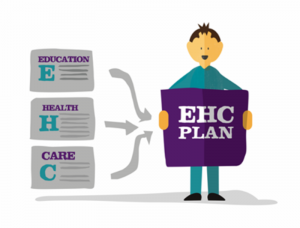
Graphic of education, care and health plan

Schools are spending tens of thousands of pounds trying to support children with additional needs amid delays to assessments from Surrey County Council.

One headteacher said a child waiting more than a year for an education, health and care plan (EHCP) meant the school had spent £40,000 to support him, which impacted on the whole school’s budget.

Delays to the plans, which are legal documents outlining the support required for children with additional needs, are “time consuming, stressful and distressing” according to one parent.

Surrey County Council’s timeliness on completing the plans has dropped in the past 18 months, meaning now just 26 per cent are completed within the legally-required 20 weeks.

Surrey is ranked 128th out of 152 authorities in terms of EHCP timeliness according to Department for Education data.

The starting point, a parent requesting an assessment for a plan, is followed by various assessments of the child, with a shortage of educational psychologists being an important factor in delays to EHCPs.

One parent said she was warned about delays to assessments at the start of her request for an EHCP for her child in October last year. She told a meeting of the county council’s children, families, lifelong learning and culture select committee on Thursday (July 20) parents felt like they were in a “perpetual fight” to get things done.

Having had a stage two complaint upheld, she said a communications protocol that should be in place was not being followed, and that having done a count, she had followed up with what was now her second caseworker around 20 times.

She said: “It’s incredibly time consuming, it’s stressful, it’s distressing. When I get responses from my caseworkers, who I know are incredibly overworked, they say: ‘Thank you for your patience’. “To which I reply to say I do not feel patient anymore. I am impotent to do anything about this because I’ve had a stage two complaint upheld and nothing changes.”

She said despite educating herself, “despite being on top of it, and being organised and keeping a record of every communication and the dates of all of those communications” she couldn’t make things go any more quickly. But she said the impact was mostly on her child who would be starting a mainstream secondary school which may or may not be able to meet his needs because the needs assessment had only just taken place.

The meeting also heard from a school headteacher, Sarah Carrington, of Stoughton Infant School, who said staff felt like there was an expectation to “always do more with less” and which impacted on workloads and wellbeing. She said it was “significantly challenging” in schools currently, probably the most she had seen in 22 years, and that teachers understood there was a rise in EHCP applications.
In Surrey, meeting documents show, there was an increase of 64 per cent in requests for assessment since 2020.

Mrs Carrington said: “It’s my belief that we all need to work together, the educators, the health service, the local authority, to solve these issues we are currently facing, to improve the experience of our children. We’re all aware that it isn’t up to standard and that children are currently being really let down.”

She told of one child who had been waiting for 55 weeks, 25 weeks longer than the legal timescale, for an EHCP. Saying the support the school had put in place for the pupil had cost around £40,000 without funding, and that there would be no back funding for it, she added it therefore impacted on the whole school budget.

Cllr Jonathan Essex (Green, Redhill East) said he’d been to the Earlswood Federation of schools, one of the largest primaries in the county, where governors estimated there was a 50-month funding deficit for EHCP provision, calculated at £32,000.

The cabinet member for education at Surrey County Council, Cllr Clare Curran (Conservative, Bookham and Fetcham West) said the authority was “acutely aware” it was not meeting the needs of children and families in the county. She added: “I’m really sorry about that. I know it is causing distress and worry to a lot of families, and it pains me to say that and I really do apologise to them.”

The county council’s executive director – children, families and learning said the council had been given additional funding from the Department for Education, but outlined that the funding that came through from central government was not allocated for the time that children were waiting for plans to be completed.

She said for several years in Surrey the authority had been overspending on dedicated funding received from government for schools funding, and supplementing government money through council budgets.

Rachael Wardell said: “Councils across the country as well as Surrey, are finding themselves existentially threatened by the debts that are being accrued in order to fund the support.” She told the meeting it wasn’t clear why the various factors playing into delays with EHCPs had created a “perfect storm” in Surrey. She said the process could only be “as fast as the slowest assessment”.

A cabinet meeting to be held on Tuesday (July 25) will make a decision on increasing funding for more educational psychologists to help with the delays, as part of an action plan to bring wait times down.

Related reports:

Council pays £3,900 to mother of SEND child

Surrey County failed SEND boy

Surrey to SEND £40m for special schools

Surrey slips up on child’s GCSEs


Surrey slips up on child’s GCSEs

An autistic child missed her GCSEs due to the failings of Surrey County Council, a watchdog has found. The girl missed about 40 weeks of education, the local government and social care ombudsman said, with only limited provision – much of which was online – during this time. 

The county council also failed to engage with medical professional involved with the girl, or provide any up-to-date notes to suggest what educational provision it considered suitable for the girl.

It led to the ombudsman to find fault with Surrey County Council for “failing to provide suitable alternative provision” and ordered the authority to apologise to the mother and child for the loss of education and support. 

After the ombudsman investigated the mother’s complaint, the council also agreed to pay £3,650 for the child’s missed education and £2,823.50 to for the cost of the private tutors.

The council also agreed to fund the child’s functional skills examinations to address her missed GCSEs.
In April 2021, the girl’s doctor asked for her to be signed off from school because of her sensory and communication difficulties.

The following month the school referred her to Surrey County Council because of her low attendance – having been out of education for more than 15 days.

The girl’s mother told the county council that her daughter had been signed off while doctors completed an Autism Spectrum Disorder assessment.

Work was being sent to the girl to complete but her mother expressed concerns over its suitability and had to search online to supplement this. That same month, her mother hired a private tutor for seven hours a week. By June ,she was attending half-days of school to see out the academic year. She began the new term after summer but stopped attending on September 13.

According to the ombudsman: “The law is clear that where a school does not make appropriate arrangements for a child who is missing education through illness or ‘otherwise’, the council must intervene and make such arrangements itself. The duty arises after a child has missed fifteen days of education either consecutively or cumulatively.”

From September 13, 2021 , to November 22, 2021, the child missed two further months of education during a key academic year, yet received no alternative provision during this time.

In total, during the period under review,  the girl received the equivalent of 20 per cent of a full-time education.

The lasting impact of all this, the ombudsman found, was that the girl “failed to take any of her year 11 GCSE examinations and has left mainstream secondary education without qualifications. This will have a lasting impact on (her) future. (Her mother) has advised she wants (her daughter)  to take functional skills examinations in maths and English.”

Surrey County Council has agreed to fund these. 

Councillor Clare Curran, cabinet member for education and learning apologised for the distress the family experienced. She said: “I am aware that the council has not always got things right and that the support and service that we give some children with additional needs and their families is not always of the standard that we would expect and I am sorry about that.  We are working hard to improve our services.

“We are not able to comment on any individual children specifically, however we are constantly reviewing how we support young people who are unable to attend school, and are implementing our £180million capital programme to increase the availability of, and access to specialist provision. We also recognise the significant issues that confront the SEND system nationally.

“We have seen a 64 per cent increase in education, health and care needs assessment requests across Surrey since 2020, at a time of a national shortage of Educational Psychologists (EPs). We are doing our utmost to recruit more to meet this demand, and we are filling this gap as best we can, but we hope to see the shortage in trained EPs and other issues addressed soon through the government’s improvement plan.

“We remain committed to improving our services and outcomes for children with additional needs so that they are happy, healthy, safe and confident about their future.”

The girl is said to be due to enrol in her sixth-form college in September 2023, and will be able to take her GCSE examinations there.

Related reports:

Council pays £3,900 to mother of SEND child

Surrey County failed SEND boy

Surrey to SEND £40m for special schools


£10m Co-Vid grant pay-back put in wrong place

Account error

A £10million accounting error at cash-strapped Guildford Borough Council was discovered in March but councillors were only told this month.

The error meant it looked like there was more in the council’s reserves, effectively its savings, than there really was, and that “urgent action” was now needed to turn things around.

Officers at the borough council have warned a section 114 notice, the same as has been issued by neighbouring Woking, could be issued this year, but is not immediately needed.

There are plans to cut spending in the short term under a new budget to be agreed by council on Tuesday (July 25), but with a warning the notice may be needed later in the year.

At a meeting of the council’s corporate governance and standards committee on Tuesday (July 18), members were given a clearer timeline of the discovery of the accounting error.

The money, according to Guildford’s joint executive head of finance, a role that is shared with Waverley council, was a Covid grant that had come from central government to be given out by the council.

Peter Vickers told the meeting that the leftover money, which has now been paid back to government, was incorrectly put in the council’s reserves rather than as money to be paid out, affecting the amount of money that seemed to be in the council’s savings.

The error came to light as external auditors looked over the 2020/21 accounts, with Guildford being one of many councils across Surrey and nationwide that has a backlog in its accounts being externally audited.

Mr Vickers said there were “quite a lot of accounting adjustments required” off the back of Grant Thornton’s audit, but said the issue was brought to members “at the earliest, most appropriate time to have that conversation”.

Councillors received an email the day before the statement that was issued on July 12 by Mr Vickers and the council’s chief executive to outline the plans to draw up a new budget and give the council a chance of staying afloat.

Councillor George Potter (Lib Dem, Burpham), said as with anything of such “magnitude” there was an interest in understanding “who knew what and when”. He asked officers when portfolio holders were made aware of the accounting error.

Mr Vickers said it wasn’t “cut and dry” when the error was identified and work needed to be done on identifying what had happened, what controls were in place and the nature of the error. He said: “It wasn’t something we were just about to bring to members and say: ‘Oh, we found an error.’ Everyone’s ears [would] prick up and suddenly we’re all on high alert. We have to do the right diligence to understand what had gone on.”

He said the relevant portfolio holder was told in an “absolutely confidential briefing happened to very few individuals at the time” but that with three years of uncompleted external audits, officers didn’t know “the boundaries of what was going on”.

The borough council’s chief executive told the meeting it was not a case of the council having “lost” £10m that now needed to be found. Tom Horwood said: “This is about an accountancy treatment of a figure that was effectively put in the wrong set of columns. So the money came in, it was spent appropriately, the balance was returned to government. There is no further money to find in that sense from that sum, but it was put into the wrong place from an accountancy perspective, which meant that it looked as if our reserves were higher than they actually are.”

A full council meeting will take place on Tuesday, July 25.


RA and Green motion to improve Surrey’s “Green” motion

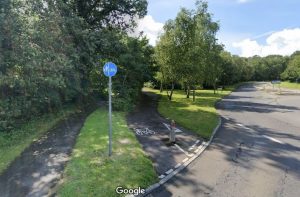
Cycle lane Christchurch road Epsom

It could soon be possible to take a “pleasant walk or cycle” along a Surrey road without being “slapped” in the face by “brambles or nettles”.

A motion calling on Surrey County Council to prioritise the maintenance of walking and cycling routes was passed with unanimous cross-party support – as long as the plans pass select committee.

Introducing the item at the Tuesday, July 11 full council meeting, was Residents’ Association and Independents Group leader Councillor Catherine Powell. She said: “The travel choices people make will be driven by how convenient, safe, easy, and enjoyable the options are. These choices will also impact on the individuals carbon footprint, and their health and wellbeing.”

Cllr Powell added: “We must make the most of the infrastructure we have already invested in, by proactively maintaining the surfaces, managing vegetation and prioritising the routes that people value most and use most. That will encourage others to use them too.”

The motion, she said, would “ensure our residents are not put off from walking, cycling, scooting because of overgrown paths, poorly repaired surfaces or just the plain absence of a map that shows the cut-throughs through an estate”.

The group hopes new and improved routes, in addition to the increased awareness from new maps – created with input from ramblers and cyclists – would reduce the dependence on driving as a default means of transport.

The motion was seconded by Cllr Jonathan Essex, leader of the Green Party group, who said it would ensure bus and cycle lanes, as well as pavements, were inspected more frequently.

He told the meeting it would “make it possible to do a pleasant walk or cycle without being slapped by brambles or nettles.”

The motion will go to the council’s highways select committee for approval following an amendment from Surrey County Council leader Tim Oliver who told the meeting decisions requiring policy and budget changes needed greater scrutiny and couldn’t be made on the hoof- but he supported it in principle.

The motion says that increasing cycling and walking is a key objective of the Council, and forms part of Surrey’s Community Vision for 2030 and Local Transport Plan.

All highways policies will be aligned with the council’s transport vision but, the motion said, more still needs to be done to develop plans to encourage walking and cycling.

As such the council has agreed, subject to agreement from the select committee, to update transport plans to support a higher priority grading on routes for local walking and cycling journeys, – particularly in areas of high employment, schools, hospitals, and leisure facilities.

It will also ensure walking and cycling routes are not blocked by overgrown plants and that highways inspection, for things such as potholes, are extended to left-behind signs, debris on pavements and cycleways and blocked drains.

Image: Cycle paths beside Christchurch Road Epsom (Google image).