
Epsom and Ewell Times

ISSN, LDRS and IMPRESS logos

Great expectations on Surrey’s tax?

Tim Oliver Surrey County Council leader - Surrey Live

Surrey County Council’s leader says he has “no expectation at all” that council tax will be put up by the full amount allowed despite a £14.4million budget gap at the council.
Upper tier authorities, such as the county council, can increase council tax by up to five per cent without a referendum, since Jeremy Hunt’s autumn statement on November 17.
Presenting a draft budget for 2023/24 to his cabinet on Tuesday (November 29) Councillor Tim Oliver (Conservative, Weybridge) outlined that the council was required to produce a balanced budget each year, and that he was “confident” the gap could be closed before it came back to cabinet early next year.
The budget will then need to be signed off by full council in February, while all 11 districts and borough councils across the county will also confirm how much they expect to raise their part of council tax by as they approve their budgets.
The county council’s budget currently assumes a 1.99 per cent increase of the county council’s part of the council tax, less than the five per cent it could be increased by, made up of a three per cent raise plus a two per cent precept for adult social care.
Cllr Oliver said: “I have no expectation at all that we will need to increase by 5 per cent.”
He also said the budget would be dependent on the settlement payment given to councils by central government, due to be confirmed on December 21.
Speaking before the meeting he said that around 80 per cent of the council’s revenue funding came from council tax, and that the authority was not “blessed with considerable sums of money from government”.
As such Cllr Oliver did not think the draft budget would be “significantly impacted” by the settlement announced by central government, but did say the council may need to use one per cent of the possible raise for adult social care, which could take the total increase to 2.99 per cent.
Of a total budget of around £1billion, Cllr Oliver said in the meeting he was “confident” the council would have found a way to close the budget gap of £14.4m and said the authority was in a much better position than in 2018.
He said after two years of the coronavirus pandemic, a cost of living crisis and rising inflation the council was not in the “easiest of times” but had a strong financial base to work from.
He added; “It is fair to say that we haven’t had the most consistent of approaches from central government over the last few months, so we are hoping that in that context, things will settle down.”
The council’s cabinet member for finance and resources, David Lewis (Conservative, Cobham), also highlighted a forecasted full year deficit of £24.5m from figures released from the halfway mark in September.
The overspend is made up of a £32.5m forecast overspend, offset by £8m of savings identified at the council.
Cllr Lewis told the meeting two areas of largest impact were around children’s services, including a £15m overspend on home to school transport, and in adult social care.
The meeting agenda said: “The current level of projected overspend remains significant.
“It is imperative that this reduces before we reach the end of the year, otherwise there would be a material negative impact on the level of the council’s reserves at a time when the level of external financial risk is extremely high.”

Image: Tim Oliver – credit Surrey Live


Any more trees please?

Children and trees

The Woodland Trust is urging schools and community groups across the south east of England to get their free tree-pack applications in quickly with just over a month left until the spring delivery closes.

Applications for spring, for delivery in March 2023, are currently open, but only until 11 January.

The last round of the ever-popular free tree-packs scheme was the Woodland Trust’s biggest-ever single send-out, with 4,625 organisations across the UK taking advantage of the scheme.

A total of 643 schools and community groups in London, Greater London, Kent, Surrey and Sussex took delivery of their trees from the end of October to 11 November.

In the south east of England, 88,155 trees were sent out to 643 organisations:

  • 16,380 Trees to 168 organisations in London
  • 9,690 trees to 87 organisations in Greater London
  • 26,535 trees to 157 organisations Kent
  • 14,070 trees to 101 organisations in Surrey
  • 21,480 trees to 130 organisations in Sussex

The figures for the south east of England were part of a bumper autumn delivery which saw 740,970 saplings finding homes the length and breadth of the UK, bringing the annual total to a record-breaking 1.3m trees for 2022.

Woodland Trust senior project lead Vicki Baddeley said there is no time like the present to sign up and take advantage of the scheme.

“With Christmas looming and National Tree Week upon us, now really is a good time to get those applications in and ensure you don’t miss out,” she added.

“We still have lots of trees available but with schools breaking up before you know it, and the hectic holiday period around the corner, it makes sense to get organised nice and early and avoid a last-minute rush in early January.

“Planting trees is such a simple action, but the collective impact can make a huge difference. It’s a great way for schoolchildren and community groups to learn about nature and the environment and, at the same time, embrace a “Green Christmas”.

“Planting trees has so many benefits, from combatting the effects of climate change, helping support wildlife, to greening up local spaces and boosting well-being.

“The desire to plant trees is growing all the time and I fully expect demand to reflect that in the coming weeks, so I would advise any interested groups to apply sooner rather than later.

“The application process to secure your saplings is quite straightforward, just visit https://www.woodlandtrust.org.uk/plant-trees/schools-and-communities/ to get started.”

The Trust’s tree packs have been generously funded by lead partners: Sainsbury’s, Lloyds Bank, OVO Energy, Bank of Scotland and Sofology.

Baddeley added: “As ever, the support and generosity of our funders is invaluable and we simply couldn’t do this without them.

“The help each and every one of them provides is hugely appreciated and helps to ensure we can provide and deliver our saplings in such huge numbers.”

The Woodland Trust’s autumn delivery:

  • England: 615,720 trees to 3,982 schools and community groups
  • Scotland: 77,940 trees to 428 schools and community groups
  • Wales: 47,310 trees to 215 schools and community groups

NOTES TO EDITORS:

For more information please contact the Woodland Trust press office on 01476 602993, Owen Phillips on 07958 066 766, or email media@woodlandtrust.org.uk or owenphillips@woodlandtrust.org.uk

The Woodland Trust

The Woodland Trust is the largest woodland conservation charity in the UK with more than 500,000 supporters. It wants to see a UK rich in native woods and trees for people and wildlife.

The Trust has three key aims:

  1. protect ancient woodland, which is rare, unique and irreplaceable
  2. restoration of damaged ancient woodland, bringing precious pieces of our natural history back to life
  3. establish native trees and woods with the aim of creating resilient landscapes for people and wildlife

Established in 1972, the Woodland Trust now has over 1,000 sites in its care covering approximately 29,000 hectares. Access to its woods is free so everyone can benefit from woods and trees.

www.woodlandtrust.org.uk

Free trees for schools and communities

The Woodland Trust is giving away hundreds of thousands of trees to schools and communities to make sure everybody in the UK has the chance to plant a tree. To apply, or see terms and conditions, visit: www.woodlandtrust.org.uk/freetrees

National Tree Week

National Tree Week takes place from 26 November to December 2022. It is the UK’s largest annual tree celebration. Each year, the country’s conservation sector, volunteer groups and tree-lovers come together to plant thousands of trees to mark the start of the annual tree planting season.

Courtesy: The Woodland Trust

Images:  The Woodland Trust | Flickr People Planting | Flickr


MP’s housing solution for Epsom and Ewell

Chris Grayling MP

Epsom and Ewell and indeed the whole country has a real shortage of homes. We cannot go on with a generation of young people who aspire to home ownership but have little hope of achieving this. And we must have more affordable homes locally.

As a country we are already now building more homes than at any time for decades, but there is still more to do. Locally precious little has happened in recent years. Four years ago, just before the local elections, the Borough Council was due to publish its plan for housing and for the area for the future. It was postponed then, and only now is the Council in the process of publishing and developing its local plan for the area for the next 10-15 years.

Every local authority is obliged to do this, and to explain how it will meet housing need, look after its local economy and protect its local environment.

Each council has also prepared an assessment of local housing need, based on national guidance of how to do this. The housing assessment for Epsom and Ewell is though impossibly high – as it is in some other places. It would mean building more than 10,000 homes locally, and inevitably would mean much of our green belt disappearing.

That is why on a national level I have been saying to Ministers that there has to be more flexibility for Councils based on the reality in their areas.

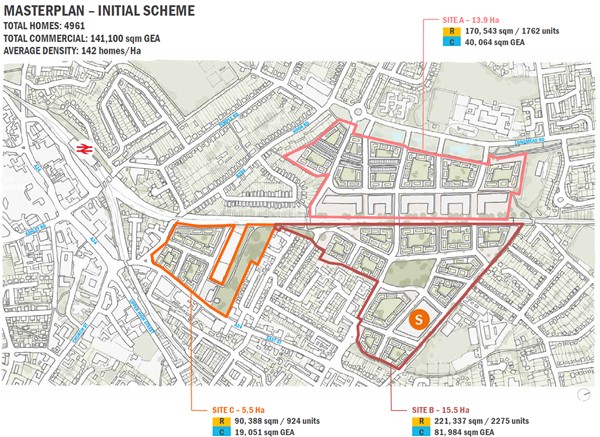
But here we do need to do all we can to meet the housing need and not nearly enough has been done on this locally in recent years.  That’s why I have proposed a comprehensive redevelopment of the Kiln Lane and Longmead areas to achieve this without building all over our green belt.

My plan, which has been developed together with a leading firm of architects, involves the construction of a mixed use area of well-designed developments, with businesses on the lower floors and flats above, with some terraced housing on the site as well. This kind of mix is typical of what is being done elsewhere. The buildings would be no higher than those already in and around the town centre.

The scheme provides a similar amount of commercial space to the present plus nearly 5,000 homes. The plan would be to have car showrooms and parking areas built upwards rather than at ground level across large areas of land. But over time I would expect the commercial space to attract more creative businesses, given the presence in Epsom of the University of the Creative Arts which is now one of the country’s leading institutions of its kind. It would also aim to provide more homes for younger people, meaning more could afford to stay locally and work here, rather than simply building more executive homes for commuters on open land.

And being close to the town centre, I hope it would provide a much needed boost to the businesses there.

I hope that as the local plan develops the Council will adopt this plan. I think it’s the best way forward for our area.


Epsom and Ewell last in Local Planning

Planning documents

Epsom and Ewell Borough Council (EEBC) has approved a delayed timeframe for the development of its new Local Plan, putting it behind both government targets and other Surrey councils, amid debate over greenbelt development.

On 21st November, EEBC’s Planning Policy and Licensing Committee unanimously approved a Local Development Scheme (LDS), which sets out a timeframe for the development of its new Local Plan that would see the planning authority miss a government target by more than a year. The Local Plan will set out planning policies and sites that may be developed in the borough up until 2040.

The LDS supersedes the version approved by the council in April, and delays the first stage in the development of the Local Plan by three months. It forecasts that the Local Plan will be adopted in Spring 2025. In an agenda paper, the council’s interim Chief Executive Jackie King pointed out that “the government will want to see progression against their target date of all Local Planning authorities having an up-to-date Local Plan by the end of 2023.”

In 2017, the Government made it a legal requirement for Local Plans to be updated, and if necessary updated, every five years. Epsom’s current planning framework consists of four documents dated between 2007 and 2015. The council has said that the national period of mourning following the death of Queen Elizabeth II caused delays because councillor briefings were rescheduled. Ms King also said that there were delays “to allow further member briefing sessions to be undertaken to enable members to fully engage with and help shape the Local Plan.”

At the committee meeting, Councillor Julie Morris (Liberal Democrats, College Ward) said: “The period of mourning was three weeks, and yet we have a three-month delay.” She added that it was “regrettable” that the committee’s chair, Councillor Steven McCormick (Residents Association, Woodcote Ward), had “put a lot of effort in trying to get councillors to attend briefing sessions” but that “at least one has had to be re-run because of lack of attendance.” She continued: “There is a communication failure. Councillors outside the committee do not realise the importance of the document, give it the deference it deserves, or give their views.”

The new LDS means that EEBC will be the last local council in Surrey to adopt a new Local Plan, with the exception of Woking Borough Council and Banstead and Reigate Borough Council, who said their plans did not need updating.

Surrey district/borough council Pre-Publication Stage – Consultation. (Regulation 18) Publication of Submission Draft Local Plan (Regulation 19) Submission and Examination of Local Plan (Regulation 22) Adoption
Elmbridge   Ran from June-July 2022 Scheduled for Winter 2022 Scheduled for Summer 2023
Epsom Scheduled for Feb-March 2023 Scheduled for Feb-March 2024 Scheduled for June 2024 Scheduled for Spring 2025
Guildford     Part 2 submitted June 2022 Part 1 adopted April 2019. Part 2 scheduled for March 2023.
Mole Valley     Submitted February 2022 Scheduled for Spring 2023.
Runnymede       Adopted July 2020
Spelthorne   Ran from June-Sep 2022 Scheduled for Nov 2022 Scheduled for Sep 2023
Surrey Heath Ran from March-May 2022 Scheduled for Jan-Feb 2023 Scheduled for June 2023 Scheduled for Dec 2023
Tandridge     Submitted January 2019 Scheduled for Oct-Dec 2023
Waverley       Part 1 adopted February 2018.Part 2 was scheduled for Sep-Oct 2022.

*Woking Borough Council declared that its plan was up to date in October 2018. Reigate and Banstead Borough Council declared its plan up to date in June 2019.

There has also been debate about developing on greenbelt land in the borough. Greenbelt land includes areas of countryside that are protected from development in order to prevent urban sprawl and encourage development within existing built-up areas. A member of the public attending the committee asked what the council was doing to preserve greenbelt land, and if it would “pause greenbelt development and research brownfield development” as an alternative. Brownfield sites are areas of land that have previously been used for development but are not currently in use.

Councillor Steven McCormick said that the council “should follow government policy in its approach to greenbelt”. Government policy is that greenbelt land should not be altered except in exceptional circumstances. Councillor McCormick said: “If alternative options are considered, it is sufficient to release greenbelt land to meet housing needs”.

Councillor Morris said she wished to clarify that the council had “sympathy” with what the member of the public asked. She added: “But it’s too early. There is every intention of not overdeveloping the borough. It may be that we don’t go for these plans, but the evidence is needed. It’s too early to say what we’ll arrive at.”

No draft of a Local Plan has yet been made public. In a recent email to constituents, Epsom and Ewell MP Chris Grayling said that he expects “the Borough Council to publish its initial thinking about the plan shortly”. He wrote: “We clearly have a need for new homes locally. There are too many young people who grow up or are educated here but cannot afford to remain in the area. And we have a serious shortage of social housing.” He added: “My worry is that developing the green belt is an easy option for the Council. It is always more complicated to reorganise what has already been developed than to build on a green field, but in our area it is much better to take the more difficult approach.”

Gina Miller, leader of the True and Fair Party, who has announced that she will run against Grayling in the next general election, criticised his comments on Twitter. She wrote: “Not surprising but disappointing that Chris Grayling backed abolishing housing targets, making it nigh on impossible to help young people onto the property ladder nationally, whilst calling for new homes in Epsom & Ewell”.

The first stage in the development of the Local Plan, which includes consultation with residents, is now scheduled for February-March 2023.

See earlier reports on The Local Plan:

Local Planning Matters

The Local Plan to plan The Local Plan

BBC misreports Epsom and Ewell planning?

Another £1/4 m to plan planning


Will Epsom think on the same lines?

Tram

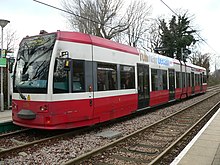
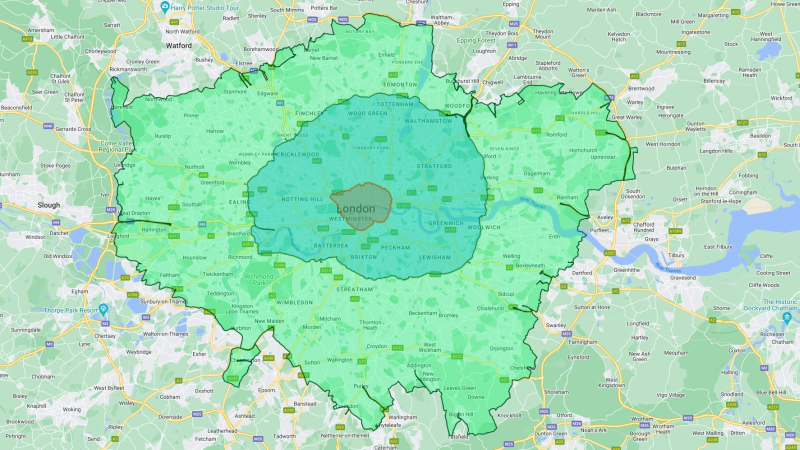
Trams into Surrey have been raised as one “very possible solution” to improving public transport with the expansion of the capital’s Ultra Low Emission Zone (ULEZ). The zone’s expansion was confirmed on Friday (November 25), and Elmbridge councillors had discussed the matter with a Transport for London (TfL) representative the previous evening at an overview and scrutiny meeting.

Councillors raised issues around public transport in the borough, saying it was not as good as that in greater London, and asking what could be done to improve it so people were less reliant on their cars. The ULEZ will be expanded from August 2023 to cover the area currently in the Low Emission Zone boundary. It will mean the zone, where drivers in non-compliant cars pay £12.50 per day if they enter it, will come up to the border with Surrey.

ULEZ expansion map

Speaking before the decision had been announced, Elmbridge Councillor Graham Woolgar (The Walton Society, Walton Central) said the question of better public transport in Elmbridge was “one of money”. He said it was unlikely the county council would find more money to improve buses in Elmbridge, and TfL would not help either because the area is outside London.

He asked Iain Killingbeck, community partnerships lead – west, for TfL: “There wouldn’t be any prospect of public transport being improved, would you agree with that?” Mr Killingbeck said he did not accept that, though TfL’s responsibility was for transport in the capital. He said getting people out of their cars, especially on shorter journeys, and promoting walking and cycling was what TfL encouraged. He added: “That’s what we do at TfL, that’s what we’re all about. So we can help to collaborate, partner and work with you, but we don’t have the responsibility for the county or for this area.”

According to the Mayor’s office, the existing ULEZ has reduced roadside pollution levels by 44 per cent in central London and 20 per cent in inner London.

Speaking after the meeting, the county council’s leader, Cllr Tim Oliver (Conservative, Weybridge) pointed to the authority’s £50million investment in electric buses and the same amount in hydrogen buses in the county. There is also an on-demand electric bus service operating in some parts of Surrey including Tandridge and Mole Valley, and due to be rolled out to other areas.

Cllr Oliver told the LDRS: “We will invest whatever we possibly can. I’m a big believer that we are never going to get people out of their cars if there isn’t a good alternative public transport system.” He said the county council had “put the message across” to the London Mayor about the impact the expansion would have on Surrey residents, including in areas such as East Molesey where drivers will be charged if they cross Hampton Court Bridge towards Bushy Park.

The county council, as well as borough and district councils, responded to a consultation that ran over the summer on the plans, highlighting issues such as scrappage schemes, health appointments and requesting to delay the expansion. Cllr Oliver said: “We’ve done everything we possibly can to say: ‘You can’t do this, it’s not fair on our residents.’”

In Thursday’s Elmbridge meeting, Long Ditton Councillor Jez Langham (Liberal Democrat) explained his ward bordered London and agreed public transport needed to be better for residents. He pointed to the success of trams in cities such as Sheffield and Manchester,  as well as in Wimbledon, though he mentioned the Croydon tram crash of 2016 in which seven people died. Cllr Langham said: “Nonetheless it is a successful line, and given the lack of tubes around, it would seem to be a very possible solution.”

Mr Killingbeck said trams were “relatively affordable” but that there wouldn’t be the option of getting a tram line in place before the August 2023 expansion. He added: “I accept, we need to strengthen public transport.”

Cllr Oliver said trams could work in more urban areas of Surrey such as Guildford or Woking, but believed the on-demand buses were better for many of the more rural parts of the county. He added: “[Trams would be] a major infrastructural investment and if the government were to put some funding behind that, then I’m quite sure we would look at it.”

The Mayor of London, Sadiq Khan, said: “Expanding the ULEZ London-wide has not been an easy decision. The easy thing for me would have been to kick the can down the road. But in the end, public health comes before political expediency. We have too often seen measures delayed around the world to tackle air pollution and the climate crisis because it’s viewed as being too hard or politically inconvenient. But there’s no time to waste when people’s lives are on the line and we are facing a climate crisis.”


Timeo Danaos et dona ferentes..?*

Kingswood House School an Trojan Horse

Battle for school gets classical with fears of a Trojan Horse. Kingswood House School in Epsom is asking local people to join hundreds of residents in opposing plans to evict the School from its site and replace it with a small school and housing estate. With objections numbering over 400, local people have risen up in opposition to developer Steve Curwen’s plans to evict the 102 year old, 245 pupil school from its site in West Hill, Epsom. Curwen Group are working with the landowners, the Aczel brothers, with the scheme involving the construction of a small school of only 60 pupils with acute special needs.

It is anticipated that the school would be privately operated on a “for-profit” basis. In what has been described by MP Chris Grayling as: “an example of the worst form of business practice”, the Aczel brothers have confirmed that the planning application for the new school will be followed by a second application to build a housing estate on the current school’s playing field.

Amongst its 245 pupils, Kingswood House School is home to 172 local children with special needs and has the highest concentration of special needs pupils at any school in Surrey. The School has been made an Asset of Community Value by Epsom and Ewell BC in recognition of its contribution to the local community.

The School has now filed a detailed objection to the proposed development including reports by independent experts. These documents which are publicly available on the Council’s website include a report by educational expert Neil Roskilly, a former member of the General Teaching Council for England and adviser to the Department for Education. Roskilly notes that “…none of the pupils at Kingswood House School would qualify for a place at the proposed new school because their special needs would not be considered sufficiently severe: and the need in Surrey is for schools catering for milder special needs (such as Kingswood House) not acute special needs and therefore the new school would be marketed by its owners towards pupils from outside Epsom.”

 Roskilly says that Department of Education design guidelines for schools accommodating pupils with acute special needs have been ignored, resulting in classrooms and common areas being too small and that: “… as designed the proposed school would have to operate with a limited curriculum”. As such, Roskilly believes that: “…it is highly doubtful that the proposed school would receive permission to open from Ofsted at a post-registration inspection. This is because it would be potentially discriminatory and in breach of the: “Special Education Needs and Disability Code of Practice: 0 to 25Years (2015)”, which states that all SEND pupils should have access to a broad and balanced curriculum”.

Access for the proposed new school would be via West Hill Avenue, currently a quiet residential road to the rear of the Kingswood House School. Transport consultants Markides note that the proposed access and parking arrangements are inadequate given the width of West Hill Avenue, its use for residential parking and the presence of trees restricting visibility. When combined with the intended housing estate and inadequate staff and visitor parking for the proposed new school, Markides conclude that: “… the proposed access and internal layout are regarded as seriously deficient and unsupportable.”The problems identified don’t stop with those spotted by Markides and Roskilly.

Officers employed by Surrey County Council and Epsom and Ewell Borough Council have identified problems relating to both flood risk and ecology. The Surrey County Council Flood Risk, Planning and Consenting Team have reported that they are: “…not satisfied that the proposed drainage scheme meets the requirements…” of the relevant planning legislation and that development should not commence: “….until details of a surface water drainage scheme have been submitted to and approved in writing by the planning authority”.

Curwen’s own ecology reports recommended further reports, not yet done, to establish the presence or otherwise of protected species, Great Crested Newts and Bats. Surrey’s Ecology Officer notes that these reports are still not done and that: “These surveys are required and cannot now be done until spring/summer next year” .

A common concern amongst the hundreds of objections filed so far is that Curwen’s scheme is in reality a sham and a “Trojan horse” for the construction of a housing estate. This concern is only likely to have been intensified given the fundamental flaws in the scheme’s design exposed by experts for Kingswood House School’s and the shortcomings noted by Surrey County Council’s Flood Risk team and Epsom and Ewell Borough Council’s Ecology Officer.

A Spokesperson for The Curwen Group said to Epsom and Ewell Times:

We are committed to providing a specialist SEND school at the Kingswood House site, and are currently working though technical responses to our application in consultation with the surrounding community. “.

Those wishing to support or object should do so via the Council’s website tinyurl.com/epsomewellplanning and entering the reference number 22/01653/FUL or by email to the case officer, Gemma Patterson at gpatterson@epsom-ewell.gov.uk (ref 22/01653/FUL)

*The Trojan priest Laocoön guessed the plot and warns the Trojans “I fear Greeks, even those bearing gifts“.


Ewell Village to get an uplift?

Ewell Village

High Street improvements to come in Ewell to revitalise the town and create spaces that are safer and more attractive? Surrey County Council‘s Ewell project team has worked closely with a group of residents who originally campaigned for change in the village. Surrey County Council’s Cabinet is due to discuss £30 million of funding to deliver seven capital projects identified in the Surrey Infrastructure Plan.

The proposals for Ewell state:

Ewell Village currently suffers from significant levels of traffic passing through the village, with an imbalance between traffic and pedestrians, both in terms of space consumed and dominance exerted. Pedestrian movement in the village is notable, particularly that of children travelling to/from school, but resident feelings about road safety are poor given the high volumes of traffic.

This project will deliver improvements to the High Street that will support revitalisation of the village through restricting vehicular access to some degree along the High Street, bringing about more pedestrian-friendly spaces that are safer and more attractive. It will bring improvements to local environmental sustainability via new street greening in addition to reducing vehicle emissions, will enhance the economic resilience of existing and new retail outlets through the creation of more attractive spaces that encourage longer dwell times, and will enrich social cohesion by bringing about more opportunities for people to connect with one another.

Epsom & Ewell Borough Council (EEBC) is committed to continued engagement with SCC to develop plans for the village and welcomes further collaboration with the community and community representatives to help shape the scheme.

The total scheme cost is approximately £2.5 million. SCC will be seeking a contribution of 50% from third party funding. Funding from EEBC will be determined once a preferred option is agreed.

Other proposals for the County include:

Projects include town centre and highway improvements, active and sustainable travel schemes, and flood alleviation schemes.

£8.64million of the funding would come from Surrey County Council, with the rest coming from external funding sources. These projects include the implementation of active and sustainable travel schemes to provide Surrey residents with greener options of travel, whilst improving air quality and creating healthier places to live. There are also town centre regeneration schemes to support economic growth and provide the necessary infrastructure for growing communities. These infrastructure projects are critical for the council to deliver its ambitions for the county now and into the future.

The seven capital projects are:

Town centre schemes

  • High Street improvements in both Ewell and Horley to revitalise the town and create spaces that are safer and more attractive. The Ewell project team has worked closely with a group of residents who originally campaigned for change in the village and in Horley, investment is being made following the impact of Covid on how the town is used by residents.  
  • Town centre regeneration in Caterham through flood mitigation works, improved connectivity and improvement to public spaces in Caterham Valley and Caterham on the Hill.

Active and sustainable travel schemes

  • Electric bikes (E-bikes) in Guildford – implementation of a town-wide bike share scheme to offer an alternative to car trips within the borough.
  • Woking sustainable transport improvements  improvements for walking, cycling and bus infrastructure in the east of Woking, improving connections between Woking town centre, Sheerwater and West Byfleet. For this scheme Surrey County Council have submitted a bid for £12million to the Department of Housing and Levelling up as part of round two of Levelling Up funding.  

Highway improvement schemes

  • A320 North of Woking improvements – Plans to make all junctions and roads on the busy stretch between Chertsey and Ottershaw work well together to improve traffic flow. Improvements for walkers and cyclists, including new crossing points and wider foot and cycle paths and improved access to public transport.

Flood alleviation schemes

  • Flooding Alleviation Programme 2023/24 – A mix of schemes and interventions focusing on flood resilience measures, flood risk reduction and protection against flooding.

Cabinet will also be reviewing the allocation of £2million funding to support the expansion of the on-street electric vehicle chargepoint roll-out. The funding required would support the installation of a comprehensive network of publicly accessible chargepoints right across the county. This is essential to support residents who don’t have off-street parking to transition to electric vehicles. Surrey’s Local Transport Plan has identified as one of its top priorities the reduction of emissions and increase in energy efficient vehicles, specifically to promote zero emission and smaller vehicles. Cabinet will also be discussing the appointment of a new supplier to deliver a wider roll-out of chargepoints across the county to meet the increased demand.

Matt Furniss, Cabinet Member for Transport, Infrastructure and Economy, said: “Investment in infrastructure is essential for sustainable economic growth and to cater for the needs of Surrey’s businesses and communities.

“The projects being presented to Cabinet take into consideration changing infrastructure requirements for our communities. Following the Covid pandemic, the way people live and work has changed. These projects consider new travel patterns and behaviours, whilst focusing on improving local places.”

Surrey County Council News and with additional reporting on Ewell by Epsom and Ewell Times


Cllr Dalton leads street night light fight

street lights

Epsom and Ewell’s Councillor Hannah Dalton (Residents’  Association, Stoneleigh) said she lived in a zone five area, but when she got the last train home, she would still get the torch out on her phone in order to get home safely once off the main streets. Surrey’s Police and Crime Commissioner has hit back at a claim she “doesn’t understand what she’s talking about” as she says the decision to turn street lights on at night is the county council’s responsibility.

Lisa Townsend said street lighting has been “one of her great frustrations” with “mixed messages” at council level, as another councillor shared her experience of walking home with her phone’s torch on to get back safely.

In a heated meeting of Surrey County Council’s police and crime panel, in which councillors and non-elected members ask questions of the PCC, Runnymede Councillor John Furey (Conservative, Addlestone South) said residents could make a request to get lights switched back on in certain areas.

Street lights on some of Surrey’s residential roads started to be turned off at night in 2017, usually between the hours of 1am and 5am, to save money.

Epsom and Ewell’s Councillor Hannah Dalton (Residents’  Association, Stoneleigh) said she lived in a zone five area, but when she got the last train home, she would still get the torch out on her phone in order to get home safely once off the main streets.

In response the elected Conservative PCC said: “You and I have both, I suspect, walked home from train stations using the light on our phone, clutching our keys, speaking to somebody on the phone hoping that if anything happens, there will at least be a record but conscious that by the fact that we’re on our phone means we’re not paying the proper attention to our surroundings. Any woman I know has been there.”

She said she got “very annoyed” when told by officers that the reason that lights hadn’t been turned on was because police hadn’t asked for them to be. Mrs Townsend added: “That’s not the reason. It’s entirely in the county council’s gift as to whether they turn them back on or not. I’m frustrated by the mixed messaging that my office gets I’m frustrated by the different answers that I get when I ask about it.”

Calling on councillors to lobby the county council that where residents didn’t feel safe and wanted street lights switched back on, they should be, she added it was not for the police to be making the case for residents.

Mrs Townsend added: “Something should not have to happen to us, or to any other woman or man, in order for a case to be made to put the lights on. If you don’t feel safe, and it’s what the community wants, the lights should be switched on. I couldn’t be clearer in that.”

Cllr Furey had previously interrupted Mrs Townsend, saying: “This is quite out of order. The PCC doesn’t understand what she’s talking about.” He said the police would be asked for their opinion if there was a request for residents to switch lights back on, but that the request went through the county council and that if there was a case, the lights would be switched back on.

Mrs Townsend, saying she had been “rudely interrupted” by Cllr Furey, said she understood the process but was concerned about the “extra bureaucracy” and said she didn’t want to see any more delays to requests. She added: “My point is police shouldn’t have to become involved in it. If a woman doesn’t feel safe and she wants to have the lights turned on, that should be a matter for the county council. It should not be a matter for policing because the police cannot interfere on whether somebody feels safe or doesn’t.”

Surrey County Councillor Keith Whitham (Conservative, Worplesdon) said it was “not a black and white situation”. He said in his area he had seen successful examples of lights being switched back on where Surrey Police had supported residents in their appeals to the council. Mole Valley Councillor Paul Kennedy (Lib Dem, Fetcham West) said the blanket approach “simply doesn’t work” and that people had “to work really hard to try and get the lights back on.” He said he would be taking it up with the county council, but also recognised that many people in his rural area valued and wanted to protect their dark skies.

On the wider issues of the safety of women and girls, the meeting heard the responses to a survey carried out in April and May 2021 which showed that 45.6 per cent of the 5,427 participants felt unsafe in their neighbourhoods at night, and 55.7 per cent felt unsafe in the nearest town centre at night. A report into the findings said: “One of the main themes when respondents were asked to explain why they sometimes feel unsafe, was lighting, or lack of it in local areas. A lot of these comments mentioned the lack of street lighting in their local area, and how this made it feel unsafe when out and about after dark.”

Mrs Townsend pointed to the almost £1million received from Government to help tackle violence against women and girls in the county, including training for teachers in schools. She said: “We’re not going to police our way out of this problem. We do need to take a whole society approach.”


Neighbouring crematorium plan goes up in smoke.

Crematorium

Reigate and Banstead borough council has shelved its plans for the area’s first crematorium despite having spent £350,000 on the project so far. The facility could have brought in more than £1.5million for the authority, but was rejected by councillors at a planning meeting in September 2021, despite the officer recommendation to approve it.

A decision then had to be taken whether to submit another application, proceed with a third party partner or appeal the decision, though it was then discovered the council could not appeal its own planning decision.
Reigate and Banstead Borough Council’s commercial ventures executive sub-committee considered a report into “project baseball” on Thursday (November 17) which detailed the closure.

The project, first brought to committee in December 2019, would have provided the borough’s first crematorium, and has been funded by the council through its reserves, or savings. Plans were refused at planning stage because of its location in the greenbelt, with more than 500 public objections to the application.

Council documents show the aim of the project was to provide a much needed and greatly improved level of service to the residents, while also bringing in income for the authority. More than 80 per cent of of dead people were cremated in the UK as at 2021, and facilities in neighbouring boroughs were found to be operating beyond their capacity.

Documents said: “[They] were not considered to serve customers, and particularly local people, well at a difficult time of life, either in terms of service, cost, environment and location/accessibility.” They went on to say the crematorium would aim to deliver “a higher quality facility and service” than the nearest competitors, closer to residents and those near the borough, and also bringing money in for the council.

Operating at full capacity, it was estimated the crematorium could have brought in more than £1.5m per year.


Banding against Surrey’s top value homes?

Big house

“Very expensive” houses on private estates in Surrey should be added to new council tax bands to make the collection process fairer, according to one councillor. As part of the Autumn Statement, Jeremy Hunt announced more “flexibilities” for local authorities to increase council tax by 5 per cent per year without a referendum from April next year. The rise could mean average council tax bills look increase to more than £2,000 for a Band D home as councils look to fill holes in their budgets.

Councillor Nick Darby, (The Dittons, Dittons and Weston Green Residents), the Residents’ Association and Independent group leader on Surrey County Council, said legislation at central government level could make the system fairer. In what he said would be a “significant change” in the system, Cllr Darby said a threshold could be set on homes worth more than, for example £5million, and two new council tax bands created to get those homes to pay more “as a matter of principle”. He added: “I don’t mean your average three-bed semi. If you go into areas of Surrey, in the private estates in Esher, Weybridge you’ve got people with very expensive houses.”

He asked if it was fair that those who have “those very, very expensive houses” pay the same council tax as someone in a house with “very much less value”. But he said the plans should not impact on those who were “already struggling”. He said for people who were “asset rich and cash poor” the payments could be put off until the house was sold, rather than having to pay immediately or be forced to sell their home.

County council’s budget “already under considerable pressure”. The Surrey Liberal Democrats said people in Surrey were being asked to pay for Conservative errors to fix the economy and oil and gas giants were being “[let] off the hook”. Will Forster (Woking South), Leader of Surrey Lib Dems said: “We know that the county council’s budget is already under considerable pressure and today’s announcements will not make balancing the books any easier. It remains to be seen whether the Tory administration decides to use the extra flexibility they will have to set a much higher level of council tax, to help make up the shortfall. We need a fair deal, including support for people unable to afford skyrocketing mortgage bills and rents, and protecting funding for local health services. This could be paid for by reversing tax cuts for banks and a proper windfall tax, instead of imposing years of stealth taxes on ordinary families.”

Surrey County Council’s leader, Tim Oliver (Conservative, Weybridge) is chairman of the County Council’s Network, and praised the Chancellor’s decision to delay social care reforms until 2025 as a “brave” one. He said postponing these reforms and putting money into frontline care services was welcomed and would protect the most vulnerable also giving councils “vital time to stabilise the care system”.

The county council previously warned of concerns that without a delay, the authority could face bankruptcy. With his county council leader hat on, Cllr Oliver said there was much in the statement local government could be happy about. He said investment in schools, skills and research and development would allow Surrey residents to access new, higher-paid opportunities, a priority for the council.

Cllr Oliver added: “Businesses in Surrey will also be pleased to know that they will not see business rates going up next year, while central government will also be ensuring local authorities are not out of pocket as a result. “We were also pleased to see that capital budgets for the next two years will not be cut, meaning we can continue to develop the world-beating broadband and transport infrastructure companies need to grow and thrive.” He said the authority would work closely with government ahead of the local government finance settlement due in December and would continue with its own budget setting, soon to be published for public consultation.

Another councillor looking ahead to December’s finance settlement is the Guildford deputy leader, Cllr Joss Bigmore (Residents for Guildford and Villages.) He was concerned there was not enough support to help local authorities protect frontline services. With an increase of more than £1.5m in energy costs just at the borough’s Spectrum leisure centre, he said: “It’s all well and good being allowed to increase council tax but it’s nothing compared to inflationary pressures.”

End

Epsom and Ewell Times adds: Tim Oliver was interviewed on BBC Radio 4’s PM programme 18th November and said he hoped the Council would not have to raise Council tax by 5%. He said the position was ameliorated by the promise of central Government of £6 billion to finance adult social care. So, a rise in Council tax “probably not, possibly not…” In a Surrey County Council press release issued later in the day Mr Oliver has added:

Today’s autumn statement contained much that local government can be happy about, helping us ensure no-one is left behind. I am pleased to see that government has listened to our calls for a postponement of the adult social care reforms and for further support for the service. It is also good that the government will be developing a workforce plan for the sector and the NHS, to ensure we have the capacity to deliver these vital services.

“Businesses in Surrey will also be pleased to know that they will not see business rates going up next year, while central government will also be ensuring local authorities are not out of pocket as a result. We were also pleased to see that capital budgets for the next two years will not be cut, meaning we can continue to develop the world-beating broadband and transport infrastructure companies need to grow and thrive.

“Finally, the new investment in our schools over the next two years, as well as other announcements about skills and research and development, will enable Surrey residents to access new, higher paid opportunities. This is a high priority for us, and will be a key driver to ensuring Surrey continues to lead the country as we seek the growth that will take us through the current economic uncertainty.

“We will be working closely with the government over the coming weeks, particularly as we approach the local government finance settlement due in December, to work out the details attached to these measures. In the meantime, we are also proceeding with our own budget-setting process, which we will be publishing for public consultation shortly.”