Epsom and Ewell Times

ISSN, LDRS and IMPRESS logos

Council’s secret strategy on public resources?

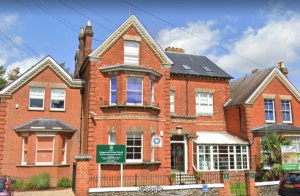
Crematorium sign

Epsom and Ewell’s powerful Strategy and Resources Committee went into secret session on four items of public interest at its meeting Tuesday 15th November. The four items were:

  1. INCOME GENERATING OPPORTUNITY
  2. COST OF LIVING PAYMENT
  3. LAND RETENTION
  4. COMMERCIAL PROPERTY UPDATE

In each case the secrecy was justified on the following ground:

“…. the business to be transacted/nature of the proceedings………. deals with information relating to the financial or business affairs of the Committee and third parties and the public interest in maintaining the exemption currently outweighs the public interest in disclosing the information.”

However, the Committee did not close the meeting during discussions on the motion to close. During that discussion Councillor Eber Kington (RA Ewell Court Ward) revealed in public that the “income generating opportunity” related to a crematorium.

Councillor David Gulland (LibDem College Ward) argued that the proposal “is an interesting development which would benefit from a wide-ranging discussion with our residents … I feel we’re trying to be too secretive…we should be open with what we’re trying to achieve with our assets.” The Interim Chief Executive, responded that “the reason this is a restricted item is because it’s a commercial opportunity and we need to protect our negotiations…with potential suppliers, etc”. However, Councillor Kate Chinn (Lab, Court Ward) agreed with Cllr. Gulland. “Part of making the business case is to see if there’s a need for it in the borough,” she said. “Surely the easiest way to do that is to ask the residents.”

It was at this point that Councillor Kington made the statement that “I want to get as much as I can out in the open. But what we have here is the Council looking at a possibility of a crematorium.” He went on to defend the proposal to exclude press and public: “ [If this] is a runner, it would have to come back to this committee and it may well be that that will be the time when it will be a public document. We don’t want to give anyone the heads up that this is what we are planning. In most cases, we will put things not on pink paper if we can help it.” [Ed. “Pink paper” is the colour of secret papers.]

The Residents’ Association majority on the committee agreed with Councillor Kington and excluded press and public from any further details of this and the other three items.

_________________________________

At the same meeting:

VOTER ID LIKELY FOR 2023 – BUT COUNCILS MAY HAVE TO PICK UP THE BILL

Following public consultation, a new polling station is expected to be in operation for the borough elections in 2023. This is to be situated in the arts centre at the newly refurbished Horton Chapel and will serve the residents of the new Horton Ward. This new ward will comprise the four former hospital sites of Clarendon Park, Livingstone Park, Manor Park and Noble Park, plus some roads that are currently in Court Ward around the northern end of Hook Road.

Receiving the detailed report that included this information Councillor Hannah Dalton (Residents’ Association, Stoneleigh Ward), asked about the Council’s preparedness for the introduction of voter id at polling stations. “There will be a lot of communication from the government about this,” the council officer replied. But he went to say that it will be a challenge getting it ready because the Council will be able to issue identity slips where people don’t have photo identity.

Councillor Liz Frost (Residents’ Association, Woodcote Ward) followed this up by asking about the cost implications of this for the Borough Council. The Interim Chief Executive, stated that “there are discussions going on with government at the moment … At the moment, the proposal is that local councils will fund ID cards … It’s an ongoing discussion.”


Epsom to help meet children’s homes bed shortage?

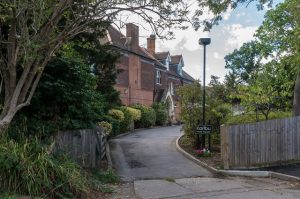
Wells House - former SAurrey County council Childrens Home

With improvements to be made to existing children’s homes, and new ones being built in Epsom and Walton, Surrey County Council is addressing a shortage of up to 60 children’s homes beds for young people in the area. High property prices, difficulty securing planning permission and staffing issues, tied in with existing children’s homes in need of repair and children with more complex needs have led to a “real problem” with provision in the county.

Image: Wells House or Karibu, Spa Drive – Surrey County Council Childrens Home

According to Rachael Wardell, the authority’s executive director for children, families and lifelong learning, the county is “quite a long way short” on being able to provide for looked-after children in Surrey, and will need another ten or 12 homes to meet its needs. These would come from both council-run children’s homes and private providers, with the county council currently having nine of its own homes and two new ones being built. She said the priority was always to keep children in Surrey where possible, to keep them near their families and communities.

The authority’s children’s services department was rated “requires improvement” in a January inspection, up from the inadequate rating it was first given in 2015. Asked if the council is playing catch up in terms of provision for young people being looked after by the council, Ms Wardell said it was “quite possibly true”. The executive director, who joined the authority in December 2020, said the county council has fewer children’s homes altogether than many neighbouring authorities, even across both in-house and private providers. She added: “When we look at some of the provision we’ve got for our children, it’s quite a long way short in terms of numbers. It also often looks quite out of date, it hasn’t necessarily been maintained or brought up to date on a regular basis over the years. What I would say is that we’re investing really strongly now.”

Part of that investment is more than £2million put into staffing, including staff achieving qualifications to be on a higher pay grade, and a recruitment drive since April which has seen 95 jobs offered and the council’s residential team fully staffed with managers, deputies and portfolio leads.

With improvements to be made to existing children’s homes, and new ones being built in Epsom and Walton, Ms Wardell said she wanted to be able to make children “feel like they’re in a lovely place” with really good staff. Figures from July show that just under 40 per cent of looked-after children in the county were in homes in Surrey, with the authority aiming to increase that number to 80 per cent.

The county council closed one of its own homes in February this year, within 24 hours of an Ofsted report in which inspectors said “significant” management failings left its residents at risk “of significant harm”.
In October, Elmbridge planners rejected an application for a children’s home in a Claygate cul-de-sac, despite support from the county council and a recommendation to approve from council officers.

Ms Wardell said those residents who objected to children’s homes had lost sight of the fact that they would be housing “children who’ve done nothing wrong, who’ve had a really, really tough life, and who need our support more than anything else”. Of the shortage of beds in the county, she added: “It is a real problem. Not being able to develop [homes] ourselves and for other providers not to be able to develop them restricts the choices and opportunities for Surrey’s children.”

She also said she is not the only children’s services director asking for Ofsted inspections that allowed more of a focus on the children and their journeys, as she reacted to an inadequate rating given to one of the council’s children’s homes in a report released last week. Saying regulatory inspections don’t look “in the round” at what is going on in a child’s life, and since inspectors “can’t be in the home every day” they identify problems from months previously that have often since been corrected. While saying she would sometimes want staff to spend time with children rather than updating records, if they had to choose between the two, Ms Wardell also said: “I’m not trying to wriggle out of the responsibility, when homes get that wrong. At the same time, when they’re trying to be very child centred, they’re sometimes doing things with that young person, and maybe not keeping their records as up to date as they should.”

She said being under less pressure with staffing would mean workers could both work with children and on paperwork, and that changes had been made to the system that logs information to make it easier for staff.
But she added that the “bounce” homes made between ratings and after inspections was “really tough” not only on staff but also on the young people living there, who would get a version of the report to read.

She said: “[The report] will say: ‘The thing that you were experiencing as supportive, helping you, getting you back to school and all of the other important things, was something that we don’t think is good enough.’” In small settings, she said a change of one or two key people could make a big difference, describing residential care as “more volatile than the rest of the service” and saying it could move both up and down quite quickly. She added: “Even the inconsistencies [across the county] are a bit inconsistent.”


July find of rare May fly in Surrey

caenis-beskidensis Mayfly

The River Thames Scheme (RTS) has discovered a nationally rare mayfly (Caenis beskidensis), which hadn’t been spotted in the UK for 49 years and has never been seen in the River Thames.  

The invertebrate, which was last seen in Herefordshire in 1973, was discovered near Walton Bridge as part of the project’s routine survey work. Historically, they have been found in small and medium-sized streams, but have not been seen since 1973, when last spotted in Herefordshire.

This is an incredibly exciting find for the scheme and demonstrates just how important the survey work that the scheme’s ecologists do is. By establishing the value of the existing habitats living around the Thames the scheme will be able to put plans in place to protect them during the work and help them thrive for the future.

Speaking on the discovery RTS ecologist Jenny Stephenson said: “It is such an exciting discovery to identify something that hasn’t been seen in British water since the 1970’s. Now that we have discovered the Caenis beskidensis in the River Thames we will be able to monitor it and ensure the colony continues to thrive.

“The discovery of the mayfly, which was found in its nymph stage and part of its aquatic life cycle, represents a major expansion in both the distribution and habitat type the species has historically inhabited. We are confident that with the new habitats that the scheme will create we will encourage these may flies to breed further in the future.”

Image of a generic mayfly in its adult form. Please note this is not Caenis beskidensis as due to its rarity no image is available.

Mayflies form an important part of the river eco-system and are an important food source for fish and, once transformed into its adult form, insectivorous birds. Although the may flies have historically been found in small and medium sized streams they are also found in the upper areas of lowland rivers where they live in slow flowing shallow water. The RTS will create more of these river habitats so the team are hopeful new colonies will thrive. 

As part of its work to understand the existing environment the RTS carries out hundreds of ecological and environmental surveys every year. A range of species have been targeted in these surveys, including bats (and their roosts), water voles, breeding birds, great crested newts, fish, invertebrates and species of reptiles.

Hannah Packwood, RTS environmental surveys project manager said: “It’s so important that we understand the existing environment so we can continue to protect and where possible enhance it through the RTS. Finding rare and unexpected species is exciting, and we will continue to monitor the environment in our survey work throughout construction and the operation of the scheme”.

A team of ecologists undertake the surveys by observing, measuring, taking notes and photographs, as well as soil and water samples. These surveys don’t cause any significant disturbance to the environment or to land or property.

The RTS is currently holding a six-week public consultation for people to have their say on plans which includes a new flood channel whilst also providing habitat for wildlife and a new feature in the landscape for recreation. The consultation will run until Tuesday 20 December 2022. Full details of the consultation events, how to get involved, and to discover all venues that have brochures available to pick up please visit the website at www.riverthamesscheme.org.uk or call the Environment Agency National Customer Contact Centre on: 03708 506 506.

Thames plan
  • The River Thames Scheme is being delivered in partnership between the Environment Agency and Surrey County Council.  
  • The scheme’s wider partners are Elmbridge Borough Council, London Borough of Richmond upon Thames, Royal Borough of Kingston upon Thames, Runnymede Borough Council, Spelthorne Borough Council, Thames Regional Flood and Coastal Committee, Thames Water, Enterprise M3 Local Enterprise Partnership, Thames Valley Berkshire Local Enterprise Partnership.
  • The River Thames Scheme is an integrated scheme which responds to the challenges of flooding, creating more access to green open spaces and sustainable travel, in addition to encouraging inclusive economic growth, increasing biodiversity and responding to the dual challenges of climate change and nature recovery.     
  • The project aims to deliver many benefits for local communities and businesses. The new flood channel will reduce the risk of flooding to homes, businesses, and infrastructure, while also providing habitat for wildlife and a new feature in the landscape for recreation.  
  • The River Thames Scheme will include:
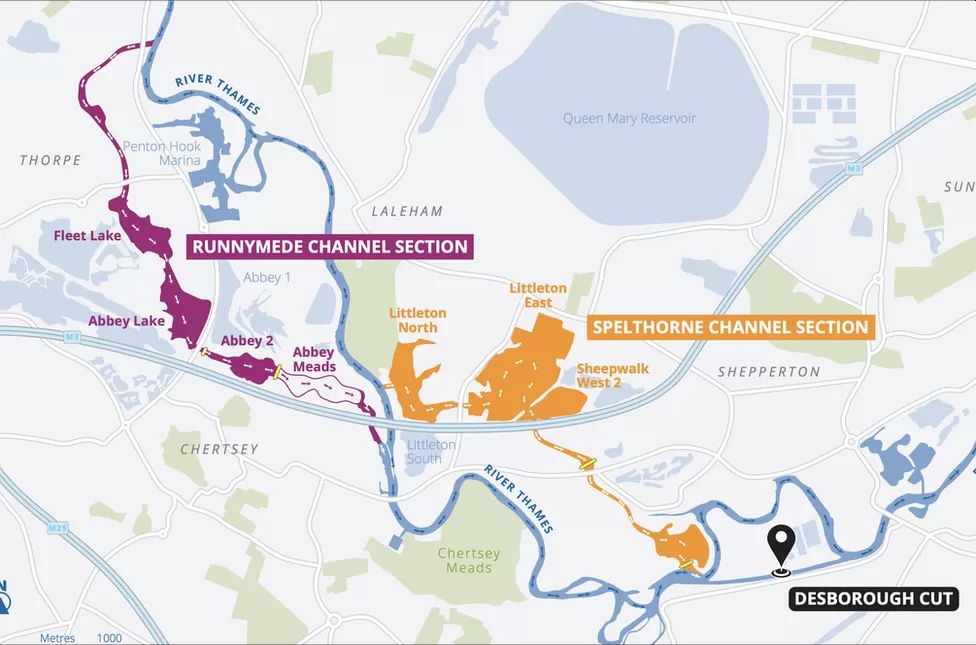
    • a new river channel built in two sections – one section through Runnymede (between Egham Hythe and Chertsey) and one through Spelthorne (between Littleton North lake and the Desborough Cut)    
    • capacity increases around the Desborough Cut and at the weirs at Sunbury, Molesey and Teddington    
    • improved access to quality green open space and connections with wildlife, in addition to supporting a more sustainable travel network    
    • a network of high-quality habitat to achieve a biodiversity net gain   
  • The River Thames Scheme will reduce flood risk to people living and working near the Thames, enhance the resilience of nationally important infrastructure, contribute to a vibrant local economy and maximise the social and environmental value of the river.
  • There have been serious floods in this area over the past 100 years, namely in 1947, 1968, 2003 and most recently between 2013/2014.
  • The new flood channel will reduce flood risk to over 11,000 properties and 1,600 businesses in Hythe End, Egham, Staines, Chertsey, Shepperton, Weybridge, Sunbury, Molesey, Thames Ditton, Kingston and Teddington.
  • There will be increased capacity of the Desborough Cut and weirs at Sunbury, Molesey and Teddington by installing additional weir gates.
  • Detailed planning and design are under way. The large scale of the project means the government has directed that it be treated as a project of national Significance. This requires a type of consent known as a ‘development consent order’ (DCO). A DCO removes the need to obtain several separate consents, including planning permission and is designed to be a quicker process than applying for these separately.

Surrey County Council News


Campaign to save special Epsom school builds

Kingswood House Epsom

Kingswood House School is asking local people to join hundreds of residents in opposing the school’s landlord’s redevelopment plan. Around 100 local residents turned out at a community meeting on 10 th November in support of Kingswood House School. The School’s current landlords, the Aczel brothers who own extensive property in Epsom, have for many years made no secret of the fact, that they would like to replace the School with a housing estate.

The brothers have teamed up with local developer Steve Curwen and have confirmed that the plan is to get planning for a small school first and then apply to build houses on the remaining part of the site. With objections on the Council’s website already approaching 200, local people have made their views abundantly clear.

The application to replace Kingswood House School, a registered charity, which local residents regard as a trojan horse to facilitate the building of a housing estate, was described by MP Chris Grayling, in a message of support as: “an example of the worst form of business practice”. Grayling continued: “In reality this application is a sham. There is no known requirement for or plan to open a more limited facility like this on the site. Surrey County Council has said clearly that it has no intention of funding the development of such a school on the site, and there are no known private sector plans to do so.”

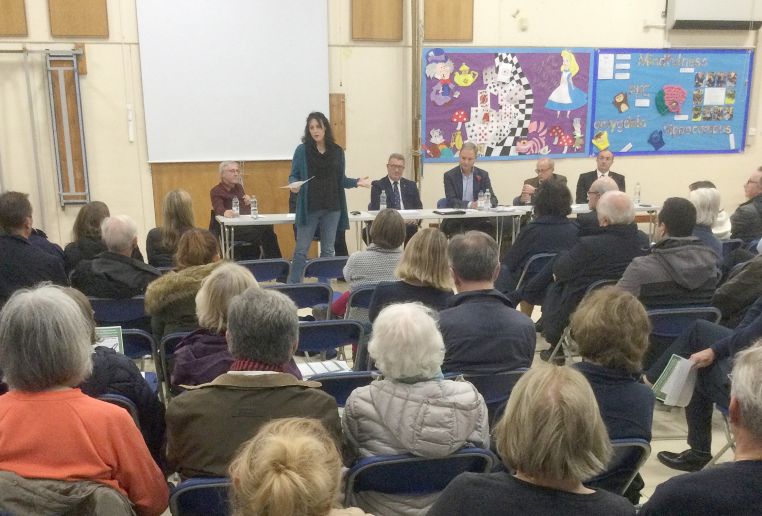
Objectors, public, parents and school governors meet 10th November

A very high percentage of Kingswood House’s 245 pupils have special needs and in recognition of its valuable work, the School has been made an Asset of Community Value by Epsom and Ewell Borough Council. Local residents heard first-hand about the difference the school makes as a former parent Helen Beckman, described in the most moving of terms, how the School supported her son who moved to it having suffered severe depression and mental anguish brought on by living through the tragic impact of Parkinsons on his father.

Headmaster Duncan Murphy explained that this was but one example of many similar cases within the School. If allowed, the new school would be a privately operated “for profit” venture aimed at 60 pupils with severe special needs for whom public transport would be out of the question, requiring travel to and from school to be by private transport. In order, to allow space for the housing estate on the current School’s playing field, access to the new school would be via a new road from West Hill Avenue, currently a quiet residential road.

The findings of the independent traffic experts were shown to the audience and demonstrated that given the level of traffic required, total gridlock in West Hill Avenue and surrounding roads would ensue at drop off and pick up times. Additionally, at least four trees would need to be felled to allow sufficient visibility for traffic exiting the new school. Experts explained that the gridlock effect would be exacerbated if the housing estate were to follow. The application would appear to have been made without proper ecology reports having been undertaken.

Curwen’s own ecology report submitted with his application, accepts that one of the buildings on the current site that is proposed to be demolished shows a high propensity as a bat habitat. As a protected species a bat survey should have been carried out over the summer months, but has not. It is understood that it is the Council’s practice to require full surveys before considering any planning application.

Given the lack of demand locally for the new school, the school would be looking to attract pupils from outside the borough with Curwen Group themselves admitting that pupils will be travelling at least 40 minutes to get to the new school. As regards Kingswood House’s pupils, none of them would qualify for the new school and all of them would need to find new homes. Given the special needs of many Kingswood House pupils and the scarcity of places locally, this is likely to pose a severe challenge.

Those wishing to object should endeavour to do so by 21 st November via the Council’s website tinyurl.com/epsomewellplanning

and entering the reference number 22/01653/FUL or by email to the case officer, Gemma Patterson at gpatterson@epsom-ewell.gov.uk (ref 22/01653/FUL)

See our earlier reports:

Battle for Epsom School continues….

Community Asset to be stripped?


Surrey County pays asylum child £15,000

Surrey County Council HQ

A “vulnerable”, unaccompanied asylum-seeking child has been given £15,000 by Surrey County Council after years of failings in his care which led to him sleeping on the floor of a restaurant where his friend worked.
The child twice attempted suicide and was hospitalised because of his mental health, having arrived in the UK alone aged 12.

After his arrival in March 2016, the youngster was found local foster placements by the county council until April of that year, followed by a residential placement in Manchester. An investigation by the Local Government Ombudsman after “Mr X” complained about the council said the authority did not “appear to have considered anything other than a ‘roof over his head’” at the later stages of his time under its responsibility. The ombudsman said the child was “extremely distressed and unhappy” at the placement in Manchester, telling staff he was 15, and not 12. The older age was accepted “without question” by the council, then the child ran away from the placement and attempted suicide.

There then followed several moves, including a placement with a foster carer of the same nationality, residential placements, including one in Staffordshire, and him being detained under the Mental Health Act. While he was in hospital, after a second suicide attempt, Mr X told staff he was not as old as he had said, but the council “refused to accept” his younger age according to the ombudsman.

The report broke down the “symbolic” payment of £15,000 as £10,000 to reflect the impact on Mr X’s education, £2,000 for the failure to assess Mr X’s age and needs leading to a lack of appropriate placements and care, £2,000 for his time spent homeless and £1,000 for distress caused, including delay to his asylum claim and legal action taken to establish his age.T he investigator said Mr X “was vulnerable, and his distress was severe and prolonged”. They added: “It is not possible for me to calculate a financial remedy for the distress Mr X has suffered as a result of fault by the council. There is no formula I can use. Any recommendation I make can only be a symbolic payment to acknowledge his distress. It is not ‘compensation’.”

The report showed that the child’s mental health deteriorated in early 2017, with social care records saying he was distressed and preoccupied by what had become of his family. After he was discharged from hospital, he repeatedly ran away from his residential placement in Staffordshire, eventually failing to come back and being recorded by the council as living “independently” when he could have been as young as 13.

Requesting a foster placement from the council, and being told there were none available, Mr X refused the offers of independent or semi-independent placements from the council. It was at this stage the ombudsman’s investigation said the council “should have been concerned with ensuring suitable aftercare to ensure Mr X’s recovery” but seemed to be looking only to provide “a roof over his head”.

Between January and April 2018, he was “sofa surfing” in London and sometimes slept on the floor of a restaurant where a friend worked, according to the ombudsman’s investigation. He then got help from the Refugee Council and a solicitor, who found him a foster placement and asked the council to formally assess Mr X’s age, with the authority concluding he was the older of the two ages that had been given.

This assessment was criticised by the courts in May 2019, who decided he was the younger of the two ages when Mr X challenged the council’s process. The council upheld parts of complaint made by Mr X, which included that it failed to carry out an age assessment when he first became “looked after” and that it was wrong to appoint his allocated social worker to do the age assessment. As part of the complaint made by Mr X directly to the council, the authority also accepted it had failed to assist Mr X with his asylum claim,  to arrange suitable education for him and to provide suitable placements (because of its failure to assess Mr X’s age and his care needs).

He was offered £2,000 compensation as part of the decision as well as an apology and an explanation of how problems had been addressed.

While the ombudsman welcomed steps taken such as the setting up of a specialist team to care for unaccompanied asylum seeking children, the investigator said the council seemed to have missed “the bigger picture” in dealing with the complaint. The findings said: “Mr X was a looked after child. The council was his parent. While the council accepts there were serious shortcomings in the care it provided Mr X, it has not responded in the way I would expect a parent to respond in the circumstances.”

The ombudsman found that for two and a half years, the council had treated the asylum seeker as “almost an adult when he was in fact a vulnerable child”, which impacted on decisions about accommodation and education. The report said he had now settled and returned to education, wishing to “move on, pursue his studies and make something of his life in England”.

The ombudsman said: “In making his complaint, he was keen to ensure council services for other young people in similar circumstances improved.”

A county council spokesperson said they could not go into specific detail for safeguarding reasons, but said the authority would always try to place children in accommodation appropriate to their needs and a full assessment would be done to assess this, with fostering being the first option explored. But they added that in some cases, children would come to the attention of the authority in an emergency and a full assessment was not always possible.

The spokesperson said: “We wholly accept the Ombudsman’s decision and we sincerely apologise for any distress that was caused. Our Social Workers are trained to undertake comprehensive age assessments in line with national standards. We also have an agreed accommodation strategy that places an emphasis on both the development of accommodation within Surrey and the recruitment of more foster carers.”


Epsom and Ewell remembers…

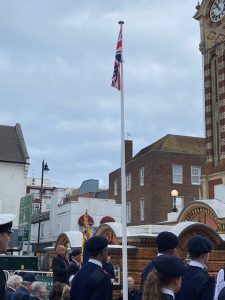
Epsom Remembrance Day 11th November 2022

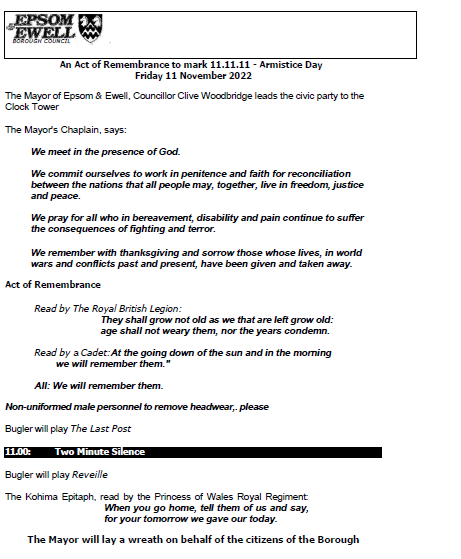
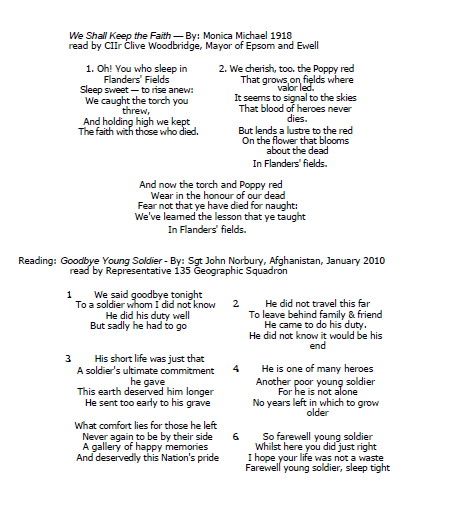
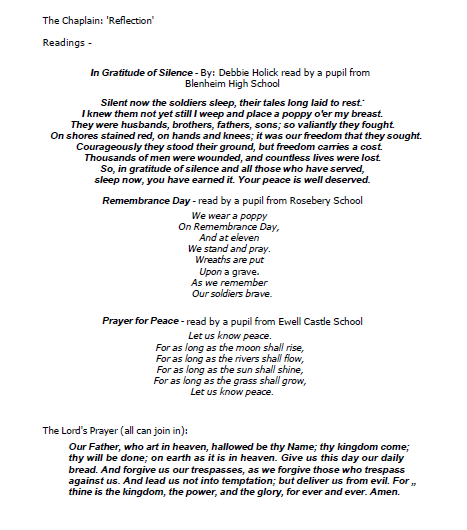
Epsom and Ewell came together for the annual Remembrance Day service at Epsom’s Clocktower, Friday 11th November. The Mayor’s Chaplain reflected on the history of Remembrance Day. The first was held in the grounds of Buckingham Palace in 1919 when the two-minute silence was observed. In 1921 the poppy became a symbol of Remembrance. The Second World War saw the commemoration being held on a Sunday, to avoid disruption of ammunition production should the 11th of November fall in the working week. The Chaplain mentioned how the reality of today’s television coverage of wars was inuring many to the horror of war.

The service was attended by a full complement of Councillors of all parties, servicemen and boys and girls from Blenheim School and other local schools.

The full service is reprinted below.


Epsom Hospital car park appeal

Stripe Consulting: West elevation multi-storey car park Epsom Hospital

On Wednesday 2nd November, Epsom & St Helier University Hospitals NHS Trust appealed Epsom and Ewell Borough Council’s (EEBC) decision to refuse planning permission for a multi-storey car park on the Epsom General Hospital site. The NHS Trust had proposed the construction of a car park comprising ground plus five storeys, providing 527 spaces, the redesigning of surface parking to provide additional spaces, and
improvement to access from Dorking Road.

EEBC refused the plans in May 2021. It stated that, ‘by reasons of its height, mass, scale and poor design’, the proposed development would adversely impact the area, and fail to preserve the adjacent Woodcote Conservation Area. The plans had received 125 objections and one letter in support.

At the appeal, The NHS Trust argued that the scale of the proposed car park is necessary. Thomas Spencer, on behalf of the NHS Trust, said that the construction of the New Epsom and Ewell Community Hospital, due for completion in March 2023, would require an additional 50 spaces. Mr Spencer said additional parking would also be required to replace land sold to Guild Living. Guild Living now lease this land to the NHS, but their plans to build a retirement community will result in the loss of around 270 parking spaces currently used by the hospital.

Mike Kiely, on behalf of the Council, said that the proposed height of the car park would dominate the area, and ‘dilute the experience’ of listed buildings on Dorking Road and the adjacent Woodcote Conservation Area.

Councillor Liz Frost (RA Woodcote) said she had received many calls and emails from residents expressing ‘grave concerns’. John Woodley, a Dorking Road resident, said the car park would be the first thing he saw when he opened his windows. He added: ‘It’s overbearing: far too big. It just seems excessively large.’

The Trust argued that the car park’s height would be consistent with the existing complex of buildings at the hospital site, and that its plans bring the car park as close to existing buildings as possible.

Mr Kiely also argued that building a new multi-storey car park goes against national and local climate policies, and that alternatives, such as offsite staff parking and a shuttle bus, should be considered first. Mr Woodley added: ‘For a health trust to be building more space for cars blows my mind. We need to think more sustainably.’

Mr Spencer said that high vehicle use is a reality on a hospital site, since patients often rely on private transport. He added that some staff travel significant distances, and staff also work night shifts, so offsite parking would not be the Trust’s preference. He added that the proposals have ‘green credentials’, including 67 electric charging spaces, with the possibility for adding more in the future.

The Trust also said that there had been ‘numerous changes’ to the landscaping to improve the building’s design, including green walls on the building and a potential mural. Mr Kiely, however, said that the changes would make a ‘marginal difference’, and that ‘there had not been a landscape-led approach; landscaping had been squeezed in’.

Woodcote councillors Liz Frost and Steven McCormick also said that the car park could create a safeguarding issue, since it would overlook several sports clubs. However, the Trust said that the sports ground is already overlooked from various vantage points within the hospital, and the same people would be using the car park. It added that there would be 24-hour CCTV, and that any parking above the first floor would be used by staff only.

The Trust said that there would be other benefits of the proposed car park, including reduced congestion, improved access for emergency vehicles, and improved pedestrian and wheelchair access from Dorking Road. Mr Spencer also said that parking pressure on surrounding residential streets, which caused the NHS to be ‘plagued with complaints’, would be reduced. Mr Kiely, however, said that many of these benefits were not reliant on building a multi-storey car park, and that access could be reconfigured without it.

The appeal was heard by planning inspector David Spencer, who said his decision is likely to be made in early December.


Surrey road safety played out on the pitch

On Friday 4 November Surrey Fire and Rescue Service’s football team played host to Surrey Police, with the shared goal of improving road safety during the winter period.

The fixture was planned to highlight the dangers of driving under the influence of alcohol and drugs, and general road safety during the winter period. Those in attendance heard a speech from Assistant Chief Fire Officer Jon Simpson, who took the opportunity to underscore the importance of safety on Surrey’s roads, and the need to improve behaviours. He was joined at the event by Deputy Police and Crime Commissioner for Surrey Ellie Vesey-Thompson, Chair of Surrey County Council Councillor Helyn Clack, Councillor Denise Turner Stewart, Mole Valley MP Sir Paul Beresford, and Surrey FA’s CEO, Sally Lockyer.

There were 330 road traffic collision incidents with Surrey Fire and Rescue Service involvement between November 2021 and February 2022 and in 2021 there were 24 Fatalities, 647 Serious casualties and 2490 slight casualties on the county’s roads, 15% of which involved young drivers. The services are encouraging drivers not to drive under the influence, as well as warning against the dangers of distractions while behind the wheel. They are also calling on motorists not to speed and to take caution with risks such as adverse weather conditions and country roads.

Filming was carried out during the match, with players from both sides interviewed about their experiences in responding to road traffic collisions and the impact they had on the lives of those involved in these incidents, as well as on themselves.

Surrey Police took the bragging rights at full-time, emerging with a 1-0 victory from a competitive game. However, it is hoped that the main result from the fixture will be the powerful, football-based road safety campaign which will run throughout the World Cup and across the winter. 115 drink or drug impaired drivers were apprehended during the previous three international tournaments in which England’s Senior Men’s Team have featured (Euro 2016, 2018 World Cup, Euro 2020), and 78% of these were male.

Commenting on the event, Jon Simpson, Assistant Chief Fire Officer for Surrey Fire and Rescue Service stated: “Whilst we are all here to enjoy a game of football between the services, it also gives us a great opportunity to highlight a really important safety message to a key target audience, as we raise awareness of safe driving among young people – predominantly young males.

We all have a responsibility here to improve our own behaviours on the road and encourage them in others to ensure we all come home safe this winter. During the World Cup, plan your journey home on public transport, do not mix drinking with driving. If you are driving home for the games, then allow extra time for your journey. Speeding could result in three points you really do not need, or the consequences could be even worse – the loss of a life. Adapt your speed appropriately for the road and weather conditions and make sure you always wear a seatbelt.”

Chief Inspector for Roads Policing at Surrey and Sussex Police, Michael Hodder, added: “Road safety is a huge priority for us at Surrey Police and sadly we often work closely with our blue light colleagues at Surrey Fire and Rescue when dealing with collisions on the county’s roads. Although we know the vast majority of road users are conscientious and law-abiding citizens, there is a minority of people who just disregard the law and put not only their lives, but other people’s lives at risk. It really is quite simple – always drive with due care and attention, stick to speed limits and follow the laws to keep all those using the roads in Surrey as safe as possible.”

Ellie Vesey-Thompson, Deputy Police and Crime Commissioner for Surrey commented: “It was great to support the police and fire service working together to share the importance of road safety. The win for Surrey Police was an added bonus of the day!

“It concerns and saddens me that our young people aged 17-24 disproportionately die in road traffic collisions. With cold and wet weather as well as social events like the World Cup and Christmas parties, it’s a really key time to be sharing the message around driving safely. I urge anyone heading out with friends this winter to ensure you have a safe way of getting home – be that public transport, a taxi or a designated driver. It is also important to always pay attention and to drive to the conditions of the road, particularly when wet or icy.

“Ensuring safer Surrey roads is a key priority in Commissioner Lisa Townsend’s Police and Crime Plan, which is why we are pleased to support initiatives such as Safe Drive Stay Alive which helps educate young people on the dangers of the ‘fatal five’; drink or drug driving, speeding, using a phone whilst driving, not wearing a seatbelt and driving whilst distracted.

“By working together to spread this message we can reduce the number of people killed and seriously injured on our roads.”

Surrey Fire and Rescue Service have shared their top tips for road safety, for drivers both young and old, here.

Surrey County Council News


Local Planning Matters

Planning documents

Tim Murphy’s opinion piece on Epsom and Ewell’s Local Plan. An up-to-date Local Plan is a necessity. It indicates to those proposing new developments or conversions to properties just what they are allowed or not allowed to do. It is also the yardstick by which locally elected councillors assess whether a particular planning application should be permitted.

The current Epsom and Ewell Local Plan was approved as long ago as 2007. It does not meet the requirements of the most recent planning legislation. In particular, it is failing to deliver the type of housing that is needed locally – affordable and in close proximity to a range of retail and social facilities and public transport. By contrast, the current Plan has been very largely successful in protecting the Borough’s much valued Green Belt from inappropriate development. Two reports commissioned by the Council have confirmed that our Green Belt is performing as it should against the five criteria set out in planning legislation.

A new draft Local Plan is very likely to be discussed by the Council’s Licensing and Planning Policy Committee on 21 st November. The preparation of the Plan has been overshadowed by a quite unrealistic housing target of nearly seven hundred new homes to be provided every year in the Borough.

Where does this target come from? It is set by central government and is based on outdated projections about how fast our number of households will grow in the future. Astonishingly, the number is so high because it incorporates what is known as an ‘affordability’ uplift – because house prices locally are so high, it is assumed these will fall markedly as more houses are built. There is no evidence that this is how our housing market operates.

Our councillors have a choice to make. They can try to meet most, and maybe all, of the centrally-determined housing target. The Borough has only limited built-up areas that would lend themselves to redevelopment for housing so, inevitably, extensive areas of our Green Belt would be sacrificed. Judging by the type of housing that has been approved over the past few years in the Borough on what are called greenfield sites, it is unlikely that the homes that are provided will meet local needs.

What guarantees will be in place to ensure that such significant increases in population will be matched by more educational and medical facilities and better transport provision? Alternatively, as in neighbouring Elmbridge, our councillors could decide not to meet the housing target but rather prioritise the provision of those types and sizes of housing most needed locally, including affordable homes, on existing built-up areas so that no valuable Green Belt need be lost.

The comprehensive redevelopment of existing commercial estates to incorporate a significant element of new housing should be a component of this way forward. Excellent design standards will be essential. Recent statements by our new Prime Minister and the Secretary of State for Communities, Michael Gove, support this approach.

What will our councillors decide?

Tim Murphy

Tim Murphy has worked as a Chartered Town Planner in local government in London, and as an environmental specialist both with WS Atkins and Partners, the Epsom-based engineering consultants, and the European Bank for Reconstruction and Development (EBRD) where he was responsible for examining the environmental and social impacts of the EBRD’s investments in Eastern Europe. Since retiring, Tim chaired the Surrey Branch of the Campaign to Protect Rural England (CPRE) for several years, and he is currently Chair of CPRE’s South East Region and heads up CPRE’s Epsom and Ewell local group, campaigning to protect the local Green Belt and other open areas.

If you have views and opinions on “Local Plan Matters” – do write to us admin@epsomandewelltimes.com


Battle for Epsom School continues….

A new planning application has been submitted by land owners the Aczel brothers to Epsom and Ewell Borough Council to redevelop the Kingswood House School site. “Demolition of an existing building, relocation and reprovision of MUGA Sports pitch, and construction of new access and parking facilities for a SEND school”.

The plan is to replace the 100 years old school for many with Special Educational Needs and Disability (SEND) in West Hill, Epsom, with a new 60 place school for children with “extreme special needs “. Supporters of the existing school suspect the application is a ploy to develop all the land in the owners’ possession into a housing estate. The new application relates to the built area and a further application is expected for a housing estate on the current adjacent playing fields. If the owners were granted both permissions but failed to proceed with the new school development the suspicion of The Kingswood school support group is that an application will be pursued in the future for housing throughout the whole land.

Kingswood House School is asking local people to object to the new school application by 21st November 2022. The application can be seen on the Epsom and Ewell BC website under reference 22/01653/FUL.

Kingswood House School is a thriving and vital part of the community that provides a first class education to over 240 local children and which is the only school in Epsom to be listed as an Asset of Community Value.

According to a report commissioned by the land owners “There are (SEND) places available across all year groups in the…. independent ….and…. public sector within Surrey…. and Epsom and Ewell and …..should any pupil from Kingswood House School require a place within (either sector) … there will be a place available”. Alfredson York Associates Ltd. The author of this report Jonathan Powell goes on to conclude in his report: “Given that Kingswood House School is not a special school and has no particular specialism that is not provided within the same catchment from which Kingswood House currently draws, the proposed development would not significantly alter the choice and availability of places.”

Dr Kugathasan Senduran disagrees and commented: “Education provides us with the fundamental tools we require to live. Switching schools is more likely to demonstrate a wide array of negative behavioural and educational outcomes. If education collapses, everything does. You do not need an atomic bomb or a long-range missile only the collapse of education in a country to ruin it forever. I simply cannot believe the council is even considering their proposal of demolition of an existing building and interrupting children’s education. I strenuously object their proposal.” He is one of 30 objectors to date who have gone public on the Council portal.

Kingswood House School is holding a public meeting on the plans at the Main Hall, Stamford Green Primary School, KT19 8LU on Thursday 10th November at 7.00pm (doors open 6.40pm).

Although Kingswood House is a private school, it is a charity and any profit is reinvested into the school. By contrast, the proposed school, which is not backed by the Local Education Authority, would be run by a private operator (with profits going to shareholders) and “would not be aimed at local children”, Kingswood School supporters say.

Richard Laudy, a Governor or Kingswood School, adds “There will be problems with access via West Hill Avenue, currently a tranquil street. At least two protected trees would need to be removed. The plans do not include enough space for drop-off, causing queues, overspill parking, and nuisance on local roads. The proposed new school only has 22 parking spaces. This will be insufficient for the specialist nature of the school.”

Richard Evans, Chair of Governors at Kingswood House School, confirmed that the School had not been consulted over the plans and that: ”…the School vehemently opposes the unacceptable plans and is working with local residents to defeat them. Kingswood House has been serving the local community for over 100 years and provides the unique offering of special needs and mainstream children developing alongside each other. Our school is a listed Asset of Community Value, which would be lost along with our playing fields if the landowners’ plans went ahead. The proposal would also damage the tranquil character of Stamford Green Conservation Area, creating a chaotic new access on West Hill Avenue. We need local people to make their voices heard and object to this speculative and harmful proposal.”

Cllr. Steve Bridger, Councillor for Stamford Ward, is aware of the application and has ‘called it in’ so it will be heard in front of the Planning Committee rather than decided by Council officers.

Public comments can be submitted via the Epsom & Ewell Borough Council planning applications website using the reference 22/01653/FUL, then clicking on ‘Make a Comment’.

See Epsom and Ewell Times earlier reports:

Grayling stood up by developers….