Epsom and Ewell Times

ISSN, LDRS and IMPRESS logos

Flagging Up Epsom Common

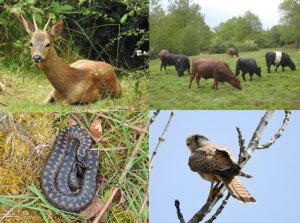
Deer, snake, kestrel and cattle on Epsom Common

28th July David King and Cynthea Blunden of the Epsom Common Association (ECA) represented Epsom & Ewell at the Green Flag Award ceremony in Lambeth Community Hall. This marked the sixteenth successive year that Epsom Common has received this award, which describes itself as “the international quality mark for parks and green spaces”.
Much of the Common is designated as a Site of Special Scientific Interest. Natural England consider all of this land to be in “favourable” condition. Taken together, these points suggest that Epsom and Ewell Borough Council, which owns and manages the Common, is successfully balancing the various and sometimes conflicting demands of a recreational open space and a nationally important nature reserve. The new flag will be flying over Stamford Green just as soon as the flagpole that blew down last winter is replaced.

At 176 hectare, Epsom Common is the largest Local Nature Reserve in Surrey, with habitats including: rough grassland, woodland with veteran oak pollards, remnants of heath, and several ponds. Management is guided by the Council’s One Hundred Year Plan: 2016 to 2116, which has been approved by Natural England. Clearly woodland containing trees aged five hundred years or more takes some time to reach maturity, but even grassland, consisting of short lived plants, takes many years to fully develop its potential range of plants and animals. So planning for the long term is essential.

The ECA was founded by local residents in 1974 to fight a proposed road across the Common. In 1979, in partnership with the Council, the ECA completed the restoration of Great Pond dam, recreating the mediaeval pond that had been drained in the Victorian era. Nowadays the ECA has a membership of around five hundred households, and works closely with the Council’s Countryside Team and the Lower Mole Partnership to protect and improve the Common. After two years with activity limited by the pandemic, the usual programme of events has resumed.

As well as their conservation work, by the end of this year ECA will have: distributed three newsletters; held two public meetings with guest speakers; and arranged several expert led guided walks, looking at birds, butterflies, etc. Every few years they also hold an “Epsom Common Day” on Stamford Green, most recently in 2019.

The Summer sun into the clouded sky over the Great Pond brings out the yellow

On Tuesday evenings in summer (until the end of August) the volunteers hand-pull bracken for a couple of
hours, to prevent selected areas of heath or grassland being smothered. Their labours are relieved by a break for homemade sparkling elderflower drink and chocolate brownies. During the autumn ECA will hold the three remaining conservation tasks of the year’s programme of eight. Each task runs for two days, usually the third Sunday of the month and the following Monday. The task programme is guided by the One Hundred Year Plan and agreed with the Council’s Countryside Team. The work typically involves removing scrub and small trees to maintain and improve areas of grass and heath; they have also planted a hazel coppice.
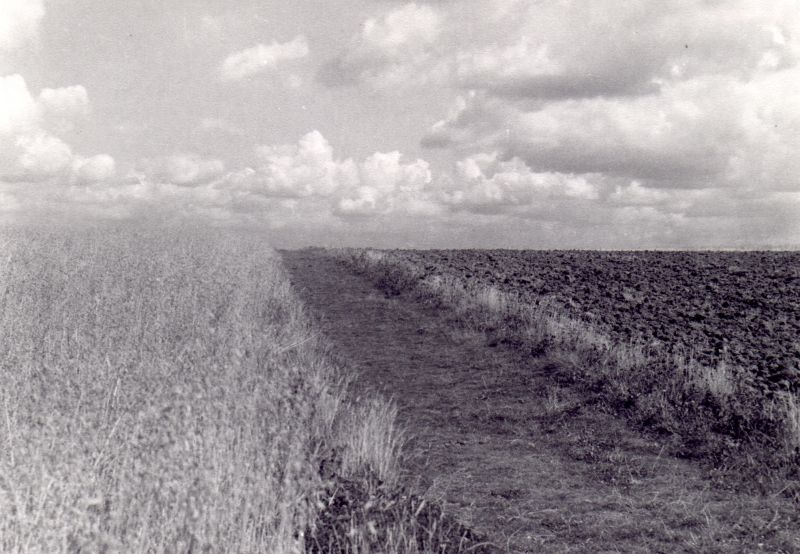
Epsom common under plough 1950s
Epsom Common under plough

Why is all this management work desirable? Old photographs show that before the Second World War much of the Common was open, with small areas of woodland and some old trees, many of which are still alive. Much of the open land was ploughed for agriculture during and immediately after the war. This ceased around 1955, and most of the Common was then essentially left alone. By the 1980s the previously ploughed area had become an almost impenetrable mass of young trees. This uniformity of age, along with the absence of the animals such as: aurochs (the extinct large wild ancestor of domestic cattle), wild boar, beaver, etc., that once shaped woodland and kept it more open, resulted in a habitat that was neither particularly natural nor rich in variety of
plants or animals. On the Common, grassland and lowland heath were probably manmade habitats, arising from a combination of tree felling and grazing, but they support species not found in woodland. By careful management a mixture of grassland, heath, ponds and varied woodland, can be created and maintained, leading to a much greater range of plants and animals.

During the summer, three areas of the Common are grazed by cattle, this year a total of fourteen animals. The cattle graze the grass and heathland in a way that cannot be replicated by mowing. In recent years the Great Pasture has been extended to include an area of woodland, a habitat in which the cattle’s ancestors would have been at home. Today’s Belted Galloways and Dexters also appear happy to forage amongst the trees, particularly during hot weather. For their health the cattle must be checked every day, as are the fence lines and water troughs. Each week the ECA provides four of the daily checks; without their contribution it is unlikely that grazing could be continued.

Finally, ECA make excellent hardwood charcoal from logs harvested during conservation work. Last year, thanks to a grant from the Council’s Community Infrastructure Levy, they were able to take delivery of a modern charcoal retort. Compared with the conventional ring kilns used previously, the retort greatly reduces the smoke and increases the yield. The charcoal sales help finance ECA’s activities. Volunteers are not paid, but of course they do have to pay for tools, fuel, insurance, etc.

If you would like to find out more about ECA’s efforts to keep the Common special, please visit their
website: epsomcommon.org.uk or our Facebook page:
www.facebook.com/EpsomCommonAssociation

They welcome new members, whether you wish to take part in conservation tasks or simply support their efforts through your membership.

See also press release from Epsom and Ewell Borough Council issued 12th August
Council Pride in Not Uncommon Green Flag


Verging on reason?

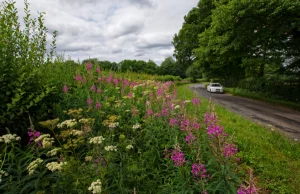
Flowered grass verge

Surrey County Council is to take back control of verges and on-street parking enforcement from Epsom and Ewell Borough Council and all other County districts. In a bid to streamline services, ensure consistency and improve biodiversity SCC will do the lot.

Surrey County Council is responsible for highway verge cutting and weed control, as well as on-street parking enforcement. It currently has agreements in place with eight of the eleven district and borough councils, including Epsom and Ewell, to manage the verges on the county council’s behalf, and all on-street parking enforcement is managed by the districts and boroughs.

From April 2023 the county council will manage both of these county-wide to ensure consistent approaches across Surrey.

Matt Furniss, Cabinet Member for Transport, Infrastructure and Economy, said: We appreciate the hard work our district and borough teams have undertaken on our behalf. However, as we continue on our mission for a greener future, now is the right time to take verge cutting and weed control back in-house to enable us to focus our efforts on improving biodiversity consistently across the county. We will continue to regularly cut junctions and sightlines so it’s safe for residents.

We also know how important parking is for residents and by managing on-street parking across the county, we can ensure it’s fair and consistent. We’ll also take a look at options to improve our systems and make processes as easy as possible for all Surrey residents.”

The county council aims to promote biodiversity by promoting wildflowering on appropriate highway verges and will continue to trial more sustainable approaches. Managing parking across the county will ensure a good service is offered throughout the county and offer good value for residents.

Nigel Collin, Chair of Surrey’s Wildflowering Project said “I welcome Surrey’s commitment to promote biodiversity by promoting wildflowering on appropriate highway verges. The County wide management of verge cutting from next April is also welcomed since this will ensure a uniform approach across all of the County’s Districts and Boroughs.”

This was echoed by SWP volunteer Kim Spickett who responded “As a borough, I think we have a good starting point – so many of us enjoy our wildlife! Flowering verges, along with our open spaces, parks and gardens, will be a win for biodiversity. Native plants come in all shapes, sizes and heights – there are examples to beautify every situation. White Clover and her relatives supply the grass with the nitrogen it needs, giving the verge the ability to stay green during dry spells. It looks pretty and suits verges that have to be kept short – and it feeds our insects!” Kim demonstrates the contribution verges can make to biodiversity with this photograph:

The Brown Hairstreak butterly, posing beautifully next to a busy "B" road
The Brown Hairstreak butterfly next to a busy local “B” road

Residents Association County and Epsom and Ewell Borough Councillor Eber Kington expressed his doubts about the plan: “I have real concerns about these proposals. Given SCC’s track record on service delivery, ensuring “consistent approaches across Surrey” will very likely mean a poorer service for residents and a levelling down rather than an improvement in the quality of service. For example, SCC currently funds just four verge cuts a season across Surrey but the Borough Council, which undertakes the verge maintenance work in Epsom and Ewell, funds between 2 and 4 additional cuts. Unless SCC continues with this current level of service, the grass verges in our residential streets will see a fall in standards and complaints from residents will rise.

Reducing the established Borough Council service is a pattern of behaviour already established when Surrey Highways took back the maintenance of highway trees from the Borough Council. SCC will now only provide for the maintenance of a tree if it is diseased, dying, or dead. So pruning, clearing telephone wires and other maintenance work is no longer undertaken.
I also have a concern about SCC taking back on-street parking enforcement. In Epsom and Ewell, we have resisted pressure to introduced parking meters across the borough. My concern is that SCC’s “fair and consistent approach across Surrey” will be used to populate our streets with these parking charging devices as a way of funding SCC’s services and taking more from our residents.

Cllr Julie Morris (LibDem College Ward Epsom) responded to the wider plan: “This sounds like another power grab , furthering SCC’s mission to abolish district and borough councils entirely.  Having the county council deal with on street parking enforcement will not work.  Centralisation means there is no local knowledge.  Our wardens respond really well to complaints, hot spots and are quick to resolve problems when these are reported.  As for wildflower planting, I’m happy to reserve judgement on that one as we’ve tried for a few years to get EEBC to leave verges uncut and introduce a wildflower bloom+cut regime and they’ve done nothing. “

Related stories

A Greener Future in Partial Sight As Verges To Be Left Unmown


West Street developers climbing down enough?

Now and then re plans for 24-28 West Street Epsom

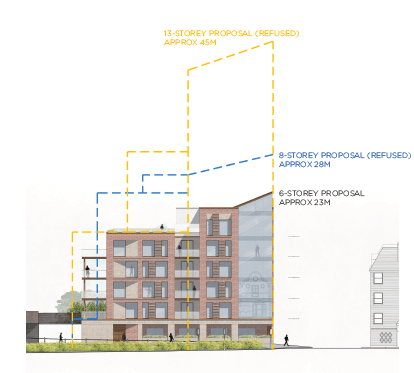
Having a third bite at the planning cherry Quanta Homes 3 Ltd is applying to Epsom and Ewell Borough Council for permission to demolish the old and ornately faced building situated at 24-28 West Street Epsom. In its place a new 5 / 6 storey modern residential block of 20 units. Including just 10% in the “affordable” category.

Quanta Homes 3 Ltd is one of about 10 similarly named private limited property companies, active or dissolved under the sole directorship of Mr Robert Du Toit.

Plan showing comparison of 15 then 8 the  5 to 6 storey buildings proposed in West Street Epsom

Rejected planning applications for first a 13 storey and then an 8 storey building are now followed by a part 5 and part 6 storey building application.

No doubt this latest application will excite again the debate between modernisers of the Town and preservers of the Town. You can make your views known online to the Council on THIS LINK

Related

Mind the Epsom Town Centre Masterplan!

£225,000 to plan the unplanned


More on Epsom and Ewell and Surrey and ULEZ

Traffic jam

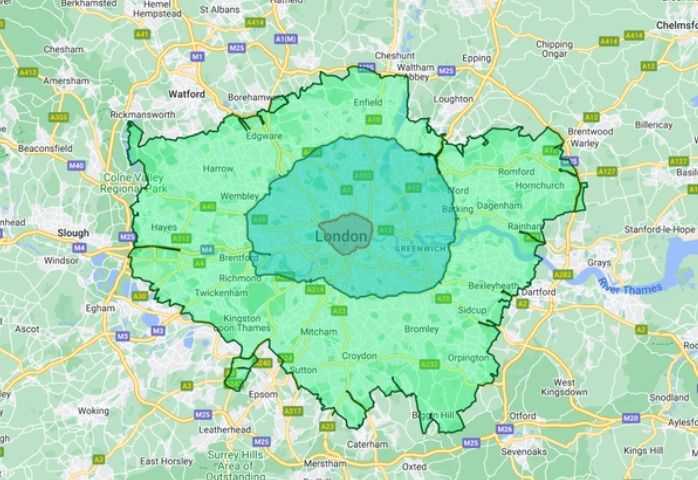
Epsom & Ewell Borough Council (EEBC) has responded to Transport for London’s Ultra Low Emission Zone (ULEZ) consultation. TFL’s proposal is to expand the ULEZ to all London boroughs, including Kingston-upon-
Thames and Sutton. This means eight out of the 13 wards in the borough will border the ULEZ and be directly affected. The Council anticipates the remaining wards will also be impacted by increased parking demand and use of side streets by non-exempt vehicle owners.

Expansion of ULEZ area on map
Expansion of ULEZ area

The following response was agreed by members at Full Council on 28 July:

  1. Provision is required for exempt routes which enable access to essential places and
    roads such as:
    a. A3, M25, A240.
    b. Facilities, e.g. the existing St Helier in Sutton.
    c. SW Region stations and other transport hubs that at present are outside the
    ULEZ but require EEBC residents to pass through the proposed ULEZ to reach
    them.
  2. Owners of non-exempt vehicles in EEBC to be included in any scrappage scheme that
    the Mayor of London is requesting from central government for London borough
    residents.
  3. The consultation period of two months should be extended until 31 December 2022 to
    allow more careful analysis of the cause and effect to the welfare and economy of the
    boroughs.

Councillor John Beckett, Chair of Environment and Safe Communities Committee, said: “We support the move to reduce high levels of air pollution, which the ULEZ scheme aims to achieve. However, owing to the acute economic pressure households and business are facing at this time, the scheme needs to consider the economic, social and mental health needs of all communities affected by this scheme, not just London boroughs.”

BELOW WE REPORT ON RESPONSES FROM OTHER SURREY DISTRICT COUNCIL AREAS THAT WILL BE IMPACTED BY THE ULEZ EXTENSION

Julie Armstrong – Local Democracy Reporter adds:

London Mayor Sadiq Khan will be asked by Elmbridge Borough Council to delay expanding the city’s ultra low emission zone (ULEZ) in order to do more research.

Any vehicle not complying with minimum nitrogen dioxide emissions standards has to pay £12.50 per day to drive inside the zone, with a £180 penalty charge issued by TfL for late or non-payment.

According to the 2011 Census, nearly two in five (37 per cent) of Elmbridge residents commute to work in London.

TfL said it “would be happy” to meet with Elmbridge representatives to discuss the proposals before any decision is made.

Nicholas Martin, Elmbridge’s policy and community safety officer, said on Monday (July 11) he thought it could push drivers wanted to avoid heading into London to leave the A3 at Copsem Lane towards Esher, “already a congested route”. Increased use by commuters of Elmbridge’s car parks could lead to a lack of space for shoppers, for example in The Dittons, Hinchley Wood and Weston Green, Claygate and East Molesey.

Additional resident parking schemes and pay and display may have to be introduced, he said.

And many who park in Richmond for Hampton Court Palace would instead park on the Elmbridge side, negatively impacting the Hampton Court Air Quality Management Area. On the other hand, air quality could be improved if drivers in the area switch to compliant vehicles to avoid the charge.

Air pollution contributed to the premature deaths of around 4,000 Londoners in 2019 and TfL estimate that expanding the ULEZ to outer London could reduce traffic emissions of nitrogen oxides there by 6.9 per cent.

Mr Martin said detailed analysis of impacts had not been possible in TfL’s two month consultation period and they had not provided any modelling on air quality or traffic flow. The borough council’s consultation response says: “Such analysis will take time and we would hope for a delay in implementing the scheme to allow for this.”

There are concerns that Elmbridge businesses may have problems accessing materials if deliveries are coming from or through London. A borough council report says: “Small businesses continue to be impacted by the pandemic, energy price increases, inflation, and supply chain issues. An expansion of the ULEZ London-wide could see further increases to their cost base that could harm their future viability at an already uncertain time.”

Council leader Chris Sadler (The Walton Society, Walton Central) said: “We feel strongly that the residents of Elmbridge should see some kind of tangible benefit as a result of the payments being made by Elmbridge residents into this scheme.”

Spelthorne, Epsom and Ewell, Tandridge and Reigate and Banstead also have more than one in five of its residents commuting to London.

A TfL spokesperson said: “The length of the current consultation to expand the ULEZ London-wide is of a similar duration to those for previous schemes of this significance. As part of the consultation we have provide detailed local air quality data for all parts of London and surrounding areas, including Elmbridge. We would be happy to meet with representatives from Elmbridge to discuss what the proposals mean for them ahead of any decision to go ahead with the plans.”

Emily Coady Stemp Local Democracy Supporter further adds:

A Surrey council is calling on Sadiq Khan to extend London’s scrappage scheme to the county’s residents.

Tandridge District Council voted in favour of a motion put forward by its leader objecting to the proposed extension of the Ultra Low Emission Zone (ULEZ).

A consultation on the proposed extension to the boundary ended on July 29.

Councillor Catherine Sayer’s motion said a request to central government from the London Mayor for a scrappage scheme for Londoners would mean “that Tandridge District taxpayers would subsidise new cars for Londoners whilst getting no support themselves.

“That is clearly unfair and, if there is to be any such scrappage scheme, it should include bordering councils.”

A meeting of the district council on Thursday (July 21) also heard the leader read out an example of the son-in-law of one of the councillors, who lives in Hurst Green, Oxted.

The son-in-law was a firefighter who worked at Croydon Fire Station and also did window cleaning in Sutton approximately 2 days a month.

He had worked out the cost of paying the ULEZ charge if the boundary were to be extended as £325 a month or £3,900 a year.

This was broken down by eight day shifts a month at £100, eight night shifts a month at £200 (because it would cover both days) and the two  window cleaning days at £25.

Councillor Taylor O’Driscoll (Conservative, Westway) said: “Residents trying to drop children off in Coulsdon, going to work as fire fighters in Croydon, visiting family in Biggin Hill, relaxing in Bromley, attending hospital appointments in Tooting or visiting friends in Wallington will have to pay £12.50 whenever they cross the greater London boundary if they don’t have a ULEZ compliant car.

“And not every resident in Westway can afford a ULEZ compliant car.”

Councillor Jeremy Pursehouse (Independent Group, Warlingham East Chelsham & Farleigh said he agreed with the motion being put forward by the leader.

But he added: “Air quality within London is a huge issue and it needs tackling. People are suffering, people are becoming ill because of it.”

The leader committed to try to meet with TfL representatives, as had also been proposed by Elmbridge Borough Council which will also be impacted by the proposed boundary change.


Cost of living crisis fails to reach the Surrey summit

Man stacking coins

Hundreds of Surrey parents cannot afford a school uniform for their child, a councillor has claimed, as calls for an emergency summit dealing with the cost of living crisis were thrown out.

Liberal Democrat County Councillor Fiona White proposed a host of organisations draw up a joint countywide plan to alleviate residents’ financial pain, including Citizens Advice, food banks, trade unions, chambers of commerce and the legal advice charity Surrey Welfare Rights Unit. She said with energy prices more than doubling, inflation heading towards 11 per cent and the highest tax burden since the 1940s, people were struggling – and 450 people had been referred to a charity because they had no money left to buy their child’s school uniform.

Cllr Carla Morson (LD, Ash) warned the council they “could well be on the edge of a mental health crisis” unless they act, saying: “People in debt are considered to be three times more likely to have considered suicide”.

But the majority Conservative group said they were already doing what they could and one dubbed the Liberal Democrats’ motion “nonsense”. ‘We are putting more money into residents’ pockets’

Council leader Tim Oliver said the council’s Surrey Crisis Fund gives people at crisis point grants for energy bills, basic household goods or urgent repairs. He said: “I’m fully aware of the cost of living challenges. What we need to do is get more money into our residents’ pockets now and that is exactly what we are doing.”

Surrey County Council has launched an online health and welfare hub to provide residents with financial, health and general welfare information. Alongside this is a community helpline for residents who would rather talk through their situation, to which Cllr Oliver said the Job Centre referred one person who hadn’t eaten for five days.

The council was also providing £10,000 grants for cavity wall insulation, loft insulation or solar renewable technology, for those on a low income living in a hard-to-heat home, though the deadline for this has passed.

lt had also increased its match funding grants to the Community Foundation for Surrey, “invested £500,000 to find barriers faced by excluded groups to try and get them to enter the job market”, and dedicated a one per cent rise in this year’s council tax to mental health early intervention and prevention.

Cllr Oliver added that Surrey council had agreed staff on the lowest pay grade would get a 7.85 per cent increase, to £10.24 an hour, with the percentage increase dropping further up the pay scale and no increase for top earners. “These are practical things we are doing,” he said. “We can talk about the crisis forever, we can have summits, that is not what we should be doing.”

Cllr George Potter (LD, Guildford East) asked: “Are we really saying that there is nothing more that can be done by the county council? I’m happy to agree a great deal has been done, but to say that there’s nothing more we can accomplish by working with others – no new ideas – is absurd and obscene.”

He said from October the average household’s energy bill alone would rise to £270 a month, and Universal Credit for under-25s paid £260 a month for recipients to house, clothe and feed themselves as well.

‘You need to walk in those person’s shoes in order to really understand’

Cllr Liz Townsend (LD, Cranleigh & Ewhurst) told the leader: “I would say that you need to walk in those person’s shoes in order to really understand. Spare a thought for those people who really now cannot make ends meet, who are going around supermarkets comparing prices, having to put things back on the shelves, who are going to bed hungry.”

Cllr Bob Hughes (Con, Shere) said: “It sounds to me like posturing, as if somehow the Liberal Democrats are the only people with the answers, trying to give the impression they’re the only people who care about this. The upshot of this nonsense is a motion that would make the poor poorer in the long run.”

He said the Lib Dems had ignored the Government’s £15billion support for those most in need, which includes a household support fund for the country of £421million between April-September, given to local authorities to use at their discretion.

Surrey has used it to, for example, continue to provide food vouchers for schoolchildren in holidays and top up food banks, community fridges and food clubs. It is not something individuals can apply for directly.

The £15billion also includes a £650 payment for means-tested benefit recipients and a one-off £400 discount to be delivered by energy suppliers to households over six months from October.

Cllr White (Guildford West) said £400 was not going to cover the increased bills.

In May, Ofgem said a typical household would pay £800 more a year from October, so £2,800.

The government used this estimate when deciding how much financial support to offer households.

But now consultancy firm Cornwall Insight has said it’s more likely to be £3,244 – and to go up further in January to £3,363.

‘People are consumed with their debt, they cannot think of anything else’

Forty councillors voted against the emergency summit proposal (July 12th), while 19 were in favour.

Cllr Will Forster (LD, Woking South) said he thought councillors would regret voting it down and added: “To get everyone together across Surrey to share best practice would have been really helpful.”

Cllr Townsend said: “To call the details in the motion nonsense is fairly insulting. People are consumed with their debt, they cannot think of anything else.”

Among 12 members who abstained was Eber Kington (Residents’ Association, Ewell Court, Auriol & Cuddington) who said he didn’t like the issue being “a vehicle for making party political comments”.

The motion included a call on the Government to reduce VAT, reinstate the pensions triple lock so pensions would rise with inflation, and restore the cancelled £20 Universal Credit supplement.

Cllr Jonathan Hulley (Con, Foxhills, Thorpe & Virginia Water) said the One Surrey Growth Board, which is already set up, was tasked with addressing inequality.

Cllr White responded: “I didn’t see Citizens Advice on there, despite the fact that they, day after day are having to try and deal with and help people through these issues. All too often we hear politicians say, ‘We recognise there is a problem but we are already doing…’. I think the examples given show that what we are already doing is not enough. We have heard that people are becoming absolutely desperate. We are leaving people behind.”

Where to find or offer help:

Apply to the Surrey Crisis Fund for help with energy bills or basic household items like a fridge or washing machine: https://www.surreycc.gov.uk/community/surrey-crisis-fund

For help on where to turn for financial advice, Surrey County Council’s Community Helpline on 0300 200 1008 is open Monday to Friday 9am to 5pm (excluding bank holidays): https://www.surreycc.gov.uk/health-and-welfare/support

Community Foundation for Surrey takes funding applications for projects to advance physical and mental health or to reduce disadvantage and increase access to services: https://www.cfsurrey.org.uk/applyforfunding/


£1.1 million special investment in Epsom school

Epsom Primary and Nursery School

More than 20 primary school places are being made available for autistic children in Surrey, with 12 from this September. A special educational needs (SEN) unit will be created at Epsom Primary and Nursery School, using existing classrooms.

The county’s existing specialist provision in state schools – over 3,700 places – is full and the council wants to reduce its reliance on the independent sector. The most common additional needs of Surrey children who need a specialist placement are autism and communication and interaction.

The SEN unit was approved on Monday (July 4) by Councillor Denise Turner-Stewart, cabinet member for education and learning, who said: “There was very good support for this proposal in the consultation. This contributes to our £139million capital investment programme providing new school places in our local community and also reduce the reliance on home to school transport. I’m very happy to approve this decision.”

Epsom is a £1.1m investment that will make 12 places available in September 2022 rising to its full capacity of 21 in September 2026. The 21 places will save the council £630,000 every year, by avoiding having to pay for the places at non-maintained independent schools. This will contribute to bringing down its multimillion pound dedicated schools grant deficit.

By 2030-31, the total number of Surrey pupils aged 4-19 with Education, Health and Care Plans (EHCPs) is forecast to be more than 2,500 higher than the 2020-21 total of around 11,000. The growing need for SEN places among primary pupils is expected to increase by 160 in the four years to 2024-25, when the council projects it will peak and then reduce.

Commissioning manager Jane Keenan said: “The most prevalent primary needs for pupils aged four to 11 who require a specialist school placement are autism and communication and interaction needs.”

Refurbishment will take place over the summer and Epsom’s SEN unit will open at the start of September in time for the new academic year.


Man wrongly labelled ‘vexatious complainant’ by Epsom and Ewell Council

Epsom and Ewell sign

A man was paid £500 after Epsom and Ewell Borough Council wrongly labelled him a “vexatious complainant” in a planning dispute. The local government ombudsman, which looks into complaints against councils, found Epsom and Ewell Borough Council at fault over its handling of contact from a man known as Mr X.

The authority was told to pay him £500 for the distress he suffered, made up of £300 for distress and £200 for his time and trouble in contacting the council and the ombudsman.

The authority was also told to apologise to Mr X for its “failure to deal properly with the planning enforcement investigation and its decision to apply the unacceptable behaviour policy to him”.

Mr X had been in contact with the council before an investigation was opened, in October 2020, into an alleged breach of planning control regarding his neighbour’s driveway. This report was added to an already open planning enforcement investigation, with Mr X saying the council had failed to act on his reports that his neighbour carried out development on a front driveway without planning permission.

A spokesperson for the council said they were unable to comment on enquiries relating to an individual case. According to the ombudsman’s report, the council claimed to have sent a report into Mr X’s complaints to him in December 2020, though he claims he was not informed of the decision not to take enforcement action. The council did not provide evidence to support its claim it had sent the report to Mr X, as part of the ombudsman’s investigation. It closed the enforcement investigation in February 2021, though the ombudsman noted that it appeared the council did act on the reports but did not provide evidence on its conclusions.

The report states: “Based on Mr X’s statement that he did not receive the report and the council’s failure to provide evidence that the report was sent to him, I conclude, on the balance of probabilities, that the report was not sent to Mr X. This is significant because Mr X’s further contacts with the council from January 2021 over the planning breaches were justified.”

Mr X had sent emails and photographs about the issue to the head of development management and had contacted the enforcement officer dealing with the case. He was concerned about the building of a wall, drainage systems, lack of screening, a failure to screen off the building site and raising of the height of the garden in relation to his neighbour. He also said an enforcement officer made a visit to the site, but did not inform him of it in order to meet with him afterwards.

He made a complaint about the enforcement officer to the head of development management.

The head of development management stopped working for the council in January 2021, and did not respond to the complaint he received from Mr X before he did. He also had contact with the authority’s chief legal officer, who he made a complaint about, saying the officer was “protecting his neighbour”.

He said the officer had repeatedly ignored his correspondence and threatened to block his emails while making an allegation of defamation against him.

Mr X continued to contact council officers up to summer 2021, until he received an email in August to say the council would restrict contact with him under its unreasonable behaviour policy.

The letter said most of Mr X’s correspondence did not fall within the definition of a complaint the council could deal with and that the context and nature of his correspondence threatened the welfare of council employees. It said said Mr X would be restricted to a single point of contact and the restriction would remain in place for six months.

The ombudsman found: “The chief legal officer triggered the policy even though the council had not dealt with Mr X’s reports of breaches of planning control properly and in line with relevant procedures and statutory guidelines.”

The council’s policy on “unreasonable behaviour” covers people who hinder council work on their, or other people’s complaints, because of the nature or frequency of their contacts. It says unreasonable behaviour may include one or two isolated incidents or persistent behaviour over a longer period.

The ombudsman concluded: “There was fault by the council because it did not inform Mr X of the outcome of its planning enforcement investigation. It consequently improperly applied its policy on vexatious complainants. The council agreed to apologise to Mr X and make a payment to him to address the injustice he suffered in consequence of its fault.”

A borough council spokesperson said: “We are unable to comment on  enquiries relating to an individual case in the borough. “We can inform you that we work with the ombudsman regarding individual case work and its recommendations.”

The full report of the ombudsman is HERE


Council’s last minute opposition to ULEZ extension.

Polluting motor vehicle. Fumes spewing from exhaust

With just one day to go before the end of the consultation period, Epsom and Ewell Borough Council agreed on 28th July a response to Transport for London’s (TFL’s) proposed plan to extend the Ultra Low Emissions Zone (ULEZ) to all London boroughs, including neighbouring Kingston and Sutton. See Epsom and Ewell Times report 17th June on ULEZ extension.

ULEZ is a charge, currently £12.50 a day, imposed on the most polluting vehicles that enter the zone. Most petrol cars manufactured after January 2006, most diesel cars manufactured after September 2016 and all electric cars are exempt from the ULEZ charge.

In a special motion to the Council meeting on 28th July, Councillor Phil Neale (RA, Cuddington Ward) proposed a response to the consultation arguing for a significant increase in the number of exempt routes and an extension of any scrappage scheme to include Epsom and Ewell. The motion also called for an extension of the consultation period to allow more careful analysis of the cause and effect to the welfare and economy of the boroughs neighbouring London. “We support the move to reduce the high level of air pollution caused by congestion and high-emission vehicles,” he said. “However, in this time of economic pressure, the scheme needs to consider the economic, social and mental health needs of all communities affected by the scheme, not just London boroughs. It is going to hit lower income families more. I’m not asking for ULEZ to be dropped, I’m asking for TFL to consider what will happen in the boroughs surrounding London.”

“There seems to be no thought by TFL whatsoever of the impact this will have on the borough and our residents” said Cllr. John Beckett (RA, Auriol Ward, Chair of the Environment and Safe Communities Committee). “I welcome the travel corridors that have been put in, but I do have to question why I can drive 98% of the way to the new hospital site, but the road I need to use to get into the hospital site is in the proposed ULEZ.”

“If we get public transport sorted, that would be the time to get people moving out of their cars” said Cllr. Neil Dallen (RA, Town Ward, Chair of the Strategy and Resource Committee).

Cllr Kate Chinn (Labour, Court Ward) provided the solitary voice opposing the motion. “It is only the oldest and most polluting vehicles that apply – these need to be taken off the roads…let’s give people help to do that and let’s look after this world for ourselves and the people who come after us.”

The motion was passed by a considerable majority. Exact voting figures were not announced by the Mayor who chaired the meeting.


“Statement of community involvement” involves what about what?

Group round table considering a plan

Following a 4-week public consultation, Epsom and Ewell Borough Council unveiled its new draft Statement of Community Involvement (SCI) at a meeting of the Licensing and Planning Policy Committee on 28th July.  This describes how local residents, businesses and other organisations can be involved in the planning process in Epsom and Ewell.

It is a legal requirement for the Council to have an SCI and to review it every five years as the way in which communities and the Council interact changes.

Planning decisions affect us all so, if you are interested in your area and would like to be involved in shaping future planning policy in Epsom & Ewell, you can:

·         Check if a Neighbourhood Forum has been established in your area to prepare a neighbourhood plan.

The draft SCI can be read in the Agenda Reports Pack of the committee meeting, but please be aware that it is subject to some small amendments as a result of questions and suggestions raised by councillors at the meeting.


Abstaining from responsibility?

5 undecided people with question marks above their heads

As exclusively reported by Epsom and Ewell Times today 10 Borough Councillors sat on 26th July’s all-powerful budget setting Strategy and Resources Committee. On a crucial vote to establish a savings target of nearly £1/4 m from the “homelessness budget” for the next financial year, half the committee abstained, including one Councillor who spoke against the proposal.

Pressures on the Council’s budget continue to mount with the projected deficit rising in the current financial year from £1.5m to £2m. The Council’s ability to raise Council tax is strictly limited. Any increase above £4.95 on a Band D property (mid-range in value) requires a local referendum to authorise. Moreover, on the horizon for the Borough are the dark clouds of further Central Government redistribution of local tax revenues that is likely to see a diminishing proportion of business rates revenue being kept by Epsom and Ewell in favour of the County and poorer parts of the country. Epsom and Ewell is to receive the minimum grant from central Government under its “levelling up” agenda.

The Councillors had been provided with a detailed report by hard working Council officers setting out the figures and financial projections. Granted, Councillors do not have a crystal ball and as the committee’s chair, Neil Dallen implies: “You’re damned if you do (make hurtful savings) and you’re damned if you don’t (setting aside funds that could have been spent elsewhere)”. All depends on the future demands on the homelessness budget which in turn depends on the unpredictable lives of people.

These hard decisions have to be made. This is what we elect our Councillors to do. To take ultimate responsibility. By local convention rather than rule the Chairs of the Council committees do not vote. So, on a minority participating tied vote of 2:2 the Chair took that hard decision and voted in favour of the target savings. Should he alone carry the burden of that decision? Was the abstention of the majority of the usual voting number an acceptable response to the financial dilemmas the Borough faces?