Epsom and Ewell Times

Current
ISSN 2753-2771

Proposed Battery Energy Storage System Near Ashtead Common Faces Objections

Plans to install a Battery Energy Storage System (BESS) near Ashtead Common have sparked significant opposition from local conservation groups and residents. The proposed facility, intended to support renewable energy integration and grid stability, has raised environmental and safety concerns, particularly given its proximity to a Site of Special Scientific Interest (SSSI) and Ashtead Common National Nature Reserve.

The Proposal

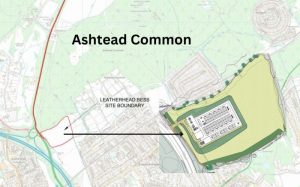
Bluestone Energy Ltd has submitted plans to Mole Valley District Council for the installation of a BESS facility near Barnett Wood Lane, Ashtead. The project includes underground cabling, access roads, security fencing, and biodiversity enhancements. Proponents argue that the facility is vital for managing energy supply fluctuations, particularly with the increasing reliance on renewable energy sources.

Benefits of BESS Technology

Battery Energy Storage Systems play a crucial role in modern energy infrastructure:

  • Renewable Energy Support: BESS allows for the storage of solar and wind energy for use during periods of low generation, helping to stabilise energy supply.
  • Grid Stability: These systems can manage fluctuations in electricity demand, reducing the strain on power grids.
  • Emergency Power: They provide backup electricity during outages, making them indispensable for critical infrastructure.
  • Environmental Gains: By reducing reliance on fossil fuel-powered plants, BESS supports the UK’s transition to a low-carbon energy system.

Potential Hazards

Despite their advantages, BESS technology carries significant risks:

  • Fire Hazards: Lithium-ion batteries, commonly used in these systems, are susceptible to thermal runaway, leading to fires that are difficult to extinguish and can reignite.
  • Environmental Impacts: Manufacturing and disposal of batteries contribute to pollution if not carefully managed. Additionally, construction can disrupt local ecosystems.
  • Noise and Light Pollution: Ongoing operations may disturb nearby wildlife and residents.
  • Land Use Concerns: Large-scale facilities can lead to habitat fragmentation and loss of natural landscapes.

Objections Raised

1. Environmental Concerns

The City of London Corporation, which manages Ashtead Common, highlights the potential harm to local wildlife, including bat species protected under national and international law. Their letter of objection emphasises the detrimental impact of light, noise, and habitat fragmentation on these species. Ashtead Common is home to ancient oak pollards and biodiversity of national significance, further underscoring the ecological risks​.

2. Fire Risks

Ashtead Common has a history of significant biodiversity loss due to wildfires. Objectors express concerns over the fire hazards posed by lithium-ion batteries, particularly given the facility’s location and prevailing winds. The proposed water tank is deemed insufficient to address thermal runaway events effectively.

3. Green Belt and Landscape Impact

Councillor Andy Smith notes the intrusion on Green Belt land, citing concerns about coalescence, encroachment, and loss of openness. He argues that such developments undermine the distinct landscape qualities of the countryside and suggests that the facility’s location does not align with local conservation goals​.

4. Questionable Site Selection

Critics question the necessity of placing the facility adjacent to Ashtead Common when closer alternatives to the Chessington substation could reduce environmental impact and energy loss. They argue that the benefits outlined by the developer are generic to any BESS project and fail to justify the chosen location​.

5. Opportunity Cost

The City of London Corporation suggests that the land, currently transitioning to a natural habitat, offers better long-term biodiversity potential if left undisturbed. They challenge the proposed biodiversity net gain enhancements, arguing that natural succession would achieve similar, if not superior, outcomes without artificial intervention​.

Public Sentiment

While there is broad acknowledgment of the need for renewable energy infrastructure, local stakeholders believe this project’s costs outweigh its benefits. “We need to modernise our energy systems, but not at the expense of our precious natural habitats,” commented one resident.

Next Steps

The planning application is under review by Mole Valley District Council. Public and expert feedback will weigh heavily on the decision, particularly given the sensitive location and environmental stakes.

Balancing Progress and Preservation

The debate over the proposed BESS facility near Ashtead Common encapsulates a broader challenge: balancing the urgent need for renewable energy infrastructure with the equally critical imperative to protect natural ecosystems. As local authorities deliberate, the outcome may set a precedent for future developments in similar areas.


Let’s think about Spring!

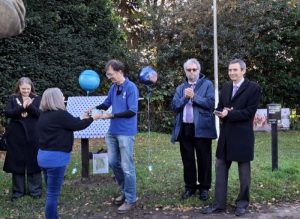
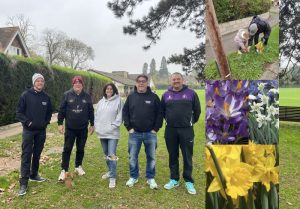
Residents of Cuddington ward held a community bulb plant on the 9th of November, thanks to fantastic local volunteers. Help from RA Surrey Councillor Eber Kington via an allocation from Your Fund Surrey, plus a generous crocus donation from Wandgas Sports and Social Club, enabled Councillor Kim Spickett (RA Cuddington) to obtain enough spring bulbs for three streets. “We have been planting bulbs in various locations in the ward for the last three years. The aim is to have spring colour and happy bees in every street, so we tackle a new area each Autumn. It is great exercise and a wonderful way to meet your neighbours”.

The streetscape around Wandgas has been planted with Crocus tommasinianus Whitewell Purple, a good match for the club kit colours.

Kim said “All our pollinating insects are fans of Wandgas cricket and football – now they will have somewhere to enjoy half-time refreshments”.

In the surrounding streets, Kim, volunteer residents of all ages, RA Surrey and EEBC Councillor Steven McCormick plus the Wandgas team planted “Tenby” daffodils and early snowdrops.

The bulbs will ensure a boost for wildlife and some neighbourhood cheer after a long winter.

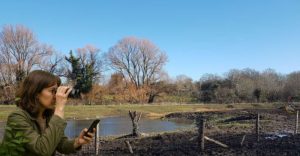
MAIN PHOTO, LEFT TO RIGHT: Wandgas Club Secretary Gary, President Chris, Managers Alison and David, Paul. INSET PHOTOS: volunteer Nicky’s snap of the volunteers in action and examples of the flowers to expect during Spring 2025

Kim is also chair of Surrey’s Wildflowering Project. They have groups all over Surrey, bringing native planting and people together.


Secret 100 acres just north of Epsom and Ewell

Despite being home to ancient hedgerows, a locally significant population of brown hairstreak
butterflies, and a small fragment of wetland, the series of seven meadows spanning 42 hectares (about 100 acres) at Tolworth Court Farm is far from reaching its ecological potential.

Citizen Zoo is working with Kingston Council and The Community Brain to change that! Our
shared vision is to establish a dynamic, mixed-mosaic nature reserve that nurtures a more
diverse and abundant wildlife population. We will restore and enhance the site’s ecological
balance while honouring its rich farming heritage through innovative rewilding measures
inspired by rural projects such as mixed grazing regimes.

Mixed-Grazing Scheme
Despite its size and location along the green corridor of the Hogsmill, the site is
underperforming in terms of the wildlife it supports. After 20 years of annual hay cuts that should
increase botanical diversity, the site’s plant communities have degraded since the last surveys
were conducted in 2003. Additionally, while the 1000+ insects and 40+ bird species recorded
sounds an impressive number, this is far below what a site of this should support. Indeed, a few
decades back the site was home to nationally rare ground-nesting birds such as skylarks and
lapwing, plus increasingly scarce bullfinches.

Adopting the mixed grazing methods of successful rewilding projects in rural areas, such as
Knepp and Wild Ken Hill, we are currently preparing the site for the re-introduction of livestock!

We will be introducing a small number of cattle and pigs, which through their varied grazing
behaviours, will improve plant diversity, aerate the soil, and create a diversity of habitats. This
will create a dynamic ecosystem within Kingston’s largest nature reserve helping to restore
ecological balance and create a healthier ecosystem for local species and people. With the
invaluable support of our dedicated volunteers and local students, we are clearing vegetation
around the perimeter of the site, and preparing to install a secure livestock fence. Once in place,
the cattle will be free to roam within the designated area. Each individual will be fitted with a
GPS tag, allowing us to monitor their movements and make adjustments if needed, ensuring
their welfare and the protection of the environment.

We are aware of the vital importance of the site in terms of local people’s access to green space
as well as its popularity among dog walkers. However, with the presence of cattle, it will be
increasingly important to keep dogs on leads. We will be using Sussex cattle, which will have
received training around the presence of humans and dogs, and also be individually selected for
their docile traits. This is a common breed for grazing in urban areas and means we can be
confident of no issues arising, however, as with other projects, we will ask dog walkers to keep
their dogs on leads within the enclosure as an extra precaution.

We are recruiting a dedicated team of ‘Wild Guardians’ to conduct checks on the livestock and
their welfare every day. If there are any issues flagged with the individuals or regarding their
safety on site we will respond immediately. Do get in touch if you would like to be a part of this
group. It will be a wonderful opportunity to get hands-on experience with a traditional breed, and
we would love to have you on board!

Wetland Restoration Project
Another key feature of the Wild Tolworth project is the restoration of a large wetland area in the
Great Meadow. Historically, the Hogsmill River flowed through the western corner of Tolworth
Court Farm Fields, which acted as a floodplain for the site stream The river was straightened
around the 1950s to reduce flooding in the area. This was a commonly used method of flood
reduction that counterintuitively passed the risk of flooding on further downstream, as the water
flows quicker from A to B. While we would like to have re-diverted the river back through the
site, due to electrical, sewage, and gas utilities on site, this was not possible. Instead, we will
mimic the flow of the river with an enhanced closed-system wetland. By restoring this important
feature, we will rejuvenate the ecological balance of the area, providing vital new habitats for
local wildlife while also reconnecting the site with its historical roots. This will increase the
presence of many bird species and amphibians on site. Additionally, by storing surface runoff
and slowing water entering the river, the wetland will help to prevent flooding downstream.
We will increase the accessibility of the site with a wheelchair-friendly boardwalk over the
wetland, offering everyone the opportunity to enjoy the natural beauty of Tolworth Court Farm
and experience this unique habitat up close.

This restoration project required us to gain planning permission from the council (as shown by
the green planning notice signs at the entrances to the site). There will be no buildings
constructed on site.

Work to Date
This project has been a long time in the making. Citizen Zoo, alongside Kingston Council and
the Community Brain, has coordinated comprehensive ecological surveying including engaging
with nationally recognised invertebrate experts and botanists. Further to this work, in
conjunction with the Field Studies Council and Biological Recording Company, we have run
over 10 Community Field Recorders Days, where volunteers can learn from species experts to
help survey the site and learn more about the incredible species that can be found within the
reserve. This has provided insight into the biodiversity of Tolworth Court Farm and informed the
changes that can be made to improve the health of the ecosystem and bring benefits to wildlife
and people.

We intend to begin work on our livestock fences and wetland restoration project in late 2024 to
early 2025.

Nature-Friendly Dog Walks
Tolworth Court Farm is a cherished local space, and we want everyone to feel informed and
involved. If you have any questions regarding the logistics of these changes please come along
to one of our Nature-Friendly Dog Walks on site. This provides a great opportunity to ask any
questions you have while we show you the vision for the site. You can find more information on
these on our website (citizenzoo.org) or our Eventbrite page!

Further Questions
If you are unable to make it to a dog walk but you have any questions regarding the logistics of
these changes please see our website by googling ‘Citizen Zoo Wild Tolworth’ for some FAQs
or email hello@citizenzoo.org.

Pia Trevelyan-Ashby


Surrey’s outstanding beauty expanding?

The Surrey Hills could be made significantly larger as Natural England considers expanding the borders of the county’s “iconic and beautiful” landscape.

Each year millions of people are drawn to Surrey’s “views and beauty” as they search out rare habitats and ancient woodlands – not to mention locations from Hollywood hits – and now moves are afoot to protect even more of Surrey’s cultural heritage.

A consultation has been launched on expanding the Surrey Hills, with up to 27 new areas brought under the label, that could result in the area of outstanding natural beauty being made up to 30 per cent larger.

That figure includes the potential 13 “minor areas” that could be removed from the protection afforded by the designation.

An area of outstanding natural beauty are protected by the Countryside and Rights of Way Act 2000 to conserve and enhance natural beauty. Any planning proposals submitted in these areas must have regard for the purpose of conserving and enhancing the natural beauty of the Surrey Hills.

Nature England area deputy director Allison Potts said: “If the proposed areas are added to the Surrey Hills National Landscape, this could bring many benefits including conserving and enhancing the natural and cultural heritage, as well as the views and beauty of the area.

“It will give improved access to nature for the benefit of people’s health and wellbeing whilst boosting economic growth and local tourism and safeguard a nationally important landscape for future generations. 

“All on the doorstep of London.” 

The Surrey Hills, described by Natural England as “an iconic and beautiful landscape encompassing rare habitats from acid and chalk grassland to extensive ancient woodland” is enjoyed by millions of residents and visitors. 

It stretches across the county and includes the chalk slopes of the North Downs from Farnham at its furthermost western point to Oxted in the east. Its southern boundary stretches to the densely wooded Greensand Hills around Haslemere.   

The consultation features an online survey as well as a series of roadshows to help Natural England consider whether to approve a draft designation order to include new land within the national landscape.  

It is the first time the Surrey Hills boundary has been reviewed since its original designation in 1958 and comes after a number of borough and district councils began designating areas bordering the Surrey Hills as Areas of Great Landscape Value in recognition of their value at a county level. 

Natural England, after a formal request by the Surrey Hills National Landscape Board, will now consider whether these and others should be included within the designation.

If successful it would still require approval from the secretary of state for environment, food and rural affairs. 

In 2023, more than 1,500  individuals and organisations responded to the survey to express their views on the future of the Surrey Hills.

Of those, an overwhelming majority supported the extensions, Natural England said.

Ms Potts added: “If the proposed areas are added to the Surrey Hills National Landscape, this could bring many benefits including conserving and enhancing the natural and cultural heritage, as well as the views and beauty of the area. 

“It will give improved access to nature for the benefit of people’s health and wellbeing whilst boosting economic growth and local tourism and safeguard a nationally important landscape for future generations. All on the doorstep of London.” 

 Areas under consideration include Wey Valley  Hogs Back Cranleigh Waters, Hatchlands and East Clandon as well as  Headley Hill Limpsfield, Betchworth Hills and Mole Valley

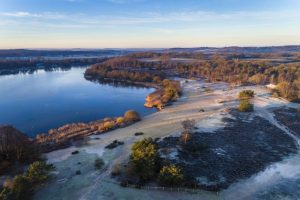
Image: Surrey Hills National Landscape, Frensham Ponds (Image Natural England/ LYDIA2)


Wine tasting on the slopes of Leith Hill

Wine aficionados will soon be able to sample the delights of pinot noir, chardonnay, and cabernet in their famous fermented form after a Surrey Hills vineyard was granted planning permission to build a new tasting room.

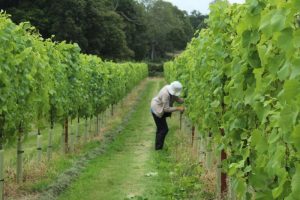
The Tanhurst Estate, on the southern slopes of Leith Hill began planting grapes in spring of 2020 as part of a growing shift away from traditional hay and dairy farming.

The family, who have been living amidst the semi-ancient woodland there for the past 40 years, decided the best way to promote their wines was to let people visit and sample the fruits of their labour. At Mole Valley District Council’s Wednesday August 7 planning committee, their efforts became a reality after members unanimously granted approval.

Speaking to the committee, the owners said: “The estate, has been in my wife’s family since 1826. The estate comprises traditional farmland and semi ancient woodlands. The estate used to have milking herds but this became unviable in the 1980s although there remains a small herd of beef cows on the estate.”

He added: “In order to keep its agricultural use we needed to find an alternative and economically viable way to farm the land so we consulted two of the most respected vineyard consultants in the country.” The land’s southern slopes make it ideal for growing grapes as it allows the berries to soak up as much sunshine as possible, while the hilly terrain helps water run off.

He said: “I believe the general public enjoy visiting vineyards and this is part of the experience of enjoying a bottle of wine that they buy. They need to see where the grapes were grown to understand the process the grapes have been through; from growing on the vine, to harvest, to fermentation in the tanks, and then bottling.

“We do all this at Birketts Farm. We are a small scale business and therefore rely on selling directly to customers and this requires interaction at the point of sale. We need to use these barns for wine tasting and other events in order to persuade customers that our wine is made totally on site, available, and worth the money they pay for English wine -once they see how much time and passion and effort goes into making it.”

The plans for the Birketts Farm, in Tanhurst Lane, Abinger, allow for the existing barns to be converted and used for wine tasting and associated sales, as well as for hosting educational classes and private events and a cafe. There will also be added onsite parking and toilet facilities.


Green Flag Awards Honour Epsom and Ashtead Commons

Local communities are celebrating as both Epsom Common and Ashtead Common have been awarded the prestigious Green Flag Award, recognizing them as two of the best-managed green spaces in the UK. This esteemed award, administered by the environmental charity Keep Britain Tidy, sets the benchmark for the management of recreational outdoor spaces across the UK and internationally.

Epsom Common Local Nature Reserve (LNR) has achieved this accolade for the 18th consecutive year, underscoring its continued excellence in environmental stewardship. The site, managed by Epsom & Ewell Borough Council, is a haven for biodiversity, featuring oak woods, pasture woodlands, and wetlands that are home to rare species like cotton spotted orchids and purple emperor butterflies. It is also designated as a Site of Specific Scientific Interest (SSSI) due to its significance as a breeding bird habitat.

Councillor Liz Frost, (RA Woodcote and Langley) Chair of the Environment Committee, expressed pride in the achievement, attributing the success to the hard work of volunteers and partners, including the Epsom Common Association, the Lower Mole Partnership, and Natural England. “This award is a testament to the dedication of our volunteers and staff who work tirelessly to maintain this beautiful and biodiverse space,” she said.

In Ashtead, the Ashtead Common has also been honored with the Green Flag Award, further enhanced by receiving Green Heritage Site Accreditation. This recognition highlights the site’s exceptional conservation efforts and its status as a National Nature Reserve since 1995. Managed by the City of London Corporation, Ashtead Common is renowned for its ancient oak pollards and diverse habitats, including those supporting rare invertebrates and breeding birds.

Ben Murphy, Chairman of the City Corporation’s Epping Forest and Commons Committee, noted the significance of the award, stating, “These awards demonstrate the effectiveness of our management plans in preserving open spaces like Ashtead Common for future generations. It also reflects the positive impact of the City of London Corporation’s investments in local communities.”

Both sites were evaluated on several criteria, including accessibility, safety, cleanliness, community engagement, and efforts to combat climate change. The awards celebrate the commitment of the staff and volunteers who ensure these spaces remain welcoming and well-maintained for the public. The Green Flag Award scheme highlights the importance of well-managed green spaces in fostering community well-being and promoting sustainable living.

The achievements of Epsom and Ashtead Commons underscore the value of preserving natural habitats and providing safe, accessible green spaces for all. As community members and nature enthusiasts enjoy these areas, the Green Flag Award serves as a reminder of the critical role that well-maintained parks and reserves play in our social and environmental health.

Image: Great Pasture at Epsom Common. EEBC


Making Box Hill more accessible on foot

Access has been vastly improved up to iconic landmark, Box Hill in the Surrey Hills National Landscape thanks to the refurbishment of 300 steps.

Originally installed by volunteers back in the 1980s, the steps had become eroded and difficult to navigate with visitors often detouring off the steps onto slippery and dangerous terrain. The steps, which traverse the steep hillside linking the Stepping Stones path to the summit have been excavated and rebuilt to protect the biodiversity of the site and encourage residents and visitors to access the popular beauty spot in a more sustainable way. 

Thanks to funding from the North Downs Way National Trail, through the Interreg Experience Fund, Natural England and Surrey County Council, over £53,000 was allocated to the project. Surrey County Council’s Countryside Access Team commissioned, and project managed the extensive works which also included improving additional paths between the river and the steps.  

Landscape construction specialists Maydencroft, undertook the work over a 3-month period with the challenging location of the steps meaning much of the construction had to be done by hand rather than machinery with materials carried to the site each day by a team of workers. A floating pontoon was even installed across the River Mole to help get materials to the site.

The new steps have been constructed using around 15 tons of recycled plastic which has been manufactured from a total of 7,731,360 milk bottle tops. This hardwearing material was chosen due to its longevity, helping to reduce future maintenance costs, prevent plastic from going into landfill and the felling of trees for materials. If oak boards had been used instead of recycled plastic a total of five oak trees would have needed to be felled.

Marisa Heath, Surrey County Council Cabinet Member for the Environment comments:  “This iconic site is much loved by residents and visitors. The refurbishment of these steps encourages everyone to access the site in a more sustainable way, offering the visitor a choice to travel via public transport and safely climb up to the famous viewpoint without the need to bring a car and without disturbing wildlife by coming over the created path. It is also very encouraging to see the use of recycled materials out in Surrey’s countryside, helping to not only to reduce the long-term maintenance burden on Surrey County Council but also tackling climate change by the reduction of emissions.”

Peter Morris, North Downs Way National Trail Manager comments: “It is wonderful to see how successful partnership working has enabled this engineering feat to be completed quickly and efficiently for the benefit of all users. Box Hill, in the Surrey Hills National Landscape is one of the highlights on the North Downs Way National Trail. It is important that everyone has an opportunity to enjoy and experience this 153 mile long-distance trail, so making it accessible is vital. Thanks to all partners including Surrey County Council, the National Trust, Maydencroft and the European Regional Development Fund for supporting the project and helping to secure the future resilience of our natural and cultural assets.”

Stephanie Fudge, National Trust General Manager Surrey Hills comments: “Since the steps were re-opened to the public, we have had some great feedback about the ease of access along this trail. It is one of the most popular routes at Box Hill and it has improved the experience of walkers. There are a couple of rest points with views that many visitors take advantage of. It has been wonderful working with Surrey County Council and the National Trail on this initiative and we are grateful for the support.”


Community urged to help restore nature in Surrey 

Surrey County Council is seeking support from residents, businesses and community groups to help shape a new ‘Local Nature Recovery Strategy’ (LNRS).

Developed with partners, the strategy will set out a roadmap for the restoration and enhancement of Surrey’s natural environment, ensuring that it is sustainable now and for future generations.

Marisa Heath, Cabinet Member for Environment at Surrey County Council said, We are at a crucial, formative stage of a plan that we hope will create an environment where wildlife can truly thrive in Surrey.

To ensure that everyone embraces the LNRS and to maintain momentum in taking action to help nature, we want to make sure that as many people as possible are involved right from the start. That’s why we encourage and welcome insight and opinion on what people want from their natural environment. Whether it’s more flower rich grasslands buzzing with life, or a new woodland on your doorstep that will provide future generations with dappled shade and homes for our precious wildlife

A healthy natural environment provides us with so many undervalued benefits from clean breathable air to protection from the worst effects of climate change such as flooding or drought. Please do get involved and help us shape this vital plan.”  

Residents are encouraged to have their say by completing the online survey or by attending the in-person ‘Surrey Nature Day’ event on 28 September 2024. Held at West Horsley Place, the free, family celebration of nature in Surrey will feature performances of an original play, Wild Walks – produced, directed and performed by Guildford Shakespeare Company. More information and booking can be found on the online survey page. Other events will also be advertised here.

Surrey is one of 48 local authorities nationwide given responsibility for this work by DEFRA, addressing the current nature crisis in England, funded by UK Government.

For more information, see Have Your Say Today – Local Nature Recovery Strategy – Commonplace.

Image – The Great Pond, Epsom Common in Autumn. Copyright Epsom and Ewell Times.


Wet weather kicks into the long grass

People fed up with long unsightly overgrown grass and verges can use an interactive map to see when their favourite spots are next due to be cut.

The seemingly endless rainfall this year has heavily affected work across the county as the wet weather shuts down the process – Surrey County Council says this is because its machinery will not cut wet grass properly and can, in some cases, even damage the turf.

Urban areas are due to have six cuts a year by the county – unless they have been designated as a blue heart zone. Rural cuts and high speed roads are chopped twice a year.

Blue hearts are part of Surrey’s 3,000 miles of grass verges but have been deliberately left to grow as a way of increasing plant and insect biodiversity.

Reducing the amount of times these areas are cut is intended to allow native plant species to thrive – or even to sow native wildflower seeds.

As well as using the map, the county council has published a table covering each area in Surrey and when it estimates to get on with the job.

The council’s website reads: “We are experiencing some delays with our planned grass cutting programme dates in parts of the county as a result of the weather and operational issues.

“We are working with our contractors to improve the situation and are sorry for any inconvenience. Thank you for your patience.”

The Blue Campaign, founded in 2014 by wildlife filmmaker Fergus Beeley in response to dramatic declining biodiversity in the UK, lets nature take a bit more control, the county council said.

It encourages the rewilding of green spaces in suitable areas and are marked in blue on the map.

Often they can be identified with a blue heart planted in th ground to show residents grass and flowers are deliberately being left to grow – and the council is encouraging residents to identify new sites and gather local support.

Any areas put forward for blue hearts will be reviewed by the county council and, if approved, contractors told to skip the verge unless some safety work is needed.

All verges, including blue hearts are supposed to have a full cut each autumn.

Surrey County Council spokesperson said: “Our new interactive grass cutting map available here shows residents when their area is due to be cut.

“Our grass cutting programme can however be heavily affected by weather. We cannot cut when it is raining heavily or shortly after as the machinery will not cut the wet grass properly and risks damaging the grass itself.

“Weather and ground conditions permitting, urban spaces are cut six times a year and for rural areas, this takes place twice a year.”

Surrey grass cutting, when your verge is due to be cut. Areas in blue are being left to grow over the summer to encourage biodiversity (image SCC)
Image: Surrey grass cutting, when your verge is due to be cut. Areas in blue are being left to grow over the summer to encourage biodiversity (image SCC)

INTERACTIVE MAP

Blue Heart

Related reports:

A Greener Future in Partial Sight As Verges To Be Left Unmown

Verging on the ridiculous

Feature photo: credit Jon Hawkins – Surrey Hills Photography


Cleanliness is next to Godliness

On Sunday, June 9th, around 30 volunteers from ASEZ WAO UK, a local young adult volunteer group inspired by the World Mission Society Church of God in Epsom, gathered to clean along the stream at Longmead Road. The event, joined by Howard Gregory, Chairman of the Epsom & Ewell Tree Advisory Board, aimed to prevent plastic pollution in local waterways.

This litter pick was part of the group’s Blue Ocean campaign, which strives to reduce pollution in
streams, rivers, beaches, and seas. In just two hours, the volunteers collected a total of 37 bags of
litter, removing mainly plastics to prevent them from entering the waterways. Passersby at Longmead
Road were pleased and cheered the volunteers, expressing their gratitude.

ASEZ WAO UK conducts cleanups like this almost monthly, fostering a positive mindset and a sense
of community.

The World Mission Society Church of God, located on East Street in Epsom, is a global church with
over 7,500 branches and approximately 3.5 million members. The church teaches about God the
Father and God the Mother through the Bible.

The group remains committed to keeping the waterways in Surrey plastic-free.

ASEZ WAO UK

Page 1
© 2021-2025. No content may be copied without the permission of Epsom and Ewell Times Ltd.
Registered office: Upper Chambers, 7 Waterloo Road, Epsom KT19 8AY