Epsom and Ewell Times

Current

ISSN, LDRS and IMPRESS logos

Hospitals heatwave warning

Summer looks like it’s here at last – but with a surge in temperatures also meaning a surge in people visiting emergency departments, members of the public are urged to stay safe in the sun.

Earlier this week the UK Health Security Agency and Met Office issued their first heat-health alert of the year in six regions, including London and the South East, which comes into effect tomorrow (Friday) at 9am.

With the mercury set to peak at about 30 degrees Celsius, they are warning people to stay safe and well – and St George’s, Epsom and St Helier University Hospitals and Health Group is echoing that plea.

Dr Richard Jennings, Group Chief Medical Officer, said: “When temperatures start to soar, more people, especially those in high-risk groups, can suffer from illnesses like heat exhaustion, dehydration, and of course sunburn.

“It often means our hospitals are busier as a result. As always, we are there for those who need us, but please do take steps to stay safe and well, and avoid a trip to our emergency departments.”

High-risk groups include elderly people, babies, young children, and those with heart, respiratory and serious health problems. But everyone should stay safe and well in the hotter weather – and take the following steps:

  • Looking out for people who may struggle to keep cool and hydrated, such as elderly relatives or neighbours
  • Keeping windows closed when the room is cooler than outside, but opening them at night when the temperatures has dropped, and closing curtains on rooms that face the sun to keep indoor spaces cooler
  • Drinking plenty of fluids and avoiding excess alcohol. Taking water with you, if travelling
  • Trying to keep out of the sun between 11am and 3pm, and staying in the shade
  • Applying suncream regularly, and wearing a hat
  • Not exercising during the hottest parts of the day

Staying in the sun for too long increases the risk of becoming unwell. Heat exhaustion is not serious and usually gets better when someone cools down, but if this turns into heatstroke it needs to be treated as an emergency. You may have heat exhaustion if you are experiencing headaches, dizziness, loss of appetite, and feeling sick or confused.

If you are affected by any of these symptoms, it’s important to cool down as quickly as possible. There is more information on the NHS website on how to do this – and also what to do if your condition worsens.

The hospitals group is also reminding people that its emergency departments are there for serious and life-threatening emergencies – particular with a third wave of junior doctors’ strikes coming up next week, which will also have a big impact on services. Hundreds of doctors from St George’s, Epsom and St Helier could walk out over the 72 hours.

Dr Jennings added: “We often find we’re as busy in the days following a heatwave. The hot-weather alert is in place until Monday morning – less than 48 hours before many of our junior doctors will be taking industrial action.

“That’s why it’s even more important for the public to take steps to help us, help our staff, and of course, help themselves.”

If you need urgent medical help you should use NHS 111 online first, which can direct you to where you need to go.

Pharmacies, meanwhile, can offer advice and over-the-counter medicines for a range of minor illnesses, such as coughs, colds, sore throats, and aches and pains.

To find out more about staying safe during hot weather, visit the NHS’s website.


Anonymity for Surrey policeman

A serving Surrey Police officer accused of a “series of acts of harassment” against three female officers will not be named by the force throughout his gross misconduct hearing. A five-day hearing will take place at the force’s Guildford headquarters, but the chair of proceedings will not disclose the name of the serving officer for his welfare.

[Image is illustration only – it is not the officer in question.]

The BBC’s LDRS (Epsom and Ewell Times’ news partner – Local Democracy Reporting Service) asked the legally qualified chair, Eileen Herlihy, why the officer was not being named, particularly in light of nationwide public concerns about misogyny across multiple police forces, in the wake of Sarah Everard’s murder, the actions of David Carrick and more.

Sarah Everard was murdered by serving Metropolitan Police Officer Wayne Couzens in 2021, when he kidnapped her from the streets of south London, having identified himself as a police officer. He was jailed for life after pleading guilty to her murder. Carrick pleaded guilty to 85 serious offences including 48 rapes over a 17-year period as a Met Police Officer.

But despite the public interest in identifying the Surrey officer accused of harassment, the chair said not naming him “outweighed the public interest in identifying the officer”. The LDRS put to Ms Herlihy that the officer should be named, and asked for the documents relating to the decision to keep his name out of proceedings.

Ms Herlihy said she had weighed up guidance from the Home Office and from police conduct regulations, which said there may be circumstances in which an officer should not be named. Stating that the Home Office Guidance, police conduct regulations and case law all identified that the “default position is one of open justice”, Ms Herlihy said the presumption was that the hearing “must be held in public open to both the public and media to attend”.

She would not provide the evidence on which she based her decision to keep Officer X anonymous, including a written statement and medical evidence from him, and written submissions on behalf of the police force.

Ms Herlihy said she could not provide the documents because they contained “sensitive and confidential information relating to Officer X’s medical condition”.

What’s more, not only does Ms Herlihy’s response mean that the LDRS cannot name the officer, we also cannot detail the reasons the name cannot be revealed. The LDRS put it to the chair that a police officer should not be given a greater standard of anonymity than would be given to a member of the public, and that in order to do this there should be significant evidence to justify the departure from the open justice principle.

She said looking at the documents provided, it was “necessary and proportionate, having weighed up the need for open justice and transparency as against the officer’s welfare, to anonymise the officer”.

The hearing, due to take place between June 12 and 16, will hear allegations that the officer, “carried out a series of acts of harassment against three female police officers”.

If proven, the allegations could amount to gross misconduct because they would be a breach of the authority, respect and courtesy and equality and diversity standards of the Police’s Standards of Professional Behaviour, according to the Surrey Police site.

A Surrey Police spokesperson says: “We expect the highest personal and professional standards of our officers and any allegations of behaviour which does not meet these standards are rigorously investigated in accordance with Police Conduct Regulations and procedures, set nationally by the Government.

“For cases of gross misconduct, these are chaired by a Legally Qualified Chair (LQC) appointed by the Office of the Police and Crime Commissioner. “LQCs are selected from a list of independent, legally qualified persons to conduct police misconduct hearings, and are governed by Police Conduct Regulations. “It is their responsibility alone to determine whether a hearing is held in public or in private, and whether any participant should be anonymised.

“In the case of Officer X, legal representations in relation to anonymity were made to the LQC before the hearing and this was granted. Where an LQC directs that anonymity is granted, Surrey Police must abide by this decision and therefore, as per regulations, we are unable to confirm details relating to the individuals involved without the explicit direction of the LQC.”

The hearing will take place at Surrey Police’s Mount Browne headquarters from 10am from Monday 12 to Friday 16 June.


Woking’s debt crisis explained

The desperate state of Woking Borough Council’s de-facto bankruptcy means its “only way forward” is to beg for “financial support from Government”. The sheer scale of the problems were laid bare today when Woking Borough Council issued a section 114 notice showing the historic problems that plunged it into billions of pounds of debt with day-to-day expenditure far outstripping its financial resources.

It’s a far cry from 2014 when the council’s former chief executive Ray Morgan dismissed concerns about how multi-million pound skyscraper projects would be paid for when costs began to spiral – instead saying they were affordable.

While  in 2021 when he said councillors who blocked planning permission for tall buildings were destroying the town’s economy. According to the notice, the borough council has been “in dialogue” with the Department of Levelling Up, Housing and Communities (DLUHC) since May 2022 over its “very large loan portfolio” and the “risks around the ability… to manage the scale of operations”.

A non-statutory review was then carried out in December 2022 –  with the report published in May 2023 when commissioners were appointed to take over much of the running of the council. A separate internal review was conducted that found long-standing issues dating back to before 2016 including an environment of weak financial controls, sub-optimal record keeping, and a lack of resources to manage complex company structures.

There has also been an “absence of external audit opinions on the council’s accounts since 2018/19”, the notice said. It added that, had the financial problems uncovered been understood before 2021 “the council would have had grave difficulty in setting lawfully balanced budgets” after  2018/19. 

The overall size of Woking Borough Council’s long-term liabilities is expected to hit £2.6bn by 2025/26.
However, assets the council invested in have been written down meaning t’s expected deficit –  borrowing it can not afford –  is £1.18 billion, 107 times greater than the amount it raises in council tax in each financial year (£11m). 

To make matters worse, the council has been setting aside insufficient cash for the repayment of debt.
Calculations for how much to set aside had “not been undertaken in the manner required for a number of years” with the notice saying “there is a high probability” reports produced over the years to deal with budget setting, financial monitoring, capital programming, capital financing and treasury management “have all contained inaccuracies and misassumptions.”

The additional charge to be made in 2023/24 is estimated to be £95m. To understand the scale of the problem, “if the additional charges of £75m in each year were to be funded by service reductions…the Council could no longer afford to provide any services at all and would still see a net budget shortfall”. The council has said it is redesigning its budget monitoring process after the review found them to be “weak and poorly designed”.

Much of the council’s debt, including £750m in borrowing for the Victoria Square development, was made through a complex structure of private companies.

The 114 notice said that there needed to undergo a “detailed review and simplification” but it was “likely that the case for using companies to develop assets and run services may be significantly weakened” going forward.

Any Government support the council may get is “likely to require” it to “dispose of surplus property or otherwise secure value from the assets under ownership”, in order to shed “at least part of the ongoing financial liabilities that may be incurred by the public purse”.

The notice warns of  “very significant reductions in both budget and service levels” in the coming years and that “there is no prospect that the council will balance its budget in 2023/24, 2024/25 or the successive years without external intervention on a very large scale”.  It adds, “for the avoidance of doubt, the council has no means of funding the financial deficit from resources that are available locally and has a very small funding base”.

Further section 114 issues are expected “as more work is completed and the recovery planning is developed fully to set the council’s financial affairs.”The council said the process would “take some time to resolve” with any “substantial recovery” likely to take at least two years. 

As of the date of the report the majority of the Woking Borough Council’s Finance Directorate Management Team “is formed of interim contract staff who have been retained by the Council only recently”.

The vast majority of the black hole was amassed on the back of a borrowing spree between 2016 and 2019 when the council was under the stewardship of its former chief executive, Ray Morgan. 

Mr Morgan retired in March 2021 after 14 years at the helm and the Local Democracy Reporting Service went to visit him seeking his views on what happened, why it happened, and who should take responsibility for the council having to stop all spending it is not legally obligated to cover. 

Mr Morgan first joined Woking Borough Council as director of financial services in April 1989. In May 2000 he was appointed an executive director  and promoted to acting chief executive in 2005.

Mr Morgan was a key proponent of the town’s redevelopment strategy, kicking off with The Wolsey Place shopping centre in 2010 for £68 million. Four years later he declared developments including Victoria Square, were central to his plans to transform Woking into a city.

The debt to redevelop Victoria Square has spiralled to about £750million.

In March 2021, the council applied to the Department for Levelling Up Housing and Communities (DLUHC) for Exceptional Financial Support (EFS), but at that time Mr Morgan, in his statement to DLUHC, said he remained confident that the council’s financial strategy was able to withstand normal economic cycles.

Mr Morgan declined to give a formal interview over the matter when approached the day after the council issued its section 114 notice declaring it was broke and  instead issued the following statement.

Speaking to the LDRS, he said: “I have not been party to any of the deliberations recently made by the council and neither was I asked by it or others about any of the decisions that were taken by the Council, following advice from officers and advisors, and, on a cross party basis, in respect of Victoria Square, Sheerwater and the replacement of Victoria Arch; which are the major investments by the Council.

“As an official of the council, I was always happy to engage with your media colleagues to explain the council’s position and the reasoning behind the advice I and my colleagues gave to the council. However, as I am no longer employed by the council, I do not think it appropriate for me to engage in a public discussion when I am no longer in possession of the facts of the matter.”


Woking bankruptcy, far or near to us?

Woking from Epsom Downs

Woking maybe a town distant on the horizon of Epsom but its debts may yet ripple onto Epsom and Ewell taxpayers’ shoulders. Chris Caulfield reports.

Woking Borough Council has gone bust under the weight of its £2billion debt and banned from any new spending after effectively being declared bankrupt.

The dire situation means the council will cut all spending for non-essential services after a section 114 notice was issued. The authority’s debt is forecasted to rise to £2.6bn. The only exceptions are in cases where it must legally protect vulnerable people and for services it must cover by law.

The  full impact on residents is not yet clear. Croydon Council, which issued its third 114 notice last year, had to increase council tax by 15 per cent and its till negotiating a bail out for about half a billion pounds.
Woking Borough Council’s notice comes three weeks after Government appointed commissioners were sent in by, the Department of Levelling Up, Housing and Communities (DLHUC) over the “serious concerns” over the “exceptional level of financial and commercial risk” the authority exposed itself to, “as well as its approach to strategic financial decision making and debt management”.

Julie Fisher, Woking Borough Council’s chief executive, said: “The issuing of a Section 114 Notice is a very serious matter that rightly reflects the scale and breadth of the acute financial situation facing the Council. Through the commissioning of an independent financial review of the Council’s borrowing and loans to its companies, we have a comprehensive understanding of our severe financial position which informed the Section 151 Officer’s decision to issue a Section 114 Notice.

“The Council is required to meet within 21 days to consider the notice. I am preparing a response to this notice for an Extraordinary Meeting of Full Council that is being arranged for Tuesday June 20 to meet this requirement. Following the Secretary of State’s appointment of a Commissioning Team, I will be seeking their expertise and using their critical insight to help the council deliver an Improvement and Recovery Plan at pace to ensure we take actions that are in the interests of the public purse.

My first report on these actions will be to the Thursday 13 July meeting of the Council’s Executive.”

The council’s debt soared into the billions on the back of an investment strategy that saw it borrow hundreds of millions of pounds for regeneration projects.

The most high profile, the Victoria Square development in Woking town centre, was based on £750million in borrowing, with reports now showing the project to be worth just £200m.

The council said its Section 151 officer and interim director of finance  issued the notice “in response to the unprecedented financial challenges facing the Council.” It said “the expenditure of the council is set to exceed the financial resources available, and therefore it can no longer balance its budget for the current financial year nor subsequent years.

“Against the core funding of £16million available in the 2023/24 financial year, the Council faces a deficit of £1.2billion.”

The council has been on DLUHC’s radar for sometime, given the scale of its commercial activity and financial situation, noting that, relative to its size is became the “the most indebted local authority” in the UK.

As of December 2022 it had amassed £1.9bn of debt compared to a core spending power of £14m. The section 114 notice means it is no longer possible for the council to balance its budget but as yet the government has not committed to a bail out – the scale of which could have national implications.

The amount of money needed to get the council on to an even keel is beyond the remit of DLUHC and needs formal government approval. However leaked documents from an unpublished report suggested this could impact government borrowing ability.

Two main private companies run by the council, Wey Group and Victoria Square Woking Ltd, generated the majority of its debt through housing and regeneration schemes between 2016 and 2019.

Cllr Ann-Marie Barker, leader of Woking Borough Council, said: “My administration has been very clear about the huge financial challenges facing the council due to the legacy of inherited debt.

“The Notice makes clear the true scale of these challenges which are so significant that the Council cannot simply deal with them on its own. We must work in partnership with the whole of government and its agencies to support us in delivering a robust Improvement and Recovery Plan.

“I understand the concerns and questions this will raise, and I am committed to maintaining transparency with residents and partners as we progress through this unsettling time. Difficult decisions will lie ahead as we seek to balance the Council’s budget and address the unaffordable debt.”

WOKING’S DEBT CRISIS EXPLAINED

Related reports:

Woking Council has the worst debt in Britain!

Woking £490m write down sparks ‘worst fears’

Waking to Woking’s woeful debt

Would you want to live in Woking?

Woking up to a very big debt problem


Surrey safeguarding slip-up

Surrey fines

Surrey authorities publicly named a five-month-old baby who died and his mother in a safeguarding review due to “human error”.

The LDRS* can exclusively reveal Surrey Safeguarding Children Partnership breached the anonymity of three family members by revealing their names, including the baby who died, in a document that was publicly available for nine months.

It outlined the tragic events leading up to the death of baby Acer (not his real name), a twin who was found lifeless in his baby bouncer in January 2021, after social services had been involved with his family for 14 years.

Simon Hart, independent chair of the Surrey Safeguarding Children Partnership, said the breach was “totally unacceptable” and that the partnership “sincerely apologises to those impacted by this error”.
He said the family had been informed, and were being supported.

The publicly-available review pointed to “a short-sighted decision”, “a lost opportunity” and “a lack of a coordinated approach by professionals” at various points in the family’s history. Near the end of the 32-page document, an appendix outlining the terms of reference broke the anonymity of the family and named the mother, the father and the baby.

LDRS found mother’s public Facebook profile from safeguarding report. The LDRS alerted Surrey County Council, one of three statutory safeguarding partners along with Surrey Police and NHS Surrey Heartlands Integrated Care Board, to the breach, leading to an urgent review of all other published reports.

The document had a date of August 2022, meaning the family’s details could have been in the public domain for as long as nine months by the time the breach was identified.

Mr Hart added an investigation had identified that despite going through a “thorough review process”, human error meant identifiable information was missed in the document appendices.

The LDRS was able to find a public Facebook profile appearing to belong to the mother in the family, in which she named her children, shared pictures of the twins and shared posts comparing social workers to snakes.

On alerting the county council to the breach, the LDRS made clear that no article would be published while the report was still in the public domain, in order to protect the identity of the family.

The partnership confirmed no other breaches had been found in published reports, and that staff were working “at pace” to add more steps to the review process for such documents before publication. Mr Hart also confirmed the partnership had referred itself to the Information Commissioner’s Office.
‘No other identifiable information in published reports’

Mr Hart’s full statement to the LDRS said: “On 26 May, we were notified of a data breach within a Surrey Safeguarding Children Partnership Local Child Safeguarding Practice Review report. Regrettably, the report – which should have been entirely anonymous – named three individuals in its appendices. This is totally unacceptable and the partnership sincerely apologises to those impacted by this error.

“As soon as we became aware of the data breach, we informed the affected family and will continue to provide them with appropriate support. We have urgently reviewed the SSCP website and can confirm that we have not found any other identifiable information in published reports. We have also referred ourselves to the Information Commissioner’s Office as per due process.

“We take this matter extremely seriously and a thorough investigation has identified that, although the document went through a thorough review process, human error resulted in identifiable information being missed in the document appendices. We are working at pace to add additional steps to our review processes to prevent this happening again.”

*[Epsom and Ewell’s BBC Partner – Local Democracy Reporting Service]

The full background story is HERE Child victim of Co-Vid constraints?


Child victim of Co-Vid constraints?

A five-month-old who died in his baby bouncer could have been part of a “systemic failure” of social services that were there to get the “best outcomes” for the children in his family.

“Baby Acer”, a twin who was described as a “a loved and happy child”, died in January 2021. His death came after social services had been involved with his family for 14 years, with his siblings having been on three child protection plans and three child in need plans, all under the category of neglect.

A Safeguarding practice review carried out by the Surrey Safeguarding Children Partnership into the baby’s death said the covid pandemic impacted on his monitoring at home, and set out the history of “dangerous behaviours”, substance abuse and social services involvement with the family.

Moira Murray, the lead reviewer, pointed to “a short-sighted decision” in closing the family’s case and removing the children from child protection and child in need plans, as well as “a lost opportunity” to look at the safeguarding risks to the unborn twins by not convening a pre-birth assessment for the mother.

What does the review say?

The review said: “Similarly, after their birth, consideration should have been given to convening a pre-discharge meeting in order to consider the risks presented to premature, low-weight babies returning home to parents where chronic neglect of their children had been a consistent feature of their parenting.”

Ms Murray said the 14 years of involvement should be seen in the context of “the absence of a multi-agency systemic approach to assessing the impact on the children” of being exposed to “chronic neglect and the consequences of their parents’ dangerous behaviours”.

She also said it “could be construed” that despite the known risk factors to Acer and his twin, “there was a lack of a coordinated approach by professionals” to address the safeguarding risks presented to the twins’ health and wellbeing.

Councillor Sinead Mooney, cabinet member for children and families at Surrey County Council, described Acer’s death as tragic and said the review highlighted “some areas where safeguarding practice at that time should have been better”. She added that the partnership took the safeguarding of children “extremely seriously” and would continue to ensure “all the necessary changes were made and lessons were learned”.

According to Ms Murray’s review, Acer’s mother had woken up on the morning of January 15, 2021 and found him lifeless in his baby bouncer in the living room where she, Acer and his twin sibling were sleeping.

She called an ambulance, and Acer was taken to hospital having suffered a cardiac arrest. Despite attempts to resuscitate him, Acer died aged five months old.

Acer was known as ‘Little Man’ because he was the smaller twin, and the review described both parents as “deeply distressed at the loss of their child”. In his family at the time of Acer’s death was his mother, father, twin brother and five-year-old sibling, as well as siblings aged 14 and eight, who had a different father from the mother’s previous relationship.

The family had been known to police and social services since 2006, because of domestic abuse against the mother by her then partner, according to the report. Child protection and child in need plans followed, until the mother was arrested in January 2019 for alleged assault and criminal damage, followed by a week when the children were cared for by their respective fathers.

Ms Murray said neither father want to take formal responsibility of caring for the children, despite each having raised concerns about the mother’s mental health and substance abuse, and that the children returned to their mother when a number of the charges did not proceed.

‘Acer was a loved and happy child’. According to the review: “The tragic death of Acer severely affected his parents and siblings, as well as those professionals who knew him.  That it happened at a time of an unprecedented pandemic meant that the period prior to his death was one in which there was less interaction with frontline practitioners than may have normally been the case.”

Acer and his twin were born at 32 weeks in August 2020, spent two weeks in a hospital neo-natal unit and then were sent home. Both had tested negative on a toxicology test, with neither showing symptoms of withdrawal, checked because of the mother’s history of substance misuse.

The review shows a health visitor allocated to the family made five home visits before Acer’s death, and had “stressed the dangers” of sleeping on the sofa in the sitting room with the twins, as well as sleeping in bed with them. It also said that the mother’s medication and drug use “was known to impact on her ability to stay awake and alert to the babies’ needs”.

When the health visitor had raised concerns about co-sleeping and propping a bottle to feed the babies, the mother had said she was “confident in knowing how to care for the twins”, given that she had three older children.

But the review also said that the mother had told Ms Murray she was dyslexic and had difficulty reading, and that the mother’s “level of understanding of what was being explained to her may appear to be greater than it was in reality”. She would sometimes look to the father for help on what was being said.

Ms Murray’s review said of the meeting: “It was when the named nurse for child death reviews explained in simple language that babies can die if they are not laid on their backs in a cot that mother said she now understood how dangerous it was to sleep with the babies on the sofa and in bed, and how she wished she had never placed Acer in the baby bouncing chair.”

The mother told the lead reviewer she was “shocked” to have had her children removed from her care after Acer’s death, blaming it on “a faulty baby bouncing chair”. The review said: “The tragic loss of their baby son was devastatingly apparent when the lead reviewer met the parents. 

“That Acer was a loved and happy child was evident from the way mother and father spoke about him and from the many photographs on display.” Closing case in March 2020 was ‘unwise decision’ ut Ms Murray said: “Given that from 2008 onwards until 2021, when Acer died, the children had been on a total of three child protection plans and three child in need plans, all under the category of neglect, it can be said that there was a systemic failure to achieve the best outcomes for the children of this family.”

Closing the case in March 2020, when the mother’s pregnancy with twins known, was an “unwise decision” according to the review, “given the history of chronic neglect of the children and the dangerous, risktaking behaviours of mother and father”.

It went on to say: “If the case had remained open there would have been the opportunity to continue to monitor the children and risk assess mother’s behaviour during her pregnancy and after the birth of the twins.”

Cllr Mooney said: “The report outlines the need to ensure appropriate pre-birth risk assessments are carried out, although it is noted that steps have already been taken to improve practice in this area.
“The report also highlights the continued need to remind carers about the risks associated with co-sleeping, and stresses the importance of effective multi-agency communication and practice throughout, particularly when assessing the impact on chronically neglected children. The report also recognises the significant impact the outbreak of the Covid-19 pandemic had on this case, particularly on the delivery of training to practitioners, and steps have since been taken to make training programmes more accessible online.

“As a partnership, we take the safeguarding of children extremely seriously and will continue to ensure all the necessary changes are made and lessons are learned. The Surrey Safeguarding Children Partnership has shared the recommendations of this report with all relevant agencies in Surrey.”



Surrey celebrates life on the road

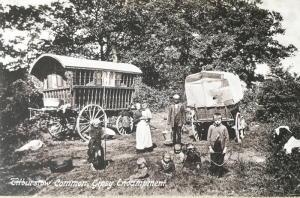
Gypsies

June is Gypsy, Roma, Traveller History Month and Surrey Heritage uses this opportunity to raise awareness of the community’s unique heritage and help people trace their Gypsy family history. If you’re tracing Gypsy ancestors take a look at Surrey Heritage’s comprehensive guide for Surrey sources.

And what better way to enjoy the month than go to this year’s Romany Day celebrations at the Rural life Living Museum, Tilford, on 11 June, produced in partnership with the Surrey Gypsy Traveller Communities Forum.  Surrey History Centre and Ewell’s Bourne Hall Museum will be at this fantastic event which explores the past and present of Romany culture, heritage and tradition. Watch craft demonstrations with paper and wood flower making, peg and basket making, and experience the expression of Romany heritage through music, dance and language, including a poetry slam. For further details see the Rural Life website: https://rural-life.org.uk/events/romany-day/.  

For information on a wealth of other heritage and history events of Surrey visit the latest events and news from the Surrey History Centre HERE.


Epsom Hospital’s speedy chemo for cancer kids

Nathan and Oana

A mum says she is “amazed” by a new chemotherapy service that has proven to be invaluable for young cancer patients and their families. Nathan Dunne, nine, is usually “back home and in his pyjamas” within 90 minutes of leaving the house to have the cancer treatment – known as Vincristine – at Epsom Hospital, and is in the treatment room itself for just half an hour.

Mum Oana is full of nothing but praise for the service, and says it has significantly reduced the amount of time they spend in hospital for appointments – with Nathan previously receiving his Vincristine dose elsewhere. “It’s so much quicker, and Nathan gets everyone’s full attention – plus, the toy box is there already waiting for him on arrival!” said Oana.

“The staff are amazing, they know what they have to do and are always helpful – and if they don’t know the answers to my questions, they will find out. We’re in and out really quickly, and I look forward to the days when we are in Epsom Hospital now. We know the nurses who are working, and we see often the same faces. They know our children and they remember the routine that works for us – for Nathan, that’s counting ‘1, 2, 3’ when the needle goes in, and back again when it’s taken out. I’m just amazed at how quickly we’re back home after a visit for Vincristine.”

Nathan – who lives with his family in Worcester Park – was diagnosed with leukaemia in June 2020. Aged six at the time, he started to complain of tummy aches, and also started to feel really tired – with Oana recalling how one day she had to carry him home from the park because he couldn’t walk.

On another occasion Nathan had a wobbly tooth that wouldn’t stop bleeding for two days, and he also had a swollen finger that hurt when using his iPad.

Concerned about her son, Oana sought help, and Nathan was eventually referred to St Helier Hospital for blood tests. Later on, the family received devastating news: there was a 90 per cent chance Nathan had leukaemia. “We were devastated – it was the shock of our lives,” said Oana. “I didn’t think for a moment that was what it would be.”

The diagnosis was officially confirmed shortly afterwards, and Nathan spent a night at St Helier Hospital before being transferred to Epsom Hospital’s paediatric oncology unit (POSCU).

He was then moved to the Royal Marsden on his seventh birthday, and spent the next few months in the care of the teams there. Oana says Nathan understood what was happening to some extent – knowing “there was something wrong with his blood” and that he was “very poorly”. Treatment started quickly and every day.

Now, Nathan visits Epsom every four weeks to have treatment and is at the Royal Marsden every 12 weeks – with Oana saying the care he has received and continues to receive at both as “incredible”. Nathan is due to finish treatment in August, and is one of 10 patients to have now received a regular Vincristine infusion at Epsom Hospital.

Dr Beccy Suckling, Chief Medical Officer at Epsom and St Helier University Hospitals NHS Trust, said: “Ensuring our patients receive outstanding care is our biggest priority. Our new Vincristine clinics are something to be really proud of, and a lot of work has gone into getting us to this point. It’s fantastic to hear that young cancer patients like Nathan are being treated so well by our brilliant teams – and as well as thanking our wonderful staff for the care they provide, I’d like to thank Oana and Nathan for their really lovely words about that care.”

Lucy Lloyd-James, Lead Nurse for Epsom’s Paediatric Oncology Shared Care Unit, said: “Epsom Hospital is much closer to home for many of our young patients, and we’ve had such wonderful feedback about our Vincristine clinics and how quickly patients are in and out. We know how scary and overwhelming it can be for our young patients and their families, and this is one way we can make such a difficult experience just a bit easier.”

St George’s, Epsom and St Helier University Hospitals and Health Group

[Epsom and Ewell Times say: Thank you Nathan and Oana for your courage sharing your story.]


Make way for Epsom Derby visitors?

Rail strikes will reduce services to Epsom, Epsom Downs and Tattenham Corner stations Friday – Oaks Day and Saturday – Derby Day. With over 100,000 spectators anticipated to attend the annual great flat race, held in Epsom for over 240 years, abandoning trains for cars, local roads can be expected to be jammed.

Maybe give that trek to the DIY store a miss this Saturday?

A Department for Transport spokesperson said: “These strikes have been coordinated by union leaders to disrupt passengers in a week which will see major events such as the first-ever all-Manchester FA Cup final, the Epsom Derby and a number of concerts and festivals across the UK.

“Not content with impacting the hundreds of thousands of people who have looked forward to these events all year round, unions are also targeting their own members’ pockets by forcing them to miss out on pay every time they strike.

“The government has facilitated a fair and reasonable pay offer, now union leaders must do the right thing and put this to their members.”

The unions say they have not been given a pay offer they can recommend to their members. Aslef rejected the government’s 4% offer, which they described as “risible” since train drivers have not had a pay rise for four years.

A special meeting of The Epsom and Walton Downs Conservators was convened last night in the Town Hall to discuss arrangements for the Derby. It went into secret session and we can only speculate that the impact of the rail strikes was likely to have been discussed. Cllr Steven McCormick was confirmed as chair and was joined on the podium by Simon Durrant of The Jockey Club, owners of Epsom Downs and the racecourse.


Epsom Hospital Radio goes National

Epsom Hospital Radio

Back in 1978 two patients in Epsom District Hospital were having a discussion about music. It turned out that they were both DJs and between them they decided to launch Epsom District Hospital Radio. It took a couple of years to acquire funding, equipment and support but in 1981 the station broadcast its first programmes.

Over the ensuing years the station has grown in both size and reputation, continuing to entertain and amuse the patients as well as hosting events such as school fetes, the Dorking Big Weekend, the Epsom Common Day and the Epsom and Ewell Community Fayre.

2023 marks the 45th anniversary of the station and is a landmark year. Surrey’s finest and fastest growing hospital radio station will now be broadcasting on the internet. Thanks to generous donations from Epsom and Ewell Times, Kane Construction, 3ti and the on-going support of Epsom Rotary Club, from Wednesday 31st May you will be able to listen to Epsom Hospital Radio wherever you are in the UK. The online launch at 8pm begins with a guest appearance by Epsom Rotary, one of the sponsors of EHR Online.

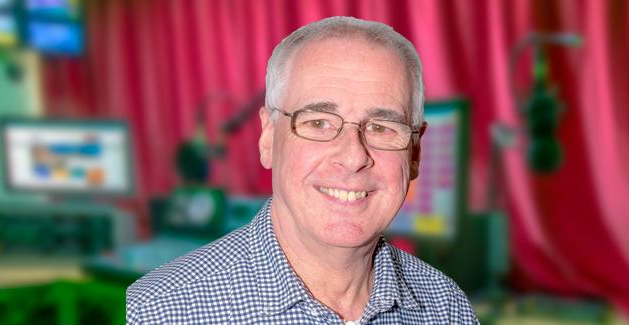
Epsom Hospital Radio’s President Trevor Leonard, who recently celebrated 40 years as a member, is thrilled by the latest development. “This is a pivotal moment in the 45 year history of Epsom Hospital Radio as we will now able to more actively engage with our wider local community, while still ensuring the patients of Epsom Hospital remain absolutely at the heart of everything we do.

“As well as the superb efforts of our current Station Manager, Chief Engineer, Management Team and members who have made internet broadcasting possible, this major development is also accredited to all those who have volunteered at Epsom Hospital Radio throughout the years and in doing so, helped to lay the foundations for us to take this major step forward today”.

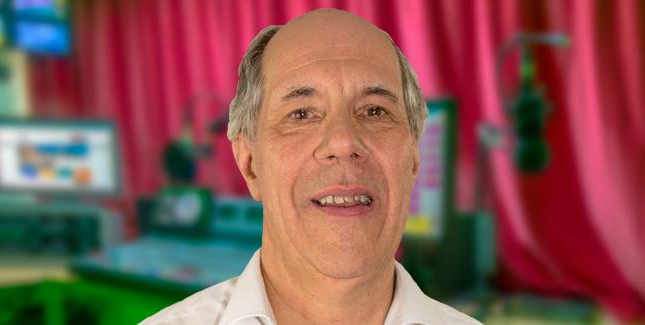
Current Station Manager Ian Daggett said it reflected the station’s desire to progress over the last couple of years. “It’s a small step in the world of broadcasting, but for Epsom Hospital Radio it’s a giant leap. Being on the internet is something we’ve wanted to do for quite a while and we’re really looking forward to reaching out to the people of Epsom and Ewell and the surrounding areas”.

If you want to tune in to Epsom Hospital Radio, a click to listen link is now available on the homepage, which is

www.epsomhospitalradio.org.uk

You will be able to enjoy Epsom Hospital Radio playing your favourite hits from across the decades, alongside an eclectic mix of themed programs from classical to comedy, country to rock, specialist music genres, interviews with local people and the occasional celebrity as well.

You can also request a song for a patient in the hospital or a listener anywhere via the request line which is 01372 735999 or via email studio@epsomhospitalradio.org.uk


Aiming high in local government reporting

Ellie Ames

Epsom and Ewell Times is proud to have been a part in the fulfilment of one of our volunteer citizen journalist’s ambition to work as a reporter. Ellie Ames, who has reported on Council and planning matters for the Epsom and Ewell Times over the last year, has recently secured a position with LocalGov, the UK’s largest dedicated local government news website.

Ellie graduated from Durham University with 1st class honours in English literature followed by a masters in literary linguistics from Nottingham.

We congratulate Ellie on her appointment and wish her a successful career.

The Epsom and Ewell Times has given opportunities to students of journalism to write for us. Ellie Ames’ experience establishes how being published by our news service can boost a budding writer’s career prospects.

If you wish to write for Epsom and Ewell Times do please get in touch.


Picture the opening…..

Film festival opening with Chris Hastings

The 4th Satisfied Eye International Film Festival (26th to 28th May) has opened its doors in Bourne Hall Ewell.

There was a sense of anticipation in the air as people gathered to celebrate and enjoy the best of what cinema has to offer, and there was a feeling of camaraderie among the festival-goers.

One of the visitors who were at previous festivals shared with us that he returned as he wanted to see more different films, styles and types. The festival started with the people’s choice selection. Two films from France, “A Travers”, a very touching story about a couple who needs to terminate the pregnancy in the seventh month and “The Censor or Dreams”. “An Irish Goodbye”, this year’s Oscar winner, tells us a story about two brothers who reunite after their mother’s death and another Oscar nominee, White Eye, from Israel, where a man finds his stolen bike and struggles to remain human.

“The buzz has been very special, we haven’t seen it before and long may it last”, shared with us  Chris Hastings, the founder of SEIFF. 

Among great films, you can enjoy sitting on a Game of Thrones Throne, letting  Johnny5 Replica chase you around The Flying Sauce Cafe. 

Please check the schedule below; there are a lot of Oscar-nominated films on Saturday and Sunday to be seen.

Find out more about the tickets here: 

https://www.tickettailor.com/events/satisfiedeyeinternationalfilmfestival

Reporter – Romana Sustar is a multilingual freelance journalist, University Language Tutor, accomplished marketer and owner of Epsom Digital Ltd., a local digital marketing agency.

LinkedIn: https://www.linkedin.com/in/romanasustar/


Junior doctor strikes to be ‘monthly’ in Surrey?

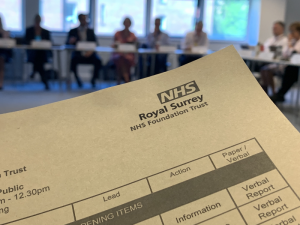
Royal Surrey NHS Board meet

Junior doctor strikes at a Surrey NHS trust is feared to become ‘monthly’ with ‘a lot less willingness’ from people to cover gaps in maintaining levels of service.

The Royal Surrey NHS foundation board meeting took place on Thursday, May 25, and almost immediately the issue of striking doctors came to the fore with staff retention and breaches of patient confidentiality also featuring prominently. 

Front and centre though was the dispute over pay and conditions between the Government and junior doctors. Royal Surrey CEO Louise Stead said, with three days of industrial action already announced for June, the trust “would be going into overdrive to plan for that” but said it would be more difficult as there would be “a lot less willingness” from people to cover any gaps – a problem that would only increase “as this goes on”.

She told the meeting it was increasingly likely that there would be “strikes every month until there is a resolution”, adding “this will be very difficult”. Trust chairperson Joss Bigmore said the “whole situation was becoming “increasingly frustrating on the hard working people”. He told the meeting: “Until they find a resolution to this its just going to get worse and worse.

He said: “It was galling to see the health secretary canvassing during the election when the junior doctors were on strike”, before adding “We have managed incredibly well so far but it won’t last. We really need to find a resolution to this.”

Junior doctors in England are planning a new  72-hour walkout in June as talks with the government once again broke down. The walkout will start at 7am on Wednesday, June 14, and run until Saturday, June 17 with the British Medical Union labelling the government’s 5 per cent pay offer as not “credible”.

Among the other items discussed during the morning meeting were the increase in the number of healthcare infections being detected across the hospital, in line with the rest of the UK since coming out of the Covid-19 pandemic.

Jacqui Tingle, the director of nursing and midwifery, said that while there had been a nationwide pattern for infectious diseases to rise as a whole, Royal Surrey had specific recorded a “spike” in c-difficile cases. 

The meeting also heard about the on-going issues with recruitment, which had played a role in the three month increase in complaints received from patients.

On IT,  she spoke to the “significant rise” in patient data breaches  – 248 from 90 reported last year, which she said was due to the implementation of a new electronic patient record system though these are said to be in decline,

What has been happening, she said, was the new system pulled patient data from a central hub rather than the most up-to-date local lists resulting, in some cases, in confidential medical letters being sent to the wrong address.

Related reports:

Surrey doctors to go on strike?

Image: Royal Surrey Hospital Trust Board (Chris Caulfield)


Derby stalwart sent over the Hill?

Sir Rupert Makeson inset to Derby Hill Epsom

Baronet Sir Rupert Mackeson, a former soldier, London banker and a passionate horse racing author, who loves Epsom, talked to the Epsom and Ewell Times’s Romana Sustar.

“I joined the Army just before my nineteenth birthday in 1960 and spent four years in the Buffs. On leaving university, I converted my TA commission into a regular one and transferred to the Royal Horse Guards. In the autumn of 1966, I was posted to the Mounted Squadron stationed in London. Alas, soon afterwards, when on duty riding a black horse, I had an accident and broke my back. As a result, I now have great mobility problems and have to use a Zimmer frame.” says Mackeson.

However, his passion for horse riding didn’t stop after the accident; he found a way to stay in touch with the sport as an author and trader. Since early 1983 he has been involved with sporting books, paintings and prints.

Despite the accident, he had the great honour of escorting Her Majesty Queen Elizabeth II on several state occasions, including her Birthday Parade and the State Opening of Parliament, often as Escort Commander – the senior mounted officer from the mounted regiment called “the Field Officer in Brigade Waiting”. 

“One may wonder how I carried out these duties, having broken my back. Luckily it was low down, and I had a corset with a metal back, which allowed me to carry out my mounted duties,” explains Rupert.

In 1997 when three Jockey Club courses, Epsom, Sandown and Kempton, wanted more trade stands, he answered the call and traded on all three, averaging 50-60 days a year. Traders in those days got the security of tenure (protected tenant status) after a year or two, as they often had to start in poor positions and get better ones as other traders retired or died. That’s how racecourses, county shows and equitation events like Badminton filled their inferior trade positions.

“Usually, everything regarding trade stands was done verbally on Jockey Club racecourses. Still, as Sandown wanted us there as often as possible, they sent out contracts to emphasise the rent reductions advantage of coming frequently,” explains Rupert.

However, times have changed for traders with our lives embracing the digital age, and the effect of the financial crisis didn’t leave anything untouched. The Jockey Club leadership transformed the layout, and the infrastructure changed. 

Rupert Mackeson believed he was a protected tenant under the verbal agreement from 1997. In February 2023, he received an email from the Jockey Club saying that he could not trade in his usual position as they had other plans for Area 3, so they offered him a stand on The Hill. 

However, for an older disabled person, who needs a Zimmer frame to walk, the new location on The Hill  would present a challenge. The bitter feeling of not getting his permanent location at the Jockey Club made him feel unwelcome,  disappointed and left behind.

The Jockey Club spokesman explained that despite trying to find an alternative solution, the previous locations  are no longer available because of planned improvements.

The Jockey Club has been around for nearly 300 years, no doubt facing many difficult decisions as the world changes around them. They are not alone in this challenge. 

After speaking with Rupert, I wonder if we forgot that some values from the past are valuable. He is a reminder that the sands of time only run in one direction and the importance of considering our older selves when taking difficult decisions to move our companies forward.

Rupert Mackeson books:

Tickets for this year’s Epsom Derby festival Friday 2nd and Saturday 3rd June are available on The Jockey Club website

About Romy:

Romana Sustar is a multilingual freelance journalist, University Language Tutor, accomplished marketer and owner of Epsom Digital Ltd., a local digital marketing agency.

LinkedIn: https://www.linkedin.com/in/romanasustar/

Post script:

This year he will not be at Epsom. He is, however, having a major exhibition of Piggott, Oaks and Derby memorabilia, including unique materials from Friday 16th of June till Tuesday the 27th excluding Sundays, 10am to 4 pm -at Weston Super Frames, 17 Locking Road, Weston Super Mare BS23 3BY


Woking Council has the worst debt in Britain!

Woking Council

Woking Borough Council has crumbled under the sheer weight of its crippling £2billion debt as Government appointed commissioners have been sent in.

The borough council had amassed the billions in debt as part of a failing investment strategy that has spiralled out of control leading to the situation it is in now – its annual interest repayments are more than it brings in from council tax.

Today, the Department of Levelling Up, Housing and Communities (DLHUC) has sent in three commissioners over the  “serious concerns that have been raised regarding the exceptional level of financial and commercial risk” the authority exposed itself to, “as well as its approach to strategic financial decision making and debt management”. 

The council might also switch to full all-out elections every four years as that “can facilitate stable, strategic local leadership, delivering a clear programme for which it can be held to account by the electorate, and having the time to tackle some of the longer-term issues its communities might face”.

“The absence of such elections is often a consistent feature of under-performing councils and a common thread through many council interventions”, letters from DLUHC to the council read.

In a letter to the borough’s chief executive, DLUHC also criticised its “failure” to provide assurance “on the adequacy of the actions that it is taking to address the issues or provide assurance of its capacity to take the necessary action, considering the scale and pace of the response required.”

A Government report titled ‘Woking Borough Council: External assurances review’ published today (May 25) said: “In conclusion, as a result of past investment decisions, the Council has failed its best value duty leaving an unprecedented legacy for the current Leadership Team, which they have not been able to address to prevent financial failure. It is evident that the Council does not have the capacity and expertise to address the scale and complexity of these issues, and so it will continue to fail its best value duty.

“Resolving the issues and moving the Council back to a place of financial stability and value-for-money for the taxpayer will require significant support, including statutory oversight. There is a need for commercial and financial support including capital, legal and forensic accounting specialists. The Council will also need additional leadership capacity to help deliver this swiftly…….

“There are critical decisions that need to be taken in the next 2-3 months, for which immediate expert support is required.”

Within six months, the council must now prepare and agree a credibly resourced “Improvement and Recovery Plan” to the satisfaction of appointed commissioners.

The plan should set out “measures to be undertaken, together with milestones and delivery targets against which to measure performance, in order to deliver rapid and sustainable improvements in governance, finance and commercial functions”.

DLUHC said it had been closely monitoring the concerns around Woking Borough Council’s commercial activity and financial situation. 

Relative to its size, Woking is “the most indebted local authority” in the UK according to DLUHC.

DLUHC documents show that, as of December 2022, it had £1.9bn in borrowing compared to a core spending power of £14m. 

It has two main companies, ThamesWey Group and Victoria Square Woking Ltd, that generated the majority of its debt – through associated housing and regeneration schemes.

In January 2023, DLUHC commissioned an External Assurance Review, covering governance, finance and commercial issues, stating that it was “in the territory” of issuing a section 114 notice as part of setting its 2023/24 budget.

In a letter to Julie Fisher, chief executive of Woking Borough Council, Suzanne Clarke, deputy director at the Local Government Finance Stewardship, said: “After careful consideration of the evidence provided by the reviewers and officials, the Secretary of State considers that there is a pressing case for urgent government action to protect the interests of the residents and taxpayers of Woking, as well as national taxpayers. 

“The financial challenge is acute, and the Secretary of State is concerned that key decisions need to be taken in the coming weeks and months to secure Woking’s financial position, as well as provide assurance that your authority is taking all steps necessary to comply with its best value duty.”

Councillor Ann-Marie Barker, Leader of Woking Borough Council, said: “I am committed to openness and transparency and will continue to keep residents up to date on progress as we deal with the council’s finances. I welcome the letter I have received today from the Minister and the recommendations being proposed by the team that undertook this review.

“I am pleased that there is acknowledgement of the strong collaboration between officers of the council and the review team on the progress that has been made to address the council’s financial resilience. My administration is very clear about the huge challenges facing the council due to the legacy of both the extraordinarily high and disproportionate levels of debt that we have inherited from the previous administration. We are also very clear and focused on the significant risks that the council is now facing up to as a result of that debt.

“We also recognise that these challenges are so significant that the council and its officers cannot deal with these on its own. We therefore fully acknowledge and accept the findings of the report and welcome the support set out by the Minister in his letter.

“I know that councillors and officers will work at pace alongside the government-appointed commissioners to address the issues identified in the report and achieve best value for the public purse through the preparation and delivery of an action plan.

“When my administration gained control of the council last May, I pledged to take on the challenge of major change and embed affordable, responsible and sustainable principles into how the council conducts its future business and this remains my priority. As part of this pledge, we have taken steps to control borrowing, made changes to the governance of our commercial investments and I have instigated independent reviews of all the council’s borrowing and investments.

“I recognise we need to deliver our plans for recovery of the council’s finances with greater pace and urgency and we face difficult decisions in the months ahead. I will work with my officers to ensure, with the support of the commissioning team, we have the capacity and experience to deliver the improvements needed.

“I remain committed to keeping residents, businesses, and community partners fully informed as we progress through this process and develop the detailed plans for recovery with support and oversight from the commissioning team.”

Related reports:

Woking £490m write down sparks ‘worst fears’

Waking to Woking’s woeful debt

Would you want to live in Woking?

Woking up to a very big debt problem


Epsom and Ewell’s 7th Labour Mayor?

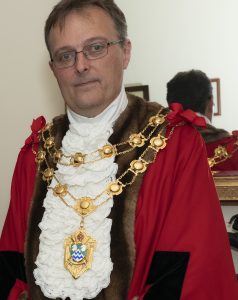
Robert Geleit Mayor of Epsom

Labour Councillor Rob Geleit for Court Ward has been officially recognised as the new Mayor of Epsom and Ewell at the council’s annual Mayor Making ceremony at the Town Hall on Tuesday 23 May.

The Mayor is the first citizen of the Borough of Epsom & Ewell and has several specific roles during their one-year term of office. These include representing the council and the local community at formal and ceremonial occasions, both within the borough and elsewhere, and chairing full meetings of the Council.

Image provided by EEBC with no headroom for front page.

[The Epsom and Ewell Times adds to this Council press release: The founding Mayor of Epsom was Chuter Ede who later became Home Secretary in the post-war Labour Government. Despite the dominance of the Residents Association in the Council the ruling group have not been ungenerous in voting in opposition Councillors to the top ceremonial post. Labour’s Laura Woodcock, Bill Carpenter, Joyce Storer, Alan Carlson and Sheila Berry all taking a turn and the Liberal Democrat’s Colin Taylor.]

During the mayoral year the Mayor is strictly politically neutral. As Mayor for 2023/2024, Rob will have a full diary of civic events planned throughout the year, including visits to residents, community and sports groups.

On becoming Mayor, Rob said, “It is a great privilege to be appointed Mayor of Epsom and Ewell. It is a wonderful opportunity to give back to and highlight the community I love and the place I’ve called home for many years.

“I look forward to meeting as many residents and organisations as possible throughout my tenure as Mayor and showcase their work in our community.”

Rob first moved to Epsom in 1977 when he was 5 years old and has lived here, on and off, since then. He attended Pound Lane School, Bishopsmead Church of England School and finally Epsom High School, where he was Head Boy.

After he left school, Rob suffered an episode of mental ill health, a challenging time for him. He recovered well and was first elected as a Labour Councillor in Court Ward in 2011.

Rob has served on several committees during his time as a Councillor at Epsom & Ewell, most recently serving as Deputy Mayor.

In his professional life, Rob works as a computer programmer in Leatherhead. During his career, he has written code for the European Space Agency, as well as working on Smart Metering and at the Crown Prosecution Service.

Rob is passionate about the environment. He has had a zero-carbon footprint for over seven years. He doesn’t own a car, instead choosing to cycle and use public transport. At home, he uses sustainably sourced electricity and offsets his gas usage.

During his Mayoral year, Rob will raise awareness of and funds for three charities. These are:
Age Concern Epsom & Ewell
A local community charity focusing on empowering older people in the Borough of Epsom & Ewell by providing information, advice, medical transport, social support and befriending services.
Citizen Advice Epsom & Ewell
A free advice service to people that live, work or study within the Epsom and Ewell area.
Love Me, Love My Mind
A small registered charity based in Epsom, which aims to promote better understanding of mental health and to support the wellbeing of everyone in the community.