Epsom and Ewell Times
28th May 2026

ISSN, LDRS and IMPRESS logos

Gatwick expansion update

Gatwick expansion plans

Local authorities have said they will not support Gatwick Airport’s plans to expand unless its growth is dependent on meeting environmental and noise targets. 

According to legal documents, the impacted councils are concerned that there is currently a “lack of sanction” against Gatwick if the growth of the airport exceeds expected environmental guidelines without clear accountability. 

Airport chiefs at Gatwick, the country’s second busiest airport, want to modify its northern runway so that it can increase passenger numbers to about 75 million a year on 386,000 flights. It says this will help minimise delays, bring in about £1 billion into the region’s economy every year, and create 14,000 jobs – all while staying within agreed noise levels. It also has a carbon action plan for how the airport will be net zero for its own emissions by 2030, with aviation emissions excluded.

Gatwick Airport has applied for a Development Consent Order (DCO), a legal document that allows the construction of major infrastructure projects. Part of the process requires the applicant to show the planning inspector how it will mitigate the impact of the development. 

The airport’s current position is that the impact from the growth of the runways will be controlled by an air noise envelope (a way to limit sound) an annual cap of 386,000 commercial air transport movements, surface access commitments/SACs (55 per cent people accessing the airport by public transport by 2040) and a carbon action plan (to reduce carbon footprint).

Councils such as Crawley Borough, West Sussex County, Surrey County, Reigate and Banstead Borough, Mole Valley District and Tandridge (together the JLA) have been consulted on the proposals and have written to both Gatwick Airport and the planning inspector with recommendations.

The JLA say they are “concerned” that the current project “will impose unjustified adverse impacts on local communities, local businesses, and the receiving environment”. The group disagree with the Planning Inspectorate’s recommendations for the major development and believes it does not go far enough to address their concerns. 

Instead, the JLA has put forward an approach where any increase in passenger numbers would be dependent on Gatwick Airport’s achievement of specific targets which would avoid, limit and reduce impacts of the project. The group said that if all their recommended measures were adopted, including the Environmentally Managed Growth framework (EMG), they would “not object”. 

Under the JLAs’ proposed approach, Gatwick Airport would be required to continually monitor and regularly report on the extent of the environmental effects associated with the airport in the four areas: noise, air quality, greenhouse gases and surface access. In each of the cases, the JLAs say they want to ensure Gatwick meet their specific targets and are held accountable, to prevent the airport expanding at any cost. 

The group has proposed a tier system in which to monitor potential breaches in environmental commitments. For instance, if air quality or green gas emissions go above a certain point (level 1), Gatwick will review the current measures and work on mitigation. Then, if air quality gets increasingly poorer (level 2), Gatwick will review its pollutant contributions and introduce mitigation measures, perhaps preventing further capacity. If the limit for air pollution is breached, further mitigation would be required to solve the problem and no more aeroplane flight slots will be allocated. 

The JLAs also want further clarity on the impacted areas exposed to higher levels of aircraft noise, especially areas where noise could wake people up. Measures should also be applied to give Gatwick Airport an incentive to transition to quieter aircraft and noise insulation as soon as possible, according to the JLA’s statement. The JLAs also want to secure night time controls for flying.

The examination of the proposed DCO closed on August 27. The Planning Inspectorate will make a recommendation to the Secretary of State for Transport, who will then make a final decision on or before February 27.

A London Gatwick spokesperson said: “We are fully committed to making sure the airport’s growth is sustainable. London Gatwick has thoroughly assessed the environmental impacts of its growth plans, which include environmental mitigations related to noise, carbon emissions and surface access improvements.

“As part of our sustainability policy we are committed to reaching net zero for our own scope one and two admissions by 2030, as well as continuing to reduce overall energy use, invest in on-site renewable energy, and continuing to source 100% renewable electricity.

“London Gatwick is delighted with the strong support shown by many local people and businesses during the recent hearings, who all voiced their desire to see the airport grow for the economic benefit of the area. We thank them for their ongoing support.”

Related reports:

Gatwick Airport Expansion

Gatwick 2nd runway sneaking in?

Gatwick expansion plans revealed

Gatwick to get 2nd runway?

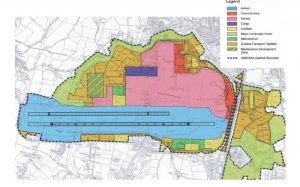
Gatwick Plans (Image PINS / Gatwick)


Will Surrey reporting tool fill the pot-holes?

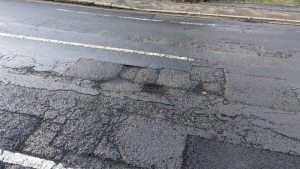
Pothole in Woodcote Road Epsom

Surrey County Council’s new ‘FixMyStreet’ online reporting tool will now make it easier for residents to report potholes, faulty traffic signals and other street defects, following its launch today (Tuesday 17 September).

FixMyStreet allows people to quickly and simply report issues in their area which need fixing, cleaning or clearing. Accessed via Surrey County Council’s website, residents are also able to see issues which have already been reported, to sign up for local updates and to track the progress of repairs using their mobile phone or other device.

Matt Furniss, Cabinet Member for Highways, Transport and Economic Growth said, “We’re very aware that well-maintained roads are highly important to our residents. This is why here in Surrey, we’re investing nearly £300m in repairing and improving Surrey’s roads and pavements by 2028.

“Introducing the ‘FixMyStreet’ platform is another example of our continued investment in our vital highways service. This new reporting platform will make it easier for people to report potholes and other defects, and to check the progress of all repairs in their local area.

Keeping Surrey’s busy road network moving and investing in improving our roads continue to be top priorities for Surrey County Council.

To report an issue and see existing reports in your area, visit https://tellus.surreycc.gov.uk/

Related reports:

Don’t blame us for potholes say Surrey’s highway authority.

90% of Surrey road hole damage claims go to pot

Prevention costs less than cures…..

Image: Pothole in Woodcote Road Epsom. Copyright Epsom and Ewell Times


Surrey roads get better marks

Road markings

Nearly £2m will be spent this year on improving road markings across the county, with over 48 miles of line painting already completed.

Surrey County Council has substantially increased its funding for this and coming years to make the county’s roads safer and improve their visual appearance. This is in addition to the largest ever surface dressing programme which will see over 100 roads improved across Surrey to help prevent potholes.

The programme of works will see white and yellow road markings refreshed on roads across the county, with busy roads and those most in need of refreshing prioritised. This will also include major motorway junctions including the M25 J6 (Godstone), J8 (Reigate), J9 (Leatherhead) and M3 J1 (Sunbury Cross).

Matt Furniss, Cabinet Member for Highways, Transport and Economic Growth, said: “We’re very aware that well-maintained and presentable roads are highly important to our residents. This is why here in Surrey, we’re investing nearly £300m in repairing and improving Surrey’s roads and pavements by 2028.

Our increased investment in line painting will improve the safety and appearance of many roads across our highway network, along with our surface dressing programme which will significantly strengthen 85 miles of the county’s busiest roads, preventing deterioration in years to come.

Our highways teams are also continuing to trial new products which can complete these works in half the time, whilst also using more sustainable equipment.”

Residents can keep up to date with works in their local area by signing up to our weekly highways newsletter here: Your Highways Update landing page (surreycc.info).


Mixed responses in Surrey to 20mph zones

Bridge Road Kingston 20mph zone

Plans for new speed limits in Surrey could go ahead despite lack of confidence it would improve road safety.

Locals said they considered road conditions and potholes to have a greater impact on safe driving and cycling.

Reviewing speed limits is part of Surrey County Council’s (SCC) road safety strategy called ‘Vision Zero’ in partnership with Surrey Police (including the Police and Crime Commissioner), Surrey Fire and Rescue and National Highway colleagues. It aims to halve the number of collisions where someone is killed or seriously injured on the roads by 2035, with the ambition to get to ‘zero’ by 2050.

In the early 2000s Surrey had 60-70 deaths on the road every year and in the last few years it has reduced 30 or under, a Surrey County Council committee heard July 18. Cllr Matt Furniss (Conservative Cabinet Member for Transport and Infrastructure) said the number of collisions has “plateaued” around the 30 mark.

Highlights of the strategy include: introducing more 20mph limits around schools, town centres and residential areas, investing in sophisticated speed cameras to tackle the worst speeding and casualty routes; review 60 mph rural speed limits and replace them with lower limits.

Over 3,600 people responded to the consultation between January and March this year, both Surrey drivers and local residents.

Concerns were raised that 70 per cent of respondents were not confident or neutral that the strategy would improve road safety in Surrey, causing councillors to question whether it should rethink the proposal.

Respondents said they felt road maintenance had a greater impact on road safety and therefore the money would be better spent on fixing potholes and improving roads. “I would much prefer to see the roads we already have maintained better rather than new interventions,” one respondent said.

Officers admitted road maintenance is “crucial”, but said it was not the purpose of the multi-partner strategy. They added that “significant work” was already taking place to address the road defects.

Despite not having data to hand to show if improved road maintenance would lead to less road collisions, officers said police reports would let SCC know if this was the case.

The committee heard that potholes and road defects were occasionally mentioned in police reports but the speed limits and road maintenance “goes hand in hand” and “needs to work together” to improve safety.

Half of the responses (1,832) disagreed with the proposal for new 20mph speed limits, with 10 per cent (around 366) feeling neutral. The report stated the public had a “mixed view” on the subject.

Sceptical of this, Cllr Mark Sugden (Conservative) said: “Is the issue a lack of understanding and communication, or is there a fundamental disagreement to the proposed strategy?”

Officers claimed not everyone understood the policy. They highlighted 135 (4 per cent) of the respondents who had disagreed with implementing 20mph speed limits, had in fact aligned with the proposals. These included comments that did not support a blanket approach but only supported 20 mph limits in town centres, residential areas or near schools but not on main roads.

Negative comments by the public said 20mph limits do not improve safety (170 responses) and increase congestion and air pollution (132 responses). Officers accepted some people may be against the proposals but argued their reasoning went against national research shown in their report.

Officers repeatedly stressed that enforcing 20mph speed limits would not be a “blanket approach” and would, if approved by the cabinet, be subject to local consultation. They added the council needed to communicate its road safety message more effectively with residents.

With only 46 per cent of respondents being happy or very happy with the approach, officers said they had “hoped for more support” for the proposals. A further 20 per cent were neutral to the safe roads approach.

The committee resolved that SCC needed to address the public’s perception that fixing potholes would improve road safety and the concern whether the strategy will succeed.

Image: Neighbouring London Borough of Kingston’s Bridge Road approach to Epsom and Ewell 20 mph zone.


90% of Surrey road hole damage claims go to pot

Pothole in Woodcote Road Epsom

Pothole damage has given rise to 5,619 claims for compensation from Surrey residents to the county council since May 2021.

Since the last local election three years ago, only 581 claims were successful (just over 10 per cent) resulting in £190,000 spent on repayment.

in 2024 so far, up to May, only 12 out of 1,204 claims have been repaid by Surrey County Council (SCC), with £4,435.15 being paid.

As the local highways authority, SCC is only liable to pay for damage to vehicles if it can be proved it has been negligent in the inspection and maintenance of its roads.

“Rather than 90 per cent of the claims being fraudulent, it is more likely that only 10 per cent of people are determined enough to see through a difficult process to the end,” said Cllr George Potter (Lib Dem/Guildford East) at a county council AGM meeting on May 21.

Cllr Potter said the process is “very difficult and time consuming and bureaucratic” which will “discourage many people from going all the way through with their claims.”

Residents can apply for compensation if they suffer personal injury or property damage due to council-owned roads.

For their claim to be successful, they must provide a long list of information such as the details of damage plus two independent estimates for repair, exact location, proof of ownership and current MOT and insurance, travel direction as well as time, date and weather conditions.

Rebutting the accusation, cabinet member for finance and resources, Cllr David Lewis (Conservative/Cobham) said he did not believe the claims were “fraudulent” in any way but that the criteria was not met.

“We have a duty to protect our finances and money raised from residents,” Cllr Lewis said. “[SCC] simply can’t have a process where every claim put in is paid out. The system we currently have is fair.” He added there are no plans to review the criteria or the process of compensating pothole claims.

Fixing approximately 50,000 potholes a year on average, Surrey County Council has budgeted to spend £5m of its annual budget on repairing potholes and other road safety defects.

SCC inspects its major roads (A roads), roads connecting traffic between A roads and smaller roads (B roads) and some smaller roads (often linking a housing estate or a village to the rest of the network) once a month. Rural roads connecting to smaller communities are inspected once every three months, according to guidance on SCC’s website.

As a general rule, the county says, the diameter of the pothole at the surface level should be less than 150mm on carriageways for cars to require it to be repaired within five working days. If it is not possible to permanently correct or repair the defect within the time period, a permanent repair should be carried out within 20 working days.

Related reports:

Pothole payouts and repairs penalise Councillor projects?

On the Hunt for pothole repairs

Don’t blame us for potholes say Surrey’s highway authority.

Going potty about pot-holes?


Mutual easing of access benefits Epsom development

East Street Epsom aerial view.

Epsom & Ewell Borough Council has agreed to enter into a mutual deed of easement with the developer of the SGN Gas Works site in Hook Road, Epsom. This site is situated next to the council-owned Hook Road car park, and the deed of easement grants reciprocal access rights over each site’s roads.

This agreement is an important step in the council’s long-standing ambition to promote the redevelopment of this combined site, in order to provide an improved, attractive, better connected and rejuvenated area that would attract new residents and businesses to Epsom Town Centre.

The combined site has previously been included in the November 2023 consultation of the Epsom Town Centre Masterplan, and the Reg 18 March 2023 consultation of the Draft Local Plan.

The deed of easement will enable the Gas Works site developer to design a scheme that could use the council’s Rainbow Leisure Centre access road as the main entrance off East Street. In return, the council would have access across the Gas Work developer’s estate road infrastructure from the current Hook Road car park entrance. By removing the need for separate, duplicated road infrastructure, the Gas Works site can be designed to maximise open space and connectivity across the wider combined site.

The deed of easement is conditional, which means it will not be completed or take effect until such time that the developer of the Gas Works Site is granted planning permission for development. This will ensure the council can maintain its two separate, independent capacities as landowner and as Local Planning Authority.

Cllr Hannah Dalton, (RA Stoneleigh) Vice Chair of the Strategy & Resources Committee, said: “Members unanimously voted for the mutual deed of easement at a special Strategy and Resources Committee held on Wednesday 19 June. This is an excellent example of the council working in partnership with other landowners and we hope that, as a result of this decision, we can deliver wider benefits for the community through appropriate high-quality redevelopment and regeneration of the SGN Gas Works site.”

Image aerial view East Street Epsom – Google.


Local roadworks taken to task

Roadworks

Surrey County Council has established a critical new task force to reduce the impact of utility roadworks and drive better coordination and communication of works across Surrey’s road network.

Utility companies’ demands in Surrey are amongst the top five highest in the UK with 88 works starting every day in the last twelve months. In total, over 32,000 utility works have been undertaken across the county during this period, at a cost impact to Surrey residents of £35,424,225. 

Made up of representatives from water, energy and telecoms companies, the task force held their inaugural meeting last week and agreed five key areas of focus:

  • Better coordination of roadworks across Surrey
  • Working collaboratively to minimise disruption for residents
  • Improved public communication by utility companies and improved on-site signage prior to works commencing and throughout
  • Improved methods of sharing information, including online mapping of planned utility works
  • Clearly defined escalation routes so that SCC can quickly hold utility companies to account.

Jonathan Hulley, Deputy Cabinet Member, Strategic Highways at Surrey County Council, said, “Whilst we recognise that works on the highway carried out by utility companies are necessary, these works are all too often impacting negatively on Surrey road users.

This is a huge source of frustration for our residents, and we need to ensure that utility works are completed quicker, with better traffic management, better coordination, and better resident communication, which is why we have formed this vital task force. 

Surrey County Council is working hard to improve over 100 roads as part of our £8.5m highways maintenance programme this Summer to help prevent potholes – the biggest ever surface dressing programme undertaken in the county.

I thank all partners who attended the first meeting of the task force and I look forward to working together to drive real improvements and do all we can to reduce utility congestion on our busy road network.”

The task force will meet monthly to take this work forward.

More information on Surrey County Council’s responsibilities and utility companies roadworks is available on the Surrey County Council website.

Image: Credit Geof Sheppard Licence


Cyclist death prompts A217 review

A217 Road, Near Tadworth, Banstead. (Photo Google)

The death of a “fit and active” cyclist has prompted a coroner to raise concerns over paths near a main road in Tadworth.

A man named John Bass died after falling from his bike following an incident involving a van on the A217 at Tadworth in December 2022.

Encroaching mud, twigs and grass more than halved the width of the popular cycle path which poses a risk of further fatalaties, a coroner said at Mr Bass’s inquest.

The 80-year-old was considered a “fit and active cyclist”. While the footpath from which Mr Bass fell was 1.4 metres wide, due to encroaching mud, grass, twigs and acorns on the pavement space, the space where he was able to cycle was reduced to only 0.6 metres wide. 

Weeks before his death, a highways  inspector visited the path and did not consider the narrowing of pathway as a safety concern.

Assistant Coroner Krestina Hayes found in a Prevention of Future Death Report: “There is a risk to future pavement users if clear guidance is not provided to inspectors to identify safety concerns regarding vegetation growth on footpaths.”

The report, published May 14, 2024, also expressed concerns that the frequency of the yearly road inspections should be reviewed.

Speaking at the inquest, Mr Bass’ family advised the footpath by the Tadworth Road is used regularly by cyclists to avoid the vehicles on the busy road, where the speed limit is up to 40mph. 

As the highway authority, Surrey County Council (SCC) is responsible for maintaining public highways. Although there is reference to trees and vegetation in SCC, there is no clear guidance on encroachment on pavements. 

Inspected yearly, the stretch of highway was examined by car on November 14, and on foot on 22 November. No safety defects were found to meet intervention level  by SCC. The family said the pavement was cleared shortly after the accident. 

A spokesperson for SCC said: “Our deepest sympathies remain with John’s family and friends, and we will respond to the Coroner’s report following careful consideration of the concerns raised.”

SCC has been given until 3 July to respond to the report.

Image: A217 Road, Near Tadworth, Banstead. (Photo Google)