
Epsom lamppost flags: symbol of pride — or cause of anxiety?


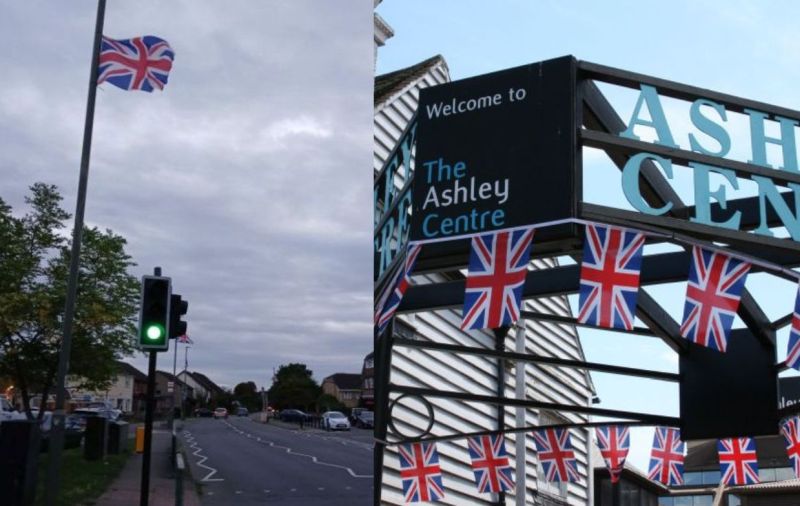
Across parts of Epsom and Ewell, the appearance of Union Jack flags tied to lampposts has prompted sharply differing reactions. For some residents, the flag remains a symbol of shared identity and national belonging. For others, the manner of their sudden arrival — often without permission and fixed to public infrastructure — has caused unease, sparking wider anxieties about division, ownership of public space, and the meaning of patriotism in modern Britain.
In September 2025 Surrey County Council restated its position on flags and attachments to street furniture, reminding residents that anything fixed to a lamppost or painted on a public highway requires formal consent. The council emphasised safety considerations for drivers, pedestrians and maintenance crews, and said unauthorised attachments may be removed during inspections. Residents wishing to display flags on public land are advised to apply in advance through established procedures. The council was clear, however, that anyone may fly a flag from their own property if they wish to do so.
The debate has not only been technical or regulatory. One local resident, writing to the Epsom and Ewell Times, described attempting to remove some of the flags in their neighbourhood and being confronted in the process. Their concern was less about flags as symbols, and more about how — and by whom — they were placed, and whether they were being used to signal exclusion rather than unity. The writer reflected on the way social and political polarisation in recent years has shaped how national imagery is read, and expressed frustration at what they saw as a lack of clarity over which authority is responsible for removing unauthorised items from street furniture.
Others in the borough have reacted very differently, seeing the flags as benign expressions of pride, or as gestures intended to lift spirits at a time of economic and social uncertainty. Some residents have argued that the Union Jack should not be regarded as belonging to any one political tradition, recalling moments when people across the country — including at national sporting events and during major civic occasions — have gathered beneath it without controversy.
That broader question — who “owns” the flag — has recurred throughout modern political history. When crowds waved the Union Jack outside Downing Street on the night of Labour’s 1997 election victory, commentators spoke of the centre-left “reclaiming” national symbolism from the political right, attempting to make it inclusive rather than exclusive. Others have suggested that opportunities were later missed to develop a more layered sense of identity, for example by flying the European Union flag alongside the Union Jack on public buildings, as was commonplace in many EU member states. For some, that dual display might have normalised a shared British and European identity; for others it would itself have been contentious. The difficulty of striking a balance illustrates how strongly flags can be read in different ways.
In Epsom and Ewell, the present concerns appear to rest less on the flag itself than on process, tone and consent. The sudden appearance of flags on lampposts — without clear identification of who has installed them and without permission from the asset-owning authority — has left some residents feeling unsettled or excluded, while leaving councils fielding questions about responsibility and enforcement. The practicalities are not trivial: removing items at height may require equipment, contractor time and public money.
One constructive suggestion arising from local discussions is that the right of individuals to fly a flag from their own homes could be matched by a more open and confident approach from civic bodies, schools, churches, voluntary groups and local businesses — flying the Union Jack from their own buildings in clearly identifiable and lawful ways, and on agreed occasions. In that model, the flag becomes visible as a symbol belonging to all, rather than as an anonymous street-level intervention that some interpret as a political statement.
Another proposal is for clearer published guidance from the relevant authorities — setting out who owns which assets, how permission can be sought, what safety standards apply, and how residents may raise concerns or objections. Transparency about due process may help reduce tension, even where views differ about meaning and symbolism.
What the current debate in Epsom and Ewell perhaps most clearly reveals is that flags still carry emotional weight — capable of reassuring some while unsettling others. Between those positions lies a space for thoughtful discussion about how shared symbols are used in public places, and how a sense of belonging can be fostered without causing anxiety to neighbours who may read them differently.

If you have a considered view on this topic feel free to write to The Epsom and Ewell Times.
Related report: