

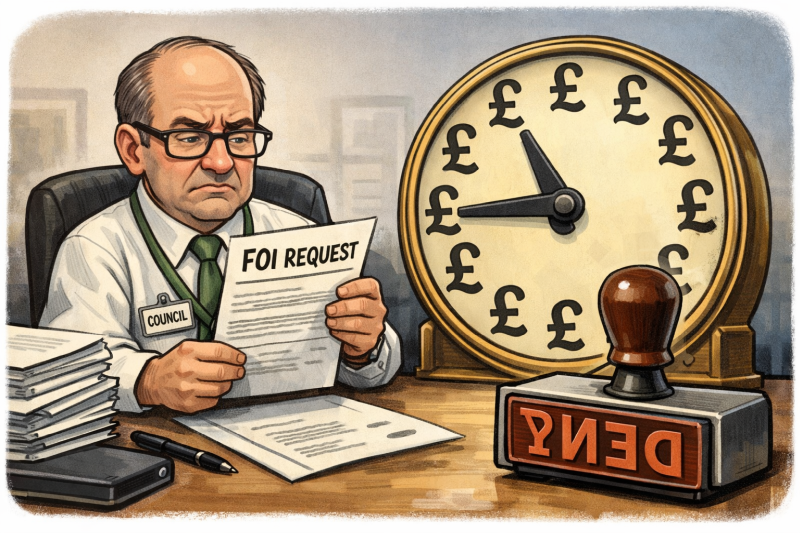
Information on Epsom and Ewell Council’s perished parishes plan blocked on cost


A dispute between a resident and Epsom & Ewell Borough Council over the conduct of its Community Governance Review (CGR) has escalated, despite the Council’s decision to abandon plans for new parish-style community councils.
In March, the Council dropped proposals to create Epsom and Ewell Community Councils after its second-stage consultation produced a decisive result, with around 82% of over 2200 respondents opposing the plans.
However, correspondence seen by the Epsom & Ewell Times shows that concerns about how the consultation was conducted — and how the Council has responded to those concerns — remain unresolved.
Resident raises formal concerns over consultation process
Local government elector Nathan Elvery and a former Council CEO submitted a detailed pre-action protocol letter in early March raising potential legal concerns about the CGR process, including:
• the design of the initial consultation survey and whether a clear “No” option was available
• the adequacy and transparency of financial information
• whether alternative governance models were considered
• compliance with consultation law principles
• whether equality duties had been properly addressed
He also submitted a series of Freedom of Information requests seeking disclosure of internal documents and analysis.
In a follow-up email to the Council’s Chief Executive dated 3rd April, Mr Elvery expressed concern that his correspondence had not been substantively addressed, stating that the Council had treated his pre-action protocol letter as “a routine information request” rather than engaging with the legal issues raised.
He wrote that more than four weeks had passed without acknowledgement from senior officers and that “none of this has happened” in terms of the Council’s own commitments to timely responses.
FOI request refused on cost grounds
On 1 April, the Council responded to Mr Elvery’s FOI requests by confirming that it holds the information sought but declining to provide it on the basis that complying would exceed the statutory cost limit under the Freedom of Information Act.
The Council stated that responding would take more than 18 hours of officer time and was therefore not required under Section 12 of the Act.
In his 3rd April email, Mr Elvery challenges this position, arguing that the Council has improperly aggregated multiple requests to exceed the cost threshold and has failed to meet its duty to provide advice and assistance to narrow the request.
He also argues that some elements of the request — such as whether an Equality Impact Assessment exists or whether legal advice was obtained — could be answered quickly and should not have been refused.
Internal review and possible ICO referral
Mr Elvery has now requested a formal internal review of the Council’s FOI decision and indicated that he will refer the matter to the Information Commissioner’s Office if the refusal is upheld.
He has also renewed his request for a substantive response to the issues raised in his original pre-action letter, including confirmation of what steps the Council intends to take to ensure that future consultations comply with legal requirements.
Although he confirms that he will not pursue judicial review following the Council’s decision to abandon the CGR proposals, he states that the procedural issues identified remain relevant to how the Council conducts future consultations under local government reorganisation.
Consultation outcome settles policy but not process
The Council’s decision not to proceed with creating community councils has resolved the immediate policy question. However, the issues raised in the FOI correspondence highlight continuing debate about the consultation process itself.
One recurring point is that the CGR consultation did not include Neighbourhood Area Committees (NACs) — currently being piloted elsewhere in Surrey — as an option for residents to consider.
Epsom and Ewell Tines (EET) survey suggests alternative preference
Alongside the Council’s consultation, the Epsom & Ewell Times conducted an independent reader survey.
Although based on a smaller sample of only 112 respondents, the survey found:
• around 75% support for NAC-style local engagement structures
• a similarly high level of opposition to community councils as reflected in the Council’s consultation
Unlike the official consultation, the EET survey invited respondents to compare different models of local representation.
Transparency and future implications
The Council’s use of the cost exemption under the Freedom of Information Act is a lawful mechanism where a request requires disproportionate time and expense. However, the refusal has left a number of substantive questions unanswered in the public domain.
These include how consultation options were framed, what alternatives were considered, and how financial information was developed and presented to residents.
With Surrey’s local government reorganisation continuing, and new governance structures still to be defined, the issues raised in this case may have implications beyond the now-abandoned community council proposals.
The outcome of the internal review — and any subsequent decision by the Information Commissioner — may determine whether further information is disclosed.
For now, while the policy proposal has been withdrawn, the debate about process, transparency and future local representation in Epsom and Ewell remains ongoing.

Related reports:
Sun sets on Residents’ Associations’ cherished Parishes for Epsom and Ewell
Epsom and Ewell to ditch Parish Councils plan
Many more …… search “parish council”