Epsom and Ewell Times

5th February 2026 weekly

ISSN, LDRS and IMPRESS logos

This defeat will not count

Epsom & Ewell FC 1-3 Fleet Town. ABANDONED AFTER 55 MINUTES. Combined Counties League – Premier Division. Saturday 13th April 2024.

An attendance of around 80 people gathered at the Madgwick to watch our penultimate League match at the ground before we move on to Corinthian Casuals for next season. However, it didn’t work out quite like that as the contest was abandoned in the 55th minute following a nasty injury to young Fleet defender Ed Scott and the fixture will now have to be rearranged back at the Madgwick, with Thursday 25th April looking to be the most likely date, due to our opponents currently having matches scheduled for both remaining Tuesdays. Please note that this is only speculation on my part and confirmation will follow in the near future.

Those present on a sunny day (but one which had brought swarms of flies out behind the far goal where we were standing) witnessed an hour of football that summed up our season really as we looked quite threatening in patches, only to part like the Red Sea at others and we were 3-1 down at the time of the abandonment.

We had a number of changes to the line up from the loss against Spelthorne Sports as Thompson Adeyemi, Jaevon Dyer and Callum Wilson were all unavailable. Worse still, Wilson confirmed that he is done for the season following a dislocated thumb. However, it wasn’t all bad news as Carl Oblitey returned from injury up front while Tijani Eshilokun was also back in the line up alongside Luke Taylor who made his first start for our club. Also back from injury was Ethan Brazier who relegated Ayran Kugathas to the bench and was arguably our best player on the day, making a number of marauding runs.

Now, I’m not a fan of playing three at the back, as regular readers will be aware. We started the season with that formation and we have recently tried it towards the end of recent defeats to Balham and Horley Town. However, this time we started with the three and on this occasion, I could see why. Clearly the plan is now to try and outscore teams in the knowledge that we do not do clean sheets any more!

It is sound logic based on the fact that we are now nineteen matches without a clean sheet, and this formation did enable us to play Oblitey up front alongside Will Kendall, which was a bit of a throwback, although it will only work if enough service is provided to our front two. It nearly paid dividends with just 32 seconds on the clock as Ethan Nelson-Roberts made tracks down the left and sent over a low ball, but it was just too far ahead of Kendall who couldn’t wrap his leg around the ball enough at the far post to keep the shot on target.

The opening minutes looked quite promising for Salts fans until a hopeful punt upfield from the visitors left our keeper Dan O’Donovan and our retreating defender Matt McGillivray uncertain of who should claim the ball on the edge of the area and while they dithered, Dan Bone nipped in to poke the ball away from both of them and roll the ball into the empty net in just the eighth minute.

This was horrible, but we were back on level terms just three minutes later after Eshilokun fed the overlapping Brazier on the right wing and his pinpoint cross enabled Oblitey to score with a diving header into the bottom corner of the goal from six yards out. Luke Miller was next to deliver a dangerous right wing cross but it was punched away by Fleet’s keeper Filip Chalupniczak. It was a fairly even contest to this point, but then we started to get pushed back by our opponents. McGillivray was forced into conceding a yellow card to stop an attacker breaking through.

We then had an extremely odd and contentious issue in the 24th minute. Chalupniczak made a routine catch and went to drop kick it clear, only for it to hit Oblitey on his back, just outside the penalty area and rebound straight into the net! It was surely a lucky break for us, but no! The referee consulted with his Assistant before then disallowing the goal and awarding a free kick against our man. This appeared extremely harsh, but having seen the video from our excellent Videographer Gary Jarman, you can see Oblitey jumping to block, even though his back was turned. On many occasions, the goal would still have stood, and I believe it should have still counted, but I can at least understand why it might have been disallowed. You’ll have to draw your own conclusions as to whether Oblitey really did enough wrong here!

The setback gave us momentum for a while and Miller sent a ball in that was just turned away from Eshilokun at the far post, but on the break Fleet struck a shot just beyond our own post and from this point until the end of the half you could see us being pushed back. Brazier had to head an effort off our own goal line but in the 39th minute they went ahead through the ill-fated Scott with an unmarked near post header from a corner that was a carbon copy of one we conceded recently at home to Horley.

We nearly equalised in the second minute of injury time after Nelson-Roberts did really well to reach the touchline just a few yards out and pulled the ball back for Adam Green to side foot it towards the goal. It took a slight deflection on the way, but even so, it was somehow clutched right on the line by Chalupniczak and we went in at the break a goal behind, but not yet out of the match. However, the writing was on the wall within two minutes of the second half after a long throw was flicked on and then volleyed in from about ten yards by Bone to make it 3-1 which left us facing a mountain to climb.

However, the game took an unfortunate twist in the 55th minute when Nelson-Roberts threatened to break through on the left, but was then brought down by a high and very clumsy looking tackle from Scott, which left the offender in a heap in the floor. It was immediately clear that he was badly injured and all those in the ground knew there would be the possibility of an abandonment, as happened to us eighteen months previously when Andy “Woody” Hall was injured in a goalless draw at Forest Row. Looking back at the incident itself, it’s possible that one of Scott’s feet got caught in or on the artificial surface, which was why the original challenge looked so awkward as he looked off balance when he made it. Either way, this became the second Combined Counties League match to be abandoned at the Madgwick since the artificial surface was installed back in August after an injury curtailed the Cobham v Abbey Rangers fixture back in the Autumn of 2023. We obviously wish Ed Scott well for the future and hope he is back playing the game he loves as soon as possible.

From a personal point of view, the Forest Row match I referred to was abandoned with the score level at 0-0 and we went on to win the replayed contest 2-0 which, although we didn’t know it at the time eventually gave us the pivotal second place finish and subsequent home advantage in the Southern Combination League playoffs last season. I wonder whether this replayed fixture turns out to be as significant. A new date for Fleet’s re-visit will be advised as soon as possible.

Epsom & Ewell: Dan O’Donovan, Ethan Brazier, Ethan Nelson-Roberts (c), Adam Green, Reece Tierney, Matt McGillivray, Luke Miller, Tijani Eshilokun, Will Kendall, Carl Oblitey, Luke Taylor

Subs: none

Report Source: www.eefconline.co.uk


Surgery delay after hip break led to death

East Surrey Hospital

An elderly woman who tragically died after waiting five days for hip surgery prompted a coroner to raise concerns that a hospital is putting patients at risk of an early death. 

Anne Rowland, a care home resident in Oxted, died in East Surrey Hospital after inflammation and infection of the lungs following surgery. 

Ms Rowland broke her hip following a collision and fall with another care home resident who was partially sighted on February 27, 2023. She was taken to East Surrey Hospital the same day.

Coroner Anna Crawford found there was “no clinical reason” for the surgery not taking place until five days later on March 3 as the patient was “clinically fit”.

She concluded that outstanding infrastructure repairs and the use of different guidelines from the National Institute for Health and Care Excellence (NICE) that the Surrey and Sussex Healthcare NHS Trust was “placing patients at risk of early death”.

NICE guidelines say that hip surgery should take place on the day of the injury or the day after. Early mobilisation is recommended for hip fracture patients to reduce the risk of complications, including pneumonia.

East Surrey Hospital uses a metric of 48 hours within which to conduct such surgery and does not use the NICE timeframe. Although the hospital has a dedicated operating theatre for trauma patients, on some occasions demand outweighs capacity. 

However, the surgery did not take place because “other trauma patients were prioritised ahead of [Mrs Rowland] based upon their relative clinical need”.

Operating theatre capacity at the hospital has on occasion been compromised by infrastructure failings. An entire new surgery unit is being constructed and is anticipated to be completed by 2025 at the latest. The orthopaedic theatres also need new air handling and chillers which is yet to be completed.

The coroner concluded that waiting for her operation “caused” Mrs Rowland to develop dementia and immobility. This “contributed” to her developing aspiration pneumonia following surgery. Mrs Rowland’s condition deteriorated resulting in her death at East Surrey Hospital on March 31, 2023. 

Ed Cetti, chief medical officer of Surrey and Sussex Healthcare NHS Trust, said: “We are profoundly sorry for the delay in Mrs Rowland’s hip surgery and offer our deepest sympathies to her family during this difficult time.”

The Trust said that in the months since Mrs Rowland’s death, it has “significantly” reduced delays in hip fracture surgery. In November 2023 59 per cent of operations occurred within 36 hours and 91 per cent within 48 hours.

Mr Cetti added: “We always strive to perform surgeries of this nature as soon as possible and monitor our performance against the 36-hour time window identified by NICE guidance. We also monitor against a 48-hour window to ensure any patients that miss the 36-hour target are not waiting longer than 48 hours.

“Recognising that not all patients are medically well enough for surgery within 36 hours, we are working on improving our performance further and reaching the 80 per cent target by the end of 2024/25.”

Image: Entrance to East Surrey Hospital. Credit Get Surrey.


Surrey Uni works on self-drive safety

Self-drive vehicle on road

As the UK prepares to introduce legislation that paves the way for self-driving vehicles later this year, scientists and experts led by the University of Surrey have launched a new network to ensure that this new technology is safely implemented.  

The MASSDRIVE (Methods for Assurance of Self-Driving Vehicles) project has been funded by Innovate UK to help the country and industry develop robust methods of approving and certifying self-driving cars as they become available.  

Professor Saber Fallah, co-investigator on the project and the Director of Connected Autonomous Vehicles Research Lab (CAV-Lab) at the University of Surrey, said: 

“MASSDRIVE is all about bringing together industry, scientists, regulators, and the public to begin a conversation about how we can make self-driving cars safe for our roads.  

“Our main goal is to make sure these vehicles are safe. We want to create strong connections between car makers, people who set the rules, academics, government groups and local communities. By having regular discussions, workshops and meetings, we’re creating a space where everyone can share ideas and good ways of doing things, focusing particularly on making sure the AI in cars is trustworthy.” 

MASSDRIVE is a collaboration between the universities of Surrey, the West of England and Bristol. 

If you want to know more about MASSDRIVE or if you are interested in shaping methods for the safety of self-driving vehicles, please contact Professor Saber Fallah.

Image: Creator: eschenzweig Common License 4.0


Just not cricket to replace Banstead pavilion?

Banstead-pavilion-old-and-new

A long-standing cricket club’s ambitious plans to construct a modern pavilion and expand its facilities have sparked a debate from people that live in the area, saying it would “ruin the village feel”.

A centuries old sports club wants to modernise its facilities, in part due to the massive growth of the game among girls and women, although some warn its ambitious plans overstep the mark.

Banstead Cricket Club has applied to demolish its current clubhouse, which it says was only every designed to last 10 years but has stood for 60, and replace it with a new modern facility that conforms to “Sport England and the sports governing body standards”.

It is also seeking to refurbish its pavilion to create a dedicated changing space for women and girls. While opponents to the plans aren’t arguing against its need to modernise, and would like to see the 182-year-old cricket club get a new clubhouse – they say they are worries about the size and location of the plans. They feel the potential increase in social events at the site, could have a negative impact on people living near the ground.

The club, however, told the Local Democracy Reporting Service that they are “not trying to just suddenly become an events business” and that “the most important thing to stress is that Banstead Cricket Club is a cricket club”. The application has already had 252 comments with the majority (151) backing the plans and 91 objecting.

Club chairperson Neil Bowman said: “We need something bigger and we need something that has more than one room. We need to have other areas where people can hang out, or have a team meeting. We didn’t design it as a wedding venue, and we do appreciate the neighbours’ concerns, there was a concern about creating an event venue, and all the additional traffic, noise.

“I can entirely understand people’s concerns, but we are not trying to do that, we are trying to build a modern clubhouse.” The club said that Sport England and the England and Wales Cricket Board have been consulted in terms of the most ideal sighting for the new building and it’s the internal layout.

Its new location will allow people to take in matches from either of the club’s two pitches. The club has also said it will re-lay its car park with an environmentally friendly solution. Project head Ian Rusbridge said: “We are not trying to just suddenly become an events business, that’s not our game.

“We don’t foresee (a surge in) event hire, there may be a little bit more during the summer – because at the moment we can’t hire it out at all. The other thing to stress, is that the cricket club is run by volunteers, who have full time jobs, and lives and children. They haven’t got the capacity to run a cricket club let alone an events business. ” Adding to that, in terms of the design the architects we employed, their speciality is sport pavilions.”

The club has a licence until 1am but says it is rarely used and that the events held usually stop serving alcohol at 11pm. It said it did not see this changing in the future. Among the objections however include the increase in traffic around the green belt area, noise that would come from an expanded pavilion, and the determination visual impact it would have.

One objector wrote that the scale of the two-storey building was “far too large” and would “ruin the village feel” of the site. He felt the current buildings were perfectly adequate and would support plans that improved and updated the facilities within the same space.

The Local Democracy Reporting Service spoke with another resident who has also written in to object. Robert Garbut lives off Park Road, near the club, and challenged the size of the plans, its impact on traffic and neighbourhood fears the site could become a late-night venue.

He said: “It’s massive. It’s a 350 per cent increase over two floors, on another field that had never been built on before. Earth-moving trucks that will have to move into the park – I’m sure people just don’t realise what is happening. Having said all of that, the cricket club has been there for a hundred years, it’s hugely successful, they need more changing rooms.

“We assumed they would knock down the old clubhouse and build an all-singing all-dancing version of that. They also own the practice field adjacent to that – that’s where they want to build, you can understand that as it makes sense to build it on your own land rather than land owned by Reigate and Banstead Council.

“All of our objections are about the superscale of this social venue, nobody but nobody wants to be mean spirited. We want the club to be a great building not the ramshackle thing they’re in now.”

The planning application is still with Reigate and Banstead Borough Council’s planning team. A date has yet to be set for when it will be determined.

Image – visualisation of new pavilion and current inset.


New SEND school blocked by Nimby?

Plan of Beechwood house.

A group of Surrey parents say they are “devastated” and fear it is back to the drawing board after plans for a ‘much needed’ special needs school will likely be quashed.

Planning permission was approved by Mole Valley District Council (MVDC) in March 2023 for a state-run Betchwood Vale school on the site of the vacant Chalcraft Nursery and garden centre. Around 82% of kids with special educational needs and disabilities (SEND) have to commute out of the district to go to a specialist school. One mum said she covers 80 miles a day on the school run to access education for two of her children

But a single claimant took it to the High Court to challenge the procedure on the way the decision was made on two grounds: application of the environmental habitat regulations and traffic flow. The court has said the first point is valid and thrown out the second.

Using his delegated authority, the council’s Deputy Chief Executive decided not to defend the legal challenge, asking the court to quash the decision, given the legal costs.

Originally scheduled to open in September 2023, parents say they were thrilled to think there might ‘finally be a school locally’ to cater for their needs.

Elizabeth Marett, mum and campaigner for the school, told the Local Democracy Reporting Service that she feels education for disabled children is not being prioritised. She said: “I am disappointed, angry and upset with the local residents who have taken it upon themselves to oppose the schools because they are essentially saying the education of disabled children is unimportant.”

“There are children who need schools, and if this isn’t built, their future is very bleak. Is there any way we can convince these people that what they’re doing is really damaging for the local children of the future? These schools are hard to come by. There are so many children in the county that need to go to this school.” Other parents called it a “bitter blow” to the SEND community.

Elizabeth said some children in her son’s class “have nowhere else to go” as mainstream school is not possible for children with anxiety and complex needs.

Betchwood Vale school is likely to be for high-functioning autistic children, who do not have other learning disabilities, if it goes ahead. It would teach children between seven and 19 years old, providing places for around 60 pupil in its first year and going up to 180 children over a few years.

Currently, more than 100 autistic children who live in Mole Valley and require a specialist place go to school out of their district, meaning they spend a long time every day travelling large distances between home and school.

One mum said she covers 80 miles a day on the school run to access education for two of her children whilst another is transported 22 miles in the opposite direction.

Fighting against the application in the planning meeting (March 2023) was an unofficial group called Ladyegate Road Residents Association Ltd (LRRA). The group, named after a private road near the site, objected to the application because of the adverse impact on traffic flow and approach to Dorking, the negative effect on biodiversity and that no alternative options have been investigated for the site.

Planning documents reveal Surrey County Council (SCC) Highways warned of “minor” impacts to traffic on the A25 junctions as a result of the proposed school. It also added conditions of improving vehicle access on nearby Punchbowl Lane.

Cllr Joanna Slater (Conservative for Leatherhead South) said: “What is also troubling is that this has happened completely behind the scenes. Councillors did not know.”

The council’s Development Management Committee (DMC) meeting on 3 April heard that the team claim they were not informed of the SEND school decision being changed or is likely to change. A spokesperson for MVDC said it is not “unusual practice” for a decision to be taken by a senior officer under delegated authority. They said all local ward members were kept updated in the proceedings.

Cllr Slater added: “At best this is a delay to the SEND school opening. At worst, it will result in the whole project failing as the budget for planning permission has been spent.”

Clare Curran, Lead Cabinet Member for Children and Families at SCC, said: “We are disappointed with Mole Valley’s decision not to defend the judicial review. The proposed Betchwood Vale Academy is critical to achieving Surrey’s ambition that autistic children are educated closer to home.”

SCC have promised to deliver 2,440 permanent additional specialist school places in Surrey between 2019 – 2026 to create capacity for 5,760 planned places by 2030/31.

SCC said it has been advised by the Department of Education of their ongoing commitment to deliver Betchwood Vale Academy in full once a positive planning application has been confirmed.

A Mole Valley spokesperson said: “We are working as quickly as possible to get a decision from the Court. Once that is made, we will reconsult on the planning application and soon after – return the application to the Development Management Committee to make the planning decision.”

It added: “This will allow us to ensure that there is no future potential for legal challenge and that once a new decision is made, if it is to again approve the application, then the delivery of the school can start swiftly.”

The Department of Education has been contacted for comment.

The Ladyegate Road Residents Association is not an official body. The Local Democracy Reporting Service (LDRS) tried to contact the group for additional comment but was unable to do so.

Related report:

Surrey to SEND £40m for special schools

Image: Betchwood Vale SEND school plan. From Design and Access statement. Credit: Jestico + Whiles Associates Ltd.


PM confident of success in Woking

Sunak in Commons

Prime Minister Rishi Sunak said he was “confident” that Conservatives will hold onto Woking in the upcoming local and general elections, when he was grilled about why people should vote for a party that allowed the local council to go bankrupt.

The PM was at Woking Community Hospital April 11th where he was grilled about the fate of the Conservative party by reporters. 

The PM pointed to the UK economy in response to questions about why Woking residents should vote for a party that allowed the local council to go bakrupt. 

Woking Council declared bankruptcy in June 2023 after it admitted a risky investment spree into hotels and skyscrapers by its former Conservative administration. 

Calling Woking’s investments a “cross-party” decision, Rishi said local councils are “in control of their own finances”, and urged they run their budgets “in a sensible manner to deliver to their residents”. 

Citing the national picture, Rishi said inflation has “more than halved” to 3.4% in February 2024, wages have increased ahead of inflation, taxes have been cut and free childcare has been expanded to working families.

He added: “While we have been through a tough few years as a country, that’s been difficult for families in Surrey, I do believe that the start of this year we have turned a corner and we’re now heading in the right direction.

“Our plan is working, if we stick to our plan we can give everyone in Surrey and Woking the peace of mind that there is a brighter future for them and their family.”

Woking is set to go to the polls on May 2 to vote for a third of the council (10 seats) in the local elections. Since news first emerged about the borough’s financial crisis,  his party lost control of the council, and saw its share of councillors drop to four (from 17 in 2016). 

MP Jonathan Lord won 48.9% of the vote in the 2019 election, with Liberal Democrat candidate Will Forster coming second at 30.8%. One poll from Electoral Calculus predicts Jonathan will win a narrow victory of just 30.8%, with Lib Dem and Labour closely at its heels with 27.6% and 23.6% respectively.

Although the Woking MP was present during the media pool, he made no further comment. 

The PM argued central government has put more funding into councils, claiming local councils have on average 7.5% more funding than 2023. A further £600m has also been put into local authorities for 2024-25.

He said: “Central government is doing its bit to support [local councils] with considerably more funding.” Despite the added funding Woking Council said it has to make £8.4m savings for year one of its five-year financial strategy. Closing most public toilets, ending grants to voluntary and community groups, reducing dial-a-ride services and losing up to 60 staff are some of the cuts the council has made to make ends meet. 

Related report:

Sunak in Surrey


New born enters world by rare EXIT

50 strong delivery of baby by rare exit procedure

A 50 strong team of specialist medics crammed into an operation theatre recently to carry out a globally rare procedure on a newborn baby and save his life.
 
Little Freddie Verschueren was delivered at St George’s hospital in South West London using the Ex-utero Intrapartum Treatment (EXIT) procedure which delivers babies who could potentially have serious challenges at birth.
 
This procedure is used when an unborn child has an obstruction in their airway which means they would be unable to breathe independently once they are removed from the placenta.
 
Professor Asma Khalil, consultant obstetrician at St George’s, led the entire operation, which involved about 50 medics and other staff in the operating theatre.
 
She said: “An EXIT procedure involves a large number of healthcare professionals from various backgrounds including an obstetrician, fetal medicine specialist, an anaesthetist, a paediatric anaesthetist, a paediatric ENT surgeon, midwives and the neonatal team, as well as other theatre staff.”
 
In little Freddie’s case there was a cyst on his tongue that could potentially block his airways it was detected in a scan during his mum’s second trimester. The team made an incision in mum Anna’s tummy and delivered Freddie’s head and shoulders first, leaving him attached to the placenta and able to breathe.
 
They established an airway so he could breathe independently before delivering the rest of him. Freddie weighed 6lbs 8oz (3.1kg) at birth and was able to go home with his parents Anna and Peter Verschueren a healthy baby.
 
Anna said: “We’ve been incredibly impressed with the service we have had at St George’s, at every step it has been outstanding care. When we found out we needed to have the procedure we felt in such safe hands with the experts at St George’s. We never doubted their skill and advice.”
 
Professor Khalil added: “I am very grateful to the efforts by every member of our large team who ensured that we delivered the best care to Anna and Freddie. Saving babies’ lives and caring for the parents during challenging times is the most rewarding aspect of my job.”
 
An EXIT procedure is extremely rare. However, despite its global rarity this is the second time it has been carried out in St George’s this year.
 
Dr Richard Jennings, Group Chief Medical Officer for St George’s, Epsom and St Helier University Hospitals and Health Group, said: “St George’s is one of the few hospitals in the country that carries out this rare procedure and saves the lives of many babies. I am pleased to hear that Freddie is doing well thanks to our dedicated and skilled teams and everyone at St George’s wishes him and his family all the best for the future.”


£1.1 m boost for Surrey Uni’s solar thermal research

Thermal solar panels

Solar-thermal devices that have the potential to transform how we heat our homes and generate power on a larger scale are being developed by a team led by the University of Surrey. This exciting project has received a £1.1 million grant from the Engineering and Physical Sciences Research Council (EPSRC).   

The main goal of this research is to create new designs for surfaces that can selectively absorb sunlight while also efficiently emitting heat in the form of near-infrared radiation. These devices are different from solar cells, which typically convert sunlight into electricity; solar-thermal devices use sunlight to generate heat, which can then be used for driving mechanical engines or converted into electricity. 

The research project is led by Surrey, in collaboration with the University of Bristol and Northumbria University and combines their expertise in photonics, advanced materials, applied electromagnetics, and world-class nanofabrication facilities.  

Professor Marian Florescu, Principal Investigator from the University of Surrey, said:  

“Our project is not just about innovating; it’s about responding to a global necessity. The sun showers us with a tremendous amount of energy every day, far more than we currently capture. By developing these advanced solar-absorbing surfaces, we are opening up new, efficient ways to harness this abundant solar energy. Our goal is to transform how we use sunlight, making it a powerhouse for clean and sustainable energy that meets our growing needs without harming the planet.” 

The project has several aims: 

  • To develop solar absorbers that can work well even at very high temperatures.  

  • Improve the efficiency of the team’s special solar-absorbing structures. The team plans to build prototype models to demonstrate how well they work.  
  • To better understand and ultimately improve how these devices handle and perform with the heat they generate from sunlight. 

Professor Marin Cryan, Co-Principal Investigator from the University of Bristol, said:

“The University of Bristol has been developing thermionic solar cell technology for a number of years. These use concentrated sunlight to heat materials to the point where thermionic emission of electrons occurs, which can form the basis of high-efficiency, low-cost solar cells. This exciting project will develop very efficient solar selective absorbers, which will be an important component of the overall cell design.” 

Dr Daniel Ho, Co-Principal Investigator from Northumbria University, said:

“Northumbria University is at the forefront of thermophotovoltaic research, utilising a specialised microscope heating stage alongside an in-house built Fourier imaging spectroscopy system. This advanced thermal analysis technique enables comprehensive and angle-resolved scattering analysis across both visible and infrared spectrums, even under vacuum conditions and at temperatures as high as 1000°C.  

“We are excited to work with our partners to help achieve pioneering developments in renewable energy research.” 


Auto fire alarms need a 999 before fire service respond in Surrey

Surrey fireman

Surrey Fire and Rescue Service has changed the way it now responds to automatic fire alarm call outs (AFAs) to residential and domestic properties, by only attending if there’s been a 999 call to confirm there is a fire or signs of fire. 

This change, introduced last month, covers AFAs at properties including hotels, boarding schools, care homes and any other residential types, including those that contain single private dwellings.  

98% of the residential and domestic AFA call outs that Surrey Fire and Rescue Service attended from October 2022-March 2023 were false alarms. These accounted for 976 mobilisations – that’s more than 5 fire engines a day being sent out on blue lights to false alarms where there isn’t a fire.  

This change is the second phase of work, after making the switch in 2022 and only attending non-sleeping business calls when a fire is confirmed. Since then, false alarm visits have decreased by over 95%.  

Surrey Fire and Rescue Service would like to reassure residents that nothing is changing in their response to a real fire. Only now, the call handlers will ask a series of questions designed to determine the nature of the call and whether there is a fire, or signs of fire, and depending on the response received, crews may still attend to investigate the reason for the AFA.  

Group Commander and project lead for the change, Rob Jenks said: “We’re committed to keeping our communities safe, and if there’s a fire, or signs of a fire, we will always respond immediately.   

After successfully making the switch for business AFA call outs in 2022, this new change is another positive step for our communities. We spend many hours and resources on responding to false alarms, and now, our crews and pumps will be more readily available when there’s a confirmed emergency.”  

If at any time you discover signs of fire, raise the alarm, get out using the nearest fire exit and call 999.  

For residents responsible for these types of premises, the service is urging you to visit their dedicated webpage for more information and advice on how to investigate an automatic fire alarm activation, and steps you can take to make your property as safe as possible.  

Please visit: https://www.surreycc.gov.uk/community/fire-and-rescue/community-safety/automatic-fire-alarms to find out more about how this will affect you or your property.  


Ewell’s wetlands to be celebrated on an open day

Aerial view Chamber Mead nature reserve

The South East Rivers Trust (SERT) is inviting local residents to come and celebrate the newly-created
Chamber Mead wetlands with a day of family fun, activities and guided tours.

The celebration day on Saturday 20th April will give nature lovers the chance to add plants to this
critical pollution buster for the River Hogsmill, a precious chalk stream.

Families will also have the chance to learn about the health of the river by taking part in riverfly
demonstrations, a scavenger hunt and nature craft activities. Guided tours of the wetlands will also
be part of the day, which runs from 11am to 3pm.

The open day begins a fortnight of planting opportunities for schools and community groups. All the
plants have been specially selected to absorb pollutants and attract pollinators and an increased
range of wildlife across the Hogsmill Local Nature Reserve.

The wetlands in Ewell now divert urban pollutants from the Green Lanes Stream away from the
Hogsmill, one of only 200 chalk streams in the world. Once filtered water is fed back into the river
just downstream of the famous Stepping Stones, another 5km of waterway is protected as it flows
into south London all the way to the Thames.

Dr Bella Davies, Co-CEO of SERT, said: “We’re thrilled to be giving the community the chance to learn
all about Chamber Mead wetlands and crucially give people the chance to complete the project. The
public have been very supportive of the wetlands from the start and adding plants is a wonderful
opportunity to attract new wildlife not only to the water but the wider nature reserve. This will fulfill
the potential of the wetlands to become another jewel in the crown of the reserve and make it an
even bigger asset for the community. We’re excited to see the results in years to come on the
Hogsmill, which should be a haven for brown trout, water voles and native crayfish, among other
species which need our help in recovering their numbers.”

Councillor John Beckett, (RA Auriol) Chair of the Environment Committee at Epsom & Ewell Borough Council, said: “We are overjoyed to be able to join SERT on the Chamber Mead Wetlands Open Day, to
celebrate the fantastic work that has been done here to boost biodiversity and reduce pollution in
the Hogsmill River.  I hope that residents will join us to help complete the project, which will ensure
the Hogsmill River Local Nature Reserve is a place where wildlife and nature can thrive, and one that
we can enjoy for many years to come.”

Supported by the Hogsmill Catchment Partnership, the project has received funding from The Coca-
Cola Foundation, Natural England (through the Species Recovery Programme), the Environment
Agency, Surrey County Council, the Rivers Trust, the Zoological Society of London, Garfield Weston
Foundation and Thames Water, with in-kind support from the landowner Epsom & Ewell Borough
Council. The new wetlands are part of the wider Replenish programme in partnership with the Coca-
Cola Foundation and the Rivers Trust. The aim of Replenish is to restore millions of litres of water in
this and other local catchments, in turn improving biodiversity.

Speeches will take place at 11:30am- 12noon:

These will be delivered by Jackie King, Chief Executive of Epsom & Ewell Borough Council, Dr Bella
Davies, Co-CEO of the South East Rivers Trust, and Borough Mayor Cllr Robert Geleit (Labour Court) who will also cut the ribbon to officially open the wetlands.

Plants such as yellow flag iris have been chosen for their ability to take up nutrients such as nitrogen
and phosphorous. Meanwhile ragged robin and purple loosestrife will attract species such as
butterflies, bees and damselfies, while brooklime, typical in chalk stream settings, will offer shelter
for tadpoles and sticklebacks.

Related reports:

Chalking up a victory for the Hogsmill

“Garden of Eden” coming to West Ewell as Wetlands Plan is approved. Will this stop pollution?

Voles let loose on the Hogsmill

About the South East Rivers Trust:

The South East Rivers Trust is an environmental charity bringing rivers and their catchments back to
life. Working in 12 river catchments across the South East, the Trust connects communities and
mobilises citizen scientists to educate and engage people on the importance of rivers, and supports
and challenges stakeholders, businesses and individuals to protect them. The Trust uses data and evidence to target positive action and works with nature to make rivers healthy again. This includes
tackling water pollution, addressing water scarcity, reconnecting rivers and restoring habitats.

www.southeastriverstrust.org/


London Calling Time with a Sutton & Epsom Win

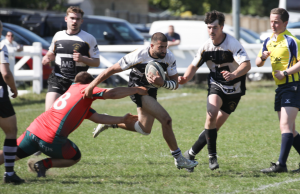
Rugby action at eybridge match

Sutton & Epsom RFC 12 Reeds Weybridge 10. Saturday 6th April.

As is the format of league rugby the fixtures conclude by playing the opposition first
encountered on the opening day of the campaign. On that September afternoon bathed in
glorious sunshine but disrupted by Rugby World Cup absentees, of the carousing rather
than playing variety, Reeds Weybridge gained a 27-12 success. With both teams secure in
the knowledge that they had retained their Regional 2 South East status for next time one
might have expected a high-scoring denouement to the campaign. In the end the teams
created a Sutton & Epsom league record as the Black & Whites edged the contest 12-10 so
recording the lowest aggregate ever for the last game of the season undercutting the
1995 classic when S&E won 13-11 at Ealing.

It was a red-letter day for George London as the veteran, but not balding, back row
made his 200th league appearance for the 1 st XV transforming the ‘Fab Four’ into the
‘Famous Five’ of players to have reached that landmark. The match was played with the
handicap, or advantage, of a howling wind arrowing towards the corner flag at the
clubhouse end. Reeds Weybridge kicked off with the elements against them. At once the
significance of the gale was demonstrated as Tom Lennard cleared from his 22 to the
opposition 22. If that was not harsh enough it was a 50/22 and Sutton were awarded the
lineout.

This initiated a ten-minute siege of the Reeds line. The throw in was secured, the
forwards advanced and a penalty was indicated as a speculative ball descended from the
heavens onto the wings. The defenders saved the day but returned for more punishment.
The penalty was kicked to the corner, McTaggart rose skywards to gather and initiate the
second assault. Three carries and a penalty and the same dose of medicine was repeated.
This time the referee issued a yellow card and Sutton & Epsom pressed on against 14. A tap and
go, a roar from the crowd but no try and it went wide and more optimistic overtures as
Ghumra dived for the corner. Back for another penalty and the Rugby Lane crowd were
beseeching Sir to indicate a try but Hegarty was held up. Reeds relief and a drop out
under the posts to restart play. The Black & Whites countered with zeal and finally opened
their account. Perhaps Mr Richardson had a sense of occasion as the try-scorer was
George London. The conversion was added but with another dramatic twist as Freddy
Bunting was allowed a second bite at the cherry and the hosts led 7-0.

The opening score was not the sign of the floodgates opening but saw the visitors
getting a foothold in the game. It was obvious that Reeds were looking to play at a high
tempo and get the ball to their dangerous back division. Penalties were played quickly and
the RW pack was gaining the ascendancy at the scrummage. On the half hour they were
rewarded with an outstanding try. The combination of superb line of running by Pete Cole
and a perfectly timed pass saw winger Matt Stevenson run in under the posts with four
colleagues in congratulatory support. Fullback Pete Cole added the extras to level the
scores at 7-7. Moments later it took two tremendous tackles within a minute by Josh
Pulvirenti to snuff out a potential break from halfway. Despite the conditions it was Reeds
who were finishing the first half the stronger with centre Josh Clark to the fore using
intelligent chips and grubbers to keep Sutton on the back foot. The first period ended with
no further addition to the scoreboard. Reeds Weybridge had achieved the notable success
of being on level terms despite playing against a very strong wind.

The start of the second period was a mirror of the first which was hardly surprising
as there was no easing up from the elements. The men from Whiteley Village dominated
territory and possession but they discovered, as had their Sutton counterparts, that those
final yards were the hardest. Marcus Clark on the wing came closest to breaking the
deadlock but the S&E defensive line stood strong whether it was Kyren Ghumra on the
wing or the tireless pack. Increasingly the flow of the game was disrupted by
infringements on the deck that created a stalemate that prevented the Reeds backs
demonstrating their quality and gave the Sutton & Epsom defence added confidence in what was a
surprisingly uneventful third quarter.

The final twenty minutes signalled the start of increased excitement as Matt
Stevenson’s quickly taken penalty appeared to have caught Sutton & Epsom napping. However, a
fabulous cover tackle by Captain Bunting was a most timely intervention that was
improved when S&E were awarded a relieving penalty. Soon it was advantage Sutton & Epsom with
Freddie Bunting making a surging break to the 22 to link with centre partner Ellis Rudder
that concluded with a Sutton penalty. The resulting 5-metre attacking lineout drifted on
the wind with a not straight verdict giving the visitors an escape route. Perhaps it was
frustration but the visitors ignored the helpful conditions to run the ball from their own
line. The yards gained were immediately lost to a penalty and petulance that saw them
marched back 10 metres. Ironically Reeds next opportunity came as Sutton lost the ball in
the opposition 22 and it was fly-hacked clear. Suddenly the pitch opened up with RW
players streaming ominously forward but Austin Bell did wonderfully to secure the loose
ball to avert disaster on halfway.

With the game in the balance and in time added on Reeds were within touching
distance of glory but had the consolation of a penalty. It was an easy decision for captain
Herbie Finn to opt for the kick at goal as fullback Pete Cole effortlessly put the visitors 10-
7 up. One could imagine Captain Finn imploring his team to secure the restart and send it
deep into Sutton territory and on no account concede a penalty. With the billowing breeze
making the restart more of a lottery than it might have been the Black & Whites were
given the lifeline of a penalty. It was advanced to the corner and another penalty followed
the lineout. Sutton went for route one as tempers boiled over before the final play of the
season. The forwards provide a mass of steaming humanity on the try-line and Rob
Hegarty squeezed over to win the game for Sutton & Epsom. It was left for George London to
attempt the touchline conversion and despite a passable impression of All Black legend
Don Clarke it fell short. The final whistle blew and Sutton & Epsom had snatched victory by 12-10.
The supporters retired to the clubhouse and for those who live in a tinkerless world
they ruminated on what might have been in 2023-4. The Sutton & Epsom victory was synonymous
with the man of the hour, George London, it was full of determination, a never say die
attitude and a will to win in adversity that saw Sutton over the line. Reeds had the edge in
the scrummage and the more threatening back division. However, the powerful wind did
not bring the anticipated cascade of points as both XVs demonstrated determined defence
and it was the Black & Whites who gained the points by virtue of winning the try battle by
2-1 but only at the eleventh hour with Brunnhilde on her final chorus.

Sutton & Epsom
O’Brien, Findlay, Rudder, Bunting ©, Ghumra, Lennard, Munford, Boaden, Farrell, Gibson,
Glanville, McTaggart, London, Pulvirenti & Hegarty.
Replacements: Al Khaldi, Jones & Bell.

Reeds Weybridge
Cole, Stevenson, J. Clark, Maddock, Brown, Jesty, Palmer, L. Day, R. Day, Ring, Finn ©,
Wasko, G. Corner, Collyer, A. Corner.
Replacements: Rawding, Relfe & M. Clark.

Image courtesy Robin Kennedy


Surrey Councils holding unclaimed tax refunds

Table of unpaid refunds from Surrey councils.

Councils in Surrey are holding nearly £1.5million in overpaid tax that can be claimed back. People who moved to a different borough after paying their tax are supposed to be sent a closing bill. If an account is in credit, overpayments are refunded.

When this is not possible, for example if the council does not have a resident’s forwarding address, the overpaid cash can sit in a pot until a claim is made – or the residents return to the borough.

In Surrey, that figure is a combined £1,493,722.12 for eight of the 11 councils. As for the others (Elmbridge, Tandridge and Epsom and Ewell) their figures remain unclear.

The three most common reasons for overpayments are when someone moves out of their house and has already paid, changes to a property’s tax band, or when residents forget to cancel standing orders when they move.

The two biggest stockpiles are held by Guildford and Spelthorne Borough Councils, and account for more than £600,000. This is according to data released under Freedom on Information to Money Saving Expert.

Tax not claimed back can be written off by a council – to balance the cost of bad debts – however Guildford Borough Council said it reinstates the money if a resident comes forward to claim the credit.

Guildford Borough Council told the Local Reporting Democracy Service it has refunded 12,793 people on both closed and open accounts with a total value of £4.4 million, since April 2021. It says nearly a third of these were refunded through MyGuildford online accounts.

A spokesperson for Guildford Borough Council said: “It’s important that we are provided with a forwarding address so we can send closing bills or retrospective bill changes.

“If a refund is not claimed, the money will remain on the account until the resident claims it or becomes liable for council tax in our borough again.” They added: “To be transparent, we roll over overpaid council tax every year. If other councils have already written off credits, their credit value will be reduced.”

Guildford council added that they don’t have a specific deadline for claiming overpaid council tax. But to avoid fraudulent claims, they ask residents to provide proof of the overpayment. The older the claim, the more proof is needed.

A spokesperson for Spelthorne Borough Council said: “Tax refunds occur for a number of reasons, for example if a resident has moved from the borough or they have paid a bill in advance and Spelthorne Borough Council proactively issues any council tax refunds which are due.

“Where accounts are in credits, statements are sent with refund application to the last known address, if we hold bank details refunds are refunded directly back to the bank account that they were paid from. Where accounts are constantly paying in credit, copy bills are sent to prompt a response from the payer to claim the overpayment back.

“Residents can keep track of their council tax bill by registering for the self-service customer portal online or call the team on 01784 451499.”

Elmbridge Borough Council, which did not respond to the FOI, said it refunds overpaid council tax if a resident’s account is in credit and does not owe any other amounts of tax.

People who move within the borough will usually have credits from their previous address transferred across, while those leaving the area can arrange a refund.

[Nationwide the London Borough of Newham holds the highest of £9,539,750 and Surrey’s Runnymede fourth lowest of £5,777.]

Contact your local authority for specific advice on claiming it back, as this is likely to differ.


Virtual care to rise under ambulance plan

Call staff at South East Coast Ambulance NHS Foundation Trust. Credit SECAmb

Over a third of South East Coast Ambulance (SECAmb) service responses will be done remotely in a new five-year strategy. (Here “remotely” means by video call or telephone rather than sending out an ambulance.)

The NHS Trust said its care model is no longer “fit for purpose” as it prepares for a 15 per cent increase in patient demand over the next five years, at a board meeting last week (April 4). Increasing demands on the service included health care becoming more complex, the ageing population and changing areas of deprivation.

By 2029, the Trust aims that over a third of all its patients will be signposted to another service- leaving 65 per cent of patients with an ambulance response. The change will affect Surrey, Thames Valley, Kent and Medway as well as Sussex Integrated Care Systems (ICS).

Simon Weldon, CEO, reassured that SECAmb would still be there to protect and look after the sick who needed an ambulance. He added: “If patients don’t need an ambulance, we can help you get you to a place which can meet your healthcare needs.”

Urgent medical needs such as cardiac arrest, a stroke, heart attack, pneumonia, childbirth and newborn care would still be attended to by ambulances, the Trust said. 

Delivering this strategy, over the next three years, SECAmb expects it to meet emergency care needs within the national standards of 7 minutes for calls for immediate life-threatening and time-critical injuries and illnesses; and 18 minutes for emergency calls.

For non-emergency patients, virtual care will be provided via an assessment by a remote senior clinician. Meeting documents said this would enable patients to be “cared for directly or referred to the most appropriate care provider”.

Investing in a data and digital strategy was highlighted as a key part of the new direction. The board heard how new technology like AI would help the SECAmb make better decisions and lead virtual consultations. These could be used to respond to patient needs in a remote and professional setting rather than sending an ambulance. 

Meeting documents revealed that 88 per cent of patients received an ambulance response; but an SECAmb officer said the outcomes from the cases indicated only 30.5 per cent of patients needed clinical care. 

Only 12 per cent of patients are currently referred or signposted to another service rather than receiving ambulance care; but under the new strategy for 2029, this will increase to 35 per cent. 

Team Member for SEAmb, Matt Dechaine, said: “Sending a fully kitted ambulance is a very expensive way for the public purse to respond to patient needs, when other services may be able to address it in a cost-effective way.”

Covering five years, the new strategy will be carried out in three phases: designing new models of care, collaborating with partners and developing a digital strategy; implementing the change and finalising and improving the operational model. Digitalisation of the service will begin in phase 2, with electronic health records deployed by March 2025. 

SEAamb identified its model as “unsustainable when challenged” from an operational, workforce and financial perspective. The Trust found it would need to employ 600 more people over the next five years to respond to demand. 

Not all non-emergency patient consultations will be resolved solely over the telephone. Simon told the board that the strategy aims to “align patient needs with ambulance services”.

Over 2,000 staff, 400 volunteers and 350 members of the public have been consulted on the strategy, with the Trust saying it has been “clinically led”. System partners have also been invited to 20 sessions to share their views.

The full new SECAmb strategy is set to be published in May 2024.

Call staff at South East Coast Ambulance NHS Foundation Trust. Credit SECAmb


Floods with silver linings for Guildford’s housing targets?

Flooding Guildford feb 2020 1 gov (image Environment Agency)

Guildford has been given the “biggest opportunity” to transform itself in a century. The Environment Agency is looking into an expanded flood prevention scheme that would save homes and businesses from rising waters – and open up previously unusable town-centre land for new housing. Supporters say the upshot of this is huge.

Councils have to identify land for housing in order to meet Government set targets, but Guildford Borough Council had to recently disregard 50 sites because they were subject to flooding – 30 of which were in the town centre, the Local Democracy Reporting Service was told.

If the expanded flood alleviation scheme goes ahead it would instantly increase the amount of land in the town and in a swoop take pressure off green belt villages.

Former councillor John Rigg said that the town has been waiting affected by floods for almost 100 years and that it would only get worse if nothing was done. He said: “The Environment Agency’s  planning period anticipates a 72 per cent  increase in rainfall in the Guildford area. Not steady rain, big downpours.”

He said the problem was compounded as towns upstream – for example in Waverley – pressed on with their own developments.

Mr Rigg said: “When the Government said Guildford had to deliver 10,000 homes, they had to all go in the green belt and the villages, because nobody  got the flooding scheme underway and released the brownfield sites. When Guildford was looking at land for development as part of its local plan,  there were 50 sites that had to be disregarded because they were subject to flooding, 30 of them in the town centre.”

Among those are the Millmead and Millbrook car parks.

He said: “We have got to get the flood alleviation plan adopted. The EA has said there is £7bn allocated  to areas that  deliver economics and social benefits. This ticks all the boxes. It’s an important town, it’s a county town and it needs homes and businesses. The previous scheme was a minimum, just to stop a couple of streets flooding, but this does it properly, it frees up brownfield sites. It’s the biggest opportunity for Guildford since about 1900. Last week, by the cinema it flooded, it was up to people’s knees, as far as this town is concerned, they need to wake up.”

Guildford has a long history of flooding from the River Wey, and the Environment Agency, working with the borough council and Surrey County Council, are looking to reduce the high level of flood risk to the town centre.

The project is still in its appraisal stage, but the EA has confirmed it is looking to create a larger protection zone than initial plans from 2018. It expects to take up to three years to finalise the scheme as it undertakes  assessments, surveys and public engagement – the first of which takes place at the Yvonne Arnaud Theatre on Thursday April 18, from 2pm to 7pm.

Jon Mansbridge, Guildford Flood Alleviation Scheme project director at the Environment Agency, said: “The feedback we gather from communities during our engagement is really valuable in helping to inform the preferred option.” He added: “The flood defences will be visually integrated into existing and regenerated areas of the river corridor, reducing flood risk to even more of the town centre.”

Councillor Joss Bigmore, former co-leader of Guildford Borough Council said: “Finally the Environment Agency is supporting the council by backing a flood alleviation scheme. “We’ve been patient, nobody has the money to do these things, and its positive that we are at the top of the queue.

“Hopefully we can come up with a comprehensive solution and hopefully we can eradicate  the risk of flooding for the centre of Guildford for the next century.” He added: “For existing residents it very important – and if there is a solution it will unlock a lot of regeneration opportunities on former flood risk areas.”

Flooding in Guildford Feb 2020 (image Environment Agency)


Big employment hub coming to Leatherhead

Leatherhead Business Park (Image Mole Valley Planning Portal)

The future of a possibly major employment hub in Leatherhead has been given a huge “vote of confidence”.

Four new buildings and 13 industrial warehouse units will be built in the north of the town after decision-makers backed plans to modernise part of the Cleeve Road  Business Park Research Area.

Three “rather tired” buildings, Alpha, Beta, and Cetec, will be torn down to make way for modern facilities that meet the “expectations of employers and businesses today”.

The decision, backed unanimously at the Wednesday, April 3 meeting of Mole Valley’s Development Committee, had widespread support within the room given the area was already earmarked as a business park by the borough’s planners.

Councillor Keira Vyvyan-Robinson (LD, Leatherhead North) said: “I am broadly in favour of this. 

“I think it is a sort of vote of confidence in the industrial unit there, and the site, and the future of it, which is a really good thing.

“I’m pleased to see investment being put into that area.”

Cllr Chris Hunt (Ind, Ashtead Lanes & Common) said: “I really think this application is good. 

“I love the mix in the size of the units, I think that appeals to firms throughout.”

He said the noise, lighting and access were all positive and added: “ It’s the right site at the right time.”

Among the comments received during the planning process were concerns over the loss of existing pedestrian and cycle access.

Councillors did urge the developers Stefania Chancerygate (Leatherhead No. 1) Limited, to keep these throughways, particularly for those who work at the site as they would benefit from easy routes into town  – but were told it was not a planning matter.

The meeting heard the site had good access to the M25 and that “strategically” this was where the council would direct this type of development “as it would boost employment and promote growth”.

The new plans include 112 parking bays, of which at least 50 per cent must have fast-charge sockets before any of the units are allowed to open for trading.

Cllr Phil Hammond (LD,  Fetcham): “The employment land strategically for the district is really important and this is a big area but it’s got rather tired and it’s not really meeting the expectations of employers and businesses today.

“It needs upgrading, it’s important employment, we need that in north Leatherhead and we need that in the north of the district.”

Image: Leatherhead Business Park (Mole Valley Planning Portal)


Taking a ride on Epsom’s new S2 bus

Harrison Galliven on the S2

More than most in the capital, South Londoners notice when the bus timetables change. Whether this stems from a love of the iconic red fleet or an over-reliance on the service due to a lack of London Underground coverage is besides the point.

Therefore, news of Transport for London’s (TfL) latest bus rejig last month did not go unnoticed. The changes affecting the capital’s most southerly boroughs have seen routes withdrawn and re-drawn.

Perhaps the most exciting changes have come in the form of the entirely new 439 and S2 routes, that would take South Londoners across Sutton, Merton, and Croydon in a fleet of brand-new EV buses.

Last month I took a long and winding ride on the 439, which was comfortable but eerily quiet. Now I decided to jump on South London’s other newcomer, the S2. The S2, introduced on March 2, has replaced sections of the old 470 and S4 route that took passengers between Epsom town centre and St Helier station. The route is operated by Go Ahead.

Getting a measure of what a bus service is actually like is hard, as there are so many variables that can influence the length and enjoyment of the journey. That said, I thought it best to take a ride mid-afternoon to get a taste of the post-lunch slump and rush hour mania.

While waiting outside my local Ewell East bus stop on an overcast Monday afternoon, I felt a pang of nostalgia for the former 470 service. While slow and clunky, the old route served me well during my school days.

However, this nostalgia quickly evaporated as the souped-up S2 came into view. The bright LED numbering and hum that come with all-electric vehicles suggested TfL was taking bus travel seriously in South London.

Once onboard you are met with a range of features designed to keep passengers occupied during their journey. The charging points (currently working) and display telling you how far you are from your destination are mod cons we will soon come to expect from all buses in London.

As with all new services, teething problems are common. Despite some press and handy diagrams displaying the new changes, some passengers remained confused by the change. Elderly passenger Sharon, on her ‘potter round the shops’ in Sutton, told me: “It’s the first time I’ve been on it. They’ve messed it all up, I don’t know where it goes now.”

I saw this confusion unfold later on in my journey as several passengers stood by the doors of the bus, waiting for what they thought was their stop only to find out the new stop was a further 200m up the road. One disgruntled passenger mumbled: “I’ve got to go all the way back on myself now.”

However, she admitted that she had seen news of the changes online. Moreover, she welcomed the increased frequency of the new service. She said: “They’re more frequent than the 470 though, which is good. If you missed it you thought, ‘oh god I have to wait half an hour’.”

Fellow passenger David agreed, saying: “I’ve seen these new buses fly past much more often than the ones before. It makes a change.” The route is largely residential, choosing to link up Sutton and North East Surrey’s stations via a network of sleepy treeline avenues rather than on the more hectic dual carriageways.

The salubrious route, plus the relative quiet of the electric engine, can make for a pleasant journey. Whilst gliding through Cheam’s affluent Sandy Lane, Sharon turns and says: “I like this bit, nice houses round here.”

However, as the service passes through Sutton town centre it becomes apparent that this is not the service for those in a hurry. While temporary traffic lights and the mid-journey driver change did their best to obstruct the service, the S2 route is far from direct.

The bus slows to a snail’s pace as it passes the decaying white edifice of the St Helier Hospital. Being a popular stop for visitors and medical professionals, most passengers alight at this point.

The one remaining passenger then begins to loudly cite the entire phonetic alphabet during a phone call to what sounded like a party planner. While this did provide some entertainment, the stuttered progress of the S2 meant I started to tire of her recital by the time she got to echo.

The next stage in the journey provided no relief as the bus passed through a location feared by learner drivers across Sutton and Merton. The dreaded four-lane Rose Hill roundabout.

After nearly an hour on the S2, the bus rolls up St Helier station ending the first leg of my journey. By this time the bus is empty save for me and the driver, which seems apt for the equally deserted St Helier.

Before starting on the return leg to Epsom, I ask the bus driver for his thoughts on the new service. He said the service is based out of the Sutton bus garage and is pretty easy-going compared to other routes.

He added: “It’s not been busy in general, to be honest. The buses are nice and smooth.”

During the journey back towards Epsom, you realise the journey’s most odious section comes when you pass through The Wrythe and its network of hilly residential roads. Things get a bit more straightforward once the bus passes through Cheam.

After leaving the bus on Epsom High Street, you are immediately struck by how busy Epsom’s main thoroughfare can be during rush hour. Its main road is teeming with school children hanging outside vape shops and weary late-afternoon shoppers trying to get in before closing time.

While the S2 is a pretty comprehensive route, taking in useful stations and popular shopping locations, it seems amiss to not extend the route that little bit further up to Epsom Hospital.

Surely a route joining Epsom Hospital with St Helier, which are joint in an NHS trust, would make sense for staff and visitors. While other services serve Epsom Hospital, it wouldn’t take much effort to extend the route.

Despite this, the S2 delivers on the whole. It gets you from A to B in comfort, and the increased frequency benefits those who relied on the previous service. Just don’t be fooled by its spruced-up appearance, it’s not taking you anywhere fast.

Related reports:

New Bus Route for S2 through the Borough

Image : Harrison Galliven on the S2. Credit the author.