Olympic star helps launch children’s gymnastics and ninja club in Epsom
22 August 2026
Children in Epsom will have a new opportunity to try gymnastics, parkour and free running when a community sports club opens at Blenheim High School in September.
Gymfinity Kids is launching gymnastics and “ninja” classes for children aged from two to 14, with an introductory opening weekend taking place from Friday 4 to Sunday 6 September.
Olympic medallist and former Commonwealth Games champion Beth Tweddle MBE, who designed the organisation’s gymnastics programme, will support the launch by visiting schools in the Epsom area.
The new club will run one-hour sessions intended to help children develop physical skills, confidence and an enjoyment of exercise, regardless of their previous sporting experience.
Its ninja classes combine elements of parkour and free running, while the gymnastics programme introduces children to the core skills of the sport. Sessions will be led by trained coaches.
Inspiring children to get moving
Beth Tweddle said: “I’m really excited to be bringing Gymfinity Kids’ gymnastics and ninja classes to Epsom and creating more opportunities for children in the area to get active and try something new.
“Whether they’re discovering gymnastics for the first time, giving ninja a go, or simply finding a new way to move and have fun, I want every child to feel welcome and encouraged to explore what they’re capable of.
“Community clubs like this are a fantastic way to make activity more accessible to children and families, while giving children the opportunity to build confidence, learn new skills and find something they really enjoy.
“I’m looking forward to visiting schools in the area and helping inspire the next generation to get moving.”
Tweddle won bronze on the uneven bars at the London 2012 Olympic Games and was a three-time world champion. Her career also included Commonwealth Games gold medals for England.
Five community clubs in the area
The opening will bring the number of Gymfinity Kids community clubs in the wider area to five. The company also operates purpose-built centres in Bracknell and Walton-on-Thames.
Paul Kirwin, chief executive of Gymfinity Kids, said: “We’re passionate about making it easier for children to get active and discover a sport that they enjoy, which is exactly what our community clubs are designed to do.
“Our new Epsom Community Club will give children the opportunity to try something new, develop physical skills and build confidence in a fun and supportive environment.
“Whether they discover a passion for gymnastics or ninja, or simply find a new way to enjoy being active, we want every child to feel that sport is for them.”
The club will be based at Blenheim High School, Longmead Road, Epsom, KT19 9BH.
Work is set to begin on Surrey Police’s long-awaited new eastern headquarters, bringing an end to a saga stretching back to 2023, when the force was compelled to vacate its Reigate base because of dangerous reinforced autoclaved aerated concrete (RAAC).
Surrey Police was granted planning permission for the Cleeve Road site in Leatherhead in November last year. According to papers filed with Mole Valley District Council, preparatory work is expected to begin on 7 September.
The force originally bought the building in 2018 for nearly £20.5 million, intending to move into the site. Those plans were subsequently put on hold while it considered relocating staff to its Mount Browne headquarters in Guildford.
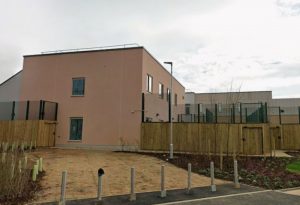
If the project proceeds as planned, the main construction work will begin in February 2027. The new eastern headquarters, accommodating about 500 officers and staff, will be built on what is currently an unused car park.
Planning permission was also granted for 40 affordable homes on the site, although these will be constructed separately.
The second stage of the development will involve demolishing the existing redundant buildings to make way for a residential block containing the affordable homes. Surrey Police has said it would ideally like the homes to be occupied by its own officers and staff.
Once the headquarters is completed, the force will have a permanent eastern base. By then, officers and staff will have spent about four years temporarily housed at Surrey Fire and Rescue Service’s former headquarters at Wray Park in Reigate.
A Surrey Police spokesperson said the new headquarters would provide a financially sustainable base and ensure officers and staff had the facilities needed to investigate crime and keep communities safe.
The force said the Leatherhead site best met its operational needs because of its access to the surrounding area and major road links. It added that the improved facilities would help Surrey Police attract and retain staff.
Image: Illustrative Visuals of the new Eastern Divisional Head Quarters for Surrey Police. (Credit: Pick Everard/ Surrey Police/ Mole Valley District Council Planning
Free community football sessions and more for Epsom and Ewell
22 August 2026
Epsom & Ewell Borough Council is pleased to announce that free community football sessions will be available for young people aged 10 to 16 who live in the borough, from 24 August 2026 to 31 March 2027. This programme will be delivered by YOUfF (Young Ones United Football Foundation) with monthly life lesson mentoring sessions also available for participants.
Community football sessions will take place three days a week at Court Recreation Ground, with dedicated sessions for different age groups and genders. Spaces for up to 21 participants are available in each session and participation will need to be confirmed in advance via the YOUfF Instagram Poll. New players must complete a registration form, either online or in person at the session. For more information and details on how to book, visit this page on the YOUfF website – https://www.youff.org.uk/whatwedo
Monthly life lesson mentoring sessions will take place at St Barnabas Church in Epsom.
The Epsom & Ewell Community Football Programme supports the council’s Health and Wellbeing Strategy, which focuses on increasing physical activity, improving wellbeing and reducing health inequalities in the borough.
Councillor Clive Woodbridge (RA Ewell Village), Chair of the Community and Wellbeing Committee, said:
“The Epsom & Ewell Community Football Programme provides a fantastic opportunity for young people to take part in regular physical activity. Sessions will also provide a positive and supportive environment in which to improve their wellbeing and build their confidence.
“As well as developing football skills, participants will experience the benefits of being part of a team, building friendships, learning to be part of a team and developing a sense of belonging.
“This programme supports our commitment to improving health and wellbeing across the borough by providing free, accessible activities for young people. Alongside the football sessions, participants will also have access to mentoring and guidance to help them develop valuable life skills and make positive life choices.
“I’d like to thank YOUfF for partnering with the council to deliver this programme, and I encourage young people aged 10 to 16, and their parents and carers, to get involved and take advantage of this fantastic opportunity.”
Yasha Tobias-Browne, Founder of YOUfF CIC said: “YOUfF was created around the belief that football can be so much more than just a game. It gives us a way to bring young people together, build relationships and create opportunities both on and off the pitch. Through Epsom & Ewell Community Football, we want young people across the borough to have somewhere they can just turn up for FREE, play football, make friends and feel part of something positive. From there they can join the monthly mentoring sessions, where they’ll learn life skills, learn about qualifications and pathways that can genuinely help shape their futures. We’re really excited to be working with Epsom & Ewell Borough Council to make that happen.”
About Young Ones United Football Foundation (YOUfF)
YOUfF is a football and mentoring CiC helping young people engage in education and employment. They work alongside a number of educational organisations and reach disengaged learners using football and mentoring interventions. Football Educational Mentoring | UK | Y.O.U.F.F
About the EEBC Health and Wellbeing Strategy 2025-2028
The strategy is designed to support all residents, with particular attention given to children and young people, older adults, individuals whose health is affected by broader social and economic factors and those whose personal circumstances may disproportionately increase their vulnerability to poor health and wellbeing. The strategy also includes specific references to those who are disproportionately impacted by isolation, disability, digital exclusion and people with long-term health conditions. (Public Pack) Agenda Document for Community and Wellbeing Committee, 08/07/2025 19:30
Epsom & Ewell Council refuses to explain complaints disparity
22 August 2026
Epsom and Ewell Borough Council has refused to answer detailed questions about the apparent disparity between its vigorous pursuit of a complaint made by Cllr Neil Dallen (RA Town) and its handling of complaints made against him.
Epsom and Ewell Times asked a series of specific questions concerning the Council’s decision to send a complaint against Labour councillor Chris Ames (Labour Court) to a formal hearing, the involvement of Monitoring Officer Piero Ionta, the composition and powers of the proposed Hearing Panel and the progress of complaints against Cllr Dallen.
The Council responded within 45 minutes with a single paragraph.
A Council spokesperson said:
“As a matter of principle, the Council does not comment on allegations or complaints concerning individual elected members. Any such matters are considered in accordance with the Council’s standards procedures and applicable confidentiality requirements.”
That response did not answer any of EET’s questions.
Many did not seek comment on the truth of allegations against individual councillors. They concerned the Council’s procedures, constitutional powers, management of possible conflicts and the legal basis for conducting an entire hearing in private.
The refusal leaves unanswered who referred the complaint against Cllr Ames to a hearing, whether that person had authority to do so, whether the Council’s Independent Person was consulted and why councillors involved in the original dispute have been selected to judge it.
It also leaves the Council unable or unwilling to demonstrate that complaints against Cllr Dallen are being treated with the same urgency as the complaint he made against an opposition Labour councillor.
The Dallen complaint against Ames
Cllr Dallen complained about Cllr Ames following the Strategy and Resources Committee meeting of 27 January.
Cllr Ames repeatedly questioned the secrecy surrounding an urgent decision making up to £500,000 available for work at the Rainbow Leisure Centre. The decision had been taken by officers in consultation with Cllr Dallen, who supported keeping it confidential and then chaired the meeting at which it was questioned.
Cllr Ames asked who had decided that the public interest in withholding the document outweighed the public interest in its publication.
Cllr Dallen and the Monitoring Officer repeatedly referred instead to the separate procedure for excluding the press and public if confidential information needed to be discussed during the meeting.
Cllr Ames was not asking to discuss the confidential information. His question was why the document had already been withheld and whether the required public-interest assessment had been undertaken.
The failure to identify and answer that distinction drove the confrontation.
What was really a point of order
The sequence in which the exchange deteriorated is important.
Cllr Ames first questioned Cllr Dallen’s understanding of the procedures and attempted to continue asking who had made the confidentiality decision.
Cllr Dallen then brought the discussion to an end, saying:
“It does say in the Constitution that this is the chairman’s meeting, and the Chairman has decided there’s going to be no further discussion.”
Only after that assertion did Cllr Ames call him arrogant:
“I’ve never known such an arrogant man in all my life, you’re completely out of your depth, you are completely out of your depth.”
Cllr Dallen then said:
“Councillor Ames, it is my meeting, I am Chairman of this meeting.”
Cllr Ames responded by accusing him of “more cover-up and more cover-up”.
The sequence does not excuse Cllr Ames’s descent into personal criticism. But it contradicts any simplified account in which an unprovoked insult caused the chair to assert his authority. Cllr Dallen had already described the committee as “the chairman’s meeting” and announced that questioning would cease.
Underneath the anger was an obvious procedural issue.
Cllr Dallen had participated in approving the urgent decision, supported its confidential treatment and was then chairing the committee while members questioned those actions. The appropriate issue was whether his involvement meant that he should relinquish the chair to the vice-chair for that item, allowing the questions to be considered by someone not personally connected with the decision.
Neither protagonist handled that issue properly.
Cllr Ames should have stopped, expressly raised a point of order and asked the Monitoring Officer for a ruling on whether Cllr Dallen should relinquish the chair. Instead, he personalised the dispute by attacking Cllr Dallen’s competence and character.
Cllr Dallen should have recognised that his own involvement was the subject of the questioning. Instead of characterising the committee as his meeting and using his authority to end scrutiny of his own conduct, he should have referred the point to the Monitoring Officer and invited the vice-chair to preside while it was resolved.
The Monitoring Officer should also have recognised the conflict-management question and advised on it. He did not.
The confrontation was therefore not simply a case of one councillor disrespecting a blameless chairman. It resulted from the failure of Cllr Ames, Cllr Dallen and the Council’s legal adviser to identify and deal appropriately with the procedural issue sitting in plain sight.
Only one of them is now facing a formal standards hearing.
Ames acknowledges his mistake
Cllr Ames subsequently told EET that he regretted calling Cllr Dallen arrogant. He said he should instead have raised a formal point of order challenging Cllr Dallen’s continued chairmanship of the item.
That acknowledgement goes directly to the distinction between the legitimate issue and the inappropriate way in which it was pursued.
Cllr Dallen nevertheless submitted a Code of Conduct complaint on 11 February, alleging disrespect and bullying.
Independent investigators appointed by the Council recommended that Cllr Ames be found to have breached the requirement to treat other councillors with respect.
Their report concluded that his personal criticism, allegations of a cover-up and repeated interruptions went beyond acceptable political debate.
But it also made findings which place his conduct in a more complicated context.
The investigators accepted that Cllr Ames was pursuing “a genuinely held, good faith argument” about transparency and access to information. They found that he was not engaged in a calculated or malicious attack and recognised that political speech attracts enhanced protection.
They expressly declined to decide whether his questions were legally and procedurally correct.
“It is not within the scope of this investigation to comment on any of the concerns highlighted by Councillor Ames during the meeting,” the report stated.
The investigation therefore examined how Cllr Ames challenged Cllr Dallen and the Monitoring Officer, but not whether his challenge was substantively justified.
Nor did it investigate whether Cllr Dallen’s insistence that it was the chairman’s meeting, his termination of questions about a decision in which he had participated or his failure to relinquish the chair contributed to the disorder.
The report treats respect for “the authority of the Chair” as a consideration against Cllr Ames without examining whether the authority of the chair was itself being exercised properly.
Who referred it to a hearing?
The complaint is now due to be considered by a Standards Hearing Sub-Committee on 22 September.
There is, however, a fundamental uncertainty over how it arrived there.
The Council’s scheme of delegation states:
“Determination of complaints referred by an Investigating Officer regarding alleged breaches of the councillors’ Code of Conduct shall be delegated to Hearing Panels.”
Democratic Services told Cllr Ames:
“The hearing has been convened following receipt of the Investigating Officer’s Report into the Code of Conduct complaint.”
It continued:
“In accordance with the Council’s arrangements, the determination of complaints referred by an Investigating Officer regarding alleged breaches of the Councillors’ Code of Conduct shall be delegated to a Hearing Panel.”
In this case, the Investigating Officer was the external investigator who wrote the report.
The report recommends that Cllr Ames be found in breach. It does not expressly recommend or direct that the complaint be referred to a Hearing Panel.
That distinction may be important.
The Council’s Constitution gives the Monitoring Officer broad authority over Code of Conduct matters except for decisions reserved to a Hearing Panel or another decision-making body. But the specific delegation to Hearing Panels appears to apply to complaints “referred by an Investigating Officer”.
If those words establish a mandatory gateway, the question is whether the external investigator actually made such a referral. The Monitoring Officer cannot necessarily substitute himself for the Investigating Officer or silently supply a procedural step which the Constitution assigns to someone else.
There may be an answer. The Council might argue that a report recommending a finding of breach necessarily constitutes an implied referral. It might identify a separate written decision by the external investigator which has not been included in the report supplied to Cllr Ames.
But the Council has declined to say.
EET asked who made the referral, when it was made, where it was recorded and under which constitutional power. The Council’s blanket response does not identify any decision or decision-maker.
This was not a request to prejudge the allegation. It was a request for proof that the body proposing to judge it had been properly convened.
Report arrived after hearing invitation
The procedural uncertainty is compounded by the Council’s communications with Cllr Ames.
On 7 August, Democratic Services sent an invitation to the proposed Hearing Panel. It did not identify Cllr Ames as the subject member in the body of the invitation.
When he replied that he did not know what the hearing concerned and would not attend, Democratic Services responded:
“For the avoidance of doubt, you are the subject of the Standards Hearing Sub-Committee.”
Cllr Ames says that was the first time he had been told expressly that the complaint was proceeding to a hearing.
He had not received the final investigation report. The investigator subsequently attributed this to a “communication breakdown” between himself and the Council’s legal services team.
Instead of acknowledging that failure and apologising, the Council adopted a tone which implied that Cllr Ames should already have understood the position.
Cllr Ames has asked who decided to refer the case, on whose recommendation and under what policy. No substantive answer is contained in the correspondence supplied to EET.
Monitoring Officer was involved in original dispute
The position of Monitoring Officer Piero Ionta creates a separate concern.
Mr Ionta attended the January meeting and gave advice supporting Cllr Dallen during the disputed exchange. It was the adequacy and correctness of that advice which Cllr Ames was challenging.
The Monitoring Officer also failed to identify and advise upon the underlying question of whether Cllr Dallen should relinquish the chair while his own part in the urgent decision was being questioned.
The independent investigation was subsequently commissioned on the Monitoring Officer’s behalf.
Employing an external investigator does not necessarily remove an apparent conflict if the Monitoring Officer defines the remit, supplies the evidence, receives the report, manages the procedure and controls what happens next.
The external report placed the legal and procedural correctness of the Monitoring Officer’s advice outside its scope. It then recommended a finding against the councillor who challenged that advice.
EET asked why Mr Ionta did not withdraw from managing the complaint and whether an unconnected monitoring officer from another authority had been considered. These are questions about institutional impartiality, not the merits of the complaint against Cllr Ames.
The Council declined to answer them.
A participant proposed as judge
The proposed panel consists of Cllrs John Beckett (RA Auriol), Alan Williamson (RA West Ewell) and Julian Freeman (LibDem College), with Cllr Rachel King (RA Town) named as reserve.
Cllr Beckett is scheduled to chair it.
But Cllr Beckett participated in the January exchange which the panel will be required to assess.
When Cllr Ames questioned why the Rainbow information had been withheld, Cllr Beckett defended confidentiality on the basis that private companies would not want their financial information published. Cllr Dallen immediately told him that he was right.
Cllr Beckett’s intervention is quoted in the independent investigation report.
This does not prove that he has predetermined whether Cllr Ames breached the Code. Nevertheless, appointing someone who participated in the underlying dispute to chair the subsequent disciplinary hearing creates an obvious appearance problem.
EET asked whether all panel members had confirmed that they had not predetermined the complaint and why Cllr Beckett had been selected despite his involvement.
The Council declined to answer.
Hearing behind closed doors
The Council has announced in advance that the hearing will not be webcast and that “all evidence shall be received and heard in exempt session”.
Some evidence about individual councillors may lawfully require protection. It does not follow that the whole hearing must be secret.
The incident occurred during a public meeting recorded on the Council’s webcast. The complaint, the investigation and the proposed hearing concern the conduct of elected representatives performing public duties.
The Council has not identified which statutory exemption justifies excluding the public from the entire proceeding or whether the required public-interest assessment has been undertaken.
It has also declined to identify the sanctions constitutionally available to the panel if it finds a breach.
The Council’s response invokes “applicable confidentiality requirements” without identifying what those requirements are or explaining why they prevent answers about jurisdiction, procedure and panel powers.
Complaints against Dallen
The contrast with complaints against Cllr Dallen is increasingly difficult to ignore.
Cllr Ames says that he made a complaint against Cllr Dallen arising from the same January meeting. Among other matters, it challenged Cllr Dallen’s use of the chair to prevent continued scrutiny of a decision in which he had participated.
That complaint was rejected without an equivalent external investigation.
A complaint from a member of the public against Cllr Dallen was also reportedly rejected.
Cllr Ames has also made a complaint concerning Cllr Dallen’s reported participation in a panel dealing with a complaint against the Chief Executive about the Rainbow Leisure Centre urgent decision.
His case is that Cllr Dallen’s direct involvement in approving that decision created a conflict when he subsequently helped consider a complaint about the Chief Executive’s account of it.
EET does not suggest that any complaint against Cllr Dallen must be upheld. Different complaints can properly receive different assessments and outcomes.
The issue is whether they have been examined with the same willingness to commit time and external resources as Cllr Dallen’s complaint against Cllr Ames.
The Council could have answered that concern by publishing anonymised information about receipt dates, assessment dates, reasons for decisions and outcomes. Instead, it has invoked a blanket principle of silence.
Confidentiality or avoidance?
There are legitimate reasons for protecting information about unresolved complaints. Premature disclosure can damage reputations, discourage witnesses and undermine a fair investigation.
But confidentiality should protect the integrity of a process, not conceal whether a proper process exists.
EET did not ask the Council to decide publicly whether either Cllr Ames or Cllr Dallen had breached the Code. It asked:
who exercised the power to refer the Ames complaint to a hearing;
where that referral was recorded;
whether the Independent Person was consulted;
how the Monitoring Officer’s involvement was managed;
why a participant in the original incident was selected to chair the hearing;
why the whole hearing was designated private in advance;
what powers and sanctions the panel possesses; and
how the Council ensures that complaints are prioritised consistently.
None of those questions required the Council to reveal confidential witness evidence or prejudge an allegation.
A response sent within 45 minutes which simply restates a policy of not commenting creates the impression that the Council did not attempt to distinguish questions about confidential merits from questions about public governance.
Standards or selective discipline?
The case against Cllr Ames is not fabricated. His language became personal and intemperate. An independent investigator has provided reasoned grounds for finding that it breached the Code.
But that is only one side of what happened.
Before Cllr Ames called Cllr Dallen arrogant, the chair had already declared that it was “the chairman’s meeting” and terminated further discussion of an issue involving his own earlier decision. After the insult, he intensified the same assertion with the words: “It is my meeting.”
Cllr Ames failed to convert his legitimate concern into the formal point of order it should have been. Cllr Dallen failed to recognise that the proper response was to obtain a ruling and consider relinquishing the chair to the vice-chair. The Monitoring Officer failed to guide either of them towards that procedure.
Yet only Cllr Ames’s failure has been externally investigated and sent towards a disciplinary hearing.
The legitimacy of any finding against him depends upon the legitimacy of the process used to determine it.
A Council cannot demand meticulous respect for standards from an opposition councillor while treating its own compliance with constitutional gateways, impartial adjudication and transparent decision-making as matters upon which it will say nothing.
Nor can confidentiality be allowed to make unequal treatment impossible to test.
Different complaints can properly have different outcomes. A pattern of different outcomes does not prove political bias. But where a complaint by Cllr Dallen against a Labour opposition councillor receives an external investigation and formal hearing while complaints against Cllr Dallen are rejected or apparently progress no further, the Council must provide enough procedural information to demonstrate that the difference results from evidence and established criteria rather than identity or influence.
The unanswered question is no longer merely whether Cllr Ames spoke disrespectfully to Cllr Dallen. It is whether EEBC has constructed a fair and constitutionally valid process for deciding that question, while applying the same standards to the person whose conduct and chairmanship provoked the dispute.
By refusing to answer, the Council has not protected public confidence in its standards regime. It has deepened the doubts surrounding it.
UK’s “first and only” craft museum in Surrey open day
22 August 2026
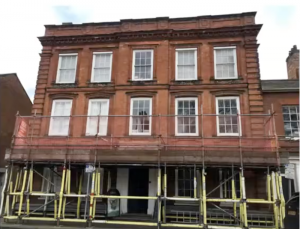
One of Surrey’s most important buildings, and the UK’s ‘first and only’ craft museum, is to host a special event to show off the vital restoration work going into saving the historic Grade I site.
Wilmer House in Farnham was allowed to fall into disrepair, but in March 2023 benefited from £700,000 in Arts Council funding to carry out essential repairs to its Georgian home in West Street.
It was soon discovered that the problems ran much deeper and a further £700,000 was needed to repair decaying brickwork, collapsing windows, and eroded mortar joints, as well as the visible cracking throughout.
Waverley Borough Council, which has a legal duty to maintain the building, has stepped in to fill the funding gap but, to rally support within the community for the project, is hosting an open day at the Farnham Museum.
Councillor Kika Mirylees, Waverley Borough Council’s community services portfolio holder, said: “Willmer House is a building of enormous historical and cultural significance to Farnham.
“We are delighted to invite residents to join us for what promises to be a fascinating evening of discussion and discovery.
“The event offers a unique opportunity to hear directly from experts involved in heritage conservation and to learn more about the exciting restoration plans for this much-loved landmark.”
The free event is part of the council’s “every brick counts” campaign that offers residents the opportunity to contribute to the preservation.
The council said the building uses gauged brickwork, one of the most expensive building methods often seen on the finest buildings around the world.
The free open event takes place on Monday September 14 2026 and will be hosted jointly by the council and The Farnham Society from 7.30pm to 9pm.
It will feature a panel including representatives from Arts Council England, The National Lottery Heritage Fund, conservation consultant Graham Abrey, historic brick conservator Emma Simpson MBE, and local historian and author Dr Roy Waight.
Simon Bradbury, vice chairman of The Farnham Society, said: “The Farnham Society has been campaigning to preserve Farnham’s heritage since 1911.
“Willmer House, as a Georgian town house, is an important part of that heritage.
“Coming out of the wealth generated from the hop trade, Willmer House is a Grade I listed building, noted in particular for its brickwork, rated as one of the finest examples of Georgian brickwork in the country.”
The event is free to attend, but places should be booked in advance.
Image: Wilmer House, West Street, Farnham (image WBC)
.
.
.
.
Options are open at Nescot – GCSE students reassured there’s still time to apply
22 August 2026
Students collecting their GCSE results today are being reassured that there is still time to apply for courses at Nescot college in Epsom. Options range from Animal Care and Public Services to Travel & Tourism, Business and IT.
Whether students are keen to help look after the college alpacas as part of the Animal Care course or visit a cruise ship to learn about the industry up close, Nescot has a range of courses which blend practical skills, theory and real-world experiences.
Those who didn’t get the results they wanted today are able to get support from Nescot’s advice and guidance teams. Most courses start at level 1 and students can re-take their English and Maths GCSEs alongside their new course. Last term, 1,367 students sat Maths and English GCSEs at Nescot, with entries significantly increasing compared to the previous year – a 16% rise in students taking Maths and a 29% rise in those taking English.
Nescot Principal and CEO, Julie Kapsalis MBE said: “Whatever your results today, it’s not too late to explore your options and enrol on a course starting in September. Our expert team is on hand to give you personalised support and advice, and we’ve got a wide range of subjects to get you inspired and excited about your next step.”
Katie, Level 3 business student said: “If anyone is thinking of coming to Nescot, I would definitely recommend it. I’ve really enjoyed my time here and I’m happy with the decision I made.”
Nescot is located on a 60-acre campus near Epsom, Surrey. Learning spaces cover a wide range of sectors and include construction workshops, a garage, labs, kitchens, salons, and a farm. There’s also a theatre, gym, café, day nursery and a hair and beauty salon.
Students who didn’t achieve the grades they were hoping for, or are still not sure what’s next can contact Nescot’s Admissions and Careers team, who are on hand to help. They can discuss alternative pathways, progression opportunities and the support available to help students reach their goals. Students can call the team on 020 8394 3038 or email adviceteam@nescot.ac.uk.
Nescot provides college courses for school leavers and adults, with a wide range of career-focused vocational courses on offer. Located on a 60-acre campus near Epsom, Surrey, Nescot is a modern, exciting, and innovative college, which cares about students and invests in their future. Learning spaces cover a wide range of sectors and include construction workshops, a garage, labs, kitchens, salons, and a farm. There’s also a theatre, gym, café, day nursery and a hair and beauty salon. Visit www.nescot.ac.uk to find out more.
Night flights in and out of Heathrow could be changed as part of new plans being consulted on – as moves to ramp up to a third runway continue and residents have just two weeks left to have their say.
The government is changing its Heathrow Expansion National Policy, which sets out how a third runway would be built.
The draft applies only to the northwestern runway project and also takes into consideration road and rail links, economics, as well as the social and environmental impacts related to its proposed expansion.
The deadline to take part is September 1 and questions include whether people support the proposed expansion, their thoughts on the new runway’s impact on air quality, noise, climate change mitigation and economic growth.
On night flights, the Government has said that the ban will remain in place – but that it is seeking to change the “definition” through this consultation”.
Residents are being asked whether they agree or disagree that the proposed ban should be defined as when a ‘plane takes off or lands’ instead of ‘departure from and arrival to terminal’.
It also asks whether compensation for residents affected by noise breaches is fair. Heathrow is the United Kingdom’s only major hub airport and has operated at or near capacity for years.
Those in favour of expanding the airport say it needs the new runway to meet the growth in demand for aviation or risk missing out on opportunities available to businesses, passengers and communities.
Opponents have argued the economic benefits are overstated and the environmental harm too great.
The development consent would cover the Northwest Runway which, if built, would be up to 3,500m and be capable of enabling at least 260,000 additional flights a year. It would also cover any new or reconfigured terminals.
Heidi Alexander, Secretary of State for Transport, at the launch of the consultation: “The government will consider all responses carefully before deciding whether to proceed with designation.
“Any final Heathrow Expansion National Policy Statement will be published, laid before Parliament, and subject to a vote in the House of Commons before having legal effect.
“Heathrow expansion is a decision of national importance. It requires ambition, responsibility and proper scrutiny. This consultation is an important part of that process, and I encourage everyone with an interest to take part.”
Image: Heathrow shown with a third runway over the M25 (image Heathrow)
Surrey train timetable overhaul pending
22 August 2026
Once in a generation changes aimed at improving rail schedules are being set to be introduced across Surrey but there are concerns about how these may impact level crossing downtime, an MP has said.
South Western Railways (SWR) is set to carry out the first full refresh of train timetables across Surrey for more than 20 years.
The formal public consultation will begin this autumn when the operator publishes its options for the new timetables and will be inviting feedback on the plans.
It said it is doing this because the times and ways people travel has changed,
The new timetable, they say, will better match how passengers travel and come following the widespread introduction of the new, larger and more spacious, Arterio trains across the network.
South Western Railways, which came into public ownership last year, said the new timetable will need to balance journey times, connectivity, train performance and economic value.
Sweeping changes may not be entirely possible however as they need to work within existing infrastructure such as tracks, signals and stations – as well as sharing lines with other passenger and freight services.
SWR said feedback will play a crucial role in designing the new schedules -whether that is improving reliability or making journeys quicker and more convenient.
Previous efforts to increase rail capacity in Surrey, for example the proposed Airtrack line to Heathrow, would have resulted in level crossing barriers to be down for up to 45 minutes every hour in parts of Runnymede leading to concerns that the need to improve services must be balanced by what is best for the whole community.
Posting to Facebook, the Runnymede and Weybridge MP Ben Spencer said: “Residents need no reminder of the impact railways can have.
“The upcoming timetable review presents both opportunities and risks for rail passengers and the wider community, given the impact rail services have on our level crossings and access across the community. Current rail services are falling well below the standard passengers should expect with thousands of residents frequently delayed by late trains, cancellations, and missed connections.
“But if changes are proposed to deliver improvements in these areas, they could also affect the frequency and duration of level crossing downtimes. It is therefore vital that residents share their views now on what are the most important issues SWR need to address as part of this review ahead of the public consultation being published this year.”
The full refresh of the timetable will be the first major changes across the south and west of England since 2004.
South Western Railway said some technical decisions will need to be balanced, for example between faster journeys from one station and more stops at another.
Epsom and Ewell’s rock history goes under the hammer
22 August 2026
Rare posters from Ewell Technical College (today’s NESCOT) concerts featuring Nick Drake, Genesis, Black Sabbath and Led Zeppelin are among more than 300 pieces of music memorabilia being auctioned from the collection of industry veteran Lindsay Brown.
A remarkable collection chronicling both Ewell’s place in British rock history and one man’s five-decade career in the music industry is to be sold at auction next month.
More than 300 posters, records, autographs, backstage passes and other pieces assembled by Lindsay Brown will go under the hammer at Omega Auctions in Merseyside on Tuesday 15th September.
Mr Brown began his music industry career in 1969 as social secretary at Ewell Technical College – now part of Nescot – where he helped bring emerging and established performers to the college.
The venue hosted concerts by artists including Deep Purple, Black Sabbath, Caravan, Taste, Genesis, Nick Drake and Atomic Rooster. Other celebrated acts associated with the college’s musical heyday included Led Zeppelin, King Crimson and Queen.
“It was a thrilling time to be involved in music,” Mr Brown told the Epsom and Ewell Times. “The great artists of the day were available for all to see. Hendrix, The Doors and Led Zeppelin, to name but a few.
“New artists were emerging all the time, some of which were booked to support at Ewell – Genesis, Black Sabbath, King Crimson, Queen and the now legendary Nick Drake.”
Mr Brown said the college became an important stop on the national concert circuit because successive social secretaries and entertainment committee members were adept both at securing major performers and identifying artists with the potential to become stars.
The college was also well placed near venues including the Toby Jug in Tolworth and the Fox Club in Croydon, with London’s music clubs within easy reach.
“Many managers and agents would offer their talent and new signings for support slots at Ewell,” he recalled.
Among the most valuable lots is an exceptionally rare poster advertising an Ewell Technical College concert by Atomic Rooster, Genesis and Nick Drake on 24th January 1970. It is expected to sell for more than £5,000.
Posters featuring Drake are particularly scarce because of his reluctance to perform live. The auction house believes the Ewell poster may be the first example of its kind to reach the open market.
Another lot is a small poster advertising what is described as the final public concert of Drake’s career, held at Ewell Technical College on 25th June 1970. It has an estimated value of more than £2,000.
A red-and-gold poster by artist David Arnott, produced for a college performance by Black Sabbath supporting Caravan, is expected to fetch more than £1,000. An Arnott poster for Deep Purple’s appearance at Ewell Tech on 18th April 1970 is being offered together with a ticket from the concert.
A framed 1968 Ewell Technical College poster originally advertising The Yardbirds is also expected to attract considerable interest. Following changes to the group, the concert instead featured an early incarnation of Led Zeppelin before a reported audience of just 150 people. The poster is estimated to sell for more than £2,000.
Mr Brown retains especially fond memories of concerts by Led Zeppelin, Deep Purple and Taste, although he said Caravan – which appeared at Ewell on several occasions – was the venue’s most successful act.
“Seeing a very early King Crimson concert was a real privilege,” he added.
After leaving Ewell Tech, Mr Brown went on to hold senior positions at Red Bus, MAM, Rock Exchange, Polydor and Eagle Rock Entertainment. As managing director of Eagle Rock, he signed The Rolling Stones for visual rights.
Across his career he worked with artists including Kate Bush, Elvis Costello, Barclay James Harvest, Dr Feelgood, 10cc, The Cure, Van Morrison, Björk, Alice Cooper, Queen, Jeff Beck and Simple Minds.
The wider collection reflects those associations. It includes authenticated Beatles autographs expected to fetch more than £3,000; a Fender Telecaster signed by Keith Richards; Rolling Stones autographs including that of Brian Jones; a 1969 Woodstock ticket; and Kate Bush tour posters, clothing, passes and merchandise.
A Queen collection relating to the band’s 1976 Hyde Park concert includes autographs, a framed show flyer and a map of the band’s route formerly owned by their driver. It is valued at more than £3,000.
Also for sale is a three-foot-high poster for the New York Dolls’ first UK performance at the Rainbow Room at Biba in November 1973 – a concert attended by figures who would later help shape British punk.
A 1969 flyer for the Toby Jug Blues Club in Tolworth features Led Zeppelin’s name misspelt and is valued at more than £500.
Although Mr Brown is parting with most of the collection, he has retained six particularly personal pieces. These include a poster from his farewell Caravan show at Ewell in 1970, a set of Rolling Stones autographs, a Kate Bush tour poster, a Barclay James Harvest gold disc and sales plaque, and a poster personally dedicated to him by Jeff Beck.
“It’s sad to see the collection go, but I am thrilled by the continued worldwide interest in Ewell Tech’s heritage, told through its posters, many of which were designed by the Redhill artist David Arnott,” he said.
“Knowing these posters are going to good homes is very gratifying and lets the story continue to survive.”
He believes collectors have an important role in protecting evidence of performances and events which could otherwise disappear from public memory.
“Without people keeping what might seem at the time inconsequential – tickets, stubs, flyers and so on – many of these shows would be completely forgotten in future years.”
The collection, entitled “Time Has Told Me – 50 Years in Music”, will be auctioned by Omega Auctions on Tuesday 15th September, with a public preview on Monday 14th September. The catalogue and bidding details are available from www.omegaauctions.co.uk.
Julie Kapsalis, CEO of NESCOT, responded to this story and told the Epsom and Ewell Times: “Music continues to be an important part of Nescot. The Entitled Sons played a gig at the college last year and Bazil Meade ran a masterclass on gospel music. Our music department also trains young people to enter the sector and this year they showcased their talents on the community stage at The Epsom Derby Festival. We now have a DJ club and college bands who regularly perform at college and external venues.”
Patient injuries quadruple in Surrey’s largest mental health trust area
22 August 2026
This article has been amended to include statistics relating to the total number of patient restraint incidents across the trust in the relevant timeframes, and to clarify this number is what the trust’s quote (par 7) refers to.
The number of patient injuries at Surrey’s largest mental health trust have risen since the opening of its new inpatient facility last year.
Data obtained through a freedom of information (FOI) request to Surrey and Borders Partnership NHS Foundation Trust (SABP) found that the number of patient injuries across the county had more than quadrupled in the space of two years.
In the 2023/24 financial year, 92 service user injuries were reported across the trust, which shot up to 365 incidents in 2024/25 and 431 in 2025/26 – meaning more than one incident per day on average was reported in the most recent complete financial year.
A total of 141 incidents had been reported in the ongoing 2026/27 financial year at the time of the FOI response.
In addition, the number of incidents in which patients were restrained also leapt to a five year high in the 2025/26 year. A total 1,287 incidents were recorded, up from 826 the previous year.
An SABP spokesperson stressed that not all patient injuries reported were related to restraint incidents. “The use of restrictive practice is a very complex area and reducing restrictive practices is a trust priority,” they said.
The spokesperson told the Local Democracy Reporting Service (LDRS) that the sharp rise in reported restraint incidents was “due to the opening of Silverwood’s inpatient services last year”.
Silverwood, located in Chertsey, began admitting patients in February 2025 and was designed to help Surrey and Borders Partnership NHS Foundation Trust’s work to care for acutely mentally ill people.
The facility boasts 64 ensuite bedrooms across four wards, and was established to replace the old Abraham Cowley Unit (ACU).
However, the trust’s FOI response did not declare the number of staff injuries in this same time period, as it would have exceeded the cost limit on requests as each record would have to be reviewed manually.
The FOI response also revealed major changes in the trust’s use of restraint against acutely ill patients, with the reported number of “prone” restraints – where a patient is forced face down on the ground – dropping to zero in compliance with recent laws.
The Mental Health Units (Use of Force) Act 2018 was brought in to improve transparency in the use of such force in restraining patients, and contains guidance against the use of prone restraints.
Better known as Seni’s Law, it was implemented following the death of Olaseni “Seni” Lewis, who died in 2010 after being restrained at Bethlem Royal Hospital in Bromley.
While 20 prone restraint incidents were reported at the trust in the 2021/22 financial year, that number dropped into single figures for the following few years before reaching zero in 2025/26.
At the same time, the reported use of chemical restraints has risen substantially, with this jumping from 11 in 2022/23 to 830 in 2025/26 – and a further 333 in 2026/27 so far.
The SABP spokesperson added: “We record all cases when restrictive interventions are used in line with Seni’s Law, officially the Mental Health Units (Use of Force) Act – which was fully introduced in 2022.
“It is also important to note that the number of recorded injuries may be caused by many reasons, the majority of which are not related to restraints.”
Looking for a summer holiday family day out? Discover the magic of Ukraine in Epsom
Families looking for something different to do this summer holiday are invited to Epsom Picturehouse on Monday 24 August for an afternoon of Ukrainian music, crafts and film, marking Ukrainian Independence Day.
From 4.30pm, visitors can enjoy live Ukrainian music and meet Ukrainian craft makers displaying their work at the cinema, before a short introduction and a 5pm screening of Mavka: The Forest Song. Every culture has stories that bring families together. Inspired by Ukrainian mythology and folklore, Mavka: The Forest Song brings one of those stories to the big screen through a colourful animated adventure. Rooted in Ukrainian culture, its themes of love, belonging, courage and protecting the natural world have helped the film connect with audiences far beyond Ukraine.
With the event falling during the school summer holidays, it’s a great day out for families looking for something a little different. Children’s tickets at Epsom Picturehouse are just £3 throughout the summer, with adult tickets from £9.99, while the music and crafts before the screening add even more to the afternoon.
The film will be shown in English, making it as inclusive as possible and giving families from across the community the chance to enjoy the story and discover Ukrainian culture together.
Joe Stroud, Marketing Manager at Epsom Picturehouse, said:
“Every culture has stories that bring families together, and Mavka is a brilliant example of that. It’s rooted in Ukrainian folklore, but its themes of love, belonging, courage and protecting the natural world are universal. It’s colourful, funny and visually spectacular too, so you don’t need to know anything about Ukrainian folklore to fall in love with it. That makes it a perfect film for celebrating Ukrainian culture while bringing the whole community together.”
Organised with Surrey Stands with Ukraine, with support from Epsom & Ewell Refugee Network, the event is open to everyone and will bring together Epsom’s Ukrainian and wider local community for a colourful, family-friendly celebration.
The celebration takes place at Epsom Picturehouse, Derby Square, Epsom, on Monday 24 August 2026, with Ukrainian music and crafts from 4.30pm and Mavka: The Forest Song at 5pm.
Epsom and Ewell FC’s blessed hat-trick advances team to next round
22 August 2026
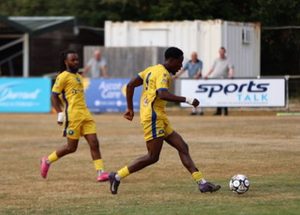
Horsham YM 1–5 Epsom & Ewell FC. 15th August – Herbert Direct Stadium – The Isuzu FA Vase First Round Qualifying
Epsom & Ewell marched into the next round of the FA Vase with an emphatic 5–1 victory away to Horsham YM.
A commanding second-half display, a hat-trick from Blessing Hombessa and standout performances across the pitch sent the Salts through in style.
Epsom & Ewell set the tone early with some sharp attacking play. Courtney Swaby came closest during the opening exchanges, striking the upright at the end of a flowing move.
Moments later, skipper Brendan Murphy-McVey appeared to have put the Salts ahead directly from a corner, only for the referee to disallow the goal for a push inside the penalty area.
The pressure finally told in the 34th minute when Swaby finished confidently to give Epsom & Ewell a deserved lead, followed by his trademark celebration.
However, just as the Salts looked set to take their advantage into the interval, a slip from Callum Wilson allowed Jack Knight to equalise for Horsham YM on the stroke of half-time.
The Salts emerged with renewed purpose and regained the lead within two minutes of the restart. Jason Bloor produced a superb solo run, weaving his way through the Horsham defence before firing past the goalkeeper to make it 2–1.
Swaby almost added another in the 65th minute, but for the second time in the match he was denied by the woodwork.
Manager Max Johnson introduced fresh legs as the game entered its closing stages. On 77 minutes, Frankie Lynn came on for his debut alongside Luke Miller and Kionte Waul, replacing Daniel Conteh, Jason Bloor and Luis Oliveira.
The changes helped the Salts maintain their momentum and, in the 81st minute, Blessing Hombessa struck to extend the lead to 3–1.
A minute later, Toby Young and Ore Allen were introduced in place of Murphy-McVey and Swaby as Epsom & Ewell continued to press.
Miller then came close to adding a fourth, beating the goalkeeper only to see his effort crash against the crossbar.
Wilson received a yellow card in the second minute of stoppage time, but the closing stages belonged to Hombessa. He struck twice more in added time, completing his hat-trick with a composed finish in the 95th minute and sealing an emphatic 5–1 victory.
A ruthless second-half performance, clinical finishing and the impact of the substitutes ensured the Salts progressed comfortably to the next round.
Epsom & Ewell will now host Bearsted on Saturday 12th September after the Kent side secured its place in the next round with a 4–1 victory over Redhill.