East Surrey councillors shared their experience of facing intimidation and harassment from voters as they debated a motion calling for civility in political discourse.
At a meeting of the full shadow authority, several members recalled facing extreme vitriol from members of the public and implored councillors and voters to engage respectfully.
It came as councillors debated a motion supporting the Local Government Association’s (LGA) ‘Debate Not Hate’ campaign, which aims to tackle growing abuse against local politicians.
Introducing the motion, Councillor Kirsty Hewens (Liberal Democrats: Walton South & Oatlands) said: “This motion is not about stifling or sanitising debate. We all know there is a fundamental difference between robust political disagreement and personal abuse.
“What matters is how we conduct those debates.”
She added: “As councillors, we expect to be challenged. And we should be. Residents have every right to question our decisions, disagree with us and hold us to account.”
However, she said there is a line between this and growing volumes of abuse directed towards councillors and officers from the public.
“This behaviour discourages good people from standing for public office,” Councillor Hewens said.
Other shadow authority councillors shared their own first hand accounts of receiving intimidation and harassment from voters.
Councillor Shelly Newton (Conservative: Tadworth, Walton & Kingswood) told councillors the authority’s Conservative group would support the motion, saying: “Politics is about ideas. We should challenge each other’s policies, question decisions, and hold one another to account.
“That’s what our residents expect us to do. That’s why they elected us. But there is a clear line between challenging someone’s views and attacking the person behind them.”
She added that in her two years as a councillor, she had received inappropriate messages and experienced harassment that resulted in police involvement.
“While canvassing I was grabbed, pulled into a resident’s home, and had my way blocked out by the resident who then shouted at me about national politics,” she added.
An LGA survey found that seven in 10 councillors across the country have reported experiencing abuse or intimidation in the past year.
The East Surrey motion threw the shadow council’s support behind the LGA’s campaign and called for the authority to commit to “fostering a culture where political debate is encouraged, but personal abuse, intimidation, discrimination and harassment are never tolerated”.
Councillor Andrew Matthews (Liberal Democrats: Bookham & Fetcham West) added: “As I’m sure many of us have experienced, we’ve had threats of violence. I’ve been threatened with being punched in the face. I’ve had people stalk me. I’m not alone.”
Seconding the motion, Councillor Elly Heaton (Green Party: Redhill West & Meadvale) thanked the councillors for sharing their stories, calling them a “disappointingly relatable experience”.
The LGA’s campaign also noted that more than half of councillors have reported being victims of misinformation.
The organisation’s website says: “The increasing level of abuse and intimidation aimed at local politicians is preventing elected members from representing the communities they serve, deterring individuals from standing for election and undermining local democracy.”
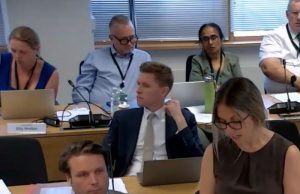
Image: Councillors debate the motion (Credit: East Surrey Shadow Authority)
Water voles thriving in Ewell’s Hogsmill
1 August 2026
Camera footage and fresh field signs suggest water voles are settling in and spreading along the Surrey chalk stream
Water voles are showing encouraging signs of recovery along the Hogsmill River, one year after 50 of the threatened mammals were released into the river and surrounding wetlands in Ewell, Surrey.
Camera traps have captured a continuous flow of images showing the water voles displaying natural behaviours, while recent surveys have found evidence of their presence both upstream and downstream of the original release site.
The field signs include burrows in the riverbanks, feeding remains, vegetation chewed at a characteristic 45-degree angle and distinctive “tic-tac-shaped” droppings found at water vole latrines. The findings suggest the animals are exploring the river and establishing themselves within their restored habitat.
Water voles were released into Chamber Mead wetlands and the adjacent Upper Hogsmill River on 30 July 2025 by the South East Rivers Trust and conservation charity Citizen Zoo.
The release marked the return of water voles to Surrey following an absence of more than 20 years and complemented an earlier reintroduction further downstream on the Hogsmill.
Laura Nee, Catchment Officer at the South East Rivers Trust, said: “It’s wonderful to see how excited local people are to have water voles living on their doorstep. Residents often stop to tell me about hearing the tell-tale ‘plop’ of something entering the water and wondering whether a vole is nearby.
“Although water voles can be difficult to spot, our monitoring with Citizen Zoo is giving us an encouraging picture of how they are settling in. Camera traps have captured a continuous flow of images showing the voles displaying natural behaviours, while recent surveys have found signs of their presence both upstream and downstream, including latrines, feeding remains and burrows in the riverbanks.
“A year after the reintroduction, it’s incredibly exciting to see evidence that the water voles are thriving and making the Hogsmill their home.”
Citizen Zoo is monitoring the population using four latrine rafts, two camera traps and a clay tracking raft positioned along this stretch of the catchment.
The equipment, combined with regular field surveys, helps conservationists understand where the water voles are living, how they are moving along the river and whether the population is successfully establishing.
Water voles were once widespread along the Hogsmill but disappeared from Surrey following decades of habitat loss and pressure from invasive American mink.
Their return was made possible by long-term work to restore the river and create suitable habitat, including the development of Chamber Mead wetlands by the South East Rivers Trust and Epsom & Ewell Borough Council.
The wetlands provide the dense vegetation, connected river habitat and suitable banks that water voles need for food, shelter and burrowing.
The July 2025 release formed part of the WET Hogsmill project, delivered by the South East Rivers Trust in partnership with Citizen Zoo and supported through Natural England’s Species Recovery Programme.
The water voles were bred by Wildwood Trust, which specialises in conservation breeding and the recovery of native species.
The release also helped strengthen the population established further downstream, where Citizen Zoo released 101 water voles in 2022. Creating connected populations along the river can improve genetic diversity and support the species’ longer-term recovery.
Ongoing monitoring will help the South East Rivers Trust and Citizen Zoo track the population’s progress and guide future habitat conservation along the Hogsmill.
The Hogsmill is a rare chalk stream flowing through Epsom and Ewell and the Royal Borough of Kingston before joining the River Thames. Chalk streams are internationally important habitats, supported by clear, mineral-rich groundwater and characterised by distinctive plants and wildlife.
The WET Hogsmill project ran from September 2023 to 2025 and created or improved habitat for water voles, European eels and native trout. It was led by the South East Rivers Trust in partnership with Citizen Zoo and supported through Natural England’s Species Recovery Programme.
The water vole reintroduction was also supported by Wildwood Trust, Epsom & Ewell Borough Council and Thames Water.
Citizen Zoo is a social enterprise and conservation charity working to restore nature and reconnect people with the natural world through community-led rewilding and species recovery.
East Surrey’s shadow council leader has welcomed Andy Burnham’s “strong commitment” to devolution as Surrey continues to take steps that could see the county get its own elected mayor.
Speaking at a meeting of the full shadow council, Councillor Steve Wotton (Liberal Democrats: Horley West, Salfords & Sidlow) congratulated the new Prime Minister and wished him “every success”.
“I plan to write to him in due course to set out our plans for East Surrey Council, and update him on the progress we’re making,” he added.
Councillor Wotton told councillors the government has confirmed its intention to bring forward a Foundation Strategic Authority (FSA) for Surrey from April 2027 – pending local consultations and ministerial approval.
This would mean that the new West Surrey and East Surrey councils could pool resources and work together on certain key strategic issues, such as transport and economic development.
“We continue to see a strong commitment from government for the devolution agenda,” Councillor Wotton said.
“Following the recent appointment of Andy Burnham as prime minister, the government has reiterated its ambition to transfer more power and responsibilities and funding away from Whitehall and into local areas.”
An FSA would also serve as a stepping stone towards the potential creation of a mayoral authority – which would create a directly elected mayor for all of Surrey.
Councillor Wotton said an FSA would give Surrey a “clear route” into that next phase of devolution, adding that failure to embrace it would “risk leaving Surrey outside the main direction of travel”.
East Surrey and West Surrey shadow authorities are currently tasked with setting up their respective councils ahead of assuming full responsibility of local government services in April 2027.
At that point, Surrey County Council and the county’s 11 district councils will all be abolished. Elections to the shadow authorities took place in May 2026.
Councillor David Lewis (Conservative: Cobham & Oxshott South) welcomed the move towards an FSA and said the shadow authority’s Conservative group supports its foundation.
“We believe that the additional devolved powers and funding that would come with a mayoral strategic authority would be beneficial for the residents of Surrey,” he said.
“Directly elected mayors have brought an additional focus to their areas, which has resulted in higher levels of economic growth.”
Councillor Jonathan Essex (Green Party: Redhill East & North Earlswood) said the authority’s Green group supported the FSA creation “in principle”, but questioned why mayoral devolution had not been fast-tracked to Surrey.
“We were told by Surrey County Council in very early 2025 we would be fast-tracked to be new unitaries in Surrey on the basis this would enable a mayoral authority to be created,” he said.
Addressing these concerns, Councillor Wotton said he is “more confident now” of the government’s commitment to Surrey’s devolution under Andy Burnham’s premiership.
“But fundamentally this is about moving us forward on a journey towards devolution”, he added. “It does not guarantee a mayor, but it the first step necessary to achieve a mayor.”
Eleven councillors walked out of Epsom and Ewell Borough Council after the Mayor ruled that her father could remain in the chamber and lead a debate on the future of land hired by a company of which he is a director.
Despite the upheaval, the Council agreed on Tuesday 21st July to give strategic priority to the potential development of sports facilities and housing at Hook Road Arena.
The decision does not approve development. It elevates the Council-owned, 14-hectare site between Chessington Road and Horton Lane to one of EEBC’s strategic priorities for its final months before abolition in April 2027.
A feasibility study will examine whether housing on part of the Arena could finance playing pitches and other sports and recreation facilities. Up to £250,000 has already been allocated from the Council’s Corporate Projects Reserve.
Consultants are expected to be appointed by the end of August, with the study intended to be completed before EEBC’s functions transfer to the new East Surrey Council on 1st April 2027.
However, the merits of the proposal were overshadowed by a bitter dispute over the participation of Councillor Neil Dallen (RA, Town), chair of the Council’s Strategy and Resources Committee.
Fireworks company hires Council land
Cllr Dallen is a director of Epsom Fireworks Display Ltd and a trustee of the associated Epsom Fireworks Display Charitable Trust.
The company contracts with EEBC to hire Hook Road Arena for its annual fireworks display. It has done so since between 2019 to 2021 after taking over from the local scouts that had organised the annual event since 1971. The company has a further agreement with the Council for the November 2026 event.
The company has just three directors. Two of those directors are two of the four trustees of the charity that distributes its income to scouting groups and other worthy charitable causes.
Development of the Arena could eventually bring the fireworks display at that location to an end.
At the beginning of the ordinary Council meeting, Cllr Dallen declared that he was a director and trustee of the fireworks organisations and that the Arena was used for the display.
He also disclosed that he had met representatives of Epsom and Ewell Football Club and the borough’s netball club concerning their proposals for the site.
Cllr Dallen told the meeting that he had never expressed a view for or against their plans and was “confident that I have an unbiased and open mind”.
When the Hook Road item was reached, he proposed that development of the Arena be made a strategic priority.
Cllr Alex Coley (Independent, Ruxley) immediately raised a point of order. He said Cllr Dallen had treated the same connection as a conflict on two previous occasions when Hook Road Arena was discussed by the Strategy and Resources Committee.
Cllr Dallen disputed Cllr Coley’s account. He said he had not left the room at the earlier meetings, although on one occasion he had not voted.
Cllr Bernie Muir (Conservative, Horton) supported Cllr Coley’s objection. She said the conflict had caused controversy at both previous meetings and asked for a ruling from the Council’s Monitoring Officer.
The legal officer advising the meeting said Cllr Dallen had declared his connection and had self-declared that it was not a pecuniary interest. The officer said that where a member decided that an interest was not pecuniary, participation was a matter for that member’s discretion.
Cllr Coley tried to point out that Companies House registered Cllr Dallen as a director of Epsom Fireworks Display Ltd and that the company had a financial relationship with the Council.
Mayor Cllr Lucie McIntyre (RA, West Ewell) repeatedly instructed him to stop speaking and sit down.
She ruled that it was for Cllr Dallen to decide whether his interest was pecuniary and said councillors who disagreed could pursue the relevant complaints procedures after the meeting.
After further objections, the Mayor adjourned proceedings. When councillors returned, she announced that Cllr Dallen had confirmed that he did not consider his interest pecuniary and would continue to participate.
Eleven councillors then walked out of the chamber.
Cllr Kieran Persand (Conservative, Horton) put on record his view that “this council is a joke”.
Cllr Chris Watson (Labour, Ewell Court) remained but later defended the absent councillors, saying their walkout was “a perfectly valid democratic process”.
Mayor was ruling on her father
It was not disclosed to the meeting or to members of the public that Mayor Cllr Lucie McIntyre is Cllr Dallen’s daughter.
It does not follow that being Cllr Dallen’s daughter automatically gave the Mayor a disclosable pecuniary interest of her own under the Localism Act. The statutory definition generally extends to a councillor and their spouse, civil partner or person with whom they live as a partner—not to an adult parent or child.
Nevertheless, Cllr McIntyre was making contested procedural rulings about whether her father could remain, speak, propose the recommendation and vote.
No suggestion is made that the family relationship necessarily disqualified her from chairing the whole meeting. However, declaring it would have enabled councillors and the public to assess openly whether the Deputy Mayor (Cllr Julie Morris Independent College) should have ruled upon this particular dispute.
EET asked the Mayor why she did not disclose that Cllr Dallen is her father or invite the Deputy Mayor to chair the objection to his participation and the item. After referring to her reference in her Council website biography to the inspiration her father gave her to be a Councillor she responded: “I am perfectly able to chair a meeting in my capacity as Mayor when my father is in attendance. At the Full Council meeting on 21 July, Councillor Dallen declared that he did not have a pecuniary interest in the item concerning Hook Road Arena, which was his right.”
EET asked the Council’s legal adviser if his legal advice took account of the live company-council contract and the statutory contracts category in the 2012 Regulations? And whether any formal dispensation was granted to Dallen to participate, and whether an external Monitoring Officer will be asked to review the matter?
A Council spokesperson responded: “At the meeting of the Full Council on 21 July, Councillor Dallen declared that he did not have a pecuniary interest in the item concerning Hook Road Arena. There are no plans to review this.”
Five sources allege history of obstruction
Cllr Dallen’s public advocacy of the Hook Road project also contrasts with accounts given privately to Epsom and Ewell Times (EET) about his earlier approach.
Three councillors belonging to Cllr Dallen’s own Residents’ Association group and two sources closely connected with Epsom and Ewell Football Club have independently told EET that he repeatedly impeded progress on proposals for the Arena.
The sources allege that proposals were pushed “from pillar to post” and from one committee or process to another, causing avoidable delay.
Cllr Dallen has also been quoted by more than one source as saying, while discussing the future of the Arena: “I want the fireworks four more years.”
The sources asked not to be named because of their continuing political or organisational relationships. EET knows their identities and considers each to be in a position to have direct knowledge of the events described.
Their accounts do not, by themselves, prove that every delay resulted from Cllr Dallen’s intervention or that any intervention was motivated by the interests of the fireworks company. Large developments involving Green Belt, restrictive covenants, sports bodies, housing and Council land inevitably pass through several stages.
Nevertheless, the consistency of the accounts raises a legitimate question about why a councillor alleged to have resisted or delayed the proposals behind the scenes emerged at Full Council as their proposer and public champion. Was he seeking to publicly erase perceptions that he had been the cause of previous delays?
Cllr Dallen told the meeting that he wanted the work concluded quickly and, ideally, before EEBC ceased to exist, although he acknowledged that this might not be possible.
EET has asked Cllr Dallen to respond to the allegations that he previously delayed the project, to confirm whether he said he wanted the fireworks to continue for four more years, and to explain what caused his apparent change of approach.
At the time of publication, Cllr Dallen had not responded.
What do the fireworks accounts reveal?
Epsom Fireworks Display Ltd’s latest micro-entity accounts show turnover of £109,324 for the year ending 30th April 2025.
Almost the entire amount—£108,890—is placed under the single expenditure heading “cost of materials”, leaving a profit of £434.
The company accounts state that it had no employees, but do not break down the £108,890. They do not separately identify the cost of fireworks, Arena hire, insurance, event services, charitable donations, directors’ remuneration or directors’ expenses.
Accounts filed by the associated charitable trust show total income of £48,623 during the same year, including a £41,250 donation from Epsom Fireworks Display Ltd.
The Charity Commission register states that the charity’s trustees receive no remuneration, payments or benefits from the charity. That does not answer the separate question of whether anyone receives payment or expenses from the limited company.
The company’s accounts neither establish that its directors were paid nor prove that they were not. The donation to the charity must form part of the £108,890 wrongly described as all being “cost of materials”.
Companies House identifies Cllr Dallen as one of four directors. It names another director, Anthony Williams FCCA (Fellow of the Association of Chartered Certified Accountants), as the company’s only registered person with significant control. Cllr Dallen’s directorship therefore does not, without further information, establish that he owns or controls the company. It is a company limited by guarantee with no share capital.
EET has asked Cllr Dallen whether he receives any remuneration, expenses or other financial benefit from Epsom Fireworks Display Ltd.
At the time of publication, no response had been received.
The legal question
The Localism Act 2011 prevents a councillor with a disclosable pecuniary interest from participating in a discussion or vote unless a dispensation has been granted. A beach is a criminal offence.
The prescribed interests include an “employment, office, trade, profession or vocation carried on for profit or gain”, together with specified contractual, property and ownership interests.
Whether Cllr Dallen’s directorship falls within that statutory definition may therefore depend upon facts not revealed by the micro-entity accounts—including whether his office as director is carried on for profit or gain and whether he has a beneficial interest in the company.
The existence of a statutory interest is not ultimately determined by whether a councillor personally “feels” that an interest exists. Members must initially assess and declare their own position, but whether the legal test is satisfied is an objective question of fact and law.
The legislation is preventive. If a disclosable pecuniary interest exists, the prohibition applies regardless of whether the councillor supports or opposes the proposal and regardless of whether the councillor believes that he has an open mind. An ongoing contractual relationship is a disclosable interest regardless of any personal benefit.
There is a paradox in this case. Development could ultimately end the fireworks display at Hook Road Arena. Cllr Dallen was therefore advocating a process which may operate against, rather than in favour of, the future interests of the fireworks company and the charitable causes it supports..
That may be relevant when assessing his motivation and the seriousness of any alleged breach. It does not, by itself, determine whether the statutory definition of an interest was satisfied.
The Council’s wider code of conduct and the appearance of bias are separate issues from the narrower statutory offence concerning disclosable pecuniary interests.
Rainbow row preceded ordinary meeting
The ordinary Council meeting followed an extraordinary meeting convened earlier that evening to debate the governance of the emerging Local Plan.
During that earlier meeting, Cllr Chris Ames (Labour, Court) expressly referred to the controversy surrounding the Rainbow Leisure Centre.
Cllr Dallen had authorised an urgent and confidential Council decision making up to £500,000 available to address an unexpected dilapidations liability following the change of leisure-centre operator.
Cllr Ames told the extraordinary meeting that problems with the Rainbow contract had become apparent early and argued that an officer and urgent-decision process had been used to bypass democratic scrutiny.
Mayor Cllr McIntyre interrupted him twice and instructed him to return to the Local Plan motion.
Cllr Ames replied: “I really don’t think it’s for you to tell me what my speech is to be about, Madam Mayor. Absolutely not. If I think this is relevant, I will make this point. I will not be silenced.”
He said the Rainbow affair formed part of a pattern in which procedural rules had been used to prevent councillors discussing matters for which they were responsible.
Cllr Clive Woodbridge (RA, Ewell Village) subsequently described criticism of officers as “unconscionable” and said the opposition did not like the answers it received.
Sports shortage wins support
After the walkout from the later ordinary meeting, the councillors who remained overwhelmingly supported making Hook Road Arena a strategic priority.
Cllr Peter O’Donovan (RA, Ewell Court) said the borough had a severe shortage of sports pitches. He referred to 84 junior football teams and said the netball club lacked a permanent base and was forced to hire facilities which could be withdrawn at short notice.
Cllr Alison Kelly (Lib Dem, Stamford) said residents frequently raised the shortage of accessible local sports facilities. She described the feasibility study as the first step towards evaluating the available options.
Cllr Clive Woodbridge said the site had “tremendous potential” as a sporting hub but stressed that the Council was not approving the details of development.
Cllr Jan Mason (RA, Ruxley) supported further investigation but warned against simply stamping through a large scheme without careful consideration of the surrounding homes and existing open land.
Council papers acknowledge substantial obstacles. The Arena is in the Green Belt and a 1975 deed restricts its use largely to open space and recreation unless Surrey County Council consents.
Any housing would also depend upon the emerging Local Plan. Development beyond the feasibility stage would require a separate business case and further decisions, some of which would require the consent of the new East Surrey authority.
The recommendation was carried without a recorded numerical vote.
Cllr Dallen ended the debate by reminding councillors that EEBC had adopted a “debate, not hate” motion.
The Council’s decision means the future of Hook Road Arena will now advance as a formal strategic priority. Whether the dispute over Cllr Dallen’s participation also advances through the Council’s standards process—or to the police under the Localism Act—remains to be seen.
After the meeting Cllr Steven McCormick (Conservative and former prominent RA – Woodcote and Langley) said
“To put this forward now is too little, too late. This council had a prime opportunity over many years to clear the path for enhanced sports facilities at Hook Road Arena, yet proposals were repeatedly shuffled from committee to committee while time ran out.”
He added “Instead of proactive leadership when it could have made a real difference, we are left with a last-minute scramble just months before council abolition. Residents and sports clubs were forced to wait years for progress; they deserve to know why momentum was continually blocked until the eleven-hour mark.”
Why procedure matters, even in little old Epsom and Ewell
1 August 2026
Nobody seriously disputes that developing Hook Road Arena as a centre for community sport, supported where necessary by housing, deserves proper investigation.
The proposal enjoyed overwhelming support. Had almost any councillor moved it at the meeting of Epsom and Ewell Borough Council on 21st July, it would have passed comfortably and probably without drama.
Yet the debate produced an adjournment, angry exchanges and the walkout of 11 councillors—including, it appears, at least one member of the ruling Residents’ Association group.
Why?
The answer cannot lie in opposition to the proposal itself. Most, if not all, of those who walked out supported giving Hook Road Arena strategic priority. Their protest concerned the process by which the decision was being made and, more particularly, the identity of the councillor who was permitted to present himself as its principal champion.
That distinction matters.
Procedure is not an inconvenience
There is a temptation, particularly where the desired outcome appears uncontroversial, to dismiss procedural objections as political gamesmanship.
Why worry about who proposed the motion if it was going to pass anyway? Why interrupt an important debate about desperately needed sports facilities with arguments about interests, declarations and who should occupy the chair?
The answer is that procedural rules are not decorative. They exist to preserve confidence in the decisions reached under them.
Substantive rules determine what a council may decide. Procedural rules determine how it must decide it, who may participate and whether the process can command public confidence.
A good outcome reached through a questionable process does not retrospectively cure that process. Nor can councillors embrace constitutional rules when those rules assist them, only to minimise or reinterpret them when their application becomes personally inconvenient.
Rules which operate only when the powerful find them useful are not rules at all. They become instruments of discretion—and discretion exercised in one’s own cause is precisely what rules governing conflicts of interest are intended to restrain.
The interest question
Cllr Neil Dallen is a director of Epsom Fireworks Display Ltd, which contracts with EEBC to hire Hook Road Arena for its annual display. He is also a trustee of the associated charitable trust.
Development could eventually end the fireworks at the Arena. The company’s precise financial arrangements remain unclear, as do any payments or expenses received by its directors.
This does not establish that Cllr Dallen possessed a disclosable pecuniary interest within the strict definition of the Localism Act. That depends upon facts which the company’s abbreviated accounts do not reveal. Though there is undoubtedly a related current contract with the Coucil and his company – which in itself – regardless of personal gain – is disclosable and prevents the councillor participating, absent a clear dispensation, on pain of a criminal penalty.
It is also true that Cllr Dallen was supporting a proposal which may ultimately operate against the continued use of the Arena by the fireworks company. That apparent paradox may weigh significantly against any suggestion of corrupt motivation at the meeting itself.
But the law on interests is preventive. If an interest falls within the statutory definition, a councillor cannot participate merely because he believes he is acting impartially, because his preferred outcome is publicly beneficial or because he is voting against the immediate interests of the connected organisation.
The test is not whether the councillor “feels” conflicted. It is whether the relevant facts satisfy the applicable rules.
The Mayor’s position
There was a second and arguably more obvious procedural issue which received surprisingly little attention.
The Mayor, Cllr Lucie McIntyre, is Cllr Dallen’s daughter. This is an undisputed and widely known fact, almost certainly familiar to every councillor in the chamber.
Yet the relationship was not formally disclosed at the meeting.
Being Cllr Dallen’s daughter did not automatically give the Mayor a disclosable pecuniary interest. However, she was being asked to rule on whether her father could remain in the chamber, speak, move the recommendation and participate in the vote.
Her father plainly had, at the very least, a reputational interest in that ruling. His conduct, consistency and integrity were being challenged publicly.
The question was therefore not whether the Mayor was capable of chairing impartially. It was whether public confidence would have been better protected by disclosing the relationship and allowing the Deputy Mayor to rule upon that discrete controversy.
Justice must not only be done but be seen to be done. That principle applies to modest local proceedings as surely as it applies to a courtroom.
The opposition focused its objections almost entirely on Cllr Dallen. It did not press the equally apparent question of whether his daughter should continue to chair the dispute about him.
Why?
Perhaps the relationship was so universally known that councillors did not consider a formal declaration necessary. Perhaps tempers and confusion prevented the point from being articulated. Perhaps they accepted that the Mayor was relying upon legal advice and did not wish to personalise their protest further.
But the omission also invites a less comfortable question: was the walkout motivated solely by concern for constitutional principle, or partly by anger at the spectacle of Cllr Dallen receiving public credit for a project which others believe he had previously frustrated?
From obstruction to championship?
EET has received consistent accounts from three councillors within Cllr Dallen’s own Residents’ Association group and two people closely connected with Epsom and Ewell Football Club.
They allege that proposals for Hook Road Arena were repeatedly pushed “from pillar to post” and between processes, contributing to delay. Cllr Dallen has also been quoted as saying: “I want the fireworks four more years.”
These remain allegations to which Cllr Dallen is entitled to respond and since Sunday when he was asked to EET has received no comment from him.
Was the walkout driven not merely by the disputed legal interest, but by a sense of hypocrisy? Did councillors object to seeing someone whom they believed had privately impeded progress now appearing publicly as the development’s leading promoter?
If so, the protest was about political ownership and credibility as well as legal compliance.
That would explain why councillors who supported the motion nevertheless refused to remain for it. They were not rejecting Hook Road Arena. They were rejecting the presentation of Cllr Dallen as its champion.
But that interpretation also carries a warning for the protesters. If their objection was truly one of principle, they should have applied that principle consistently—including to the Mayor’s position in the chair. Selective indignation is no more attractive from the opposition than selective compliance is from the administration.
The small scale is no excuse
It would be easy to regard this as a parochial quarrel in a council which will cease to exist in eight months.
That would be a mistake.
Respect for the rule of law is built from the bottom upwards. It begins with small decisions, modest offices and local institutions. It depends upon people following rules even when the consequences are inconvenient and even when ignoring them might produce the same substantive result more quickly.
The erosion usually starts harmlessly: a procedure is treated as unnecessary because everybody supports the outcome; an interest is dismissed because the individual believes himself honest; a relationship is left undeclared because everybody already knows about it; an awkward question is silenced because it is said to be outside the scope of the debate.
Each departure can be rationalised. Together, they create a culture in which rules become optional for those exercising power.
At national and international level, the same habit has graver consequences. Selective obedience breeds cynicism; cynicism produces contempt for institutions; and contempt for institutions opens the way to disorder, violence and, ultimately, conflict.
Epsom and Ewell is not on the verge of anarchy because of a disagreement over a fireworks display. But the principle is indivisible. We cannot demand fidelity to constitutional rules in Westminster, respect for courts nationally or adherence to international law abroad while treating procedural safeguards as dispensable in our own council chamber.
Rules matter most when they are inconvenient.
Hook Road Arena deserved to be made a strategic priority. It did not need Cllr Dallen to move the recommendation, and the proposal would have passed without his participation.
The Council could therefore have avoided the entire controversy at virtually no cost. Cllr Dallen could have withdrawn; another councillor could have proposed the recommendation; the Mayor could have disclosed the family relationship and allowed her deputy to determine the procedural objections.
The same substantive decision would have been reached, but through a process carrying far greater public confidence.
That is the point of procedure. It is not there to frustrate good decisions. It is there to ensure that good decisions are reached in a way that deserves respect.
East Surrey appointing its Chief Executive
1 August 2026
The new East Surrey council is poised to confirm its first permanent chief executive in the latest step towards the authority’s creation next spring.
East Surrey Shadow Authority, the body overseeing the new council’s setup, has selected Interim Head of Paid Service Adam Chalmers as its preferred candidate for the role.
Mr Chalmers currently serves as Elmbridge Borough Council’s chief executive, the council’s most senior salaried officer. He is also recommended for appointment as Returning Officer for East Surrey Council.
He comes with more than 20 years of experience in local government, having previously held senior roles at Horsham District Council and Tunbridge Wells Borough Council.
East Surrey Shadow Authority leader Steve Wotton said: “I am pleased to announce that Adam Chalmers is being recommended as our preferred candidate for chief executive of East Surrey Council, subject to formal agreement by full council.
“He combines a strong track record of delivering results with a genuine commitment to public service, and I believe he is the right person to lead East Surrey Council as we prepare for this exciting new chapter and beyond.”
Councillor David Lewis, Conservative group leader on the Shadow Authority, said: “The creation of East Surrey Council is one of the most significant changes to local government in a generation, and it is important that we have experienced leadership in place.
“Adam brings a wealth of knowledge and a strong understanding of local government, and I am pleased to support his appointment as we work together to deliver the best outcomes for residents and communities.”
Mr Chalmers’ appointment will be subject to approval by East Surrey’s full council at a meeting on July 29.
East Surrey Shadow Authority is tasked with forming the new East Surrey Council before it takes over management of the area’s local government services in April 2027.
Surrey County Council and the county’s 11 district councils will all be abolished at that point, with services transferred to the new West and East Surrey councils.
East Surrey Council will cover the areas that currently fall under Elmbridge, Epsom & Ewell, Mole Valley, Reigate & Banstead, and Tandridge district councils.
Adam Chalmers (Credit: East Surrey Shadow Authority)
.
.
.
Epsom Council delivers shock rejection to defibrillator kiosk
1 August 2026
Plans to install a communications kiosk including an advertising screen and defibrillator on Epsom High Street have been refused over concerns it would harm the character of the area.
The proposals would have seen the 2.63 metre tall structure placed on the high street pavement, for which the applicant was seeking both planning permission and advertising consent.
As well as holding a publicly available defibrillator in case of emergencies, the unit also would have offered free calls to landlines, free Wi-Fi and interactive wayfinding.
One side of the unit would have featured an LED advertising display, which planning documents describe as “equivalent to the size of display found on bus shelters”.
But the design was met with pushback from a number of residents, with several complaining about its potential impact on the high street conservation area.
One “frequent visitor” to the town wrote an objection to the advertising consent, calling it “ugly, obstructive and unnecessary advertisement hoarding with several cursory additions”.
In their refusal, Epsom and Ewell Borough Council planning officers wrote that kiosk “would create additional street clutter” and “would be excessive and out of character within the street scene”.
They also noted in their report that the council has received 14 similar applications in the past 18 months.
“If each proposal were to be granted approval, the council would have an excess of public payphones and defibrillators, notwithstanding facilities already in existence in the surrounding area,” officers wrote.
“These applications have been submitted over time by different companies, some of which are in very similar locations, which if all were to be granted would result in several similar structures being built within proximity of each other; resulting in over dominance and harm to the street character and visual amenity.”
They added: “As a result of its unsatisfactory siting, design, scale and appearance, the proposed communication hub structure would create significant clutter on the street causing unacceptable visual harm to the wider character of the area.”
“The Planning Inspectorate has dismissed appeals at Epsom Gateway and Capital Square, agreeing with the council that the harm from the advertising screens outweighs the public benefits of including a defibrillator.
“The health and wellbeing of residents is central to the council’s work.”
Defibrillators are currently placed at the following sites across Epsom & Ewell:
Market Place, Epsom.
Ebbisham Centre, Epsom Square, Epsom.
Town Hall (rear entrance).
Harold Bell Solicitors, 174 Kingston Road, Ewell.
St John’s Parish Centre, Station Approach, Stoneleigh.
Auriol Park Café, Salisbury Road, Worcester Park.
The Parade Dental Practice, 177 Kingston Road, Ewell.
Image: Epsom High Street site of intended Defibrillator Hub (Credit: JCDecaux)
Burgh Heath hotel plan rejected
1 August 2026
Plans to demolish and extend a hotel by adding a further 33 bedrooms and a 72-seater restaurant have been rejected after councillors labelled it an “ugly blot”.
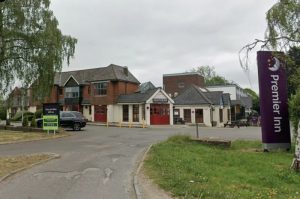
Premier Inn had hoped to knock down the existing complex in Brighton Road, Burgh Heath, and replace it with an even bigger one – but councillors overwhelmingly threw out the plans at Reigate and Banstead Borough Council’s July planning committee.
The new hotel and restaurant had been recommended by officers, who thought it would support tourism in the area and have less of an impact on traffic than, for example, a dedicated restaurant at the site. Planning papers read: “The proposal would also provide economic benefits to the local economy both during and post-construction. These factors carry significant weight in favour of the application. There are therefore considered to be no substantive grounds to refuse the application.”
The committee took a different opinion.
Councillor Sam Walsh (Conservative: Banstead Village) said he knew the site very well and was disappointed the original hotel had been approved in the first place. He said: “We are here to enhance the design and enhance the environment. It’s a blot on the landscape, a blot on the Burgh Heath landscape in terms of its style and features. It could be picked up and placed anywhere in any suburbia.”
He added: “It is an ugly building, vastly out of scale with the adjoining properties, it’s a three-storey monstrosity. What was put there in the 70s was pretty bad, what they are proposing to replace it is even worse. It is stark, it is ugly, it is out of character.”
Cllr Michael Blacker (Conservative: Reigate) agreed. He said: “It’s an appalling design, it really is a big disappointment.”
A motion put forward by Cllr Walsh to reject the application was supported by 12 members. It said the plans should be turned down due to the hotel’s sheer size being out of keeping with the area, and the impact the larger car park and lighting would have on neighbours.
Image: Plans to demolish and expand the Epsom South Premier Inn were rejected (image Google)
NHS in Surrey prescribe AI solutions to diagnoses
1 August 2026
Surrey NHS trusts are investing tens of thousands of pounds into artificial intelligence tools across clinical and administrative settings, the Local Democracy Reporting Service (LDRS) can reveal.
AI is being deployed across some of Surrey’s largest health trusts amid a worldwide scramble to harness the burgeoning new tech.
Freedom of Information responses to the LDRS have shown that AI-backed diagnostic tools, transcription softwares and phone systems are in use at hospitals across the county.
Chief Clinical Information Officer Dr Andrew Carne from Royal Surrey and Ashford and St Peter’s Hospitals NHS Foundation Trusts – which are among the trusts rolling out AI – told the LDRS: “We are proud to be at the forefront of implementing AI to benefit our patients, supporting our clinicians in the diagnosis of serious medical conditions such as cancer.”
Among the tools used at Royal Surrey County Hospital is Annalise AI, a diagnostic software designed to help with analysis of chest X-rays. The trust is spending £21,120 per year on this technology, which has passed a “robust” evaluation process.
The trust has credited this tool with helping speed up lung cancer diagnoses, giving clinicians the chance to catch more cases as early as possible. It is used across several trusts that are part of the Surrey, Sussex and Frimley Imaging Network.
“These tools are designed to enhance, not replace, the expertise of our clinicians and are rigorously tested before being introduced into clinical practice,” Dr Carne explained.
“The use of AI in any of our processes is subject to robust internal governance and oversight and is implemented in accordance with NHS England guidance and processes.”
An evaluation at Royal Surrey is also ongoing for the use of OlySense, an AI tool engineered to help with gastrointestinal examinations. The trust has so far spent £93,432.96 for two OlySense.
Supplied by healthcare tech company Olympus Medical, it is intended to assist with polyp detection during colonoscopies.
But the use of AI in healthcare goes beyond clinical settings, with trusts across Surrey also using the technology for administrative purposes.
Surrey and Borders Partnership NHS Foundation Trust – the county’s main mental health provider – spends an estimated £65,000 per year on Limbic AI Chat Bot, which is designed to assist with the patient referral process.
A spokesperson for the trust said: “Like other NHS organisations, we are exploring the use of AI as part of the NHS’s ’digital first’ policy. We are not using any patient-facing AI at the moment, but we expect to in the coming months.
“Before deploying any new AI or other technology, we will have strong governance in place and be aligned with all national guidelines.”
Several trusts also use less medically-specific AI tools, such as Microsoft CoPilot – which was found to be used in all trusts that responded to the LDRS’ FOI requests.
Surrey and Sussex Healthcare NHS Trust said it is using CoPilot for “clinical uses including meeting summarisation, document preparation” in its FOI response – with a pilot beginning in September 2025 and evaluation still ongoing.
Dr Deblina Bhattacharjee of the University of Bath’s computer science department told the LDRS that the use of AI in healthcare comes with a balance of pros and cons, with the easing of administrative tasks being the “obvious one”.
Assistance in diagnostics, such as the software used across the Surrey, Sussex and Frimley Imaging Network, is also another crucial area where AI use “has its positives”, Dr Bhattacharjee added.
However, she said that “the risks come from pace outrunning governance”, adding: “Clinical AI should remain a support for human decision making, with clear accountability in place before deployment rather than after.”
Surrey NHS Trusts approached by the LDRS insisted that stringent evaluation criteria are in place before any AI technology is rolled out.
“From my own experience, the projects that succeed are the ones where clinicians, patients and information governance teams are involved together,” Dr Bhattacharjee said.
Epsom’s Love Me Love My Mind celebrates 20 years of community care
1 August 2026
An Epsom charity which has supported thousands of people affected by mental health difficulties has celebrated its 20th anniversary.
Members, volunteers, friends and supporters of Love Me Love My Mind gathered at St Barnabas Church in Temple Road on Saturday 25th July for a buffet meal, raffle, dancing and anniversary celebration. Among those attending was Epsom and Ewell MP Helen Maguire.
The evening marked two decades since the charity’s Monday Drop-In began at St Barnabas in 2006. What started as a welcoming place where people could meet, talk and share refreshments has developed into an entirely volunteer-run charity promoting better understanding of mental health throughout Epsom and Ewell.
Today, Love Me Love My Mind seeks to break down stigma, offer friendship and encouragement to people experiencing mental health difficulties and their families, and direct people towards sources of further help. Its regular Monday Drop-In attracts around 30 to 40 people each week for refreshments, activities and a home-cooked meal. The charity also runs a Men’s Pit Stop group, peer support and community activities, as well as organising the annual Epsom Mental Health Week.
The anniversary exhibition placed the charity’s work within a much longer and sometimes painful chapter of Epsom’s history. From 1896 onwards, five large psychiatric hospitals—Long Grove, Horton, West Park, St Ebba’s and The Manor—were built around the town. By 1925 the “Epsom Cluster” formed what was described as the largest psychiatric facility in the world.
The hospitals provided employment, recreation, companionship and care, but their position on the edge of the town also reflected the isolation and stigma experienced by people with mental illness. St Barnabas developed particularly close links with Long Grove Hospital, while members of its congregation were involved with the Friends of Long Grove.
When the large hospitals were gradually closed under the policy of care in the community, many former patients were discharged into group homes around Epsom, including within St Barnabas parish. Some had lost the friendships and support networks they had known inside the hospitals.
A number began attending weekday services at St Barnabas. The then vicar, the Revd Michael Preston, offered coffee afterwards and listened to the life stories of those who came. The exhibition records that from this modest act of welcome grew “a very significant mental health community support project”.
The charity’s late founder, the Revd Susan Bull, subsequently researched the relationship between churches and people experiencing mental distress. Her study, Voices of the Voiceless: An evaluation of local church care for those in mental distress, examined what enabled St Barnabas to provide acceptance and hospitality at a time when fear and stigma remained widespread.
The anniversary also remembered the long-standing social divide between St Barnabas parish and more affluent parts of Epsom. Separated from the town centre by the railway embankment and reached through low bridges, the neighbourhood was historically home to many lower-paid hospital workers and successive communities arriving from other parts of Britain and overseas.
Against that background, Love Me Love My Mind has spent 20 years building a place in which people can find companionship, belonging and acceptance. The charity says its work over that period has supported thousands of people, promoted positive mental health and helped create a stronger and more connected community.
Saturday’s summer party was one of several events being held during the anniversary year. The charity thanked Direct Residential, Love Your Accountants, Park View Café, St Barnabas Church and the Rotary Club of Ewell for supporting the celebration.
Further information about Love Me Love My Mind, its activities, volunteering and donations is available at www.lovemelovemymind.org.uk.
A Surrey train station that was once voted the county’s prettiest station by Surrey Live readers is now stewing in litter after the rail operator took away all the bins on its platforms.
Box Hill & Westhumble station, serving a popular spot for visitors looking to enjoy picturesque country walks, had its bins removed by Southern rail to bring it into compliance with new recycling regulations.
A Southern rail spokesperson told the Local Democracy Reporting Service (LDRS) this is because the small station does not have “secure space for the large wheelie bins we would need to store rubbish from the bins ready for collection”.
They are encouraging passengers to use bins on board their trains or taking their litter home to dispose of appropriately – while increasing the number of staff picking up rubbish from platforms.
But residents are furious at the changes, with several writing to MP Chris Coghlan to voice their anger at the growing mountains of rubbish accruing on their local station’s platforms.
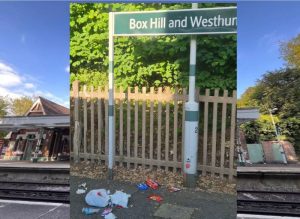
Pictures shared with the LDRS show piles of litter building up on the platforms, including plastic wrappers, coffee cups and beer bottles. These photos were taken on July 5, 2026.
Westhumble resident David Farmery told the LDRS he thinks Southern Rail is “abrogating its responsibility” to ensure the station is clean and tidy.
“They seem to think that Boxhill and Westhumble is a small station but we receive an incredible amount of visitors over the weekend.
“So I really do wonder if they did a proper assessment of our situation rather than imposing a company wide no bins policy to their unstaffed stations,” he said.
In a post on Facebook, Chris Coughlan said he had jointly raised concerns to Southern rail along with residents, imploring the rail operator to fix the problem.
While he said Southern had subsequently deployed more staff to carry out cleaning at the station, he added: “I’m glad they’ve listened, but I will be asking them to provide a more permanent solution.”
A Southern spokesperson said: “We take concerns about litter at Box Hill & Westhumble station seriously and have increased the frequency of staff attending the station to carry out cleaning. The changes were introduced to comply with new Simpler Recycling regulations.
“We are keeping the change under review, as well as listening to feedback from our communities.”
The LDRS understands that the rail operator recently installed segregated bins at its staffed stations to bring them in line with up to date regulations and encourage recycling, while a trial of removing bins from unstaffed stations on the Wimbledon loop did not see an increase in littering.
Image: Google map capture Boxhill and Westhumble station and insert of platform litter (Credit: David Farmery)
Application to drill for oil in Surrey Hills renewed
1 August 2026
A Green Party councillor has called for a “rethink” of oil extraction practices in the south of England after research suggested a possible link between drilling and a series of minor earthquakes in Surrey.
Small tremors between magnitude 1.34 and 3.18 were recorded across 2018 and 2019 in the Newdigate area, within a few miles of an oil drilling site at Horse Hill near Gatwick.
Planning permission is being sought to resume oil extraction at the site after its previous approval was quashed by the Supreme Court in 2024 following a long-running campaign.
The court ruled that downstream greenhouse gas emissions should have been considered in any environmental assessment. Surrey County Council said at the time it believed planning rules had been followed.
A UK Oil and Gas Plc (UKOG) statement from the same year said: “A detailed plan for a safe, full suspension of related operations and activities will be implemented following SCC’s concurrence.”
However, charity Friends of the Earth is calling on Surrey County Council to reject this fresh drilling application after presenting a report by Professor Stuart Haszeldine of the University of Edinburgh highlighting a potential link between oil production and earthquakes.
Professor Haszeldine’s work claims there is a “substantial body of evidence” linking the 2018 to 2019 tremors to oil production at Horse Hill.
A 2025 study by University College London researchers published in Geological Magazine also investigated a possible link, running more than one million simulations to assess any correlation.
Lead author Dr Matthew Fox said: “Our study suggests there is a link between the ground earthquakes and oil extraction at Horse Hill but we cannot rule out that this link is a coincidence.”
Dr Fox added that while more work needs to be done to establish if there is a cause and effect, their findings suggest it is “plausible” that oil extraction was behind the tremors.
A UKOG spokesperson previously said British Geological Survey experts “were satisfied it was a natural event associated with movement on a deeper, unassociated fault many miles deeper and distant from the site”.
But Surrey County Councillor Jonathan Essex (Green Party: Redhill East) told the Local Democracy Reporting Service he thinks Professor Haszeldine’s work should prompt “a rethink in how oil drilling is considered in planning terms in the south of England”.
He wants the definition of fracking to be expanded to include all “unconventional oil extraction”, which would see sites like Horse Hill brought under a government moratorium on the practice.
At present, the effective ban only applies to hydraulic fracturing for shale gas – more commonly known as fracking – due to concerns around related seismic activity.
But other forms of hydraulic fracturing in the conventional extraction of oil and gas, such as acid squeezes, are not covered by the government’s moratorium.
Councillor Essex said: “The definition of fracking must be extended to include all unconventional oil extraction – which would then mean that the likes of Horse Hill and other developments across southern England would fall under the current fracking ban.”
The previous Conservative government halted fracking in England in 2019, and the current Labour government has voiced its intent to permanently ban the practice.
Councillor Essex added: “The only way to increase energy security and reduce energy prices in the UK is to increase renewable energy production and to reduce our overall energy demand, such as by insulating our homes.”
A Surrey County Council spokesperson said: “Any comments or issues raised in response to the application will be considered by officers during the determination process in due course.”
UKOG and its subsidiary Horse Hill Developments Ltd did not respond to the Local Democracy Reporting Service’s requests for comment.
A Department for Energy Security and Net Zero spokesperson said: “We intend to ban fracking for good and make Britain a clean energy superpower, to bring energy security, lower bills, and protect current and future generations.”
Photo: Sarah Finch Horse Hill 5 Nov 2021 Redhill climate campaigner Sarah Finch at Horse Hill rally 5 Nov 2021. Credit Denise Laura Baker, cleared for use
.
.
.
.
.
.
.
.
In Surrey more people are invited to share their home
1 August 2026
A new partner is taking on Shared Lives in Surrey aiming to welcome more people into the service who can open their homes to adults with support needs and help them live independently and well.
Shared Lives enables adults with learning disabilities, physical disabilities or mental health needs to live within a supportive household, for short or long-term stays. Similar to fostering, it offers a home environment where people can build life skills and learn to lead active lives in their local communities.
Surrey County Council has appointed an experienced provider to run the service from this month, following a competitive selection process. The provider, the charity Ategi, has more than 30 years’ experience running care and support services including Shared Lives schemes in England and Wales.
All current Shared Lives carers and arrangements will continue to be supported, and more people from a wide range of backgrounds are being invited to explore the rewarding opportunity of becoming a Shared Lives carer.
Shared Lives carers receive ongoing support, a weekly fee and training according to their needs. No formal care experience is required – carers simply need a spare room, compassion and the willingness to support an adult with additional needs in their own home.
Around 80 Shared Lives arrangements, both short and long-term, have transferred to Ategi from Surrey Choices, the previous provider. People supported by the service have in recent years achieved life-changing outcomes including passing driving tests, securing meaningful employment, and gaining independence and improved mental wellbeing.
Kate Allen, Ategi’s Chief Executive, said: “We are delighted to be bringing Ategi’s extensive Shared Lives experience to Surrey and to build on the strong foundations created by Surrey Choices. We know how important continuity is for the people and families who rely on the service, and our priority is to ensure they continue to receive the high-quality, person-centred support they value.
“With more than 30 years’ experience delivering Shared Lives – including across London and the South East – we bring extensive Shared Lives experience from across England and Wales, which will help us work alongside local partners to support the service’s continued success and future growth. We look forward to working with carers, families and partners across Surrey to enable more people to live independently, build meaningful relationships and play an active role in their communities.”
Sinead Mooney, Surrey County Council’s Deputy Leader and Cabinet Member for Adult Social Care, said: “Shared Lives has long been an important part of the support we offer in Surrey and I’ve seen the difference it can make to people’s wellbeing and independence, and the rewarding experience it offers carers.
“Our new partnership with Ategi will build on Surrey Choices’ foundations, and we’ve been working hard to make sure the transition is as smooth as possible for everyone involved. We’re grateful to our existing Shared Lives carers for the support they provide, and we’re encouraging more people to consider coming forward to help adults with additional needs lead fulfilling lives.”
Louise Hayes, Operations Director at Surrey Choices, said: “We are incredibly proud of everything our Shared Lives colleagues, carers and the people we support have achieved together. We transfer the Shared Lives scheme with enormous pride in the legacy and the positive impact it has had on so many lives. We pass it on with confidence to Ategi, an experienced provider delivering Shared Lives across multiple counties in the UK, knowing the values of compassionate, person-centred support will continue.”
In the words of one family member with experience of Shared Lives, it is “an excellent service enabling adults with additional needs to live as near to independence as they can, with a safety net.”
Some Shared Lives placements in Surrey will continue to be provided by Mencap, as they are currently.
Anyone interested in finding out more about becoming a Shared Lives carer, or who has a query about an existing arrangement, should contact Shared Lives Registered Manager Paul Dawson at Ategi on 01494 932 920. More information can be found on Ategi’s website: www.ategi.org.uk.
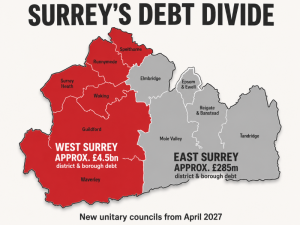
A single commissioner team will oversee the combined financial messes across Woking and Spelthorne as fears mount that their enormous unsupported debts and tangled property webs could spill over and impact the newly formed West Surrey Council.
If the problems are not fixed, government-appointed commissioners could remain in place at the new authority, the Department for Local Government said this week.
The government has already committed £500 million to support Woking – and more is expected – and the council is currently selling off its assets left, right and centre in an effort to bring down its unprecedented multi-billion-pound debt. These sales may need to continue past vesting day, when Surrey’s councils merge into two mega-authorities.
In Spelthorne, commissioners have said there are still challenges over its financial sustainability, commercial portfolio and capacity to deliver changes. With the councils set to dissolve in April 2027, the government is concerned the problems could transfer into the new West Surrey authority.
At the same time, commissioners will work in a more joined-up way with West Surrey, letters from government ministers read, to provide advice, challenge decisions and offer independent assurance on how the new council will run from day one of the new authority. This will include its financial strategy, management of inherited risks and governance framework – although at this stage they will not have executive powers at the new authority.
Woking and Spelthorne remain two of the most indebted councils in the country after years of financial mismanagement and have been under watch to oversee their turnarounds.
Alison McGovern, Minister of State for Local Government, wrote to inform the councils that their special measures will remain in place and of the changes that will be made.
The letter read: “Significant challenges…remain, particularly financial sustainability, continued reliance on reserves, risks within the commercial portfolio, and capacity pressures. I agree that maintaining pace in the final phase of the intervention and managing these risks through transition will be critical.
“Findings reinforce the need for a more integrated approach to risks across Spelthorne and Woking. I have therefore decided to establish a single commissioner team across both councils.”
They will be tasked with providing an independent view of the financial, commercial and governance challenges that West Surrey may inherit from Woking and Spelthorne.
It added: “Their assessment will inform the department’s view of whether West Surrey has sufficient grip of those challenges and whether any further supportive arrangements may be needed beyond vesting day.”
On April 1, Woking, Spelthorne, Guildford, Surrey Heath, Waverley and Runnymede borough councils will dissolve and be merged with the western half of Surrey County Council to create West Surrey Council, which will be responsible for all services in the area.
A Surrey Council’s enforcement against landlords examined
1 August 2026
Private landlords have been hit with almost £75,000 in fines over the past two years by Reigate and Banstead Borough Council.
The figures were presented following questions over levels of enforcement in the borough and comes after the government announced new powers allowing local authorities to fine landlords up to £7,000 if their rented properties were found to have serious hazards.
Other tools available include the ability to issue fines up to £40,000 for illegal evictions or multi-occupancy breaches – as was the case in May this year when the council secured a fine of £9,000.
There, environmental health officers found a Horley landlord had been renting their flat to vulnerable elderly individuals without appropriate fire measures – and evicting them when they complained about safety measures.
The totals were made public after questions from Councillor Neha Boghani (Green Party: Horley East and Salfords).
She asked the July 22 meeting of Reigate and Banstead Borough Council what level of enforcement the council had been taking against private landlords, how many civil penalties had been issued, and the total revenue recovered.
Councillor Kate Fairhurst, portfolio holder for place, planning and regulatory services, said: “In the financial year 24/25 the team issued 17 civil financial penalties, the total value was £51,964.
“The final value includes adjustments after an appeal. The value of recovered in £43,456. With regards to the outstanding debt, this mostly relates to one case and debt recovery proceedings have been issued and a county court judgement applied for. For the financial year 25/26 the team issued seven penalties with a total value of £30,515. So far £14,015 has been recovered.
“Two cases have appeals in process so they are not yet fully settled and a third case has debt recovery proceedings initialed and a county court judgement applied for.”
The council has said it welcomed the introduction of the Renter’s Rights Act and would use it to combat unscrupulous and negligent practices.
Councillor Kate Fairhurst said of it: “The Renters’ Rights Act 2025 is bringing in new rights and responsibilities for landlords, letting agents and tenants. It is essential that landlords are compliant with the new law.”
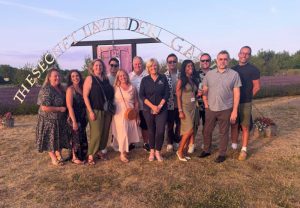
A family-run lavender business has celebrated 20 years after growing from a simple stall and tent into one of the area’s best-known attractions.
Mayfield Lavender marked the milestone at its Epsom site, where its founder, Lorna Maye, reflected on two decades of family life, hard work, community connections and the challenges of building a business from the ground up.
“My goodness knows how we’ve got to 20 years and are still standing upright,” she joked. “It’s been lots of fun. It’s been extremely hard work.”
Her daughters were just four and six when the family started Mayfield Lavender and have grown up alongside the business. In the early days, they would play with Polly Pocket and Playmobil in the back of the family camper van while their parents worked at the lavender fields. “We used to bribe them to come up to the lavender fields,” she recalled.
She said she now wishes the family had filmed those early years after watching Clarkson’s Farm. “It has been a huge learning curve,” she said. “We’ve come a long way.”
But after two decades, one of the things she is proudest of is that the business remains a family affair. “What’s really important to me is working with my girls,” she said. “I think hard work pays off in lots of different ways.”
She admitted that running the business has often meant long hours and that achieving a good work-life balance has not always been easy. “Sometimes people chastise you for working all the time and say, ‘Why do you work so hard? You should be doing other things. But actually, I really enjoy a lot of it. I’ve been doing it for 20 years and I kind of feel like I don’t know anything else.”
From lavender fields to an Epsom café
The family bought its Epsom site in 2011, when it was considerably more dilapidated than it is today. The site had previously been used for growing crops, before the family planted lavender and began transforming the land. Their next major step came in November 2022 when they opened a full café, a venture which quickly became much busier than expected.
Despite its popularity, she told fellow local business owners that hospitality can be a difficult industry in which to make money. She added that while the café is regularly full, the challenge is now working out how to turn that popularity into a sustainable business.
“We tick a lot of the boxes. We’re doing something right, but we just have to work out how we can maximise our opportunity.”
She also praised the staff, friends and family who have helped Mayfield Lavender grow over the years, describing the business as very much a team effort.
The work continues for much of the year. Preparations for the summer lavender season begin around March, before the fields open to visitors. By September, harvesting and closing the fields is under way, before the family turns its attention to Christmas trees and preparations begin once again for the following summer.
A place with meaning
Beyond the business itself, one of the most rewarding parts of Mayfield Lavender has been discovering what the fields mean to the people who visit them. Some customers have returned year after year for two decades.
The fields have also become a place of comfort for some people undergoing treatment at the nearby Royal Marsden. “We’re lucky enough to have the Royal Marsden on our doorstep,” she said. Over the years, memorial benches have been placed at the fields, while patients and their families have visited during and after treatment.
“Sometimes you forget that it actually means a lot to people,” she said. “The lavender makes them feel relaxed. It’s a good thing to have provided something that is a nice environment for people.”
For the founder herself, one of the rewards of all those years of work comes from seeing the fields at the start of the day. “There’s nothing better than going up first thing in the morning and seeing the blue sky over the purple fields,” she said.
‘Resourcefulness is greater than strength’
After 20 years in business, there is one phrase the family regularly returns to: “Resourcefulness is greater than strength.”
She described it as something of a company motto. “There’s always something that challenges you,” she said. “I think the biggest challenge actually is thinking more cleverly rather than the doing. Like many independent businesses, Mayfield is dealing with rising costs, including business rates, taxes and wages.
“Business is challenging for everybody,” she said. “We just have to figure it out. It’s part of the challenge of business.”
The anniversary event also gave the family a rare opportunity to meet and exchange ideas with other local businesses. Although Mayfield Lavender welcomes large numbers of visitors and has strong ties with the community, its founder said running a business can sometimes be surprisingly isolating.
Discovering Epsom’s Secret Lavender Garden
While many people know Mayfield Lavender’s Banstead fields, the family is also keen for more residents to discover its Secret Lavender Garden in Epsom. Unlike the Banstead fields, which can be seen from the road, the Epsom garden is tucked away, which inspired its name.
She added: “What I want is for people to have the confidence to come and discover new things and to support local business.”
Renewal, regrowth and regeneration
Looking to the future also means looking after the lavender itself. Mayfield has begun a major regeneration programme as some of its original lavender plants approach 20 years old. As lavender plants age, they can become more straggly and produce less oil, both in terms of quantity and quality, meaning areas of the fields eventually need to be replanted.
The programme, which began last year, centres on three words: renewal, regrowth and regeneration.
“You can’t come to a lavender field and expect it to look picture-postcard every year because it’s a natural plant,” she said. “The weather plays its part, tourism plays its part, and sometimes the plant ages and it needs to be replaced.”
When some of the older plants were removed, visitors were shown how to take lavender cuttings and were encouraged to take them home and grow them in their own gardens.
The idea was that a small part of Mayfield Lavender could continue growing elsewhere while the main fields themselves were regenerated. The business also grows young plants in its Epsom glasshouse ready for replanting.
The founder hopes the project will encourage more people to grow lavender at home, particularly during increasingly hot and dry weather. Once established in a sunny position and well-drained soil, lavender requires relatively little water and can be a valuable drought-tolerant addition to a garden.
It also provides an important food source for bees and other pollinators. For Mayfield Lavender, the regeneration programme is therefore about much more than keeping the fields looking beautiful.
“You have to keep providing, not just for people to enjoy the field, but for all the wildlife and other plant life that grows around it to carry on.”
Twenty years after the family began with a stall, a tent and two young children in tow, Mayfield Lavender is continuing to evolve, while holding on to the family, community and landscape at the heart of the business.
Visit and get involved
Local residents are invited to discover Mayfield Lavender’s Secret Lavender Garden in Epsom, visit the café and explore the lavender for themselves. The family is also keen to hear from local businesses, community groups and organisations interested in collaborating or developing new ideas at the site. As its founder put it: “If there’s something that you think, ‘I could be doing something really cool here,’ just let us know.”
Where to find us?
Caffee: Mayfield Lavender Glasshouse Cafe and Gift & Plant Shop, 139 Reigate Rd, Epsom KT17 3DW
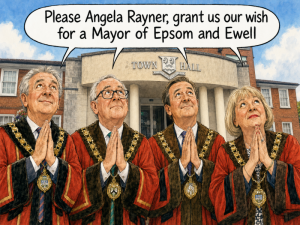
Epsom and Ewell Council votes for continuing a local Mayoralty after its abolition, for a small fee …
1 August 2026
Epsom and Ewell could retain its mayor, civic traditions and borough regalia after the borough council is abolished next year following a vote by councillors.
Epsom and Ewell Borough Council agreed on Tuesday 21 July to ask the Government to establish Charter Trustees for the borough. The new East Surrey Council will also be asked to support the proposal.
The trustees would preserve the ceremonial office of Mayor of Epsom and Ewell after East Surrey Council assumes responsibility for local services on 1 April 2027.
They would not exercise normal council powers. Their duties would be limited to maintaining the mayoralty, civic ceremonies, historic rights and property such as the borough’s regalia.
Councillor Neil Dallen (RA, Town), who proposed the recommendations, said he had been approached by scores of residents concerned about what would happen to the mayoralty.
“The number of residents that have come to me about what’s going to happen about the mayor have been quite numerous,” he said. “I won’t say they’re in the hundreds, but they’re certainly in the tens, probably closer to 100.
“I have been a mayor, and there are a number of other councillors here who have been a mayor. Once you’ve been a mayor, I think you appreciate what the residents want as a mayor, and it will be a great loss if we don’t have a mayor.”
Cllr Dallen said several members of the new East Surrey Council had indicated support, although the final decision would not rest with Epsom and Ewell.
“We’ve got to get agreement of East Surrey to do this,” he said. “But I’ve spoken to three or four East Surrey councillors, and they are all very much in favour of keeping the mayor.”
Before the main debate, Councillor Alex Coley (Independent, Ruxley) attempted to have the proposal referred to the Strategy and Resources Committee. His move was defeated.
Cllr Coley argued that the proposal had come directly to Full Council without committee scrutiny, public consultation or a detailed estimate of its eventual cost.
Charter Trustees may ask East Surrey Council to fund their activities during the first year. After that, they can raise a council tax precept. The council report said the average Band D charge among existing Charter Trustee bodies was around £2.50 a year, with examples ranging from 46p to £5.
Cllr Coley drew a comparison with the council’s recent Community Governance Review, in which 82 per cent of approximately 2,200 respondents opposed the establishment of parish councils.
“The Charter Trustee item in front of us contains powers to raise a precept – i.e. council tax,” he said. “There was no consultation on this. It does include precepting powers and would create a new instituted body, and I believe that it should go to consultation.”
He added: “We don’t know what this will cost because no work has been done on costing it. For those reasons, I’d like this to go to Strategy and Resources for a debate where questions can be answered.”
Cllr Dallen said referring the proposal to committee could cause the borough to miss a narrow legislative window.
“There are two or three reasons why I think we need to make the decision tonight,” he said. “There is the urgency of trying to get a response before March 31 because, if we don’t get a response and we’re not set up, then everything goes into East Surrey and we lose control.”
He said East Surrey would meet the first year’s cost and described even a possible £5 annual charge as “really good value for money for having a mayor in the borough”.
Councillor Alison Kelly (Lib Dem, College) supported retaining a recognisable civic institution when the borough becomes part of a much larger authority. “Epsom and Ewell, as a relatively small borough, has benefited from a strong local identity,” she said. “With the new unitary authority, there is a risk that we will lose our distinctiveness.”
She said discussions with businesses, charities and East Surrey councillors had indicated appreciation for the mayoralty. “In this case, the relatively small additional charge would be outweighed, in my opinion, by the funds the mayor’s charities have gained,” she said.
Former mayor Councillor Robert Leach (RA, Nonsuch) said his year in office had shown him that the mayoralty was particularly appreciated by residents who might otherwise receive little civic recognition. “The people who valued the mayor were often some of the most disadvantaged people,” he said, recalling presenting certificates to children with special educational needs.
“People really felt honoured. Sometimes I almost felt embarrassed. They were saying, ‘We’re greatly honoured to have His Worshipful the Mayor here,’ and I was sitting there thinking, ‘Why?’ But they do really value it.”
He acknowledged concerns about a precept but said the borough already possessed its mayoral regalia, gowns and chains, making the cost of continuing the office comparatively modest.
Councillor Peter O’Donovan (RA, Ewell Court), another former mayor, said the office involved far more than its small number of compulsory civic engagements. “You do as much as you like because it’s such a fantastic position to hold,” he said. “It’s raising money for charities and seeing people.”
He recalled one child asking his father who the mayor was. “The dad said, ‘That’s the King of Epsom.’ So I’m royalty now as well,” he joked.
Councillor Alan Williamson (RA, West Ewell) said he had changed his mind after initially concluding that the scale of local government reorganisation counted against retaining a separate Epsom and Ewell mayor. “I think it’s necessary for the community to have a focal point, a focus of civic pride and for local identity,” he said. “If we lose that, we’ll be losing something significant.”
He warned that many residents did not yet appreciate “the enormity” of the borough council’s abolition. “We’re going to be subsumed into a rather amorphous administrative unit known as East Surrey, which very few people will be able to relate to on a day-to-day level,” he said.
Councillor Rachel King (RA, Town) said Charter Trustees could also help preserve Epsom and Ewell’s formal relationship with its French twin town, Chantilly. “The structure of the French government is such that it has to be twinned between a government body in France and a government body in the UK,” she said. “This would enable twinning to happen for our existing twinning and if we were to look for further twinning in the future.”
Councillor James Lawrence (Independent, College) opposed the proposal, arguing that councillors had not learned from the rejection of parish councils. “When the public were last asked for a precepting authority, they said no,” he said. “It is a concern to me that the learning moment from our last consultation seems to be: don’t consult, just take the decision straight to Full Council.”
He said that, despite growing up in the borough, he had little awareness of the mayor before becoming a councillor. “Not once did I come across the mayor,” he said. “I think I once saw a picture of someone in funny clothes wearing a big gold chain, which is largely accurate.”
Cllr Lawrence also questioned whether a mayor chosen from among councillors could claim to represent residents in the same way as a directly elected officeholder. “The mayor is not popularly elected,” he said. “It’s not chosen by the people of this borough. It’s chosen by a bunch of politicians.”
Councillor Clive Woodbridge (RA, Ewell Village) said the council was not itself creating the trustees but ensuring that East Surrey and the Government had an opportunity to consider doing so. “There’s a narrow window of opportunity,” he said. “If we don’t pass it today, then it won’t happen. At least we give it a chance of happening.”
Cllr Coley returned to the potential demands on East Surrey’s ten councillors representing Epsom and Ewell. The regulations require at least five Charter Trustees, who would elect a mayor and deputy mayor from among themselves. “Half of all councillors will need to be Charter Trustees minimum,” he said. “We know that the unitary councillors will have an extraordinary workload. They will be doing the work of the district and of the county.”
He added that continuing costs could include civic events, hospitality, expenses and administration, not merely the preservation of existing regalia.
Council leader Hannah Dalton (RA, Stoneleigh) said consultation was not legally required because Charter Trustees would have ex-officio membership and exclusively ceremonial responsibilities. She stressed that neither Epsom and Ewell nor East Surrey could guarantee that the Government would approve the request. “The answer from the ministry may be no. The answer from East Surrey may be no,” she said. “But if we don’t do it, and we don’t do it now, we are actually going to have lost that opportunity altogether.”
The recommendations were carried. The voting figures were not announced.
Under the proposal, the Government would need to introduce a further statutory instrument, approved by both Houses of Parliament. East Surrey Council must support the application before it can proceed.