

Epsom and Ewell Council’s final spending spree?


Nearly £4.92 million of infrastructure and community-project funding has been approved by Epsom and Ewell Borough Council despite a resident’s detailed appeal for the decision—or at least funding for a new Hogsmill footbridge—to be deferred.
The Strategy and Resources Committee approved five strategic Community Infrastructure Levy projects and eight neighbourhood schemes by six votes to one abstention at its meeting on Tuesday 14th July.
CIL is money raised from property development and intended to provide infrastructure required to support growth. The Council had approximately £5.04 million of unallocated strategic CIL and £1.13 million of unallocated neighbourhood CIL available at the beginning of the process.
The projects funded
The strategic allocations were:
£1 million for the Local Cycling and Walking Infrastructure Plan, conditional upon at least £1 million in match funding;
£114,000 for earth bunding and green-infrastructure work at ten open-space sites vulnerable to unauthorised vehicle access;
£144,000 for a new footbridge across the Hogsmill River;
£1 million for initial community sports infrastructure at Hook Road Arena, conditional upon at least £1 million match funding; and
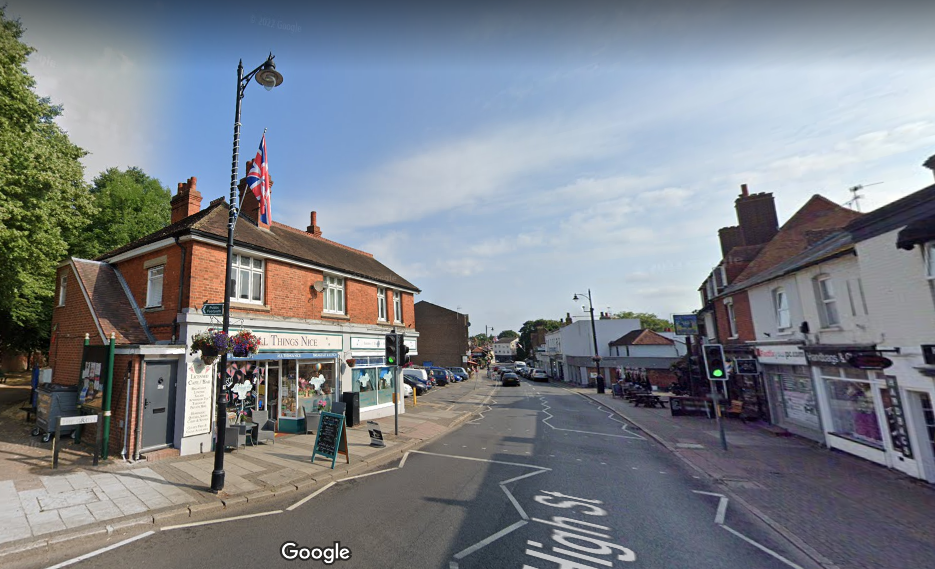
£2 million for Ewell Village public-realm improvements.
The neighbourhood awards included improvements to Ebbisham Sports and Social Club; tennis and pickleball courts at Poole Road and Gibraltar Recreation Ground; play equipment at St Martin’s School; a Scout tomahawk range; modernisation of the Epsom Beekeepers’ classroom; the Glyn Hall replacement project; and the final phase of a Scout headquarters redevelopment.
A correction made during the meeting reduced the published neighbourhood total from £668,871 to £660,911. Together with the £4.258 million strategic allocation, the corrected package amounted to £4,918,911.
The Council stressed that funding would ordinarily be released only after projects had been completed and that applicants remained responsible for obtaining planning permission, landowner approval and other necessary consents.
Stovell asks councillors to wait
Resident Kristy Stovell had sent councillors and Epsom and Ewell Times an eight-page evidence review before the meeting.
Her primary request was for the whole CIL item to be deferred until the next ordinary committee meeting. As a minimum, she asked councillors to remove the £144,000 Hogsmill bridge allocation from the package pending publication of further information.
Her analysis did not allege that every scheme was unsuitable. Instead, it argued that councillors were being asked to approve almost £4.93 million without complete applications, comparable cost plans, individual scoring, supporting assessments or CIL Working Group records being publicly available in one accessible place.
She noted that all five strategic schemes had been classified as “essential but not time critical”, which she argued allowed time for a short deferment.
Among the concerns raised were the absence from the public pack of full applications and supporting evidence; a lack of published Working Group papers and minutes; inconsistent identification of applicants; incomplete financial comparisons; and reports recording no equality, environmental, safeguarding or crime-and-disorder implications for projects that included a river crossing, earthworks, highways schemes, school play equipment and a Scout tomahawk range.
She asked for the full applications, detailed project costs, previous awards, match funding, Stage One assessments, point-by-point Stage Two scores and Working Group attendance, voting and declarations to be published before a final decision.
Bridge evidence questioned
Ms Stovell’s three-minute public statement concentrated on the proposed Hogsmill footbridge.
She said: “I am not opposing accessibility or the principle of providing safe and inclusive routes. I am asking the committee not to approve a substantial award before the proposal’s financial, environmental, accessibility and delivery evidence has been published and properly examined.”
She said the public documents did not clearly identify the applicant, the precise bridge location, a completed design, the full project cost or the additional design and planning funding required.
She also questioned whether the published material demonstrated a continuous accessible route for wheelchair and mobility-scooter users.
“The project was assessed as essential but not time critical,” she said. “There is therefore no demonstrated need to approve it tonight before the missing information has been supplied.”
She asked councillors to decline the recommendation or defer it until the location, design, complete costs, dependencies, environmental effects and whole-route accessibility had been evidenced and published.
Her longer review noted that the bridge application had been submitted before the Environment Committee selected a bridge option on 30th June. It also questioned the absence of an exact location plan, completed design, environmental and hydrological evidence, and clear maintenance and liability arrangements.
Members asked to trust the Working Group
In the Chair, Cllr Hannah Dalton (RA Stoneleigh) told the committee that it was the final CIL funding round and warned: “If we remove this item, we also lose the funding.”
She said councillors had appointed a cross-party Working Group to examine the applications and “there’s got to be some trust that our colleagues took the time to go through that detail”.
An officer said the Working Group had access to the full bids and supporting information and held four meetings during June to undertake the Stage Two assessments.
Councillor Steve McCormick (Conservative Woodcote and Langley) asked where the minutes of those meetings were and whether members could review them. The officer replied that the scores and decision-making were recorded in what he described as a comprehensive spreadsheet.
Councillor Kate Chinn (Labour Court) said that although councillors were being asked to trust the Working Group, it would have been helpful to see more detail, including the locations of the ten sites covered by the £114,000 green-infrastructure bid.
She also questioned why neighbourhood bids could fail where planning permission was missing while the strategic bridge bid could proceed without permission.
An officer explained that the adopted protocol did not require strategic applicants to have all permissions in place at the application stage, although no project could begin and no money would be released without the necessary approvals.
“A rock and a stepping stone”
The committee also wrestled with whether the proposed footbridge was intended to replace the existing stepping stones.
The published project description stated that the bridge would “replace unsafe stepping stones”. Yet Cllr Dalton said at the meeting that the two issues should be treated separately and proposed removing those words.
Councillor James Lawrence (Independent College) pointed out that the Environment Committee had acknowledged that the Environment Agency would remove the stones and had approved a new bridge as an alternative crossing.
“That reads like ‘replace’ to me,” he said.
Councillor Phil Neale (RA Cuddington) said the Working Group had considered only the bridge but had found itself “between a rock and a hard place—or a rock and a stepping stone”.
He strongly supported the bridge, while suggesting that if the Environment Agency removed the stones, campaigners might put new ones back.
Chief Executive Jackie King clarified that the Environment Agency owned the riverbed and banks but apparently not the stepping stones themselves. Their ownership—and therefore liability—remained uncertain.
She said members had responded to the strength of public feeling by separating construction of the bridge from decisions about the stones.
The committee amended the description to read: “Construction of a new footbridge across the Hogsmill River, providing a safer, more inclusive river crossing.” The words saying it would replace the stones were deleted.
The £144,000 figure was also clarified as including a 20 per cent contingency on an estimated £120,000 construction cost.
Questions over Surrey funding
Several councillors questioned how much Surrey County Council was contributing to the larger schemes.
Councillor John Beckett (RA Auroil) said the Council was being asked to fund £1 million towards cycling and walking infrastructure even though highways were a county responsibility.
He said Surrey appeared not to have “any skin in the game”, although officers explained that Surrey had funded much of an earlier phase and that the Epsom and Ewell contribution was intended to unlock funding from bodies such as Active Travel England.
On the £2 million Ewell Village scheme, Cllr Beckett described Surrey’s approach as presenting the borough with “this kind of fait accompli”.
Officers said Surrey had already spent money progressing the design, while rising material costs had increased the sum required.
Funding approved
No councillor formally moved Ms Stovell’s requested deferment, either for the full package or for the Hogsmill bridge alone.
The committee approved all thirteen recommended awards by six votes to one abstention, subject to the revised bridge wording and corrections to the published figures.
The decision commits the CIL money to the projects, but applicants will still have to secure the relevant permissions and deliver their schemes before receiving payment. The new East Surrey authority will assume responsibility for administering and monitoring CIL expenditure from April 2027.

.
Related reports
Last round of developers’ funds in Epsom and Ewell to be spent
Epsom & Ewell Borough Council invites bids for local infrastructure projects
Ewell’s sporting ambition for Gibraltar Rec hits the rocks
Epsom & Ewell Council greenlights local projects
“Garden of Eden” coming to West Ewell as wetlands plan is approved