

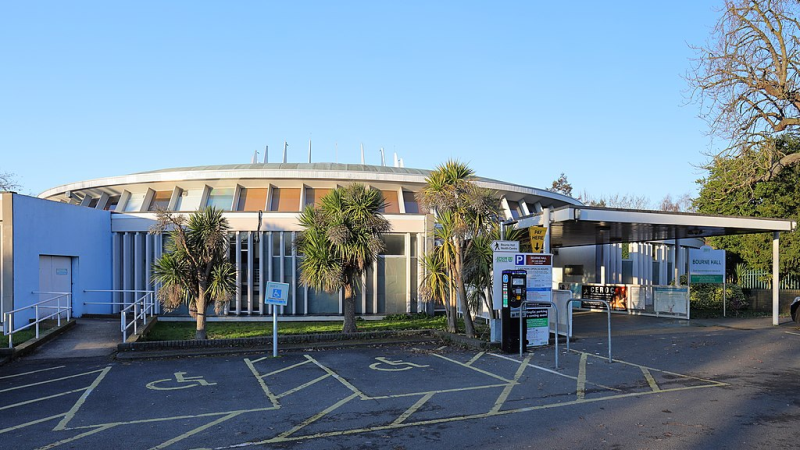
“Are Epsom and Ewell Borough Councillors adults?” Bourne Hall row continues


Epsom and Ewell councillors have backed a proposal to invest £250,000 over two years in Bourne Hall Museum, but only after another bruising debate over transparency, councillors’ access to information and the continuing fallout from the withheld museum service review.
At a special meeting of Epsom and Ewell Borough Council’s Community and Wellbeing Committee on 9 June, members voted by six votes to none, with one abstention, to support “Option 2” — investment in improvement of the museum. A funding request and business case will now go to the Strategy and Resources Committee in July.
The alternatives before councillors were to continue with business as usual, with no additional funding, or to close the museum.
In a media release supplied after the meeting, the council described the decision as “a significant step forward” and said the investment would help the museum remain “relevant and sustainable”. Committee chair Cllr Clive Woodbridge (RA Ewell Village) said Bourne Hall Museum was “a much-valued cultural asset” and that, with Local Government Reorganisation approaching, “ensuring a lasting legacy is more important than ever”.
Yet the meeting showed that the question of Bourne Hall Museum’s future has become inseparable from a wider dispute over how much information councillors and the public should be allowed to see before decisions are made.
The report before the committee referred to two 2025 reviews: the Bourne Hall Museum Service Review and the Local Government Association Cultural Peer Challenge. It stated that the reviews were relevant to all three options, including maintaining, developing or closing the service. However, the full Service Review was still not included in the public committee papers.
The report said the council’s Proper Officer had been invited to reconsider attaching the redacted service review, but had concluded that it would “not be appropriate” in order to “ensure the impartiality of information presented to members as the decision-making body”.
That explanation was fiercely challenged.
Cllr Chris Ames (Labour Court), who is not a member of the committee but addressed the meeting with the chair’s permission, argued that councillors had a right under section 100F of the Local Government Act 1972 to inspect documents containing material relating to business before a committee unless they disclosed exempt information.
He told the meeting that “impartiality” was not a lawful exemption. He said councillors were “elected adults capable of weighing evidence” and accused the council of operating in an “Alice in Wonderland world” in which selected councillors were given a report but, he said, were being required to act as though they had not seen it.
Cllr Ames also raised the question of public access, saying that section 100B of the same Act required relevant background papers to be published unless a legal exemption applied. He said no such exemption had been claimed and warned that the decision could be vulnerable to call-in or legal challenge.
Cllr Woodbridge said members had “all had a chance to read the report” and tried to steer the discussion back to the future of the museum. But the disclosure issue repeatedly resurfaced.
Cllr Bernie Muir (Conservative Horton) said that, having now seen the information, she could not understand why it had not been provided in the first place. She described the situation as “appalling” and said councillors should be trusted unless they had demonstrated otherwise.
She then turned to the substance of the review, saying that if the document seen by councillors was the full consultant’s report, “they’ve completely wasted their money”, because much of it amounted to basic organisational advice.
Cllr Kate Chinn (Labour Court) also expressed concern about what councillors were or were not allowed to say about the service review. She said she had left a pre-meeting briefing “more confused” about what she could quote or refer to. When she asked whether “bias” was a lawful reason for withholding material, she said she had been told it was “not about the law” but about the Proper Officer’s decision-making.
The chair said he was sure legal advice had been taken, but that the decision was one for the Proper Officer, made on her own judgment.
Epsom and Ewell Times has seen a confidential email sent by Chief Executive Jackie King to members of the committee before the meeting. In it she said it was “not about confidentiality, sensitivity or lack of transparency” but about “impartiality of information presented to members as the decision making body”.
The Chief Executive wrote that the Service Review was “not unbiased” and would not be suitable in its “raw” form for inclusion in a committee report comparing options, because it “repeatedly emphasises the need for continued investment in the existing museum” and could steer readers towards a preferred conclusion. She said she was willing to share the operational report with committee members, with sensitive data such as names redacted, but maintained that it was not suitable to append it to the public options appraisal.
The council’s public agenda for the special meeting stated that no matters were scheduled which would appear to disclose confidential or exempt information under Schedule 12A of the Local Government Act 1972.
Financial questions also dominated the meeting.
The committee papers put the museum’s current annual budget at around £232,168. Of that, £65,785 related to employee costs for 1.5 full-time equivalent staff, while £123,840 was listed as “accommodation” — described in the papers as a central recharge for use of the space. Central services charges were £32,110, insurance recharges £2,292, other costs £12,180, and income from museum activities £4,039.
The “recharge” point was important because it raised doubts about what the museum really costs and what closure would actually save.
In simple terms, a recharge is an internal accounting allocation. The council incurs general costs for buildings, management, support services and overheads. It then spreads those costs across different services, so that each service appears in the accounts as bearing a share of the council’s wider running costs. That does not necessarily mean the museum is paying rent to an outside landlord, or that closing the museum would save the whole sum shown against it.
Cllr Woodbridge described these as “accountancy charges rather than real charges” and said that if the museum closed the council would not necessarily save that cost, because it was not a cost generated only by the museum.
That distinction matters. On the face of the papers, the museum appears to cost the council £232,168 a year. But more than half of that figure is the £123,840 accommodation recharge, and another £32,110 is central services charges. If those sums are mainly internal allocations of overheads which would remain elsewhere in the council’s budget, the direct cash saving from closing the museum could be far lower than the headline budget suggests.
Cllr Muir queried why such a large accommodation cost was charged to a free public museum located in a council-owned building. She asked why the museum had been put in that position when it was a public service occupying space within Bourne Hall. Ian Dyer, Head of Operational Services, accepted that the charge was historic and “would need to be challenged”.
Cllr Alex Coley (Independent Ruxley) said the recharge model could also make it “extremely unlikely” that the museum would succeed in major external funding applications, because funders would not want their money effectively being used to support internal council recharges. He said the LGA Cultural Peer Challenge had identified this issue.
Cllr Coley also questioned whether councillors were being asked to approve a meaningful investment or simply a process. He said some of the proposed actions — such as replacing long-form text in displays, creating strategies, branding work and social media planning — sounded like business as usual rather than a major transformation. He called for “concrete, tangible” outcomes rather than more paperwork.
Mr Dyer said some short and medium-term recommendations had already been completed by museum staff and that the next stage would be to bring back a business plan setting out what changes would be made with the proposed £125,000 per year.
Cllr Chinn, who proposed supporting Option 2, said any report to Strategy and Resources would need much more detail, including timescales, costs and the implications of Local Government Reorganisation. Cllr Woodbridge agreed that the committee was being asked to decide the principle, not the full business case.
There was little appetite in the room for closing the museum. Before the vote, Cllr Woodbridge said he sensed members appreciated the value of the museum and noted that Option 3 — closure — had not been pursued in the debate.
The committee’s decision does not itself release the £250,000. That decision now passes to Strategy and Resources, where councillors will have to decide whether the business case is strong enough, whether the museum’s accounting model is sustainable, and whether the long-running argument over the service review has been resolved or merely postponed.
For now, Bourne Hall Museum has survived another political test. But the controversy over who gets to see the evidence, and when, remains very much alive.

Related reports:
Epsom Councillor’s disclosure claims Bourne out on review
Bourne Hall row escalates as Chief Executive suspends councillors’ decision
Ewell’s Bourne Hall plans knocked back by scrutiny