Epsom and Ewell Times

23rd April 2026

ISSN, LDRS and IMPRESS logos

Glyn Hall faces uncertain future as trustees issue urgent appeal to save Ewell landmark

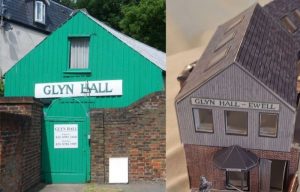
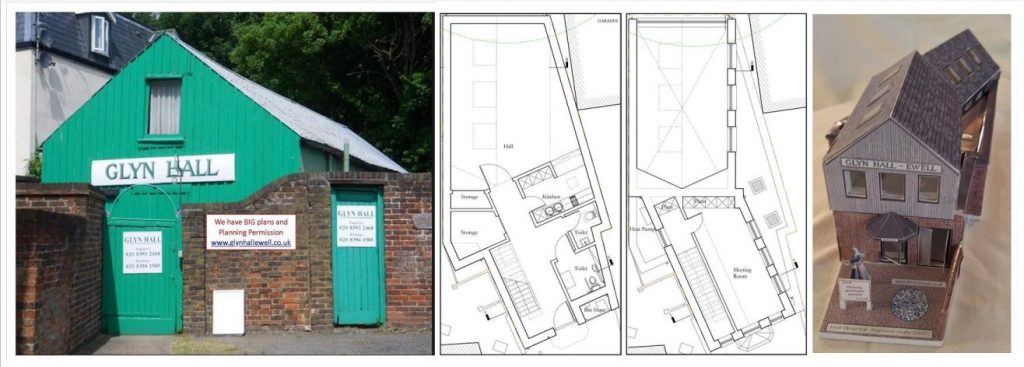
Glyn Hall now and the plan

A historic community building at the heart of Ewell is at risk of being lost permanently unless urgent support can be secured.

Glyn Hall, situated on Cheam Road in Ewell Village, has served local residents for generations as a space for education, social gatherings and community activity. The hall traces its origins back to around 1870 and was later bequeathed for the benefit of Ewell residents by local benefactor Margaret Glyn in 1946.

However, after more than a century and a half of use, the building has now reached the end of its functional life. The ageing wooden structure has been closed, leaving the future of the site in doubt.

Volunteer trustees responsible for the charity have spent recent years working to secure the hall’s future. Plans have been developed to demolish the existing building and replace it with a modern facility better suited to contemporary community use. Planning permission for the redevelopment was granted in January 2024.

Fundraising efforts have already attracted strong local backing, with approximately £85,000 raised from community sources. Despite this, trustees say they have only reached around half of the funding required to deliver the project in full.

They now warn that, without additional financial support or new volunteers willing to take the project forward, the consequences could be stark. The land may have to be sold, the charity dissolved, and with it the long-standing legacy of Glyn Hall brought to an end.

Trustees are therefore issuing what they describe as a final appeal to residents, local organisations and potential benefactors to come forward.

“This is a final opportunity to save Glyn Hall for future generations,” they say.

Anyone interested in supporting the project or seeking further information is invited to contact trustee Matthew Anderson at mjranderson64@gmail.com.

The future of one of Ewell’s longstanding community assets now depends on whether sufficient backing can be secured in the coming months.

Sam Jones – Reporter

Image: Glyn Hall now (Google) and the plan

Related report:

Campaign to save Ewell Village’s Glyn Hall


Friends of Horton Cemetery influence law reform

Horton Estate Cemetery 1971

A local Epsom charity’s campaign to protect a forgotten cemetery appears to have helped shape national thinking on burial law reform.

The Friends of Horton Cemetery (FoHC), based in Epsom, made a detailed submission to the Law Commission in January 2025 calling for stronger legal protections for neglected burial grounds—particularly those in private ownership.

Now, with the publication of the Law Commission’s report on Burial and Cremation in March 2026, several of the group’s core concerns appear to have been recognised at the highest level of policy.

Horton Cemetery, the resting place of around 9000 former psychiatric patients from the Epsom hospital cluster, has long been at the centre of FoHC’s work. Since its sale into private ownership in 1983, the site has suffered decades of neglect, with no public access and minimal maintenance.

In its submission, FoHC argued that the law currently leaves such sites in a regulatory vacuum, with no enforceable duty on owners to maintain them and limited powers for authorities to intervene.

That argument now appears to have gained traction.

The Law Commission’s report identifies private burial grounds as an area of “real gaps in protection” and, for the first time, proposes a legal duty requiring all burial grounds—including privately owned ones—to be kept in “good order”. The report also envisages inspection and enforcement powers at national level.

These proposals closely mirror FoHC’s central recommendation that cemetery owners should be subject to a clear, enforceable maintenance obligation reflecting the historical and emotional significance of such sites.

However, other proposals put forward by the Epsom group have not yet been taken up in full.

FoHC had called for a statutory right of access for relatives, stronger powers for local authorities to intervene, and safeguards against speculative ownership and redevelopment. While the Commission acknowledges many of these issues—particularly the importance of access to graves—it stops short of recommending firm legal rights or stronger local enforcement mechanisms.

Speaking after the report’s publication, Lionel Blackman, solicitor and secretary of the Friends of Horton Cemetery and author of the legal submission said “The recognition of the problem is an important step, even if the solutions remain incomplete.”

The charity’s work has also fed into ongoing discussions with the Ministry of Justice. At a recent meeting, organised by Patron of the Charity and local MP Helen Maguire with trustees of the charity, Theresa Keneflick and Kevin McDonnell and junior Minister Alex Davies-Jones MP, Horton Cemetery was cited as a real-world example of the kind of site falling through gaps in the current legal framework.

The Law Commission’s reforms are expected to take several years to translate into legislation, with an initial Government response anticipated within six months.

For campaigners in Epsom, the message is clear: what began as a local effort to restore dignity to a neglected burial ground is now influencing the national conversation.

And while the law may not yet have caught up fully, Horton Cemetery is no longer being overlooked.

Sam Jones – Reporter

Image: Horton Cemetery 1971

Related reports:

Epsom and Ewell’s MP champion’s Friends of Horton Cemetery mission on “Time to Talk Day”

Epsom’s Horton Cemetery gets attention of two kinds

Portraits of pauper patients in Epsom’s Horton Cemetery, inspires artist

Petition to reclaim Horton Cemetery from property speculator

Local community gathered at Horton Cemetery


Epsom man runs marathons in memory of sister who died from epilepsy

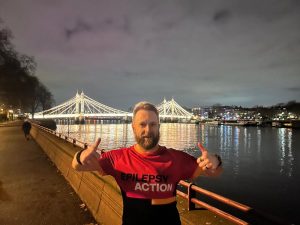
Barry on Thames embankment

Barry Ahearn, 45, is running one of the world’s most famous marathons in memory of his younger sister, Abbie, who passed away just three months before her 30th birthday in 2023. Barry is a long-term supporter of Epilepsy Action and has raised almost £23,000 for the charity so far.

Abbie passed away following an epileptic seizure that was so severe, it sent her into cardiac arrest. Last year, Barry completed a total of 27 half-marathons in memory of his sister. “The reason I chose to do 27 half-marathons is because this represents the amount of time Abbie’s brain was without oxygen, whilst paramedics tried to revive her.

“According to Epilepsy Action, around 1000 people die from epilepsy-related causes, which is about three people every day. I want to make sure Abbie is not just ‘one of the three’.”

Since his first big challenge, Barry has completed an ultra-marathon, been a finalist at the BBC Make a Difference awards, and has planned many future challenges, including the London Marathon. His efforts have been recognised by local MP Helen Maguire and the pair completed a Parkrun together last November. Helen has since been working with the charity.

Helen said: “I’m so inspired to see Barry taking on the London marathon to honour his sister Abbie and support Epilepsy Action. Having joined Barry for a recent park tun in support of Epilepsy Action, I know how powerful these efforts can be in bringing people together and raising awareness. I wish him the very best of luck and commend his incredible commitment to this cause.”

Barry is determined to continue spreading awareness of epilepsy, and highlighting how serious the condition can be. “Losing my sister has been the worst experience of my life. Abbie was kind compassionate, attentive and loyal. She was so much fun to be around, always making jokes and playing pranks. She brightened any room she walked into with her smile and is sorely missed by everyone who knew and loved her.

“Many people think epilepsy is just about ‘seizures’, when in reality there’s so much more that goes along with the condition. Epilepsy takes away people’s independence, stops them driving, can be very socially isolating and some of the medications have really bad side effects, including extreme fatigue and mood swings. Abbie had only been diagnosed with epilepsy six weeks before passing away, but this is the reality she could’ve been living with if she was still here, and I know she’d want me to do something about that.

“I want her passing to mean something, to help make a difference, not only by raising money to go towards research, but also to raise awareness of how serious this condition is.”

“After the London Marathon, I’m already planning my next big challenge. I’m not quite set on what I want to do, but I think it might involve something like doubling the 27 halves….”

Philippa Cartwright, director of fundraising at Epilepsy Action, said: “We’re honoured to have Barry as one of our 2026 London Marathon runners. The challenges he has taken on over these past couple of years have been incredible, and we’re so grateful for his ongoing support.

“Barry has shown extraordinary resilience and determination since losing his sister, choosing to turn the hardest experience of his life, into something that will help so many others. The money he has raised will go directly towards helping Epilepsy Action to continually campaign for better care for people with epilepsy across the country, and funding the frontline services the charity provides including its helpline, support groups and one-to-to one support.

“Epilepsy Action would like to say a big thank you to Barry and we are wishing him and all of our runners the best of luck – we are sure his sister Abbie would be so proud.”

Epilepsy affects around one in every 100 people in the UK and around 80 are diagnosed every day. Epilepsy Action is committed to improving the lives of people with epilepsy, by campaigning for better services and raising awareness of the condition. The charity provides a national network of support groups, with expert advice available on its freephone helpline 0808 800 5050 and online at www.epilepsy.org.uk.

Epilepsy Action

Related reports

Epsom author shares personal epilepsy journey amid town’s historic link to the condition

Epsom Runner’s Tribute to Sister Raises Over £22,000 for Epilepsy Charity


Energy debt fears rise as Epsom’s Good Company’s support steps up

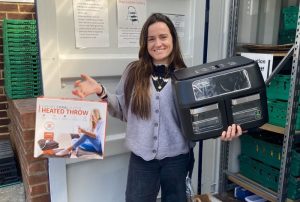
Good Company energy support. Volunteer with energy devices.

Rising energy costs could push more households into debt this year, with local support services warning of growing pressure on low-income families.

Good Company (Surrey), which runs the Epsom & Ewell Foodbank, says many of the people it supports are already struggling to keep up with bills. With further increases in gas and electricity prices expected when the energy price cap is reviewed in July, concerns are mounting about the impact on vulnerable households.

Energy debt among clients is already significant, averaging around £900 per household. The charity says this is placing “enormous pressure” on families trying to manage day-to-day living costs.

To help address the issue, Good Company has expanded its programme of energy support workshops. These sessions offer practical advice on reducing energy use and costs, alongside providing items such as energy-efficient appliances and heated blankets to help people stay warm at home.

One participant described the sessions as eye-opening, saying: “So many things! Learning about radiator reflectors, energy surveys, how much a shower costs per hour. Being provided with further info to go away and look into. The £50 voucher and the appliance were a fabulous surprise. Thank you!”

For households already in arrears, the organisation is also offering access to an intensive debt relief programme, working with specialist energy advisers to help people find a sustainable path out of debt. Tom, Participation and Prevention Director at Good Company, said: “At Good Company, we can’t control global events — but we can help local families reduce their energy use, ease the burden of debt, and feel more secure at home.”

Employment support under review

Alongside energy concerns, the charity has been reviewing how well employment and skills support is working locally.

A recent event brought together advisers and senior leaders from local services to discuss findings from research into clients’ experiences. The study found that access to good quality work can make a major difference to financial resilience and wellbeing, but that support is not always reaching those who need it most.

While some people reported positive experiences and success in finding new roles, others highlighted gaps in awareness of available services. There were also concerns about continuity, with some clients losing support when advisers move on, and difficulties accessing training in specific sectors. Some felt held back by a lack of qualifications.

The findings have prompted discussions about improving promotion of employment support through community touchpoints such as GP surgeries, strengthening adviser handovers, and increasing awareness of local training opportunities. Ellie, Community Researcher, said: “This has been a great exercise for us, inspiring us to think about where we can improve our service and maybe even add in some new initiatives.”

New platform aims to join up services

In a further step to improve support, Good Company has launched ReferSurrey, a secure referral platform designed to connect people with a wider network of local services.

The system links users to advice, health and community organisations, with the aim of addressing the underlying causes of financial hardship through more coordinated support. Fifteen agencies have already joined, with a further 22 due to come on board shortly.

Call for community support

The charity is also appealing for donations, warning that demand for foodbank and advice services remains high across East Surrey despite the area’s perceived affluence.

Rising living costs, accessibility barriers and ongoing inequalities are continuing to drive need, while food donations have fallen. Good Company says regular contributions, even small ones, can help ensure local people are able to access essential support.

“Every contribution, however modest, helps ensure that local people can access the help and support they need, whatever their circumstances. Together, we can build a fairer, more compassionate community where no one is left to struggle alone.”

Sam Jones – Reporter

.

.

.

.

.


Epsom and Ewell countryside volunteers face uncertain times

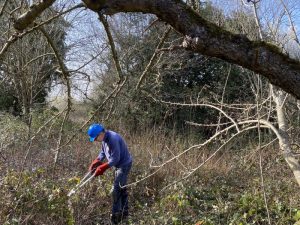
A volunteer clears undergrowth in Horton Country Park

Epsom and Ewell’s army of countryside volunteers faces uncertain times as responsibility for protecting the borough’s wildlife habitats shifts next year to a new East Surrey council. The fear is that nature conservation will slide down the priority list during the upheaval of local government reform.

Dozens of local people turn out in all weathers to help nature thrive in places such as Epsom Common, Horton Country Park and on the Hogsmill, an internationally rare chalk stream where water voles were reintroduced last year. More than 40 percent of the borough is open space for the public and visitors to enjoy, or other green belt land. Their work varies widely from opening up woodland glades and removing invasive plants to tending orchards and laying woodchip footpaths. Caring for juniper bushes, which are critically declining in Britain, is an important task on the Epsom Downs.

Epsom and Ewell Borough Council leads much of this conservation work, supervising the volunteers and organising contractors to carry out bigger jobs. However, it is due for abolition under a major shakeup of local government when East Surrey takes over in April 2027. Little is known about how the countryside, which provided residents with uncrowded space to exercise and enjoy nature during the Covid pandemic, will be managed in future. Work on the transfer of powers has only just begun, and where the new council will be based has yet to be decided.

Local people caring for local nature

Amid the uncertainty, volunteers are anxious to ensure that local people keep caring for local nature, and that residents retain ready access to their woods, wildflower meadows and riverbanks. “To preserve what we’ve got takes a lot of work, and in Epsom and Ewell it’s largely done by volunteers. My concern is it continues to get done,” said David Dixon, a volunteer for the past 10 years. “Volunteers are not going to travel 20 miles to do it, they want to do it locally. The worry is that it’ll be subsumed into some sort of central authority who won’t know the local areas, who won’t really know the tasks that are needed,” said Dixon, one of a roughly 10-strong group led by the Council’s Countryside Team that meets every Thursday.

Volunteers in various countryside groups collectively work about 8,800 hours a year in the borough. Their task is to maintain and improve the biodiversity of local sites which are home to the likes of kingfishers, endangered great crested newts and a rare population of all five UK species of hairstreak butterfly. Native roe deer also roam, peregrine falcons visit from a nearby nest and cuckoos are once again heard, all within a stone’s throw of the town centre.

Risks and opportunities

The aggregate hours figure has been collated by Dave King, who chairs the Epsom Common Association (ECA), and Geoff Delamere, a countryside volunteer since 2018. In a briefing paper they detail the risks and opportunities raised by the reform which will replace Surrey’s two levels of local government with a single tier. https://bit.ly/4bvgZnR

At a time when council budgets are under heavy strain those 8,800 hours equate notionally to almost £112,000 worth of voluntary labour a year, based on the National Living Wage rate. Volunteer work keeps down the cost of managing the borough’s two Sites of Special Scientific Interest (SSSIs), five Local Nature Reserves and six ancient woodlands. “We’re pretty good value for money,” said King. The ECA’s EcoVols group works on the Common two days a month for much of the year, with 10–15 volunteers typically turning out.

Epsom and Ewell’s professional countryside officers are paid from the Council budget but they amount to just three full time equivalent staff. Most of the work they lead is funded externally, largely from UK government countryside stewardship schemes. When they aren’t working outdoors, Council officers may be at a computer applying for such funding or environmental grants from other sources.

A vision for nature

The modest cost of countryside management means it risks being overshadowed by much bigger budget items that East Surrey will take over. “I fear that wildlife and nature reserves may be well down the priority list,” said King. “We need people who understand the site, have a vision for the site.” ECA volunteers also make charcoal for sale and check the welfare of cattle that graze the Common in the summer.

A new body, East Surrey Joint Committee, is overseeing the transition and aims to ensure all services move smoothly into the new arrangement. It met for the first time only in January and will work until voters elect East Surrey councillors on May 7. East Surrey will then act as a shadow authority until April 1 next year when it takes over, with the borough continuing to run services in the meantime. Ultimately, decisions about how countryside management, including volunteering, are funded and run will be made by the East Surrey Council.

Countryside management is not the only thing surrounded by uncertainty. Arrangements have to be made for the wide range of services currently provided by Surrey’s 11 borough and district councils, all of which will be subsumed into either West or East Surrey.

Knowledge and expertise

Epsom and Ewell has a large body of other volunteers working in everything from litterpicking to helping run Bourne Hall Museum. Council leader Hannah Dalton, who sits on the East Surrey Joint Committee, did not respond to a request for comment. However, Residents’ Association councillor Liz Frost, chair of the borough’s Environment Committee, expressed gratitude for countryside volunteers. “Their essential work, local knowledge and expertise help ensure that our residents and visitors can enjoy easy access to nature and open spaces across the borough,” she said in a statement.

Such work relies on council leadership and support. The Thursday group attended by Dixon and Delamere is run directly by the Epsom and Ewell Countryside Team, which draws up a work programme, provides equipment and supervises the volunteers. The group typically cuts back undergrowth to allow veteran trees – some more than 300 years old – space to flourish. In the spring they erect electric fencing so that cattle, including the gentle “Belties” – Belted Galloways marked by broad white stripes around their bellies – can graze and help maintain habitats.

Feargal Sharkey support

At other times volunteers uproot Himalayan balsam, a colourful but highly invasive Victorian import which chokes native vegetation along many of Britain’s rivers, including the Hogsmill. Volunteers also control ragwort in Nonsuch Park, allowing grassland to be mown for hay, which must be free of the plant as it is harmful to horses. The park has its own volunteer team, the Nonsuch Voles.

Such work is hard but rewarding. “It’s the most enjoyable ‘job’ I’ve had,” said Delamere. “It’s outdoors and good exercise, as well as being useful for the environment and biodiversity.” He added that companionship and learning new skills are key benefits, along with positive comments from passers-by. “Long may this mix of professionals and volunteers continue.”

On Epsom Common, the Council Countryside Team agrees a conservation programme for the independently-run EcoVols to carry out. “They do a lot for us,” said King, noting work such as scrub clearance and chainsaw operations. “We cost about a pound per volunteer hour,” he added.

Skylarks and kestrels

Other groups operate across wider areas including Epsom and Ewell. The Lower Mole Partnership works throughout northeast Surrey and neighbouring Kingston, while the Surrey Wildlife Trust manages Priest Hill where skylarks and kestrels are commonly seen. The Woodland Trust owns Langley Vale Wood, and the South East Rivers Trust is active on the Hogsmill. Local volunteer groups also include the Epsom and Ewell Tree Advisory Board and the Friends of Horton Country Park.

Much of this work is not discretionary. Environmental legislation requires biodiversity to be enhanced, so these efforts must continue into the future. “Volunteers are going to have to work locally,” said Dixon. “And the people who decide what has to be done are going to have to have a good local knowledge.”

David Stamp is a member of the Epsom and Ewell Borough Council countryside volunteers group.

Photo: A volunteer clears undergrowth in Horton Country Park

Related reports:

Epsom Common 19th Green Flag Award

Epsom Common Association: A History of Conservation and Biodiversity


Epsom and Ewell’s four year commitment to Ukraine

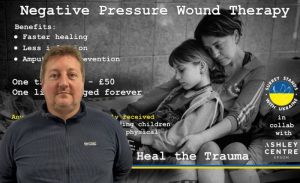
Roy Deadman with SSWU's latest appeal for negative pressure wound dressings

4 Years of War in Ukraine, 4 Years of Heart Ache, Support and Immense Pride in this Community

By Roy Deadman, Chairman and Co-Founder, Surrey Stands With Ukraine

Four years ago, we woke to news that changed Europe overnight. Ukraine had been invaded. I remember sitting in shock, watching the images unfold, feeling an overwhelming mix of disbelief and anger. I was incredibly angry that Russia had invaded Ukraine.  What mattered to me in that moment was not politics, but people. A proud European nation was under attack, and I wanted to do all I could to defend it.

On day one of the war, I called my Ukrainian friend Natalia Irvine, who lives here in Epsom. I asked her a simple question: “What do you need?” I made her a promise that I would support her and her country in any way I could, for as long as it took. At that point, I thought in terms of weeks, perhaps months. I could never have imagined we would still be here four years later.

Together, Natalia and I reached out to our local community. We asked for help  and the response was overwhelming. Donations flooded in almost immediately. People wanted to stand with Ukraine. They wanted to do something tangible in the face of such horror.

Within hours, it became clear that we needed space. The generosity of the Ashley Centre was extraordinary. On day one, they offered us 6,000 square feet of retail space. Even though it was rent-free, I had to take a personal risk and sign a lease that made me liable for the business rates, as we were not yet a registered charity. It was a leap of faith,  but it was the start of what we proudly called “The Hub.”

By the end of that first week, 180 volunteers had registered with us. We had raised close to £20,000 and sent two truckloads of humanitarian aid, donated by this incredible community. It was breathtaking how quickly everything moved.

Those early days were intense. Some people spent up to 20 hours at a time sorting and packing boxes. We worked through exhaustion fuelled by tea, determination and a shared sense of purpose. The emotional rollercoaster was constant, heartbreak at what we were seeing unfold in Ukraine, and immense pride at how Epsom and Ewell pulled together.

We quickly realised this could not be chaotic goodwill alone. We had to run it like a small business operation. Every item had to be sorted, categorised, packed and properly manifested before being loaded onto whichever truck was available. Transport offers poured in, with drivers volunteering to take aid directly into Ukraine. It was inspiring, and it required careful coordination.

In that first week, we formed a core team. Some volunteers stepped forward to create a committee to help make difficult decisions about what we could send and where it should go. These were not easy choices. Demand was enormous, and resources, though generous, were not infinite.

Natalia, based here in Epsom, worked tirelessly alongside us. Her sister Anya, coordinating from inside Ukraine, helped guide where our aid would have the greatest impact. Between Epsom and Ukraine, somehow, we made it work. It was teamwork across borders, built on trust and shared determination.

Very quickly, we understood that we needed to become part of a registered charity. One reason was practical, the burden of business rates. The other was credibility, and the invaluable ability to claim Gift Aid on donations. I was introduced to Lionel Blackman, who ran a charity called Harrop HR Missions. After a coffee and a conversation about our mission, Lionel generously agreed to let us operate under his charity’s structure.

From there, Surrey Stands With Ukraine became the fully formed charity we know today: Surrey Stands With Ukraine. As we reach the four-year mark, we have shipped £5 million worth of aid. We have sent 153 trucks, a fire engine, over 50,000 mobility aids and 650 winter family survival packs, and so much more besides.

Today, our charity is based at Global House, where we share space with the totally amazing Epsom and Ewell Refugee Network. EERN provides local support for Ukrainian families who have made Epsom and Ewell their temporary home. It has been a privilege to work alongside such a dedicated team and to witness their daily commitment.

One unexpected gift from these four years has been friendship. What began as an emergency response has grown into a powerful community bond. I have made lifelong friends through this work. We meet for quiz nights, coffee mornings, beers, lunches and parties. That human connection is not a side note, it is central to our resilience.

This work is emotionally hard. While we do not face the same unimaginable horror that Ukrainians endure, we are closer to it than most. We receive constant requests for help. We watch videos from the ground. We hear heartbreaking stories of families torn apart. We cry. We carry it with us.

That friendship network sustains us. There is always someone ready with a hug, someone to make you smile, someone to pick you up when you are exhausted. This is what being part of this charity and this community truly means.

Every single one of us is a volunteer. No one is paid a wage. We are there because we care deeply and because we want to do something meaningful on behalf of the Ukrainian people. That purity of purpose has shaped everything we do.

Over these four years, I have learned so much about Ukraine and its people. The obvious lesson is their extraordinary courage. But that courage is not confined to the front lines. It runs through all Ukrainians, young and old, men and women. Their commitment to preserving their culture, history and identity in the face of attempts to erase it is profoundly inspiring.

When I made that promise on day one, I thought this would be short term. I do believe Western governments have not done enough, or not quickly enough. This is a war in Europe, on our doorstep. History teaches us hard lessons, yet we so often seem slow to act.

If we are not careful, we may look back five or ten years from now at a Europe that has changed for the worse. It feels at times as though we have moved from a post-war world into a pre-war one. The longer this conflict continues without decisive resolution, the more lives are lost.

And yet, despite the geopolitical uncertainty, I find hope here at home. I find it in every donated sleeping bag, every cheque written, every volunteer shift completed. I find it in schoolchildren raising funds and pensioners knitting winter hats.

When people come together with kindness in their hearts, extraordinary things can happen. A community can unite behind people from another country simply because it is the right thing to do. That gives me hope.

I am immensely proud of what Epsom and Ewell has done over these four years. Proud to live here. Proud to raise my family here. Proud to stand shoulder to shoulder with all of you.

Four years of war. Four years of heartbreak. Four years of unwavering support. And four years of immense pride in this remarkable community.

Roy Deadman – Chair Surrey Stands With Ukraine


Image: Roy Deadman with SSWU’s latest appeal for negative pressure wound dressings

Related reports:

Appeal to twin Epsom with Bucha in Ukraine

Festival of Friendship –Epsom and Ewell – Ukraine

From Abramovich’s frozen wealth to Epsom’s Ashley Centre – support for Ukraine continues

From Ukraine to Epsom: How Music and Kindness Struck the Right Note

Music and dance for Ukraine at Epsom Methodist Church

Epsom MP leads cross-party delegation to Ukraine to examine impact of explosive weapons

Epsom Stands in Solidarity with Ukraine on War’s Third Anniversary

Fire Assembly for Ukraine

2 years on Epsom to gather in solidarity with Ukraine 

“Imagine this house is in Epsom” says our man in Ukraine.


Epsom and Ewell pledges to end poverty

Poor man sitting down outside. Image: Mart Production

Following the 2024 lead of Surrey County Council, Epsom & Ewell Borough Council also has formally adopted the End Poverty Pledge, committing itself to pay the Real Living Wage, review accessibility of key public venues, and embed poverty considerations into future policy decisions. The pledge was endorsed at Full Council on 10th February 2026 as part of the same meeting that approved the council’s final budget before local government reorganisation, following earlier approval by the Community and Wellbeing Committee on 13th January, and forms part of a wider Surrey initiative led by the Epsom-based charity Good Company.

Under the pledge, the council has committed to pay the Real Living Wage to all council staff from April 2026, provide training to staff to improve understanding of poverty, review accessibility of community venues such as Bourne Hall, and include poverty considerations in Equality Impact Assessments for all future policies. Council leader Hannah Dalton (RA Stoneleigh) said: “As a council, we are committed to supporting all our residents, including ensuring that those facing financial pressures are not left behind. The End Poverty Pledge helps sharpen our focus on understanding the barriers some of our residents face and working with our partners to remove them, so that Epsom & Ewell is a place where everyone feels supported and included. We also recognise the wellbeing of our workforce as an important part of that commitment. By adopting the Real Living Wage, we aim to help staff more reliably meet living costs, contributing to a better quality of life for those who deliver our services every day.”

Community and Wellbeing Committee chair Clive Woodbridge (RA Ewell Village) said: “We know that rising costs continue to affect many individuals and families across the borough. At Epsom & Ewell Borough Council, we have a long history of supporting vulnerable residents. Our Health & Wellbeing Strategy continues to deliver a range of initiatives aimed at improving mental and emotional wellbeing, alongside community services and support for key voluntary organisations including Age Concern and the Citizens Advice Bureau. We want every resident to feel included, and the pledge ensures that compassion, awareness and practical support remain embedded in everything we deliver for our community.”

The council will work alongside Good Company, which operates food banks and led the borough’s recent Poverty Truth Commission. Its founder Jonathan Lees said: “Good Company started its operations in Epsom & Ewell nearly 14 years ago; sadly, there is still a real need here. It’s fantastic that the council has officially committed and signed up to work with us and other partners to address poverty in our community.”

Although Epsom & Ewell is widely seen as prosperous, council data shows stark inequalities, including a seven-year difference in life expectancy between wards, with Ruxley, Court and Town wards performing worst, and significant numbers of residents relying on food banks or subsidised food schemes. Socio-economic factors account for about 40% of health outcomes, underlining the impact of income on wellbeing even in an affluent borough.

The Real Living Wage, which the council has pledged to adopt, is independently calculated each year by the Living Wage Foundation based on the actual cost of living and currently stands at £12.00 per hour nationally compared with the statutory National Living Wage, set by government, which is lower and forecast to reach £11.89 per hour from April 2026. The Real Living Wage is voluntary and intended to reflect what workers need to meet everyday living costs rather than the legal minimum employers must pay.

It remains unclear how many, if any, EEBC staff are currently paid below the Real Living Wage, as most council employees fall within nationally negotiated salary scales that already exceed that level. The pledge may therefore have limited direct financial impact on many existing staff, although it could affect lower-graded roles, casual workers or future contracted staff depending on procurement decisions.

Some of the pledge’s commitments focus on awareness and culture rather than direct financial support, including training staff to recognise poverty issues and reviewing how welcoming Bourne Hall is to residents facing hardship. The council will also ensure poverty is explicitly considered when developing future policies through Equality Impact Assessments, which could influence decisions on service delivery and access.

The pledge was adopted during the same meeting that approved a 2.98% council tax increase, the maximum allowed without a referendum, raising questions about whether such increases could worsen financial pressure for some residents. In practice, many of the poorest households receive Council Tax Support, which reduces or eliminates their bill, meaning they may be shielded from the increase, but residents on modest incomes who do not qualify for support may still feel the impact.

The End Poverty Pledge reflects growing recognition that poverty exists alongside affluence in Epsom & Ewell, and while its commitments may influence how the council operates and makes decisions, its real significance will depend on whether those commitments lead to measurable improvements for residents facing hardship. As Jonathan Lees observed, there remains “a real need here,” and whether the pledge marks a turning point or remains primarily a statement of intent will become clearer as the council approaches its replacement by the new East Surrey unitary authority in 2027.

Sam Jones – Reporter

.

Image: Mart Production

Related reports:

MP warns as 3,600 Epsom homes face fuel poverty

County pledge to Epsom charity’s fight to end poverty

Local poverty moves 12 year old to give up pocket money

Insurers against poverty?

Tracing the history of poor relief in Epsom and Ewell


Epsom advice centre training advice first-aiders

Citizens Advice Epsom & Ewell (CAEE) is inviting frontline workers and volunteers from other charities and organisations to train as Advice First Aiders, equipping them with the skills to identify people in need and direct them to CAEE and other vital advice services.

Advice First Aiders do not provide advice themselves. Instead, by asking the right questions, they are able to identify relevant issues, signpost people to appropriate organisations, and recognise when more urgent or complex cases should be referred to CAEE’s qualified advisers and caseworkers.

The programme places a strong emphasis on identifying marginalised or vulnerable groups who may be less likely to seek advice when they need it. These include young people and people with learning difficulties, carers, LGBTQIA+ individuals, ethnic minorities, displaced people, and older or socially isolated residents.

The free training session lasts around two hours, is delivered in person, and is designed to be a lively and interactive experience. Local organisations that have already taken part and trained Advice First Aiders include Epsom & Ewell Family Centre, Fox Grove School (part of The Howard Partnership Trust), the Home Improvement Agency Team at Epsom & Ewell Borough Council, Sunnybank Trust, Epsom Hub, and Epsom Baptist Church.

Feedback from participants has been positive, with one attendee saying: “I am now more aware and perceptive of people’s needs which may not at first be obvious,” while another commented that “the course covered a wide range of possible scenarios troubling most clients”.

Lisa Davis, chief executive of CAEE, said: “Advice First Aiders serve as a critical link, connecting people in our community with advice and the essential support services necessary to improve their situations.”

Beyond immediate advice and crisis intervention, the Advice First Aid programme also helps CAEE to identify and address the underlying causes of problems affecting residents across the Epsom & Ewell borough, informing its wider policy and advocacy work.

Organisations interested in taking part can find more information and sign up via the Citizens Advice Epsom & Ewell website.

CAEE release


Epsom snooker star on cue to help patients

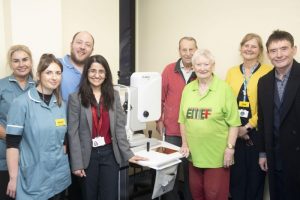
Jimmy White with Bess Harding and others

Epsom General Hospital is grateful for the laser-like focus of snooker legend Jimmy White. The 63-year-old star of the green baize took time out from his busy schedule recently to present a £62,000 camera to consultant ophthalmologist Akanksha Bagch at the Eye Unit, on behalf of Epsom Medical Equipment Fund (EMEF).

The Zeiss Clarus 50 is a valuable asset in diagnosis. “It’s a high-resolution, ultra-widefield fundus camera offering true colour images of the retina and optic discs among other excellent features,” says Mr Bagch, “giving a detailed view from the macula to the periphery of the retina allowing clinicians to diagnose and manage multiple eye diseases including glaucoma and retina conditions such as diabetic retinopathy.

“With the increasing prevalence of glaucoma, this camera will play an integral role in running a diagnostic hub allowing a greater throughput of patients per clinic and reducing the already prolonged waiting times in the NHS, thus allowing for safer delivery of eye services.”

EMEF founder and organiser Bess Harding says: “I am so grateful to Jimmy — who lives locally — for coming to make the presentation. We were delighted to be able to purchase the camera which will play an important role in preventing blindness. This would not have been possible without the support of the community for our fund-raising.”

Forty-six years on from its formation and with more than £4 million already handed over, the fund’s work carries on. Other equipment is always required. If you would like to help, donations can be made to EMEF at 32 Tealing Drive, Ewell, Surrey, KT19 0JS or to NatWest Account No. 66236924 Sort Code 60-08-01.

Andrew Wills


From Abramovich’s frozen wealth to Epsom’s Ashley Centre – support for Ukraine continues

Abramovich and Ashley Centre

The Government has announced that £2.5 billion from the frozen proceeds of the sale of Chelsea Football Club by sanctioned Russian oligarch Roman Abramovich is to be directed towards humanitarian aid for Ukraine, following years of political and legal delay.

The money has been held in the UK since the forced sale of the football club in 2022, after Abramovich was sanctioned in the wake of Russia’s invasion of Ukraine. Ministers have now confirmed that the funds will be transferred to a foundation dedicated to humanitarian support for Ukraine, with legal action threatened if the process is not completed.

Helen Maguire, Liberal Democrat MP for Epsom and Ewell, welcomed the decision, describing it as “long-overdue action” and a step towards accountability. She said billions of pounds linked to sanctioned Russian oligarchs had remained frozen while Ukrainians continued to suffer the consequences of what she described as Putin’s illegal war, and that she would continue to press the Government to ensure the money reaches Ukraine swiftly.

While £2.5 billion is a significant sum, it represents only a small proportion of the overall cost of the war’s impact on Ukraine. According to the World Bank, the United Nations, the European Commission and the Ukrainian government, the estimated cost of recovery and reconstruction in Ukraine now stands at around $524 billion over the next decade. That figure includes widespread destruction of housing, hospitals, schools, energy infrastructure and transport networks, alongside the long-term costs of healthcare, rehabilitation, psychological trauma and landmine clearance.

Direct physical damage to infrastructure alone is estimated at more than $170 billion, while millions of civilians have been displaced and tens of thousands injured. The long-term health consequences of the war, including treatment for complex injuries and trauma, are expected to place a continuing burden on Ukraine’s public services for many years. Against that backdrop, the Abramovich funds amount to well under one per cent of the estimated total cost of rebuilding, though they could make a substantial difference to targeted humanitarian and medical programmes.

The announcement has renewed local focus on the role of Surrey Stands With Ukraine, a volunteer-run charity based in Epsom which has been providing humanitarian aid since the early weeks of the invasion. Operating under Harrop HR Missions Ltd, the group has sent more than 148 vanloads of aid to Ukraine and has supported both medical relief overseas and displaced Ukrainians in the UK. The charity has also been recognised in Parliament, with Helen Maguire MP praising its work in providing medical aid and rehabilitation support.

For nearly four years, Surrey Stands With Ukraine has maintained a highly visible permanent kiosk in the Ashley Centre near Waitrose, which volunteers describe as central to sustaining donations, public awareness and community engagement. The kiosk is due to close permanently on 1 January 2026 following a change in the Ashley Centre’s policy on charity fundraising.

Under the new arrangements, Surrey Stands With Ukraine has been selected as one of a small number of charities allowed to operate a branded market stall inside the centre for limited periods each month. From January 2026, the charity will operate a stall near the soon to open Primark on a restricted schedule, typically four days per month. Physical donations will continue to be accepted at the charity’s Ukraine Hub in Global House, accessed via the rear entrance to the Ashley Centre.


Surrey Stands With Ukraine will operate a fundraising and information stall inside the Ashley Centre on the following dates in 2026. The stall will be located near Primark.

January: Tuesday 6, Thursday 8, 15 and 22
February: Tuesday 3, Thursday 5, 19 and 26
March: Tuesday 3, Thursday 5, 19 and 26
April: Tuesday 7, Thursday 9, 16 and 30
May: Tuesday 5, Thursday 7, 14 and 21
June: Tuesday 2 and 16; Thursday 4 and 11
July: Tuesday 7, Thursday 9, 16 and 30
August: Tuesday 4, Thursday 6, 13 and 20
September: Tuesday 1, Thursday 3, 10 and 17
October: Tuesday 6, Thursday 8 and 15

Physical donations can also be made at the Surrey Stands With Ukraine Hub in Global House, accessed via the rear entrance of the Ashley Centre by pressing the “Ukraine Hub” buzzer.


The loss of a permanent stand is expected to reduce income by around £30,000 a year and significantly limit the collection of physical aid. A spokesperson for SSWU stated the daily presence allowed volunteers to build relationships with regular donors and served as a constant reminder of the ongoing humanitarian crisis in Ukraine.

The Ashley Centre provides Surrey Stands With Ukraine with a suite of rooms and storage space in Global House, Ashley Avenue. The premises also are home to the Epsom and Ewell Refugee Network and is known as the “Ukraine Hub”. Previously a retail unit facing the mall was used by SSWU until the unit was re-let commercially. The Ashley Centre has not responded to questions from the Epsom and Ewell Times about the decision to remove the permanent kiosk.

Surrey Stands With Ukraine thanks the Ashley Centre for its ongoing support and confirmed it will continue its work, stressing that the reduction in visibility makes public backing more important than ever. The charity says it is exploring alternative ways to maintain a visible presence in Epsom town centre and is encouraging residents to visit the new stall dates in the Ashley Centre and to continue donating through the Global House hub.

NATO Secretary General Jens Stoltenberg has repeatedly warned that Russia’s war against Ukraine is not an isolated conflict but a direct threat to the security of the whole of Europe, arguing that Moscow’s actions demonstrate a willingness to use military force to pursue imperial ambitions beyond its borders. Sustaining humanitarian support for Ukraine is essential in maintaining civilian morale, stressing that resilience among the Ukrainian population is a decisive factor in resisting aggression and deterring further expansionism by President Vladimir Putin.

The contrast between the scale of national and international funding announcements and the challenges faced by local charities has highlighted the continued reliance on community-level support to meet urgent humanitarian needs. While the release of frozen oligarch assets has been widely welcomed, organisations working on the ground say sustained public engagement remains essential as the war and its consequences continue.

Sam Jones – Reporter

Since the war began the 14th Ukraine Social and Music Evening will take place at the Epsom Methodist Church this Saturday 20th December. Helen Maguire MP will welcome guests and performers. See listing here for details.

Related reports:

Sir Ed supporting Epsom based Ukraine charities

Epsom Stands in Solidarity with Ukraine on War’s Third Anniversary

Epsom MP leads cross-party delegation to Ukraine to examine impact of explosive weapons

Fire Assembly for Ukraine

2 years on Epsom to gather in solidarity with Ukraine 

Image: Abramovich – licensed HERE. Credit: IAN KINGTON / AFP / picturedesk.com. Ashley Centre entrance – Google Maps


Young Surrey volunteers help shape new neuroinclusive travel app

Young people on train

Young people in Surrey have helped test a new travel-planning app designed to make public transport less stressful for neurodivergent passengers. Members of ATLAS, Surrey Youth Voice’s participation group for young people with additional needs and disabilities, spent three days trialling Aubin, a free app that takes a different approach to journey planning.

Unlike standard apps that prioritise the quickest route, Aubin focuses on reducing anxiety and supporting users who may find travel overwhelming. The app allows travellers to tailor their journey according to personal needs, rather than simply finding the fastest option. ATLAS members used it to plan and carry out trips across North, East and West Surrey, assessing how effectively it helped with independence and confidence.

Aubin functions as both a route planner and a “travel companion”. Alongside directions, it offers practical tools to support users in moments of uncertainty. These include grounding exercises to help regulate emotions during difficult points in a journey; a type-to-speech feature for anyone who may struggle to speak when stressed; and an editable Autism Card that allows travellers to explain needs quickly and discreetly to staff or fellow passengers. Users can also set preferences that shape the route suggested, such as avoiding busy interchanges or long waits.

ATLAS has long advocated for more accessible, neuroinclusive transport options, arguing that navigating public transport is essential for young people to reach education, work and social opportunities. Members described the trial as a chance to influence a product that could help reduce isolation and build independence for others with similar needs.

At the end of the pilot, ATLAS met with Aubin’s co-founder and product manager, Corinna Smiles, to give detailed feedback. Suggestions included adding journey-sharing options so a trusted contact can follow someone’s progress, communication prompts for stressful situations, and a checklist to help users prepare before leaving home. Aubin welcomed the recommendations and said they would incorporate them into future updates.

Ms Smiles said the pilot was a valuable example of user-led design and thanked the group for helping shape the app. ATLAS members have since given Aubin their “seal of approval”, encouraging other neurodivergent young people to try it.

ATLAS member Emily said taking part “felt empowering” and that knowing the group’s input would help autistic travellers made the experience worthwhile: “I feel honoured to have been part of shaping this app, which I’m sure will give many people the tools to travel with confidence.”

Councillor Helyn Clack, Deputy Cabinet Member for Children, Families and Lifelong Learning, said the collaboration showed the importance of designing tools with “the voices of the community they serve”, and that the app has real potential to improve accessibility.

Aubin is free to download from app stores.

Sam Jones – Reporter

Image – Surrey County Council news


The Mayor of Epsom and Ewell meets local climate volunteers

Mayor Leach at EECan event.

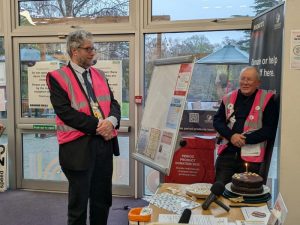
The Mayor of Epsom & Ewell, Cllr Robert Leach, met with members of the Epsom and Ewell Climate Action Network (EECAN) to hear about the community projects they are mobilising over the next six months, including the borough’s first Library of Things. EECAN, which was marking its first anniversary, was founded by residents concerned about the environmental and social impacts of climate change and has grown steadily into an active network of volunteers leading initiatives that encourage climate-friendly actions, build resilience and support sustainable choices across the borough.

The volunteers explained that the Library of Things will allow residents to borrow items such as DIY tools, gardening equipment, sewing machines, pressure washers and even party or camping gear. For many households, the cost of purchasing these items outright can be prohibitive, and for others it simply isn’t necessary when the item might only be used once or twice a year. EECAN believes the scheme could help cut waste, save families money and encourage the communal sharing of resources.

The project is currently in the planning stage, with the group sourcing donated items and recruiting volunteers ahead of a planned launch in April 2026. During the meeting, Cllr Leach expressed strong support for EECAN’s work, welcomed its potential benefits for local residents, and even signed up as an early supporter while taking an interest in how the project might expand once established.

Past and ongoing EECAN initiatives include November’s successful Bike Amnesty event, which collected around 70 bikes for the Surrey Bike Bank to refurbish and redistribute, and regular Climate Conversations held on the second and fourth Monday of each month. Both projects have attracted increasing interest from residents wanting to learn more about sustainable living and community-driven solutions.

EECAN founder and chair William Ward spoke about the group’s longer-term ambitions, which include expanding outreach, increasing visibility across the borough and eventually achieving official charity registration. Becoming a registered charity would help them access currently unavailable funding streams and deliver larger, more stable projects. In just 12 months the group has grown from seven to 50 volunteers and from two to eight trustees, who are now preparing their application to the Charity Commission.

The meeting concluded with cake-cutting and a discussion about strengthening links between EECAN and the council. The Mayor encouraged the group to continue raising awareness of their activities and said he would share their projects with fellow councillors when appropriate. Volunteers said they hoped the meeting would lead to deeper collaboration and stronger recognition of grassroots environmental initiatives within local decision-making.

As EECAN prepares for a busy six months, the group says it remains committed to promoting practical, affordable and community-led climate action. Residents interested in getting involved or joining the paid Heat Champion team can visit https://www.eecan.org/home or email eeClimateActionNetwork@gmail.com. Sign up for the free Home Energy Advice service here: https://www.zerocarbonguildford.org/energy-surveys

Written by:
Jen Din, from The Epsom Edit (www.theepsomedit.co.uk)

Related report:

Epsom and Ewell Climate Action Network launches with community events and initiatives


Epsom and Ewell Climate Action Network launches with community events and initiatives

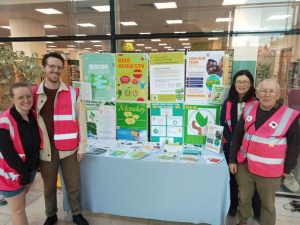
EECan team by stall

A new community movement is taking shape in the borough with the launch of the Epsom and Ewell Climate Action Network (eeCAN) – a local volunteer group working to empower residents through inclusive projects that build resilience to climate change.

EECAN’s mission is simple but ambitious: to help communities adapt and thrive in a changing world. Its projects focus on practical solutions, awareness-raising, and supporting climate-friendly policies. Everything the network offers at the moment is totally free and open to all, ensuring that everyone can take part in building a more sustainable, climate-resilient Epsom and Ewell. Users of the services will be given the opportunity to make any donations they feel they can afford if they want to help the charity do even more for their community.

 “Epsom and Ewell Climate Action Network has grown so much in the last 12 months as a result of the energy and commitment of volunteers wanting to help their  local communities reduce Climate risks while saving money” says William Ward the Chair and co-founder of the group.

Epsom and Ewell Library of Things

Launching to the public in spring next year, this innovative “Library of Things” will allow residents to borrow items instead of buying them, reducing waste and promoting sharing. From carpet cleaners and wallpaper steamers to pressure washers and gazebos, residents will be able to borrow tools and equipment for free, thanks to donated items. Donations of nearly new equipment are now being sought. Those able to help are asked to contact eeClimateActionNetwork@gmail.com or visit https://eecanlibraryofthings.myturn.com/library.

eeCAN is developing this initiative in partnership with Surrey County Council Library Services (for front of counter service) and with Epsom & Ewell Borough Council, in association with The Epsom Repair Café, who ensure that all electrical items are safe to use.

Bike Amnesty – Saturday 22 November 2025

Got a bike you no longer use? Donate it! Between 9am and 5pm at Epsom Methodist Church, Scout Hall, Ashley Road KT18 5AQ, residents can drop off unwanted bicycles to be refurbished and passed on to people who need them.

The scheme helps promote active, low-carbon travel while supporting those who might not otherwise afford a bike. Just turn up with your spare bikes. This free service is provided in partnership with Surrey County Council’s “Active Surrey” team.

Contact: eeClimateActionNetwork@gmail.com

Climate Conversations – every 2nd and 4th Monday of the month

eeCAN also runs regular Climate Conversations at Birchgrove Lower Mill, Kingston Road, Ewell KT17 2DQ, from 10:30am to 12:30pm. These informal gatherings give residents a friendly space to learn, share experiences, and explore all aspects of climate change together.

One participant said, “I often feel so motivated after one of our meetings!”

The upcoming session on Monday 24 November will feature Dr Kristine Damberg, online presenting “What can we eat for human and planetary health”, a talk exploring how our food choices affect both personal wellbeing and the planet.

Anyone can join in using this link: https://meet2.organise.earth/rooms/95o-iug-ems-2p6/join

Living Rivers Exhibition – April to May 2026

Looking ahead, eeCAN will host a Living Rivers Art Exhibition at the Ebbisham Centre, Epsom KT19, in association with The Royal Marsden. Running from 22 April (Earth Day) to 22 May 2026, the free exhibition will celebrate the beauty and importance of rivers and waterways.

Inspired by writer Robert Macfarlane’s question “Is a river alive?”, the exhibition will showcase artwork from local schools, community groups, and individuals.

Submissions (A4 max-sized drawings or paintings) are invited by 27 March 2026, with eeCAN volunteers offering to collect (and return) artworks directly from schools and art groups. Groups will be invited to see their work on display and participate in nature-themed activities.

Email eeClimateActionNetwork@gmail.com for participation details.

A community coming together

From swapping tools and donating bikes to sharing climate ideas and artistic expression, eeCAN’s initiatives reflect a spirit of cooperation, creativity, and care for the environment.

Its organisers believe that by taking small, collective steps, Epsom and Ewell can make a big difference — helping local people live more sustainably while building resilience for the future.

For more information, contact eeClimateActionNetwork@gmail.com or follow eeCAN’s activities through their upcoming community channels.

Sam Jones – Reporter


Is there a neat solution to struggling Epsom Common Club?

Epsom Common Club - Google Maps

The long-established Epsom Common Club remains closed but not forgotten, as a handful of volunteers continue restoration work and urge fellow members to help decide whether a partnership proposal could bring the venue back to life.

Emails circulated by the Club Committee since late September set out a potential arrangement with NEAT, a local community organisation best known for transforming the disused bowls pavilion in Court Recreation Ground into “NEAT HQ”. Founded by two former Chelsea Foundation coaches, NEAT provides wrap-around childcare, alternative schooling for pupils unable to remain in mainstream education, and a wide range of family and youth activities.

Under the plan, NEAT would rent the rear hall of the Club’s premises for use during the week and contribute to finishing both the front and back halls. The Club explains that this could secure a steady income stream, remove the need to rent the front room to outside hirers, and revive the building as a “community hub”. However, it would also mean losing the existing snooker room and restricting member use of part of the premises.

The Club’s emails emphasise that the idea is still a proposal only. “Before it could proceed to this stage it would require members’ consent and this was stressed to NEAT as non-negotiable,” wrote the Club Secretary, Mr C. O’Neil, in response to Epsom & Ewell Times.

Three rounds of consultation emails have been sent to roughly 220 members—about three-quarters of the Club’s recorded list—but only around seven per cent initially replied. Later reminders lifted the total response rate, producing an approximate three-to-one majority in favour of exploring talks, though still short of what organisers regard as a clear mandate.

With no formal committee now in place and the Club being managed informally by the Secretary and one assisting member, progress has been slow. The handful of volunteers who meet on Saturday mornings to carry out repairs are credited with keeping the building from dereliction. “If this idea is allowed to wither on the vine it could well be last orders for your Club,” one circular warned.

Mr O’Neil told the Times that if members give approval, formal negotiations would follow to settle details such as rent, permitted uses, and neighbour consultation. Any final agreement would then be put to a members’ meeting for ratification. Questions about parking, noise, and the possible need for planning or licensing changes would be addressed at that stage.

For now, the Club remains closed to new memberships while restoration work continues. “The work is currently being undertaken by a few valiant members and any member wishing to assist would be welcomed,” said Mr O’Neil. Volunteers can make contact via the Club’s email address: clubeventsecwmc@gmail.com.

Sam Jones – Reporter

Epsom Common Club – Google Maps