
Epsom and Ewell Times
26th November 2026

ISSN, LDRS and IMPRESS logos

ULEZ Court battle looming

ULEZ sign

Sadiq Khan’s proposed ULEZ expansion to the Surrey border will be challenged in the High Court after a judge ruled there were valid legal arguments to be heard.

Five councils, including Surrey County Council, launched a joint legal bid against Transport for London (TfL) and the Mayor of London’s decision to expand the Ultra Low Emission Zone (ULEZ) on a series of grounds including that it failed to comply with statutory requirements, that it unlawfully failed to consider compliance rates. and did not consult on scrappage schemes.

Other matters raised by lawyers in February 2023 were the lack of cost benefit analysis, inadequate consultation and apparent predetermination.

Now a judge has said there is “an arguable case” that the Mayor of London, Sadiq Khan, has improperly handled the expansion decision.

Councillor Tim Oliver, Leader of Surrey County Council, said: “This is good news and I’m pleased that our challenge to the Mayor of London regarding ULEZ is proceeding. The impact on Surrey’s residents and businesses has been ignored by the Mayor and it’s frankly disgraceful that it’s taken legal proceedings to have our voices heard.

“Our consultation response in July 2022 clearly highlighted that the Mayor’s decision failing to include Surrey residents in any scrappage scheme was unacceptable, and proposed a number of other recommendations to help mitigate both the financial and potential environmental impacts of the expansion. Our concerns have not been addressed by The Mayor.

“We remain committed to delivering a greener future, but it must be done in a practical and sustainable way. We will now await the findings of the Judicial Review.”

Taking to twitter was Gareth Bacon, Orpington MP and one of the London boroughs that joined forces with Surrey. He said: “I am delighted that the five local authorities, including Bromley, challenging ULEZ in the courts, have won the first stage in their legal battle against Sadiq Khan’s decision. While the full legal case is still to be fought, today’s decision is a significant step forward. 

“The Court has decided that there is an arguable case that Sadiq Khan has improperly handled his decision to expand ULEZ across outer London. The Judicial Review will now proceed to a full hearing in the High Court. 2/5
“This means the Court believes there is an arguable case that the Mayor improperly handled the ULEZ consultation and failed to consult affected residents in neighbouring Home Counties properly.

“Sadiq Khan arrogantly dismissed this legal challenge like he ignored outer Londoners’ concerns during the consultation. He was wrong to do so, and this should be a wake-up call. He still has time to cancel ULEZ expansion and spare residents his £12.50 daily road tax.

“Congratulations on today’s success to Bromley, Bexley, Hillingdon, Harrow and Surrey councils, who brought this legal action. Like my constituents, I am pleased they have legally challenged ULEZ expansion, and I wish them every success in the upcoming hearing.”

The court case follows TfL’s November 2022 announcement that it would push on with proposals to expand the ULEZ scheme in August. It is understood that the High Court will sit to hear the matter in July. Should the court rule against the Mayor of London it has the potential to delay the August 29 expansion.

A spokesperson for the Mayor said: “The Mayor is pleased to see the court has refused permission for the majority of the grounds. We will continue to robustly defend his life-saving decision to expand the ULEZ and continue with preparations without delay. It is a shame that some local authorities have chosen to attempt this costly and misguided legal challenge instead of focusing on the health of those they represent.

“Around 4,000 Londoners die prematurely every year due to air pollution. This is a health emergency and the Mayor is not prepared to stand by and do nothing while Londoners are growing up with stunted lungs and are more at risk of heart disease, cancer and dementia due to our toxic air.”

Related Reports:

Surrey Council’s ULEZ talks ongoing with TfL

Can you beat the ULEZ charge?

Will Me’lud halt ULEZ expansion to Epsom borders?

A sign of no signs to come on ULEZ?
ULEZ will come to Epsom and Ewell borders

Yet more on ULEZ….


Surrey Police’s nose for dog training

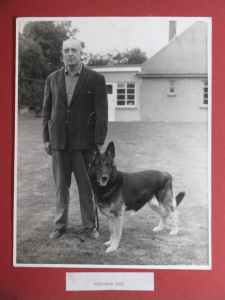
Sgt Darbyshire with Loki the german shepherd

Surrey Police led the way in Police Dog development by offering a Metropolitan Police Officer, DC Harry Darbyshire, a transfer to the Surrey Constabulary in October 1947, where he was made a Sergeant and put in charge of the Force’s new Police Dog Section.

Top image is Sgt Darbyshire with Anna of Avondale’s son Loki

Whilst dogs had been used by British Police Forces in various limited capacities prior to the Second World War, it was not until after the war that Britain’s Police Forces began to consider the possibility of using working dogs to undertake major Police work on a daily basis.

Sergeant Darbyshire was experienced in breeding dogs and training them according to the German method. This was the method Surrey Police had researched and decided to proceed with.

Sergeant Darbyshire owned a German Shepherd dog called “Anna of Avondale” that had previously belonged to a German soldier, who had served during the war. Anna of Avondale was Surrey Police’s first operational dog and together with her son, Loki, formed the Surrey Police Dog Section that would go on to lead the way in Police dog development in Britain and abroad.

Surrey Police dogs that performed well would be included in the breeding programme, with under achieving dogs being removed from the Police Dog Section altogether.

Sir Joseph Simpson, the Chief Constable, who had recruited SergeantDarbyshire was a member of the Kennel Club and his interest in working dogs led to him sanctioning the expansion of the Police Dog Section and encouraging Surrey Police’s dog handlers to enter civilian Working Trials. This led to the Surrey Police’s Dog Section obtaining even greater recognition due to the high number of awards it won.

The Secretary of the Associated Sheep, Police and Army Dog Society (ASPADS) (also known as the Working Trials Society) has stated that, “Harry Darbyshire did more than any other person to put ASPADS, Working Trials and the Nation’s Police Dog Sections on the map”. Darbyshire was credited with training over 200 dogs in his 29 years police service. He was consulted from around the world, including Kenya and New Zealand.

I was delighted to discover that the photo album containing images of German Shepherd dogs that I had won on an online auction site, once belonged to Sgt. Darbyshire.

Surrey Police’s first Police Dog, Anna of Avondale died in August 1950, but her name lives on in The Anna of Avondale Trophy, which serving Police Dogs and their handlers compete for every year in her memory.
The images accompanying this article were taken from the photo album and show Sergeant Darbyshire, who was awarded the BEM (British Empire Medal), with some of his working dogs.

Sgt Darbyshire’s award of the BEM signed by the Monarch of the day.


Epsom and Ewell tenants paying for energy inefficient homes?

Lady in cold room

55% of inspected rented homes in Epsom and Ewell are below Grade C in Energy Performance ratings. Landlords are required to obtain Energy Performance Certificates for their rentals. To obtain a certificate an independent expert must inspect the property. In an analysis of inspections across the country between 2018 and 2022 Epsom and Ewell’s figures are consistent with the country average. 5% of those below grade C are not going to be able to rise to a C grade in the future because of structural limitations.

The Government has plans to make a C grade mandatory for all rental properties from 2025. The most energy efficient homes are graded A and the worse G. Those tenants living in sub C standard homes are paying more for their heating due to poor insulation. Insulation was the most frequently recommended improvement measure for private rental properties, making up 35% of all recommendations. On average tenants could save one third on their fuel bills if landlords brought their properties up to the C grade.

Inspections for EPCs involve an assessment that looks at heating, windows and doors, insulation and other structural factors, estimating how much it will cost to heat and light the property, what its carbon dioxide emissions are likely to be and how to improve the rating.

Jonathan Winston, occupier support manager at the Carbon Trust said  “14% of UK emissions arise from residences, homes. That means the reductions that need to be made there are very significant in order for the UK to meet its legally binding net zero target by 2050. The emissions are quite difficult to tackle, particularly around heating. There’s a major need to decarbonize our heating sources.”

Chris Norris, Director of policy at the National Residential Landlords Association said “I think there’s an awful lot of misunderstanding and uncertainty about what landlords need to do in terms of energy efficiency.

“But the future proposals are to get to a C or above, because the Government have got this Net Zero target for 2050. The problem is, they consulted on those new rules about three years ago, they closed that consultation two years ago in January 2021, and they’ve never actually confirmed what new rules will be.

“You’ve got lots of landlords that are actually quite open to making changes to their properties, or making decisions at least about what they need to do, but they really don’t know what path to take and they can’t commit to those spending decisions until we find out exactly what the Government wants to do.”

He added: “At the moment the Government is doing very little to support landlords to make these changes. They’ve not even given us the target or the deadline for what we’ve got to do.”

Rachelle Earwaker, senior economist at the Joseph Rowntree Foundation, said: “Living in a home with a poor EPC rating has a range of impacts on the tenants. Homes are colder, often damper. They are much more expensive to heat. At the moment in the energy crisis, that has had a massive impact. 

“What our research has shown is that 35% of low income private renters across the UK said they couldn’t afford to keep their homes warm even before the recent winter that we’ve just had, and we know that a quarter were in arrears with the energy bills in October and November, again before the winter.”

You can check any property’s EPC status on this Government link.

Related Reports:

Cllr Gulland: Insulate & Generate – two key aspects to include in the Local Plan for Epsom & Ewell

Is this Epsom Couple getting their heating for free?


Beginning to line up for local elections

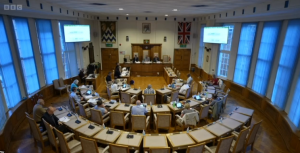
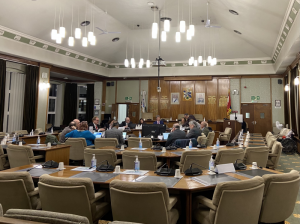
Epsom and Ewell Borough Council chamber

A new Epsom and Ewell Borough Council will be elected on the 4th May. All 35 seats in all 14 wards are open to the competition. Epsom and Ewell Times is providing every candidate standing the opportunity to have published on these pages details of their candidacy and a short statement why they are standing.

The candidates are listed strictly in order of receipt of their details.

CLICK HERE for the Epsom and Ewell Times guide to all candidates – as it stands today.

When nominations close and the official list of candidates is published our list will be verified. We are not responsible if any candidate chooses not to provide details but we will endeavour to include the names and parties represented of all candidates after the official lists are published.

Candidates can supply their details via Form of entry for candidates.

You may find useful this EEBC official map of the Wards. You should have posted to you a polling card stating in which ward you live and are eligible to vote for.

The new ward of Horton and the three most closely contested wards in the last election of 2019 will each have a hustings organised by Epsom and Ewell Times as follows:

Wednesday 26th April:

3rd Scout Hall, Epsom Methodist Church, Ashley Road. Epsom, KT18 5AQ

6.15pm Stamford Ward

7.15pm Court Ward

8.15pm College Ward

Tuesday 2nd May at 7pm:

Southfield Park Primary School, Long Grove Rd, Epsom KT19 8TF, one hustings will be held for the new ward of Horton.

Related reports:

Register to vote deadline for elections

4th May Surrey goes to the polls

Turn up to turn downturn in turnout!

Worrying about voter ID law

No photo – no vote!


Chance for Epsom and Ewell’s say on Heathrow flights

Flight over a town

Epsom and Ewell residents see and hear planes flying to and from Heathrow Airport. They are usually at a height of 6,000 to 7,000 feet. A new consultation is out for everyone effected by flight noise and pollution from the main London Airports of Heathrow, Gatwick and Stansted. Chris Caulfield of LDRS reports generally on the topic and with reference to Gatwick in particular:


Communities living under the Gatwick flight path face trading off quieter modern aircraft for an increase in night flights. Current restrictions on night flights are due to expire in 2025 and the government is seeking views as part of its next night flight abatement policy. 

It says it is aiming to balance the impact of sleep deprivation with the benefits to the wider economy.

Aviation minister Baroness Vere of Norbiton said: “There’s no doubt night flights have an effect on local residents underneath busy flight paths, but as aircraft become quieter, we have an opportunity to strike a balance to make sure we can support the aviation industry without having a debilitating impact on people’s lives. This consultation will help us to shape policy and create a flightpath towards a more sustainable approach to night-time aviation noise.”

Currently about 16 aircraft, about 80 per cent of Heathrow’s night flights, land at the airport between 4.30am and 6am. At Gatwick and Stansted, which are in more rural areas, the figures are higher.

Overall Heathrow can have 3,250 total night flight “movements” during seven summer months and 2,550 during winter. At Gatwick that figure is far higher at 11,200 in summer and 5,150 in winter, with Stansted taking 8,100 and 5,600 respectively.

Paul Beckford, chairperson of HACAN group which acts as a voice for those under Heathrow flight paths, said: “We welcome the recognition of the health impact of night flights which is a shift in the right direction, but we are worried about the change in wording in the economic benefits.”

He said the 16 flights currently arriving before 6am were “the most disturbing” and had a cumulative effect on people. Any one flight could wake a person up “but the real problem is when there are more and more flights coming. You wait for the next one. You are woken up at 4.30am and then you know another one is coming.”

Most night flights, he said, were long-haul trips in demand for their cargo haulage but Mr Beckford suggested these could be reorganised into the normal flight schedule which would both preserve people’s restful nights as well as bring economic benefits.

He cited the drop in aviation traffic post pandemic and the increase in online meetings as reasons for there being greater flexibility in runway slots.

Mr Beckford also questioned the consultation being carried out before the results of the Dr Charlotte Clark report into the health impacts of night noise was published – due out in 2024/25.

Sally Pavey, chairperson of the Community Against Gatwick Noise Emissions, said the group was pleased to see the “long-awaited” consultation but that night flight, and the subsequent noise, was “much hated by residents and well documented to cause health issues”. 

She said: “We would like to see a ban on night flights at Gatwick Airport but we know that the airlines are far too powerful for this to ever happen no matter how many reports are produced by medical officials to the health impacts they have on those seeking sleep.

“The government needs to change its attitude towards aviation and seek to address this health risk that they are subjecting residents to every night in Surrey, Sussex, and Kent all the time they continue to allow holiday makers flying during the night. We can’t believe that bucket and spade travellers seeking all year round sun and leisure overseas really want to travel at night, so we can only keep up pressure on government and the airline to have night flights banned on health grounds.”

The six-week consultation is taking input and evidence from the aviation industry and communities before forming the backbone of to manage aviation noise from October 2025.

Once decided upon, the government said it will pursue the “most cost-effective measures for achieving the desired outcomes”.

Night noise at airports was last consulted on in December 2020 which resulted in rolling over existing restrictions from October 2022 to October 2025.

The consultation closes on May 9 and is available here.


Surrey sleep specialists supported

Someone difficulty sleeping

The University of Surrey has been awarded £1.7 million to further research into the sleep and circadian rhythms of people living with dementia.  

Disturbed sleep is a common symptom for people living with dementia, but it is not known how and to what extent sleep disturbance exacerbates the disease. 

Led by Professor Derk-Jan Dijk, the team at Surrey will expand their innovative programme of research that is using new technologies to non-invasively monitor and improve the sleep of dementia sufferers. The research is conducted in close collaboration with Imperial College London and the Surrey and Borders Partnership Trust, as part of the UK Dementia Research Institute (UK DRI). 

Professor Derk-Jan Dijk, Director of Surrey Sleep Research Centre (SSRC), said:  

“People living with dementia often have issues with sleep and, often, their memory is seemingly worse after a bad night. Good quality sleep is integral to our cognitive health, and now we need to test whether improving the sleep of those living with dementia will slow down the progression of the condition and preserve an individual’s memory for longer. To assist with this, we have the opportunity to use new technologies to both monitor and potentially improve the sleep of dementia sufferers over an extended period, in a way that is non-intrusive and supportive to people living with dementia and their carers.  

“This award is invaluable in helping us to continue our work and I am grateful to the UK DRI, the Medical Research Council, Alzheimer’s Research UK and Alzheimer’s Society for making this possible.” 

To learn more and ultimately improve the sleep of those living with dementia, researchers are applying digital health technologies that can sense movements and physiological signals of individuals whilst they sleep. This combined with mathematical modelling, machine learning, video analysis of sleep behaviour and molecular biomarker approaches, will yield a comprehensive understanding of the relationship between sleep, circadian rhythms, symptoms and disease progression in people living with dementia.  

Professor Dijk added:  

“A major advantage of the novel digital technologies we’re working with, many of which are contactless, is that they pose very little burden on the participant and can be used to monitor sleep and circadian rhythms in the home environment for weeks, months and years.” 

The Surrey team will also continue to test new interventions to improve sleep. Interventions to be tested include changing brain oscillations through delivery of precisely targeted auditory stimulation during REM sleep (a sleep stage thought to be particular important for brain function) or improving the light environment to boost circadian rhythms. 

Professor Paul Townsend, Pro-Vice-Chancellor and Executive Dean of the Faculty of Health and Medical Sciences at the University of Surrey, said:  

“Congratulations to Professor Dijk and the team of researchers from across the University in securing this fantastic award. This is testament to their hard work and dedication in this field.  

“This year marks 20 years of the Surrey Sleep Research Centre which continues to go from strength to strength and cements our position as a global leader of sleep research.”  

Fiona Carragher, Director of Research and Influencing at Alzheimer’s Society and a Surrey alumni, said:  

“As a founding partner and funder of the UK DRI, we are very proud of what the Institute has achieved since its launch in 2017. We congratulate everyone involved in placing it on the map as a global leader in dementia research and for the great impact it has had so far. This has included critical research into developing new diagnostic tools to ensure people living with dementia receive an early and accurate diagnosis, potentially giving them access to one of the disease-modifying treatments we hope to see emerging from the clinical trials pipeline in the coming years.” 

Surrey University Press Office


Turn up to turn downturn in turnout!

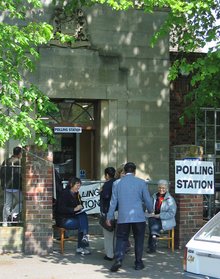
Polling station UK

In an exclusive for Epsom and Ewell Times we report on voter turnout in the last four Epsom and Ewell Borough Council Elections. 2007, 2011, 2015 and 2019. The May 2015 Council election was held on the same day as the UK Parliamentary General Election and the turnout for the local election was much higher as a result. The next election in Epsom and Ewell will be held on Thursday 4th May.

Excluding the 61% 2015 turnout the average turnout across the Borough between 2007 and 2019 was 38.19% of the electorate, with the lowest turnout last time in 2019 with just 32.83%.

Consistently the Wards with the lowest turnouts have been Ruxley, Court and Town. Ruxley having the lowest since 2007 of just 25.23% in 2019.

The highest turnouts are in the richer wards of Woodcote, College and Stamford. Though these wards are also more closely contested and that can explain their higher turnouts as well. The highest recorded since 2007 being College Ward in 2011 with just over 59%. (Again the General Election year of 2015 excluded.)

However, Court Ward is also one of the top three contested Wards in the Borough and that is why it features in the Epsom and Ewell Hustings for three Wards that takes place on 26th April. CLICK HERE for details.

Will the requirement for photo ID see a further decline in voter turnout in Epsom and Ewell?

Related reports:

Worrying about voter ID law

No photo – no vote!

Click HERE for the full analysis.

Photograph © Andrew Dunn,


Jail for prolific Epsom burglar who preyed on vulnerable women

Thanks to the determination of Surrey officers, a prolific burglar from Epsom has found himself sentenced to over three years behind bars.

Frank Smith, 27, from Rutland Close was sentenced at Guildford Crown Court on Friday (17 March), after he pleaded guilty to 19 offences over the last year making the lives of many in the borough of Epsom and Ewell a misery.

Victims spoke about being left “traumatised and anxious” after being targeted by Smith, with one saying: “I should feel safe in my home and not have to worry about things like I do, because of him”.

Another victim described how she had been “manipulated” by Smith and said it was “hard to trust people after what he did”.

A woman whose house was burgled by Smith said: “It is very difficult to put across in words how devastating it has been for me, and my family, to suffer such a violation of our home, peace of mind and family life.

 “Home should be a safe and comforting place, but since the burglary, both of my children are deeply afraid to be in the house. Our home was utterly ransacked. My children’s belongings were strewn on the floor, my daughter’s toys and horse figures were left broken and they had even broken into her money box.”

In this series of offences, which started in May 2022, Smith pleaded guilty to a burglary at Buildbase in Epsom, where he stole tools totalling £4,400.

That same month he stole a black Peugeot 3008 from outside a takeaway while the owner was inside the restaurant. This was followed by the theft of a VW van from the forecourt of a petrol station while its owner was in the garage paying for fuel. He later burgled the Co-Op store on Chessington Road, Epsom managing to get into the safe in the staff room and taking several hundred pounds.

In June 2022, whilst on bail under investigation for these offences, Smith saw a woman taking out cash from a Sainsbury’s in Epsom. He then followed her outside and back to her car. She described how Smith ran past her and snatched her bag out of her trolly whilst she was unloading shopping into the boot. The cost to the victim was estimated to be around £1,000 as she had to change the locks to her home, order replacement car keys and get a new phone. Her bank cards were then used shortly after to make two purchases totalling just under £60. Smith was caught on CCTV getting lottery scratch cards and making contactless payments, while holding the cash he had taken from her.

Smith then moved on to targeting private homes. After going out for the day, an elderly woman returned home to find a whole drawer missing from her dresser which had contained jewellery including a gold watch, two bracelets and several pairs of earrings with a total value of around £4,000.  Smith was caught on CCTV carrying the drawer with its contents partly visible.

In July 2022, Smith approached an 83-year-old woman as she was being dropped home, telling her that she had a leaking gutter and offering to fix it. The victim described how he initially quoted £15 but after a brief amount of work, claimed he’d had to replace the rubber seals and the cost would now be £135. When the victim’s son later checked the guttering, he found that no work had been done. Smith later returned to the property via a side gate before climbing in her front bedroom window and taking her purse.

In September 2022, Smith knocked on the door of a property in Epsom and told the 90-year-old occupant she had a rat problem in her back garden. The victim went through the house to the garden followed by Smith. Later she checked her handbag and found that her wallet and purse were missing. She later said Smith had been constantly pestering her to do guttering or other jobs around her home. Following this burglary, Smith used the victim’s card on six occasions making contactless payments.

A further nine offences committed by Smith were also taken into consideration, including four burglaries, three thefts of motor vehicles, one offence of fraud by false representation and one theft of a pedal cycle.

Detective Constable Sam Wightman, who led the investigation, said: “Smith is a serial offender and over time, escalated from opportunistic acquisitive crime, to targeted burglaries and fraud – targeting primarily elderly women. He has caused untold distress to his victims leaving them feeling unsafe in their own homes and costing them thousands because of the way he preyed on their vulnerabilities. This case has involved a lot of hard work and tenacity from officers across several units to track down the evidence needed to link these offences to one person and, because of this work, Smith is now where he deserves to be – behind bars.”


The above is reprinted from Surrey Police website with permission. It is not a court reporter’s report.


A different kind of cutting in Surrey’s NHS?

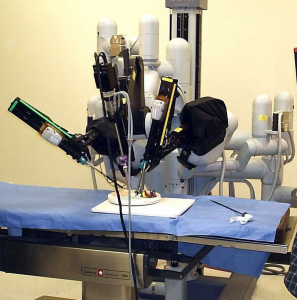
Robotic surgeon

Robots will be performing more operations, including general surgery and gynaecology at a Surrey NHS hospital trust seeking to introduce “significant savings”, a board meeting heard.

The Surrey and Sussex NHS trust held its much delayed annual general meeting on Thursday, March 30, where attendees heard from its chairperson, chief executive, and head of finance.

The afternoon meeting, which board members suggested may have led to its lower than usual attendance, was broken into three sections: a review of the year, a run through of its financial health, and questions from the floor.
Chairperson Richard Shaw led off proceedings explaining the AGM should have taken place in autumn last year but was delayed because of the late filing of its 2021/22 audited accounts.

Chief executive Angela Stevenson told the meeting that the 2021/22 year was heavily influenced by the “significant impact” of covid with “very tired”  staff “having to work under pressure”. This created a backlog the trust was only beginning to get back under control.

She said: “Staff were working with a disease that we didn’t know how to treat. We had high staff absences due to covid or due to family members having covid. Since then we’ve really got to grips with the backlog. We started to work through but at the start of 2022 these numbers were at their peak.”

Post pandemic, she said,  there was a huge increase in patients seeking primary care  compounded by the increase in “baseline complexity” as cases were left untreated during the pandemic.”

Ms Stevenson praised the trust for delivering robotic surgery for the first time and that it would be rolled out further to include general surgery and gynaecology services. They will also be investing in services with a new MRI department on the horizon – including new CT scanners at East Surrey and Crawley hospitals.

The trust also plans to work in partnership with other groups to better manage the health of the population rather than solely focus on its role as an acute hospital.

On finances, the meeting heard how its deficit continues to grow – even  not including the covid years.  It expects to run at a £26.5m deficit  for 2022/23.  This will be the first time the trust has run at a deficit since at least 2013/14 as spending pushes towards £400m a year.

Chief finance officer Paul Simpson said this could be partly attributed to an increase in staff costs. The hospital expects to take on an extra 130 new nurses. He said: “Now we have to recover the growth in costs that has happened and now we are (looking at) a significant savings plan.”

They were, however, quick to say “there should be no reason why we accept any reductions in quality of (care) for patients  and that before any cuts were made there would be full impact assessments on cost improvement plans.”

Image: Nimur at the English-language Wikipedia CC BY-SA 3.0


Pothole payouts and repairs penalise Councillor projects?

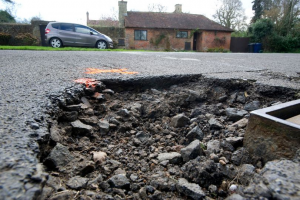
Pothole

Surrey County Council has spent more than £800,000 in pothole compensation payouts in the last five years but it hopes front-loading the road maintenance budget will help end the broken-road scourge.

In that time it repaired about 221,456 potholes along its rundown road network, at an average of 121 per day. It was also announced that the Government was to give the county £3million to tackle the problem but some say this is “just a drop in the ocean” compared with how much the road budget falls in future years.

County hall’s finances this year include a capital fund of £69.8million for highways maintenance as part of a front-loaded £188m that was announced in February. 

That is set to fall back to £29.5m a year – for the next four years – much more in line with the spending under its previous highways strategy which has led to the roads we have today.

It was also announced that individual councillor allowances of £100,000 to spend in their divisions would go, meaning any individual projects earmarked by members can not go ahead.

If highway’s can not be maintained, the opposition leader at Surrey County Council warned, then the roads will fall into further disrepair and the number of potholes, and motorists insurance claims, will rocket.

Councillor Will Forster said: “The cut to is to the road maintenance budget, this will mean the road surfaces will get worse. The cut is notable in the next financial year 24/25 and makes the £3m to repair the potholes from the Government look like a drop in the ocean.”

In 2018, Surrey County Council paid out £399,189 in compensation payments for claims relating to potholes – on both carriage and footway.

This declined to £135,949 in 2019 and was followed by two years where people were off the roads during the pandemic £83,415 and £79,364 in 2020 and 2021 – before climbing again as roads got busier in 2022 to £118,553.

These figures, the council said, relate to both property damage and personal injury with the “best endeavours” made to only include  compensation payouts, however, “some figures may also include elements of legal costs and disbursements.”

A spokesperson for Surrey County Council said the road maintenance, capital, budget agreed by council in February totalled £188m for the next five years. 

They added that the budget was front loaded, because work had been accelerated in order to realise the benefits sooner. 

Image: Potholes in Surrey (Surrey Ad)

Related reports:

On the Hunt for pothole repairs

Don’t blame us for potholes say Surrey’s highway authority.

Going potty about pot-holes?


The Hills Are Alive With the Sound of Drilling… ?

Drill in Hills

The owners of a Surrey oil field have signed an agreement to “deliver increased production and revenues” that will allow it to focus on its Dunsfold site.

Environmental campaigners, however, are still holding out hope the Supreme Court stops the drilling.

Uk Oil & Gas (UKOG) announced to shareholders that it was to “farm out” production at Horse Hill to the US-based Pennpetro Energy.

The Texas firm is to takeover 12 kilometres at the site, just north of Gatwick Airport, at a maximum cost of £4.6m.
Announcing the tie up Stephen Sanderson UKOG’s chief executive said: “This mutually advantageous transaction will inject new activity into Horse Hill, aiming squarely to deliver increased production and revenues from the oil field. 

“The farmout enables UKOG to move this asset forwards without the need to raise capital, enabling our resources to be firmly focussed upon the appraisal and development of the Loxley gas discovery, our most material petroleum asset.  We look forward to a close working relationship with Pennpetro and a mutually successful future at Horse Hill.”

UKOG refers to its holdings at Dunsfold as its Loxley site and hopes to drill for £123 million of oil near the  Surrey Hills Area of Outstanding Natural Beauty – pending its own High Court review.

Environmental campaigners who have been fighting against oil drilling at Horse Hill are still confident that the new company’s involvement will not change things materially.

In June the Supreme Court will sit for a legal challenge against Surrey County Council’s 2019 decision to grant planning for the four extra wells at Horse Hill. The same year the county also declared a climate emergency.

The application will go before the UK’s highest court after three judges were split in their findings –   that the county council’s decision to grant permission for 25 years of oil drilling and production was lawful.

According to UKOG the Horse Hill site has so far produced about 185,000 barrels of with approximately 1.362 million barrels still available.

Redhill climate campaigner Sarah Finch at Horse Hill rally 5 Nov 2021. Credit Denise Laura Baker.

Campaigner Sarah Finch of Redhill argues that the permission is out of touch amid the global climate crisis, 
Sarah Finch said: “We are taking legal action that is going through the Supreme Court in June.

“Currently the planning is subject to a legal challenge. There is still a possibility that the Supreme Court will not give it the go ahead. There has been low level production for a while there even though they got permission for expansion in 2019. I don’t think this new company’s involvement will change anything.”

Sarah started the campaign against the drill site on climate impact grounds -not just from the impact the drilling would have in the immediate area but the wider overall effect from burning the collected oil.

She added: “It will take us away from keeping climate change within limits. Horse Hill will just make hitting those targets more difficult. I’ve been concerned about climate change for a very long time and when a new oil well was proposed near my home I was horrified and we really needed to stop it going ahead. And it’s not just me, lots of residents have been involved. There have been a series of planning applications for the site but these four new wells were agreed in 2019, such a huge ramp up. That is why I decided it needed a legal campaign.”

The Supreme Court is due to sit on June 21 after the Court of Appeal reached a split decision.


Middling rate for Epsom and Ewell Council Tax

Surrey County Council HQ

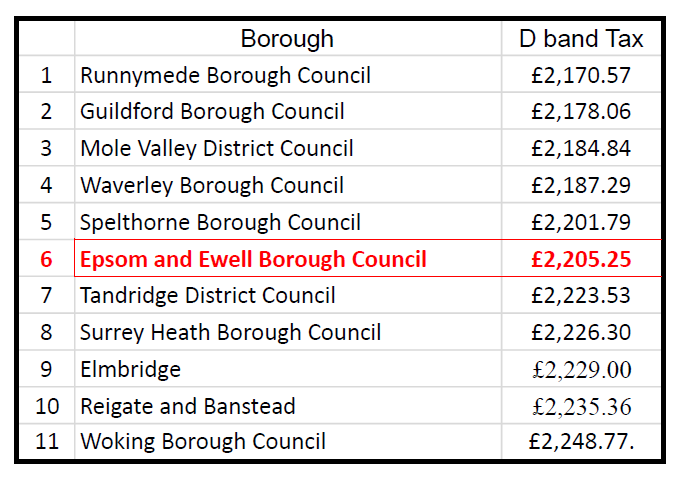
Epsom and Ewell Borough Council is slap in the middle of the 11 Surrey boroughs table of band D council tax charges for 2023/2024. The difference between the highest and lowest is £78.20 per annum. As reported by The Epsom and Ewell Times it should be no surprise to find debt ridden Woking having the highest. Emily Coady-Stemp LDRS reports on the full Surrey County wide picture and Epsom and Ewell Times produces the table.

Related reports:

Budget Report: More council tax for Epsom and Ewell

Epsom and Ewell Council raises tax 2.99%

2023/2024: average of £50 more to pay Surrey County Council


Council tax bills for Surrey residents will go up from April 1 after authorities confirmed their budgets for the coming financial year. Surrey County Council, the Police and Crime Commissioner, and each of the county’s 11 districts and boroughs, confirmed their increases separately last month, with council tax bills and collection being the responsibility of the districts and boroughs.

The Police and Crime Commissioner, Lisa Townsend, confirmed a rise of £15 per year for residents amid an increase in Surrey Police’s fuel bills of more than £500,000.

While Surrey County Council, which is responsible for adult social care as well as services including road repairs and schools, increased its share by £50 per year on Band D homes.

See below for a breakdown of the council tax bands in your area.

Elmbridge Borough Council
The average Band D property in Elmbridge will pay £2,229.00, except in the Claygate parish, where the bill for a Band D home will be £2,243.15.

Band A: £1,486.00
Band B: £1,733.66
Band C: £1,981.33
Band D: £2,229.00
Band E: £2,724.34
Band F: £3.219.67
Band G: £3,715.00
Band H: £4,458.00

Epsom and Ewell Borough Council
Residents in Surrey’s smallest borough will see council tax bills of £2205.25 from April, for the average Band D property.

Band A: £1,470.17
Band B: £1,715.19
Band C: £1,960.22
Band D: £2,205.25
Band E: £2,695.31
Band F: £3,185.36
Band G: £3,675.42
Band H: £4,410.50

Guildford Borough Council
The bill for Band D households in Guildford will be £2178.06, excluding parish and town councils. For Band D the parish share ranges from no extra charge in Wisley to £2291.71 for a Band D property in Normandy.

Band A: £1,452.04
Band B: £1,694.04
Band C: £1,936.05
Band D: £2,178.06
Band E: £2,662.07
Band F: £3,146.08
Band G: £3,630.1
Band H: £4,356.11

Mole Valley District Council
In Mole Valley, the average Band D property will pay £2,184.84, except where there are parish councils. In Charlwood, with the highest parish council precept, residents in a Band D property will pay £2,259.09.

Band A: £1456.56
Band B: £1699.32
Band C: £1,942.08
Band D: £2,184.84
Band E: £2,670.36
Band F: £3,155.88
Band G: £3,641.4
Band H: £4,369.68

Reigate and Banstead Borough Council
A Band D home in Reigate and Banstead will pay £2,235.36 from April, while residents in the Horley Town Council Area will pay £2,283.12 and in Salfords and Sidlow will pay £2,265.08.

Band A: £1,490.24
Band B: £1,738.61
Band C: £1,986.98
Band D: £2,235.36
Band E: £2,732.11
Band F: £3,228.85
Band G: £3,725.60
Band H: £4,470.72

Runnymede Borough Council
Runnymede residents in Band D property will pay £2,170.57.

Band A: £1,447.05
Band B: £1,688.22
Band C: £1,929.39
Band D: £2,170.57
Band E: £2,652.92
Band F: £3,135.27
Band G: £3,617.62
Band H: £4,341.14

Spelthorne Borough Council
Residents in a Band D property will pay £2,201.79 for their council tax in Spelthorne.

Band A: £1,467.86
Band B: £1,712.50
Band C: £1,957.14
Band D: £2,201.79
Band E: £2,691.08
Band F: £3,180.36
Band G: £3,669.65
Band H: £4,403.58

Surrey Heath Borough Council
Surrey Heath’s amount for a Band D property is £2226.30, plus the amounts paid to parish councils throughout the borough. Bands listed below are for the most expensive parish, in Bisley.

Band A: £1,523.45
Band B: £1,777.35
Band C: £2,031.26
Band D: £2,285.17
Band E: £2,792.99
Band F: £3,300.8
Band G: £3,808.62
Band H: £4,570.6

Tandridge District Council
In Tandridge, a Band D property’s council tax will be £2,223.53 2023/24. Parishes in the district range from no additional charge, to £2,311.97 in the most expensive, Crowhurst.

Band A: £1,482.36
Band B: £1,729.41
Band C: £1,976.47
Band D: £2,223.53
Band E: £2,717.65
Band F: £3,211.76
Band G: £3,705.89
Band H: £4,447.06

Waverley Borough Council
A Band D home, excluding parish council charges, is set at £2,187.29 in Waverley. The most expensive parish bills are in Godalming, and shown below.

Band A: £1,530.45
Band B: £1,785.52
Band C: £2,040.60
Band D: £2,295.67
Band E: £2,805.82
Band F: £3,315.97
Band G: £3,826.12
Band H: £4,591.34

Woking Borough Council
In Woking, residents in a Band D home will pay £2,248.77.

Band A: £1,499.18
Band B: £1,749.04
Band C: £1,998.90
Band D: £2,248.77
Band E: £2,748.50
Band F: £3,248.22
Band G: £3,747.95
Band H: £4,497.54


Salts give Mullets taste for big victory

Top of Southern League Division One football

Arundel FC 5-1 Epsom & Ewell FC. Saturday 25th March.

Arundel, nicknamed the Mullets, secured their first ever competitive victory over us in comprehensive circumstances at Mill Road on Saturday afternoon with a 5-1 drubbing, and make no mistake, we could have no real complaints here.

Top of Southern Combination League Division One

We made some changes once again from our narrow but comfortable win over Montpelier Villa two weeks previously. Jaan Stanley and Athan Smith-Joseph were not available and originally Jaevon Dyer was listed as a substitute, due to a breakdown on route to the picturesque ground. Fortunately he arrived in time and was then added to the team sheet at the expense of Steve Springett who dropped to the bench. Alex Penfold also joined him there, while Lewis Pearch came in for his first start and we had another new centre back pairing of Dylan Merchant and Oliver Thompson with Kevin Moreno-Gomez also returning to the starting eleven alongside them.

On a blustery day we made an awful start and went behind in the eleventh minute as a harmless enough attack on the left suddenly turned dangerous with a ball across goal that was turned into the net by Carl Brown. Six minutes later Tom Theobald made a decent punch clear of a looping header and appeared to be fouled in the process, yet a corner was awarded and in the 18th minute the inswinging delivery caught Theobald out in the swirling wind and he dropped the ball over the line for Arundel’s second goal.

We had created little to this point although Jamie Byatt fashioned a half chance a couple of minutes after the goal, only to see his shot blocked by a defender. Dyer then made decent progress down the right flank but his pull back was behind both Byatt and Pearch.

Regrettably we then went three nil down in the 33rd minute as a clever pass floated over the top of Moreno-Gomez where Brown was waiting to drill the ball into the net from an angle and it nearly got worse six minutes later when James Crane then hit the bar as we were carved open again. The half ended with the home side having another good chance from a corner but the unmarked Harry Russell headed over the bar.

This was a horrible first half to watch and whilst you always feel that a good start to the second half could spark some sort of comeback, it really looked as though the only win we were likely to celebrate at Arundel was when long-serving supporter John Bonner won a crate of lager in the club raffle!

The other item of note at the half time break was the sight of our entire Management team standing outside the dressing room as the players clearly had some sort of discussion without them. Whatever was said, it seemed to work for a while. We made two substitutions with Rory Edwards and Springett coming on for the limping Smith and Moreno-Gomez respectively and nearly scored straight away as a Springett corner was flicked just over the bar by Nick Wilson. Next up with a decent chance was Gavin Quintyne who tried his luck with his weaker foot and sliced the opportunity wide. However, he made amends in the 50th minute when he weaved his way across the edge of the penalty area before threading a pass through to Byatt, who guided the ball back across Oliver Howley in the Arundel goal from twelve yards which then crept in off the far post to get us back in the game.

Another Springett corner caused trouble as Merchant headed the delivery towards Thompson, whose header was just over the bar, but our only period of superiority in the match was about to end. Thompson limped off with an injured knee and whilst it was good to see Johnny “Sonic” Akoto returning after a few weeks out, his introduction required a defensive reshuffle. Whether this had a bearing on the next Arundel goal in the 63rd minute is hard to say, but a harmless ball in from the right was struck at goal by an unmarked player, and whilst Theobald made a good save from the first shot, Will Breden was also in acres of space and he drove the loose ball home from a few yards out with our defence absolutely nowhere in sight.

In the 72nd minute it got worse still as a low ball in from the right was tapped in at the far post for a fifth goal by Breden once again, and we were lucky not to concede more with Wilson being our latest sin-bin visitor around this time, while Byatt and Quintyne both picked up yellow cards for fouls to go with the first half issue to Smith. Our afternoon was then summed up when Dyer put substitute George Owusu through on goal ten minutes from time, only for him to tread on the ball in the act of shooting!

Now that ten man Shoreham’s victory over East Preston has virtually guaranteed them the title, it is imperative we cling on to second place to guarantee the home playoff matches. The players kept trying in this contest, even at the end and I’m aware that some more new signings are likely as we approach the transfer deadline on 31st March, but if we don’t get back to winning ways on Wednesday at Mile Oak, we could slip out of that position. We cannot make any more mistakes now.

This is not just about us though. We didn’t play well but full credit should also go to Arundel who played with a lot of energy and just appeared to cover a lot more ground per player than we did and will no doubt chase Selsey all the way for that final playoff spot, in which case we may well see them again before the end of the season. However, this is a massive reality check for us. Are we actually good enough to go up? We’ll probably find out the answer to that question on Wednesday as we face a Mile Oak team that have also lost 5-1 this weekend.

Epsom & Ewell: Tom Theobald, Gideon Acheampong, Kevin Moreno-Gomez, Ryan Smith (c), Oliver Thompson, Dylan Merchant, Jaevon Dyer, Nick Wilson, Jamie Byatt, Gavin Quintyne, Lewis Pearch

Subs: Steve Springett for Moreno-Gomez, (HT), Rory Edwards for Smith (HT), Johnny Akoto for Thompson (58), George Owusu for Byatt (76)

Report Source: www.eefconline.co.uk


Spelthorne’s thorny property problems spelt out

Spelthorne Borough Council audit committee on March 23, 2023. Credit: Emily Coady-Stemp

Following the report on Woking’s woes we have Emily Coady-Stemp from LDRS report on another sister Surrey borough’s woes over property investments:


Spelthorne’s former leader says “hand on heart” he still believes the borough council’s commercial property investments were “utterly legal”. The councillor said the authority had taken legal advice on the decision to purchase the buildings but raised concerns about other councils with high borrowing costs.

Image: Spelthorne Borough Council audit committee on March 23, 2023. Credit: Emily Coady-Stemp

Councillor Ian Harvey (United Spelthorne Group, Sunbury East), who was leader of Spelthorne Borough Council at the time three commercial properties were bought outside of the borough in 2017/18, was responding to a public interest report carried out by its auditors. He told a meeting of the borough council’s audit committee on Thursday (March 23) his first question at the time the possibility of buying properties came up was: “Is it legal?”
He said the advice given at the time by the council’s KC was that it was legal, and that the decision had “repeatedly been determined to be legal subsequently”.

The report, publicly released in November, claimed the council had “acted unlawfully” in its decision to buy properties outside of the borough, and set out five recommendations for the authority.

At a December meeting of the council, councillors agreed the recommendations set out in the KPMG report, and Thursday’s meeting was an update on the action plan to come about from that.

The current council leader, Cllr John Boughtflower (Conservative, Ashford East) said in December the council “should not have any difficulties” accepting the recommendations, because of changes to processes at the council and issues that had been addressed since the purchases.

Cllr Harvery asked auditors at Thursday’s meeting, who were presenting their report into the 2017/18 accounts, if they had assessed the council’s risks “compared to some other spectacularly investing local authorities for example, Slough, Croydon, Thurrock”. He also asked about comparisons to Woking Borough Council, where the current administration has warned an effective bankruptcy may be declared, saying they had “borrowed more than we have without any surety of repayment”.

Later in the meeting Cllr Harvey said: “I can say hand on heart that we were assured, and I still believe, it is utterly legal. And if what we did was illegal then what a lot of other councils have done, and spectacularly failed, at was far, far more illegal.” He claimed the difference in legal opinions was because KPMG had “relied on a much more junior barrister within the same chambers who came up with a dissenting view”.

Cllr Lawrence Nichols (Liberal Democrat, Halliford and Sunbury West) said though the advice was taken from a “very well qualified QC”, it amounted to 19 words of legal advice for more than £200million of expenditure in 2017/18. He also questioned the diversity of the council’s property portfolio and the advice sought from how to manage commercial properties. He told the meeting: “I do think we out to be more realistic about diversification. We are in the office business, whether it’s an engineering company or a dental practice, that’s not the issue. It’s the office market we’re in, so that’s our diversification risk.”

In response to an expected £60m of rental income dropping to £46m for next year, which Cllr Nichols said was a “massive change of direction”, the council’s chief accountant Paul Taylor said £7m rent guarantee income had been released and would be going into the council’s revenue budget.

The meeting heard that a new group head of assets had recently started at the council and that a “fully worked up action plan” would come to the committee’s next meeting in July. Spelthorne’s chief executive, Daniel Mouawad, said the nearly half a decade turnaround in the audit report for 2017/18, the last stage of which was the public interest report, was “by any measure” a “remarkably poor turnaround”. But he added that nearly a year’s delay could be “directly attributed to the actions of one individual Spelthorne councillor” which was currently being investigated under the members code of conduct.

When asking a question on this individual, Cllr Harvey was cut off by the chair, his wife Cllr Helen Harvey (United Spelthorne Group, Sunbury East), though officers did confirm they would revert with a response on the cost of the delay caused by the councillor concerned.

KPMG representatives confirmed an “adverse conclusion” would be issued in relation to the “value for money arrangements” for the 2017/18 accounts, the same as in the 2016/17 accounts where recommendations and weaknesses raised were “still in place in the 2017/18 period”.

The meeting also heard that a review into the council’s borrowing carried out by the Department for Levelling Up, Housing and Communities should be coming to an end this week

In response to a public question on the review, the chair said the council was not “privy to the terms of reference or have any expectations to receive the final report within any given period”.

It was hoped this report would also come to the next committee meeting in July, though Terry Collier, the council’s deputy chief executive, said it had been hoped there may be a draft report available by Thursday’s meeting.


Waking to Woking’s woeful debt

Woking Council

Epsom and Ewell Times has followed the finances at this sister Surrey borough. We all should perhaps be concerned and learn lessons from a County borough that can get in such a mess. In contrast Epsom and Ewell Borough Council has been balancing its books for years. At the end of the day where will the money come from to save Woking? Local Democracy Reporter Chris Caulfield reports:


The dire financial future of Woking Borough Council was laid bare with senior figures warning of the “significant risk” of it effectively going bankrupt as its cash reserves run dry.

The council’s executive committee met on Thursday March 23 to hear an update on its financial strategy. It was told of the budgeted shortfall of £9.5m for the next financial year and the swingeing cuts coming as it moved to provide only the minimum levels of services – those it must provide by law.

Woking Borough Council’s financial disaster is the product of years of heavy borrowing to pay for a failing investment portfolio. The previous administration had hoped this would generate income but instead it has saddled the local authority with annual interest repayments of more than £60m a year while only generating £38.5m. 

Councillor Dale Roberts is now the portfolio holder for finance on the council. He said it had gone to the government seeking to lower the minimum amount it can set aside to repay its loans and has been searching for further  “restrictions on expenditure necessary to address the budgeted shortfall of £9.5m for 24/25. He added: “Both of which relate to the ongoing and significant risk of issuing a section 114 notice.”

Councils can not go bankrupt. Instead, they enter what is known as being under section 114 notice and means they cannot make new spending commitments.

He also said the council would seek to try to fund “transformational projects” through any capital receipts.  Cllr Ian Johnson (Lib Dem, Mount Hermon) said: “It shows a stark issue, the deficit next year is £9.5million based on current numbers,  and yet our services expenditure is just under £45m. So that’s a 20 per cent difference. So we need either cost savings or revenue generation to be able to cover that gap of 20  per cent.Because the £62million interest payments we are making at the minute could well go up given today’s interest rate rises.

“Its unaffordable at the present level. We know that DLUHC (the Department for Levelling up, Housing and Communities) have been in the office talking to us for the last couple of months. Until we get their report as well we won’t be able to be definitive in where we’re progressing with any of the business we’ve got including talking to the government  about our debt levels and how we might be assisted in reducing the interest payments we make.”

DLUHC was not expected to return any decision until the start of the new political year in May. Cllr Dale Roberts said:  “The enormity of the task ahead of us for next year, the affordability of the borrowing, the degree that we have to find savings are deeply concerning.”

Cllr Stephen Dorsett (Con. Pyrford)  asked about the possibility of future savings if council was already operating at “statutory spend only” – that is for services the council is legally obligated to provide. Cllr Roberts said: “Even costs savings cost”.

Leader of the council Anne Marie Barker said: “We’re having to put controls on day to day spend and just keep a very tight rein on everything. We’ve got our balanced budget for the year by using reserves but going forward that £9.5m next year, and more than that the following year, we do need to do a fundamental review of what were doing and how were doing it. It’s the only way we can make those budgets balance, the reserves aren’t going to last forever.”

Related reports:

Would you want to live in Woking?

Woking up to a very big debt problem