Epsom and Ewell Times
19th November 2026

ISSN, LDRS and IMPRESS logos

Fresh Local Plan row as councillor questions Green Belt revisions and governance at Epsom and Ewell

Town Hall and Local Plan

Concerns are growing over Epsom and Ewell Borough Council’s Local Plan after campaigners and a borough councillor raised questions about revised evidence submitted to the Government Planning Inspector — including whether key changes were made without councillor oversight.

The controversy centres on documents submitted during the independent examination of the borough’s Local Plan, which will determine where housing development can take place for years to come.

A Green Belt campaign group, a planning expert and Conservative councillor Kieran Persand have all raised concerns about revisions to the evidence base — particularly a Green Belt Topic Paper which could influence whether some land currently protected as Green Belt is opened for development.

Campaigners question governance of revisions

The issue first surfaced in a widely circulated email from the Epsom Greenbelt Group to borough councillors warning of “urgent and serious concerns regarding the recently submitted revised Local Plan documents and the process by which they appear to have been approved and issued.”

Campaigners argue that councillors previously authorised officers only to make minor corrections to documents submitted to the Planning Inspector — not material revisions to the evidence.

They say that if significant changes were submitted without member oversight it would raise serious governance concerns and undermine democratic accountability.

The group has called on councillors to clarify what authority officers relied upon when submitting revised documents and whether the Council’s Monitoring Officer has reviewed the matter.

Expert analysis identifies potential Green Belt changes

Planning expert Tim Murphy has reviewed the Council’s January 2026 Green Belt Topic Paper and identified 33 Green Belt sites assessed for their contribution to preventing urban sprawl and protecting countryside.

Mr Murphy said several sites which scored relatively highly under the Council’s own Green Belt rating system were nevertheless recommended for boundary changes that could allow development.

The sites highlighted include:

  • Land north of College Road at Downs Farm
  • Land near Ewell East Station
  • Land west of Burgh Heath Road near South Hatch Stables
  • Land extending the Noble Park estate within the Hospital Cluster

Mr Murphy said the justification offered was the existence of “exceptional circumstances”, but added that he did not find the arguments convincing.

He noted that these sites have ratings comparable to Horton Farm and the Hook Road Arena — two locations which generated significant public opposition during Local Plan hearings last year.

Other Green Belt sites treated differently

Mr Murphy also pointed out that other Green Belt locations with similar ratings are not recommended for boundary changes, including:

  • Hollywood Lodge
  • Drift Bridge Farm
  • Land off Banstead Road
  • Land east of Burgh Heath Road
  • Several smaller sites near Downs Road

The difference in treatment raises questions about consistency in the assessment process.

Meanwhile, a separate planning application for 110 homes at Langley Vale — on land not recommended for Green Belt boundary change — was recently rejected by councillors by six votes to two.

Councillor calls for urgent review

The debate intensified this week when Horton ward Conservative councillor Kieran Persand wrote to the chair of the Council’s Local Plan Policy Committee (LPPC) urging urgent action.

In his email to councillors, Persand said he had become aware that revised evidence had been sent to the Planning Inspector which “materially differs from evidence previously submitted,” including a document known as COUD_021.

He said the document appeared to have been submitted without review or approval by the LPPC, the committee responsible for overseeing the Local Plan.

Persand wrote that he had already identified “important errors and other concerns” in the document which he believed should have been addressed before submission.

He also said he had been unable to find any significant change in circumstances — such as changes in national policy — that would justify altering the conclusions of the borough’s earlier Green Belt assessment.

Further Green Belt additions possible

Persand warned that the situation may be evolving further.

According to correspondence with the Planning Inspector cited in his email, council officers indicated that additional evidence and amendments could be submitted by 6 March, potentially including recommendations for further Green Belt sites to be added to the Local Plan.

Persand noted that there were no Local Plan Policy Committee or full council meetings scheduled before that date.

“This suggests that the officers’ amendments to submission documents, and proposals for changes to the Local Plan they plan to submit on 6 March, will also not be subject to any review or approval by the LPPC or Full Council,” he wrote.

He warned that proceeding without councillor oversight could expose the council to accusations of failing in its duties and even potential judicial review.

Call for documents to return to councillors

Persand has asked the committee chair to arrange for all evidence documents submitted to the Inspector to be brought before the Local Plan Policy Committee before any further submission.

He acknowledged that doing so could delay the council’s proposed timetable but argued this would be preferable to risking more serious problems later in the process.

Questions to the council remain unanswered

The Epsom and Ewell Times contacted the council’s communications department on 28 February seeking clarification on the situation.

The newspaper asked whether a revised paper recommending the removal of some sites from Green Belt protection had been submitted to the Planning Inspector.

At the time of publication, no response had been received.

What happens next

The Planning Inspector will ultimately decide whether the borough’s Local Plan is “sound” and can proceed.

However, the council itself remains responsible for setting the borough’s strategic direction.

If significant changes to the evidence base are confirmed, councillors may face renewed debate over housing numbers, Green Belt protection and how the Local Plan examination is being managed.

The outcome could shape where thousands of new homes are built in the borough — and whether parts of its Green Belt remain protected — for decades to come.

Sam Jones – Reporter

Related reports:

Epsom & Ewell’s Council responds to Local Plan concerns

Stage 2 Examination of Epsom & Ewell’s Local Plan opens Tuesday

Epsom & Ewell’s Local Plan under the Green microscope

Epsom and Ewell Local Plan Submitted for Examination

and many more. Search “local plan”.


Ewell’s Looe Set for Flush of New Industrial Investment

The Looe, Reigate Road, Ewell. (Credit: Google Street View)

An ageing industrial site in Ewell is set for a major overhaul after councillors backed plans to knock it down and rebuild it with bigger, more modern units.

The scheme at The Looe, off Reigate Road in Nonsuch, will see 17 tired single-storey units demolished and replaced with a new part one, part two-storey building containing nine industrial and business units. Councillors green-lit the plans at an Epsom and Ewell Borough Council planning committee on February 26.

Cllr Phil Neale (RA Cuddington) said: “I think it is going to be a vast improvement. I have had a look at the current site and it’s not one of our most attractive industrial units at the moment.”

There will be fewer units overall (nine instead of 17) but they will be larger, creating more workspace. The total floorspace will jump from 732sqm to just over 1,200sqm.

The new building will mainly cater for industrial and storage businesses. Plans include:

  • One commercial unit (such as a shop or service business)
  • Four general industrial units
  • Four storage and distribution units
  • 16 car parking spaces
  • 18 cycle spaces
  • Solar panels on the roof
  • A small security and plant hut

There will also be a new pedestrian refuge crossing on Reigate Road and a segregated footpath along the access road to improve safety for people walking to and from the site.

Planning officers said the land counted as previously developed ‘grey belt’ land, meaning the redevelopment is not considered inappropriate under national planning rules. The developers have also promised a new planting and habitat improvements to the site, over and above the council’s requirement.

Less office space, more industry

The plans will reduce the amount of office space on the site. But council officers said there is enough office capacity elsewhere in the borough, particularly in Epsom town centre and East Street, to absorb the loss. At the same time, the borough has a shortage of industrial and storage space so the new scheme could help meet demand.

Traffic worries raised

Three neighbours objected, raising concerns about large lorries struggling to access the narrow entrance road, vehicles blocking Reigate Road while waiting to enter, sewage capacity and asbestos removal. Concerns about shared boundary walls were deemed a civil matter, and asbestos removal would be handled under separate legislation.

Highways officers said the development would generate slightly more traffic than the current site, but not enough to cause a “severe” impact on the local road network. The new footpath and crossing were described as public benefits.

Emily Dalton LDRS

The Looe, Reigate Road, Ewell. (Credit: Google Street View)


Surrey Space Institute could lead UK missions to the stars

Prof Amara (Surrey Uni) against imagined background of a rocket into space from UK)

UK-led and UK-enabled space missions within this decade should be the hard-coded goal of the country’s space industry at every level, says the Director of the newly launched Surrey Space Institute at the University of Surrey. 

Professor Adam Amara, who is also on secondment to the UK Space Agency as Chief Scientist, is calling on the sector and government partners to “stop outsourcing ambition and have belief and pride in our capabilities to operate missions on a regular basis”. 

Professor Amara said: 

“There is a real opportunity for ‘middle powers’, as Mark Carney put it, to partner together and compete with the established global superpowers. But this does not mean the UK space industry or the UK public should water down its ambition for what we could accomplish. It is in our gift to establish regular UK-led and operated missions. 

“Mega‑constellations, mega‑primes, mega‑states – these are the gravitational forces we feel in the world today. But the extraordinary capabilities held by the UK and our allies can be mobilised, as an antidote to the inertia of giants. The Surrey Space Institute will be a focal point for convening the technologies, the researchers and the companies that will prevent middle-power ambitions being limited by fragmentation. This must become a sectoral, a national and a collaborative commitment to contribute to the promise of space.”  

The Surrey Space Institute was set up precisely to help deliver that commitment. A key focus will be to help the UK grow the skills and capabilities in today’s workforce and for future generations. The Institute will also work with its partners to conceive and operate space missions – combining hardware, software, policy and operations to tackle problems on this planet as well as in deep space. Its research will focus on three areas: managing water and climate on Earth, strengthening space systems such as satellite communications and cybersecurity, and developing the engineering, physiological, legal and economic governance solutions needed to deliver deep space exploration, operation and even settlement. 

The UK space sector has a proud heritage – and Surrey has been at the heart of it, helping to drive the small satellite revolution that proved space could be accessible, not just the preserve of superpowers. The Surrey Space Institute will take that further – forging industry partnerships, opening up space sector facilities to small businesses, and equipping the next generation with mission-ready skills through hands-on research opportunities and specialist Continuing Professional Development programmes.

Surrey University

Image: Prof Amara (Surrey Uni) against imagined background of a rocket into space from UK

Related reports:

Surrey Uni on space mission to darken the skies

Surrey’s Satellite bio-diversity project promoted at COP30 Brazil

Surrey University boldy go to the next galaxy

Surrey scientists invite children to reach for the stars 

.

.

.


Sutton & Epsom Fall Short in Entertaining 10-Try Battle at Rugby Lane

Rugby action. Robin Kennedy

Sutton & Epsom RFC 27 Battersea Ironsides 38. Saturday 28th February.

With hindsight being, as ever, twenty-twenty vision, the defeat of the Black & Whites at Garratt Green has been viewed by some as the turning point of the season for Sutton & Epsom. A 15-point lead with seven minutes to go, depending on your loyalties, was either thrown away through incompetence or overturned by spirited brilliance as the Ironsides triumphed 24-22. Since that November afternoon the fortunes of the Rugby Lane team have headed in a southerly direction. Saturday’s fixture saw Sutton & Epsom, in seventh, take on Battersea, in sixth, with a solitary point separating them. The visitors took the spoils in an entertaining 38-27 win to gain a bonus point victory that saw them rise into the play-off positions.

For the Black & Whites there was minimal disruption to the squad but welcome returns for Ewan McTaggart after his international adventures and Kyren Ghumra on the wing. There was an inauspicious start to the game for the hosts, with echoes of the match in November, as the kick-off went out on the full to initiate a scrum. Battersea immediately showed their attacking intent with a delightful chip and gather by Cameron Baker but he was met by a perfectly timed tackle from Gareth O’Brien. It started an opening quarter full of attacking intent by both teams that was met by sterling defence that thwarted fleeting moments of try-scoring potential for both XVs. On the quarter hour there was an unfortunate incident as Amir Sultan rose skywards to take a clearance kick. Kyren Ghumra slipped as he approached and the collision ended with a heavy fall. Amir Sultan, after a lengthy delay, had to be helped from the field to sympathetic and universal applause from the sizeable crowd. He was replaced by Lewis Waters and the accidental nature of the incident meant that Monsieur Brognard did not issue a card.

At the start of the second quarter Sutton & Epsom enjoyed their best period of play. In rapid succession they had opportunities. The first saw Ewan McTaggart and Jack Howes combine and the second was initiated by a Gareth O’Brien counter. Both ended in turnovers that were the result of insufficient support and swarming Battersea defence. The Rugby Lane supporters had the consolation of a Tom Lennard penalty after 25 minutes that put Sutton & Epsom into a 3-0 lead. The Ironsides responded in the perfect manner but in an unexpected way. A multi-phase attack was brought back for a penalty that was kicked to the corner. Sutton & Epsom stole the 5-metre line and cleared superbly to halfway. The visitors took a quick ball but with only two men available to counter it should not have been a problem. However, a surging run tore Sutton & Epsom apart and replacement Lewis Waters was in support for the try. Cameron Baker’s conversion drifted wide but Battersea led 5-3.

The game continued to demonstrate the scoring potential of both teams as well as the defensive prowess of players frustrating opponents with timely turnovers. Sutton & Epsom hopes were raised, as so often is the case, with a robust run from hooker Sam Lennie. A man who relishes physical contact and has a deceptive turn of speed he broke free to advance to 10 metres out. Credit to the scrambling defence of the Battersea team that they reorganised and halted the hosts a couple of phases later. Unfortunately for Sutton & Epsom there was no silver lining to this cloud, as the subsequent penalty failed to add the three points.

As the first period entered time added on the visitors added another try from a stunning break. This time it was scrum-half Dan Thomas with a scintillating surge that beat the initial tacklers and found the wide-open spaces. His half-back partner Cameron Baker was on hand to provide the coup de grâce much to the delight of not only his charming parents but also the many travelling Ironsides fans who added much to a wonderful atmosphere at Rugby Lane. Baker added the simple conversion for a 12-3 lead. The half ended in frustration for Sutton & Epsom. Adam Bibby sensationally took the restart and Sutton & Epsom camped in the 22. A penalty was kicked to the corner, the lineout secured and replacement Dan Jones went close. The ball was recycled and Tom Lennard was enveloped and kept vertical for the turnover that concluded the first period. Battersea led 12-3 but no one doubted the potential for more scores in the second half.

Sutton & Epsom began the second half with relish spreading it wide with Kyren Ghumra making yards. The first scrum of the half saw a powerful drive and a penalty to the hosts. The expected kick to the corner and attacking lineout followed. Though they secured the ball Battersea stood strong and got a relieving scrum. Flanker Arboine, as he did all afternoon, carried to great effect and the Ironsides cleared. However, it was Sutton & Epsom’s turn to counter for success. An arcing run by Lennie fed Ghumra and the winger, with plenty to do, sped down the line to score. The Black & Whites trailed 8-12. The visitors were stung into action. Awarded a penalty, they took the quick tap and moments later were agonisingly close to a try as wonderful Sutton & Epsom defence held them up over the line. Five minutes later the next Battersea sortie to the Sutton & Epsom 22 saw the visitors secure their third try. A catch and drive was controlled by the pack and Raph Arboine was on hand to score from close range. The Baker boot added the extras for a 19-8 lead.

Ten minutes later the whole nature of the fixture changed as Sutton & Epsom scored twice in five magnificent minutes of rugby. The first came from a Joe Lovatt kick on halfway as a favourable bounce ended in home hands. Dan Jones accelerated into the open spaces and passed to the fleet-footed Captain Bunting who ran in the try. Tom Lennard added the simple conversion. Rejuvenated by this try Sutton & Epsom were on the attack once more. Their vastly improved lineout secured the ball to initiate a formidable drive that resulted in a try for Sam Lennie. Despite the Lennard conversion from touch rebounding back off the upright the Black & Whites led 20-19.

The men in green replied as if insulted by the hosts’ effrontery at taking the lead. They stepped up a gear and immediately put Sutton & Epsom under the cosh. Despite heroic defence near their line Sutton & Epsom succumbed as Charlie Craig took the glory and Battersea regained the lead at 24-20. Earlier it had been a relief to see Amir Sultan return to the game after his injury. However, his return now took on Lazarus-like dimensions. Tom Lennard hoisted a cross-field bomb with the intention of exposing the opposition on halfway. This time the result for the soaring Sultan was much happier. A wonderful airborne take was followed by a sprint from halfway that left the cover a very distant second. Cameron Baker calmly converted for 31-20. Five minutes later the ‘Sultan of Swerve’ had the ball again and finished with aplomb from 20 out. With the conversion added and the scoreboard reading 38-20 the contest was over.

Sutton & Epsom still had bonus points to chase and to their credit hit back with gusto to score in time added on. Once again they were indebted to their clinical lineout and the tireless endeavour of their pack. This time it was Dan Jones who popped in under the posts. Tom Lennard converted to conclude the scoring as Sutton & Epsom lost 38-27 but gained a vital bonus point. No doubt the coaches will have been frustrated by the errors but it was a thrilling spectacle for the crowd who enjoyed 10 tries. Battersea punished Sutton & Epsom errors with ruthless efficiency and seemed to have that extra gear when required. For the hosts the lineout was transformed, the forwards were formidable in the set-piece and, encouragingly, the supporters enjoyed players running onto the ball from depth with pace. Finally, credit to Cyril Brognard whose officiating enhanced the game with excellent communication, a desire to create a flowing game and superb positioning for those tries from close range.

Next Saturday Sutton & Epsom venture to the Coolhurst Ground to play Horsham RFC for the first time in a league encounter. The Sussex club, having been relegated with Brighton last season, are keen to bounce back to Regional 1 South East at the first opportunity and will be out to secure their place in the play-offs. Meanwhile Battersea host Beckenham with both clubs still in contention for extending their season.

Sutton & Epsom: O’Brien, Scott, Bibby, Bunting ©, Ghumra, Lennard, Lovatt, Boaden, Howes, Lennie, McTaggart, Glanville, Pulvirenti, Rea & Hegarty. Reps: Jones, Duey & Tame.

Battersea Ironsides: Diamond, Sultan, Bourke, Campbell, Craig, Baker, Thomas, Borup, Chetwynd-Milo, Chetwynd, Kemp, Wharton, Arboine, Chitan © & Charles. Reps: Jones, McCleary & Waters.

John Croysdill

Photo credit: Robin Kennedy


Dr Antony John Hayward

Antony John Hayward died peacefully on 1st February 2026.

Devoted husband to the late Judith, loving father to James, Simon (predeceased), Christopher, Joanna and Jonathan. Proud and loving grandfather and great grandfather.

Brilliant GP working in Ewell all his professional life.

Funeral Service -10.00 am Friday 13th March at St Joseph’s Catholic Church, Epsom KT18 7JQ.

.

.

.

.


Epsom and Ewell FC rise to challenge on penalties

26th February Horley Town FC The New Defence, Horley – Southern Combination Challenge Cup 2nd Round

Epsom & Ewell progress to the next round of the Southern Combination Challenge Cup after a hard‑fought 0–0 draw at Horley Town, eventually winning 4–3 on penalties. Was The Salts’ third away game in six days, and with players arriving late by train and several changes to the starting XI, it had all the signs of a difficult evening. New goalkeeper Kit Lawrence‑Fletcher made his debut between the posts with first starts for Shabir, Allen and Leo Cunningham.

Despite the disruption, Epsom & Ewell started brightly. They struck the crossbar early on, and skipper Brendan Murphy‑McVey thought he had opened the scoring with a superb finish—only for the referee to disallow it and book him, ruling he had re‑entered the pitch too soon after treatment. Leo Cunningham was a constant threat, repeatedly troubling the Horley defence and veteran centre‑back Aaron Bogle. But despite the pressure, the sides went in level at the break.

The Second Half the tempo dipped after half‑time, with both teams pushing but unable to find a breakthrough. Chances were limited, and the match drifted towards the inevitability of a penalty shootout.

Horley took the first kick and blazed over, while Epsom converted to take the lead. The shootout unfolded as follows:

Horley miss, Ali Fofahan scores — 0–1

Horley score, Ore Allen misses after the ball moved just at the end of the run up — 1–1

Kit Lawrence‑Fletcher saves Horley’s third with a strong hand and the ball just looping over the bar.

Craig Dundas’s penalty was saved but retaken due to keeper movement; he buries the second attempt — 1–2

Horley score, KJ scores — 2–3

Horley score — 3–3

Stefan Aiwone steps up and converts the decisive kick — 3–4

A composed and committed team performance saw The Salts through. The Salts now host Step 4 side Bedfont Sports in the next round as they continue their defence of the trophy.

Epsom and Ewell FC Media


Horses beat cars in Epsom’s Langley Vale housing development application

View of proposed Langley Vale development. (Credit: Fairfax Aspire Ltd/ Epsom and Ewell Borough Council planning documents)

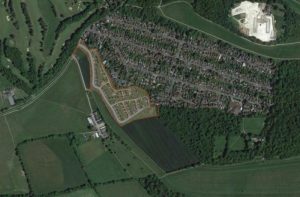
Plans to build up to 110 homes on agricultural fields in Epsom have been thrown out with fears of a horse vs car ‘collision corridor’. The Langley Vale scheme has been rejected following fierce objections from councillors, local campaigners, and the Jockey Club.

The proposed site, just a stone’s throw from the world-famous Epsom Downs Racecourse, was described as “unsustainable” and a threat to both local wildlife and the town’s horse racing heritage.

After a heated debate at Epsom and Ewell Borough Council’s planning committee on February 26, councillors shot down the application. Reasons for refusal included the site’s poor transport links, reliance on private cars, harm to the openness of the green belt, risks to horses and riders, and adverse effects on the landscape.

Cllr Jan Mason (RA Ruxley) did not mince her words. “It’s not just a few extra cars,” she said. “Have we actually raised the issue of the Jockey Club? The most famous race in the world is held in Epsom in June and has gone on for probably 300 years. This company is only after money.” 

She also highlighted the practical issues for new residents: “If there’s no school nearby, no shops, no bus service, then sticking families up on the downs isn’t giving them a home. It’s dumping them where nothing exists.”

Highways and transport were another huge concern. Cllr Steven McCormick (RA Woodcote and Langley), who represents the area, called the application “fundamentally and legally unsafe,” citing the risk to both residents and the racing industry. “Records reveal a terrifying reality when a horse spooks, its instinct is to bolt for home, often forcing these 500 kg animals onto the public road network” he warned. “By placing 110 homes and hundreds of daily car movements at the mouth of the Warren, a known site for unseated riders, we are creating a collision corridor.”

Local campaigners echoed those concerns. John Mumford, speaking for the Langley Vale Action Group, noted the overwhelming public opposition of 374 letters of objection and a petition with 2,232 signatures. He said: “ For every reason put forward to justify the scheme, there are more compelling policy and environmental reasons as to why this scheme should be refused.”

Bernice Froud (RA Woodcote and Langley), another councillor, painted a vivid picture of the community at risk. “You cannot mitigate the destruction of a community’s soul.” She pointed to horses being part of Epsom’s heritage amongst other wildlife. “The rare and beautiful plant, the night flowering catchfly, has chosen our village as its home. Once we pour concrete over it, we will destroy this site of nature conservation importance forever.”

The Jockey Club added weight to the case, stressing that Epsom’s horse racing industry generates over £63m a year and that the development would “have a significant adverse impact” on operations and equestrian safety, including routes used by racehorses to reach training grounds.

While councillors agreed homes, especially affordable ones, are sorely needed, it does not come at any cost.

Emily Dalton LDRS

Related reports:

Keep our Valley Green say Langley Vale campaigners

110-Home Scheme at Langley Vale Sparks Green Belt Fears

Image: View of proposed Langley Vale development. (Credit: Fairfax Aspire Ltd/ Epsom and Ewell Borough Council planning documents)


Party Leader visits Epsom to launch East Surrey election campaign

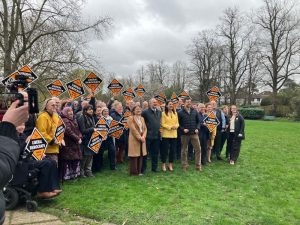
Liberal Democrats launch East Surrey election campaign, with leader Ed Davey. (Credit: Emily Dalton/LDRS)

The Liberal Democrat leader Sir Ed Davey visited Epsom yesterday to officially launch the start of the East Surrey election campaign, promising a “fresh start” to the county after years of Conservative rule.

Visiting Epsom alongside local MP Helen Maguire, Dorking & Horley MP Chris Coghlan and Esher & Walton MP Monica Harding, Mr Davey met local party members and called for a “fresh start” for East Surrey. 

The Lib Dem leader also called the local campaign a “moral responsibility to win and a historic opportunity for the party”. He told members: “Reform is a threat to our country […] The Conservative Party has run out of road here, and Nigel Farage’s Reform offers no solutions to the problems people face.”

East Surrey Council is being created as a result of a major shakeup of local government in the county, with Surrey County Council and the county’s borough and district councils being abolished. Moving from a two-tier to a unitary model, East Surrey Council will oversee all local services in the area. People can look forward to casting their ballot on May 7. 

“After years of Conservative failure here in Surrey, it is time for a fresh start,” Ed Davey said. ““Liberal Democrats will deliver the real change people are crying out for with our bold plan to fix the NHS, cut energy bills and tackle the sewage crisis in our rivers.”

When asked about the possibility of raising council tax to fund services, Mr Davey made no promises: “I think you’ve got to look at the books.”. He told the local democracy reporting service (LDRS): It will be challenging initially because of the financial situation we have inherited but over time, people will notice real differences: parks and local services improve, investments continue and cuts are avoided.”

Local MPs stressed the urgency of change and importance of local engagement. Helen Maguire said: “Voters want to know that the people they elect will make a real difference in their day-to-day lives- whether that is improving schools, clearing bins, or securing social care they need. When politics delivers for them, they will be motivated to vote.”

The Lib Dem MPs drilled the three most important issues in Surrey, issues they will no doubt be campaigning on, as: finance budget, potholes and special educational needs priovision (SEND).

Monica Harding pointed out some tangible results already being delivered by Lib Dem Surrey MPs like moving the derelict boats away on the River Thames. She said: “People want a fresh start and they want change. They want to stop having to fight the system and get things more easily and things they deserve.”

Chris Coghlan criticised the Tories’ record, saying: “Surrey’s Conservative Council has appallingly managed local services and traumatised SEND families. They must go.

Emily Dalton LDRS

Liberal Democrats launch East Surrey election campaign, with leader Ed Davey. (Credit: Emily Dalton/LDRS)


Battle of the skies above Surrey

Farnborough Airport (image SHBC)

Air pollution, noise, and climate change are three of the reasons Surrey Heath Borough Council is objecting to plans to increase weekend flights at Farnborough Airport. The business travel hub has a cap on weekends and is looking to increase that as part of a wider push to get to 50,000 annual flights. The airport has also seen an increase in demand despite only 2.6 people travelling per flight, the February planning committee heard.

The application, part of a neighbouring authority consultation, wants to increase weekend and bank holiday flights from its current limit of 8,900 to 13,500. As it stands there are about 30,000 flights using the airport, which sits 1.5km from the border of Surrey Heath, but it has a limit of 50,000 a year. If the application is approved by neighbouring Rushmoor Borough Council, airport chiefs expect it to reach its capacity by 2033. If it is rejected, that pushes the target date back to 2045.

Officers told the meeting: “The climate change manager has raised doubts about whether projections, which rely on the suggested level of uptake, are sufficiently robust. The council therefore raises objections on the noise, but also on the potential impact on air pollution, potential impact on biodiversity, potential impact on climate change, and that the economic benefits to this borough do not outweigh the harm.”

Councillor David Whitcroft (Liberal Democrat; Mytchett and Deepcut) said the airport was currently turning away weekend flights and felt the weekend slots would be used primarily for wealthy leisure travellers – with the borough paying for the impact. The meeting heard that about 70 per cent of aeroplanes landing at the airport come in over the borough, and that it misses out on any direct economic benefits. He said: “The current level is 8900, and that level has been met. So if this application were to go through, the weekend impact on residents particularly in Mytchett, Deepcut and Bisley would be immediate and dramatic. Weekend flights would go up by 50 per cent. Why does it need to go up on weekends for a business airport designed to relieve traffic from the bigger airports, because it has seen an increase in leisure travel. Should people be able to avoid what they consider to be the inconvenience of mass commercial flying in order to create noise and air pollution simply because they can afford it.”

The plans were universally objected to by all members. The final decision rests with Rushmoor Borough Council at a yet-to-be-set date.

Chris Caulfield LDRS Farnborough Airport (image SHBC)


Surrey’s big brains on tiny matters recognised

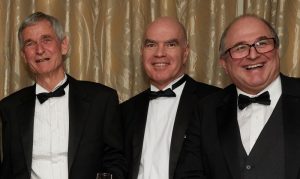
From left to right: Professors Philip Walker, Zsolt Podolyák and Patrick Regan

Surrey ranked world’s leading university for nuclear isomer discovery, with three physicists in global top ten

A global database of nuclear physics discoveries spanning more than a century has ranked three University of Surrey physicists among the world’s top 10 for discovering and characterising nuclear isomers – rare, long-lived excited states of atomic nuclei that provide a unique window into the structure of matter and underpin modern medical imaging.

(From left to right: Professors Philip Walker, Zsolt Podolyák and Patrick Regan.)

Professors Zsolt Podolyák, Philip Walker and Patrick Regan – ranked second, third and tenth respectively in a global list of more than 1,000 researchers – are the highest-ranking university-based academics. Their work has helped position Surrey as the world’s leading university for nuclear isomer discovery, an exceptional distinction in a field typically dominated by large national laboratories.

Nuclear isomers occur when protons and neutrons inside an atomic nucleus rearrange into higher-energy configurations that live far longer than typical excited nuclear states, which usually last much less than a microsecond. Some isomers survive for microseconds, years, or in extreme cases, far longer than the age of the universe.

Alongside helping scientists understand how elements are formed in stellar explosions and neutron-star mergers – and how they decay to create the matter around us – isomers are most widely used in medicine. The world’s most common diagnostic imaging isotope, Technetium-99m, used in around 20 million diagnostic procedures each year, is itself an isomer, and the same techniques used to study these states allow for accurate cancer diagnosis and safe radiation dosing.

The rankings come from a new international database compiled by Professor Michael Thoennessen of Michigan State University and published in Nuclear Physics News International. The findings will be presented at the NUSTAR Annual Meeting in Germany from 23-27 February.

Zsolt Podolyák, Professor at Surrey’s School of Mathematics and Physics, said:

“Discovering and characterising nuclear isomers is technically extremely challenging. These states are rare and often hidden within enormous amounts of background data. What this recognition shows is the sustained strength of Surrey’s nuclear physics research and our ability to lead major experiments at the world’s most advanced accelerator facilities.”

The discoveries were carried out at major international accelerator laboratories, including the GSI Helmholtz Centre for Heavy Ion Research in Darmstadt, Germany, a leading hub for nuclear structure research. While the new ranking database has named GSI the world’s leading laboratory for isomer discoveries, Surrey is ranked number one in isomers discovered by external users.

Patrick Regan, NPL Professor of Nuclear Metrology at the University of Surrey, said:

“Research into nuclear isomers helps us address some of the most fundamental questions in science – including where we come from and how the atoms that make up our bodies were formed in stellar explosions. To have three researchers from one university ranked in the global top 10 is highly unusual and reflects decades of sustained leadership in a very demanding field.”

Professor Philip Walker, Emeritus Professor of Physics at the University of Surrey, who has previously been awarded the Institute of Physics’ Rutherford Medal and the European Physical Society’s Lise Meitner Prize for his contributions to nuclear structure physics, said:

“Nuclear isomers have played a central role in shaping our understanding of atomic nuclei since their discovery in 1921. They provide some of the most sensitive tests of how protons and neutrons arrange themselves inside the nucleus and have repeatedly challenged and refined our theoretical models. I am honoured to be counted among the world’s leading researchers in this field.”

The NUSTAR (Nuclear Structure, Astrophysics and Reactions) Annual Meeting forms part of the FAIR (Facility for Antiproton and Ion Research) accelerator facility at the GSI site in Darmstadt, bringing together around 800 nuclear physicists worldwide. Surrey Professor Zsolt Podolyák serves as spokesperson for the international NUSTAR collaboration, helping to guide its scientific direction and coordinate research at one of the world’s most advanced accelerator facilities.

Photo: From left to right: Professors Philip Walker, Zsolt Podolyák and Patrick Regan


Fly-tipping “running out of control” but major incidents disappear in Epsom and Ewell

Fly-tipping in countryside. Pixabay free

Fly-tipping on an industrial scale is at risk of “running out of control” across England, with organised criminal gangs blamed for dumping tens of thousands of tonnes of rubbish in the countryside and urban areas.

Latest government figures show 52,000 large-scale fly-tipping incidents — involving at least a tipper-lorry load — were recorded by councils in England in 2024-25, up sharply from 31,000 before the pandemic.

Campaigners say the crime has become highly organised, lucrative and relatively low-risk for offenders.

A spokesperson for the Chartered Institute of Waste Management said: “Waste crime is at risk of running out of control across the UK. It is evident that waste crime at all levels continues to cause misery and anxiety for local communities and causes real damage to local environments and local economies. These are crooks and cowboy operators, often organised criminal gangs, deliberately profiting from other’s misery, from polluting our environment and exploiting loopholes in the system.”

The Countryside Alliance said: “Fly-tipping is not just an environmental nuisance — it has become a serious and organised crime issue and rural communities are on the frontline… For them it is low-risk and highly profitable… contributing to a criminal market worth an estimated £1 billion a year.”

Epsom and Ewell large-scale incidents fall to zero

Figures analysed by the Epsom and Ewell Times show a striking local trend.

Epsom and Ewell recorded 30 large fly-tipping incidents in 2019-20, falling to 19 in 2020-21 and 14 in 2021-22. Since then, none have been recorded, with zero incidents reported in 2022-23, 2023-24 and 2024-25.

This suggests large-scale dumping in the borough has been eliminated — at least in the official statistics — contrasting with rising national totals.

However, smaller fly-tipping incidents, which make up the majority of cases, are recorded separately and remain a persistent issue across the country.

Who deals with fly-tipping locally

Responsibility for tackling fly-tipping is shared between councils and national regulators.

Epsom and Ewell Borough Council is responsible for clearing illegally dumped waste on public land in the borough, investigating incidents and prosecuting offenders. The Council can also issue fixed penalty notices.

The Environment Agency deals with larger, organised or hazardous waste crime, including illegal waste sites operated by criminal gangs.

Private landowners are responsible for removing waste dumped on their own land, though authorities may investigate and prosecute those responsible.

Tough penalties available — but few offenders caught

Fly-tipping is a criminal offence carrying severe penalties. Courts can impose unlimited fines and prison sentences of up to five years. Vehicles used in dumping can be seized and destroyed, and offenders receive a criminal record.

Councils can also issue fixed penalty notices of up to £1,000.

However, enforcement remains limited. Nationally, only 663 fines exceeding £1,000 have been issued since 2019.

One recent major case saw a prolific offender ordered to pay more than £1.2 million following an Environment Agency investigation.

Criminal gangs and fake waste firms driving problem

Experts say organised crime is increasingly behind large-scale fly-tipping. Criminals often pose as legitimate waste clearance companies, charging households and businesses before dumping waste illegally to avoid disposal costs.

The illegal waste market is estimated to be worth around £1 billion a year.

Local improvement but national concern remains

The disappearance of major fly-tipping incidents in Epsom and Ewell will be welcome news locally. But nationally the problem remains serious, with experts warning illegal dumping continues to expand and new sites regularly appearing.

Residents are urged to use only licensed waste carriers and report fly-tipping to their local council.

Those caught face potentially severe consequences — though many offenders still escape justice.

Sam Jones – Reporter

Related reports:

Fly-tipping in Epsom and Ewell part of national problem

Illegal dumps dump a dumps in Surrey

Imge: Fly-tipping in countryside. Pixabay free


Surrey’s declining birth rate means fewer school classes

Caretaker closing some classrooms.

Surrey’s falling birth rate has led to nearly 50 fewer classes of school children in less than a decade. That is according to a new strategy report aimed at protecting the future of local schools.

Cabinet members agreed to publish an updated Sustainability Strategy for Schools on February 24. The strategy sets out how Surrey County Council will work with headteachers, academy trusts and dioceses to respond to declining pupil rolls and growing financial pressure.

The figures behind the decision are sobering. Births in Surrey have dropped by 21 per cent since 2012, from 14,237 to 11,244 in 2024. Reception numbers have fallen by 11 per cent since 2016, equivalent to around 47 classes across the county.

Presenting the report, Cllr Helyn Clack, cabinet member for Children, Families and Lifelong Learning, said schools remain “at the heart of our communities” but are facing significant strain from lower birth rates, shifting parental preference for schools and tighter budgets.

“These pressures affect schools of every size and type,” members were told. “Many leaders and governing bodies are having to make difficult decisions to sustain high-quality provision.”

Schools are funded largely on a per-pupil basis, meaning fewer children directly translates into less money. While some parts of Surrey, particularly areas with new housing, are still seeing demand for places, others are experiencing sharp falls in numbers.

The county council leader, Tim Oliver, described the statistics as “quite stark”, pointing out that although Surrey saw families move in during and after the pandemic, the longer-term birth rate decline mirrors the national picture.

Councillors agreed the cost-of-living poses a challenge to the county as it can be quite difficult for families to afford to move to Surrey. On the other hand, Surrey hosts a lot of private schools which are very popular so there is less overall demand for state schools.  

Cllr Sinead Mooney warned that decisions about school organisation are among the most sensitive the council makes. “This isn’t about a strategy document,” she said. “It’s about people’s local school, their children, and often the heart of their community.”

Cllr Mooney urged the council to ensure there is proper engagement with communities at an early stage as “too often there is a perception that options are being shaped before the conversation begins”. She said: “Once a school is lost, the impact is often lasting and irreversible.”

Cabinet members stressed that closures would only ever be considered as a last resort. Other options the council would explore included partnerships, shared leadership models, federations or reducing admission numbers

Particular concern was raised about small village schools, with councillors urging that decisions must not be driven “solely by financial metrics” but by a full understanding of community impact.

Cllr Clack raised concerns about a local village school in her area: “What was a thriving village school down to 13 pupils and is no longer finding it easier to maintain themselves.” She added: “We have to understand that schools are paid per pupil, and if they don’t have pupils in their schools then they don’t get the funding.”

The updated strategy commits the council to early engagement, transparent sharing of data and closer collaboration with schools and trusts. Officers will prioritise maintained schools considered most at risk and work with leaders on tailored solutions.

The council also acknowledged the wider context, including ongoing SEND pressures and looming local government reorganisation, which could reshape Surrey’s governance structure in coming years.

Despite the challenges, members emphasised their support for maintaining a broad and varied school offer across urban, suburban and rural areas. The cabinet unanimously endorsed the updated strategy and approved its publication.

Emily Dalton LDRS

Image – entirely imagined.


EV charger grants increased as thousands of Surrey drivers without driveways could benefit

Electric Vehicle Charging Point. Ranjithsiji. Creative Commons Attribution-Share Alike 4.0 International license

Renters, flat-owners and businesses in Surrey will be able to claim up to £500 towards installing electric vehicle (EV) chargers from April, after the Government increased grants by more than 40% in a bid to accelerate the switch away from petrol and diesel cars.

The Department for Transport says the higher payments could cover almost half the cost of installing a home or workplace charge point, potentially allowing motorists to power their car for as little as 2p per mile using domestic electricity tariffs.

The scheme is particularly relevant to areas such as Epsom and Ewell, where many residents live in flats or terraced housing without private driveways, and where on-street parking remains common.

Up to £500 per charger from April

From 1 April 2026, households in rented accommodation, flat owners, landlords, and businesses will be able to receive grants of up to £500 per charge point, increased from the previous £350 limit. Schools will be eligible for up to £2,000 per socket.

The Government says the grants will run until March 2027 and are intended to remove one of the main barriers to EV ownership — access to convenient and affordable charging at home.

A parallel £25 million scheme is also helping councils install pavement cable channels so residents without driveways can safely connect home chargers across the pavement.

Running cost savings of £1,400 a year claimed

The Department for Transport claims drivers can save up to £1,400 a year in running costs compared with petrol cars if they charge at home on cheaper tariffs. Ministers say more than 55,000 motorists have already received discounts of up to £3,750 off the purchase price of new electric cars through a separate grant scheme.

Nationally, the UK public charging network has expanded rapidly to around 88,500 public charge points, with £600 million allocated to help councils install tens of thousands more.

Transport minister Keir Mather said: “We’re taking action to make EV ownership the affordable choice for everyone — not just those with driveways. Bigger grants mean families, flat owners, renters and small businesses can now install a charger for almost half the usual cost.”

Surrey already seeing rapid EV growth

Surrey has one of the highest rates of electric vehicle ownership in the country, reflecting its relatively high average incomes and commuter population. Department for Transport data shows EV registrations nationally now account for around one in five new car sales, compared with fewer than one in 100 just a decade ago.

However, lack of home charging remains a key obstacle. National surveys show more than half of small businesses say improved charging access would encourage them to switch to electric vehicles.

Local authorities, including Surrey County Council and borough councils such as Epsom and Ewell, are expected to receive further funding over the next three years to expand public charging infrastructure.

Landlords and businesses encouraged to act

The National Residential Landlords Association said almost nine in ten landlords would install charge points if tenants requested them, while the Federation of Small Businesses said improving infrastructure was key to helping firms cut fuel costs and emissions.

The Government has also simplified its charging support schemes, reducing eight different grants to five to make them easier to access.

Ministers say the measures are part of wider plans to prepare for the phase-out of new petrol and diesel car sales, currently scheduled for 2035.

Sam Jones – Reporter

Related reports:

Surrey’s support for using electric vehicles

Let’s go Electric Epsom and Ewell

Council driving forward with electric chargers

Image: Electric Vehicle Charging Point. Ranjithsiji. Creative Commons Attribution-Share Alike 4.0 International license


Surrey to create 220 SEND places

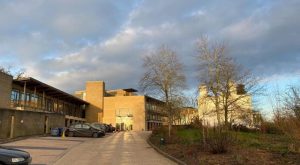
New Surrey County Council HQ, Woodhatch Place on Cockshot Hill, Reigate. Credit Surrey County Council

Surrey will press ahead with two long-planned specialist free schools but councillors have admitted the plans will still leave “significant” gaps in provision.

The scheme will unlock £16.14m of government cash to create at least 220 new SEND places.

Cabinet members agreed to move forward with the Department for Education-funded delivery of Betchwood Vale Academy (180 places) and Frimley Oak Academy (170 places), rather than take a combined £18.9m cash alternative to build provision themselves.

At the same time the Surrey County Council will accept £8.1m, in place of a third planned SEMH free school, and use the money to create 150 places through other local projects.

The decisions are aimed at tackling mounting pressure on Surrey’s specialist system, where public special schools are running at 103 per cent capacity.

Cllr Helyn Clack, cabinet member for Children, Families and Lifelong Learning, said the move would “accelerate projects that directly benefit Surrey families within months, not years”.

She told the meeting: “We know families can face long delays, longer journeys and too many children placed in independent settings, often far from home, simply because we do not yet have the places available locally.”

Scrutiny members warned that the expansion will not fully solve the problem. Cllr Catherine Powell, chair of the children’s select committee, told cabinet there is a current shortfall of more than 120 autism (ASD) places in West Surrey alone.

She urged the authority to publish clearer mapping of unmet need, including where children are still waiting for placements and where non-maintained independent (NMI) schools are being used.

“There is a clear shortage of special school places and SEND units today in Surrey,” she said, adding that the new projects “do not address all of the current unmet need which is still significantly higher in the West”.

Councillors acknowledged that even with the additional 220 places funded through the High Needs Provision Capital Allocation, plus the 350 places from the two free schools, “significant numbers” of children will still be without local specialist provision.

Council leader Tim Oliver said while the SEND expansion would not “fill all our gaps”, it was vital to proceed with deliverable projects now.

“We absolutely need to get on with as many of these projects as we possibly can, to create 350 new places is desperately needed, and even that will leave a significant number of children without a place,” he said.

The 220 places are expected to come forward through a mix of expanded special schools, new units in mainstream settings and alternative provision projects. The council says priority has been given to schemes that can open for September 2026.

The backdrop is sustained growth in Education, Health and Care Plans (EHCPs) and heavy reliance on independent placements, which are typically more expensive and often outside the county. Expanding state-maintained provision is seen as key to reducing those costs and meeting Surrey’s “safety valve” agreement with the DfE to contain its SEND deficit.

Geography remains a sticking point. While overall provision is broadly aligned with population split between East and West Surrey, members accepted that unmet need, particularly for Autism Spectrum Disorder (ASD), is currently greater in the West. Leaders said the £8.1m accepted in lieu of the cancelled Social Emotional Mental Health (SEMH) free school would be ring-fenced while further site work is carried out.

The council must formally notify the Department for Education of its decision on the free schools by the end of the week.

Emily Dalton LDRS

Related reports:

Government comes to Surrey’s SEND rescue

Surrey SEND place surge – is it enough?

Epsom and Ewell MP calls for SEND action

Image Surrey County Council HQ, Woodhatch Place on Cockshot Hill, Reigate. Credit Surrey County Council


Epsom and St Helier Trust doctor appointed by Privy Council to GMC

Dr Lucinda Etheridge

The General Medical Council (GMC) has announced a paediatrician as the latest member of its governing body, the GMC Council. Dr Lucinda Etheridge, a consultant in general and adolescent paediatrics, is the latest registrant member to join the body. She joins from St George’s Epsom and St Helier University Hospitals and Health Group in Surrey, where she is Site Chief Medical Officer. Her appointment replaces Dr Alison Wright on the Council, who stepped down after being elected as President of the Royal College of Obstetricians and Gynaecologists.

The Council’s primary role is to protect the public by setting the GMC’s strategy and goals and overseeing the work of the regulator. It is led by GMC Chair, Professor Dame Carrie MacEwen, and comprises up to six lay members and six registrant members. Following her appointment by the Privy Council, Dr Etheridge will start her role on Tuesday, 3 March. She has worked with the GMC since 2007, initially in the development of fitness to practise assessments, then as a performance assessor and training others for that role, before becoming a Responsible Officer for an acute trust.

Dr Etheridge, whose clinical interests are in the management of eating disorders, will step down from her current medical director role in spring 2026. She will then combine her work at the GMC alongside three days of clinical practice each week.

Professor Dame Carrie MacEwen said: “I’m delighted to welcome Dr Etheridge to the Council. She brings a wealth of experience to support us in our role overseeing the GMC and supporting registrants to deliver the best possible care. Dr Etheridge joins at an important time as we continue our work to be a more compassionate and effective regulator, and ahead of vital reform to the regulation of UK healthcare professionals. I would also like to thank Dr Alison Wright for her work and her contributions to Council. On behalf of the GMC, I wish her the very best in her new role.”

Dr Etheridge said: “I am delighted to be joining the GMC Council as a registrant member. I look forward to working collaboratively across the four nations to help shape a fair, transparent and forward-looking regulatory environment that enables registrants to provide the highest standards of care for patients.”

GMC Council members work a minimum of three days each month with the regulator. More information about the Council is on the GMC website.

The GMC Press Office 


Bourne Hall row escalates as Chief Executive suspends councillors’ decision

Bourne Hall Ewell Surrey inside

Epsom and Ewell Borough Council’s decision to delay plans for investing in Bourne Hall Museum has itself been suspended after the Council’s Chief Executive intervened, raising questions about whether councillors have the authority to demand disclosure of the full report they say they need.

At a special meeting on 25 February, the Community and Wellbeing Committee voted to defer any decision on the museum’s future until councillors could see the complete, unredacted service review. But in an email to all councillors the following day, leaked to the Epsom and Ewell Times, Chief Executive Jackie King said the resolution could not yet be implemented and was now on hold pending legal advice.

She wrote: “While the resolution was agreed at Committee, it relates to the Council’s broader constitutional arrangements around access to information and the respective roles of elected Members and statutory officers… As legal advice was not available at the meeting, it is necessary to seek clarification from the Monitoring Officer regarding the constitutional effect of the resolution and appropriate next steps. In the meantime, implementation is suspended to ensure that any action taken is consistent with the Council’s governance framework.”

Her intervention leaves the museum decision in limbo and raises a wider constitutional question: whether a committee of elected councillors can compel disclosure of information that council officers have decided should remain confidential.

Chair expressed “disappointment” after councillors voted to delay decision

The committee had been reconvened after the Council’s Audit and Scrutiny Committee ruled that the original January decision had been taken without councillors seeing key reports, including the Bourne Hall service review and peer challenge findings.

Opening the meeting, committee chair Cllr Clive Woodbridge (RA Ewell Village) said: “This is being called as a result of a calling of a decision that we took back in January. Councillor Coley… called the decision in on the basis that the committee did not have all the information necessary to make the decision, in particular that we did not see the LGA corporate peer challenge report.” He said councillors could either retake the decision or uphold it.

Instead, members voted to defer the matter entirely. After the vote, Cllr Woodbridge said: “I can’t hide my disappointment at the decision, but it is the decision that you’ve taken.”

Coley: “If we’re spending public money… I find it very difficult to justify secrecy”

Independent councillor Alex Coley (Independent Ruxley), who initiated the call-in, said councillors were still being denied crucial financial detail. He told the meeting: “The Service Review provided has significant redactions which amount to several pages of missing content, especially that which relates to the financial aspects of the museum… If we’re spending public money on services the council owns and operates directly itself, I find it very difficult to justify secrecy.”

He warned councillors they were being asked to commit future funding without proper scrutiny. “Year one requires additional funding from revenue that was not allocated in our recently passed budget. Years two to five require funding from a council that doesn’t exist yet… Surely, the most sensible option is to leave things as they are and allow the new unitary council to decide how best to proceed.”

Lawrence: “You need to see the plan in front of you before you spend a quarter of a million pounds”

Cllr James Lawrence (LibDem College) criticised both the timing and substance of the information provided. “As of Monday at 2pm appendix three, the service review hadn’t been published… Public money was paid for this report.” Referring to the peer challenge findings, he added: “The peer challenge team were unable to access more detailed income slash expenditure relating to Bourne Hall… You need to see the plan in front of you before you spend a quarter of a million pounds on this.”

Muir: “We do not have enough information… this is unacceptable”

Cllr Bernie Muir (Conservative Horton) said the redactions were unprecedented in her experience. “I’m actually very, very concerned about the lack of the information we have. We are the front line of making decisions, and we don’t have enough information on which to make one.” She added: “I have literally, in nine years, never seen a document like the one that… we’ve been given… This is unacceptable. No company I’ve ever worked for would accept making a decision if we provided this.”

Chinn: “Every single recommendation is redacted”

Cllr Kate Chinn (Labour Court), who proposed the deferral, told the meeting councillors were still missing the report’s most important section. “A redacted version shall be appended… but every single recommendation is redacted. I don’t understand how we can say that we’ve got all the information… I don’t think this has moved on at all.”

Her amendment to defer the decision until the full report is disclosed was carried by the committee.

Reynolds warned of consequences of continued delay

Cllr Humphrey Reynolds (RA West Ewell) cautioned councillors about the risks of postponement, saying delay could itself harm the museum’s future and create further uncertainty. He argued councillors needed to balance transparency with the need to move forward with decisions affecting services.

Chief Executive’s intervention raises constitutional questions

The Chief Executive’s subsequent decision to suspend implementation of the committee’s resolution now creates a new layer of uncertainty. Her email makes clear the issue is no longer just about the museum, but about the balance of authority between elected councillors and statutory officers.

Councillors voted to delay a decision until they could see the full evidence. The Council’s most senior officer has now paused that instruction pending legal advice on whether councillors have the constitutional power to require disclosure.

Future of museum — and decision-making authority — now unclear

The original plan involved investing substantial additional funding to improve the museum, with the aim of securing its long-term future ahead of the borough council’s abolition in 2027 and replacement by a unitary authority.

For now, both the museum’s future and the committee’s attempt to obtain full disclosure remain unresolved. Councillors are awaiting legal advice from the Monitoring Officer, which will determine not only what happens next with Bourne Hall Museum, but potentially who ultimately controls access to key information at Epsom and Ewell Borough Council.

Sam Jones – Reporter

Related reports:

Ewell’s Bourne Hall plans knocked back by scrutiny

Independent view of Ewell’s Bourne Hall

Ewell’s “UFO” shaped Bourne Hall to take off anew


On the Primarks Epsom, ready, steady, go 25th March

Ashley Centre

Primark will open the doors of its new store at Epsom’s The Ashley Centre on Wednesday 25 March at 10am, taking over the former House of Fraser unit.

To mark the moment, the first customers and loyal Primark fans will be welcomed by a live DJ. The new store will cover 31,400 sq. ft set over two floors and follows the retailer’s recent recruitment of 90 new team members ready for opening day.

Customers will be able to shop the bestselling Primark products they know and love across clothing, kidswear, beauty, lifestyle and home.

In further good news for local shoppers, its popular Click & Collect service will also be coming to Epsom to enable customers to browse and order on the Primark website before picking up their items in store, at a time that best suits them.

Ewa Klepczuk, Primark Epsom’s store manager, said: “After working at Primark for many years, I’m excited to now be part of bringing our exciting new store to Epsom. We know there is a lot of anticipation for our arrival, and with 90 new retail colleagues now in place, we’re all working hard behind the scenes to ensure we’re ready for opening day. I’m really looking forward to seeing the reaction of local shoppers when our doors open, where they’ll find our famous Primark must-haves, all at unbeatable value for the entire family. Everyone is welcome to join in with our celebrations – we can’t wait to see everyone there!”

Louisa Butters, Head of Urban Destinations (Retail & Offices) at CBRE Investment Management, owners of Ashley Centre, said: “The opening of Primark marks a significant milestone for the Ashley Centre and is a strong acknowledgement of the progress we’ve made through our recent refurbishment programme. As one of the UK’s leading retailers, Primark brings both scale and drawing power, playing a key role in strengthening the scheme’s anchor line-up and enhancing its overall proposition. Its arrival will further elevate the quality, accessibility and relevance of the destination, while reinforcing the confidence that major national brands have in our long-term vision for its continued transformation.”

The new Epsom store will be Primark’s 199th store on the UK high street and follows the retailer’s last store opening in December 2025 in Royal Tunbridge Wells, Kent.

As shoppers prepare for the opening day, Primark customers can continue to shop at nearby stores in Sutton, Kingston-Upon-Thames and Guildford — and use Primark’s handy online stock checker tool to track down their favourite styles before heading in-store.

Primark Press Release

Related reports:

Primark finally indicates a season to open in Epsom

Primark to open in Epsom

5 Shops that could replace House of Fraser in the Ashley Centre