

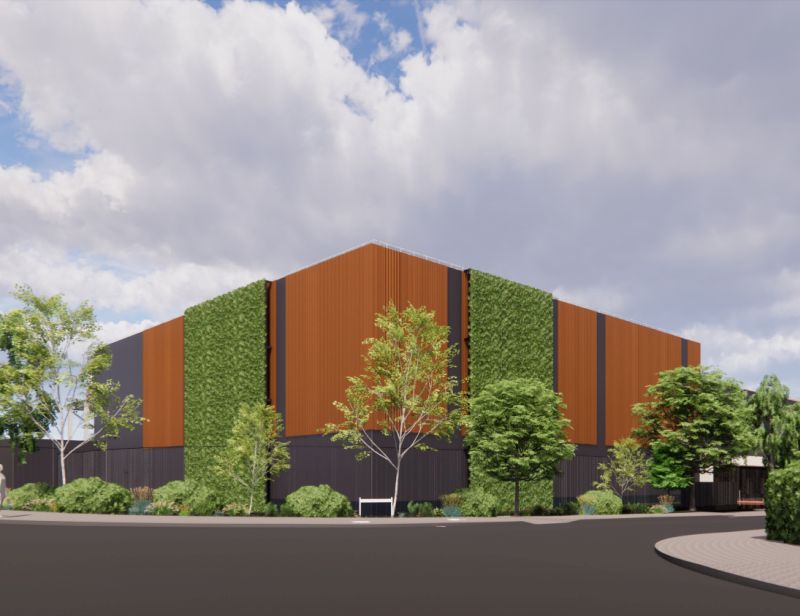
Redhill data hub plugs into AI boom


A major expansion of a Redhill data centre campus worth an estimated £500 million has been approved by Reigate and Banstead Borough Council.
The development at Foxboro Business Park, Holmethorpe, will see older industrial buildings demolished and replaced with a large new data centre building containing four server halls, offices, electrical infrastructure and cooling equipment.
The scheme was approved by councillors at RBBC’s Planning Committee subject to conditions, including controls over construction activity and further work into the possible reuse of waste heat from the site.
The project is being brought forward by property investor Castleforge in partnership with Galaxy Data Centers, which operates data centre facilities.
Data centres are effectively the industrial warehouses of the digital age. Instead of storing goods, they house vast numbers of computers and data storage systems that support cloud computing, artificial intelligence, online banking, business systems, streaming services and internet communications.
The Redhill expansion is intended to strengthen the area’s role as part of London’s growing digital infrastructure network, with the developers saying demand for computing capacity continues to rise rapidly because of AI and other data-heavy technologies.
Planning papers show the new building will provide around 15 megawatts of computing power capacity — enough electricity usage to rival that of a small town.
The council report describes a highly serviced technical building featuring secure server rooms, cooling systems, rooftop plant equipment, backup diesel generators and new electricity substations to ensure uninterrupted operation during power outages.
The development will also include roof-mounted solar panels and has been designed to achieve a BREEAM “Very Good” environmental rating.
One feature highlighted by both the developers and council planners is the potential reuse of heat generated by the computers inside the building.
Data centres produce very large amounts of heat, normally removed by industrial cooling systems. In this case, the planning permission requires further investigation into whether excess heat from the site could eventually be exported to nearby homes through a district heating network.
The approved site lies within the Holmethorpe Industrial Estate, about a mile north-east of Redhill town centre.
Planning documents indicate the wider Redhill Data Centres campus already occupies around 11,800 square metres across three buildings and serves clients in sectors including finance and artificial intelligence.
The site was already authorised for data centre use under earlier planning permissions dating back to 2007 and 2009, meaning the latest approval represents an intensification and modernisation of an existing technology campus rather than an entirely new industrial use.
Residents raised concerns during the planning process over issues including traffic, construction disruption, noise, flood risk, visual appearance and possible health impacts.
However, specialist consultees including Surrey County Council officers, Surrey Fire and Rescue Service, Surrey Police and London Gatwick Airport did not object, subject to planning conditions.
The development also reflects a much wider national trend as Britain competes to expand the infrastructure needed for AI and cloud computing.
The UK Government designated data centres as Critical National Infrastructure in 2024, recognising their growing importance to the economy and public services.
Industry analysts CBRE describe London as Europe’s largest data centre market and one of the most important globally, although growth has increasingly been constrained by electricity supply and the difficulty of finding suitable sites close to major urban areas.
Castleforge says it has already invested more than £100 million into the existing Redhill campus since 2024 and now intends to proceed with a further major phase of development following the council’s approval.
For local residents, the project represents another sign of the gradual transformation of industrial estates into high-value digital infrastructure hubs serving the modern economy — largely unseen by the public, but increasingly essential to everyday life.