
Progress at Banstead’s High Down prison – but drugs and poor conditions remain


A prison near Epsom and Ewell has made encouraging progress in safety and the time prisoners spend out of their cells – but illicit drugs, poor living conditions and delays in rehabilitation remain serious concerns.
HM Chief Inspector of Prisons visited HMP High Down, at Banstead, during an unannounced inspection from 1st to 11th June. The Category C training and resettlement prison held 1,085 men, close to its operational capacity of 1,113.
The inspection report, published on 7th September, described the findings as “generally positive” and praised an experienced governor and strong leadership team.
Safety was upgraded from “not sufficiently good” at the previous full inspection in 2023 to “reasonably good”. Purposeful activity improved from “poor” to “not sufficiently good”.
Respect remained “reasonably good”, while preparation for release was again judged “not sufficiently good”.
Drugs remain biggest threat
The prison had developed a more robust response to illicit drugs, including improved gate security, more extensive testing and a comprehensive programme for prisoners seeking to overcome addiction.
Positive results from random drug tests fell from 31 per cent before the previous inspection to 19 per cent. Although an improvement – and better than at many other prisons – inspectors said the figure remained too high.
Criminal gangs were regularly using drones to deliver drugs and other prohibited items. Window cages had reduced the risk, but some were damaged and weaknesses in windows, grilles and netting continued to provide access.
Inspectors concluded that the illicit economy remained the greatest threat to High Down’s stability, contributing to debt, bullying, fear and violence.
Reported violence had nevertheless fallen by 14 per cent and was broadly in line with other Category C prisons. Self-harm was 22 per cent lower than at the last inspection and there had been no self-inflicted death at the prison since then.
Despite these improvements, 56 per cent of prisoners questioned said they had felt unsafe at High Down, while 31 per cent said they felt unsafe at the time of the survey – both higher proportions than at comparable prisons.
Stark difference in time outside cells
Prisoners in full-time work or on the enhanced regime could spend as much as 10.5 hours a day outside their cells.
For unemployed prisoners, who represented about 10 per cent of the population, the average was only around three-and-a-half hours.
Roll checks found almost a quarter of prisoners locked in their cells during the working day. Inconsistent operation of the regime meant that some were locked up as early as 4.30pm and, in a small number of cases, were not released until 11am the following morning.
There were some popular employment-focused programmes, including railway courses and XO Bikes, which trains prisoners to refurbish bicycles. Construction courses taught bricklaying, plastering, painting and decorating, while other prisoners could qualify as baristas and learn to repair coffee machines.
Most prisoners completing courses achieved their qualifications and inspectors found that teaching standards had improved.
However, attendance at education, training and work remained too low. Some prisoners were not unlocked for scheduled classes, while staff did not always challenge those who refused to attend. Ofsted judged every aspect of the prison’s education and skills provision as “requires improvement”.
Dirty cells and damaged showers
Conditions varied considerably across the prison.
Communal areas were generally clean and some specialist units were well cared for, with gardens, plants and other improvements. Inspectors also welcomed a reduction in the number of prisoners sharing cells.
Elsewhere, cells were dirty and toilets and sinks were described as particularly unhygienic. Few cells had curtains, forcing prisoners to use sheets or towels to block the light, and some reported shortages of basic supplies such as toilet paper.
Many showers were grimy, damaged or lacked screens providing sufficient privacy. At the time of the inspection, 183 cells intended for one person were being shared by two.
The prison library was also too small for the population, with inadequate materials, limited seating and some broken furniture.
Rehabilitation delays
High Down became a Category C training and resettlement prison in 2022, with an emphasis on preparing men for release. Inspectors found that it was still not achieving its full potential in that role.
The offender management unit was understaffed and officers carried high caseloads. Contact was often concentrated on prisoners approaching an important sentence milestone, leaving many others without meaningful help.
This delayed risk assessments, transfers to open prisons and access to offending behaviour courses. There was a particular bottleneck for the Building Choices programme, with insufficient places and what inspectors described as at times chaotic allocation arrangements.
Of the approximately 800 prisoners released during the preceding year whose outcomes were known, around 30 per cent went into sustainable accommodation. About eight per cent were released homeless – still too many, inspectors said, although a lower proportion than at most London prisons.
Only 41 former prisoners were known to be in employment six weeks after release, rising to 58 after six months.
There were positives in resettlement support, including well-coordinated housing advice, help with benefits and debt, and efficient arrangements on the day of release. Family support delivered by the charity Pact and parenting programmes run with Sutton Council were singled out as examples of good practice.
Health-record concerns
Inspectors also identified shortcomings in health services. Records did not always contain complete details of appointment requests, triage decisions or “do not attempt resuscitation” instructions.
For at least three years, nurses had routinely poured and labelled individual doses of methadone before transporting them to prison wings, a practice which inspectors said was not consistent with professional nursing standards.
The Care Quality Commission requested action plans from the prison’s health providers over record-keeping, complaints handling, clinical governance and the monitoring of risks.
Concluding the report, Chief Inspector Charlie Taylor said further improvement depended partly on the Prison Service providing resources for building refurbishment and security upgrades.
He added that High Down also required renewed attention to offender management staffing and prisoners’ attendance at education.
Seven of the report’s 15 principal concerns were classified as priorities requiring immediate attention.
.
Related reports:
Surrey County Council Prison Social Care Team awarded CQC ‘good’ rating – 9th July 2026
Surrey jail addresses prison population crisis – 15th June 2025
Surrey prison failed IPP prisoner – 23rd December 2024
Damning report on local prison – 16th November 2023
You could re-train to reform offenders – 13th April 2023
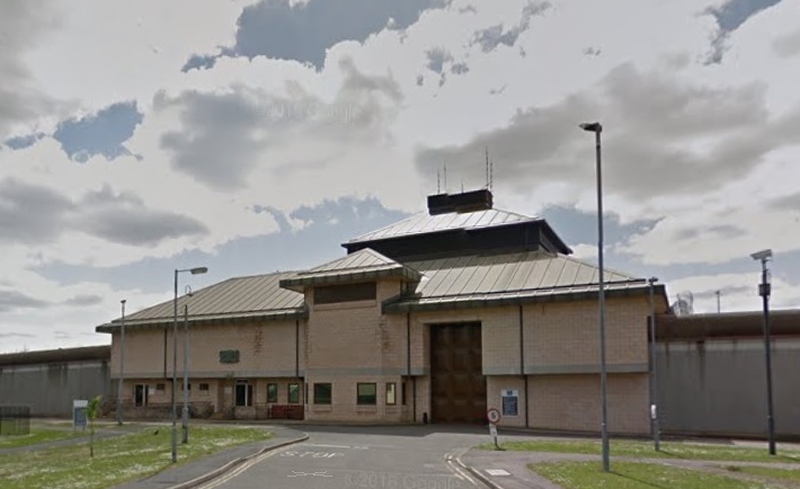
Image: HMP High Down from Google maps