Epsom and Ewell Times
22nd October 2026

ISSN, LDRS and IMPRESS logos

Pays to get your Council’s audit done

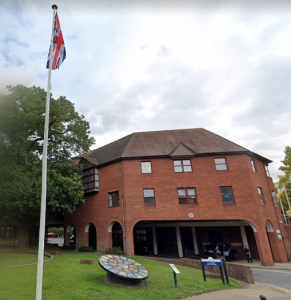
Surrey Heath

As we reported here: Epsom and Ewell Council raises tax 2.99% Epsom and Ewell Borough Council was proud of the fact its auditors passed its last set of accounts without any qualification. Another Borough Council of Surrey is not having such a happy time over audits. Our BBC LDRS reporter reports:


Surrey Heath councillors want Michael Gove to sack the Government appointed investigating the local authority’s finances. A motion has been put forward by Councillor Robin Perry, portfolio holder for finance, to let the local authority appoint a different firm of inspectors with the “capacity and capability to complete the outstanding audit of accounts”.

It will be discussed at Full Council on Thursday, February 23, as part of Surrey Heath’s budget meeting  – where council tax is also expected to rise by 2.99 per cent. The motion comes as the council’s accounts from 2019/20 to present have yet to be signed off and approved.

According to the tabled motion, the problems stem from “much publicised pressures across the whole local government audit system that are the result of staffing and capacity issues within those audit firms” and as such “many councils like Surrey Heath are experiencing significant delays in the completion of the audits on their accounts”. Cllr Perry says this “falsely and unnecessarily undermines confidence in the finances of all those councils, including Surrey Heath.”

Auditors were appointed in 2020 through the Public Sector Audits Appointments but the 2019/2020 accounts have still to be completed. Audit work has not even begun on any of the council’s later accounts. This, the motion says, has impacted preparation of the 2021/22 accounts and has “incurred significant expenditure retaining temporary staff with the historic knowledge and experience required to respond to queries relevant to the outstanding annual accounts”.

However,  Councillor Rodney Bates, Labour opposition member for Old Dean, said it was just a “desperate attempt” by the Conservative-run council to blame “others for their own financial failures.” He said: “The main reasons why our external auditors have taken longer than expected to complete the 2019/20 accounts is because they were left in a dreadful mess after the council’s speculative property investments needed updated valuations.  In addition, we have had repeated financial governance issues where the council made very large payments outside their own regulations . The external auditor is also hardly to blame for the fact that many of the Council financial files from that time were surprisingly deleted or for the poor handover records when key finance staff left.  It is frankly ridiculous for the Conservative Portfolio Holder for Finance to complain about the auditors when it was his own Government that appointed them in a contract less than three years ago. 

“Whilst there are customer service questions for our external auditor to answer, these are best addressed through the non-political audit committee at the council. This receives regular reports on the progress of the audits from both our officers and from our external auditor.  The committee has a Conservative, Cllr Ratiram, as the vice chair and it is therefore surprising that Cllr Perry seems to have such a lack of confidence in his own colleague to address this issue.”

Should the council vote in favour of the recommended tax increase, bills for average band d home in the borough would rise from £2,155.62 per year  to  £2226.30, a jump of £70.68.

This figure, the papers say, includes the county council and Surrey Police and Crime Commissioner increases, but not the parish councils.

Related reports

Epsom and Ewell Council raises tax 2.99%


Surrey County failed SEND boy

Surrey fines

Surrey County Council has been ordered to apologise and pay a family £7,400 after failing a young boy with special educational needs. The local government and social care ombudsman published its finding today. It found Surrey County Council failed to provide the boy his full entitlement of education and therapy for 18 months and fined the local authority due the frustration, distress. and lost education it caused.

The boy’s mother raised the complaint in June 2021. As part of his education, health, and care plan, the boy should receive 15 hours of tutoring a week, along with speech, language and occupational therapy. Between September 2020 and January 2021 “he received just four hours a week. This rose to six hours a week in February 2021.”

In April 2021 a special educational needs and disabilities (SEND) tribunal ordered  the council to increase this to 25 hours a week, including weekly therapeutic provision, and animal therapy. Full speech and language therapy did not begin until September 2021. Animal therapy, despite the mother alerting the council that sessions had not started in May 2021, did not begin until March 2022 – as the council did not follow up her complaints, the ombudsman found.

In December 2021, the boy’s relationship with his occupational therapist was said to have broken down but Surrey County Council did not put in an alternative until March 2022.

Michael King, local government and social care ombudsman, said: “Councils cannot delegate their duties to ensure provision laid out in young people’s EHC Plans are delivered.  After councils issue these plans we expect them to ensure all the provision included is in place – and if it is not, it should act to secure it without delay. In this case the boy missed out on a significant amount of tuition and therapies for a prolonged period, despite a previous investigation by us which found the son did not get education between 2018 and 2020. It is disappointing that the council did not learn from the issues raised in my first investigation.”

Mr King said he had further concerns over the way Surrey County Council dealt with the mother’s complaints, which at one stage took 11 months to handle. The council’s own policy states it should have taken a maximum of 30 days.

Following the investigation Surrey County Council must now write to the mother and apologise for its faults and the injustice it caused.  It must also pay £5,400 for the boy’s his lost hours of education and therapy, £1,000 to the boy’s mother for the prolonged frustration and distress it caused which it compounded with poor complaint handling, and a further £1,000 to the boy in recognition of the distress caused to him. 

It must also carry out a review of how it arranges and monitors its provisions and complaint handling for its children and young people  services.

Mr King added: “The council has accepted my recommendations to improve its processes and I hope the better oversight this will bring will ensure other children and young people in Surrey do not miss out on the education and therapy they are entitled to in the same way.”

Surrey County Council now has three months to consider the report and confirm its actions. A spokesperson for the county council said: “The Local Government and Social Care Ombudsman has issued a report following its investigation of a complaint about Surrey County Council.  The complaint was about education and children’s services. The Ombudsman found that there had been fault on the part of the council, and this had caused injustice to the complainant. Surrey County Council takes the findings very seriously and apologises for any distress the family experienced, and has agreed to take action which the ombudsman regards as providing a satisfactory remedy for the complaint.”

The council must now consider the report and tell the ombudsman within three months (or such longer period as the ombudsman may agree) what it proposes to do. 


Blot on Epsom Downs horizon to grow no more?

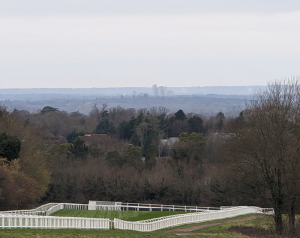
Woking from Epsom Downs

Ever wondered where are those tower-blocks on the west horizon from Epsom Downs? Our LDRS journalist reports on Woking Council’s consideration of the height of its buildings:

Plans to limit high-rise development in Woking is akin to slamming the stable door shut after the horse has bolted, Surrey County Council’s ex-head of planning has said. On Thursday February 2, Woking Borough Council’s executive committee agreed to press ahead with its goal to create a masterplan that would “provide a long-term vision” for the town centre’s skyline.

It continues work that began in 2021 that included a six-month consultation which garnered more than 850 responses from about 450 individuals and organisations. According to council documents, though, there remain several legal issues the borough must overcome before it adopts the full masterplan, including the fallout of the Planning Inspectorate decision on the Crown Place from December 3 2022 that granted planning permission three towers of  23, 25 and 28 storeys respectively.

The appeal decision has had a “clear implication” for the Masterplan, the report read, “in that it has changed the nature of the townscape” and that “as a minimum, the design principles for this site, including what prospective heights may be appropriate, will need reconsidering.”

Furthermore, the report states, during the public consultation phase, Woking Borough Council received representations from developers regarding the possibility of legal challenges if it were to be adopted.  There is also the financial risk with officers identifying “significant” cost implications and suggesting the only way to “avoid unnecessary additional expense to the taxpayers purse” is not to proceed to adopt the Town Centre Masterplan in its current draft form.

This has caused the council to seek legal advice on how to proceed. Whether the masterplan can ever have the impact the council desires – fewer high rises in the town centre is debated.

Catriona Riddell is a former head of planning at Surrey County Council and current director at Catriona Riddell & Associates. She said: “Woking is a very tiny, very constrained borough with a lot of debate about how high up the developments go. Anywhere from Surrey you can see Woking. Some love it, some hate it. It’s very much Marmite.
“The Government is trying to help local authorities restrict the number of high rises but with Woking, it is going to be difficult as it already has so many. The local plan is in place in Woking and is up to date – that’s what developers will look at. Any supplementary planning won’t have the same status. Developers are used to playing this game. It’s going to be difficult for the council to change this.”

According to council papers, the masterplan will establish an “overarching vision for the town centre to enable designled, sustainable development, such as building new homes, cultivating a thriving retail and business environment and strengthening Woking’s cultural and leisure offer”. 

The report said that the “ambition and need for a clear and robust plan to guide development in the town centre, to give certainty to developers wishing to invest, and provide officers with an effective tool to assess planning applications and defend decisions on appeal remains”. 

This, Ms Riddell says, may be the best way for the authority to move forward. She added: ‘It will be about how to make the area a good place to live and work and the only way is through a masterplan so they are right to go ahead with it but it will be difficult with developers looking to build highrises. It will be very difficult for the council to argue its out of character. Woking has changed massively over the years, that horse has bolted.”


Will Cathedral repairs threaten Canadian WW1 memorial?

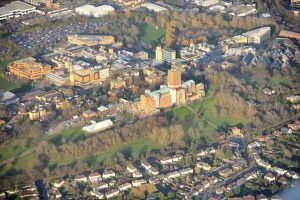
Guildford Cathedral aerial view

Plans to build 124 homes on undeveloped woodland next to Guildford Cathedral will threaten a memorial to Canada’s First World War military sacrifice, a preservation society has warned. Guildford Cathedral needs to carry out an estimated £3.2million in repairs, but unlike other cathedrals in the UK, it says, has “never possessed endowments of any significance and has always struggled to fund repairs to the Grade II* listed building”.

Image: Grahame Larter

To solve the issue, the cathedral sold a parcel of land to developers which, it says, will “enable the endowment to be secured for the cathedral which is vital for its survival” and secure its long-term maintenance.

The issue, says the Vimy Foundation, which oversees the public historical resources and modern perspectives on Canada’s participation in the First World War, is that land is a memorial to the 650,000 Canadians and Newfoundlanders who fought in Europe during the First World War, 66,000 of whom lost their lives.

Writing to Guildford Borough Council’s planning committee, the foundation said: “This undeveloped wooded area was created on the initiative of R.B. Bennet, prime minister of Canada from 1930 to 1935, who lived near Guildford, to provide a place for reflection and remembrance of Canada’s contribution during the conflicts that shook the first half of the 20th century.”

They added: “While understanding the needs of the Guildford community, The Vimy Foundation wishes to reaffirm its commitment to the preservation of memorial sites honouring Canada’s fallen soldiers. In recognition of the bravery and sacrifice of these men and women, their memory must continue to be honoured. The Vimy Foundation calls on decision-makers, Guildford Cathedral, Guildford Borough Council and developers, to preserve the commemorative and memorial dimension of this site and will support initiatives in this direction.”

There are currently seven homes on the site and used by staff cathedral staff. It is designated as open space as part of the Cathedral land but earmarked for 100 homes within the council’s local plan.  

A previous planning application to build 134 homes on the slopes of the cathedral was turned down, despite officer recommendations, by Guildford’s planning committee. Background papers to the application said it was due to the plans being “poor quality and out of character with the surrounding area”.

This led to the cathedral working with developers Vivid to carry out what it described as a “comprehensive review” that included “extensive work to address the reasons for refusal in the 2015 scheme”. The new plans would demolish the existing staff buildings to create 124 homes, 44 of which would be affordable. Cathedral staff would have use of 13 dwellings, with the remaining 111 consisting of 19 one bed units, 61 two-beds, 28 three-beds and three four-bed homes.

Matt O’Grady, chief operating officer at Guildford Cathedral, said: “The Charity Commission, the regulatory body responsible for these matters, was given the full details of the gift of land, including all associated historical correspondence. After a thorough assessment the commission approved schemes allowing the cathedral to sell the relevant land – allocated in Guildford’s Local Plan – for development.  R Bennet will always be acknowledged as the generous donor who enabled land to be purchased from the Earl of Onslow. 

“His contribution is commemorated in a ledger stone on the south elevation of the Cathedral and the protection of this is encapsulated in the Cathedral’s Grade II* listing and in the Care of Cathedrals Measure 2011. The Grade II* listed Guildford Cathedral doesn’t benefit from a large income in the same way as many English cathedrals; because it is relatively new, it doesn’t have any historic endowments. The sale of land to Vivid for new homes will safeguard the long-term future of the building. 

“The income generated will be used to create an annual endowment that will provide for the long-term repair, maintenance, and improvement of the cathedral.  The cathedral is proud of its community links and believes very strongly that it should play a part in contributing to new homes in Guildford.”

The latest neighbourhood consultation expired in January.  A date has yet to be set for the matter to appear before committee.