
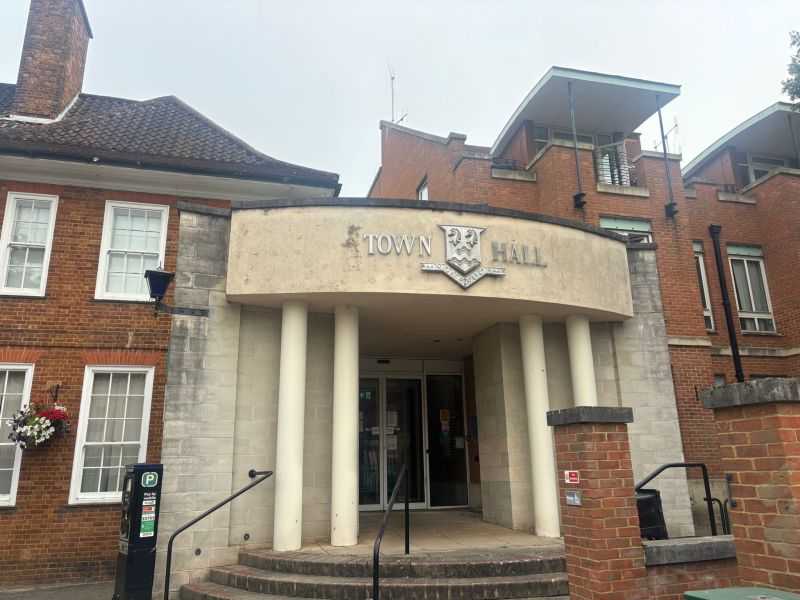
Epsom and Ewell Council put in proportion


Epsom & Ewell Borough Council has approved changes to the political balance of its committees following further shifts in councillor allegiances, amid continuing tensions within the ruling Residents’ Association group.
The decision, taken at Full Council on 12 March, reflects the latest change in group composition after another RA councillor, Christine Howells (Nonsuch), moved to sit as an independent.
The adjustment of committee seats – known as proportionality – is a routine requirement when political group numbers change. However, the debate revealed deeper concerns about control, transparency and internal stability within the council.
Rebalancing committees after defections
Introducing the report, Councillor John Beckett (RA Auriol)said the changes were necessary to reflect the council’s evolving political makeup. “As a result of changes within the political representation within this council, there has been a need to review the proportionality sitting on committees,” he told members.
The revised allocations had been agreed between group leaders and were presented for formal approval by the full council.
Councillors approved the updated distribution of seats, ensuring that representation on committees broadly reflects the current balance of political groups.
Dispute over whether seats belong to parties or individuals
The debate exposed a technical but significant disagreement about whether committee places belong to political parties or to individual councillors.
Councillor James Lawrence (LibDem College) argued that while parties are allocated seats proportionately, it is the council that appoints individuals to those positions. “It is not the party being appointed, it is the person,” he said, adding that councillors who change political group should not automatically lose their place on committees.
He pointed to examples in the report where individuals had been nominated to seats allocated to a particular party, suggesting this supported his interpretation.
But Councillor Rachel King (RA, Town) rejected that view, insisting that committee places are fundamentally party allocations. “Seats are for parties, not for people,” she said, adding that parties retain the right to nominate replacements if councillors change allegiance. She said the arrangements had been agreed by group leaders and urged councillors to support the proposals.
Tensions over substitutions and control
The issue of substitutions – where councillors stand in for others at meetings – also proved contentious. Opposition councillors criticised what they described as inconsistent or politically motivated handling of substitutions following recent defections.
Councillor Chris Ames (Labour Court) said the situation had become “farcical”, alleging that rules were being stretched to maintain control. “The clique that runs this council has a special talent for alienating members… bending the rules,” he said. He linked the proportionality changes to wider political instability, suggesting the Residents’ Association group was “bleeding members”.
The debate reflects a broader struggle over influence as the RA group’s long-standing dominance of the council comes under increasing pressure.
Background: shifting political landscape
The latest changes follow defections from the Residents’ Association group over recent months, with councillors moving to sit as independents or aligning with opposition groups. The departure of Christine Howells (Independent Nonsuch) from the Residents’ Association further alters the balance, reducing the RA group’s numbers and requiring another recalculation of committee representation.
Under local government law, councils must ensure that committee seats are allocated in proportion to the size of political groups, as far as practicable. This means that each defection can trigger a reshuffle of committee places and, potentially, influence over key decisions.
Vote confirms new balance
Councillors approved the revised proportionality arrangements, including updated committee memberships.
A separate vote on one recommendation – relating to specific appointments – was carried by 15 votes to eight, with four abstentions, indicating some continuing division within the chamber.
Despite the disagreements aired during the debate, the council formally adopted the new structure, bringing committee representation into line with the current political balance.
Ongoing instability ahead of reorganisation
The debate highlights a council in a degree of political flux as it approaches both local elections and the planned abolition of the borough under Surrey’s local government reorganisation.
With further changes in group membership still possible, additional reviews of proportionality may be required in the coming months.
The shifting balance of power on committees could prove significant in the council’s final year, particularly as it continues to make decisions on major issues before handing over responsibilities to the new unitary authority in 2027.
Related reports:
Goldman sacks the Epsom and Ewell Residents Association
RA councillor replaces Independent member as scrutiny row erupts at Epsom Town Hall