

Friends of Horton Cemetery influence law reform


A local Epsom charity’s campaign to protect a forgotten cemetery appears to have helped shape national thinking on burial law reform.
The Friends of Horton Cemetery (FoHC), based in Epsom, made a detailed submission to the Law Commission in January 2025 calling for stronger legal protections for neglected burial grounds—particularly those in private ownership.
Now, with the publication of the Law Commission’s report on Burial and Cremation in March 2026, several of the group’s core concerns appear to have been recognised at the highest level of policy.
Horton Cemetery, the resting place of around 9000 former psychiatric patients from the Epsom hospital cluster, has long been at the centre of FoHC’s work. Since its sale into private ownership in 1983, the site has suffered decades of neglect, with no public access and minimal maintenance.
In its submission, FoHC argued that the law currently leaves such sites in a regulatory vacuum, with no enforceable duty on owners to maintain them and limited powers for authorities to intervene.
That argument now appears to have gained traction.
The Law Commission’s report identifies private burial grounds as an area of “real gaps in protection” and, for the first time, proposes a legal duty requiring all burial grounds—including privately owned ones—to be kept in “good order”. The report also envisages inspection and enforcement powers at national level.
These proposals closely mirror FoHC’s central recommendation that cemetery owners should be subject to a clear, enforceable maintenance obligation reflecting the historical and emotional significance of such sites.
However, other proposals put forward by the Epsom group have not yet been taken up in full.
FoHC had called for a statutory right of access for relatives, stronger powers for local authorities to intervene, and safeguards against speculative ownership and redevelopment. While the Commission acknowledges many of these issues—particularly the importance of access to graves—it stops short of recommending firm legal rights or stronger local enforcement mechanisms.
Speaking after the report’s publication, Lionel Blackman, solicitor and secretary of the Friends of Horton Cemetery and author of the legal submission said “The recognition of the problem is an important step, even if the solutions remain incomplete.”
The charity’s work has also fed into ongoing discussions with the Ministry of Justice. At a recent meeting, organised by Patron of the Charity and local MP Helen Maguire with trustees of the charity, Theresa Keneflick and Kevin McDonnell and junior Minister Alex Davies-Jones MP, Horton Cemetery was cited as a real-world example of the kind of site falling through gaps in the current legal framework.
The Law Commission’s reforms are expected to take several years to translate into legislation, with an initial Government response anticipated within six months.
For campaigners in Epsom, the message is clear: what began as a local effort to restore dignity to a neglected burial ground is now influencing the national conversation.
And while the law may not yet have caught up fully, Horton Cemetery is no longer being overlooked.

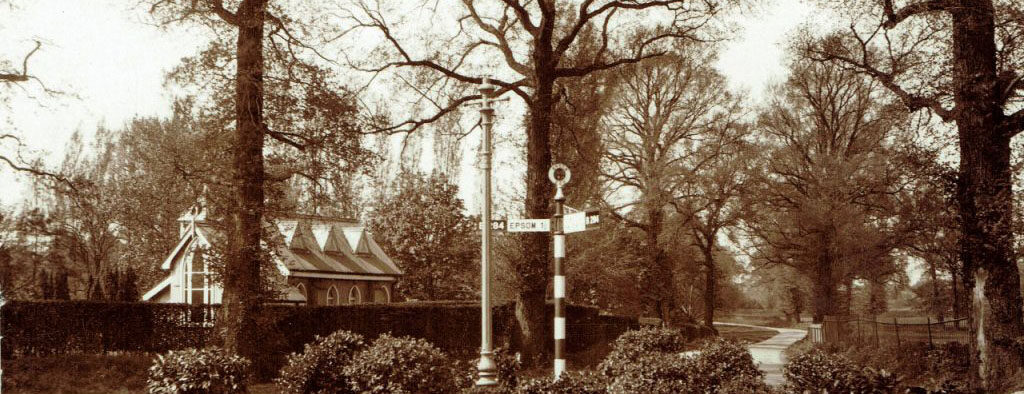
Image: Horton Cemetery 1971
Related reports:
Epsom and Ewell’s MP champion’s Friends of Horton Cemetery mission on “Time to Talk Day”
Epsom’s Horton Cemetery gets attention of two kinds
Portraits of pauper patients in Epsom’s Horton Cemetery, inspires artist
Petition to reclaim Horton Cemetery from property speculator