Epsom and Ewell Times

Current

ISSN, LDRS and IMPRESS logos

Great expectations on Surrey’s tax?

Tim Oliver Surrey County Council leader - Surrey Live

Surrey County Council’s leader says he has “no expectation at all” that council tax will be put up by the full amount allowed despite a £14.4million budget gap at the council.
Upper tier authorities, such as the county council, can increase council tax by up to five per cent without a referendum, since Jeremy Hunt’s autumn statement on November 17.
Presenting a draft budget for 2023/24 to his cabinet on Tuesday (November 29) Councillor Tim Oliver (Conservative, Weybridge) outlined that the council was required to produce a balanced budget each year, and that he was “confident” the gap could be closed before it came back to cabinet early next year.
The budget will then need to be signed off by full council in February, while all 11 districts and borough councils across the county will also confirm how much they expect to raise their part of council tax by as they approve their budgets.
The county council’s budget currently assumes a 1.99 per cent increase of the county council’s part of the council tax, less than the five per cent it could be increased by, made up of a three per cent raise plus a two per cent precept for adult social care.
Cllr Oliver said: “I have no expectation at all that we will need to increase by 5 per cent.”
He also said the budget would be dependent on the settlement payment given to councils by central government, due to be confirmed on December 21.
Speaking before the meeting he said that around 80 per cent of the council’s revenue funding came from council tax, and that the authority was not “blessed with considerable sums of money from government”.
As such Cllr Oliver did not think the draft budget would be “significantly impacted” by the settlement announced by central government, but did say the council may need to use one per cent of the possible raise for adult social care, which could take the total increase to 2.99 per cent.
Of a total budget of around £1billion, Cllr Oliver said in the meeting he was “confident” the council would have found a way to close the budget gap of £14.4m and said the authority was in a much better position than in 2018.
He said after two years of the coronavirus pandemic, a cost of living crisis and rising inflation the council was not in the “easiest of times” but had a strong financial base to work from.
He added; “It is fair to say that we haven’t had the most consistent of approaches from central government over the last few months, so we are hoping that in that context, things will settle down.”
The council’s cabinet member for finance and resources, David Lewis (Conservative, Cobham), also highlighted a forecasted full year deficit of £24.5m from figures released from the halfway mark in September.
The overspend is made up of a £32.5m forecast overspend, offset by £8m of savings identified at the council.
Cllr Lewis told the meeting two areas of largest impact were around children’s services, including a £15m overspend on home to school transport, and in adult social care.
The meeting agenda said: “The current level of projected overspend remains significant.
“It is imperative that this reduces before we reach the end of the year, otherwise there would be a material negative impact on the level of the council’s reserves at a time when the level of external financial risk is extremely high.”

Image: Tim Oliver – credit Surrey Live


Will Epsom think on the same lines?

Tram

Trams into Surrey have been raised as one “very possible solution” to improving public transport with the expansion of the capital’s Ultra Low Emission Zone (ULEZ). The zone’s expansion was confirmed on Friday (November 25), and Elmbridge councillors had discussed the matter with a Transport for London (TfL) representative the previous evening at an overview and scrutiny meeting.

Councillors raised issues around public transport in the borough, saying it was not as good as that in greater London, and asking what could be done to improve it so people were less reliant on their cars. The ULEZ will be expanded from August 2023 to cover the area currently in the Low Emission Zone boundary. It will mean the zone, where drivers in non-compliant cars pay £12.50 per day if they enter it, will come up to the border with Surrey.

ULEZ expansion map

Speaking before the decision had been announced, Elmbridge Councillor Graham Woolgar (The Walton Society, Walton Central) said the question of better public transport in Elmbridge was “one of money”. He said it was unlikely the county council would find more money to improve buses in Elmbridge, and TfL would not help either because the area is outside London.

He asked Iain Killingbeck, community partnerships lead – west, for TfL: “There wouldn’t be any prospect of public transport being improved, would you agree with that?” Mr Killingbeck said he did not accept that, though TfL’s responsibility was for transport in the capital. He said getting people out of their cars, especially on shorter journeys, and promoting walking and cycling was what TfL encouraged. He added: “That’s what we do at TfL, that’s what we’re all about. So we can help to collaborate, partner and work with you, but we don’t have the responsibility for the county or for this area.”

According to the Mayor’s office, the existing ULEZ has reduced roadside pollution levels by 44 per cent in central London and 20 per cent in inner London.

Speaking after the meeting, the county council’s leader, Cllr Tim Oliver (Conservative, Weybridge) pointed to the authority’s £50million investment in electric buses and the same amount in hydrogen buses in the county. There is also an on-demand electric bus service operating in some parts of Surrey including Tandridge and Mole Valley, and due to be rolled out to other areas.

Cllr Oliver told the LDRS: “We will invest whatever we possibly can. I’m a big believer that we are never going to get people out of their cars if there isn’t a good alternative public transport system.” He said the county council had “put the message across” to the London Mayor about the impact the expansion would have on Surrey residents, including in areas such as East Molesey where drivers will be charged if they cross Hampton Court Bridge towards Bushy Park.

The county council, as well as borough and district councils, responded to a consultation that ran over the summer on the plans, highlighting issues such as scrappage schemes, health appointments and requesting to delay the expansion. Cllr Oliver said: “We’ve done everything we possibly can to say: ‘You can’t do this, it’s not fair on our residents.’”

In Thursday’s Elmbridge meeting, Long Ditton Councillor Jez Langham (Liberal Democrat) explained his ward bordered London and agreed public transport needed to be better for residents. He pointed to the success of trams in cities such as Sheffield and Manchester,  as well as in Wimbledon, though he mentioned the Croydon tram crash of 2016 in which seven people died. Cllr Langham said: “Nonetheless it is a successful line, and given the lack of tubes around, it would seem to be a very possible solution.”

Mr Killingbeck said trams were “relatively affordable” but that there wouldn’t be the option of getting a tram line in place before the August 2023 expansion. He added: “I accept, we need to strengthen public transport.”

Cllr Oliver said trams could work in more urban areas of Surrey such as Guildford or Woking, but believed the on-demand buses were better for many of the more rural parts of the county. He added: “[Trams would be] a major infrastructural investment and if the government were to put some funding behind that, then I’m quite sure we would look at it.”

The Mayor of London, Sadiq Khan, said: “Expanding the ULEZ London-wide has not been an easy decision. The easy thing for me would have been to kick the can down the road. But in the end, public health comes before political expediency. We have too often seen measures delayed around the world to tackle air pollution and the climate crisis because it’s viewed as being too hard or politically inconvenient. But there’s no time to waste when people’s lives are on the line and we are facing a climate crisis.”


Defence of Surrey M25 policing

motorway traffic jam

M25 protesters acting as “dead weights” means they take longer to be arrested, according to Surrey’s Police and Crime Commissioner. Just Stop Oil activists brought parts of the M25 to a standstill this month as part of their ongoing campaign calling on the government to take more action on the use of fossil fuels.

Surrey’s Police and Crime Commissioner, elected to hold the county’s police force to account, said she had attended the protests on a day when five were arrested. She added she is “enormously proud” of Surrey Police’s response. Responding to a question from Tandridge District Councillor Mick Gillman at a meeting of the police and crime panel on Monday (November 21), Lisa Townsend said she disagreed with the view that Surrey Police were not doing enough.

The meeting, at which councillors from each of the county’s authorities can put questions to the PCC, heard she had also received “an awful lot” of criticism from people about police not negotiating with protesters, and not listening to their demands. She said: “It doesn’t matter what reason somebody is breaking the law for. If they’re breaking the law, the police will get involved regardless of what their greater or not aims. I am enormously proud of the action that Surrey Police took over these protests and I will continue to praise them for it.”

Cllr Gillman’s (OLRG Alliance, Burstow, Horne & Outwood) question said he had found it impossible to explain to residents when asked why more action was not being taken by Surrey Police with the protesters. He said: “Residents expect the police to apply the law without fear or favour and there is strong feeling that lack of decisive action by police when the protests started have only encouraged more protests as those involved feel they can get away with this. Can I have an assurance that you will be using all your influence with the police to insist they now apply a zero-tolerance approach to any protesters who block or disrupt the highway?”

He followed up in the meeting that one resident had said to him it should just take minutes to arrest someone, and not “hours of them sitting in the road” as had happened on previous demonstrations by the group. Mrs Townsend said: “The idea that police haven’t acted swiftly I’m afraid is just rubbish and I absolutely won’t accept that criticism at all.”

On a day when protesters were climbing the gantries above the M25, Mrs Townsend said she had seen four of the arrests that took place, and that once the arrest was made, the police then had to ensure it was “absolutely safe” before they went up to get protesters down. She added: “It’s not simply a case of saying ‘you’re arrested’ then they come down quietly. In two of the cases I saw, the protesters followed a well known tactic of playing dead, basically becoming a dead weight and insisting that officers go and physically remove them. That can’t happen in two minutes, although the arrest has been made. The person then needs to be lawfully and carefully removed so that everybody’s safety is protected, not least the Surrey Police officers who are up there.”


Cllr Dalton leads street night light fight

street lights

Epsom and Ewell’s Councillor Hannah Dalton (Residents’  Association, Stoneleigh) said she lived in a zone five area, but when she got the last train home, she would still get the torch out on her phone in order to get home safely once off the main streets. Surrey’s Police and Crime Commissioner has hit back at a claim she “doesn’t understand what she’s talking about” as she says the decision to turn street lights on at night is the county council’s responsibility.

Lisa Townsend said street lighting has been “one of her great frustrations” with “mixed messages” at council level, as another councillor shared her experience of walking home with her phone’s torch on to get back safely.

In a heated meeting of Surrey County Council’s police and crime panel, in which councillors and non-elected members ask questions of the PCC, Runnymede Councillor John Furey (Conservative, Addlestone South) said residents could make a request to get lights switched back on in certain areas.

Street lights on some of Surrey’s residential roads started to be turned off at night in 2017, usually between the hours of 1am and 5am, to save money.

Epsom and Ewell’s Councillor Hannah Dalton (Residents’  Association, Stoneleigh) said she lived in a zone five area, but when she got the last train home, she would still get the torch out on her phone in order to get home safely once off the main streets.

In response the elected Conservative PCC said: “You and I have both, I suspect, walked home from train stations using the light on our phone, clutching our keys, speaking to somebody on the phone hoping that if anything happens, there will at least be a record but conscious that by the fact that we’re on our phone means we’re not paying the proper attention to our surroundings. Any woman I know has been there.”

She said she got “very annoyed” when told by officers that the reason that lights hadn’t been turned on was because police hadn’t asked for them to be. Mrs Townsend added: “That’s not the reason. It’s entirely in the county council’s gift as to whether they turn them back on or not. I’m frustrated by the mixed messaging that my office gets I’m frustrated by the different answers that I get when I ask about it.”

Calling on councillors to lobby the county council that where residents didn’t feel safe and wanted street lights switched back on, they should be, she added it was not for the police to be making the case for residents.

Mrs Townsend added: “Something should not have to happen to us, or to any other woman or man, in order for a case to be made to put the lights on. If you don’t feel safe, and it’s what the community wants, the lights should be switched on. I couldn’t be clearer in that.”

Cllr Furey had previously interrupted Mrs Townsend, saying: “This is quite out of order. The PCC doesn’t understand what she’s talking about.” He said the police would be asked for their opinion if there was a request for residents to switch lights back on, but that the request went through the county council and that if there was a case, the lights would be switched back on.

Mrs Townsend, saying she had been “rudely interrupted” by Cllr Furey, said she understood the process but was concerned about the “extra bureaucracy” and said she didn’t want to see any more delays to requests. She added: “My point is police shouldn’t have to become involved in it. If a woman doesn’t feel safe and she wants to have the lights turned on, that should be a matter for the county council. It should not be a matter for policing because the police cannot interfere on whether somebody feels safe or doesn’t.”

Surrey County Councillor Keith Whitham (Conservative, Worplesdon) said it was “not a black and white situation”. He said in his area he had seen successful examples of lights being switched back on where Surrey Police had supported residents in their appeals to the council. Mole Valley Councillor Paul Kennedy (Lib Dem, Fetcham West) said the blanket approach “simply doesn’t work” and that people had “to work really hard to try and get the lights back on.” He said he would be taking it up with the county council, but also recognised that many people in his rural area valued and wanted to protect their dark skies.

On the wider issues of the safety of women and girls, the meeting heard the responses to a survey carried out in April and May 2021 which showed that 45.6 per cent of the 5,427 participants felt unsafe in their neighbourhoods at night, and 55.7 per cent felt unsafe in the nearest town centre at night. A report into the findings said: “One of the main themes when respondents were asked to explain why they sometimes feel unsafe, was lighting, or lack of it in local areas. A lot of these comments mentioned the lack of street lighting in their local area, and how this made it feel unsafe when out and about after dark.”

Mrs Townsend pointed to the almost £1million received from Government to help tackle violence against women and girls in the county, including training for teachers in schools. She said: “We’re not going to police our way out of this problem. We do need to take a whole society approach.”


Neighbouring crematorium plan goes up in smoke.

Crematorium

Reigate and Banstead borough council has shelved its plans for the area’s first crematorium despite having spent £350,000 on the project so far. The facility could have brought in more than £1.5million for the authority, but was rejected by councillors at a planning meeting in September 2021, despite the officer recommendation to approve it.

A decision then had to be taken whether to submit another application, proceed with a third party partner or appeal the decision, though it was then discovered the council could not appeal its own planning decision.
Reigate and Banstead Borough Council’s commercial ventures executive sub-committee considered a report into “project baseball” on Thursday (November 17) which detailed the closure.

The project, first brought to committee in December 2019, would have provided the borough’s first crematorium, and has been funded by the council through its reserves, or savings. Plans were refused at planning stage because of its location in the greenbelt, with more than 500 public objections to the application.

Council documents show the aim of the project was to provide a much needed and greatly improved level of service to the residents, while also bringing in income for the authority. More than 80 per cent of of dead people were cremated in the UK as at 2021, and facilities in neighbouring boroughs were found to be operating beyond their capacity.

Documents said: “[They] were not considered to serve customers, and particularly local people, well at a difficult time of life, either in terms of service, cost, environment and location/accessibility.” They went on to say the crematorium would aim to deliver “a higher quality facility and service” than the nearest competitors, closer to residents and those near the borough, and also bringing money in for the council.

Operating at full capacity, it was estimated the crematorium could have brought in more than £1.5m per year.


Banding against Surrey’s top value homes?

Big house

“Very expensive” houses on private estates in Surrey should be added to new council tax bands to make the collection process fairer, according to one councillor. As part of the Autumn Statement, Jeremy Hunt announced more “flexibilities” for local authorities to increase council tax by 5 per cent per year without a referendum from April next year. The rise could mean average council tax bills look increase to more than £2,000 for a Band D home as councils look to fill holes in their budgets.

Councillor Nick Darby, (The Dittons, Dittons and Weston Green Residents), the Residents’ Association and Independent group leader on Surrey County Council, said legislation at central government level could make the system fairer. In what he said would be a “significant change” in the system, Cllr Darby said a threshold could be set on homes worth more than, for example £5million, and two new council tax bands created to get those homes to pay more “as a matter of principle”. He added: “I don’t mean your average three-bed semi. If you go into areas of Surrey, in the private estates in Esher, Weybridge you’ve got people with very expensive houses.”

He asked if it was fair that those who have “those very, very expensive houses” pay the same council tax as someone in a house with “very much less value”. But he said the plans should not impact on those who were “already struggling”. He said for people who were “asset rich and cash poor” the payments could be put off until the house was sold, rather than having to pay immediately or be forced to sell their home.

County council’s budget “already under considerable pressure”. The Surrey Liberal Democrats said people in Surrey were being asked to pay for Conservative errors to fix the economy and oil and gas giants were being “[let] off the hook”. Will Forster (Woking South), Leader of Surrey Lib Dems said: “We know that the county council’s budget is already under considerable pressure and today’s announcements will not make balancing the books any easier. It remains to be seen whether the Tory administration decides to use the extra flexibility they will have to set a much higher level of council tax, to help make up the shortfall. We need a fair deal, including support for people unable to afford skyrocketing mortgage bills and rents, and protecting funding for local health services. This could be paid for by reversing tax cuts for banks and a proper windfall tax, instead of imposing years of stealth taxes on ordinary families.”

Surrey County Council’s leader, Tim Oliver (Conservative, Weybridge) is chairman of the County Council’s Network, and praised the Chancellor’s decision to delay social care reforms until 2025 as a “brave” one. He said postponing these reforms and putting money into frontline care services was welcomed and would protect the most vulnerable also giving councils “vital time to stabilise the care system”.

The county council previously warned of concerns that without a delay, the authority could face bankruptcy. With his county council leader hat on, Cllr Oliver said there was much in the statement local government could be happy about. He said investment in schools, skills and research and development would allow Surrey residents to access new, higher-paid opportunities, a priority for the council.

Cllr Oliver added: “Businesses in Surrey will also be pleased to know that they will not see business rates going up next year, while central government will also be ensuring local authorities are not out of pocket as a result. “We were also pleased to see that capital budgets for the next two years will not be cut, meaning we can continue to develop the world-beating broadband and transport infrastructure companies need to grow and thrive.” He said the authority would work closely with government ahead of the local government finance settlement due in December and would continue with its own budget setting, soon to be published for public consultation.

Another councillor looking ahead to December’s finance settlement is the Guildford deputy leader, Cllr Joss Bigmore (Residents for Guildford and Villages.) He was concerned there was not enough support to help local authorities protect frontline services. With an increase of more than £1.5m in energy costs just at the borough’s Spectrum leisure centre, he said: “It’s all well and good being allowed to increase council tax but it’s nothing compared to inflationary pressures.”

End

Epsom and Ewell Times adds: Tim Oliver was interviewed on BBC Radio 4’s PM programme 18th November and said he hoped the Council would not have to raise Council tax by 5%. He said the position was ameliorated by the promise of central Government of £6 billion to finance adult social care. So, a rise in Council tax “probably not, possibly not…” In a Surrey County Council press release issued later in the day Mr Oliver has added:

Today’s autumn statement contained much that local government can be happy about, helping us ensure no-one is left behind. I am pleased to see that government has listened to our calls for a postponement of the adult social care reforms and for further support for the service. It is also good that the government will be developing a workforce plan for the sector and the NHS, to ensure we have the capacity to deliver these vital services.

“Businesses in Surrey will also be pleased to know that they will not see business rates going up next year, while central government will also be ensuring local authorities are not out of pocket as a result. We were also pleased to see that capital budgets for the next two years will not be cut, meaning we can continue to develop the world-beating broadband and transport infrastructure companies need to grow and thrive.

“Finally, the new investment in our schools over the next two years, as well as other announcements about skills and research and development, will enable Surrey residents to access new, higher paid opportunities. This is a high priority for us, and will be a key driver to ensuring Surrey continues to lead the country as we seek the growth that will take us through the current economic uncertainty.

“We will be working closely with the government over the coming weeks, particularly as we approach the local government finance settlement due in December, to work out the details attached to these measures. In the meantime, we are also proceeding with our own budget-setting process, which we will be publishing for public consultation shortly.”


Tadworth Youth Club reduces crime

Tadworth Youth Club

A youth club in one of Surrey’s most deprived neighbourhoods is teaching children business skills, getting them birthday cakes and has seen kids queuing out the door to get in. The Friday night club, which can see up to 70 children in a week, also serves food to the kids, has them running their own tuck shop and deciding what to do with the profits, and aims to teach them things they may not learn at school.

Image: Councillors, Surrey Police officers, Surrey\’s deputy police and crime commissioner with staff and children at the MYTI Club. (Credit: LDRS)

The MYTI club runs each week and during school holidays at the Phoenix Youth Centre in Tadworth, and was set up by Tony Britto when he pitched to Surrey County Council after a call out for people to use the space. The LDRS (Epsom and Ewell Times’ news partnership with the BBC) visited the youth club, where police officers were playing table tennis with the children, burgers were served for dinner, and everyone joined in with a rendition of happy birthday for two of the kids.

The deputy police and crime commissioner for Surrey and two county councillors were also there, showing just how much support this project has, as it takes steps towards gaining charitable status to take some of the strain off Tony’s pockets. He’s put a lot of his own money into the club, which costs around £70,000 a year to run, but that’s no longer sustainable and getting charitable status would mean access to more funding streams. ‘Parents can’t believe how confident the kids have become’

Tony’s own past is what has pushed him to want to pass on skills to these young people. After his dad died and Tony was taken into the care system in London, he said he started drinking from a young age and was “up to no good, getting into trouble, fighting”. You had an inkling of something that you shouldn’t be doing, I was probably up to it,” he said. But he stopped drinking nearly six years ago, and alongside working for his own roofing company, is running the club with Megan Ferguson, the managing director.

Tony remembers something he was told when he was 13 years old that has stuck with him ever since: “Tell me, I forget; show me, I remember; involve me and I understand.” It’s what makes him want to get the kids deciding what they do with the profits from their tuck shop (they put them back into the club), help them foster good relationships with the police, and teach them the value of things in life.

They also get great feedback from parents, Tony said: “They can’t believe how the kids change, how confident they’ve got. And if there’s ever an issue, they come to us.”

External view of Phoenix youth club in Tadworth, where the MYTI club is held each Friday and in school holidays. Credit: LDRS

A heat map shared on the club Instagram account (also run by the children) shows a drastic drop in anti-social behaviour in the vicinity of the club when its doors are open. Surrey Police could not provide more up to date information at the time of publication.

Kids would be down the ‘wrong path’ without the club. Megan is clear that were it not for the club many of the children would be going down the “wrong path”. The Tattenham and Preston neighbourhood, where the club is, ranks 7th in Surrey for overall deprivation, according to figures from the county council. Nearly 20 per cent of the children in the area are in absolute low income families, which compares to 8.8 per cent in the borough of Reigate and Banstead, and 7.7 per cent in Surrey as a whole.

Ellie Vesey-Thompson, Surrey’s deputy police and crime commissioner, said getting the kids in from eight years old is an important factor and praises both the impact on the children and the fact they are “diverted” away from getting drawn into crime and exploitation. But she’s clear that a similar set up wouldn’t work in all parts of Surrey in the same way, even if she did have the budget to do so. She said: “It’s not just about the building, it’s the environment they’re creating. If you put one of these all across Surrey, it wouldn’t have the same effect without having a Megan and a Tony in it.”

Megan not only knows all the kids’ names, having grown up in the area she also knows a lot of their parents too. With young children of her own, she fits the role around her family, and contrasts the difference between what they are running compared to the “dirty, grotty” youth clubs she went to as a youngster. She said her role is not the same as the kids’ teachers or parents, and is happy to remind them that if they don’t want to be there, they should leave. Saying it’s important to teach the kids how much things cost, from bouncy castles the club hires to trips out, she said they start to appreciate how expensive the real world is.

With kids coming from as far afield as Leatherhead, Guildford, Kingston and Croydon, Megan says the space is a “privilege” for the children, and that’s what makes them want to stay. She added: “Some of these kids don’t have a voice in their life, they don’t feel like it but we give it to them and we give them that power. All we can do is guide them along to making the right decisions.”

Surrey County Councillor Rebecca Paul highlighted the strong relationship between those running the club and the children there. She said: “This is just a club that the local community feel real ownership for and, as a result, the kids really want to be here. They want to participate.”


Epsom to help meet children’s homes bed shortage?

Wells House - former SAurrey County council Childrens Home

With improvements to be made to existing children’s homes, and new ones being built in Epsom and Walton, Surrey County Council is addressing a shortage of up to 60 children’s homes beds for young people in the area. High property prices, difficulty securing planning permission and staffing issues, tied in with existing children’s homes in need of repair and children with more complex needs have led to a “real problem” with provision in the county.

Image: Wells House or Karibu, Spa Drive – Surrey County Council Childrens Home

According to Rachael Wardell, the authority’s executive director for children, families and lifelong learning, the county is “quite a long way short” on being able to provide for looked-after children in Surrey, and will need another ten or 12 homes to meet its needs. These would come from both council-run children’s homes and private providers, with the county council currently having nine of its own homes and two new ones being built. She said the priority was always to keep children in Surrey where possible, to keep them near their families and communities.

The authority’s children’s services department was rated “requires improvement” in a January inspection, up from the inadequate rating it was first given in 2015. Asked if the council is playing catch up in terms of provision for young people being looked after by the council, Ms Wardell said it was “quite possibly true”. The executive director, who joined the authority in December 2020, said the county council has fewer children’s homes altogether than many neighbouring authorities, even across both in-house and private providers. She added: “When we look at some of the provision we’ve got for our children, it’s quite a long way short in terms of numbers. It also often looks quite out of date, it hasn’t necessarily been maintained or brought up to date on a regular basis over the years. What I would say is that we’re investing really strongly now.”

Part of that investment is more than £2million put into staffing, including staff achieving qualifications to be on a higher pay grade, and a recruitment drive since April which has seen 95 jobs offered and the council’s residential team fully staffed with managers, deputies and portfolio leads.

With improvements to be made to existing children’s homes, and new ones being built in Epsom and Walton, Ms Wardell said she wanted to be able to make children “feel like they’re in a lovely place” with really good staff. Figures from July show that just under 40 per cent of looked-after children in the county were in homes in Surrey, with the authority aiming to increase that number to 80 per cent.

The county council closed one of its own homes in February this year, within 24 hours of an Ofsted report in which inspectors said “significant” management failings left its residents at risk “of significant harm”.
In October, Elmbridge planners rejected an application for a children’s home in a Claygate cul-de-sac, despite support from the county council and a recommendation to approve from council officers.

Ms Wardell said those residents who objected to children’s homes had lost sight of the fact that they would be housing “children who’ve done nothing wrong, who’ve had a really, really tough life, and who need our support more than anything else”. Of the shortage of beds in the county, she added: “It is a real problem. Not being able to develop [homes] ourselves and for other providers not to be able to develop them restricts the choices and opportunities for Surrey’s children.”

She also said she is not the only children’s services director asking for Ofsted inspections that allowed more of a focus on the children and their journeys, as she reacted to an inadequate rating given to one of the council’s children’s homes in a report released last week. Saying regulatory inspections don’t look “in the round” at what is going on in a child’s life, and since inspectors “can’t be in the home every day” they identify problems from months previously that have often since been corrected. While saying she would sometimes want staff to spend time with children rather than updating records, if they had to choose between the two, Ms Wardell also said: “I’m not trying to wriggle out of the responsibility, when homes get that wrong. At the same time, when they’re trying to be very child centred, they’re sometimes doing things with that young person, and maybe not keeping their records as up to date as they should.”

She said being under less pressure with staffing would mean workers could both work with children and on paperwork, and that changes had been made to the system that logs information to make it easier for staff.
But she added that the “bounce” homes made between ratings and after inspections was “really tough” not only on staff but also on the young people living there, who would get a version of the report to read.

She said: “[The report] will say: ‘The thing that you were experiencing as supportive, helping you, getting you back to school and all of the other important things, was something that we don’t think is good enough.’” In small settings, she said a change of one or two key people could make a big difference, describing residential care as “more volatile than the rest of the service” and saying it could move both up and down quite quickly. She added: “Even the inconsistencies [across the county] are a bit inconsistent.”


Surrey County pays asylum child £15,000

Surrey County Council HQ

A “vulnerable”, unaccompanied asylum-seeking child has been given £15,000 by Surrey County Council after years of failings in his care which led to him sleeping on the floor of a restaurant where his friend worked.
The child twice attempted suicide and was hospitalised because of his mental health, having arrived in the UK alone aged 12.

After his arrival in March 2016, the youngster was found local foster placements by the county council until April of that year, followed by a residential placement in Manchester. An investigation by the Local Government Ombudsman after “Mr X” complained about the council said the authority did not “appear to have considered anything other than a ‘roof over his head’” at the later stages of his time under its responsibility. The ombudsman said the child was “extremely distressed and unhappy” at the placement in Manchester, telling staff he was 15, and not 12. The older age was accepted “without question” by the council, then the child ran away from the placement and attempted suicide.

There then followed several moves, including a placement with a foster carer of the same nationality, residential placements, including one in Staffordshire, and him being detained under the Mental Health Act. While he was in hospital, after a second suicide attempt, Mr X told staff he was not as old as he had said, but the council “refused to accept” his younger age according to the ombudsman.

The report broke down the “symbolic” payment of £15,000 as £10,000 to reflect the impact on Mr X’s education, £2,000 for the failure to assess Mr X’s age and needs leading to a lack of appropriate placements and care, £2,000 for his time spent homeless and £1,000 for distress caused, including delay to his asylum claim and legal action taken to establish his age.T he investigator said Mr X “was vulnerable, and his distress was severe and prolonged”. They added: “It is not possible for me to calculate a financial remedy for the distress Mr X has suffered as a result of fault by the council. There is no formula I can use. Any recommendation I make can only be a symbolic payment to acknowledge his distress. It is not ‘compensation’.”

The report showed that the child’s mental health deteriorated in early 2017, with social care records saying he was distressed and preoccupied by what had become of his family. After he was discharged from hospital, he repeatedly ran away from his residential placement in Staffordshire, eventually failing to come back and being recorded by the council as living “independently” when he could have been as young as 13.

Requesting a foster placement from the council, and being told there were none available, Mr X refused the offers of independent or semi-independent placements from the council. It was at this stage the ombudsman’s investigation said the council “should have been concerned with ensuring suitable aftercare to ensure Mr X’s recovery” but seemed to be looking only to provide “a roof over his head”.

Between January and April 2018, he was “sofa surfing” in London and sometimes slept on the floor of a restaurant where a friend worked, according to the ombudsman’s investigation. He then got help from the Refugee Council and a solicitor, who found him a foster placement and asked the council to formally assess Mr X’s age, with the authority concluding he was the older of the two ages that had been given.

This assessment was criticised by the courts in May 2019, who decided he was the younger of the two ages when Mr X challenged the council’s process. The council upheld parts of complaint made by Mr X, which included that it failed to carry out an age assessment when he first became “looked after” and that it was wrong to appoint his allocated social worker to do the age assessment. As part of the complaint made by Mr X directly to the council, the authority also accepted it had failed to assist Mr X with his asylum claim,  to arrange suitable education for him and to provide suitable placements (because of its failure to assess Mr X’s age and his care needs).

He was offered £2,000 compensation as part of the decision as well as an apology and an explanation of how problems had been addressed.

While the ombudsman welcomed steps taken such as the setting up of a specialist team to care for unaccompanied asylum seeking children, the investigator said the council seemed to have missed “the bigger picture” in dealing with the complaint. The findings said: “Mr X was a looked after child. The council was his parent. While the council accepts there were serious shortcomings in the care it provided Mr X, it has not responded in the way I would expect a parent to respond in the circumstances.”

The ombudsman found that for two and a half years, the council had treated the asylum seeker as “almost an adult when he was in fact a vulnerable child”, which impacted on decisions about accommodation and education. The report said he had now settled and returned to education, wishing to “move on, pursue his studies and make something of his life in England”.

The ombudsman said: “In making his complaint, he was keen to ensure council services for other young people in similar circumstances improved.”

A county council spokesperson said they could not go into specific detail for safeguarding reasons, but said the authority would always try to place children in accommodation appropriate to their needs and a full assessment would be done to assess this, with fostering being the first option explored. But they added that in some cases, children would come to the attention of the authority in an emergency and a full assessment was not always possible.

The spokesperson said: “We wholly accept the Ombudsman’s decision and we sincerely apologise for any distress that was caused. Our Social Workers are trained to undertake comprehensive age assessments in line with national standards. We also have an agreed accommodation strategy that places an emphasis on both the development of accommodation within Surrey and the recruitment of more foster carers.”


Epsom woman gets out of a mango pickle

A woman was sent home from Epsom General Hospital with a sliver of mango seed stuck in her throat, leading to an update of guidance around patients who have been eating soft foods. The 57-year-old went to Epsom hospital emergency department saying she was having trouble swallowing after eating mango pickle.
A doctor looked at her, but could not see anything obviously wrong, with the patient not drooling, still able to swallow and no foreign body visible on examination. The patient was sent home with the advice that it could be a scratch or gastritis, and told to return if she was more unwell.

A board meeting of the Epsom and St Helier hospital trust heard she then came back four days later unable to swallow at all and with a sore throat, but still nothing visible to doctors. On a slide titled “the deadly mango” in a learning from complaints presentation, board members heard how the hospital then discovered an oesophageal tear and air in her chest after a CT scan.

Documents show there was “low level of risk” given she had been eating soft food, and that sharp foreign bodies causing problems are usually only related to fish or broken bones such as in chicken, so this was not considered.
There are no guidelines either nationally or at the trust for this sort of situation.

After discussions with other hospitals, she went for surgery in Guildford, where a mango seed sliver was removed from her oesophagus and she stayed for a week on intravenous antibiotics. Luckily the patient made a full recovery, but did make a complaint against the hospital trust.

The board meeting heard that the unnamed patient had been informed of the investigation into the incident and how new guidelines had been drawn up at the trust, to look at the symptoms patients were suffering, and not just the foods they had eaten.

Dr Richard Jennings, group chief medical officer, said that from something ridiculously obscure and exotic and unlikely ever to happen again, the trust had created pragmatic and useful learning points. He added: “I was also very happy, having felt anxious reading the title, to find it was a “potentially deadly mango”.

The meeting heard that assessment of the patient was done correctly, though the investigation showed the patient probably should have been discussed with ear, nose and throat [department] if symptomatic
She also should have been told to return within 24 hours if there were no improvement.
A presentation said it was “very rare to have sharp foreign body injury following soft food and usually due to foreign bodies in them”, such as glass or plastic.
As well as new guidelines for staff, a discharge leaflet would be created for patients who were going home with this condition.


Tasteless Tweeting Councillor loses Tory whip

Andy Lynch

A Horley councillor has lost the Tory whip after posting what his party called “wholly unacceptable and grossly offensive” posts from a now-deleted Twitter account. Surrey County Councillor Andy Lynch was investigated by the Conservatives for posts made last month from an account with the handle @TheLandlorduk.

Surrey County Councillor Andy Lynch now sits as an Independent.

On Tuesday (November 1), the chairman of the Surrey County Council Conservative group, Cllr John O’Reilly, said the investigation on behalf of the party into the account had concluded. He said: “Having spoken to senior members of the Conservative group, we have unanimously agreed that Mr Lynch’s various comments under ‘The Landlord’ twitter handle are wholly unacceptable and grossly offensive, and, accordingly, the Conservative whip has been withdrawn from him.”

Screenshots taken before the Twitter account was deleted show one post sent in response to a tweet about asylum seekers which said: “When are [politicians] going to recognise the human rights of the indigenous people to have a quiet and peaceful life?” Separately, a county council spokesperson confirmed two complaints have been received about the @TheLandlorduk account, and were being considered in line with the authority’s process for complaints against councillors.

In May this year Cllr Lynch was found to be in breach of the county council’s code of conduct for separate posts sent in February from a different Twitter account, now also deleted, with the handle @cllrAndyLynch. Tweets posted from the @TheLandlorduk account included calling the “police force an absolute disgrace these days”, and responding to a picture of a Muslim woman and child standing at a halal fridge saying: “Throw a packet of bacon in there”.

Posts also called London Mayor Sadiq Khan an “absolute knob” and London a “third world s and the murder capital of Western Europe”. A county council spokesperson said the authority’s code of conduct had no specific guidelines regarding previous conduct of the same nature but the council’s member conduct panel may take it into account when considering a complaint made against a councillor.

llr Lynch had not responded to LDRS requests for comment at the time of publication. In May, the Horley West, Salfords & Sidlow councillor was found to have breached Surrey County Council’s code of conduct for posts from the @cllrAndyLynch account.

He sent a written apology to the county council’s chief executive, its chairman and its leader. At the time, Cllr Lynch was removed from a select committee by the Conservative group, and received a statement of censure from the county council. Minutes from the conduct panel said: “The panel noted that Andy Lynch had fully co-operated with the investigation and had voluntarily admitted and apologised for his conduct.”

At the time of the first account being deleted, from which Cllr Lynch called journalist Yasmin Alibhai-Brown “a racist b***”, he was also a Reigate and Banstead borough councillor but did not stand again in May’s local elections. A borough council spokesperson said he was suspended by his council political group as part of its disciplinary process, and remained suspended until the end of his electoral term in May.

The investigation by the borough council’s monitoring officer did not conclude because the complaints were withdrawn. Cllr Lynch was elected to the county council in May 2021.

“The Landlord” account repeated comments about Ms Alibhai-Brown including calling her an “evil, racist loon”.


Surrey Ambulance employee woes far from over

Ambulance 999 operator

An NHS chief executive has never in her career seen employee relations cases of the “volume and a complexity” as at her current troubled ambulance trust. South East Coast Ambulance Service (SECAmb), the NHS trust which covers Surrey, is on an improvement journey, after an “inadequate” rating for how the service was led in June and a report this week which downgraded its overall rating.

The trust’s interim chief executive, Siobhan Melia, said though she was not happy with the pace of the progress on improving the culture at the trust, she understood why it was not moving quickly. She told a board meeting on Thursday (October 27): “I have never in my career seen a volume and a complexity of [employee relations] cases that we are dealing with.” She said she understood why limited staff resources and an “incredibly high case load” were contributing to this.

The meeting heard what progress was being made against two warnings given in the June report, which found a culture of “bullying, harassment and sexualised behaviour” at the trust.

A report published this week by the Care Quality Commission downgraded the trust’s overall rating, finding that staff were “burnt out”, working beyond their hours and not always getting breaks. But the area of “caring” was given a “good” rating in the latest report, with patients found to be treated with kindness and compassion.

Thursday’s meeting focused on the two warning areas of four highlighted in the June report, namely risk, clinical governance and quality improvement, and of a culture of bullying. The latest report will be addressed at future board meetings of the ambulance trust, which covers Surrey, Kent, Sussex and parts of Hampshire.

According to meeting documents, the trust’s planned outcome for concerns around culture centred on a “significant reduction in bullying and harassment”, and staff feeling empowered and supported to raise concerns.
The interim chief executive said there needed to be “absolute clarity” on there being zero tolerance on behaviours that did not align with trust values, and a “decisive position” taken that sexually inappropriate behaviour would not be tolerated.

She said the backlog of cases meant people were getting “frustrated” at the length of processes because the trust was “running to catch up”. Ms Melia said she had found herself “challenged” as a woman chief executive in 2022 to have taken a sexual safety workshop in the last week. She added: “I’m listening to the lived experiences of female members of staff at SECAmb, who are talking quite openly in that workshop about some of the things that are happening. So we simply have to get more decisive, more strong in the actions that we take and continually say: ‘We will protect you as we should when you’re an employee of SECAmb’.”

Saying decisions on sanctions in proven cases needed to be “much faster”, she added that the trust needed to “deliver the actions in a much more overt way” to match words and communications that were being put out.

The trust’s executive director of human resources and organisational development, Ali Mohammed, said that 25 per cent of employee relations cases involved bullying, harassment or sexual safety.

He said once the initial work had been done on meeting targets set out after the CQC report and clearing the backlog of cases, more of a “learning culture” needed to be brought in at the trust. But he said ultimately it would be the staff that would be able to tell leaders if things had changed for the better. He said: “Are we winning in terms of people feeling that there’s a different culture within the organisation? That’s the key thing in the end, asking the individuals themselves because they are the best judge of it.” He said there was an “individual and collective responsibility” on all board members, managers and “every single individual within the organisation” to push the same message and the same culture. He added: “This isn’t something one person could do in isolation. I think it’s a test we should hold ourselves to as a board, and as a senior management community, that it is something that we personally will be pushing forward.”

The board’s chairman David Astley said the trust needed to “root out” inappropriate behaviour. He said all staff needed to feel confident and safe at work, whether on the front line or in other areas. Mr Astley added: “They’ve got to feel safe, so they can do the best job they can for their colleagues, and more importantly, the patients.”


Surrey to SEND £40m for special schools

Children at school

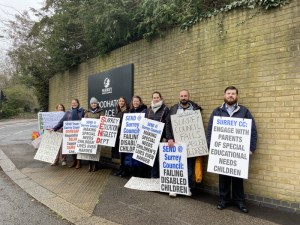
A £40 million project to improve education facilities for some of Surrey’s most vulnerable children has moved to its next stage. Surrey County Council is currently not providing enough spaces in its “alternative provision” schools, which cater for children who have been excluded from mainstream schools or have additional educational needs. [Ed. SEND = special educational needs and disability.]
The current facilities are also described by the council as in “extremely poor” and “dilapidated condition”.
It is hoped that being able to provide places in council-run facilities will unlock more than £1m a year because the cost of a place with private providers is around £30,000 more per year than in an authority setting.
A meeting of Surrey County Council’s cabinet on Tuesday (October 25) heard from the authority’s cabinet member for education and learning that the new and redeveloped sites would be “first class”.
Councillor Clare Curran (Conservative, Bookham and Fetcham West) outlined plans for sites across Surrey which would be redeveloped, demolished or built from scratch to aim to increase the authority’s capacity.
Currently, according to council documents, the authority can only provide 196 spaces, out of a total of 240 that are required by law.
Legally, the county council must secure suitable, full-time alternative education for children who, because of reasons including illness or exclusion, would not be in education unless it was arranged for them.
It must also make sure there is provision for children with Special Educational Needs and Disabilities (SEND) who have Education, Health, and Care Plans in place.
Alternative provision is often a short-term solution until a child can return to mainstream education or move to a dedicated school, but in some cases is a longer-term solution.
Cllr Curran said the new sites would provide an environment where children would feel valued, could access high quality curriculum and get the emotional, health and well-being support they needed.
She said: “These short-stay schools can include some of the most vulnerable and marginalised children and young people that are in the county. We really want to ensure that we’re providing them not only with first-class accommodation, but a first-class learning experience.”
The plans, which would add 44 alternative provision places, include new sites in Elmbridge, on a council-owned site at Thamesfield Farm North, in either Surrey Heath or Runnymede and a new school on a new site for Reigate Valley College.
There are also plans to demolish the current Fordway School in Spelthorne, with the school relocating temporarily to Wey Valley College in Guildford while a new school is built, and plans to requires remodel and expand the Wey Valley College site.
The targets for the school sites are autumn and winter 2024.
An officers’ report said: “The current assets are in extremely poor condition and lack capacity to provide adequate places in appropriate locations across the county. Existing accommodation across the current nine buildings is significantly undersized and the buildings are in a dilapidated condition which is likely to render them unusable within the next two years. As such, the existing accommodation does not enable the provision of a full statutory educational offer that meets the educational needs of Surrey’s most  vulnerable learners.”
Cabinet members approved the £43.2m budget for the project, which should also generate £5.77m in capital receipts when current council land is sold off.
The officers’ report showed that the average cost of a child going to an independent facility was around £52,000 per year, compared to £22,000 per year for a place at a maintained specialist school.
The additional places in council-run schools would mean a difference of £1.32m a year to the council’s budget.


Indecent images end policeman’s career

Computer gazing in dark

A former Surrey Police special constable will never be in the profession again after failing to report unwanted illegal indecent images. According to an accelerated misconduct hearing outcome posted on the force’s website, Special Constable Alan Harvey breached the “standards of professional behaviour” and was so serious “it warranted dismissal”.

Surrey Police handed Mr Harvey’s name to the LDRS on request as the hearing notice and outcome refers to him as “Special Constable Harvey”. However, limited details have been released since the hearing took place on October 3.

Here’s what happened:

A notice of the hearing was on the Surrey Police website on September 27, and was seen by the LDRS.
On approaching the force to gain the full name of the officer involved, which was not initially included, the notice was taken down and replaced with one with less detail on the allegations. The original notice of the hearing stated that former SC Harvey had stated, during police interview, that sometimes he would be sent indecent images of children. It said: “SC Harvey failed to report these illegal images to police so that the offenders could be prosecuted, and children safeguarded. Former SC Harvey continued to use the same online services despite having been sent [indecent images of children].”

According to the original hearing notice, the former SC had also accepted in police interview that he may have sent one of the indecent images of children by accident when trying to send legal adult pornography through the online service.

Chief Constable Gavin Stephens chaired the hearing on October 3, finding that the breach of the standards of professional behaviour was so serious that former SC Harvey should be dismissed, had he still been serving
The college of policing states that special constables are voluntary officers with the same powers as regular officers, and they take part in frontline police work.

This can mean a varied role including spending “much of their time on the streets”, patrolling in crime hotspots or taking part in crime-prevention initiatives.

A Surrey Police spokeswoman said: “The rules breached were that it breached our professional standards, the finding made was that he would have been dismissed had he still been serving and same goes for the sanctions imposed.”

*LDRS = Local Democracy Reporting Service of the BBC with which Epsom and Ewell Times is partnered.


Woking up to a very big debt problem

Woking Borough Council

The senior councillor responsible for Surrey County Council’s money will step down from its cabinet amid a “potential conflict” as the Government calls for a review of finances at the borough council she used to lead.
Woking Borough Council’s forecasted £2.4bn debt has been called an “outlier” by government ministers.
The now leader at Woking was sent a letter by local government minister MP Paul Scully on Tuesday (October 18) which said the authority had the highest level of commercial debt relative to its size for a council.

Image: Woking Borough Council. Credit Rebecca Curley.

It follows a letter that was sent to the borough council in May which said there was a need to tackle risk at local government level and protect taxpayers’ interest. Mr Scully’s letter said: “As you will be aware, the Government has in recent years expressed concerns that some authorities are putting taxpayers’ money at risk through disproportionate levels of debt, over-reliance on commercial income, or pursuing novel and risky investments.” He described Woking’s debt, forecast to rise to almost £2.4bn by 2024/25, as “an outlier” even among the other local authorities government was working with.

He also said he had concerns about the authority’s lending arrangements for major developments, the risks council and taxpayers were exposed to due to the long-term high levels of debt and the “sensitivity of these investments to commercial performance”.

Ayesha Azad, leader of Woking Borough Council from Oct 2020, submitted by her. Credit to Ayesha Azad.

Surrey County Council announced Councillor Ayesha Azad (Conservative, Woking South West), who led Woking Borough Council from October 2020 to May 2022, had decided to step down from the authority’s cabinet, where she was appointed in September. The county council’s leader, Tim Oliver (Conservative, Weybridge), said: “I have discussed this matter with Cllr Azad and in light of her recent role in Woking and a potential conflict in the light of the support being provided by SCC, she has decided to step aside from her cabinet position while this review takes place.”

On Wednesday (October 19) the borough council had announced a “partnership approach” to fixing the authority’s finances, working with the county council and continuing to work alongside the Department for Levelling Up, Housing and Communities (DLUHC).

Councillor Ann-Marie Barker (Liberal Democrat, Goldsworth Park), the borough council’s leader, said she was pleased the letter had recognised the “constructive and cooperative approach” taken by the authority in working with DLUHC and the county council. She added: “I welcome the support and additional advice from an independent review into the council’s finances, investments and related governance that has been offered on a non-statutory basis.”

She said since the Liberal Democrat group had taken control of the council in May, the administration had been assessing the debt, looking among other things at the rising cost of the Victoria Arch project, projecting a further £53 million in costs, and the funding of the Victoria Square development. Cllr Barker said: “It is however clear that difficult decisions will have to be made and significant financial challenges lay ahead. “My administration has taken decisive early action and is committed to ensuring that our financial position is resilient, affordable, responsible, and sustainable and I will ensure that that residents, businesses, and community partners are kept fully informed throughout the duration of this process.”

The authority’s portfolio holder for finance and economic development, Cllr Dale Roberts (Liberal Democrat, St Johns), said the first priority was taking “urgent preventative steps to stop the situation worsening” and said reviews would be carried out of the Thameswey and Victoria Square Woking companies.

In May’s local elections the Liberal Democrats won a majority on the council, after the Conservative group had led the council for 14 years.

The May letter, from then minister for equalities and levelling up communities, Kemi Badenoch, was received a week after the local elections, while Cllr Azad was still technically in position as leader. At the time Cllr Azad said that though the size of Woking’s debt was not disputed, the council was acting on a financial model accepted and encouraged by central government. Cllr Azad said at the time that of the money, £700m had gone into Victoria Place and £450m into Sheerwater which had provided between them new homes, retail and entertainment spaces, public spaces and space for NHS provision.

Cllr Oliver said in a statement: “Surrey County Council has agreed to work closely with Woking Borough Council on this review and to support them in the coming months to develop a sustainable and deliverable improvement plan. The residents of Surrey are our primary focus and, as we have demonstrated before, we will always do everything we can to help our fellow Surrey local authorities to protect the services our residents rely on.”


Chelsea supports footie expansion next-door

Cobham FC plans

Cobham Football Club will get major upgrades to attract more women into football after councillors gave the green light following support from Premier League giant Chelsea. Several other organisations showed support for plans, which include a new spectator stand and new floodlights, saying the club helps support those with disabilities and could help in bringing more women and girls to the game.

Councillors said the football club was an asset to the community in an area where a lot of facilities were privately owned, voting for the changes with only the meeting chair abstaining. A meeting of Elmbridge Borough Council’s planning committee approved the application from the club, which was brought to the meeting on Tuesday (October 18) for a decision because the land is owned by the authority.

Support for the new 3G artificial pitch came from Chelsea FC, in a letter which highlighted the Premier League club having worked in the area for many years and said it would like “first refusal” on possible future community projects. These were listed as possibly including supporting the growth of women’s football and running a development centre for 7- to 15-year-old girls as well as supporting grass roots clubs looking to get girls into competitive football.

Chelsea’s Cobham Training Centre is in nearby Stoke d’Abernon and many former players including Frank Lampard, John Terry, Petr Cech, and Eden Hazard have lived in the area.

As well as this there was support for the application from Surrey FA, Surrey Soccer Schools, Cobham Link, a day service for adults with learning disabilities and autism, and Leatherhead Primary Care Network, representing a group of GP practices in the area.

Councillor Alistair Mann (Conservative, Cobham and Downside) said he hoped the committee would get behind the application because the club was there to promote “sport for all, football for all”. He said: “The outstanding feature of Cobham Football Club is its community basis. It’s there for the community.”

Concerns raised around the application included the loss of Cypress trees at the club’s eastern edge, to be replaced with holly hedges, as well as the noise impact on neighbours of the facility. Councillor Laurence Wells (Liberal Democrat, Cobham and Downside) said the installation of an artificial pitch would mean more playing time available, important in making sure sport was accessible to all and particularly in an area with a lot of private facilities. He said he thought conditions on the application regarding light and noise would deal with issues as best as they could but added: “Whether a noise management plan can effectively deal with swearing at 10 o’clock at night, we will wait and see but I think it’s covered off as best as possible.” He called for the pitch to be recycled at the end of its ten-year lifespan, saying it was equivalent to 1.5million plastic bags.
ENDS